
The Law Offices of Anidjar and Levine can investigate how a crash occurred, identify potentially responsible parties, and organize evidence connecting the collision to documented spine, back, and neck injuries. These injuries may cause delayed pain, restricted movement, nerve symptoms, or lasting effects on work and daily activities. Medical evaluation and consistent records can help clarify treatment needs and losses. Florida insurance rules and comparative fault may affect recovery. The sections below explain important considerations, legal options, and how a Tampa Personal Injury Lawyer may assist.
Main Takeaways
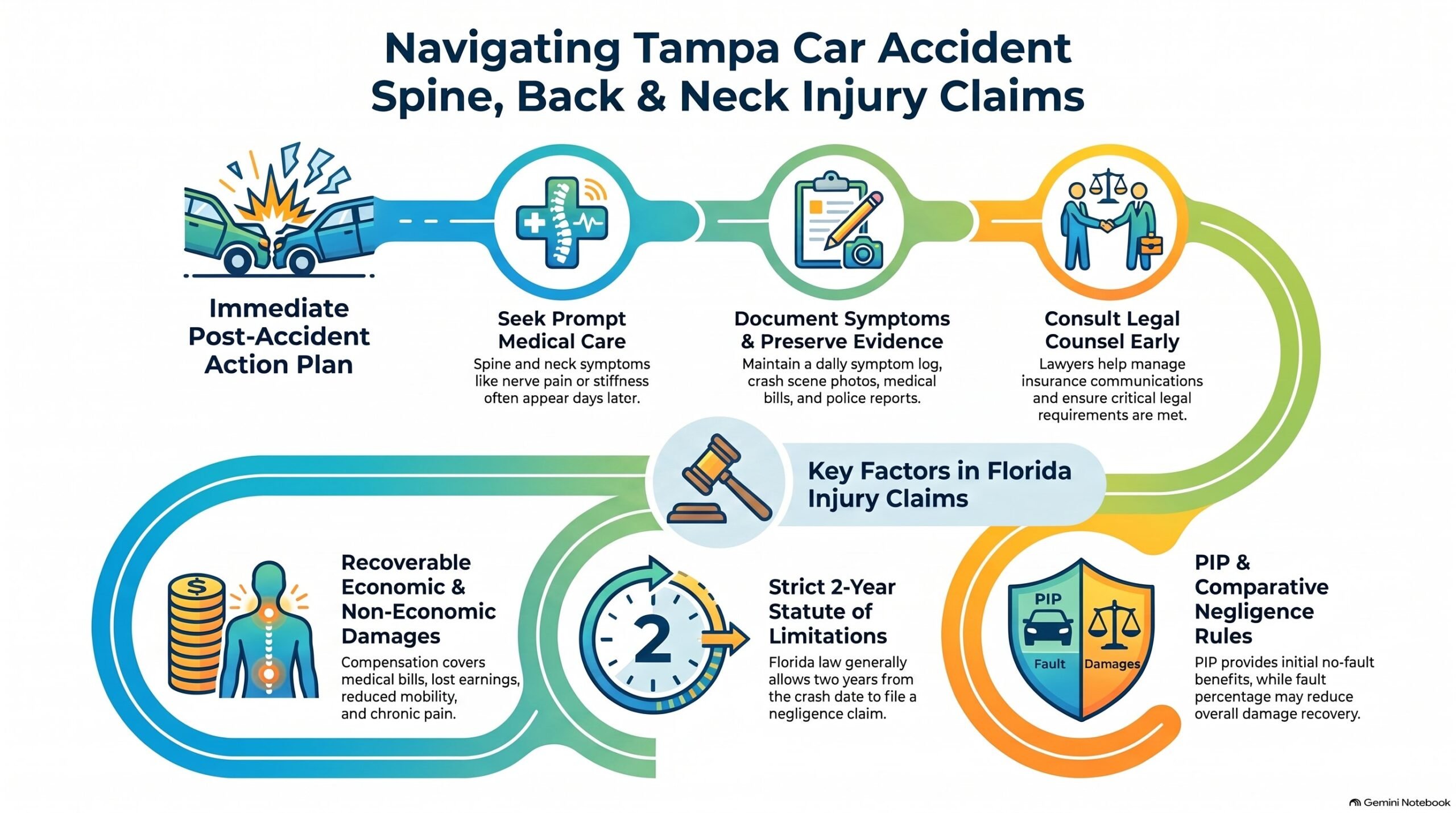
- A Tampa car accident lawyer can investigate how the crash happened and identify potentially responsible parties.
- Spine, back, and neck injuries may cause delayed pain, stiffness, numbness, weakness, or limited movement.
- Seek prompt medical care, follow provider recommendations, and keep a dated record of symptoms and daily limitations.
- Preserve crash photos, witness details, police reports, medical records, bills, and documentation of missed work.
- Florida claims may involve PIP, comparative fault, and legal deadlines; potential compensation depends on evidence and applicable rules.


How We Can Help With Your Tampa Car Accident Spine, Back & Neck Injury Claim
A Tampa car accident lawyer can help an injured person pursue compensation for spine, back, or neck injuries by investigating the crash, gathering medical records, and documenting how the injury affects daily life and future care needs. The legal team can provide organized support while the injured person focuses on recovery and family responsibilities.
Claim evaluation includes reviewing available evidence, identifying responsible parties, and evaluating losses related to medical care, missed work, and reduced function. Counsel can explain the process, outline options, and help ensure important deadlines and documentation requirements are met. This guidance helps clients make informed decisions without navigating complicated procedures alone.
Treatment coordination may involve organizing records and communicating with providers about the information needed to document the injury. Lawyers do not direct medical care, but they can help maintain a clear account of treatment and its effects. By offering attentive, respectful service, the legal team can support a client’s pursuit of fair compensation and practical stability during a difficult period.
OUR CONSULTATIONSARE FREE
START YOUR FREE CASE REVIEW

Understanding Tampa Car Accident Spine, Back & Neck Injury Cases
When a collision causes spine, back, or neck injuries, the effects may range from temporary pain to lasting limits on mobility and daily function. Understanding spinal anatomy helps explain why symptoms can differ. The spine supports the body and protects the spinal cord, while muscles, ligaments, discs, and nerves contribute to movement and sensation. Damage to any of these structures may cause pain, weakness, numbness, or reduced flexibility.
Injury mechanisms describe how force affects the body and its tissues. The resulting condition may not be immediately apparent, and symptoms can develop or change over time. A careful medical evaluation can identify affected structures, guide treatment, and document the injury’s impact on daily activities. Records of symptoms, diagnoses, and care may also help clarify the connection between the collision and reported limitations.
Each case requires attention to its specific medical evidence and personal consequences. Clear information supports fair claim review and helps injured people pursue appropriate care and recovery.
Common Causes of Tampa Car Accident Spine, Back & Neck
Spine, back, and neck injuries in Tampa car accidents can result from distracted driving, speeding, or sudden stops that place significant force on occupants. Rear-end collisions are a common cause, as the impact can abruptly move the head and torso. Unsafe lane changes may also trigger crashes that lead to these injuries.
Distracted Driving
Distracted driving can prevent motorists from noticing hazards, braking in time, or maintaining control, increasing the risk of collisions that injure the spine, back, and neck. In Tampa traffic, distractions may include texting, adjusting navigation, eating, or reaching for objects inside a vehicle. Even brief visual or manual distractions can divert attention from changing road conditions and nearby people.
Cognitive distraction also matters. A driver focused on a conversation or stressful thought may look toward the road yet fail to process what is happening. Hands-free technology can reduce the need to hold a device, but it does not eliminate the mental demands of a call. Attentive drivers help protect passengers, pedestrians, and other motorists. When distraction contributes to a collision, prompt medical assessment can help identify injuries and guide appropriate care.
Speeding and Sudden Stops
Speeding reduces the time a driver has to respond to traffic changes and increases impact force in a collision. In Tampa, drivers who exceed posted Speed Thresholds may have less opportunity to adjust to congestion, road hazards, or changing signals. Sudden Deceleration can also occur when a driver brakes abruptly to avoid an obstacle or respond to traffic. The body may keep moving as the vehicle slows, straining the spine, back, and neck. Injury risk depends on speed, direction of movement, seat belt use, and a person’s physical condition. Responsible driving helps protect passengers, other motorists, and pedestrians. After a crash, prompt medical assessment can identify injuries that may not be immediately apparent and support appropriate treatment and recovery.
Rear-End Collisions
When one vehicle strikes another from behind, the force can cause occupants’ bodies to move abruptly, straining the spine, back, and neck. Rear-end collisions may occur when a driver is distracted, follows too closely, or fails to respond to stopped traffic. The resulting motion can affect occupants even when vehicle damage appears limited. Understanding whiplash biomechanics helps explain how the torso may move forward while the head briefly lags, then shifts rapidly. This movement can strain muscles, ligaments, and other structures in the neck and upper back. Headrest positioning may influence how far the head moves, though it cannot prevent every injury. Prompt medical evaluation can identify symptoms and guide appropriate care. Accurate collision documentation also helps injured people communicate their needs and seek support.
Unsafe Lane Changes
Unsafe lane changes can cause side-impact or sideswipe collisions when a driver changes lanes without checking blind spots or yielding to nearby traffic. In Tampa, these crashes may occur during rush-hour congestion, near highway exits, or where several lanes merge. Blind-spot checks are crucial before a driver changes lanes, while clear signals give nearby motorists time to respond. Signaling failures, abrupt steering, and inaccurate judgments about another vehicle’s speed can leave little opportunity to avoid impact.
A collision may jolt occupants, strain the neck, or force the back against a seat belt or door. Some symptoms appear hours or days later, making prompt medical evaluation important. Careful drivers help protect everyone sharing the road. When a crash causes injury, documenting the scene and seeking appropriate guidance can support informed decisions and access to needed care.
Don’t Wait. Call Our Florida Personal Injury Lawyers Now!


Legal Rights of Tampa Car Accident Spine, Back & Neck Injury Victims
Tampa car accident victims who suffer spine, back, or neck injuries may have the right to seek compensation from a party whose negligence caused the crash. Florida law permits injured people to pursue damages supported by evidence, subject to applicable deadlines and insurance rules. A careful claim can help protect financial stability while allowing victims and families to focus on recovery and community responsibilities.
Tampa crash victims with spine, back, or neck injuries may seek evidence-supported compensation, subject to Florida’s deadlines and insurance rules.
Potentially recoverable losses may include:
- Medical expenses, including future treatment and rehabilitation
- Lost wages and reduced future earning capacity
- Pain, suffering, and loss of normal activities
- Property damage and related out-of-pocket costs
- Benefits available through PIP coverage or uninsured motorists coverage
PIP coverage generally provides initial benefits regardless of fault, but it may not cover all losses. Eligibility for additional damages can depend on injury severity, policy terms, and proof of negligence. Insurers may dispute liability or the value of treatment, making accurate records important. Victims should preserve medical documentation, crash reports, and insurance communications, and should avoid signing releases before understanding their effect. Legal guidance can clarify available remedies and filing requirements.
Why Do Tampa Car Accident Spine, Back & Neck Injuries Happen?
Spine, back, and neck injuries in Tampa car accidents often occur when a collision forces the body to move suddenly beyond its normal range. Even when a vehicle’s exterior damage appears limited, the force transferred to occupants can strain muscles, ligaments, and other supporting tissues. The severity and location of an injury depend on several factors, including impact direction, speed, restraint use, and the occupant’s position.
Vehicle dynamics help explain how different crashes produce different injury patterns. A rear impact may cause the head and torso to move at different rates, while a side collision can twist or compress the body. In a frontal crash, rapid deceleration may place substantial stress on the spine. Spinal anatomy also matters: discs, joints, nerves, and soft tissues respond differently to sudden loading. Age, prior conditions, and individual posture can affect vulnerability. Understanding these mechanisms helps clarify why symptoms and diagnoses vary among people involved in otherwise similar collisions.
What Should You Do After a Tampa Car Accident Spine, Back & Neck Injury?
After a Tampa car accident involving a spine, back, or neck injury, prompt medical care can identify serious conditions and establish a record of treatment. Injured individuals should document symptoms, medical visits, and accident-related expenses. A Tampa lawyer can explain available legal options and help protect their interests.
Seek Prompt Medical Care
Because back and neck injuries may not cause immediate or severe symptoms, anyone involved in a Tampa car accident should seek prompt medical care, even if they initially feel well. A qualified medical professional can assess the injury, identify conditions that may worsen without care, and recommend appropriate treatment options. Prompt evaluation also helps confirm that care matches the person’s symptoms and medical needs.
Emergency symptoms, including weakness, numbness, severe pain, confusion, or difficulty breathing, require immediate attention. In such cases, the injured person should call 911 or go to an emergency department rather than wait for symptoms to pass. For less urgent concerns, a timely appointment with a physician or other licensed provider can guide next steps. Following medical advice and attending recommended follow-up visits supports recovery and helps prevent avoidable complications. Friends and family can assist by arranging safe transportation when needed.
Document Your Injuries
Accurate documentation can help a Tampa car accident victim and their medical providers track spine, back, or neck injuries over time. The victim can maintain a Daily symptom log that records pain levels, stiffness, numbness, sleep disruption, and activities that worsen or ease symptoms. Entries should include dates and note when symptoms change, even if discomfort seems minor. Keeping copies of medical records, prescriptions, test results, and appointment instructions can also create a clear account of care and recovery. Photographs may document visible bruising or changes in mobility, while written notes can describe limits on lifting, driving, or household tasks. If symptoms affect job duties, the victim can record missed work and any requested or provided workplace accommodations. Organized, accurate records can help providers understand functional needs and support consistent, appropriate care.
Contact a Tampa Lawyer
When a spine, back, or neck injury follows a Tampa car accident, consulting a lawyer may help the injured person understand how Florida law applies to the claim and what steps may protect their interests. A lawyer can review available records, explain potential deadlines, and identify information needed to assess responsibility and damages. This guidance may also help an injured person avoid statements or agreements that could affect a claim before the extent of the injury is clear.
A Free Consultation can provide an opportunity to discuss the collision, treatment, and questions about pursuing compensation. The injured person may bring medical records, photographs, insurance correspondence, and other relevant documents for review. A meeting at our Tampa office or another available communication option can make it easier to get guidance. Prompt legal advice may support an informed process while the injured person focuses on recovery and daily responsibilities.
Don’t Wait. Call Our Florida Personal Injury Lawyers Now!
Critical Evidence in a Tampa Car Accident Spine, Back & Neck Injury Case
Evidence can help establish how a Tampa collision occurred, the nature of a spine, back, or neck injury, and the losses it caused. Collect and preserve relevant records promptly, since details may become harder to verify over time.
Crucial evidence may include:
- Medical records documenting diagnosis, treatment, and recovery
- Accident scene photographs showing vehicle damage, road conditions, and visible injuries
- Witness statements describing the collision and its immediate aftermath
- Insurance communications, including letters, emails, and recorded-statement requests
- Police reports and other official records related to the crash
Medical Records
Medical records are vital evidence in a Tampa car accident case involving spine, back, or neck injuries because they document the diagnosis, treatment, and effects of the collision. Records can show when symptoms began, how they changed, and whether medical providers connected them to the crash. Emergency department notes, imaging reports, expert evaluations, therapy records, and prescription histories may help explain the injury’s severity and impact on daily activities.
Consistent care and accurate documentation can clarify the course of treatment. Gaps in care or incomplete files may raise questions, so injured people should follow medical advice and report symptoms honestly. Provider coordination can help guarantee relevant records are collected from each treating professional and presented accurately. Record retention is also important; preserve copies of bills, test results, and visit summaries. These materials can support fair evaluation of medical needs and related losses.
Accident Scene Photos
Although medical records document the diagnosis and treatment of spine, back, or neck injuries, accident scene photos can help show how the collision occurred and the conditions surrounding it. Images may capture vehicle damage, debris, skid marks, traffic signals, road conditions, and visible hazards. These details can help clarify impact direction and the forces involved, which may be relevant when evaluating an injury claim. Photographs taken from several Camera angles can provide useful context, including wide views of the scene and closer images of specific damage. If the injured person cannot safely take photographs, another responsible person may document the scene without interfering with emergency care. Metadata preservation helps establish when and where digital images were created. Retain original files and avoid edits to protect their accuracy and evidentiary value.
Witness Statements
Witness statements can help explain how a collision occurred and what others observed before, during, and after impact. Independent witnesses may describe vehicle positions, traffic signals, road conditions, and drivers’ actions. Their observations can clarify disputed details and provide context for spine, back, or neck injuries. Prompt statement preservation matters because memories can fade, and witnesses may become difficult to locate. Record names, contact details, and the date and location of each account, and obtain permission before any recording. A careful credibility assessment considers the witness’s opportunity to observe, consistency, and possible bias. Document differences between accounts rather than dismissing them, since they may reflect distinct viewpoints. Respectful, accurate collection of statements helps preserve useful evidence and supports a fair understanding of the collision.
Insurance Communications
Insurance communications can become important evidence in a Tampa car accident case involving spine, back, or neck injuries. Recorded calls with insurers may document how an injured person described symptoms, treatment, and the collision soon after it occurred. Those statements can later be compared with medical records and testimony, making accuracy and consistency important. Written correspondence, including claim forms, emails, and letters, may also show when symptoms were reported, what information was requested, and how the insurer responded. Because spinal injuries can develop or worsen over time, early descriptions may not capture the full medical picture. A careful record of communications can help clarify that progression. Preserving messages, noting call dates, and avoiding speculation can support a reliable account and help those evaluating the claim understand the evidence fairly.
Long-Term Effects of Tampa Car Accident Spine, Back & Neck Injuries
Spine, back, and neck injuries from a Tampa car accident can cause lasting effects that continue well beyond initial treatment. Some people experience chronic pain and reduced mobility, which may limit daily activities and work. Lasting nerve damage can also lead to persistent numbness, weakness, or other functional problems.
Chronic Pain
Chronic pain can persist long after a Tampa car accident’s initial injuries have recovered, particularly when the collision damages the back, neck, or spine. Such pain may arise from lasting tissue damage, irritated nerves, or complications that become apparent over time. Its effects can extend beyond physical discomfort, disrupting sleep, concentration, work, and family responsibilities. Consistent medical evaluation can help identify contributing conditions and guide appropriate care. Pain management may involve coordinated treatment, prescribed medication, therapeutic interventions, and regular reassessment, depending on the individual’s diagnosis and needs. Patients who document symptoms and follow professional recommendations can provide providers with clearer information to adjust care. Emotional resilience may also support adaptation to ongoing symptoms, while counseling or peer support can offer practical assistance. When pain continues, legal guidance can help injured people understand options for seeking compensation for documented losses.
Reduced Mobility
Alongside chronic pain, lasting back, neck, or spine injuries from a Tampa car accident can reduce a person’s ability to move comfortably and independently. Limited flexibility or difficulty standing, walking, lifting, or turning may interfere with work, household responsibilities, and community involvement. These restrictions can make ordinary tasks, such as bathing, dressing, or preparing meals, harder to complete without assistance.
Rehabilitation may help preserve strength and function, while an occupational therapist can recommend practical strategies for daily activities. Adaptive equipment, including grab bars, reachers, or mobility aids, may support safer movement. Home modifications, such as improved lighting, accessible entrances, or rearranged furniture, can reduce barriers and help maintain independence. The level of support needed varies with the injury and recovery. Documenting mobility limitations and related expenses can help clarify an accident’s lasting impact.
Lasting Nerve Damage
When a Tampa car accident damages the spine, back, or neck, pressure or injury to nearby nerves may lead to lasting symptoms. These may include numbness, tingling, weakness, or reduced sensation in the arms, hands, legs, or feet. Some people experience neuropathic pain, which can persist even after the original injury has recovered. Nerve regeneration may occur slowly, and recovery varies according to the type and severity of damage. In some cases, symptoms remain permanent or interfere with work, sleep, mobility, and daily responsibilities. Medical evaluation can help identify the affected nerves and guide treatment, which may include medication, rehabilitation, or expert care. Consistent documentation of symptoms and limitations can also help providers coordinate support and clarify the injury’s long-term effects for those assisting with recovery.
Proving Liability in Tampa Car Accident Spine, Back & Neck Injury Cases
Proving liability in a Tampa car accident case involving a spine, back, or neck injury requires evidence that another party’s negligence caused the collision and resulting harm. Establishing responsibility typically involves showing a duty of care, a breach of that duty, a direct connection between the breach and the crash, and measurable damages. These Negligence elements may be supported by police reports, photographs, witness accounts, vehicle data, and testimony from medical professionals.
Medical records can document the injury, treatment, and effects on daily activities. Prompt evaluation may also help clarify whether symptoms arose from the collision, particularly when spinal or neck conditions develop over time. A careful investigation can preserve evidence and identify all parties whose conduct contributed to the event.
Florida’s comparative fault rules may reduce recoverable damages when an injured person shares responsibility. Accurate evidence helps distinguish each party’s role and supports a fair assessment. Clear documentation can assist those seeking accountability while protecting the injured person’s ability to pursue appropriate compensation.
Dealing With Insurance Companies After a Tampa Car Accident Spine, Back & Neck Injury
After liability evidence is gathered, insurance communications can shape how a Tampa car accident spine, back, or neck injury claim is evaluated. Insurers may request medical records, treatment details, and collision information. Accurate, consistent responses help clarify the injury’s effects, while unsupported estimates or speculation can create confusion.
Recorded statements warrant particular care. An injured person may be asked to describe symptoms before the full diagnosis or treatment outlook is known. The account should remain factual, and questions about unclear or incomplete information should be addressed thoughtfully. Medical documentation can help explain how pain, restricted movement, or nerve symptoms affect daily responsibilities and the ability to serve family or community.
Settlement discussions also require attention to available policy limits and the documented scope of harm. Consider a proposed payment in light of ongoing care, lost income, and other supported losses. Careful communication helps protect the accuracy of the record while keeping the injured person’s recovery and practical needs in focus.
What to Expect During a Tampa Car Accident Spine, Back & Neck Injury Claim Process
A Tampa car accident spine, back, or neck injury claim typically begins with an initial case review to assess the circumstances and potential damages. Medical records and other documentation help establish the injury’s extent, treatment needs, and connection to the crash. The process may then proceed through settlement negotiations toward a resolution or, if necessary, further legal action.
Initial Case Review
During an initial case review, a Tampa car accident lawyer typically examines how the collision occurred, the injured person’s medical records, and how spine, back, or neck injuries affect daily life. The lawyer may also consider available accounts of the crash, insurance coverage, and the injured person’s responsibilities at work and home. This Case Evaluation helps identify relevant questions, potential challenges, and the information needed to assess the claim. The lawyer can explain how Florida’s legal requirements may affect available options and outline a Legal Strategy suited to the circumstances. The review also gives the injured person an opportunity to describe priorities, ask questions, and understand possible next steps. By clarifying the process early, counsel can help the person make informed decisions while preserving time and attention for recovery and family responsibilities.
Medical Documentation
Because spine, back, and neck injuries may develop or change over time, medical documentation is central to evaluating a Tampa car accident claim. Records help show when symptoms began, how they changed, and what care was required. A clear symptom timeline may include emergency visits, follow-up appointments, diagnostic imaging, and reports of pain or limited movement. Consistent, accurate information allows medical providers and claim reviewers to understand the injury’s course without relying solely on recollection.
Injured people generally benefit from attending recommended appointments, following prescribed care, and promptly reporting new or worsening symptoms. Treatment consistency can help establish how the injuries affected daily activities and whether further evaluation was needed. Organize and retain medical records, bills, and work restrictions. Careful documentation also helps supporters communicate vital information and address questions about the connection between the collision and the reported condition.
Settlement Negotiations
Once medical records clarify the injury’s course and treatment needs, settlement negotiations may begin with the insurer’s review of liability, medical expenses, and other documented losses. The injured person’s representative may present a written demand explaining how the collision caused the spine, back, or neck injury and supporting claimed damages with records, bills, and wage information. A sound Demand strategy accounts for ongoing care, documented limitations, and the evidence establishing fault, without overstating the claim. The insurer may assess the materials, request clarification, or respond with a lower offer. Counteroffer timing can depend on the completeness of the review and whether additional evidence is needed. Careful, timely communication helps maintain a clear record and allows the parties to evaluate the claim based on substantiated losses and liability evidence.
Claim Resolution
When settlement negotiations produce an agreement, the claim moves toward resolution through written settlement terms, required approvals, and payment processing. The injured person should review the release carefully because signing it generally ends the right to seek further compensation for the same accident. Resolution timelines can vary based on insurer procedures, outstanding medical bills, and any required court or lienholder approval. Before the settlement is disbursed, providers, health plans, or government programs may assert reimbursement claims that must be addressed. The attorney typically verifies these obligations, calculates allowable fees and costs, and confirms the remaining funds. Payment is then issued according to the agreement, often by check, and distributed after required deductions. Clear records of the final accounting help the injured person understand how the funds are allocated and support responsible planning for ongoing care and recovery.
Compensation for Tampa Car Accident Spine, Back & Neck Injury Damages
Compensation for spine, back, or neck injuries after a Tampa car accident may cover medical expenses, lost income, reduced future earning capacity, and pain and suffering. A claim may include costs for emergency treatment, diagnostic testing, medication, rehabilitation, and other injury-related care. Documentation helps connect these expenses to the collision and clarify the treatment required.
Lost wages may be recoverable when an injury prevents a person from working or limits work duties during recovery. Records from employers and medical providers can help establish the time missed and its connection to the accident. If lasting limitations affect a person’s ability to earn a living, a claim may also address reduced Future earnings, supported by evidence about work capacity and expected career impact.
Compensation may cover physical discomfort and disruptions to daily activities, including difficulty caring for family or serving the community. The amount available depends on the facts, evidence, applicable law, and available insurance coverage. A careful review can help confirm that documented losses are considered.
Economic vs Non-Economic Damages in Tampa Car Accident Spine, Back & Neck Cases
Economic damages in Tampa car accident spine, back, and neck cases may include medical expenses, lost income, and other measurable financial costs. Non-economic damages address losses such as pain, reduced mobility, and diminished quality of life. Establishing both categories typically requires clear evidence linking the injuries to the collision and documenting their effects.
Economic Damage Categories
A Tampa car accident involving a spine, back, or neck injury may result in both economic and non-economic damages. Economic damages represent measurable financial losses caused by the collision and resulting injury. They may include emergency care, hospital treatment, surgery, medication, rehabilitation, and other reasonable medical expenses. When ongoing care is expected, documented estimates of future treatment costs may also be considered.
An injured person may seek compensation for income lost while recovering, as well as reduced future earning capacity if the injury limits employment. Wage replacement records, such as pay statements and employer documentation, can help establish these losses. Economic damages may also cover household services when the injured person cannot safely perform necessary tasks, such as cleaning or meal preparation. Careful records help clarify the financial support needed during recovery and protect the person’s ability to meet vital obligations.
Non-Economic Losses
Alongside documented financial costs, a Tampa car accident may cause non-economic losses that are harder to measure but can substantially affect daily life. For people with spine, back, or neck injuries, these losses may include physical pain, reduced mobility, and difficulty completing ordinary activities. Pain severity and duration can affect sleep, family responsibilities, and participation in community or service commitments. Emotional distress may also arise from persistent discomfort, uncertainty about recovery, or the loss of independence. Unlike medical bills or lost wages, these harms don’t have a fixed price, yet they remain distinct from economic damages and may be an important part of a claim. Recognizing them reflects the broader human impact of an accident beyond its measurable financial consequences.
Proving Your Damages
When a Tampa car accident causes spine, back, or neck injuries, proving damages requires evidence that connects the crash to both the financial costs and the effects on daily life. Medical records, diagnostic images, treatment notes, and provider opinions can document the injury and explain necessary care. Damage documentation should also include bills, pharmacy receipts, wage records, and evidence of missed work or reduced earning capacity.
Economic damages may cover past medical costs, lost income, rehabilitation, and future expenses supported by treatment plans or expert assessments. Non-economic damages address pain, physical limitations, emotional distress, and reduced participation in family or community activities. Consistent records, personal accounts, and statements from people familiar with the injured person’s routine can help show these effects. Careful evidence gathering supports a fair evaluation and helps protect resources needed for recovery.
Don’t Wait. Call Our Florida Personal Injury Lawyers Now!
When a Tampa Car Accident Spine, Back & Neck Injury Case Goes to Trial vs Settlement
After a Tampa car accident, a spine, back, or neck injury claim may resolve through settlement or proceed to trial, depending on the evidence, the extent of the injury, and whether the parties can agree on fair compensation. A settlement can provide compensation without the uncertainty and added demands of a courtroom proceeding. Negotiations may consider medical records, treatment needs, lost income, and the injury’s impact on daily life. The injured person generally decides whether to accept an offer after reviewing its terms and potential consequences.
If the parties cannot reach an acceptable agreement, a trial may allow a judge or jury to assess the evidence and determine responsibility and damages. Trial testimony from the injured person, medical providers, and other witnesses may help explain the injury and its impact. Jury deliberations follow the presentation of evidence and arguments, but the outcome remains uncertain. Each path involves different time, preparation, and risks. Careful evaluation can help an injured person choose an approach that supports recovery and long-term needs.
Florida Laws That May Affect Your Tampa Car Accident Spine, Back & Neck Case
Florida law can affect whether an injured person may recover compensation and how much a Tampa car accident spine, back, or neck injury claim may be worth. Several rules may shape the available benefits, evidence, and allocation of responsibility. Understanding them can help injured people make informed decisions while preserving resources for recovery and family responsibilities.
Florida law, insurance coverage, and case-specific evidence can shape compensation for Tampa spine, back, or neck injury claims.
- PIP coverage: Florida generally requires drivers to carry personal injury protection, which may pay a portion of medical expenses and lost income regardless of fault, subject to policy limits and eligibility rules.
- Serious injury threshold: A claim for pain and suffering against another driver generally requires proof of a qualifying injury under Florida law.
- Comparative negligence: A person’s recoverable damages may be reduced by the person’s share of fault.
- Evidence requirements: Medical records, diagnostic findings, and treatment history can help establish injury and causation.
- Insurance obligations: Policy terms and coverage limits may affect which sources can pay.
These rules interact with case-specific facts, so careful documentation and legal review may clarify potential options.
The Statute of Limitations for Tampa Car Accident Spine, Back & Neck Injury Cases
How long does an injured person have to bring a Tampa car accident claim? In Florida, the Filing deadline for most negligence claims is two years from the date of the accident. Missing this deadline can prevent an injured person from seeking compensation through a lawsuit, regardless of the seriousness of the spinal, back, or neck injury.
Some cases involve different deadlines. A claim against a government entity may require earlier notice and compliance with additional procedures. Wrongful death claims also follow a separate limitations period. These rules depend on the parties involved and the facts surrounding the crash, so confirm the applicable date promptly.
The Discovery rule may affect when a limitations period begins in certain legal claims, but it does not generally extend the ordinary deadline for a car accident injury claim. Symptoms can emerge or worsen after a collision, yet delayed diagnosis alone may not change the filing period. Preserving accurate records and identifying relevant dates can help protect an injured person’s ability to pursue a claim.
How a Tampa Car Accident Spine, Back & Neck Lawyer Can Help You
When a collision causes spinal, back, or neck injuries, a Tampa car accident lawyer can help an injured person understand available legal options and manage the steps involved in pursuing a claim. Counsel can coordinate with medical providers, review treatment records, and explain how documented injuries may relate to the crash. Attorney advocacy can also help protect a claimant’s interests during communications with insurers and support a fair assessment of losses.
A Tampa car accident lawyer can help connect documented injuries to the crash and protect a claimant’s interests during insurance discussions.
A lawyer may develop case strategy by examining evidence, identifying responsible parties, and evaluating how injuries affect daily life and future care.
Assistance may include:
- Gathering crash reports, photographs, witness accounts, and other relevant evidence.
- Organizing medical records and documenting treatment-related expenses.
- Evaluating lost income and potential effects on future earning capacity.
- Communicating with insurers and reviewing settlement proposals.
- Preparing legal filings and presenting evidence if litigation becomes necessary.
This work can reduce administrative burdens, allowing an injured person to focus on recovery while pursuing accountability. A well-supported claim also helps decision-makers assess the harm and financial consequences.
When to Contact a Tampa Car Accident Spine, Back & Neck Lawyer
Prompt legal guidance may help preserve evidence and clarify options after a crash involving spinal, back, or neck injuries. Contacting counsel promptly can be valuable, even when symptoms seem manageable or appear days later. Some injuries develop gradually, and early medical evaluation can document symptoms and guide appropriate care. Legal counsel can also explain how to preserve crash reports, photographs, witness details, and medical records before information becomes difficult to obtain.
Early Consultation does not require a person to know the full extent of an injury or decide immediately whether to pursue a claim. It provides an opportunity to understand deadlines, insurance communications, and practical next steps while prioritizing treatment and family responsibilities. A person may seek guidance after emergency care, upon receiving a diagnosis, or when an insurer requests a statement or settlement decision.
Attorney Selection should reflect the individual’s needs, communication preferences, and circumstances. Timely, informed contact can help injured people protect their options, focus on recovery, and maintain responsibilities to others.
Why You Need an Experienced Tampa Car Accident Spine, Back & Neck Lawyer
An experienced Tampa car accident spine, back, and neck lawyer can help connect the medical, insurance, and legal issues that often arise after a serious collision. These injuries may develop gradually, require ongoing treatment, and affect a person’s ability to work or care for family. An attorney familiar with such claims can organize medical records, document how the collision affected daily life, and coordinate evidence needed to explain the injury’s impact.
Insurers may question whether symptoms resulted from the crash or whether treatment was necessary. Experienced counsel can assess available evidence, communicate with insurers, and respond to disputes while the injured person focuses on recovery. A sound Legal Strategy also accounts for future care, lost income, and the possibility that symptoms may persist. Counsel Selection matters because informed representation can help protect a client’s interests and support a fair resolution. This guidance can also help families make decisions with greater confidence and preserve resources for recovery and long-term needs.
How to Choose the Right Tampa Car Accident Spine, Back & Neck Lawyer for Your Case
Choosing the right Tampa car accident spine, back, and neck lawyer requires carefully evaluating the attorney’s experience, communication, and approach to injury claims. A careful review can help injured people select counsel who will treat their concerns with respect and pursue a fair resolution.
Attorney credentials should include relevant licensing, experience with car accident injury cases, and a record of handling claims involving spinal, back, or neck conditions. Prospective clients can ask how the lawyer investigates collisions, works with medical providers, and prepares cases when insurers dispute the extent of an injury. Clear answers can indicate whether the attorney’s approach fits the case.
Communication also matters. The lawyer should explain legal options, provide timely updates, and make complicated decisions easy to understand. Fee structures merit equal attention: clients should understand whether fees depend on recovery, what expenses may arise, and how payment terms are documented. Comparing these factors helps clients make an informed choice and focus on recovery while their legal representative addresses the claim.
About The Law Offices of Anidjar & Levine
For those evaluating legal representation after a Tampa car accident, The Law Offices of Anidjar & Levine provides counsel to people pursuing injury claims.
The firm represents individuals and families seeking accountability and financial recovery after collisions, including claims involving back, neck, and spinal injuries.
Its attorneys can explain available legal options, assess relevant records, and communicate with insurers on a client’s behalf.
Each case depends on its facts, and no particular result can be guaranteed.
Firm History may help prospective clients understand the firm’s experience and approach to injury matters.
The firm’s work includes investigating accident circumstances, gathering supporting evidence, and presenting claims under applicable Florida law.
Clients can ask how the attorneys will handle deadlines, case updates, and negotiations.
Community Involvement also reflects the firm’s connection to the people it serves.
For individuals who value service and responsibility, these efforts may offer context about the organization beyond its legal practice.
A consultation can clarify whether its services align with a person’s needs and circumstances.

Frequently Asked Questions
Can I Pursue a Claim if My Back Injury Appeared Days After the Crash?
Yes, you may pursue a claim even if back pain appears days after a crash. Delayed back pain symptoms can result from injuries that weren’t immediately noticeable, but timing alone doesn’t establish liability or prove the injury’s cause. Prompt medical evaluation helps identify the condition and guide treatment. Documenting injury onset, symptoms, appointments, and crash details can support the claim. Insurers may scrutinize delays, so consistent records and legal guidance can be important.
What if a Pre-Existing Condition Worsened Because of the Accident?
A pre-existing condition may support a claim if the accident measurably worsened it. The injured person generally must show that the crash caused increased symptoms, new limitations, or additional treatment, rather than merely reflecting the condition’s natural progression. Aggravation Evidence can include medical evaluations, imaging, symptom records, and expert opinions. Prior Treatment records help establish the person’s baseline before the collision. Prompt, consistent care can clarify the change and support a fair assessment of responsibility and damages.
Can Passengers File Claims for Spine, Back, or Neck Injuries?
Passengers can file claims for spine, back, or neck injuries when another party’s negligence caused or contributed to the crash. Passenger Injury Claim Eligibility generally does not depend on who owned the vehicle, but available coverage and evidence affect recovery. In collisions involving several vehicles, Multiple Vehicle Liability may require insurers to assess each driver’s role. Prompt medical care, accurate records, and timely legal guidance can help protect a passenger’s interests while supporting a fair resolution.
Do I Need to Attend an Independent Medical Examination Requested by an Insurer?
Whether attendance is required depends on the claim, policy terms, and applicable law. An insurer’s IME request may carry consequences if the injured person refuses, including delays or disputes over benefits. The person should review the request, confirm its purpose and scheduling details, and seek legal guidance before deciding. Examination rights may include limits on scope, recording, or who may attend, but these protections vary by jurisdiction and claim type.
Can I Recover Damages if the At-Fault Driver Was Uninsured?
Yes, an injured person may recover damages after a crash caused by an uninsured driver, depending on available insurance and the facts. Uninsured motorist coverage may pay for bodily injuries when the at-fault driver lacks liability insurance, subject to policy limits and terms. Personal injury protection may cover certain medical expenses and lost wages regardless of fault. A claimant should promptly notify the insurer, preserve records, and seek legal guidance about eligibility and deadlines.
—————————
Spine, back, and neck injuries from a Tampa car accident can affect health, work, and financial stability.
Prompt medical care and careful documentation may help protect an injured person’s claim.
A qualified attorney can review the available evidence, explain legal options, and address communications with insurers.
The Law Offices of Anidjar and Levine represent people pursuing compensation after serious collisions.
Those facing these injuries can contact a Tampa Personal Injury Lawyer to discuss their circumstances and determine an appropriate next step.