
The Law Offices of Anidjar and Levine can help an injured person understand legal options, preserve evidence, and pursue compensation after a crash involving a head or brain injury. With permission, counsel may manage insurer communications, track deadlines, review settlement offers, and coordinate with family members. Medical records, crash reports, photographs, witness accounts, and expert analysis can help establish liability and document injury effects. Because symptoms and care needs may change, timely medical attention and organized records matter. The following sections explain claims, rights, and choosing a Tampa Personal Injury Lawyer.
Main Takeaways
- A Tampa car accident head and brain injury lawyer can explain legal options and deadlines during a free consultation.
- Counsel can communicate with insurers, organize evidence, track deadlines, and review settlement offers with your permission.
- Police reports, witness statements, photos, and medical records may help establish fault and connect the crash to your injury.
- Potential compensation may include medical care, rehabilitation, lost income, and documented effects on daily activities and future needs.
- Florida comparative negligence may reduce recovery, while uninsured motorist coverage may offer another source depending on your policy.


How We Can Help With Your Tampa Car Accident Head & Brain Injury Claim
When a car accident causes a head or brain injury, the effects may be difficult to assess and can require extensive medical care. A legal team can help an injured person and their family manage the claim while attention remains focused on treatment and recovery.
Counsel may gather medical records, accident reports, witness statements, and other evidence that documents the injury and its impact. Careful coordination with healthcare providers can help clarify ongoing needs without interrupting medical decisions. A tailored Claim strategy can address lost income, treatment costs, rehabilitation, and changes to daily activities, while accounting for uncertainty about future care.
Family support can be important as relatives assist with appointments, records, and practical responsibilities. With the injured person’s permission, counsel can communicate with family members and explain important developments in clear terms. The legal team can also handle insurer communications, track deadlines, and evaluate settlement proposals. This support helps protect the client’s interests and allows the family to make informed decisions throughout the claims process.
OUR CONSULTATIONSARE FREE
START YOUR FREE CASE REVIEW

Understanding Tampa Car Accident Head & Brain Injury Cases
Tampa car accident head and brain injury cases can involve complicated medical and legal questions, particularly when symptoms emerge or change over time. Brain injury types range from concussions and other mild traumatic injuries to severe trauma that affects memory, communication, movement, or awareness. Each person’s condition and recovery may differ, so careful medical assessment is crucial.
Diagnostic challenges can arise because symptoms such as headaches, confusion, fatigue, or mood changes may appear gradually or resemble other conditions. Some injuries are not immediately visible on standard imaging, and a normal initial examination does not always resolve concerns. Follow-up care and clear documentation can help providers assess changes and guide treatment.
For a claim, relevant records may include emergency evaluations, imaging, expert opinions, rehabilitation notes, and evidence of how the injury affects daily activities or work. Understanding the diagnosis, prognosis, and related losses can support a fair review of the injured person’s needs and available legal options.
Common Causes of Tampa Car Accident Head & Brain Injuries
Head and brain injuries in Tampa car accidents often result from preventable driving behaviors. Common causes include distracted driving, speeding or other reckless conduct, impaired driving, and failure to yield. Each can lead to a collision with enough force to cause serious harm.
Distracted Driving
Distracted driving occurs when a driver’s attention shifts from the road, even briefly, increasing the risk of a collision. Phone distraction can involve texting, reading notifications, making calls, or using navigation apps while driving. Even hands-free conversations may draw attention away from changing traffic conditions. In-car technology, including touchscreens, voice controls, and entertainment systems, can also divert a driver’s eyes, hands, or concentration. These lapses may prevent timely hazard recognition, reduce awareness of nearby vehicles, and delay responses to sudden changes. When a crash results in a head or brain injury, identifying whether distraction contributed may help clarify how the collision occurred. Careful investigation can support injured people and their families as they seek accountability, access appropriate medical care, and address the practical effects of recovery.
Speeding and Reckless Driving
When a driver travels too fast or operates a vehicle recklessly, reduced response time and increased impact force can contribute to a serious crash. In Tampa, Excessive Speed may prevent a driver from stopping before a sudden hazard or maintaining control through a turn. The resulting collision can expose occupants to violent movement, increasing the risk of traumatic brain injuries, concussions, and other serious harm.
Aggressive Actions, including unsafe lane changes, tailgating, and abrupt turns, can place nearby drivers and passengers in danger. These choices may leave others little opportunity to avoid impact, even when they follow traffic laws. Careful driving helps protect everyone sharing the road. When reckless conduct causes a head or brain injury, documenting the crash, medical care, and its effects can help clarify the harm and support accountability.
Impaired Driving
Impaired driving can create risks similar to speeding and reckless conduct by weakening a driver’s judgment, coordination, and ability to react. Alcohol, cannabis, prescription medications, and other substances may affect a person’s ability to control a vehicle safely. Even when a driver does not appear visibly impaired, slowed responses or poor decision-making can contribute to a serious collision. The resulting impact may cause head trauma, concussion, or other brain injuries, with consequences that require extensive medical care and support.
Florida law prohibits driving while impaired, and DUI penalties may include fines, license suspension, and incarceration. Sobriety checkpoints are one measure used to identify suspected impaired drivers and promote safer roads. Preventing impaired driving protects passengers, pedestrians, and other motorists. After a crash, prompt medical attention and careful documentation can help injured people and their families address immediate needs and understand available options.
Failure to Yield
Failure to yield occurs when a driver does not give another road user the right of way as required by traffic laws or road conditions. These violations can cause serious collisions, particularly at intersections, where vehicles may strike one another from the side. Drivers who overlook pedestrians, cyclists, or approaching traffic can expose others to sudden, forceful impacts that may result in head or brain injuries.
Understanding right-of-way rules helps drivers make safer decisions when entering roadways, turning, or changing lanes. Intersection Yielding requires attention to signs, signals, visibility, and the movement of other road users. A driver who proceeds without checking for approaching traffic may leave others little time to avoid a crash. Careful observation and compliance with traffic controls can reduce preventable harm and support safer travel for everyone sharing Tampa’s roads.
Don’t Wait. Call Our Florida Personal Injury Lawyers Now!


Legal Rights of Tampa Car Accident Head & Brain Injury Victims
Tampa car accident victims who sustain head or brain injuries may have the right to seek compensation from a party whose negligence caused the crash. A claim may address medical expenses, lost income, rehabilitation, and other documented losses.
Preserving records and obtaining prompt medical evaluation can help clarify the injury’s effects and support a fair assessment.
- Identify responsible parties: Evidence may establish who owed a duty of care and whether a breach contributed to the collision and resulting injury.
- Document damages: Medical records, bills, employment information, and proof of ongoing care can help demonstrate financial and personal losses.
- Consider comparative negligence: Florida’s comparative negligence rules may reduce recoverable damages if an injured person shares responsibility.
- Review available coverage: When the at-fault driver lacks sufficient insurance, uninsured motorists coverage may provide another potential source of recovery, depending on the policy.
Legal deadlines and insurance requirements can affect a claim. Careful guidance may help victims and families protect their rights while pursuing accountability and resources for recovery.
Why Do Tampa Car Accident Head & Brain Injuries Happen?
Understanding how these injuries occur can help explain why their effects vary and what evidence may be relevant to a claim. In Tampa, head and brain injuries often result from sudden changes in speed or direction during a crash. A driver or passenger may strike the steering wheel, window, or another interior surface, while rapid movement can also cause the brain to shift inside the skull without a direct blow.
Collision biomechanics help explain how forces travel through a vehicle and affect its occupants. Rear-end impacts may snap the head backward and forward, while side impacts can expose occupants to force from the door or window. Rollover crashes and high-speed collisions may produce multiple impacts, increasing the risk of serious trauma.
Vehicle safety features, including seat belts and airbags, can reduce certain risks but cannot prevent every injury. Crash severity, occupant position, restraint use, and individual health may all influence the type and extent of harm.
What Should You Do After a Tampa Car Accident Head & Brain Injury?
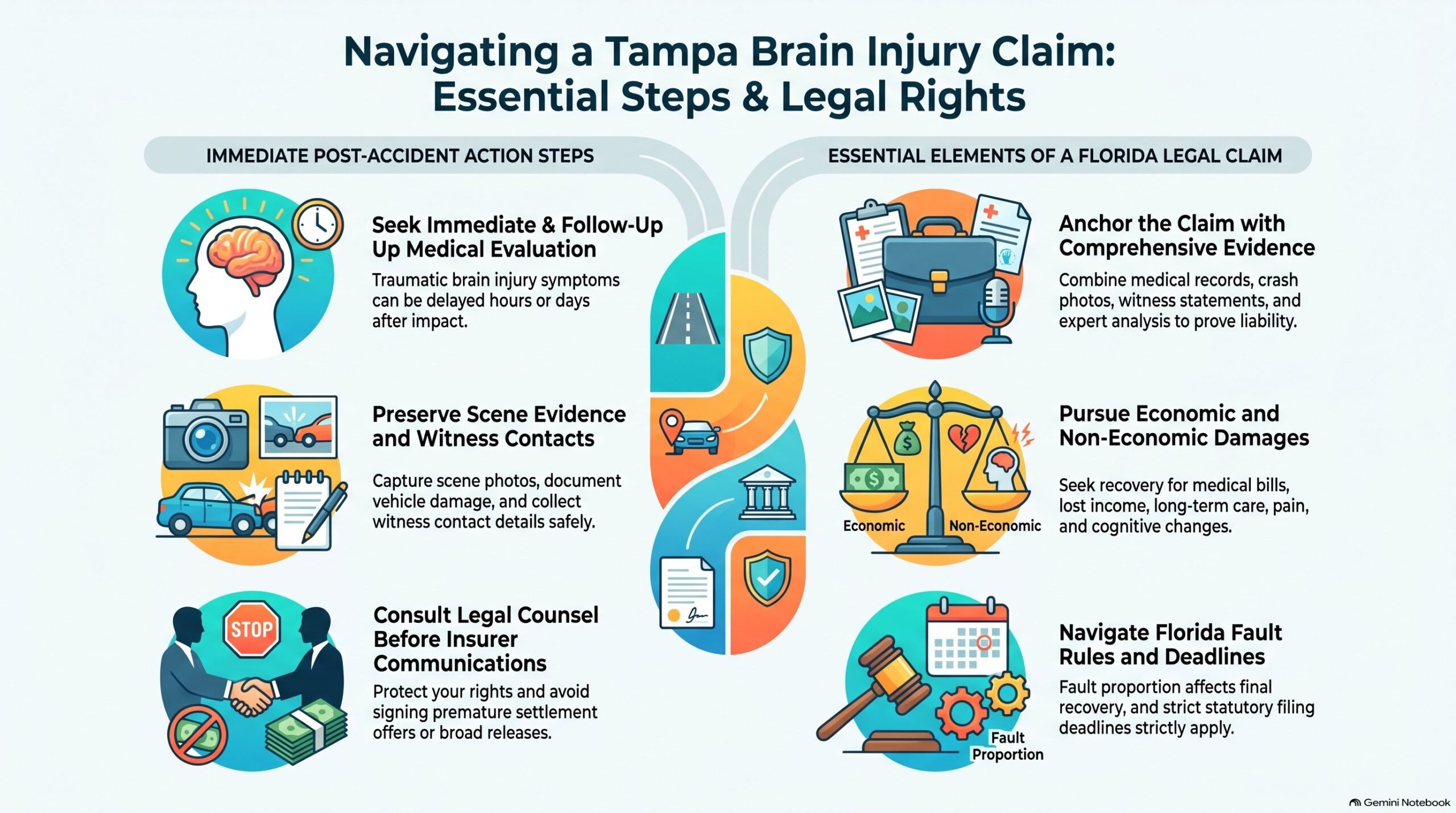
After a Tampa car accident involving a head or brain injury, the injured person should seek immediate medical care, even if symptoms initially appear mild. When it is safe, documenting the accident scene and preserving relevant evidence may help establish what happened. A Tampa lawyer can explain the injured person’s legal options and help protect their interests.
Seek Immediate Medical Care
Because head and brain injuries may not cause immediate symptoms, anyone involved in a Tampa car accident should seek prompt medical evaluation, even if they initially feel well. A timely assessment can identify injuries that may worsen without treatment and help protect the person’s health. If severe symptoms occur, such as confusion, loss of consciousness, repeated vomiting, or worsening headache, emergency services should be contacted. An Emergency room can provide urgent testing and treatment when serious injury is suspected. A clinician may recommend a Neurological evaluation to assess memory, coordination, vision, speech, and other functions. Follow-up care is important because some symptoms emerge hours or days after a collision. Follow medical instructions carefully, and report any changes in condition promptly. Early care supports recovery and helps prevent avoidable complications.
Document the Accident Scene
Once medical care has been arranged, documenting the accident scene can help preserve information about how the collision occurred. If it is safe to do so, a person at the scene may take photographs or video of vehicle positions, damage, traffic signals, signs, weather conditions, and visible injuries. Images should include the wider roadway as well as close views of relevant details. Roadway debris and Skid marks may help show where impact occurred or how vehicles moved, so they should be recorded before conditions change. Witness names and contact information can also be collected, along with the time and location of the crash. No one should enter traffic or delay necessary care to gather evidence. When injuries prevent documentation, another trusted person may assist, provided it is safe and appropriate.
Contact a Tampa Lawyer
When should a person involved in a Tampa crash with a head or brain injury contact a lawyer? Promptly, once urgent medical needs are addressed. Early legal guidance can help preserve evidence, identify witnesses, and clarify deadlines while the injured person focuses on treatment. A lawyer may review crash reports, medical records, insurance communications, and documentation from the accident scene to assess potential claims.
Because brain injuries may affect memory, concentration, and decision-making, a trusted family member or representative can help organize information and communicate with counsel. The person should avoid signing releases or accepting a settlement before understanding its consequences. Many firms offer a Free Consultation to discuss available options and next steps. Reviewing Office Locations can help identify a convenient place to meet, though remote consultations may also be available. A lawyer can explain the process and advocate for fair treatment.
Don’t Wait. Call Our Florida Personal Injury Lawyers Now!
Critical Evidence in a Tampa Car Accident Head & Brain Injury Case
A strong Tampa car accident head and brain injury case may depend on evidence that documents the injury, its cause, and its effects.
Essential evidence may include:
- Medical records
- Accident scene photos
- Witness statements
- Expert testimony
Medical Records
Medical records are vital evidence in a Tampa car accident head or brain injury case because they document the diagnosis, treatment, symptoms, and effects on daily life. Emergency department notes, imaging reports, expert evaluations, and therapy records can help establish the nature and progression of an injury. Consistent documentation may also show how symptoms affect memory, concentration, mobility, work, and personal responsibilities. Record Organization helps present this information in a clear timeline, making it easier to understand the care received and identify gaps or changes in treatment. Provider Requests may be necessary to obtain complete files from hospitals, physicians, rehabilitation centers, and other caregivers. Accurate, thorough records can support a fair assessment of medical needs and damages while helping those responsible for evaluating the claim understand the injured person’s circumstances.
Accident Scene Photos
Alongside medical records, photographs of the crash scene can help clarify how a Tampa collision occurred and the forces involved. Images may document vehicle damage, debris, skid marks, road conditions, traffic signals, and sight obstructions. These details can help explain how an impact may have contributed to a head or brain injury and support a careful assessment of the claim.
Photographs are most useful when captured promptly and from several angles, including wide views of the roadway and close-up images of specific damage. Photo metadata, such as timestamps and location information, may help establish when and where an image was taken. Preserve original files without alteration, since edits or missing details can raise questions about reliability. When possible, a thorough visual record can assist those evaluating the collision and seeking accountability for the injured person.
Witness Statements
When available, witness statements can provide an independent account of a Tampa collision and the events immediately before and after impact. A bystander may describe vehicle movement, traffic signals, road conditions, or the injured person’s apparent condition. Such observations can help clarify disputed details and establish a timeline relevant to a head or brain injury claim. Witness credibility depends on factors such as the person’s opportunity to observe, consistency, and possible bias. Promptly preserving statements is important because memories can fade, contact information may be lost, and recollections can change over time. A careful record should identify each witness and document what the person observed in their own words. Statements should distinguish direct observations from assumptions, helping decision-makers assess the evidence fairly and understand the collision’s consequences for the injured person and others affected.
Expert Testimony
In a Tampa car accident head or brain injury case, expert testimony can help explain evidence that may be difficult to assess without expert knowledge. Medical clinicians may describe how the collision caused an injury, what treatment is required, and how symptoms could affect daily activities. Accident reconstruction experts can analyze vehicle damage, roadway conditions, and other evidence to explain how the crash occurred. Expert qualifications matter because a witness’s training and experience affect how much weight an opinion carries. Attorneys may review credentials, reports, and methods before deciding whether an expert can assist the case. Careful testimony preparation helps ensure explanations are accurate, understandable, and supported by the available evidence. Clear, reliable testimony can help decision-makers evaluate the injury’s causes, consequences, and potential future needs with appropriate care and fairness.
Long-Term Effects of Tampa Car Accident Head & Brain Injuries
Long-term effects of head and brain injuries may include changes in concentration, memory, and other cognitive abilities. Some individuals also experience emotional or behavioral changes that affect daily life and relationships. Depending on the injury, ongoing medical care and rehabilitation may be necessary.
Cognitive and Memory Changes
How can a car accident affect thinking and memory long after the initial injuries have recovered? A traumatic brain injury may leave lasting cognitive changes, even when visible wounds have mended. A person may struggle with short-term recall, such as remembering recent conversations, appointments, or instructions. Difficulties with information processing can make it harder to follow discussions, organize tasks, or respond quickly to new information.
These challenges may affect work, education, household responsibilities, and the ability to assist others. Some people need extra time, written reminders, or help completing demanding tasks. Symptoms can vary and may become more noticeable when a person is fatigued or facing competing demands. Medical evaluation can identify areas of difficulty and guide rehabilitation, while documented changes may help explain ongoing needs. Consistent support can promote safety, independence, and meaningful participation in daily life.
Emotional and Behavioral Effects
A Tampa car accident head or brain injury can affect emotional regulation and behavior long after physical wounds have recovered. Survivors may experience irritability, anxiety, sadness, impulsiveness, or difficulty responding calmly to everyday stress. These changes can affect relationships, work, and a person’s ability to participate in family or community life. Personality changes may be subtle, such as reduced patience, or more noticeable, including uncharacteristic anger or diminished interest in familiar activities. Some individuals also experience social withdrawal, avoiding friends and gatherings because interactions feel overwhelming or tiring. Such effects may be difficult for loved ones to understand, particularly when the survivor appears physically well. Recognizing that behavior may reflect an injury rather than a deliberate choice can help families offer practical support and preserve respectful, compassionate relationships during recovery.
Ongoing Medical Care
Because the effects of a head or brain injury may persist after initial treatment, ongoing medical care can be essential to monitor recovery and address lasting complications. Follow-up appointments may help physicians identify changes in memory, concentration, balance, or mood and adjust treatment as needed. Depending on the injury, care may involve neurologists, rehabilitation experts, therapists, and primary care providers. Care Coordination can help these professionals share relevant information and establish consistent goals, reducing gaps in support. Treatment Continuity also matters when a patient moves between emergency care, rehabilitation, and community-based services. Family members or other caregivers may assist with appointments, medication routines, and observations, while respecting the patient’s preferences and privacy. A documented care plan can clarify responsibilities and help guarantee that changing needs receive timely attention.
Proving Liability in Tampa Car Accident Head & Brain Injury Cases
Proving liability in a Tampa car accident head or brain injury case requires evidence that another party’s negligence caused the collision and resulting harm. Investigators may review police reports, photographs, traffic-camera footage, and witness statements to establish how the crash occurred. Evidence of speeding, distraction, unsafe lane changes, or failure to yield can help show that a driver breached a duty of care.
Crash reconstruction may clarify vehicle positions, impact forces, and the sequence of events. Medical records and qualified professional opinions can connect the collision to a head or brain injury and document its effects on daily functioning. This evidence helps present the injured person’s needs accurately and supports a fair assessment of responsibility.
Liability apportionment may become relevant when multiple parties contributed to the collision. A careful review can identify each party’s role, including potential roadway or vehicle-related factors. Promptly preserving evidence and documenting the circumstances can strengthen a clear, fact-based account of how the injury occurred.
Dealing With Insurance Companies After a Tampa Car Accident Head & Brain Injury
After a Tampa car accident involving a head or brain injury, insurance companies may request statements, medical records, and other information to evaluate a claim. Because symptoms can emerge or change over time, injured people should avoid minimizing their condition or speculating about recovery when communicating with an insurer. Claim adjuster tactics may include seeking broad medical authorizations, asking questions that invite uncertain answers, or emphasizing an early settlement before the full effects of an injury are known. These practices can affect how a claim is assessed, even when the injured person is trying to cooperate.
Recorded statement risks merit careful attention. A claimant’s words may later be compared with medical records or used to challenge the reported severity of symptoms. Before signing documents or providing detailed statements, a person may consult a qualified attorney to understand the request and protect private information. Clear, accurate communication and organized documentation can help ensure insurers receive relevant facts while preserving the injured person’s ability to focus on treatment and recovery.
What to Expect During a Tampa Car Accident Head & Brain Injury Claim Process
A Tampa car accident head and brain injury claim typically begins with an initial case evaluation to assess liability, injuries, and potential damages. Medical records and other documentation help establish the extent of the harm, while insurance negotiations address compensation based on the available evidence. If negotiations do not resolve the claim, litigation may follow, and the case may conclude through settlement or a court decision.
Initial Case Evaluation
When a Tampa car accident causes a head or brain injury, an initial case evaluation helps determine how the crash occurred, what evidence is available, and how the injury has affected the claimant. During consultation, an attorney may ask about the collision, the people involved, and communications with insurers. The claimant can describe current concerns and identify practical needs, helping counsel understand the circumstances and potential legal issues. Consultation preparation may include gathering crash details, contact information for witnesses, photographs, and insurance correspondence. This discussion also gives the claimant an opportunity to ask questions about representation, possible next steps, and responsibilities during the process. The evaluation timeline varies with case intricacy and the availability of relevant information. It does not establish a guaranteed outcome; rather, it supports informed decisions about whether and how to proceed.
Medical Documentation
Medical documentation helps show how a head or brain injury developed, affected daily functioning, and required treatment following a Tampa car accident. Records may include emergency department notes, expert assessments, medication lists, therapy reports, and descriptions of symptoms such as headaches, confusion, or memory changes. Provider timelines help clarify when symptoms appeared, which clinicians evaluated them, and how care progressed. Consistent records can also show whether limitations affected work, household responsibilities, or other routines.
Imaging protocols vary according to symptoms and clinical judgment. CT scans, MRI studies, and related reports may help clinicians assess suspected injuries, while follow-up evaluations document changes over time. Accurate, complete records allow the claim team to understand the medical course and identify missing information. Patients can support continuity by attending appointments and reporting symptoms clearly to providers.
Insurance Negotiations
Once the medical course is clearer, insurance negotiations may address liability, treatment costs, lost income, and the lasting effects of a head or brain injury. The insurer may review medical records, accident evidence, and statements about how symptoms affect daily responsibilities. A careful Demand strategy presents documented losses and explains the need for appropriate compensation without overstating the evidence. Because brain injuries can involve delayed symptoms or ongoing care, settlement timing may depend on medical stability and the availability of reliable prognosis information. Negotiations may include requests for updated records, questions about treatment, and discussion of disputed facts. Clear, consistent documentation can help the injured person communicate needs and support a fair evaluation. A measured approach also helps protect resources intended for recovery, family responsibilities, and future care needs.
Litigation And Resolution
If insurance negotiations do not resolve a head or brain injury claim, litigation may provide a formal process for addressing disputed liability or compensation. The process generally begins when a complaint is filed and served, followed by the defendant’s response. Both sides may exchange medical records, witness statements, and other evidence through discovery. Depositions can clarify how the collision occurred and how the injury affects daily life, work, and future care needs.
Pretrial motions may ask the court to decide specific legal or evidentiary issues before trial. If the case proceeds, each side presents evidence and may question witnesses. Courtroom testimony from treating providers, experts, and other witnesses can help explain the injury and its consequences. A judge or jury then evaluates the evidence and determines liability and, where appropriate, compensation. Settlement may remain possible throughout litigation.
Compensation for Tampa Car Accident Head & Brain Injury Damages
Compensation for a Tampa car accident head or brain injury may cover medical care, lost income, reduced future earning capacity, and the effects of lasting impairment. A claim may cover emergency treatment, rehabilitation, medication, and assistive services needed as recovery continues. When an injury limits a person’s ability to work, evidence of current and anticipated employment effects can help establish the claim’s value. Family members who provide care may also document how the injury has changed daily responsibilities and support needs.
The available recovery depends on the facts, applicable law, and proof connecting the collision to the harm. In cases involving especially reckless conduct, Punitive damages may be considered where legally permitted. If a crash causes a fatal head or brain injury, eligible relatives may pursue a wrongful death claim for losses recognized by Florida law. Careful records and qualified professional assessments can help clarify the injured person’s needs and support a fair resolution. A lawyer can evaluate potential claims and deadlines.
Economic vs Non-Economic Damages in Tampa Car Accident Head & Brain Cases
Head and brain injuries may result in economic damages, such as medical expenses, lost income, and future care costs. Non-economic damages may address losses such as pain, emotional distress, and reduced quality of life. Establishing either type of loss generally requires reliable evidence, including medical records, financial documentation, and testimony about the injury’s effects.
Economic Damage Examples
Economic damages are measurable financial losses caused by a car accident, while non-economic damages address harm without a direct dollar value. In head and brain injury cases, these losses may include emergency treatment, hospital stays, surgery, medication, rehabilitation, and follow-up care. Records such as invoices, medical statements, and treatment plans can help establish the costs already incurred and support estimates of reasonably anticipated future care.
Lost wages may also be recoverable when symptoms or treatment prevent an injured person from working. Pay records, employer statements, and time-off documentation can help show the income missed during recovery. Reduced earning capacity may apply when lasting cognitive or physical limitations restrict future work or advancement. A careful assessment can consider expected earnings, work history, and medical evidence to clarify the financial support needed for recovery.
Non-Economic Losses
Unlike measurable financial losses, non-economic damages address the personal effects of a head or brain injury after a Tampa car accident. These losses may include pain, emotional distress, cognitive changes, and reduced independence. A person who once supported family members or served the community may struggle to maintain those responsibilities after an injury. Loss of Enjoyment can reflect an inability to take part in hobbies, social activities, or meaningful routines that previously brought satisfaction. Damaged Relationships may arise when memory problems, mood changes, or communication difficulties affect interactions with relatives, friends, and colleagues. Unlike medical bills or lost wages, these harms do not have a direct price tag. Their significance lies in how the injury changes daily life, personal connections, and the injured person’s capacity to contribute to others.
Proving Your Damages
To prove damages in a Tampa car accident head or brain injury case, the injured person must connect the crash to specific losses and support those losses with reliable evidence. Economic damages include medical bills, rehabilitation costs, lost income, and future care expenses. Damage documentation may include treatment records, invoices, wage statements, and testimony from qualified medical or vocational professionals. Financial projections can help estimate long-term treatment needs, reduced earning capacity, and necessary support services.
Non-economic damages address losses without a direct price, such as pain, emotional distress, cognitive limitations, and reduced enjoyment of daily activities. Consistent medical records and clear accounts from the injured person, family members, or caregivers can show how these effects changed everyday life. Careful evidence helps decision-makers assess both categories fairly and supports a claim that reflects the injury’s lasting consequences.
Don’t Wait. Call Our Florida Personal Injury Lawyers Now!
When a Tampa Car Accident Head & Brain Injury Case Goes to Trial vs Settlement
When should a Tampa car accident head and brain injury case settle, and when should it proceed to trial? The answer depends on the evidence, the claimant’s medical outlook, and whether the parties can agree on fair compensation. A settlement may provide a more predictable resolution and avoid the time, expense, and uncertainty of litigation. It can also help an injured person and family focus on treatment, caregiving, and rebuilding daily routines.
Settlement conferences may allow both sides to assess the case’s strengths and weaknesses with guidance from counsel or a neutral facilitator. If negotiations do not produce an adequate offer, trial may be appropriate. A jury can evaluate testimony, medical records, and expert opinions, then determine responsibility and damages. Jury deliberation, however, adds uncertainty, and a verdict may take longer than a negotiated resolution.
The decision requires careful review of the evidence, likely outcomes, and the injured person’s needs. Neither path is right for every case.
Florida Laws That May Affect Your Tampa Car Accident Head & Brain Case
Florida law can shape how a Tampa head and brain injury claim is evaluated, from establishing fault to determining the deadline for filing suit. Several rules may influence available benefits, responsibility, and proof.
Understanding them can help injured people and their families make informed decisions while preserving resources for recovery and support.
- Florida’s no-fault system generally requires injured drivers to seek initial medical benefits through their own PIP coverage, subject to policy limits and eligibility requirements.
- A serious injury may allow a claimant to pursue damages from an at-fault driver beyond those initial benefits. Medical records and qualified assessments can help document the injury’s effects.
- Under comparative negligence, compensation may be reduced according to a claimant’s share of responsibility. As a result, evidence about the collision can affect the amount recoverable.
- Florida law also governs insurance duties, evidence, and recoverable damages. Careful review can clarify which expenses and losses may be claimed and what documentation supports them.
These rules can affect families seeking stability and continued care.
The Statute of Limitations for Tampa Car Accident Head & Brain Injury Cases
A deadline applies to filing a Tampa car accident lawsuit involving a head or brain injury, and missing it may prevent the injured person from seeking compensation through the courts. Florida law generally sets a time limit for personal injury claims, and the applicable period depends on when the cause of action accrued and the circumstances of the crash. The claim filing date is thus important; filing after the statutory period may result in dismissal, even when the injury and losses are serious.
Head and brain injuries can require extensive evaluation, and some effects may become clearer over time. However, uncertainty about symptoms does not automatically pause the filing period. Deadline exceptions may apply in limited situations, such as when a defendant cannot be located or the injured person is legally incapacitated, but the rules are fact-specific. Different deadlines may govern claims against government entities or other parties. Prompt attention to the applicable deadline helps preserve legal options and supports a fair process for those affected by the collision.
How a Tampa Car Accident Head & Brain Lawyer Can Help You
After addressing the filing deadline, an injured person may need to determine how to protect a claim and document the effects of a head or brain injury.
A Tampa car accident lawyer can help organize evidence and pursue compensation while allowing the injured person and family to focus on recovery and daily responsibilities.
- The lawyer can gather crash reports, witness accounts, photographs, and other records that may clarify how the collision occurred.
- Medical documentation can be reviewed to connect the injury with treatment needs, rehabilitation, and effects on work or independence.
- The lawyer can communicate with insurers, assess settlement offers, and present documented losses without placing that burden on the family.
- Personalized Advocacy can account for the person’s circumstances and goals, while No Fee Representation may make legal help accessible without upfront attorney fees.
A lawyer may also coordinate with medical and financial professionals to describe future care needs. Clear documentation can support a fair claim and help preserve resources for recovery, caregiving, and continued service to others.
When to Contact a Tampa Car Accident Head & Brain Lawyer
When should an injured person contact a Tampa car accident head and brain lawyer? Contact may be appropriate as soon as possible after a collision causes a suspected concussion, traumatic brain injury, or other head trauma. Early symptoms can be subtle, and medical evaluation should remain the priority. Prompt legal guidance can help preserve records, identify relevant deadlines, and reduce the risk of losing evidence while the injured person focuses on treatment and recovery.
A consultation may also be useful when symptoms emerge later, medical bills grow, time away from work affects household stability, or an insurer requests statements or offers a settlement. Family members or caregivers may seek information when an injured person cannot manage communications independently. They can ask about the lawyer’s role, expected costs, and attorney fee structures, including whether fees depend on recovery. A timely discussion does not require a decision to pursue a claim. It allows the injured person or representative to understand available options and make informed choices without delaying necessary care.
Why You Need an Experienced Tampa Car Accident Head & Brain Lawyer
Experienced legal counsel can help an injured person address the distinct challenges of a head or brain injury claim. These injuries may affect memory, concentration, communication, and the ability to work, while symptoms can develop or change over time. An experienced lawyer can help connect medical evidence with the circumstances of the collision and explain how the injury affects daily life.
Attorney Experience matters when evaluating liability, documenting losses, and responding to disputes about the cause or severity of an injury. Counsel can coordinate with medical providers and other qualified professionals, helping make certain that important records and opinions are presented clearly. This support may ease the administrative burden on an injured person and family, allowing them to focus on recovery and caregiving.
Local Knowledge can also help counsel understand Florida procedures, relevant deadlines, and the practical demands of pursuing a claim in Tampa. With informed guidance, an injured person can make decisions based on a clearer understanding of legal rights, potential challenges, and available options.
How to Choose the Right Tampa Car Accident Head & Brain Lawyer for Your Case
Choosing the right Tampa car accident head and brain injury lawyer requires careful consideration of the attorney’s relevant experience, communication practices, and approach to evaluating complex medical evidence. A prospective client can review Attorney Credentials, including licensing, professional standing, and experience handling cases involving traumatic brain injuries. Familiarity with medical records, diagnostic findings, and long-term care needs may help counsel assess how an injury affects a person’s daily life and future support requirements.
Communication Style also matters. The attorney should explain legal options in understandable terms, respond within reasonable timeframes, and provide clear updates about case developments. A careful initial discussion can help determine whether the lawyer listens closely, asks relevant questions, and treats the client’s concerns with respect. References, public disciplinary records, and written fee terms may offer additional information for comparison. The selection process should focus on informed judgment rather than promises of a particular outcome. Choosing counsel with diligence can support a fair, evidence-based claim and help protect the injured person’s interests.
About The Law Offices of Anidjar & Levine
The Law Offices of Anidjar & Levine represents people injured in car accidents in Tampa and throughout Florida.
The firm assists clients facing the consequences of head and brain injuries, including medical expenses, lost income, and changes in daily life.
Its attorneys review the circumstances of a collision, explain available legal options, and pursue compensation when another party may be responsible.
Each case requires careful attention to medical records, evidence, and the injured person’s individual needs.
Firm history reflects a practice focused on representing people harmed by negligence and helping them seek accountability.
The firm’s work may include communicating with insurers, gathering relevant documentation, and preparing claims for negotiation or litigation.
Clients can receive guidance about the legal process while they focus on treatment and recovery.
Community involvement also contributes to the firm’s public presence.
Through service-oriented efforts, the attorneys support people and organizations in the communities where they work.
This commitment complements their legal services by recognizing the broader needs of Florida residents.
Frequently Asked Questions
Can a Concussion Cause Symptoms That Appear Days After a Car Accident?
Yes, concussion symptoms can appear hours or even days after a car accident, as some effects are not immediately noticeable. Delayed Concussion Symptoms may include headache, dizziness, nausea, confusion, sensitivity to light, or changes in sleep and concentration. Anyone experiencing these signs should seek prompt medical evaluation, since symptoms can worsen or indicate a more serious injury. Tracking post-crash symptoms can help document changes and provide clinicians with useful information for assessment and care.
Should I See a Neurologist After a Suspected Brain Injury?
Yes. After a suspected brain injury, prompt medical assessment is important, and a clinician can determine whether a Neurologist referral is appropriate based on symptoms, examination findings, and medical history. Brain injury diagnostic testing may include neurological examinations or imaging when indicated. Emergency care is warranted for worsening headache, repeated vomiting, confusion, seizure, weakness, or difficulty waking. A qualified professional can guide follow-up and help promote appropriate care for the injured person.
Can Family Members Pursue a Claim if a Crash Causes a Fatal Brain Injury?
Yes. When a crash causes a fatal brain injury, eligible family members may pursue a wrongful death claim against parties whose negligence contributed to the death. State law determines who may file and which relatives qualify. A claim may seek survivor compensation for losses such as funeral expenses, lost financial support, and the loss of companionship. Prompt legal guidance can help preserve evidence, clarify eligibility, and make sure deadlines are met.
What Accommodations May Help Someone Return to Work After a Traumatic Brain Injury?
Accommodations may include Gradual Work Reintegration, Flexible Scheduling, reduced hours, additional breaks, written instructions, and a quieter workspace. Duties can be adjusted to limit multitasking, sensory demands, or safety risks while recovery continues. A supervisor, employee, and healthcare provider may coordinate a written plan with clear goals and regular reviews. These measures can support a safe, sustainable return while respecting the worker’s abilities, privacy, and ongoing treatment needs.
Can I Recover Damages if I Had a Preexisting Brain Condition Before the Crash?
Yes, an injured person may pursue damages recovery even when a preexisting condition affected the brain before the crash. The claim generally concerns whether the collision caused a new injury or worsened an existing condition. Medical records, expert opinions, and evidence of functioning before and after the crash can help establish that distinction. Compensation may reflect crash-related harm, but not losses attributable solely to the prior condition. Each case depends on its evidence and applicable law.
—————————
A serious head or brain injury can affect a person’s health, independence, and financial stability long after a Tampa car accident.
Prompt medical care and careful documentation can help protect both recovery and a potential claim.
A Tampa Personal Injury Lawyer at The Law Offices of Anidjar and Levine can review the circumstances, explain available legal options, and address dealings with insurers.
Each case depends on its facts, and timely legal guidance can help injured people make informed decisions about the steps ahead.