

The Law Offices of Anidjar and Levine assist property owners with documenting storm and weather-related losses, interpreting policy coverage, preserving evidence, and addressing denied or underpaid claims. Counsel may evaluate wind, hail, flooding, lightning, fallen-tree, and moisture-related damage while considering exclusions, deductibles, notice requirements, deadlines, and causation disputes. If hazardous conditions cause injuries, the analysis may also involve premises liability and medical documentation. For injury-related claims, learn more from an Orlando Personal Injury Lawyer. Further information explains available legal support, claim rights, evidence requirements, and factors for selecting qualified counsel.
Main Takeaways
- Orlando storm damage lawyers review policies for wind, hail, flooding, lightning, fallen-tree damage, exclusions, deductibles, and valuation provisions.
- Legal counsel can help document property damage, preserve evidence, meet claim deadlines, and coordinate inspections with insurers and contractors.
- Attorneys may challenge claim denials, underpayments, delayed investigations, causation disputes, and inadequate repair estimates through negotiation or litigation.
- Photographs, maintenance records, receipts, repair estimates, weather reports, and insurer communications can support coverage and damage evaluations.
- Prompt action helps protect occupants, prevent further damage, preserve policy rights, and address hazards such as moisture, mold, structural instability, and electrical risks.


How We Can Help With Your Orlando Property Claim Storm & Weather Damage Injury Claim
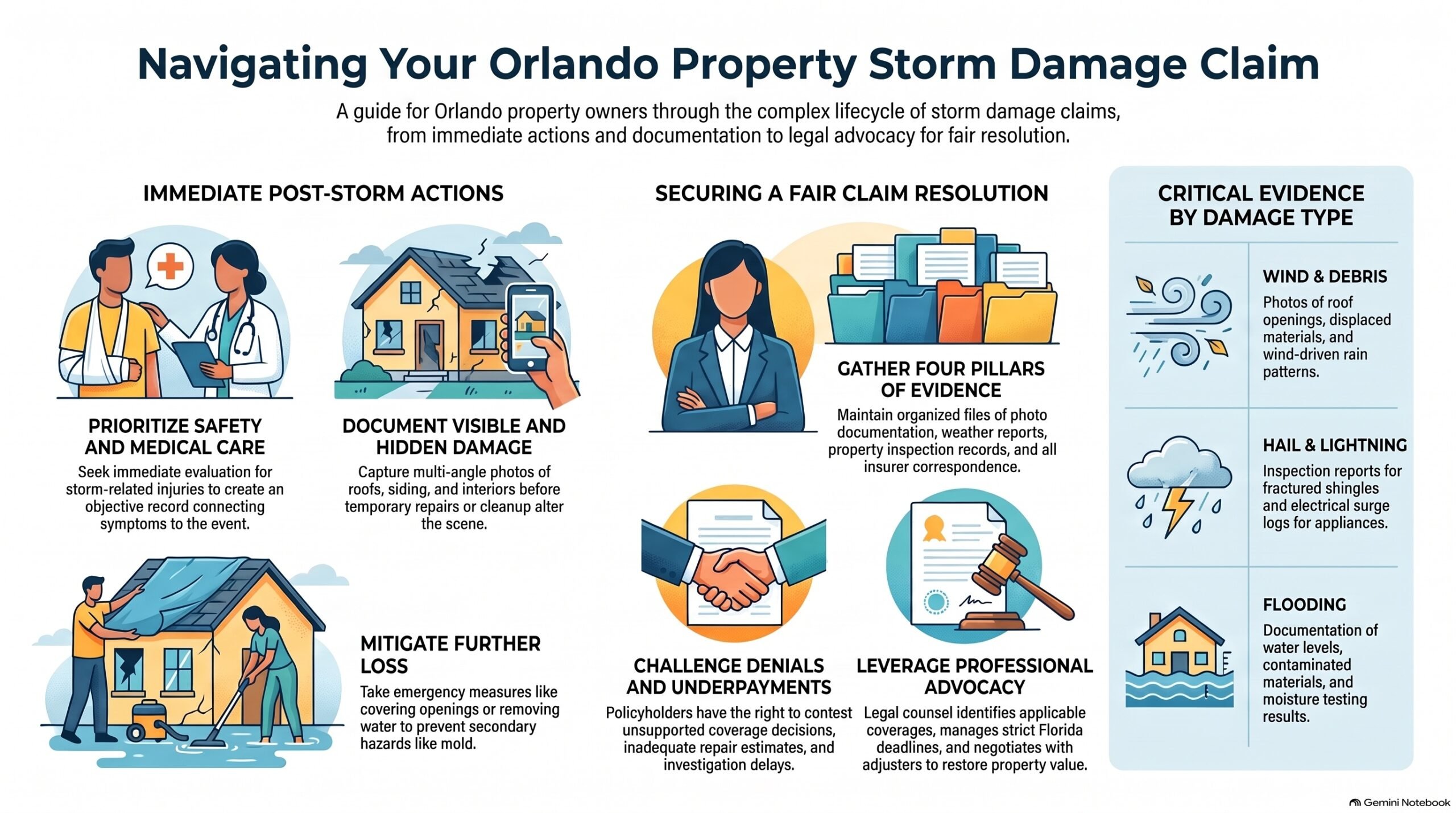
When severe weather damages a home or commercial property, an Orlando property claim storm and weather damage lawyer can help policyholders pursue the insurance benefits needed to repair or restore the premises. The lawyer can provide organized guidance while clients focus on protecting occupants, employees, customers, and critical operations. An Insurance policy review may identify applicable coverages, exclusions, deductibles, notice requirements, and documentation obligations before a claim is submitted. Counsel can also help preserve photographs, repair estimates, receipts, maintenance records, and other evidence needed to accurately describe the property’s condition and the resulting losses. Through claim timeline planning, the lawyer can establish important deadlines, coordinate inspections, monitor insurer communications, and reduce avoidable delays. If the insurer questions coverage or undervalues damage, counsel can evaluate the adjustment and explain available response options. This service supports fair treatment, thorough preparation, and responsible advocacy for policyholders seeking to restore their premises to a safe, functional condition after a storm.
OUR CONSULTATIONSARE FREE
START YOUR FREE CASE REVIEW

Understanding Orlando Property Claim Storm & Weather Damage Injury Cases
Understanding an Orlando property claim involving storm and weather damage and an injury case requires distinguishing property losses from injuries arising from hazardous conditions on the premises. A claim may involve structural damage, personal belongings, medical expenses, lost income, or other measurable consequences. Evaluating the case generally requires reviewing the insurance policy, photographs, repair estimates, medical records, witness accounts, and communications with the insurer.
Insurance claim deadlines can affect whether a valid demand remains enforceable, making prompt documentation and notice important. Policy coverage disputes may concern exclusions, deductibles, valuation methods, causation, or whether the insurer properly investigated the reported loss. When injuries are alleged, the analysis also considers whether a dangerous condition existed, whether the responsible party knew or should have known about it, and whether reasonable precautions were taken.
A careful review can help affected property owners and injured visitors understand available remedies, preserve relevant evidence, and communicate accurately with insurers. Professional guidance may assist families and community members seeking fair treatment while maintaining realistic expectations about the claims process.
Common Causes of Orlando Property Claim Storm & Weather Damage
Orlando property damage claims commonly arise from hurricane-force winds, hail, and lightning that compromise roofs, siding, windows, and electrical systems. Flooding and storm surge can cause extensive structural and interior damage, particularly when drainage systems are overwhelmed. Fallen trees and windblown debris may further damage buildings, vehicles, and other insured property.
Hurricane-Force Winds
Hurricane-force winds can cause substantial damage to Orlando properties by tearing off roofing materials, breaking windows, damaging exterior walls, and uprooting trees that may strike buildings or utility systems. Wind-driven debris can puncture siding, damage fences, and expose interior areas to subsequent rain intrusion. Property owners and occupants should prioritize Storm Preparedness by securing outdoor objects, documenting existing conditions, and arranging prompt inspections after a storm passes. Photographs, repair estimates, maintenance records, and receipts may help establish the scope and cause of covered damage. An attorney may assist affected property owners in reviewing policy language, identifying applicable exclusions, and communicating with insurers. Because policies and Florida requirements impose Insurance Deadlines, timely notice and careful preservation of evidence are important. Prompt action can support accurate evaluation and fair claim resolution.
Hail And Lightning
When hail or lightning strikes, Orlando properties may sustain damage that is not immediately visible. Hail can fracture shingles, dent metal components, weaken flashing, and compromise roof membranes. Even small impacts can lead to later deterioration, particularly when repairs are delayed. Property owners evaluating Hailproof Roofing should still arrange a professional inspection after severe weather, because no roofing material is completely immune to damage.
Lightning presents separate hazards. A direct strike can ignite structural materials, while a nearby strike may travel through wiring, plumbing, or connected equipment. Electrical Surge Risks include damaged appliances, tripped breakers, malfunctioning security systems, and hidden wiring defects. Detailed photographs, inspection reports, maintenance records, and invoices can help document the condition before and after the event. Timely reporting and careful preservation of damaged property may assist claim evaluation and protect affected occupants.
Flooding And Storm Surge
Although central Florida is inland, intense rainfall, tropical systems, and overflowing drainage channels can cause substantial flooding to residential and commercial properties. Storm surge from coastal hurricanes can also affect nearby communities by raising water levels in waterways and overwhelming drainage systems. Floodwater may damage foundations, flooring, electrical components, drywall, appliances, and personal belongings. Contaminated water creates additional health concerns, while prolonged moisture can result in Mold growth and structural deterioration. Property owners should document water levels, damaged materials, cleanup efforts, and repair estimates when conditions permit. Prompt notice to the insurer is important, although questions about coverage, exclusions, and insurance delays may complicate recovery. A property claim attorney can help affected owners understand policy obligations, preserve evidence, communicate with insurers, and pursue benefits needed to restore safe, functional spaces for families, employees, customers, and tenants.
Fallen Trees And Debris
Severe wind, lightning, and saturated soil can cause trees or large branches to fall onto roofs, vehicles, fences, power lines, and other structures. Resulting damage may include punctured roofing, crushed exterior walls, broken windows, and blocked access routes. Even when a fallen tree appears to cause only minor damage, displaced shingles or damaged flashing can allow water intrusion during subsequent rainfall. Moisture trapped in ceilings, insulation, and wall cavities may promote mold growth, structural deterioration, and electrical hazards. Debris removal should be handled carefully, particularly when utility lines or unstable limbs remain present. Property owners should document conditions with photographs, preserve damaged materials when safe to do so, and promptly notify insurers. A thorough assessment can identify hidden damage, evaluate coverage issues, and help affected individuals pursue necessary repairs while protecting occupants and neighboring property.
Don’t Wait. Call Our Florida Personal Injury Lawyers Now!


Legal Rights of Orlando Property Claim Storm & Weather Damage Injury Victims
Property owners in Orlando affected by storms or other severe weather may have legal rights when damage results from a covered event, an insurer’s wrongful denial, or an inadequate claim payment. A careful review can help preserve those rights and support a fair resolution.
Orlando property owners may have legal options when storms cause covered damage, wrongful denials, or inadequate insurance payments.
- Policyholders may request explanations, inspect policy language, and challenge unsupported coverage decisions.
- Proving Damages requires photographs, repair estimates, receipts, inspection reports, and records of timely notice.
- Witness Testimony from neighbors, contractors, or emergency personnel may clarify conditions and the extent of loss.
- Legal guidance can protect deadlines, organize evidence, and pursue benefits without abandoning the needs of a recovering household.
An insurer generally must evaluate a claim in good faith and communicate its position appropriately. When payments remain insufficient, a qualified attorney may negotiate, request reconsideration, or pursue available legal remedies. Each matter depends on policy terms, exclusions, causation, documentation, and applicable Florida law. Serving affected owners requires patience, honesty, and diligent advocacy focused on restoring safety, stability, and financial security.
Why Do Orlando Property Claim Storm & Weather Damage Injuries Happen?
Understanding how storm and weather damage occurs can clarify why an Orlando property claim may involve more than visible structural deterioration. Hurricanes, wind, hail, flooding, and fallen trees can weaken roofs, walls, electrical systems, and foundations. Moisture that remains hidden may later lead to mold, unsafe conditions, or respiratory issues, posing risks to residents, visitors, and workers.
Injury-related disputes often arise when property owners, insurers, and occupants interpret the extent of damage differently. Unclear Coverage can create uncertainty about whether a loss resulted from wind, water, maintenance, or a combination of causes. Policy Exclusions may remove certain hazards from protection, even when the damage appears connected to a covered storm. Delayed Repairs can allow dangerous conditions to worsen, particularly when temporary measures fail or responsibilities remain disputed. Claim Denials may leave necessary work unfunded, increasing exposure to falling materials, contaminated areas, and unstable surfaces. These circumstances can affect people who depend on safe premises, including families, employees, emergency personnel, and community volunteers serving affected neighbors.
Don’t Wait. Call Our Florida Personal Injury Lawyers Now!
What Should You Do After an Orlando Property Claim Storm & Weather Damage Injury?
After a storm-related injury, the affected individual should seek immediate medical care and follow all recommended treatment. The property owner should document weather-related damage with photographs, videos, repair records, and other supporting evidence. Prompt consultation with a property lawyer can help protect legal rights and support an appropriate insurance claim.
Seek Immediate Medical Care
Prompt medical care should be obtained immediately when a person sustains an injury during a storm or weather-related incident involving an Orlando property. An Emergency medical evaluation can identify fractures, head trauma, breathing complications, or other conditions that may not be immediately apparent. A timely examination also creates an objective medical record connecting reported symptoms to the incident. Individuals should provide healthcare professionals with accurate information about how the injury occurred, where pain is located, and whether symptoms have changed. Symptom documentation should include discharge papers, prescribed medications, follow-up recommendations, and notes concerning continuing discomfort. To avoid re-injury, the injured person should limit activity until a qualified provider confirms that normal tasks are safe. It is important to follow doctor instructions carefully, attend recommended appointments, and promptly report worsening symptoms or new medical concerns.
Document Weather-Related Damage
Thorough documentation of weather-related property damage should begin as soon as conditions are safe. Photographs and videos should capture affected roofs, siding, windows, landscaping, appliances, and interior areas from multiple angles. Images should include wide views establishing the property’s condition and close views showing specific damage. Written notes should record the storm’s date, approximate time, observed conditions, and the sequence in which problems appeared. Copies of repair estimates, receipts, temporary housing costs, and damaged-item inventories should be preserved in an organized file. Emergency measures, such as covering openings or removing standing water, should be documented before and after completion, while original materials should be retained when practical. This weather documentation can help clarify insurance coverage, support accurate reporting, and preserve information needed to evaluate the claim fairly.
Contact A Property Lawyer
A property lawyer can help evaluate a storm and weather damage claim when the insurer disputes coverage, delays payment, undervalues repairs, or alleges that excluded conditions caused the loss. Counsel can review the policy, photographs, correspondence, estimates, and relevant weather records to identify potential coverage and liability issues. A prompt Property inspection may preserve evidence before temporary repairs or additional deterioration obscure the damage. Legal guidance also helps establish an organized insurance timeline, including the date of loss, notice, inspections, requests for information, and claim decisions. The lawyer may communicate with adjusters, challenge unsupported conclusions, and pursue appropriate benefits while protecting the policyholder’s contractual rights. Individuals assisting affected property owners should encourage prompt documentation, reasonable mitigation, and professional advice, particularly when delays or disputed findings threaten necessary repairs.
Critical Evidence in an Orlando Property Claim Storm & Weather Damage Injury Case
Critical evidence can determine whether an Orlando property claim is fairly evaluated or wrongfully denied, especially when damage and losses are disputed.
Key records include:
- Storm damage documentation
- Weather event evidence
- Property inspection reports
- Insurance claim records
Together, these materials can establish the event’s severity, the property’s condition, and the insurer’s response.
Storm Damage Documentation
When storm or weather damage affects an Orlando property, timely and precise documentation can establish the condition of the premises, the scope of the loss, and the connection between the event and the claimed damage. Evidence Collection should begin safely, preserving damaged materials and noting affected rooms, systems, and personal property. Photo Documentation should capture wide views, close details, moisture intrusion, displaced materials, and conditions before cleanup or repairs alter them. Wind-driven rain or debris may leave patterns that should be recorded without speculation, including damage to openings, roofs, walls, and furnishings. Timeline Records can organize photographs, notifications, inspections, temporary protections, expenses, and repair communications by date. Clear, consistent records help representatives and property owners communicate accurately, support fair claim evaluation, and protect against misunderstandings during the adjustment process.
Weather Event Evidence
For an Orlando property claim involving storm or weather damage, evidence of the event itself can help establish whether the reported conditions could have caused the observed loss. Reliable weather records may identify wind speeds, hail, rainfall, lightning, or flooding near the property during the relevant period. Drone footage, when lawfully obtained, can document surrounding conditions, fallen trees, displaced materials, or widespread storm effects from an elevated perspective. Proper timestamping helps link each recording to its reported date and time, while preserving the original files supports authenticity. Eyewitness accounts may describe wind intensity, hail size, water movement, or sudden impacts that official data does not capture. Corroborating statements from neighbors, emergency personnel, or contractors can strengthen the timeline. Such evidence should be preserved carefully and presented consistently.
Property Inspection Reports
Property inspection reports provide a structured assessment of the condition, location, and probable cause of storm-related damage to an Orlando property. A qualified inspector may document roof openings, displaced materials, broken windows, water intrusion, and interior deterioration through dated photographs, measurements, and written observations. The report can distinguish recent storm damage from preexisting wear, helping establish a clear factual record for those assisting affected property owners. Roofing contractor quotes may support the estimated scope and cost of necessary repairs, although they should correspond with documented conditions rather than assumptions. Moisture testing evidence can identify concealed dampness behind walls, ceilings, or flooring and may reveal continuing damage that visual inspection alone cannot confirm. Prompt, impartial inspections preserve information before repairs, weather, or deterioration alter the property’s condition.
Insurance Claim Records
Insurance claim records create a documented account of how an Orlando property owner reported storm or weather damage, communicated with the insurer, and pursued coverage. These records may include the initial notice, claim forms, recorded statements, adjuster correspondence, inspection findings, estimates, payment explanations, and denial letters. Together, they establish a claim timeline and may reveal whether the insurer evaluated policy coverage consistently with the contract and applicable obligations. Organized files can also identify requests for additional information, missed deadlines, and unresolved discrepancies. Documentation checklists help property owners gather complete records, including communications, photographs, invoices, repair proposals, and proof-of-loss materials. Careful preservation of evidence protects electronic messages, call logs, and original documents from accidental loss. For professionals assisting affected individuals, accurate claim records provide a reliable foundation for review, communication, and responsible advocacy.
Long-Term Effects of Orlando Property Claim Storm & Weather Damage Injuries
Long-term storm and weather damage may cause ongoing structural deterioration, allowing moisture intrusion and weakening affected portions of a property. Persistent health complications can also arise from mold, unsafe conditions, or prolonged exposure to damaged materials. As these problems persist, rising repair costs may increase the importance of timely documentation and proper evaluation of insurance claims.
Ongoing Structural Damage
When storm or weather damage is not fully identified and repaired, concealed structural problems can continue to worsen long after the initial event. Water may remain behind walls, beneath flooring, or within roof assemblies, weakening framing and supporting materials over time. Unaddressed moisture can encourage Mold growth and deterioration of insulation, drywall, wood, and electrical components. Shifting foundations, compromised load-bearing elements, and damaged connections may also create progressive instability that is not immediately visible. These conditions can increase repair costs, reduce property value, and complicate future claims when the original cause becomes difficult to document. A thorough inspection, timely mitigation, and reliable records help protect affected owners and occupants. Qualified professionals can evaluate whether repairs restore code compliance and preserve the property’s safe, serviceable condition.
Persistent Health Complications
How can storm and weather damage affect a person’s health long after the immediate danger has passed? Injuries sustained during hurricanes, flooding, or severe wind events may develop into persistent pain, reduced mobility, respiratory problems, or neurological symptoms. Exposure to mold, contaminated water, and airborne debris can aggravate asthma and other chronic conditions, sometimes requiring continuing medical evaluation. Psychological effects may also persist, including anxiety, sleep disruption, depression, and post-traumatic stress. These complications can interfere with employment, family responsibilities, and daily independence. Affected individuals may need Workplace accommodations, such as modified schedules, accessible duties, or temporary leave, while they pursue treatment. Medical professionals can recommend rehabilitation, counseling, medication, and stress management techniques. Detailed records of symptoms, diagnoses, and limitations help clarify the lasting impact of storm-related injuries.
Rising Repair Expenses
Ongoing health complications can coincide with steadily rising repair expenses after storm and weather damage, particularly when untreated structural problems worsen over time. Delayed repairs may allow moisture intrusion, mold growth, roof deterioration, and electrical hazards to worsen, increasing costs and disrupting safe housing for residents and community members. Property owners should preserve photographs, inspection reports, invoices, medical records, and other Insurance documentation showing the damage, repair timeline, and related losses. Insurers may employ claim denial strategies involving alleged maintenance failures, excluded causes, late notice, or insufficient proof. A careful review of policy language and professional assessments can clarify whether those positions are supported. Early legal guidance may help affected individuals protect coverage rights, coordinate necessary repairs, and serve vulnerable occupants without accepting an undervalued settlement.
Proving Liability in Orlando Property Claim Storm & Weather Damage Injury Cases
Proving liability in an Orlando property claim involving storm or weather damage requires clear evidence connecting the loss to a covered event, the property owner’s responsibilities, and the insurance policy’s terms. Photographs, inspection reports, weather records, repair invoices, and witness statements can help establish when damage occurred and whether unsafe conditions caused an injury or financial loss. Property records may reveal Unexpected Property Maintenance, such as unrepaired roofs, drains, windows, or structural components that worsened storm effects. Evidence should also distinguish Tenant Negligence from conditions created by an owner’s failure to maintain the premises. In some cases, Negligent Security may contribute to losses when storm-related damage leaves entrances, lighting, or protective systems inadequate. A careful review should identify policy exclusions, notice requirements, causation issues, and applicable safety duties. Organizing this evidence enables responsible advocates to present an accurate claim, protect affected individuals, and support a fair determination without relying on speculation or unsupported conclusions.
Dealing With Insurance Companies After an Orlando Property Claim Storm & Weather Damage Injury
When an Orlando property claim involves storm or weather damage and an injury, communications with the insurance company should be handled carefully and supported by organized evidence. Policyholder documentation should include photographs, repair estimates, medical records, witness information, and relevant policy provisions. Rapid evidence gathering can preserve conditions before debris removal, temporary work, or weatherproofing repairs alter the scene.
A designated representative should communicate factual information consistently and avoid speculation about fault, injury severity, or coverage. Claim timeline tracking helps document notice dates, inspections, requests for information, payments, and explanations for delays. Written communications can reduce misunderstandings and create a reliable record of the insurer’s conduct.
A prompt claim denial should be reviewed against the policy language and available evidence rather than accepted without examination. Unreasonable investigation delays, unsupported coverage positions, or pressure to provide an inadequate settlement may suggest insurer bad faith. Careful advocacy helps protect the injured policyholder, supports a fair resolution, and preserves resources for necessary recovery.
What to Expect During an Orlando Property Claim Storm & Weather Damage Injury Claim Process
A property claim typically begins with an initial damage assessment, followed by prompt documentation and filing with the applicable insurer. The process may then involve reviewing coverage, negotiating with insurance representatives, and addressing disputes over valuation or responsibility. If negotiations do not produce a fair result, the claim may proceed toward formal resolution through settlement discussions, appraisal, mediation, or litigation.
Initial Damage Assessment
Following a storm or other severe weather event, an initial damage assessment establishes the scope of the property loss and identifies conditions that may affect an insurance claim. Safety-first planning requires occupants to avoid unstable structures, exposed wiring, contaminated water, and other hazards before inspecting affected areas. Qualified professionals can assess roofing, windows, electrical systems, plumbing, flooring, and structural components without exacerbating the damage. The assessment should distinguish preexisting conditions from storm-related harm and note temporary measures needed to prevent further deterioration. Photo documentation should capture wide views, close details, debris, water entry points, and damaged personal property from multiple angles. Written observations, repair estimates, weather reports, and receipts for necessary protective measures can preserve an accurate record while conditions remain visible.
Filing Your Insurance Claim
To begin an insurance claim, the policyholder should promptly notify the insurer through the designated claims channel and provide the date, location, and apparent cause of the storm-related damage. The insurer typically assigns a claim number and may request additional information before arranging an inspection. Policyholders should review their policy for Claim deadlines, notice requirements, deductibles, and coverage limitations, because delayed reporting can complicate eligibility. Required documentation may include photographs, videos, repair estimates, receipts, weather reports, inventories of damaged property, and records showing prior condition or maintenance. Copies of every submission and communication should be retained in an organized file. If immediate repairs are necessary to prevent further harm, the policyholder should first document the conditions, preserve damaged materials when practical, and keep invoices for temporary protective measures and emergency services.
Negotiating With Insurers
Once the claim is reported and supporting records are assembled, the insurer generally evaluates coverage, causation, and the cost of covered repairs before presenting a settlement position. During negotiations, adjusters may request photographs, receipts, contractor estimates, weather reports, and statements explaining when damage occurred. The policyholder or representative should review each request carefully and respond with organized, consistent documentation. Particular attention may be necessary when exclusions, deductibles, depreciation, or Policy coverage gaps affect the proposed amount. A claim dispute strategy typically compares the insurer’s estimate with policy language, repair evidence, and independent professional opinions. Clear written communications can correct factual errors and preserve an accurate record of discussions. Professional assistance may help identify unsupported reductions, clarify obligations, and present the claim’s documented value while maintaining respectful, service-focused communication throughout negotiations.
Resolving Your Property Claim
When an Orlando policyholder seeks resolution for storm or weather damage, the process generally involves coverage review, damage assessment, documentation, and settlement discussions. An attorney may organize photographs, repair estimates, maintenance records, and communications with the insurer to establish the loss and requested benefits. Adjusters may inspect the property, compare damage with policy terms, and evaluate exclusions, deductibles, and applicable limits. If disagreements arise, counsel can address policy coverage disputes through written responses, additional evidence, and structured negotiations. Some claims conclude with a settlement, while others require mediation, appraisal, or litigation. Insurance denial appeals may challenge an unsupported refusal, delayed payment, or inadequate offer. Throughout the process, careful deadlines and accurate records remain important. A representative can help protect the policyholder’s rights while pursuing a fair, efficient resolution for property and community needs.
Compensation for Orlando Property Claim Storm & Weather Damage Injury Damages
Storm and weather damage may entitle an Orlando property owner to compensation for covered losses, including structural repairs, damaged personal belongings, water mitigation, debris removal, and temporary relocation expenses. A careful claim review identifies the policy provisions, exclusions, deductibles, and documentation needed to support each requested payment. Photographs, contractor estimates, receipts, inspection reports, and timely notice can help establish the scope and value of the loss.
Additional recovery may depend on evidence of Wrongful insurance practices, including unreasonable claim handling, unsupported denials, or delayed repairs that worsen covered damage. When causation is contested, proving negligence by a contractor, property manager, or other responsible party may require independent inspections and qualified testimony. Property appraisal disputes can also affect valuation when the insurer and owner disagree about repair costs or replacement values. A qualified legal advocate can help protect the owner’s interests, pursue appropriate benefits, and promote a fair resolution without promising compensation beyond what the evidence and applicable law support.
Economic vs Non-Economic Damages in Orlando Property Claim Storm & Weather Damage Cases
Economic damages may include documented repair costs, temporary housing, debris removal, and lost rental income resulting from storm or weather damage. Non-economic losses can involve disruption, inconvenience, and diminished use or enjoyment of the property, although their availability may depend on the claim and governing law. Proving either category generally requires organized records, photographs, expert assessments, and evidence connecting each loss to the covered event.
Economic Damage Examples
Property damage claims may include several forms of measurable financial loss, depending on the severity of the covered storm or weather event. Examples may include structural repair costs for roofs, walls, foundations, windows, electrical systems, and other damaged components. A policyholder may also seek payment for water extraction, debris removal, temporary protective measures, and necessary code-compliant rebuilding. If a residence becomes uninhabitable, documented expenses for short-term lodging, storage, and additional transportation may qualify under applicable coverage. Lost rental income or business revenue can represent another economic loss when storm damage prevents lawful use of income-producing property, subject to policy terms and supporting records. When an insurer issues a coverage denial or underpays a valid claim, professional review may help identify the amounts requiring proper evaluation and recovery.
Non-Economic Losses
Although property insurance claims primarily address measurable financial losses, certain storm and weather events may also produce non-economic harm. In Orlando, prolonged displacement, unsafe living conditions, and disruption of family routines can cause significant emotional distress. When a covered event contributes to physical injury, affected individuals may experience pain and suffering that extends beyond repair invoices, temporary housing costs, or damaged belongings. Non-economic losses generally reflect the human consequences of a disaster, including anxiety, sleep disruption, loss of comfort, and diminished enjoyment of the home. Their availability depends on the applicable policy language, Florida law, and the nature of the claim. A compassionate legal evaluation can help affected households understand whether these harms fall within the scope of available remedies and support fair treatment for those facing the aftermath of severe weather events.
Proving Damage Claims
Accurately proving a storm or weather damage claim in Orlando requires separating documented economic losses from any legally recognized non-economic harm. Economic damages may include repair invoices, replacement costs, temporary housing, lost rental income, mitigation expenses, and damaged personal property. Claim evidence should connect each loss to the reported storm and include dated photographs, inspection reports, receipts, weather records, and contractor estimates. Non-economic damages are less common in property disputes and generally require a specific legal basis, rather than mere frustration or inconvenience. A carefully organized file can support insurance negotiation by showing the property’s condition before and after the event, the reasonableness of requested amounts, and compliance with policy duties. When coverage or valuation remains disputed, qualified professionals can evaluate causation, exclusions, deadlines, and available remedies while preserving accurate records.
Don’t Wait. Call Our Florida Personal Injury Lawyers Now!
When an Orlando Property Claim Storm & Weather Damage Injury Case Goes to Trial vs. Settlement
When an Orlando storm and weather damage claim cannot be resolved through negotiations, the dispute may proceed to trial, where the policy language, cause of damage, coverage exclusions, and value of the loss are evaluated by a judge or jury. Settlement often remains preferable when the parties can reach a fair resolution without the expense, delay, and uncertainty of litigation. Attorneys may assess repair records, photographs, Witness statements, and expert testimony to establish the extent and source of damage. They may also evaluate allegations of insurance bad faith when claim handling appears unreasonable or improperly delayed. Trial strategy depends on the available evidence, disputed policy provisions, and credibility of witnesses. Settlement valuation considers documented losses, necessary repairs, business interruption, and potential litigation risks. A case may proceed to trial when an insurer disputes substantial coverage or offers inadequate compensation. Conversely, informed negotiation can provide timely assistance, preserve resources, and help affected property owners restore their homes or businesses.
Florida Laws That May Affect Your Orlando Property Claim Storm & Weather Damage Case
Florida laws governing insurance policies, claims handling, and property damage may substantially affect an Orlando storm-related property damage case. Policy language, statutory duties, and evidence requirements can determine whether a household receives timely assistance or faces an unresolved financial burden.
Florida insurance laws and policy terms can shape storm damage claims, coverage decisions, and recovery options for Orlando homeowners.
- Flood insurance: Standard homeowners policies often exclude rising water, making separate flood insurance critical for certain losses.
- Wind exclusions: Some policies restrict wind-related damage, particularly in designated areas, so endorsements and exclusions require careful review.
- Coverage limits: Payment may depend on dwelling, personal property, additional living expense, and ordinance-or-law coverage limits.
- Claims deadlines: Policy provisions and Florida requirements may establish notice and documentation deadlines, and missing them can weaken a valid claim.
Insurers must evaluate covered losses fairly and communicate their positions with adequate support. Public adjusters, contractors, and legal professionals may help preserve records, identify disputed causes, and explain available remedies. Careful review can protect vulnerable property owners while promoting accurate, responsible claim resolution after severe weather.
The Statute of Limitations for Orlando Property Claim Storm & Weather Damage Injury Cases
The statute of limitations establishes the period in which a property owner may file a lawsuit concerning storm or weather damage and an insurer’s failure to provide benefits required under the policy. In Florida, the deadline depends on the claim’s nature, the policy language, and the date the covered loss occurred or was discovered. Recent statutory changes may apply different periods to policies issued at different times, making precise review indispensable.
A missed deadline can permanently bar judicial relief, even when damage is substantial and coverage appears valid. Filing an insurance claim, requesting reconsideration, or participating in Insurance denial appeals may not necessarily extend the limitations period. Policyholders should thus identify every potentially applicable deadline immediately and avoid relying solely on ongoing insurer communications.
Timely evidence preservation is equally important. Photographs, repair estimates, weather records, inspection reports, receipts, correspondence, and policy documents can establish the loss and support a coverage dispute. Prompt attention helps property owners protect their rights and preserve resources for restoring homes, businesses, and community services.
How a Orlando Property Claim Storm & Weather Damage Lawyer Can Help You
An Orlando property claim storm and weather damage lawyer can help a policyholder evaluate coverage, document losses, and pursue benefits after a severe weather event. The lawyer may interpret exclusions, endorsements, deductibles, and coverage requirements while coordinating evidence that clarifies the property’s condition and repair costs.
- Review policy language and identify benefits applicable to wind, rain, hail, or flooding.
- Organize photographs, inspections, estimates, receipts, and mitigation records for a persuasive claim.
- Examine a Policy denial for factual or contractual errors and develop an appeal strategy.
- Address disputes involving Wind mitigation features, causation, valuation, or alleged maintenance failures.
This assistance can protect resources intended to restore homes, preserve stability, and support families or organizations serving their communities. Counsel may communicate with adjusters, engineers, and insurers, reducing confusion and ensuring that relevant facts receive appropriate consideration. A lawyer can also explain proposed settlements, identify underpayment, and present a reasoned demand supported by policy terms and documented losses. The objective is fair treatment and responsible stewardship of recovery funds.
When to Contact an Orlando Property Claim Storm & Weather Damage Lawyer
Prompt consultation with an Orlando property claim storm and weather damage lawyer may be appropriate when an insurer delays payment, offers less than the documented repair costs, or questions whether the loss falls within the policy’s coverage. Early guidance can help a property owner protect claim rights while addressing urgent repairs and assisting affected occupants, tenants, or community members.
A lawyer may also be contacted after a severe storm when coverage is unclear, damage is extensive, or the insurer requests statements and records that could affect the claim. Insurance deadlines should be reviewed promptly, because missed notice or proof requirements may complicate recovery. Careful claim documentation, including photographs, estimates, invoices, and correspondence, can clarify the scope and value of the loss. For wind damage, photographs should show openings, displaced materials, and related interior effects. Debris documentation should be preserved before disposal when safety permits. Legal consultation becomes particularly timely after a denial, partial payment, repeated delay, or disagreement concerning causation, valuation, or necessary repairs.
Why You Need an Experienced Orlando Property Claim Storm & Weather Damage Lawyer
Experienced legal counsel can provide structured guidance when a storm or weather damage claim involves disputed coverage, incomplete evaluations, or delays in payment. An experienced Orlando lawyer helps protect the policyholder’s interests by reviewing Insurance paperwork, identifying relevant provisions, and explaining obligations that may affect recovery. Counsel can organize the claim timeline so required notices, inspections, estimates, and communications are documented consistently. A thorough damage assessment is also required, particularly when hidden moisture, structural deterioration, or code-related costs may not appear during an initial inspection. By coordinating expert documentation, an attorney can present repair evidence, photographs, contractor findings, and other records in a clear, persuasive manner. This support may reduce confusion and help address inaccurate valuations or unsupported coverage positions. Legal representation also allows property owners to focus on protecting occupants, stabilizing the premises, and serving affected families or customers while the claim receives careful attention. Experienced advocacy promotes accountability throughout the adjustment process.
How to Choose the Right Orlando Property Claim Storm & Weather Damage Lawyer for Your Case
Selecting the right Orlando property claim storm and weather damage lawyer requires careful consideration of the attorney’s experience, resources, and approach to disputed insurance matters. A suitable attorney should understand Florida property insurance requirements, investigate storm-related losses, and identify whether an insurer improperly delayed, denied, or undervalued a claim. Reviewing professional qualifications, relevant case experience, and standing with the Florida Bar can help property owners make an informed decision.
Client communication should also receive close attention. The lawyer should explain the claim process, respond within reasonable timeframes, and provide clear updates as evidence develops. Accessibility and respectful treatment are especially important for individuals seeking reliable assistance while restoring homes, businesses, or community services.
Attorney fees transparency is equally critical. Before representation begins, the firm should explain contingency arrangements, case-related expenses, potential obligations, and circumstances that could affect payment. A written agreement can prevent misunderstandings. Comparing consultations and asking focused questions allows property owners to select counsel prepared to protect their interests responsibly.
About The Law Offices of Anidjar & Levine
The Law Offices of Anidjar & Levine represents Florida property owners in insurance disputes involving storm, wind, water, and other weather-related damage.
Its attorneys assist individuals, families, and businesses seeking fair treatment after hurricanes, tropical storms, flooding, roof damage, or other covered losses.
The firm evaluates policy language, available evidence, repair estimates, and communications with insurers to help clarify a claimant’s legal position.
Its work may include identifying Insurance adjuster tactics that minimize damage assessments, delay investigations, or attribute covered losses to excluded causes.
Attorneys also examine Claim denial strategies and determine whether an insurer properly applied policy terms, deadlines, exclusions, and proof requirements.
Frequently Asked Questions
Does Homeowners Insurance Cover Flood Damage From Orlando Storms?
Standard homeowners insurance generally does not cover flood damage from Orlando storms. Most policies contain a water exclusion that removes coverage for rising water, storm surge, and overflow, even when those conditions follow hurricanes or heavy rainfall. Separate flood insurance may provide protection, while policy endorsements can address limited water-related risks. Homeowners should review declarations, exclusions, and definitions promptly, document damage, and seek qualified assistance before submitting a claim.
Can I File a Claim for Damage Caused by Fallen Trees on My Property?
A homeowner can generally file a Tree Claim when a fallen tree damages an insured structure, vehicle, or other covered property. Coverage may depend on the cause, such as Wind Damage, the policy’s exclusions, and applicable Coverage Limits. Policies may also provide limited removal coverage, even in the absence of structural damage. Documentation Tips include photographing conditions, preserving repair estimates, reporting promptly, and obtaining professional assessments. A careful review can clarify eligibility and protect the claim.
What Happens if My Insurer Denies My Storm Damage Claim?
An insurer’s denial does not necessarily end a storm damage claim. The policyholder should request the denial in writing, review the stated exclusions and deadlines, and gather photographs, repair estimates, weather records, and expert assessments. The Appeal process may require a formal reconsideration, appraisal, mediation, or litigation, depending on policy terms and state law. If evidence suggests a bad-faith denial, prompt consultation with a qualified insurance attorney can protect rights and preserve available remedies.
Are Temporary Repairs Safe Before an Insurance Adjuster Inspects the Damage?
Temporary repairs are generally safe when they prevent additional harm, protect occupants, and do not conceal or destroy evidence. Property owners should first create thorough Photo Evidence, noting dates, conditions, and affected areas, then preserve damaged materials whenever practical. Document Safety procedures by using qualified professionals, avoiding electrical or structural hazards, and keeping receipts. The insurer should be notified promptly, and permanent repairs should usually wait until inspection or written authorization.
Can Renters Pursue Compensation for Storm-Related Personal Property Damage?
Renters may pursue compensation for storm-related damage to personal belongings through renters insurance, provided the policy covers the specific event and losses. Coverage often excludes flooding, gradual deterioration, neglect, and certain high-value items unless endorsed. The renter should promptly notify the insurer, mitigate further damage when safe to do soå, and preserve documentation, including photographs, receipts, inventories, and repair estimates. Policy terms and applicable law determine eligibility, valuation, and available remedies.
—————————
Orlando property owners dealing with storm or weather damage may face complex insurance procedures, coverage disputes, and significant repair costs.
The Law Offices of Anidjar and Levine can assess the claim, document losses, communicate with insurers, and seek available compensation.
Prompt legal guidance may help preserve important evidence and meet applicable deadlines.
Before signing a release or accepting a settlement, individuals should understand their rights.
An experienced Orlando property claim lawyer can provide informed representation and pursue a fair resolution.
For additional legal assistance, contact an Orlando Personal Injury Lawyer.

