

The Law Offices of Anidjar and Levine help Orlando policyholders document water and pipe damage, interpret coverage, and challenge unsupported denials or inadequate payments. Counsel may review photographs, invoices, maintenance records, inspection findings, repair estimates, and communications with the insurer. The evaluation may consider causation, exclusions, deductibles, notice requirements, mold concerns, and the necessity of emergency services or remediation. Prompt legal assistance can help preserve evidence, protect claim rights, and support appropriate negotiations or litigation. For related legal guidance, visit an Orlando Personal Injury Lawyer.
Main Takeaways
- An Orlando property claim lawyer can review your policy, organize evidence, and explain potential coverage for water or pipe damage.
- Common losses include burst pipes, plumbing leaks, roof or window leaks, and appliance failures that affect structures and personal property.
- Attorneys compare insurance denials or inadequate payments with policy language, exclusions, deductibles, and documented repair needs.
- Helpful evidence includes photographs, plumber statements, emergency invoices, maintenance records, inventories, inspections, and remediation documentation.
- Prompt reporting, temporary repairs, professional drying, and mold assessments may help limit damage and support a well-documented claim.


How We Can Help With Your Orlando Property Claim Water & Pipe Damage Injury Claim
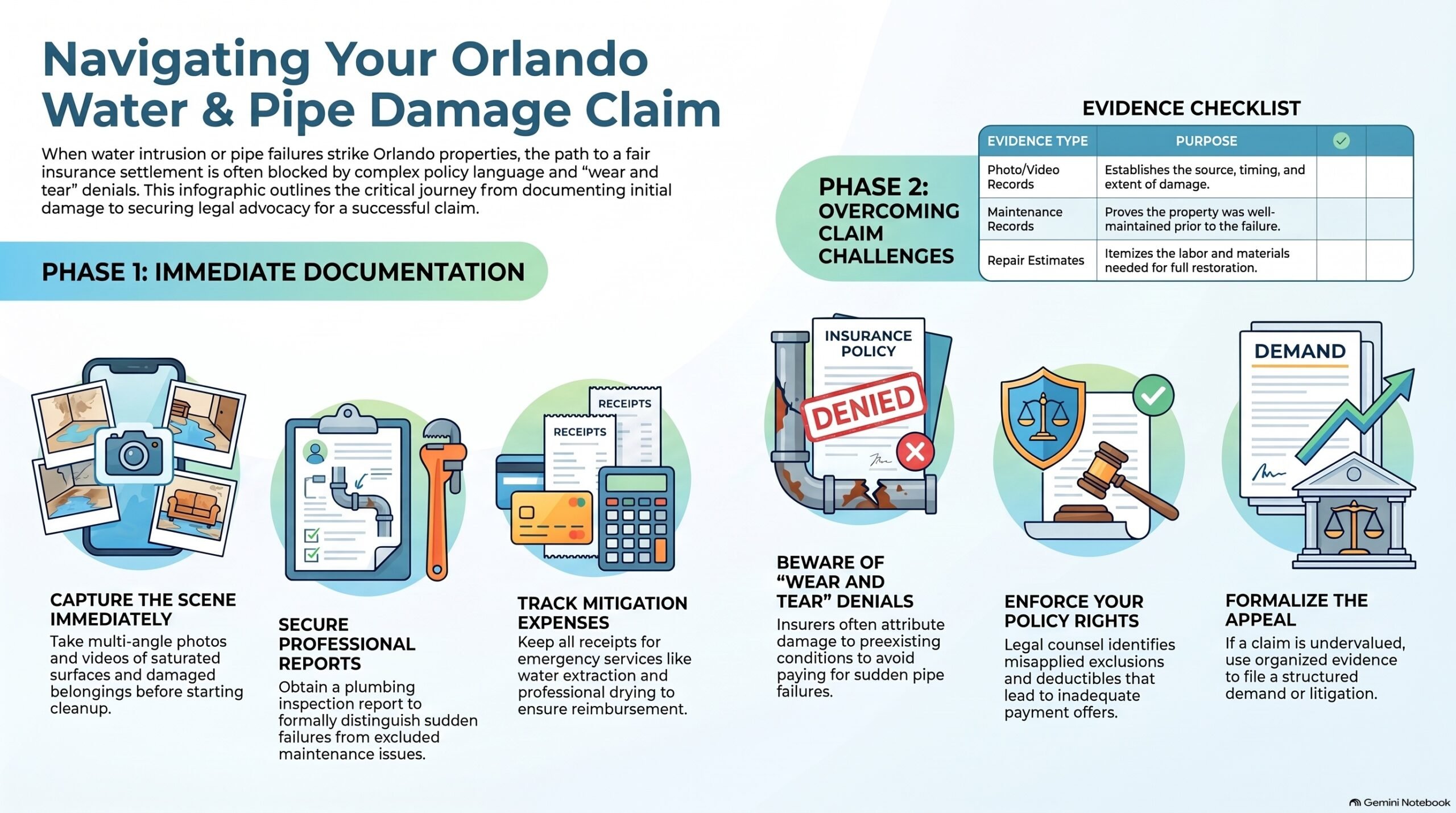
When water intrusion or a burst pipe damages an Orlando property, the resulting insurance claim may involve substantial repair costs, disputed coverage, and questions about the source and timing of the damage. Legal counsel can help property owners organize records, review policy language, and present evidence describing the loss. This assistance may include evaluating photographs, invoices, maintenance documents, inspection findings, and communications with the insurer. Counsel can also help distinguish sudden damage from excluded conditions, address concerns regarding Water Exposure, and determine whether the claimed repairs are reasonably supported.
When insurers issue Insurance Denials or offer payments that do not reflect documented losses, an attorney may examine the stated basis and respond through appropriate negotiations or legal procedures. The process can help preserve deadlines, clarify available coverage, and promote a complete evaluation of the claim. By handling communications and coordinating supporting information, counsel allows affected owners to focus on protecting occupants, stabilizing the property, and making informed decisions while the dispute is addressed.
OUR CONSULTATIONSARE FREE
START YOUR FREE CASE REVIEW

Understanding Orlando Property Claim Water & Pipe Damage Injury Cases
Understanding Orlando property claim water and pipe damage injury cases requires careful attention to the source of the loss, the extent of the resulting damage, and the insurance policy provisions that may govern coverage. A claim typically involves documenting affected structures, personal property, repair needs, and any health or safety concerns connected to the incident. Qualified professionals may evaluate whether emergency services, drying, or Mold remediation are reasonably necessary and supported by evidence.
Policy interpretation is equally important. Coverage may depend on exclusions, deductibles, notice requirements, valuation methods, and endorsements. Insurers often request photographs, invoices, estimates, maintenance records, and statements describing the damage. A policy denial does not necessarily resolve the matter; its stated reasoning should be compared with the policy language and available documentation.
A careful review can identify disputed facts, incomplete investigations, or payment shortfalls. Legal guidance may help preserve evidence, communicate with the insurer, and pursue benefits fairly while supporting the affected property owner’s recovery.
Common Causes of Orlando Property Claim Water & Pipe Damage
Water and pipe damage in Orlando properties commonly results from burst or frozen pipes, leaking plumbing fixtures, roof leaks, and defective window seals. Household appliances, including water heaters, washing machines, and dishwashers, may also release water, causing substantial structural or personal property damage. Identifying the source of the loss is important when evaluating the scope of damage and determining potential insurance coverage.
Burst And Frozen Pipes
Although freezing temperatures are uncommon in Orlando, burst and frozen pipes can still cause substantial property damage when sudden cold snaps, aging plumbing, or inadequate insulation compromise a building’s water lines. When pipes freeze, expanding water creates pressure that may split connections or rupture pipe walls. Once temperatures rise, released water can damage drywall, flooring, insulation, electrical systems, and personal property. Property owners and managers can support occupants by insulating exposed lines, sealing vulnerable openings, maintaining appropriate indoor temperatures, and arranging professional inspections before cold weather. These measures strengthen frozen pipe prevention and reduce avoidable losses. Prompt water leak detection can limit the spread of moisture after a rupture. Photographs, repair records, emergency invoices, and damaged-property inventories may help document the claim. Legal guidance can clarify coverage, deadlines, and insurer responsibilities.
Leaking Plumbing Fixtures
When plumbing fixtures develop worn seals, corroded valves, loose connections, or damaged supply lines, even a minor leak can cause significant property damage if it continues unnoticed. Leaks beneath sinks, around toilets, behind washing machines, or at water heaters may saturate cabinets, flooring, drywall, and insulation. Because fixtures are frequently located in occupied areas, prompt inspection can limit damage and help protect residents from unsafe conditions. Property owners should shut off the affected supply when practical, arrange qualified repairs, and document the source and progression of the loss. Evidence preservation may include photographs, videos, maintenance records, plumber statements, and damaged materials retained when appropriate. Mold documentation is also important when moisture remains present, including dated images, professional assessments, and remediation records. Accurate records can support fair insurance evaluation and informed assistance.
Roof And Window Leaks
Roof and window leaks can cause substantial property damage even when the opening appears minor or develops gradually. Damaged shingles, deteriorated flashing, clogged gutters, failed sealants, and improperly installed windows may permit water to enter walls, ceilings, insulation, and flooring. Wind-driven rain can worsen these conditions, particularly after severe weather. Property owners should document visible damage, preserve damaged materials when safe to do so, and arrange temporary measures to prevent further loss. Photographs, repair estimates, weather reports, and maintenance records may help establish the source, timing, and extent of the damage. Insurance adjuster tactics may include attributing interior damage to maintenance issues or preexisting conditions. Early professional evaluation can clarify coverage and causation. Prompt action also limits Mold remediation costs, protects occupants from unhealthy conditions, and supports a complete, well-organized claim.
Appliance Water Damage
Appliance water damage commonly arises from failed supply lines, ruptured hoses, defective valves, or leaking connections involving washing machines, dishwashers, refrigerators, and water heaters. These failures can release substantial water quickly, damaging flooring, cabinetry, walls, insulation, and personal property. Prompt discovery of appliance leaks helps limit deterioration, mold growth, and repair costs. The property owner should shut off the appliance and, when safe, the main water supply, then document the source, affected areas, and emergency measures with photographs, receipts, and written records. An insurer may evaluate whether the loss resulted from sudden failure, inadequate maintenance, gradual seepage, or faulty installation. Common insurance denial reasons include excluded wear and tear, delayed reporting, insufficient proof, and failure to prevent additional damage. Clear documentation and timely notice can assist affected policyholders seeking a fair property claim resolution.
Don’t Wait. Call Our Florida Personal Injury Lawyers Now!


Legal Rights of Orlando Property Claim Water & Pipe Damage Injury Victims
Property owners and other eligible claimants in Orlando may have legal rights to pursue insurance benefits after water or pipe damage causes covered losses to a home or commercial property. Those rights may include prompt claim handling, fair investigation, payment for covered repairs, and access to policy explanations. A careful advocate can help affected owners protect documentation while serving families, tenants, employees, and communities facing displacement.
- Photographs can preserve the image of soaked flooring, stained ceilings, and damaged belongings before cleanup changes the scene.
- Policyholders may request written reasons for reductions or denials and pursue Insurance denial appeals when coverage appears misapplied.
- Qualified professionals can coordinate mold contamination testing, repair estimates, and records that clarify the scope and value of a loss.
Deadlines, notice requirements, cooperation duties, and policy exclusions can affect recovery. Legal guidance may help claimants communicate accurately, evaluate settlement offers, and pursue available remedies without sacrificing crucial evidence or community responsibilities.
Why Do Orlando Property Claims for Water & Pipe Damage Happen?
Understanding why water and pipe-damage injuries occur can help Orlando claimants identify the source of a loss and preserve evidence to support an insurance claim. Common causes include burst supply lines, deteriorated plumbing, failed water heaters, clogged drains, roof leaks, and malfunctioning appliances. Florida’s heat, humidity, storms, and occasional freezes can accelerate corrosion, weaken seals, and place stress on older systems.
Neighborhood Causes may also contribute when shared walls, condominium pipes, drainage systems, or nearby construction allow water to migrate between properties. Delayed maintenance, improper installation, and inadequate repairs can further increase the damage. Determining whether the loss resulted from sudden failure, gradual deterioration, negligence, or a covered weather event often affects claim evaluation.
Insurance Denials may arise when carriers characterize damage as excluded wear and tear, flooding, seepage, or poor maintenance rather than a covered occurrence. Accurate causation analysis helps clarify responsibility and distinguishes direct water damage from consequential structural or personal injuries. Insurance professionals and legal advocates can serve affected property owners by fairly evaluating these distinctions.
What Should You Do After an Orlando Property Claim for Water & Pipe Damage Injury?
After water or pipe damage, the property owner should promptly document the affected areas, damaged belongings, and necessary repairs with photographs and written records. The owner should notify the insurer without delay, providing accurate information while preserving relevant evidence and correspondence. Consulting a property lawyer can help assess coverage, protect the owner’s rights, and address disputes over the claim.
Document the Damage
In documenting water or pipe damage, the claimant should promptly create a detailed record of the affected property and all resulting losses. Clear photographs and videos should show damaged walls, flooring, ceilings, furniture, appliances, and personal belongings from multiple angles. Moisture mapping can identify hidden dampness and support mold prevention by identifying areas that require drying or monitoring. The claimant should preserve damaged items when it is reasonably safe to do so and avoid discarding materials before their condition is recorded. Receipts, invoices, estimates, and repair documentation should be organized in a dedicated file. Timeline creation also helps establish when the leak began, when the damage was discovered, and when cleanup or temporary measures were implemented. Written notes should distinguish existing conditions from newly affected areas, helping professionals evaluate the property accurately and fairly.
Notify Your Insurer
Notify the insurer promptly upon discovering water or pipe damage, using the reporting method required by the policy. The policyholder should provide the date of discovery, the suspected source, the affected areas, and the immediate measures taken to limit further loss. A clear Water damage timeline, supported by photographs, repair invoices, and communication records, can help establish when conditions developed and how they progressed. The insurer may assign an adjuster, request access, or provide instructions regarding emergency repairs. Those instructions should be followed carefully, while the policyholder retains copies of all submissions and records the names of involved representatives. If moisture creates a potential health concern, occupants and service providers should receive appropriate warnings. Any mold remediation steps should be documented, including assessments, containment, removal, drying, and post-remediation verification, when applicable.
Consult a Property Lawyer
When coverage is disputed, losses are substantial, or injuries are connected to water or pipe damage, consulting a property lawyer may help protect the policyholder’s rights. A lawyer can review the insurance policy, identify applicable deadlines, and explain whether exclusions, valuation methods, or claim-handling practices affect recovery. Early guidance may also help preserve evidence before damaged materials are removed or repairs begin. The policyholder should organize Property documentation, including photographs, repair estimates, invoices, inspection reports, medical records, and written notices sent to the insurer. If tenants, contractors, or property managers are involved, complete tenant communications should be retained and provided for review. Counsel may assist with communications, negotiate with the carrier, and evaluate litigation when settlement efforts fail. Professional advice can support fair treatment while helping affected occupants and owners address safety and financial concerns.
Critical Evidence in an Orlando Property Claim Water & Pipe Damage Injury Case
Important evidence can establish the source of the loss, the extent of the damage, and the insurer’s handling of the claim.
- Photographs and plumbing inspection reports can show visible damage and identify the failed pipe or fixture.
- Repair, mitigation, and insurance correspondence records can document timely action, expenses, and coverage positions.
A complete, organized record may help clarify disputed facts in an Orlando property claim.
Photographs Of Water Damage
Photographs of water damage can provide important evidence in an Orlando property claim involving a burst pipe, plumbing failure, or related loss. Images should capture affected ceilings, walls, flooring, cabinetry, personal belongings, and visible water accumulation before cleanup or repairs begin. Wide photographs can establish the damage’s location and scope, while close images may document staining, swelling, peeling surfaces, and other changes. Date-stamped files, original copies, and consistent records can strengthen the claim by accurately preserving the conditions. Photographs may also support moisture-detection efforts by highlighting areas that require professional attention, even when damage is not immediately obvious. Prompt documentation can assist mold prevention by establishing the need for drying and sanitation. Individuals should avoid disturbing hazardous conditions and photograph safely, without risking injury or further property damage during documentation.
Plumbing Inspection Reports
A plumbing inspection report can establish how a burst pipe, plumbing failure, or related condition caused water damage in an Orlando property claim. Prepared by a qualified professional, the report may identify the failed component, its location, and the incident timeline. Leak source analysis can distinguish sudden accidental damage from gradual seepage, maintenance concerns, or preexisting conditions. The inspector may document corrosion, defective connections, pressure problems, installation errors, or other factors relevant to coverage and responsibility. Findings can also address plumbing code violations that contributed to the failure or increased the resulting damage. Clear photographs, measurements, testing methods, and professional conclusions strengthen the report’s reliability. Such evidence helps insurers, property owners, and advocates evaluate causation fairly while supporting an accurate claim presentation for affected individuals and families.
Repair And Mitigation Records
When water or pipe damage occurs, repair and mitigation records can establish what actions were taken, when they occurred, and whether the response reasonably limited further losses. These records may include emergency service invoices, photographs, moisture readings, drying logs, equipment inventories, work authorizations, and itemized repair estimates. They can demonstrate prompt efforts to protect the property, identify affected materials, and document conditions before reconstruction. Detailed records also help evaluate Insurance denial reasons, particularly allegations that damage resulted from delay, inadequate maintenance, or an excluded condition. Where mold is suspected, reports should identify the sampling locations, laboratory results, and mold testing methods used. Preserving invoices and contractor notes can assist in a careful review of the necessary work, replacement decisions, and the relationship between the original water event and the claimed property damage.
Insurance Claim Correspondence
Insurance claim correspondence provides a written record of how a water or pipe damage claim was reported, investigated, evaluated, and resolved. Letters, portal messages, and an adjuster email may identify reported dates, claimed causes, coverage positions, requested documents, and inspection findings. This material can clarify whether the insurer received timely notice and whether its investigation addressed visible and hidden damage. A documented response strategy should preserve accurate facts, organize supporting records, and address each stated reason for delay, reduction, or nonpayment. If the insurer issues a claim denial, the denial letter should be reviewed for policy language, exclusions, factual assumptions, and procedural deficiencies. An appeal letter can then present photographs, invoices, mitigation records, expert opinions, and relevant policy provisions. Complete correspondence may assist counsel in evaluating benefits and pursuing a fair resolution for affected property owners.
Long-Term Effects of Orlando Property Claim Water & Pipe Damage Injuries
Long-term water and pipe damage may leave persistent structural problems, including weakened materials, hidden deterioration, and recurring repairs. Prolonged moisture can also contribute to mold-related health problems, while remediation, temporary relocation, and denied or delayed coverage may create ongoing financial burdens. These effects should be documented carefully when evaluating the full scope of a property claim.
Persistent Structural Damage
Water and pipe damage can cause persistent structural problems long after visible moisture has been removed. Saturated framing, subflooring, drywall, and insulation may gradually weaken, causing movement, sagging, or deterioration that becomes apparent months later. Inadequate drying can also leave moisture trapped in walls, ceilings, and flooring, causing materials to warp or lose their load-bearing capacity. Professional inspections and hidden leak detection help identify concealed damage before repairs become more extensive. Detailed photographs, moisture readings, repair estimates, and contractor statements can establish the connection between the condition and the covered event. When insurers minimize delayed deterioration or deny necessary work, policyholders may need insurance denial appeals supported by organized evidence and qualified assessments. Prompt action helps preserve safe living conditions and supports fair claim resolution for affected households and communities.
Mold-Related Health Problems
How can mold-related health problems be connected to property claim water and pipe damage? When leaks or flooding leave materials damp, mold may develop behind walls, beneath flooring, or inside insulation. These hidden health effects can persist after visible water is removed, particularly when drying and remediation are incomplete. Microbial exposure may aggravate allergies, asthma, sinus irritation, coughing, skin reactions, and other respiratory concerns. HVAC contamination can distribute spores and fragments throughout a property, extending exposure to occupants who may not recognize the source. Indoor air symptoms, including congestion, wheezing, headaches, and fatigue, should be documented and medically evaluated. A qualified professional can assess moisture conditions, air quality, and potential mold pathways. Prompt attention helps protect vulnerable residents and supports informed decisions regarding property damage and health concerns.
Ongoing Financial Burdens
Ongoing financial burdens can arise when water or pipe damage leads to injuries, illness, displacement, or prolonged treatment. Medical appointments, prescriptions, rehabilitation, and lost income may continue long after emergency repairs are completed. Families can also face temporary lodging expenses, damaged belongings, transportation costs, and increased utility bills while the property is restored. These pressures may create housing affordability burdens, particularly when occupants must pay rent elsewhere while remaining responsible for mortgage payments, insurance premiums, or repair-related charges. A careful review of Insurance claim options can help identify coverage for medical losses, additional living expenses, personal property, and diminished use of the home. Documentation of expenses, treatment, missed work, and communications with insurers may support an accurate claim. Legal guidance can help affected individuals understand deadlines and pursue fair compensation.
Proving Liability in Orlando Property Claim Water & Pipe Damage Injury Cases
When a pipe failure or related leak damages a property, establishing liability requires evidence connecting the responsible party’s conduct or contractual obligation to the resulting loss. A property owner, landlord, contractor, plumber, or maintenance company may owe a Duty of care, depending on the circumstances and governing agreements. Negligence proof can include inspection records, repair histories, photographs, water readings, maintenance requests, and witness accounts showing notice of a dangerous condition or an unreasonable failure to address it. Evidence preservation is crucial because damaged materials, failed valves, and affected structures may change or be discarded during cleanup. Detailed timelines can clarify when the leak began, who received notice, and what actions followed. Expert testimony may help identify the failure’s origin, evaluate whether proper installation or maintenance was performed, and distinguish preexisting conditions from newly caused damage. Careful documentation enables affected individuals to present reliable claims and supports fair determinations of responsibility for those seeking to protect others.
Dealing With Insurance Companies After an Orlando Property Claim: Water & Pipe Damage Injury
Communicating with insurers after an Orlando property claim involving water or pipe damage requires prompt reporting, organized documentation, and careful review of policy terms. The policyholder should preserve photographs, repair estimates, invoices, inspection findings, and records of communications with contractors or building representatives. Immediate mitigation may be necessary to prevent additional damage, but repairs should be documented before damaged materials are discarded whenever safely possible.
A policy coverage review can identify applicable protections, exclusions, deductibles, deadlines, and obligations concerning emergency repairs or proof of loss. Statements to an adjuster should remain accurate, limited to established facts, and consistent with supporting records. The policyholder should avoid accepting a premature settlement before the full scope of damage is understood.
Settlement negotiation tactics may include presenting a structured demand supported by itemized costs, expert opinions, and documented losses. When coverage disputes, undervaluation, or delayed responses arise, a qualified attorney can communicate with the insurer and protect the policyholder’s interests while seeking a fair resolution.
What to Expect During an Orlando Property Claim Water & Pipe Damage Injury Claim Process
The process typically begins with an initial claim assessment to evaluate the cause, scope, and potential coverage of the water or pipe damage. Claimants should document affected areas, damaged property, repair estimates, and communications, and respond carefully to insurance adjuster requests. Depending on the insurer’s position, the matter may conclude through settlement negotiations or proceed to litigation.
Initial Claim Assessment
An initial claim assessment establishes the scope of the water or pipe damage, identifies potential coverage issues, and determines the evidence needed to support the property owner’s position. During this stage, a lawyer may review the policy, cause of loss, reported timeline, and communications with the insurer. The assessment also considers whether exclusions, deductibles, limits, or notice requirements could affect available benefits. An adjuster timeline helps clarify when the insurer inspected the property, requested information, or issued a coverage decision. If moisture remains, Mold remediation may require prompt professional attention to preserve the claim’s integrity. Counsel can explain appropriate next steps, identify responsible parties, and communicate with involved professionals. This organized evaluation allows the owner to understand potential recovery, avoid preventable missteps, and pursue fair treatment throughout the process.
Documenting Water Damage
When water or pipe damage occurs, timely and thorough documentation helps establish the property’s condition, the cause of the loss, and the extent of covered repairs. Photographs and videos should capture affected rooms, ceilings, flooring, walls, personal belongings, and visible plumbing components before cleanup or removal begins. Dated images, written descriptions, and an inventory of damaged items can preserve important details. Moisture mapping may identify concealed dampness behind walls, beneath flooring, or within cabinets, supporting decisions about drying and remediation. Receipts for emergency services, temporary protective measures, and replaced materials should be retained with organized records. Insurance proofing includes preserving maintenance documents, repair histories, purchase receipts, and evidence of ownership that may clarify the property’s pre-loss condition and the value of affected contents for those seeking fair recovery.
Insurance Adjuster Communications
Although an insurance adjuster may serve as the primary point of contact, the adjuster represents the insurer and evaluates coverage, causation, and the amount of the claimed loss. During communications, the policyholder may be asked for a recorded statement, photographs, repair estimates, maintenance records, and access to the property. Responses should remain accurate, consistent, and limited to known facts. Independent Evidence, including plumbing reports, invoices, and moisture readings, can clarify the source and extent of damage. Promptly providing organized documentation may reduce misunderstandings and help identify Coverage Disputes. Communication Mistakes, such as speculation about fault or premature admissions, may complicate evaluation. An adjuster’s questions, inspection findings, and requests should be documented carefully. If claim Denials or unexplained delays arise, the policyholder may request written reasons and review the policy with qualified assistance.
Settlement Or Litigation
Documented communications and organized evidence can position a policyholder for informed settlement discussions after a water or pipe damage claim is investigated. The insurer may review photographs, repair estimates, invoices, policy provisions, and statements before presenting an Insurance payout. A policyholder should evaluate whether the proposed amount addresses covered structural repairs, personal property losses, mitigation expenses, and related living costs. A careful Negotiation strategy may involve identifying disputed terms, correcting factual errors, and submitting additional supporting documentation. If negotiations fail, the matter may proceed to appraisal, mediation, arbitration, or litigation, depending on the policy and applicable Florida law. Litigation generally requires formal pleadings, discovery, expert testimony, and court deadlines. Along either path, organized records and timely professional guidance can help protect the policyholder’s interests and support a fair resolution.
Compensation for Orlando Property Claim Water & Pipe Damage Injury Damages
Compensation for water and pipe damage may include the reasonable cost of emergency mitigation, repairs, replacement of damaged materials, and restoration of affected areas. A claim may also address water extraction, drying, debris removal, and Mold remediation when contamination results from the covered event. Documentation is necessary. Photographs, invoices, inspection reports, maintenance records, and communications with the insurer can help establish the property’s condition and the necessity of the requested work.
For tenants, tenant rights may affect responsibility for damaged personal property, temporary relocation, and required habitability measures. Owners may need to consider property valuation when determining the appropriate scope of restoration or replacement. If an insurer unreasonably delays investigation, withholds benefits, or misrepresents policy provisions, the conduct may support an insurance bad faith claim. A qualified attorney can review coverage, identify responsible parties, and pursue compensation that reflects documented losses while helping affected individuals and families secure safe, functional living conditions.
Economic vs Non-Economic Damages in Orlando Property Claim Water & Pipe Damage Cases
Economic damages may include repair costs, replacement expenses, lost use, and other measurable financial losses resulting from water or pipe damage. Non-economic losses, such as inconvenience, disruption, and diminished enjoyment of the property, may also warrant consideration depending on the claim and applicable policy. Proving these damages generally requires organized documentation, expert assessments, photographs, invoices, and evidence connecting the losses to the covered event.
Economic Damage Calculations
When a covered water or pipe loss occurs, the calculation of damages begins with a clear separation between economic losses and non-economic harm. Economic damages are measurable financial costs supported by reliable documentation. They may include emergency extraction, drying services, plumbing repairs, damaged building materials, replacement of personal property, temporary lodging, and reasonable storage expenses. Detailed repair cost estimates should identify labor, materials, depreciation, and necessary code-compliance work. In properties affected by moisture, mold remediation planning may establish the anticipated scope of inspection, containment, removal, cleaning, and post-treatment testing. Invoices, receipts, photographs, contractor reports, inventories, and payment records help demonstrate the amount claimed. A careful calculation should distinguish covered damage from maintenance, preexisting deterioration, or improvements, allowing the insurer and affected property owner to evaluate the claim accurately and efficiently.
Non-Economic Losses
Although property insurance claims primarily involve measurable financial losses, certain water or pipe damage events may also produce non-economic harm that is more difficult to quantify. Residents may experience disrupted routines, loss of privacy, diminished comfort, or emotional strain while responding to flooding, displacement, and intrusive repairs. Such effects can be especially significant for older adults, children, or individuals with health-related vulnerabilities. Distinguishing stress from anxiety may help clarify whether the reaction stems from immediate disruption of property or develops into persistent apprehension about safety and restoration. The phrase “pain and suffering” may also apply when an incident aggravates physical discomfort or causes substantial emotional distress. Unlike repair bills and replacement costs, these losses lack a uniform market value, making compassionate and individualized consideration important when evaluating the claim’s overall impact.
Proving Property Claim Damages
Establishing damages in an Orlando water or pipe damage claim requires clear proof that connects each claimed loss to the covered event. Economic damages generally include reasonable repair invoices, water extraction charges, replacement costs, reduced property value, and additional living expenses. Estimates should identify the necessary work, materials, labor, and depreciation, while receipts and payment records support the requested amounts.
Non-economic damages may involve inconvenience, disruption, loss of use, and diminished enjoyment of the home, although coverage and recoverability depend on the policy and applicable law. A water leak’s timing, location, and cause should be documented through photographs, videos, maintenance records, plumber reports, and prompt notice to the insurer. Careful evidence gathering also preserves damaged materials and establishes pre-loss condition. Organized documentation helps claimants and their representatives present accurate, fair, and well-supported demands.
Don’t Wait. Call Our Florida Personal Injury Lawyers Now!
When an Orlando Property Claim Water & Pipe Damage Injury Case Goes to Trial vs. Settlement
The decision to resolve an Orlando property claim involving water or pipe damage through settlement or trial depends on the strength of the evidence, the extent of the losses, and the insurer’s willingness to provide fair compensation. Settlement may offer a faster, more predictable resolution while reducing litigation costs and allowing repairs to proceed sooner. Negotiations should account for policy language, exclusions, deductibles, and differences in insurance coverage that may affect available benefits.
Trial may become necessary when the insurer denies a valid claim, undervalues documented damage, or refuses to address disputed causation. A court can evaluate testimony, records, photographs, expert opinions, and repair estimates before determining responsibility and compensation. Evidence preservation steps, including limiting additional damage, retaining damaged materials when practical, and recording communications, can strengthen either approach. Counsel may advise pursuing settlement when reasonable terms serve the property owner’s needs. If negotiations remain inadequate, trial provides a formal process for presenting the claim and seeking a complete remedy.
Florida Laws That May Affect Your Orlando Property Claim Water & Pipe Damage Case
Florida laws governing insurance contracts, property damage, and consumer protections may materially affect an Orlando water-and-pipe-damage claim. Policy language, Florida statutes, and applicable regulations can influence coverage, claim handling, documentation, and communications with an insurer. A careful review may help identify obligations while supporting fair treatment of affected owners and occupants.
- Prompt reporting: Notice requirements and truthful statements can affect how an insurer evaluates a sudden leak, burst pipe, or resulting structural damage.
- Reasonable protection: Mitigation requirements issues may arise when temporary repairs, drying, or removal of damaged materials are necessary to prevent worsening conditions.
- Claims conduct: Insurance adjuster delays, inadequate explanations, or incomplete investigations may raise concerns under Florida’s insurance and consumer-protection framework.
Photographs, invoices, moisture readings, and written communications can create a clear record of events and expenses. Because policy provisions and regulatory duties vary, qualified legal review can clarify responsibilities, resolve disputes, and promote orderly resolutions that protect property, health, and community welfare.
The Statute of Limitations for Orlando Property Claim Water & Pipe Damage Injury Cases
Timely action can be crucial in Orlando water and pipe damage injury cases because Florida law imposes deadlines for filing claims and lawsuits. Florida’s statute of limitations may depend on the claim’s legal character, the date damage was discovered, and whether a policy or governmental entity is involved. Missing an applicable deadline can bar recovery, even when property damage is substantial. Policyholders should review notice requirements separately, because insurers may demand prompt reporting before Settlement timelines are considered. Early evidence preservation can protect photographs, repair records, moisture readings, invoices, and communications showing causation and the extent of loss. A documentation checklist can organize policy documents, incident dates, mitigation efforts, contractor statements, and claim correspondence. Insurance disputes may involve delayed payments, coverage exclusions, valuation disputes, or allegations of inadequate notice. Because deadlines and exceptions vary, affected owners should promptly identify the governing dates and avoid relying on informal assurances. Careful recordkeeping and timely action help preserve available remedies while supporting an accurate claim evaluation.
How an Orlando Property Claim Water & Pipe Damage Lawyer Can Help You
When water or pipe damage disrupts a property, an Orlando property claim water and pipe damage lawyer can evaluate the policy, investigate the cause of loss, and identify the compensation available under Florida law.
The lawyer can organize evidence, communicate with insurers, and present a clear claim supported by photographs, repair estimates, maintenance records, and expert findings.
- A carefully documented file can show soaked flooring, damaged walls, and the source of the leak.
- Policy analysis can clarify coverage for emergency services, structural repairs, personal property, and mold remediation costs.
- Skilled negotiation can replace confusing insurer correspondence with a focused demand supported by credible evidence.
If an insurer undervalues or rejects the claim, counsel can explain available Insurance denial appeals and pursue an appropriate response. The lawyer may also coordinate with contractors, engineers, and remediation professionals so that the claimed losses are accurately assessed. Through steady guidance and accurate documentation, legal representation helps property owners protect their homes, businesses, and ability to serve tenants, customers, or community members responsibly.
When to Contact an Orlando Property Claim Water & Pipe Damage Lawyer
Recognizing the appropriate time to contact an Orlando property claim water and pipe damage lawyer can help a property owner document losses and pursue available insurance benefits. Legal guidance may be appropriate soon after a burst pipe, supply line failure, appliance leak, or storm-related intrusion, particularly when the damage affects habitability or business operations. Early consultation can help preserve photographs, invoices, damaged materials, and communications while facts remain clear. A lawyer may also help organize a water exposure timeline, including discovery, emergency shutoff, drying, inspection, and reported losses. If an insurer delays inspection, requests extensive documentation, questions coverage, or offers an amount that appears inconsistent with the damage, prompt contact becomes especially important. Property owners should also seek assistance when hidden moisture, recurring leaks, or suspected mold create uncertainty about the appropriate mold remediation steps. Timely advice supports orderly communication and informed decision-making, enabling affected individuals to protect their households, employees, tenants, or customers as the claim progresses.
Why You Need an Experienced Orlando Property Claim Water & Pipe Damage Lawyer
An experienced Orlando property claim water and pipe damage lawyer can provide the focused legal and insurance knowledge needed to evaluate a complex loss and protect the property owner’s interests. Such counsel can interpret policy language, identify applicable coverage, and distinguish between sudden pipe failures, resulting water damage, and exclusions that insurers may assert. Early involvement also helps preserve photographs, repair estimates, damaged materials, and communications that may support a fair claim.
A lawyer can coordinate with qualified professionals regarding Water mitigation, reducing additional damage while documenting the cause, timing, and scope of the loss. This process may include reviewing invoices, moisture readings, mold concerns, and health documentation when occupants experience conditions affecting their well-being. Experienced representation can also challenge incomplete investigations, unsupported denials, delayed payments, or undervaluation of covered repairs and personal property. By managing communications and presenting organized evidence, counsel helps reduce burdens on property owners and supports a resolution that responsibly serves their families, tenants, employees, or community.
How to Choose the Right Orlando Property Claim Water & Pipe Damage Lawyer for Your Case
Selecting the right Orlando property claim water and pipe damage lawyer requires more than reviewing advertising or general practice areas. A careful evaluation should consider experience with water loss claims, policy interpretation, documentation requirements, and negotiations with insurers. The lawyer should understand how leaks, burst pipes, mold, and related structural damage can affect coverage and the value of a claim.
Client communication is another important consideration. A qualified attorney should explain the process clearly, respond within reasonable timeframes, and provide practical updates without creating unrealistic expectations. Initial consultations can help determine whether the lawyer listens carefully and understands the property owner’s objectives.
Potential clients should also examine Fee structures, including contingency percentages, litigation expenses, and any costs that may remain payable if recovery is unsuccessful. Written agreements should identify these terms precisely. Reviewing professional credentials, disciplinary history, and references may further assist in selecting counsel prepared to serve the client’s interests with diligence, transparency, and sound judgment.
About The Law Offices of Anidjar & Levine
The Law Offices of Anidjar & Levine represents property owners pursuing insurance claims involving water intrusion, burst pipes, plumbing failures, and related structural damage.
The firm evaluates reported losses, reviews policy language, and helps clients understand available remedies after a covered event.
Its attorneys may assist with an Insurance coverage review, documentation, claim preparation, communications with insurers, and responses to disputed valuations or denials.
Each matter receives attention to the facts affecting causation, coverage, mitigation, and repair costs.
The firm also recognizes the importance of Pipe failure prevention, particularly for owners seeking to reduce future damage through maintenance, timely inspections, and qualified repairs.
By serving clients with diligence and careful preparation, the practice seeks to protect policyholder interests while promoting an orderly claims process.
Property owners may benefit from consulting counsel promptly, preserving evidence, limiting further loss, and obtaining guidance before making statements or accepting a settlement that may not reflect the full scope of damage.
Frequently Asked Questions
Can I File a Water Damage Claim if My Property Is a Rental?
A rental property may qualify for a water damage claim, but eligibility depends on the policy, the cause of the damage, and the claimant’s legal interest. Typically, the landlord pursues structural damage, while a tenant may seek coverage for personal belongings or additional living expenses under renters insurance. Prompt notice, photographs, mitigation efforts, and lease review are important. Because landlord-tenant responsibilities vary, professional guidance can help preserve rights and avoid coverage complications.
Does Homeowners Insurance Cover Mold Resulting From Pipe Damage?
Homeowners insurance may cover mold resulting from sudden, accidental pipe damage, but coverage depends on the policy’s terms, the cause of the leak, and prompt mitigation. Many policies contain mold exclusions or impose strict limits on remediation expenses. Gradual leaks, neglected maintenance, and recurring moisture are commonly excluded. The policyholder should document the damage, prevent further spread, promptly notify the insurer, and obtain a written coverage determination before authorizing extensive repairs.
What Happens if a Contractor Caused the Plumbing Leak?
When a contractor causes a plumbing leak, the property owner may pursue Contractor Liability through the contractor’s insurance or other legal remedies. Prompt Evidence Collection, including contracts, invoices, photographs, inspection reports, and communications, can establish causation and damages. The homeowner should also notify the property insurer, because Repair Coverage may apply initially, subject to policy terms. An Insurance Denial may require review of exclusions, liability allocation, and available claims against responsible parties.
Can I Remain in My Home During Water Damage Repairs?
A homeowner may remain during water-damage repairs if the property is structurally sound and free of hazardous mold, contaminated water, exposed wiring, or unsafe air quality. The contractor should explain necessary precautions, restricted areas, and repair scheduling before work begins. If conditions threaten health, utilities are disconnected, or substantial demolition is required, temporary housing may be appropriate. The insurer should document these needs and clarify coverage before relocation expenses are incurred.
How Are Emergency Mitigation and Restoration Expenses Handled?
Emergency mitigation and restoration expenses are typically handled through the property insurance claim, subject to policy terms, deductibles, limits, and exclusions. Emergency coverage may apply to reasonable services that prevent further damage, such as water extraction, drying, and temporary protection. The policyholder should notify the insurer promptly and preserve invoices, photographs, contracts, inspection reports, and communication records. This documentation supports reimbursement and helps establish that charges were necessary, reasonable, and properly authorized.
—————————
Water and pipe damage can disrupt an Orlando property and create substantial financial burdens.
Insurance disputes may involve coverage exclusions, delayed investigations, inadequate payments, or disagreements about the cause of the damage.
An experienced Orlando property claim water and pipe damage lawyer can review the policy, document losses, communicate with insurers, and pursue appropriate compensation.
The Law Offices of Anidjar and Levine provides informed guidance throughout the claims process, helping property owners understand their rights and legal options.
For assistance with other accident-related matters, visit our Orlando Personal Injury Lawyer page.

