An Orlando rideshare accident lawyer can investigate the collision, identify every potentially at-fault party, and determine which insurance policy applies based on the driver’s app status. The Law Offices of Anidjar and Levine can help gather crash reports, photographs, witness statements, vehicle data, surveillance footage, medical records, and trip information. Florida’s comparative negligence rules may affect recovery, while uninsured motorist coverage could provide another source of compensation. Legal guidance can help preserve evidence, address insurers, document damages, and present a clear claim. Learn more from an Orlando Personal Injury Lawyer about the process and available protections.
Main Takeaways
- An Orlando rideshare lawyer can investigate drivers, rideshare companies, insurers, and other potentially responsible parties after a crash.
- Liability evidence may include police reports, photographs, witnesses, app records, vehicle data, medical records, and available video.
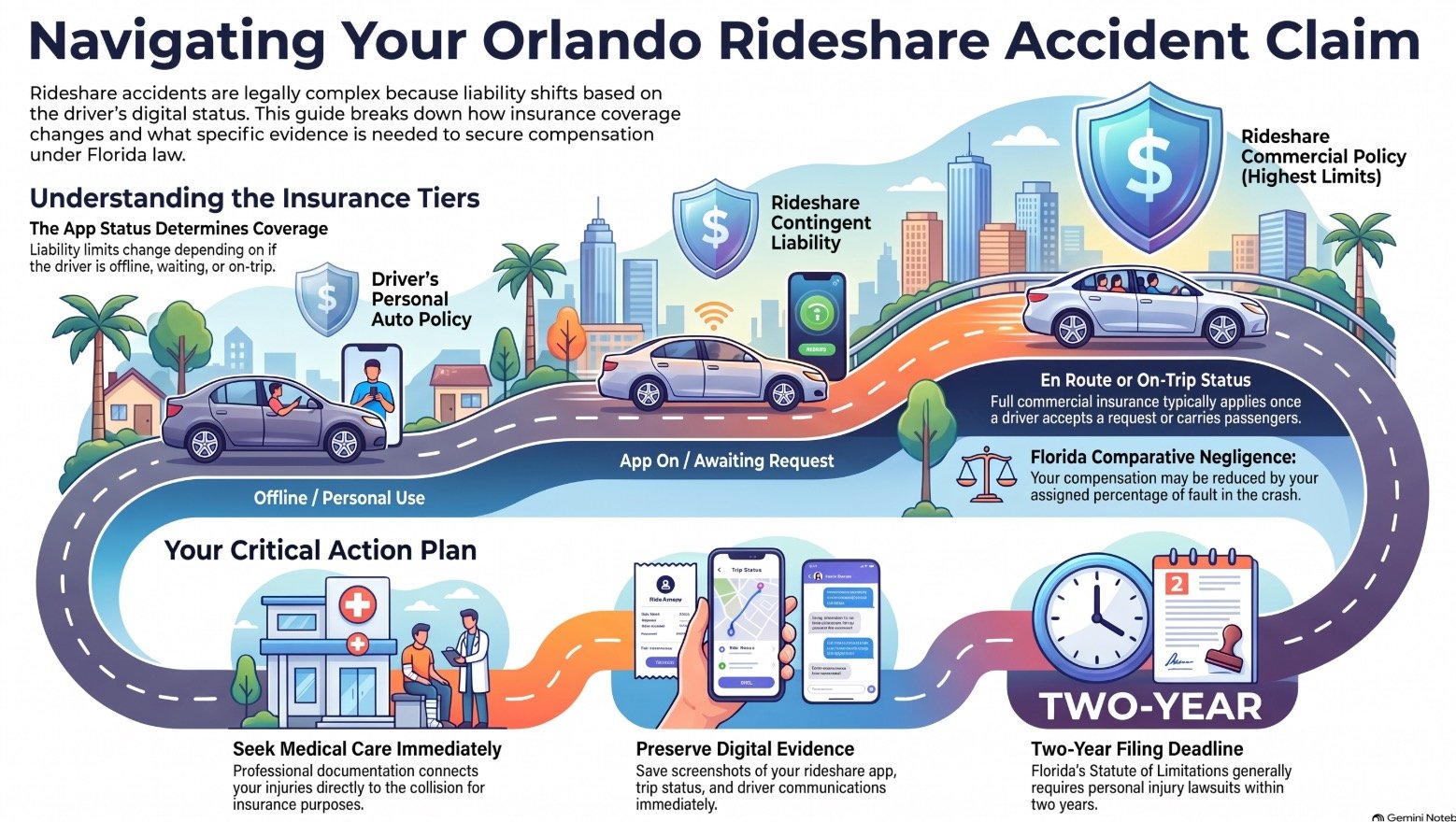
- Rideshare insurance coverage depends on whether the driver was offline, awaiting a request, en route, or transporting a passenger.
- Florida comparative negligence rules may reduce compensation based on each party’s assigned share of fault.
- Seek medical care promptly, preserve evidence, document the scene, and avoid statements that could undermine your insurance claim.
How We Can Help With Your Orlando Car Accident Rideshare At-Fault Parties Injury Claim
When an Orlando rideshare accident involves multiple potentially responsible parties, determining liability requires a careful review of the crash circumstances, driver status, insurance coverage, and available evidence. A legal team can help preserve this information while treating each injured person with respect and diligence.
The process may include gathering collision reports, photographs, witness accounts, vehicle data, and app records showing whether the driver was available, en route, or transporting a passenger. Attorneys can communicate with rideshare companies, insurers, and other involved parties while examining applicable policies and potential coverage disputes. This review helps clarify rideshare liability without making unsupported assumptions.


Medical documentation also receives careful attention. Records describing diagnoses, treatment, limitations, and prognosis can connect injuries to the collision and support an accurate evaluation of losses. The legal team may coordinate with medical providers, protect deadlines, organize evidence, and present the claim clearly. By handling these responsibilities, counsel lets injured individuals focus on recovery while their interests are represented throughout the claim process.
Understanding Orlando Car Accident Rideshare At-Fault Parties Injury Cases
OUR CONSULTATIONSARE FREE
START YOUR FREE CASE REVIEW

Understanding an Orlando rideshare accident injury case begins with identifying how the collision occurred, who contributed to it, and which insurance policies may apply. The analysis may involve the rideshare driver, another motorist, the transportation platform, vehicle owners, or other responsible entities. Investigators and legal professionals typically examine police reports, medical records, driver-app status, trip information, witness accounts, and available video evidence.
Florida’s Comparative negligence rules can affect financial recovery when an injured person or multiple parties share responsibility. A claim may consequently require a careful allocation of fault rather than a single conclusion about liability. Understanding rideshare insurance basics is equally important because coverage can change depending on whether the driver was offline, available for a ride, en route to a passenger, or transporting that passenger. Policy limits, exclusions, and overlapping coverage must be reviewed precisely. A well-supported case helps protect injured individuals and promotes accountability while guiding families toward informed decisions and appropriate assistance.
Don’t Wait. Call Our Florida Personal Injury Lawyers Now!
Common Causes of Orlando Car Accident Rideshare At-Fault Parties


Common causes of rideshare-related accidents in Orlando include distracted driving, speeding, reckless maneuvers, and operating a vehicle while impaired. Unsafe passenger pickups, such as stopping in traffic lanes or merging abruptly, may also create substantial hazards for passengers and other motorists. Identifying the contributing conduct is critical when evaluating potential liability among rideshare drivers, companies, and other at-fault parties.
Distracted Rideshare Drivers
Distracted rideshare drivers are a major cause of Orlando motor vehicle accidents, especially when they use navigation apps, accept ride requests, read messages, or interact with passengers while driving. These activities can divert visual attention, manual control, or mental focus from traffic conditions. Texting at fault may involve composing messages, reviewing notifications, or responding to dispatch communications instead of monitoring nearby vehicles and pedestrians. Passenger distraction may occur when riders ask questions, request route changes, or need help with luggage, especially when the driver turns to address them. A driver’s responsibility remains to operate safely and maintain proper awareness, regardless of commercial pressures or passenger demands. Evidence may include application records, vehicle data, witness accounts, phone logs, and surveillance footage. This information can help injured individuals identify responsible parties and pursue appropriate support.
Speeding And Reckless Driving
Speeding and reckless driving by rideshare operators can create severe crash risks, particularly in congested Orlando traffic, near intersections, and in areas with frequent pedestrian activity. Excessive speed reduces reaction time, increases stopping distance, and magnifies the force transferred during a collision. Aggressive lane changes, tailgating, illegal passing, and ignoring traffic signals can further endanger passengers, motorists, cyclists, and pedestrians. Weather conditions, including heavy rain and reduced visibility, may make these choices especially hazardous by limiting traction and roadway awareness. Road rage can also prompt dangerous acceleration, confrontational actions, or deliberate disregard for surrounding traffic. Evidence such as app records, vehicle data, witness statements, traffic footage, and collision reports may help establish how speed or reckless conduct contributed to a crash. Identifying responsible parties supports injured individuals seeking accountability and appropriate compensation.
Impaired Driving
When a rideshare driver operates a vehicle while impaired by alcohol, prescription medication, or illegal substances, the resulting loss of judgment, coordination, and reaction time can place passengers and other road users at substantial risk. Impairment may support a negligence claim and, when proven, can increase potential liability for resulting injuries, property damage, and wrongful death. Relevant information may include toxicology reports, arrest records, medical documentation, vehicle data, and evidence of prior warning signs. Prompt Evidence preservation helps prevent the loss or alteration of essential materials. Attorneys may interview witnesses to clarify the driver’s behavior, timing, and condition before the collision. Insurance exclusions can complicate coverage when a policy excludes losses connected to criminal conduct or intoxication. Carefully review available policies and applicable Florida law to identify responsible parties and appropriate compensation.
Unsafe Passenger Pickups
Unsafe passenger pickups can create significant collision risks when a rideshare driver stops in traffic lanes, blocks travel paths, or allows a passenger to enter or exit near moving vehicles. Poor pickup design may force passengers into bicycle lanes, crosswalks, or areas where approaching drivers have limited visibility. These conditions can endanger passengers, pedestrians, cyclists, and other motorists, particularly near airports, hotels, schools, and busy entertainment districts. Drivers may contribute to collisions by disregarding designated loading zones, stopping abruptly, or focusing on locating a passenger instead of surrounding traffic. Passenger safety requires choosing legal, visible locations and leaving enough space for doors to open away from moving vehicles. When a crash occurs, responsibility may involve the rideshare driver, another motorist, a property owner, or transportation planners whose layout created foreseeable hazards.
Legal Rights of Orlando Car Accident Rideshare At-Fault Parties Injury Victims
Injured victims of Orlando rideshare accidents can pursue compensation from any party whose negligence contributed to the collision, including the rideshare driver, another motorist, or, in certain circumstances, the rideshare company and its insurer. Florida law may permit recovery for medical expenses, lost income, property damage, and pain-related losses. A rideshare duty may apply differently depending on whether the driver was logged into the platform, awaiting a request, or transporting a passenger. Prompt legal guidance can help identify applicable coverage and responsible parties.
Orlando rideshare accident victims may pursue compensation from negligent drivers, rideshare companies, or insurers, depending on the circumstances and applicable coverage.
Victims should prioritize:
- Evidence preservation, including photographs, medical records, trip information, and witness contact details.
- Timely reporting to insurers while avoiding statements that could undermine a claim.
- Consultation with counsel regarding deadlines, liability, and settlement evaluations.
Those assisting injured individuals can support accurate documentation and access to appropriate services without pressuring victims to make immediate decisions. Carefully reviewing the collision circumstances helps protect rights and promote fair compensation.
Why Do Orlando Car Accident Rideshare At-Fault Parties Injuries Happen?
Orlando rideshare injuries commonly occur when negligent driving combines with the demands of app-based transportation, including frequent route changes, time pressure, passenger distractions, and unfamiliar roadways. Drivers may speed, follow too closely, make unsafe lane changes, or use mobile apps while driving. Fatigue, impaired driving, and inadequate knowledge of Central Florida traffic patterns can further increase collision risks.
Injuries may also result from poorly maintained vehicles, defective safety equipment, or unsafe pickup and drop-off locations. Rideshare platform liability can become relevant when a company’s policies, screening practices, or technology contribute to hazardous conditions, although responsibility often depends on the circumstances and insurance coverage involved. Passenger safety protocols, including proper seat-belt use, secure loading practices, and careful communication with drivers, may reduce preventable harm. Other motorists, pedestrians, and commercial entities can also contribute to a crash. Understanding these causes helps injured individuals and their supporters see how multiple negligent actions can combine to cause serious injuries.
What Should You Do After an Orlando Car Accident Rideshare At-Fault Party Injury?
After an Orlando rideshare accident injury, the injured person should seek immediate medical care, even when symptoms initially appear minor. Document the accident scene with photographs, witness information, and relevant vehicle or trip details. Those involved should also identify each potentially responsible rideshare party, including the drivers, companies, and applicable insurers.
Seek Immediate Medical Care
Prompt medical evaluation should be a priority for anyone experiencing pain or other symptoms following a rideshare collision in Orlando. A qualified healthcare professional can identify injuries that may not be immediately apparent, recommend appropriate treatment, and guide safe recovery. Do not dismiss post-accident symptoms such as headaches, neck stiffness, dizziness, numbness, or worsening soreness, even if the initial discomfort seems minor.
Timely treatment also creates medical documentation connecting reported conditions to the collision. Patients should describe all symptoms accurately, follow prescribed recommendations, and attend scheduled appointments. This information may assist those serving injured individuals by clarifying treatment needs and supporting later claims. Medical providers can also explain warning signs requiring urgent attention. Because insurance deadlines may restrict available remedies, prompt care and communication with qualified legal professionals can help protect an injured person’s interests. Eyewitness testimony may later supplement, but never replace, appropriate medical evaluation.
Document the Accident Scene
Once medical needs are addressed, document the accident scene as thoroughly as safety conditions permit. Photograph vehicle positions, visible damage, debris, skid marks, nearby signs, and surrounding landmarks from several angles. Images should be taken without entering traffic or creating additional hazards. Notes should record the date, time, weather, roadway conditions, lighting, and traffic control devices, including signals, signs, or cones. If safe, the injured individual or a designated helper should collect contact information from observers and request concise Witness statements describing what each person saw. Video may capture changing conditions, but it should not interfere with emergency responders or other motorists. Preserving these details promptly can help medical providers, insurers, and legal professionals understand how the collision occurred and evaluate the resulting injuries.
Identify Responsible Rideshare Parties
Determining the responsible rideshare parties requires identifying the driver, the rideshare company, and any other motorists whose conduct may have contributed to the collision. Police reports, witness accounts, vehicle damage, and application records can clarify whether the driver was transporting a passenger, traveling to a pickup, or waiting for a request. The driver’s personal insurer and the company’s commercial coverage may apply differently depending on that status. Evidence may also reveal negligent hiring, inadequate training, unsafe vehicle maintenance, or violations of the driver contract. Other potentially responsible parties include vehicle owners, employers, manufacturers, and roadway entities when defects or hazardous conditions contributed. A qualified attorney can preserve electronic records, determine applicable insurance limits, and coordinate claims while protecting injured individuals’ interests.
Critical Evidence in an Orlando Car Accident Rideshare At-Fault Parties Injury Case
Critical evidence can establish who caused the Orlando rideshare crash and which insurance coverage may apply to the injured person’s losses.
Important materials include:
- Rideshare app records showing trip status, route, and driver activity
- Driver insurance policies and applicable rideshare coverage
- Crash-scene evidence and medical treatment documentation
Together, these records can clarify liability, support injury claims, and preserve information that may otherwise be lost.
Rideshare App Records
Because rideshare app records can establish what occurred before, during, and after a collision, they often provide essential evidence in an Orlando car accident injury case involving disputed at-fault parties. These records may show whether a driver was offline, waiting for a request, traveling to pick up a passenger, or completing a trip. Driver GPS logs can help reconstruct speed, route, stops, and movement timing near the crash site. Trip notifications, acceptance timestamps, and in-app communications may further clarify the driver’s activities and passenger status. App data retention policies vary, so preservation requests should be made promptly through appropriate legal channels. Attorneys may seek relevant records from the platform, driver, and other custodians, then compare them with crash reports, witness accounts, and vehicle data to support an accurate, fair determination.
Driver Insurance Coverage
When a rideshare driver is involved in an Orlando collision, the applicable insurance coverage may depend on the driver’s status in the app at the time of the crash. A careful review can identify whether the driver’s personal policy, rideshare policy, or another applicable policy governs the incident. Attorneys may examine declarations pages, policy endorsements, claim communications, and applicable exclusions to determine available Insurance limits. They may also assess whether coverage stacking is permitted when multiple policies could respond to the injured person’s losses. If the driver carried inadequate insurance, third-party claims may be pursued against responsible entities or insurers, subject to Florida law and policy terms. Uninsured motorist coverage may provide an additional source of compensation when an at-fault driver lacks sufficient collectible insurance. Maryland? Insurance determinations require prompt professional evaluation.
Crash Scene Evidence
Crash scene evidence can establish how an Orlando rideshare collision occurred and which parties may bear responsibility for the resulting injuries. Witness testimony may clarify traffic signals, vehicle movements, passenger activity, and statements made immediately after impact. The rideshare app timeline can help identify whether a driver was offline, awaiting a request, transporting a passenger, or completing a trip when the crash occurred. Police reports may preserve officer observations, citations, diagrams, and recorded accounts, although additional investigation may be necessary. Nearby surveillance footage, including cameras from businesses, residences, or intersections, can provide an objective view of speed, lane changes, and impact sequence. Collect photographs of vehicle positions, roadway conditions, signage, and visible damage promptly, while preserving original files and documenting their sources for reliable review.
Medical Treatment Documentation
Thorough medical treatment documentation can link an Orlando rideshare collision to the claimed injuries and establish the scope of resulting losses. Medical records should identify symptoms, diagnoses, treatment plans, prescriptions, referrals, and the patient’s progress from the initial evaluation through recovery. Consistent documentation helps explain whether pain, limited mobility, or psychological effects developed immediately or worsened later. Providers may also record diagnostic testing and recommendations relevant to diagnosing future injuries, including conditions that become apparent after the acute phase. Bills, work restrictions, therapy attendance, and expert opinions can support claims for medical expenses and lost income. Patients should preserve discharge instructions, appointment records, and treatment-related communications. When available, photo witness statements and photographs may supplement clinical evidence by clarifying visible injuries, treatment-related limitations, and the collision’s immediate aftermath.
Long-Term Effects of Orlando Car Accident Rideshare At-Fault Parties Injuries
Rideshare accident injuries may produce chronic pain, reduced mobility, and lasting limitations on daily activities. Emotional and psychological effects, including anxiety, depression, or trauma-related symptoms, can also persist after physical wounds recover. Ongoing medical care, lost income, and reduced earning capacity may create substantial long-term financial challenges for injured individuals.
Chronic Pain and Mobility
When injuries from a rideshare collision do not resolve within the expected recovery period, persistent pain and reduced mobility can substantially affect an injured person’s daily functioning. Chronic back, neck, shoulder, or joint symptoms may limit walking, lifting, driving, and personal care. Stiffness and weakness can make ordinary household tasks take more time or require assistance, especially when treatment continues for months. Pain may also disrupt sleep, leaving the injured person fatigued during necessary activities and appointments. Reduced work capacity can affect income, job responsibilities, and the ability to support family members or reliably serve others. Ongoing medical evaluations, physical therapy, medication management, and assistive devices may be needed to preserve function. Documentation of symptoms, restrictions, treatment, and anticipated future care can help establish the lasting impact.
Emotional and Psychological Effects
Although physical injuries may receive primary attention after a rideshare collision, emotional and psychological effects can persist long after visible wounds have repaired. Survivors may experience anxiety, depression, sleep disruption, irritability, diminished concentration, or fear of traveling in vehicles. Some develop post-traumatic stress symptoms, including intrusive memories and avoidance, which can affect relationships, employment, and daily independence. Prompt evaluation by a qualified mental-health professional can identify these concerns and support appropriate treatment. Medical records, counseling notes, symptom journals, and other post-accident documentation may help establish how the collision affected the survivor’s life. An attorney can use this information when developing an insurance claim strategy that accurately presents psychological harm. Compassionate support from family, advocates, and healthcare providers can also encourage recovery while respecting each survivor’s pace and dignity.
Long-Term Financial Challenges
Long-term financial challenges may continue after injuries from an Orlando rideshare collision, particularly when recovery requires extended treatment or limits the injured person’s ability to work. Medical bills can accumulate through emergency care, rehabilitation, prescriptions, and follow-up appointments, while household expenses remain constant. Careful budget planning may help identify immediate needs, preserve vital resources, and document losses associated with reduced earning capacity. Insurance disputes can delay payments when insurers question liability, coverage, or the extent of claimed injuries. A thorough record of treatment, employment limitations, expenses, and communications may support an informed legal evaluation. Pursuing income recovery can involve compensation for past and anticipated wages, diminished earning ability, and necessary services. Professionals serving injured individuals can help organize evidence and pursue fair financial relief.
Proving Liability in Orlando Car Accident Rideshare At-Fault Parties Injury Cases
Proving liability in an Orlando rideshare accident requires establishing which party’s conduct caused the collision and which insurance policy applies to the resulting injuries. Evidence may show that a rideshare driver exceeded the speed limit, drove while distracted, violated traffic rules, or operated a vehicle negligently. Other potentially responsible parties include another motorist, an employer, a vehicle owner, or the rideshare company.
App data retrieval can help identify the driver’s status, route, timestamps, and communications at the time of the crash. Witness statements, traffic-camera footage, photographs, medical records, and vehicle inspections may further connect unsafe conduct to the injuries. Negligent vetting may create a separate issue if a company placed an unqualified or unsafe driver on the road. Passenger negligence could affect comparative fault when a rider’s conduct contributed to harm, although it does not automatically eliminate recovery. Evidence of insurance bad faith may become relevant if an insurer later mishandles a valid claim, but liability must first be established through reliable facts and legal analysis.
Dealing With Insurance Companies After an Orlando Car Accident Rideshare At-Fault Parties Injury
Once liability evidence identifies the potentially responsible parties, the next issue is determining which insurer must handle the claim. Rideshare coverage may depend on whether the driver was offline, available through the platform, en route to a passenger, or transporting one. App-based tracking records can help establish that status and identify applicable coverage. The injured person should provide insurers with medical records, wage documentation, crash information, and other relevant evidence while avoiding recorded statements or speculative admissions without informed guidance.
Insurers may investigate competing policies, question causation, or assert that a driver’s personal policy excludes commercial activity. Review policy limits carefully because available funds may differ among the driver, rideshare company, and other responsible parties. If coverage is insufficient, uninsured motorists or underinsured motorist protection may become relevant. Document and address billing disputes with medical providers or insurers promptly, since unresolved balances can complicate recovery and interfere with access to necessary care.
What to Expect During an Orlando Car Accident Rideshare At-Fault Parties Injury Claim Process
An Orlando rideshare injury claim typically begins with an investigation into the accident, injuries, and potentially responsible parties. The process includes reviewing applicable insurance coverage and collecting evidence, such as crash reports, witness statements, vehicle data, and medical records, to establish liability. Once the evidence is assessed, the parties may engage in settlement negotiations to determine appropriate compensation.
Initial Claim Investigation
The initial claim investigation in an Orlando rideshare accident case typically begins with a detailed review of the collision, the parties involved, and the available insurance coverage. Investigators gather crash reports, medical records, photographs, vehicle damage evidence, and electronic trip information relevant to the incident. Witness statement collection can clarify traffic conditions, driver conduct, passenger circumstances, and the sequence of impact. The injured person may be asked to provide a recorded account, authorize document collection, and preserve communications with the rideshare driver or company. Counsel may also identify inconsistencies in reports and document how injuries affect daily responsibilities and service to others. If an insurer disputes responsibility or refuses to evaluate the claim, an insurance denial response should address factual errors, request supporting grounds, and preserve the claimant’s legal position.
Insurance Coverage Review
When reviewing insurance coverage after a rideshare collision, counsel typically determines which policy applied at each stage of the trip and whether the available limits are sufficient to address the claimant’s losses. The review may distinguish between the driver’s personal policy, the rideshare company’s contingent coverage, and commercial coverage activated while a passenger is being transported. Counsel also examines Policy limits, exclusions, deductibles, and coordination between potentially applicable insurers. If the responsible driver lacks adequate insurance, UM coverage may provide an additional avenue for recovery, subject to its terms and notice requirements. Insurers may issue claim denials based on policy language, coverage gaps, or disputed eligibility. A careful coverage assessment helps clarify available resources, identify required notices, and support an efficient process focused on serving the injured person’s legitimate needs.
Liability Evidence Collection
After identifying coverage issues, liability evidence collection focuses on establishing how the Orlando rideshare collision occurred and which parties may bear responsibility. A legal team may obtain police reports, crash diagrams, photographs, vehicle damage records, and roadway condition documentation. Witness statements can clarify traffic signals, vehicle movements, passenger conduct, and events immediately before impact. Video surveillance from businesses, intersections, dashcams, or rideshare platforms may provide objective information about timing and positioning. Investigators may also preserve electronic trip records, driver communications, and app data when those materials help identify the vehicle’s status and involved parties. Medical records and employment documentation can connect the collision to reported injuries, while vehicle inspections may reveal mechanical or maintenance concerns. Careful preservation helps ensure that relevant evidence remains available for accountability.
Settlement Negotiation Process
Once liability, insurance coverage, and damages are documented, settlement negotiations typically begin with a written demand explaining the claimant’s injuries, losses, and legal basis for recovery. The rideshare company, driver, insurers, and their representatives may review the demand, request additional records, or present a counteroffer. Negotiations commonly address medical expenses, lost income, future treatment, pain, and property damage. Comparative negligence may reduce the recoverable amount if evidence indicates that the injured person contributed to the collision. Medical liens must also be identified and resolved, because healthcare providers or insurers may claim reimbursement from settlement proceeds. A careful evaluation helps guarantee that proposed terms serve the claimant’s long-term needs. If negotiations stall, counsel may recommend mediation or litigation, while continuing to pursue a fair resolution through informed, respectful communication.
Don’t Wait. Call Our Florida Personal Injury Lawyers Now!
Compensation for Orlando Car Accident Rideshare At-Fault Parties Injury Damages
Compensation for injuries caused by an at-fault rideshare driver may be available through the driver’s personal auto insurance, the rideshare company’s commercial policy, or another responsible party’s coverage, depending on the circumstances of the collision. Coverage can depend on whether the driver was logged into the platform, accepted a ride request, or transported a passenger. An Orlando attorney may investigate trip records, crash reports, witness accounts, and policy terms to identify applicable insurance and responsible parties. Comparative fault disputes may affect recovery if another driver, the injured person, or a vehicle owner is alleged to have contributed to the crash. Evidence of unsafe driving, impaired operation, or violations of company standards may also affect eligibility for punitive damages when conduct was especially reckless or intentional. Prompt legal assistance can help preserve evidence, communicate with insurers, and pursue a resolution that supports medical recovery, household stability, and the injured person’s ability to serve family and community responsibilities.
Economic vs Non-Economic Damages in Orlando Car Accident Rideshare At-Fault Parties Cases
Economic damages may include medical expenses, lost income, property damage, and other verifiable financial losses resulting from a rideshare collision. Non-economic damages address less tangible harm, such as pain, emotional distress, diminished quality of life, and permanent impairment. Recoverable damages and the parties responsible may depend on negligence evidence, the driver’s rideshare status, insurance coverage, and applicable liability rules.
Economic Damages Explained
When a rideshare driver causes an Orlando car accident, the injured person may pursue economic damages for measurable financial losses resulting from the crash. These damages can include emergency treatment, hospital care, medication, rehabilitation, and future medical expenses supported by qualified evidence. They may also cover lost wages, reduced earning capacity, transportation costs, vehicle repairs, and other documented out-of-pocket obligations. A strong claim connects each expense to the collision and preserves invoices, pay records, medical opinions, and employment documentation. Insurance bad faith tactics may complicate payment, particularly when an insurer delays evaluation, disputes clear responsibility, or minimizes supported losses. Counsel may address coverage disputes, applicable rideshare policies, and jury trial strategy considerations while presenting an organized damages analysis. Economic recovery generally depends on reliable proof and timely legal action.
Non-Economic Damages Considered
Beyond documented financial losses, a rideshare accident claim may address non-economic damages for the physical pain, emotional distress, inconvenience, and diminished quality of life caused by the collision. These losses do not carry invoices, so their value requires careful evaluation of medical records, treatment duration, injury severity, and effects on daily activities. Pain assessments may consider persistent discomfort, limitations in mobility, sleep disruption, and whether recovery is expected to be prolonged or permanent. Emotional harm, including anxiety, trauma, or loss of enjoyment, may also support recovery when credible evidence connects it to the crash. Applicable Compensation limits, insurance coverage, and statutory rules can affect the amount available. A careful claim presentation helps ensure that injured individuals receive fair consideration while preserving resources for their ongoing physical and emotional needs.
Rideshare Liability Factors
Liability in an Orlando rideshare collision depends on the driver’s status in the application, the conduct of other involved parties, and the insurance coverage available at the time of the crash. When a driver is transporting a passenger, traveling to a confirmed pickup, or waiting for a request, different policy limits and responsible insurers may apply. Investigators review traffic violations, vehicle maintenance, road conditions, and witness accounts to identify each contributing cause. Comparative fault principles may require liability apportionment among the rideshare driver, another motorist, an employer, or a vehicle manufacturer. Passenger negligence, such as distracting the driver or refusing a seat belt, can also affect recovery. Economic damages may include medical expenses, lost income, and rehabilitation costs, while non-economic damages address pain, emotional distress, and diminished enjoyment of life.
When an Orlando Car Accident Rideshare At-Fault Parties Injury Case Goes to Trial vs Settlement
An Orlando rideshare accident injury case may proceed to trial when the parties cannot reach a fair settlement regarding fault, insurance coverage, or the full extent of the claimant’s damages. Settlement may be appropriate when evidence supports liability, damages are reasonably documented, and responsible parties offer compensation that serves the injured person’s needs. Negotiations can resolve a dispute more efficiently, preserve privacy, and reduce the uncertainty associated with presenting evidence to a jury.
Trial preparation becomes important when insurers dispute responsibility, minimize medical consequences, or refuse to account for continuing losses. A legal team may evaluate witness testimony, medical records, vehicle data, and other evidence before advising whether litigation serves the claimant’s interests. Negotiation leverage may increase when preparation demonstrates readiness for trial and identifies weaknesses in opposing positions. If the matter reaches court, jury selection strategy, clear evidence presentation, and credible testimony can help explain the injury’s effects. The decision should remain individualized, informed, and focused on achieving meaningful support for recovery.
Florida Laws That May Affect Your Orlando Car Accident Rideshare At-Fault Parties Case
Florida laws may affect how an Orlando rideshare accident claim is investigated, valued, and pursued against potentially responsible parties. Liability may involve the rideshare driver, another motorist, an employer, or a transportation network company, depending on work status, negligence, and available insurance.
Important legal considerations include:
- Florida comparative fault may reduce compensation when an injured person, another driver, or multiple parties share responsibility.
- Insurance coverage can change according to whether the driver was offline, available for a ride, en route to a passenger, or transporting a passenger.
- Rideshare vicarious liability issues may require examining agency relationships, company policies, and statutory insurance requirements.
Evidence such as app records, trip data, vehicle photographs, witness statements, and medical documentation can help clarify disputed facts. Florida’s no-fault system may also affect initial medical-benefit claims, while serious injuries can support a negligence action against appropriate parties. Careful legal analysis helps protect injured individuals and promotes accountability for all responsible actors without prematurely assigning blame.
The Statute of Limitations for Orlando Car Accident Rideshare At-Fault Parties Injury Cases
The statute of limitations establishes the period in which an injured person may file a lawsuit after an Orlando rideshare accident. Under Florida Rules, the applicable deadline depends on the claim, parties, and circumstances. Personal injury actions generally must be filed within two years of the accident, though exceptions may shorten or extend that period. Claims involving governmental entities can require earlier notice and shorter deadlines, while wrongful-death matters follow distinct requirements.
Timely filing protects an injured person’s ability to seek compensation for medical expenses, lost income, and other legally recognized damages. Comparative Fault may reduce recovery when an injured person contributed to the accident, but it does not eliminate the importance of meeting the filing deadline. Evidence Preservation should begin promptly because vehicle data, surveillance footage, medical records, and witness recollections may become unavailable. Civil deadlines are separate from Criminal Liability proceedings; a criminal investigation or prosecution typically does not extend the civil limitations period. Anyone serving an injured individual’s interests should recognize that missed deadlines can permanently bar judicial relief.
How an Orlando Car Accident Rideshare At-Fault Parties Lawyer Can Help You
When a rideshare collision causes injury, legal counsel can identify the potentially responsible parties, evaluate available insurance coverage, and protect the injured person’s claim from procedural errors. A lawyer can investigate the driver’s conduct, vehicle ownership, rideshare status, and possible responsibility of other motorists or commercial entities.
Counsel also coordinates evidence preservation before records, vehicle data, or roadway evidence disappear.
- Witness statements can clarify traffic conditions, vehicle movements, and the driver’s activities before impact.
- Medical documentation can connect injuries to the collision and establish treatment needs, limitations, and prognosis.
- Damage valuation can account for medical expenses, lost income, property damage, and continuing care.
When to Contact an Orlando Car Accident Rideshare At-Fault Parties Lawyer
Prompt legal guidance is often important after a rideshare collision, particularly when injuries, disputed fault, or uncertain insurance coverage are involved. Contact a lawyer promptly if you need medical treatment, a passenger, driver, pedestrian, or bicyclist was injured, or an insurance representative requests a recorded statement. Early consultation can help identify potentially responsible parties and protect information before it disappears.
Contact becomes especially important when the rideshare driver’s status at the time of the crash is unclear, multiple vehicles contributed to the collision, or a claim has been denied or delayed. A lawyer can explain evidence preservation tips, including maintaining medical records, photographing vehicles and roadway conditions, and retaining app-related communications. Handle witness statement recording carefully, with accurate contact information and consent where required.
Individuals serving injured community members should encourage timely reporting, medical evaluation, and preservation of relevant materials. Waiting until a deadline approaches may limit available options, particularly when surveillance footage, electronic trip data, or witness recollections become unavailable.
Why You Need an Experienced Orlando Car Accident Rideshare At-Fault Parties Lawyer
An experienced Orlando car accident rideshare at-fault parties lawyer can evaluate the collision from multiple legal and insurance perspectives, including the driver’s rideshare status, applicable policy limits, and the conduct of other potentially responsible parties. This analysis helps identify whether coverage may involve the driver, rideshare company, another motorist, or multiple insurers. An experienced lawyer can also coordinate communication with adjusters, review medical documentation, and pursue compensation for eligible losses without missing important deadlines. Guidance on Choosing Coverage Limits may clarify how policy terms affect available recovery and future protection. Equally important, counsel can provide Evidence Preservation Tips, including securing photographs, trip records, witness information, vehicle data, and relevant communications before they disappear or become disputed. By organizing these issues, legal representation can reduce confusion for injured individuals and support informed decisions while they focus on medical care, family responsibilities, and serving others. The lawyer’s experience is especially valuable when insurers present conflicting interpretations of responsibility or coverage.
How to Choose the Right Orlando Car Accident Rideshare At-Fault Parties Lawyer for Your Case
Selecting the right Orlando car accident rideshare at-fault parties lawyer requires careful review of experience, communication practices, and knowledge of Florida insurance laws. A qualified attorney should understand rideshare policies, layered coverage, disputed liability, and the evidence needed to identify every responsible party. Prospective clients can use a Client vetting checklist that examines trial experience, relevant case results, professional standing, and the firm’s ability to explain legal options clearly.
During consultations, the lawyer should ask detailed questions about injuries, medical treatment, vehicle damage, app activity, witnesses, and insurance communications. Clear answers can demonstrate preparation and respect for the client’s circumstances. Effective case strategy planning should address evidence preservation, liability analysis, settlement evaluation, and litigation readiness without promising a particular result.
Availability also matters. A lawyer who provides reliable updates and coordinates with medical providers can help clients focus on recovery while protecting their interests. Comparing qualifications, communication standards, and proposed approaches helps you make informed decisions that support fair treatment and responsible advocacy.
About The Law Offices of Anidjar & Levine
The Law Offices of Anidjar & Levine represents individuals involved in Orlando car accidents, including collisions involving rideshare vehicles and disputed at-fault parties. The firm evaluates available evidence, identifies potentially responsible parties, and explains legal options to clients seeking informed guidance after serious crashes.
Its approach considers Rideshare liability basics, including the driver’s status, applicable insurance coverage, and whether the rideshare company’s policy may respond. Attorneys also examine Florida negligence standards, which generally require proof that a party owed a duty, breached that duty, and caused compensable harm. This analysis may involve drivers, rideshare companies, vehicle owners, insurers, or other entities.
The firm’s legal team assists with investigations, documentation, negotiations, and litigation when appropriate. Its work focuses on protecting injured individuals and families while pursuing accountability through lawful processes. Prospective clients may receive case-specific information regarding deadlines, evidence preservation, and potential claims during a consultation. The firm serves Orlando-area clients with a focus on clear communication, careful preparation, and responsible advocacy.
Don’t Wait. Call Our Florida Personal Injury Lawyers Now!
Frequently Asked Questions
Can I Use Rideshare App Records as Evidence in My Accident Claim?
Yes, rideshare app records may support an accident claim by documenting trip times, driver activity, route data, communications, and insurance status. The claimant should preserve screenshots and related correspondence promptly, because deletion or alteration creates a Spoliation risk. If the company will not voluntarily provide complete records, an attorney may use the subpoena process to obtain them. Their relevance depends on authenticity, timing, and connection to the collision and alleged liability.
What Happens if the Rideshare Driver Was Transporting a Minor Passenger?
If a rideshare driver was transporting a minor passenger, liability may involve the driver, rideshare company, vehicle owner, or another negligent party. The driver must exercise heightened care because children require additional protection and may sustain significant injuries. Claims can include medical expenses, future treatment, pain, and other minor passenger damages. Depending on the circumstances, negligent supervision liability may also arise if the company ignored safety concerns, complaints, or improper driver conduct.
Are Rideshare Companies Required to Conduct Background Checks on Drivers?
Yes, rideshare companies generally must conduct background checks, although requirements vary by state and local jurisdiction. These checks commonly review driving records, criminal history, license status, and disqualifying offenses, and may require periodic rechecks. Rideshare safety policies and driver screening standards may exceed minimum legal obligations, but compliance varies. Transportation regulators may impose additional requirements, and companies must remove drivers who fail legally mandated qualifications or present identified safety risks.
Can a Rideshare Driver’s Criminal History Affect My Accident Case?
A rideshare driver’s criminal history can affect an accident case, but it does not automatically establish fault. Courts generally focus on the conduct that caused the collision, such as distracted driving, intoxication, or traffic violations. Criminal history may affect liability if it involves similar dangerous behavior, negligent hiring, or inadequate screening by the rideshare company. Evidence must be relevant and admissible, and an attorney can help protect an injured person’s rights while pursuing accountability.
What if My Rideshare Accident Involved an Uninsured or Underinsured Driver?
If the responsible driver is uninsured or underinsured, the injured rideshare passenger may pursue available uninsured or underinsured motorist benefits. Insurance coverage can come from the passenger’s policy, the rideshare company’s policy, or other applicable sources, depending on the driver’s status and the accident’s circumstances. Policy limits determine the maximum recoverable amount, while medical records, damages, and fault evidence support the claim. A qualified attorney can evaluate competing coverage and preserve the passenger’s rights.
—————————
Determining liability in an Orlando rideshare accident may involve the rideshare driver, another motorist, the transportation company, or additional parties. Injured individuals may face significant medical expenses, lost income, and long-term limitations while insurers dispute responsibility and coverage. A qualified Orlando rideshare accident lawyer can investigate the collision, identify all potentially liable parties, preserve crucial evidence, and pursue appropriate compensation. The Law Offices of Anidjar and Levine provide informed legal guidance tailored to each client’s circumstances and claim. Learn more from an Orlando Personal Injury Lawyer.