

The Law Offices of Anidjar and Levine can review your policy, assess the cause and scope of water or pipe damage, and explain relevant coverage limits, exclusions, and deadlines. The firm may help organize photographs, inspection findings, repair estimates, invoices, and insurer communications to support your claim. If an insurer delays or denies payment, counsel can evaluate available procedures and challenge the decision when the evidence supports it. Learn more about a Miami Personal Injury Lawyer. The following sections explain common causes, documentation, legal options, and when to seek help.
Main Takeaways
- A Miami property claim lawyer can review your policy, coverage limits, exclusions, deadlines, and insurer requirements for water or pipe damage.
- Document the leak’s timing and source with photos, videos, repair records, moisture readings, estimates, and invoices.
- Take reasonable steps to limit further damage, but avoid unsafe areas and seek qualified help for hazardous conditions.
- Keep insurer correspondence and claim records, and request a claim number, adjuster details, and inspection instructions.
- A lawyer can help challenge a denial or delay, organize supporting evidence, and explain available policy or legal options.


How We Can Help With Your Miami Property Claim Water & Pipe Damage Injury Claim
A Miami property claim lawyer can help policyholders address water and pipe damage by reviewing the insurance policy, documenting the loss, and communicating with the insurer. Through Coverage Analysis, counsel can explain relevant policy terms, identify applicable requirements, and help clients understand the information needed to support a claim. This review gives property owners a clearer basis for making informed decisions while protecting their ability to seek benefits.
Claim Preparation may include organizing photographs, repair estimates, invoices, maintenance records, and correspondence related to the damage. A lawyer can help present these materials in a clear, consistent format and respond to reasonable requests from the insurance company. When questions arise about the claim’s status or the insurer’s position, counsel can communicate professionally and explain available options.
This assistance can reduce avoidable confusion during a demanding period. By providing careful guidance and timely communication, a lawyer can help policyholders pursue a fair review while attending to household, business, or community responsibilities. The process remains focused on the policyholder’s needs and the documented claim.
OUR CONSULTATIONSARE FREE
START YOUR FREE CASE REVIEW

Understanding Miami Property Claim Water & Pipe Damage Injury Cases
Understanding a Miami water or pipe damage claim begins with identifying how the loss occurred and what the insurance policy covers. The review may involve examining policy language, damage records, repair estimates, and communications with the insurer. A clear account of the loss helps determine whether the policy provides coverage and whether the insurer’s decision reflects the available evidence.
Property damage can also create health and safety concerns for residents, workers, and visitors. Water contamination hazards may require testing and careful handling before affected areas can be used again. Mold exposure risks may arise when moisture remains, making prompt assessment and appropriate remediation important. These conditions can affect people who rely on the property, including children, older adults, and individuals with existing health concerns.
A well-documented claim can support a fair evaluation of both property losses and related expenses. Records of inspections, mitigation work, and medical concerns may help clarify the impact. Careful attention to policy requirements and deadlines can protect the interests of those affected.
Common Causes of Miami Property Claim Water & Pipe Damage
Water and pipe damage in Miami properties often results from burst pipes, roof leaks, or household appliance failures. Flooding and severe storms can also cause substantial interior damage and complicate insurance claims. Identifying the source of the water is an important step in evaluating the loss and determining the appropriate response.
Burst Pipes
Why do pipes burst in Miami properties? Aging plumbing, high water pressure, shifting foundations, and neglected maintenance can weaken pipes until they split or rupture. Pipe corrosion gradually thins metal walls, while damaged joints and deteriorated seals may allow water to escape under pressure. Although prolonged freezes are uncommon in South Florida, frozen plumbing can still occur during rare cold snaps, especially in exposed or poorly insulated areas. A burst pipe may release substantial water into walls, ceilings, flooring, and personal belongings before the source is found. Promptly shutting off the supply and arranging qualified repairs can limit further damage and protect occupants. Property owners should document affected areas, preserve repair records, and promptly notify their insurer. Careful documentation can support a fair claim review and help recover covered losses.
Roof Leaks
When roof materials deteriorate, or storm damage compromises the covering, rain can enter a Miami property and damage ceilings, insulation, walls, and belongings. Common causes include cracked or missing shingles, punctures, clogged drainage areas, and weakened seals around vents or skylights. A damaged Roof membrane may allow water to spread beneath the surface before stains or interior damage become visible. Flashing deterioration around chimneys, roof edges, and other openings can also create paths for moisture. Humidity and recurring heavy rain may worsen these conditions, making timely inspection important. Property owners who maintain safe, habitable spaces for tenants, employees, or family members can document visible damage and arrange qualified assessments. Clear records of the leak, repairs, and affected areas may help explain the loss when an insurance claim is reviewed.
Appliance Failures
Appliance failures can release water into a Miami property and damage flooring, cabinets, walls, and nearby belongings. Appliance malfunctions may involve broken supply hoses, worn seals, clogged drains, or faulty connections in refrigerators, dishwashers, and water heaters. Washer failures are a frequent source of indoor leaks, particularly when a hose splits, a drain line becomes dislodged, or an overloaded machine spills water during a cycle. Even a slow leak can remain unnoticed behind an appliance, allowing moisture to affect building materials and personal property. Promptly shutting off the water supply and documenting visible damage may help limit further loss and support an accurate claim. Property owners should retain repair records and damaged components when practical. A qualified professional can assess the source, scope, and necessary repairs, while a claim lawyer can explain policy terms and dispute procedures.
Flooding and Storm Damage
Flooding and severe storms can cause significant water damage to Miami properties through heavy rainfall, rising water, roof leaks, and wind-driven rain entering through damaged openings. Storm surge can push seawater inland, while coastal flooding may overwhelm drainage systems and enter homes, businesses, and shared community spaces. These events can damage walls, flooring, electrical equipment, and personal belongings, while prolonged moisture may encourage mold growth. Even when water appears limited, hidden saturation behind walls or beneath floors can lead to costly repairs. Property owners should document visible damage, take reasonable steps to prevent further loss, and retain receipts for emergency work. Promptly reporting to the insurer and carefully reviewing policy terms can help clarify coverage, exclusions, and required procedures. Accurate records also support timely decisions and responsible assistance for affected occupants.


Legal Rights of Miami Property Claim Water & Pipe Damage Injury Victims
Miami property owners and occupants affected by water or pipe damage may have legal rights to pursue compensation when another party’s negligence, a policy breach, or defective work caused the loss. Available remedies depend on the evidence, applicable insurance terms, and each party’s responsibilities. Timely documentation and careful review can help protect affected residents and support fair resolution.
Timely documentation and careful review can help Miami residents protect their rights and pursue fair compensation for water damage.
Potential rights and protections may include:
- Filing a claim with a property insurer for covered repairs, damaged belongings, or related expenses.
- Seeking compensation from a responsible contractor, property manager, or other party when evidence supports liability.
- Requesting Tenant relocation assistance or reimbursement when damage makes a residence unsafe or uninhabitable.
- Reviewing condominium governance documents to clarify maintenance duties and the association’s obligations.
- Challenging an improper claim denial or delay through available policy procedures or legal channels.
Affected people may preserve photographs, repair records, receipts, and written communications. Legal counsel can assess deadlines, coverage limits, and responsible parties, while helping residents pursue remedies without compromising neighbors’ safety or community needs.
Don’t Wait. Call Our Florida Personal Injury Lawyers Now!
Why Do Miami Property Claim Water & Pipe Damage Injuries Happen?
Why do water and pipe damage injuries occur in Miami properties? They often result from aging plumbing, sudden system failures, or building conditions that allow leaks to spread before anyone notices. Miami’s humidity and frequent heavy rainfall can worsen moisture problems, while older pipes may weaken over time. Hidden pipe corrosion can cause small leaks that gradually damage walls, ceilings, flooring, and electrical components. When water reaches walkways or stairs, occupants may slip, and weakened materials may collapse or create falling hazards.
Faulty building design can also contribute to recurring damage. Poor drainage, inadequate waterproofing, improperly installed pipes, or insufficient ventilation may direct water into living spaces and shared areas. Neglected maintenance, worn seals, appliance failures, and construction defects can further increase the risk. These conditions may affect residents, visitors, and workers, particularly when hazards remain unnoticed. Understanding common causes can help property owners and responsible parties recognize how preventable maintenance or design failures may endanger people and damage property.
What Should You Do After a Miami Property Claim Water & Pipe Damage Injury?
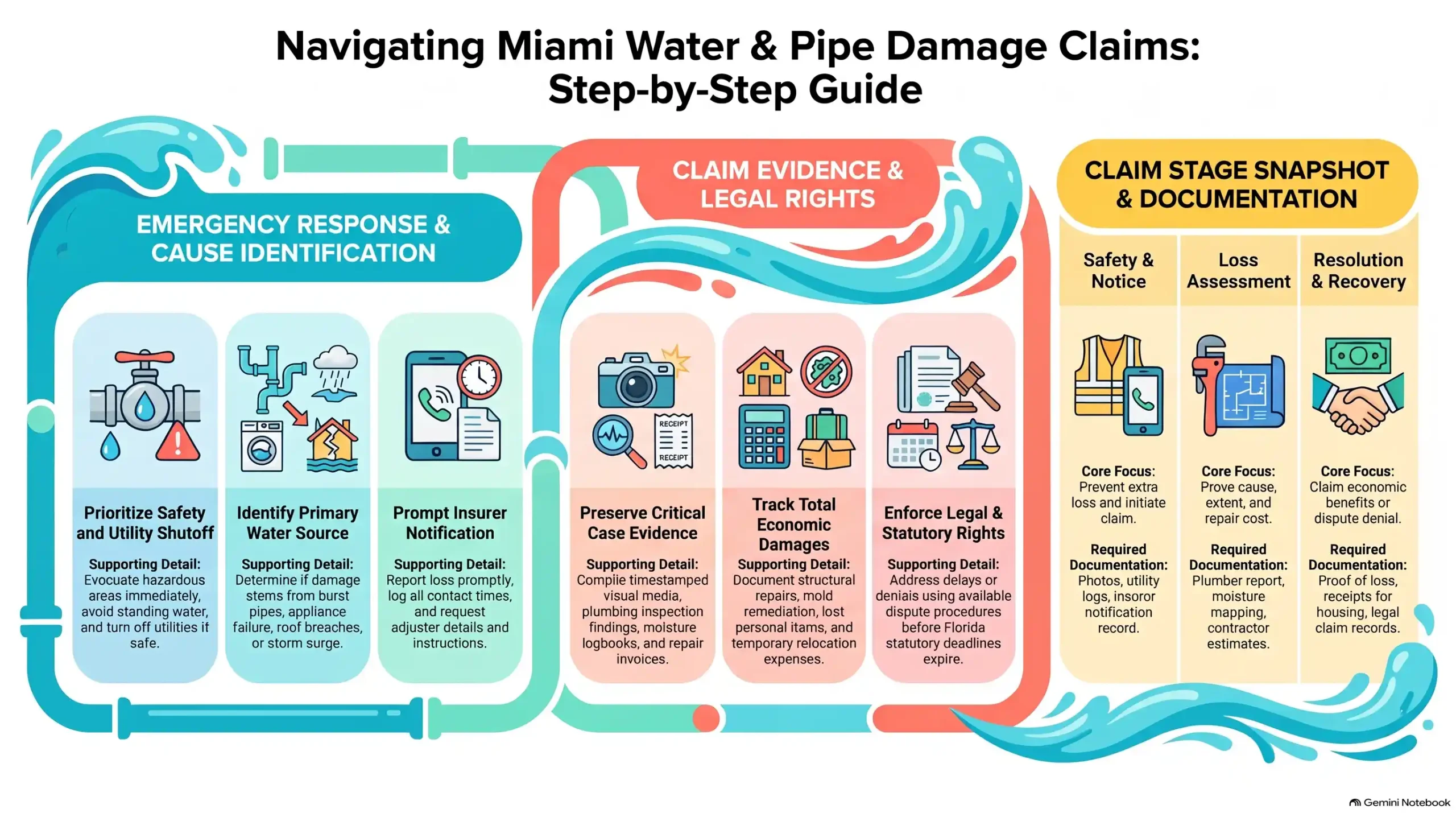
After water or pipe damage, occupants should first prioritize immediate safety by avoiding electrical hazards and leaving unsafe areas. They should document the damage with photographs, videos, and records of affected belongings before cleanup alters the scene. Promptly contacting the insurer can initiate the claim process and clarify required evidence and next steps.
Prioritize Immediate Safety
When water or a damaged pipe causes an injury, immediate safety should take priority over documenting the loss or contacting an insurer. Anyone facing active flooding, unstable flooring, exposed wiring, or contaminated water should Evacuate Unsafe Areas and guide others to a secure location. People should avoid walking through standing water, which may conceal hazards or carry electrical current. If it is safe to do so, Shut Off Utilities at the appropriate controls to limit further danger. No one should enter a flooded area to reach a shutoff if electrical equipment or structural damage presents a risk. Emergency responders or qualified utility professionals can address unsafe conditions. Injured individuals should receive prompt medical attention, even when symptoms initially appear minor. These precautions protect occupants, visitors, and responding personnel from preventable harm.
Document Water Damage
Once the area is safe, the property owner should promptly and carefully document the water damage. Photographs and video can show the source, affected rooms, damaged belongings, and the extent of standing water before cleanup changes the scene. Images should include wide views and close details, with dates recorded when possible. A written inventory can identify damaged items, their approximate age, and condition, while receipts or purchase records may help establish value. The owner should also note when the leak or flooding began, what areas were affected, and any steps taken to limit further damage. A qualified professional can conduct moisture mapping to reveal hidden dampness behind walls or beneath flooring. Timely drying and mold prevention measures protect occupants and reduce additional property damage. Store records securely for later reference.
Contact Your Insurer
The property owner should notify the insurer promptly and report the water or pipe damage through the required claims channel. The initial report should identify the affected areas, when the damage was discovered, and any immediate steps taken to limit further loss. Document policyholder notification by keeping copies of emails, online submissions, and letters, along with the date and time of each contact. The owner should provide accurate information and avoid speculating about the cause before it is established. After reporting the loss, the policyholder should request a claim number, the assigned adjuster’s contact details, and instructions for inspections or additional records. A written claim acknowledgment can confirm that the insurer received the notice. Timely, organized communication helps the insurer assess the claim and supports a fair review.
Critical Evidence in a Miami Property Claim Water & Pipe Damage Injury Case
Reliable evidence can help establish the source of water or pipe damage, the resulting property loss, and any related injuries.
Relevant records may include:
- Photographs and videos of the damage
- Plumbing inspection reports
- Repair and cleanup records
- Medical records and incident documentation
- Communications with the property owner, insurer, or repair professionals
Photographs And Videos
Photographs and videos can preserve crucial evidence of water and pipe damage before cleanup or repairs alter the property. Clear images should show affected rooms, damaged materials, standing water, and belongings, with both wide views and close details. A consistent visual record helps claim reviewers understand the extent and location of loss and supports a fair assessment that serves affected residents and property owners.
Images should be captured promptly, without disturbing unsafe areas or delaying urgent steps to protect people. Metadata preservation can retain original file details, while timestamp verification helps establish when images were created. Store copies securely, and do not edit files in ways that obscure the original condition. A simple, dated log identifying each location can make the collection easier to review. These records may also help document changes during drying and cleanup.
Plumbing Inspection Reports
A plumbing inspection report can provide essential evidence in a Miami property claim involving water or pipe damage. It may identify the suspected source, describe affected plumbing systems, and document conditions observed during the inspection. These findings can help clarify whether a leak resulted from a sudden failure, ongoing deterioration, or another cause relevant to coverage and responsibility.
Report components may include inspection dates, testing methods, photographs, measurements, and the inspector’s conclusions. The report should distinguish direct observations from assumptions and explain any limitations that affected the evaluation. Inspector qualifications also matter: relevant licensing, training, and experience can support the report’s reliability and help others evaluate its conclusions. A complete, clearly written report may help insurers, property owners, and legal representatives review the claim and determine what evidence warrants further review.
Repair And Cleanup Records
When water or pipe damage occurs, repair and cleanup records can help establish the extent of the loss, the work performed, and the property’s condition afterward. These documents may include contractor estimates, work orders, photographs, and receipts for materials or replacement items. A detailed Moisture logbook can show when affected areas were inspected, what readings were recorded, and whether drying progressed over time. Remediation invoices may identify the services provided, equipment used, and costs charged, helping clarify the response to the damage. Property owners should preserve original records and request itemized documentation from each contractor. Dated photographs taken before, during, and after cleanup may further illustrate changes to the property. Organized, consistent records can support a clear claim review and help guarantee that necessary repairs are accurately considered.
Medical And Incident Documentation
Alongside repair records, medical and incident documentation can establish whether water or pipe damage caused an injury and how that injury affected the property owner or another occupant. Prompt medical treatment creates a dated record of reported symptoms, examination findings, diagnoses, and recommended care. Consistent follow-up records can also show whether an injury improved, persisted, or required additional attention. A symptom journal may help document pain, breathing problems, skin irritation, or other changes, including when they began and how they affected daily activities. Incident reports, photographs, witness statements, and written notices to the property owner or insurer can preserve details about the location, conditions, and timing of the event. Collectively, these materials may clarify the connection between the hazard and the injury. Accurate, organized documentation can help claim reviewers assess losses and support a fair resolution.
Long-Term Effects of Miami Property Claim Water & Pipe Damage Injuries
Water and pipe damage injuries may have lasting consequences beyond the initial incident, including chronic respiratory problems linked to prolonged exposure to dampness or mold. Some individuals experience mobility limitations that interfere with daily activities, while others face ongoing emotional distress. The duration and severity of these effects can vary, making medical documentation important when evaluating a property claim.
Chronic Respiratory Problems
Prolonged exposure to moisture, mold, and contaminated materials after a pipe leak or other property water loss can contribute to chronic respiratory problems. Residents, workers, and visitors may develop persistent coughing, wheezing, chest tightness, or shortness of breath when damp conditions remain untreated. Mold spores and airborne particles can act as Asthma triggers, aggravating existing conditions or contributing to new symptoms. In some cases, repeated exposure may be associated with chronic bronchitis, which can involve ongoing airway inflammation and a productive cough. Symptoms may continue even after visible water has been removed, particularly when materials remain damp, or contamination is concealed within walls, flooring, or ventilation systems. Prompt assessment, appropriate remediation, and medical evaluation can help protect affected occupants and support documentation of the conditions and resulting health concerns for a property claim.
Lasting Mobility Limitations
When a pipe leak or other water loss creates slippery floors, hidden structural damage, or unsafe debris, occupants may suffer injuries that lead to lasting mobility limitations. Falls can cause fractures, joint damage, spinal injuries, or severe sprains that restrict walking and daily activities. Even after initial treatment, some individuals experience persistent pain, reduced strength, or limited range of motion. Gait impairment may develop when an injury changes balance or the ability to bear weight safely. Rehabilitation, follow-up care, and assistive devices such as canes or walkers may support mobility and reduce the risk of further falls. These limitations can affect employment, caregiving responsibilities, and access to vital services. Accurate medical records and documentation of functional changes can help clarify the injury’s continuing impact and support appropriate claim evaluation.
Ongoing Emotional Distress
Physical injuries from pipe leaks or water damage can also leave lasting emotional effects. A person may experience anxiety, low mood, or persistent fear after an accident, particularly when recovery is prolonged or the home remains unsafe. Sleep disruption and difficulty concentrating can interfere with work, caregiving, and ordinary responsibilities. Emotional exhaustion may develop as the injured person manages treatment, repairs, and uncertainty about a property claim. These pressures can also strain relationships when family members disagree about recovery needs or share added responsibilities. Support from loved ones and qualified professionals may help restore stability, while clear documentation can help explain how the injury affects daily life. A careful assessment of ongoing emotional symptoms may inform treatment planning and help establish the full scope of losses arising from water or pipe damage.
Don’t Wait. Call Our Florida Personal Injury Lawyers Now!
Proving Liability in Miami Property Claim Water & Pipe Damage Injury Cases
Proving liability in a Miami water or pipe damage claim requires evidence that identifies the cause of the loss and establishes who was responsible for preventing or addressing it. Relevant records may include maintenance logs, repair requests, inspection reports, plumbing invoices, and photographs showing the damage. Witness accounts can help establish when a leak began, how quickly it spread, and whether responsible parties received notice.
Liability may rest with a property owner, manager, contractor, or another party, depending on control of the affected area and the source of the water. A Maintenance duty may require reasonable inspections and timely repairs, particularly after reports of leaks or unsafe conditions. Under applicable negligence standards, evidence generally must show that a party owed a duty, failed to meet it, and caused harm through that failure.
Clear documentation helps connect the condition to resulting property loss or injury. Promptly preserving damaged materials and recording dates, communications, and repair activity can support a fair assessment of responsibility and help protect affected occupants and neighbors.
Dealing With Insurance Companies After a Miami Property Claim: Water & Pipe Damage Injury
After water or pipe damage occurs, insurance companies may request prompt notice, supporting records, and access to the affected property. A careful response helps preserve accurate information and supports a fair review. The property owner can keep copies of notices, photographs, repair estimates, invoices, and relevant communications. Records should distinguish emergency work needed to prevent further damage from permanent repairs.
Adjuster communications should remain factual, timely, and consistent. Before providing a recorded statement or signing a release, the owner may review the request and consider obtaining legal guidance. Policy language, coverage limits, exclusions, and deadlines can affect how a claim is evaluated. Clear documentation can help address questions about the source, scope, and cost of the damage without overstating losses.
During settlement negotiations, compare any proposed payment with documented repair costs and applicable policy terms. A measured approach can help protect household resources while allowing insurers to assess the claim. When disputes arise, qualified counsel can explain available options and help the owner communicate responsibly.
What to Expect During a Miami Property Claim Water & Pipe Damage Injury Claim Process
A water and pipe damage claim typically begins with documenting the damage and reviewing the insurance policy to identify applicable coverage and notice requirements. The claimant then files the claim with supporting records, photographs, and repair estimates. If the insurer disputes coverage or the amount of loss, the parties may pursue further review or other dispute-resolution options.
Documenting Water Damage
How thoroughly water damage is documented can affect the strength of a property claim. After a pipe leak or other water event, the property owner should record visible damage before cleanup alters the scene, when it is safe to do so. Photographs and videos can show affected rooms, damaged belongings, standing water, and the apparent source of the leak. A dated inventory should identify lost or damaged items and note their condition, approximate age, and value. Repair estimates, invoices, and communications with mitigation professionals can help establish the work performed and its cost. Moisture mapping may reveal water in walls or flooring that is not visible, while prompt drying supports mold prevention. Organized records help insurers and other reviewers assess the damage and understand the steps taken to protect the property.
Reviewing Your Policy
Before filing a water or pipe damage claim, the property owner should review the insurance policy to understand its coverage, exclusions, limits, and reporting requirements. This review helps clarify which types of water damage may qualify for benefits and what conditions apply. Policy exclusions may address gradual leaks, neglected maintenance, flooding, or damage caused by specific sources. The policy’s coverage limits can affect the amount available for repairs, replacement, and related expenses, while deductibles may determine the owner’s initial financial responsibility. Definitions and endorsements also matter because they can modify standard terms or provide additional protection. If any provision is unclear, the owner may seek an explanation from the insurer, an insurance professional, or legal counsel. A careful review supports informed decisions and helps property owners protect their households and communities.
Filing the Claim
Once the policy and damage are reviewed, the property owner can begin the claim by promptly notifying the insurer through its designated reporting channel. The notice should identify the property, describe the water or pipe damage, and provide the date it was discovered. Preparing a claim form requires accurate answers and supporting records, such as photographs, repair estimates, receipts, and a list of affected belongings. The owner should retain copies of all submissions and note the date each item was sent. Coverage deadline tracking helps guarantee that required forms, documentation, and inspections are addressed within applicable policy timelines. The insurer may assign an adjuster to inspect the property and request additional information. Clear, timely communication can help the process proceed efficiently while allowing the owner to focus on protecting occupants and limiting further damage.
Resolving Disputes
Disputes may arise when an insurer questions the cause or extent of water and pipe damage, interprets policy terms differently, or offers less than the documented repair costs. The policyholder can respond by organizing photographs, invoices, repair estimates, inspection reports, and relevant communications. A clear record helps explain the loss and supports a fair review.
When discussions do not resolve the disagreement, available options may include internal appeals, mediation, appraisal, or litigation, depending on policy terms and applicable law. Mediation strategies focus on presenting evidence clearly and seeking a practical resolution with a neutral facilitator. Appraisal disputes may concern the amount of covered damage, while coverage questions may require a different process. A qualified property claim attorney can assess deadlines, explain procedural choices, and help protect the policyholder’s interests while pursuing a resolution that supports safe repairs and community well-being.
Compensation for Miami Property Claim Water & Pipe Damage Injury Damages
Compensation for water and pipe damage to a Miami property depends on the policy’s coverage, the cause and extent of the loss, and the evidence supporting the claim. A covered claim may provide payment for necessary repairs, replacement of affected building materials, and reasonable measures to prevent further harm. Depending on the policy, benefits may also address Temporary housing when the home cannot safely be occupied and damaged belongings that require repair or replacement.
The amount available is not automatic. Insurers generally assess the property’s condition, review repair estimates, and apply policy limits, deductibles, exclusions, and documentation requirements. Photographs, inventories, receipts, maintenance records, and qualified contractor reports can help establish the scope and timing of the damage. Prompt notice and reasonable steps to protect the property may also support a clear evaluation.
For property owners seeking to restore safe housing and serve household needs, careful records and timely communication can help identify applicable benefits. A lawyer may review the policy and challenge an unsupported valuation.
Economic vs Non-Economic Damages in Miami Property Claim Water & Pipe Damage Cases
Economic damages may include repair costs, replacement expenses, and other measurable financial losses caused by water or pipe damage. Non-economic losses may involve disruption, inconvenience, or reduced use of the property, depending on the claim and applicable coverage. Clear records, including invoices, photographs, and communications with the insurer, can help document the losses being claimed.
Economic Damage Categories
Water and pipe damage claims in Miami may involve both economic and non-economic damages, although the types of losses available depend on the policy, the facts, and applicable law. Economic damages are measurable financial costs caused by covered water or pipe damage. They may include reasonable repair or replacement expenses for damaged structures, plumbing, flooring, furniture, and personal property. A claim may also include costs for water extraction, drying, mold remediation, and other necessary mitigation, subject to policy terms and proof of loss. When a home cannot be safely occupied during repairs, temporary housing and related additional living expenses may be recoverable under applicable coverage. Businesses may seek documented lost income or extra operating costs resulting from covered disruption, often described as Business interruption losses. Receipts, estimates, invoices, and financial records can help establish these amounts.
Non-Economic Losses
Beyond repair bills and other measurable costs, some policyholders may experience personal disruption after water or pipe damage, such as loss of comfort or interference with daily routines. These effects may include emotional suffering, stress, or diminished enjoyment of a home that once provided security and stability. Displacement, restricted access to rooms, and prolonged repairs can affect family routines and a person’s sense of privacy. Such non-economic losses differ from expenses like cleanup, repairs, or temporary lodging because they concern personal well-being rather than direct financial outlay. Their significance depends on the circumstances and the terms of the insurance policy. A property claim may address covered physical damage without automatically compensating every personal impact. Policyholders may benefit from understanding how their policy treats these losses and what remedies may be available under applicable law.
Documenting Your Claim
A well-documented claim can help distinguish measurable financial losses from personal effects that may not have a direct dollar value. Records should identify both economic damages and non-economic effects arising from water or pipe damage. Economic losses may include repair costs, damaged belongings, temporary housing, and lost income. A detailed Claim Inventory can list each affected item, its condition, estimated value, and supporting receipts or photographs. Moisture Mapping and dated images can help show where water traveled and how damage developed. Invoices, inspection reports, and communications with the insurer should also be preserved. Non-economic effects, such as disruption to daily routines or stress, can be described in a contemporaneous account. Clear, organized evidence allows reviewers to assess the full impact while helping property owners support fair, accurate claim decisions and responsibly serve household needs.
When a Miami Property Claim Water & Pipe Damage Injury Case Goes to Trial vs Settlement
When negotiations fail to resolve a Miami property claim involving water or pipe damage, the dispute may proceed to trial, where a judge or jury evaluates the evidence and determines liability and compensation. At trial, each side presents records, photographs, repair estimates, and testimony about the damage and its effects. The decision-maker considers whether the evidence supports the claim and what payment, if any, is warranted. Jury deliberations may take time, and the outcome is not guaranteed.
Settlement negotiations offer another path. The parties may reach an agreement before or during trial, avoiding the uncertainty, expense, and delay of a court decision. A settlement can define the payment and resolve the dispute, but its terms should be reviewed carefully before acceptance. The appropriate course depends on the strength of the evidence, the amount in dispute, and each party’s objectives. A lawyer can explain potential risks and options, helping property owners make informed choices while preserving resources for their households and communities.
Florida Laws That May Affect Your Miami Property Claim Water & Pipe Damage Case
Florida law can shape nearly every stage of a Miami water or pipe damage claim, from the time allowed to report a loss to the evidence required to support payment. State statutes and policy terms may affect how insurers investigate damage, assess repairs, and communicate decisions. Understanding these rules can help property owners protect their interests while maintaining accurate records for those who depend on the property.
- Florida’s insurance laws establish standards for claim handling and require insurers to respond to policyholders within specified periods.
- Policy language governs covered water losses, exclusions, deductibles, and duties such as preventing further damage.
- Florida matching statutes may affect whether repairs must reasonably match undamaged materials when replacements are needed.
- Insurers may request inspections, photographs, invoices, and other evidence to evaluate the cause and scope of damage.
- Policyholder protections include access to claim information and procedures for challenging disputed coverage or payment decisions.
Because coverage depends on the policy and facts, careful documentation and prompt attention to insurer requests can support a fair review. Legal guidance may clarify applicable requirements.
Don’t Wait. Call Our Florida Personal Injury Lawyers Now!
The Statute of Limitations for Miami Property Claim Water & Pipe Damage Injury Cases
Time limits can determine whether a Miami property owner may pursue a lawsuit over water or pipe damage. Florida law generally provides five years to file a negligence lawsuit involving property damage, measured from when the cause of action accrues. Different deadlines may apply to contract claims, insurance disputes, or other legal theories, so the nature of the claim matters.
Deadline calculation can depend on when damage occurred, when it was discovered, and whether the responsible party’s conduct was concealed. The discovery rule may affect accrual in limited circumstances, but it does not automatically extend every filing period. A visible leak may establish an earlier date, while hidden water intrusion can raise questions about when the damage reasonably became knowable.
Property owners serving tenants, customers, or community members should preserve records of leaks, repairs, inspections, and insurer communications. Missing a statutory deadline can bar recovery, regardless of the damage’s seriousness. Prompt attention to applicable time limits helps protect property interests and supports timely dispute resolution.
How a Miami Property Claim Water & Pipe Damage Lawyer Can Help You
A Miami property claim water and pipe damage lawyer can help property owners assess coverage, document losses, and pursue a claim against an insurer or another responsible party. The lawyer can organize evidence and explain available options, helping owners protect their property and meet responsibilities to tenants, employees, or neighbors affected by the damage.
A Miami water damage lawyer can help document losses, assess coverage, and pursue a property claim while protecting those affected.
Legal assistance may include:
- Reviewing policy language, exclusions, and applicable endorsements.
- Coordinating inspections and preserving photographs, repair records, and other evidence.
- Evaluating estimates for structural repairs, damaged belongings, and related losses.
- Communicating with insurers and responding to requests for information.
- Developing a claim strategy based on the documented damage and coverage terms.
An Attorney consultation can clarify the issues involved and identify information needed to support a complete, accurate claim. Counsel may also assess whether a contractor, property manager, or other party contributed to the loss. With organized documentation and informed advocacy, property owners can pursue fair compensation while supporting those who depend on safe, functional premises.
When to Contact a Miami Property Claim Water & Pipe Damage Lawyer
When water or pipe damage threatens a property, early legal guidance can help preserve evidence and prevent avoidable complications. A property owner may contact a Miami property claim lawyer as soon as damage is discovered, particularly when the source is unclear or repairs cannot wait. Prompt advice can help make certain that photographs, invoices, damaged materials, and communications with the insurer are organized before conditions change.
Legal guidance may also be appropriate when an insurer delays inspection, requests extensive documentation, offers an amount that appears inadequate, or raises Policy exclusions to limit coverage. If a Claim denial arrives, a lawyer can review the stated reasons and the policy language before the owner decides how to respond. Early consultation is especially useful when a deadline is approaching or the property serves tenants, employees, or community members who depend on safe access. A timely review can clarify available options and help the owner make informed decisions while keeping necessary mitigation and repair records.
Why You Need an Experienced Miami Property Claim Water & Pipe Damage Lawyer
Because water and pipe damage claims often involve complicated policy terms, disputed causes, and strict deadlines, an experienced Miami property claim lawyer can help property owners protect their interests. Such guidance can be especially valuable when damage disrupts a home, business, or community facility that serves others. A lawyer can review policy provisions, organize repair records, and help clarify whether the loss resulted from a burst pipe, gradual leakage, or another covered event. This work may address gaps in evidence before they weaken a claim.
When an insurer questions the cause, limits payment, or issues a Claim Denial, legal support can help property owners understand available options and respond within applicable deadlines. Attorney Experience with water and pipe damage disputes can also help identify improper claim handling and explain the documentation needed to support recovery. By managing communications and advancing a well-supported claim, counsel can allow owners to focus on restoring safe, reliable spaces for residents, customers, or those who depend on their services.
How to Choose the Right Miami Property Claim Water & Pipe Damage Lawyer for Your Case
Selecting the right Miami property claim lawyer for water and pipe damage requires more than confirming general experience with insurance disputes. A careful review can help property owners choose counsel equipped to assess the claim and pursue a fair resolution.
Relevant Attorney credentials include a Florida law license, experience handling property insurance disputes, and familiarity with water damage documentation and claim deadlines. Prospective clients can ask how the lawyer evaluates coverage, organizes evidence, and addresses insurer disputes. They should also consider whether the lawyer has handled claims involving similar damage and policy issues.
Communication style matters throughout a claim. Counsel should explain options clearly, respond within reasonable timeframes, and keep clients informed about important developments. This approach is especially valuable for people balancing repairs, family needs, or responsibilities to others affected by the property damage. Before deciding, clients can compare fee arrangements, ask who will manage the case, and review the proposed process. A suitable lawyer should offer realistic guidance without promising a particular outcome.
About The Law Offices of Anidjar & Levine
The Law Offices of Anidjar & Levine represents clients in insurance disputes involving property damage, including claims related to water and pipe leaks.
The firm assists property owners seeking to understand policy terms, document losses, and address insurer decisions after damage occurs.
Its work may involve reviewing claim records, communicating with insurance companies, and pursuing available remedies when a dispute remains unresolved.
Firm history and attorney credentials can help prospective clients evaluate whether a law office fits their needs.
The firm’s background, practice focus, and lawyers’ professional qualifications provide relevant context, but each matter depends on its own facts and policy language.
Clients can ask about the attorney handling a claim, the proposed approach, and the expected steps in the process.
For owners facing property damage, clear guidance can support informed decisions and timely claim management.
The firm’s role is to explain legal options and represent clients in pursuing a fair resolution, while outcomes depend on evidence, coverage, and applicable law.

Frequently Asked Questions
Does Homeowners Insurance Cover Mold Caused by a Sudden Pipe Leak?
Homeowners insurance may cover mold caused by a sudden pipe leak when the leak is accidental and the policy covers resulting water damage. Mold remediation coverage often depends on policy limits, prompt reporting, and reasonable steps to prevent further damage. Coverage may be denied if the leak resulted from neglect or long-term seepage. Hidden mold exclusions can also restrict payment, so the policyholder should review policy terms and document the damage promptly.
Can I Stay in My Home While Water-Damage Repairs Are Underway?
A resident may remain in a home during water-damage repairs if the property is safe and necessary services remain available. Repair Safety depends on the extent of contamination, structural damage, drying equipment, and work zones; contractors should identify hazards and restrict access where needed. Utility Access to electricity, water, and sanitation must be reliable. If these conditions cannot be maintained, temporary relocation may be necessary to protect occupants and allow repairs to proceed.
Who Pays for Temporary Housing After a Covered Water-Damage Loss?
After a covered water-damage loss, the insurer may pay reasonable temporary housing costs when the home is uninhabitable, subject to policy terms and documentation. Coverage often falls under additional living expenses, which may include hotel reimbursement and increased meal costs. The policy’s loss-of-use limits cap available payments, and exclusions or delays may apply. The homeowner should keep receipts, confirm eligible expenses with the insurer, and seek safe, suitable lodging during repairs.
Can a Plumber’s Report Help Identify the Source of a Pipe Leak?
A plumber’s report can help identify where a pipe leak began and explain the likely cause of the failure. Clear plumber leak findings may describe the affected area, inspection methods, and whether corrosion, a broken fitting, or another condition contributed. Photographs, repair records, and testing results can strengthen pipe failure documentation. This evidence may help property owners, insurers, and repair professionals evaluate the damage and determine appropriate next steps.
Should I Hire a Public Adjuster for a Water-Damage Claim?
A public adjuster may be worthwhile when water damage is extensive, coverage is disputed, or the insurer’s estimate appears incomplete. The policyholder should compare Public adjuster fee structures, confirm licensing, and understand how fees are calculated before signing an agreement. A sound claim documentation strategy should include photographs, repair estimates, receipts, and relevant reports. For a modest, straightforward loss, handling the claim directly may be more practical, provided deadlines and policy requirements are met.
—————————
Water and pipe damage claims can involve costly repairs, disputed coverage, and strict deadlines.
Property owners should document the damage, preserve relevant records, and review their policy before responding to an insurer’s decision.
If a claim is delayed, denied, or undervalued, legal guidance may help clarify available options and protect the owner’s interests.
The Law Offices of Anidjar and Levine can assess the circumstances of a Miami property claim and explain potential next steps.
Learn more about a Miami Personal Injury Lawyer.

