

The Law Offices of Anidjar and Levine help injured people evaluate Jacksonville slip-and-fall claims involving wet floors, uneven surfaces, poor lighting, cluttered aisles, parking lots, and other unsafe property conditions. Legal guidance may include preserving photos, incident reports, surveillance video, witness information, medical records, and proof of lost income. A Jacksonville Personal Injury Lawyer can assess notice, comparative fault, insurance coverage, and filing deadlines while helping protect communications with insurers.
Main Takeaways
- A Jacksonville slip and fall lawyer can evaluate store or premises liability, unsafe conditions, notice, and available compensation.
- Seek immediate medical care and keep records, prescriptions, imaging results, discharge papers, and follow-up treatment documentation.
- Report the fall promptly to management, request an incident report, and avoid guessing or accepting blame.
- Preserve evidence, including photos, witness contacts, footwear, receipts, clothing, store communications, and requests for surveillance video.
- Compensation may include medical bills, lost income, pain, and reduced daily function, subject to Florida comparative negligence rules.
How We Can Help With Your Jacksonville Slip & Fall Stores & Premises Injury Claim
After a slip and fall accident in a Jacksonville store or on another commercial property, an injured person may face medical treatment, missed work, insurance questions, and uncertainty about who is legally responsible. A lawyer can provide steady guidance by gathering records, preserving evidence, and communicating with insurers while the injured person focuses on recovery. Careful support may include Doctor visit documentation, pharmacy receipts, photographs, witness information, and employment records showing lost income. These materials help present the full impact of the injury clearly and in an organized way.
Legal counsel can also evaluate available coverage, identify deadlines, and prepare communications that protect the claimant from unnecessary disputes. For those committed to serving family, coworkers, or community, this assistance can reduce administrative burdens during a difficult season. A Jacksonville slip and fall stores and premises lawyer pursues fair compensation through negotiation and, when necessary, litigation, with disciplined attention to each claim.
Understanding Jacksonville Slip & Fall Stores & Premises Injury Cases


Understanding these cases begins with recognizing that a slip and fall claim is not based on the accident alone, but on the property’s condition and the conduct of the business or premises owner. In Jacksonville, these matters often require careful review of whether responsible parties used reasonable care to protect lawful visitors. The focus remains on notice, response, documentation, and whether safer practices were available before harm occurred.
OUR CONSULTATIONSARE FREE
START YOUR FREE CASE REVIEW

A well-developed claim serves the injured person by organizing facts with discipline and purpose. The evidence timeline may include incident reports, witness accounts, photographs, inspection records, medical care, and post-event communications. Each item helps clarify what was known, when it was known, and how the premises owner responded. Comparative fault may also affect recovery if the injured person’s actions are questioned. For that reason, balanced analysis is critical to present the claim fairly, accurately, and with respect for accountability.
Common Causes of Jacksonville Slip & Fall Stores & Premises
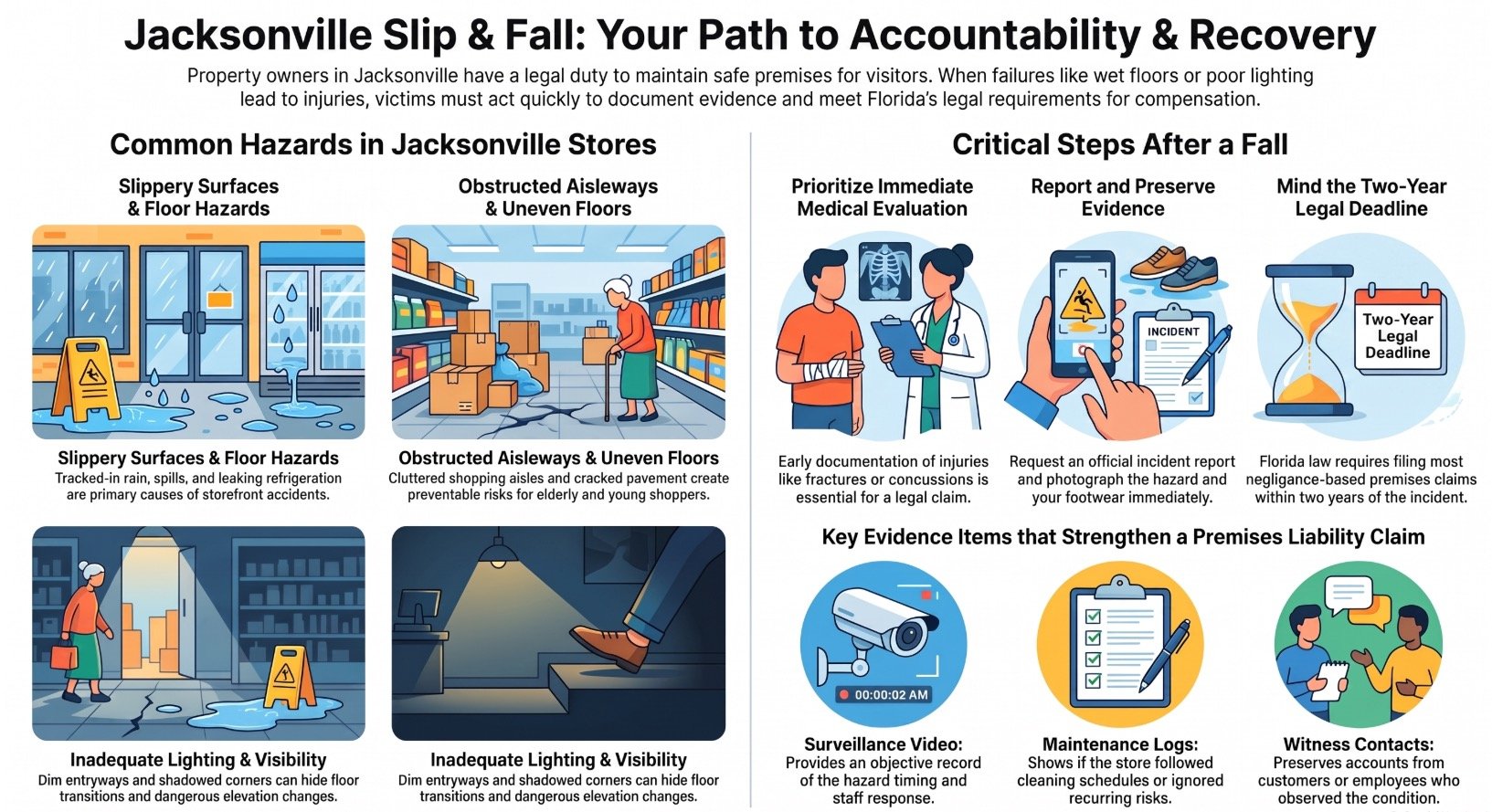
Common causes of Jacksonville slip and fall incidents in stores and other premises often include wet or slippery floors, uneven walking surfaces, poor store lighting, and cluttered shopping aisles. These hazards may create unsafe conditions for customers, visitors, or workers when property owners fail to identify and correct foreseeable risks. Understanding these contributing factors helps clarify how premises liability may arise after a fall-related injury.
Wet Or Slippery Floors


Wet or slippery floors are among the most frequent hazards in Jacksonville stores and other premises, particularly in areas where customers move through entrances, aisles, restrooms, produce sections, and checkout lanes. These conditions may arise from tracked-in rainwater, spilled liquids, leaking refrigeration units, recently mopped surfaces, or residue left after improper cleaning. Inadequate traction can make an otherwise ordinary walkway unsafe, especially for elderly visitors, employees, caregivers, or families assisting children. Property owners and managers are expected to use reasonable inspection, warning, and cleanup practices to protect those they serve. Cleaning negligence may occur when staff fail to follow schedules, use unsuitable products, omit warning signs, or ignore known spills. Careful documentation of floor conditions, timing, and notice often becomes important when evaluating responsibility after a fall incident.
Uneven Walking Surfaces
Although many fall hazards involve slick flooring, uneven walking surfaces can be just as dangerous in Jacksonville stores, parking areas, sidewalks, and other premises. Raised thresholds, cracked pavement, buckled mats, loose carpeting, and poorly maintained passageways can interrupt a customer’s normal stride. Property owners and managers serve the public by inspecting walkways, correcting defects, and addressing hazards before injuries occur. Complete uneven tile repairs with care, since temporary patches or mismatched surfaces may create new risks. When immediate correction isn’t possible, warning signage must be clear, timely, and placed where visitors can see it before reaching the hazard. A premises liability review may consider maintenance records, inspection routines, prior complaints, and whether reasonable steps were taken to protect lawful visitors from preventable falls.
Poor Store Lighting
Uneven surfaces are not the only conditions that can interfere with safe movement through a store or commercial property, since poor lighting may prevent visitors from seeing hazards in time to avoid them. Dim entryways, shadowed corners, and burned-out fixtures can obscure spills, floor transitions, or changes in elevation that require prompt attention. Inadequate signage may worsen the danger when customers are not warned about low visibility or temporary hazards. Property operators should also consider lighting contrast. Poor depth perception can occur when bright and dark areas meet abruptly, making steps, ramps, or uneven flooring harder to judge. Excessive brightness may create glare hazards, especially on polished floors or glass surfaces. Careful inspection, maintenance, and corrective lighting practices help protect patrons and support responsible premises management.
Cluttered Shopping Aisles
When merchandise, carts, boxes, or display materials obstruct store aisles, customers may have limited space to walk safely and avoid unexpected hazards. In Jacksonville retail settings, cluttered aisles can create serious fall risks, particularly for elderly shoppers, children, and individuals assisting others. Employees are generally expected to monitor aisle obstruction patterns, remove misplaced items, and keep walking paths reasonably clear. Store signage issues may increase danger when warnings are absent, hidden, or confusing, especially near temporary displays or restocking areas. A premises claim may examine whether staff knew, or should have known, that clutter created an unsafe condition. Careful review of photographs, incident reports, surveillance footage, and witness statements can help determine whether the store failed to maintain safe passage for customers lawfully present on the property.
Don’t Wait. Call Our Florida Personal Injury Lawyers Now!
Legal Rights of Jacksonville Slip & Fall Stores & Premises Injury Victims
After a slip and fall accident in a Jacksonville store or on another commercial property, the injured person may have the right to seek compensation if unsafe conditions caused or contributed to the fall. Premises liability basics recognize that property owners and managers must use reasonable care to protect lawful visitors from foreseeable harm. When that duty is breached, an injured customer may pursue damages for medical care, lost income, pain, and reduced daily function.
A comparative negligence overview is also important because Florida law may reduce compensation if the injured person shares fault.
Still, responsibility may remain with those who failed to protect the public.
- A parent may struggle to care for a child while recovering.
- An elder may lose independence after a preventable injury.
- A worker may face unpaid bills and uncertainty.
- A family may need accountability, stability, and compassionate legal guidance.
Why Do Jacksonville Slip & Fall Stores & Premises Injuries Happen?
Many Jacksonville slip and fall store and premises injuries happen because routine hazards aren’t corrected, marked, or inspected in a timely manner. Spilled liquids, uneven flooring, loose mats, poor lighting, cluttered aisles, and weather-related moisture can create dangerous conditions for customers, visitors, employees, and others lawfully on the property.
These incidents often reflect broader negligence patterns rather than isolated mistakes. A store inspection failure may allow a hazard to go unnoticed, while hazard-reporting issues can prevent responsible staff from responding promptly. In other cases, inadequate safety training leaves employees unsure how to identify risks, place warning signs, document concerns, or request maintenance.
Property owners and managers who serve the public are expected to maintain reasonably safe spaces. When safety systems are weak, vulnerable guests may suffer preventable harm. Careful attention to cleaning schedules, inspections, employee instruction, and timely repairs helps reduce avoidable injuries across Jacksonville stores and premises.
What Should You Do After a Jacksonville Slip & Fall Stores & Premises Injury?
After a slip and fall injury at a Jacksonville store or premises, the injured person should seek immediate medical care to document injuries and begin treatment. Report the incident to the property owner, manager, or other responsible party, and keep a clear record of when and where it occurred. Vital evidence, including photographs, witness information, and relevant documents, should be preserved to support any potential claim.
Seek Immediate Medical Care
When a slip and fall injury occurs in a Jacksonville store or on another commercial property, prompt medical evaluation should be treated as a priority. Some injuries, including concussions, internal trauma, fractures, or soft tissue damage, may not be immediately apparent. A medical professional can identify Emergency warning signs, provide necessary care, and create records that accurately connect the condition to the incident. This step supports personal recovery while helping families, caregivers, and advocates make informed decisions.
The injured person should follow all medical instructions, attend recommended appointments, and preserve discharge papers, prescriptions, diagnostic results, and care summaries. Follow-up treatment options may include primary care visits, orthopedic evaluation, physical therapy, imaging studies, or referral to a subspecialist when symptoms continue, worsen, or interfere with daily responsibilities.
Report The Incident
Once urgent medical needs are addressed, report the incident to the store manager, property owner, landlord, security office, or other responsible representative as soon as reasonably possible. Prompt reporting helps establish an accurate Incident timeline, basic facts, and the identities of those present. The injured person, or a trusted helper, should request that an official incident report be completed, then provide Report details and location specifics, including the aisle, entrance, stairway, parking area, restroom, or other precise site involved. The report should note the date, time, conditions observed, and how the fall occurred, without guessing or accepting blame. A calm, respectful approach supports cooperation while protecting important rights. If possible, the injured person should ask for the representative’s name and how to obtain a copy later.
Preserve Key Evidence
Because store and premises conditions can change quickly, important evidence should be preserved as soon as practical after a Jacksonville slip and fall injury. A responsible helper may photograph the hazard, surrounding area, footwear, warning signs, lighting, and any visible injuries. Collect witnesses’ names and contact information respectfully, without pressuring anyone. The injured person should keep clothing, receipts, medical papers, and communications with the store in a safe place. A clear Documentation timeline can connect the fall, incident reporting, medical treatment, and later symptoms. If surveillance video exists, send a written request to preserve it promptly to the business or property owner. These steps support accurate review, protect important facts, and assist those seeking a fair, service-focused response after preventable harm.
Critical Evidence in a Jacksonville Slip & Fall Stores & Premises Injury Case
Critical evidence can determine whether a Jacksonville slip and fall claim is supported by facts or weakened by uncertainty. Important proof may include: 1. Incident scene photos, 2. Surveillance video footage, 3. Hazard maintenance records, and 4. Witness contact information. Each item may preserve what happened, especially when pain, lost income, and disrupted stability put serious pressure on the injured person and the family.
Incident Scene Photos
At the location of a slip and fall, incident scene photos often become some of the most important evidence in a Jacksonville store and premises injury case. Clear images may show liquid, debris, uneven flooring, poor lighting, missing mats, or obstructed walkways before conditions are changed. Incident photo preservation helps protect the injured person’s account and supports a fair review of store safety practices. Timestamps matter because the timing of each image may show how close the hazard was to the injury event. Evidence chain documentation can also show who took the photos, when they were stored, and whether they remained unchanged. Effective hazard detail capture includes wide views, close angles, warning signs, footwear, and surrounding conditions that may assist careful legal evaluation.
Surveillance Video Footage
When a fall occurs inside or near a Jacksonville store, surveillance video footage may provide an objective record of how the incident happened and what conditions existed before and after the injury. Video may show the customer’s path, nearby employees, warning signs, lighting, crowding, and when the dangerous condition occurred. For those committed to serving injured people with care, preserving camera footage is crucial because many systems overwrite recordings within days. Prompt requests can help protect relevant angles from entrances, aisles, registers, parking areas, or sidewalks. If footage is unavailable, missing evidence analysis may address whether loss, deletion, or failure to retain video affects the evaluation of responsibility. A thorough review of surveillance footage can confirm accounts, challenge inaccurate reports, and support fair consideration of the injured person’s claim.
Hazard Maintenance Records
Although a dangerous condition may seem temporary, hazard maintenance records can show whether a Jacksonville store used reasonable procedures to prevent, identify, and correct risks before a fall occurred. These records may include cleaning logs, inspection schedules, repair requests, safety checklists, and incident reporting materials. When reviewed carefully, they can reveal whether employees followed established policies, whether management ignored recurring hazards, or whether delays placed customers at unnecessary risk. In a premises injury claim, prompt evidence preservation is crucial because routine documents may be discarded, overwritten, or altered under normal business practices. A Jacksonville slip and fall lawyer may request these materials to assess notice, response time, and safety compliance. Reliable records help clarify what occurred and support accountability when preventable conditions harm lawful visitors.
Witness Contact Information
Who observed the fall, the hazardous condition, or the store’s response afterward may become a crucial issue in a Jacksonville slip and fall claim. Witness contact information helps preserve accounts from customers, employees, vendors, or companions who may leave before an investigation begins. Their names, phone numbers, emails, and brief descriptions of what they saw can support accurate Incident timelines and clarify whether staff had notice of a dangerous condition. Witness statements may address lighting, spills, warning cones, cleanup efforts, or comments employees made after the injury. For those committed to serving injured persons with care and diligence, gathering this information promptly helps prevent lost evidence and fading memories. Reliable witness details can strengthen liability analysis and assist counsel in presenting a well-supported premises claim.
Long-Term Effects of Jacksonville Slip & Fall Stores & Premises Injuries
Long-term effects of Jacksonville slip and fall injuries may extend beyond immediate medical treatment, particularly when chronic pain conditions persist after the incident. Reduced mobility can interfere with employment, household responsibilities, and routine daily activities, creating lasting financial and practical consequences. Emotional trauma effects, including anxiety, sleep disruption, or fear of similar locations, may also influence the injured person’s recovery and overall quality of life.
Chronic Pain Conditions
Persistence often defines chronic pain after a slip and fall in a Jacksonville store or other premises, especially when an injury affects the back, neck, shoulder, hip, knee, or nervous system. Chronic pain may continue long after initial treatment, affecting sleep, concentration, household duties, and the ability to consistently meet family or community responsibilities. Careful rehabilitation planning can help identify therapies, medication needs, subordinate expert referrals, and progress markers that support informed recovery decisions. A thorough documentation checklist may include medical visits, pain levels, prescriptions, diagnostic results, work restrictions, and notes describing functional limitations. These records help clarify how persistent pain changes daily life without overstating the condition. In premises cases, consistent evidence also assists legal evaluation, damages review, and communication with insurers or responsible property owners.
Reduced Mobility
Chronic pain can also reduce mobility after a slip and fall in a Jacksonville store or other premises, especially when stiffness, weakness, balance problems, or joint damage limit normal movement. Reduced mobility may affect walking, standing, lifting, climbing stairs, driving, or performing work and caregiving duties. Some individuals require canes, walkers, braces, therapy, or home modifications to maintain independence and personal dignity. Accessibility accommodations may become necessary at workplaces, public spaces, or residences, especially when injuries interfere with safe movement. For businesses, store safety audits can identify hazards that place vulnerable guests at risk, including wet floors, uneven surfaces, cluttered aisles, and poor lighting. Careful documentation of mobility restrictions helps clarify long-term needs, future care costs, and the injury’s impact on daily service to family and community.
Emotional Trauma Effects
After a serious slip and fall, emotional trauma may continue well beyond the initial physical injury, especially when the incident causes fear, helplessness, or a lasting sense of vulnerability in public spaces. An injured person may avoid stores, sidewalks, or crowded areas, limiting independence and community involvement. Some individuals experience post-traumatic stress, sleep disruption, irritability, or recurring memories of the fall. Others confront grief and loss when former routines, work roles, or caregiving responsibilities become difficult or impossible. These emotional effects can influence recovery, relationships, and decision-making. Careful documentation from counselors, physicians, and trusted observers may help demonstrate the full impact of the incident. Compassionate legal support can help protect the person’s dignity while pursuing accountability for preventable hazards on commercial or residential premises.
Proving Liability in Jacksonville Slip & Fall Stores & Premises Injury Cases
When a slip and fall occurs in a Jacksonville store or on another commercial property, liability depends on more than the fact that an injury happened. The injured person generally must show that the property owner, manager, or staff failed to use reasonable care to keep the premises safe. Evidence may include incident reports, surveillance footage, witness statements, maintenance logs, photographs, and proof of unsafe conditions, such as spills, torn flooring, poor lighting, or obstructed walkways.
Constructive notice can be important when a hazard existed long enough that responsible personnel should have discovered and corrected it. Negligent supervision may also arise when employees were not properly trained, directed, or monitored in safety procedures. For those committed to helping injured community members, careful liability analysis protects fairness. It distinguishes unavoidable accidents from preventable harm caused by poor property practices, delayed inspections, or ignored safety responsibilities under Florida premises liability standards.
Don’t Wait. Call Our Florida Personal Injury Lawyers Now!
Dealing With Insurance Companies After a Jacksonville Slip & Fall Stores & Premises Injury
Once liability evidence begins to take shape, communication with the property owner’s insurance company often becomes a central part of a Jacksonville slip and fall claim. Insurers may seek recorded statements, written explanations, photographs, wage details, and a Request for medical records to evaluate the extent of harm. Handle each exchange with care, because incomplete or poorly phrased answers may be used to limit responsibility.
A lawyer can help ensure that information is accurate, relevant, and not broader than necessary. This protects the injured person’s dignity while supporting a fair review of losses, including treatment expenses, missed work, and needed household assistance. When damaged personal property is involved, such as eyeglasses, phones, or mobility aids, negotiating repair estimates may also become a component of the insurance discussion. Careful documentation, measured communication, and organized evidence help keep the focus on accountability, recovery, and practical support for the injured individual.
What to Expect During a Jacksonville Slip & Fall Stores & Premises Injury Claim Process
A Jacksonville slip and fall stores and premises injury claim typically begins with an initial evaluation of liability, damages, and available insurance coverage. The process then focuses on collecting evidence, including incident reports, medical records, witness statements, and, when available, surveillance footage. If settlement negotiations do not resolve the claim, litigation and trial preparation may become necessary to pursue appropriate compensation.
Initial Claim Evaluation
Before valuing a Jacksonville slip and fall claim against a store or other premises owner, the initial evaluation focuses on liability, causation, injury severity, and available evidence. Counsel typically conducts an Incident timeline review to understand where the hazard arose, how long it existed, and whether staff had notice or should have discovered it. The review also considers medical treatment, prior conditions, wage loss, and the claimant’s ability to return to daily responsibilities, including service to family or community. Early evidence preservation steps may be identified, such as requesting that relevant records and video not be destroyed. This stage helps determine whether negligence can be proven, what defenses may apply, and whether the claim warrants further investigation, negotiation, or formal litigation.
Evidence Collection Process
After the initial claim evaluation identifies likely liability issues, the evidence collection process focuses on securing proof that explains how the fall occurred and who was responsible for the unsafe condition. This may include incident reports, photographs, surveillance footage, witness information, maintenance records, inspection logs, and prior complaint records. A Jacksonville slip and fall attorney may send Spoliation letters to store owners, property managers, vendors, or insurers, reminding them of preservation duties and the need to protect relevant evidence. Attorneys also gather medical records to connect the fall to the claimed injuries. This careful process supports fair service to the injured person by building an accurate record, reducing uncertainty, and helping determine whether the property’s safety practices failed to meet lawful responsibilities.
Insurance Settlement Negotiations
Once key evidence and medical information are gathered, insurance settlement negotiations usually begin with a demand package that explains liability, injuries, treatment, lost income, and other damages. Demand letter drafting should present the injured person’s needs clearly, while showing how the store or property owner failed to maintain safe conditions. Insurers then review medical documentation requirements, incident reports, photographs, wage records, and witness information before making an initial offer. A careful negotiation strategy helps protect the claimant from accepting an amount that does not reflect ongoing care, work limitations, or reduced daily function. Settlement valuation methods may consider medical bills, future treatment, pain, mobility limits, and financial hardship. The process often involves several exchanges, with counsel advocating for a fair resolution that supports recovery and community responsibility.
Litigation And Trial Preparation
When insurance negotiations do not produce a fair settlement, a Jacksonville slip and fall store and premises injury claim may proceed into litigation, where the case is formally presented through the court system. During this stage, attorneys file pleadings, exchange evidence, conduct depositions, and evaluate legal issues that may affect liability or damages. A refined Negotiation strategy may still guide discussions, since many cases resolve before trial when the evidence becomes clearer. Trial preparation also includes organizing medical records, incident reports, photographs, and expert opinions into a persuasive presentation. Careful witness preparation helps injured persons, employees, and other witnesses provide accurate testimony with confidence and consistency. Through disciplined preparation, counsel seeks to honor the client’s needs while presenting the claim responsibly before the court and opposing parties.
Compensation for Jacksonville Slip & Fall Stores & Premises Injury Damages
Compensation in a Jacksonville slip and fall stores and premises injury claim may cover the financial and personal losses caused by a hazardous property condition. Recovery depends on proof that the owner, tenant, or responsible manager failed to maintain reasonably safe premises, correct a known danger, or warn visitors in time. A careful Document timeline can show when the hazard appeared, when staff should have discovered it, and how the incident affected medical care, employment duties, family responsibilities, and daily service to others.
A lawyer may evaluate insurance coverage, incident reports, witness accounts, surveillance footage, maintenance records, and medical documentation to measure the claim’s value. A sound settlement strategy considers liability strength, the severity of harm, future needs, and trial risk. The goal is to pursue fair compensation that supports recovery, restores stability, and helps the injured person continue caring for dependents, coworkers, congregations, clients, or community members with dignity and security.
Economic vs Non-Economic Damages in Jacksonville Slip & Fall Stores & Premises Cases
In Jacksonville slip and fall stores and premises cases, damages are generally separated into economic and non-economic losses. Economic damages may include medical expenses, lost wages, and related financial costs, while non-economic losses address pain, suffering, and reduced quality of life. Proving damage value requires clear documentation, credible evidence, and a careful assessment of how the injury affected the claimant’s finances and daily life.
Economic Damages Explained
Calculate economic damages by identifying the measurable financial losses caused by a slip and fall injury on store or premises property in Jacksonville. These damages may include emergency care, hospitalization, diagnostic testing, surgery, rehabilitation, medication, medical equipment, and transportation for treatment. Accurate documentation helps establish the value of past expenses and anticipated future medical bills when ongoing care is reasonably necessary. Economic damages may also include lost wages, reduced earning capacity, and work loss recovery when the injury prevents consistent employment or limits job duties. Attorneys often review pay records, tax returns, medical restrictions, and employer statements to support these calculations. For individuals focused on caring for family, community, or clients, a complete financial record helps restore stability and accountability after preventable unsafe property conditions.
Non-Economic Losses
Beyond measurable bills and wage records, slip and fall claims may also involve non-economic losses that affect a person’s daily life, recovery, and independence after an injury on store or premises property in Jacksonville. These losses reflect human consequences that do not appear on invoices but can deeply affect well-being. Pain and suffering may include ongoing discomfort, limited mobility, sleep disruption, or reduced ability to participate in meaningful activities. Emotional distress may arise when an injured person faces fear, frustration, embarrassment, or anxiety after a preventable fall. In service-focused communities, these harms matter because injury can limit a person’s capacity to care for family, work with dignity, or support others. Non-economic damages recognize that recovery involves more than financial replacement; it includes restoring stability and personal dignity.
Proving Damage Value
When a slip and fall claim involves both financial losses and personal harm, proving damage value requires clear evidence that connects the injury to specific consequences. Economic damages may be shown through documented medical bills, rehabilitation expenses, prescription costs, and proof of loss of earnings tied to missed work or reduced capacity. These records help establish measurable harm with precision. Non-economic damages require different support, including physician notes, daily limitation records, family testimony, and evidence showing pain, distress, or diminished quality of life. In Jacksonville premises cases, careful documentation allows attorneys, insurers, and courts to evaluate the full impact of an unsafe condition. A well-prepared claim serves the injured person by presenting losses honestly, thoroughly, and in a manner that supports fair compensation under Florida law.
When a Jacksonville Slip & Fall Stores & Premises Injury Case Goes to Trial vs Settlement
In many Jacksonville slip and fall cases involving stores or other premises, the decision to settle or proceed to trial depends on the strength of the evidence, the seriousness of the injuries, the amount of available insurance coverage, and whether the property owner disputes liability. A settlement may follow attorney demand letters, insurer negotiations, or a settlement conference, especially when documentation clearly supports the injured person’s claim.
Trial becomes more likely when the parties disagree about fault, medical causation, or the reasonable value of losses. The Credibility of evidence, including photographs, incident reports, witness statements, and medical records, often shapes that decision. Before trial, pretrial motions may narrow disputed issues or affect what evidence a jury may hear. For those committed to serving injured community members, careful case evaluation helps promote fair outcomes, whether through negotiated resolution or courtroom presentation. Each path requires preparation, discipline, and a clear understanding of risk.
Florida Laws That May Affect Your Jacksonville Slip & Fall Stores & Premises Case
Although every premises injury case turns on its specific facts, several Florida laws can substantially affect a Jacksonville slip and fall claim against a store, business, or property owner. Courts may examine whether the owner knew, or should have known, about a dangerous condition and failed to correct it. Evidence of inspections, warnings, cleanup procedures, and maintenance practices often becomes central.
Evidence of notice, inspections, warnings, and maintenance can strongly influence a Jacksonville slip and fall claim.
- Comparative negligence may reduce compensation if the injured person is found partly responsible, creating painful financial strain.
- Florida law may require proof that a transitory substance existed long enough for reasonable staff to discover it.
- Premises liability limits can affect claims involving certain properties, contractual relationships, or legally protected entities.
- Duties may differ depending on whether the injured person was a customer, guest, worker, or trespasser.
These rules can shape recovery, accountability, and the ability to restore dignity after an avoidable injury.
The Statute of Limitations for Jacksonville Slip & Fall Stores & Premises Injury Cases
After a fall on store or business property, the statute of limitations can determine whether an injured person still has the legal right to pursue compensation. In Florida, most negligence-based premises injury claims must be filed within two years of the incident. Missing this deadline can prevent recovery, even when injuries are serious, and liability appears clear.
Timely action also supports a careful review of Negligent maintenance, unsafe flooring, poor lighting, or other hazardous conditions. Evidence may disappear quickly, including surveillance footage, inspection logs, incident reports, and witness memories. Premises notice can also become harder to prove over time, especially when the claim depends on showing that the business knew, or should have known, about the danger.
For people committed to protecting family members, patients, employees, or others in their care, understanding this deadline is critical. Prompt attention helps preserve rights and supports orderly, responsible decision-making.
How a Jacksonville Slip & Fall Stores & Premises Lawyer Can Help You
Case preparation begins with a focused review of how the fall occurred, what hazardous condition existed, and whether the store or property owner failed to act with reasonable care. A Jacksonville slip and fall lawyer can organize facts, identify liable parties, and build a claim that reflects the injured person’s losses.
- Evidence preservation may protect crucial proof before it changes, is removed, or is forgotten.
- Surveillance footage can show the hazard, employee activity, and how long the danger persisted.
- Witness statements may give voice to what the injured person endured and what others observed.
- Insurance documentation can clarify coverage, claim positions, and communications that affect recovery.
Through careful investigation, legal analysis, and respectful advocacy, counsel helps relieve pressure from injured individuals and their families. This support allows them to focus on recovery, responsibilities, and the people who depend on their strength, care, and stability.
When to Contact a Jacksonville Slip & Fall Stores & Premises Lawyer
When should an injured person contact a Jacksonville slip and fall stores and premises lawyer? Contact as soon as you address your medical needs and document the incident. Early communication allows the lawyer to review where the fall occurred, who controlled the property, and whether unsafe conditions were reported or visible. Prompt action also helps preserve video footage, witness information, maintenance records, and incident reports that may later become difficult to obtain.
A lawyer may also assist with Client eligibility checks, helping determine whether the injured person has a potential premises liability claim under Florida law. This review may consider the location, the cause of the hazard, the severity of injuries, and the available evidence. Because slip and fall cases involve time-sensitive deadlines, waiting can place important rights at risk. Timely consultation helps the injured person understand next steps while serving family, work, and community responsibilities.
Don’t Wait. Call Our Florida Personal Injury Lawyers Now!
Why You Need an Experienced Jacksonville Slip & Fall Stores & Premises Lawyer
Because premises liability claims often turn on details that are not immediately obvious, an experienced Jacksonville slip and fall stores and premises lawyer can provide critical guidance from the beginning. Such claims may involve unsafe flooring, poor lighting, missing warnings, or delayed cleanup, each requiring careful proof. Counsel can evaluate store inspections, maintenance records, incident reports, video evidence, and witness accounts to determine whether a business failed to protect lawful visitors.
Experience also matters when insurers attempt to reduce responsibility. Florida’s Comparative fault rules may be used to argue that the injured person overlooked a hazard or failed to act carefully. A knowledgeable lawyer can address these claims with evidence, context, and clear legal analysis. This support helps preserve accountability while allowing injured individuals and their families to focus on recovery, stability, and service to those who depend on them. Effective representation can also strengthen negotiations and prepare the claim for litigation when necessary.
How to Choose the Right Jacksonville Slip & Fall Stores & Premises Lawyer for Your Case
Selecting the right Jacksonville slip and fall stores and premises attorney begins with reviewing the attorney’s direct experience handling premises liability claims against businesses, property owners, and insurers. A qualified attorney should understand how store policies, inspection practices, maintenance records, and surveillance footage may affect liability. The attorney should also clearly explain the Case timeline, including investigation, medical documentation, negotiations, and potential litigation.
Clients who value serving others should seek counsel that listens carefully, treats injured people with dignity, and communicates responsibilities honestly. A strong attorney will develop an evidence strategy early, preserving photographs, incident reports, witness statements, and expert opinions before key details are lost. It is also important to assess responsiveness, resources, and willingness to prepare every claim for trial if needed. The right choice is a lawyer who combines legal skill, organized preparation, and steady guidance while pursuing accountability for unsafe premises and fair compensation.
About The Law Offices of Anidjar & Levine
What sets The Law Offices of Anidjar & Levine apart is its focus on client service, detailed case preparation, and advocacy for injured people throughout Jacksonville and the surrounding areas. The firm represents individuals harmed in store, business, and other premises incidents, with attention to the responsibilities property owners owe to lawful visitors.
Its attorneys approach each claim with organized investigation, careful documentation, and steady communication. Through a Legal consultation, the firm reviews the facts, explains available options, and helps injured clients understand the next steps without unnecessary confusion. A thorough case evaluation may include examining incident reports, medical records, photographs, witness accounts, and insurance issues.
The firm’s work reflects a service-oriented commitment to helping people regain stability after preventable injuries. By managing legal burdens, coordinating case development, and pursuing fair compensation, The Law Offices of Anidjar & Levine supports clients while maintaining professional, disciplined representation focused on accountability.
Frequently Asked Questions
Can I Sue if I Slipped in a Store Parking Lot?
Yes, a person may sue after slipping in a store parking lot if unsafe conditions, such as poor lighting, spills, uneven pavement, or inadequate maintenance, caused the fall. The claim requires evidence that the store knew, or should have known, about the hazard. Comparative Negligence may reduce recovery if the injured person shared fault. Damages Valuation considers medical costs, lost wages, pain, and service-related caregiving burdens.
What if the Store Claims I Ignored Warning Signs?
A store’s claim that warning signs were ignored may reduce, but does not automatically defeat, a claim. Comparative negligence considers whether the injured person acted reasonably under the circumstances. Courts must examine warning-sign evidence for placement, visibility, timing, and adequacy. Those assisting an injured person should preserve photographs, video, witness accounts, and incident reports. Liability may still exist if the hazard remained dangerous despite posted warnings or poor maintenance.
Are Grocery Store Spills Handled Differently Than Other Hazards?
Yes. Grocery store spills often involve different standards because liquids, produce, and tracked-in moisture are frequent risks. Store liability usually turns on notice requirements, cleaning protocols, and whether employees reasonably inspected busy aisles. Evidence types may include surveillance, sweep logs, photos, incident reports, and witness accounts. Comparative fault may still apply if the injured person overlooked visible hazards. A careful review helps determine whether the business met its customer safety duties.
Can Employees’ Witness Statements Help My Slip and Fall Case?
Yes, employees’ witness statements may assist a slip and fall case by clarifying hazard timing, cleanup procedures, and notice to management. The credibility of employee testimony can affect how strongly the statement supports the injured person’s account. Store incident reports may also confirm what staff observed, when they responded, and whether they followed safety duties. Accurate statements can help ensure responsibility is evaluated fairly, with attention to protecting those harmed.
What if Poor Lighting Contributed to My Fall?
Poor lighting may support a premises liability claim if it prevented a visitor from seeing a hazard. An injured person should document lighting hazards, preserve evidence promptly, and seek witness accounts from those present. Photographs, maintenance records, and prior complaints may show whether the property owner failed to act responsibly. Careful evidence collection helps serve the truth, protect others, and establish whether unsafe conditions contributed to the fall.
—————————
A Jacksonville slip-and-fall claim involving a store or other premises requires careful proof of negligence, damages, and liability. Injured victims may face medical expenses, lost income, and lasting physical limitations, making timely legal guidance important. An experienced premises liability lawyer can investigate hazards, preserve evidence, and pursue fair compensation through negotiation or litigation. The Law Offices of Anidjar and Levine provides focused representation for injured parties seeking accountability after preventable accidents on unsafe commercial or private property. Learn more from a Jacksonville Personal Injury Lawyer.

