The Law Offices of Anidjar and Levine help car accident victims with internal bleeding injuries recover compensation by protecting medical evidence, crash proof, and communications with insurers. Our Gainesville Car Accident Lawyer team reviews emergency records, imaging, surgical findings, delayed diagnosis issues, and future treatment needs to show how the collision affected your health, work, and daily life.
We also gather witness statements, vehicle data, and evidence from the scene to support liability. Below, you’ll see how these claims are evaluated and why timely legal help matters.
Main Takeaways
- Internal bleeding after a Gainesville car accident requires immediate medical evaluation, even when symptoms appear delayed or minor.
- A lawyer can preserve crash evidence, medical records, witness statements, vehicle data, and documentation of worsening symptoms.
- Claims may seek compensation for emergency care, hospitalization, surgery, rehabilitation, lost income, and reduced earning ability.
- Insurance companies may dispute injury severity, delayed diagnosis, liability, or coverage, making careful communication important.
- Common causes include high-speed crashes, seat-belt trauma, airbag deployment, rollovers, and pedestrian-vehicle impacts.


How We Can Help With Your Gainesville Internal Bleeding Car Accident Injury Claim
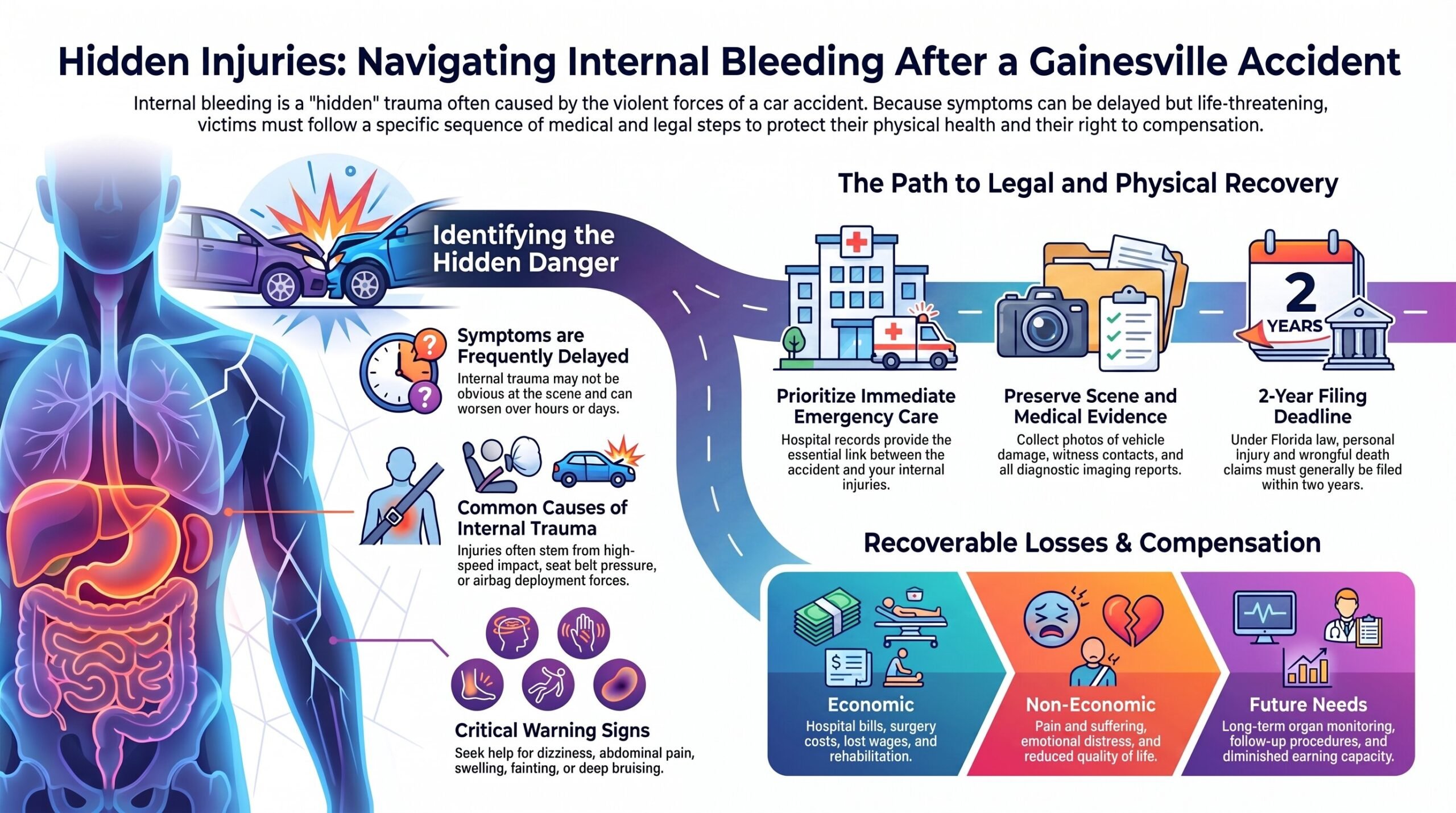
After a serious crash, internal bleeding can create urgent medical concerns and a complex injury claim. We help you protect your health, your record, and your right to fair compensation. Our team coordinates with medical providers, gathers treatment documentation, and tracks how symptoms affect your work, family duties, and service to others.
We move quickly on Evidence preservation, including vehicle data, crash reports, witness statements, and scene materials. We also review whether delayed diagnosis affected your recovery or increased your losses. During the insurance investigation, we manage communications, respond to requests, and challenge efforts to minimize the severity of your injuries.
If the insurer refuses to provide a fair resolution, we begin trial preparation from the outset. We consult qualified experts, organize evidence of damages, and build a clear account of fault and harm. You can focus on mending, while we advance your Gainesville internal bleeding car accident claim with discipline and purpose.
OUR CONSULTATIONSARE FREE
START YOUR FREE CASE REVIEW

Understanding Gainesville Internal Bleeding Car Accident Injury Cases
When a collision causes internal bleeding, the injury may not appear obvious at the scene, but it can quickly become life-threatening without prompt medical care. We help you understand how these cases require careful attention because bleeding inside the body can damage organs, reduce blood pressure, and create serious complications before outward signs develop.
As we review your situation, we consider emergency treatment, hospital records, Diagnostic imaging, surgical findings, medication needs, and physicians’ opinions. These details help us show how the injury affected your health, your work, and your ability to serve your family and community.
We also consider whether you’ll need long-term monitoring, follow-up appointments, rehabilitation, or future procedures. Internal bleeding cases often involve changing medical conditions, so we work to connect your current losses with your future needs. Our goal is to protect your claim while you focus on recovery and those who depend on you.
Common Causes of Gainesville Internal Bleeding Car Accident
We often see internal bleeding after serious Gainesville crashes, especially when high-speed collisions or pedestrian vehicle impacts create violent force on the body. We also recognize that safety devices, while crucial, can cause injuries through seat belt trauma or airbag deployment. As we review these causes with you, we’ll explain how each one may lead to hidden, life-threatening injuries that require immediate medical and legal attention.
High-Speed Collisions
Because high-speed collisions generate extreme force, they can cause internal bleeding even when a crash victim has no obvious external injuries. We understand these crashes may damage organs, tear blood vessels, and create life-threatening complications within minutes or hours. When we serve injured people and their families, we encourage prompt medical care after any serious impact, even if you feel stable at first.
High-speed crashes often involve violent deceleration, rollovers, or multiple impacts, which increase the risk of hidden trauma. While low-speed collisions and rear-end impacts can also cause harm, higher speeds usually result in greater energy transfer and more severe internal injuries. We review crash evidence, medical records, and witness accounts to help you understand what happened and pursue accountability with care and diligence.
Seat Belt Trauma
Seat belts save lives, but the force of a sudden collision can also concentrate pressure across the chest, abdomen, and pelvis, leading to serious internal injuries. We often see bruising, abdominal tenderness, or chest pain after a crash, and these signs may point to bleeding that is not immediately visible. You should take this trauma seriously, especially when nausea, dizziness, weakness, or worsening pain follows impact.
Seat belt loosening during a crash can allow the body to move violently, while poor belt fit or adjustments may place pressure on vulnerable organs rather than stronger bony areas. We help injured people recognize these risks and seek prompt medical evaluation. By acting quickly, we support your recovery, preserve evidence, and protect your ability to pursue accountability.
Airbag Deployment Injuries
When an airbag deploys during a Gainesville car accident, it can strike the body with enough force to cause serious internal trauma. We often see chest, abdominal, and rib injuries when the airbag’s rapid expansion compresses organs or tears delicate blood vessels. Even when you feel grateful that the airbag reduced greater harm, we encourage you to watch for dizziness, weakness, swelling, or worsening pain. These symptoms may signal internal bleeding that needs immediate medical attention.
We also guide you through careful post-crash communication, because statements made too soon can affect your claim. Accurate medical records, photographs, and consistent insurance reporting help preserve the facts. When we serve you after a collision, we focus on identifying hidden injuries and protecting your right to seek compensation.
Pedestrian Vehicle Impacts
Airbag injuries can hide serious trauma, but pedestrians struck by vehicles often face even greater forces without the protection of a car’s frame, seatbelt, or safety systems. We see pedestrian injuries that involve internal bleeding when the body absorbs direct impact, then hits the roadway or another object. Vehicle speed often determines whether damage remains treatable or becomes life-threatening within minutes.
We also recognize how nighttime visibility, distracted driving, and crosswalk violations place careful pedestrians in danger. When you’re helping an injured loved one, prompt medical evaluation matters, even if pain seems limited at first. Internal bleeding may develop silently, causing weakness, confusion, abdominal swelling, or fainting. We work to determine how the collision occurred, preserve evidence, and ensure accountability for the harm caused.


Legal Rights of Gainesville Internal Bleeding Car Accident Injury Victims
After a serious crash in Gainesville, internal bleeding victims have the right to seek compensation when another driver’s negligence caused or contributed to their injuries.
We help you understand those rights, protect your claim, and pursue recovery with purpose and discipline.
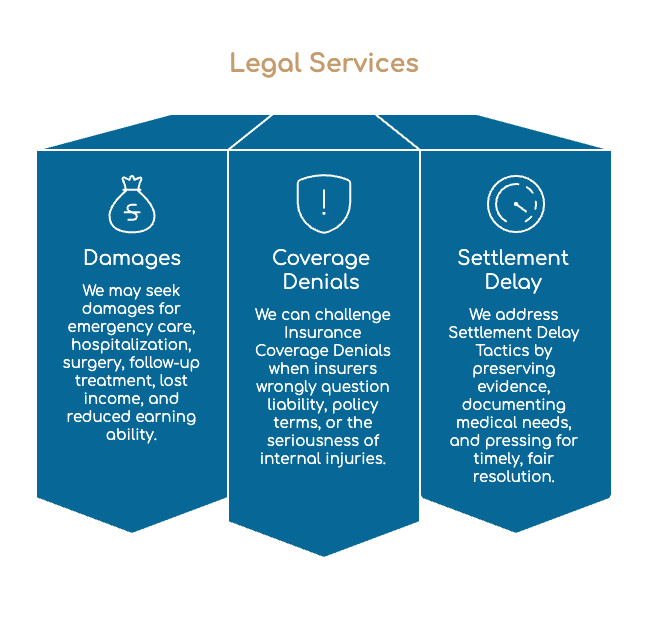
- We may seek damages for emergency care, hospitalization, surgery, follow-up treatment, lost income, and reduced earning ability.
- We can challenge Insurance Coverage Denials when insurers wrongly question liability, policy terms, or the seriousness of internal injuries.
- We address Settlement Delay Tactics by preserving evidence, documenting medical needs, and pressing for timely, fair resolution.
You don’t have to manage the legal process alone while focusing on restoring your health and supporting your family. We stand with you, gather records, communicate with insurers, and work to hold responsible parties accountable. When service to others guides your life, we aim to serve you with the same commitment, care, and steady advocacy.
Why Do Gainesville Internal Bleeding Car Accident Injuries Happen?
Understanding your legal rights also requires understanding how internal bleeding occurs in a Gainesville car accident. We often see these injuries when violent force damages blood vessels or organs without creating an obvious external wound. A seat belt, airbag, steering wheel, dashboard, or door can strike the body with enough pressure to injure the abdomen, chest, pelvis, or head.
Many crashes occur because another driver fails to exercise reasonable care. Distracted driving, including texting, adjusting navigation, or looking away from traffic, can cause sudden rear-end, side-impact, or head-on collisions. Drugged driving can slow reaction time, impair judgment, and make it harder for a driver to control speed or stay within a lane.
Speeding, unsafe turns, tailgating, and failure to yield also increase the force of impact. When we evaluate these events, we look at how negligent conduct placed you, your family, and the wider Gainesville community at serious risk.
What Should You Do After a Gainesville Internal Bleeding Car Accident Injury?
After a Gainesville car accident, we need you to treat possible internal bleeding as a medical emergency, even if symptoms seem delayed or minor. We also recommend documenting evidence of the crash as soon as it’s safe, including photos, witness information, and insurance details. Once you’ve received care, we can help you contact an injury lawyer to protect your claim and pursue compensation.
Seek Emergency Medical Care
In the moments following a Gainesville car accident, we should treat possible internal bleeding as a medical emergency, even when symptoms seem mild or delayed. We should call 911, accept transport if advised, and let emergency professionals evaluate pain, dizziness, weakness, swelling, confusion, or fainting. These Emergency symptoms can signal blood loss that isn’t visible, and quick action may support your recovery and ability to continue serving others.
At the hospital, we should clearly explain the crash, seat belt use, airbag deployment, and any symptoms you notice. Doctors may order imaging, blood tests, monitoring, surgery, or other treatment options based on your condition.
We shouldn’t wait to “see if it improves,” because delayed care can worsen injuries and complicate recovery. Prompt treatment also creates medical records linking injuries to the crash.
Document Crash Evidence
While medical care comes first, we should preserve crash evidence as soon as we safely can because it may help prove how the collision caused internal bleeding and related losses. If you’re able, we can photograph vehicle positions, skid marks, debris, traffic signals, weather conditions, and visible injuries before the scene changes. We should collect names, phone numbers, and statements from witnesses, including people who stopped to help.
Keep damaged clothing, broken safety equipment, discharge papers, and imaging reports connected to the Trauma diagnosis. We also should write down symptoms, pain levels, and limitations each day, since internal bleeding may worsen or become clearer over time. Careful evidence preservation supports truth, accountability, and fair service to everyone affected by the crash. Also save repair estimates, towing records, and insurance communications.
Contact An Injury Lawyer
Because internal bleeding can create urgent medical, financial, and legal concerns, we should contact an injury lawyer as soon as your condition is stable enough to make or authorize the call. We can help protect your rights while you focus on recovery and serving your family, work, and community. Early legal guidance helps us preserve evidence, organize insurance documentation, and communicate with insurers before statements are misused.
We should also track emergency follow-up instructions, missed work, out-of-pocket costs, and Medication side effects that affect daily responsibilities. An attorney can explain the claim timeline, identify liable parties, and coordinate records showing how the crash caused your injuries. Prompt action supports fair compensation and reduces preventable mistakes during a demanding recovery after the accident.
Critical Evidence in a Gainesville Internal Bleeding Car Accident Injury Case
We focus on evidence that proves the crash, connects it to your internal bleeding, and supports the full value of your injury claim:
- Medical records showing diagnosis, treatment, and causation
- Accident scene photos and vehicle damage evidence
- Witness statements that confirm how the collision occurred
Medical Records
After a serious Gainesville car accident, medical records often become the strongest proof that internal bleeding occurred and that the crash caused it. We use emergency room notes, imaging results, lab findings, surgical reports, and discharge instructions to connect your injuries to the collision. These records show when symptoms began, how providers responded, and why urgent treatment was necessary.
Clear symptom documentation matters because internal bleeding can worsen before obvious signs appear. When you report dizziness, abdominal pain, bruising, weakness, or confusion, clinicians create a timeline that supports your claim. We also review doctor referrals, follow-up instructions, and expert opinions to show the seriousness of your condition. By organizing these records carefully, we help protect your right to compensation while honoring the medical professionals who treated you.
Accident Scene Photos
When a crash scene gets cleared quickly, accident scene photos can preserve details that later become central to an internal bleeding injury claim. We look for vehicle positions, skid marks, debris fields, traffic signals, roadway defects, lighting, weather, and visible damage. These images help us connect the force of impact to the hidden injuries you suffered, especially when symptoms appeared hours later.
We also encourage saving photos of airbags, seat belts, broken glass, and any visible bruising before they fade. If available, dashcam footage may confirm timing, speed, and lane movement. Eyewitness contacts recorded at the scene can also help us locate people later, without addressing their accounts here. By preserving visual evidence early, we protect your claim and support a full, fair recovery process.
Witness Statements
Why do witness statements matter so much in an internal bleeding car accident claim? They help us demonstrate what happened when your injuries may not be visible at the scene. A bystander, passenger, or responding helper can describe pain complaints, confusion, impact direction, seatbelt use, or delayed symptoms that corroborate your medical timeline.
We gather statements promptly because memories fade and insurers may dispute details. We also evaluate the credibility of witness statements by reviewing their consistency, vantage point, timing, and any connection to the parties.
When appropriate, our Expert consultation process helps connect lay observations with medical findings, including how trauma can cause internal bleeding. By preserving these accounts, we strengthen your claim, support your recovery, and help ensure the responsible party faces clear evidence.
Vehicle Damage Evidence
Witness statements can explain what people saw and heard, but vehicle damage evidence can show the physical force that caused your internal injuries. We review photographs, repair estimates, totaled-vehicle records, airbag deployment, intrusion into the passenger area, and frame damage to connect the crash impact to the harm you suffered.
Property damage documentation can support medical findings, especially when insurers argue that a collision was too minor to cause internal bleeding. We also compare police report details with the visible damage, vehicle positions, skid marks, and debris fields to identify inconsistencies or confirm fault. When needed, we work with reconstruction professionals who can explain how force traveled through the vehicle and your body. This evidence helps us present a stronger, clearer claim for recovery.
Long-Term Effects of Gainesville Internal Bleeding Car Accident Injuries
We recognize that internal bleeding after a Gainesville car accident can lead to lasting harm, including chronic organ damage and serious complications. We’ll help you understand how ongoing medical treatment may affect your recovery, finances, and daily responsibilities. We also consider how reduced quality of life can shape the full value of your injury claim.
Chronic Organ Damage
Even after emergency treatment stops the bleeding, internal injuries from a Gainesville car accident can leave organs weakened, scarred, or permanently impaired. We help you understand how chronic liver, kidney, spleen, or intestinal damage may limit your ability to work, manage family responsibilities, and serve others. These injuries can also affect Pain management, daily endurance, and long-term earning capacity.
We evaluate medical records, diagnostic findings, and expert opinions to connect organ damage to the crash. That evidence shapes insurance negotiation, because insurers often minimize lasting harm when symptoms aren’t visible.
We also carefully consider Settlement timelines, since resolving a claim too early can undervalue permanent impairment. If the insurer refuses to provide fair compensation, we begin trial preparation, presenting clear evidence of how chronic organ damage affects your future and obligations.
Ongoing Medical Treatment
Chronic organ damage often requires continued monitoring, expert care, medication, imaging, and follow-up procedures long after the initial hospital stay ends. We help you understand why ongoing medical treatment matters, especially when internal bleeding affects the liver, spleen, kidneys, or lungs. Your care plan may include specialist visits, blood testing, repeat scans, surgical evaluations, and coordinated rehabilitation.
Telemedicine follow-up can also support timely communication when travel is difficult or frequent appointments become burdensome. We recognize that effective pain management is often necessary, but it must be guided carefully to protect organ function and prevent complications. As we review your injury claim, we document future treatment needs, projected costs, and medical opinions. This evidence helps demonstrate how continued care supports your recovery and warrants fair compensation.
Reduced Quality Of Life
Recovery after internal bleeding can reshape daily life in ways that go beyond hospital bills and medical appointments. You may struggle with fatigue, pain, reduced mobility, or anxiety that limits your work, caregiving, worship, and service to others. We acknowledge that Long Term Recovery often requires rebuilding routines, accepting help, and adjusting expectations while still pursuing purpose and dignity.
When we evaluate reduced quality of life, we look beyond visible injuries. We consider missed family roles, lost independence, interrupted community involvement, and the emotional weight carried each day. These losses matter because they affect how you live, not just how you recover. A careful Compensation Strategy should document these changes through medical records, personal statements, and testimony, helping pursue recovery that reflects the full impact of your injuries.
Proving Liability in Gainesville Internal Bleeding Car Accident Injury Cases
Because internal bleeding may not be visible at the crash scene, proving liability in a Gainesville car accident case requires a careful review of both the collision evidence and the medical records that connect the trauma to the injury. We examine police reports, witness statements, vehicle damage, roadway conditions, and emergency response records to identify how the crash occurred and who failed to use reasonable care.
We also focus on establishing causation because internal bleeding can worsen quickly and may involve complex medical findings. Medical imaging, hospital notes, surgical records, and physician evaluations help show that the collision caused or aggravated your condition. When needed, we work with qualified professionals whose expert testimony can explain the force of impact, the timing of symptoms, and the relationship between the crash and the internal injury.
Dealing With Insurance Companies After a Gainesville Internal Bleeding Car Accident Injury
After we establish liability and link the crash to your internal bleeding, the next challenge often involves dealing with insurance companies that may try to limit the amount they pay. We protect you from tactics that can undermine a valid injury claim, including requests for recorded statements, pressure to settle early, or questions that distort your medical condition.
We review Policy limits, identify coverage gaps, and track claim timelines so that no insurer can control the process through delay or confusion. When adjusters raise denial reasons, such as alleged preexisting conditions, disputed fault, or insufficient documentation, we respond with organized evidence and clear legal arguments.
Our role is to serve your recovery by handling communications, preserving your rights, and pursuing compensation that reflects emergency care, hospitalization, lost income, and future medical needs. You should be able to focus on restoring health, while we manage the insurance issues with discipline, accuracy, and persistence from the beginning.
What to Expect During a Gainesville Internal Bleeding Car Accident Injury Claim Process
We guide you through each stage of a Gainesville internal bleeding car accident injury claim, starting with immediate medical evaluation and careful evidence collection. We’ll help you document your injuries, losses, and treatment needs, then handle insurance claim negotiations with a clear strategy. If the insurer won’t offer fair compensation, we prepare your case for settlement discussions or litigation.
Immediate Medical Evaluation
Seek emergency medical care immediately if you suspect internal bleeding after a Gainesville car accident, even when symptoms seem mild or delayed. We encourage you to treat dizziness, abdominal pain, fainting, confusion, or any shock symptom as urgent. At the hospital, clinicians may check essential signs, order imaging, perform blood tests, and monitor you closely for changes that could signal hidden trauma.
We know you may want to return home and serve family, work, or community responsibilities, but stabilizing your health must come first. Before release, discharge planning should explain follow-up care, warning signs, medication limits, and activity restrictions. We can help you understand how early medical evaluation supports your injury claim while protecting your recovery and ability to care for others. Timely care can also prevent complications later.
Evidence And Documentation
As your medical condition stabilizes, evidence and documentation become central to proving how the Gainesville car accident caused your internal bleeding and related losses. We help you gather emergency records, diagnostic imaging, surgical notes, medication lists, discharge instructions, and follow-up treatment plans. These materials show the severity of your injuries and the care required to protect your health.
We also review crash photographs, vehicle damage, witness statements, traffic camera footage, and the accuracy of police reports. If the report contains omissions or errors, we work to identify corrective support through reliable sources. Independent medical testing may also clarify disputed findings and connect trauma to internal bleeding. By organizing this information early, we preserve facts, support your recovery needs, and build a clear record of what happened.
Insurance Claim Negotiations
Once the evidence clearly shows how the crash caused your internal bleeding, the insurance claim moves into a more contested stage. We prepare a demand that precisely explains your medical needs, lost income, pain, and future care. The insurer then reviews liability, damages, coverage, and available policy limits. We respond to requests for records, correct unfair assumptions, and challenge any effort to minimize the seriousness of hidden injuries.
When uninsured or underinsured coverage applies, we also examine your policy for protection that may support recovery. Throughout negotiations, we keep you informed, because clear guidance helps you make decisions that protect your health and your family. We aim to present the claim firmly, respectfully, and in a way that encourages fair evaluation.
Settlement Or Litigation
When negotiations don’t produce a fair result, we evaluate whether settlement remains possible or whether litigation gives your claim the stronger path forward. We review the medical evidence, fault issues, available coverage, and Insurance negotiation tactics that may delay accountability or undervalue your injuries.
We also explain Settlement timeline expectations, so you understand why some claims resolve after documentation and demand, while others require filing suit. If litigation becomes necessary, we prepare your case with the same care we bring to service-focused work: organized records, clear testimony, and purposeful advocacy.
You won’t have to face pressure from insurers alone. We guide each decision, protect deadlines, and pursue a result that reflects your losses, your recovery needs, and the support you provide to those who depend on you.
Compensation for Gainesville Internal Bleeding Car Accident Injury Damages
Because internal bleeding can create life-threatening complications and long-term medical needs, compensation after a Gainesville car accident must account for both immediate losses and future harm. We help you pursue recovery that reflects the full impact of emergency care, hospitalization, surgery, diagnostic testing, rehabilitation, and follow-up treatment. When complications require ongoing monitoring or pain management, we work to clearly document those needs and connect them to the crash.
We also evaluate how the injury affects your ability to care for family, serve your community, and maintain stability during recovery. If internal bleeding causes a fatal outcome, Wrongful death claims may help surviving family members seek accountability and financial support. Our role is to gather evidence, consult appropriate experts, and present a claim that shows the seriousness of your injury. We do not allow insurers to minimize hidden trauma simply because it is not immediately visible.
Economic vs Non-Economic Damages in Gainesville Internal Bleeding Car Accident Cases
We classify your damages by separating economic losses, such as medical bills and lost wages, from non-economic harm, including pain and emotional distress. In internal bleeding car accident cases, this distinction helps us measure both the financial impact and the personal suffering you’ve endured. We also gather records, expert opinions, and other evidence to prove damages after crashes with clarity and precision.
Medical Bills And Lost Wages
After an internal bleeding injury from a Gainesville car accident, medical bills and lost wages often become the most immediate financial pressures in a claim. We help you document emergency care, diagnostic testing, surgery, hospitalization, prescriptions, rehabilitation, and follow-up visits so the full cost of treatment is clear.
We also review missed work, reduced hours, lost benefits, and diminished earning capacity when your recovery limits your ability to serve your family, workplace, and community. If Distraction driving or a vehicle defect contributed to the crash, we connect those facts to the financial harm you’ve suffered. Economic damages require records, testimony, and careful calculations, not estimates. We pursue compensation that reflects what you’ve paid, what you owe, and what your injuries may continue to cost.
Pain And Emotional Distress
When internal bleeding causes pain, fear, or lasting emotional strain, those harms are worthy of the same careful attention as hospital bills and wage loss. We recognize that you may face sleeplessness, anxiety, reduced independence, and the burden of relying on others while your body mends. These non-economic damages reflect human losses, not receipts, and they matter in a full recovery plan.
We also consider victim safety planning when ongoing symptoms or trauma affect daily routines, transportation, caregiving, or work decisions. Emotional support resources and trauma recovery services can help you regain stability, dignity, and confidence after a serious crash. In applying Settlement negotiation strategies, we work to guarantee your suffering is addressed with respect, not minimized as temporary discomfort or an unavoidable consequence.
Proving Damages After Crashes
A full damages claim must connect both the personal harm you’ve endured and the financial losses the crash has created. We gather medical bills, wage records, imaging results, and physician opinions to document economic damages with precision. We also address non-economic harm, including pain, fear, reduced independence, and the burden your injuries place on daily service to others.
In Gainesville internal bleeding cases, we must prove Independent causation, showing the crash caused or worsened the injury. We use expert testimony when medical issues, future care, or work limits require clear explanation. We also apply Florida liability standards to show fault and responsibility. Careful damages calculations help us present your losses fully, so insurers or jurors understand the true impact of the crash.
When a Gainesville Internal Bleeding Car Accident Injury Case Goes to Trial vs Settlement
Although most Gainesville internal bleeding car accident injury cases resolve through settlement, some claims must proceed to trial when the insurance company disputes liability, minimizes the severity of the injury, or refuses to offer fair compensation. We guide you through both paths with purpose, discipline, and concern for the people who depend on your recovery.
A strong settlement strategy begins with an accurate valuation of damages, clear medical evidence, and preparation for defense arguments. We review mediation options when productive dialogue may secure compensation without the delay and strain of trial. Settlement can protect privacy, reduce uncertainty, and allow you to focus on recovery and service to your family or community.
Trial becomes necessary when fairness cannot be achieved otherwise. We prepare witnesses, medical proof, and persuasive arguments while explaining courtroom risks, including unpredictable verdicts and extended timelines. Our goal remains consistent: pursue a result that honors your injuries, losses, and future needs.
Florida Laws That May Affect Your Gainesville Internal Bleeding Car Accident Case
Florida law shapes every stage of a Gainesville internal bleeding car accident case, from the deadline to file a lawsuit to the evidence needed to prove fault, injury severity, and damages. We help you understand how these rules affect recovery, especially when medical needs, family responsibilities, and service to others continue after a crash.
Key laws may influence your claim in several ways:
- Comparative Negligence: If you share fault, your compensation may decrease by your percentage of responsibility.
- Liability Thresholds: Serious injuries, including internal bleeding, may support claims beyond basic insurance benefits when legal standards are met.
- Insurance requirements: Florida’s no-fault system often requires early use of personal injury protection benefits before pursuing additional damages.
We evaluate police reports, medical records, witness statements, and expert opinions to connect the crash to your internal injuries. By applying Florida law carefully, we protect your claim and pursue fair compensation with purpose, discipline, and integrity.
The Statute of Limitations for Gainesville Internal Bleeding Car Accident Injury Cases
Deadlines often determine whether an injured person can pursue compensation after a serious Gainesville car accident. In Florida, personal injury claims generally must be filed within two years of the crash, including cases involving internal bleeding. We encourage prompt attention to this deadline, because medical treatment, service to family, and recovery can quickly consume valuable time.
Wrongful death claims also usually carry a two-year filing period, measured from the date of death. When internal bleeding is delayed, overlooked, or tragically fatal, families should note each date carefully and preserve records that show how the injury progressed.
Timely action also supports accurate proof. Medical records, imaging results, witness information, and bills can become harder to obtain over time. The same is true for documenting income loss, especially when missed work, reduced duties, or long-term impairment affects a household’s stability. Protecting these deadlines helps preserve the right to seek lawful recovery.
How a Gainesville Internal Bleeding Car Accident Injury Lawyer Can Help You
After a crash involving suspected internal bleeding, we can help you restore your health, your evidence, and your right to pursue compensation. We coordinate your claim with care, so you can focus on recovery and continue serving the people who depend on you.
- We gather medical records, crash reports, witness statements, and imaging results to show how the collision caused your injuries.
- We handle insurance adjuster tactics, including delayed responses, pressure to record statements, and unfair attempts to minimize your losses.
- We guide settlement strategy planning by valuing medical care, lost income, future treatment, pain, and the practical impact on your daily responsibilities.
We also communicate with providers, monitor claim deadlines, and prepare your case as if trial may become necessary. Our role is to protect your interests, present your damages clearly, and pursue a result that supports your physical recovery, financial stability, and continued ability to serve others.
When to Contact a Gainesville Internal Bleeding Car Accident Injury Lawyer
If you suspect internal bleeding from a Gainesville car accident, you should contact us as soon as your emergency medical needs are under control. Internal bleeding can worsen quickly, and early legal guidance helps protect your ability to pursue compensation while you focus on recovery and caring for those who depend on you.
Call us after you receive emergency care, follow-up instructions, or notice symptoms such as dizziness, abdominal pain, swelling, confusion, fainting, or unusual bruising. Seek medical documentation for every visit, test, diagnosis, and treatment plan, because clear records help connect your injuries to the crash.
If you can safely do so, gather witness contacts, photographs, insurance details, and the police report number. Do not delay because insurers may request statements or records before you understand the full extent of your injuries. We can step in promptly, preserve crucial information, and help you move forward with structure, dignity, and purpose.
Why You Need an Experienced Gainesville Internal Bleeding Car Accident Injury Lawyer
Protecting an internal bleeding claim requires more than reporting pain and submitting medical bills; it requires a lawyer who understands how trauma develops, how insurers challenge complicated injuries, and how to prove the full impact of a serious crash. We help you connect emergency care, diagnostic findings, expert opinions, and lasting limitations to the negligence that caused your injury.
Internal bleeding cases often involve delayed symptoms, disputed causation, and high-value losses. Insurers may use Negligence defenses to shift blame, minimize medical concerns, or argue that treatment was unrelated. We confront those tactics with organized evidence, clear medical narratives, and careful damage analysis.
Our role also supports your broader recovery mission. When you’re focused on recovery and supporting others, we protect the legal work. If a verdict or ruling creates issues, we can address the record for a possible car crash appeal while preserving your claim’s strength.
How to Choose the Right Gainesville Internal Bleeding Car Accident Injury Lawyer for Your Case
Evaluate a lawyer’s experience with serious trauma claims before you trust them with an internal bleeding case, because these injuries require fast investigation, careful medical proof, and a clear strategy for dealing with insurers. We should look for counsel who understands emergency treatment records, diagnostic imaging, lost-income evidence, and the long-term effects of hidden injuries.
During a case evaluation, we can ask how the lawyer identifies liable parties, preserves crash evidence, and works with medical experts. Strong Client communication also matters. You should receive clear updates, direct answers, and guidance that helps you make informed decisions while you focus on recovering and serving your family’s needs.
We should also review past results, courtroom readiness, and the lawyer’s approach to settlement negotiations. The right advocate will respect your priorities, prepare every claim with discipline, and pursue compensation that reflects your medical care, financial losses, and future recovery needs.
About The Law Offices of Anidjar & Levine
The Law Offices of Anidjar & Levine represents injured people throughout Florida, including Gainesville car accident victims facing internal bleeding and other serious trauma.
We recognize how a crash can disrupt your health, work, family responsibilities, and ability to serve others with confidence.
We approach each case with careful investigation, disciplined Client Communication, and a focused Claim Strategy tailored to your medical needs and financial losses.
Our team gathers records, reviews crash evidence, consults experts when needed, and deals directly with insurers so you can concentrate on recovery.
When you work with us, we keep you informed, answer your questions, and explain each stage of the legal process.
We acknowledge that internal bleeding injuries require urgent care and strong documentation.
Our goal is to pursue fair compensation while reducing the burden on you and your family, so you can move forward with stability, dignity, and informed support.
Frequently Asked Questions
Can Internal Bleeding Symptoms Appear Days After a Gainesville Car Accident?
Yes, internal bleeding symptoms can appear days after a Gainesville car accident. We urge you to watch for delayed symptoms, such as worsening abdominal pain, dizziness, weakness, deep bruising, or fainting. These signs may indicate organ injury, with rupture risk increasing if treatment is delayed. We recommend prompt medical evaluation, so you can recover your health, preserve records, and support those who depend on your care.
Will I Need Surgery for Accident-Related Internal Bleeding?
You may need surgery if bleeding is severe, ongoing, or affecting critical organs. We urge you to seek immediate Medical Evaluation, because doctors can decide whether observation, medication, transfusion, or surgery best protects you. Even when surgery isn’t required, medical Monitoring matters, as complications may develop later. We also help you consider compensation, Medical Evaluation records, Possible Long Term effects, and how documented care supports your recovery and service to others.
Can Seat Belts Contribute to Internal Bleeding Injuries?
Yes, seat belts can contribute to internal bleeding injuries, though they also save lives. Seatbelt forces may compress the abdomen, chest, or pelvis during impact, damaging organs or blood vessels. We encourage you to watch for hidden injuries, including pain, dizziness, bruising, or weakness, and seek immediate medical care. By responding promptly, we protect your health, support your recovery, and help preserve evidence for any necessary claim.
How Do Doctors Diagnose Internal Bleeding After a Crash?
Doctors diagnose internal bleeding after a crash by evaluating your symptoms, crucial signs, crucial signs, crucial signs, bruising, abdominal tenderness, and signs of shock. We often see them order blood tests and hospital imaging, including CT scans, ultrasound, or X-rays, to locate bleeding and organ damage. When bile ducts, pancreas, or liver injuries are suspected, ERCP testing may help. We encourage you to seek immediate care, so medical teams can protect your health and recovery.
Should I Avoid Driving While Recovering From Internal Bleeding?
Yes, you should avoid driving while recovering from internal bleeding until your doctor clears you. We urge you to Follow Injury Guidance because dizziness, pain, weakness, medications, or delayed complications can impair judgment and reaction time. Why Seek Care matters when symptoms change, especially if you serve others and need reliable capacity. Don’t drive to appointments if you feel unsafe; arrange transportation and protect yourself and everyone on the road.
—————————
Internal bleeding after a Gainesville car accident requires prompt medical care and decisive legal action.
Our Gainesville Car Accident Lawyer can investigate the crash, identify liable parties, document your injuries, and pursue the compensation you need for treatment, lost income, and related losses.
You shouldn’t face insurers alone while recovering from a serious injury.
Contact The Law Offices of Anidjar and Levine today for a free consultation, and let us protect your rights from the start.