
If you’ve been injured at work in Fort Myers, The Law Offices of Anidjar and Levine can help you understand workers’ compensation benefits, address disputed medical care or wage-loss payments, and organize records to support your claim. Florida workers’ compensation generally doesn’t provide pain-and-suffering damages, but in some cases another party may be responsible for additional losses. Learn more from a Fort Myers Personal Injury Lawyer. Prompt reporting and careful documentation matter. We’ll explain issues that may affect your options and steps to consider next.
Main Takeaways
- Florida workers’ compensation may cover authorized medical care and partial wage replacement for qualifying work-related injuries.
- Eligibility depends on employment status, the work-related connection, timely reporting, and required claim documentation.
- Report injuries promptly, seek appropriate care, and keep copies of incident reports, medical records, and carrier communications.
- Workers’ compensation generally does not pay pain-and-suffering damages; benefits may be disputed over treatment, wages, or eligibility.
- A lawyer can review denials or delays, explain claim options and deadlines, and assess whether another party may be responsible.
How We Can Help With Your Fort Myers Workers Compensation & Damages Injury Claim
After a workplace injury, we can help you pursue the workers’ compensation benefits Florida law provides. We’ll listen to your concerns, explain the claims process, and help you take informed steps while you focus on your health and responsibilities.
Our team can conduct a careful Claim Evaluation by reviewing available records, workplace reports, and communications with the insurance carrier. We’ll identify questions that may affect your claim and explain what information could help address them. If the carrier requests documents or disputes an issue, we can help you respond clearly and within applicable deadlines.
We also provide Benefit Coordination to help you understand how workers’ compensation may relate to other available benefits. We’ll communicate with relevant parties, organize important paperwork, and keep you informed about developments. Because your work supports others, we recognize the importance of steady guidance when an injury interrupts your routine. We’ll treat your concerns with respect, answer your questions directly, and work to protect your interests throughout the claims process.
Don’t Wait. Call Our Florida Personal Injury Lawyers Now!
Understanding Fort Myers Workers’ Compensation & Damages Injury Cases


Understanding what a Florida workers’ compensation claim may cover can help you make informed decisions about your recovery and finances. If you’re injured while serving customers, patients, or coworkers, workers’ compensation may provide medical care and partial wage replacement, subject to applicable rules. These benefits can help you focus on treatment without carrying every financial burden alone.
OUR CONSULTATIONSARE FREE
START YOUR FREE CASE REVIEW

Florida benefit eligibility depends on factors such as your employment status, the connection between your injury and work, and timely reporting. We can help you understand how these requirements apply and what documentation may support your claim. Benefits generally don’t include pain and suffering, so it’s important to distinguish workers’ compensation from other potential legal remedies.
Employers and insurers also have responsibilities under workplace safety regulations and Florida law. When a dispute arises over treatment, wage benefits, or eligibility, we can explain the process and help you evaluate your options. Our goal is to provide clear guidance so you can protect your health, your income, and your ability to continue contributing to others.
Common Causes of Fort Myers Workers Compensation & Damages


We’ll start by examining how slip-and-fall accidents and repetitive motion injuries can cause workplace harm. Equipment-related accidents also pose serious risks, particularly when machinery is defective or used improperly. We’ll also consider workplace vehicle collisions and the circumstances that may affect a workers’ compensation claim.
Slip and Fall Accidents
Where do workplace slip-and-fall accidents happen most often? In Fort Myers, we often see these incidents in kitchens, hallways, entryways, and other areas where employees serve customers, patients, or coworkers. Wet Floor Hazards can arise from spills, leaks, recently cleaned surfaces, or rain tracked indoors. Without prompt cleanup, warning signs, or safe walking routes, a brief lapse in attention can lead to serious injury.
Stairway Falls may occur when steps lack secure handrails, adequate lighting, or clear, even surfaces. Workers carrying supplies or assisting others face added risks when stairs are crowded or obstructed. Employers should inspect walking areas, quickly address hazards, and provide appropriate warnings. If you’re hurt in a fall while working, we can help you understand your workers’ compensation options and the steps to file for benefits.
Repetitive Motion Injuries
When job duties require the same movements throughout the day, repetitive motion injuries can develop gradually and interfere with a worker’s ability to perform routine tasks. Employees who type, lift, sort, prepare meals, or assist patients may repeatedly strain their hands, wrists, arms, or shoulders. Over time, this strain can contribute to Carpal tunnel, tendon inflammation, and other painful conditions that limit strength, coordination, or range of motion. We understand these injuries can make it harder to serve customers, care for others, and meet workplace responsibilities. If symptoms arise, report them promptly and seek appropriate medical attention. Keep records of your symptoms, treatment, and job duties. We can help you understand how workers’ compensation may cover medical care and wage benefits when repetitive work causes an injury.
Equipment-Related Accidents
Although equipment helps workers complete essential tasks, defective or improperly used machinery can cause serious injuries in Fort Myers workplaces. Unguarded presses, malfunctioning tools, and unexpected equipment startups can lead to crushing injuries, lacerations, burns, or amputations. Employers can reduce these risks by maintaining machinery, providing practical training, and ensuring workers understand safe operating instructions. Effective machine guarding keeps hands and clothing away from moving parts, while clear lockout procedures prevent equipment from starting during cleaning, repair, or maintenance. If you’re injured while performing work that serves customers, patients, or the public, report the incident promptly and seek appropriate medical care. We can help you understand how workers’ compensation may cover treatment and wage benefits, and whether you may be eligible for additional compensation when another party’s negligence contributed to your equipment-related injury.
Workplace Vehicle Collisions
Workplace vehicle collisions can happen when drivers face poor visibility, distracted coworkers, unsafe backing, or inadequate vehicle maintenance. When you serve customers, patients, or the public, a crash can interrupt critical work and cause serious injuries. Employers can reduce these risks by setting clear driving procedures, scheduling regular inspections, and training workers to operate vehicles safely. Strong fleet safety practices should address seat belt use, safe speeds, route planning, and communication between drivers and coworkers. If a collision occurs, report it promptly and seek medical care, even when symptoms seem minor. We can help you understand how workers’ compensation may cover treatment and lost wages after an on-the-job crash. Depending on the circumstances, other parties may also bear responsibility for your injuries and related losses.
Legal Rights of Fort Myers Workers’ Compensation & Damages Injury Victims
If you’re injured at work in Fort Myers, Florida’s workers’ compensation laws give you specific rights to medical care and wage-loss benefits, but deadlines and claim requirements can affect what you receive.
We can help you understand these protections so you can focus on recovery and continue supporting the people who depend on you.
- You may receive authorized medical treatment, including care from a provider selected under the workers’ compensation system.
- If your injury prevents you from working, you may qualify for wage-loss benefits, subject to eligibility rules and required documentation.
- You must report your injury promptly and cooperate with reasonable claim procedures. Keep copies of notices, medical records, and benefit decisions.
- Retaliation protections may apply if your employer penalizes you for pursuing lawful benefits. You may also have rights to disability accommodations under applicable law, depending on your condition and circumstances.
If benefits are delayed, denied, or disputed, we can review the decision and explain available options. Acting promptly helps preserve your rights and supports a fair resolution.
Why Do Fort Myers Workers’ Compensation Injuries Happen?
Why do workers’ compensation injuries happen in Fort Myers? They often occur when routine tasks expose employees to hazards that employers have not identified or controlled. In service-focused workplaces, staff may lift patients, assist customers, handle equipment, or respond to urgent needs under time pressure. Even dedicated workers can be hurt when workloads, inadequate training, or unsafe conditions make careful work difficult.
A weak Workplace safety culture can allow risks to persist. When workers feel unable to report concerns, or supervisors overlook repeated hazards, preventable incidents become more likely. Slippery floors, faulty machinery, falling objects, repetitive motions, and exposure to harmful substances can all cause serious injuries. Fatigue and rushed procedures may further reduce attention and increase the chance of an accident.
Employers can reduce these risks through consistent hazard prevention strategies, practical training, equipment maintenance, and clear safety procedures. We can better protect the people who serve our communities when organizations treat safety as a shared responsibility and address hazards before someone gets hurt.
What Should You Do After a Fort Myers Workers’ Compensation & Damages Injury?
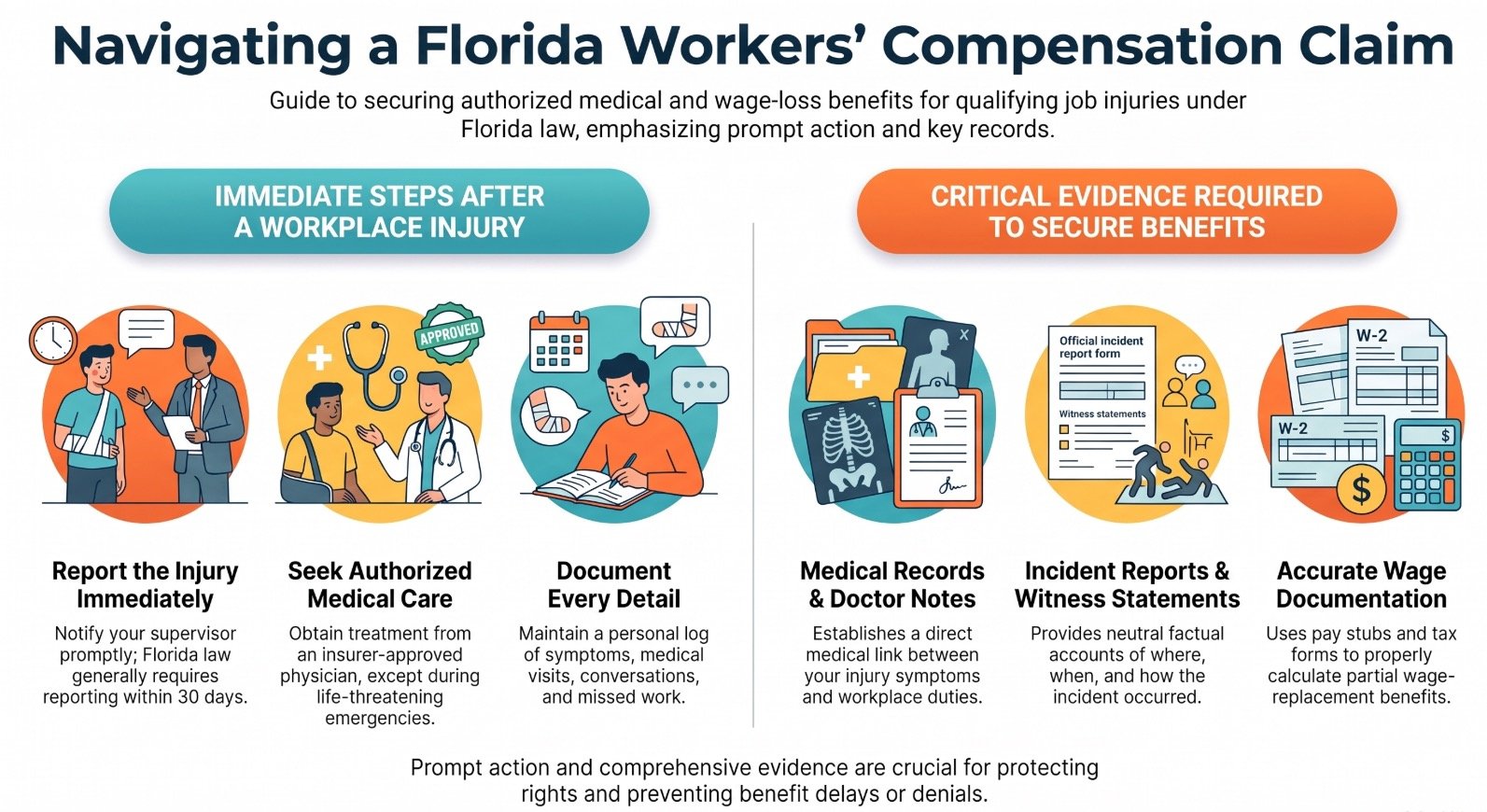
After a workplace injury, we should report it to our employer promptly and follow the required procedures. We should also seek medical care without delay, even if the injury initially seems minor. By documenting symptoms, treatment, communications, and related expenses, we can help support our workers’ compensation claim.
Report Your Injury
Report a work-related injury to your supervisor as soon as possible, even if it seems minor or you’re unsure how serious it is. Prompt Supervisor notification gives your employer an opportunity to document what happened and respond under its reporting procedures. If you wait, important details may become harder to recall, and delays could affect your workers’ compensation claim.
When reporting, explain where and when the incident occurred, what you were doing, and how the injury happened. Include any equipment involved and identify witnesses who saw the event. Keep your account factual, and ask how to complete any required forms. Write down the incident timeline, including when you reported the injury and whom you notified. Save copies of reports and related communications. By documenting events carefully, we can help protect your rights while supporting a clear, reliable record.
Seek Medical Care
Seek medical care promptly, even if your injury seems minor or you’re unsure how serious it is. Some workplace injuries worsen over time, and early evaluation can help identify problems and guide appropriate treatment. If you have Emergency symptoms, such as severe bleeding, difficulty breathing, or loss of consciousness, call 911 or go to an emergency department immediately. Your health must come first.
For nonemergency care, contact your employer or workers’ compensation insurer to learn which provider you’re authorized to see. Florida workers’ compensation rules generally require treatment from an approved provider, so when possible, ask about treatment authorization before scheduling an appointment. If you need urgent care and can’t reach the insurer, seek necessary medical attention and explain that the injury occurred at work. Follow the provider’s instructions and attend recommended follow-up visits.
Document Everything
Keep a clear record of every step you take after a workplace injury, from notifying your employer to attending medical appointments. Careful documentation helps us explain what happened and supports your workers’ compensation claim. Write down when, where, and how the incident occurred, including the names of witnesses and any safety concerns you observed. Create a workplace timeline that tracks your injury, reports, treatment, and communications with your employer or insurer. Keep copies of incident reports, claim forms, medical records, work restrictions, and related messages. A Personal journal can help us record pain, symptoms, missed work, and changing limits on daily activities. Be accurate and consistent, and avoid guessing or altering details. Organized records can help us answer questions, identify gaps, and advocate for fair benefits.
Critical Evidence in a Fort Myers Workers Compensation & Damages Injury Case
To support your workers’ compensation claim, we’ll focus on evidence that documents your injury, the incident, and its financial impact. Essential records may include: 1. medical records, 2. accident reports, 3. witness statements, and 4. wage documentation. We’ll review these materials to establish what happened and the benefits you may be owed.
Medical Records
Medical records can make or break a Fort Myers workers’ compensation claim because they document the injury, treatment, and limits it places on your ability to work. We can help you understand how these records support your claim and show the care you need to recover and return to serving others.
Consistent medical notes can connect your workplace injury to your symptoms, prescribed treatment, and work restrictions. Tell your providers about every relevant symptom, follow their recommendations, and ask them to document changes in your condition in your chart. Gaps or inconsistencies may raise questions about the severity or cause of your injury.
We can help retrieve records from hospitals, clinics, and physicians while using appropriate privacy safeguards to protect sensitive information. Reviewing the complete file may help identify missing records or unclear entries before they affect your claim. Keep copies of treatment instructions and restrictions, and share updates with your legal team.
Accident Reports
A timely accident report can provide important evidence in a Fort Myers workers’ compensation claim by documenting when, where, and how an injury occurred. We encourage you to notify your supervisor promptly, even if symptoms seem minor or the incident happened while you were helping a customer, coworker, or member of the public. Notifying your supervisor early creates a record and helps your employer respond appropriately.
Follow your workplace procedures and meet all Report deadlines. Describe the event accurately, identify the date, time, and location, and explain what you were doing when the injury occurred. Review the report before submitting it, and request a copy for your records. If you find an error, request a written correction. We can use this documentation to compare the reported circumstances with your medical records and support a consistent claim.
Witness Statements
Witness statements can strengthen the accident report by providing independent accounts of how an injury occurred. We can help you identify coworkers, customers, or other people who saw the incident or its immediate aftermath. Their observations may clarify the sequence of events, the conditions at the worksite, and whether anyone offered assistance. Witness credibility matters, so we should record each person’s name and contact information and preserve their account accurately. Statement timing also matters. Memories may fade, and details may become less precise over time. We can encourage witnesses to describe only what they personally observed, without guessing or adopting someone else’s version. If accounts differ, we can assess those differences alongside other evidence. Careful, timely statements can help present a clearer and more complete picture of your workplace injury and support a fair review.
Wage Documentation
Your pre-injury earnings can affect the wage-replacement benefits available through workers’ compensation. We can help you gather clear records so your claim reflects your actual earnings and supports a fair calculation. Collect recent pay stubs, tax documents, and records of overtime, bonuses, commissions, or other regular compensation. Pay stub analysis can reveal discrepancies between reported wages and your usual income, especially when your hours or pay vary. Ask your employer for payroll records and confirm that they include your complete earnings history. Careful payroll recordkeeping also helps us identify missing information and respond to the insurer’s questions. If you serve others in demanding work, accurate wage evidence can help protect your household while you recover. Keep copies, note any errors, and share documents promptly with your representative.
Don’t Wait. Call Our Florida Personal Injury Lawyers Now!
Long-Term Effects of Fort Myers Workers Compensation & Damages Injuries
A workplace injury may cause chronic pain that continues long after the initial accident. We’ll also consider lasting mobility limitations and how they can affect your ability to work and manage daily tasks. Ongoing medical care may be necessary, and we’ll explain how these long-term needs relate to workers’ compensation benefits.
Chronic Pain
When a workplace injury causes chronic pain, its effects can continue long after the initial treatment ends, limiting your ability to work and manage daily tasks. Persistent pain may affect your concentration, patience, and the energy you bring to work and home responsibilities. It can also make it harder to consistently serve colleagues, customers, or family members. Sleep disruption may intensify discomfort and leave you fatigued during the day, creating additional challenges as you recover. We can help you understand how ongoing symptoms may relate to your workplace injury and what documentation may support a workers’ compensation claim. Keep records of pain levels, treatment visits, medications, and missed work. A clear account of these effects can help your medical providers guide care and help establish the continuing impact of your injury.
Lasting Mobility Limitations
Although treatment may address the initial injury, lasting mobility limitations can continue to affect how you walk, lift, reach, or perform other work tasks. These changes may make it harder to return to a job that involves serving customers, supporting coworkers, or helping the public. You might need to move more slowly, avoid certain duties, or take additional breaks to manage everyday tasks safely. Gait adaptations can develop when you shift weight to protect an injured area, sometimes placing strain on other parts of your body. Assistive devices, such as braces or canes, may help you move through the workplace, but they can also affect which tasks you can perform. We can help you document how these limitations affect your work capacity, daily responsibilities, and potential compensation under Florida workers’ compensation law.
Ongoing Medical Care
How long will medical care continue after a work injury? The answer depends on your diagnosis, recovery, and need for ongoing treatment. Some workers recover within weeks, while others require years of therapy, medication, specialist visits, or additional procedures. We can help you understand how Florida workers’ compensation may address authorized care and what steps to take when treatment is delayed or disputed.
Treatment continuity matters because gaps in care may slow recovery and make it harder to document lasting effects. We can help you communicate with your treating physician, follow medical recommendations, and keep records of appointments and expenses. Care coordination among doctors, employers, and insurers can also clarify your needs and support a consistent plan. When you serve others through your work, reliable medical care can help protect your health and ability to contribute over time.
Proving Liability in Fort Myers Workers Compensation & Damages Injury Cases
Proving liability in a Fort Myers workers’ compensation case means establishing that your injury or illness arose out of and occurred in the course of your employment. We can help you identify the facts that connect your condition to your job and support your claim with reliable evidence. Report the incident promptly, seek medical care, and keep records of your symptoms, treatment, and work duties. Witness statements, photographs, incident reports, and medical records may help clarify how the injury happened and how it affects your ability to work.
Workers’ compensation generally does not require you to prove Employer negligence. However, evidence of unsafe conditions or inadequate training may help explain how your injury occurred. In some cases, third-party liability may also apply, such as when a contractor, equipment manufacturer, or other outside party contributed to the harm. We can assess whether another party may be responsible and explain how that possibility affects your options. Careful documentation helps us present a clear, accurate account of what happened and lets you focus on recovery and serving others.
Dealing With Insurance Companies After a Fort Myers Workers Compensation & Damages Injury
After a Fort Myers workplace injury, the insurance company may contact you to discuss your claim, request records, or ask for a recorded statement. We can help you respond carefully, protect your interests, and keep your focus on recovery and the people who depend on you.
An adjuster may seek details about how the injury happened, your symptoms, or your work duties. Even an honest answer can be misunderstood if you’re uncertain, in pain, or missing information. Before providing recorded statements or signing forms, review what the insurer requests and consider getting legal guidance. You don’t have to guess about dates, minimize your symptoms, or accept assumptions that don’t match your experience.
Keep copies of letters, emails, medical documents, and notes about calls, including the adjuster’s name and questions. These records can help us identify Adjuster tactics, correct inaccurate information, and communicate consistently. We’ll help you understand what you’re being asked to provide, so you can make informed decisions without compromising your claim.
What to Expect During a Fort Myers Workers’ Compensation & Damages Injury Claim Process
We’ll guide you through each stage of a Fort Myers workers’ compensation claim, beginning with reporting your injury and filing the required paperwork. You’ll also need to understand how medical care and benefits work while your claim is pending. If a dispute arises, we can explain your options and help you prepare for the next steps.
Reporting the Injury
Promptly reporting a workplace injury is an important first step in a Florida workers’ compensation claim. Tell your supervisor as soon as possible, even if the injury seems minor or you believe you can continue working. Clear Supervisor notification helps your employer respond and creates a record of when you raised the concern. Explain where and how the incident happened, identify any witnesses, and describe the symptoms you noticed. If symptoms develop later, report them promptly and clarify when they began. Keep an incident timeline with dates, conversations, and changes in your condition. Accurate details can help others understand what occurred and support a careful response. Seek appropriate medical attention when needed, and follow workplace reporting procedures. We can help you understand your responsibilities and protect the information needed to address your injury.
Filing the Claim
Once your employer receives notice of a work injury, the Florida workers’ compensation claim process can begin. We can help you understand who must report the incident and what information the insurer may need to review. Your employer generally must promptly notify its insurance carrier, which then investigates the circumstances surrounding your injury. During Claim Filing, we can help you organize relevant records, confirm that essential details are accurate, and respond to requests within required timeframes. We’ll also explain notices you receive and help you identify questions that merit attention. Deadline Tracking matters because missed filing or response dates can affect your rights. We’ll monitor applicable deadlines, keep you informed about each procedural step, and help you address delays or disputes. This guidance lets you focus on serving others while we protect your claim.
Medical Care and Benefits
What medical care and benefits can you expect during a Fort Myers workers’ compensation claim? We’ll help you understand the support available so you can focus on recovery and keep serving your community.
Your employer or its insurance carrier generally directs you to Authorized providers for evaluation and treatment. Follow their instructions, attend appointments, and describe your symptoms accurately. If your injury requires emergency care, seek help promptly and notify your employer as soon as possible.
Workers’ compensation may cover authorized medical services, including examinations, medication, therapy, and necessary travel to appointments. The treating provider can recommend restrictions or time away from work, while the carrier reviews treatment authorization and applicable benefit eligibility. Depending on your circumstances, wage-loss benefits may be available if your injury prevents you from working or reduces your earnings. Keep records of care, work limits, and expenses so we can help you understand your benefits.
Resolving Disputes
When a workers’ compensation dispute arises, we can help you understand the issue and the steps available to address it. Disagreements may involve denied treatment, benefit calculations, or an employer’s account of your injury. We’ll review relevant records, explain your options, and help you prepare a clear response. You can support your claim by keeping medical documents, reporting changes in your condition, and meeting required deadlines.
Mediation strategies may help both sides discuss the dispute with a neutral mediator and seek a practical resolution. If mediation doesn’t resolve the matter, arbitration procedures or a formal hearing may provide another path, depending on the issue and applicable rules. We’ll explain what to expect, organize evidence, and help you present your position. Throughout the process, we’ll keep you informed so you can focus on recovery and serving others.
Compensation for Fort Myers Workers’ Compensation & Injury Damages
Florida workers’ compensation generally covers authorized medical care and a portion of lost wages, rather than pain and suffering or other non-economic damages. When you’re injured while serving your community, these benefits can help you obtain treatment and manage necessary expenses while you recover. We can help you understand Benefit eligibility and the steps required to request support.
Your employer or its insurance carrier generally directs authorized care, so report the injury promptly and follow the treatment plan. Keep copies of medical records, work restrictions, and communications about your claim. These details can help establish how the injury affects your ability to work.
Wage replacement may be available when an authorized doctor places you under work restrictions and your employer can’t provide suitable work. The amount and duration depend on your circumstances and Florida law. We can review benefit decisions, explain deadlines, and help address delays or denials. By understanding the process, you can focus on recovery and returning to the work that matters to you.
Economic vs. Non-Economic Damages in Fort Myers Workers’ Compensation & Damages Cases
We’ll distinguish economic damages, such as lost wages and medical expenses, from non-economic damages, which address losses like pain and suffering. We’ll also explain how Florida workers’ compensation benefits may cover certain financial losses without providing the full range of damages available in other injury claims. Understanding these limitations can help you assess what compensation may be available after a workplace injury.
Economic Damages
What financial losses can a Fort Myers workers’ compensation claim address? We can help you understand which economic damages may be available after a work-related injury. Florida workers’ compensation may cover authorized medical care, including treatment, prescriptions, and necessary travel to appointments. If your injury keeps you from working, wage-loss benefits may replace part of your lost income, subject to eligibility rules and benefit limits.
Some injuries restrict your ability to return to your former position. We can review how reduced work capacity may affect your Future earnings and whether vocational rehabilitation could help you prepare for suitable employment. Keep records of medical visits, work restrictions, missed hours, and related expenses so we can accurately assess your losses. By identifying these costs and documenting their connection to your injury, we can help you pursue benefits that support your recovery and return to serving others.
Non-Economic Damages
Unlike a personal injury lawsuit, a Florida workers’ compensation claim generally doesn’t provide separate payment for non-economic losses such as pain, emotional distress, or reduced enjoyment of life. These effects can still shape your recovery and your ability to serve your family, workplace, and community. We can help you understand how workers’ compensation addresses your injury through benefits tied to medical care and lost wages, rather than a separate award for personal suffering. Emotional distress, ongoing discomfort, and diminished enjoyment may affect daily routines even when they don’t appear on a wage statement or medical bill. Keeping your care team informed about these changes can support treatment planning and create a clearer record of your condition. We’ll explain which benefits may apply and help you focus on recovery while meeting your responsibilities.
Workers’ Comp Limitations
Because workers’ compensation generally doesn’t pay separately for pain, emotional distress, or reduced enjoyment of life, the damages available in a Fort Myers claim are limited. We can help you understand which economic benefits may apply, including authorized medical care and partial wage replacement. These benefits don’t necessarily cover every financial loss, such as all missed income or future earning capacity.
Notice deadlines matter. Report your injury promptly and follow claim procedures so the insurer can evaluate your request. Benefit duration also depends on the type of benefit, your medical condition, and applicable legal limits. Temporary wage benefits may end when you recover or reach a statutory threshold, while other benefits require separate eligibility. By understanding these restrictions, we can help you pursue available support and focus on your recovery and responsibilities.
Don’t Wait. Call Our Florida Personal Injury Lawyers Now!
When a Fort Myers Workers Compensation & Damages Injury Case Goes to Trial vs Settlement
When a Fort Myers workers’ compensation claim is disputed, we must assess whether settlement or a trial before a judge offers the stronger path to resolving the case. Each option requires a careful review of medical records, wage information, and how your injury affects your daily responsibilities. We’ll explain the strengths and risks of your position so you can make an informed decision.
During settlement negotiations, we seek terms that address eligible benefits and provide a practical resolution without a hearing. A settlement may reduce uncertainty and help you focus on recovery and the people who depend on you. However, we’ll evaluate whether the proposed terms fairly reflect your documented losses and future needs.
If the parties can’t agree, we may present evidence and arguments at a hearing before a judge. Unlike a jury trial, this process doesn’t involve Jury deliberations. The judge reviews the record and decides disputed issues. We’ll prepare you for testimony and explain what to expect, while pursuing a result grounded in the evidence.
Florida Laws That May Affect Your Fort Myers Workers Comp Compensation & Damages Case
Florida law governs workers’ compensation benefits, deadlines, and dispute resolution in Fort Myers injury cases. These rules help protect injured employees while defining employers’ responsibilities. We can explain how they may shape your claim and your ability to continue serving your family and community.
- Covered injuries: Benefits generally apply when an injury arises out of and occurs in the course of employment, subject to statutory requirements.
- Available benefits: Depending on the circumstances, you may qualify for medical care, wage-loss benefits, or disability benefits under Florida law.
- Exclusive remedy: Workers’ compensation usually provides the primary remedy against an employer for a covered workplace injury, limiting separate negligence lawsuits.
- Compensability exceptions: Disputes may arise over whether work caused an injury or whether a statutory exclusion applies. We can review the evidence and explain how these rules affect your options.
Florida law also establishes procedures for resolving disagreements about benefits and medical treatment. Understanding these provisions helps us present a clear, well-supported claim and address challenges through the proper process.
The Statute of Limitations for Fort Myers Workers’ Compensation & Damages Injury Cases
Deadlines can affect your right to receive workers’ compensation benefits after a workplace injury in Fort Myers. Florida law generally requires you to report an injury to your employer within 30 days after it occurs, or within 30 days after you recognize its connection to your work. Prompt reporting helps preserve a clear record and allows your employer to respond.
The Claim deadline for seeking benefits is generally two years from the date of injury, subject to exceptions. If you receive benefits, the deadline for later treatment or compensation may depend on when you last received a benefit or medical care. These rules can be affected by claim circumstances, so we shouldn’t assume one date applies to every case.
Meeting notice requirements matters, especially when your work supports others, and an injury disrupts your ability to serve. Keep records of when you reported the injury, communications with your employer, and medical visits. Acting promptly can help protect your opportunity to seek benefits under Florida law.
How a Fort Myers Workers Comp Compensation & Damages Lawyer Can Help You
A Fort Myers workers’ compensation lawyer can help you navigate through the claims process, address disputes, and pursue benefits supported by the facts of your case. We can explain your rights, organize medical and employment records, and communicate with insurers so you can focus on recovering and serving those who depend on you.
Our work may include:
- Reviewing benefit notices and identifying errors or missing information.
- Gathering medical opinions, wage records, and other evidence to support your claim.
- Preparing you for required evaluations and hearings, with clear guidance about what to expect.
- Negotiating with the insurer or presenting your position before a judge when disputes remain.
Attorney qualifications matter: we should understand Florida workers’ compensation law and the procedures used in local claims. We’ll develop a case strategy suited to your injuries, work duties, and documented losses. By explaining each step and addressing questions directly, we help you make informed decisions while pursuing appropriate medical care and wage benefits. Our goal is to protect your interests with careful preparation and responsible advocacy.
When to Contact a Fort Myers Workers’ Compensation & Damages Lawyer
When should we contact a Fort Myers workers’ compensation lawyer? Reach out as soon as a workplace injury occurs, especially if symptoms are serious, medical care is delayed, or you’re unsure how to report the incident. An early consultation can help us understand deadlines, preserve relevant records, and avoid mistakes while we focus on recovery and the people who depend on us.
We should also seek legal guidance if an employer or insurer disputes the injury, delays benefits, denies treatment, or pressures us to return before we’re ready. A lawyer can review notices and explain what steps may protect our claim. If we’re already receiving benefits, contact counsel when payments stop unexpectedly or our condition changes.
Attorney Selection merits care. We can speak with a lawyer before signing documents or accepting a settlement so we understand how it affects future care and benefits. Acting promptly doesn’t mean rushing a decision; it gives us time to make informed choices and continue serving our families and communities.
Why You Need an Experienced Fort Myers Workers Compensation & Damages Lawyer
Choosing experienced counsel can make a meaningful difference when a workers’ compensation claim becomes disputed or complicated. We help you understand your rights, meet important deadlines, and respond when an insurer questions your injury, medical care, or ability to work. These claims can affect your income and recovery, so careful guidance matters.
Our knowledge of Florida workers’ compensation law helps us identify missing evidence, address benefit delays, and explain available options in clear terms. We can coordinate records from your treating providers and prepare you for hearings or other claim proceedings. A thoughtful Claim strategy also helps us focus on the facts that support your request for medical treatment and wage benefits.
Attorney qualifications and practical experience matter because procedural errors can create avoidable setbacks. We work to protect your interests while you focus on recovering and, when possible, returning to work. By handling communications and evaluating disputed issues, we can help you make informed decisions and pursue the benefits the law provides.
How to Choose the Right Fort Myers Workers Compensation & Damages Lawyer for Your Case
How can you identify the right Fort Myers workers’ compensation lawyer for your case? Start by evaluating whether the attorney understands Florida workers’ compensation law and has handled claims involving injuries like yours. Ask about Attorney Credentials, relevant experience, and familiarity with insurers, medical evidence, and disputed benefits. A lawyer should explain your options clearly and answer questions without making guarantees.
We should also consider how the attorney will communicate with us. Find out who will handle routine updates, how quickly the office responds, and what information we’ll need to provide. Clear communication helps us make informed decisions while we focus on recovery and responsibilities to those who depend on us.
Before signing an agreement, review the Fee Structure and ask how fees and case expenses are handled. We can compare terms, confirm which services are included, and ask for clarification on anything unclear. Choose counsel who offers candid guidance, respects our goals, and is prepared to pursue the benefits the law allows.
About The Law Offices of Anidjar & Levine
At the Law Offices of Anidjar & Levine, we help injured workers comprehend their rights and pursue workers’ compensation benefits under Florida law. When a workplace injury disrupts your health, income, or ability to care for others, we work to clarify your options and guide you through the claims process.
Our Firm history reflects a commitment to helping people facing difficult circumstances. We represent workers seeking benefits for medical care, lost wages, and other covered needs, and we address disputes that may delay or limit a claim. We listen to your concerns, explain relevant steps, and help you make informed decisions.
Attorney credentials matter when you choose counsel. Our attorneys bring legal knowledge and experience handling injury claims, including workers’ compensation matters. We assess the facts, communicate with insurers, and pursue a resolution supported by the evidence and applicable law. We comprehend that serving others often depends on your recovery, and we’re prepared to help you protect your interests while you focus on recuperating.
Frequently Asked Questions
Can I Choose My Own Doctor for a Florida Workers’ Compensation Injury?
Usually, you can’t choose your own doctor for a Florida workers’ compensation injury. Your employer or its insurance carrier generally selects the authorized treating physician, whose care is covered under the claim. If you see an unapproved provider, you may be responsible for the bill. You can request changes to your medical provider through the insurer, and we can help you understand your options, document your needs, and pursue appropriate care while protecting your rights.
Will Workers’ Compensation Cover Injuries During a Work-Related Break?
Workers’ compensation may cover an injury during a break if your work duties or employment conditions caused it. We’ll assess the break location, whether you remained on the employer’s premises, and whether you were serving a work-related purpose. Injuries during brief errands may qualify when they further your employer’s interests, but personal activities can fall outside coverage. Report the injury promptly, document what happened, and seek guidance about your specific circumstances.
Can I Receive Benefits if I Have a Pre-Existing Condition?
Yes, you may receive benefits if a workplace injury aggravates a pre-existing condition. Florida workers’ comp coverage for aggravated pre-existing conditions generally applies when work meaningfully worsens your condition or creates a need for treatment. We’ll help you establish the connection with medical evidence linking a workplace injury to a prior condition. Tell your doctor about your medical history and work incident, and report the injury promptly. An insurer may dispute claims without clear documentation.
What Happens if My Employer Does Not Carry Workers’ Compensation Insurance?
If your employer doesn’t carry workers’ compensation insurance, you may still have options for pursuing benefits and medical care. We can help you report the injury, document your losses, and explore uninsured employer claims through Florida’s workers’ compensation system. Employer penalties and liability may also apply, and you may be able to bring a civil lawsuit against your employer. We’ll review your circumstances and explain the available steps to protect your rights.
Can I Return to Work on Light Duty While Receiving Benefits?
Yes, you can return to work on light duty while receiving workers’ compensation benefits, provided your doctor approves the work and your employer accommodates your light duty restrictions. We recommend following your doctor’s instructions carefully and confirming any assigned duties with them. If reduced hours or pay leave you earning less than before your injury, you may qualify for wage-loss benefits. Report changes in your work status and earnings promptly to protect your claim.
—————————
A workplace injury can affect your health, income, and future, but you don’t have to manage the workers’ compensation process alone. The Law Offices of Anidjar and Levine can review your claim, explain the benefits available, and address disputes over treatment, lost wages, or compensation. If another party’s negligence contributed to your injury, we can assess whether you may have a separate damages claim. Contact us to discuss your circumstances and understand your options in Fort Myers, including with a Fort Myers Personal Injury Lawyer.