Florida workers’ compensation generally provides medical treatment, rehabilitation, and wage-replacement benefits without requiring proof of employer negligence. However, accident causes and fault may affect disputes involving work-relatedness, employment status, intentional misconduct, third-party liability, or required reporting procedures. The Law Offices of Anidjar and Levine can investigate workplace conditions, preserve records, obtain witness accounts, coordinate medical documentation, challenge denied benefits, and protect filing deadlines. If a third party may be responsible for your injuries, a Florida Personal Injury Lawyer can also help evaluate potential claims. The following information explains your rights, available evidence, and legal support after a workplace injury.
Main Takeaways
- Florida workers’ compensation generally provides benefits for qualifying workplace injuries without requiring proof of employer negligence.
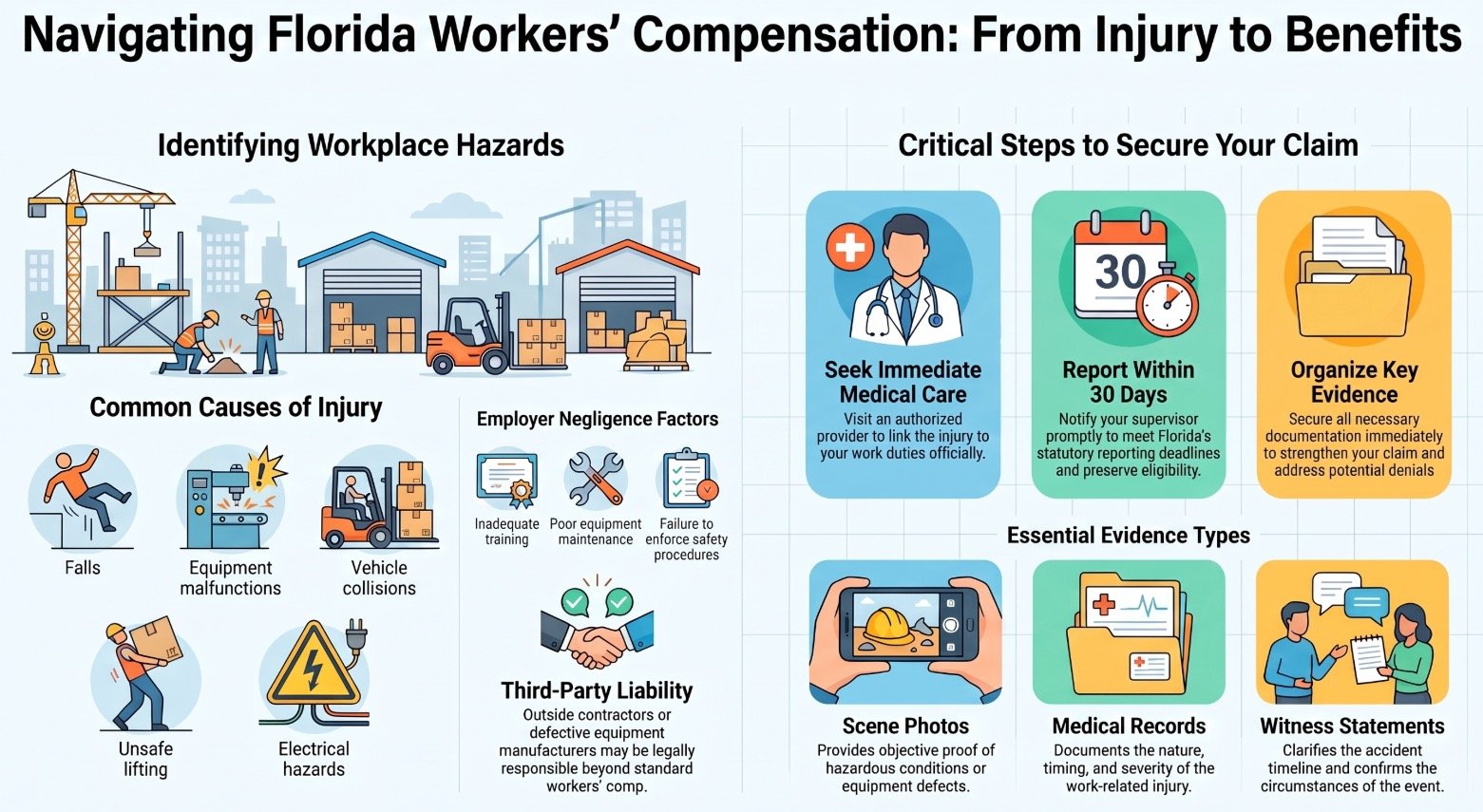
- Common accident causes include falls, equipment malfunctions, vehicle collisions, unsafe lifting, electrical hazards, and inadequate training.
- Promptly report injuries, seek authorized medical care, and preserve records, witness information, and communications supporting your claim.
- Disputes may involve employment status, work-related medical conditions, required procedures, benefit eligibility, or conduct outside assigned duties.
- A workers’ compensation lawyer can organize evidence, challenge denied benefits, protect deadlines, and negotiate benefits reflecting future medical and wage-loss needs.
How We Can Help With Your Florida Workers Comp Accident Causes & Fault Injury Claim
When a workplace accident occurs, an experienced Florida workers’ compensation attorney can evaluate the circumstances, identify the responsible parties, and determine which benefits or legal remedies may be available. The attorney can help organize medical records, employment documentation, wage information, and correspondence relevant to the claim. This preparation supports accurate filing and helps protect an injured worker’s procedural rights.


Legal counsel may communicate with insurers, employers, medical providers, and other involved parties on the client’s behalf. If benefits are delayed or denied, the attorney can explain available appeals, prepare supporting evidence, and represent the worker during required proceedings. Counsel may also develop a claim settlement strategy that accounts for current treatment, projected medical needs, lost earning capacity, and other compensable losses.
Throughout the process, the attorney can clearly explain deadlines, responsibilities, and potential outcomes. This guidance enables injured workers and their families to make informed decisions while pursuing fair treatment and preserving access to vital benefits.
Understanding Florida Workers Comp Accident Causes & Fault Injury Cases
OUR CONSULTATIONSARE FREE
START YOUR FREE CASE REVIEW

Understanding the causes and fault issues in a Florida workers’ compensation case helps clarify how an injury occurred and which legal protections may apply. Florida’s system generally provides benefits for qualifying workplace injuries without requiring an employee to prove employer negligence. Accordingly, disputes often focus on whether the incident arose from employment, whether the medical condition was work-related, and whether required procedures were followed.
Fault may remain relevant when evidence suggests intentional misconduct, disputed employment status, or conduct outside assigned duties. Documentation, witness accounts, medical records, and prompt reporting can help establish a reliable timeline. An injured worker may also need protection from workplace retaliation after reporting an accident or pursuing benefits. Florida claim deadlines can affect eligibility, so timely notice to the employer and proper filings are crucial.


Because each case involves distinct facts, a careful review can identify available medical care, wage-loss benefits, and procedural concerns. Attorneys serving injured workers often help preserve evidence, communicate with insurers, and pursue fair treatment while respecting the legal framework governing compensation claims.
Common Causes of Florida Workers Comp Accident Causes & Fault
Common causes of Florida workers’ compensation accidents include workplace safety violations, equipment malfunctions, and unsafe work conditions. Employer negligence, such as inadequate training, maintenance, or supervision, may also contribute to an employee’s injuries. Identifying the specific cause is crucial when evaluating an accident, available benefits, and potential fault.
Workplace Safety Violations
Workplace safety violations are a significant cause of Florida workers’ compensation accidents, particularly when employers fail to follow established safety regulations or provide adequate training and supervision. Missing hazard warnings, blocked exits, inadequate protective procedures, and insufficient emergency planning can expose employees to preventable injuries. Employers must maintain reasonably safe working conditions and clearly communicate known risks. OSHA compliance helps establish minimum standards for training, reporting, inspections, and workplace practices, although state requirements and industry obligations may also apply. Workplace investigations can identify whether management ignored complaints, failed to correct dangerous conditions, or neglected required instruction. Documentation, witness statements, inspection records, and incident reports may help clarify what occurred. Injured workers should promptly seek medical care and report accidents through proper channels while preserving relevant information for their claims.
Equipment Malfunctions
When machinery or tools malfunction, employees may suffer serious injuries even when they follow established safety procedures. Defective guards, broken controls, electrical failures, and unexpected equipment movement can create workplace hazards in factories, construction areas, warehouses, and service facilities. These incidents may cause crushing injuries, lacerations, burns, falls, or exposure to hazardous substances. Safety Training can help employees recognize warning signs, operate equipment properly, and respond appropriately when a failure occurs, but training cannot eliminate every mechanical defect. After an incident, prompt reporting, medical evaluation, and accurate documentation are important. Workers’ compensation may provide benefits for treatment, rehabilitation, and partial wage replacement, regardless of whether the malfunction resulted from ordinary wear, a manufacturing defect, or inadequate maintenance. Investigators may examine inspection records, repair histories, and the equipment’s condition.
Employer Negligence
Employer negligence can contribute to a Florida workers’ compensation accident when a business fails to maintain safe conditions, provide adequate training, supply appropriate protective equipment, or enforce established safety procedures. Negligence may also involve inadequate supervision, failure to communicate known risks, or assigning duties without confirming that employees possess the necessary instruction and experience. Although workers’ compensation generally does not require an injured employee to prove employer fault, documented negligence can clarify how an accident occurred and support workplace safety improvements. An injured worker should promptly report the incident, obtain medical evaluation, and preserve relevant records, witness information, and communications. Medical findings may affect the impairment rating and available benefits. Legal guidance can explain attorney fee options, filing deadlines, benefit disputes, and procedures for protecting the worker’s rights throughout the claim.
Unsafe Work Conditions
Unsafe work conditions are a common cause of Florida workers’ compensation accidents and may arise from hazards that remain uncorrected, unmarked, or inadequately controlled. Examples include defective equipment, slippery surfaces, exposed electrical components, insufficient lighting, unsafe scaffolding, and blocked emergency exits. Employers generally must maintain reasonably safe workplaces, identify known risks, and implement appropriate protective measures. Safety training gaps may leave employees unaware of hazard controls, equipment procedures, or emergency responses. Contractor oversight lapses can create additional dangers when outside companies fail to coordinate safety practices or comply with site requirements. When an unsafe condition causes injury, documentation such as photographs, incident reports, witness statements, and medical records may help clarify what occurred. Workers’ compensation benefits may remain available regardless of fault, subject to Florida law and applicable deadlines.
Don’t Wait. Call Our Florida Personal Injury Lawyers Now!
Legal Rights of Florida Workers Comp Accident Causes & Fault Injury Victims
Florida workers’ compensation victims have specific legal rights when a workplace accident causes injury, regardless of whether the incident resulted from equipment failure, hazardous conditions, inadequate training, or another cause. These rights generally include access to authorized medical treatment, wage-replacement benefits, and assistance with documenting an injury and filing a claim.
Florida workers’ compensation victims may receive medical care, wage benefits, and claim assistance after a workplace injury.
Victims may also seek guidance when disputes arise over eligibility, benefit amounts, medical restrictions, or settlement terms.
Core protections include:
- Prompt reporting of workplace injuries
- Reasonable, authorized medical care
- Temporary or permanent disability benefits
- Representation during contested claims
Workers facing return-to-work challenges may request clarification of restrictions, suitable duties, and benefit effects before accepting an assignment. Florida law also protects employees from employer retaliation for reporting injuries or pursuing lawful benefits. A qualified workers’ compensation attorney can communicate with insurers, preserve relevant records, and protect procedural deadlines. Serving injured workers requires careful advocacy that promotes fair treatment while supporting the established administrative process and each victim’s immediate health, dignity, and financial security.
Why Do Florida Workers Comp Accident Causes & Fault Injuries Happen?
Workplace injuries occur when hazardous conditions, preventable mistakes, or inadequate safety measures expose employees to unreasonable risks. In Florida, common causes include falls, vehicle collisions, machinery defects, unsafe lifting practices, electrical hazards, and insufficient training. Employers may contribute by ignoring known dangers, failing to maintain equipment, or violating established safety procedures. Fatigue, rushed production schedules, and poor communication can further increase the likelihood of an accident.
Some incidents arise from management decisions made before an employee begins work. Negligent hiring may place unqualified or unsafe personnel in roles that require specialized judgment, supervision, or equipment operation. In multi-employer workplaces, contractor accountability also becomes important when outside companies create hazards, fail to coordinate safety protocols, or inadequately supervise their crews. Defective products, building conditions, and third-party conduct may add other contributing factors. Identifying the precise cause requires examining workplace practices, training records, maintenance histories, supervision, and the circumstances surrounding the injury.
What Should You Do After a Florida Workers Comp Accident Causes Injury?
After a Florida workers’ compensation accident causes an injury, the worker should seek immediate medical care and clearly explain that the condition resulted from workplace activity. Report the accident promptly to the employer, and keep records of medical visits, communications, and related expenses. Consulting a workers’ compensation lawyer can help protect the worker’s rights and clarify available benefits.
Seek Immediate Medical Care
Prompt medical attention should be obtained for any injury arising from a Florida workplace accident, even when the symptoms initially appear minor. A qualified provider can identify hidden conditions, establish a treatment plan, and create medical records connecting the injury to work duties. The injured employee should accurately describe symptoms, prior conditions, and how the incident occurred, and follow all treatment instructions and attend scheduled appointments. Preserve copies of examination notes, prescriptions, diagnostic results, restrictions, and bills. Consistent medical care may support benefit eligibility and help document claim disputes if an insurer questions the injury’s severity or cause. If benefits are denied, these records may help an attorney evaluate the appeal process. Prompt care also promotes recovery and helps protect the individual’s ability to serve family and community.
Report The Workplace Accident
After a medical evaluation, notify the employer promptly of any Florida workplace accident, even if the injury seems minor or the cause appears clear. The worker should report the incident to a supervisor, manager, or designated human resources representative as soon as practicable. A written report should identify the date, time, location, mechanism of injury, witnesses, and affected body parts. Copies of emails, forms, and medical records can help preserve an accurate Workplace injury timeline. Florida law imposes claim deadlines, and delayed reporting may complicate benefit eligibility. The worker should follow workplace procedures while maintaining personal records of symptoms, treatment, and communications. The worker should also document retaliation concerns carefully. Employer retaliation claims may involve discipline, termination, or reduced hours after reporting an injury. Understanding your legal options can protect your ability to serve others safely.
Consult A Workers’ Comp Lawyer
A Florida workers’ compensation lawyer can evaluate whether the injury was properly reported, whether medical treatment is being authorized, and whether the available benefits reflect the worker’s condition. Legal guidance may help protect an injured employee from missed deadlines, disputed facts, or improper benefit reductions. The lawyer can review medical documentation, including diagnostic reports, treatment notes, work restrictions, and correspondence with insurers. This evidence may clarify the injury’s connection to employment and support requests for appropriate care or wage benefits. Because comp claim timelines can affect eligibility, prompt consultation is often important after you provide notice to your employer. A lawyer may also explain hearing procedures, address carrier disputes, and communicate with relevant parties. This support lets the worker focus on recovery while protecting rights and supporting a fair resolution.
Critical Evidence in a Florida Workers Comp Accident Causes & Fault Injury Case
Crucial evidence can clarify how the accident occurred, identify responsible conditions, and support the injured worker’s claim.
Important materials may include:
- Accident scene photos
- Medical treatment records
- Witness statements
- Employer safety reports
Together, these records can establish the injury’s circumstances, treatment needs, and potential safety violations.
Accident Scene Photos
When a workplace accident occurs, photographs of the scene can provide objective evidence of the conditions that caused or contributed to the injury. Images may show hazardous equipment, blocked walkways, inadequate lighting, missing warnings, or the position of relevant objects before conditions change. Clear photographs from multiple angles can help establish timing, location, and responsibility while supporting accurate claim documentation. They may also clarify disputed facts and strengthen Witness credibility when accounts differ. If available, request workplace surveillance promptly because recordings can be overwritten or deleted under routine policies. Evidence preservation requires maintaining original files, recording when and by whom each image was taken, and avoiding alterations. Photographs should be obtained lawfully and shared with appropriate representatives to protect the injured worker’s interests and support accurate fact-finding.
Medical Treatment Records
Medical treatment records provide essential evidence in a Florida workers’ compensation accident and injury case because they document the nature, timing, and severity of the worker’s condition. Records from emergency departments, physicians, experts, and rehabilitation providers can connect reported symptoms to the workplace event and show whether the condition developed or worsened afterward. Diagnostic results, clinical observations, restrictions, referrals, and treatment plans may clarify the extent of functional limitations. Medication compliance can also demonstrate whether the worker followed prescribed care and whether symptoms improved, persisted, or produced adverse effects. Therapy documentation may establish treatment frequency, observed limitations, measurable progress, and continuing needs. Consistent, complete records help evaluate disability, causation, and expected recovery. Promptly obtaining and preserving these documents supports accurate claim review and helps guarantee that injured workers receive appropriate assistance.
Witness Statements
Witness statements can provide important evidence in a Florida workers’ compensation accident and injury case by describing what occurred before, during, and after the workplace event. Coworkers, supervisors, customers, or other individuals who observed relevant circumstances may clarify how the incident happened and identify conditions that preceded it. Their accounts can help establish an accident timeline, connect workplace events with reported injuries, and explain actions taken immediately afterward. The value of each statement may depend on witness credibility, including the person’s opportunity to observe, consistency, impartiality, and relationship to the injured worker or employer. Written or recorded accounts should accurately reflect the witness’s own observations rather than assumptions or secondhand information. Promptly preserving statements can reduce memory gaps and help those reviewing the available evidence fairly evaluate the worker’s claim.
Employer Safety Reports
Employer safety reports can provide critical evidence in a Florida workers’ compensation accident and injury case by documenting the reported incident, workplace conditions, safety procedures, and subsequent responses. These records may identify hazardous equipment, inadequate supervision, maintenance failures, or safety training gaps that contributed to the injury. They can also show whether managers conducted OSHA compliance checks, corrected known dangers, and followed required reporting procedures. Consistent entries may support an injured worker’s account, while omissions or later alterations may raise questions about reliability and fault. Investigators and legal professionals may compare the reports with medical records, witness statements, photographs, and inspection findings. Promptly preserving these documents can help clarify what occurred and help injured employees, families, and advocates pursue fair benefits and accountability under Florida law.
Don’t Wait. Call Our Florida Personal Injury Lawyers Now!
Long-Term Effects of Florida Workers Comp Accident Causes & Fault Injuries
Florida workers’ compensation injuries may produce chronic pain, permanent disability, or limitations that affect an individual’s ability to work and perform daily activities. Emotional and mental effects, including anxiety, depression, and trauma-related symptoms, may also persist after the physical injury. Ongoing medical expenses for treatment, rehabilitation, medication, and assistive care can create lasting financial challenges.
Chronic Pain And Disability
How can a workplace accident affect a worker long after the initial injury has recovered? Chronic pain may persist when tissues, nerves, joints, or the spine sustain lasting damage. A worker may experience reduced strength, limited mobility, recurring inflammation, or restrictions that prevent returning to former duties. These conditions can affect lifting, standing, walking, operating equipment, or completing repetitive tasks, potentially creating a long-term disability. Medical evaluations, treatment records, and functional assessments help establish the injury’s continuing effects. During an accident investigation, video documentation, witness accounts, maintenance records, and safety reports may clarify how the incident occurred and support a complete claim. Prompt reporting and consistent medical care can protect the worker’s access to benefits, rehabilitation, workplace accommodations, and services designed to preserve dignity, independence, and meaningful participation.
Emotional And Mental Effects
Although physical injuries may improve with treatment, a workplace accident can produce lasting emotional and mental effects that interfere with recovery and daily functioning. An injured worker may experience anxiety, depression, irritability, sleep disruption, or trauma-related symptoms after a sudden accident, particularly when pain, disability, or uncertainty continues. These effects can impair concentration, relationships, confidence, and the ability to return to meaningful employment or serve others effectively. Fear of workplace harassment or retaliation risks may further discourage reporting, requesting accommodations, or participating in necessary claims processes. Family members and coworkers may notice behavioral changes before the worker recognizes their significance. Prompt documentation and compassionate professional support can help identify these conditions and preserve evidence of their connection to the accident. Legal guidance may also protect workers who face adverse treatment while seeking legitimate benefits.
Ongoing Medical Expenses
The physical and emotional effects of a workplace accident may create ongoing medical expenses that extend well beyond initial treatment. Follow-up appointments, prescription medications, physical therapy, diagnostic testing, and future surgery may remain necessary as recovery progresses. Some injuries also require adaptive equipment, transportation assistance, or continuing psychological care. Medical providers can help identify future functional limitations and estimate the treatment required to preserve independence and quality of life. Accurate disability documentation should describe diagnoses, restrictions, expected duration, and the relationship between treatment and workplace duties. Such records may support a carefully developed claims strategy, particularly when symptoms worsen or earning capacity declines. Workers should also monitor benefit deadlines and comply with authorized-care requirements. Prompt legal and medical guidance can help protect access to appropriate care and benefits.
Proving Liability in Florida Workers Comp Accident Causes & Fault Injury Cases
Establishing liability in a Florida workers’ compensation accident requires evidence connecting the workplace injury to covered employment and documenting the circumstances that caused it. Relevant proof may include incident reports, medical records, time sheets, safety policies, photographs, equipment records, and statements from coworkers or supervisors. Consistent accounts can help establish when, where, and how the accident occurred, particularly when an employer disputes notice or claims the injury arose outside job duties.
A careful review may also identify unsafe conditions, inadequate training, defective equipment, or failures to follow required safety procedures. Although workers’ compensation generally does not require proof of employer negligence, accurate documentation remains critical to establishing compensability and protecting an injured worker’s benefits. Video deposition strategies can preserve testimony from witnesses whose health, employment, or availability may change. If benefits are challenged, insurance denial appeals may require organized evidence and compliance with Florida deadlines. Legal professionals can help injured workers present reliable proof while serving their interests with diligence, clarity, and respect.
Dealing With Insurance Companies After a Florida Workers Comp Accident Causes & Fault Injury
Communicating with an insurance company after a Florida workers’ compensation accident requires prompt reporting, accurate information, and careful documentation. The injured worker should notify the employer according to workplace procedures and clearly describe when, where, and how the incident occurred. Statements should remain factual, consistent, and limited to information the worker can personally confirm.
Maintaining copies of incident reports, correspondence, medical records, and Recorded Injury Evidence can help preserve an accurate history. Attend medical appointments as directed, and document treatment plans, prescribed restrictions, symptoms, and changes in condition to support continuity of care. The worker should promptly report worsening symptoms or difficulties obtaining authorized treatment.
Insurance representatives may request recorded statements, forms, or medical authorizations. Before signing or providing information, the worker may seek guidance from a qualified workers’ compensation attorney, particularly when benefits are delayed, disputed, or denied. Professional communication and organized records help protect the worker’s ability to receive appropriate medical care and income benefits.
What to Expect During a Florida Workers Comp Accident Causes & Fault Injury Claim Process
A Florida workers’ compensation claim generally begins with promptly reporting the workplace accident and obtaining appropriate medical evaluation and documentation. The process may require gathering medical evidence, examining fault-related factors, and addressing disputes over the accident’s cause or the benefits owed. Ultimately, the injury claim may be resolved through insurer payment, negotiated settlement, or formal proceedings when liability or compensation remains contested.
Reporting the Workplace Accident
Promptly reporting a workplace accident is important to protecting an injured employee’s rights under Florida workers’ compensation law. The employee should notify a supervisor, manager, or designated employer representative as soon as possible, even when the injury initially appears minor. Florida generally requires notice within 30 days, but reporting sooner helps preserve accurate information and prevents avoidable disputes.
The report should identify when, where, and how the incident occurred, including any unsafe condition or involved equipment. Employees should follow workplace reporting procedures and, when available, keep a copy or other confirmation of the notice. Recording timelines and documenting symptoms can help create a clear account of what happened and how the condition developed. Also preserve witness names and contact information. Prompt, accurate reporting allows employers to begin the claim process and arrange appropriate next steps without delay.
Gathering Medical Evidence
Medical evidence establishes the nature, severity, and likely cause of an employee’s workplace injury. After reporting an accident, the worker should seek authorized medical care promptly and describe symptoms accurately, including when they began and how they affect daily activities. Medical providers may perform examinations, order imaging, prescribe treatment, and document work restrictions. These records help show whether the condition is work-related and support appropriate benefits.
The claim process may require collecting medical reports, diagnostic results, prescriptions, bills, and statements concerning treatment progress. Consistent attendance at appointments is important because gaps can create uncertainty about recovery. Records may also help reconstruct accident circumstances by connecting observed injuries with reported events. In addition, providers’ restrictions can support Documenting Wage Loss when an employee cannot perform regular duties or must accept reduced work.
Determining Fault Factors
Determining fault factors in a Florida workers’ compensation claim generally differs from assigning blame in a negligence lawsuit. The central inquiry is whether the injury arose out of and occurred within the course and scope of employment. Investigators may examine job duties, workplace conditions, accident reports, witness accounts, employment records, and medical opinions to establish workplace causation. They may also assess whether a preexisting condition, an off-duty activity, or a deviation from assigned duties contributed to the injury. Florida’s workers’ compensation system generally does not require proof that an employer caused the accident, so fault allocation may matter less for basic benefit eligibility. However, disputed facts can affect defenses, medical treatment disputes, and potential third-party responsibility. Accurate documentation and consistent statements help clarify the circumstances for claims professionals, medical providers, and attorneys serving injured workers.
Resolving the Injury Claim
Once an injury claim is initiated, the Florida workers’ compensation process typically involves investigating the accident, confirming employment-related causation, evaluating medical evidence, and determining which benefits may be owed. The employee should promptly report the incident, attend authorized medical appointments, and preserve records describing symptoms, treatment, wages, and work restrictions. Documentation deadlines can affect eligibility, so timely submissions and consistent communication with the employer and insurer are important. The insurer may approve benefits, request additional information, or dispute responsibility. An Independent medical evaluation may be scheduled to assess diagnosis, impairment, treatment needs, or work capacity. If disagreements continue, the injured worker may seek legal assistance and file a petition with Florida’s Office of the Judges of Compensation Claims. Mediation or a formal hearing may resolve disputed issues and establish appropriate benefits.
Compensation for Florida Workers Comp Accident Causes & Fault Injury Damages
Compensation for a Florida workers’ compensation injury depends on the nature of the accident, the extent of the resulting harm, and whether the claim satisfies state eligibility requirements. Key steps include reporting the incident promptly, getting an appropriate medical evaluation, and documenting how the injury occurred at work. Benefits may cover authorized medical care, a portion of lost wages, temporary disability, or permanent impairment when supported by medical evidence. Missed deadlines, disputed employment status, or an injury unrelated to job duties can affect eligibility. Compensation timelines vary according to the severity of the condition, treatment progress, and the insurer’s investigation. Florida generally requires prompt notice to the employer, while claims and benefit requests may involve additional statutory deadlines. Clear records, consistent medical treatment, and cooperation with reasonable insurer procedures can help protect a worker’s access to benefits. A qualified attorney may assist with disputed claims, delayed payments, or efforts to secure appropriate support for an injured employee.
Economic vs Non-Economic Damages in Florida Workers Comp Accident Causes & Fault Cases
Economic damages generally cover measurable losses, such as medical expenses, lost wages, and future treatment costs. Non-economic damages may address pain, suffering, disability, and diminished quality of life, although Florida workers’ compensation benefits typically limit recovery for these losses. Comparing both categories helps clarify which damages may be available under workers’ compensation or a separate third-party claim.
Economic Damages Explained
When a workplace accident results in a legally recognized injury, damages generally fall into two categories: economic and non-economic. Economic damages represent measurable financial losses connected to the injury. In a Florida workers’ compensation matter, they may include authorized medical treatment, prescription expenses, rehabilitation, travel costs, and a portion of lost wages during temporary disability. Permanent impairment or reduced earning capacity may also affect the available financial recovery, depending on the applicable benefits and medical evidence.
Accurate documentation supports these calculations. Records should identify treatment dates, invoices, wage information, disability status, and employment records. An employment eligibility verification may help confirm work-related employment details when documentation is incomplete. A claim document checklist can organize medical reports, accident notices, wage statements, and benefit correspondence. Careful review helps ensure that injured workers receive benefits designed to address verified financial harm.
Non-Economic Damages Available
Although Florida workers’ compensation benefits generally cover medical care and a portion of lost wages, they typically do not provide separate recovery for non-economic losses such as pain and suffering, emotional distress, inconvenience, or loss of enjoyment of life. These injuries may nevertheless affect a worker’s dignity, family relationships, independence, and ability to participate in meaningful activities. Emotional distress claims may arise when an accident causes lasting anxiety, sleep disruption, depression, or trauma, although proving such losses often requires persuasive medical evidence and careful legal analysis. Loss of enjoyment may describe the diminished ability to pursue hobbies, social activities, or ordinary daily experiences. In limited circumstances, a separate personal-injury action against a negligent third party may permit recovery for these harms. Legal counsel can evaluate available remedies and help injured workers protect their interests.
Comparing Damage Categories
Florida workers’ compensation cases distinguish between economic and non-economic damages based on the type of loss involved and the remedy available under state law. Economic damages generally include medical treatment, rehabilitation expenses, documented wage loss, and necessary disability-related costs. These amounts can often be supported through medical records, payroll information, bills, and organized claim documentation.
Non-economic damages, such as pain, suffering, emotional distress, and loss of enjoyment, are ordinarily restricted or unavailable in a standard Florida workers’ compensation claim. Benefits usually focus on defined statutory compensation rather than complete civil recovery. When a third-party negligence claim is possible, however, broader damages may become available, subject to applicable liability standards and negligence defenses. Careful evaluation of accident causes, responsible parties, insurance coverage, and evidence helps injured workers and their advocates pursue lawful benefits while serving claimants with accuracy, fairness, and respect.
Don’t Wait. Call Our Florida Personal Injury Lawyers Now!
When a Florida Workers Comp Accident Causes & Fault Injury Case Goes to Trial vs Settlement
A Florida workers’ compensation accident case may resolve through settlement or proceed to trial, depending on the disputed facts, available evidence, and the parties’ willingness to reach an agreement. Settlement can provide a defined outcome, reduce uncertainty, and deliver benefits or compensation without the time and expense of a hearing. Effective settlement negotiation tactics may include presenting organized medical records, documenting lost income, and explaining how the injury affects daily responsibilities.
Trial becomes more likely when the parties disagree about accident circumstances, injury severity, entitlement to benefits, or the value of a claim. A trial preparation strategy generally involves identifying credible witnesses, preserving relevant records, reviewing medical opinions, and preparing clear testimony. The process may require patience because the decision rests with the judge after evidence and arguments are presented. Whether pursuing settlement or trial, careful preparation helps protect the injured worker’s interests and supports a fair resolution. Professional guidance can also help families and advocates make informed decisions throughout the process.
Florida Laws That May Affect Your Florida Workers Comp Accident Causes & Fault Case
Settlement or trial decisions must be evaluated within the legal framework governing Florida workers’ compensation claims. Several laws shape how an injured employee reports an accident, proves eligibility, and pursues benefits while protecting the employer’s statutory interests.
- Statutory notice deadlines require timely reporting of workplace injuries to the employer, subject to limited exceptions.
- Coverage rules may determine whether an employee, employer, or subcontractor falls within the workers’ compensation system.
- Medical authorization requirements can affect treatment access, provider selection, and disputes over necessary care.
- Dispute resolution processes may involve adjuster communications, mediation, hearings, and review by Florida’s Office of the Judges of Compensation Claims.
Florida law generally focuses on compensability rather than proving traditional negligence. Accordingly, evidence concerning job duties, witnesses, medical findings, and accident records can be significant. Benefit classifications, wage calculations, and apportionment rules may also influence the available recovery. Legal professionals serving injured workers often help preserve documentation, communicate with insurers, and present accurate information so the process remains fair, orderly, and responsive to legitimate needs.
The Statute of Limitations for Florida Workers Comp Accident Causes & Fault Injury Cases
Timely action is essential in Florida workers’ compensation cases because the law imposes deadlines for reporting an injury and requesting benefits. Generally, an employee must notify the employer within 30 days after discovering the work-related injury, or within 30 days after a physician links an illness to employment. A claim for benefits typically must be filed within two years after the accident, although subsequent treatment may involve additional one-year deadlines after the last payment or provision of medical care. Exceptions may apply when the employer knew of the injury, the injury was occupational, or the employee lacked reasonable awareness of its connection to work. Accurate medical records management helps establish dates, diagnoses, treatment, and notice communications. Attorney consultation timing also matters because delayed review can limit available remedies or create disputes about compliance. Workers and supportive advocates should promptly preserve incident reports, wage information, medical documentation, and correspondence, while recognizing that deadlines and exceptions require careful evaluation under Florida law.
How a Florida Workers Comp Accident Causes & Fault Injury Lawyer Can Help You
When a workplace injury involves disputed blame, delayed notice, or complicated medical evidence, a Florida workers’ compensation accident and fault injury lawyer can help identify applicable benefits, protect filing deadlines, and address disagreements with the employer or insurer. The lawyer may assist by:
- Reviewing accident records, witness statements, and medical documentation
- Explaining eligibility for medical care, wage replacement, and disability benefits
- Communicating with insurers and challenging unsupported denials
- Conducting Settlement negotiations when evidence supports resolution
Counsel can also coordinate relevant records, clarify how an injury affects job duties, and present organized information during benefit disputes. If a third party, such as a contractor or equipment manufacturer, may share responsibility, the lawyer can evaluate whether a separate claim exists without confusing that process with workers’ compensation benefits. Professional guidance helps injured workers understand available protections while preserving accurate documentation for employers, insurers, medical providers, and families relying on the worker’s recovery. Through careful advocacy, counsel supports fair treatment and helps ensure that legitimate claims receive informed, orderly consideration.
When to Contact a Florida Workers Comp Accident Causes & Fault Injury Lawyer
Early legal guidance can help an injured Florida worker preserve evidence and avoid errors that may affect workers’ compensation benefits or a potential third-party claim. Contact a lawyer promptly after an accident, especially when the injury is serious, the cause is disputed, or medical treatment may be extensive. Early review can help identify reporting deadlines, preserve Video claim timelines, and document unsafe conditions before evidence changes or disappears.
Legal guidance is also appropriate when an employer or insurer questions whether the injury occurred at work, delays authorized care, or disputes wage-loss benefits. Workers facing termination, reduced hours, intimidation, or other adverse treatment after reporting an accident may need advice concerning employer retaliation claims. A lawyer can also assess whether a defective product, negligent contractor, or other outside party contributed to the harm. Prompt contact helps the worker understand available procedures and protect accurate records while focusing on recovery and the ability to continue serving family, coworkers, and the community.
Why You Need an Experienced Florida Workers Comp Accident Causes & Fault Injury Lawyer
An experienced Florida workers’ compensation accident and fault injury lawyer can evaluate the cause of an injury, protect the worker’s legal rights, and determine whether claims beyond workers’ compensation may exist. Experience matters because workplace injuries can involve unsafe conditions, defective equipment, negligent third parties, or disputed employment facts. A qualified lawyer can explain how to file timely claims, identify required notices, and help preserve evidence before important details disappear.
Legal guidance also assists with medical documentation, wage-loss calculations, and documenting work restrictions so that treatment needs and employment limitations are accurately presented. When an insurer questions causation, delays benefits, or minimizes disability, counsel can respond with organized evidence and appropriate legal arguments. The lawyer may also examine whether to pursue another responsible party separately, without compromising available workers’ compensation benefits. This support allows injured workers to focus on recovery and continued service to their families, coworkers, and communities while their rights are carefully protected.
How to Choose the Right Florida Workers Comp Accident Causes & Fault Injury Lawyer for Your Case
Choosing the right Florida workers’ compensation accident and fault injury lawyer begins with evaluating the attorney’s experience with workplace injury claims, disputed causation, and potential third-party liability. A suitable lawyer should understand medical evidence, employment records, deadlines, and the procedures for establishing benefits or pursuing related negligence claims.
Prospective clients should review the attorney’s professional credentials, case-management approach, and familiarity with similar injury cases. Client communication is also important. The lawyer should clearly explain legal options, set realistic expectations, and remain accessible when significant developments occur. During an initial consultation, the client can ask who will handle the case, how frequently updates are provided, and how documents will be protected.
The fee structure should be explained in writing, including contingency percentages, expenses, and any circumstances that could create additional charges. Carefully comparing experience, communication practices, resources, and ethical standards helps an injured worker choose representation that protects available rights while supporting a fair and orderly resolution.
About The Law Offices of Anidjar & Levine
The Law Offices of Anidjar & Levine represents individuals pursuing compensation after workplace accidents, disputed injury claims, and related negligence incidents in Florida. Its attorneys examine accident causes, employer responsibilities, medical documentation, and insurance records to clarify how an injury occurred and which benefits may be available.
The firm assists injured workers who need guidance regarding treatment, wage replacement, permanent impairments, and a safe Return to Work. When insurers delay payments, deny coverage, or challenge medical evidence, the legal team evaluates the circumstances and explains practical Legal Options. This may include pursuing a workers’ compensation claim, requesting authorized care, or addressing third-party liability when another entity contributed to the accident.
Through focused case preparation and direct communication, the firm seeks to protect clients during Benefit Disputes and related negotiations. Its approach emphasizes careful investigation, informed decision-making, and respectful service. Individuals can consult the firm to understand applicable procedures, deadlines, and potential remedies before taking further action on an injury claim.
Frequently Asked Questions
Can I Choose My Own Doctor After a Florida Workers’ Compensation Accident?
Usually, an injured worker cannot select any physician independently after a Florida workers’ compensation accident. Doctor Selection generally requires the employer or insurance carrier to authorize an Authorized Provider, except in emergencies. The worker should report the injury promptly and request medical care. Medical Consent allows treatment decisions to be explained and documented, while Referral Rules may govern consultants, second opinions, or changes in physicians. Disputes may require assistance from qualified counsel.
Will Workers’ Compensation Cover My Medical Expenses While My Claim Is Pending?
Workers’ compensation generally covers reasonable, authorized medical expenses while a claim is pending, provided the injury is work-related and properly reported. The employer or insurer usually must approve treatment and arrange payment, although medical coverage delays may occur during investigation or disputes. Temporary benefits eligibility is determined separately from medical coverage and may depend on work restrictions, wage loss, and supporting records. Prompt reporting and complete documentation can help protect access to necessary care.
Can I Receive Benefits if My Injury Worsens After Returning to Work?
Yes, benefits may remain available if an accepted workplace injury worsens after the employee returns to work. The employee should promptly report increased symptoms, request appropriate medical evaluation, and avoid activities that could aggravate the condition. Late-stage symptoms may require renewed treatment, temporary wage-loss benefits, or work restrictions, depending on medical findings. Medical documentation linking the deterioration to the original injury is required. Florida law may also impose deadlines and authorization requirements.
What Happens if My Employer Retaliates After I Report a Workplace Injury?
An employer may face consequences for employer retaliation after a worker reports an injury, including termination, reduced hours, intimidation, or other adverse treatment. The worker should document incidents, preserve medical and employment records, and report concerns through appropriate administrative channels. Filing deadlines may apply to retaliation claims and workers’ compensation benefits. Wage loss and claim disputes should be evaluated promptly, because legal remedies can depend on timely evidence, notice, and procedural compliance.
Can Undocumented Workers Qualify for Florida Workers’ Compensation Benefits?
Undocumented workers may be eligible because Florida workers’ compensation generally covers employees injured on the job, regardless of immigration status or work authorization. Benefits can include medical treatment and partial wage replacement, although specific circumstances and benefit limitations may apply. Policy protections typically prohibit employers from retaliating against workers who seek lawful benefits. After reporting an injury, the worker should promptly notify the employer, document medical care, and consult a qualified attorney for guidance.
—————————
Florida workers’ compensation claims involving workplace accidents, negligence, or disputed fault can create significant legal and financial challenges. Injured employees may face medical expenses, lost income, and uncertainty about available benefits. An experienced workers’ compensation attorney can evaluate the accident, protect the claimant’s rights, and address disputes with insurers or employers. The Law Offices of Anidjar and Levine provide informed guidance throughout the claims process, helping injured workers pursue the benefits and compensation permitted under Florida law. For additional legal assistance, consult a Florida Personal Injury Lawyer.