A Florida workers’ compensation injury lawyer helps injured employees pursue authorized medical treatment, temporary or permanent disability benefits, wage-loss payments, and appropriate dispute resolution. The Law Offices of Anidjar and Levine can assist with prompt injury reporting, accurate medical documentation, employment records, and timely responses to insurer notices. Counsel may challenge denied benefits, coordinate Medicare or disability issues, address liens, and present evidence at hearings. Florida generally does not require proof of employer negligence, and retaliation for lawful claims is prohibited. For related legal guidance, visit our Florida Personal Injury Lawyer resource for information about available protections and strategic next steps.
Main Takeaways
- A Florida workers’ compensation lawyer can guide injury reporting, medical treatment, benefit applications, insurer communications, and required deadlines.
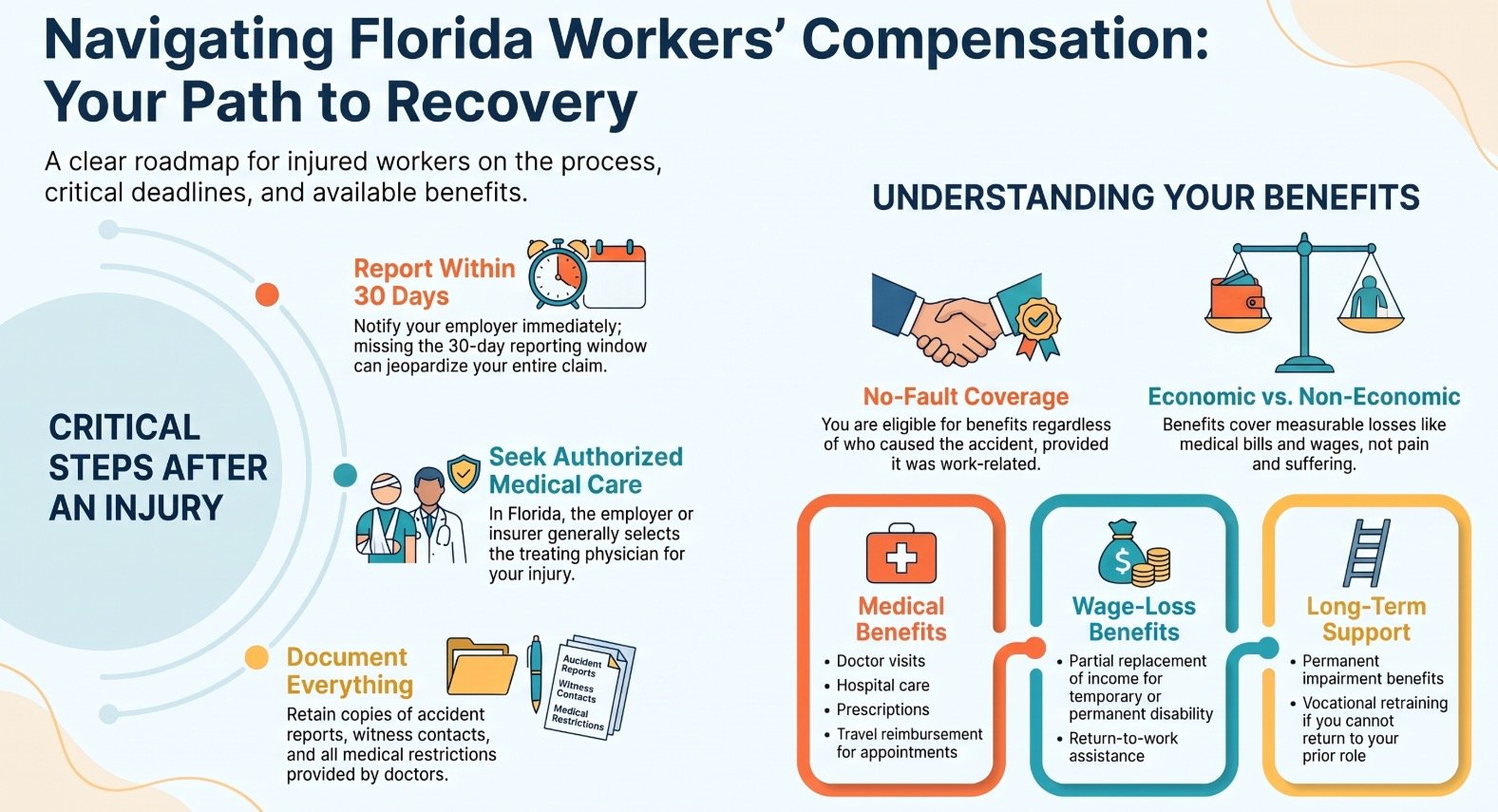
- Available benefits may include authorized medical care, temporary disability payments, permanent disability benefits, wage-loss compensation, and return-to-work assistance.
- Promptly document the accident, report it to your employer, obtain authorized medical care, and preserve witness, employment, wage, and medical records.
- Disputes over denied benefits, causation, responsibility, or treatment may require evidence review, negotiation, and presentation before a workers’ compensation judge.
- Attorneys can evaluate long-term effects, coordinate Medicare or disability benefits, and resolve liens before settlement or benefit distribution.
How We Can Help With Your Florida Workers’ Compensation, Damages & Process Injury Claim
When a workplace injury disrupts an employee’s health, income, and ability to work, a Florida workers’ compensation lawyer can provide guidance through each stage of the claim. The lawyer can help an injured worker understand filing requirements, communicate with insurers, and organize medical and employment records supporting the requested benefits. Careful review of notices, deadlines, and insurer correspondence may prevent avoidable procedural problems.
If an insurer disputes responsibility or refuses benefits, counsel can explain claim-denial appeals and prepare the documentation needed to challenge an adverse decision. Representation may also include communicating with medical providers, addressing questions about work restrictions, and presenting the worker’s position during formal proceedings. These services can reduce confusion while allowing the injured person to focus on recovery and household responsibilities.
A prospective client may request an explanation of attorney fee options before representation begins. Clear information about costs, responsibilities, and case management helps the worker make an informed decision and pursue assistance with greater confidence.
Understanding Florida Workers Compensation, Damages & Process Injury Cases


Florida workers’ compensation cases involve more than identifying an injury and submitting a claim. They require careful evaluation of medical evidence, employment records, wage information, and the benefits available under Florida law. Understanding compensable care, temporary or permanent benefits, and potential damages helps injured workers make informed decisions while protecting their families and access to treatment.
OUR CONSULTATIONSARE FREE
START YOUR FREE CASE REVIEW

Complex cases may also involve Medicare Secondary Payer rules, which can affect how future medical expenses are addressed. Benefit coordination is important when workers’ compensation intersects with Medicare, private insurance, disability benefits, or other payment sources. Attorneys may help resolve liens by identifying repayment claims and negotiating appropriate terms before distributing funds. Settlement timing also requires careful consideration because an early resolution may affect ongoing treatment, future eligibility, and financial security. Through organized case analysis and responsible guidance, legal professionals can help clients pursue lawful benefits while promoting an efficient process that respects their health, dignity, and long-term needs.
Don’t Wait. Call Our Florida Personal Injury Lawyers Now!
Common Causes of Florida Workers Compensation, Damages & Process
Common workplace accidents include falls, vehicle collisions, machinery incidents, and exposure to hazardous conditions, while lifting, repetitive motion, and inadequate training often cause injuries. Employer safety violations may contribute to these events and affect workers’ compensation claim evaluations. The filing process generally requires prompt injury reporting, medical documentation, and timely submission of required benefits applications.
Workplace Accident Types


Workplace accidents may arise from hazardous conditions, inadequate training, defective equipment, or unsafe work practices, potentially entitling an injured employee to Florida workers’ compensation benefits. Common workplace accident types include slip and falls, which may occur on wet floors, uneven surfaces, or obstructed walkways. Equipment Failures can involve malfunctioning machinery, missing safeguards, or improperly maintained tools. Employees may also experience injuries in vehicle collisions, construction-site incidents, fires, explosions, or structural collapses. Repetitive workplace events, such as repeated lifting or prolonged exposure to unsafe conditions, may also support a compensable claim when employment substantially contributes to the harm. Document each accident promptly, report it to a supervisor, and evaluate it under Florida law. Timely medical attention and accurate records can help protect an employee’s access to authorized treatment, wage benefits, and other available workers’ compensation protections.
Common Injury Causes
Injuries may result from unsafe conditions, inadequate training, defective equipment, overexertion, or the repeated physical demands of an employee’s duties. Ergonomic Strain can develop when awkward postures, repetitive motions, or poorly arranged workstations place continuing stress on muscles and joints. Slip Hazards, including wet surfaces, uneven flooring, and obstructed walkways, may cause falls and related injuries. Heavy Lifting Accidents often occur when loads exceed an employee’s capacity or must be moved without suitable assistance. Machinery Malfunctions can produce crushing injuries, lacerations, burns, or unexpected contact with moving components. Transportation incidents, falling objects, and exposure to excessive noise or harmful substances may also contribute to workplace harm. Recognizing these causes helps employees, families, and service-oriented professionals identify potential workers’ compensation concerns and pursue appropriate support after an accident.
Employer Safety Violations
Employer safety violations may create or worsen the conditions that lead to workplace injuries, particularly when known hazards remain uncorrected or required safeguards are ignored. Examples include inadequate fall protection, defective equipment, blocked emergency exits, unsafe staffing levels, and failure to provide appropriate protective gear. Employers may also violate safety obligations by assigning tasks without proper instruction, permitting harassment that creates dangerous distractions, or neglecting inspections and maintenance. Effective prevention requires tailored compliance training that addresses the actual risks of each position, facility, and industry. Regular workplace policy audits can identify gaps in hazard reporting, supervision, emergency planning, and equipment procedures before an incident occurs. When management disregards applicable safety standards, injured workers may face substantial medical, financial, and personal consequences. Careful documentation of hazardous conditions can assist professionals evaluating potential legal remedies.
Workers’ Compensation Filing Process
Although Florida workers’ compensation claims generally begin with prompt notice of an on-the-job injury, the filing process requires careful attention to deadlines and documentation. An injured worker should notify the employer as soon as practicable, provide accurate details, and seek authorized medical care. The employer typically reports the incident to its insurance carrier, which evaluates eligibility and begins benefit procedures.
Claimants must satisfy evidence requirements by preserving medical records, incident reports, witness information, wage documentation, and communications concerning the injury. Independent medical examinations may be requested to assess causation, treatment, or permanent limitations, and attendance is generally important. Reporting compliance helps prevent avoidable disputes, while missed deadlines can jeopardize benefits. Florida law also prohibits employer retaliation for reporting an injury or pursuing lawful benefits. Legal guidance can help workers protect their rights and support fair, orderly claim administration.
Legal Rights of Florida Workers Compensation, Damages & Process Injury Victims
Florida workers’ compensation law gives injured employees defined legal rights, including access to medical treatment, wage-loss benefits, disability compensation, and help returning to work. These protections apply when Florida eligibility requirements are satisfied, regardless of fault in most workplace injury claims. Employees also have procedural rights that help preserve fair access to benefits:
Florida workers’ compensation protects injured employees through medical care, wage-loss benefits, disability compensation, and return-to-work assistance.
- Receive authorized medical care and necessary follow-up treatment.
- Obtain temporary or permanent disability payments when legally supported.
- Review claim decisions and request Dispute resolution when benefits are denied.
- Present evidence during Judge hearings with appropriate legal assistance.
Benefit deadlines can affect medical reporting, claim notice, and requests for compensation, making prompt action important. Employers and insurers must provide required information and handle claims according to applicable law. A qualified attorney may explain available remedies, communicate with insurers, protect records, and help injured workers pursue benefits without unnecessary conflict. These rights also support dependents when a compensable workplace death occurs. Understanding them enables injured individuals to make informed decisions and seek respectful, timely assistance.
Why Do Florida Workers Compensation, Damages & Process Injuries Happen?
Understanding why workplace injuries occur helps clarify how Florida workers’ compensation benefits, damages, and legal procedures may apply. Injuries often result from unsafe conditions, inadequate supervision, defective equipment, or procedures that expose employees to unnecessary hazards. Construction sites, healthcare facilities, warehouses, offices, and service workplaces each present distinct risks, including falls, lifting injuries, repetitive stress, machinery incidents, and exposure to harmful substances.
Employer negligence is not always required for workers’ compensation coverage, but negligence indicators may help explain how an incident developed and whether additional legal issues exist. Examples include ignored maintenance concerns, missing protective equipment, insufficient staffing, or failure to correct known dangers. Effective job safety training can reduce these risks by teaching employees proper procedures, hazard recognition, emergency responses, and equipment operation. Injuries may also arise despite reasonable precautions because of sudden accidents, unavoidable conditions, or third-party conduct. Understanding these contributing factors supports accurate evaluation of medical needs, lost wages, available benefits, and applicable legal responsibilities under Florida law.
What Should You Do After a Florida Workers Compensation, Damages & Process Injury?
After a Florida workers’ compensation injury, the employee should promptly report it to the employer according to applicable procedures. The employee should also seek medical care from an authorized provider and follow all recommended treatment. Preserve detailed records of the incident, medical visits, expenses, communications, and work restrictions to support the claim.
Report The Injury
When a workplace injury occurs, the employee should report it to the employer or supervisor as soon as possible, even if the symptoms initially appear minor. Prompt notice helps preserve an accurate record and allows the employer to begin the required administrative process. The employee should follow workplace reporting policies and clearly describe when, where, and how the incident occurred. If reporting procedures are unclear, Emergency contacts or human resources personnel may identify the appropriate recipient. The employee should retain a copy of the written report, note the medical timeline without delaying required notice, and complete any requested claim forms accurately. Record names and contact information for witnesses, including relevant details. Consistent documentation can reduce disputes and support timely assistance for affected workers.
Seek Medical Care
After reporting a workplace injury, seek prompt medical evaluation, even if the employee believes the condition is minor. A qualified healthcare professional can identify injuries that may worsen without treatment and provide appropriate care instructions. When circumstances permit, the employee should follow the employer’s authorized medical provider process, explain all symptoms accurately, and answer questions about how the incident occurred.
For serious injuries, immediate attention takes priority over administrative procedures. First Aid Steps may include controlling bleeding, immobilizing an injured area, rinsing chemical exposure, or avoiding movement after a suspected spinal injury. Emergency Treatment Options include calling emergency services, visiting an emergency department, or obtaining urgent care when directed by medical personnel. Follow treatment recommendations carefully, including prescribed restrictions and follow-up appointments. Prompt care supports recovery and helps the injured worker remain able to serve colleagues, family, and the community.
Document Everything
A thorough record of the injury and its consequences can help establish the facts of a Florida workers’ compensation claim. The injured worker should promptly write down when, where, and how the incident occurred, including equipment involved, working conditions, symptoms, and reported safety concerns. Preserve copies of accident reports, medical records, prescriptions, wage statements, employer communications, and claim forms in an organized file. Photo evidence preservation may include dated images of the accident scene, visible injuries, damaged equipment, and hazardous conditions, when safely obtainable. Witness contact logs should identify each witness, include contact information, and summarize observed events. The worker should record missed work, medical restrictions, treatment progress, and expenses. Accurate documentation can support timely assistance and help clarify disputed facts for all involved.
Don’t Wait. Call Our Florida Personal Injury Lawyers Now!
Critical Evidence in a Florida Workers Compensation, Damages & Process Injury Case
A Florida workers’ compensation injury case often depends on timely, reliable evidence establishing the accident, medical impact, and employment relationship.
Crucial evidence includes:
- Medical records
- Accident reports
- Witness statements
- Employment documentation
Together, these materials can support the claim’s facts, damages, and procedural requirements.
Medical Records
Medical records are critical evidence in a Florida workers’ compensation case because they document the injury, its connection to workplace duties, and the required medical treatment. Treating physician records may establish symptoms, diagnoses, work restrictions, treatment plans, and the patient’s reported history. Consistent documentation can help demonstrate medical causation and distinguish a workplace injury from unrelated conditions. Obtain records promptly and review them for accuracy, including dates, diagnoses, prescriptions, therapy notes, and referrals. Independent medical exams may provide additional opinions when the insurer disputes the nature, severity, or cause of an injury. Complete claim documentation allows the involved parties to evaluate benefits and medical needs responsibly. A careful review also identifies gaps or inconsistencies that may require clarification from qualified medical professionals before resolving the claim.
Accident Reports
Accident reports provide important evidence in a Florida workers’ compensation case by recording when, where, and how an injury allegedly occurred. Typically completed soon after an incident, these reports may identify the affected body part, immediate symptoms, claimed cause, and notice provided to a supervisor. Their details can help establish a medical timeline and clarify whether later medical records match the initial account. Report accuracy is critical. Errors, omissions, delayed filing, or descriptions that minimize the event may create challenges when benefits are evaluated. When possible, the injured worker should review the report and promptly identify factual inaccuracies through appropriate workplace or legal channels. Employers and insurers may rely on this document to investigate compensability, calculate benefits, and determine whether Florida law requires additional documentation.
Witness Statements
When a workplace injury occurs, witness statements can provide independent evidence of how the incident happened, who was present, and what happened next. Statements may clarify hazardous conditions, safety procedures, equipment use, and the worker’s immediate symptoms. They should be recorded promptly while memories remain reliable, preferably in the witness’s own words and without coaching or speculation. Important witness statement accuracy tips include identifying the date, time, location, observed facts, and any limits on personal knowledge. Credibility factors include the witness’s opportunity to observe, consistency, neutrality, relationship to the injured worker, and willingness to acknowledge uncertainty. A witness should preserve relevant communications and respond truthfully to authorized inquiries. Consistent accounts can help claims professionals, attorneys, and decision-makers evaluate disputed facts while supporting a fair process for everyone involved.
Employment Documentation
Employment documentation can establish the worker’s job duties, employment status, wages, schedule, and reporting structure in a Florida workers’ compensation case. These records may clarify whether the injury arose during assigned work and whether the employer received timely notice. Relevant materials include job descriptions, payroll statements, personnel files, schedules, disciplinary records, and Employee timekeeping data. Safety training records can show the instruction provided, required procedures, protective equipment, and the worker’s attendance. Such documents may help identify operational expectations and whether safety requirements were consistently communicated. Medical reports and incident accounts become more meaningful when compared with employment records. Workers and their advocates should promptly preserve copies, request missing materials in writing, and avoid altering original files. Organized documentation supports accurate evaluation, fair benefits, and responsible service to injured employees.
Long-Term Effects of Florida Workers Compensation, Damages & Process Injuries
Long-term effects of Florida workers’ compensation injuries may include chronic pain, permanent disability, and limitations on daily activities. Injured workers may require ongoing medical treatment, rehabilitation, medication, or periodic evaluations to manage their conditions. These impairments can also reduce earning capacity by restricting job duties, hours, advancement opportunities, or the ability to return to prior employment.
Chronic Pain And Disability
Chronic pain and disability can substantially affect an injured worker’s ability to perform job duties, maintain independence, and return to comparable employment. Persistent symptoms may restrict lifting, standing, concentration, mobility, or reliable attendance, creating barriers to suitable work and household responsibilities. Document the worker’s functional limitations with consistent medical evidence, workplace restrictions, and credible descriptions of daily activities. Pain management options may include medication oversight, counseling, physical rehabilitation, and adaptive strategies, depending on the condition and applicable recommendations. Financial consequences can extend beyond workers’ compensation benefits when reduced earning capacity affects future employment. The Social Security disability impact may involve separate eligibility standards, benefit calculations, and coordination issues. Careful evaluation helps clarify available support while protecting the worker’s dignity, stability, and opportunity for meaningful vocational participation.
Ongoing Medical Treatment
When a workplace injury requires continuing care, the worker may need medical treatment well beyond the initial period of emergency services and rehabilitation. Ongoing appointments may include doctor evaluations, physical therapy, prescription management, diagnostic testing, or follow-up procedures. Consistent treatment compliance can document medical progress and help physicians determine appropriate work restrictions. Providers may also assess disability duration, functional limitations, and whether additional care remains reasonably necessary. In Florida workers’ compensation matters, coverage disputes can arise over authorization, treatment frequency, provider selection, or whether symptoms remain connected to the workplace injury. Prompt communication with authorized medical professionals and careful recordkeeping may help clarify these issues. A qualified representative can help with disputed benefits while ensuring medical decisions remain guided by qualified providers and the worker’s ongoing health needs.
Reduced Earning Capacity
A workplace injury may reduce a worker’s earning capacity even after medical treatment stabilizes the condition. Permanent pain, restricted movement, or reduced concentration can prevent a return to the prior occupation, limit available hours, or require acceptance of lower-paying work. These vocational limits may affect promotions, benefits, retirement savings, and future financial security.
A careful evaluation may compare the worker’s pre-injury earnings, education, experience, medical restrictions, and realistic employment options. Job retraining could provide a path toward suitable work, but it may involve costs, time away from employment, and uncertain results. Documentation from physicians, vocational professionals, and employers can help clarify the injury’s long-term consequences. Florida workers’ compensation counsel may assess whether benefits or other legal remedies address diminished earning potential and help protect the injured worker’s future.
Proving Liability in Florida Workers Compensation, Damages & Process Injury Cases
Establishing liability in a Florida workers’ compensation injury case generally requires proof that the injury occurred in the course and scope of employment and is connected to job-related duties or conditions. Florida’s no-fault system usually does not require fault proof, so an injured worker generally need not demonstrate employer negligence. Instead, liability standards focus on employment status, medical causation, timely reporting, and whether the accident or occupational condition arose from work. The worker primarily bears the burden of proof and must provide credible documentation to support the claim. Relevant evidence may include incident reports, witness statements, employment records, safety procedures, photographs, and medical evaluations linking the condition to workplace exposure or activity. Consistent accounts and prompt medical attention can strengthen factual proof. Disputes may concern preexisting conditions, independent events, or whether an activity served the employer’s interests. Careful evidence preservation helps protect workers and supports accurate decisions for those seeking fair, lawful assistance.
Dealing With Insurance Companies After a Florida Workers Compensation, Damages & Process Injury
Because insurance carriers control many aspects of a Florida workers’ compensation claim, injured employees should approach all communications carefully and keep complete records. They should report workplace injuries promptly, provide accurate information, and avoid minimizing symptoms or speculating about medical conditions. Preserve written correspondence, claim forms, medical notices, and insurer requests in an organized file.
An adjuster may request recorded statements, authorize treatment, or evaluate eligibility for wage-loss and medical benefits. Injured workers should understand what they are signing and seek clarification before providing information that could affect their claim. Communications should remain factual and professional, even when disagreements arise.
When an insurer delays payment, denies treatment, or challenges disability status, the matter may escalate into a benefit dispute. A workers’ compensation attorney can review notices, identify procedural deadlines, and explain available remedies. Legal counsel may also assist with the appeals process, protect the employee’s interests, and help ensure required documentation is submitted accurately and on time.
What to Expect During a Florida Workers Compensation, Damages & Process Injury Claim Process
A Florida workers’ compensation claim generally begins with promptly reporting the workplace injury and obtaining thorough medical documentation. The injured employee must then file the required claim, while insurers review eligibility, treatment, and supporting evidence. Benefits and damages may be resolved through insurer negotiations, authorized medical care, or formal proceedings when disputes arise.
Reporting Your Workplace Injury
When a workplace injury occurs, prompt and accurate reporting is essential to protect an employee’s eligibility for Florida workers’ compensation benefits. The employee should notify a supervisor, manager, or designated human resources representative as soon as possible, preferably in writing. Florida generally requires notice within 30 days after the injury or after discovering its connection to employment. The report should state when, where, and how the incident occurred, identify witnesses, and describe any work restrictions without speculation. Employees may ask about confidential reporting options when safety concerns, fears of retaliation, or supervisory conflicts exist. Employers should respond promptly, provide claim instructions, and preserve relevant incident information. OSHA recordkeeping also requires accurate documentation of qualifying injuries, supporting workplace safety oversight and consistent claim administration. Late or incomplete reporting may create avoidable disputes.
Gathering Medical Documentation
After reporting the injury, the employee should begin gathering medical documentation that connects the condition to the workplace incident and records the treatment received. Medical records should identify symptoms, diagnoses, recommended restrictions, prescriptions, referrals, and the dates of each visit. The employee should provide every treating professional with an accurate account of how the injury occurred and explain any changes in physical or emotional condition. Symptom tracking can help create a reliable record, particularly when pain or limitations fluctuate. A written log may include severity, duration, affected activities, and work-related triggers. Consistent doctor follow-up is also important because missed appointments or gaps in treatment can raise questions about the injury’s seriousness. Securely preserve copies of bills, test results, imaging, discharge instructions, and work-status notes.
Filing Your Workers’ Comp Claim
Workers’ compensation claims in Florida generally begin with timely notice to the employer, followed by submission of the required claim information and supporting medical records. The employer should report the injury to its insurance carrier, which may arrange authorized medical care and issue procedural notices. The worker should keep copies of accident reports, correspondence, medical bills, and work-status documentation. Accurate, consistent information helps reduce claim delays and supports efficient review. If benefits are denied, the claimant may need an appeal strategy based on medical evidence, employment records, and applicable deadlines. Florida law also prohibits employer retaliation for reporting a workplace injury or seeking lawful benefits. Document any suspected retaliation promptly. A qualified attorney can explain filing requirements, protect procedural rights, and help the injured worker communicate effectively throughout the claim process.
Resolving Benefits And Damages
Resolving a Florida workers’ compensation claim generally requires determining which benefits apply, confirming the extent of the work-related injury, and addressing any disputes over eligibility or payment. Medical records, wage documentation, and physician opinions help establish entitlement to treatment, temporary disability payments, permanent impairment benefits, or related support. The employer or insurer may investigate accident reports, workplace conditions, and claimed limitations. Malingering defenses can arise when an insurer questions whether reported symptoms or restrictions accurately reflect the injury. When recovery affects future employment, vocational rehab may assist with retraining, placement, or other return-to-work services. Negotiation may resolve disagreements, but unresolved issues can proceed through mediation or a formal hearing before a judge. Careful documentation and timely communication help protect benefits while supporting a fair, orderly resolution for all parties.
Compensation for Florida Workers’ Compensation, Damages & Process Injury Damages
When a workplace injury occurs, Florida workers’ compensation generally provides medical treatment and partial wage replacement, not damages for pain and suffering. Eligible benefits may cover authorized physician visits, hospital care, prescriptions, diagnostic services, and necessary rehabilitation related to the accepted injury. Temporary disability payments can assist when medical restrictions prevent an employee from performing regular duties, while permanent benefits may apply after maximum medical improvement is reached.
Compensation depends on medical evidence, the employee’s average weekly wage, and the extent of functional limitations. Permanent impairments may support an impairment income benefit or, when work capacity is substantially affected, consideration of permanent total disability benefits. The injury’s vocational impact can influence whether retraining, job placement assistance, or other authorized services are appropriate. Prompt reporting and consistent medical treatment help preserve eligibility and clarify the claim’s scope. A qualified attorney can help injured workers understand deadlines, challenge disputed determinations, and pursue benefits that support recovery, stability, and continued service to their families and communities.
Don’t Wait. Call Our Florida Personal Injury Lawyers Now!
Economic vs Non-Economic Damages in Florida Workers Compensation, Damages & Process Cases
Economic damages generally address measurable financial losses, including medical expenses and reduced wages resulting from a workplace injury. Non-economic damages concern less tangible harms, while Florida workers’ compensation benefits typically differ from damages available in personal injury claims. Comparing these categories clarifies which benefits may apply and how the compensation process operates.
Economic Damages Explained
In Florida workers’ compensation cases, economic damages generally include measurable financial losses caused by a workplace injury, such as authorized medical treatment, lost wages, reduced earning capacity, and qualifying rehabilitation expenses. Benefits may cover emergency care, physician visits, medication, surgery, therapy, and necessary medical equipment when properly authorized. Temporary disability payments can replace part of wages while an employee cannot work, although eligibility and payment amounts depend on the injury and employment status. A debilitating wage loss may also support benefits when restrictions prevent a return to the prior position. Documented expenses and accurate wage records help establish the claim’s value. Vocational rehabilitation may provide evaluation, counseling, retraining, or job-placement assistance when the worker cannot resume former duties. Careful coordination among the injured employee, providers, employer, and insurer promotes timely access to appropriate support.
Non-Economic Damages Explained
Non-economic damages refer to personal harms such as pain, emotional distress, and diminished quality of life rather than directly measurable financial losses. These injuries may affect an employee’s independence, relationships, sleep, confidence, and ability to participate in ordinary activities. Pain and suffering can continue after medical treatment, particularly when an injury causes permanent limitations, disfigurement, or recurring symptoms. Emotional distress may include anxiety, depression, trauma, or fear associated with returning to work or managing daily responsibilities. Unlike lost wages and medical expenses, these effects lack a precise dollar value and require careful documentation and professional evaluation. In Florida workers’ compensation cases, the statutory system generally does not provide a separate recovery for pain and suffering. Understanding this distinction helps injured workers and those assisting them evaluate claims accurately and compassionately.
Comparing Available Benefits
Florida workers’ compensation benefits primarily address measurable economic losses, including authorized medical care, temporary disability payments, permanent impairment benefits, and, in some cases, wage-loss or permanent total disability benefits. These benefits may reflect different types of wage loss, depending on whether the employee cannot work temporarily, earns less after returning, or remains unable to perform substantial employment. Permanent benefits generally depend on medical impairment ratings, functional restrictions, and applicable statutory formulas rather than the full impact of an injury on personal life. By contrast, non-economic damages, such as pain, emotional distress, and loss of enjoyment, are generally unavailable in an ordinary Florida workers’ compensation claim. Effectively representing injured workers requires distinguishing covered benefits from excluded damages, documenting losses carefully, and evaluating whether a separate third-party negligence claim may allow broader recovery.
When a Florida Workers’ Compensation, Damages & Process Injury Case Goes to Trial vs Settlement
Although many Florida workers’ compensation injury claims are resolved through negotiation, some proceed to trial when the parties cannot agree on compensability, medical benefits, disability status, or the value of damages. Settlement negotiation can provide a predictable resolution, reduce delay, and help an injured worker obtain needed support without the uncertainty of testimony and judicial decision-making. However, an agreement should reflect documented losses, anticipated treatment, and the worker’s continuing ability to earn income.
Trial readiness becomes important when an insurer disputes medical causation, challenges the extent of disability, or raises compensation defenses. The process may require medical records, expert opinions, employment evidence, and testimony from the worker, healthcare providers, and witnesses. A judge then evaluates the evidence and issues a decision, which may be subject to further review.
Counsel serving injured workers can explain the risks and benefits of each path, prepare credible evidence, and pursue a resolution that protects long-term medical and financial needs while honoring the worker’s dignity.
Florida Laws That May Affect Your Florida Workers’ Compensation, Damages & Process Case
Because workers’ compensation rights are governed by a combination of state statutes, administrative rules, and court decisions, the applicable law can influence nearly every aspect of a claim, including reporting deadlines, medical treatment, wage-loss benefits, disability determinations, and settlement procedures.
Florida law may affect how an injured worker receives assistance and pursues benefits:
- Authorized care must generally be medically necessary and connected to the workplace injury.
- Wage-loss classifications and impairment findings can determine maximum benefits available under applicable schedules.
- Prohibitions against employer retaliation protect workers who report injuries or seek lawful benefits.
- Disputes over coverage, documentation, or treatment can delay claims and require prompt administrative attention.
Employers and insurers must follow statutory obligations, while injured individuals must provide accurate information and cooperate with reasonable procedures. Legal interpretation may also affect evidentiary requirements, independent medical examinations, vocational services, and settlement approval. A careful review of governing law can help those serving injured workers identify overlooked protections, communicate realistic expectations, and pursue fair treatment without confusing the claim with unrelated civil damages.
The Statute of Limitations for Florida Workers Comp Compensation, Damages & Process Injury Cases
Timely action is particularly important when pursuing Florida workers’ compensation benefits, since the law imposes deadlines for reporting an injury and filing a claim. Generally, an employee must notify the employer within 30 days after discovering the work-related injury or within 30 days after a physician links an illness to employment. A claim for benefits is ordinarily subject to a two-year statute of limitations from the date of injury, while subsequent claims may involve a one-year deadline after the last payment of benefits. Specific filing requirements vary by the benefit sought and the circumstances surrounding the incident. Claim exceptions may apply when an employer knew of the injury, the worker lacked capacity, or fraud prevented timely action. Tolling periods can sometimes pause or extend a deadline, although they are narrowly applied. Because missed deadlines may bar otherwise valid benefits, careful documentation and prompt attention to statutory time limits support workers and their families.
How a Florida Workers’ Compensation, Damages & Process Injury Lawyer Can Help You
A Florida workers’ compensation lawyer can help an injured employee understand available benefits, meet required statutory deadlines, and pursue compensation through the appropriate administrative process. With attorney guidance, the lawyer can clarify medical, disability, and wage-loss benefits and explain how Florida’s system addresses workplace injuries. The lawyer may also provide:
A Florida workers’ compensation lawyer explains available benefits, meets statutory deadlines, and guides injured employees through the claims process.
- Claim assessment: Reviewing incident details, employment records, medical evidence, and benefit eligibility.
- Document handling: Organizing notices, physician reports, wage records, and correspondence for accurate submission.
- Employer communication: Addressing insurers, employers, and medical providers to reduce confusion and preserve consistent information.
- Dispute assistance: Preparing responses, requesting appropriate benefits, and representing the employee in administrative proceedings when disagreements arise.
This support lets an injured worker focus on recovery while receiving informed help with procedural responsibilities. A lawyer can also identify evidentiary gaps, explain available remedies, and coordinate relevant records. Such professional service promotes fair treatment and helps ensure that claims are presented clearly, accurately, and responsibly within Florida’s workers’ compensation framework. It also supports families and communities by protecting access to lawful benefits.
When to Contact a Florida Workers Compensation, Damages & Process Injury Lawyer
Contacting a Florida workers’ compensation lawyer early can help an injured worker understand available benefits, preserve relevant evidence, and comply with reporting and filing requirements. Prompt attorney consultation is particularly important when an injury affects income, medical treatment, or the ability to return to work.
Eligibility timing may depend on when the injury occurred, when it was reported, and whether notice was provided within applicable deadlines. A lawyer can help an employee evaluate these issues before pursuing initial claims and identify documents, witnesses, and medical records that may support the filing. Early guidance can also clarify temporary disability payments, authorized care, and wage-loss benefits without creating avoidable procedural problems.
Legal assistance becomes especially valuable after denied benefits, delayed medical authorization, disputed employment status, or pressure to sign unfamiliar documents. Injured workers who are uncertain about reporting obligations or concerned about retaliation may also seek advice promptly. Timely consultation supports informed decisions and helps protect access to lawful benefits while the claim proceeds.
Why You Need an Experienced Florida Workers Compensation, Damages & Process Injury Lawyer
When an injury claim involves complicated medical issues, disputed facts, or contested benefits, an experienced Florida workers’ compensation lawyer can provide reliable guidance throughout the process. Such counsel helps injured employees understand procedural requirements, safeguard deadlines, and pursue benefits supported by the record.
Professional representation can be especially valuable when an insurer alleges that an injury is unrelated to employment, delays treatment, or issues a Wrongful denial. In benefit disputes, a lawyer can evaluate medical records, employment information, witness statements, and other claim evidence to identify gaps in the insurer’s position. Attorney documentation also creates a clear, organized account of symptoms, treatment, work restrictions, and financial losses.
An experienced lawyer may communicate with insurers, coordinate necessary filings, and present persuasive arguments during hearings or appeals. This support lets an injured worker focus on recovery and continued service to others while a qualified advocate handles legal complications. Counsel can also help ensure that legitimate benefits are pursued without sacrificing accuracy, professionalism, or fairness.
How to Choose the Right Florida Workers’ Compensation, Damages & Process Injury Lawyer for Your Case
Selecting the right Florida workers’ compensation lawyer requires careful consideration of the attorney’s experience, communication practices, and record of handling similar injury claims. A lawyer should understand medical documentation, workplace investigations, benefit disputes, and deadlines affecting an injured employee’s recovery. Relevant experience with comparable cases can indicate whether counsel recognizes issues that might otherwise be overlooked.
During attorney consultations, prospective clients may ask how the lawyer evaluates claims, communicates developments, and coordinates with medical providers or other professionals. A thorough Case evaluation should identify potential benefits, evidentiary concerns, procedural risks, and realistic outcomes without promising results. The attorney should also explain who will manage the matter and how they will address questions.
Before representation begins, the client should review the fee agreement carefully. It should state payment terms, responsibility for costs, limits on representation, and conditions for ending the relationship. Clear explanations, respectful treatment, and a demonstrated commitment to protecting injured workers can help families select counsel prepared to serve their needs responsibly.
About The Law Offices of Anidjar & Levine
The Law Offices of Anidjar & Levine represents injured workers seeking guidance through Florida’s workers’ compensation system. The firm assists clients who need clear information about benefits, deadlines, medical evaluations, and employer or insurer communications after a workplace injury. Its attorneys examine each matter carefully, explain available options, and work to protect clients’ Workplace Rights throughout the claims process.
The firm’s approach centers on responsive service and informed advocacy. By reviewing medical records, employment details, and insurance decisions, its legal team helps identify potential disputes involving denied claims, delayed payments, insufficient treatment, or permanent impairments. Clients may receive legal help understanding procedural requirements and pursuing appropriate benefits under Florida law.
Anidjar & Levine also emphasizes respectful communication with injured workers and their families. The firm’s representation is designed to reduce confusion during a difficult period while preserving important evidence and claim deadlines. Individuals considering assistance can consult the firm to discuss their circumstances and determine whether legal representation may support their interests.

Frequently Asked Questions
Can I Choose My Own Doctor for a Florida Workers’ Compensation Injury?
A Florida workers’ compensation claimant generally cannot select any doctor independently. The employer or insurance carrier usually controls Selecting Treating, authorized doctors and must approve the provider. A worker should report the injury promptly and follow the Doctor Referral Process, requesting authorization for necessary care. If the Claim Approval is delayed or disputed, the claimant may seek assistance from the Florida Division of Workers’ Compensation or a qualified attorney to protect medical benefits and deadlines.
Will Workers’ Compensation Cover My Prescription Medications and Travel Expenses?
Workers’ compensation generally covers prescription medications that are medically necessary for an accepted workplace injury, provided they are prescribed or authorized through the approved treatment network. Medical coverage may also include related supplies and treatment. Travel reimbursement is often available for reasonable mileage, parking, tolls, and public transportation costs incurred while attending authorized appointments. The worker should retain prescriptions, receipts, appointment records, and mileage details, then submit them according to carrier procedures.
Can I Receive Benefits if My Employer Disputes That My Injury Is Work-Related?
A worker may receive benefits even when an employer disputes whether an injury is work-related. In a disputed injury, benefits eligibility generally depends on timely reporting, credible medical evidence, and proof that employment contributed to the condition. An employer denial does not automatically end the claim, but it may require administrative litigation, independent medical evaluations, or legal assistance. Prompt documentation and consistent medical treatment can strengthen the worker’s position and protect available rights.
What Happens if I Return to Work Before My Workers’ Compensation Claim Ends?
Returning to work early can affect wage-loss benefits, especially if earnings increase or restrictions are not followed. Benefit reduction may occur, and the insurer could argue that disability has diminished. Claim closure timelines depend on medical progress, settlement terms, and whether treatment remains necessary. Review medical treatment limits before resuming duties, because early work may aggravate the injury or complicate authorization. The worker should promptly report changes and obtain written medical guidance.
Can Undocumented Workers Qualify for Florida Workers’ Compensation Benefits?
Undocumented workers may qualify for Florida workers’ compensation benefits because immigration status generally does not eliminate coverage for job-related injuries. Eligibility requirements typically focus on whether an employment relationship existed, the injury arose during work, and required notice was provided promptly. Benefits may include authorized medical care, wage replacement, or impairment compensation, depending on the circumstances. Employers and insurers may dispute claims, so injured workers should seek qualified legal guidance promptly.
—————————
Florida workers’ compensation and process injury claims require timely action, careful documentation, and a clear understanding of your rights and the process. An experienced attorney can evaluate the circumstances, identify available benefits or damages, address insurer disputes, and protect the injured worker’s interests throughout the claim. The Law Offices of Anidjar and Levine provide informed guidance tailored to each case, helping clients pursue appropriate compensation while navigating Florida’s workers’ compensation system with diligence, precision, and professional advocacy. For additional legal guidance, consult a Florida Personal Injury Lawyer.