Law Offices of Anidjar and Levine handle Florida bicycle–truck accident claims by acting fast to preserve essential evidence like truck logs, GPS data, dispatch records, and camera footage, while documenting the scene and your injuries.
We investigate common trucking failures, including blind spots, unsafe lane changes, right-turn squeeze crashes, distraction, and fatigue, then identify every liable party and insurance layer.
We pursue compensation for medical bills, lost income, and long-term effects, and we’ll explain what to do next—starting with reviewing your options with a Florida Truck Accident Lawyer.
Key Takeaways
- A Florida bicycle–truck accident lawyer investigates blind spots, unsafe turns, lane changes, distraction, fatigue, and maintenance failures to prove negligence.
- They act quickly to preserve evidence such as dashcam footage, GPS data, driver logs, dispatch records, 911 calls, and witness statements.
- They document scene factors—bike lanes, signage, lighting, debris, and sightlines—and use reconstruction and human-factors experts when fault is disputed.
- They pursue damages for medical bills, lost income, reduced earning capacity, and pain and suffering under Florida comparative negligence rules.
- They handle insurers, identify all liable parties, and demand records from drivers, motor carriers, contractors, and maintenance providers to maximize recovery.


How We Can Help With Your Florida Bicycle Truck Accident Claim
When a bicycle collision with a commercial truck turns your life upside down, we step in quickly to protect your rights and stabilize your claim.
We listen carefully, organize the facts, and help you access medical care and practical support, so you can focus on healing and serving your family and community.
We gather reports, witness statements, electronic trucking records, and scene evidence, then present a clear demand that reflects your losses.
We handle insurance disputes directly, push back against delay tactics, and maintain consistent, documented communication.
Through disciplined settlement negotiation, we pursue fair compensation while preparing every case as if it will proceed to trial.
We also coordinate lien and billing issues, track deadlines, and provide clear, timely guidance.
Our goal is to restore stability, promote accountability, and help you move forward with confidence and dignity.
OUR CONSULTATIONSARE FREE
START YOUR FREE CASE REVIEW

Understanding Florida Bicycle Truck Accident Cases
Although bicycle truck crashes can look straightforward at the scene, Florida law often turns them into complex cases that depend on precise facts and careful documentation.
We help you understand how liability, insurance coverage, and available damages are evaluated, so you can make informed choices while focusing on healing and supporting your family.
We begin by preserving time-sensitive evidence, including photos, electronic trucking records, and witness accounts, and then we connect those facts to Florida’s negligence rules and comparative fault standards.
We also assess how bicycle infrastructure, such as lane markings, signage, and roadway maintenance, may affect visibility, expectations, and the reasonableness of each party’s conduct.
When injuries involve head trauma, we address helmet use carefully and respectfully, separating helmet advocacy from legal blame and emphasizing medical documentation.
Throughout the process, we communicate clearly, coordinate with providers, and aim to serve you with diligence, accountability, and compassion.


Common Causes of Florida Bicycle Truck Accidents
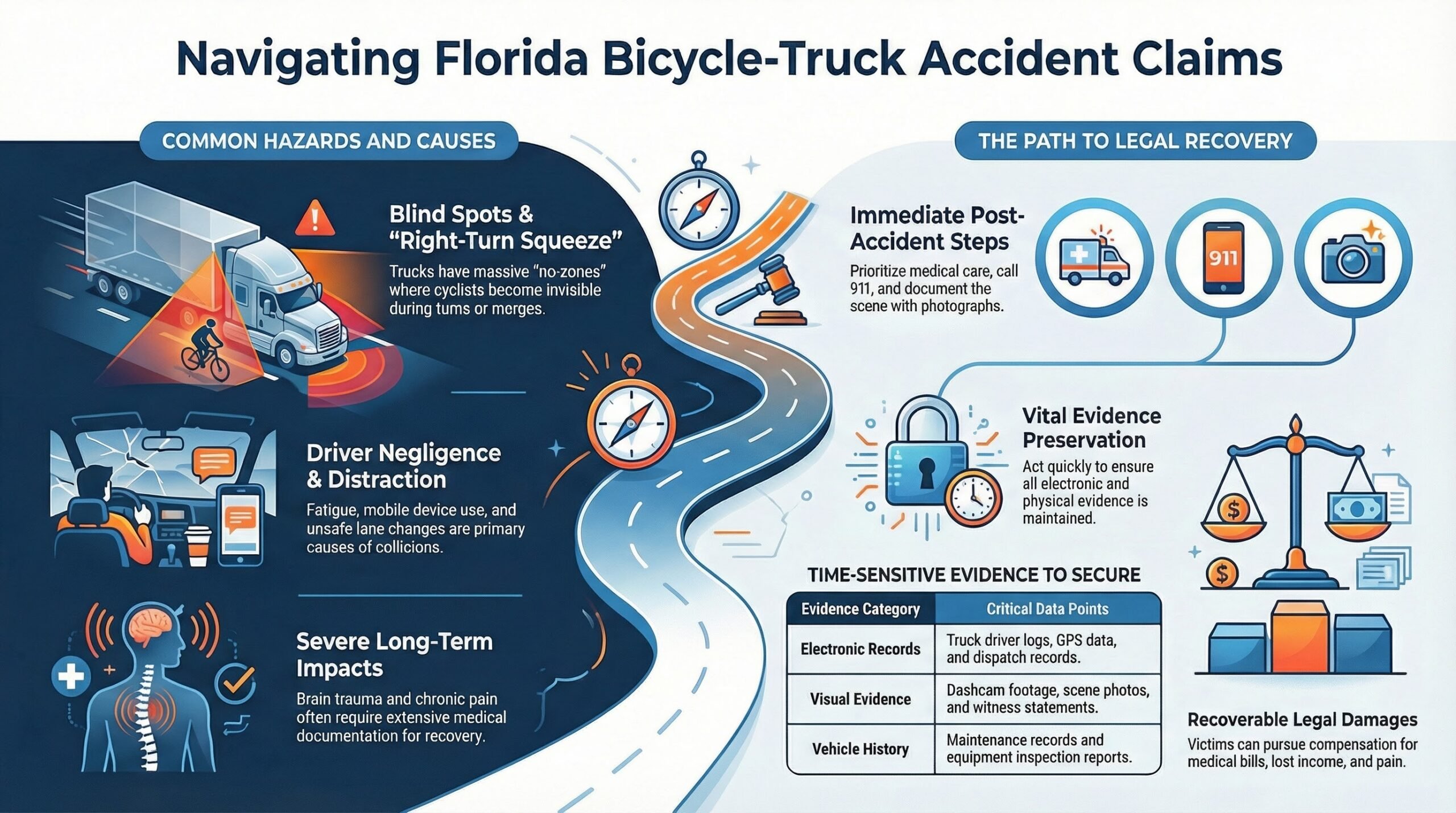
We’ll explain how driver blind spots in large trucks can hide a bicyclist until it’s too late, especially near intersections and during merges.
We’ll also address unsafe lane changes and distracted truck driving, both of which can erase the time and space a rider needs to react.
Finally, we’ll outline right-turn squeeze collisions, where a truck turns across a bike lane and forces a cyclist into the curb or under the vehicle’s path.
Driver Blind Spots
Too often, truck drivers fail to account for the wide blind spots that surround a commercial vehicle, and that oversight places Florida bicyclists at immediate risk.
We see danger when a rider travels near the cab, along the passenger side, or behind the trailer, where the driver’s view can disappear in seconds.
Even with modern equipment, poor mirror adjustment can leave a cyclist effectively invisible, especially in heavy traffic or low light.
We also recognize that vision training matters, because scanning habits and disciplined head checks help drivers confirm what mirrors can’t show.
When trucking companies prioritize schedules over attentive observation, vulnerable road users pay the price.
If you’ve been hurt, we can help document visibility conditions and pursue accountability with care and purpose.
Unsafe Lane Changes
Misjudging a lane change can turn an ordinary Florida roadway into a collision zone for bicyclists.
When a truck drifts or merges without adequate space, a rider may have no safe escape route, especially near curbs, parked cars, or narrow shoulders.
Proper lane discipline is essential because trucks require extra room to track straight and avoid encroaching into adjacent lanes.
We often see crashes tied to poor signaling practices, including late signals, no signals, or signals that don’t match the truck’s movement.
Quick, multi-lane shifts and wide right turns can also cut off bicyclists traveling lawfully along the edge of the lane.
If you’ve been hit, we can help identify where the lane change began, preserve roadway evidence, and hold the responsible parties accountable for preventable harm.
Distracted Truck Driving
Distracted truck driving often leaves bicyclists with no warning and no room to react on Florida roads.
When a driver looks down for mobile device use, even for seconds, a tractor-trailer can drift across a lane or fail to notice a cyclist riding predictably near the shoulder.
Distraction isn’t limited to screens; cognitive distraction occurs when the driver’s mind is on dispatch messages, deadlines, or personal stress, reducing scanning, slowing braking, and impairing judgment at crossings and merges.
We encourage you to document what you can after a crash, including witness names, phone records, and any onboard camera information.
If you’ve been harmed, we’ll pursue accountability, so safer practices become the standard, not the exception, across Florida.
Right Turn Squeeze Collisions
When a truck turns right across a bicyclist’s path, a “right turn squeeze” collision can happen in an instant, especially in Florida’s busy curb lanes and at signalized intersections.
The truck’s size and blind spots can draw a rider into squeeze zones where there’s little room to react. Turning dynamics matter because a wide right turn may start from the left, then sweep back toward the curb, trapping a cyclist beside the trailer.
We encourage you to stay visible, avoid lingering near a truck’s passenger-side rear, and anticipate sudden lane changes.
Drivers must signal early, check mirrors, and yield before crossing a bike lane. When these duties are ignored, we can help document fault and protect your recovery rights.
Legal Rights of Florida Bicycle Truck Accident Victims
Although a bicycle-truck crash can focus our attention on medical care and recovery, Florida law also gives injured cyclists clear rights to pursue accountability and compensation.
When we assert those rights, we protect not only our family, but also the safety of others who share the road and serve our communities.
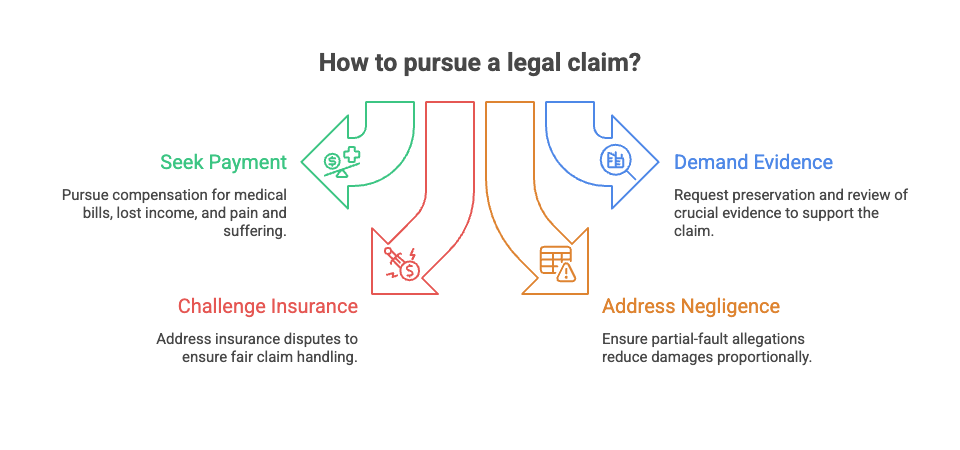
- We may seek payment for medical bills, lost income, reduced earning capacity, and pain and suffering.
- We can demand preservation and review of crucial evidence, including driver logs, dispatch data, and vehicle maintenance records.
- We may challenge insurance disputes by requiring fair claim handling and exposing unreasonable denials or delays.
- We can address comparative negligence so that partial-fault allegations reduce damages only by the assigned percentage, rather than eliminating recovery.
We also have the right to pursue claims against all responsible parties, including drivers, motor carriers, contractors, and manufacturers, when their choices contributed to the crash.
Steps to Take After a Florida Bicycle Truck Accident
After a Florida bicycle truck accident, we’ll want to act quickly and methodically, starting with your safety and immediate medical care.
Next, we should thoroughly document the crash scene, including photos, witness details, and any visible injuries or property damage.
Finally, we’ll notify law enforcement and report the accident to the appropriate insurer, so the incident is formally recorded, and your claim is properly initiated.
Ensure Safety And Medical Care
If we’ve been struck by a truck while riding in Florida, our first priority must be immediate safety and prompt medical care, because those decisions can prevent a manageable injury from becoming a permanent one.
If we can move safely, we should get out of traffic and away from secondary impacts, then call 911 and request both law enforcement and emergency medical services.
We shouldn’t “tough it out,” since shock and adrenaline can mask head, spine, or internal injuries. We should accept transport when recommended and obtain a thorough evaluation the same day, even if symptoms seem minor.
As we serve those who depend on us, we must also plan post-accident follow-ups, follow treatment instructions, and keep appointments.
Finally, we should prioritize family coordination so someone can assist with transportation, medications, and careful monitoring for delayed symptoms.
Document The Crash Scene
Once we’ve addressed immediate safety and obtained medical evaluation, we should document the crash scene while details remain clear and physical evidence is still available.
We can take wide and close photographs of the bicycle, truck position, road markings, debris, visible injuries, and any damaged safety gear, creating strong photographic evidence for later review.
We should record lighting, weather, and traffic conditions, and capture nearby signs, signals, and sightlines that may explain how the impact occurred.
If we can’t take photos, we should write careful notes immediately, including time, location, and what we observed.
We can also use sketch mapping to mark lanes, distances, points of contact, and where each party came to rest.
These steps help us serve truth and accountability.
Notify Police And Insurer
To move the process forward and protect our position, we should notify law enforcement at the scene and report the collision as promptly as possible.
Clear police reporting creates an official record, documents road conditions, and helps preserve witness information while memories remain fresh.
If injuries prevent us from calling, we can ask a bystander to request help and remain available to provide accurate facts.
We should avoid speculation, accept no blame, and make certain the report reflects the truck’s identifying details.
Next, timely insurer notification matters, even when we believe the driver or carrier is at fault.
We should report the crash, confirm available coverages, and request written claim numbers.
By staying factual and organized, we protect our ability to serve our family, our community, and our recovery goals.
How a Florida Bicycle Truck Accident Lawyer Can Help You
Although a bicycle–truck collision can feel overwhelming in the first hours and days, a Florida bicycle truck accident lawyer can step in quickly to protect our rights and keep the claim on track.
After a bicycle–truck collision, a Florida bicycle truck accident lawyer can act fast to protect our rights and keep claims moving.
When we’re focused on caring for ourselves and supporting others who depend on us, legal guidance helps us act decisively, communicate clearly, and avoid costly mistakes.
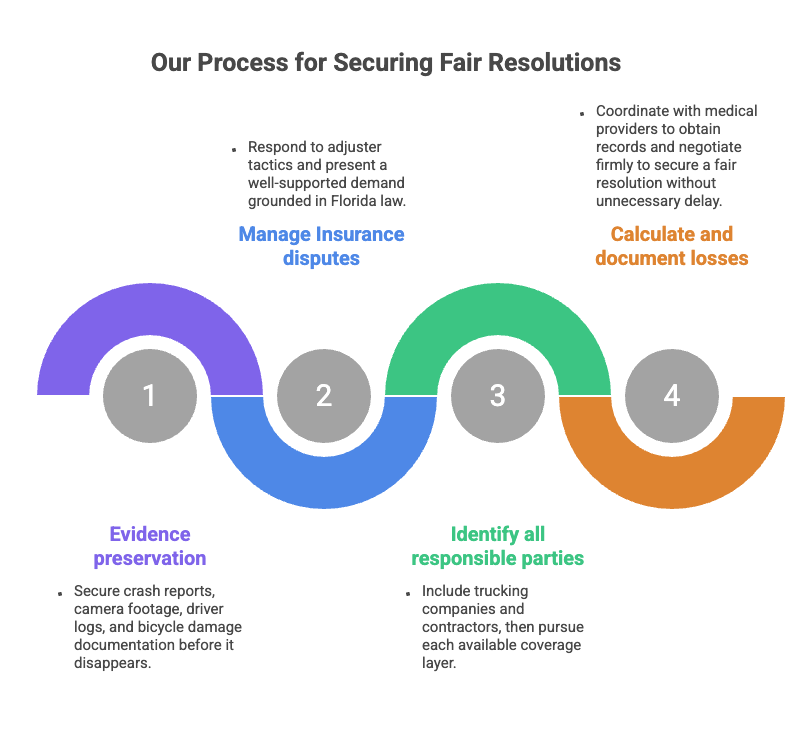
- We handle Evidence preservation by securing crash reports, camera footage, driver logs, and bicycle damage documentation before it disappears.
- We manage Insurance disputes, respond to adjuster tactics, and present a well-supported demand grounded in Florida law.
- We identify all responsible parties, including trucking companies and contractors, then pursue each available coverage layer.
- We calculate and document losses, coordinate with medical providers to obtain records, and negotiate firmly to secure a fair resolution without unnecessary delay.
With counsel leading the process, we protect time, dignity, and accountability.
Long-Term Effects of Florida Bicycle Truck Accident Injuries
After a Florida bicycle-truck accident, we often see injuries that persist long after initial treatment ends, and we want you to understand what that may mean for your daily life.
We’ll explain how chronic pain and reduced mobility can limit work and independence, how brain and nerve damage may affect memory, coordination, and sensation, and how emotional trauma or PTSD can disrupt sleep, relationships, and routine activities.
As we review these long-term effects, we’ll also connect them to the documentation and planning needed to pursue full compensation.
Chronic Pain And Mobility
Lasting impairment can redefine daily life when a bicycle–truck collision leaves injuries that don’t fully resolve.
When pain becomes constant, you may face persistent discomfort during routine tasks, reduced stamina, and a limited range of motion that affects work, caregiving, and volunteer commitments.
We often see chronic mobility challenges after fractures, joint damage, or soft-tissue trauma, especially when swelling and weakness linger despite diligent treatment.
These limits can force you to adjust your exercise routine, commute options, and household responsibilities, which may strain relationships and service roles you value.
We encourage careful documentation of symptoms, therapy progress, and activity restrictions because long-term pain and mobility loss can shape future medical needs and overall damage.
With clear records, we can advocate for support that protects your independence.
Brain And Nerve Damage
When a bicycle–truck crash transmits sudden force to the head, neck, or spine, we often see brain and nerve injuries that don’t follow a quick, predictable recovery.
A concussion or traumatic brain injury can disrupt attention, memory, balance, and speech, limiting your ability to work, study, or safely ride.
Nerve trauma may create neuropathic pain, burning, tingling, or weakness that persists despite rest and standard therapy.
In some cases, peripheral neuropathy develops after compression, stretching, or surgical complications, affecting grip, gait, and fine motor control.
We help you document these deficits through imaging, neurological exams, and functional assessments, then connect the findings to the collision’s mechanics.
With clear evidence, we can seek resources that support long-term care and daily independence.
Emotional Trauma And PTSD
Physical injuries like brain and nerve damage often heal on a visible timeline, but many riders also carry psychological harm that’s harder to measure and just as disruptive.
After a truck collision, post-traumatic stress can surface as nightmares, panic near traffic, irritability, or avoidance of riding, work, and social routines.
These symptoms may persist long after the fractures close, affecting sleep, concentration, and relationships, and they can limit a rider’s ability to serve family and community.
We can support your recovery by encouraging timely screening, trauma-informed counseling, and coordinated care with your primary care physician.
Building Emotional resilience doesn’t mean minimizing harm; it means using structured treatment, stable support networks, and practical coping plans.
We’ll also document these impacts carefully to ensure the full cost of recovery is recognized.
Proving Liability in Florida Bicycle Truck Accident Cases
Because bicycle–truck collisions often involve competing narratives and rapidly evolving evidence, we must establish liability through a disciplined, fact-driven approach.
Bicycle–truck collisions move fast, and facts disappear; liability demands a disciplined, evidence-driven approach from the start.
We start by securing evidence preservation, requesting truck logs, GPS data, dashcam footage, and dispatch records before they’re lost or overwritten.
We also document the scene promptly, gather witness statements, and obtain police reports and 911 recordings to anchor the timeline.
Next, we analyze Florida traffic statutes and local ordinances, then compare them with the driver’s and trucking company’s actual actions.
We look for unsafe turns, lane encroachment, distracted driving, fatigue, improper loading, and maintenance failures.
When a fault is contested, we rely on expert testimony from crash reconstructionists, human factors consultants, and trucking safety professionals who can explain visibility, stopping distance, and compliance with industry standards.
Throughout, we keep you informed, so our work advances safety and accountability for everyone.
Compensation for Florida Bicycle Truck Accident Damages
Although liability sets the foundation, full compensation in a Florida bicycle–truck accident case depends on proving the complete scope of harm and tying each loss to the crash with credible documentation.
We help you document medical bills, future treatment needs, lost income, reduced earning capacity, and property damage, while also presenting pain, suffering, and loss of enjoyment in a clear, supportable manner.
To serve you well, we gather records, photographs, witness statements, and expert opinions, then organize them into a persuasive damages narrative.
We coordinate rehabilitation planning with treating providers so projections reflect real recovery demands, not guesswork.
We also prepare for insurance negotiations by valuing the claim with current invoices and defensible estimates, anticipating common arguments about causation and necessity of care.
When we connect each dollar to evidence, we strengthen your position and protect your ability to move forward with stability and dignity.
The Statute of Limitations for Florida Bicycle Truck Accident Cases
When time starts running after a Florida bicycle–truck crash, the statute of limitations can decide whether you can pursue compensation at all. We need to treat statute deadlines as urgent, because missing them can bar even the strongest claim, no matter how clear the evidence appears. Acting promptly also helps us preserve records, locate witnesses, and document medical progress accurately and carefully.
In most cases, Florida law sets a limited window to file a lawsuit for injuries or wrongful death, and that window can close faster than people expect. We should confirm the correct deadline based on the facts, including the date of the crash and the type of claim asserted. Certain filing exceptions may apply, such as when the injured person is a minor, a defendant can’t be found, or essential facts were concealed. Even then, exceptions are narrow and require proof. To serve others well, we should calendar dates immediately and act deliberately.
Why You Need an Experienced Florida Bicycle Truck Accident Lawyer
Even with clear liability, bicycle–truck cases in Florida can turn on small details that insurers and defense counsel use to limit or deny payment, so we need experienced legal guidance from the start.
We act quickly to align medical care, documentation, and deadlines with the realities of commercial transportation claims, where multiple policies and corporate procedures often complicate recovery.
An experienced lawyer focuses on Evidence preservation before it disappears, securing driver logs, black-box data, dispatch records, maintenance histories, and surveillance footage.
We also coordinate with qualified investigators and experts to reconstruct impact dynamics and visibility issues, and present findings in a way that jurors can understand.
Strong Risk communication is essential, as we must explain future medical needs, lost earning capacity, and daily limitations accurately and credibly.
When we build a disciplined, service-centered case narrative, we protect your dignity, reduce avoidable disputes, and pursue full, fair compensation.
How to Choose the Right Florida Bicycle Truck Accident Lawyer for Your Case
Choosing the right Florida bicycle truck accident lawyer builds on the same disciplined approach we use to preserve evidence, document losses, and counter insurer tactics from day one.
We should look for a lawyer who routinely handles commercial vehicle claims, understands federal and state trucking regulations, and has the resources to move quickly with investigators and experts when needed.
We also want a clear plan for establishing liability, using driver logs, maintenance records, black-box data, and witness statements.
We must evaluate client communication because consistent updates and prompt answers help you make informed decisions and serve your family and community with confidence.
We should ask how the firm explains timelines, settlement demands, and litigation risks in plain language.
Finally, we should confirm attorney fees in writing, including contingency terms, costs, and who pays expenses if recovery is limited.
A careful choice protects your recovery and your peace of mind.
About the Law Offices of Anidjar and Levine
We step in quickly to protect your interests after a Florida bicycle truck crash, and we handle the legal burden so you can focus on recovery.
We coordinate evidence collection, communicate with insurers, and pursue fair compensation with disciplined attention to deadlines and detail.
At the Law Offices of Anidjar and Levine, our work is guided by service, accountability, and respect for every person affected by serious harm.
Our firm’s history reflects consistent advocacy for injured Floridians, built through careful case preparation and principled negotiation, and reinforced by readiness to litigate when necessary.
We keep you informed, return calls promptly, and explain each option so you can make a confident decision.
We also value client testimonials because they demonstrate how our approach supports families, promotes safer roads, and honors our responsibility to the community.
If you choose us, we’ll treat your case as a duty, not a file.
Frequently Asked Questions
Do I Need a Police Report if the Truck Driver Admits Fault?
Yes, we still need a police report, even if the truck driver admits fault. We use the report to document timelines, roadway conditions, and any citations to prevent later disputes.
We also gather witness statements and photographic evidence to confirm how the crash occurred and to support fair compensation.
If you’re able, call law enforcement promptly, seek medical care, and keep all records so we can serve your recovery.
Can I Still Recover Damages if I Wasn’T Wearing a Helmet?
Yes, we can still pursue damages even if you weren’t wearing a helmet, and we’ll focus on the circumstances of the crash.
Under comparative negligence, the defense may argue your choice increased injuries, which could reduce, not erase, recovery.
We’ll counter helmet stigma by relying on medical evidence, crash dynamics, and clear documentation.
When we serve others, we also protect their rights, and we won’t let assumptions replace facts.
What if the Trucking Company’s Insurer Contacts Me First?
If the trucking company’s insurer contacts you first, we recommend remaining courteous, limiting discussion, and requesting written details of the insurer’s contact.
Don’t agree to a recorded statement, sign authorizations, or accept an early offer before we review your medical status and losses.
We’ll help you preserve evidence, document your service to others through your daily activities, and make certain communications protect your rights and future care.
Will My Health Insurance Require Reimbursement From My Settlement?
Yes, your health insurer may require reimbursement from your settlement, typically through subrogation or medical liens.
We’ll review your policy, payments made, and any private payments you covered, then confirm whether a lien is valid and properly noticed.
We’ll negotiate reductions when permitted, so more funds remain for your recovery and for supporting those who rely on you.
We’ll also address Medicare, Medicaid, and ERISA rules.
Can a Claim Proceed if the At-Fault Truck Driver Is Uninsured?
Yes, a claim can still proceed, even if the at-fault truck driver is uninsured.
We’ll first look at your uninsured motorist coverage, which may pay for medical bills, lost income, and pain and suffering within policy limits.
If the driver has minimal insurance, we may also use underinsured coverage to bridge remaining losses.
We can pursue the driver directly, though collection is often limited or uncertain.
———————-
If you’ve been injured in a Florida bicycle truck accident, the Law Offices of Anidjar and Levine are prepared to protect your rights and pursue the compensation you need.
We’ll review the evidence, identify all liable parties, and handle insurer communications so you can focus on recovery.
Because deadlines and fault rules can shape your claim, we act quickly and strategically from the start.
When you’re ready, we’ll explain your options clearly and advocate for you through settlement or trial, including guidance from a Florida Truck Accident Lawyer.