Law Offices of Anidjar and Levine handles Florida blind spot truck accident claims by acting fast to preserve dashcam footage, electronic logs, and dispatch records, while documenting injuries and crash scene details that often disappear quickly.
We investigate unsafe lane changes, mirror or sensor issues, driver distraction, and carrier policies that may have encouraged risky driving.
We also manage insurer communications and pursue compensation for medical bills, lost income, and pain and suffering under Florida’s comparative fault rules.
Learn more by visiting our Florida Truck Accident Lawyer page.
Key Takeaways
- Get medical help and call 911 immediately; document symptoms with a dated log and photos of injuries to support your claim.
- Preserve scene evidence fast: photos of lanes, skid marks, debris, truck blind spots, and vehicle positions; collect witness names and statements.
- Act quickly to secure video and trucking data like ELD/telematics, dashcams, dispatch logs, and maintenance/inspection records before they’re overwritten.
- A lawyer can pursue liability against the driver and carrier for unsafe lane changes, poor training, scheduling pressure, and mirror or sensor failures.
- Seek compensation for medical bills, lost income, property damage, pain and suffering, and future impairment under Florida comparative fault rules.


How We Can Help With Your Florida Blind Spot Truck Accident Claim
When a truck driver changes lanes without seeing a vehicle in a blind spot, we can step in quickly to protect your rights and preserve vital evidence.
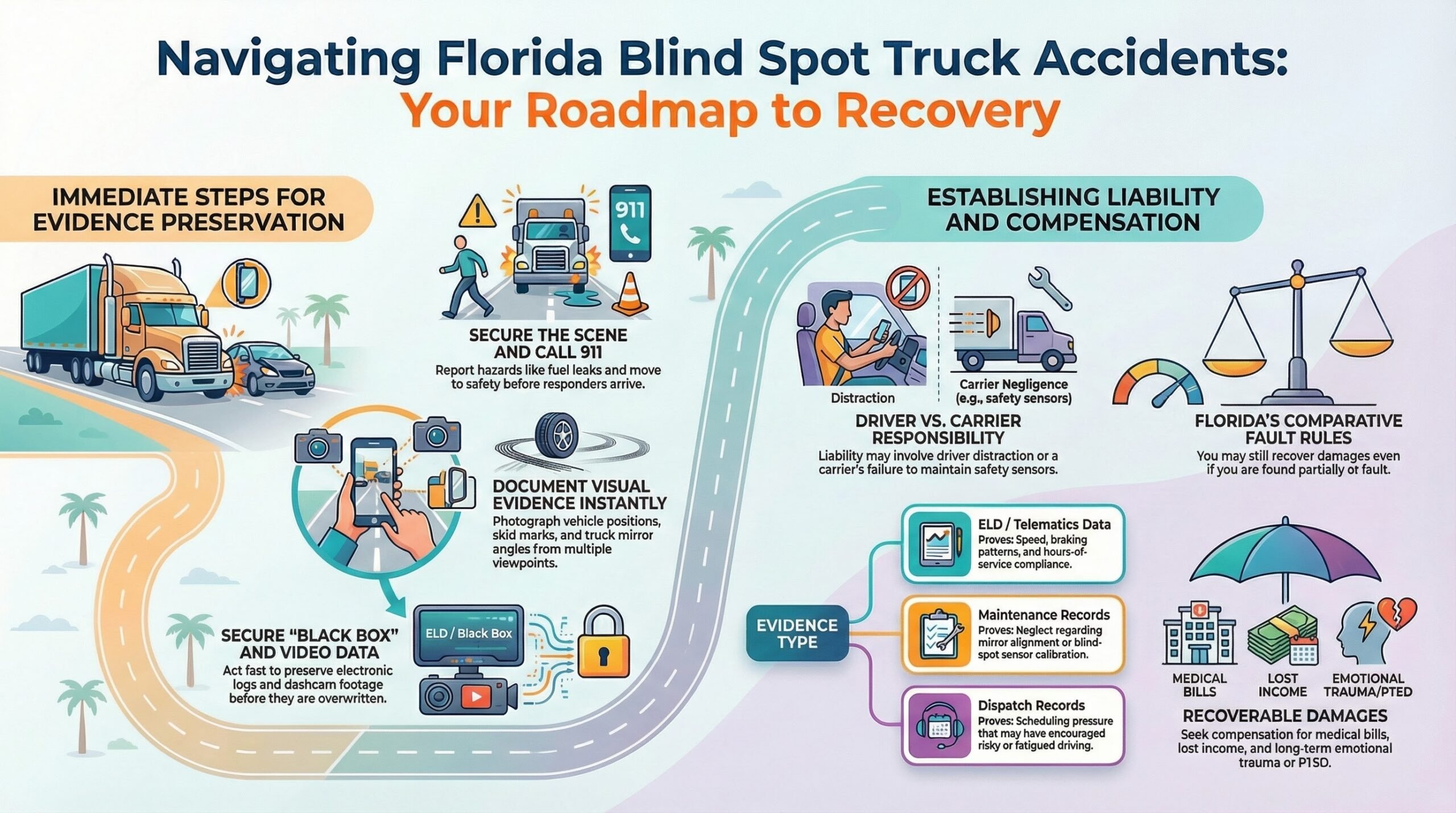
We act promptly to document the scene, secure available video, and request records before they’re lost or altered.
We also identify and contact principal people early, obtaining clear witness statements that support your account and help reduce disputes about how the crash occurred.
We handle all communications with insurers and defense counsel, so you’re not pressured into giving recorded statements or accepting a rushed offer.
We calculate the full impact of your injuries, including future care needs, lost income, and ongoing limitations, then present a well-supported demand.
If the other side resists accountability, we guide you through settlement negotiation with disciplined preparation and firm advocacy.
Throughout the process, we keep you informed, answer questions directly, and focus on practical outcomes that honor your recovery and service to others.
OUR CONSULTATIONSARE FREE
START YOUR FREE CASE REVIEW

Understanding Florida Blind Spot Truck Accident Cases
Because blind spot collisions often happen in a split second, Florida blind spot truck accident cases tend to turn on clear proof of what the driver could see, what the driver did, and whether basic safety steps were followed before a lane change or merge.
Florida blind spot truck cases hinge on proof of what the driver saw, did, and checked before changing lanes.
We focus on establishing a reliable timeline, identifying each vehicle’s position, and comparing the driver’s actions to accepted safety practices.
Evidence often includes crash reports, witness statements, photographs, dash or traffic video, and the truck’s electronic data.
We also review company policies, driver education records, and training materials to understand what standards the driver was expected to follow.
When available, we evaluate vehicle technology, such as mirrors, sensors, and camera systems, to determine whether warnings were present and used appropriately.
Common Causes of Florida Blind Spot Truck Accidents
We’ll now explain the common causes of Florida blind spot truck accidents, so you can recognize how these crashes happen and why liability often falls on the trucking side.
Improper lane changes, mirror misalignment issues, and distracted truck drivers frequently combine to reduce a driver’s awareness at the exact moment traffic shifts around the rig.
Speed and tailgating then compress reaction time, turning a manageable oversight into a serious collision.
Improper Lane Changes
Improper lane changes can occur in seconds, yet they remain a leading cause of blind-spot truck accidents in Florida.
When a truck drifts or cuts over without confirming a clear path, smaller vehicles can disappear alongside the trailer, leaving no time to react.
We often see collisions linked to poor lane discipline, especially near interchanges where traffic congestion and speed variations occur.
Inadequate signaling practices also play a central role, as late or missing signals deprive others of the notice needed to yield or adjust safely.
If you’ve been hurt, we’ll focus on service, accountability, and proof by reviewing roadway conditions, vehicle positions, electronic data, and witness statements.
We’ll also examine whether the driver complied with company policies and completed required safety training, and whether dispatch pressure encouraged unsafe maneuvers.
Mirror Misalignment Issues
Safe lane changes depend on what a truck driver can actually see, and mirror misalignment often defeats that basic requirement.
When mirrors drift due to vibration, prior repairs, or rushed pre-trip checks, a tractor-trailer can create a hidden corridor that allows smaller vehicles to disappear.
If we’re committed to protecting others on Florida roads, we should insist on disciplined adjustment procedures before every haul and after any impact or maintenance.
We also look beyond the glass, because modern fleets rely on blind-spot warning systems that can misinterpret distance or angle when brackets shift.
In those cases, proper sensor calibration restores accurate alerts and supports safer merging decisions.
When companies skip these steps, they increase risk for everyone nearby, including families, cyclists, and commuters.
Distracted Truck Drivers
Too often, blind spot collisions in Florida start with a truck driver’s attention shifting away from the road at the exact moment a lane change demands constant scanning.
When a driver checks a mobile device, adjusts a dispatch screen, or reads a notification, that brief visual distraction can reduce the time needed to confirm a clear lane.
Distraction also includes eating, reaching for items, and interacting with in-cab technology, all of which reduce mirror checks and delay head turns.
We encourage you to view this issue as preventable harm because professional drivers hold a duty to protect the public.
When distraction contributes to a crash, we help gather phone records, electronic log data, and witness statements to show how attention lapsed and why the impact occurred.
Speed And Tailgating
High speeds and aggressive following distances often combine to turn a truck’s blind spot into an immediate collision zone during routine lane changes.
When a truck driver travels at excessive speed, the time to scan mirrors, signals, and correct a drift shrinks, and a vehicle lingering beside the trailer may disappear from view.
Tailgating increases the risk because close following reduces braking distance and forces abrupt steering inputs.
In Florida traffic, a quick lane change can become catastrophic when the driver can’t see you and can’t slow down in time.
We encourage safe, service-minded driving practices, and we help injured people hold carriers accountable when speed policies are ignored.
If you were struck in a blind spot event, we’ll document speed, spacing, and logs to support your claim.


Legal Rights of Florida Blind Spot Truck Accident Victims
When a truck’s blind spot contributes to a collision, we still have clear legal avenues to hold the right parties accountable under Florida law.
We can pursue compensation for medical care, lost income, property damage, and pain and suffering, while recognizing Florida’s comparative fault rules may affect recovery rather than eliminate it.
Our focus stays on serving your long-term stability, not short-term pressure.
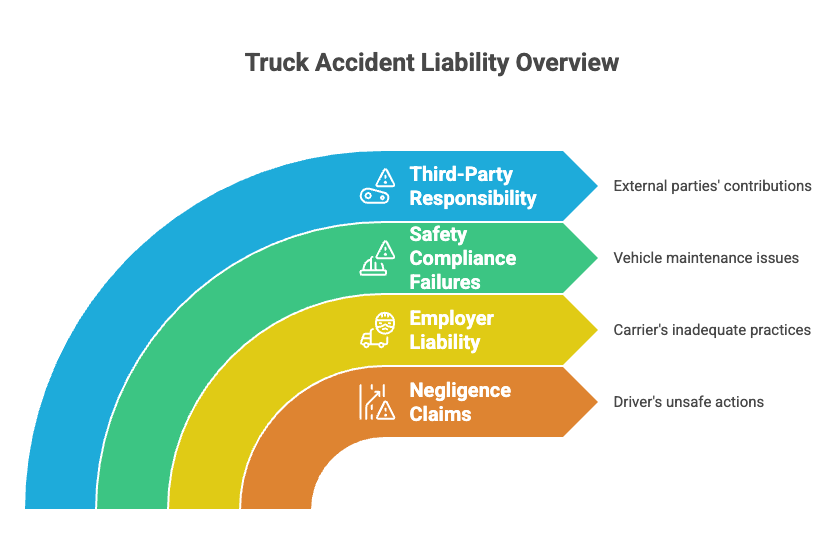
- Negligence claims against the truck driver for unsafe lane changes and inadequate lookout.
- Employer liability when the carrier’s driver training, supervision, or scheduling practices increase risk.
- Safety compliance failures are tied to vehicle maintenance, mirrors, sensors, or worn equipment that limits visibility.
- Third-party responsibility for defective parts, improper loading, or roadway contractors creating hazards.
We’ll seek evidence that shows duty, breach, causation, and damages, and we’ll protect your right to full, fair compensation.
Steps to Take After a Florida Blind Spot Truck Accident
After a Florida blind spot truck accident, we’ll want you to take clear, immediate steps that protect your health and preserve essential evidence.
We should first make certain everyone’s safety and call 911, then document the scene and your injuries with photos, notes, and witness information as soon as it’s practical.
We’ll also need you to promptly notify your insurer and contact an attorney early so we can guide communications and secure crucial records before they are lost.
Ensure Safety And Call 911
In the immediate moments after a Florida blind-spot truck accident, we should prioritize safety and call 911 without delay.
If we can move without worsening anyone’s condition, we should get ourselves and others out of active traffic, then perform seatbelt checks to confirm restraints are released, and no one is trapped.
We should quickly locate emergency exits, assess whether doors are jammed, and guide passengers to a safe area well away from the roadway and the truck’s path.
When we call 911, we should report the location, the number of vehicles involved, and any immediate hazards such as fuel, smoke, or blocked lanes.
We should remain calm, follow the dispatcher’s instructions, and provide only basic assistance within our capabilities until responders arrive.
Document Scene And Injuries
Although we may feel shaken, we should document the scene and our injuries as soon as it’s safe, because clear, time-stamped evidence often shapes how insurers and investigators assign fault in a Florida blind spot truck crash.
We should take photographic evidence from multiple angles, capturing vehicle positions, lane markings, skid marks, debris, damage points, and any obstructed sightlines near the truck’s mirrors.
We should also photograph visible injuries, torn clothing, and safety equipment, then note pain, dizziness, or limited movement in a brief, dated log.
If bystanders are willing, we can request witness statements that describe what they saw, including signals, speed, and lane changes, and record their names and contact details.
We serve everyone best by preserving facts carefully, without speculation.
Notify Insurer And Attorney
Once we’ve preserved photos, notes, and witness details, we should promptly notify our auto insurer and a Florida blind spot truck accident attorney, since early reporting and legal guidance can shape coverage decisions and protect our rights.
When we contact the insurer, we should provide basic facts, request a claim number, and avoid speculative statements that could be used to reduce benefits.
We’ll keep copies of all communications, medical bills, and repair estimates to support our family’s stability and the needs of any injured passengers.
Through timely consultation with an attorney, we can clarify PIP requirements, identify liable trucking parties, and preserve vital evidence, such as driver logs and camera data.
With counsel’s support, we can approach insurer negotiations strategically, pursue a fair valuation, and prevent missed deadlines from undermining recovery for those depending on us.
How a Florida Blind Spot Truck Accident Lawyer Can Help You
When we step in after a blind spot truck crash, we don’t just file paperwork; we take control of the investigation and the claim from the start.
We focus on witness interviews and evidence preservation because early action protects the truth and prevents crucial records from disappearing.
We also coordinate with your medical providers and employers to document losses clearly, so you can keep serving your family and community without carrying the burden alone.
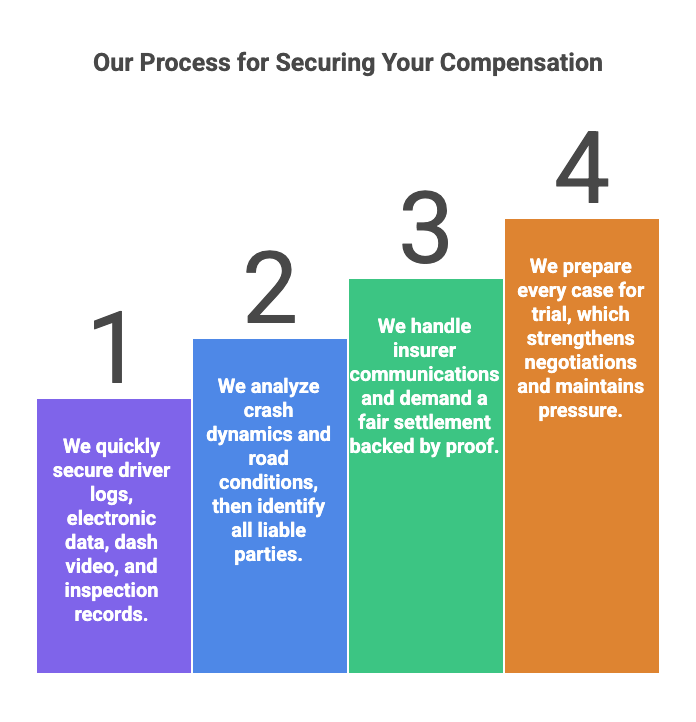
- We quickly secure driver logs, electronic data, dash video, and inspection records.
- We analyze crash dynamics and road conditions, then identify all liable parties.
- We handle insurer communications and demand a fair settlement backed by proof.
- We prepare every case for trial, which strengthens negotiations and maintains pressure.
Throughout, we provide clear guidance, consistent updates, and respectful advocacy so your claim stays organized and your voice stays heard.
Long-Term Effects of Florida Blind Spot Truck Accident Injuries
When we handle Florida blind spot truck accident cases, we often see injuries that don’t end with the first round of treatment, and we’ll help you plan for what comes next.
Chronic pain and lasting disability can limit your work and daily function, while traumatic brain injuries may create ongoing cognitive, physical, and behavioral challenges.
We also recognize that emotional trauma, including PTSD, can disrupt sleep, relationships, and stability, and it should be addressed with the same seriousness as any physical harm.
Chronic Pain And Disability
Endurance becomes a daily test for many people after a Florida blind spot truck crash, because the most serious harm often extends beyond the initial emergency.
When pain persists, it can limit sleep, concentration, and work capacity, and it may progress into chronic fatigue that makes basic tasks feel demanding.
We often see clients who can’t stand, lift, or drive for long periods, and who must restructure routines around flare-ups and medical appointments.
Disability may require mobility aids, home modifications, or reduced hours, all of which can strain finances and family roles.
We help you document symptoms, treatment history, and functional limits through consistent records, so your claim reflects real daily restrictions.
When we advocate well, we protect your ability to serve others without sacrificing your own stability.
Brain Injury Lasting Impacts
Chronic pain and physical limitations can reshape daily life after a Florida blind spot truck crash, yet brain injuries often add a different layer of long-term disruption that isn’t always visible at first.
We often see headaches, slowed processing, memory gaps, and reduced attention interfere with routines, safe driving, and household responsibilities.
These changes can affect how you communicate, manage medications, or follow schedules while caring for others.
Early evaluation is important because symptoms may worsen as fatigue and overstimulation increase.
With structured cognitive rehabilitation, we can target attention, organization, and problem-solving, and track measurable gains over time.
When work becomes difficult, vocational retraining may help you shift into roles that fit new limits, preserve independence, and support continued service to family and community.
Emotional Trauma And PTSD
Although physical injuries often receive the most attention after a Florida blind spot truck crash, emotional trauma can persist quietly and disrupt daily functioning long after the vehicles are repaired.
We often see clients who relive the impact through nightmares, intrusive memories, or sudden panic when driving near large trucks, which can signal post traumatic stress.
These symptoms may strain families, reduce job performance, and limit a person’s ability to serve others with consistency.
We also recognize emotional numbing, where you feel detached, lose interest in relationships, or struggle to experience joy, even when physical healing progresses.
Because these effects can be long-lasting, we encourage prompt screening, counseling, and documentation of symptoms.
We’ll help you pursue compensation that accounts for therapy, lost income, and the full human cost of recovery.
Proving Liability in Florida Blind Spot Truck Accident Cases
When a blind-spot truck crash occurs in Florida, we can’t rely on assumptions about who “should’ve seen” whom; we’ve to prove liability with clear, admissible evidence.
We serve you best by building a factual record that shows what the driver did, what the carrier allowed, and how those choices caused harm.
We start with scene documentation, vehicle damage patterns, and witness statements that establish lane position, speed, and signaling.
We secure dashcam footage, nearby surveillance video, and event data recorder downloads before they’re lost.
We also analyze electronic logging to confirm hours-of-service compliance, routes, and timing, then compare it to dispatch records and fuel or toll receipts.
If a driver made an unsafe lane change, we link that conduct to the initial impact and any subsequent collisions.
Finally, we review inspection, maintenance, and training records to identify safety policy failures and negligent supervision.
Compensation for Florida Blind Spot Truck Accident Damages
Accountability matters most after a blind spot truck crash, and we pursue compensation that reflects the full scope of your losses under Florida law.
We document emergency care, hospitalization, rehabilitation, medication, and future treatment needs, then connect them to the collision through clear medical and vocational evidence.
We also seek recovery for lost wages, reduced earning capacity, and damage to your vehicle and personal property.
For non-economic harms, we present credible pain valuation grounded in medical records, daily limitations, and the impact on your ability to serve your family and community.
When medical liens arise, we address them early, verify balances, and negotiate where possible so your net recovery better supports ongoing care.
If the crash caused permanent impairment or disfigurement, we highlight those realities with respectful, precise proof.
Throughout, we pursue fair resolution with disciplined negotiation, and we’re prepared to litigate when the insurer won’t act responsibly.
The Statute of Limitations for Florida Blind Spot Truck Accident Cases
Because deadlines can control whether your claim gets heard at all, we treat Florida’s statute of limitations as a vital part of every blind spot truck accident case.
In most Florida negligence actions, you generally have two years from the crash date to file, and missing that window can bar recovery, no matter how clear the fault may be.
When a collision causes a wrongful death, a different time limit may apply, so we match the facts to the correct deadline.
We also encourage acting quickly because early steps protect the truth. Records tied to faulty maintenance, electronic logging data, and inspection reports can be lost or overwritten over time.
Witness memories fade, and trucking companies may rotate personnel involved in driver training or safety compliance.
Why You Need an Experienced Florida Blind Spot Truck Accident Lawyer
Although blind-spot collisions may appear straightforward at the scene, trucking cases rarely are, and we rely on experienced legal strategy to prove what happened and who is responsible.
We act quickly to preserve logbooks, electronic data, dispatch records, and maintenance files before they disappear.
We also identify all responsible parties, including the driver, motor carrier, broker, and maintenance vendors, so your recovery can truly address the harm caused.
Experience matters because blind spot claims often turn on industry standards, driver training, and whether the carrier enforced safe lane-change procedures.
We examine hiring files, supervision practices, and prior safety violations to show patterns that put the public at risk.
We also evaluate vehicle technology, such as blind-spot monitoring, cameras, and telematics, and engage experts to explain how those systems should have performed.
When we build a disciplined case, we protect your family and promote safer roads for everyone.
How to Choose the Right Florida Blind Spot Truck Accident Lawyer for Your Case
Sorting through Florida blind spot truck accident lawyers can feel overwhelming, so we recommend focusing on concrete markers of capability rather than advertising.
We should start by confirming the lawyer regularly handles commercial vehicle crashes and understands how blind zone collisions occur, including industry practices around mirrors, sensor systems, and driver training.
We also want a team that promptly preserves evidence, requests onboard data, and obtains dispatch records before they disappear.
During the initial case evaluation, we can gauge whether counsel asks precise questions about lane changes, traffic patterns, and visibility, and whether they explain options without pressure.
We should review courtroom experience, not only settlements, because trucking insurers often resist fair payment.
We also recommend checking responsiveness, since consistent updates help us stay focused on healing and serving our families.
Finally, we should discuss fees in writing and ensure we can reach the attorney leading the file, not just the staff.
About the Law Offices of Anidjar and Levine
Turn to the Law Offices of Anidjar and Levine when we need a Florida blind spot truck accident team that moves quickly, communicates clearly, and builds cases around evidence rather than assumptions.
We align our work with your goals, then act with urgency to protect records, preserve vehicle data, and document injuries before details fade.
We don’t leave you guessing; we provide steady updates and practical guidance from intake through resolution.
Our firm’s history reflects a consistent commitment to serving injured Floridians, including families facing the sudden disruption that truck crashes can cause.
We approach each claim with disciplined investigation, careful damage analysis, and a readiness to negotiate or litigate when necessary.
You can review client testimonials that describe respectful treatment, responsive access to the legal team, and a focus on results that support recovery.
When we serve you, we also serve your community by insisting on accountability and safer commercial driving practices statewide.
Frequently Asked Questions
What if I were driving in a Truck’s Blind Spot Intentionally?
If you drove in a truck’s blind spot intentionally, it can reduce your recovery, because your intentional positioning may be viewed as unreasonable risk-taking.
We’ll still examine whether the truck driver failed to check mirrors, signal, or maintain a safe lane change.
Under comparative negligence, a court can assign you a percentage of fault, then lower damages accordingly.
We can help you document conduct, protect others’ safety, and pursue fair accountability.
Can I Still Recover if I Wasn’T Wearing a Seatbelt?
Yes, we can still pursue recovery even if you weren’t wearing a seatbelt.
Under comparative negligence, a court may reduce your damages if it finds the nonuse worsened your injuries.
Florida’s seatbelt statutes allow the defense to argue mitigation rather than bar your claim outright.
We’ll gather medical and crash evidence to separate fault for the collision from injury causation, so compensation reflects what’s fair and just.
How Are Attorney Fees Structured in Blind Spot Truck Accident Cases?
We structure fees through contingency agreements, so you don’t pay attorney fees upfront, and we’re paid only if we recover compensation for you.
Our percentage typically depends on whether the case resolves pre-suit, after filing, or through trial, and we confirm all terms in writing.
We also comply with applicable fee caps and court approval rules when required, ensuring the arrangement remains fair, transparent, and aligned with our commitment to serving others.
Will Filing a Claim Increase My Auto Insurance Premiums?
Filing a claim can increase your auto insurance premiums, but it doesn’t always.
Insurers review fault, prior history, and local loss trends when adjusting insurance rates, so the claim impact varies by carrier and policy terms.
If you weren’t at fault, many companies limit or avoid surcharges, though some still raise rates after any loss.
We’ll help you document liability and communicate clearly, supporting fair outcomes for everyone.
Can I Switch Lawyers if I’ve Already Hired One?
Yes, you can switch lawyers after you’ve hired one, and we can help you do it properly.
We’ll review your retainer agreement, confirm you have the right to change counsel, and coordinate a smooth transfer of your file.
If there’s a fee dispute, we’ll address it professionally, as prior counsel may assert a lien for completed work.
We’ll keep your case advancing, focused on serving others.
————————————
When a blind spot truck crash disrupts your life, the Law Offices of Anidjar and Levine are prepared to protect your interests and pursue the compensation you’re owed.
We’ll investigate the collision, preserve crucial evidence, identify all liable parties, and handle insurer communications so you don’t face undue pressure.
Because deadlines and proof requirements can shape the outcome, we’ll move promptly and keep you informed at every stage.
Learn more about your options by speaking with a Florida Truck Accident Lawyer.
If you’re ready to act, we’re ready to help.