If you fell on unsafe property in Clearwater, The Law Offices of Anidjar and Levine can help you understand your legal options and assess whether a property owner, occupier, or another party may be responsible. We’ll explain how evidence, medical records, expenses, missed work, and shared responsibility may affect your claim. Prompt medical care and documentation can protect your health and support your case. Learn what steps to take, what compensation may cover, and how a Clearwater slip and fall lawyer can assist. For help with your case, contact a Clearwater Personal Injury Lawyer.
Main Takeaways
- A Clearwater slip and fall lawyer can assess who controlled the property and whether a failure to use reasonable care caused the fall.
- Potential compensation may include medical expenses, lost income, reduced earning capacity, pain, and suffering.
- Seek prompt medical care, report the fall, photograph the hazard, and collect witness details when safe.
- Preserve medical records, incident reports, photos, footwear, and clothing; request surveillance footage before it is lost.
- Comparative negligence may reduce compensation but does not automatically prevent recovery; an attorney can explain deadlines and options.
How We Can Help With Your Clearwater Slip & Fall Injury Claim
After a slip and fall, we can help you understand your legal options and protect your claim. We’ll listen carefully, answer your questions, and explain what information may support your case. Our team can help you organize medical records, photographs, incident reports, and other relevant documents so you can access important details.
We’ll also communicate with insurers on your behalf and review any proposed settlement before you decide how to respond. A thoughtful Claim Strategy considers your injuries, expenses, missed work, and future needs. We’ll discuss the available paths with you, explain potential risks, and help you make informed decisions without pressure.


When you’re focused on recovery and caring for those who depend on you, clear Legal Guidance can ease the burden of managing a claim. We’ll keep you informed, prepare each step with care, and treat your concerns with respect. Our goal is to help you pursue fair compensation while providing dependable support throughout the process.
Understanding Clearwater Slip & Fall Injury Cases
OUR CONSULTATIONSARE FREE
START YOUR FREE CASE REVIEW

Understanding a Clearwater slip and fall injury case begins with identifying the hazard, determining who controlled the property, and examining whether reasonable steps could have prevented the fall. We assess the available evidence to understand what happened and whether the responsible party failed to act with reasonable care.
Premises liability basics focus on a property controller’s responsibility to address unsafe conditions and provide appropriate warnings. Property owner duties vary with the circumstances, including the visitor’s reason for being on the property and what the owner knew or should have known. We review relevant records, photographs, witness accounts, and incident reports to evaluate these questions.


To support your recovery, we also consider how the fall affected your health, work, and daily responsibilities. Medical documentation can help connect your injuries to the incident and explain the care you need. We’ll help you understand the legal process, preserve important information, and make informed decisions while seeking fair accountability and compensation.
Don’t Wait. Call Our Florida Personal Injury Lawyers Now!
Common Causes of Clearwater Slip & Fall
In Clearwater slip and fall cases, we often find hazards such as wet or slippery floors and uneven walking surfaces. Poor lighting can make these dangers harder to see, while cluttered walkways may obstruct a safe path. We’ll explain how these conditions can contribute to falls and resulting injuries.
Wet or Slippery Floors
Wet or slippery floors can turn an ordinary walk through a Clearwater business, apartment building, or public space into a serious fall. Spilled drinks, tracked-in rainwater, freshly mopped surfaces, leaking equipment, and condensation can reduce floor friction without warning. When property owners or staff don’t promptly clean spills, place visible warning signs, or block access to hazardous areas, visitors may have little chance to avoid danger.
We can help you understand how these conditions contributed to your fall and what evidence may matter. Factors such as lighting, cleaning records, warning signs, and footwear traction can help explain whether a hazard was reasonably addressed. Businesses and property managers should take practical steps to protect guests, residents, and workers. If you were injured, document the scene when possible and report the incident promptly. A careful review can clarify your options.
Uneven Walking Surfaces
Uneven walking surfaces can cause serious falls when cracks, raised edges, loose pavers, or damaged flooring disrupt a person’s footing. In Clearwater, these hazards may appear on sidewalks, parking areas, entryways, and business paths. Cracked pavement can shift underfoot, while loose pavers may move when someone steps on them. Raised thresholds can also catch a person’s shoe, especially when they enter or leave a building. Property owners and managers should inspect walking areas, schedule timely repairs, and warn visitors about hazards they can’t fix immediately. These steps help protect customers, employees, and neighbors who rely on safe access. If you’ve fallen because a surface was uneven, document the location and condition when possible, and seek medical care. We can help you understand your options.
Poor Lighting
Poor lighting can make slip-and-fall hazards hard to see in Clearwater businesses, apartment buildings, parking areas, and walkways. When owners fail to maintain adequate illumination, visitors may not notice wet flooring, steps, or changes in elevation before they cause a fall. We can help you assess whether dim or broken lights, poorly placed fixtures, or inadequate nighttime visibility contributed to your injury.
Property owners should follow applicable Lighting standards and take reasonable steps to keep shared areas safely lit. That includes inspecting fixtures, replacing burned-out bulbs, and promptly addressing dark spots. If you fell because an area was difficult to see, document the location and lighting conditions when safe to do so. We can review the circumstances, identify relevant evidence, and explain your options for seeking accountability and supporting safer conditions for others.
Cluttered Walkways
When merchandise, boxes, cords, or maintenance equipment obstruct a walkway, visitors may not see the hazard in time to avoid a fall. We expect businesses to keep paths clear so customers, employees, and delivery workers can move safely. Unsecured cords across floors can catch a foot, while misplaced displays or supplies may force people into narrow spaces or unexpected routes. A blocked exit creates an additional danger by limiting access to a safe way out during an emergency. Property owners and managers should regularly inspect walkways, remove unnecessary items, and secure cords away from pedestrian traffic. When work requires temporary obstacles, they should mark the area clearly and provide a safe alternative route. If clutter causes a fall, we can help you document the hazard and understand your options.
Legal Rights of Clearwater Slip & Fall Injury Victims
If you’re injured in a slip and fall in Clearwater, Florida law may give you the right to seek compensation from the party responsible for the dangerous condition. Premises liability rights allow injured visitors to pursue a claim when a property owner or occupier failed to use reasonable care and that failure caused harm. We can help you understand your options and protect your ability to seek fair compensation.
Your rights may include:
- Seeking payment for medical expenses, lost income, and other documented losses connected to your injury.
- Preserving evidence, such as photographs, incident reports, and witness contact information, to support your account.
- Consulting an attorney who can explain deadlines, assess responsibility, and communicate with insurers on your behalf.
Comparative negligence rules may reduce compensation if you share responsibility for the incident, but they don’t automatically prevent recovery. We’ll review the facts carefully, explain how these rules may apply, and help you make informed decisions. By pursuing a well-supported claim, you can focus on recovery while seeking accountability through the legal process.
Why Do Clearwater Slip & Fall Injuries Happen?
Why do slip and fall injuries happen in Clearwater? These incidents often occur when property conditions make walking surfaces unsafe, especially in busy places that serve residents and visitors. Spilled drinks, tracked-in water, loose mats, uneven pavement, damaged flooring, and cluttered walkways can cause someone to lose balance. When owners and managers overlook hazards or delay repairs, preventable risks can remain in public areas.
Weather-related hazards also contribute. Rain can leave entryways and outdoor paths slick, while standing water may collect where drainage is poor. Inadequate lighting can make these dangers harder to see. Footwear choices matter, too: smooth soles or shoes that provide little support may reduce traction on wet or uneven surfaces. Still, a person’s shoes don’t excuse an unsafe property condition.
We can better understand how these injuries happen by considering maintenance, warning signs, and a space’s design. Identifying those factors helps communities protect people who rely on safe, accessible places.
What Should You Do After a Clearwater Slip & Fall Injury?
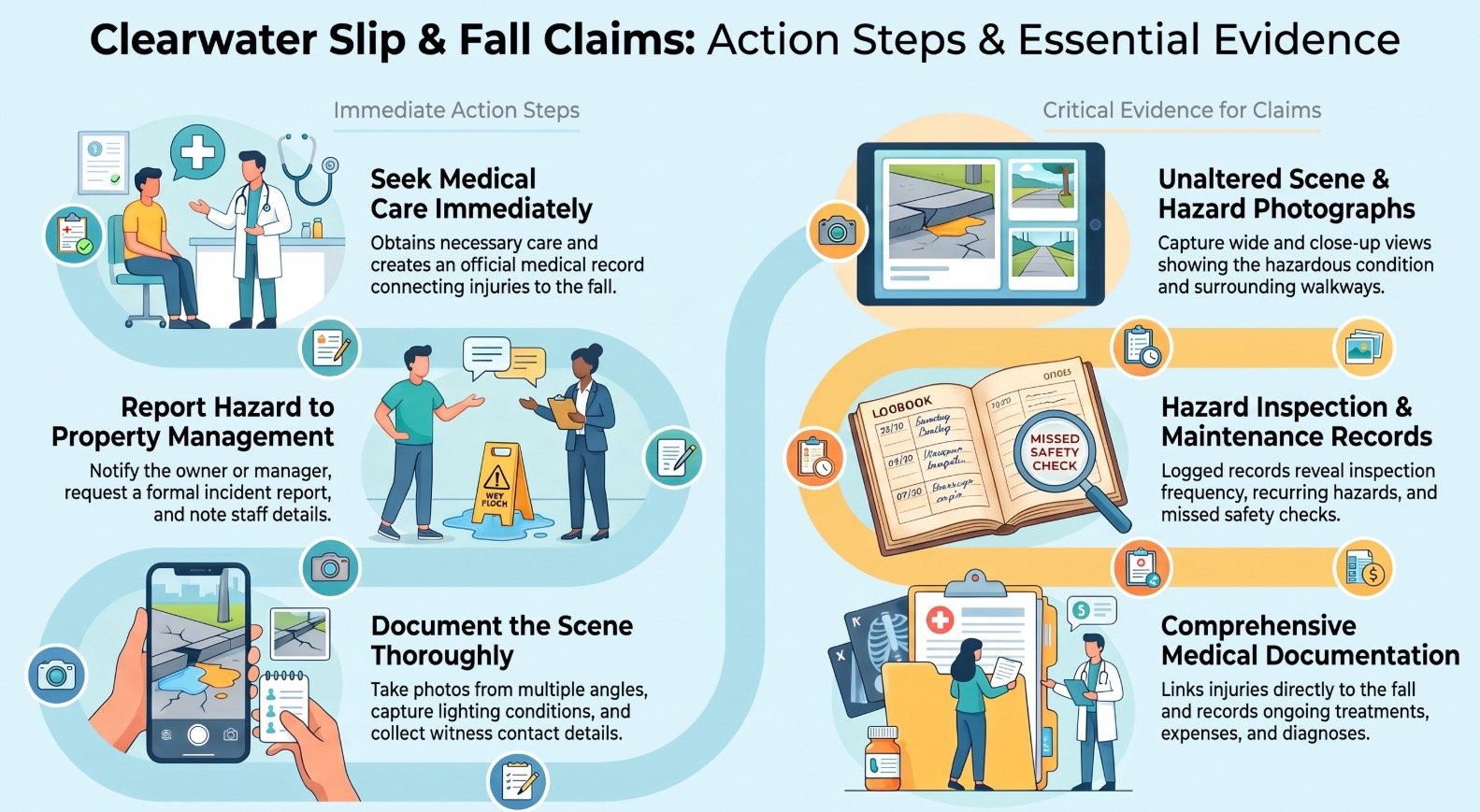
After a Clearwater slip and fall, we recommend seeking medical care promptly, even if your injuries seem minor. We’ll explain how to report the fall to the property owner or manager and create a clear record of what happened. Document the scene with photographs, witness details, and notes before conditions change.
Seek Medical Care
Seek medical care as soon as possible after a slip and fall, even if your injuries seem minor. Some conditions, including head injuries and fractures, may not cause obvious symptoms right away. Prompt Emergency evaluation can identify hidden harm and help us begin appropriate care before symptoms worsen. If you have severe pain, confusion, difficulty breathing, or heavy bleeding, call 911 or ask someone nearby to get emergency assistance.
Tell the clinician how the fall happened and describe every symptom, including discomfort that seems mild. Follow the recommended care plan, attend follow-up appointments, and take medication only as directed. Adhering to treatment supports recovery and creates a clear medical record of your injuries. Keep copies of discharge instructions, prescriptions, test results, and bills. By prioritizing your health, we can better protect your well-being and support those who depend on you.
Report The Fall
Prompt medical care can address your injuries, and reporting the fall can help create a record of what happened. Promptly notify the property owner, manager, or another responsible representative, even if you believe your injuries are minor. If you fell at a business, ask staff to complete an incident report and provide the name of the person who received your report. Describe when and where the fall occurred, along with the circumstances you recall, and keep your account factual. Request a copy of the report or written confirmation that you reported the incident. If no representative is available, contact the business or property owner as soon as possible using a reliable method. We can help make your report clear and timely, while you focus on recovery and your responsibilities.
Document The Scene
If you can do so safely, document the scene as soon as possible, before conditions change or evidence disappears. Use your phone to photograph the hazard from several angles, including the surrounding area and any warning signs, or their absence. Capture details such as spilled liquid, uneven flooring, poor lighting, or obstructed walkways. This documentation can show the conditions that existed when you fell.
If witnesses saw the incident, ask for their names and contact information, and note what they observed. Preserve relevant items, including the shoes and clothing you wore, without cleaning or altering them. Report the hazard to a manager or property representative, and ask them to preserve surveillance footage and incident records. These steps help preserve the scene and may protect others from the same dangerous condition. Keep copies of your photographs and notes.
Critical Evidence in a Clearwater Slip & Fall Injury Case
We can strengthen your Clearwater slip and fall claim by preserving evidence that shows how the hazard caused your injuries.
Focus on these three categories:
- Scene photos and witnesses’ contact details
- Surveillance footage from nearby cameras
- Medical records and reports documenting your injuries
Incident Scene Photos
Because hazardous conditions can change or disappear quickly, accident scene photos may provide vital evidence in a Clearwater slip and fall case. If you can do so safely, photograph the area soon after the fall, before anyone cleans, repairs, or moves anything. Capture the hazard from several Photo angles, including close views that show details and wider views that establish its location and surroundings. Photograph warning signs, lighting, flooring, and any objects that may have contributed to the incident. We also recommend preserving the original files rather than editing or compressing them. Image metadata may help establish when and where a photograph was taken, so keep the files intact and backed up. These images can help us assess what happened and explain the conditions to insurers or a court.
Witness Contact Details
Photographs can document the hazard, while witnesses may provide independent accounts of how the fall happened and what the area looked like beforehand. If someone saw your fall or noticed the unsafe condition, we encourage you to request their name and reliable contact details promptly. Witness phone numbers and email addresses help us follow up while memories are still clear. Ask each person what they observed, when they noticed the hazard, and whether they saw anyone report it to staff. Record their words accurately, without suggesting answers or pressuring them to take sides. A witness may be a customer, employee, or passerby who wants to help establish what occurred. We can contact witnesses respectfully, preserve their accounts, and assess how their information may support your claim.
Surveillance Video Footage
When a fall occurs in a business or other public place, surveillance video may capture the incident and the conditions leading up to it. We can use footage to show how long a hazard remained, whether employees noticed it, and what steps they took. Video may also clarify the sequence of events and support witness accounts.
We should act quickly because businesses often overwrite recordings or retain them only briefly. A written preservation request can ask the property owner to save relevant footage before it disappears. We can also examine camera coverage to identify views of the fall area, nearby entrances, and staff activity. Not every camera records continuously, and some angles may leave gaps. By securing and promptly reviewing available footage, we can better assess what happened and help determine whether the property owner failed to address a dangerous condition.
Medical Records and Reports
Medical records and reports provide a detailed account of the injuries you suffered in a Clearwater slip and fall, the treatment you received, and how your condition changed over time. We use these documents to connect the incident to your injuries and show how they affected your daily life.
Provider notes may record your symptoms, examination findings, diagnoses, and recommended care. Collectively, these details help establish a treatment chronology, from your first evaluation through follow-up visits, therapy, or specialized care. Consistent records can support your account, while gaps or conflicting information may raise questions that insurers could use to challenge your claim.
We review records carefully, identify relevant evidence, and, when appropriate, help you obtain missing documents. By organizing this information, we can present a clear, accurate picture of your medical needs and the support required for recovery.
Long-Term Effects of Clearwater Slip & Fall Injuries
A Clearwater slip and fall can cause effects that continue long after the initial injury recovers. We’ll examine how chronic pain and lasting mobility issues may disrupt daily activities and independence. We’ll also consider the emotional and financial strain these ongoing challenges can place on you and your family.
Chronic Pain
How long will pain last after a slip and fall? The answer depends on the injury, your health, and the care you receive. Some soreness fades within days, while soft tissue, joint, or nerve damage may cause pain for months or longer. We can help you understand how persistent symptoms may affect your daily responsibilities and what documentation may support a claim.
Chronic pain can interfere with work, family obligations, and service to others. Sleep disruption may leave you fatigued and make ordinary demands harder to manage. Follow your clinician’s recommendations, attend appointments, and keep a record of symptoms, treatments, and related expenses. Effective Pain management may require ongoing medical care, and consistent records can help show how the injury continues to affect your life. We can explain your legal options.
Lasting Mobility Issues
When a slip and fall damages the bones, joints, or nerves, lasting mobility problems may affect your ability to walk, climb stairs, or complete daily tasks. We can help you understand how these limitations may shape your recovery and what support may be appropriate. Your care team might recommend physical therapy, assistive devices, or home modifications, such as grab bars and ramps, to improve safety and independence. These changes can help you continue serving your family and community while adapting to new physical needs. Keep records of treatment, mobility restrictions, and recommended equipment, and follow your providers’ instructions. If your injury prevents you from returning to familiar activities or requires ongoing assistance, we can explain how documentation may help establish the fall’s lasting effects and support a claim for appropriate compensation.
Emotional and Financial Strain
Persistent pain or limited mobility can affect more than physical independence; it may also create emotional and financial strain. When recovery limits work or daily activities, we may lose income while facing medical bills, rehabilitation costs, and transportation expenses. These pressures can disrupt a Household budget and make it harder to support family members or continue serving others in our community.
Injury can also bring frustration, anxiety, or isolation, particularly when progress is slow. We can support emotional resilience by setting realistic recovery goals, staying connected with trusted people, and seeking professional help when distress persists. A clear record of expenses and changes in our ability to work can help us understand the injury’s broader impact. With informed legal guidance, we can evaluate available options and focus on recovery without overlooking the long-term consequences of a Clearwater fall.
Proving Liability in Clearwater Slip & Fall Injury Cases
To prove liability in a Clearwater slip and fall case, we must show that a property owner or another responsible party failed to use reasonable care and that this failure caused your injuries. We’ll investigate who controlled the location, since Property ownership alone may not establish responsibility. A tenant, manager, or maintenance contractor could also have had a duty to address unsafe conditions.
Evidence can reveal how the hazard formed and whether the responsible party knew, or reasonably should have known, about it. Hazard duration matters: a spill left unattended for an extended period may support notice, while a newly created danger may require other proof. We can review incident reports, inspection records, photographs, surveillance footage, and witness accounts to build a clear timeline.
Your medical records can connect the fall to your injuries and document their effects. By carefully gathering and preserving evidence, we can present your experience accurately and seek accountability from those whose choices put others at risk.
Don’t Wait. Call Our Florida Personal Injury Lawyers Now!
Dealing With Insurance Companies After a Clearwater Slip & Fall Injury
After a Clearwater slip and fall, an insurance adjuster may contact you to discuss the incident and assess your claim. We can help you handle these conversations carefully, protect your interests, and focus on your recovery.
Adjusters may ask for details about the hazard, your injuries, and prior medical conditions. Answer truthfully, but don’t guess or minimize your pain. Before providing Recorded Statements, consider speaking with a lawyer. A statement made before you understand your injuries or have reviewed the facts could be used to challenge your account.
Answer truthfully, avoid guessing, and consider speaking with a lawyer before providing a recorded statement.
Keep copies of messages, letters, and any documents you share. Don’t sign a release or accept a payment without understanding what rights you may be giving up. If the insurer questions responsibility, delays communication, or issues Claim Denials, we can review its explanation and discuss available options.
Our goal is to help you respond with care and clarity, so you can make informed decisions while preserving the evidence and support your claim may need.
What to Expect During a Clearwater Slip & Fall Injury Claim Process
We’ll begin with an initial case review to assess your claim and identify the issues that may affect its outcome. Next, we’ll gather evidence and negotiate a settlement with the responsible parties and their insurers. If negotiations don’t resolve the claim, we’ll explain what to expect as it moves to court proceedings.
Initial Case Review
What happens during an initial case review of a Clearwater slip and fall claim? We’ll begin by listening to your account and understanding how the fall affected your health, work, and daily responsibilities. This conversation helps us identify your priorities and explain how a claim may support your recovery while holding a responsible party accountable.
We’ll assess case eligibility by considering whether the property owner or another party may have failed to meet a legal duty and whether that failure may have caused your injury. We’ll also discuss treatment, expenses, potential damages, and any deadlines that could affect your options. You can ask questions and raise concerns about serving your family or community while you recuperate.
The review timeline depends on the claim’s circumstances. We’ll outline next steps and communicate clearly before you decide how to proceed.
Evidence Collection
Evidence collection helps establish how the fall occurred, who may be responsible, and how the injury has affected you. We’ll guide you through gathering reliable records while you focus on recovery and your responsibilities to others.
Prompt action matters because businesses may clean spills, repair hazards, or replace damaged items. Evidence preservation can include requesting surveillance footage, retaining incident reports, and keeping the shoes and clothing you wore. We’ll also help identify witnesses and obtain their contact information before memories fade.
Hazard documentation may include photographs of the area, lighting, warning signs, and the substance or obstruction that caused your fall. Seek medical care promptly and keep records of appointments, bills, and provider instructions. These materials can show how the injury developed and affected daily activities. We’ll organize the evidence, assess gaps, and take appropriate steps to protect relevant information.
Settlement Negotiations
Once we’ve assessed the evidence and the extent of your injuries, we can begin settlement negotiations with the insurer. We’ll prepare a detailed demand explaining how the fall occurred, identifying the responsible party, and documenting your medical costs, lost income, and other losses. A careful Demand evaluation helps us determine a fair amount based on the available evidence and your recovery needs. The insurer may accept, reject, or respond with a lower offer. We’ll review each response with you, explain its implications, and develop a counteroffer strategy grounded in the facts rather than pressure to settle quickly. Throughout negotiations, we’ll keep you informed and consider how a resolution may affect your family and ability to serve others. We won’t recommend accepting an offer unless it reasonably addresses your documented damages and future needs.
Court Proceedings
If settlement negotiations don’t resolve your Clearwater slip-and-fall claim, we may need to file a lawsuit and present your case in court. We’ll guide you through each stage, from filing the complaint and exchanging evidence to preparing testimony and attending hearings. The court may set deadlines for documents, depositions, and other pretrial steps, so we’ll help you stay organized and respond promptly. If your case proceeds to trial, Jury selection allows both sides to question potential jurors and identify conflicts that could affect fairness. We’ll prepare you to explain what happened clearly and answer questions honestly. Following courtroom etiquette, including arriving on time and addressing the judge respectfully, helps maintain a professional setting. We’ll advocate for accountability while you focus on your recovery and responsibilities.
Compensation for Clearwater Slip & Fall Injury Damages
A slip and fall injury in Clearwater can lead to compensation for medical expenses, lost income, reduced earning capacity, and pain and suffering. We can help you document how the fall affected your health, work, and daily responsibilities, then pursue evidence-supported damages. Keep medical records, wage information, photographs, and communications with the property owner; these materials can help establish the scope and cause of your losses.
The amount available depends on the facts, the severity of your injuries, and the insurance coverage involved. Florida law may limit recovery in certain circumstances, so we’ll assess whether Damage caps apply to your claim. If a loved one died after a fall, eligible family members may pursue a wrongful death claim for losses recognized by law. We’ll explain your options, address insurer challenges, and seek fair compensation while you focus on recovering and supporting those who depend on you. You don’t have to navigate this process alone.
Economic vs Non-Economic Damages in Clearwater Slip & Fall Cases
We’ll distinguish economic damages, such as medical bills and lost income, from non-economic damages, including pain and reduced quality of life. To assess what your Clearwater slip and fall claim may cover, we’ll consider how the injury has affected you. We’ll also explain how records and other evidence can help prove your losses.
Economic Damages
Economic damages cover measurable financial losses from a slip and fall, such as medical bills, lost wages, and future treatment costs. We help you identify expenses directly tied to the incident and organize records showing their amount and cause. These may include emergency care, rehabilitation, prescription medication, medical equipment, and transportation to appointments. If your injuries prevent you from working, Lost wages may include income you missed during recovery, supported by pay records or employer documentation. When an injury limits your ability to earn income in the future, Reduced earning capacity may also be considered. We can work with you to gather medical opinions and employment evidence that explain these financial effects. Careful documentation helps us present a clear, supported claim and seek compensation for losses you’ve incurred or reasonably expect.
Non-Economic Damages
The effects of a slip and fall can extend beyond the financial losses we can document. Non-economic damages address the personal impact of an injury, including physical pain, emotional distress, and changes to daily life. Unlike medical bills or lost wages, these losses don’t have a set price, but they can still matter greatly to your recovery.
An injury may limit your ability to care for family, contribute to your community, or take part in activities that once brought purpose and connection. Loss of enjoyment can also affect relationships and routines, even when the injury appears modest to others. We recognize that these effects are personal and may persist after treatment ends. By considering the full impact of your fall, we can better understand what fair compensation should account for.
Proving Your Losses
To support a slip and fall claim in Clearwater, we need to show how the injury affected you and connect those effects to the fall. We can document economic losses with medical bills, pharmacy receipts, pay records, and employer statements. Lost wages may include income you missed while recovering, while future expenses can cover reasonably anticipated treatment, rehabilitation, or necessary assistance. Medical opinions and treatment plans can help explain those expected costs.
We also need to establish non-economic harm, such as pain, limited mobility, anxiety, or loss of activities you value. Your treatment records, personal account, and statements from people who have seen the changes in your daily life can support this evidence. By organizing reliable records and clearly explaining each loss, we can present a fuller picture of what you’ve endured and what recovery may require.
When a Clearwater Slip & Fall Injury Case Goes to Trial vs. Settlement
When a Clearwater slip and fall claim can’t be resolved through settlement, we may need to present the case at trial. We’ll help you weigh whether continuing negotiations or going to trial offers the clearest path forward. Settlement can provide a defined outcome and avoid the uncertainty, time, and demands of trial. It may also let you focus sooner on recovery and the people who depend on you.
At trial, we present evidence, question witnesses, and explain how the incident affected your life. You’ll need to participate and answer questions, but we’ll prepare you for each step and keep you informed. After closing arguments, the jury begins Jury deliberation and evaluates the evidence. A jury verdict can award compensation, but no result is guaranteed, and an appeal or collection issues may follow.
We’ll discuss the risks and potential benefits of each option with you. Our goal is to support an informed decision that reflects your needs and priorities.
Florida Laws That May Affect Your Clearwater Slip & Fall Case
Florida law sets important rules for proving a slip and fall claim in Clearwater, including what you must show about the property owner’s knowledge of a dangerous condition. We can help you understand how these requirements apply and present evidence that supports your account.
- Show notice. Under Florida’s Premises liability statutes, you generally must establish that the owner or operator knew about the hazard or that it existed long enough for them to discover it through reasonable care. Photos, incident reports, and witness statements may help.
- Explain the danger. We’ll examine whether the condition posed an unreasonable risk and whether the property owner took reasonable steps to inspect, repair, or warn visitors. Clear evidence can help show how the hazard caused your injury.
- Address your share of fault. Florida’s comparative negligence rules may reduce compensation if your actions contributed to the fall. We can assess the evidence and respond to arguments that you failed to notice or avoid the danger, while keeping your needs and recovery central.
The Statute of Limitations for Clearwater Slip & Fall Injury Cases
Even if you can establish that a property owner knew about a hazard, you must file your Clearwater slip and fall claim within Florida’s legal deadline. For most negligence claims, Florida law generally allows you to file a lawsuit within two years of the injury. Missing that deadline can prevent you from seeking compensation, even when your injuries are serious, and the evidence supports your account.
Deadline calculation depends on the facts and the applicable law. The clock usually starts on the date you fell, not when you finish treatment or learn the full cost of your injuries. We encourage you to preserve your ability to pursue accountability by noting the incident date and acting promptly.
Some statutory exceptions may change the filing period, including rules that apply to minors or cases involving delayed discovery. Different deadlines may govern claims against government entities, which can require earlier notice. These rules are fact-specific, so we shouldn’t assume an exception applies. Confirming the correct deadline early helps protect your rights and supports a fair resolution.
How a Clearwater Slip & Fall Lawyer Can Help You
A Clearwater slip and fall lawyer can investigate the hazard, preserve evidence, and assess who may be legally responsible for your injuries. We can explain your options clearly and help you pursue fair compensation without losing sight of your recovery or responsibilities to others.
A Clearwater slip and fall lawyer can preserve evidence, assess responsibility, and explain your options while you focus on recovery.
We may support your case by:
- Gathering proof: We can request incident reports, review available video, interview witnesses, and document unsafe conditions before evidence disappears.
- Managing communications: We can handle discussions with insurers, organize medical records, and present a supported account of how the fall affected your health, work, and daily life.
- Evaluating resolution: We can compare settlement offers with documented losses and explain the risks of accepting or continuing negotiations, so you can make an informed decision.
During legal consultation preparation, bring relevant records, photographs, and questions about your case. We’ll also explain Lawyer fee structures, including how fees and case expenses may apply, so you understand the financial arrangement before deciding how to proceed.
Don’t Wait. Call Our Florida Personal Injury Lawyers Now!
When to Contact a Clearwater Slip & Fall Lawyer
Contact a Clearwater slip and fall lawyer promptly after a fall if you’ve suffered an injury, the property owner disputes responsibility, or an insurer asks you to provide a statement. Early legal consultation can help us identify important deadlines and explain what information to preserve while details remain clear. Seek advice even if your symptoms seem minor; some injuries become apparent later, and timely medical care can document your condition.
Contact us before signing a release, accepting a settlement, or giving a recorded statement. We can review requests and help you understand their potential effect on your claim. If you’re unsure whether the incident warrants legal guidance, a brief conversation can clarify your options without requiring you to make an immediate decision.
Attorney selection timing matters because waiting may make evidence harder to locate or witnesses more difficult to reach. When you contact us, share the fall’s date, location, available photographs, and any correspondence. We’ll discuss practical next steps and help you pursue a fair resolution.
Why You Need an Experienced Clearwater Slip & Fall Lawyer
When a fall causes serious injuries or the property owner disputes responsibility, an experienced Clearwater slip and fall lawyer can help protect your claim. We can investigate how the hazard developed, identify who controlled the property, and preserve evidence before it disappears. Photos, inspection records, maintenance logs, and witness accounts may clarify what happened and support your account.
Experience matters because these cases often involve disputed facts, insurance defenses, and detailed legal requirements. We can assess whether the property owner knew or should have known about the dangerous condition and explain how Florida law may apply. Our local knowledge can help us understand area courts, common property settings, and the practical steps needed to pursue a claim in Clearwater.
While you focus on treatment and recovery, we can handle communications with insurers and seek documentation of your losses. By building a clear, evidence-based case, we help you pursue fair compensation and hold responsible parties accountable, protecting your ability to move forward.
How to Choose the Right Clearwater Slip & Fall Lawyer for Your Case
Choosing the right Clearwater slip and fall lawyer means looking beyond experience alone. Consider how clearly a lawyer explains your options, responds to questions, and treats you throughout the process. A dependable attorney listens carefully, recognizes how an injury can affect daily life, and keeps our goals in mind.
Review Lawyer credentials, including licensing, relevant case experience, and any disciplinary history. We can also ask how the lawyer investigates hazards, gathers records, and works with medical providers to document our losses. Clear answers help us judge whether the attorney can manage the practical demands of our claim.
Before deciding, discuss fee structures and confirm how costs, case expenses, and payment are handled. We should request the terms in writing and ask what happens if the case doesn’t succeed. Compare communication practices and proposed next steps, not promises of a particular outcome. By asking focused questions, we can choose counsel who respects our concerns and helps us pursue fair accountability.
About The Law Offices of Anidjar & Levine
At The Law Offices of Anidjar & Levine, we represent people injured in slip-and-fall accidents and help them understand their legal options. We understand a sudden injury can disrupt your health, income, and family responsibilities. Our team works to provide clear guidance, respond to your concerns, and pursue compensation supported by the facts of your case.
Our firm’s history reflects a commitment to helping injured people seek accountability and fair treatment. We review each fall’s circumstances, identify potentially responsible parties, and gather evidence such as incident reports, photographs, and witness statements. We also explain the legal process so you can make informed decisions at each stage.
You can review our attorney profiles to learn about the lawyers who may handle your claim and their professional backgrounds. When you contact us, we’ll discuss your concerns, assess available information, and outline possible next steps. We aim to provide attentive communication and focused representation.

Frequently Asked Questions
Can I File a Claim if I Fell at a Friend’s Home in Clearwater?
Yes, you may be able to file a claim if you fell at a friend’s home in Clearwater. We can help you assess whether a hazardous condition caused your injury and whether your friend knew, or reasonably should’ve known, about it. Your visitor status, the circumstances of the fall, and the available evidence may affect who is responsible. Homeowner insurance may cover eligible claims, but coverage and liability depend on the specific facts and policy terms.
What if My Child Was Injured in a Clearwater Slip and Fall?
If your child was injured in a slip and fall, we can help you assess whether unsafe conditions or inadequate supervision contributed to the incident. School playground liability may depend on who controlled the property and whether responsible parties took reasonable steps to address hazards. We’ll review available evidence, explain your options, and pursue child injury compensation when the facts support a claim. Promptly document the scene, injuries, and treatment, and preserve relevant records.
Can I Pursue a Claim After Falling at a Clearwater Hotel or Resort?
Yes, we can help you pursue a claim after a fall at a Clearwater hotel or resort if unsafe conditions caused your injury. Hotels and resorts must take reasonable steps to inspect their premises, address hazards, and warn guests. Evidence of inadequate hotel maintenance may support a resort liability claim, but responsibility depends on the circumstances. We can review incident reports, photographs, witness accounts, and medical records to assess your options and protect your ability to seek compensation.
Does a Store’s Incident Report Prove Who Was Responsible for My Fall?
A store’s incident report can document your fall, but it doesn’t prove who was responsible. We’ll assess its Accuracy by comparing the report with photographs, surveillance footage, witness statements, and maintenance records. The report may omit hazards or contain errors, so we shouldn’t treat it as conclusive. Prompt Evidence Preservation matters: we can request relevant records and identify witnesses before information disappears, helping establish what happened and whether the store failed to act reasonably.
Can I Recover Damages if I Fell While Using a Mobility Aid?
Yes, you may recover damages if someone’s negligence caused your fall, even while you were using a mobility aid. We can assess whether unsafe conditions, inadequate warnings, or a failure to provide reasonable access contributed to your injuries. Mobility aid safety does not automatically determine responsibility. To pursue fall injury damages, document the hazard, report the incident, preserve medical records, and seek legal guidance promptly, since deadlines and evidence can affect your claim.
—————————
A slip and fall can leave you facing medical expenses, lost income, and uncertainty about what comes next. The Law Offices of Anidjar and Levine can review what happened, explain your legal options, and help you pursue compensation supported by the evidence. If you were injured on someone else’s property in Clearwater, contact us to discuss your claim. Acting promptly can help preserve important records and witness accounts, give us time to assess your case, and protect your rights. Learn more from a Clearwater Personal Injury Lawyer.