

A Boca Raton floor and surface injury lawyer from The Law Offices of Anidjar and Levine can evaluate whether property owners, occupiers, or managers failed to inspect, maintain, repair, or warn about dangerous conditions.
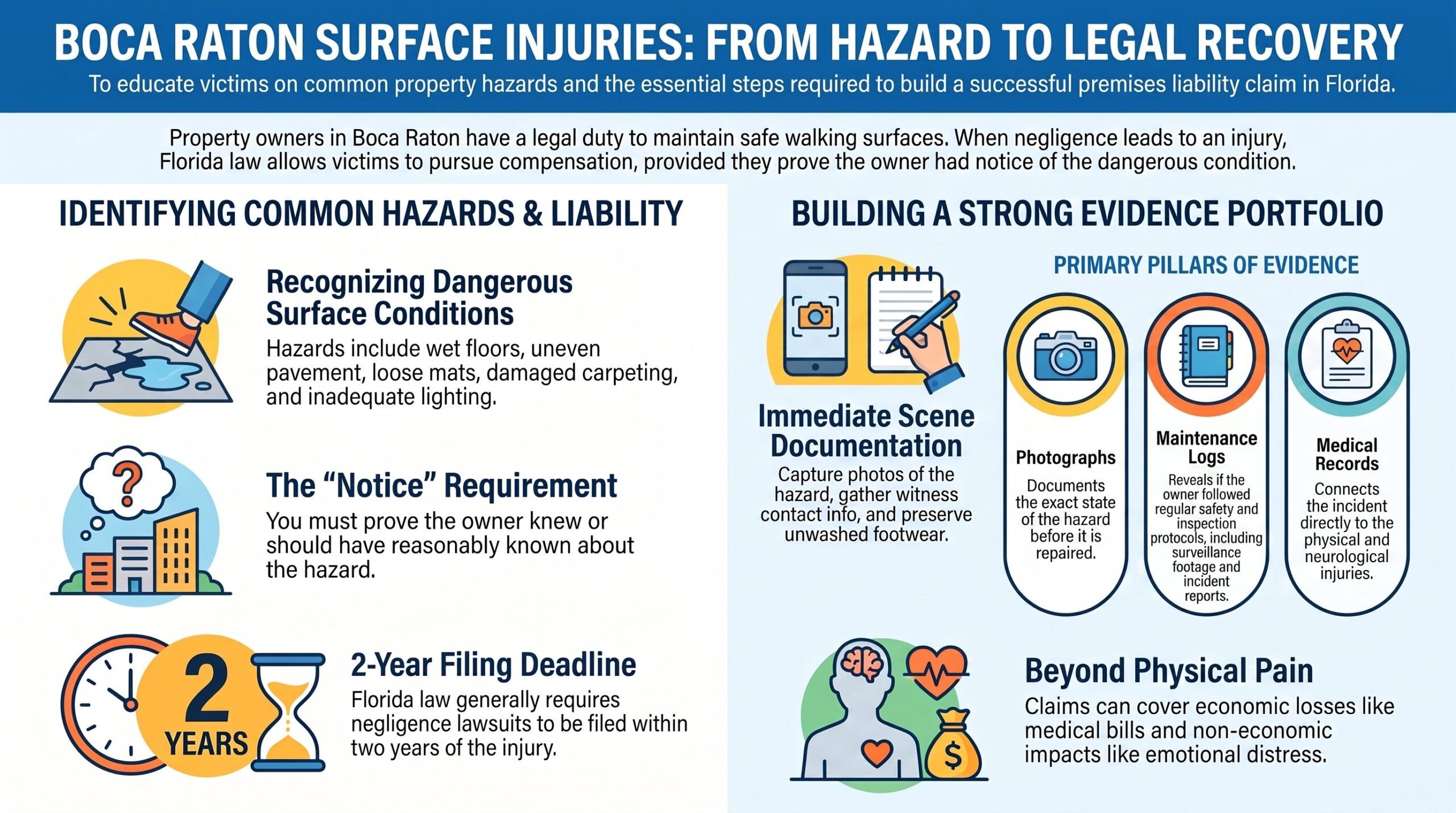
Potential hazards may include wet floors, uneven pavement, loose mats, damaged carpeting, and inadequate lighting.
Florida negligence claims generally require proof of duty, breach, causation, and damages, while comparative fault may affect recovery.
Evidence can include photographs, surveillance footage, witness statements, maintenance logs, medical records, and documented financial losses.
Learn more by consulting a Boca Raton Personal Injury Lawyer about how these claims are investigated and pursued.
Main Takeaways
- A Boca Raton floor and surface injury lawyer evaluates whether negligent property owners, occupiers, or managers caused your fall.
- Florida premises liability claims require proving duty, dangerous conditions, notice, causation, and damages.
- Lawyers investigate wet floors, uneven surfaces, inadequate warnings, poor maintenance, and defective construction.
- Evidence may include photographs, surveillance footage, incident reports, maintenance logs, witness statements, and medical records.
- Legal assistance can address insurance denials, comparative negligence allegations, medical expenses, lost income, and settlement negotiations.


How We Can Help With Your Boca Raton Floor & Surface Injury Claim
A Boca Raton floor and surface injury lawyer can evaluate the circumstances surrounding a fall, identify potentially liable parties, and pursue compensation for resulting losses. The legal team may provide attentive guidance while preserving evidence, documenting injuries, and communicating with insurers on the injured person’s behalf.
Counsel can examine available Slip and Fall Coverage, assess applicable policy provisions, and address attempts to minimize or deny a valid claim. The lawyer may also help establish how property conditions contributed to the incident, organize medical records, and calculate losses involving treatment, income, and other documented expenses.
Understanding Negligence Standards is crucial when determining whether a property owner, business, contractor, or another party failed to act reasonably. A lawyer can investigate notice, maintenance practices, warnings, and inspection procedures without placing that burden on the injured individual.
Through informed representation, the legal team can pursue a fair resolution, protect important deadlines, and support the client’s ability to focus on recovery and family responsibilities.
OUR CONSULTATIONSARE FREE
START YOUR FREE CASE REVIEW

Understanding Boca Raton Floor & Surface Injury Cases
Understanding Boca Raton floor and surface injury cases requires examining how a hazardous condition developed, whether a responsible party knew or should have known about it, and how the condition caused the resulting harm. These cases generally focus on the duty owed to an injured person and whether reasonable inspection, maintenance, or corrective action should have occurred.
Evidence may include photographs, incident reports, surveillance footage, medical records, witness accounts, and property inspection histories. Such information can help establish timing, notice, causation, and the extent of claimed losses. Florida negligence standards may apply differently depending on the property’s ownership, the injured person’s lawful status, and the circumstances surrounding the incident.
Comparative fault rules may also affect recovery if the injured person’s conduct is alleged to have contributed to the event. A careful evaluation considers disputed facts, applicable legal duties, and available insurance coverage. This process supports informed decisions and helps protect the interests of those seeking accountability and meaningful assistance.
Common Causes of Boca Raton Floor & Surface
Common floor and surface hazards often arise from wet or slippery floors, uneven walking surfaces, and inadequate lighting conditions. Defective floor materials may also create dangerous conditions, particularly when they crack, loosen, or fail to provide sufficient traction. Identifying the specific cause is crucial when assessing responsibility for an injury.
Wet And Slippery Floors
When water or another liquid accumulates on a walking surface, it can markedly reduce traction and create a hazardous condition for pedestrians. Common sources include spilled beverages, leaking refrigeration equipment, tracked-in rainwater, cleaning solutions, and plumbing failures. Businesses and property managers should select flooring with appropriate slip resistance and maintain surfaces in accordance with manufacturer guidance. Prompt inspection and cleanup are crucial, particularly near entrances, restrooms, pools, and food-service areas.
Where a hazard cannot be immediately corrected, visible signage warnings and physical barriers can alert visitors and help prevent injury. Effective safety protocols should assign employees responsibility for monitoring vulnerable areas, documenting inspections, and responding without delay. Clear hazard reporting procedures also enable workers and patrons to promptly report dangerous conditions, supporting a safer environment for everyone using the premises.
Uneven Walking Surfaces
Uneven walking surfaces can develop when cracked pavement, raised floor tiles, deteriorated carpeting, loose mats, or poorly maintained transitions create changes in elevation that disrupt a person’s stride. These conditions may cause a foot to catch, shift unexpectedly, or lose stable contact with the ground. Parking lot risks include broken asphalt, pothole edges, uneven concrete, and poorly aligned drainage covers. Tire tread hazards may arise when abandoned tire fragments, deep impressions, or displaced debris interfere with a pedestrian’s path.
Property owners, businesses, and maintenance personnel generally have a responsibility to inspect walking areas, correct hazardous defects, and provide reasonable warnings when repairs cannot be made promptly. Careful documentation of the surface, location, and surrounding conditions may help clarify how an incident occurred and whether appropriate safety measures were followed.
Poor Lighting Conditions
Poor lighting conditions can conceal changes in floor elevation, wet areas, debris, damaged surfaces, and other hazards that may cause a person to trip or lose balance. In commercial buildings, residences, parking areas, and walkways, inadequate illumination may prevent visitors from recognizing slip hazards before an incident occurs. Burned-out bulbs, obstructed fixtures, poorly positioned lighting, and insufficient illumination near stairs or entrances can make ordinary navigation unnecessarily dangerous.
Property owners, managers, and other responsible parties should inspect lighting regularly and promptly address any deficiencies. Clear warning signs should supplement, not replace, adequate lighting when hazards cannot be removed immediately. Maintaining visible paths supports safer access for customers, residents, employees, and guests. When poor visibility contributes to a fall, incident records, photographs, maintenance logs, and witness accounts may help establish how the condition developed and whether reasonable precautions were taken.
Defective Floor Materials
Defective floor materials can create hidden or recurring hazards that increase the likelihood of slips, trips, and falls in homes, businesses, parking facilities, and public walkways. Cracked tiles, warped boards, loose carpeting, uneven passages, and deteriorating concrete may result from poor manufacturing, improper installation, inadequate maintenance, or the use of unsuitable materials. Some surfaces become especially dangerous when exposed to water, grease, weather, or heavy foot traffic. Property owners and managers may have a duty to select appropriate products, arrange timely repairs, and warn visitors about known risks.
Slip-resistant coatings can reduce hazards when properly applied, but they do not correct structural defects or negligent installation. Building inspection reports, maintenance records, product specifications, and photographs may help identify when a dangerous condition developed and whether responsible parties had notice. Injured individuals may seek guidance regarding available legal remedies.
Don’t Wait. Call Our Florida Personal Injury Lawyers Now!


Legal Rights of Boca Raton Floor & Surface Injury Victims
When a hazardous floor or surface condition causes an injury, Boca Raton victims may have the right to seek compensation from the party responsible for maintaining the property. Premises Liability law may apply when an owner, occupier, or manager fails to address a dangerous condition or provide adequate warning. Florida Negligence principles generally require proof of duty, breach, causation, and damages.
Victims can protect their interests by taking practical steps:
- Obtain prompt Medical Treatment and follow recommended care.
- Preserve photographs, witness information, incident reports, and other Evidence Collection materials.
- Consult a qualified attorney before providing statements or accepting a settlement.
Potential compensation may include medical expenses, lost income, rehabilitation costs, pain and suffering, and other legally recognized losses. Time limits can restrict when a claim may be filed, making timely legal guidance important. A careful review of records and circumstances can help determine available remedies while supporting a fair resolution for the injured person. Serving victims requires accurate information, respectful advocacy, and diligent protection of their rights.
Why Do Boca Raton Floor & Surface Injuries Happen?
Boca Raton floor and surface injuries commonly result from hazardous conditions that property owners, occupiers, or managers failed to correct or adequately disclose. Slip hazards may include spilled liquids, uneven flooring, loose mats, broken tiles, inadequate lighting, or poorly maintained walkways. These conditions can develop through negligent maintenance, defective design, construction problems, or insufficient warnings.
Under premises liability principles, responsibility may depend on whether the responsible party knew, or reasonably should have known, about the danger and had sufficient opportunity to address it. Weather-related moisture, cluttered aisles, and unsafe passages between surfaces can also create substantial risks in commercial and residential settings.
In some cases, injured individuals may face allegations of comparative negligence, particularly when a property owner claims that personal inattention contributed to the incident. Disputes may involve inspection records, surveillance footage, maintenance policies, and witness credibility. Careful evaluation of these factors helps determine how the hazardous condition arose and whether the responsible party breached a duty of reasonable care.
What Should You Do After a Boca Raton Floor & Surface Injury?
After a Boca Raton floor or surface injury, the injured person should seek immediate medical care, even if symptoms initially appear minor. The accident scene should be documented through photographs, witness information, and written observations when circumstances permit. Consulting a Boca Raton lawyer can help preserve evidence, evaluate potential liability, and protect the injured person’s legal rights.
Seek Immediate Medical Care
Prompt medical evaluation is essential following a fall or surface injury, even if the person initially believes the condition is minor. A qualified healthcare professional can identify fractures, sprains, head trauma, or soft-tissue damage that may not produce immediate, obvious symptoms. Timely treatment can support recovery, establish an appropriate recovery plan, and create medical records describing the injury and its apparent cause.
The injured person should follow discharge instructions, attend recommended follow-up appointments, and report worsening pain, dizziness, swelling, weakness, or other concerning changes without delay. Preventive safety remains important after treatment; property operators should pursue incident prevention through proper signage, prompt hazard correction, and regular maintenance checks. These measures can protect visitors and employees while reducing the likelihood of similar injuries in the future.
Document The Accident Scene
When conditions permit, the injured person or a witness should document the accident scene as soon as possible, before the hazardous condition is altered, repaired, or removed. Photographs should show the entire area, nearby warning signs, lighting, flooring, stairs, and the specific substance or defect that caused the fall. Close-up images can capture texture, moisture, debris, uneven surfaces, or damaged materials, while wider views establish location and context. Witnesses’ documentation should include names, telephone numbers, and brief accounts of what each person observed.
The injured person should preserve relevant clothing and footwear without cleaning or modifying them. Notes should record the date, time, weather, exact location, symptoms, and statements made by employees or property representatives. Accurate records support clarity and help prevent disputed insurance claim tactics from obscuring crucial facts.
Consult A Boca Raton Lawyer
Consulting a Boca Raton floor and surface injury lawyer can help an injured person understand available legal options and protect important evidence. A lawyer can evaluate whether premises liability principles apply, identify potentially responsible parties, and explain how property owners’ duties may affect the claim. During an initial meeting, attorney consultation ideas include bringing medical records, photographs, incident reports, witness information, insurance correspondence, and a detailed account of the event.
These materials support evidence-gathering steps and may help establish the dangerous condition, notice, causation, and resulting losses. A qualified attorney can also communicate with insurers and help prevent statements or agreements that could weaken recovery. Finally, statute of limitations basics matter because Florida law imposes deadlines that may bar an otherwise valid claim. Prompt legal guidance supports informed decisions and preserves opportunities to serve the injured person’s interests.
Critical Evidence in a Boca Raton Floor & Surface Injury Case
Critical evidence can establish how a hazardous surface caused an injury and whether the property owner had notice of the condition.
Relevant materials may include:
- Photographs of hazardous conditions and the surrounding area
- Incident reports, medical records, and witness statements
- Property maintenance logs documenting inspections, repairs, or recurring hazards
Together, these records can clarify liability, support the injury claim, and preserve facts that may otherwise become unavailable.
Photos of Hazardous Conditions
Photographs of a hazardous floor or surface can provide critical evidence in a Boca Raton injury case by documenting the condition that allegedly caused the incident. Images may show standing water, uneven flooring, torn carpeting, loose mats, inadequate lighting, or missing warnings. They should capture both close-up views of the hazard and wider images showing its location within the premises. When possible, photographs should be taken promptly from several angles, with an object to establish scale.
Preserving original files and recording when and where each image was taken can support their reliability. Photographs may also reveal whether slip-resistant flooring was absent or visibly damaged. For property owners, proactive maintenance checks and clear documentation may help identify hazards before someone is injured and demonstrate responsible attention to visitor safety.
Incident and Medical Records
Incident and medical records create a structured account of what occurred and the resulting injuries in a Boca Raton floor-and-surface injury case. An incident report may identify the location, the reported hazard, the date, the time, and the immediate response. Medical documentation can establish diagnosis, treatment, symptom progression, work restrictions, and anticipated care. Consistent records help attorneys conduct a focused liability investigation by comparing the reported condition with maintenance practices and safety procedures.
Treatment records may also support Rehabilitation planning, including therapy recommendations, assistive devices, and future medical needs. Accurate documentation can strengthen witness credibility when accounts are evaluated against objective information, without replacing independent testimony. Preserving reports, bills, imaging, prescriptions, and provider notes enables a clearer assessment of damages and assists those seeking appropriate support after a preventable injury.
Witness Statements
When properly documented, witness statements can clarify how a floor or surface hazard appeared, how long it may have existed, and what occurred immediately before and after an injury. Independent accounts may help establish Accident timelines and identify whether warnings, lighting, or surrounding conditions affected the event. A careful scene walkthrough can help witnesses recall positions, pathways, and visibility without encouraging speculation.
Counsel may evaluate witness credibility by considering firsthand knowledge, consistency, neutrality, and the ability to observe relevant details. Statements should be collected promptly because memories can change over time. Investigators also compare accounts with photographs, medical records, and other evidence. Statement inconsistencies do not automatically disprove an account, but they may require clarification regarding timing, distance, perception, or the witness’s relationship to those involved.
Property Maintenance Logs
Property maintenance logs can supplement witness statements by showing how a property owner or manager monitored, inspected, and addressed floor or surface conditions before and after an injury. These records may identify scheduled Safety inspections, employees assigned to evaluate hazards, and corrective measures taken, including cleaning, repairs, warning signs, or restricted access. Entries created before an incident can help establish whether a dangerous condition was known, reasonably discoverable, or overlooked.
Post-incident entries may document when management received notice, preserved evidence, and responded to reported injuries. Incident reports, work orders, inspection checklists, and vendor records can also reveal inconsistencies between claimed safety practices and actual conduct. A careful review may assist a Boca Raton floor and surface injury lawyer in presenting an accurate account and pursuing appropriate support for an injured person.
Don’t Wait. Call Our Florida Personal Injury Lawyers Now!
Long-Term Effects of Boca Raton Floor & Surface Injuries
Long-term floor and surface injuries may cause chronic pain, reduced mobility, and lasting limitations in daily activities. They can also contribute to emotional and psychological effects, including anxiety, frustration, and diminished quality of life. Ongoing medical expenses may include treatment, rehabilitation, medication, assistive devices, and future care.
Chronic Pain and Mobility
Persistent pain and reduced mobility can develop after a person suffers an injury from a hazardous floor or surface in Boca Raton. Symptoms may interfere with walking, standing, lifting, and routine responsibilities, particularly when fractures, ligament damage, or nerve involvement require extended recovery. A medical evaluation can identify lasting limitations and guide physical therapy options to restore strength, balance, and joint function. A provider may also recommend assistive devices, activity modification, and Ergonomic footwear tips to reduce strain during daily movement.
When limitations affect job duties, a workplace accommodation may include modified tasks, additional breaks, or accessible work areas. Documentation of treatment, restrictions, and expected recovery can support insurance claim strategies and help establish the continuing impact of the injury. Ongoing monitoring remains important when pain or mobility loss persists.
Emotional and Psychological Impact
Injuries caused by hazardous floors or surfaces can have emotional and psychological effects that persist even after physical wounds begin to heal. A sudden fall may create traumatic stress, particularly when the person remains uncertain about walking on similar surfaces or returning to familiar places. Anxiety symptoms can include persistent worry, irritability, difficulty concentrating, and heightened alertness to potential hazards. Some individuals experience sleep disturbances, including nightmares or repeated awakenings, which may further affect daily functioning and relationships.
These responses can influence employment, caregiving, social participation, and confidence in routine activities. Recognition from family members, employers, and community supporters can help reduce isolation. Qualified mental health professionals may assist with emotional recovery through counseling and evidence-based coping strategies. Prompt attention to psychological symptoms can support dignity, stability, and meaningful long-term rehabilitation.
Ongoing Medical Expenses
Beyond the psychological effects of a floor or surface accident, ongoing medical expenses may importantly affect an injured person’s financial stability. Treatment can extend beyond emergency care to include expert visits, physical therapy, prescription medication, diagnostic testing, and possible surgery. These costs may continue even when an injured person cannot work or perform ordinary responsibilities. Careful medical billing strategies can help identify inaccurate charges, coordinate insurance payments, and preserve records needed to evaluate future expenses.
Disability documentation may also establish work restrictions, reduced earning capacity, and the continuing need for assistance. A complete financial assessment should account for anticipated treatment, rehabilitation, equipment, transportation, and home modifications. Legal guidance can help preserve evidence and pursue compensation that addresses both current bills and reasonably expected long-term medical needs.
Proving Liability in Boca Raton Floor & Surface Injury Cases
Proving liability in a Boca Raton floor and surface injury case requires establishing that a property owner, occupier, or responsible party failed to maintain reasonably safe conditions or provide adequate warning of a known hazard. Premises liability generally requires showing that the responsible party knew, or should have known, about the dangerous condition and had a reasonable opportunity to correct it. Evidence may include photographs of the surface, surveillance recordings, incident reports, inspection and maintenance records, witness statements, and communications concerning prior complaints.
Prompt evidence preservation is important because video footage may be routinely deleted, hazardous conditions may be repaired, and witnesses’ recollections can diminish. Medical records can connect the incident to documented injuries, while employment records may demonstrate resulting limitations. An attorney may inspect the location, identify responsible entities, and evaluate whether construction, maintenance, or safety standards were disregarded. Establishing these facts helps protect injured individuals and supports accountability for preventable harm.
Dealing With Insurance Companies After a Boca Raton Floor & Surface Injury
When an insurance company is notified of a Boca Raton floor or surface injury, its adjuster may investigate the incident, assess available evidence, and determine whether to accept or dispute liability. The injured person should communicate carefully, provide accurate information, and avoid recorded statements or settlement discussions before understanding the claim’s full value.
Insurance tactics may include requesting broad medical authorizations, emphasizing prior conditions, questioning the duration of treatment, or suggesting that the injured person caused the fall. A clear record of symptoms, medical care, lost income, and continuing limitations can help address these concerns. Photographs, witness information, incident reports, and preservation requests may also support communications with the insurer.
Claim timelines can vary according to investigative needs, medical recovery, policy requirements, and applicable Florida deadlines. Prompt attention helps prevent missed notices or loss of evidence. A Boca Raton floor and surface injury lawyer may communicate with adjusters, evaluate coverage issues, protect the injured person’s interests, and promote a fair resolution while keeping service and accountability central.
What to Expect During a Boca Raton Floor & Surface Injury Claim Process
A Boca Raton floor and surface injury claim generally begins with an initial case evaluation to assess liability, damages, and available legal options. Evidence is then gathered, followed by negotiations with the insurance company to pursue appropriate compensation. If settlement efforts fail, the matter may proceed to trial, where the evidence and legal arguments are presented before a court.
Initial Case Evaluation
An initial case evaluation establishes whether a Boca Raton floor or surface injury claim has a viable legal and factual foundation. A lawyer typically discusses the incident, the claimed injuries, and the location’s ownership or control without yet conducting formal evidence collection. The review considers Case eligibility criteria, including filing deadlines, the injured person’s legal status, and whether a duty of care may have existed.
Counsel may also outline a liability evidence checklist to identify the categories of information that will later require confirmation, such as notice, hazardous conditions, and responsible parties. The evaluation also addresses potential defenses, insurance involvement, and the client’s objectives. After reviewing these issues, the lawyer can explain possible legal options, anticipated challenges, and whether representation would responsibly serve the injured person’s interests.
Gathering Evidence
Following the initial evaluation, evidence gathering begins to establish how the floor or surface condition caused the injury and who may be legally responsible. Counsel may obtain photographs, surveillance footage, incident reports, maintenance records, inspection logs, and witness statements. Medical documentation can connect the reported injuries to the event, while employment and activity records may help measure their practical effects. Expert consultation may be appropriate when evaluating lighting, flooring materials, building codes, warning practices, or maintenance procedures.
Investigators may inspect the location before conditions change and identify owners, tenants, contractors, or other potentially responsible parties. This information supports a focused case strategy and helps preserve relevant facts. Counsel also monitors the insurance timeline and applicable filing deadlines, communicates respectfully with witnesses, and prioritizes the injured person’s needs.
Insurance Company Negotiations
During insurance company negotiations, the insurer typically reviews liability evidence, medical records, claimed losses, and the policy provisions that may affect coverage. The adjuster may evaluate whether premises liability principles apply, examine surveillance footage, and assess witness identification and statements. A claimant may be asked to provide additional documentation, clarify how the incident occurred, or authorize access to relevant medical records. Communications should remain accurate, consistent, and limited to information related to the claim.
Insurance representatives may question the extent of injuries, the necessity of treatment, or whether another condition contributed to the reported harm. A Boca Raton floor and surface injury lawyer can organize supporting evidence, address coverage concerns, and communicate with the insurer on the claimant’s behalf. This process helps protect the claimant’s interests while encouraging a fair, informed evaluation.
Settlement Or Trial
Once insurance company negotiations have clarified the available evidence and the parties’ positions, a floor-and-surface injury claim may proceed toward settlement or trial. A settlement can provide compensation without the uncertainty of court, often resolving medical expenses, lost income, and other documented damages more efficiently. During insurance negotiation, the claimant’s legal representative evaluates proposed terms and confirms whether they reasonably reflect the injury’s present and future effects.
If negotiations fail, litigation may begin, requiring pleadings, discovery, depositions, and potentially expert testimony concerning the hazardous condition and resulting harm. Evidence preservation remains crucial throughout either path, including photographs, incident reports, surveillance footage, witness information, and medical records. A trial allows a judge or jury to determine responsibility and damages, but its outcome is never guaranteed. Careful preparation supports informed decisions and protects the claimant’s interests.
Compensation for Boca Raton Floor & Surface Injury Damages
Compensation for Boca Raton floor and surface injury damages may cover medical expenses, lost income, pain and suffering, and other losses caused by a hazardous condition. The available recovery depends on the injury’s documented effects, the property owner’s responsibility, and evidence showing how the incident occurred.
A careful review may consider incident reports, photographs, witness accounts, medical records, employment documentation, and maintenance histories. These materials can help establish liability and support a demand for fair compensation. Case evaluation timelines often depend on treatment progress, record collection, insurance responses, and the complexity of disputed facts.
A legal representative may communicate with insurers, protect the injured person from premature settlement decisions, and develop a settlement negotiation strategy based on the available evidence. If responsibility or damages remain contested, the matter may proceed through litigation. Throughout the process, counsel can help an injured individual understand legal options and pursue accountability while maintaining focus on recovery, family responsibilities, and the interests of others affected by the incident.
Economic vs Non-Economic Damages in Boca Raton Floor & Surface Cases
Economic damages may include medical and rehabilitation costs, as well as lost income and reduced earning capacity resulting from a floor or surface injury. Non-economic damages address pain, suffering, and emotional distress that may not have a direct financial value. Evaluating both categories helps determine the full scope of compensation potentially available to an injured person.
Medical And Rehabilitation Costs
Medical and rehabilitation costs are typically classified as economic damages in Boca Raton floor and surface injury cases because they represent measurable financial losses resulting from the accident. Recoverable expenses may include emergency treatment, diagnostic testing, physician visits, surgery, prescription medication, physical therapy, assistive devices, and reasonably necessary future care. Medical billing should be reviewed carefully to identify outstanding balances, insurance payments, liens, and treatment connected to the injury. Evidence preservation, including photographs, incident reports, medical records, receipts, and provider opinions, helps establish causation and the necessity of services.
A settlement strategy should account for both current expenses and anticipated long-term recovery costs. Rehabilitation recommendations, projected treatment plans, and life-care evaluations may support a complete valuation, allowing injured individuals to obtain appropriate care without prematurely compromising their legal interests.
Lost Income And Earning Capacity
When a floor or surface injury prevents an individual from working, lost wages and diminished earning capacity may constitute recoverable economic damages in a Boca Raton personal injury claim. Compensation may include missed pay, reduced hours, lost commissions, business interruption, and benefits unavailable during recovery. If the injury limits future work, vocational evidence, medical opinions, employment records, and financial projections can help establish diminished earning capacity. Promptly documenting injuries and maintaining accurate wage records strengthens the economic damages analysis.
A claim may also address Property Damage when damaged clothing, personal equipment, or other belongings result from the incident. Employers, coworkers, and financial professionals may provide supporting evidence regarding work restrictions and expected earnings. Careful documentation allows legal counsel to present a complete claim while distinguishing measurable financial losses from non-economic damages, which are addressed separately.
Pain, Suffering, And Emotional Distress
Although pain, suffering, and emotional distress do not have a fixed dollar value, they may represent significant non-economic damages in a Boca Raton floor or surface injury claim. These damages can include physical discomfort, anxiety, sleep disruption, loss of enjoyment, and diminished quality of life. Unlike medical bills or lost wages, they are evaluated through evidence describing how the injury affects daily activities, relationships, and recovery. Treatment records, witness statements, photographs, and personal journals may help establish the injury’s continuing impact.
A careful assessment also considers severity, permanence, and the claimant’s prognosis. Effective insurance claim strategies should present this evidence clearly while addressing attempts to minimize subjective harm. Legal counsel may use comparable verdicts and settlement outcomes when valuing a personal injury settlement, helping ensure fair compensation for the injured individual.
When a Boca Raton Floor & Surface Injury Case Goes to Trial vs Settlement
A Boca Raton floor or surface injury case may resolve through settlement or proceed to trial, depending on the strength of the evidence, the severity of the injuries, and the parties’ willingness to negotiate. Early evidence preservation, including photographs, incident reports, medical records, and surveillance footage, can influence both paths. Witness credibility also matters because consistent, reliable accounts may strengthen negotiations or withstand courtroom scrutiny.
Settlement may provide a faster, more predictable resolution and help an injured person focus on recovery and serving family or community responsibilities. However, negotiations may stall when an insurer disputes responsibility, undervalues damages, or engages in bad-faith insurance practices. Trial preparation then becomes critical. Counsel may organize exhibits, prepare witnesses, consult qualified experts, and develop a clear presentation for the jury. A trial can provide an opportunity for full consideration of disputed facts, but it involves uncertainty, expense, and delay. The appropriate course depends on informed evaluation rather than pressure to accept or reject either option.
Don’t Wait. Call Our Florida Personal Injury Lawyers Now!
Florida Laws That May Affect Your Boca Raton Floor & Surface Case
Florida law may affect a Boca Raton floor-or-surface injury case through premises liability rules, comparative negligence principles, and statutory filing deadlines. Property owners, tenants, and managers may owe lawful visitors reasonable care, including inspection, maintenance, and warnings concerning dangerous conditions. Liability often depends on whether the responsible party knew, or should reasonably have known, about the condition and failed to address it.
Florida premises-liability law may determine responsibility for dangerous floors or surfaces, notice, reasonable care, and available injury compensation.
Comparative negligence may reduce an injured person’s recovery when that person’s conduct contributed to the incident.
- A visitor’s legal status may influence the duty owed by the property controller.
- Notice evidence may determine whether a hazardous surface was reasonably discoverable.
- Building codes, safety standards, and contractual duties may provide relevant supporting evidence.
These legal principles help clarify responsibilities and guide fair case evaluation. Attorneys serving injured individuals may carefully assess the facts while preserving evidence, communicating respectfully, and pursuing accountability from the appropriate parties.
The Statute of Limitations for Boca Raton Floor & Surface Injury Cases
Timely action is essential in Boca Raton floor-and-surface injury cases because Florida law sets deadlines for filing personal injury claims. Under Florida premises liability principles, a person generally must file a negligence lawsuit within two years of the injury. Certain circumstances may shorten or extend that period, including claims involving governmental entities, delayed discovery, or legally protected parties. Missing the applicable deadline can permanently bar recovery, regardless of the seriousness of the injury or the property owner’s conduct.
Early attention also supports evidence preservation. Photographs of the hazardous surface, incident reports, witness contact information, surveillance recordings, medical records, and footwear should be identified and secured before they are lost or altered. A prompt medical evaluation can document the condition and connect it to the reported fall. Because deadlines and exceptions depend on specific facts, affected individuals should promptly determine the controlling limitation period and protect relevant information. Serving others responsibly includes encouraging timely action so legitimate claims are not defeated by avoidable delay.
How a Boca Raton Floor & Surface Injury Lawyer Can Help You
When a Boca Raton floor or surface injury occurs, legal counsel can evaluate the circumstances, identify potentially responsible parties, and determine whether the available evidence supports a premises liability claim. A lawyer can help injured individuals and their families pursue a fair resolution while keeping their immediate needs at the center.
Legal counsel can evaluate a Boca Raton floor injury, identify responsible parties, and help pursue a fair premises liability resolution.
Key services may include:
- Coordinating documentation of Medical treatment and related expenses
- Managing evidence preservation, including photographs, surveillance footage, incident reports, and witness information
- Communicating with property owners, insurers, and other involved parties on the claimant’s behalf
Counsel can also assess maintenance records, inspection practices, warning signs, and prior complaints to clarify whether a dangerous condition was known or reasonably discoverable. When multiple parties share responsibility, legal analysis may help distinguish the roles of property owners, managers, contractors, or maintenance providers. By organizing the facts and presenting them clearly, a lawyer can support informed decisions, protect the injured person’s interests, and promote accountability without placing additional burdens on those seeking necessary care and recovery.
When to Contact a Boca Raton Floor & Surface Injury Lawyer
Early consultation with a Boca Raton floor and surface injury lawyer can help preserve important evidence and clarify the legal options available after an accident. A consultation may be appropriate when a person slips, trips, or falls due to a wet floor, an uneven surface, inadequate lighting, a missing handrail, or another hazardous condition.
Legal guidance should be considered even when injuries initially appear minor. Symptoms can develop later, and early Medical documentation may establish the connection between the incident, treatment, and resulting limitations. Prompt attention also helps an injured individual understand reporting requirements, insurance communications, and potential deadlines without sacrificing necessary medical care.
A lawyer may be contacted after emergency treatment, during follow-up appointments, or when an insurer requests a statement or settlement decision. Medical providers can address pain relief options and recommend appropriate care, while legal counsel can help organize related records and communications.
Those assisting injured family members, neighbors, or community members can encourage timely consultation, preserving the person’s ability to make informed decisions while recovery proceeds.
Why You Need an Experienced Boca Raton Floor & Surface Injury Lawyer
An experienced Boca Raton floor and surface injury lawyer can evaluate how a hazardous condition caused an accident and identify the parties potentially responsible for resulting losses. This analysis may involve property owners, tenants, maintenance companies, contractors, or other entities whose actions or omissions contributed to the danger.
Experienced counsel understands how Florida premises liability principles apply to uneven flooring, wet surfaces, inadequate lighting, defective stairs, and similar hazards. The lawyer can organize medical records, incident reports, photographs, surveillance footage, witness accounts, and maintenance documents through timely preservation of evidence. This process helps protect facts that may otherwise disappear or become disputed.
A focused Negotiation strategy can also present the claim clearly to insurers and opposing parties, addressing liability, medical expenses, lost income, and other damages. If negotiations do not produce a fair resolution, prepared counsel can pursue appropriate litigation while continuing to protect the injured person’s interests. Skilled representation allows victims and families to focus on recovery while their legal concerns receive careful, responsible attention.
How to Choose the Right Boca Raton Floor & Surface Injury Lawyer for Your Case
Selecting the right Boca Raton floor and surface injury lawyer requires careful consideration of the attorney’s experience, investigative resources, communication practices, and record-keeping in premises liability claims. A qualified lawyer should understand how uneven flooring, spills, inadequate lighting, and similar hazards contribute to injuries, while identifying the party responsible for inspection, maintenance, or warnings.
Prospective clients may ask how the lawyer evaluates evidence, including photographs, incident reports, surveillance footage, medical records, and witness accounts. The attorney should explain a practical Case strategy that reflects the injury’s severity, available insurance coverage, and potential liability disputes. Clear communication is also important; clients who are injured need timely updates and understandable answers throughout the claim process.
Experience with settlement planning can help determine when negotiations are appropriate and when litigation may better protect the client’s interests. A careful review of fees, agreements, deadlines, and expected client participation allows for informed decisions. Selecting counsel who demonstrates preparation, integrity, and respect can support effective advocacy for injured people.
About The Law Offices of Anidjar & Levine
The Law Offices of Anidjar & Levine represent individuals injured by dangerous floor and surface conditions in Boca Raton and throughout Florida.
The firm handles claims involving slips, trips, falls, uneven walkways, inadequate lighting, defective flooring, and other hazards that may support a premises liability action.
Its legal team evaluates how an accident occurred, identifies potentially responsible parties, and examines whether property owners, managers, contractors, or insurers fulfilled their obligations.
Attorneys may assist with evidence preservation, including photographs, surveillance footage, incident reports, maintenance records, witness information, and medical documentation.
Prompt attention to these materials can help clarify the condition that caused the injury and preserve important facts.
The firm’s approach centers on careful investigation, clear communication, and informed representation.
By reviewing the available evidence and evaluating applicable Florida law, its attorneys seek to help injured individuals pursue compensation for medical expenses, lost income, pain, and other legally recognized damages through appropriate legal channels.
Don’t Wait. Call Our Florida Personal Injury Lawyers Now!
Frequently Asked Questions
Can I File a Floor Injury Claim if I Was Partially Responsible?
An injured person may still file a floor injury claim even if partially responsible. Claim Eligibility often depends on the jurisdiction’s Comparative Negligence rules, which may reduce compensation according to the person’s assigned percentage of fault. In some jurisdictions, recovery is barred when responsibility reaches a specified threshold. Evidence regarding dangerous conditions, notice, warnings, footwear, and medical treatment can affect the outcome. A qualified attorney can assess applicable deadlines, liability, and potential recovery.
What if the Property Owner Claims They Didn’t Know About the Hazard?
A property owner’s claimed lack of knowledge does not automatically defeat a floor injury claim. Liability may arise if evidence of negligence shows the hazard existed long enough that reasonable inspections should have discovered and corrected it. Notice requirements differ by jurisdiction and may require proof of actual or constructive notice. Witness statements, photographs, maintenance records, surveillance footage, and incident reports can help establish notice, responsibility, and the appropriate compensation for the injured person.
Can Renters Pursue Compensation for Injuries Caused by Unsafe Flooring?
Renters may pursue compensation when unsafe flooring causes injuries, provided they can establish the property owner or manager knew, or reasonably should have known, about the dangerous condition and failed to correct it or provide adequate warning. Claims may involve negligent maintenance, lease obligations, and applicable premises-liability law. Evidence such as photographs, incident reports, medical records, and witness statements can support recovery. Comparative fault may reduce compensation if the renter contributed to the accident.
Are Floor Injury Claims Different for Children or Elderly Victims?
Floor injury claims involving children or elderly victims may require additional analysis because age can affect supervision, balance, mobility, and vulnerability to serious harm. Courts may evaluate whether the property owner reasonably anticipated the victim’s presence and condition. Comparative fault can still apply, although standards may differ from those used for healthy adults. Prompt medical documentation is necessary, particularly when injuries develop gradually or involve cognitive, neurological, or mobility-related complications requiring ongoing care and assistance.
Can Surveillance Footage Help Prove How My Floor Injury Occurred?
Surveillance footage can help prove how a floor injury occurred by showing the surface condition, warning signs, lighting, and the injured person’s movements. Such surveillance evidence may clarify whether a property owner followed applicable safety standards and had notice of a hazard. Incident timestamps can establish when events occurred and support witness accounts. However, footage gaps, poor angles, or overwritten recordings may limit its value, making prompt preservation requests crucial for a fair evaluation.
—————————
A Boca Raton floor-and-surface injury can lead to substantial medical expenses, lost income, and uncertainty about the future.
Determining liability often requires a careful review of property conditions, maintenance records, warning practices, and other available evidence.
An experienced Boca Raton Personal Injury Lawyer can protect your rights, evaluate potential compensation, and handle communications with insurers and opposing parties.
The Law Offices of Anidjar and Levine provide knowledgeable guidance throughout the legal process while helping injured clients pursue accountability and a fair resolution.

