State Farm just posted its best year ever and mailed you a $100 check. We break down what that profit actually means — and doesn’t mean — for your claim.
Posted On: 19 Aug, 2026 | Categories: Car Accidents, Insurance Claims
Dealing with a denied or lowball insurance offer after a Florida car accident? Call The Law Offices of Anidjar & Levine at 1-800-747-3733 for a free case review. There is no fee unless we recover for you.
Main Takeaways
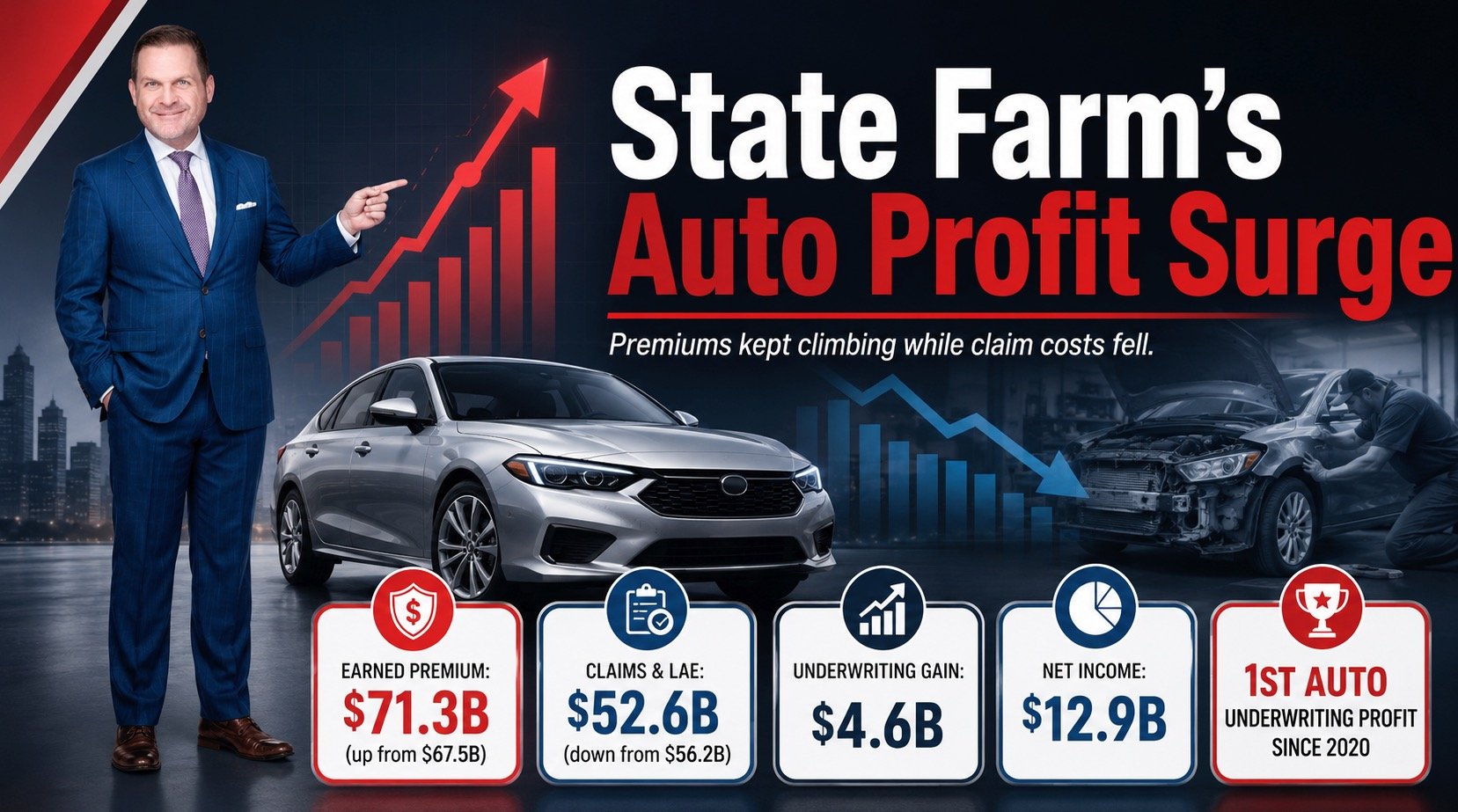
- State Farm’s auto insurance business earned $71.3 billion in premium in 2025 and paid out $52.6 billion in claims, producing a $4.6 billion underwriting gain — its first profitable auto underwriting year since 2020.
- Company-wide net income hit $12.9 billion, more than double 2024’s $5.3 billion, and State Farm declared a record $5 billion dividend to auto policyholders — about $100 per vehicle on average.
- Nationally, Bureau of Labor Statistics data shows motor vehicle insurance costs rose roughly 52.9% between December 2021 and December 2024 — a run federal data describes as historically steep.
- In Florida specifically, average rates rose 31.7% in 2023, rose again 4.3% in 2024, and are now projected to drop 6.5% in 2025 — a swing regulators tie to 2023 tort reform (HB 837) reducing insurer litigation exposure.
- A dividend check is not a claim settlement. It has nothing to do with the value of any injury, medical bill, or lost wage claim — and accepting it does not affect your right to pursue a separate accident claim.
The Numbers Behind the Insurance Industry’s Turnaround
Three separate data sets, viewed together, tell the story insurers aren’t always eager to volunteer. Nationally, motor vehicle insurance costs rose approximately 52.9% on a compounding basis between December 2021 and December 2024, according to U.S. Bureau of Labor Statistics Consumer Price Index data (up 14.2% in 2022, 20.3% in 2023, and 11.3% in 2024). State Farm’s auto claims and loss-adjustment expenses fell from $56.2 billion to $52.6 billion in 2025 even as the premium those increases generated kept flowing in.
And Florida’s own average auto rate filings swung from +31.7% (2023) to +4.3% (2024) to a projected -6.5% (2025), a reversal regulators credit chiefly to reduced litigation costs after 2023 tort reform. Multi-year rate increases typically take time to fully “earn in” to an insurer’s books as policies renew, which is one reason a hard market’s profits often show up a year or more after the rate hikes that produced them.


Separately, national data reported by the Wall Street Journal found that 45% of resolved auto liability and medical claims closed in 2025 with no payment at all, up from roughly 35% a decade earlier — a trend we examined in detail in Florida Car Insurance Claim Denials: Are Auto Insurers Paying Less Than They Used To? Together, these numbers are why a stronger balance sheet at the top doesn’t automatically mean a stronger offer on any one claim.
State Farm’s 2025 Results, Line by Line
State Farm’s own year-end release gives the clearest picture of where the turnaround came from. The gains were concentrated specifically in the auto line — it’s worth being precise about that, because the company’s overall property-casualty underwriting result was far smaller once the homeowners and commercial lines are included.
| Metric (Auto Line) | 2024 | 2025 |
|---|---|---|
| Earned premium | $67.5 billion | $71.3 billion |
| Incurred claims & loss adjustment expenses | $56.2 billion | $52.6 billion |
| Auto underwriting result | −$2.7 billion (loss) | +$4.6 billion (gain) |
| Company-Wide Metric | 2024 | 2025 |
|---|---|---|
| Net income | $5.3 billion | $12.9 billion |
| Net worth | $145.2 billion | $170.0 billion |
| Total P&C underwriting result | — | +$1.5 billion |
| Homeowners/commercial underwriting result | −$3.6 billion | −$3.1 billion (LA wildfires) |
Source: State Farm 2025 year-end financial release; figures corroborated by Insurance Journal and Repairer Driven News coverage of the same filing.
Two things stand out. First, the $4.6 billion auto underwriting gain is real, and it’s the auto line’s best result since 2020, but it is not the same number as the company’s total underwriting profit, which was only $1.5 billion once a $3.1 billion homeowners loss tied to the January 2025 Los Angeles wildfires is factored in. Second, roughly $2 billion of the $12.9 billion net income figure came from realized investment gains, not from underwriting activity. None of that changes the headline: auto insurance, specifically, is now a very profitable line of business for State Farm, after being an unprofitable one for the four years before.
Don’t Wait. Call Our Florida Personal Injury Lawyers Now!
What Your $100 Check Actually Represents


The dividend, distributed to roughly 49 million vehicles nationwide, is calculated as a percentage of the premium you personally paid in 2025, ranging from about 4% to 10% depending on your state. It is not compensation for a crash. It is not an assessment of fault. It is not tied in any way to a claim you filed, and cashing it does not sign away or reduce your right to pursue an entirely separate claim for injuries, medical bills, lost wages, or vehicle damage from an actual accident. Think of it as a rebate on what you were charged, not a verdict on what you’re owed if you were hurt.
Florida’s PIP Coverage Still Applies, Regardless of What Your Insurer Earned
None of State Farm’s 2025 results change how a Florida car accident claim works. Florida remains a no-fault state, which means:
- Florida law requires at least $10,000 in Personal Injury Protection (PIP) coverage.
- PIP pays 80% of reasonable medical expenses and 60% of lost wages, regardless of who caused the crash.
- Treatment generally must begin within 14 days of the accident to remain eligible for PIP.
- To sue the at-fault driver directly for damages beyond PIP, you generally must meet Florida’s serious injury threshold: permanent injury, significant and permanent scarring or disfigurement, or death.
An insurer’s record year does not loosen any of these thresholds. If anything, a financially healthy insurer still has every incentive to apply PIP’s rules, deadlines, and thresholds strictly.
Why Florida’s Rate Relief and Insurer Profits Are Connected — And What It Means If You’re Injured
Florida regulators point to 2023’s sweeping tort reform, House Bill 837, as the primary reason average rates are finally coming down after two brutal years. The law repealed Florida’s one-way attorney fee statute (which previously made it economically viable for attorneys to fight small, disputed claims), shortened the window to file suit, and shifted Florida to a modified comparative fault system that bars recovery entirely if you’re found more than 50% at fault. Insurers’ Florida auto liability loss ratio fell from 80.5% in 2022 to 74.5% in 2023 to 53.3% in 2024 — among the lowest in the nation — largely because litigation, and the leverage it gave consumers, became more expensive to pursue.
That’s a legitimate reason rates are easing for future policyholders. It is a much less reassuring fact if you are the one trying to get a denied or undervalued claim paid today, because the same reform that lowered insurers’ costs also narrowed the tools available to challenge them. Reasonable people can disagree about whether HB 837 achieved the right balance. What isn’t really in dispute is that it shifted leverage toward insurers at exactly the same time those insurers were posting record profits.
Florida’s Two-Year Deadline to File a Car Accident Claim
Since Florida’s March 24, 2023 tort reform law took effect, most negligence-based injury claims — including car accident claims — must be filed in court within two years of the crash date, down from the previous four-year window. There are limited exceptions, but the safest assumption is two years, full stop. Waiting to see how much of a settlement offer materializes on its own can quietly burn through that runway.
Black Box Data Still Decides Who’s at Fault
Most vehicles built after roughly 2012 contain an Event Data Recorder (EDR) that captures speed, braking, throttle position, steering input, and seatbelt status in the seconds before a crash. According to the National Highway Traffic Safety Administration, this data is frequently used to reconstruct exactly what happened in a collision, and it can directly contradict a self-serving account from the other driver or a fault dispute raised by an adjuster. That data is often overwritten or lost within days. When we take on a case, one of the first things we do is send preservation requests and, where appropriate, work with certified EDR specialists to retrieve the recording before it’s gone.
About The Law Offices of Anidjar & Levine
Founded in 2005 by Marc Anidjar and Glen Levine, the firm began as a two-person operation working out of a construction office conference room. Over the past 20 years, that modest start has grown into one of Florida’s most recognized personal injury practices — with more than $1 billion recovered in settlements on behalf of injury clients across the state. We bring that same determination and depth of experience to every case we handle.
We do not represent insurance companies. We represent people. That doesn’t change whether an insurer just posted a loss or a record profit — our job is the same either way: investigate the crash, deal directly with the insurance company on your behalf, and pursue the full value of your claim, not just the number in a preliminary offer.
What Florida Drivers Can Do Right Now
- Deposit or accept your dividend payment normally — it does not affect any separate accident claim or require you to release any rights.
- If you were in an accident this year, get medical treatment documented within 14 days to protect your PIP coverage.
- Before you sign or cash a settlement check related to an injury, have it reviewed — a free consultation costs nothing and can flag whether it’s undervalued.
- Track your two-year filing deadline from the date of any crash, and don’t wait until it’s close to get advice.
- Watch for dividend-related phishing — verify any payment link is from the official sfdividend.com domain before entering financial information.
- If you believe an insurer isn’t handling your claim in good faith, you can file a complaint with the Florida Department of Financial Services in addition to speaking with an attorney.
Not sure whether an insurance offer reflects the full value of your claim? Call The Law Offices of Anidjar & Levine at 1-800-747-3733 for a free, no-obligation case review. We don’t charge a fee unless we recover for you. Hablamos español.
Don’t Wait. Call Our Florida Personal Injury Lawyers Now!
Frequently Asked Questions
Is State Farm’s $5 billion dividend check the same thing as a claim settlement?
No. The dividend is a premium-based rebate paid to every qualifying policyholder regardless of whether they filed a claim, calculated as a percentage of what you paid in premiums during 2025. A claim settlement is a separate, individually negotiated payment tied to a specific accident, your medical bills, lost wages, property damage, and pain and suffering. Getting a dividend check has no bearing on what you are owed if you were injured in a crash.
Do I need to do anything to receive my State Farm refund check?
According to State Farm, qualifying customers do not need to apply. Payments are sent automatically by check or, for customers with an email on file, through a digital payment link. Be cautious of unsolicited texts or emails asking you to click a link and enter banking details before verifying the sender.
Florida’s average auto insurance rates dropped in 2025. Does that mean insurers will be easier on my claim?
Not necessarily. Florida’s rate relief is largely credited to 2023 tort reform (HB 837), which reduced insurers’ litigation exposure by repealing one-way attorney fees and shortening filing deadlines. That same reform can make it harder, not easier, for an individual claimant to contest a denial or lowball offer without a lawyer, even as insurers report improved financial results.
What is the deadline to file a car accident injury claim in Florida?
Since Florida’s March 2023 tort reform law, most negligence-based injury claims, including car accident claims, must be filed within two years of the date of the crash. Missing this deadline generally bars you from recovering in court, so it is important to speak with an attorney well before it approaches.
If an insurance company is posting record profits, why would it still deny or underpay my claim?
An insurer’s profitability and its handling of any individual claim are two different things. Adjusters are still trained to manage payout costs, coverage disputes and comparative-fault arguments still arise, and policy language is still enforced strictly. Strong industry-wide results do not automatically translate into a full and fair offer on your specific file.
Should I speak with a lawyer before cashing an insurance settlement offer?
Generally, yes, especially if you were injured. Accepting and cashing a settlement check typically releases the insurer from further liability, even if your medical treatment isn’t finished or additional damages surface later. A free consultation before you sign anything costs nothing and can clarify whether the offer reflects the full value of your claim.
Do I need a lawyer if the insurance company already offered me money?
An early offer often reflects the insurer’s initial view of your case, before your full medical picture, lost wages, and long-term impact are documented. Having an attorney review an offer before you accept it, at no cost during a free consultation, is one way to find out whether it undervalues your claim.
This article is provided for general informational purposes only and does not constitute legal advice, nor does it guarantee any specific outcome or recovery amount. Every case is different. Hiring a lawyer is an important decision that should not be based solely on advertisements. Before you decide, ask us to send you free written information about our qualifications and experience. Figures on State Farm’s financial results come from the company’s 2025 year-end release and independent industry reporting; figures on Florida and national rate trends come from the Florida Office of Insurance Regulation and the U.S. Bureau of Labor Statistics, as cited above.