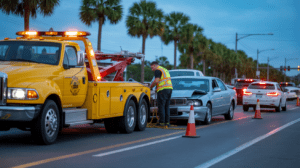
1.0 Introduction: The High Stakes of Underride Litigation
Miami underride truck accidents constitute a category of catastrophic collisions that require a highly specialized investigative and legal approach. These incidents, often resulting in devastating harm, demand a disciplined framework for establishing liability and securing just compensation for victims. The purpose of this document is to provide legal professionals with an analytical framework for identifying all responsible parties, preserving critical evidence, and constructing a compelling case to maximize client recovery in these complex matters.
See our Miami Underride Truck Accident Lawyer page.
An underride is a collision in which a smaller vehicle slides beneath a truck’s trailer or rear guard. This classification is critical because injury profiles, damage mechanics, and liability questions follow predictable tracks that differ significantly from other types of motor vehicle accidents. Understanding these unique characteristics is the first step in building a successful claim. This case study will begin by examining the fundamental mechanics and common causes of these preventable incidents.


2.0 The Anatomy of an Underride Collision: Causal Factors and Systemic Failures
A strategic understanding of the common causal factors behind underride accidents is the foundation for a successful liability case. A thorough analysis of these elements allows legal strategists to identify all potentially liable parties, expanding the scope of investigation from the individual driver to the trucking carrier, maintenance vendors, and equipment manufacturers. The following factors are consistently implicated in Miami underride collisions.
Inadequate Rear Guards Rear underride guards are intended to prevent a smaller vehicle from sliding beneath a trailer, yet their failure is a leading catalyst for catastrophic outcomes. Weak, corroded, or poorly designed guards can collapse on impact at city or highway speeds, permitting deadly intrusion into the passenger compartment. Critically, many outdated designs don’t align with modern vehicle geometries or higher traffic speeds. Liability can be established by demonstrating that guards failed to meet federal standards, were improperly installed, set too high above the roadway, or were otherwise non-compliant. Scrutinizing fleet policies, inspection practices, and maintenance records is essential to hold carriers accountable for permitting such equipment on the road.
Poor Truck Maintenance Systemic neglect of vehicle maintenance directly contributes to the conditions that precipitate underride collisions. When brakes are allowed to fade, lights fail, or carriers fail to monitor tire inflation and tread, a truck’s stopping distance increases and its visibility plummets. This creates a high-risk environment where passenger vehicles can slide beneath trailers during sudden stops or maneuvers. Maintenance records are a key source of evidence; missed service intervals, deferred repairs, or falsified entries can reveal a pattern of systemic neglect. By preserving vehicle parts, ECM data, and inspection reports, a direct causal link can be established between poor maintenance and the accident.
Driver Fatigue and Distraction Human factors, particularly drowsy or distracted driving, significantly amplify underride risks. Fatigue slows reaction times, narrows attention, and degrades judgment—all critical functions when seconds matter. It can also cause temporary visual impairments like microsleeps and impaired depth perception, which undermine a driver’s ability to estimate distances from other vehicles. Similarly, distractions from mobile devices or in-cab systems remove a driver’s focus from the road. Investigating driver logs, telematics data, and phone records can reveal patterns of fatigue or distraction that directly contributed to a collision, establishing clear negligence.
Low-Visibility Conditions Environmental factors can turn a large trailer into a nearly invisible hazard. In rain, fog, darkness, the glare of dawn and dusk, or poorly lit construction zones, the profile of a truck’s rear or side can become obscured. When conspicuity tape, brake lights, or reflectors are dirty, damaged, or non-compliant with federal standards, other drivers may not perceive the truck until it is too late. An effective investigation evaluates the truck’s lighting and conspicuity markings against federal regulations and industry best practices. Dashcam footage, weather data, and scene photography help reconstruct sightlines and establish whether the truck driver failed to take appropriate measures, such as maintaining safe following distances or using hazard flashers.
Understanding the root causes of the collision is the first step. The next is to implement a disciplined process for investigating the incident and preserving the evidence needed to prove the case.
3.0 The Investigative Framework: A Disciplined Approach to Evidence Preservation and Analysis
The post-accident investigation is a time-sensitive, strategic imperative. The initial hours and days following an underride collision are critical for preserving ephemeral evidence that will form the backbone of the liability case. A failure to act with urgency and precision can result in the permanent loss of data needed to prove fault and quantify damages. The investigative process can be broken down into three core phases.
- Immediate Scene Response and Safety The first priority at any crash scene is to ensure the safety of all individuals involved. This requires moving people out of the path of traffic, turning off ignitions, and checking for specific hazards like fuel leaks, sparking, or unstable cargo before contacting 911 to request police, fire, and EMS. These initial actions are not only crucial for protecting lives but also represent the first step in a controlled and professional response that lays the groundwork for a thorough investigation.
- Comprehensive Evidence Preservation Once the scene is stable, the focus shifts to meticulously documenting all available evidence. Each piece of information holds strategic value in reconstructing the event and proving fault. Key categories of evidence to preserve include:
- Physical and Photographic Evidence: Capturing wide and close-up, time-stamped photographs of vehicle positions, underride guard measurements, skid marks, the debris field, and overall roadway conditions. This evidence provides an objective record of the crash mechanics.
- Witness and Official Information: Securing the names, contact details, and precise statements from any witnesses. It is equally important to obtain the contact information of all responding officers to ensure access to official reports.
- Digital Data: Preserving data from the truck’s Event Data Recorder (EDR)/Electronic Control Module (ECM), telematics systems, dashcam footage, and GPS logs. This digital evidence is invaluable for reconstructing speed, braking, steering inputs, and the impact sequence with precision.
- Carrier and Maintenance Documentation: Obtaining the trucking carrier’s safety policies, driver logs, and complete vehicle maintenance records. These documents can reveal systemic failures, such as non-compliance with hours-of-service regulations or a history of deferred repairs.
- Strategic Expert Engagement Raw data and physical evidence must be analyzed and synthesized into a coherent narrative of negligence. This requires the engagement of qualified experts. Attorneys coordinate with accident reconstructionists to analyze impact mechanics, human factors specialists to evaluate driver performance, and trucking safety professionals to assess compliance with federal regulations and industry standards. These experts convert technical findings into defensible testimony that clarifies how a defendant’s actions or inactions led directly to the collision.
The methodical collection of evidence provides the foundation for constructing a formal legal argument that holds all negligent parties accountable.
4.0 Constructing the Liability Case: From Evidence to Legal Argument
The central task in underride litigation is to systematically link the preserved evidence to established legal principles of negligence and product liability. This process involves a meticulous apportionment of fault among all responsible parties, ensuring that the full scope of causation is addressed. The legal argument is built upon several core components.
4.1 Identifying All Liable Parties Liability in an underride accident often extends far beyond the truck driver. A thorough investigation frequently uncovers a chain of negligence involving multiple entities. Potential defendants include:
- The trucking carrier for negligent hiring, inadequate training, or systemic failures in maintenance and safety protocols.
- Maintenance vendors for improper or incomplete repairs to brakes, lights, or underride guards.
- Shippers or loaders if improper cargo loading contributed to the truck’s instability or handling.
- Equipment manufacturers if a defective underride guard or other component failed during the collision.
4.2 Asserting Victims’ Legal Rights Victims of underride accidents and their families are protected by specific legal rights under Florida and federal law. Asserting these rights is fundamental to achieving a just outcome.
- Right to pursue accountability under negligence and product liability theories.
- Right to access electronic logging data and maintenance records for expert inspection.
- Right to fair application of comparative negligence principles by challenging defendants’ blame-shifting tactics.
- Right to preserve medical privacy against overbroad records demands from defense counsel.
- Right to protection against bad-faith insurance practices, including tactics designed to compress settlement timing to limit recovery.
4.3 The Role of Expert Testimony Expert testimony is the critical bridge between factual evidence and legal conclusion. Qualified experts anchor the case’s factual findings to accepted industry and federal safety standards. By doing so, they provide the court with a clear and defensible analysis of how a defendant’s conduct deviated from their required duty of care, thereby proving negligence and establishing causation.
Once liability has been clearly established, the focus shifts to determining the full and fair value of the compensation owed to the victim.


5.0 Quantifying Damages: A Comprehensive Model for Client Recovery
Securing full compensation in an underride case requires the development of a meticulously documented and comprehensive damages model. Because these collisions often result in life-altering injuries, a precise accounting of all past, present, and future losses is essential. This model must be grounded in credible evidence that substantiates the long-term physical, emotional, and financial effects of the incident.
| Category of Loss | Description and Evidentiary Basis |
| Chronic Physical Disabilities | This includes long-term consequences such as persistent mobility limitations, neuropathic pain, and joint instability that require ongoing medical care and assistive devices. These losses are documented through comprehensive medical records, physician testimony, and reports from rehabilitation specialists and vocational experts who can project future care needs and costs. |
| Cognitive & Emotional Trauma | The psychological fallout can be profound, manifesting as memory loss, reduced attention, and slowed processing. Emotional numbness, anxiety, depression, irritability, and intrusive recollections consistent with PTSD are common. These harms are substantiated through neuropsychological evaluations, therapy records, and expert testimony from mental health professionals. |
| Financial & Caregiving Burdens | This category covers the immense economic strain from medical costs, lost income, and necessary home or vehicle modifications. It also includes the human cost of round-the-clock support and the non-economic burden of caregiver burnout. These damages are quantified by life-care planners, economists who project future lost earnings, and testimony from family members. |
Based on this model, a legal team can pursue specific categories of compensation to ensure the client is made whole.
- Economic Damages: This includes all quantifiable financial losses, such as past and future medical expenses, lost wages from time away from work, and diminished future earning capacity if the victim cannot return to their previous profession.
- Non-Economic Damages: This compensation is for the human cost of the collision, including physical pain and suffering, emotional distress, loss of enjoyment of life, and loss of consortium for the victim’s spouse.
- Punitive Damages: In cases where the defendant’s conduct demonstrates gross negligence or a conscious disregard for safety—such as knowingly operating with a non-compliant underride guard or falsifying driver logs—punitive damages may be sought to punish the wrongdoer and deter similar misconduct in the future.
Successfully quantifying damages sets the stage for negotiations and, if necessary, trial, but these efforts must proceed within strict procedural timelines.
6.0 Conclusion: Strategic Imperatives in Miami Underride Accident Litigation
Proving liability and securing full compensation in a Miami underride truck accident case is a complex undertaking that hinges on swift action, deep expertise, and meticulous preparation. The catastrophic nature of these collisions requires a legal strategy that looks beyond the immediate circumstances of the crash to uncover systemic failures in maintenance, training, and equipment safety. By methodically preserving evidence, engaging qualified experts, and constructing a comprehensive damages model, legal professionals can hold all negligent parties accountable and achieve a just resolution for their clients. The following principles are paramount.
Core Strategic Imperatives
- Act with Urgency: Immediate engagement of counsel is necessary to preserve critical evidence before it is lost or destroyed and to ensure compliance with Florida’s strict statute of limitations for filing a claim.
- Build a Multi-Disciplinary Team: Early engagement of accident reconstructionists, human factors specialists, and other experts is crucial for building an unassailable evidentiary foundation that can withstand legal challenges.
- Look Beyond the Driver: An effective investigation must examine the entire chain of responsibility, including the trucking carrier, maintenance providers, and equipment manufacturers, to identify all contributing factors and liable parties.
- Document the Full Human Cost: Success depends on the ability to precisely quantify the long-term physical, emotional, and financial burdens imposed on the victim and their family, ensuring that the demand for compensation reflects the true scope of the harm.
- Prepare Every Case for Trial: From the moment of engagement, the case must be prepared as if it will be presented to a jury. This approach creates maximum leverage for negotiating a favorable settlement and ensures readiness should litigation become necessary.