




We help Fort Myers truck drivers facing hours-of-service violation allegations by moving fast to preserve ELD data, dispatch messages, GPS pings, fuel and toll receipts, and any log edits or malfunction reports—backed by Law Offices of Anidjar and Levine.
We then reconstruct your duty timeline, check for device or integration errors, and challenge inaccurate citations while keeping you on top of deadlines and hearings.
If a crash occurred, we use the same evidence to pursue full financial recovery and accountability with help from a Fort Myers Truck Accident Lawyer.
Continue for crucial steps and options.



Main Takeaways
- A Fort Myers hours-of-service violation lawyer can quickly preserve ELD data, dispatch messages, GPS trails, and supporting receipts before anything is altered.
- They review the citation for errors in time, location, carrier details, and alleged log discrepancies that may undermine the officer’s findings.
- They cross-check ELD logs against fuel, toll, bills of lading, scale tickets, and detention records to reconstruct your true duty status timeline.
- They investigate ELD malfunctions, software faults, and improper edits or annotations that can create false hours-of-service violations.
- They handle deadlines, hearings, and agency requests while coordinating a consistent response with your employer to avoid damaging admissions or conflicting statements.
How We Can Help With Your Fort Myers Truck Driver Hours of Service Violation Claim
Protect your rights by letting us take control of the evidence and strategy behind your Fort Myers hours of service (HOS) violation claim.
We act quickly to secure logbooks, electronic logging device data, dispatch records, and witness statements, then organize them into a clear narrative that supports your position.
We’ll identify gaps, inconsistencies, and improper procedures, and we’ll respond to requests and deadlines so you don’t face the process alone.
We also advocate for the public interest you serve every day by highlighting how enforcement should reduce driver fatigue without punishing responsible professionals.
When scheduling pressures or unrealistic dispatch demands contributed to the allegation, we document those conditions and press for schedule fairness in any resolution.
We’ll prepare you for interviews, represent you in communications, and pursue outcomes that protect your livelihood, your license status, and your ability to keep serving the community safely.
Understanding Fort Myers Truck Driver Hours of Service Violation Cases
Although a truck driver’s hours-of-service violation may seem like a straightforward logbook issue, these cases often hinge on how federal HOS rules intersect with real-world dispatch demands, ELD data integrity, and the specific conduct alleged during an inspection or audit in Fort Myers.
We help you understand what the agency claims, what evidence supports it, and what’s missing or misinterpreted, so you can respond with accuracy and integrity.
We review ELD records, supporting documents, and inspection narratives to see whether the data reflects actual duty status, edits, or device malfunctions.
We also examine how enforcement officers applied the rules, including exemptions, split sleeper options, and required documentation, without assuming the citation is correct.
When your work centers on public safety, Fatigue management and Schedule optimization matter, and we frame your position around safe operations, transparent records, and practical compliance steps that protect your livelihood and those you serve.



Common Causes of Fort Myers Truck Driver Hours of Service Violations
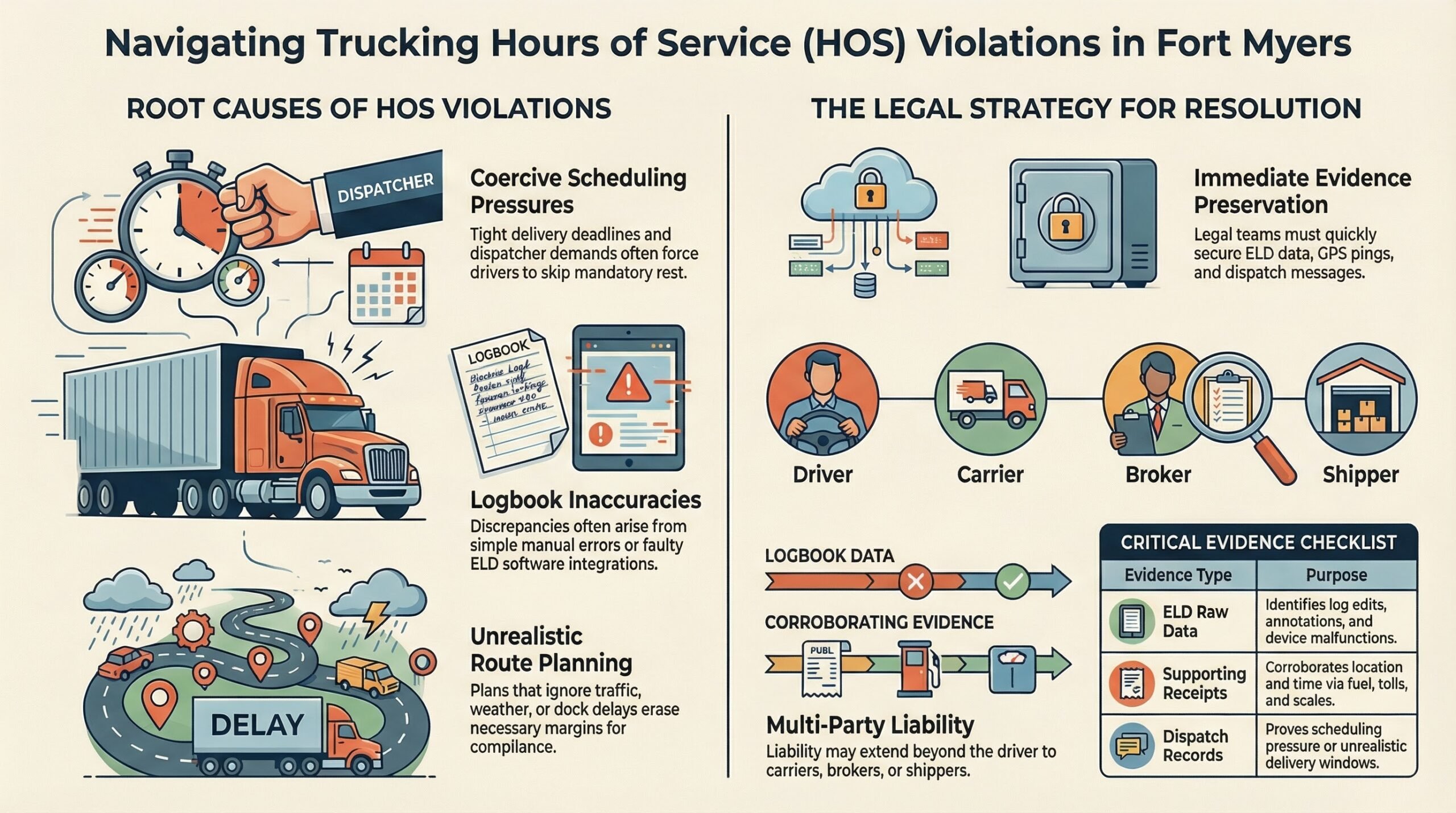
In Fort Myers HOS cases, we often see violations trace back to tight delivery deadlines and dispatcher scheduling pressure that push drivers beyond legal limits.
We also encounter inaccurate logbook entries, whether from simple mistakes or improper recordkeeping practices, that create compliance problems during inspections and after crashes.
Finally, we frequently find rest break noncompliance, and we’ll explain how these patterns can affect fault, liability, and potential penalties.
Tight Delivery Deadlines
Tight delivery deadlines can squeeze the margin for lawful rest until drivers feel they must choose between compliance and keeping their jobs.
When routes are planned around rush schedules, even minor delays, traffic, weather, loading issues, or dock backups can erase the time needed for required breaks.
Some carriers also attach delivery incentives to on-time performance, unintentionally rewarding speed over safety and rest.
We realize you want to serve customers reliably, yet the public depends on you to operate in accordance with the Hours of Service rules.
Pushing past legal limits increases fatigue, slows reaction time, and raises crash risk for everyone sharing Fort Myers roads.
If a violation follows, we can help document how unrealistic deadlines drove the logbook problem and pursue accountability fairly.
Dispatcher Scheduling Pressure
Dispatcher scheduling pressure often comes down hard when loads stack up, coverage runs thin, and the next pickup can’t wait.
When dispatch pushes back-to-back assignments without realistic buffers, we can feel compelled to stretch drive time, skip breaks, or accept unsafe turnaround times, even when we’re trying to serve shippers, receivers, and the public responsibly. Strong route optimization helps, but it can’t fix a plan that ignores congestion, weather, detention, or dock delays.
A communication breakdown makes it worse, since drivers may not get timely updates, revised appointments, or relief options, and dispatch may not receive clear status reports.
We encourage you to insist on lawful schedules, confirm expectations in writing, and escalate concerns before fatigue sets in.
Inaccurate Logbook Entries
Scheduling pressure often sets the stage, but inaccurate logbook entries are the violation that enforcement can quickly prove.
When records don’t match fuel receipts, toll data, GPS pings, or shipping documents, officers can cite a driver or carrier without delay.
We often see simple mistakes, like wrong duty-status changes, missed edits, or time zone confusion, that still create exposure for you and your employer.
We also confront more serious issues, including driver falsification under pressure to “make the load,” which can trigger civil penalties and credibility problems after a crash.
Electronic logging devices reduce handwriting errors, yet software errors and faulty integrations can mislabel driving time or fail to capture yard moves.
We help you identify the source, correct the record, and protect others through safer compliance.
Rest Break Noncompliance
Although a missed rest break can seem like a minor lapse during a long haul, it often creates a clear Hours of Service violation that enforcement can document in minutes.
When you push pastrequired off-duty time to meet a delivery window, you may unintentionally compromise everyone else’s safety on the road.
We see rest break noncompliance arise from tight dispatch schedules, congested Fort Myers traffic, limited parking, and pressure to “make up time” after delays.
Without deliberate fatigue management, reaction times slow and judgment narrows, increasing crash risk even before a citation occurs.
We encourage drivers and carriers to plan realistic routes, reserve safe stopping options, and treat sleep hygiene as a professional obligation, not a personal preference.
If a violation is alleged, we’ll review ELD records, receipts, and communications for context.
Legal Rights of Fort Myers Truck Driver Hours of Service Violation Victims
When a truck driver’s Hours of Service violations contribute to a crash in Fort Myers, we can assert strong legal rights for the people harmed and demand accountability from every responsible party.
We’ll pursue compensation that reflects the full human cost of injury, including medical care, lost income, and reduced quality of life, while honoring your goal of protecting others from repeat harm.
These cases often involve Worker protections and Insurance disputes, and we can press for fair treatment when carriers attempt to shift blame or minimize losses.
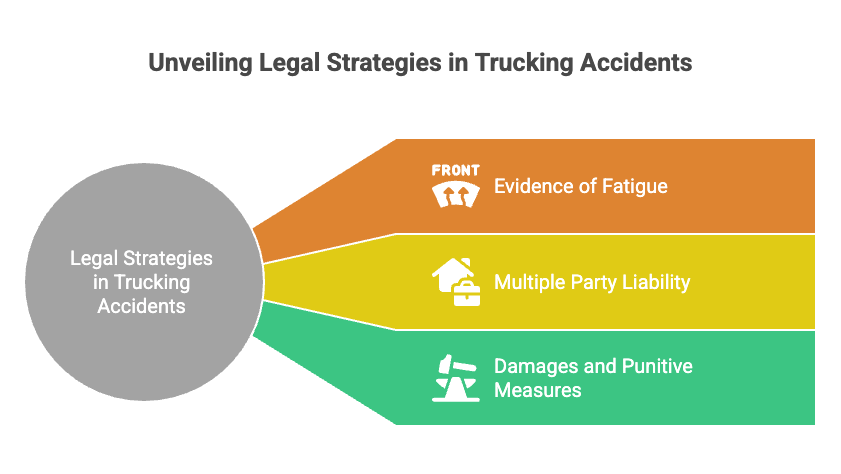
- We can seek evidence of fatigue, including logs, ELD data, dispatch records, and driver communications.
- We can hold multiple parties liable, such as the driver, motor carrier, broker, or shipper, when their practices encourage unsafe driving.
- We can pursue damages for past and future losses, and, when warranted, advocate for punitive measures that deter misconduct.


Steps to Take After a Fort Myers Truck Driver’s Hours of Service Violation
After a Fort Myers truck driver’s hours of service violation, we’ll help you take prompt, practical steps that protect your record and your livelihood.
We should start by documenting your logs and preserving any supporting evidence, then notify your employer and counsel so your response stays consistent and legally sound.
Finally, we’ll address the citation and any required hearing on time, presenting a clear position that limits penalties and reduces the risk of future consequences.
Document Logs And Evidence
Start by locking down every relevant record, because the strength of an Hours of Service defense often depends on what the logs and supporting evidence actually show.
We should promptly secure your electronic logs, including any edits, annotations, and malfunction reports, and we’ll match them against supporting documents such as fuel receipts, toll records, bills of lading, GPS pings, dispatch messages, and scale tickets.
We also recommend preserving phone location data, dashcam footage, and maintenance and inspection reports, since each can confirm when driving, on-duty, or off-duty time actually occurred.
If anyone observed your schedule, loading delays, or sleeper berth use, we’ll identify and document reliable witness statements while memories remain fresh.
Keep originals intact, make dated copies, and record where each item came from.
This protects accuracy and accountability for everyone involved.
Notify Employer And Counsel
Once we’ve preserved the logs and supporting records, we should promptly notify your employer and involve legal counsel, because early communications often shape how an Hours of Service issue is documented and reported.
We’ll approach employer notification with care, sharing only accurate, necessary facts and avoiding speculation or admissions that could be misunderstood later.
We can request that dispatch notes, load details, and ELD edits be secured, and we’ll ask for a single company contact to prevent inconsistent messaging.
With retained counsel, we’ll coordinate a clear narrative that reflects your commitment to public safety, your service to customers, and your respect for regulatory standards.
We’ll also document every call and email, ensuring our communication trail remains consistent and professional throughout.
Address Citation And Hearing
We’ll move forward by addressing the citation immediately and preparing for the hearing with a disciplined, document-driven approach.
First, we’ll review every line for accuracy, including time, location, carrier details, and the alleged log or ELD discrepancy. We’ll track deadlines and follow local citation procedures, since a missed response can escalate penalties and affect your record.
Next, we’ll gather supporting materials, such as duty status logs, ELD raw data, dispatch messages, fuel receipts, toll records, and repair orders.
For hearing preparation, we’ll organize a clear timeline, identify witness needs, and craft a concise explanation that reflects professional responsibility and public safety.
We’ll also consider mitigation, corrective training, and compliance measures, demonstrating your commitment to serving others on the road.
How a Fort Myers Truck Driver Hours of Service Violation Lawyer Can Help You
Protect your claim by bringing in a Fort Myers truck driver hours of service violation lawyer early, because HOS issues often decide who bears legal responsibility and how much compensation is available.
Bring in a Fort Myers truck HOS violation lawyer early—these violations can determine liability and the compensation you can recover.
We act quickly to preserve electronic logging device data, dispatch records, fuel receipts, and GPS trails before they’re altered or lost.
We also connect HOS violations to fatigued driving patterns, showing how poor fatigue management puts the public at risk and caused your collision.
To serve you and strengthen your case, we’ll typically:
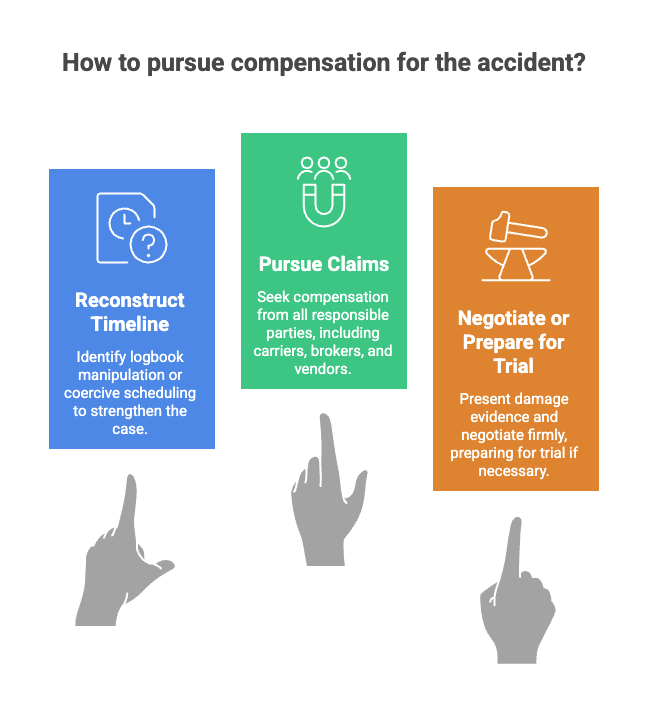
- Reconstruct the driver’s on-duty timeline and identify logbook manipulation or coercive scheduling.
- Pursue claims against all responsible parties, including carriers, brokers, and maintenance vendors, when evidence supports it.
- Present clear damage evidence and negotiate firmly, while preparing for trial if fair terms aren’t offered.
Beyond your individual claim, we can press for policy reform through documented safety failures, helping prevent similar harm to others in our community.
Long-Term Effects of Fort Myers Truck Driver Hours of Service Violation Injuries
When a truck driver ignores hours of service rules, the crash injuries you’re left with can shape your life long after the initial treatment ends.
We often see chronic pain and lasting disability, along with cognitive and emotional impacts that affect work, relationships, and day-to-day independence.
We’ll also address the lifelong financial and care burdens these injuries can create, and how we help you document and pursue full compensation for them.
Chronic Pain And Disability
Living with the aftermath of a Fort Myers truck crash tied to hours-of-service violations often means managing chronic pain and long-term disability, not just recovering from immediate injuries.
We often see injuries to the back, neck, shoulders, or joints that linger for months or years, limiting lifting, standing, driving, and other daily tasks.
When pain becomes persistent, treatment can expand to ongoing therapy, medications, injections, or surgical follow-up, along with careful monitoring to prevent further decline.
We also help you plan for practical Disability accommodations, including modified work duties, mobility aids, home adjustments, and accessible transportation, so you can keep serving your family and community.
Cognitive And Emotional Impacts
Long-term harm from a Fort Myers truck crash caused by hours-of-service violations often extends beyond physical pain and disability, and it can reshape how you think, feel, and function each day.
Many survivors face reduced concentration, slower processing, and memory gaps that disrupt work, family roles, and community service.
When the collision stems from a fatigued driver, your own recovery may include Sleep deprivation, which worsens headaches, anxiety, and irritability.
We also see Mood swings that appear without warning, along with heightened startle responses and persistent tension.
These changes can strain relationships and make routine decisions feel overwhelming. We encourage you to document symptoms, seek prompt neuropsychological screening, and follow a consistent care plan.
With steady support, we can help you regain stability and confidence.
Lifelong Financial And Care Burdens
Although the physical injuries from a Fort Myers truck crash may stabilize over time, the financial and care demands tied to hours-of-service violations often accelerate and persist.
We see clients facing recurring costs for surgeries, therapy, and adaptive equipment, even after the initial treatment ends. Lost earning capacity can alter retirement planning, forcing families to delay milestones and redirect savings toward basic needs.
When a loved one can’t safely cook, drive, or manage medications, we often coordinate credible caregiving resources and document the true value of that support.
We also address home modifications, transportation services, and long-term insurance gaps that insurers may minimize.
Proving Liability in Fort Myers Truck Driver Hours of Service Violation Cases
Proving liability in a Fort Myers truck driver hours-of-service violation case starts with pinpointing who allowed or encouraged the driver to exceed federal fatigue limits. We look beyond the cab to the motor carrier, dispatchers, brokers, and even shippers whose schedules may have pressured unsafe driving. Because our goal is to protect the public, we focus on facts that show preventable choices, not mere accidents.
We build the case by collecting electronic logging device data, GPS pings, fuel and toll receipts, and cell records, then comparing them against required rest periods. We also perform logbook audits to spot edited entries, mismatched locations, and patterns that signal driver fatigue. Maintenance logs, load tickets, and delivery windows can reveal unrealistic demands or overlooked violations. When needed, we use qualified experts to interpret hours-of-service rules and connect the violations to the crash sequence, so you can pursue accountability with confidence.
Compensation for Fort Myers Truck Driver Hours of Service Violation Damages
When a truck crash stems from hours-of-service violations, we pursue compensation that reflects the full scope of harm those fatigue-driven decisions caused.
We start by listening to you, then we document medical care, lost income, and the day-to-day limits that often follow a violent impact.
Our goal is to secure resources that let you recover and continue serving your family, workplace, and community.
We build damages with disciplined Medical valuation, using treatment records, physician opinions, and future care projections to avoid underestimating long-term needs.
We also account for reduced earning capacity, property loss, and reasonable out-of-pocket expenses tied to recovery.
For non-economic losses, we present clear evidence of pain, impairment, and diminished quality of life.
Through focused Settlement negotiation, we press insurers and trucking interests to recognize the true cost of fatigue-related conduct, while preparing every case as if it will be tried.
The Statute of Limitations for Fort Myers Truck Driver Hours of Service Violation Cases
Because time limits can quietly determine the fate of a claim, we move quickly to identify the applicable statute of limitations for Fort Myers truck crash cases involving hours-of-service violations.
In Florida, most personal injury claims must be filed within two years of the crash, and wrongful death claims generally must be filed within two years of the date of death.
Those windows can close faster than expected when you need medical records, crash reports, and logbook or ELD data to show fatigue-related misconduct.
Florida deadlines move fast: most injury claims must be filed within two years, and wrongful death claims within two years of death.
We also track related timelines that affect service to others, including notice requirements, insurer reporting demands, and court discovery deadlines once a lawsuit begins.
Even when regulators pursue civil penalties against a carrier or driver, that process doesn’t pause your civil filing period. Acting promptly helps preserve evidence, secure witnesses, and keep your claim positioned for fair resolution.
Why You Need an Experienced Fort Myers Truck Driver Hours of Service Violation Lawyer
Although hours-of-service violations may seem like a simple logbook issue, they often involve complex federal regulations, sophisticated electronic logging data, and coordinated defense strategies designed to minimize fault.
When you’re seeking accountability after a crash, we can’t rely on assumptions; we must prove exactly how the violation occurred and how it contributed to harm.
An experienced Fort Myers truck driver hours-of-service violation lawyer knows how to secure ELD records, fuel and toll receipts, dispatch communications, and safety policies before they are destroyed or revised.
We also evaluate fatigue management practices and whether a carrier encouraged unsafe schedules through incentives or pressure.
Just as important, we stay current on regulatory updates that affect exemptions, short-haul rules, and recordkeeping requirements.
By building a disciplined, evidence-based case, we help you protect the public, support responsible trucking, and pursue fair compensation with purpose and measurable impact for everyone involved.
How to Choose the Right Fort Myers Truck Driver Hours of Service Violation Lawyer for Your Case
Proving an hours-of-service violation takes disciplined evidence work, but the outcome often depends just as much on the lawyer you choose to lead it.
We should look for counsel who treats your case as a responsibility to protect the community, not merely a file number.
We can start by asking how the lawyer conducts client interviews, including what records they request, how they preserve electronic logs, and whether they pursue third-party data quickly.
We should confirm they’ve handled trucking cases in Fort Myers courts and can explain a clear strategy for proving fatigue-related negligence.
We also need transparency on fee structures, including contingency terms, litigation costs, and what happens if the case doesn’t resolve early.
We should evaluate responsiveness, because prompt communication supports informed decisions and reduces stress. Finally, we should choose a lawyer who respects your goals, speaks plainly, and prepares every case as if it will be tried.
About the Law Offices of Anidjar and Levine
Focused on accountability and safety, we at the Law Offices of Anidjar and Levine represent people harmed in serious truck crashes and pursue the evidence needed to show when a driver or carrier broke hours-of-service rules.
We act quickly to preserve logs, electronic data, dispatch records, and maintenance files, then build a clear narrative that supports your claim and honors the public interest in safer roads.
Our firm’s history reflects a steady commitment to service, careful case preparation, and direct communication with the people we represent.
We don’t treat your case as a file number; we treat it as a responsibility to you and to the community.
You’ll receive timely updates, practical guidance, and support with medical bills, property damage, and insurers’ demands.
We also invite you to review client testimonials that highlight our responsiveness and focus on results.
When you need principled advocacy, we’re ready to help.

Frequently Asked Questions
Do I Need to Pay Anything Upfront to Hire Your Firm?
No, you typically don’t need to pay anything upfront to hire our firm.
We often offer a no-upfront arrangement and handle qualified cases on a contingency fee basis, so our payment depends on successfully securing compensation for you.
We’ll explain all terms in writing, answer questions clearly, and outline any costs that may arise during the process.
Our goal is to let you focus on serving others.
Can My Case Be Handled if I Live Outside Fort Myers?
Yes, we can handle your case even if you live outside Fort Myers. We provide Remote representation, so you can meet with us by phone or video, sign documents securely, and stay informed without travel.
Through Interstate coordination, we work with courts, agencies, and local counsel when required, ensuring deadlines and filings are managed correctly.
You’ll remain focused on serving others, while we manage strategy, communications, and procedural details.
How Long Does a Truck Accident Lawsuit Typically Take to Resolve?
A truck accident lawsuit typically takes several months to a few years to resolve, depending on liability disputes, injury severity, and court scheduling.
We’ll guide you through the typical timeline by efficiently moving through investigation, demand, and mediation, which are common settlement phases.
If insurers cooperate, resolution can occur sooner, often within 6–18 months.
When litigation and trial become necessary, it may extend beyond two years, while we protect your interests.
Will My Case Likely Settle, or Will It Need to Go to Trial?
Your case will likely reach a case settlement, but we can’t promise it won’t require a jury trial.
We evaluate liability, damages, insurance limits, and witness credibility, then present a clear demand supported by records and expert analysis.
If the other side negotiates in good faith, we’ll pursue resolution efficiently.
If they deny responsibility or undervalue harm, we’ll prepare to serve justice at trial for you.
What if the Trucking Company’s Insurer Contacts Me Directly?
If the trucking company’s insurer contacts you directly, we shouldn’t engage substantively or provide recorded statements.
We’ll respond promptly, but we’ll route all communication through counsel to protect your rights and preserve accurate facts.
Insurers often use talking tactics and insurer strategy to limit payouts, shift blame, or obtain inconsistent details.
We’ll document every contact, set firm boundaries, and keep the process focused on truth and service.
—————————
When hours-of-service rules are ignored, serious crashes can follow, and the Law Offices of Anidjar and Levine is prepared to hold the responsible parties accountable.
We’ll investigate driver logs, electronic data, and company practices, then build a clear claim for your medical costs, lost income, and other damages.
We’ll also manage insurer communications and deadlines to keep your case on track.
If you’re facing the aftermath of a Fort Myers truck crash, visit our Fort Myers Truck Accident Lawyer page to learn how we can help.


We Can Help.