

The Law Offices of Anidjar and Levine can help a Miami slip-and-fall pharmacy accident victim investigate the incident, identify potentially responsible parties, and assess whether unsafe conditions contributed to the injury. A Miami Personal Injury Lawyer may help preserve surveillance footage, incident reports, photographs, and witness accounts while organizing medical records and documenting financial losses. Legal guidance can also clarify deadlines, insurance communications, comparative negligence, and potential damages. If settlement discussions fail, counsel can prepare the claim for court. The sections below explain these issues and the steps you can take.
Main Takeaways
- A Miami pharmacy slip-and-fall lawyer can assess your claim, identify potentially responsible parties, and explain applicable deadlines.
- Liability may depend on who controlled the premises and whether they knew or should have known about the hazard.
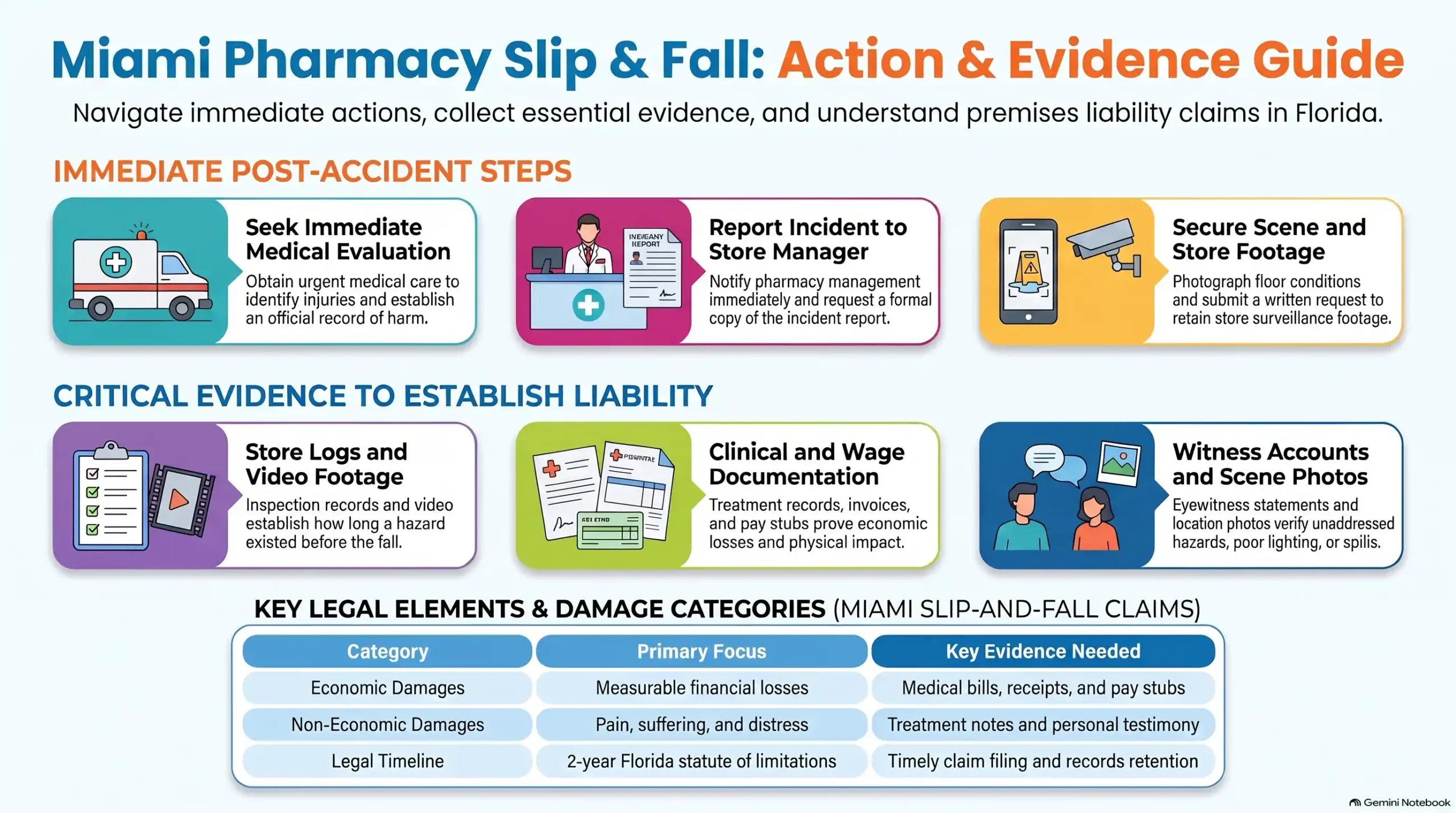
- Preserve evidence promptly, including photos, witness details, medical records, and requests for surveillance footage and inspection logs.
- Seek medical care, report the fall accurately to store management, and keep copies of incident reports and related communications.
- An attorney can document injuries and financial losses, handle insurer communications, evaluate settlement offers, and prepare for court if needed.


How We Can Help With Your Miami Slip & Fall Pharmacies Injury Claim
A Miami slip and fall lawyer can help an injured person assess a pharmacy accident claim, preserve relevant evidence, and pursue compensation from responsible parties. Counsel may review incident reports, photographs, witness accounts, and available surveillance footage to clarify what occurred. This early work can help protect information that might otherwise be lost or altered.
A lawyer can also communicate with the pharmacy, its insurer, and other involved parties, allowing the injured person to focus on recovery and daily responsibilities. The review may address Pharmacy owner accountability, including whether reasonable inspection and maintenance practices were followed. Where unsafe conditions or inadequate protective measures contributed to harm, negligent security concerns may also warrant careful attention.
Legal guidance can help organize medical records, document financial losses, and evaluate settlement proposals. If negotiations do not produce a fair resolution, counsel may prepare the claim for court. Throughout the process, a measured, evidence-based approach supports accountability and helps injured people seek appropriate compensation.
OUR CONSULTATIONSARE FREE
START YOUR FREE CASE REVIEW

Understanding Miami Slip & Fall Pharmacy Injury Cases
Understanding a Miami pharmacy slip and fall case begins with identifying the hazard and determining who was responsible for addressing it. The inquiry considers the property owner’s duties, the pharmacy operator’s responsibilities, and any agreements assigning maintenance tasks. Evidence may include incident reports, photographs, inspection records, surveillance footage, and witness accounts. These materials can help establish when a dangerous condition arose, whether responsible parties knew or should have known about it, and whether reasonable steps were taken to correct or warn about it.
Pharmacy Safety Audits may clarify how a location monitors its premises and documents corrective action. Records concerning Medication Pickup Hazards can also help explain how customer areas are managed and whether safety procedures were followed. A claim further requires evidence connecting the condition to the fall and resulting injury. Medical records, treatment timelines, and professional assessments may help establish that connection and document losses. Each case depends on its specific facts, applicable legal standards, and the quality of available evidence.
Common Causes of Miami Slip & Fall Pharmacies
Slip-and-fall hazards in Miami pharmacies commonly include spills and leaks that are not promptly cleaned or clearly marked. Wet entryways, cluttered aisles, and uneven flooring can also create unsafe conditions for customers. Identifying these hazards helps clarify how preventable incidents may occur and what property conditions warrant closer attention.
Spills and Leaks
Because pharmacies handle liquids, cleaning products, and refrigerated goods, spills and leaks can create hazardous floor conditions for customers. A dropped bottle, leaking container, or damaged package may leave liquid where shoppers walk, while leaking refrigerator cases can produce persistent puddles near merchandise. These hazards may be difficult to see, particularly when clear liquids spread across polished flooring. Pharmacy staff should respond promptly, restrict access to affected areas, and arrange pharmacy spill cleanup using suitable supplies and procedures. A responsible response also includes checking the source of a leak, drying the floor completely, and confirming that the area is safe before reopening it to customers. When a store fails to address a known spill or recurring leak, the resulting fall may raise questions about inspection practices, maintenance, and whether reasonable steps were taken to protect visitors.
Wet Entryways
During Miami’s frequent rain showers, pharmacy entryways can become slick when customers track water inside on their shoes or umbrellas. Weather exposure also affects entrances when wind drives rain through open doors, or water collects near thresholds. These conditions may create a slipping hazard for customers, employees, and visitors who need safe access to pharmacy services.
Properly selected Entryway mats can absorb moisture and reduce the amount of water carried onto smooth floors. Secure, maintain, and replace mats when they are saturated, curled, or worn. Staff can monitor entrances during and after storms, promptly remove standing water, and use visible warning signs while wet areas are addressed. Regular inspections help identify drainage or mat-placement problems before an incident occurs. Consistent attention to these measures supports safer access for people seeking medication and other vital care.
Cluttered Aisles
When pharmacy aisles become obstructed, customers may have difficulty navigating safely around merchandise and equipment. Stocking carts, delivery boxes, and promotional displays can narrow walkways or block access to vital products. Customers carrying baskets or assisting children may have limited room to pass, increasing the chance of contact with objects or nearby shoppers. Overhead merchandise hazards, including items stored insecurely on high shelves, may fall when disturbed and create additional danger. Poorly arranged displays can also produce obstructed sightlines, preventing customers and staff from noticing obstacles or approaching traffic in time to respond. Pharmacy operators can reduce these risks by keeping aisles clear, securing products, and promptly removing unused equipment. Regular inspections and attentive restocking practices help protect customers while preserving access to needed medications and services.
Uneven Flooring
Uneven flooring in Miami pharmacies can create a sudden trip hazard, particularly where customers are focused on locating products or speaking with staff. Raised edges, cracked tiles, and loose floor coverings may interrupt a person’s stride without warning. Tile junctions between rooms or flooring materials require careful installation and maintenance; poorly aligned surfaces can catch shoes, mobility aids, or shopping baskets. Floor warping may develop after water intrusion, humidity, or inadequate repairs, leaving sections uneven beneath customers’ feet.
Pharmacy owners and managers are responsible for inspecting walking areas and addressing defects promptly. Regular maintenance, clear warnings, and timely repairs can reduce the risk of falls and help protect customers, employees, and visitors. When an injury occurs, photographs, incident reports, and witness details may help establish how the condition developed and whether reasonable precautions were taken.
Don’t Wait. Call Our Florida Personal Injury Lawyers Now!


Legal Rights of Miami Slip & Fall Pharmacy Injury Victims
Pharmacy customers injured in a slip and fall in Miami may have the right to seek compensation if a dangerous condition on the premises caused their injuries and the business failed to take reasonable steps to address it. These rights support accountability and help injured people obtain resources for recovery.
A claim generally requires evidence connecting the condition, the pharmacy’s conduct, and the harm suffered.
- Document the injury: Medical records, photographs, incident reports, and witness details may help establish what happened and the resulting losses.
- Identify responsible parties: A pharmacy, property owner, or another party may be responsible, depending on who controls the premises and what duties apply.
- Consider comparative negligence: Florida law may reduce compensation if an injured person shares responsibility, but that does not necessarily prevent recovery.
- Seek informed guidance: A qualified attorney can assess deadlines, evidence, and potential damages, while promoting pharmacy accountability and fair treatment for those affected.
Prompt action can preserve important evidence and support a careful evaluation of legal options.
Why Do Miami Slip & Fall Pharmacy Injuries Happen?
Why do slip and fall injuries occur in Miami pharmacies? These incidents often result from hazards that develop during routine operations, including liquid spills, tracked-in rainwater, leaking refrigeration units, or merchandise left in aisles. Customers may be focused on prescriptions, signs, or locating products, making an unexpected obstacle harder to notice. Smooth flooring can become particularly dangerous when wet, while poor lighting may conceal changes in floor level or debris.
Pharmacy staffing can affect how quickly employees identify and address hazards. When workers are occupied with prescriptions, customer assistance, or restocking, spills and obstructions may remain unattended. Store design also matters. Narrow aisles, crowded displays, shifting entrance mats, and poorly placed shelving can limit visibility or safe movement, especially for older customers and people using mobility aids. In busy Miami locations, frequent foot traffic and sudden weather changes may increase these risks. Understanding these conditions helps explain how preventable hazards can arise in places intended to support community health and service.
What Should You Do After a Miami Slip & Fall Pharmacy Injury?
After a pharmacy slip and fall, the injured person should seek prompt medical care, even if symptoms initially seem minor. The incident should be reported to store management, and you should request that they document the fall. Photographs, witness details, and other available evidence should be preserved to help establish what happened.
Get Medical Care
Prompt medical care should be a priority after a slip and fall in a Miami pharmacy, even when an injury initially seems minor. A person who falls should seek an Emergency assessment when there is severe pain, bleeding, loss of consciousness, confusion, or difficulty moving. For less urgent symptoms, a prompt appointment with a qualified healthcare provider can still identify injuries that may not be immediately apparent, including sprains, fractures, or head trauma. Medical professionals can evaluate symptoms, recommend appropriate treatment options, and explain whether follow-up care is needed. The injured person should describe how the fall occurred and report all symptoms accurately, even if they seem unrelated or mild. Following clinical instructions and keeping records of visits, diagnoses, and expenses can support recovery and provide a clear account of the care received.
Report the Fall
Once immediate medical needs are addressed, the injured person should report the fall to the pharmacy manager or another responsible employee as soon as reasonably possible. Prompt Pharmacy notification gives the business an opportunity to respond, address any ongoing hazard, and document that an incident occurred. The injured person should describe where and when the fall happened, explain what caused it if known, and identify any pain or injury. If speaking is difficult, a companion may assist with the report. The person should provide accurate information without guessing or overstating details. Before leaving, the injured person may ask for the manager’s name and how to request an incident report. A manager follow-up can clarify the reporting process and provide contact information. Clear, courteous communication helps staff respond appropriately and supports accountability.
Preserve Evidence
Preserve evidence as soon as it is practical, since conditions in a pharmacy can change quickly. A staff member may clean a spill, move merchandise, or repair a hazard before documenting its cause. If the injured person can do so safely, photographs should show the floor, nearby displays, warning signs, lighting, footwear, and visible injuries. Witness names and contact details should also be recorded, along with the time and location of the fall.
Evidence preservation may include requesting that the pharmacy retain surveillance footage, incident reports, inspection logs, and cleaning schedules. These pharmacy records can help establish what happened and whether the hazard was known or addressed. The injured person should keep medical documents, receipts, and communications related to the event. Original files should remain unchanged, and copies should be stored securely. Prompt, respectful requests can help protect information useful to evaluating the incident.
Critical Evidence in a Miami Slip & Fall Pharmacy Injury Case
In a Miami pharmacy slip-and-fall case, reliable evidence can help establish how the incident occurred and whether the property owner had notice of a hazard.
Crucial records and accounts may include:
- Incident reports
- Surveillance footage
- Witness statements
- Medical records
Incident Reports
What happened immediately after a pharmacy fall may be documented in an incident report, making the record important evidence in a Miami slip and fall claim. The report may identify when and where the fall occurred, describe the reported hazard, and record statements from the injured person, employees, or witnesses. It may also note when staff learned of the incident and what steps they took in response. Prompt Incident documentation can help preserve details while memories remain clear. However, an incident report is not necessarily a complete or neutral account. The injured person should review it for report accuracy and request correction of factual errors when possible. A copy, photographs of the scene, medical records, and witness contact information may help clarify the circumstances and support a careful assessment of responsibility and resulting harm.
Surveillance Footage
Surveillance footage can provide a time-stamped view of a pharmacy fall and the events leading up to it. Recordings may show the condition of an aisle, the presence of a spill or obstruction, and how long a hazard remained before the incident. They can also help establish whether warning signs or barriers were visible. Camera angles and image quality affect what the footage can reliably demonstrate, so a recording may not capture every relevant detail. Video retention policies vary, and some systems overwrite files within a short period. Prompt written requests to preserve relevant footage can reduce the risk of losing potentially important evidence. A careful review can help evaluate how the pharmacy maintained its premises and whether its response to a known hazard was reasonable under the circumstances.
Witness Statements
Witness statements can supplement pharmacy surveillance footage by describing details that a camera may not capture, such as a slippery surface, an employee’s response, or a warning sign obscured from view. Customers, workers, and other people present may explain what they observed before and after a fall. Their accounts can help clarify how long a hazard existed, whether staff knew about it, and what steps were taken to protect visitors. Witness credibility depends on factors such as opportunity to observe, impartiality, and accuracy. Consistent statements across interviews and other available evidence may strengthen an account, while differences may require careful review. Promptly recording each person’s observations can preserve details that might otherwise be forgotten. These statements can help establish what occurred and support a fair assessment of responsibility, while respecting the interests of everyone affected.
Medical Records
Medical records provide vital evidence of the injuries sustained in a Miami pharmacy slip and fall and the care required afterward. They document symptoms, diagnoses, treatment, and changes in a person’s condition over time. Emergency department notes, imaging results, prescriptions, and follow-up records may help establish when an injury was identified and how it affected daily activities.
Record organization is important because complete, chronological documentation can clarify the course of care and reduce gaps in the evidence. Provider coordination may help make certain that records from physicians, therapists, and other treating professionals are collected consistently. Accurate records can also distinguish preexisting conditions from harm associated with the fall. A careful review may support a clearer account of the injury and its consequences, while respecting the privacy and dignity of the injured person throughout the legal process.
Don’t Wait. Call Our Florida Personal Injury Lawyers Now!
Long-Term Effects of Miami Slip & Fall Pharmacy Injuries
A pharmacy slip and fall can lead to chronic pain and reduced mobility that interfere with daily activities. Some injured individuals also experience lasting emotional distress, including anxiety about walking in public spaces. Continued treatment and rehabilitation may create ongoing medical expenses long after the initial injury.
Chronic Pain And Mobility
When a slip and fall in a Miami pharmacy causes lasting injury, its effects may extend well beyond the initial recovery period. Ongoing pain can interfere with standing, walking, lifting, and other routine activities, limiting a person’s ability to work or assist family and community members. The nature and duration of symptoms depend on the injury and the individual’s recovery. Medical professionals may recommend Chronic Pain Management, which can include medication, supervised exercise, or other care tailored to the patient’s condition. Mobility Rehabilitation may help restore balance, strength, and range of motion through guided therapy and gradual activity. Consistent follow-up can help clinicians monitor progress and adjust treatment. Documented symptoms, appointments, and functional limitations may also provide a clearer account of how the injury affects daily life over time.
Lasting Emotional Distress
After a serious slip and fall in a Miami pharmacy, emotional effects may persist even after physical injuries begin to recover. Some people develop anxiety about returning to pharmacies or walking across polished floors, particularly when the fall involved a sudden hazard or public embarrassment. Trauma triggers, such as similar sounds, surfaces, or crowded aisles, may bring back distressing memories and make ordinary errands difficult. These reactions can affect sleep, concentration, confidence, and relationships. Social withdrawal may follow when a person avoids shopping, community activities, or gatherings because of fear or discomfort. Family members, caregivers, and other supporters can help by listening without judgment and encouraging appropriate professional support. Recognizing lasting emotional distress is important when evaluating the broader effects of a fall and identifying practical needs for recovery.
Ongoing Medical Expenses
Although some injuries from a pharmacy slip and fall improve with time, others require continuing medical care that can create substantial expenses. A person may need follow-up appointments, diagnostic tests, physical therapy, or expert care to address lasting pain, limited mobility, or complications. Future treatment needs can be difficult to predict, so medical opinions and records may help establish the likely duration and cost of care. Medication costs may also continue when injuries require pain relief or other prescribed drugs over an extended period. These expenses can strain household resources and affect access to necessary treatment. Careful documentation of bills, prescriptions, and recommendations can clarify the financial impact. When evaluating a claim, responsible parties may consider both current expenses and reasonably anticipated medical needs, helping guarantee that injured individuals can pursue appropriate care.
Proving Liability in Miami Slip & Fall Pharmacy Injury Cases
Proving liability in a Miami pharmacy slip and fall case generally requires evidence that the pharmacy knew or should have known about a hazardous condition and failed to take reasonable steps to address it. Notice standards help determine whether staff had actual knowledge of a spill or whether it remained long enough that reasonable inspections should have discovered it. Relevant evidence may include incident reports, inspection records, surveillance footage, photographs, witness accounts, and the floor’s condition. The injured person must also show that the hazard caused the fall and resulting harm. Pharmacy procedures, cleaning schedules, and employee observations can clarify whether reasonable precautions were followed. Florida’s comparative negligence rules may reduce compensation if the injured person’s conduct contributed to the incident, such as failing to notice an obvious hazard. Each case depends on its specific facts, and careful documentation can help establish what happened and support a fair assessment of responsibility.
Dealing With Insurance Companies After a Miami Slip & Fall Pharmacy Injury
When a pharmacy slip and fall causes an injury, insurance companies may contact the injured person to gather information and assess the claim. Their representatives may ask about the incident, medical treatment, and any prior conditions. A careful, factual response can help prevent misunderstandings, while speculation or estimates may create confusion.
Before providing Recorded statements, the injured person may benefit from understanding how the information could be used. There is generally no need to answer detailed questions immediately, particularly while pain, medication, or stress affects concentration. A representative can request that questions be submitted in writing or discuss whether legal guidance is appropriate.
The insurer may also seek medical authorizations or other records. Review any requested documents before signing, since broad releases may disclose information unrelated to the fall. The injured person can ask which policy limits apply and whether coverage is available for the reported harm. Respectful, organized communication helps preserve accurate information and allows the injured person to focus on recovery and community responsibilities.
What to Expect During a Miami Slip & Fall Pharmacies Injury Claim Process
A Miami pharmacy slip-and-fall claim typically begins with reporting the incident and documenting the conditions that caused the fall. The injured person may then gather evidence, such as photographs, witness details, and medical records, before filing a claim. The process continues through negotiations or other resolution steps, depending on the evidence and the parties’ positions.
Reporting the Fall
After a fall in a Miami pharmacy, prompt reporting can help preserve important details about the incident and create an official record. The injured person should notify a manager or employee as soon as practical and request that the incident be documented. Prompt notifications allow pharmacy staff to respond, address any immediate safety concern, and record when and where the fall occurred. The person should describe what happened accurately without guessing about the cause or accepting blame. If medical attention is needed, that should take priority over completing a report. Before leaving, the injured person may ask how to obtain a copy of the report and whom to contact with questions. Follow-up communication can clarify reporting procedures and confirm that the pharmacy received the initial notice. A timely, factual report supports a clear claim process.
Gathering Evidence
Preserve relevant evidence promptly, since conditions in a pharmacy can change soon after a fall. Evidence preservation may include requesting that the store retain surveillance footage, incident reports, and cleaning or inspection records. Such materials can clarify what hazard existed, how long it remained, and whether staff had notice. A careful record also supports a fair assessment of the injured person’s experience.
Scene documentation should capture the location, lighting, floor condition, warning signs, and any objects near the hazard. Safely taken photographs or video can show details that may disappear when employees clean or rearrange the area. Record witness names and contact information, along with a factual account of what each person observed. Medical records and photographs of injuries may further document the fall’s effects. Gather evidence accurately, without altering the scene or making assumptions.
Filing the Claim
Once the available evidence and medical information have been organized, the injured person may begin the claims process by notifying the pharmacy or its insurer of the fall. This initial notice should identify when and where the incident occurred and describe the injuries without speculation. Claim Filing may require submitting forms, medical records, photographs, witness details, and receipts for related expenses. Accurate, consistent information helps the insurer assess the reported event and understand the harm involved. The injured person should retain copies of all communications and note the dates of calls, letters, and submissions. Deadline Tracking is crucial because legal and insurance notice periods may apply, and missing a required deadline can affect the ability to pursue compensation. Careful organization during this stage supports a clear review and helps preserve the injured person’s rights.
Resolving the Case
With the claim submitted, the pharmacy or its insurer typically reviews the evidence, medical records, and circumstances of the fall before deciding whether to accept responsibility or make an offer. The review may include incident reports, photographs, witness statements, and information about the store’s inspection practices. If the parties disagree about fault or the extent of the injuries, additional records or expert opinions may be considered.
Settlement negotiations may follow, allowing the injured person and the insurer to discuss compensation for medical expenses, lost income, and other documented losses. Any proposed agreement should be assessed against current and anticipated needs before acceptance. If negotiations do not produce a fair resolution, Court resolution may be pursued through a lawsuit. The timeline depends on the evidence, treatment progress, and court scheduling. Throughout the process, clear communication supports informed decisions and accountability.
Compensation for Miami Slip & Fall Pharmacy Injury Damages
Compensation for a Miami pharmacy slip and fall may cover medical expenses, lost income, reduced earning capacity, and pain and suffering. The available recovery depends on the injuries, their effect on daily activities, and the evidence connecting the fall to the losses. Medical expenses may include emergency care, follow-up visits, rehabilitation, and necessary treatment. Prescription costs may also be considered when medication is required for recovery or ongoing symptom management.
A serious injury can limit a person’s ability to work or perform routine responsibilities. Records of missed work, reduced hours, and medical restrictions may help document these effects. Where injuries interfere with household tasks, reasonable household assistance may be relevant to the claim. Pain, discomfort, and disruption to ordinary life may also be considered, based on the circumstances and supporting evidence.
Careful documentation can help clarify the full impact of the incident. A qualified attorney can review records, identify potentially recoverable losses, and explain the process for pursuing compensation.
Economic vs. Non-Economic Damages in Miami Slip & Fall Pharmacy Cases
In Miami pharmacy slip-and-fall cases, economic damages may include medical expenses, lost income, and other documented financial losses. Non-economic damages may address pain, emotional distress, and the effects of an injury on daily life. Establishing both categories generally requires evidence that clearly connects the losses to the fall.
Economic Damages
Economic damages represent the measurable financial losses caused by a slip-and-fall at a Miami pharmacy. These costs may include emergency treatment, hospital care, follow-up appointments, physical therapy, and medication needed after the injury. Prescription costs can continue during recovery, so receipts and pharmacy records may help document the amount paid. An injured person may also lose income when medical restrictions or appointments prevent a return to work. Wage replacement may address some of that lost income, depending on available benefits and the circumstances of the claim. Other recoverable expenses can include transportation to treatment, medical equipment, and necessary home assistance. Careful records, such as bills, pay statements, and receipts, help establish the financial effect of the fall. A claim should distinguish documented losses from estimates and avoid including unrelated expenses.
Non-Economic Damages
Beyond documented financial losses, a Miami pharmacy slip and fall may cause non-economic harm, including physical pain, emotional distress, and reduced ability to enjoy daily activities. These effects can continue after immediate medical needs have been addressed, limiting a person’s independence and participation in family, community, or service activities. Loss of enjoyment may arise when injuries prevent someone from pursuing meaningful routines, hobbies, or responsibilities. Persistent discomfort, anxiety, or changes in mobility can also place strain on damaged relationships, particularly when loved ones assume added caregiving duties or shared plans must be altered. Unlike medical bills or lost income, these harms do not have a fixed price. They reflect the personal consequences of an injury and may be considered separately from economic damages when evaluating the overall impact of a pharmacy fall.
Proving Your Losses
When a pharmacy slip and fall causes injury, proving the resulting losses requires evidence that connects the incident to both financial costs and personal harm. Economic damages may include medical bills, rehabilitation expenses, medication costs, and wages lost during recovery. Pay stubs, tax returns, employer records, and receipts can help document changes in income and out-of-pocket spending. Medical records and invoices should show the treatment required and its relationship to the fall.
Non-economic damages address effects that do not have a direct price, such as pain, emotional distress, and reduced ability to enjoy daily activities. Consistent treatment notes, personal accounts, and statements from people familiar with the injured person’s limitations may support these claims. Clear, organized documentation helps explain the full impact of the injury and helps decision-makers determine fair compensation.
When a Miami Slip & Fall Pharmacy Injury Case Goes to Trial vs. Settlement
A Miami pharmacy slip and fall case may resolve through settlement or proceed to trial, depending on the evidence, the parties’ positions, and the extent of the claimed injuries. A settlement can provide compensation without the time and uncertainty of a courtroom proceeding. During settlement negotiations, the injured person’s representative may present relevant records, describe the impact of the fall, and assess any offer against the documented losses. The pharmacy may dispute responsibility, the severity of the injuries, or the amount requested.
If the parties cannot reach an acceptable agreement, the case may go to trial. Trial preparation can include organizing evidence, preparing witnesses, and presenting a clear account of how the incident occurred and affected the injured person. A judge or jury then evaluates the evidence and determines the outcome. Each path requires careful attention to the person’s needs and available proof. The decision to settle or proceed depends on the case’s circumstances, not a guaranteed result.
Don’t Wait. Call Our Florida Personal Injury Lawyers Now!
Florida Laws That May Affect Your Miami Slip & Fall Pharmacy Case
Florida law governs how a Miami pharmacy slip and fall claim is evaluated, including the property owner’s duties and the injured person’s responsibility to prove the case. These rules help determine whether a pharmacy took reasonable steps to protect customers and whether the evidence supports compensation. Understanding them can help injured people make informed decisions while seeking accountability and safer conditions for others.
- Premises Liability: A pharmacy generally must keep its premises reasonably safe and address hazards it knows about or should discover through reasonable inspections.
- Notice of hazards: For claims involving a transitory foreign substance, Florida law requires evidence that the business had actual or constructive knowledge of the condition. Inspection records, witness accounts, and the hazard’s duration may matter.
- Comparative Negligence: A court may reduce damages if the injured person’s own negligence contributed to the fall. The parties’ conduct and available evidence inform that assessment.
- Proof and damages: Medical records, photographs, and incident reports can help establish injury, causation, and losses. Each case depends on its specific facts and applicable law.
The Statute of Limitations for Miami Slip & Fall Pharmacy Injury Cases
Time limits can affect whether an injured person may pursue a Miami pharmacy slip and fall claim. Florida law generally gives a person two years to file a negligence lawsuit, measured from the date of the fall. This Limitations Deadline can apply even when the injured person is still receiving treatment or managing continuing effects. Missing it may prevent the court from considering the claim, subject to limited exceptions.
The Discovery Rule may affect when a filing period begins in certain cases, particularly when an injury or its cause could not reasonably have been identified at once. However, it does not automatically extend the deadline for every fall, and the facts and applicable law matter. Different rules may also apply to claims involving government entities or other special circumstances. Prompt attention to records, incident details, and relevant dates can help preserve an accurate account for those affected. Because deadlines are fact-specific, the applicable period should be confirmed without delay.
How a Miami Slip & Fall Pharmacies Lawyer Can Help You
After identifying the applicable filing deadline, injured customers may need to address the evidence and legal issues involved in a pharmacy slip and fall claim. A Miami lawyer can assess the circumstances, explain relevant premises liability standards, and help determine whether the pharmacy failed to take reasonable steps to protect visitors. This work can support a fair process and encourage safer conditions for everyone who enters the store.
- Gathering evidence: Counsel may collect incident reports, photographs, witness accounts, and available surveillance footage before important details are lost.
- Reviewing safety practices: The lawyer can examine Pharmacy safety protocols, inspection records, and cleanup procedures to evaluate whether hazards were addressed appropriately.
- Establishing responsibility: Legal analysis can connect the dangerous condition, the pharmacy’s knowledge or conduct, and the customer’s injuries.
- Managing the claim: Counsel may organize medical documentation, calculate losses, communicate with insurers, and present a supported demand for compensation.
Through careful preparation, the lawyer can help injured customers pursue accountability while promoting responsible practices that protect other pharmacy visitors.
When to Contact a Miami Slip & Fall Pharmacy Lawyer
A pharmacy slip and fall claim can become more difficult to evaluate as evidence disappears and memories fade, so prompt legal guidance may be important. A person who falls should consider contacting a Miami lawyer soon after receiving necessary medical care, particularly if the injury is serious, the cause is disputed, or the pharmacy has not preserved relevant records. Early communication may help clarify deadlines and identify information to retain, such as photographs, incident reports, witness names, and medical documentation.
An Initial Consultation can provide an opportunity to explain what occurred, ask how the claim may proceed, and understand potential next steps. Before selecting counsel, the injured person may review Attorney Credentials, including licensing and relevant practice experience, and ask about communication and fees. Timely advice can also help a claimant respond to insurer requests without overlooking important details. Seeking guidance is not a commitment to file a lawsuit; it is a practical way to make informed decisions while supporting a fair review of the incident.
Why You Need an Experienced Miami Slip & Fall Pharmacy Lawyer
An experienced Miami slip and fall lawyer can help assess whether a pharmacy may be responsible for a hazardous condition and what evidence could support a claim. Pharmacy incidents may involve spills, obstructed aisles, uneven flooring, or inadequate warnings. An attorney can examine how the condition arose, whether staff had notice, and whether reasonable steps were taken to address it.
Attorney case experience can help clarify which records may matter, including incident reports, surveillance footage, maintenance logs, and witness accounts. Counsel may also review Pharmacy safety audits and inspection practices to identify whether recurring hazards were documented or overlooked. This careful review can support a clearer account of what happened and help preserve relevant evidence.
A knowledgeable lawyer can explain how negligence standards apply, assess potential losses, and communicate with insurers on the injured person’s behalf. By managing legal procedures and evaluating the available proof, counsel can help clients focus on recovery while pursuing accountability and safer conditions for pharmacy visitors.
How to Choose the Right Miami Slip & Fall Pharmacies Lawyer for Your Case
Selecting the right Miami slip and fall lawyer for a pharmacy-related case requires careful consideration of the attorney’s experience with premises liability claims and familiarity with the evidence these incidents may involve. A qualified attorney should understand how surveillance footage, incident reports, maintenance records, and witness accounts can help establish what happened. The lawyer should also explain how Florida law applies to the facts and identify practical steps for preserving relevant evidence.
When comparing Lawyer Credentials, prospective clients can review licensing status, relevant case experience, professional standing, and communication practices. A lawyer should answer questions clearly and provide realistic information about possible outcomes without promising a particular result. This helps injured people make informed decisions while seeking accountability and safer conditions for others.
Fee Structures should be discussed before representation begins. The attorney should explain whether fees depend on recovery, which costs may arise, and how expenses are handled if the claim does not succeed. Clear written terms support informed choices throughout the legal process.
About The Law Offices of Anidjar & Levine
With offices serving clients in South Florida, The Law Offices of Anidjar & Levine represents people injured in slip-and-fall incidents, including those involving pharmacies.
The firm handles claims involving hazardous floors, spills, inadequate warnings, and other conditions that may cause a customer to fall.
Its work may include reviewing incident reports, gathering available evidence, and communicating with insurers while a claim is evaluated.
Firm history and attorney credentials can help prospective clients assess whether a law firm’s background aligns with their needs.
The firm’s attorneys represent injured people in personal injury matters and can explain the legal process, potential deadlines, and the information needed to evaluate a claim.
Their role may include investigating the circumstances, identifying responsible parties, and presenting documented losses for consideration.
For people seeking to protect their rights while managing recovery, clear communication and careful case preparation are important.
A consultation can provide an opportunity to discuss the incident, ask questions, and understand possible next steps without assuming a particular outcome.

Frequently Asked Questions
Can I Sue if I Slipped at a Pharmacy but Wasn’T Buying Anything?
A person may sue after slipping at a pharmacy even if they were not buying anything. Visitor status generally does not depend on making a purchase; customers, companions, and members of the public may be lawfully present. The pharmacy duty is to take reasonable steps to address hazardous conditions and warn visitors when appropriate. A claim depends on evidence of negligence, notice, injury, and resulting losses, so documenting the incident and seeking legal advice may help.
What if I Fell at a Pharmacy Inside a Grocery Store or Shopping Center?
A fall at a pharmacy inside a grocery store or shopping center may involve more than one responsible party. Liability depends on who controlled the hazardous area, created the danger, or had notice and a reasonable opportunity to address it. Shared property ownership and lease responsibilities can affect whether the pharmacy operator, property owner, or another tenant bears responsibility. Promptly documenting the hazard, injuries, and incident details can help clarify potential claims.
Can a Pharmacy Be Responsible for a Fall Caused by a Contractor?
A pharmacy may be responsible for a fall caused by a contractor if it failed to use reasonable care in selecting or supervising the contractor, or knew about a hazard and did not address it. Contractor Negligence does not automatically eliminate the pharmacy’s responsibility. Liability may depend on who controlled the area, the parties’ Maintenance Duties, and whether the danger was reported or reasonably discoverable. Evidence such as contracts, inspection records, and witness accounts may clarify responsibility.
Does a Pharmacy’s Incident Report Prove That It Was at Fault?
A pharmacy’s incident report does not, by itself, prove that the pharmacy was at fault. Incident report evidence may document the fall, reported conditions, witness statements, and actions taken, but it is not necessarily an admission of liability. Fault determination factors include who controlled the hazard, whether the pharmacy knew or should have known about it, and whether reasonable steps were taken to address it. Other records and testimony may also affect the assessment.
Can I Pursue a Claim if I Slipped While Using a Mobility Aid?
A person may pursue a claim after slipping while using mobility aids; their use alone does not prevent recovery. Premises liability generally requires evidence that a hazardous condition caused the fall and that the property owner or occupier knew, or reasonably should have known, about it but failed to take appropriate action. The person should preserve incident details, photographs, witness information, and medical records, then seek advice about applicable deadlines and evidence requirements.
—————————
A pharmacy slip and fall can cause serious injuries, medical expenses, and uncertainty about what to do next.
Preserve evidence, document your losses, and consider seeking legal guidance before discussing your claim with an insurer.
The Law Offices of Anidjar and Levine can review what happened, explain your options, and help pursue compensation when the evidence supports it.
A Miami Personal Injury Lawyer can also explain how Florida law applies to your claim.
Prompt action may help protect important records.

