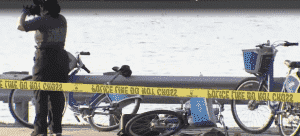
The Law Offices of Anidjar and Levine helps Miami cyclists protect their health and legal rights after a crash by guiding medical care, preserving evidence, and managing insurance communications.
We will document injuries, collect photos, witness statements, and reports, and move quickly to secure video, 911 records, and proof of bicycle damage before it disappears.
If fault is disputed, a skilled Miami Personal Injury Lawyer from our team can coordinate expert support and build a clear negligence claim for full compensation.
Continue on to see essential steps, deadlines, and case strategy.
Key Takeaways
- Get medical care immediately; concussions and internal injuries can appear later, and early records strengthen any Miami bicycle accident claim.
- Document the crash scene quickly with photos, witness contact information, and notes on weather, signals, vehicle details, and developing symptoms.
- A Miami bicycle accident lawyer can investigate fault using police reports, camera footage, 911 logs, and phone records to prove negligence.
- Avoid giving recorded statements to the other driver’s insurer; report basic facts to your insurer without speculating about blame.
- Act quickly because Florida filing deadlines apply, and shorter notice rules may apply if a government entity maintained the roadway.
How We Can Help With Your Miami Bicycle Accident Claim
When you’re dealing with the aftermath of a bicycle crash, we step in to take the pressure off and bring order to the process. We listen carefully, gather crucial records, and preserve evidence promptly, so your claim rests on clear, credible support rather than assumptions.
We coordinate with medical providers and guide practical injury mitigation steps, helping you document symptoms, follow treatment, and avoid gaps that insurers use to dispute harm.
We handle all communications with insurers and opposing parties, protect you from unfair statements, and set a disciplined timeline for action. Through thorough claim valuation, we account for medical costs, lost income, future care needs, and the personal impact of your injuries, then present a coherent demand backed by documentation.
If negotiations stall, we prepare for the next stage with the same service-minded focus, keeping you informed and positioned to pursue a fair outcome.
Understanding Miami Bicycle Accident Cases
Although every crash has its own facts, most Miami bicycle accident cases turn on a few core issues we can identify early: who owed a duty of care, how that duty was breached, and which injuries and losses the collision actually caused.
We’ll help you frame the claim under Florida negligence standards, then match the facts to the legal duties that apply to drivers, cyclists, and, in some cases, property owners or public entities.
We also evaluate the surrounding context, including bicycle infrastructure such as bike lanes, signage, lighting, and maintenance, because these details can affect foreseeability and responsibility.
We’ll document medical treatment, missed work, and daily limitations to connect your damages to the collision with clear records and consistent timelines.
When helmet use becomes an issue, we address Florida helmet legislation carefully, separating safety choices from causation and damage arguments.
Throughout the process, we’ll treat your case as a service opportunity, aiming to restore stability and promote safer streets for everyone.
Common Causes of Miami Bicycle Accidents
We often see Miami bicycle crashes caused by distracted driver negligence, when a motorist’s attention shifts away from the road and toward a phone or other distraction.
We also handle many cases involving failure to yield and unsafe passing distance, where drivers cut across a cyclist’s path or pass too closely in traffic.
Finally, dooring and parking hazards create sudden, unavoidable obstacles, and we’ll explain how these incidents occur and why they frequently lead to serious injuries.
Distracted Driver Negligence
Distracted driving frequently sits at the center of serious bicycle crashes in Miami, because a moment of inattention can erase the time and space a driver needs to notice a cyclist and react safely.
When drivers read or send texts, adjust GPS settings, or scroll social media, phone distraction turns a moving vehicle into an uncontrolled hazard. We also see distraction from eating, reaching for items, or managing children, all of which shift eyes and hands away from the road.
Even brief glances create a practical visual impairment, reducing peripheral awareness and delaying recognition of a rider’s position.
If you’ve been harmed, we can help document these lapses through reports, camera footage, phone records, and witness accounts. Our goal is accountability that supports safer streets and meaningful recovery.
Failure To Yield
When a driver fails to yield the right-of-way, a routine ride can turn into a violent collision in seconds.


We often see this happen at crosswalks, driveways, and multi-lane intersections, where motorists make turns or merge without checking for cyclists traveling straight. These crashes are preventable, and we encourage right-of-way education that treats cyclists as legitimate roadway users, not obstacles to be avoided.
We also stress intersection signage compliance because stop signs, yield signs, and signal phases only protect people when drivers actually follow them.
If you’re injured, we’ll help you document visibility conditions, traffic controls, and witness accounts, then connect the facts to the duty every driver owes the community. United, we can pursue accountability and safer streets for all.
Unsafe Passing Distance
OUR CONSULTATIONSARE FREE
START YOUR FREE CASE REVIEW

Drivers who cut in too close can turn a normal bike lane ride into a dangerous sideswipe in an instant. When a motorist attempts a closer overtaking maneuver, even a small drift can force a rider into traffic, curbs, or debris, leaving no time to recover.
We encourage you to prioritize patience because a few seconds of delay can prevent lifelong harm and protect vulnerable road users.
Unsafe passing distance often occurs on narrow streets, during rush hour, or when drivers misjudge a bicycle’s speed and stability. We look for evidence of how the pass occurred, including lane position, vehicle speed, and whether the driver moved over.
We also compare the conduct to legal benchmarks and roadway conditions, then use that analysis to pursue accountability and safer habits for everyone.
Dooring And Parking Hazards
Dooring crashes can come out of nowhere, turning an ordinary ride past parked cars into a sudden, high-impact collision. When a driver or passenger opens a door without checking, a door strike can throw you into traffic or onto the pavement, leaving little time to react.
We encourage you to ride defensively near metered parking, assume a door may open, and keep a safe buffer when space allows.
Parking hazards extend beyond doors. Vehicles pulling out abruptly, ride-share drop-offs, and delivery stops can force you into unsafe merges, especially along busy Miami corridors.
We help you document dooring risks, identify responsible parties, and preserve evidence such as video, witness statements, and damage patterns. If you’re injured, we’ll pursue accountability while honoring your commitment to serve others.
Legal Rights of Miami Bicycle Accident Victims
Although a bicycle crash can leave us shaken and uncertain, Florida law provides Miami cyclists with clear legal rights to pursue accountability and financial recovery. We can seek compensation when a driver, property owner, or employer breaches a duty of care, and we don’t need to accept blame-shifting narratives that minimize harm.
Even when Helmet regulations become a point of contention, they don’t automatically erase negligence, and comparative fault rules may still allow meaningful recovery.
- We can demand payment for medical costs, lost income, and reduced earning capacity.
- We can pursue damages for pain, disability, and loss of enjoyment of life.
- We can hold insurers to good-faith standards during Insurance disputes and claim denials.
- We can request preservation of evidence and full disclosure through the civil process.
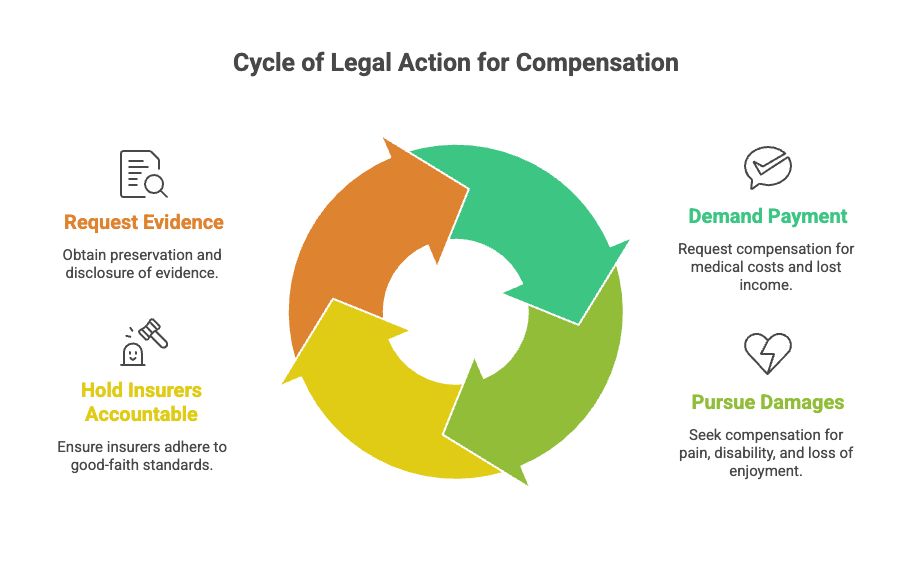
When we advocate for injured cyclists, we also protect safer streets for neighbors, visitors, and first responders, reinforcing a community ethic of care and responsibility.
Bicycle Accident Case Factors and Legal Procedures
|
Crash Cause
|
Evidence Types
|
Legal Duties Breached
|
Potential Liable Parties
|
Common Long-Term Injuries
|
Compensable Damages
|
Statute of Limitations (Inferred)
|
|
|---|---|---|---|---|---|---|---|
|
Distracted driving (texting, GPS, social media, eating, managing children)
|
Photos of scene/injuries, witness details, police reports, video/surveillance footage, 911 records, phone records, medical records, bicycle damage proof, expert testimony (accident reconstruction)
|
Failure to exercise duty of care, failure to yield right of way, failure to maintain safe passing distance, failure to follow traffic signals/signage, negligent road maintenance/design
|
Drivers, passengers (dooring), property owners, employers, government entities (roadway maintenance)
|
Chronic pain, reduced mobility, traumatic brain injury (cognitive decline, balance issues), PTSD, emotional trauma, fractures, spinal strain
|
Medical costs (current and future), lost income, reduced earning capacity, pain and suffering, disability, loss of enjoyment of life, property damage (bicycle/gear), punitive damages (rare cases)
|
General negligence claims in Florida must typically be filed within 2 years (as of 2023 legislative changes), though shorter notice periods apply for government entities.
|
|
|
Failure to yield (at crosswalks, driveways, intersections)
|
Traffic control device documentation, visibility conditions, 911 logs, dispatch logs, body-camera footage, vehicle data (EDR)
|
Breach of right-of-way rules, failure to check for cyclists during turns/merges, and signage non-compliance
|
Motorists, public entities (signage/infrastructure)
|
Soft tissue damage, internal bleeding, concussions, ligament damage, and sensory deficits
|
Rehabilitation costs, adaptive equipment (braces, canes), home task assistance, lost job benefits
|
2 years for personal injury negligence in Florida; significantly shorter (often 3-6 months) for sovereign immunity notice if suing a government entity.
|
|
|
Unsafe passing distance and Dooring/Parking hazards
|
Skid marks, debris patterns, lane position analysis, vehicle speed data, door strike damage patterns
|
Failure to maintain safe buffer, failure to check before opening vehicle doors, unsafe merging near parking zones
|
Drivers, passengers, rideshare/delivery companies
|
Road rash, fractures, and secondary impact injuries from being thrown into traffic
|
Medical bills, lost wages, future care needs, bicycle replacement costs
|
2 years from the date of the collision for most negligence-based injury lawsuits in Florida.
|
Steps to Take After a Miami Bicycle Accident
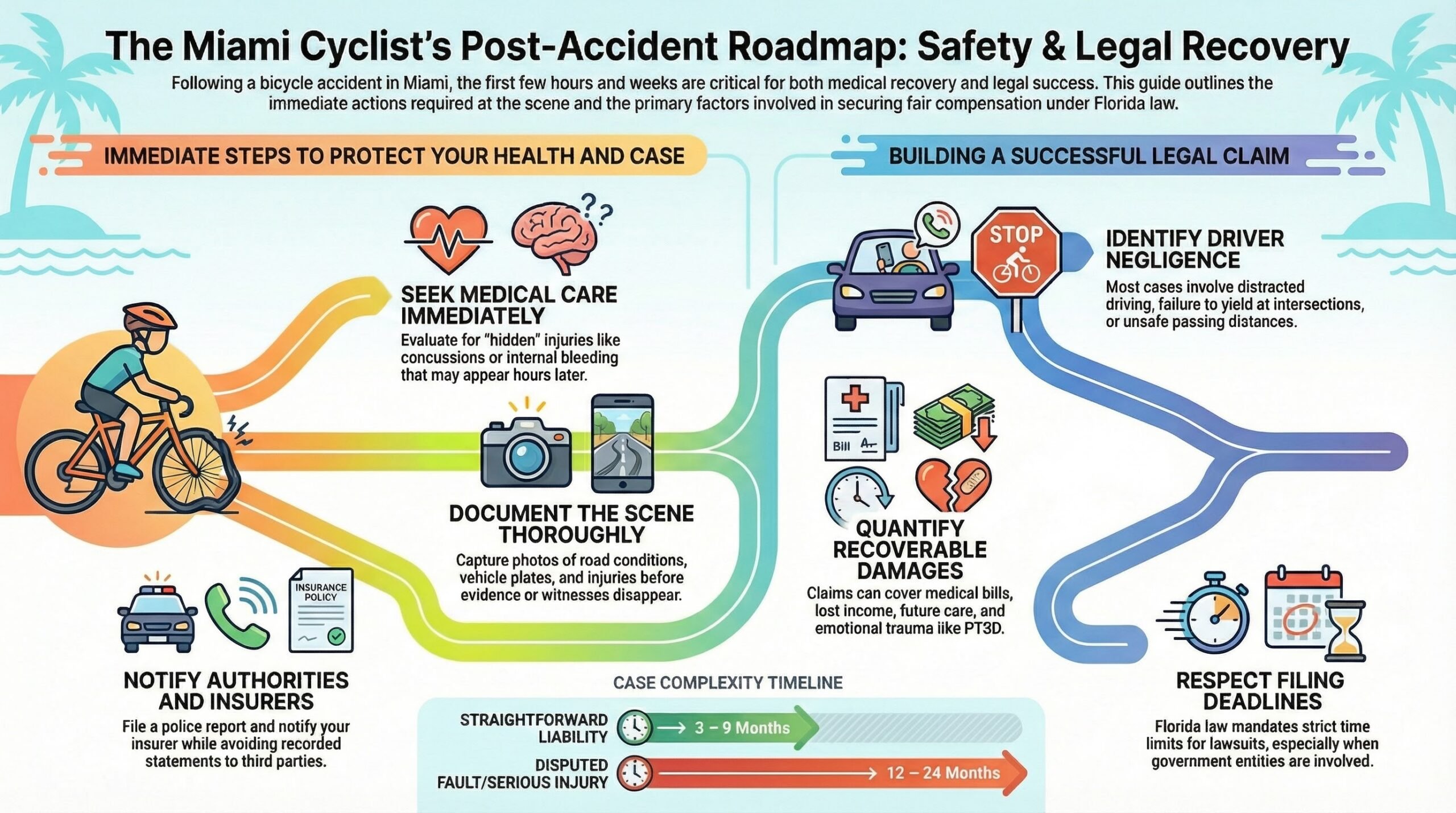
After a Miami bicycle accident, we’ll take practical steps with you that protect your health and preserve crucial evidence for any claim.
We should seek medical care immediately, then document the scene and your injuries with photos, notes, and witness information while details are still fresh.
We’ll also notify the police and your insurer promptly, so the incident is properly recorded and your coverage rights are preserved.
Seek Medical Care Immediately


Prioritize medical care the moment you’re safe, even if your injuries seem minor. We encourage you to seek an urgent evaluation at an emergency room, urgent care clinic, or with your primary physician, because concussion symptoms, internal bleeding, and soft tissue damage may not appear right away.
When we act promptly, we protect your long-term health and strengthen your ability to continue serving others without preventable limitations.
We also recommend that you follow medical instructions carefully, take prescribed rest seriously, and schedule follow-up care to monitor changes in pain, mobility, or cognition.
If transportation is difficult, we can help you identify local options and coordinate appointments. By prioritizing treatment now, we reduce complications later and set your recovery on a clear, documented path toward stability and full function.
Document Scene And Injuries
At the scene, we should document what happened as clearly as possible once we’re safe and medical needs are addressed.
We can take wide and close photos of the roadway, bike position, traffic signals, skid marks, debris, and any visible hazards. This photo documentation helps preserve details that may change within minutes, and it supports a truthful account for everyone involved.
We should also record the time, weather, lighting, and our direction of travel, then note the other party’s vehicle description and license plate.
For injury documentation, we can photograph bruises, cuts, swelling, and torn clothing, and we should record symptoms as they develop, including pain levels and limited movement.
When we serve others, accurate records protect integrity and accountability.
Notify Police And Insurer
Once we’re safe and immediate medical concerns are under control, we should notify law enforcement and our insurer without delay to protect both our health and our claim. Promptly notifying the police creates an official report that documents the time, location, parties involved, and initial observations, which can reduce later disputes.
We should request the report number, confirm our statement is accurate, and identify any witnesses for follow-up.
Next, we should begin coordinating with our auto, health, or homeowners carrier, as well as any applicable rideshare or umbrella policies. We’ll report only confirmed facts, avoid speculation about fault, and note that symptoms may evolve.
If the driver’s insurer contacts us, we can decline recorded statements until we’ve obtained medical guidance and legal counsel. This approach supports responsible recovery and fair accountability for everyone involved.
How a Miami Bicycle Accident Lawyer Can Help You
Although a bicycle crash can seem straightforward at first, it’s clear that the legal and insurance issues behind it often become complicated quickly.
A bicycle crash may seem straightforward, but legal and insurance issues often become complicated quickly.
When we represent you, we take on the burden of proving fault, preserving evidence, and presenting a clear claim, so you can focus on recovery and continued bicycle safety in our community.
We coordinate with insurers, review reports and records, and pursue fair compensation through negotiation or litigation when necessary, always guided by steady client communication and respect for your goals.
Our role also includes helping you avoid common mistakes that can weaken a case, and keeping your matter moving on a reliable timeline.
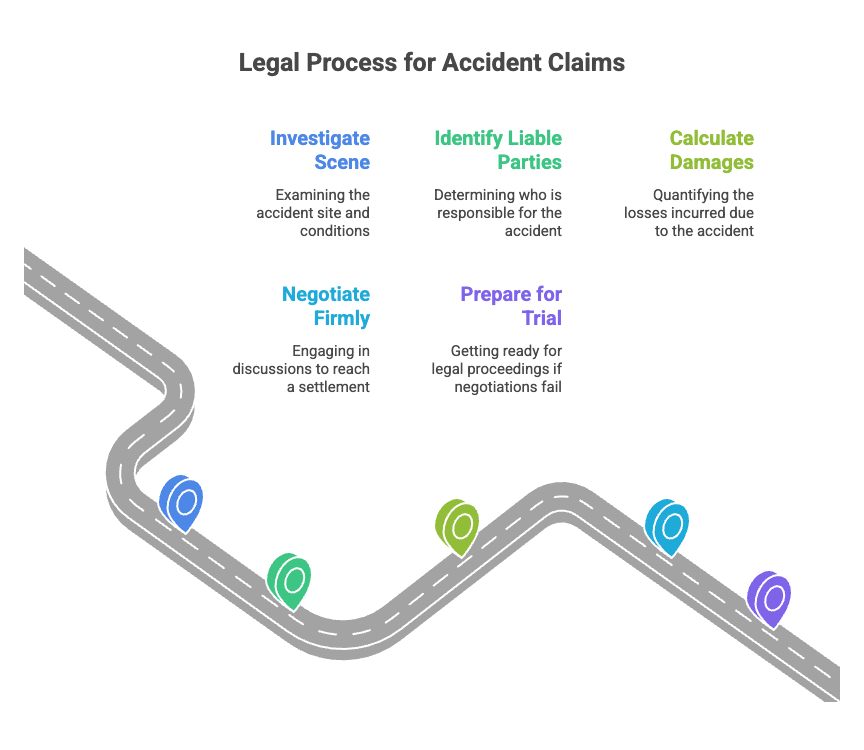
- We investigate the scene, vehicles, and roadway conditions
- We identify liable parties and applicable insurance coverage
- We calculate damages and document losses with supporting proof
- We negotiate firmly, and prepare for trial if talks fail
Long-Term Effects of Miami Bicycle Accident Injuries
We’ll help you understand how a Miami bicycle accident can lead to long-term consequences that extend well beyond the initial recovery.
We often see chronic pain and reduced mobility that limit daily activities, traumatic brain injury sequelae that affect memory, focus, and mood, and emotional trauma, including PTSD, that disrupts sleep and personal relationships.
We’ll explain what these lasting effects can look like, why they matter in your claim, and how we can document them with credible evidence.
Chronic Pain And Mobility
When a bicycle crash causes more than short-term bruising, chronic pain and reduced mobility often become the injuries’ most disruptive long-term effects. We often see riders struggle with standing, walking, or lifting, especially after fractures, ligament damage, or spinal strain.
Effective pain management may require coordinated care, physical therapy, and consistent documentation of symptoms and limitations.
As we serve our families, workplaces, and communities, limited movement can quietly restrict daily responsibilities and volunteer commitments. We’ll help you measure how these limits affect your earning capacity, home tasks, and future medical needs, including mobility aids such as braces, canes, or adaptive equipment.
With clear medical records and credible life-impact evidence, we can pursue compensation that supports steadier recovery and preserves your ability to keep giving to others.
Traumatic Brain Injury Sequelae
Uncertainty often follows a traumatic brain injury because symptoms can evolve long after the bicycle crash. We often see headaches, slowed processing, and concentration problems that interfere with work and caregiving, and you may notice cognitive decline months later without a clear warning sign.
Balance issues, dizziness, and sleep disruption can persist, limiting safe driving and routine tasks.
Sensory deficits, such as blurred vision, ringing in the ears, or altered taste and smell, may complicate communication and reduce confidence in public settings.
We encourage thorough neurologic evaluation, consistent follow-up, and documented symptom tracking, since these records support effective treatment planning. When we advocate for you, we also plan for future care needs, rehabilitation, and the practical support that helps you continue serving others safely.
Emotional Trauma And PTSD
Although physical injuries often draw immediate attention after a Miami bicycle crash, emotional trauma can persist quietly and disrupt daily life long after the road rash and fractures heal.
You may relive the impact through nightmares, panic in traffic, or sudden startle responses, and those symptoms can meet the criteria for PTSD. We often see Childhood triggers resurface when a client hears screeching brakes or feels helpless, even if the crash occurred in adulthood.
These reactions can lead to avoidance of cycling, missed work, and a reduced sense of purpose in serving others.
Relationship strain may follow when irritability, sleep loss, or emotional numbness affects communication at home.
We can help you document these harms, connect with qualified clinicians, and pursue compensation that supports sustained recovery and stability.
Proving Liability in Miami Bicycle Accident Cases
Building a strong liability case starts with a disciplined review of how the crash happened and which party breached a legal duty of care.
A strong liability case begins with a disciplined review of the crash and the party that breached a legal duty of care.
We begin by identifying all stakeholders, including drivers, property owners, employers, and government entities responsible for road design or maintenance. Then we connect conduct to causation by mapping timelines, traffic control devices, sightlines, and right-of-way rules.
To serve you well, we prioritize evidence preservation from day one, securing photos, surveillance video, vehicle data, bicycle condition, and 911 recordings before they disappear. We also promptly interview witnesses, obtain dispatch logs, and request body-camera footage when available.
When fault is disputed, we use expert testimony from accident reconstructionists, human factors consultants, or engineers to explain speed, visibility, and avoidability in clear terms. We also analyze cell phone records, toxicology indicators, and prior complaints about hazardous locations.
Finally, we anticipate defenses and document your lawful riding behavior with consistent records and credible statements.
Compensation for Miami Bicycle Accident Damages
Pursue full compensation early, because the choices we make in the first weeks after a Miami bicycle crash can shape the value of your claim for months or years. We help you document every harm with purpose, so your recovery supports both your well-being and the people who rely on you.
Compensation may include medical bills, future treatment, rehabilitation, and the cost of adaptive equipment. We also seek compensation for pain and suffering, and for the ways injuries limit daily activities, community service, and family responsibilities.
When time away from work reduces income, we calculate lost wages and long-term earnings loss, using pay records, job benefits, and expert support as needed. Property damage, such as a ruined bicycle or safety gear, should be valued accurately, not minimized by quick estimates.
In rare cases involving reckless misconduct, we may seek punitive damages to promote accountability and protect others.
The Statute of Limitations for Miami Bicycle Accident Cases
When a Miami bicycle crash leaves you injured, the statute of limitations sets a firm deadline for filing a lawsuit, and missing it can end your right to pursue compensation in court.
In Florida, most negligence-based bicycle injury claims generally must be filed within a specific time period, and the clock often begins on the date of the collision. These statute limitations rules protect the integrity of evidence, but they also require prompt, organized action from those seeking accountability.
We encourage you to treat filing deadlines as a crucial part of serving your family and community, because timely claims can help cover medical care, replace lost income, and support safer streets.
Important exceptions or shorter time limits may apply in certain situations, such as when a government entity is involved or when the injured rider is a minor. To protect your rights, we should preserve records, identify witnesses, and confirm the correct deadline early.
Why You Need an Experienced Miami Bicycle Accident Lawyer
Although a bicycle crash may seem straightforward, we often need an experienced Miami bicycle accident lawyer to uncover the full scope of liability and damages before insurers shape the narrative.
We act quickly to preserve video, identify witnesses, and document roadway defects, vehicle violations, or negligent maintenance that may not be obvious at the scene. We also calculate losses beyond immediate bills, including future care, reduced earning capacity, and the daily limitations that follow serious injuries.
We know how insurers evaluate claims, and we counter low offers with clear evidence, disciplined negotiation, and, when necessary, litigation readiness.
We coordinate medical records and expert opinions so your recovery story is accurate, complete, and difficult to dismiss. Because we serve the broader public, we support Community outreach that promotes safer streets and track Legal reforms that affect cyclists’ rights, comparative fault, and available coverage.
How to Choose the Right Miami Bicycle Accident Lawyer for Your Case
Because the lawyer you choose can shape how evidence is gathered, fault is assigned, and damages are valued, we should treat the selection process as a vital first step in your case.
We can begin by confirming focused bicycle-accident experience, strong trial readiness, and a record of fair results, since insurers often test resolve.
We should ask how the lawyer investigates crashes, works with experts, and preserves helmet, bike, and roadway evidence.
We also need transparent attorney fees, including the contingency percentage, litigation costs, and, when repayment occurs, so we can serve our families without financial surprises.
Client communication is equally important; we should expect clear timelines, prompt updates, and direct access to the team handling negotiations.
We can evaluate professionalism by reviewing written agreements, checking disciplinary history, and reading verified reviews for patterns rather than isolated praise.
Finally, we should choose counsel whose values align with our commitment to community safety and responsible advocacy for others.
About the Law Offices of Anidjar and Levine
Choosing counsel sets the tone for how your bicycle accident claim moves forward, so we should also understand what the Law Offices of Anidjar and Levine brings to the table in Miami injury cases.
We approach each matter with disciplined preparation, prompt communication, and a steady focus on the human impact of injury, so you can keep serving your family and community while we handle the legal burden.
Our firm’s history reflects years of advocating for injured Floridians, and we apply that experience to bicycle crash cases involving drivers, insurers, and disputed fault.
We investigate the scene, preserve crucial records, coordinate medical documentation, and pursue fair compensation through negotiation or litigation when necessary.
We also keep you informed at each stage, because your decisions should rest on clear facts, not pressure.
If you’re evaluating fit, client testimonials can help illustrate how we’ve supported others with respect, accountability, and consistent follow-through.
Frequently Asked Questions
Do You Offer Free Consultations for Miami Bicycle Accident Cases?
Yes, we do offer a free consultation for Miami bicycle accident cases, so you can understand your options without added pressure.
We’ll review the basic facts, listen carefully, and explain next steps with clear, service-minded guidance.
We provide initial meeting options, including phone, video, or in-person appointments, to respect your schedule and needs.
If we can help, we’ll outline a focused plan and the documents to gather.
What Percentage Is Your Contingency Fee, and Are There Any Additional Costs?
Our contingency percentage typically ranges from 33% to 40%, depending on whether we resolve your claim before filing suit or through litigation.
We’ll confirm the exact rate in writing before we begin, so you can plan responsibly and focus on recovery.
Additional expenses may include filing fees, records requests, expert reviews, and deposition costs; we usually advance them and reimburse from any recovery.
If there’s no recovery, you owe nothing.
How Long Does a Typical Miami Bicycle Accident Case Take to Resolve?
A typical case takes several months to two years, depending on injuries, insurance cooperation, and whether litigation is required.
We map a clear case timeline around your medical recovery milestones, because settling too early can undervalue future care.
Claims with straightforward liability may resolve in 3–9 months, while disputed fault or serious damages often extend 12–24 months.
We’ll keep you informed, pursue a fair resolution, and serve your long-term well-being.
Will My Case Settle, or Should I Expect to Go to Trial?
Most cases settle, but we’ll prepare as if we’re going to trial.
Your settlement likelihood depends on liability clarity, injury documentation, insurance limits, and whether the other side negotiates in good faith.
We’ll strengthen your position through early evidence preservation, accurate damage analysis, and disciplined communication, which often motivates reasonable offers.
If negotiations stall or undervalue your losses, our trial preparation guarantees we’re ready to serve you effectively in court.
Can I Switch Lawyers if I Already Hired Another Attorney?
Yes, you can switch lawyers, and we can help you do it properly.
To change attorneys, we’ll review your current contract, provide written notice, and request your file, while honoring ethical considerations like avoiding conflicts and protecting your confidential information.
We’ll also discuss any fees or liens your prior counsel may claim, so your changeover supports your case and the people you aim to serve.
—————————
When a bicycle accident disrupts your life, the Law Offices of Anidjar and Levine is prepared to protect your rights and pursue the full compensation you merit.
We’ll investigate the crash, preserve crucial evidence, address insurance tactics, and document your injuries and losses with care.
Because deadlines can bar recovery, we’ll act promptly and keep your claim on track from start to finish.
If you need a Miami Personal Injury Lawyer, we’re ready to provide clear guidance and strong representation.