
The Law Offices of Anidjar and Levine can assess whether a dangerous property condition caused a fall and identify parties who may be legally responsible. The review may consider photographs, witness accounts, incident reports, maintenance records, and medical documentation. Prompt medical care and timely evidence preservation can support both recovery and a claim. Because liability, comparative fault, and deadlines depend on the facts and applicable law, an attorney can explain your options and the steps that may follow. Learn more from a Miami Personal Injury Lawyer.
Main Takeaways
- A Miami slip-and-fall lawyer can assess whether a hazardous property condition caused your fall and who may be legally responsible.
- Photos, incident reports, witness details, maintenance logs, and surveillance footage may help establish what happened and when.
- Seek prompt medical care, report the fall, and keep records of symptoms, treatment, expenses, and missed work.
- Property owners may be liable if they knew or reasonably should have known about a hazard and failed to address or warn about it.
- Ask a qualified attorney about Florida deadlines, comparative fault, claim requirements, and potential compensation.
How We Can Help With Your Miami Slip & Fall Injury Claim
When a slip and fall causes injury, an attorney can help determine who may be legally responsible and what evidence supports the claim. A careful Claim Evaluation can clarify the incident’s circumstances, identify potential sources of liability, and assess the available documentation. This process may include reviewing photographs, incident reports, correspondence, and records related to the property or the event.
The attorney can also explain procedural requirements, organize relevant information, and communicate with insurers or other involved parties. A focused Legal Strategy is shaped by the facts, the client’s goals, and the evidence that can be established. It may address disputed accounts, requests for additional records, and responses to settlement proposals.
Throughout the matter, clear guidance helps clients understand their options and make informed decisions. By managing legal tasks with care and keeping the client’s priorities central, counsel can support a more orderly process and pursue an outcome grounded in the claim’s documented value.
Understanding Miami Slip & Fall Injury Cases


Understanding a Miami slip and fall injury case begins with examining how the fall occurred, the condition of the property, and whether the responsible party had a reasonable opportunity to address the hazard. These facts help establish premises responsibility and clarify whether a property owner, manager, or another party may be accountable under applicable law.
OUR CONSULTATIONSARE FREE
START YOUR FREE CASE REVIEW

Claim eligibility depends on more than the fact that an injury occurred. The injured person generally must show that a hazardous condition existed, that the responsible party knew or reasonably should have known about it, and that the condition contributed to the fall. Medical records, incident reports, photographs, witness accounts, and maintenance documents may help support this assessment.
The extent of the injury and its effect on daily activities can also influence a claim. Prompt medical care provides important documentation and helps protect a person’s health. A careful review of the evidence allows the parties to evaluate responsibility, losses, and possible next steps while keeping the process focused on fair accountability.
Don’t Wait. Call Our Florida Personal Injury Lawyers Now!
Common Causes of Miami Slip & Fall Injuries


Slip-and-fall incidents in Miami commonly result from wet floors, uneven surfaces, poor lighting, and cluttered walkways. These hazards can make it difficult for people to identify unsafe conditions or maintain their footing. Examining how such conditions arise helps clarify when a fall may involve preventable negligence.
Wet Floors
Wet floors are a common cause of slip-and-fall injuries in Miami, where rain, humidity, and frequent cleaning can leave surfaces slick. Water tracked into stores, restaurants, offices, and apartment buildings may create hazards near entrances and other busy areas. Leaks, spilled drinks, and recently mopped floors can also expose visitors to unexpected falls, particularly when warning signs are absent or difficult to see.
Property owners and managers can reduce these risks by monitoring high-traffic areas and responding promptly when moisture is reported. Effective Floor mat placement at entrances can help capture rainwater, while regular inspection confirms mats remain secure and absorbent. Clear spill response protocols help staff address spills quickly, mark affected areas, and keep people away until floors are dry. These practices support safer spaces for visitors, employees, and residents.
Uneven Surfaces
Uneven surfaces can cause serious falls when changes in elevation or damaged walking areas are difficult to notice. In Miami, cracked pavement, loose tiles, raised walkways, and broken steps can create hazards at businesses, apartment buildings, parks, and public facilities. These conditions may result from weather exposure, inadequate maintenance, construction defects, or delayed repairs. Property owners and managers are generally expected to take reasonable steps to inspect walking areas, address dangerous defects, and warn visitors when hazards cannot be corrected promptly. A person who falls may suffer fractures, sprains, or head injuries, potentially requiring medical care and time away from work. Clear documentation of the surface condition, incident location, and resulting injuries can help establish what occurred. Prompt attention to repair concerns also helps protect visitors and the wider community.
Poor Lighting
Poor lighting can make hazards difficult to see, increasing the risk of falls in Miami businesses, apartment buildings, parking areas, stairwells, and walkways. Burned-out bulbs, inadequate fixtures, and delayed maintenance may leave visitors unable to identify changes in floor level or other surface conditions. Shadowy stairwells are particularly concerning because poor visibility can make it difficult to judge each step and maintain balance. Property owners and managers can help protect residents, customers, and other visitors by regularly inspecting lighting, replacing failed bulbs promptly, and ensuring common areas are adequately illuminated. When a fall occurs, the lighting conditions at the time may be relevant to understanding how the incident happened. Photographs, maintenance records, and witness accounts can help document whether insufficient illumination contributed to the unsafe conditions.
Cluttered Walkways
Cluttered walkways can create trip hazards in Miami businesses, apartment buildings, parking areas, and other shared spaces. Boxes, cords, cleaning equipment, and discarded materials may obstruct pedestrian routes and prevent visitors from seeing a clear path. Aisle obstructions are especially concerning when they narrow access or force people to step around items near corners, entrances, and checkout areas. Poorly positioned merchandise displays can also extend into walkways, creating unexpected barriers for customers and employees.
Property owners and managers should regularly inspect shared areas, remove unnecessary objects, and keep designated routes unobstructed. Staff members can help by promptly reporting hazards and returning supplies to appropriate storage locations. When a walkway remains cluttered despite reasonable opportunities to address the condition, someone who trips may suffer injuries requiring medical care and prompt further review of how the hazard was handled.
Legal Rights of Miami Slip & Fall Injury Victims
When a slip and fall occurs in Miami, injured individuals may have the right to seek compensation if a property owner’s negligence caused the hazard and resulting injuries. Under Premises Liability principles, a claim may depend on whether the responsible party knew or reasonably should have known about a dangerous condition and failed to address it or provide adequate warning. Victim Rights may include pursuing recovery for documented losses, subject to applicable law and evidence.
In general, an injured person may consider these steps:
- Obtain prompt medical care and retain records describing treatment and resulting limitations.
- Preserve photographs, incident reports, witness contact details, and other relevant evidence.
- Keep receipts and records of medical expenses, lost income, and related costs.
- Consult a qualified attorney to understand deadlines, available remedies, and claim requirements.
Careful documentation can help clarify the circumstances and support a fair evaluation. Each case depends on its specific facts, and comparative fault or other legal rules may affect recovery. Timely guidance can help protect options while allowing injured individuals to focus on recovery and their responsibilities to family and community.
Why Do Miami Slip & Fall Injuries Happen?
Understanding why a fall occurred can help clarify whether a property hazard or another factor contributed to the injury. In Miami, these incidents may result from wet floors, uneven pavement, loose mats, broken stairs, or poorly lit walkways. Rain and humidity can leave entrances and outdoor surfaces slick, while tracked-in water may create hazards inside businesses and residential buildings.
Property maintenance plays an important role in reducing preventable risks. Owners and managers may contribute to dangerous conditions by failing to repair damaged flooring, address leaks, remove debris, or provide adequate lighting. In some settings, missing handrails or obstructed paths can also make routine movement unsafe.
Pedestrian awareness may affect how a fall happens, but it does not automatically eliminate concerns about a hazardous property. Distraction, crowded walkways, and unexpected changes in surface level can increase the chance of losing balance. Identifying the conditions involved helps explain how a fall occurred and whether preventable hazards were present.
What Should You Do After a Miami Slip & Fall Injury?
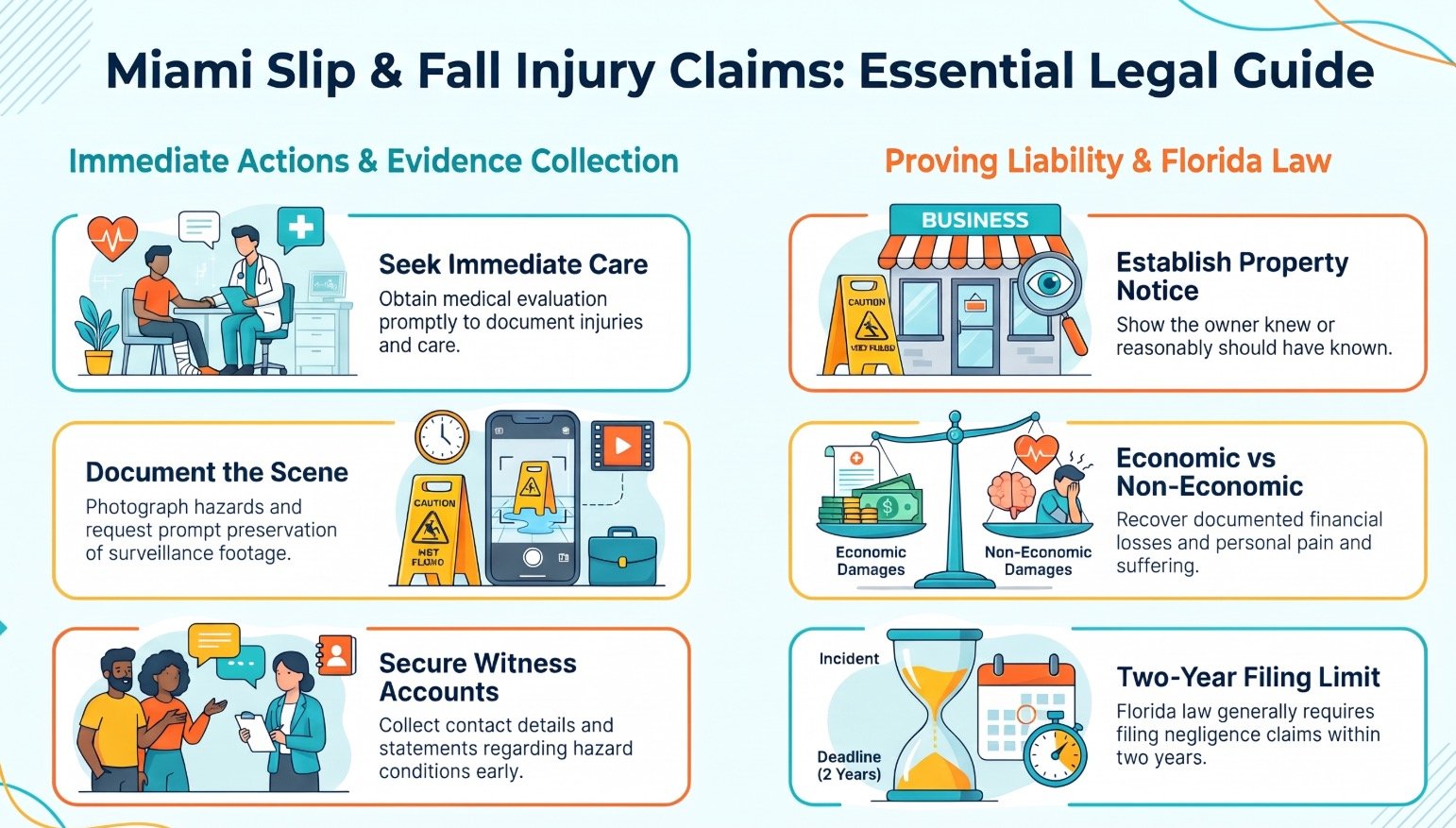
After a slip and fall, the injured person should seek prompt medical care, even if symptoms initially appear minor. The fall should be reported to the property owner or manager, and the person should request an incident report. When it is safe to do so, photographs of the scene, hazards, and visible injuries can help preserve relevant evidence.
Seek Medical Care
Prompt medical care is essential after a slip and fall, even if an injury initially appears minor. A person may have pain, dizziness, or limited movement that becomes more noticeable hours later. Urgent evaluation by a qualified medical professional can identify hidden injuries, guide appropriate treatment, and reduce the risk of complications. It also creates a timely record of the person’s condition and care.
The injured person should describe how the fall occurred and provide an accurate account of all symptoms, including those that seem mild. Following the clinician’s instructions and attending recommended appointments can support recovery and help prevent further harm. Symptom monitoring is also important: changes such as worsening pain, swelling, numbness, confusion, or difficulty walking warrant prompt attention. When symptoms are severe or rapidly worsening, emergency services may be necessary.
Report the Fall
When a fall occurs on someone else’s property, the injured person should report it promptly to the owner, manager, or other responsible representative. Notify the appropriate person promptly, even if the injury initially seems minor. A timely report gives the property representative an opportunity to address a hazardous condition and helps establish when the incident occurred. The injured person should clearly describe the basic circumstances, including the location, approximate time, and nature of the fall. If possible, the person should request that the incident be recorded in a written report and ask how to obtain a copy. Before signing any statement, the injured person should review it for accuracy and request corrections to errors or omissions. Remaining factual and courteous can support effective communication while preserving a reliable account of the event for later reference.
Document the Scene
If it is safe to do so, documenting the scene can help preserve details about the conditions that contributed to a Miami slip and fall. The injured person or a companion can photograph the hazard from several angles, including the surrounding area and any warning signs, barriers, or nearby lighting. Images should show relevant details such as liquid, debris, uneven flooring, or damaged surfaces before conditions change. Scene preservation may also include noting the date, time, weather, and exact location, then identifying witnesses who observed the hazard or fall. Where practical, hazard measurements, such as the depth of standing water or height difference between floor surfaces, can provide useful context. Documentation should never delay medical care or require anyone to enter an unsafe area. Store copies securely and share them only with appropriate representatives.
Critical Evidence in a Miami Slip & Fall Injuries Case
A well-supported Miami slip and fall injury claim may depend on evidence that documents the hazard, the incident, and its consequences. Essential materials include: 1. photographs of the scene, 2. surveillance footage, 3. witness statements, and 4. medical records. Preserving these records promptly can help clarify how the fall occurred and the extent of the injuries.
Incident Scene Photos
Photographs taken at the scene can preserve details that may change or disappear before a Miami slip and fall claim is investigated. Images can document the condition of a floor, the location of a hazard, warning signs, lighting, and nearby objects. These details may help establish how the incident occurred and whether reasonable steps could have prevented it. When safe and appropriate, a person who falls or a witness can take wide views and close-up images from several angles. Preserving photo metadata can retain information about when and where images were captured; original files should be kept without edits. Clear labeling and prompt sharing with counsel support scene reconstruction planning and help investigators assess the evidence. Photos should be obtained lawfully and respectfully, protecting the privacy and dignity of everyone present.
Surveillance Footage
Beyond scene photographs, surveillance footage may provide a time-stamped record of the events surrounding a Miami slip and fall. Video from a business, parking area, or nearby property may show the condition of a walkway before the incident, the fall itself, and any response afterward. Its value depends on whether the recording is clear, complete, and relevant to the location and time in question. Camera angles can affect what the footage reveals; a view may capture a hazard clearly or leave important details outside the frame. Because many systems overwrite recordings automatically, prompt Video preservation requests can help prevent potentially useful evidence from being lost. The footage may help evaluate how the incident occurred and whether reasonable safety measures were taken, supporting a careful, fair review of the injured person’s claim.
Witness Statements
Witness statements can provide important context in a Miami slip and fall injury case, particularly when they describe the hazard, the fall, or the property owner’s response. People who saw the incident may explain how long a dangerous condition existed, whether warnings were present, and what staff did afterward. Their accounts can help clarify disputed details and support a fair assessment of responsibility.
Witness credibility depends on factors such as the person’s opportunity to observe, consistency, and relationship to those involved. Independent witnesses may offer useful perspectives, while differences between accounts should be documented rather than overlooked. Promptly preserving statements can protect accurate recollections before memories fade or witnesses become difficult to locate. Recording names, contact information, and the date of each account helps maintain a clear record for later review.
Medical Records
Medical records are critical evidence in a Miami slip and fall injury case because they document the injuries, treatment, and recovery associated with the incident. Prompt medical attention can help protect an injured person’s health while creating a clear record of symptoms and diagnoses. Records may include emergency department notes, imaging results, prescriptions, referrals, therapy plans, and follow-up assessments. Collectively, these materials can connect reported injuries to the fall and show how they affected daily activities.
Record preservation is important because incomplete files or missing dates may complicate claim evaluation. Patients can request copies and keep bills, discharge instructions, and appointment records. Provider coordination may help make certain that relevant offices maintain consistent documentation and respond to record requests. Accurate, organized medical evidence supports a fair review of the person’s needs and the services required for recovery.
Don’t Wait. Call Our Florida Personal Injury Lawyers Now!
Long-Term Effects of Miami Slip & Fall Injuries
The effects of a slip and fall injury may persist long after the initial incident. Some individuals experience chronic pain or reduced mobility that interferes with daily activities and work. Emotional distress may also develop, particularly when recovery is prolonged or independence is affected.
Chronic Pain
Although some injuries from a slip and fall improve within weeks, others can lead to chronic pain that persists for months or longer. Ongoing discomfort may stem from damaged soft tissue, fractures, or nerve irritation, and its severity can vary over time. Persistent pain may affect concentration, mood, and the ability to maintain usual responsibilities, creating added strain for injured people and their caregivers. Sleep disruption is also common when pain worsens at night or makes it difficult to find a comfortable position. A healthcare provider can assess the cause, recommend appropriate treatment, and monitor changes. Pain management may involve medication, physical therapy, or other clinically supported approaches. Keeping records of symptoms, treatment, and related expenses can help document the injury’s continuing effects and inform decisions about care and compensation.
Reduced Mobility
When a slip-and-fall injury affects the joints, bones, or muscles, reduced mobility may persist long after the initial pain subsides. A person may struggle to walk, climb stairs, stand for extended periods, or complete routine tasks without assistance. These limitations can interfere with work, caregiving, and other responsibilities, particularly when recovery requires ongoing treatment or rehabilitation.
Mobility aids, such as canes, walkers, or wheelchairs, may help a person move more safely and maintain greater independence. Home modifications, including grab bars, ramps, and improved lighting, can reduce barriers and support daily activities. The appropriate measures depend on the injury, the person’s living environment, and medical guidance. Documenting mobility restrictions and related expenses can help clarify the injury’s lasting effects when pursuing compensation for necessary care and practical support.
Emotional Distress
Beyond physical limitations, a serious slip and fall injury can lead to lasting emotional distress. A person may experience anxiety after accidents, particularly when returning to the location where the fall occurred or facing similar conditions elsewhere. Persistent fear of falling can also discourage routine activities, reduce independence, and strain relationships with family members or caregivers. These effects may continue even after visible injuries begin to recover, especially when pain, mobility limits, or uncertainty disrupt daily life. Recognizing emotional symptoms is important because timely support can help an injured person regain confidence and participate more fully in recovery. Medical professionals may recommend counseling or other appropriate care based on individual needs. Clear records of symptoms and treatment can also help explain how the incident affected the person’s well-being and ongoing responsibilities.
Proving Liability in Miami Slip & Fall Injury Cases
Proving liability in a Miami slip and fall case requires evidence that a hazardous condition caused the injury and that the property owner or responsible party failed to use reasonable care. Evidence may include photographs, witness accounts, incident reports, and medical records linking the fall to the injury. The condition could involve a wet floor, uneven pavement, poor lighting, or an obstruction.
A central issue is Property owner notice. The injured person may need to show that the owner knew about the hazard or that it existed long enough for a reasonable person to discover and address it. Maintenance logs, employee statements, and surveillance footage may help establish when the condition arose and whether it was reported.
Records of hazard inspections can also show whether reasonable safety practices were followed. Promptly preserving relevant evidence can support a clear account of events and help determine responsibility. Each case depends on its facts, including the location, duration, and visibility of the hazard.
Dealing With Insurance Companies After a Miami Slip & Fall Injury
After a Miami slip and fall injury, an insurer may contact the injured person to investigate the claim and assess potential responsibility. The injured person may be asked to describe the incident, provide records, or answer questions about medical care. Careful Adjuster communication can help keep information accurate and prevent misunderstandings. Before giving a recorded statement or signing a release, the person should understand how the information may affect the claim and consider obtaining legal advice.
Insurers may review photographs, incident reports, treatment records, and other evidence when evaluating responsibility and losses. A prompt, organized response can support a fair assessment while avoiding speculation about uncertain details. The injured person should retain copies of correspondence and avoid exaggerating symptoms or minimizing their impact.
During claim negotiation, an insurer may propose a settlement that does not reflect the full extent of documented harm. Legal counsel can assess the offer, explain available options, and communicate with the insurer on the injured person’s behalf, allowing attention to remain on recovery and daily responsibilities.
What to Expect During a Miami Slip & Fall Injury Claim Process
A Miami slip and fall claim typically begins with an initial case review to assess the circumstances, potential liability, and available evidence. The process may then involve collecting records and witness statements, followed by settlement negotiations with the responsible party or insurer. If those negotiations do not resolve the dispute, filing a lawsuit may be the next step.
Initial Case Review
What happens during an initial case review after a slip and fall in Miami? This first discussion helps determine whether a claim has legal merit and what steps could follow. During a case evaluation, the attorney typically asks about the incident, the injuries, medical care, missed work, and communications with the property owner or insurer. The client may explain how the fall has affected daily responsibilities, including caregiving or other community service. Consultation preparation can include organizing a timeline, noting questions, and bringing available medical or insurance paperwork. The attorney may assess potential deadlines, identify issues that require further review, and explain possible legal options. No outcome is guaranteed at this stage. The review provides an informed starting point for deciding whether to proceed and how to protect the client’s interests.
Evidence Collection
Because evidence can change or disappear quickly, collecting it is an important early step in a Miami slip and fall claim. The injured person or a representative may photograph the hazard, surrounding area, warning signs, footwear, and visible injuries, provided it is safe to do so. Witness names and contact details should be recorded promptly, while memories remain clear. Medical records, incident reports, and relevant communications can help document what happened and the resulting harm. Evidence preservation may also involve requesting that a property owner retain surveillance footage, inspection logs, and maintenance records before routine deletion or disposal. An attorney can identify relevant materials and arrange chain-of-custody verification for physical evidence, documenting who handled it and when. Organized, reliable evidence helps clarify the circumstances and supports a careful evaluation of the claim.
Settlement Negotiations
Once the available evidence and medical information provide a clearer picture of the claim, settlement negotiations may begin with the property owner’s insurer. The injured person or their representative may send a Demand Letter outlining the incident, documented losses, treatment, and compensation sought. The insurer reviews the materials and may accept the proposal, reject it, or respond with a lower offer. Negotiations often involve exchanging supporting information and evaluating how the injury affects the person’s daily responsibilities, including their ability to care for others. A well-considered mediation strategy can help the parties address disputed issues with a neutral mediator and explore practical resolution options. Any proposed settlement should be assessed against known expenses, anticipated care needs, and other documented effects. The injured person should understand the terms before deciding whether to accept an offer.
Filing a Lawsuit
If settlement negotiations do not resolve a Miami slip and fall claim, the injured person may file a lawsuit to seek compensation through the court system. Filing deadlines are strict, so prompt action helps preserve the right to pursue a claim. A lawyer can review the circumstances, identify the responsible parties, and prepare lawsuit paperwork, including a complaint describing the alleged negligence and requested damages. After filing, the defendant receives notice and may submit a response. The parties then exchange relevant evidence, such as incident reports, medical records, photographs, and witness statements. This discovery process may clarify disputed facts and inform further settlement discussions. If the case does not settle, each side presents evidence at trial, where a judge or jury determines liability and any compensation. Throughout, careful preparation supports an orderly process and accountability for unsafe conditions.
Compensation for Miami Slip & Fall Injury Damages
Compensation for Miami slip and fall injuries may cover medical expenses, lost income, reduced earning capacity, and pain and suffering. The available recovery depends on the injury, its effects, and the evidence connecting the harm to the property owner’s negligence. A claim may include treatment costs already incurred, such as emergency care, rehabilitation, medication, and follow-up visits. It may also include future expenses when medical providers anticipate ongoing treatment or assistance.
Lost wages can reflect time missed from work during recovery. If an injury limits a person’s ability to return to the same role or earn at the previous level, reduced earning capacity may also be considered. Documentation from employers, healthcare providers, and financial professionals can help establish these losses.
Compensation may also address physical discomfort, emotional strain, and disruption to daily activities. Each case requires an individual assessment of the injury’s duration and impact. A careful evaluation can help confirm that a claim reflects the person’s needs and supports a fair resolution.
Economic vs Non-Economic Damages in Miami Slip & Fall Injuries Cases
In Miami slip and fall cases, damages may include economic losses, such as medical expenses and lost income, as well as non-economic harm, including pain and reduced quality of life. Each category reflects a different aspect of the injury’s impact. Establishing the amount of compensation generally requires reliable evidence to prove those losses.
Economic Damages
Economic damages in a Miami slip and fall case are the measurable financial losses caused by the injury. They may include emergency care, hospital treatment, medication, physical therapy, and other reasonable medical expenses. Records such as bills, receipts, and treatment summaries can help document these costs. If an injury prevents a person from working, recoverable losses may include wages already missed and reduced Future earnings when supported by evidence. A serious injury may also require vocational rehabilitation to help the injured person prepare for suitable employment. Other economic losses can include necessary transportation to medical appointments, assistive devices, and paid help with tasks the person can no longer perform. Careful documentation allows these expenses to be assessed and linked to the fall, supporting a compensation claim that reflects the injury’s practical financial impact.
Non-Economic Damages
Although economic damages address measurable financial losses, non-economic damages account for the personal effects of a slip-and-fall injury. These damages may reflect Pain and Suffering, including physical discomfort, emotional distress, and the disruption caused by recovery. They may also address Loss of Enjoyment when an injury limits a person’s ability to participate in family activities, community service, or other meaningful parts of daily life. Unlike medical bills or lost wages, non-economic harms do not have a direct price tag. Their significance depends on how the injury affects the individual’s well-being, relationships, and independence. In Miami slip and fall cases, these damages recognize that an injury can affect more than finances. They acknowledge personal hardship while allowing injured people to focus on recovery and their responsibilities to others.
Proving Your Losses
A well-supported damages claim connects each loss to the slip-and-fall injury. Economic damages can include medical bills, rehabilitation costs, prescription expenses, and Lost wages. Pay records, tax returns, invoices, and treatment records help show the amounts incurred and their connection to the accident. If injuries prevent ordinary household tasks, documented Household assistance costs may also support a claim.
Non-economic damages address losses that do not have a direct price, such as pain, emotional distress, and reduced enjoyment of daily activities. Medical notes, personal records, and statements from people familiar with the injured person’s limitations may help explain these effects. Consistent documentation allows insurers, attorneys, or a court to assess the full impact. Accurate records and clear evidence help guarantee that a claim reflects both financial costs and personal consequences.
When a Miami Slip & Fall Injury Case Goes to Trial vs. Settlement
When settlement negotiations do not produce a fair resolution, a Miami slip and fall injury case may proceed to trial, where a judge or jury evaluates the evidence and determines liability and damages. A settlement, by contrast, resolves the claim through an agreement, often avoiding the expense, delay, and uncertainty of a courtroom proceeding. The injured person generally must consider whether the proposed amount adequately addresses documented losses and future needs before accepting an offer.
Trial preparation involves organizing records, identifying witnesses, and developing a clear account of how the fall occurred and affected the injured person. At trial, courtroom testimony may come from the claimant, witnesses, and qualified professionals. Each side presents evidence and challenges the other’s account, while the decision-maker assesses credibility and determines an outcome. A trial can result in an award, but no particular result is guaranteed. The choice between settlement and trial depends on the evidence, the available offers, and the claimant’s priorities, including a desire to pursue accountability.
Florida Laws That May Affect Your Miami Slip & Fall Injuries Case
Florida law can shape how a Miami slip and fall injury claim is evaluated, including the evidence needed to establish a property owner’s responsibility and the time allowed to file suit. Premises liability statutes require injured visitors to show that a dangerous condition existed and that the owner knew or should have known about it, depending on the visitor’s legal status and the circumstances. Relevant facts may include:
Florida slip-and-fall claims depend on proving a dangerous condition and showing the property owner knew or should have known about it.
- The hazard’s location, duration, and visibility.
- Inspection and maintenance records.
- Witness accounts, photographs, or incident reports.
- Whether warnings or reasonable repairs were provided.
Comparative negligence rules may reduce compensation when an injured person shares responsibility for the fall. Florida generally assigns each party a percentage of fault, which can affect recoverable damages. These principles help courts assess responsibility while recognizing that visitors and property operators both play a role in preventing harm. Preserving evidence and documenting conditions can support a fair evaluation and help those affected seek accountability. Legal advice can clarify how these rules apply to a particular claim.
The Statute of Limitations for Miami Slip & Fall Injury Cases
Beyond establishing liability, a Miami slip and fall claim must be filed within the time allowed by Florida law. For most negligence claims arising from incidents on or after March 24, 2023, Florida generally sets a two-year statute of limitations. Claims based on earlier incidents may be subject to the prior four-year period, so the date of the fall matters.
Deadline calculation usually begins on the date of injury, although specific facts may affect how the period applies. Missing the deadline can prevent an injured person from pursuing compensation in court, regardless of the seriousness of the harm or the property owner’s conduct. Prompt attention also helps preserve records and witness accounts that may support a fair resolution.
Filing exceptions can apply in limited circumstances, including certain cases involving minors, legal incapacity, or concealment of relevant facts. These rules are fact-specific and may not extend every deadline. A timely review of the incident date and applicable law can help protect the injured person’s opportunity to seek accountability.
Don’t Wait. Call Our Florida Personal Injury Lawyers Now!
How a Miami Slip & Fall Injuries Lawyer Can Help You
A Miami slip and fall injuries lawyer can help an injured person assess the claim, preserve evidence, and navigate the legal process. The lawyer’s role may include investigating how the hazard arose and explaining available options in clear terms. This support can help an injured person pursue fair treatment while allowing attention to remain on recovery and daily responsibilities.
- The lawyer may gather incident reports, photographs, witness accounts, and relevant maintenance records.
- The lawyer can assess medical documentation and organize evidence connecting the fall to the reported injuries.
- Through attorney-client communication, the lawyer can explain legal procedures, discuss questions, and provide updates.
- The lawyer can develop case strategy, evaluate settlement proposals, and represent the client in negotiations or court.
A careful approach also helps present the claim accurately to insurers and other parties. By coordinating evidence and legal arguments, counsel can seek accountability from those responsible for unsafe conditions. The process remains focused on documented facts, the client’s stated goals, and applicable law.
When to Contact a Miami Slip & Fall Injuries Lawyer
After a slip and fall, contacting a Miami slip and fall injuries lawyer promptly can help preserve evidence and clarify the steps available. Prompt legal consultation may be especially important when an injury requires medical care, the property owner disputes what happened, or a hazard could be repaired or removed. Early advice can help an injured person understand relevant deadlines and avoid overlooking practical steps while focusing on recovery.
A consultation may also be useful before speaking at length with an insurer or signing documents about the incident. The person should retain photographs, witness contact details, incident reports, and medical records when available, and share them with counsel for review. If symptoms develop after the fall, medical evaluation should take priority, and records should be kept as treatment continues.
Attorney availability can vary, so requesting a meeting soon may help the person learn whether counsel can review the circumstances and explain potential options. Timely contact supports informed decisions without requiring an immediate commitment to pursue a claim.
Why You Need an Experienced Miami Slip & Fall Injuries Lawyer
An experienced Miami slip and fall injuries lawyer can assess how the incident occurred, identify evidence that may support a claim, and explain the legal issues involved. This guidance can help an injured person understand available options while focusing on recovery and daily responsibilities.
Attorney experience matters because premises liability claims may involve questions about a property owner’s notice of a hazard, the steps taken to address it, and the cause of the fall. A lawyer familiar with these issues can organize records, review incident reports, and communicate with insurers or other parties on the client’s behalf. This support may also help preserve relevant evidence before it is lost or altered.
Local knowledge can provide important context. Miami properties, businesses, and public spaces may be subject to different safety practices and conditions. A lawyer who understands the local setting can evaluate how those circumstances affect a claim and explain the process clearly. Effective legal assistance can help injured people pursue accountability while allowing them to focus on recovery and support their families or communities.
How to Choose the Right Miami Slip & Fall Injuries Lawyer for Your Case
When comparing Miami slip and fall lawyers, injured individuals should consider each attorney’s experience with premises liability claims, communication style, and ability to explain the legal process clearly. A careful selection can help clients pursue accountability while protecting their interests during a difficult period.
Attorney credentials provide a useful starting point. Individuals can review licensing status, years in practice, relevant case experience, and professional standing. They should ask how the lawyer investigates hazardous conditions, gathers records, and addresses disputes about notice or responsibility. Clear answers can indicate whether the attorney understands the practical demands of these claims.
Communication style also matters. A lawyer should provide timely updates, answer questions directly, and explain important decisions without pressure. Prospective clients may ask who will handle routine communications and how often progress reports are provided. They can also discuss fees, expected costs, and the possible duration of a claim before signing an agreement. Comparing these factors helps injured people choose counsel whose experience, accessibility, and approach align with their needs and priorities.
About The Law Offices of Anidjar & Levine
The Law Offices of Anidjar & Levine represents people injured in slip-and-fall incidents in Miami and throughout Florida. The firm handles claims involving unsafe property conditions, including wet floors, uneven walkways, and inadequate lighting. Its attorneys work to identify responsible parties, gather relevant evidence, and explain available legal options so clients can make informed decisions.
Firm history reflects a practice focused on representing injured people and pursuing compensation for losses connected to negligence. The firm’s approach includes reviewing each incident’s circumstances, communicating with insurers, and preparing claims for negotiation or litigation when appropriate. Clients may seek guidance about medical expenses, lost income, and other documented effects of an injury.
Community involvement is another part of the firm’s work. Through outreach and charitable efforts, the firm supports people and organizations across Florida. These activities reflect a commitment to service beyond individual cases. For injured Miami residents, the firm offers legal representation grounded in client communication and case-specific attention.

Frequently Asked Questions
Can I File a Claim if I Fell on Someone’s Property While Visiting From Another State?
Yes, out of state visitors may file a claim after falling on another person’s property in Florida. Florida jurisdiction generally applies when the injury occurred within the state, regardless of where the injured person lives. The claim’s strength depends on evidence that a hazardous condition existed, the property owner knew or should have known about it, and the condition caused the injury. Prompt medical care and timely legal guidance can help preserve relevant evidence.
What if My Child Was Injured in a Slip and Fall at a Miami Business?
A child injured in a slip and fall at a Miami business may have a claim if unsafe conditions, such as a wet floor without warning signs, contributed to the injury. The business’s responsibility depends on the circumstances and available evidence. Parental liability generally does not make a parent responsible for the business’s negligence. A parent or guardian can pursue the claim, while Minor settlements often require court approval to protect the child’s interests.
Can I Pursue a Claim if I Fell at a Friend’s Home?
A person may pursue a claim after falling at a friend’s home if the homeowner’s negligence contributed to the injury. Homeowner liability may arise when a dangerous condition, such as an unrepaired spill or broken step, was known or reasonably discoverable, and the guest was not adequately warned. Evidence of the hazard, notice, and resulting harm can clarify responsibility. Prompt medical care and careful documentation support a fair evaluation.
Does a Slip and Fall Claim Affect My Immigration Status?
A slip and fall claim generally does not affect a person’s immigration status. Immigration status protections may apply because seeking compensation for an injury is a civil matter, not an immigration violation. Undocumented claimants may be able to pursue damages for medical costs, lost income, and other losses, though each case depends on its facts. A person should provide truthful information and consult an attorney experienced in injury law and immigration concerns before taking action.
Can I Seek Compensation for Injuries From a Fall on Public Transportation?
Yes, an injured passenger may seek compensation after a fall on public transportation if unsafe conditions or negligence contributed to the injury. Public Transit Liability may involve a transit agency, contractor, or another responsible party, depending on the circumstances. The injured person should document the incident, obtain medical care, and preserve relevant records. Government Notice deadlines may apply when a public agency is involved, so prompt legal guidance can help protect a potential claim.
—————————
A serious fall can lead to lasting medical, financial, and personal challenges. Documenting the hazard, understanding how the fall occurred, and acting promptly can help protect your legal rights. An experienced Miami slip and fall lawyer can review the evidence, explain your options, and handle communications with insurers. The Law Offices of Anidjar and Levine represents injured people seeking accountability and compensation. Each claim depends on its facts, and timely legal guidance can help clarify your next steps. Learn more about working with a Miami Personal Injury Lawyer.