

The Law Offices of Anidjar and Levine investigates roadway conditions, driver conduct, traffic controls, bicycle damage, witness accounts, and medical evidence to determine liability in bicycle accidents. Potential causes include distracted driving, failure to yield, unsafe lane changes, poor maintenance, inadequate visibility, and defective equipment. The firm may manage insurance communications and pursue compensation for medical expenses, rehabilitation, lost income, property damage, pain, and lasting limitations. Comparative negligence and Florida filing deadlines may affect recovery. For more information about your legal options, contact a Boynton Beach Personal Injury Lawyer.
Main Takeaways
- A Boynton Beach bicycle accident lawyer investigates driver behavior, roadway conditions, traffic controls, bicycle defects, and other contributing causes.
- Common causes include distracted driving, speeding, impaired driving, failure to yield, unsafe turns, and improper lane changes.
- Evidence may include police reports, photographs, witness statements, surveillance footage, medical records, and documentation of bicycle damage.
- Lawyers analyze whether another party’s conduct caused the collision, injuries, medical expenses, lost income, and other losses.
- Comparative fault and legal deadlines may affect an injured cyclist’s ability to recover compensation.


How We Can Help With Your Boynton Beach Bicycle Accident Causes Injury Claim
A Boynton Beach bicycle accident causes injury claim requires a careful investigation into the events that led to the collision and the full extent of the resulting harm. A legal team can assist by organizing the collection of evidence, including photographs, medical records, documentation of bicycle damage, and available roadway information. Prompt witness interviews may preserve accounts before memories fade and help clarify disputed circumstances.
The team can communicate with insurers, manage insurance negotiations, and evaluate whether settlement proposals reasonably address documented losses. A careful compensation strategy considers medical expenses, rehabilitation, lost income, property damage, ongoing limitations, and other legally supported consequences. Counsel can also explain procedural requirements, protect applicable deadlines, and prepare a claim supported by clear documentation.
This service allows injured cyclists and their families to focus on treatment while informed representatives address claim administration. Through disciplined preparation and respectful communication, the legal process can remain organized, transparent, and directed toward obtaining fair compensation for the harm sustained. Each matter receives individualized attention based on its evidence, needs, and circumstances.
OUR CONSULTATIONSARE FREE
START YOUR FREE CASE REVIEW

Understanding Boynton Beach Bicycle Accident Causes Injury Cases
Understanding Boynton Beach bicycle accident causes injury cases requires examining how the collision occurred, who may have contributed to it, and how the injuries affected the cyclist’s life. A careful evaluation may include roadway design, visibility, traffic controls, intersection safety, and crosswalk compliance without assuming responsibility before the evidence is reviewed. Relevant information can include photographs, witness accounts, medical records, bicycle damage, incident reports, and available video footage.
The legal analysis generally considers whether another party breached a duty of care and whether that conduct caused identifiable harm. Injuries may involve fractures, head trauma, spinal conditions, or lasting limitations that affect work, mobility, and family responsibilities. Medical treatment, rehabilitation, projected care, lost income, and pain may consequently be relevant to the claim’s value. A thorough review also considers comparative fault and applicable deadlines. By organizing the facts with care, legal professionals can help protect an injured cyclist’s interests while pursuing a fair and responsible resolution.
Common Causes of Boynton Beach Bicycle Accidents
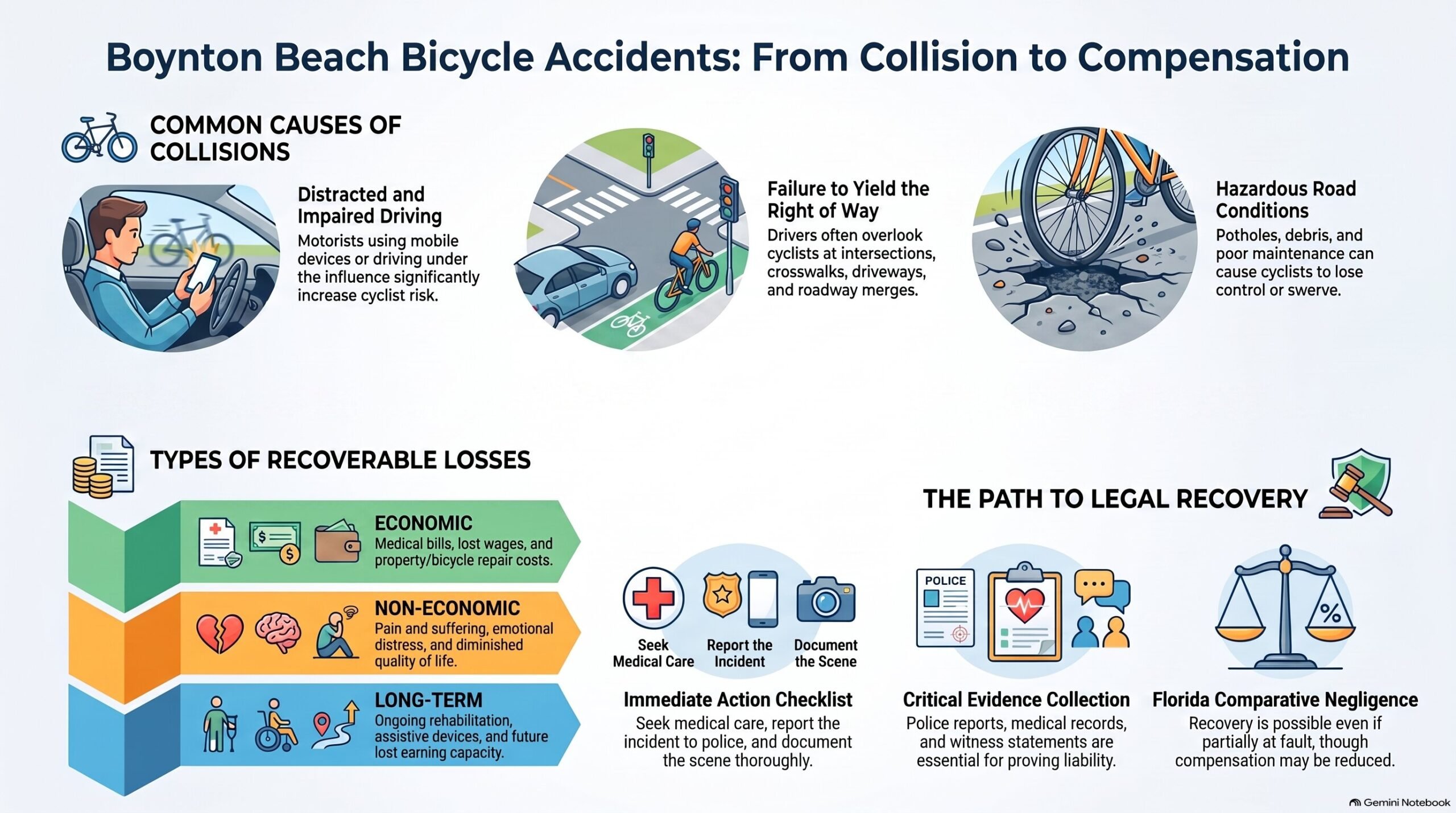
Common causes of bicycle accidents in Boynton Beach include distracted driving and failure to yield to cyclists with the right of way. Unsafe lane changes can also create dangerous conflicts, particularly when drivers fail to check surrounding traffic before maneuvering. Poor road conditions, including potholes and inadequate maintenance, may further increase the risk of a serious collision.
Distracted Driver Behavior
Distracted driver behavior is a significant cause of bicycle accidents in Boynton Beach, particularly when motorists look at mobile devices, adjust navigation systems, eat, or focus on passengers instead of the roadway. These actions reduce visual awareness, delay braking, and impair a motorist’s ability to recognize cyclists, traffic signals, and changing road conditions. Even brief inattention can cause a vehicle to drift, accelerate unexpectedly, or strike a nearby bicycle. Larger vehicles create especially serious risks because distracted operation may contribute to truck collisions, producing severe injuries for people riding bicycles. Impaired driving may also involve divided attention, poor judgment, and delayed reactions, although impairment can result from alcohol, drugs, fatigue, or certain medications. Community members can help protect vulnerable road users by remaining attentive and reporting dangerous driving when appropriate.
Failure To Yield
When motorists fail to yield to bicyclists who have the right of way, collisions can occur at intersections, crosswalks, driveways, and roadway merges in Boynton Beach. Drivers may overlook cyclists while turning, entering traffic, or crossing designated bicycle paths. Such conduct can violate right-of-way rules and create serious risks for people traveling without the protection of a vehicle. Bike lane violations, including stopping, parking, or driving through a marked lane, may also force bicyclists into unsafe positions. Motorists are expected to remain attentive, check for approaching cyclists, and yield when roadway signs, signals, or traffic laws require it. Prompt reporting, medical care, and careful documentation can assist affected individuals and their families. A lawyer may evaluate witness accounts, surveillance footage, and applicable traffic regulations to identify responsibility.
Unsafe Lane Changes
Unsafe lane changes can place Boynton Beach bicyclists in immediate danger, particularly on roads with marked bike lanes or limited visibility. A driver may cross into a bicycle’s path without checking mirrors, signaling, or allowing adequate space. The resulting collision can cause serious injuries, especially when the bicyclist has little opportunity to evade the vehicle.
Investigations commonly examine traffic signals, roadway markings, vehicle damage, witness accounts, and available video footage. These details can help determine whether the motorist failed to observe the bicycle or violated lane-use requirements. Liability disputes may arise when a driver claims the bicyclist moved unpredictably or occupied an improper position. Florida’s comparative negligence rules may affect recovery if responsibility is divided. Careful evidence collection can clarify each person’s actions and support a fair assessment of damages, while helping injured bicyclists pursue appropriate assistance.
Poor Road Conditions
Poor road conditions can cause Boynton Beach bicyclists to lose control or swerve into traffic, particularly where potholes, broken pavement, debris, or inadequate drainage affect a designated travel path. These hazards may be difficult to see at night or during rain, increasing the likelihood of falls, collisions, and serious injuries. Municipal agencies and property owners may have responsibilities to inspect, repair, or warn about dangerous conditions, depending on the roadway and applicable law. A bicyclist who encounters a hazard should report it, preserve photographic evidence, and seek medical attention after an incident. Bike safety gear can reduce injury severity, although it cannot eliminate the danger created by neglected pavement. Proper helmet fit is especially important because an incorrectly positioned helmet may provide inadequate protection during an impact. Witness accounts and maintenance records may help clarify responsibility.
Don’t Wait. Call Our Florida Personal Injury Lawyers Now!


Legal Rights of Boynton Beach Bicycle Accident Injury Victims
Under Florida law, Boynton Beach bicycle accident injury victims may have the right to seek compensation when another party’s negligence caused the collision. Available damages may include medical expenses, lost income, rehabilitation costs, property damage, and pain and suffering. A victim should preserve evidence, obtain a medical evaluation, and avoid providing recorded statements until understanding the potential legal consequences.
Florida bicycle accident victims may pursue compensation for injuries, losses, and property damage caused by another party’s negligence.
Important rights may include:
- Filing a claim against a negligent driver, business, or other responsible party.
- Pursuing available insurance coverage, including applicable liability or uninsured motorist benefits.
- Presenting evidence that establishes fault, causation, and the full extent of injuries.
- Seeking legal guidance before Florida’s filing deadlines expire.
Comparative negligence may reduce recovery if the victim contributed to the incident, although it does not necessarily eliminate the right to compensation. Families and advocates serving injured cyclists can help protect documentation, facilitate communication, and support informed decisions. A qualified attorney can evaluate the facts, identify responsible parties, and pursue a fair resolution through negotiation or litigation when appropriate.
Why Do Boynton Beach Bicycle Accident Injuries Happen?
Why do bicycle accidents in Boynton Beach occur? Injuries often result from a combination of roadway conditions, traffic behavior, and limited protection for cyclists. Unsafe Road Design may include narrow lanes, obstructed bike paths, inadequate lighting, poor signage, or intersections that fail to separate bicycles from turning vehicles. These conditions can reduce visibility and leave cyclists little room to avoid a collision.
Driver Accountability also plays a central role. Motorists who speed, follow too closely, open doors into a cyclist’s path, turn without checking, or become distracted may create hazardous situations. Failure to yield at crosswalks and intersections can be particularly dangerous because bicycles are smaller and harder to detect.
Weather, construction, debris, and mechanical defects may further increase risk. Although some crashes involve unavoidable circumstances, many reflect preventable failures in roadway planning or traffic responsibility. Understanding these causes helps communities, transportation officials, drivers, and bicycle advocates identify measures that promote safer travel and reduce serious injuries for everyone.
What Should You Do After a Boynton Beach Bicycle Accident Causes Injury?
After a bicycle accident, the cyclist should seek immediate medical care, even if symptoms initially appear minor. The accident should be reported to law enforcement, and all relevant details should be documented at the scene when it is safe to do so. Photographs, witness information, vehicle details, and medical records may help establish what occurred and support a later claim.
Seek Immediate Medical Care
Anyone injured in a Boynton Beach bicycle accident should obtain immediate medical care, even if the injury initially appears minor. A qualified medical professional can identify concussions, fractures, internal injuries, and other conditions that may not produce immediate symptoms. Prompt evaluation also creates an accurate record of the injury, treatment recommendations, and potential recovery needs. The injured person should follow all instructions, attend scheduled appointments, and preserve discharge papers, prescriptions, bills, and related records. If transportation is difficult, a trusted person, emergency service, or healthcare provider may help arrange safe access to treatment. Emotional support resources can assist individuals coping with fear, pain, or stress after the collision. After medical needs are addressed, legal consultation options may help explain rights and potential compensation without interfering with ongoing treatment.
Report The Accident
A bicycle accident causing injury should be reported promptly to the appropriate authorities, particularly when a motor vehicle, hazardous roadway condition, or suspected violation contributed to the collision. The injured cyclist, a companion, or another responsible person should contact local law enforcement and provide the location, time, the parties involved, and any known injuries. An official report can help emergency personnel respond, preserve public safety, and establish an objective account of the incident. If the cyclist cannot communicate, witnesses or caregivers may report on the cyclist’s behalf. Reporting also supports the enforcement of Florida traffic laws and may identify dangers that require corrective action. Although bike safety tips encourage caution and the use of protective equipment, they do not replace reporting obligations. A timely report can assist affected families, investigators, insurers, and legal representatives in addressing the accident responsibly.
Document The Scene
Prompt scene documentation can preserve evidence that may otherwise disappear before an investigation begins. If medically able, the injured cyclist or a trusted companion should photograph the roadway, traffic signals, vehicle damage, bicycle damage, visible injuries, debris, skid marks, and surrounding conditions. Images should include wide views showing lane positions and close views capturing specific details. Secure witness details, including names, telephone numbers, and brief accounts of what each person observed. Recording the time, weather, lighting, and apparent road hazards may help clarify how the collision occurred. Preserving the bicycle’s position before moving it can also protect important evidence, provided that doing so does not create additional danger or delay emergency care. A written account should be completed promptly while memories remain clear. These efforts can assist caregivers, insurers, investigators, and legal representatives in serving the injured person’s interests.
Critical Evidence in a Boynton Beach Bicycle Accident Causes Injury Case
Critical evidence can establish how the Boynton Beach bicycle accident occurred, identify responsible parties, and document the resulting injuries and losses.
Critical materials include:
- Police accident reports
- Medical records
- Witness statements
- Bicycle damage evidence
A careful review of these sources can help clarify disputed facts and support an injury claim.
Police Accident Reports
When a bicycle collision occurs in Boynton Beach, the investigating officer’s accident report can provide important evidence regarding how the incident happened and who may have contributed to it. The report may document vehicle positions, roadway conditions, traffic signals, witness statements, lighting, and apparent violations. It can also identify whether the cyclist or driver remained at the scene, received a citation, or offered an account of the events. Details concerning Safety gear compliance may help clarify whether protective equipment was used, although such information does not alone establish fault. Officers may record sidewalk hazards, obstructed paths, poor visibility, or other conditions affecting bicycle travel. Because reports can contain errors or incomplete observations, an attorney may compare them with photographs, surveillance footage, and independent testimony when evaluating responsibility and protecting the injured cyclist’s interests.
Medical Records
Medical records are important evidence in a Boynton Beach bicycle accident injury case because they establish the nature, severity, and treatment of the cyclist’s injuries. Emergency department notes, diagnostic images, physician evaluations, and therapy records can document when symptoms began and how they progressed. These materials may connect the injuries to the collision, clarify necessary future care, and support claims for medical expenses, lost income, and pain-related damages. Consistent treatment and complete disclosure of prior conditions also help present an accurate account of the cyclist’s health. Records may document circumstances relevant to bike lane safety, such as injuries consistent with a vehicle’s impact, without replacing other evidence. Physicians may additionally record helmet usage and explain whether protective equipment affected injury severity. Properly preserved records assist counsel in evaluating liability and pursuing fair compensation.
Witness Statements
Witness statements can provide valuable evidence in a Boynton Beach bicycle accident injury case by documenting what occurred before, during, and immediately after the collision. Observers may describe traffic signals, vehicle speed, roadway conditions, positioning, and each person’s actions. Their accounts can help clarify disputed facts when physical evidence or recollections are incomplete. Eyewitness credibility often depends on the person’s opportunity to observe, distance from the collision, attention, and consistency over time. Promptly recorded, independent statements may preserve details before memories change or witnesses become difficult to locate. A lawyer may identify relevant observers, obtain contact information, and organize their accounts for review. Respectful communication with witnesses can support a careful investigation while avoiding pressure or coaching. Consistent testimony may strengthen an injured cyclist’s explanation of liability and support fair treatment.
Bicycle Damage Evidence
Bicycle damage evidence can help establish how a collision occurred and whether a motorist’s actions contributed to the cyclist’s injuries. Photographs should document bent wheels, broken frames, damaged handlebars, torn seats, and debris patterns before repairs or disposal. An inspection by a qualified bicycle technician may identify impact points and distinguish collision damage from ordinary wear. Receipts, maintenance records, and replacement estimates can help demonstrate the bicycle’s value and related financial losses. The condition of lights, reflectors, and bright clothing may also address Bicycle Visibility Enhancement and whether visibility allegations are supported by facts. Similarly, a damaged or properly worn helmet can provide relevant context concerning Helmet Safety Importance, although helmet evidence does not automatically establish fault. Preserving the bicycle, helmet, and protective equipment can assist attorneys, insurers, and courts in evaluating the claim responsibly.
Don’t Wait. Call Our Florida Personal Injury Lawyers Now!
Long-Term Effects of Boynton Beach Bicycle Accident Injuries
Long-term injuries from bicycle accidents may cause chronic pain, reduced mobility, or permanent disability that affects daily activities and earning capacity. Emotional and mental health effects, including anxiety, depression, and trauma-related symptoms, may continue well after physical wounds have recovered. Ongoing medical expenses for treatment, rehabilitation, medication, and assistive services can create substantial financial burdens.
Chronic Pain and Disability
When a Boynton Beach bicycle accident causes serious injuries, the resulting critical pain or disability can affect nearly every aspect of an injured person’s life. Persistent pain may limit mobility, employment, household responsibilities, and participation in critical community activities. Disabilities can require surgery, rehabilitation, assistive equipment, home modifications, or ongoing personal care. Medical providers may document functional restrictions, expected recovery periods, and whether impairments are likely to remain permanent. These records help establish the injury’s long-term consequences and support requests for future medical expenses, lost earning capacity, and necessary support services. A careful negotiation strategy should account for these projected costs rather than focusing only on current treatment bills. Completing insurance paperwork accurately and preserving medical documentation can help prevent insurers from minimizing continuing limitations or disputing the scope of accident-related care.
Emotional and Mental Health
Serious injuries from a Boynton Beach bicycle accident can also produce lasting emotional and mental health effects, even after visible wounds begin to heal. Survivors may experience anxiety, depression, irritability, sleep disruption, or fear of riding near traffic. Some develop post-traumatic stress symptoms, including intrusive memories, avoidance, and heightened alertness. These conditions can affect employment, relationships, independence, and participation in community activities. Prompt evaluation by a qualified mental health professional can help identify needs and support meaningful recovery. Post-accident documentation should include counseling records, prescribed treatments, changes in symptoms, and statements describing daily limitations, while protecting personal privacy. Such evidence may assist an attorney’s claim negotiation strategy by demonstrating the injury’s broader impact. Compassionate support from family, caregivers, and advocates can also reduce isolation and encourage consistent treatment.
Ongoing Medical Expenses
Ongoing medical expenses may persist long after a Boynton Beach bicycle accident, particularly when injuries require repeated treatment or result in permanent limitations. Broken bones can involve surgery, rehabilitation, diagnostic imaging, prescription medication, and follow-up appointments that extend beyond initial care. Some injured cyclists also require assistive devices, home modifications, or ongoing therapy when mobility and independence remain affected. A documented recovery timeline can help show how treatment needs developed and whether future care is reasonably expected. When pursuing an insurance claim, records should identify each expense, provider, diagnosis, and recommended service. Medical bills, employment records, and physician statements may support the projected value of long-term losses. Careful review is important because paperwork errors, missing documentation, or inconsistent treatment histories can delay evaluation and complicate efforts to secure resources for necessary care.
Proving Liability in Boynton Beach Bicycle Accident Causes Injury Cases
Establishing liability in a Boynton Beach bicycle accident injury case requires evidence connecting another party’s conduct to the cyclist’s injuries and losses. A careful investigation may examine traffic laws, roadway conditions, vehicle damage, surveillance footage, photographs, and witness statements. Medical records can help establish that the collision caused specific injuries, while employment records and related documentation may demonstrate financial losses.
Potentially responsible parties may include negligent drivers, commercial vehicle operators, property owners, or public entities responsible for unsafe road conditions. The applicable duty of care, breach, causation, and damages must be evaluated under Florida law. Accident reconstruction professionals may clarify vehicle movements, visibility, speed, and positioning when accounts conflict.
An attorney serving injured cyclists can organize evidence, identify responsible parties, and present a persuasive claim. This preparation supports negotiating settlements and handling insurance disputes without allowing unsupported assertions to obscure the facts. Thorough documentation also preserves the cyclist’s ability to seek appropriate compensation through litigation when necessary.
Dealing With Insurance Companies After a Boynton Beach Bicycle Accident Causes Injury
After a Boynton Beach bicycle accident causes injury, an insurance company may contact the cyclist to obtain information, assess fault, and limit potential payment. The cyclist should provide accurate basic details and avoid making recorded statements, speculation, or admissions before receiving legal guidance. Insurers may request medical records, employment information, photographs, and other evidence. Careful medical documentation can connect injuries to the collision and establish treatment needs, limitations, and future expenses. A representative may evaluate whether the cyclist’s conduct, roadway conditions, or another party contributed to the event. Preserving communications and maintaining organized records can support a measured response. Witness preservation is also important because recollections may fade, contact information may change, and independent testimony can clarify disputed facts. A lawyer can develop a negotiation strategy based on liability evidence, documented losses, and applicable insurance coverage. Respectful, timely communication helps protect the injured cyclist’s interests while allowing the insurer’s proposal to be reviewed carefully.
What to Expect During a Boynton Beach Bicycle Accident Causes Injury Claim Process
A Boynton Beach bicycle accident injury claim typically begins with an initial case evaluation to assess liability, damages, and available legal options. The process then involves gathering evidence, negotiating compensation with insurers or responsible parties, and addressing disputes that may arise. Ultimately, the claim may resolve through settlement or, when necessary, further legal proceedings.
Initial Case Evaluation
When a Boynton Beach bicycle accident causes injury, the initial case evaluation determines whether the claim has a viable legal and factual foundation. A lawyer typically reviews the reported circumstances, diagnosed injuries, applicable traffic rules, and potential responsibility of drivers, property owners, manufacturers, or other parties. The evaluation also considers filing deadlines, insurance coverage, comparative negligence, and the anticipated effect of injuries on work and daily responsibilities. A careful Risk Assessment helps identify legal obstacles, likely outcomes, and the level of support the injured cyclist may require. Counsel then explains available options and develops a Settlement Strategy suited to the claim’s strengths, limitations, and objectives. Clients can expect questions about medical treatment, communications with insurers, and personal priorities, while counsel provides candid guidance before recommending negotiation or litigation.
Gathering Evidence
Effective evidence gathering establishes how the Boynton Beach bicycle accident occurred, who may be legally responsible, and how the injuries have affected the cyclist’s life. A legal team may inspect the crash location, preserve damaged bicycle components, and obtain available traffic-camera or surveillance footage. Photos and timestamps can document vehicle positions, roadway conditions, visibility, injuries, and property damage before evidence changes. Witness statements may clarify traffic signals, speed, rider movements, and events immediately preceding the collision. Investigators may also conduct skid mark analysis to evaluate braking, direction, and vehicle movement, while reviewing police reports and applicable traffic laws. Medical records, treatment notes, employment documentation, and testimony from caregivers can demonstrate the injury’s practical effects. Prompt, organized collection helps protect accurate information and supports a thorough assessment of potential claims.
Negotiating Compensation
With the available evidence organized, the next stage generally involves evaluating the cyclist’s losses and presenting a compensation demand to the appropriate insurer or opposing party. The demand may account for medical expenses, rehabilitation, lost income, property damage, pain, and anticipated care. Supporting records should explain how the bicycle accident affected the injured person’s daily responsibilities and future needs. Liability disputes can arise when insurers question right-of-way, visibility, road conditions, or the conduct of another involved party. Careful preservation of evidence remains important as negotiations continue, including medical documentation, photographs, witness accounts, and repair estimates. A representative may communicate with adjusters, challenge incomplete assessments, and respond to proposed reductions. The process typically involves measured exchanges intended to clarify responsibility and establish a fair valuation of the claim.
Resolving Your Claim
Resolving a Boynton Beach bicycle accident injury claim typically involves reviewing the available evidence, calculating documented losses, and determining whether the insurer accepts responsibility. The process may begin with gathering Insurance documentation, including policy information, accident reports, photographs, witness statements, and correspondence with adjusters. Medical records should establish a clear medical timeline that connects the collision to diagnoses, treatment, limitations, and anticipated care. A claim representative or attorney may evaluate medical expenses, lost income, property damage, and nonfinancial harm before presenting a demand. Negotiations can produce a settlement, but unresolved disputes may require mediation or litigation. Throughout the process, the injured cyclist should follow medical advice, preserve relevant records, and avoid speculative statements. Careful organization helps protect the claim while supporting a fair and efficient resolution for everyone involved.
Compensation for Boynton Beach Bicycle Accident Causes Injury Damages
When a bicycle accident results from a driver’s negligence, the injured cyclist may pursue compensation for damages caused by the collision. A claim may address medical treatment, rehabilitation, necessary transportation, and other documented losses connected to the injuries. It may also seek payment for diminished earning capacity when physical limitations interfere with employment or professional responsibilities.
Evidence can materially affect the value and resolution of a case. Police reports, medical records, photographs, witness statements, and information from the driver’s insurer may help establish car driver negligence and connect the collision to the cyclist’s losses. Prompt medical attention and careful recordkeeping can further support a complete presentation.
Insurance claim denials do not necessarily end the matter. An insurer may dispute fault, question the severity of injuries, or assert that evidence is insufficient. A qualified attorney can review the denial, communicate with insurers, and pursue appropriate legal remedies while protecting the cyclist’s interests throughout the process.
Economic vs Non-Economic Damages in Boynton Beach Bicycle Accident Cases
Economic damages in Boynton Beach bicycle accident cases may include medical expenses, lost wages, property damage, and other measurable financial losses. Non-economic damages address less quantifiable harm, such as pain and suffering, emotional distress, and diminished quality of life. Comparing these categories requires careful valuation of documented costs and the injury’s broader effects on the claimant.
Economic Damages Explained
A bicycle accident claim may involve both economic and non-economic damages, each addressing a different form of harm suffered by the injured cyclist. Economic damages compensate measurable financial losses caused by the collision. They may include emergency transportation, hospital care, surgery, medication, rehabilitation, medical equipment, and follow-up appointments. Future treatment expenses can also qualify when supported by medical evidence and reliable medical treatment timelines. Lost wages may be recoverable when injuries prevent work, reduce earning capacity, or require missed hours for necessary care. Property damage, including bicycle repairs or replacement and damaged safety equipment, may likewise be documented. Records such as bills, pay statements, repair estimates, and physician opinions help establish these losses. Careful organization strengthens an insurance negotiation strategy and helps present a complete, well-supported claim.
Non-Economic Damages Defined
Non-economic damages address the personal harm that follows a bicycle collision but cannot be calculated through bills or receipts. They may include physical pain, emotional distress, diminished enjoyment of life, disfigurement, inconvenience, and permanent limitations. In Boynton Beach bicycle accident cases, documentation such as treatment records, personal accounts, and testimony can help demonstrate how injuries affect daily activities, relationships, and independence. Comparative fault may influence whether compensation is available and the amount recoverable. Witness credibility also matters when describing the collision’s impact and the cyclist’s resulting limitations. Insurance delays can prolong the recognition of these harms, particularly when adjusters request extensive evidence or dispute the severity of injuries. Understanding settlement timelines helps injured individuals and their families make informed decisions while pursuing fair consideration, compassionate advocacy, and accountability from responsible parties.
Comparing Damage Valuations
How damages are valued in a Boynton Beach bicycle accident case depends on the distinction between measurable financial losses and less tangible personal harms. Economic damages may include emergency treatment, rehabilitation, medication, bicycle repairs, lost wages, reduced earning capacity, and necessary future care. Documentation such as invoices, pay records, medical opinions, and repair estimates can support these calculations.
Non-economic damages address pain, emotional distress, disfigurement, diminished enjoyment of life, and permanent limitations. Their valuation requires evidence describing how injuries affect daily activities, relationships, and independence. Attorneys may compare similar verdicts, assess medical prognosis, and present testimony from family members or professionals.
Insurance claim timelines can influence evidence gathering and negotiations. Before accepting an offer, an injured cyclist may evaluate pre-suit settlement options against projected losses, liability disputes, and the long-term consequences of unresolved injuries.
When a Boynton Beach Bicycle Accident Causes Injury Case Goes to Trial vs Settlement
When a Boynton Beach bicycle accident injury claim cannot be resolved through negotiations, the dispute may proceed to trial, where a judge or jury evaluates liability, damages, and the credibility of the evidence. Settlement, however, often provides a more predictable resolution, allowing an injured cyclist to receive compensation without the uncertainty, expense, and delay associated with courtroom proceedings. A case may settle before filing, during discovery, or after testimony exposes strengths and weaknesses in the opposing positions.
If trial becomes necessary, counsel develops a trial strategy based on medical records, accident evidence, witness accounts, and documented losses. Deposition preparation helps witnesses provide accurate, consistent testimony while responding appropriately to challenging questions. The decision to accept an offer or continue toward trial depends on the claim’s evidence, anticipated damages, litigation costs, and the client’s objectives. A careful evaluation can promote a resolution that supports recovery and preserves resources for ongoing medical care, rehabilitation, and necessary household needs.
Don’t Wait. Call Our Florida Personal Injury Lawyers Now!
Florida Laws That May Affect Your Boynton Beach Bicycle Accident Causes Case
Florida law may greatly affect how a Boynton Beach bicycle accident cause case is evaluated, negotiated, and presented in court. Several rules can shape fault findings, available damages, and the evidence needed to support an injured cyclist’s claim.
Important considerations include:
- Comparative negligence may reduce compensation if the cyclist is assigned a share of responsibility, such as failing to signal or violating a traffic rule.
- Drivers and cyclists must follow applicable traffic laws, including right-of-way requirements and duties involving safe passing.
- Hit-and-run reporting is required when a driver leaves the scene. Prompt reports can help preserve identifying details, witness accounts, and investigative records.
- Florida’s insurance framework may affect claims involving personal injury protection, bodily-injury coverage, or uninsured motorists.
A careful review of police reports, medical records, photographs, witness statements, and roadway conditions can clarify disputed facts. Legal professionals serving injured individuals can help organize this evidence, communicate with insurers, and present a position consistent with Florida law.
The Statute of Limitations for Boynton Beach Bicycle Accident Causes Injury Cases
A person injured in a Boynton Beach bicycle accident must file a legal claim within the applicable statute of limitations, or the court may permanently bar recovery. Florida deadlines vary depending on the claim’s legal basis, the responsible party, and whether a government entity is involved. Injury claims commonly have a limited filing period, while claims involving wrongful death, property damage, or public agencies may be subject to different rules and shorter notice requirements. The date of the crash usually marks the start of the limitations period, although specific circumstances may affect when the period begins or pauses. Prompt attention supports the preservation of evidence before surveillance footage, physical conditions, medical records, or electronic data disappear.
Early witness identification can also help preserve accurate recollections and clarify how the collision occurred. Because an expired deadline can prevent consideration of otherwise valid injuries, affected individuals should document the incident, obtain medical evaluation, and confirm the applicable deadline with a qualified Florida legal professional.
How a Boynton Beach Bicycle Accident Causes Lawyer Can Help You
Timely action is only one part of protecting a bicycle accident claim; effective legal representation can also determine whether the available evidence and compensation are properly developed. A Boynton Beach bicycle accident causes lawyer can serve an injured cyclist by coordinating the claim, communicating with insurers, and presenting documented losses in a clear, responsible manner.
Key services may include:
- Investigating roadway conditions, traffic signals, vehicle movements, and witness accounts.
- Gathering photos, medical records, repair estimates, employment information, and other supporting evidence.
- Applying Comparative negligence principles to address allegations that the cyclist contributed to the collision.
- Calculating medical expenses, lost income, rehabilitation needs, and other legally recognized damages.
Counsel may also consult accident-reconstruction professionals, identify responsible parties, and challenge incomplete or misleading insurance assessments. By organizing intricate information and protecting the claimant’s interests during negotiations, legal representation can help preserve resources needed for treatment, recovery, and support for family members. The lawyer’s role is to provide informed advocacy while allowing the injured person to focus on recovery and responsibilities.
When to Contact a Boynton Beach Bicycle Accident Causes Lawyer
When a cyclist suffers an injury in a collision, promptly contacting a Boynton Beach bicycle accident lawyer can help preserve evidence and clarify the available legal options. Why contact early? Prompt guidance may support the initial preservation of evidence, including photographs, witness information, medical records, vehicle details, and any available roadway footage. Conditions can change, memories may fade, and relevant records may become harder to obtain.
Early communication also helps identify legal deadlines that could affect an injury claim or related actions. Waiting too long may limit available remedies, particularly when governmental entities, commercial vehicles, or multiple parties are involved. A lawyer can explain which deadlines may apply without requiring the injured cyclist to make immediate legal decisions.
Prompt advice may further reduce insurance claim mistakes. Recorded statements, broad medical authorizations, premature settlement discussions, or incomplete descriptions of injuries can create complications. A timely consultation allows the cyclist or family member to understand next steps, organize documentation, and preserve the opportunity to pursue appropriate compensation while focusing on recovery.
Why You Need an Experienced Boynton Beach Bicycle Accident Causes Lawyer
Because bicycle accident claims often involve disputed facts and overlapping insurance issues, experienced legal counsel can provide valuable guidance throughout the process. A knowledgeable Boynton Beach bicycle accident causes lawyer can examine roadway conditions, vehicle movements, visibility, witness accounts, and available video evidence to clarify how a collision occurred. This analysis may help identify negligent conduct, including distracted driving, unsafe passing, defective equipment, or inadequate signage.
Counsel can also explain how Florida’s comparative fault rules and insurance requirements may affect a claim. That perspective helps protect an injured cyclist from unsupported allegations that the rider caused the crash. Legal guidance may further address medical documentation, lost income, rehabilitation needs, and damages associated with lasting limitations.
An experienced lawyer can distinguish safety information from legal responsibility. Common helmet benefits and Safe riding training may reduce injury risk, but their presence or absence does not, by itself, determine liability. Careful representation supports fair treatment and helps injured community members pursue appropriate compensation while preserving clear, respectful communication.
How to Choose the Right Boynton Beach Bicycle Accident Causes Lawyer for Your Case
Selecting the right Boynton Beach bicycle accident causes lawyer requires careful consideration of the attorney’s experience, investigative resources, and approach to client communication. A suitable attorney should understand bicycle collision dynamics, roadway conditions, visibility issues, vehicle conduct, and Florida liability rules. Experience with comparable injury claims can help counsel identify relevant evidence and anticipate defenses.
Prospective clients should ask how the lawyer evaluates police reports, medical records, photographs, witness accounts, video footage, and available roadway data. Clear Client communication is also fundamental. The lawyer should explain legal options, likely timelines, case costs, and important decisions in understandable terms while responding consistently to questions.
During consultations, individuals can assess whether the attorney listens carefully and demonstrates respect for the injured cyclist’s needs. Effective case strategy planning should address liability, damages, insurance negotiations, and potential litigation without promising a particular result. Reviewing the representation agreement and confirming who will manage the case can further support an informed, responsible decision.
About The Law Offices of Anidjar & Levine
The Law Offices of Anidjar & Levine represents individuals injured in bicycle accidents and other collisions throughout Florida, including Boynton Beach.
The firm assists injured cyclists in understanding their legal options after crashes involving motorists, roadway hazards, defective equipment, or other contributing factors.
Its legal team examines available evidence, reviews medical documentation, identifies potentially responsible parties, and evaluates the losses associated with an injury.
During a client consultation, an attorney may discuss the accident’s circumstances, treatment history, insurance communications, and potential claims.
This discussion can help determine whether legal action is appropriate and what steps may protect the individual’s interests.
The firm may also communicate with insurers, organize supporting records, and pursue compensation for medical expenses, lost income, property damage, and other recognized losses.
Its approach emphasizes informed decision-making and individualized attention.
Prospective clients can seek information about representation, case evaluation, and applicable deadlines before choosing how to proceed with a bicycle accident claim in Boynton Beach.

Frequently Asked Questions
Can I File a Claim if I Was Partially at Fault for the Bicycle Accident?
A cyclist may file a claim even if partially at fault, although Florida’s Comparative Negligence rules can reduce the recoverable amount according to the cyclist’s assigned percentage of responsibility. Evidence such as traffic-camera footage, witness statements, medical records, and accident reports may influence that determination. Fault allocation can substantially affect Settlement Amounts, so the cyclist should preserve evidence and promptly consult a qualified attorney. Deadlines and insurance procedures may also limit available recovery options.
Are Bicycle Accidents Involving Electric Bikes Handled Differently Under Florida Law?
Electric bicycle accidents may involve different classifications and equipment rules under Florida law, but negligence standards generally remain similar to those in other bicycle claims. A rider’s comparative fault can reduce recovery, while a driver’s hit-and-run may support additional legal remedies. Uninsured motorist coverage could apply depending on the policy. Claimants should preserve medical documentation and evaluate survival damages when injuries lead to death, ensuring families receive informed, compassionate guidance.
Can a Family Member Pursue a Wrongful Death Claim After a Fatal Bicycle Accident?
A family member may pursue a wrongful death claim after a fatal bicycle accident, but eligibility depends on Florida’s statutory framework. The Wrongful Death Process generally begins with a personal representative acting on behalf of the estate. Who Can Sue often includes a surviving spouse, children, or parents, depending on the circumstances. Family Eligibility may determine recoverable losses, while Estate Claims can address medical expenses, funeral costs, and damages owed to the decedent’s estate.
What Happens if the At-Fault Driver Was Uninsured or Fled the Accident Scene?
If the at-fault driver was uninsured or fled the accident scene, an injured cyclist may pursue compensation through available Uninsured Coverage, including applicable policies held by the cyclist or household relatives. A Fleeing Driver can still face criminal investigation and civil liability if identified. Evidence such as medical records, witness accounts, video footage, and police reports remains important. Legal guidance can help preserve claims, identify insurance sources, and pursue benefits for affected families.
Can Bicycle Accident Injuries Affect My Ability to Work or Qualify for Disability Benefits?
Bicycle accident injuries can reduce work capacity by limiting mobility, concentration, stamina, or the ability to perform critical duties. Whether an individual meets disability eligibility requirements depends on medical severity, expected duration, work history, and applicable program rules. Long-term recovery may require coordinated treatment and vocational assessment. Accurate legal documentation, including medical records, employer statements, and accident evidence, can help establish functional limitations when pursuing benefits or compensation.
—————————
Boynton Beach bicycle accidents may result from driver negligence, unsafe roadway conditions, defective equipment, or other preventable factors.
Determining the cause is important when seeking compensation for medical expenses, lost income, property damage, and related losses.
An experienced bicycle accident lawyer can investigate the incident, preserve evidence, evaluate liability, and negotiate with insurers.
The Law Offices of Anidjar and Levine can help injured cyclists understand their legal options and pursue a claim supported by the available facts and Florida law.
Learn more by contacting a Boynton Beach Personal Injury Lawyer.

