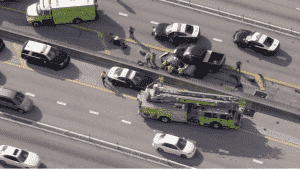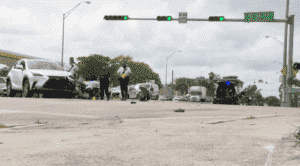
A Miami Gardens rideshare accident lawyer at The Law Offices of Anidjar and Levine can investigate the crash, assess which parties may share fault, and identify insurance coverage based on the driver’s app status. Potentially responsible parties may include a driver, vehicle owner, rideshare company, or another entity. A lawyer can help preserve trip records and other evidence, document medical care and financial losses, communicate with insurers, and evaluate settlement proposals. Learn more about working with a Miami Gardens Personal Injury Lawyer. The following sections explain how liability is assessed and what injured people can consider next.
Main Takeaways
- A Miami Gardens rideshare accident lawyer can investigate the crash and assess which parties may be legally responsible.
- Potentially at-fault parties may include the rideshare driver, another motorist, a vehicle owner, or a company.
- The driver’s app status at the time of the crash can affect which insurance coverage may apply.
- App records, trip timestamps, witness accounts, phone data, and video may help establish fault and coverage.
- Multiple parties may share fault; a lawyer can organize evidence, communicate with insurers, and explain deadlines and legal options.
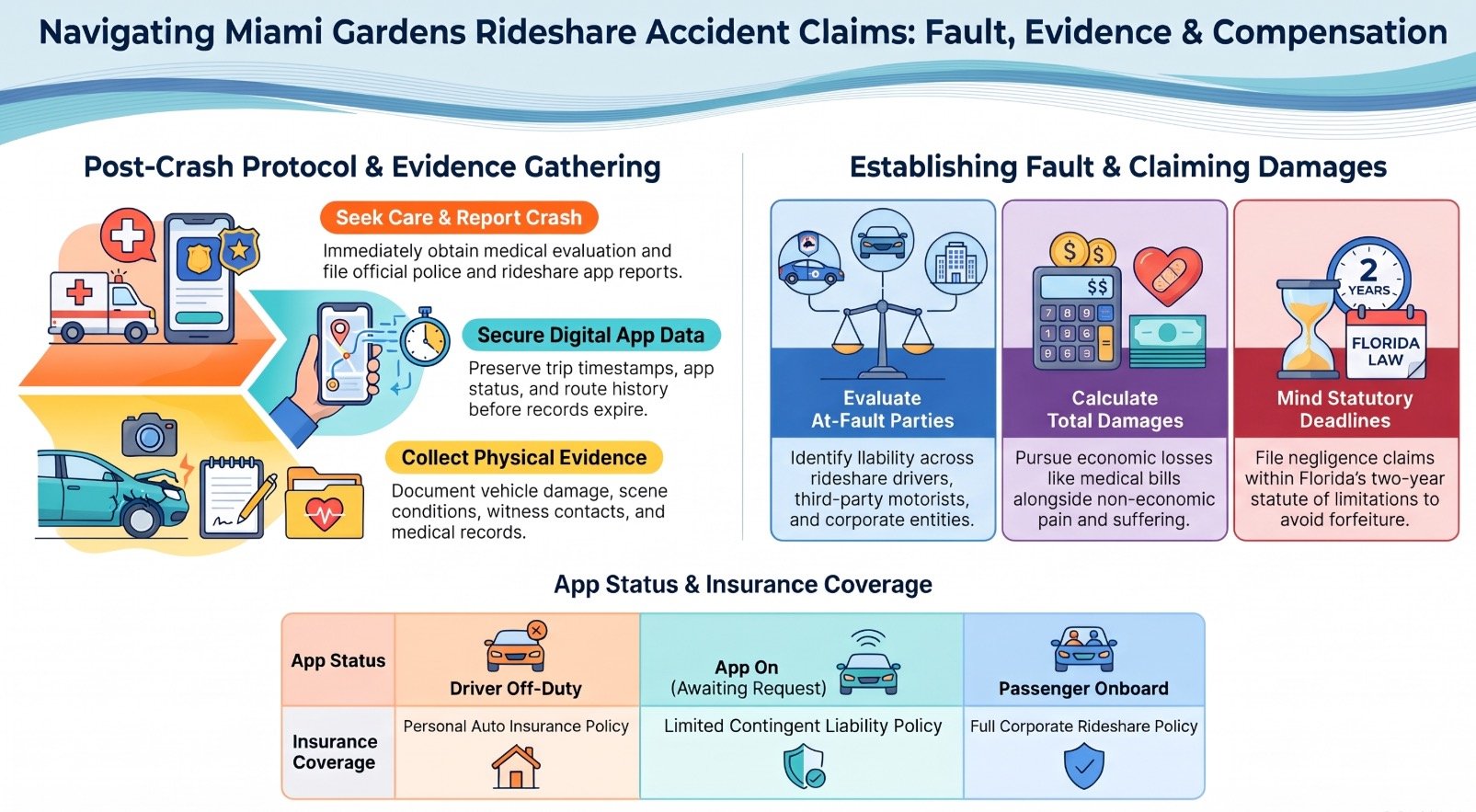
How We Can Help With Your Miami Gardens Rideshare Accident At-Fault Parties Injury Claim
When a rideshare crash in Miami Gardens causes injuries, identifying every responsible party is essential to pursuing compensation. A law firm can help an injured passenger, driver, or pedestrian understand available options and take practical steps toward recovery. Counsel may review relevant records, explain Claim eligibility, and organize documentation concerning medical treatment, lost income, and other losses. This support can reduce uncertainty for people balancing recovery with family, work, and community responsibilities.
An attorney can communicate with insurers, assess settlement proposals, and prepare a claim for litigation when negotiations do not produce a fair result. The legal team can also monitor deadlines and address requests for information, helping clients avoid preventable delays. Before representation begins, the firm should explain its approach, expected costs, and attorney fees in clear terms. Many injury firms use contingency arrangements, but the written agreement controls. With informed guidance, injured people can focus on recuperating while their representative manages the legal process and protects their interests.
Understanding Miami Gardens Rideshare Accident At-Fault Parties Injury Cases


Determining fault in a Miami Gardens rideshare accident requires examining how the crash occurred and what each involved party did. A careful review may identify responsibility among a rideshare driver, another motorist, a vehicle owner, or a company, depending on the evidence and applicable law. More than one party may share fault, and each party’s conduct must be assessed separately.
OUR CONSULTATIONSARE FREE
START YOUR FREE CASE REVIEW

Injury claims also depend on the injured person’s role and the circumstances of the trip. Passenger eligibility may affect access to insurance coverage, including which policy applies during a particular stage of a rideshare trip. Records such as trip details, insurance documents, witness accounts, and official reports can help clarify these issues.
Municipal liability may warrant consideration when a public entity’s conduct contributed to an injury, subject to specific legal requirements and notice deadlines. A thorough assessment helps protect injured people’s interests while supporting fair, evidence-based decisions about accountability and available compensation. Each case requires an individualized review of its facts and governing rules.
Don’t Wait. Call Our Florida Personal Injury Lawyers Now!
Common Causes of Miami Gardens Rideshare Accident At-Fault Parties


Rideshare accidents in Miami Gardens may result from distracted driving, speeding, reckless behavior, or unsafe lane changes. Liability may also involve a rideshare company when inadequate screening, training, or safety practices contribute to a collision. Identifying the cause helps clarify which parties may be responsible for resulting injuries and losses.
Distracted Driving
Distracted driving is a common cause of Miami Gardens rideshare accidents, particularly when a driver looks away from the road to check a navigation app, accept a trip request, or respond to a message. Mobile notifications can draw a driver’s eyes and hands away from driving, even when the interruption seems brief. A rideshare driver may also divide attention between passenger needs, route instructions, and traffic conditions. This cognitive distraction can delay hazard recognition and impair sound decisions, placing passengers, pedestrians, and other road users at risk.
Evidence may help establish whether distraction contributed to a collision. Relevant records can include app activity, phone data, witness accounts, and available video footage. Identifying the cause can clarify which parties may bear responsibility and support efforts to obtain fair compensation for those harmed. Prompt investigation can preserve important information and help protect affected individuals’ interests.
Speeding And Reckless Driving
When a rideshare driver exceeds safe speeds or ignores traffic laws, the risk of a serious collision can rise sharply. Speeding reduces the time available to respond to hazards and increases impact force, potentially causing severe injuries to passengers, other motorists, pedestrians, and cyclists. Reckless Actions, such as abrupt acceleration, aggressive braking, or racing through intersections, can further endanger everyone nearby. In Miami Gardens, traffic density and changing road conditions make careful driving especially important. A driver’s speed, conduct, and compliance with applicable rules may help determine responsibility after a crash. Investigators can review witness accounts, vehicle data, and roadway evidence to assess what occurred. Speed Enforcement and consistent adherence to traffic laws support safer rideshare trips and help protect community members who depend on responsible transportation.
Unsafe Lane Changes
Unsafe lane changes can cause serious rideshare collisions, particularly on busy Miami Gardens roads where drivers must respond to nearby traffic and changing conditions. A rideshare driver who changes lanes without checking surrounding vehicles may strike a car, motorcycle, or cyclist nearby. Blind spot checks help drivers identify road users that mirrors may not reveal, while lane signaling gives others notice of an intended lane change. Failing to take these precautions can leave nearby motorists with little time to brake or move safely. Responsibility may depend on the circumstances, including traffic conditions, witness accounts, and available vehicle or roadway evidence. Careful lane changes protect passengers and other road users, including people traveling to work, school, or appointments. When a collision occurs, determining how the lane change was made can help clarify which parties may be accountable.
Negligent Rideshare Companies
Rideshare companies may contribute to Miami Gardens collisions when inadequate screening, training, or safety oversight allows preventable risks to persist. Corporate negligence may arise when a company fails to review driver histories carefully, address repeated safety complaints, or establish clear rules against distracted driving. Poor app design can also divert a driver’s attention from traffic, while unrealistic incentives may encourage speeding or excessive hours behind the wheel. These practices can place passengers, pedestrians, and other motorists at risk. Platform accountability includes maintaining reasonable safety standards, responding to reports of dangerous conduct, and improving systems that affect driver behavior. When a company’s decisions contribute to a crash, investigators may examine its policies, records, and response to prior warnings. A careful review can help identify responsible parties and support those harmed in seeking fair compensation.
Legal Rights of Miami Gardens Rideshare Accident At-Fault Parties Injury Victims
Even if a rideshare driver caused a collision, injured passengers, occupants of other vehicles, pedestrians, and cyclists may have legal rights to seek compensation. Florida law allows injured people to pursue claims for documented losses, subject to applicable insurance rules and deadlines. Passenger rights may include seeking payment for medical care, lost income, and other harm, even when the passenger had no role in causing the crash. A careful review can clarify available options and help protect each person’s interests.
Injured passengers and others may seek compensation for documented losses, subject to Florida’s insurance rules and deadlines.
- A passenger may preserve trip details, receipts, and medical records to support a claim.
- A driver or cyclist may document vehicle damage and missed work while obtaining appropriate care.
- A pedestrian may retain witness information and photographs of the scene for later review.
Fault allocation can affect which parties and insurers may be responsible. An attorney can assess evidence, explain coverage, and communicate with insurers, allowing injured people to focus on recovery and their responsibilities to family, work, and community.
Why Do Miami Gardens Rideshare Accident At-Fault Parties Injuries Happen?
Understanding the causes of a Miami Gardens rideshare collision can clarify how injuries occurred and which parties may be responsible. These crashes may result from driver distraction, speeding, fatigue, unsafe lane changes, or failure to yield. Rideshare drivers may divide attention between traffic, navigation applications, and passenger requests, increasing the risk of a preventable error. Other motorists can also contribute through careless driving or abrupt movements.
Intersection design may affect visibility, turning movements, and the time available to respond to crossing traffic. Poorly marked lanes or obstructed sightlines can complicate decisions for drivers and pedestrians. Weather conditions, including heavy rain, can reduce traction and visibility, making it harder to stop or maintain control. Vehicle defects, inadequate maintenance, or unsafe pickup locations may also contribute.
Determining why injuries happened often requires examining each driver’s actions, roadway conditions, and available records. A careful assessment can help identify contributing factors and support accountability, while recognizing that responsibility may involve more than one party.
What Should You Do After a Miami Gardens Rideshare Accident At-Fault Parties Injury?
After a Miami Gardens rideshare crash, injured individuals should seek prompt medical care, even if their symptoms initially appear minor. They should report the collision to law enforcement and notify the rideshare company as appropriate. Preserving photographs, witness details, medical records, and other evidence can help document what occurred.
Seek Medical Care
Prompt medical care should be a priority after a Miami Gardens rideshare accident, even when injuries initially seem minor. Some conditions, including concussions and soft-tissue injuries, may not become apparent until hours or days later. A prompt evaluation can identify concerns, support timely treatment, and create a clear medical record of the injuries. The injured person should describe all symptoms accurately and tell the provider about any changes, even if they seem unrelated. Following the recommended treatment plan can help protect recovery and reduce the risk of complications. Medication adherence is important, and prescribed drugs should be taken as directed; questions about side effects or dosage should be raised with a qualified provider. Follow-up appointments allow clinicians to monitor progress, adjust care, and identify problems that need further attention.
Report the Crash
When a Miami Gardens rideshare accident causes injury, report the crash promptly to law enforcement and the rideshare company. If anyone faces immediate danger or requires urgent assistance, a caller should contact Emergency dispatch and provide the location, number of people involved, and known injuries. Officers can assess the scene, arrange needed services, and prepare an official report. The rideshare company should also be notified through its app or designated support channel, including trip details and a brief account of the incident. Prompt reporting helps responsible parties coordinate assistance and supports the safety of passengers, drivers, and other road users. If vehicles obstruct traffic, responders may direct roadway clearance once conditions permit. Follow official instructions and avoid interfering with emergency operations at the scene.
Preserve Evidence
Preserve evidence as soon as it is safe to do so, since vehicle damage, road conditions, and other details may change or disappear. Photographs can document the vehicles, visible injuries, traffic signals, skid marks, and the surrounding area. A passenger or witness may be able to record these details while the injured person receives care.
Evidence preservation also includes keeping trip receipts, app messages, medical records, and contact information for witnesses. The rideshare company or driver may hold trip data, vehicle records, or surveillance footage. Such material can be overwritten or lost, so a prompt written request to preserve it may be important. Those assisting the injured person should avoid altering damaged property and keep original files unchanged. Organized records can help clarify what happened and support a fair review of responsibility.
Critical Evidence in a Miami Gardens Rideshare Accident At-Fault Parties Injury Case
Establishing fault and documenting injuries in a Miami Gardens rideshare crash requires evidence from the scene, the trip, and those involved. Essential sources include: 1. photographs of vehicle damage and road conditions; 2. rideshare app records and driver or vehicle data; and 3. witness accounts and medical records. Combined, these materials can help clarify how the collision occurred and the extent of the harm.
Crash Scene Documentation
Accurate crash scene documentation can help clarify how a Miami Gardens rideshare accident occurred and which parties may be at fault. Scene photographs can preserve vehicle positions, visible damage, traffic signals, skid marks, and nearby signs before conditions change. Images should capture the wider roadway as well as details relevant to the collision. Notes about road conditions, lighting, weather, construction, and traffic flow may help explain visibility or stopping distance. Witness names and contact information can also support later accounts, while prompt statements may preserve observations before memories fade. Emergency responders’ reports and measurements may provide additional context, but they should be reviewed alongside other evidence. Careful documentation can help injured people and their representatives assess responsibility fairly, identify unanswered questions, and support a clear account of events without prematurely assuming fault.
Rideshare App Records
Rideshare app records can show what a driver was doing in the moments surrounding a Miami Gardens collision. A Trip timestamp may establish when a ride request was accepted, when a passenger entered, and whether the trip had ended at the time of impact. These details can help clarify whether the driver was working through the platform or traveling for personal reasons, which may affect how responsibility is assessed.
Route history may also indicate the path displayed or followed during a trip, including possible deviations near the crash location. When reviewed alongside scene documentation and witness accounts, app records can help establish the sequence of events and identify relevant parties. Prompt preservation matters because some records may be retained for only a limited time. A qualified legal professional can request relevant information and assess its significance without assuming it proves fault.
Driver And Vehicle Data
Vehicle and driver data can help clarify how a Miami Gardens rideshare collision occurred and which parties may bear responsibility. Electronic records may show vehicle speed, braking, steering inputs, and location shortly before impact. Event timestamps can align those details with the trip’s progress and help establish whether the driver was transporting a passenger, traveling to a pickup, or operating outside the app. Vehicle diagnostics may identify mechanical faults, warning alerts, or maintenance concerns that warrant further review. Investigators may also examine inspection records, repair histories, and ownership documents to assess whether a driver, vehicle owner, maintenance provider, or manufacturer contributed to the crash. Promptly preserving these records can prevent routine data loss and support a careful, fair evaluation of responsibility, helping injured people pursue accountability without speculation or delay.
Witness And Medical Evidence
While electronic records can help reconstruct a Miami Gardens rideshare collision, witness accounts and medical evidence can clarify how it happened and how injuries developed. Witness Statements from passengers, nearby drivers, pedestrians, and other observers may describe vehicle movements, traffic signals, road conditions, and events immediately after impact. Their timely accounts can help identify conflicting versions and support a fair evaluation of each potentially responsible party. Medical Records document reported symptoms, examination findings, diagnoses, treatment, and changes in a person’s condition. Prompt evaluation can connect injuries to the collision and help clinicians identify needs for continued care. Consistent documentation may also clarify whether symptoms worsened or new limitations emerged. Together, these sources can help insurers, investigators, and legal professionals evaluate fault, injury severity, and appropriate compensation while preserving an accurate account for all affected people.
Long-Term Effects of Miami Gardens Rideshare Accident At-Fault Parties Injuries
Injuries caused by an at-fault party in a Miami Gardens rideshare accident may lead to persistent physical pain that limits daily activities. Some injured people also experience lasting emotional effects, including anxiety or distress related to travel. Continued treatment and rehabilitation can create ongoing medical expenses long after the initial collision.
Persistent Physical Pain
Persistent physical pain can remain long after a Miami Gardens rideshare crash, even when initial treatment has ended. Injuries to the spine, joints, muscles, or nerves may cause chronic discomfort that interferes with walking, lifting, sleeping, or completing routine tasks. Some people experience recurring symptoms that require continued medical evaluation, therapy, medication, or other forms of pain management. The effects can limit a person’s ability to work and meet responsibilities, including caring for family members or helping others. Medical records can document how symptoms develop, which treatments are recommended, and whether recovery remains uncertain. When another party’s negligence contributed to the collision, evidence of ongoing physical limitations may help explain the injury’s lasting impact. Consistent follow-up care can support informed treatment decisions and provide a clearer account of the harm.
Lasting Emotional Effects
Emotional effects can persist after a Miami Gardens rideshare accident, even when physical injuries begin to recover. Survivors may experience anxiety, sadness, or heightened alertness that affects work, relationships, and daily responsibilities. Trauma triggers, such as passing the crash location or hearing sudden traffic noise, can bring back distressing memories and make ordinary travel difficult. Sleep disruption may also interfere with concentration, patience, and a person’s ability to support family members or serve others reliably. Some individuals withdraw from social activities or lose confidence in situations that once felt routine. These effects vary in duration and intensity, and they may not be visible to others. Recognizing lasting emotional harm helps explain changes in behavior and functioning. A careful record of symptoms and their impact can clarify how the accident altered everyday life.
Ongoing Medical Expenses
When a Miami Gardens rideshare accident causes lasting injuries, medical expenses may continue long after the initial treatment ends. Some people require ongoing rehabilitation, prescription medication, physician visits, or assistive devices to manage lasting limitations. Others may need additional procedures as their condition changes. These costs can place sustained pressure on injured individuals and families, particularly when care is necessary to maintain independence or support daily responsibilities.
Future treatment needs should be assessed with guidance from qualified medical professionals. Medical forecasting can help estimate the type, duration, and likely cost of anticipated care, although projections may change as recovery progresses. Records of appointments, treatment plans, and related expenses can clarify the continuing impact of an injury. A careful review of these needs may help decision-makers consider compensation that reflects both current bills and reasonably expected medical costs.
Proving Liability in Miami Gardens Rideshare Accident At-Fault Parties Injury Cases
Proving liability in a Miami Gardens rideshare accident requires identifying each party whose conduct contributed to the crash and supporting those claims with reliable evidence. A careful investigation may examine the rideshare driver’s actions, another motorist’s conduct, and whether a vehicle owner or other responsible party contributed to the collision. Relevant records can include police reports, witness statements, photographs, vehicle data, and app records that establish whether the driver was waiting for a request, traveling to pick up a passenger, or completing a trip.
Traffic camera analysis may clarify vehicle movements, signal timing, and the sequence of events. Investigators may also assess roadway design flaws, visibility, signage, or maintenance conditions that could have increased crash risk. Medical documentation can connect the collision to reported injuries, while qualified experts may interpret technical evidence. A thorough, objective review helps injured people and their families understand how the crash occurred and identify who caused the harm.
Dealing With Insurance Companies After a Miami Gardens Rideshare Accident At-Fault Parties Injury
After a Miami Gardens rideshare accident, insurance claims may involve several policies, and the applicable coverage can depend on the driver’s status in the rideshare app at the time of the crash. Injured passengers, other motorists, and pedestrians may need to communicate with insurers representing different parties. Clear, factual communication helps protect the interests of everyone affected while allowing legitimate claims to be assessed fairly.
Claim Adjuster Tactics may include requesting broad medical authorizations, questioning how an injury occurred, or proposing an early settlement before the full impact is known. A claimant should review requests carefully and avoid speculation about fault or recovery. Recorded Statement Risks include incomplete answers being interpreted without context, particularly when symptoms or crash details remain uncertain. A person may ask what information is required, keep copies of correspondence, and seek guidance before signing releases or accepting payment. Promptly preserving bills, treatment records, photographs, and relevant communications can support accurate review and help promote responsible handling of the claim.
Don’t Wait. Call Our Florida Personal Injury Lawyers Now!
What to Expect During a Miami Gardens Rideshare Accident At-Fault Parties Injury Claim Process
A Miami Gardens rideshare injury claim typically begins with an evaluation of the accident, the injuries, and the potentially responsible parties. Evidence is then gathered to support the claim, followed by negotiations with the relevant insurance companies. If the parties cannot reach an appropriate settlement, the injured person may pursue litigation.
Initial Case Evaluation
During an initial case evaluation, a Miami Gardens rideshare accident lawyer reviews how the collision occurred, the injuries involved, and which parties may bear responsibility. The Initial consultation gives the injured person an opportunity to explain the circumstances, describe the effects on daily life, and identify immediate concerns. The lawyer may assess whether the rideshare driver, another motorist, a vehicle owner, or a company could be legally responsible. This preliminary review also considers the general nature of the injuries, treatment needs, and potential financial losses. Based on the information available, the lawyer can discuss possible legal options, relevant deadlines, and the likely stages of a claim. A preliminary claim valuation may outline factors that could affect compensation, without guaranteeing an outcome. The evaluation helps the injured person make informed decisions and understand how counsel may advance the claim responsibly.
Evidence Collection
Evidence collection helps establish how a Miami Gardens rideshare crash occurred, who may be at fault, and how the injuries affected the claimant. An attorney may gather police reports, witness statements, photographs, traffic camera footage, and medical records. Rideshare app records can help identify the driver’s status, route, and trip timing. Evidence retention is important because video, electronic logs, and vehicle data may be deleted or overwritten if not preserved promptly. A legal team may send preservation requests to relevant parties and document the condition of involved vehicles. Data authentication helps confirm that electronic records are complete and reliable. Investigators may also compare accounts with physical evidence to clarify disputed details. Careful collection supports a fair assessment of responsibility and injury impact while respecting the needs and privacy of everyone involved.
Insurance Claim Negotiations
Once the available evidence establishes the likely cause and extent of a Miami Gardens rideshare crash, insurance negotiations can begin. The injured person’s representative typically submits a demand supported by medical records, wage information, repair estimates, and other relevant documentation. Insurers review the evidence, assess responsibility, and may request additional information before responding. Because rideshare coverage can depend on the driver’s app status, more than one insurer may examine the claim. A careful settlement strategy accounts for documented losses, anticipated treatment, disputed facts, and applicable Policy limits. The claimant’s representative can clarify how each insurer evaluates the evidence and explain the basis for requested compensation. Negotiations may involve counteroffers and requests for clarification. Clear records and timely responses help keep discussions focused on the claim’s strengths and the injured person’s documented needs.
Settlement Or Litigation
After negotiations, a Miami Gardens rideshare injury claim may resolve through settlement or proceed to litigation if the parties cannot agree on responsibility or compensation. A settlement can provide compensation without a trial, but any proposed amount should be reviewed against documented losses, anticipated care, and the strength of the evidence. The Settlement Timeline varies with injury recovery, insurer responses, and the time needed to verify records. If settlement efforts fail, a lawsuit may allow the parties to exchange evidence, question witnesses, and present disputed issues to a judge or jury. Litigation Costs can include filing fees, expert testimony, and case preparation, so counsel generally evaluates these expenses alongside potential recovery. Throughout either path, clear communication and careful documentation help injured people make informed decisions while preserving resources for their families and communities.
Compensation for Miami Gardens Rideshare Accident At-Fault Parties Injury Damages
When a rideshare driver’s negligence causes an accident in Miami Gardens, injured people may seek compensation for losses supported by the facts and available insurance coverage. The amount and source of recovery depend on the circumstances, the driver’s status in the rideshare app, and applicable policy terms. A claim may address reasonable medical expenses, including emergency treatment, rehabilitation, medication, and future care related to the injuries.
Compensation may also cover income lost during recovery. Lost wages can include earnings the injured person could not receive while unable to work, while documented limits on future employment may support a claim for reduced earning capacity. When injuries prevent ordinary household tasks, Household services may be considered if paid assistance is reasonably needed. Records such as medical reports, wage statements, receipts, and care plans can help establish these losses.
Claims may involve the rideshare driver, another responsible party, or an insurer. Careful documentation helps clarify the losses and supports a fair evaluation of the injured person’s needs.
Economic vs Non-Economic Damages in Miami Gardens Rideshare Accident At-Fault Parties Cases
In Miami Gardens rideshare accident cases, economic damages may include medical expenses, lost income, and other measurable financial losses. Non-economic damages address harm such as pain, emotional distress, and reduced quality of life. Establishing either category requires evidence connecting the losses to the accident and supporting their extent.
Economic Losses
Economic losses are the measurable financial costs of a Miami Gardens rideshare accident, including medical bills, lost wages, and expenses for ongoing care or rehabilitation. These damages may also include prescription costs, diagnostic testing, medical equipment, and transportation to treatment. Records such as invoices, pay statements, and employment documentation can help establish the amount and connection to the crash. Lost wages may cover income missed during recovery, while diminished earning capacity may reflect a lasting reduction in earning capacity because of accident-related limitations. Future expenses can be considered when supported by reliable medical and financial evidence. Identifying all responsible parties, including a rideshare driver or another motorist, may affect which insurance coverage applies. Careful documentation helps ensure financial claims are presented accurately and that available resources can support recovery and ongoing responsibilities.
Non-Economic Harm
Beyond medical bills and lost income, a Miami Gardens rideshare accident may cause non-economic harm, including pain, emotional distress, and loss of enjoyment of daily activities. These losses reflect how injuries affect a person’s well-being and relationships, rather than measurable financial expenses. Physical pain may persist during treatment or after recovery, limiting ordinary tasks and reducing independence. Emotional distress can include anxiety, fear of travel, sleep disruption, or grief over changed abilities. A person may also experience diminished enjoyment of family gatherings, hobbies, community activities, or service to others. Such effects can strain close relationships and alter routines, even when no direct monetary cost is attached. Non-economic damages may recognize these personal consequences alongside economic losses, providing a broader account of the harm caused by a rideshare collision and its impact on daily life.
Proving Damages
When a Miami Gardens rideshare collision causes injury, proving damages requires evidence that connects each claimed loss to the crash and establishes its extent. Economic damages include medical bills, rehabilitation expenses, lost wages, and reduced earning capacity. Damage documentation such as invoices, treatment records, employer statements, and receipts can help show the amount and cause of these losses. Claims for future costs may rely on medical opinions, care plans, and vocational assessments that explain expected treatment or income effects. Non-economic damages address pain, emotional distress, and limitations on daily activities. These harms may be supported by consistent treatment records, personal accounts, and observations from family or caregivers. Clear, organized evidence helps decision-makers assess the full impact of an injury and supports a fair evaluation of compensation for those affected by the collision.
When a Miami Gardens Rideshare Accident At-Fault Parties Injury Case Goes to Trial vs. Settlement
A Miami Gardens rideshare accident injury case may settle through negotiations or proceed to trial, depending on the evidence, the parties’ positions, and the available insurance coverage. Settlement can resolve a claim without a courtroom decision, often allowing the injured person to receive compensation sooner and avoid the demands of a trial. Any proposed terms should be assessed against documented losses, future needs, and the uncertainty of continued litigation.
If the parties cannot agree, trial may provide an opportunity to present evidence and ask a jury to decide responsibility and damages. Trial preparation can involve organizing records, preparing witnesses, and developing clear explanations of how the crash affected the injured person. During jury selection, potential jurors are questioned to identify whether they can consider the evidence fairly. The process may take time and carries no guaranteed outcome. Carefully comparing settlement terms with the possible benefits, costs, and risks of trial can help guide an informed decision while keeping the injured person’s needs central.
Florida Laws That May Affect Your Miami Gardens Rideshare Accident At-Fault Parties Case
The outcome of a Miami Gardens rideshare accident case may depend on Florida laws governing fault, insurance, and claim deadlines. These rules help identify responsible parties and available sources of compensation, supporting injured people and those who depend on them.
- Florida’s no-fault system generally requires an injured person to seek initial medical benefits through personal injury protection, or PIP coverage, regardless of who caused the crash. Policy terms and eligibility can affect what expenses are covered.
- Under comparative negligence, compensation may be reduced when an injured person shares responsibility. Evidence such as traffic-camera footage, witness accounts, and vehicle data can help clarify each party’s conduct.
- Rideshare insurance may vary according to the driver’s app status, including whether a trip was accepted or a passenger was aboard. The driver’s policy and applicable company coverage should be reviewed to determine potential protection.
These laws can affect claims against drivers, rideshare companies, or other responsible parties. Careful documentation and informed legal guidance can help preserve a fair process for everyone affected.
The Statute of Limitations for Miami Gardens Rideshare Accident At-Fault Parties Injury Cases
Because filing deadlines can determine whether an injury claim proceeds, Florida’s statute of limitations is an important consideration in a Miami Gardens rideshare accident case. For most negligence-based injury claims, Florida law generally allows two years from the date of the accident to file a lawsuit. Missing this Filing deadline may prevent an injured person from seeking compensation through the courts, regardless of the seriousness of the harm or the needs of others who depend on that person.
The applicable period can vary according to the claim’s facts and the parties involved. Certain circumstances may affect when the limitations period begins or whether it is paused, and specific limitations exceptions may apply. Claims involving a government entity, for example, can carry separate notice requirements and shorter deadlines. These rules are fact-specific, so assumptions based on another case may be unreliable. Preserving records of the crash, injuries, and related communications can help establish relevant dates. A timely review of the governing deadline supports informed decisions about available legal options.
How a Miami Gardens Rideshare Accident At-Fault Parties Lawyer Can Help You
Managing a rideshare injury claim can require careful coordination of evidence, insurance coverage, and legal deadlines. A Miami Gardens rideshare accident at-fault parties lawyer can organize the claim, explain available options, and pursue compensation while treating the injured person’s recovery and responsibilities with respect.
The lawyer’s work may include:
- Preserving evidence: Securing trip records, photographs, witness accounts, and relevant vehicle data before details become difficult to verify.
- Conducting Liability Assessment: Examining driver conduct, rideshare status, road conditions, and other potential contributors to determine who may be responsible.
- Developing Legal Strategy: Reviewing applicable insurance policies, documenting losses, and presenting supported demands to insurers or other parties.
When several parties or insurance layers are involved, clear communication can reduce confusion and help keep the process organized. Counsel can also evaluate medical documentation and financial records to describe how injuries affect daily life and obligations. This structured approach allows the injured person to focus on recovery and continue supporting family, colleagues, and community, while the claim receives informed attention.
Don’t Wait. Call Our Florida Personal Injury Lawyers Now!
When to Contact a Miami Gardens Rideshare Accident At-Fault Parties Lawyer
After a rideshare collision in Miami Gardens, contacting an at-fault parties lawyer promptly can help preserve evidence and clarify which insurance coverage may apply. Early consultation may be useful even when injuries seem minor, since symptoms and treatment needs can change. A lawyer can review available records, identify potentially responsible parties, and explain practical next steps without requiring an injured person to decide immediately whether to pursue a claim.
Consultation timing matters because vehicle damage, trip details, witness recollections, and electronic records may become harder to obtain as time passes. The injured person should keep medical documents, photographs, receipts, and communications related to the crash, and share them during an initial meeting. Those who were helping passengers or other people at the scene may also provide relevant observations.
Representation deadlines vary according to the facts and applicable law. Waiting too long could limit legal options, so a prompt discussion can help identify dates that require attention. A consultation can clarify timing and support informed decisions.
Why You Need an Experienced Miami Gardens Rideshare Accident At-Fault Parties Lawyer
An experienced Miami Gardens rideshare accident at-fault parties lawyer can help identify who may be responsible and determine which insurance policies may apply. Rideshare collisions may involve a driver, another motorist, a rideshare company, or several parties whose actions contributed to the harm. A careful investigation can clarify how the crash occurred and preserve evidence that supports an injured person’s account.
Rideshare insurance coverage can depend on whether the driver was waiting for a request, traveling to pick up a passenger, or completing a trip. An experienced attorney can examine these details and assess potential coverage without assuming that one policy applies in every situation. The lawyer can also evaluate third-party liability when a vehicle manufacturer, maintenance provider, or other outside party may have contributed to the collision.
How to Choose the Right Miami Gardens Rideshare Accident At-Fault Parties Lawyer for Your Case
When choosing a Miami Gardens rideshare accident lawyer, injured people should assess the attorney’s experience investigating shared fault, rideshare insurance coverage, and multi-party claims. A careful review can help identify counsel prepared to pursue a fair outcome while respecting the needs of everyone affected.
Attorney Credentials should include relevant Florida licensing, a record of handling injury claims, and familiarity with rideshare company policies and insurance layers. Prospective clients can ask how the lawyer evaluates driver conduct, vehicle ownership, and other possible sources of liability. Clear answers about investigation methods and case strategy indicate informed preparation.
Client Communication is equally important. The lawyer should explain deadlines, evidence needs, potential challenges, and available options in direct language. Regular updates and timely responses help clients make informed decisions and stay engaged in the process. A suitable attorney should listen carefully, treat each person with respect, and avoid promising a specific result. Comparing these factors helps injured people choose representation that aligns with their circumstances and goals.
About The Law Offices of Anidjar & Levine
The Law Offices of Anidjar & Levine represents people injured in Miami Gardens rideshare accidents and provides guidance on the claims process. The firm helps clients identify potentially responsible parties, preserve relevant evidence, and understand available legal options. Its work may involve examining driver conduct, rideshare company records, insurance coverage, and other factors that can affect a claim.
Firm history reflects a practice focused on representing injured people and helping them pursue accountability through the legal system. The attorneys explain case developments, respond to client questions, and prepare claims with attention to each person’s circumstances. This approach can help clients make informed decisions while managing the practical demands that follow an accident.
Attorney recognition may provide additional information about lawyers’ professional standing, but it does not guarantee a particular result. Prospective clients can review qualifications, experience, and communication practices when considering representation. By offering clear guidance and attentive service, the firm seeks to support individuals and families pursuing recovery after a rideshare collision.
Frequently Asked Questions
Can I File a Claim if I Was a Passenger in a Rideshare Vehicle?
Yes, a rideshare passenger may file a claim for injuries caused by another party’s negligence. Depending on the circumstances, compensation may be available through the rideshare driver’s insurance, another driver’s policy, or applicable Passenger injury coverage. Evidence such as medical records, trip details, and witness accounts can help establish responsibility. Comparative negligence may affect recovery if the passenger’s conduct contributed to the injury. Prompt legal guidance can clarify available options and deadlines.
What if the Rideshare Driver Was off Duty When the Crash Occurred?
If the rideshare driver was off duty, the claim may proceed through the driver’s Personal auto insurance rather than the rideshare company’s policy. Coverage depends on the driver’s policy terms, the vehicle’s use, and the facts surrounding the crash. Off-duty liability may rest with the driver if negligence caused the collision. An injured passenger can preserve evidence, obtain the crash report, and seek guidance to identify responsible parties and applicable coverage.
Can I Pursue a Claim if I Was Injured While Entering or Exiting a Rideshare?
Yes, an injured passenger may pursue a claim after being hurt while entering or exiting a rideshare, depending on how the incident occurred and who was responsible. Dooring accidents may involve a driver or another motorist, while curbside falls may raise questions about unsafe property conditions or negligent stopping. Evidence such as photographs, witness accounts, trip records, and medical documentation can help establish liability and support a claim for appropriate compensation.
Are Rideshare Companies Required to Conduct Background Checks on Drivers?
Yes, rideshare companies generally must conduct background checks, though specific obligations vary by state and local law. Driver screening standards may include reviewing criminal records, driving history, and eligibility criteria before approving an applicant. Background check requirements also differ by platform and jurisdiction, and some laws require periodic reviews. These safeguards help protect passengers and the public, but they do not guarantee that every driver is safe or that every screening decision is adequate.
Can I Recover Damages if the At-Fault Driver Was Uninsured?
Yes, an injured person may recover damages even when the at-fault driver is uninsured. Uninsured Motorist Coverage may pay for eligible losses, subject to policy terms and coverage limits. Personal Injury Protection can help cover medical expenses and certain lost wages regardless of fault. If the crash involved a rideshare vehicle, available coverage may depend on the driver’s status and applicable policies. Promptly documenting injuries and consulting a qualified attorney can help identify potential sources of recovery.
—————————
Determining who caused a rideshare crash in Miami Gardens may require reviewing the driver’s conduct, trip status, insurance coverage, and other parties’ actions. Injured people should preserve relevant records, seek medical care, and understand the full impact of their injuries before accepting a settlement. A lawyer can investigate potential liability, explain available options, and handle communications with insurers. The Law Offices of Anidjar and Levine can assess the circumstances and help victims pursue evidence-supported compensation. Learn more from a Miami Gardens Personal Injury Lawyer.