The Law Offices of Anidjar and Levine help Gainesville rideshare accident victimsidentify every potentially at-fault party, including rideshare drivers, other motorists, vehicle owners, employers, maintenance providers, and insurers. We investigate trip status, app data, police reports, witness accounts, vehicle damage, and medical records to determine liability and protect your claim. Because coverage can change when a driver is offline, waiting, en route, or carrying a passenger, we review every policy carefully. Learn more from a Gainesville Personal Injury Lawyer about how these issues may affect your case.
Main Takeaways
- A Gainesville rideshare accident lawyer can identify every potentially liable party, including drivers, vehicle owners, companies, employers, and maintenance providers.
- Trip status matters because coverage may change depending on whether the driver is offline, waiting, en route, or carrying a passenger.
- Strong claims rely on preserved app data, trip records, photos, witness contacts, police reports, and medical documentation.
- A lawyer can handle insurers and rideshare companies while challenging disputed fault, coverage gaps, or unsupported claim denials.
- Compensation may include medical expenses, lost wages, future care, and daily life impacts based on each party’s fault.


How We Can Help With Your Gainesville Rideshare Accident At-Fault Parties Injury Claim
After a rideshare crash disrupts your life, we can help you identify every potentially at-fault party and pursue the compensation you’re owed. We investigate the collision, preserve app data, obtain trip records, review insurance documents, and coordinate with medical providers so your claim reflects the full harm you suffered.
We also handle communications with insurers, rideshare companies, and opposing counsel, helping protect you from statements that could reduce your recovery. If Hidden fees, app disputes, or shifting policy coverage issues arise, we address them directly and keep your case focused on accountability. Because many clients serve families, patients, students, or communities, we recognize the importance of restoring your ability to care for others while protecting your own well-being.
Our team evaluates lost income, pain, medical bills, and future medical needs. We prepare each claim for negotiation or litigation, seeking a result that supports your recovery and long-term stability.
OUR CONSULTATIONSARE FREE
START YOUR FREE CASE REVIEW

Understanding Gainesville Rideshare Accident At-Fault Parties Injury Cases
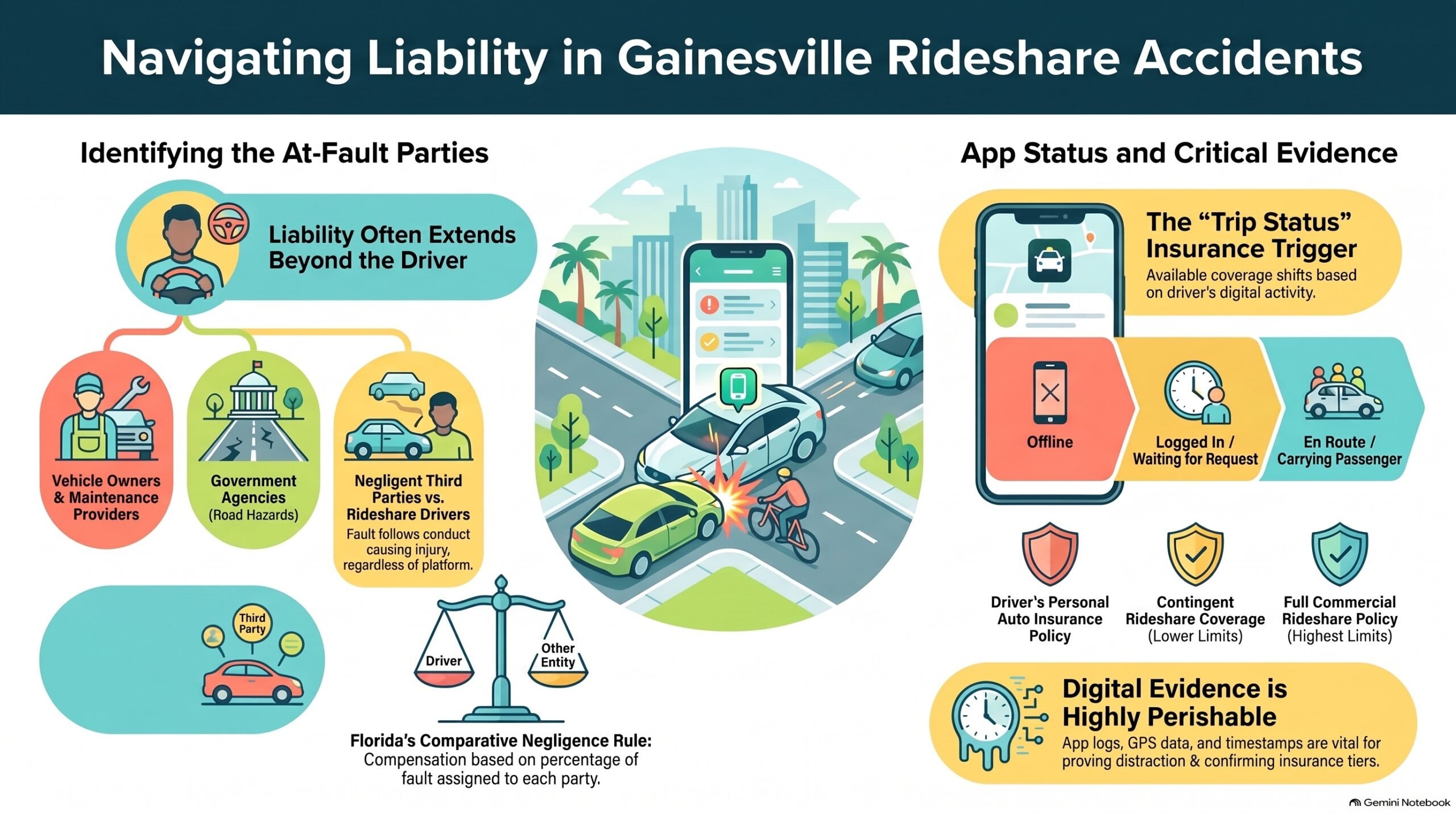
Understanding who may be responsible for a Gainesville rideshare accident starts with the facts surrounding the trip, the driver’s app status, and the conduct of everyone or every company involved. We look at whether the rideshare driver was waiting for a request, traveling to pick you up, or carrying a passenger, because each stage can affect available coverage.
We also consider whether other drivers, vehicle owners, employers, maintenance providers, or corporate policies contributed to your injuries. Through a careful review of liability evidence, we help identify every party that may share legal responsibility, while protecting your ability to seek full compensation.
You merit a process that serves your recovery and supports your family’s stability. We use the facts, medical records, trip data, and insurance information to build an insurance negotiation strategy focused on accountability. When responsibility is disputed, we stand with you and pursue the answers your case requires.
Common Causes of Gainesville Rideshare Accident At-Fault Parties
We examine common causes of Gainesville rideshare accidents by identifying who may have contributed to your injuries and why liability may extend beyond the rideshare driver. Distracted rideshare drivers, negligent third parties, unsafe road conditions, and vehicle maintenance failures can each create serious risks for passengers, motorists, cyclists, and pedestrians. We’ll help you understand how these factors affect fault, evidence, and the potential parties responsible for your losses.
Distracted Rideshare Drivers
Distracted rideshare drivers pose serious risks when they divide their attention among the road, the rideshare app, GPS directions, passenger messages, and surrounding traffic. We recognize that you may rely on these services to safely reach work, medical appointments, or community commitments. When a driver checks notifications, adjusts a route, or responds to rider communications while moving, distracted driving can quickly lead to preventable harm. Texting violations may also show that the driver failed to meet basic safety duties. We examine trip records, app activity, witness accounts, and available traffic evidence to identify whether inattention contributed to the crash. By documenting these facts, we help protect your interests and support accountability when a rideshare driver’s distraction disrupts your ability to serve, travel, and care for others.
Negligent Third Parties
When someone outside the rideshare vehicle causes or contributes to a crash, that negligent third party may share legal responsibility for your losses. We often examine whether another driver, cyclist, pedestrian, vehicle owner, or commercial operator acted carelessly and created preventable harm. Third-party liability matters because accountability should follow the conduct that caused the injury, not merely the presence of a rideshare platform. We help you focus on Evidence Preservation, including witness names, dashcam footage, phone records, and insurance information. Under Florida Comparative Negligence, each responsible person or company may carry a percentage of fault, which can affect your recovery. By Proving Damages through medical records, wage documentation, and evidence of daily impact, we work to present your claim clearly and responsibly.
Unsafe Road Conditions
Although many rideshare crashes involve driver error, unsafe road conditions can also create or worsen a collision and shift fault to a responsible public agency, contractor, property owner, or maintenance company. We look closely at hazards that should’ve been identified, repaired, or warned about before you were harmed. Pothole hazards, roadway debris, missing signs, poor lighting, faded lane markings, and unsafe construction zones can force sudden movements, reduce reaction time, or cause a rideshare driver to lose control. When these dangers contribute to a crash, we help determine who had the duty to maintain the area and whether prior complaints, inspection records, or delayed repairs show negligence. By identifying every responsible party, we work to protect your recovery and support safer roads for our community.
Vehicle Maintenance Failures
Because rideshare drivers often use their vehicles for long hours and frequent trips, poor maintenance can quickly turn a routine ride into a serious crash. We look closely at whether a worn Brake system, low fluid levels, faulty lights, or unsafe tire tread contributed to your collision. When drivers ignore service needs, they endanger passengers, pedestrians, and other motorists who depend on responsible transportation.
We also examine inspection reports, repair invoices, photos, and app records to determine when the driver was working and whether the company had notice of repeated safety concerns. This information can become vital evidence of liability in a Gainesville rideshare accident claim. By identifying maintenance failures early, we help you pursue accountability from every party whose neglect placed others at risk on the road.
Don’t Wait. Call Our Florida Personal Injury Lawyers Now!


Legal Rights of Gainesville Rideshare Accident At-Fault Parties Injury Victims
After a rideshare crash in Gainesville, injured victims have the right to pursue compensation from every party whose negligence contributed to the collision. We help you protect those rights by identifying liable drivers, rideshare companies, vehicle owners, or maintenance providers, then demanding accountability through insurance claims or litigation.
Under Florida’s Comparative Negligence rules, your recovery may depend on each party’s share of fault. We also examine App Privacy issues when trip data, driver status, or location records may support your claim.
Fault, trip data, and location records can shape your recovery after a Gainesville rideshare crash.
- You earn answers when service to your family, work, or community suddenly stops.
- You earn medical care without carrying another party’s burden alone.
- You earn a voice when insurers minimize your pain.
- You earn support while you focus on recovery and helping others again.
We act quickly to preserve evidence, calculate losses, and pursue compensation for medical bills, lost income, suffering, and long-term needs.
Why Do Gainesville Rideshare Accident At-Fault Parties Injuries Happen?
When a rideshare trip depends on quick decisions, app activity, traffic pressure, and multiple insurance relationships, a single unsafe choice can lead to serious injuries and disputed fault. We often see collisions occur because drivers divide their attention among navigation, passenger requests, rideshare notifications, and changing road conditions. In Gainesville, congestion near campus, hospitals, restaurants, and event areas can increase pressure to accept trips, make sudden stops, or complete unsafe turns.
Injuries may also result when another motorist, cyclist, pedestrian, or commercial driver contributes to the crash. Fatigue, speeding, impaired driving, poor vehicle maintenance, and unfamiliar routes can all affect one’s sense of responsibility. We also recognize how insurance intricacy can worsen the harm after impact. Rideshare policy gaps may arise depending on whether the driver was offline, waiting for a request, en route, or carrying a passenger. When serious injuries exceed available insurance coverage, unmet limits can leave victims facing financial uncertainty.
What Should You Do After a Gainesville Rideshare Accident At-Fault Party Injury?
After a Gainesville rideshare accident, we want you to act quickly to protect your health, preserve evidence, and safeguard your potential claim. You should seek immediate medical care, document the crash scene when possible, and avoid making statements that could be misused later. We also recommend contacting a rideshare lawyer promptly, because identifying at-fault parties can become intricate when drivers, rideshare companies, insurers, and other motorists are involved.
Seek Immediate Medical Care
Seek medical attention right away, even if your injuries seem minor, because symptoms from a Gainesville rideshare accident can worsen hours or days later. We encourage you to visit an emergency room, urgent care center, or trusted physician, since prompt evaluation protects your health and creates a clear record of your condition. Tell every provider exactly how the crash occurred, where you feel pain, and whether dizziness, numbness, anxiety, or confusion has developed. Follow all treatment plans, attend referrals, and keep prescriptions managed responsibly, including any guidance related to Overdose prevention. If the collision caused fear, grief, or sleep disruption, request trauma counseling, because emotional injuries merit serious care. By prioritizing treatment, we serve your recovery and strengthen any future claim.
Document The Crash Scene
If you can do so safely, document the crash scene before vehicles move and evidence disappears. We should first look for Scene safety hazards, including traffic, leaking fluids, broken glass, or unstable vehicles, and keep you and others out of danger. Then, take clear photos and videos of vehicle positions, damage, skid marks, traffic signals, roadway conditions, rideshare app screens, license plates, and visible injuries. We can also note the time, weather, lighting, and exact location. If witnesses are present, politely ask for their names and contact information. These evidence preservation steps help protect the truth, support accurate reporting, and honor everyone affected by the crash. Keep damaged personal items, receipts, and medical paperwork, since these records may later help establish what happened.
Contact A Rideshare Lawyer
Once you’ve documented the crash scene and protected available evidence, contact a rideshare lawyer before giving detailed statements to insurers or rideshare companies. We help you identify every potentially responsible party, including the driver, rideshare platform, other motorists, or vehicle owners. We also review app data, insurance tiers, police reports, medical records, and witness accounts to preserve your claim’s strength.
When you’re focused on recovering and supporting those who depend on you, we handle communications and deadlines. We can guide dispute resolution efforts, challenge unfair blame-shifting, and build a settlement strategy that accounts for medical costs, lost income, pain, and future needs. By involving counsel early, you reduce mistakes, protect your rights, and place your case in a stronger position.
Critical Evidence in a Gainesville Rideshare Accident At-Fault Parties Injury Case
We understand the right evidence can protect your claim, clarify fault, and preserve details that may otherwise disappear quickly.
Important proof may include:
- Driver app data that shows who was active and available
- Trip status records that confirm whether a ride was accepted or underway
- Vehicle damage photos that reveal the force and direction of impact
- Witness contact information that preserves independent accounts
We use these facts to help you build a stronger Gainesville rideshare accident injury case against every responsible party.
Driver App Data
Because rideshare liability often turns on what the driver was doing at the exact moment of the crash, driver app data can become one of the most important forms of evidence in a Gainesville rideshare accident case. We look closely at driver records, app logs, location activity, timestamps, speed indicators, and communications that may show distraction, delay, unsafe driving, or policy violations. This evidence helps us understand whether the driver acted responsibly while serving passengers and sharing the road with our community. We also address data privacy concerns, since rideshare companies may resist disclosure or limit access without proper legal action. By preserving and reviewing this information early, we can help you identify responsible parties and build a stronger claim grounded in reliable digital evidence.
Trip Status Records
Trip status records narrow driver app data into a timeline that can directly affect who may be responsible for a Gainesville rideshare accident. We examine when the driver logged in, accepted a request, arrived, began the trip, ended the ride, or went offline. Those markers help us determine whether personal insurance, contingent rideshare coverage, or higher commercial coverage may apply.
Trip status screenshots can preserve crucial moments before app data changes or disappears. We also use App telemetry analysis to compare timestamps, GPS movement, route activity, and driver status against witness accounts and police findings. When we build your claim, we focus on facts that serve the injured person’s need for accountability. Clear evidence of trip status helps us identify responsible parties and pursue coverage available under the law.
Vehicle Damage Photos
After a rideshare crash, vehicle damage photos can show how the impact occurred, where the force entered the vehicles, and which party’s actions likely caused the collision. We use Vehicle Damage images to help reconstruct movement, compare statements, and identify whether a rideshare driver, another motorist, or another party failed to act safely. Clear Photo Documentation should include all sides of each vehicle, close views of dents, broken lights, deployed airbags, tire marks, debris, and the wider Crash Scene. We encourage you to take photos quickly, when it’s safe, because repairs, towing, weather, and cleanup can alter vital details. Strong Evidence Preservation protects your claim and helps us serve you with accuracy, accountability, and a focused strategy for proving fault.
Witness Contact Information
Collecting witness contact information can make a decisive difference in a Gainesville rideshare accident case, especially when drivers, passengers, rideshare companies, or insurers dispute fault. We ask you to gather the names, phone numbers, email addresses, and physical addresses of anyone who saw the crash, heard admissions, or observed unsafe conduct before impact. Independent witnesses can help us serve injured people by clarifying how the collision occurred and identifying every responsible party. Accurate preservation of contact methods matters because numbers change, memories fade, and witnesses may become difficult to locate. We also use Witness statement verification to compare accounts with photos, app data, police reports, and medical timelines. When we preserve reliable witness access early, we strengthen your claim and help pursue accountability with care.
Long-Term Effects of Gainesville Rideshare Accident At-Fault Parties Injuries
We recognize that rideshare accident injuries can affect you long after the initial crash, especially when chronic pain limits daily activity. We also consider how lasting mobility challenges may interfere with your work, independence, and medical needs. We’ll address emotional trauma as well, because anxiety, fear, and distress can shape your recovery and your claim.
Chronic Pain Complications
When a rideshare crash causes injuries that don’t fully recover, chronic pain can affect nearly every part of a person’s daily life. We help you connect persistent pain to the collision, especially when symptoms limit your ability to work, caregiving, rest, and community service. Chronic pain proof often depends on consistent records, credible medical opinions, and your clear description of flare-ups, medication effects, and functional limits. For damages calculation, we consider future treatment, reduced earning capacity, out-of-pocket costs, and the personal burden of ongoing discomfort. Medical documentation tips include reporting pain accurately, following referrals, keeping a symptom journal, and saving therapy, imaging, and prescription records. Treatment plan continuity also matters because gaps in care may give insurers room to dispute the seriousness or cause of your condition after a Gainesville rideshare accident.
Lasting Mobility Challenges
A rideshare accident can leave lasting mobility challenges that affect walking, standing, driving, working, and handling basic daily tasks. We acknowledge that these limitations can also affect how you care for family, assist neighbors, volunteer, or continue service-focused employment. When injuries involve fractures, joint damage, spinal trauma, or nerve impairment, recovery may require surgery, mobility aids, home modifications, and extended therapy. Post-accident rehabilitation helps document physical limitations, treatment needs, and progress, which can be crucial when identifying responsible parties and pursuing compensation. We also consider how reduced mobility changes your future earning ability, transportation needs, and household responsibilities. Careful financial planning can cover medical care, adaptive equipment, and long-term support, helping protect your stability as you focus on rebuilding function and independence.
Emotional Trauma Impacts
Physical recovery is only one part of what follows a serious rideshare crash, because emotional trauma can continue long after visible injuries begin to recover. We often see post-traumatic stress disorder, sleep disruption, fear of travel, and anxiety that interfere with work, caregiving, worship, and community service. When you’re committed to helping others, these symptoms can feel especially frustrating, because they limit patience, focus, and daily reliability.
We help you recognize that emotional harm is real evidence, not a personal weakness. Treatment records, counseling notes, and consistent symptom journals can show how trauma changed your life. Practical coping strategies may include therapy, support groups, structured routines, and gradual return to driving or riding. By carefully documenting these impacts, we pursue accountability from every at-fault party.
Don’t Wait. Call Our Florida Personal Injury Lawyers Now!
Proving Liability in Gainesville Rideshare Accident At-Fault Parties Injury Cases
Because rideshare collisions often involve several drivers, insurers, and app-based records, proving liability requires a focused investigation from the start. We help you identify who owed a duty of care, how that duty was breached, and how the breach caused harm. That may include reviewing police reports, witness statements, traffic camera footage, vehicle damage, medical records, and rideshare trip data.
We also examine whether the driver was logged into the app, waiting for a ride request, transporting a passenger, or acting outside the platform. These details can shape responsibility among the rideshare driver, another motorist, or other negligent parties. When families need Wrongful death proof, we gather evidence with dignity and precision. When injuries disrupt work, we document lost-income recovery using employment records, earnings history, and medical restrictions. Our goal is to build a clear picture of liability so you can pursue accountability and continue serving those who depend on you.
Dealing With Insurance Companies After a Gainesville Rideshare Accident At-Fault Parties Injury
Once liability evidence begins to take shape, insurance companies often move quickly to limit their financial exposure. We help you respond with care, accuracy, and purpose, especially when several policies may apply. Rideshare cases can involve the driver’s personal insurer, the rideshare company’s commercial policy, and your own Underinsured coverage. Each carrier may question responsibility, dispute injuries, or delay communication.
We protect Policyholder rights by reviewing policy language, preserving supporting records, and preventing statements that insurers may use against you. If a carrier issues a claim denial, we examine the stated reasons and challenge unsupported conclusions. We also coordinate communications, so you can focus on recovery and caring for those who depend on you.
Strong documentation creates settlement leverage. Medical records, wage-loss proof, vehicle data, app records, and witness statements can demonstrate the full impact of the harm. We use that evidence to pursue fair compensation without accepting undervalued offers.
What to Expect During a Gainesville Rideshare Accident At-Fault Parties Injury Claim Process
We begin your Gainesville rideshare accident claim by evaluating the facts, your injuries, and the parties that may share fault. We then review liability evidence, including app data, driver conduct, police reports, and insurance coverage, to build a clear negotiating position. If insurers won’t offer fair compensation, we prepare your claim for settlement discussions or litigation.
Initial Claim Evaluation
Before we identify every at-fault party in a Gainesville rideshare accident claim, we begin with a careful initial evaluation of how the crash occurred, who controlled the trip, and which insurance coverage may apply. We listen to your account, review the trip status, and explain liability basics, so you understand why the driver, rideshare company, another motorist, or another party may matter. We also discuss your injuries, medical care, work limitations, and immediate needs, because a strong claim should reflect the full impact on your life. At this stage, evidence gathering remains focused on preserving important information, not proving every detail. We guide you with steady, service-minded counsel, helping you protect your rights while you focus on recovery and supporting those who depend on you.
Liability Evidence Review
After the initial claim evaluation, the liability evidence review focuses on confirming how the Gainesville rideshare accident occurred and which parties may share fault. We examine police reports, photographs, witness accounts, app data, and vehicle damage to assess whether Crash scene standards were followed and documented. We also identify gaps that could affect evidence preservation, especially when rideshare records, dashcam footage, or maintenance documents may be lost or altered. As we guide you, we organize medical records and insurance documentation that connect the collision to your injuries without addressing settlement discussions. This review helps us prepare for liability disputes involving the rideshare driver, another motorist, the rideshare company, or other responsible parties. By carefully serving your interests, we build a clear foundation for the next stage of your claim.
Insurance Negotiation Process
Insurance negotiation begins once the evidence supports a clear presentation of fault, damages, and applicable coverage. We prepare a demand package that explains how the rideshare crash affected your health, work, and daily responsibilities. Damage valuation includes medical bills, future care needs, lost income, pain, and the practical burdens placed on those who depend on you. We also review policy layers, including the driver’s coverage and any rideshare company coverage tied to the app status.
Insurers may request clarification, records, or statements, and we help you respond without weakening your claim. Claim timelines can vary based on treatment progress, coverage disputes, and insurer review practices. Throughout negotiation, we focus on organized communication, accurate documentation, and a fair evaluation that reflects your losses.
Settlement Or Litigation
If the insurer doesn’t make a fair offer, we evaluate whether to continue settlement efforts or file a lawsuit. We review liability evidence, rideshare coverage, medical proof, lost income, and how the crash has affected your ability to serve your family, workplace, and community. Our Negotiation strategy remains focused on fair compensation, but we don’t allow delay tactics to weaken your claim.
When litigation becomes necessary, we prepare each case with discipline. We file the complaint, conduct discovery, question witnesses, and use expert testimony when it strengthens your position. Trial decision factors include fault disputes, policy limits, injury severity, witness credibility, and the insurer’s willingness to act reasonably. Throughout the process, we guide you carefully, protect your interests, and pursue the result your losses justify.
Compensation for Gainesville Rideshare Accident At-Fault Parties Injury Damages
When a rideshare crash causes serious injuries, compensation may include far more than the initial medical bills. We help you identify every responsible party and every available source of recovery, including the driver, the rideshare company, other motorists, and applicable insurance carriers. In Gainesville cases, coverage can depend on app status, rideshare contracts, and whether an uninsured motorist caused or contributed to the collision.
We also assist when medical billing disputes delay treatment records, inflate balances, or complicate negotiations. If the crash caused fatal harm, we guide families through wrongful death claims with care, respect, and disciplined advocacy. Our role is to protect your ability to recover compensation while you focus on recuperation, caregiving, and serving those who rely on you. We review policies, preserve evidence, communicate with insurers, and pursue a result that reflects the full impact of the rideshare accident on your life.
Economic vs Non-Economic Damages in Gainesville Rideshare Accident At-Fault Parties Cases
We help you distinguish economic damages, such as medical bills, lost income, and vehicle repair costs, from non-economic damages, including pain, emotional distress, and loss of enjoyment of life. In Gainesville rideshare accident cases, each category requires specific proof, and we’ll assess how the at-fault parties’ conduct affected the value of your claim. By organizing records, expert opinions, and personal evidence, we work to establish damage values that reflect the full scope of your losses.
Economic Damage Examples
Many economic damages in a Gainesville rideshare accident case reflect measurable financial losses resulting from the crash. We help you identify costs that can be documented, verified, and presented with precision. A Medical cost breakdown may include ambulance transport, emergency care, surgery, medication, physical therapy, diagnostic imaging, follow-up visits, and future treatment needs. We also review out-of-pocket expenses, such as medical equipment, travel to appointments, and home assistance when injuries limit daily tasks.
A lost wages calculation can include missed work, reduced hours, lost benefits, diminished earning capacity, and business income losses for self-employed people. We gather pay records, tax documents, employer statements, and medical restrictions to support each figure. By carefully organizing these losses, we support your recovery through responsible, evidence-based advocacy.
Non-Economic Damage Examples
Financial records tell only part of the story after a Gainesville rideshare accident. We also consider how injuries affect your dignity, independence, and ability to serve the people who rely on you. Non-economic damages may include physical pain and limitations that make caregiving, ministry, teaching, or community work harder. They can also include emotional distress damages, such as anxiety while riding in vehicles, sleep disruption, or distress from a changed routine. Loss of enjoyment matters too, especially when you can no longer participate fully in family, volunteer, or faith-based activities. Scarring, disfigurement, and reduced mobility may affect confidence and daily interaction. We recognize these harms as real consequences, even when they do not appear on receipts, invoices, or wage statements.
Proving Damage Values
Proof gives damage claims their weight after a Gainesville rideshare accident. We build economic damage cases usingbills, wage records, repair estimates, and future care projections to show what the crash has cost and may continue to cost you. Medical records help connect treatment, limitations, and expenses to the collision, creating a foundation insurers and juries can evaluate.
We prove non-economic damages with careful testimony, provider opinions, daily impact evidence, and consistent documentation of pain, anxiety, disfigurement, or lost enjoyment of life. Because these losses don’t come with receipts, we apply accepted valuation methods that account for severity, duration, and disruption to life. Our goal is to present your losses with accuracy and dignity, so those responsible understand the full human and financial impact of the harm caused.
When a Gainesville Rideshare Accident At-Fault Parties Injury Case Goes to Trial vs Settlement
When a Gainesville rideshare accident injury case involves disputed fault, serious injuries, or multiple insurance policies, we evaluate early whether settlement can provide fair compensation or whether trial pressure is necessary. We build each decision around your needs, your recovery, and the service you provide to your family and community.
Settlement may serve you well when insurers accept responsibility, medical damages are well documented, and negotiations reflect the full harm caused. Trial becomes more likely when parties deny fault, minimize injuries, delay payment, or ignore essential proof. We develop a clear Liability Timeline to show how the crash occurred, who acted carelessly, and which coverage should respond.
Evidence Preservation also guides this choice. We secure app records, trip data, witness statements, photographs, medical reports, and vehicle information before they disappear. By preparing every case as if trial may occur, we strengthen negotiations and protect your ability to pursue justice.
Florida Laws That May Affect Your Gainesville Rideshare Accident At-Fault Parties Case
Florida law can shape every part of a Gainesville rideshare accidentat-fault parties case, from identifying who’s legally responsible to determining which insurance coverage applies. We examine how the driver’s app status, vehicle ownership, and third-party conduct affect liability. Florida’s comparative negligence rules may reduce compensation if insurers argue you shared fault. The impact of no-fault benefits also matters because personal injury protection may apply before other claims proceed.
We help you understand these rules so you can protect yourself and continue serving those who depend on you.
- You should not carry another person’s mistake alone.
- Your recovery can support your family, patients, students, coworkers, or community.
- Clear evidence can prevent insurers from unfairly shifting blame.
- Strong legal guidance can restore stability after a frightening crash.
We review police reports, app data, medical records, and insurance policies, then build a focused claim that addresses every potentially responsible party under Florida law.
Don’t Wait. Call Our Florida Personal Injury Lawyers Now!
The Statute of Limitations for Gainesville Rideshare Accident At-Fault Parties Injury Cases
Legal responsibility and available insurance coverage matter, but your right to pursue compensation also depends on meeting strict filing deadlines. In Florida, most personal injury claims arising from rideshare crashes must be filed within two years of the accident. If a case involves wrongful death, the deadline is generally two years from the date of death.
We encourage you to treat these deadlines as urgent, especially when injuries affect your ability to work, care for family, or serve others in your community. Waiting can weaken fault-proving because vehicles get repaired, witnesses move, and digital evidence may disappear. Rideshare cases often depend on app records, trip status, driver activity, and communications that help show who was responsible and what coverage applied.
Missing the statute of limitations can bar your claim, even when fault seems clear. Acting promptly helps preserve evidence and protects your opportunity to seek financial recovery.
How a Gainesville Rideshare Accident At-Fault Parties Lawyer Can Help You
After a rideshare crash, we can help identify every at-fault party, secure critical evidence, and determine which insurance policies may apply to your claim. We investigate the driver, rideshare company, other motorists, vehicle owners, and any entity whose conduct contributed to your harm.
After a rideshare crash, identifying every responsible party and preserving evidence can strengthen your claim.
We handle Evidence preservation quickly, including app data, trip records, dashcam footage, witness statements, and maintenance information.
We also evaluate driver fatigue, distraction, unsafe routing, and negligent hiring issues that may affect liability.
- We protect your ability to serve your family while your claim moves forward.
- We confront insurance bad faith when carriers delay, deny, or undervalue responsibility.
- We address valuation disputes with medical proof, wage records, and expert analysis.
- We pursue accountability, so your recovery supports stability, dignity, and future care.
Our role is to build a clear claim, challenge unfair defenses, and seek compensation that reflects the full impact of the collision.
When to Contact a Gainesville Rideshare Accident At-Fault Parties Lawyer
You shouldn’t wait for an insurer to “sort things out.” Insurance tactics often begin quickly, including requests for recorded statements, low settlement offers, or questions designed to shift blame. Statute timing also matters, because missed deadlines can limit or end a claim. If injuries worsen, bills grow, fault seems disputed, or Uber, Lyft, another driver, or a commercial insurer contacts you, we encourage prompt legal consultation. Acting early keeps decisions informed, measured, and focused on protecting recovery rights.
Why You Need an Experienced Gainesville Rideshare Accident At-Fault Parties Lawyer
Because rideshare crashes often involve several insurers, layered policies, and disputed fault, an experienced Gainesville rideshare accident at-fault parties lawyer can identify who may be responsible and how each coverage source applies. We help you protect your ability to recover damages while you focus on healing, family, work, and service to others.
We investigate the driver’s status in the app, the conduct of other motorists, vehicle maintenance issues, and any negligent practices by the company. We also track Insurance claim deadlines, because missed dates can reduce or eliminate valid compensation. Medical record accuracy matters as well, since incomplete or inconsistent records may give insurers grounds to dispute the cause, severity, or timing of your injuries.
When responsibility is shared, we organize evidence, communicate with insurers, and present your claim with precision. With experienced legal guidance, you are not left to manage intricate liability questions alone after a serious rideshare collision.
How to Choose the Right Gainesville Rideshare Accident At-Fault Parties Lawyer for Your Case
When selecting a Gainesville rideshare accidentat-fault parties lawyer, focus on experience with complex liability disputes, rideshare insurance structures, and multi-party claims. We want you to choose counsel who can identify every responsible party while protecting your ability to recover and continue serving those who depend on you.
Look for a lawyer who acts quickly on Evidence preservation, including app data, trip records, vehicle damage, witness statements, and surveillance footage. We also recommend asking how the firm handles rider privacy, especially when sensitive location or account information may be included in the claim.
A strong lawyer should explain how expert testimony may support fault, damages, and causation when insurers dispute responsibility. You should also evaluate their approach to settlement negotiation, because rideshare cases often involve corporate insurers, drivers, and third parties. Choose someone who communicates clearly, prepares thoroughly, and keeps your service-minded goals at the center.
About The Law Offices of Anidjar & Levine
At the Law Offices of Anidjar & Levine, we handle rideshare accident cases with the urgency, structure, and attention these claims require.
We recognize you may be focused on recovery, family, and serving others while facing medical bills, missed work, and uncertainty.
We investigate each claim carefully, identifying every responsible party and pursuing proof of liability through records, witness accounts, app data, and crash reports.
Our team moves quickly to preserve evidence because rideshare records, vehicle data, and video footage can disappear.
When driver negligence contributes to a collision, we work to show how speeding, distraction, fatigue, or unsafe decisions caused your injuries.
We also understand insurance tactics used to limit payment or shift blame. You shouldn’t have to manage those pressures alone.
We communicate with insurers, track deadlines, and build a case designed to support your damages. Our goal is to help you move forward with confidence.
Frequently Asked Questions
Can Rideshare Accident Claims Involve Both Uber and Lyft Policies?
Yes, rideshare accident claims can involve both Uber and Lyft policies when multiple drivers, vehicles, or app statuses contributed to the crash. We help you examine Insurance coverage coordination, identify each company’s active coverage period, and compare provider policy limits. If liabilities overlap, we pursue the coverage that best supports your recovery while protecting your rights. We’ll carefully assess driver fault, platform status, and available insurance sources.
What if My Rideshare Driver Was Logged Out?
If your rideshare driver was logged out, rideshare company coverage usually won’t apply. We’d examine logged-out status, trip records, app data, and insurance policies to determine driver accountability. You may need to pursue the driver’s personal auto coverage, especially if they caused the crash while serving their own purposes. We help you identify every available source of compensation, so you can protect your recovery and continue serving others responsibly.
Are Rideshare Passengers Required to Use Seat Belts in Florida?
Yes, Florida law generally requires front-seat passengers to wear seat belts, and passengers under 18 must be restrained wherever they sit. We encourage you to follow seatbelt requirements in every rideshare because passenger safety protects you and those serving you. If you’re injured while unbelted, that may affect legal liability, including comparative fault. We can help evaluate how seat belt use influences your claim and recovery.
Can Tourists File Gainesville Rideshare Accident Claims?
Yes, tourists can filerideshare accident claimsin Gainesville when another party’s negligence harms them. We help you understand tourist eligibility, preserve evidence, and report the crash promptly. Your residency usually doesn’t bar recovery, but deadlines and procedures still apply. We also review insurance coverage, including rideshare company policies, driver coverage, and any available medical benefits, so you can pursue fair compensation while focusing on service, recovery, and responsibilities.
Do Rideshare Companies Preserve App Data After Accidents?
Yes, rideshare companies often preserve app data after accidents, but we shouldn’t assume they’ll keep everything indefinitely. App data retention policies vary, and vital records may include trip logs, GPS routes, timestamps, driver status, and communications. We help you act quickly by sending spoliation-preservation notices, which require that relevant evidence be preserved. When you serve injured people, timely preservation supports accountability and strengthens a claim.
—————————
If you were injured in a Gainesville rideshare accident, identifying every at-fault party can be essential to your recovery.
The Law Offices of Anidjar and Levine can review the crash, insurance coverage, driver status, and available evidence to pursue the compensation you may qualify for.
Rideshare claims are often complicated, but you don’t have to manage them alone.
Contact a Gainesville Personal Injury Lawyer today for a free consultation and to protect your rights from the start.