

A Miramar car accident impaired and distracted driving lawyer at The Law Offices of Anidjar and Levine can review the collision, assess potential liability, and explain available legal options. Evidence may include police reports, witness accounts, scene photographs, phone records, and medical documentation. An attorney can communicate with insurers, evaluate coverage, and help organize a claim for medical expenses, lost income, property damage, and pain and suffering, subject to applicable law. Learn more from a Miramar Personal Injury Lawyer. The following sections explain common causes, evidence, legal rights, and steps injured victims may consider.
Main Takeaways
- A Miramar car accident lawyer can assess whether impairment or distraction contributed to the collision and explain your legal options.
- Alcohol, drugs, medication, fatigue, texting, and other distractions may affect a driver’s judgment, attention, or reaction time.
- Preserve crash reports, witness details, photographs, medical records, insurance communications, and relevant phone or vehicle data.
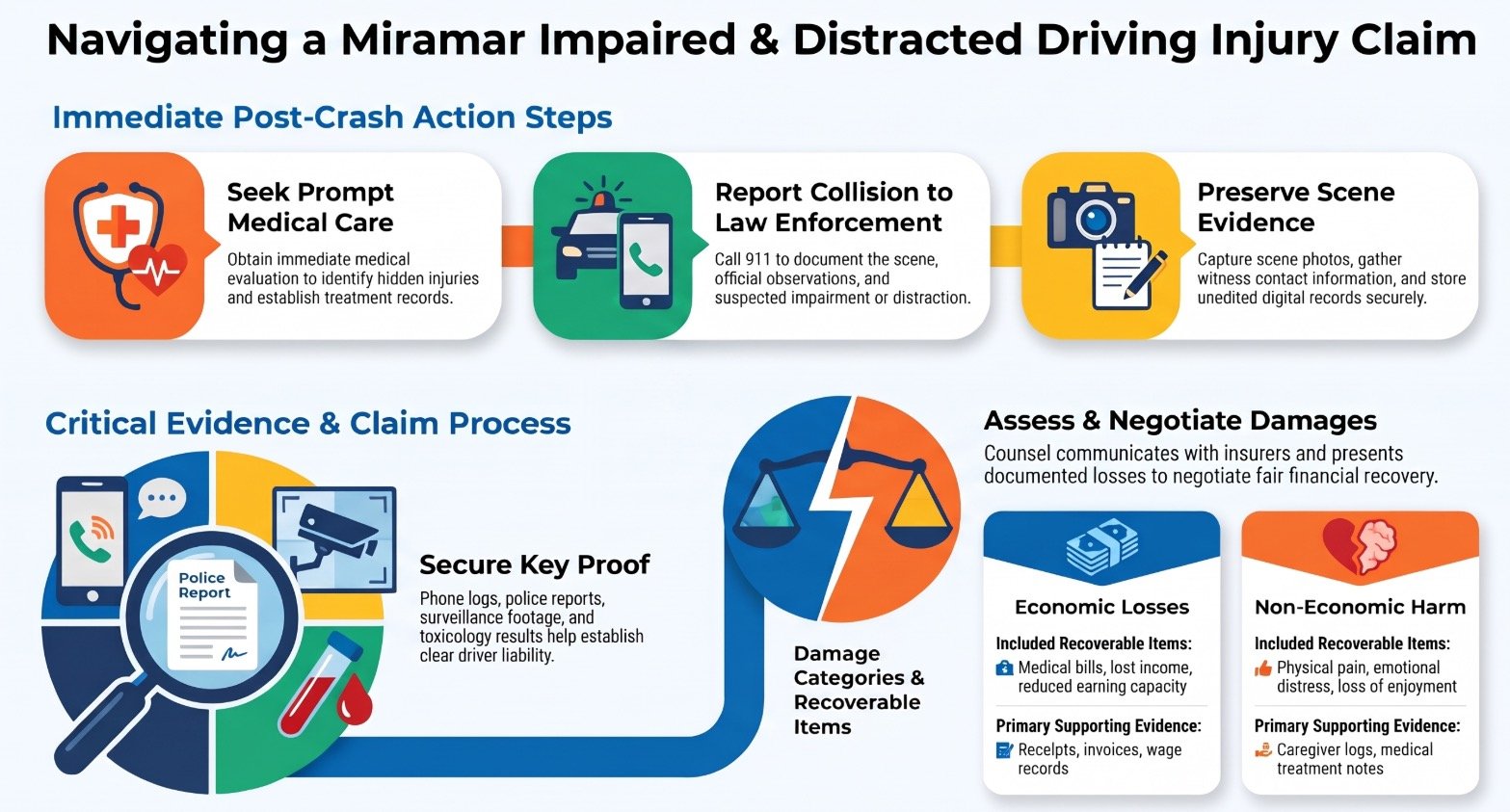
- Seek prompt medical care and report the crash to law enforcement; call 911 for injuries, hazards, or suspected impairment.
- An attorney can review evidence, communicate with insurers, evaluate coverage, and discuss claim negotiations and potential next steps.
How We Can Help With Your Miramar Car Accident Impaired & Distracted Driving Injury Claim
When an impaired or distracted driver causes a crash in Miramar, injured people may face medical expenses, lost income, and uncertainty about their legal options. A legal team can help by listening carefully, explaining available options, and managing practical steps so clients can focus on recovery. This support may include reviewing insurance communications, organizing records, and identifying information needed to assess the claim.
Case strategy begins with understanding each client’s circumstances and goals. Counsel can review relevant documentation, consult qualified professionals when appropriate, and develop a clear plan to pursue compensation. Regular updates help clients make informed decisions without unnecessary confusion.


Claim advocacy also involves communicating with insurers, responding to requests, and presenting the documented effects of the collision. If negotiations do not produce a fair resolution, the legal team can explain potential next steps and represent the client’s interests through the appropriate process. Each matter receives attention suited to its facts, with respectful service, careful preparation, and a commitment to helping injured people seek a meaningful path forward.
Understanding Miramar Car Accident Impaired & Distracted Driving Injury Cases
OUR CONSULTATIONSARE FREE
START YOUR FREE CASE REVIEW

Impaired and distracted driving crashes in Miramar can raise complicated questions about how a collision occurred, who may be responsible, and what evidence supports an injury claim. Each case requires a careful review of the available facts, including police reports, witness accounts, medical records, and photographs. These materials can help establish the sequence of events, identify relevant parties, and connect the collision to documented injuries.
Injury claims may involve more than proving that a driver acted carelessly. The extent of harm, the timing of treatment, and any dispute over responsibility can affect how a claim is evaluated. A thorough assessment also considers whether other factors contributed to the incident, without assuming that any single explanation applies to every crash.


Understanding these cases can support fair outcomes for injured people and their families. It can also inform broader efforts, including Crash prevention measures and roadway design improvements, that promote safer travel for the community. Clear, reliable evidence helps decision-makers assess claims and consider appropriate accountability.
Don’t Wait. Call Our Florida Personal Injury Lawyers Now!
Common Causes of Miramar Car Accident Impaired & Distracted Driving
Common causes of impaired-driving crashes include drunk driving and operating a vehicle under the influence of drugs, both of which can reduce judgment and reaction time. Distracted driving may involve texting behind the wheel or other in-vehicle distractions that divert a driver’s attention from traffic. These behaviors can increase collision risk and contribute to serious injuries.
Drunk Driving
Drunk driving is a serious cause of car accidents in Miramar because alcohol can impair judgment, coordination, and reaction time. Drivers who choose to operate a vehicle after drinking may drift between lanes, misjudge distances, or fail to respond promptly to traffic signals and hazards. These actions can place passengers, pedestrians, cyclists, and other motorists at risk.
Prevention efforts, including DUI checkpoints and public education, can help discourage impaired driving and promote safer choices. Bars and other alcohol-serving businesses may also face dram shop liability when their service contributes to an intoxicated person causing a crash, subject to applicable law. After a collision, injured people may need to determine how alcohol affected the driver’s conduct and whether other parties bear responsibility. Careful investigation can help clarify the circumstances and support accountability while protecting the needs of those harmed.
Drug-Impaired Driving
When a driver uses drugs before getting behind the wheel, the substances may affect judgment, coordination, perception, or reaction time, increasing the risk of a crash in Miramar. Impairment can result from illegal substances, cannabis, or prescription and over-the-counter medications. Some medications cause drowsiness or blurred vision, while medication interactions may intensify these effects or create unexpected impairment. Drivers may not recognize that a prescribed treatment has reduced their ability to operate a vehicle safely.
Drug recognition by trained officers can help identify signs of impairment and support an investigation, though determining the cause may require additional evidence. After a collision, prompt medical care should remain the priority for everyone involved. Preserving relevant records, including medication information and treatment documentation, can assist those evaluating how impairment may have contributed and help injured people pursue appropriate support.
Texting Behind the Wheel
Unlike drug impairment, texting distracts a driver by diverting attention from the road, often for several seconds at a time. During that interval, a vehicle may travel the length of a football field without the driver seeing changing traffic conditions. Text Message Timing can increase danger when a message arrives at an intersection, near a pedestrian crossing, or in congested traffic. A driver who glances down to read or respond may miss a signal, fail to notice a slowing vehicle, or drift out of their lane. Typing Distraction also combines visual, manual, and cognitive demands, reducing the attention available for safe driving. These choices can place passengers, pedestrians, and other motorists at risk. A driver’s decision to delay a response helps protect everyone sharing Miramar’s roads and supports safer travel for the community.
In-Vehicle Distractions
In-vehicle distractions can impair a driver’s attention even when both hands remain on the wheel. Dashboard clutter, including loose objects or poorly arranged controls, may divert a driver’s eyes from the road or require attention at crucial moments. Reaching for a dropped item, adjusting navigation, or searching for a setting can reduce awareness of nearby vehicles, pedestrians, and changing traffic conditions. Passenger interference may also contribute to unsafe driving when conversations, disputes, or requests draw a driver’s focus away from the roadway. Children and other passengers can create sudden distractions that demand a driver’s response. In Miramar, these behaviors may increase collision risks, particularly in congested areas. Drivers who keep the cabin organized and limit nonessential interactions can better protect passengers and others sharing the road.
Legal Rights of Miramar Car Accident Impaired & Distracted Driving Injury Victims
Impaired and distracted driving can create strong grounds for a personal injury claim when a driver’s conduct causes a crash in Miramar. Injured people may seek compensation when evidence establishes that another driver’s negligence caused their harm. These rights can help victims obtain treatment and pursue fair recovery while preserving their ability to support family and community responsibilities.
- Seek medical care: Prompt evaluation documents injuries and supports appropriate treatment, even when symptoms initially seem minor.
- Preserve evidence: Crash reports, photographs, witness details, and medical records may help establish fault and the extent of losses.
- Pursue compensation: A claim may include medical expenses, lost income, property damage, and pain and suffering, subject to applicable law.
- Obtain guidance: A qualified attorney can explain deadlines, communicate with insurers, and assess available legal options.
Post-crash safety remains important; injured people should avoid further risks and follow medical advice. Victim support may include practical assistance, clear information, and respectful advocacy throughout the claims process.
Why Do Miramar Car Accident Impaired & Distracted Driving Injuries Happen?
When a driver’s attention or judgment is compromised, the risk of a serious crash in Miramar increases. Impaired driving can result from alcohol, prescription medication, or other substances that slow reaction time, weaken coordination, and distort judgment. Distracted driving occurs when a driver looks away from the road, handles a device, or focuses on another task instead of traffic. Even brief lapses can prevent timely braking or safe responses to changing conditions.
Other factors can increase danger. Fatigue risks include reduced alertness and delayed reactions, which can resemble impairment and make it harder to stay in your lane. Roadway design can also contribute when confusing intersections, limited sightlines, or inadequate lighting leave little time to respond to a hazard. Heavy traffic, speeding, and poor weather may compound these conditions. In many crashes, several factors interact, but the driver’s choices remain central to understanding how the collision occurred and why nearby people may suffer serious injuries.
What Should You Do After a Miramar Car Accident Impaired & Distracted Driving Injury?
After an impaired or distracted driving crash in Miramar, injured individuals should seek prompt medical care, even if their symptoms initially seem minor. Report the collision to law enforcement, and document relevant details while they remain available. Preserving photographs, witness information, and medical records can help establish what happened and the extent of the injuries.
Seek Medical Care
Prompt medical evaluation is essential after a Miramar car accident involving a suspected impaired or distracted driver, even if injuries seem minor. Some conditions, including head, neck, or internal injuries, may not produce immediate symptoms. A timely examination can identify concerns early and help prevent complications. The injured person should describe all symptoms, the collision’s impact, and any changes in physical or cognitive function to the healthcare provider. Following medical advice, attending follow-up appointments, and keeping records of diagnoses and care can support recovery and clarify the injury’s progression. If a primary provider recommends further evaluation, Expert referrals may connect the patient with appropriate care. Care teams can assist with treatment scheduling and explain recommended services. Prompt, consistent attention to health also helps injured people remain informed and better able to meet their responsibilities.
Report the Crash
Promptly reporting a Miramar car accident helps create an official record of the collision, especially when impaired or distracted driving may have contributed. If possible, those involved should move to a Safe location away from traffic and check whether anyone needs immediate assistance. Call 911 when injuries, hazards, or suspected impairment require urgent attention. Otherwise, report the crash to local law enforcement, follow the dispatcher’s instructions, and provide accurate information about the location, vehicles, and people involved. Emergency contacts may be notified so they can assist with transportation, communication, or support. Those involved should answer officers’ questions truthfully and avoid speculation about fault or the other driver’s condition. A formal report can help clarify what occurred and guide appropriate next steps.
Preserve Evidence
Preserving evidence can help establish how a Miramar crash occurred and whether impairment or distraction contributed. After reporting the collision, an injured person can photograph vehicle positions, visible damage, road conditions, traffic signs, and any relevant debris, if it is safe to do so. Names and contact details for witnesses may help clarify events that drivers recall differently.
Evidence preservation also includes retaining medical records, repair estimates, insurance correspondence, and receipts for accident-related expenses. Original photographs and messages should remain unedited, with digital backups stored securely to reduce the risk of loss. Avoid posting crash details publicly, since online statements may be misunderstood or used out of context. If a phone or vehicle system may contain relevant data, it should not be altered or discarded. Promptly preserving these materials can support a fair review and help protect the interests of everyone affected.
Critical Evidence in a Miramar Car Accident Impaired & Distracted Driving Injury Case
Evidence can help establish whether impairment or distraction contributed to a Miramar collision and document the resulting injuries.
Essential records may include:
- Police accident reports
- Witness statements
- Phone records
- Medical documentation
Police Accident Reports
After a Miramar car accident involving suspected impairment or distracted driving, the police accident report can provide an important early account of what occurred. It may document the crash location, time, vehicle positions, road conditions, reported injuries, and observations made by responding officers. The report may also note whether officers investigated possible impairment or distraction, though it does not establish legal fault on its own. Injured people and their representatives can use these details to identify issues requiring further review and support a fair evaluation of the claim. Report access procedures vary, and obtaining the report promptly can help preserve accurate information. If it contains an error or omission, you can request corrections through the appropriate agency, supported by reliable documentation. Careful review helps guarantee the record serves everyone affected by the collision.
Witness Statements
Witness statements can clarify how an impaired or distracted driver behaved before a Miramar car accident and what occurred at the scene. People who saw the collision may describe lane changes, delayed braking, erratic movement, or signs of impairment. Their accounts can also help explain the sequence of events and identify conditions that affected visibility or response time. Witness credibility depends on factors such as the person’s opportunity to observe, distance from the vehicles, and ability to recall details accurately. Investigators and legal representatives may compare accounts with physical evidence and other available information. Statement inconsistencies do not automatically make a witness unreliable, but they may require careful review to determine whether differences reflect confusion, limited observation, or changing recollections. Accurate, respectful interviews can preserve useful evidence and support a fair assessment of the injuries and events.
Phone Records
Phone records may help establish whether a driver was using a mobile device shortly before or during a Miramar car accident. Call logs, text activity, and data sessions can provide a timeline for investigators evaluating possible distraction. Carrier metadata and usage timestamps may show when activity occurred, although they do not necessarily reveal what a driver viewed or typed. Records should be compared with crash reports, witness statements, and other available evidence to determine whether device use coincided with the collision. Access may require the account holder’s consent, a subpoena, or other lawful process, and privacy rules can limit disclosure. Promptly preserving relevant records is important because providers may retain certain information for limited periods. Careful review can help clarify disputed facts and support a fair assessment of responsibility and the harm caused.
Medical Documentation
Medical documentation can connect injuries to a Miramar car accident and show how impaired or distracted driving may have affected the people involved. Prompt evaluation creates a record of symptoms, diagnoses, treatment, and changes in a person’s condition. Emergency department notes, imaging results, prescriptions, therapy records, and follow-up visits may help establish the nature and duration of injuries. Consistent care also helps providers identify complications and recommend appropriate treatment.
Provider coordination can support accurate, complete records when several clinicians treat an injured person. Each provider should receive relevant information about the collision and prior care, while records should distinguish observed findings from patient-reported symptoms. If an entry contains an error or omission, record amendments should follow the provider’s formal process and preserve the original documentation. Organized records can help clarify injury-related needs and support a fair review of the claim.
Long-Term Effects of Miramar Car Accident Impaired & Distracted Driving Injuries
Impaired and distracted driving collisions can leave injured people with effects that persist well beyond initial treatment. These may include chronic physical pain, lasting cognitive changes, and emotional trauma or stress that disrupt daily activities. The nature and duration of these effects depend on the injuries sustained and the care required.
Chronic Physical Pain
When a Miramar car accident caused by impaired or distracted driving results in lasting injuries, chronic physical pain can disrupt daily activities long after the initial treatment ends. Pain may persist in the back, neck, joints, or other injured areas, making routine tasks difficult and reducing a person’s ability to work, care for family, or assist others. Mobility limitations can further affect independence, especially when walking, lifting, or standing causes discomfort. Ongoing medical evaluation can help identify the source of symptoms and guide appropriate pain management, which may include medication, physical therapy, or other recommended care. Consistent treatment records also document how the injury affects daily life over time. Understanding these lasting effects can help injured people and their families seek practical support and make informed decisions about recovery and available legal options.
Lasting Cognitive Changes
Beyond physical pain, a Miramar car accident caused by impaired or distracted driving may lead to lasting cognitive changes, particularly after a head injury. Survivors may experience difficulty with memory, concentration, processing speed, or organizing everyday tasks. These limitations can affect employment, education, household responsibilities, and the ability to provide reliable support to others. Some individuals develop executive dysfunction, which may interfere with planning, decision-making, impulse control, and completing tasks in sequence. Neuroplasticity changes can occur as the brain adapts after injury, but recovery and functional outcomes vary. Medical assessment, rehabilitation, and follow-up care can help identify specific needs and track progress. Family members and caregivers may assist by documenting changes and supporting treatment recommendations. Records linking cognitive symptoms to the collision may also help establish the injury’s lasting effects in a legal claim.
Emotional Trauma and Stress
After a Miramar car accident involving impaired or distracted driving, emotional effects may persist even after physical injuries begin to mend. Survivors may experience anxiety, low mood, irritability, sleep disruption, or symptoms of post-traumatic stress. These difficulties can affect work, family responsibilities, and participation in community life. Trauma triggers, such as traffic noise, intersections, or emergency vehicles, may bring back distressing memories and make travel difficult. A qualified health professional can assess symptoms and recommend appropriate treatment, including counseling or other evidence-based care. Supportive relatives, colleagues, and community members can help by listening without judgment and respecting the survivor’s pace. Practical coping strategies may include following a treatment plan, maintaining routines, and seeking trusted support. Documenting symptoms and their effects can also help explain ongoing needs.
Proving Liability in Miramar Car Accident Impaired & Distracted Driving Injury Cases
Proving liability in a Miramar car accident involving impaired or distracted driving requires evidence that the driver acted negligently and that the conduct caused the crash and resulting injuries. Negligence standards generally require showing that a driver failed to use reasonable care under the circumstances. Evidence may include police reports, witness accounts, crash scene photographs, vehicle damage, and available surveillance or dashcam footage. In suspected impairment cases, toxicology results, field sobriety observations, and arrest records may help establish the driver’s condition. For distraction claims, phone records, application activity, and statements about device use may be relevant, subject to applicable legal procedures.
Medical records and expert assessments can connect the collision to specific injuries and document their effects. A careful investigation can preserve evidence and clarify how each person’s actions contributed to the event. Florida’s comparative fault rules may reduce a claimant’s recovery if they share responsibility. Establishing a reliable factual record helps injured people pursue accountability while supporting the broader goal of safer roads for the community.
Dealing With Insurance Companies After a Miramar Car Accident Impaired & Distracted Driving Injury
How an injured person responds to insurers can affect how a Miramar car accident claim involving suspected impairment or distraction is handled. After a collision, an insurer may request a recorded statement, medical records, or other information. An injured person can provide accurate basic details while avoiding guesses about fault, injuries, or events that remain unclear. Prompt medical care and organized records can help document losses and support communications.
Insurers may question whether impairment or distraction caused the crash, dispute the extent of injuries, or deny the claim. A careful review of correspondence and settlement offers can help identify unsupported conclusions and preserve the injured person’s interests. The available policy limits may also affect what compensation can be pursued, particularly when injuries are serious or several people seek payment. An attorney can communicate with insurers, assess coverage, and explain options without pressuring an injured person to accept an inadequate offer. Clear, respectful communication helps keep attention on accurate information and fair treatment.
Don’t Wait. Call Our Florida Personal Injury Lawyers Now!
What to Expect During a Miramar Car Accident Impaired & Distracted Driving Injury Claim Process
A Miramar impaired or distracted driving injury claim typically begins with an initial case review to assess the circumstances, injuries, and potential liability. Evidence is then collected to support the claim, followed by negotiations with insurers over responsibility and damages. The process concludes with a resolution, which may include compensation based on the available evidence and applicable law.
Initial Case Review
During an initial case review, a Miramar car accident lawyer typically examines the available evidence, the injured person’s medical records, and the circumstances surrounding the suspected impaired or distracted driving. The review helps clarify how the collision may have occurred, the nature of the injuries, and the potential impact on the person’s daily responsibilities. During an attorney consultation, the injured person can explain their concerns, ask questions, and learn what legal options may be available. The lawyer may also discuss who could be responsible and what information is needed to assess the claim’s strengths and limitations. A Review timeline can vary depending on the intricacy of the incident and the records available. This early assessment allows the injured person to make informed decisions while preserving attention for recovery, family needs, and community responsibilities.
Evidence Collection
Once the initial review identifies the issues requiring further investigation, evidence collection helps establish how the collision occurred and who may be responsible. The process may include obtaining the police report, witness statements, photographs, and medical records that document the crash and resulting injuries. Investigators may seek Surveillance footage from nearby businesses, traffic cameras, or residences before recordings are erased. Vehicle downloads can preserve information about speed, braking, and other events immediately before impact, subject to the vehicles’ available systems. In suspected impaired driving cases, relevant records may include toxicology results, arrest documents, and observations recorded by responding officers. For distracted driving allegations, phone records or other digital evidence may help clarify whether a device was in use. Careful preservation and review can support an accurate account and recognize the needs of everyone affected.
Claim Negotiations
How an insurer evaluates a claim depends on the available evidence, the documented injuries, and the circumstances of the collision. During negotiations, the injured person or their representative presents a clear account of how impaired or distracted driving contributed to the crash. Medical records, treatment updates, wage documentation, and witness statements may help support the claim and address questions about responsibility or injury severity.
A Demand strategy should reflect the evidence, explain the losses being claimed, and anticipate the insurer’s concerns. The insurer may request additional records, question aspects of the account, or propose changes to its evaluation. Careful review of each response can help keep discussions focused on documented facts rather than assumptions. Settlement timing may depend on the completeness of medical information, the pace of the insurer’s review, and whether further investigation is needed. Prompt, organized communication can support a fair and efficient process for all involved.
Resolution And Compensation
When negotiations reach a resolution, compensation depends on the evidence of fault, the documented impact of the injuries, and the terms of any settlement or court outcome. Recoverable damages may include medical expenses, lost income, reduced earning capacity, and pain and suffering. The final amount can reflect how impaired or distracted driving contributed to the collision, as well as the strength of the supporting records and testimony.
Before accepting an agreement, the injured person should understand whether it releases all claims and how payment will be issued. Structured settlements may provide payments over time rather than a single sum, which can help address ongoing care needs. Tax implications vary according to the type of damages and payment arrangement, so qualified tax guidance may be appropriate. A court judgment may differ from negotiated terms and can involve additional procedures.
Compensation for Miramar Car Accident Impaired & Distracted Driving Injury Damages
Impaired or distracted driving can cause serious injuries, and victims of these crashes may seek compensation for losses supported by the evidence. A claim may address the practical consequences of an injury and the support needed during recovery. Medical records, treatment plans, crash reports, and other reliable documentation can help establish how the collision affected the injured person and what assistance may be required.
Damage valuation depends on the available evidence, the nature of the injuries, and their effect on daily responsibilities. A careful review can help guarantee that a proposed resolution reflects documented needs rather than assumptions. Because recovery may continue over time, settlement timing can matter; resolving a claim before the medical outlook is clear may leave future needs unaccounted for. A qualified legal representative can organize records, communicate with insurers, and explain options in accessible terms. This guidance can help injured people and their families make informed decisions while focusing on recovery and maintaining their responsibilities to others.
Economic vs Non-Economic Damages in Miramar Car Accident Impaired & Distracted Driving Cases
In Miramar impaired and distracted driving cases, economic losses may include medical expenses, lost income, and other measurable costs. Non-economic harm can involve pain, emotional distress, and reduced quality of life. Establishing both categories requires reliable evidence that connects the losses to the crash.
Economic Losses
Economic losses can provide a measurable account of the financial harm caused by an impaired or distracted driving crash in Miramar. These damages may include emergency care, hospital treatment, medication, rehabilitation, and other reasonable medical expenses related to the collision. A claim may also account for lost wages when injuries prevent a person from working, as well as reduced future earning capacity if lasting limitations affect employment. Household service costs may be relevant when an injured person cannot safely perform necessary tasks, such as cleaning or childcare. Transportation expenses, including travel to medical appointments or necessary replacement transportation, may also be documented. Receipts, invoices, wage records, and medical statements can help establish the amount of these losses and their connection to the crash. Careful documentation supports an accurate assessment and helps guarantee that financial needs are clearly presented.
Non-Economic Harm
Financial records can measure medical bills and lost income, but they do not capture every consequence of an impaired or distracted driving crash in Miramar. Non-economic harm reflects the personal effects of injuries, including physical pain, emotional distress, and disruption to daily life. A person may experience anxiety, sleep difficulties, or reduced confidence after a collision, even when these effects have no direct price. Loss of enjoyment may arise when injuries prevent participation in family activities, hobbies, or community service that once brought purpose and connection. Some people also face diminished independence, relying on relatives or others for transportation, household tasks, or personal care. These consequences can affect relationships and well-being over time. Non-economic damages address harms beyond measurable financial losses, recognizing the human impact of a serious crash on an injured person and those who support them.
Proving Damages
A well-supported damages claim connects the crash to both measurable losses and personal harm. In a Miramar impaired or distracted driving case, economic damages may include medical bills, rehabilitation costs, lost wages, and reduced earning capacity. Records such as invoices, employment documents, and expert assessments can help establish these losses and show how they relate to the collision. Future care needs may require treatment plans or testimony from qualified medical professionals to estimate expected costs.
Non-economic damages address harm without a fixed price, including pain, emotional distress, and limitations on daily activities. Consistent medical records and clear accounts of changes in routine can support this evidence. A careful presentation of both categories helps decision-makers evaluate the full impact of the crash and determine fair compensation based on documented facts.
When a Miramar Car Accident Impaired & Distracted Driving Injury Case Goes to Trial vs Settlement
When an impaired or distracted driver causes a crash in Miramar, the injured person may resolve the claim through settlement or pursue compensation at trial. A settlement can provide a defined resolution without the time and uncertainty of a courtroom proceeding. It may also allow an injured person to focus on recovery and family responsibilities. Settlement timing depends on the available evidence, medical progress, and whether the parties can agree on fair compensation. Accepting an offer generally ends the claim, so its terms and potential future needs require careful review.
If the parties dispute responsibility or the value of the losses, trial may be necessary. Trial preparation can include organizing records, preparing witnesses, and presenting evidence about how the collision affected the injured person. A judge or jury then evaluates the evidence and determines the outcome. Trial can take longer and carries uncertainty, but it may offer a path to resolution when negotiations fail. The appropriate course depends on the case’s facts, goals, and readiness for either process.
Florida Laws That May Affect Your Miramar Car Accident Impaired & Distracted Driving Case
Florida law can affect how a Miramar impaired or distracted driving claim is evaluated, including how fault is assigned and what evidence may support compensation.
Several rules may guide the review:
- Florida follows a modified comparative negligence system. A claimant whose share of fault exceeds 50 percent generally cannot recover damages; otherwise, compensation may be reduced by that share.
- Drivers must use reasonable care and obey traffic laws. Evidence of phone use, unsafe driving, or impairment may help establish negligence, while the circumstances of a crash remain important.
- Florida’s impaired-driving laws prohibit driving under the influence. DUI checkpoints may be conducted under constitutional safeguards, and records from a lawful stop may provide relevant evidence. The phrase boating under the influence concerns a separate boating offense, not a substitute standard for a car crash claim.
- Florida law requires drivers to carry specified insurance coverage. Available benefits and any additional recovery depend on the policy, injuries, and evidence. Careful documentation can help clarify responsibility and support fair treatment for everyone affected.
The Statute of Limitations for Miramar Car Accident Impaired & Distracted Driving Injury Cases
Beyond rules governing fault and insurance, filing deadlines can determine whether an injured person may pursue compensation after an impaired or distracted driving crash in Miramar. Florida generally allows two years to file a negligence action for injuries arising from a crash. The period typically begins on the date the injury occurs, so claim timing should be assessed promptly, even while medical care and recovery remain priorities.
Different deadlines may apply to wrongful death claims, property damage disputes, or cases involving government entities. Missing the applicable filing period can result in dismissal, regardless of the apparent strength of the evidence. Deadline exceptions may arise in limited circumstances, such as when a defendant cannot be located or an injured person is legally incapacitated. These rules depend on the facts and should not be assumed to extend the time available.
Accurate records of the collision, injuries, and related losses can support timely evaluation. Prompt attention to filing dates helps preserve the injured person’s opportunity to seek compensation and address obligations to family and community.
Don’t Wait. Call Our Florida Personal Injury Lawyers Now!
How a Miramar Car Accident Impaired & Distracted Driving Lawyer Can Help You
After an impaired or distracted driving crash in Miramar, a lawyer can help an injured person assess the claim, preserve relevant evidence, and understand available legal options. With Early intervention, counsel can organize records and identify information that may otherwise be lost. A focused legal strategy can also support a fair assessment of responsibility and damages while keeping the injured person’s needs central.
Early legal guidance can preserve evidence, clarify options, and help injured people pursue a fair assessment of responsibility and damages.
A lawyer may assist by:
- Reviewing crash reports, medical records, witness accounts, and available photographs to clarify how the collision occurred.
- Seeking relevant evidence, such as surveillance footage, phone records, or vehicle data, when legally obtainable.
- Coordinating communication with insurers and evaluating settlement proposals against documented losses and future needs.
- Consulting appropriate professionals to explain injuries, financial effects, and the circumstances surrounding the driver’s conduct.
This guidance can help an injured person make informed decisions and reduce avoidable disputes. By addressing the claim carefully, counsel can support accountability and help protect resources needed for recovery, family responsibilities, and continued care. The lawyer can also explain procedural requirements in clear terms.
When to Contact a Miramar Car Accident Impaired & Distracted Driving Lawyer
Prompt contact with a Miramar car accident impaired and distracted driving lawyer can be important when a crash causes injury, fault is disputed, or evidence may be lost. Early guidance can help an injured person protect relevant records, preserve witness details, and understand deadlines that may affect a claim. Immediate legal consultation is especially useful when a driver may have been impaired, phone use is suspected, or an insurer requests a recorded statement before the circumstances are clear.
A lawyer may also be contacted when medical treatment is ongoing, expenses are accumulating, or the other party denies responsibility. Prompt communication can support an orderly process and help the injured person make informed decisions while focusing on recovery and family responsibilities. During an initial discussion, the lawyer can explain possible next steps and attorney fee arrangements, including whether payment depends on a recovery. Seeking advice does not require a person to pursue a claim, but timely information can help preserve available options.
Why You Need an Experienced Miramar Car Accident Impaired & Distracted Driving Lawyer
An experienced Miramar car accident impaired and distracted driving lawyer can help identify evidence that may establish how a crash occurred and who was responsible. Such evidence may include police reports, witness accounts, vehicle damage, surveillance footage, and records related to phone use or impairment. Prompt investigation can help preserve information that might otherwise become unavailable.
Attorney experience matters when evaluating complicated liability issues and communicating with insurers. A lawyer familiar with impaired and distracted driving claims can assess how applicable laws and evidence relate to an injured person’s circumstances. This support may help clients understand their rights and make informed decisions while they focus on recovery and family responsibilities.
Local knowledge can also inform an investigation. Familiarity with Miramar roads, traffic patterns, and nearby resources may help identify relevant witnesses or sources of records. By organizing evidence, addressing legal deadlines, and presenting a clear account of the harm suffered, counsel can help injured people seek accountability and pursue compensation through the appropriate process.
How to Choose the Right Miramar Car Accident Impaired & Distracted Driving Lawyer for Your Case
Choosing the right Miramar impaired and distracted driving lawyer requires careful consideration of the attorney’s experience with similar claims, approach to investigating evidence, and ability to explain legal options clearly. A suitable attorney should understand how to preserve crash reports, witness accounts, phone records, and other evidence that may clarify how impairment or distraction contributed to a collision. The lawyer should also explain the claims process, possible challenges, and decisions the injured person may need to make.
Lawyer communication matters throughout a case. Prospective clients can ask who will provide updates, how quickly questions are answered, and whether the attorney explains developments in plain language. Clear communication helps clients make informed choices while managing recovery and other responsibilities.
Before signing an agreement, the client should review the fee structure, including how fees are calculated and whether case expenses are separate. Comparing these details, asking direct questions, and evaluating whether the attorney listens carefully can help identify representation suited to the client’s needs and circumstances.
About The Law Offices of Anidjar & Levine
The Law Offices of Anidjar & Levine represents people injured in car accidents, including collisions involving impaired or distracted drivers. The firm handles claims arising from crashes in Miramar and throughout Florida, helping clients understand their legal options and pursue compensation for documented losses. Its attorneys may investigate the collision, gather records, communicate with insurers, and prepare a claim for negotiation or litigation when appropriate.
The firm’s history reflects its work on behalf of people facing the practical consequences of serious injuries. The firm describes its role as providing legal guidance and support while clients focus on medical care and other needs. Case strategies depend on the facts, available evidence, and applicable law; no particular result can be guaranteed.
Community involvement is another aspect of the firm’s public presence. Its service-oriented efforts are intended to support local people and organizations beyond legal representation. Prospective clients can review the firm’s services, ask questions about a specific crash, and discuss whether legal assistance may be suitable.
Frequently Asked Questions
Can Passengers File Claims After a Crash Caused by an Impaired or Distracted Driver?
Yes. Passengers injured in a crash caused by an impaired or distracted driver may pursue compensation, even if they were riding in the at-fault driver’s vehicle. Passenger injury claims can address medical expenses, lost income, pain, and other documented losses. Available Insurance coverage options may include the driver’s liability policy, another responsible driver’s coverage, or applicable uninsured or underinsured motorist benefits. Prompt medical care, evidence preservation, and timely legal guidance can help protect a passenger’s rights.
Can I Recover Compensation if I Was Partly Responsible for the Collision?
A person may recover compensation even when partly responsible for a collision, depending on the state’s Comparative Negligence rules. Under Shared Fault principles, an award may be reduced by the injured person’s percentage of responsibility; in some states, a high fault percentage can bar recovery. Investigators and insurers assess evidence to assign fault, so preserving records and obtaining medical care can help clarify what occurred and support a fair evaluation of the claim.
What Happens if the At-Fault Driver Was Uninsured or Underinsured?
If the at-fault driver lacks adequate insurance, an injured person may seek recovery through their own uninsured motorist coverage or pursue underinsured driver claims, depending on the policy and available coverage. These benefits may help pay medical expenses, lost income, and other covered losses, subject to policy limits and exclusions. A careful review of insurance documents, accident evidence, and applicable deadlines can clarify available options and support a fair resolution.
Can I Pursue a Claim if the Impaired Driver Was Using a Rental Car?
Yes, an injured person may pursue a claim when an impaired driver was operating a rental car. The driver may be responsible for injuries caused by negligent or impaired driving, while available rental insurance coverage may help pay damages, subject to policy terms and limits. Rental company liability is generally limited and depends on specific facts, such as negligent vehicle maintenance or unlawful rental practices. Promptly preserving records and obtaining legal guidance can help clarify potential sources of recovery.
Are Claims Possible When a Crash Involves a Commercial Vehicle?
Yes, claims may be possible when a crash involves a commercial vehicle, depending on the evidence and applicable law. Commercial driver liability may arise if a driver’s negligence, impairment, or distraction caused the collision. Employer vehicle responsibility may also apply when the driver was performing job duties, though exceptions can affect liability. Injured people may seek compensation for documented losses, and a prompt investigation can help preserve records and clarify responsibility.
—————————
Impaired and distracted driving crashes can cause serious injuries, financial strain, and uncertainty about what comes next. Affected individuals may protect their interests by documenting the collision, preserving relevant evidence, and seeking prompt medical care. An experienced Miramar car accident lawyer can assess potential claims, explain available options, and address communications with insurers. The Law Offices of Anidjar and Levine represents injured people seeking accountability and compensation. Learn more from a Miramar Personal Injury Lawyer. Timely legal guidance can help clarify the steps ahead.


