

The Law Offices of Anidjar and Levine can help homeowners document structural damage, smoke contamination, damaged belongings, and temporary expenses after a fire. Counsel may review policy limits, exclusions, deadlines, and notice requirements, then address disputes about coverage, repair scope, or claim value. Photographs, inventories, inspection reports, medical records, and repair estimates can support a claim. Because fire losses may involve injuries or another party’s responsibility, legal options depend on the evidence and policy. Learn more from a Fort Lauderdale Personal Injury Lawyer. The sections below explain important considerations.
Main Takeaways
- A Fort Lauderdale property claim lawyer can review fire and smoke damage coverage, policy limits, exclusions, deadlines, and notice requirements.
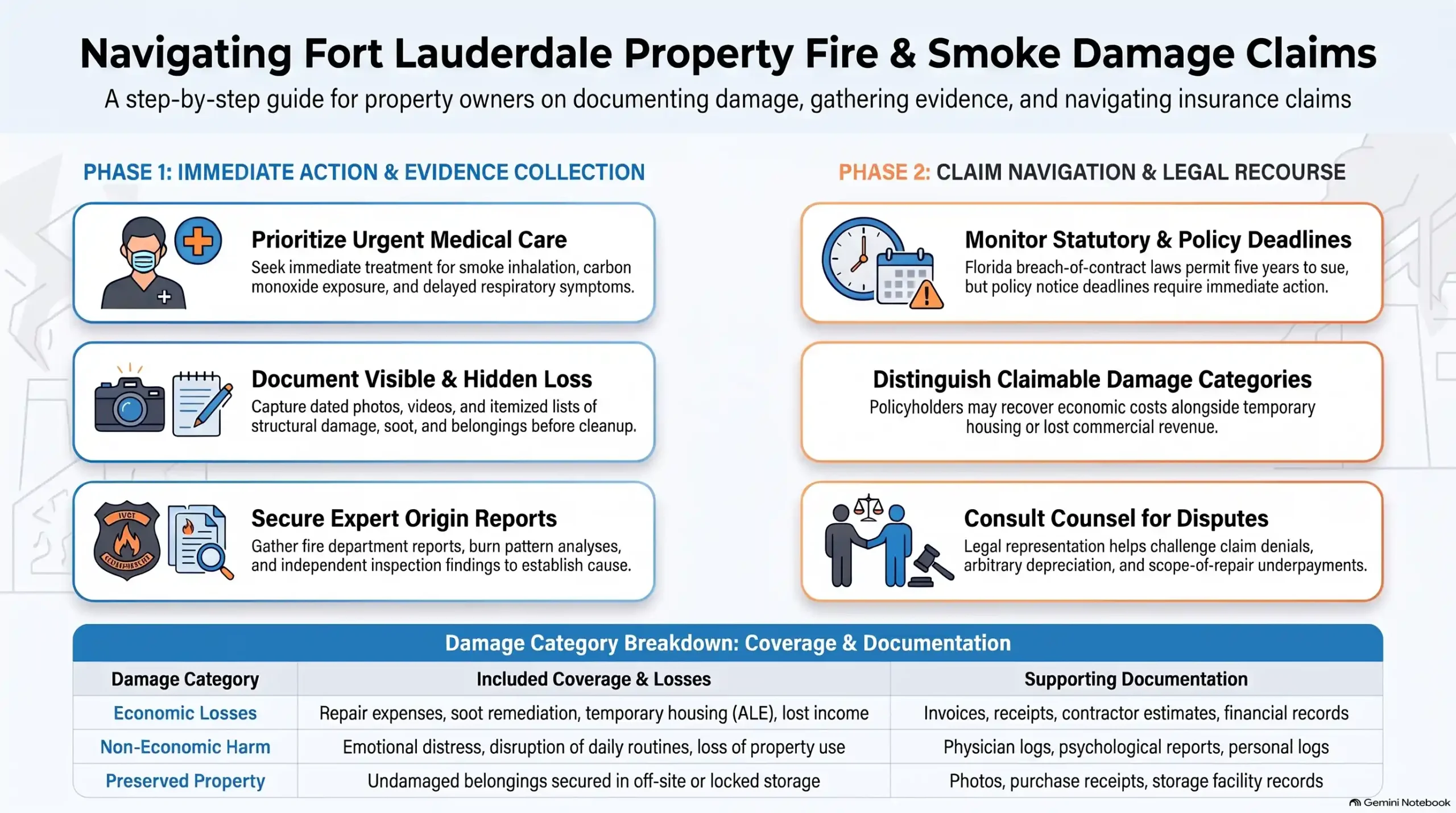
- Document damage with dated photos, videos, inventories, inspection reports, repair estimates, and receipts before cleanup when safe.
- Request a qualified assessment of structural damage, smoke contamination, HVAC systems, belongings, and necessary restoration work.
- Keep records of temporary housing, repairs, medical care, insurer communications, and all claim submissions.
- Seek prompt medical attention for smoke exposure; coverage and legal options depend on the policy and circumstances.


How We Can Help With Your Fort Lauderdale Property Claim Fire & Smoke Damage Injury Claim
When a fire damages a Fort Lauderdale property, the resulting claim may involve more than visible structural loss. A lawyer can help the property owner organize records, understand policy terms, and communicate with the insurer while pursuing a fair assessment. This support may include a careful Policy Review to identify applicable limits, deadlines, exclusions, and duties required under the contract. When an insurer questions the cause, scope, or value of damage, counsel can assess the basis for Coverage Disputes and explain available options.
The process may involve collecting photographs, repair estimates, receipts, inspection reports, and correspondence relevant to the claim. Legal guidance can also help clarify what information the insurer needs and whether its evaluation addresses documented losses. If negotiations do not resolve the matter, a lawyer may explain potential next steps and represent the owner’s interests under applicable law. Clear, timely assistance can reduce uncertainty and help property owners focus on restoring safe, functional spaces for families, employees, tenants, and neighbors.
OUR CONSULTATIONSARE FREE
START YOUR FREE CASE REVIEW

Understanding Fort Lauderdale Property Claim Fire & Smoke Damage Injury Cases
Fort Lauderdale fire and smoke damage cases may involve both property losses and injuries caused by burns, smoke inhalation, or exposure to hazardous materials. These claims can require careful consideration of medical needs alongside damage to a home or business. Smoke exposure may cause breathing difficulties, irritation, or other health effects that are not immediately apparent. Prompt medical assessment can help document symptoms and guide appropriate care.
Injury cases may also involve temporary displacement while a property is evaluated, cleaned, or repaired. Displacement can affect access to medication, work, schooling, and vital services, particularly for people with disabilities or ongoing health needs. A thorough claim record may include treatment information, repair estimates, receipts for necessary expenses, and evidence of time away from the property. Insurers may review whether the reported injuries and losses are supported by available documentation and policy terms. Clear records can help decision-makers assess the full impact of the incident and determine which benefits may apply. Each case depends on its facts and coverage.
Common Causes of Fort Lauderdale Property Claim Fire & Smoke Damage
Fort Lauderdale property fires may result from electrical system failures, including faulty wiring or malfunctioning equipment. Kitchen cooking fires and lightning strikes are also common sources of fire damage, while wildfire smoke can enter buildings and affect interior spaces even when flames do not reach the property. Identifying the cause and extent of the damage can help clarify the issues involved in a property claim.
Electrical System Failures
Electrical system failures are a common cause of residential and commercial fires in Fort Lauderdale, particularly when wiring is damaged, circuits are overloaded, or electrical components are poorly installed or maintained. Wiring defects, including deteriorated insulation, loose connections, and improper repairs, can generate heat or sparks that ignite nearby materials. Circuit overloads may occur when too many devices draw power from a single circuit, placing excessive strain on wiring and breakers. Aging panels, damaged outlets, and faulty electrical equipment can also create hazards, especially when warning signs such as flickering lights, burning odors, or repeated breaker trips are ignored. After an electrical fire, smoke and residue may affect rooms beyond the area of origin, while heat and suppression efforts can damage building materials. Prompt documentation and qualified assessment can help property owners understand the loss and support a thorough insurance claim.
Kitchen Cooking Fires
Kitchen cooking fires are a frequent source of property damage in Fort Lauderdale, often starting when food is left unattended or cooking materials are placed too close to a heat source. An unattended stovetop can allow a small flare-up to spread to cabinets, walls, and nearby furnishings before occupants notice the danger. Grease ignition is especially hazardous because burning oil can intensify quickly, and adding water may spread the flames. Smoke may travel beyond the kitchen, leaving residue and odors throughout the property. After a cooking fire, affected residents may need to protect their safety, document visible damage, and notify the insurer promptly. A careful assessment can identify both direct fire damage and less visible smoke impacts, helping make certain the property claim reflects the full scope of necessary cleaning and repairs.
Lightning Strikes
When lightning strikes a property, the resulting surge or direct impact can ignite a fire in the roof, attic, wiring, or nearby materials. Even when flames are quickly contained, heat and smoke may damage rooms, belongings, and building systems. Lightning damage can also affect electrical panels, appliances, and concealed wiring, creating hazards that require qualified inspection before occupants return or repairs begin.
Property owners can reduce some risks through properly installed surge protection and regular maintenance of electrical systems. After a strike, promptly document visible damage, emergency expenses, and professional findings to support a clear insurance claim. Insurers may investigate the cause, scope, and timing of the loss, so records and photographs can help establish what occurred. A property claim lawyer may review policy terms, deadlines, and disputed coverage when a lightning-related fire causes substantial damage.
Wildfire Smoke Intrusion
Although wildfires may occur far from Fort Lauderdale, smoke can travel long distances and enter homes and commercial buildings through windows, vents, doors, and gaps in exterior walls. Smoke migration can leave fine particles and odors on walls, furnishings, and personal belongings, even when flames never reach the property. These residues may affect indoor air quality and require professional assessment to determine the appropriate cleaning and restoration measures. HVAC contamination can occur when smoke enters heating or cooling equipment and circulates through ductwork, spreading particles to rooms that were not directly exposed. Property owners may need to document visible residue, persistent odors, and damage to building systems when reporting a claim. Prompt evaluation can help protect occupants, support accurate repair estimates, and clarify whether the policy covers resulting smoke damage and necessary remediation.
Don’t Wait. Call Our Florida Personal Injury Lawyers Now!


Legal Rights of Fort Lauderdale Property Claim Fire & Smoke Damage Injury Victims
Fort Lauderdale property owners and occupants affected by fire or smoke damage may have legal rights to pursue compensation, depending on the cause of the loss, the insurance policy, and any responsible party’s conduct. A careful review of policy terms and available evidence can clarify which remedies may apply. These rights can help claimants seek fair treatment while protecting the safety and well-being of residents, employees, and neighbors.
Fire and smoke damage claims may involve insurance coverage, third-party liability, and careful review of evidence and policy terms.
- Policyholders may submit a covered claim and request a timely, good-faith investigation and explanation of the insurer’s decision.
- Policy exclusions should be examined alongside coverage provisions, endorsements, deadlines, and documentation requirements.
- When the parties dispute the amount of a covered loss, appraisal rights may be available under the policy, subject to its procedures.
- A claimant may pursue a responsible third party when evidence supports legal liability, while preserving records and meeting applicable deadlines.
Legal options depend on the facts and governing terms. Qualified legal guidance can help affected people understand their rights, communicate accurately, and pursue remedies without compromising others’ interests.
Why Do Fort Lauderdale Property Claim Fire & Smoke Damage Injuries Happen?
Fire and smoke injuries in Fort Lauderdale properties can result from unsafe conditions, equipment failures, or delayed emergency response, and their causes may affect both health and insurance claims. Common hazards include unattended cooking, overloaded electrical circuits, faulty wiring, and damaged or poorly maintained heating equipment. In multi-unit buildings, blocked exits, missing alarms, or inadequate sprinkler systems can allow a small fire to spread and limit occupants’ ability to escape.
Smoke Exposure may cause breathing difficulties, eye irritation, or more serious health effects, particularly for children, older adults, and people with existing medical conditions. Toxic gases released by burning furnishings and building materials can create danger even when flames remain confined to one area. Poor ventilation and delayed notification may increase the time occupants spend in hazardous conditions.
Consistent Fire Prevention, including working alarms, clear escape routes, and properly maintained equipment, can reduce risks. When safeguards fail, the cause and resulting property conditions may become relevant to an insurance claim.
What Should You Do After a Fort Lauderdale Property Claim Fire & Smoke Damage Injury?
After a fire or smoke-related injury, the affected person should seek prompt medical attention, even if symptoms initially seem minor. Photographs, repair estimates, receipts, and other records can help document property damage and related losses. A property claim lawyer can review the available evidence and explain potential options for pursuing compensation.
Seek Medical Attention
Even when injuries appear minor, anyone exposed to fire or smoke should seek prompt medical attention. Some effects, including breathing difficulties and carbon monoxide exposure, may develop or worsen after the incident. Emergency responders can assess immediate risks, while a physician can evaluate symptoms and recommend appropriate treatment. People with chest pain, confusion, persistent coughing, dizziness, or shortness of breath should receive urgent care.
Medical providers should be told about the fire, the duration of exposure, and any known contact with smoke or chemicals. Their assessment can guide treatment and identify concerns that are not immediately apparent. Follow-up appointments help monitor recovery and address symptoms that emerge later. Medication adherence supports the prescribed care plan and reduces avoidable complications. Prompt, consistent medical care also helps individuals remain better prepared to assist family members and others affected by the fire.
Document the Damage
Once immediate safety and medical needs are addressed, the property owner should document the fire and smoke damage before cleanup or repairs begin, if it is safe to do so. A careful record can help establish the property’s condition and support accurate claim review. The owner should take a Photo inventory of each affected room, structure, and personal item, capturing wide views and close details. Images should include visible soot, water damage, burned materials, and damaged belongings. A written list can identify items, estimated ages, purchase dates, and known values. Receipts, warranties, and prior photographs may provide useful supporting evidence. The owner should preserve damaged property when practical and use Salvage separation to distinguish items that may be cleaned from those that appear unusable. Store records securely and share them with appropriate claim representatives.
Contact a Property Claim Lawyer
A detailed record of fire and smoke damage can help a property owner assess whether an insurer’s claim review reflects the full extent of the loss. After documenting affected areas, repair estimates, and related expenses, the owner may consult a Fort Lauderdale property claim lawyer to understand available options. Legal counsel can conduct a Policy Review, explain coverage provisions, and identify exclusions or documentation requirements that may affect payment. A lawyer can also evaluate the insurer’s investigation and help prepare a clear response to disputed findings. Claim Deadlines may apply to policy notices, proof of loss, or legal action, so prompt attention can protect the owner’s ability to pursue benefits. For owners seeking to restore safe spaces for family, tenants, or employees, informed guidance can support careful decisions and a more organized claims process.
Don’t Wait. Call Our Florida Personal Injury Lawyers Now!
Critical Evidence in a Fort Lauderdale Property Claim Fire & Smoke Damage Injury Case
A Fort Lauderdale fire and smoke damage claim is strengthened by evidence that establishes the fire’s origin, documents property damage, and supports the requested compensation.
Relevant records may include:
- Fire origin evidence
- Smoke damage documentation
- Expert inspection reports
- Repair cost records
Together, these materials can help clarify the cause and extent of the loss.
Fire Origin Evidence
Fire origin evidence can help establish how a blaze began and whether a property owner, contractor, manufacturer, or other party may be responsible for resulting losses. Investigators may examine the area where the fire started, document physical conditions, and identify potential ignition sources. Ignition sequencing can help determine which materials or components ignited first and how the fire developed. Burn pattern analysis may reveal the direction and progression of heat, while supporting or challenging accounts of the event. Photographs, measurements, collected samples, and expert findings can preserve relevant observations for later review. Careful handling of the scene helps reduce the risk that evidence will be altered or overlooked. This information may help affected property owners, insurers, and legal professionals evaluate responsibility and pursue a fair resolution for those harmed.
Smoke Damage Documentation
Thorough smoke damage documentation can be crucial to a Fort Lauderdale property claim after a fire, particularly when soot, odors, or chemical residues affect areas beyond the visible burn site. A careful record helps show how smoke traveled through a building and affected rooms, belongings, and surfaces. Photographs and dated videos can capture discoloration, residue, and damage before cleaning or repairs begin. Soot sampling may help preserve evidence of contamination on walls, furnishings, or air vents. Odor tracking can record where persistent smoke smells occur, when they are noticed, and whether they change after ventilation or cleaning. Property owners can also keep inventories of affected items, receipts, and notes about cleaning efforts or temporary displacement. Organized records support a fair review of losses and help protect the interests of occupants and others relying on the property.
Expert Inspection Reports
How can the cause and extent of fire or smoke damage be established in a Fort Lauderdale property claim? A qualified expert inspection can provide objective findings about the origin, spread, and effects of a fire. Independent inspectors may examine affected materials, building systems, and areas where smoke traveled, then document observations with photographs and testing when appropriate. Their reports can distinguish visible damage from less apparent contamination and identify conditions that require further evaluation. Careful interpretation of the report helps clarify the methods used, the evidence considered, and the limits of each conclusion. This information may help property owners, insurers, and legal representatives determine whether a claim is supported by reliable evidence. For households and businesses seeking to protect occupants and restore safe conditions, clear expert findings can guide informed decisions and help resolve disputed questions about damage.
Repair Cost Records
Accurate repair cost records can show the financial scope of fire and smoke damage in a Fort Lauderdale property claim. Organized documentation helps establish which repairs were necessary, what they cost, and whether the insurer’s estimate addresses the full loss. Contractor invoices should identify completed work, labor charges, equipment, and any additional services required to restore the property. Material receipts can verify the price and quantity of replacement items, including building supplies and finishes affected by heat, soot, or water used during firefighting.
Property owners may also retain estimates, payment confirmations, permits, and records of temporary repairs. Clear, dated documents allow reviewers to compare claimed expenses with the damage and repair scope. Accurate records can support fair claim evaluation and help property owners protect the resources needed to restore safe, functional spaces for occupants and the wider community.
Long-Term Effects of Fort Lauderdale Property Claim Fire & Smoke Damage Injuries
Fire and smoke injuries may produce lasting health effects that continue after the immediate danger has passed. Respiratory complications and persistent skin damage can require ongoing treatment and affect daily activities. Some survivors also experience emotional distress or cognitive changes, which may influence recovery and quality of life.
Respiratory Health Complications
Even after flames are extinguished, smoke and combustion byproducts can continue to affect the respiratory health of people exposed to a property fire. Fine particles and chemical gases may irritate airways, worsen asthma, or reduce lung function, with effects that persist after occupants leave the damaged building. Pulmonary irritation can cause coughing, wheezing, chest tightness, and shortness of breath. Some individuals may also be more vulnerable to respiratory infections, particularly when exposure has weakened or inflamed the respiratory tract. Symptoms can emerge or intensify over time, so medical assessment is important even when initial discomfort seems mild. Children, older adults, and people with existing lung conditions may require closer monitoring. Clear records of symptoms, treatment, and exposure can help affected residents explain their needs and pursue appropriate property claim support.
Lasting Skin Damage
Although some burns recover without lasting effects, fire and smoke exposure can leave permanent skin damage, including scars, changes in pigmentation, and altered sensitivity. Permanent scarring may restrict movement when affected tissue tightens near joints or across broad areas. Skin discoloration can remain after wounds recover, creating uneven patches that may require ongoing medical care. Some people also experience persistent itching, tenderness, numbness, or heightened sensitivity in damaged areas. Treatment may involve expert evaluations, prescription therapies, reconstructive procedures, or compression garments, depending on the injury’s severity. Recovery can extend over months or years, and additional procedures may become necessary as the skin changes. Accurate medical records, photographs, and treatment documentation can help establish the injury’s duration and impact when a property claim is evaluated. Prompt assessment supports appropriate care and preserves evidence.
Emotional and Cognitive Effects
After a fire or smoke exposure, some people experience lasting emotional or cognitive effects, including anxiety, depression, sleep disruption, difficulty concentrating, or intrusive memories. These symptoms may interfere with work, relationships, and daily responsibilities. Emotional trauma can persist even after physical injuries recover, particularly when a person has lost a home, belongings, or a sense of safety. Smoke exposure or related medical complications may also contribute to cognitive impairment, such as memory problems or reduced attention. Affected individuals may benefit from evaluation by qualified health professionals, who can document symptoms and recommend appropriate care. Support from family, caregivers, and community services can help people manage recovery and regain stability. When these effects follow a covered fire or smoke loss, medical records and other evidence may help clarify their impact on a property claim.
Proving Liability in Fort Lauderdale Property Claim Fire & Smoke Damage Injury Cases
Proving liability in a Fort Lauderdale fire and smoke damage claim requires evidence that identifies the responsible party and connects that party’s conduct to the loss. Investigators may examine the fire’s origin, building systems, maintenance records, and applicable safety requirements. Photographs, inspection reports, witness accounts, and expert findings can help establish how the incident began and whether preventable conditions contributed.
Responsibility may rest with a property owner, manager, tenant, manufacturer, or service provider, depending on the facts. Negligent maintenance, such as failure to repair faulty wiring or maintain fire protections, may support a claim when it creates a foreseeable hazard. Contractor liability may arise if defective installation, careless repairs, or failure to follow safety standards contributed to the fire or resulting smoke exposure.
Prompt documentation can preserve evidence before damaged areas are repaired or cleared. A careful investigation also considers whether multiple parties shared responsibility. Establishing these connections helps affected occupants pursue accountability and supports efforts to protect others from similar harm.
Dealing With Insurance Companies After a Fort Lauderdale Property Claim Fire & Smoke Damage Injury
Once liability evidence has been documented, insurance communications can shape how a Fort Lauderdale fire and smoke damage claim is evaluated. Policy interpretation matters because coverage may depend on the fire’s cause, the extent of smoke contamination, exclusions, and notice requirements. A careful review of the policy can clarify which losses may qualify and what supporting records the insurer requires.
Adjuster communications should remain accurate, organized, and consistent with the available evidence. Claimants may be asked to provide photographs, repair estimates, inventories, inspection findings, or records of temporary housing and other expenses. Keeping copies of submissions and noting the dates and substance of conversations can help prevent misunderstandings. Statements about the incident should be factual, and estimates should distinguish observed damage from work that remains uncertain.
When coverage positions appear unclear or disputed, a qualified attorney can explain policy language, assess the insurer’s requests, and help protect the interests of property owners and affected occupants. This support can promote a fair review while preserving evidence relevant to the claim.
What to Expect During a Fort Lauderdale Property Claim Fire & Smoke Damage Injury Claim Process
A Fort Lauderdale fire and smoke damage claim typically begins with an initial review of the policy, reported losses, and relevant deadlines. Evidence collection and a thorough damage assessment help establish the cause and extent of the loss. The process may conclude with a negotiated settlement or proceed to litigation if the parties cannot resolve the dispute.
Initial Claim Review
During the initial claim review, the insurer examines the reported fire and smoke damage, the policy terms, and the evidence supporting the claim. This stage helps determine how the loss may be handled under the applicable contract. A careful Policy review considers relevant limits, deductibles, exclusions, deadlines, and duties the policyholder must meet. Coverage interpretation addresses whether the reported damage falls within covered causes and whether specific provisions affect payment. The insurer may request clarification about the claim’s scope or circumstances, but this review is distinct from a full investigation. Property owners can expect written communications explaining decisions, requests, or next steps. Understanding these early assessments can help claimants respond responsibly and protect household stability. When coverage questions arise, qualified legal guidance may help explain available options and obligations.
Evidence Collection
After the insurer’s initial review, evidence collection helps document the extent and cause of fire and smoke damage at the property. This stage may involve gathering photographs, video recordings, fire department reports, repair records, and relevant communications. Evidence preservation is important because cleanup or repairs can alter conditions that may help explain how the incident occurred. Property owners may be asked to retain damaged items when safe and practical, and to keep copies of documents related to the claim. Witness interviews can provide accounts of the fire, smoke, emergency response, or events preceding the loss. Investigators may also review available surveillance footage and consult qualified professionals to identify relevant facts. Organized, reliable records can help insurers and representatives evaluate the claim while supporting a fair process for everyone affected.
Damage Assessment
Once evidence has been gathered, a damage assessment helps establish the scope and likely cost of fire and smoke losses. Qualified professionals inspect affected rooms, building materials, and contents to distinguish visible damage from concealed harm. They may document soot deposits, odor penetration, heat exposure, and water used to extinguish the fire. Moisture mapping can identify damp areas where delayed deterioration or mold growth may occur. Structural integrity checks help determine whether walls, ceilings, floors, or support elements remain safe and require repair. The assessment may also consider damage to electrical, heating, and ventilation systems, along with the cost of cleaning, restoration, or replacement. Clear findings help property owners understand the condition of the premises and provide insurers with an organized basis for evaluating documented losses and necessary work.
Settlement or Litigation
How a fire and smoke damage claim concludes depends on the evidence, the extent of the loss, and whether the insurer and property owner agree on a fair resolution. After reviewing repair estimates, photographs, receipts, and other supporting records, the parties may negotiate a settlement. Settlement offers should account for covered repairs, damaged belongings, and any additional losses supported by the policy and evidence. A property owner should review proposed terms carefully before accepting, since a signed release may limit future recovery for the same claim. If negotiations do not produce a reasonable outcome, litigation may provide a formal process for resolving disputed coverage or valuation issues. Court proceedings can require significant time and litigation costs, so the likely benefits and risks should be assessed. A lawyer can explain available options and help protect the owner’s interests.
Compensation for Fort Lauderdale Property Claim Fire & Smoke Damage Injury Damages
Compensation for fire and smoke damage in a Fort Lauderdale property claim may cover necessary repairs, replacement of damaged belongings, temporary housing, and other losses supported by the policy and evidence. The precise amount depends on coverage limits, exclusions, deductibles, and the documented scope of damage. A careful inventory, photographs, repair estimates, receipts, and reports from qualified professionals can help establish the claim.
When a home cannot be safely occupied, Temporary housing costs may be recoverable under applicable additional living expense coverage. Policyholders should retain invoices and confirm any limits or time restrictions with the insurer. If a covered fire disrupts a business, business interruption benefits may address eligible lost income and continuing expenses, subject to policy terms and supporting financial records.
Insurers may request inspections, proof of ownership, or clarification of claimed costs. Prompt, organized responses can reduce avoidable delays. A property owner or business operator can review the policy, preserve evidence, and seek informed assistance when a payment appears incomplete or inconsistent with documented losses.
Economic vs Non-Economic Damages in Fort Lauderdale Property Claim Fire & Smoke Damage Cases
Economic losses may include repair costs, replacement of damaged belongings, and additional living expenses caused by fire or smoke damage. Non-economic harm may involve disruption to daily life and loss of use or enjoyment of the property. Establishing either category generally requires clear documentation linking the claimed losses to the incident and supporting their value.
Economic Losses
Fire and smoke damage can create both economic and non-economic losses, and distinguishing between them helps clarify the scope of a Fort Lauderdale property claim. Economic losses are measurable financial costs linked to the damage and its consequences. They may include repair or rebuilding expenses, replacement of damaged belongings, smoke remediation, and reasonable costs for securing the property. When a home becomes uninhabitable, temporary housing and related additional living expenses may also be documented. A business interruption can produce Lost income, along with continuing expenses that remain payable while operations are disrupted. Records such as invoices, receipts, estimates, payroll reports, and proof of prior earnings can help substantiate these amounts. A careful claim identifies each loss, connects it to the covered event, and presents supporting documentation for the insurer’s review.
Non-Economic Harm
Although property claims primarily address measurable financial losses, fire and smoke damage can also cause non-economic harm, including emotional distress, disruption of daily routines, and loss of use or enjoyment of a home. These effects may continue after emergency repairs begin, particularly when residents must leave familiar surroundings or adjust to temporary housing. Painful memories associated with the fire, smoke, or evacuation can affect a person’s sense of safety and comfort. Lost routines, such as preparing meals at home, welcoming family, or maintaining ordinary household responsibilities, may also diminish well-being. These personal consequences differ from repair bills and replacement costs, yet they can meaningfully affect a household’s quality of life. Recognizing such harm helps present a fuller account of how a covered event may affect residents beyond direct financial loss.
Proving Damages
A strong Fort Lauderdale fire and smoke damage claim distinguishes measurable financial losses from personal harm and supports each category with relevant evidence. Economic damages may include repair costs, replacement value for damaged belongings, temporary housing, debris removal, and lost rental income. Estimates, receipts, inventories, photographs, and contractor reports can establish these amounts and connect them to the fire. Insurers may dispute the scope of repairs, material quality, or depreciation, so records should show the property’s condition and value before the loss. Depreciation disputes can affect payment calculations, particularly when policies initially withhold recoverable depreciation. Appraisal clauses may provide a process for resolving disagreements about the amount of loss, subject to policy terms. Non-economic harm, including distress or disruption, requires credible documentation and may be limited by applicable law and policy language. Clear evidence helps claimants pursue fair treatment and protect household stability.
Don’t Wait. Call Our Florida Personal Injury Lawyers Now!
When a Fort Lauderdale Property Claim Fire & Smoke Damage Injury Case Goes to Trial vs Settlement
When a Fort Lauderdale property claim involving fire, smoke, or related injuries cannot be resolved through negotiations, the parties may need to present their evidence at trial. A settlement can provide a defined resolution without the uncertainty, expense, and time associated with court proceedings. It may also allow affected property owners and occupants to focus on recovery and community responsibilities.
Trial may be appropriate when the parties dispute the cause or extent of the loss, the value of repairs, or responsibility for resulting injuries. The decision depends on the evidence, available remedies, and the risks each side faces. Trial readiness requires organized records, credible witnesses, and clear documentation of property damage and injury-related losses. This preparation can also create settlement leverage by showing that a claim is supported and ready for court.
Neither outcome is guaranteed. A careful evaluation of the evidence and practical needs can help determine whether continued negotiations or a trial best serves the claimant’s interests and those who depend on them.
Florida Laws That May Affect Your Fort Lauderdale Property Claim Fire & Smoke Damage Case
The decision to settle or proceed to trial may also depend on how Florida law governs the claim. State insurance rules and policy terms can shape how a fire or smoke loss is evaluated, what evidence is relevant, and which expenses may be covered.
Understanding these requirements can help claimants make informed decisions while preserving resources for family members, employees, tenants, or others who depend on them.
- Policy language: Policy exclusions, coverage limits, and duties after a loss may affect payment. The insurer must apply the contract and applicable law when evaluating covered damage.
- Claim documentation: Photographs, repair estimates, inventories, and professional assessments can help establish the extent and cause of damage.
- Deductible disputes: The deductible generally reduces the amount payable, but disagreements about its application may require review of the policy and loss calculation.
- Fair claim handling: Florida law regulates insurer conduct and may provide remedies for certain violations, subject to statutory requirements.
Legal guidance can clarify disputed provisions and support a practical resolution.
The Statute of Limitations for Fort Lauderdale Property Claim Fire & Smoke Damage Injury Cases
How long a property owner has to challenge an insurer’s handling of fire or smoke damage depends on the claim type and the applicable Florida law. A lawsuit seeking benefits under a property insurance policy is generally subject to a five-year limitation period, measured from when the insurer breaches the contract. However, the date and nature of the alleged breach may affect that calculation, and statutory rules can change. Separate deadlines may apply to claims against contractors, landlords, or other parties whose conduct caused or worsened the damage.
Policy deadlines also matter. A policy may require prompt notice, documentation, cooperation, or proof of loss, and missing a requirement can jeopardize coverage even before suit limitations expire. Emergency repairs and temporary housing needs do not automatically pause legal deadlines. Property owners serving tenants, employees, or family members should preserve claim records and note relevant dates. Because limitation periods and policy terms depend on the circumstances, timely review of the governing documents and current Florida law is necessary to protect a claim.
How a Fort Lauderdale Property Claim Fire & Smoke Damage Lawyer Can Help You
After a fire or smoke event, a Fort Lauderdale property claim lawyer can help an owner assess coverage, document losses, and address disputes with an insurer. The lawyer reviews policy terms and applies Policy Interpretation to explain relevant limits, exclusions, and duties. This guidance can help property owners pursue a claim accurately while preserving resources needed to restore safe, usable spaces for residents, employees, or community members.
A lawyer may also support the claim by:
- Organizing photographs, repair estimates, inventories, and other evidence of property damage.
- Communicating with the insurer and responding to requests for records or clarification.
- Evaluating whether the insurer’s payment reflects covered repairs and documented losses.
- Challenging a Claim Denial or underpayment through reasoned arguments supported by the policy and evidence.
When to Contact a Fort Lauderdale Property Claim Fire & Smoke Damage Lawyer
Prompt legal guidance may be useful when a fire or smoke claim involves significant damage, uncertain coverage, or insurer delays. A property owner may also consider contacting counsel when the insurer requests extensive documentation, questions the cause or scope of loss, or proposes a payment that appears inconsistent with repair estimates. Early review can help clarify Policy deadlines, notice requirements, and the records needed to support a claim before important dates pass.
Legal assistance may be appropriate when coverage disputes arise over smoke contamination, structural damage, temporary housing, or the application of policy exclusions. If a claim is denied, partially paid, or left unresolved despite reasonable follow-up, a lawyer can explain available options and relevant procedures. Property owners managing repairs or coordinating assistance for tenants, employees, or family members may benefit from understanding their obligations and rights. Prompt consultation does not require a decision to pursue litigation; it can provide information for informed next steps while preserving the ability to address the claim responsibly.
Why You Need an Experienced Fort Lauderdale Property Claim Fire & Smoke Damage Lawyer
An experienced Fort Lauderdale property claim fire and smoke damage lawyer can help property owners assess whether an insurer’s investigation and proposed payment reflect the full scope of covered damage. Fire losses may affect structural materials, personal belongings, and indoor air quality, while smoke can travel beyond visibly burned areas. Careful review helps identify overlooked damage and preserve a clear record of the loss.
Policy interpretation is also important because exclusions, limits, deadlines, and documentation requirements can shape an insurer’s decision. A lawyer can explain how those terms apply to the reported damage and identify whether additional evidence may support the claim. In Coverage disputes, legal guidance can help property owners respond to claim denials, delayed decisions, or payments that appear inconsistent with the policy and available findings.
How to Choose the Right Fort Lauderdale Property Claim Fire & Smoke Damage Lawyer for Your Case
Choosing the right Fort Lauderdale property claim fire and smoke damage lawyer requires more than confirming that an attorney handles insurance disputes. A careful review can help property owners find counsel prepared to address the specific challenges of fire-related losses and support a fair resolution.
Attorney credentials should include relevant experience with property insurance claims, familiarity with Florida policy requirements, and a record of handling disputes involving fire, smoke, and related damage. The lawyer should explain how evidence, repair estimates, and policy terms may affect the claim, without promising a particular outcome. Clear answers can help clients make informed decisions and protect resources needed for recovery.
Client communication also matters. A suitable attorney should describe who will handle the case, how updates will be provided, and what information the client must supply. Property owners serving families, employees, or community members may need dependable guidance while managing urgent repairs and other responsibilities. Comparing these factors helps identify counsel whose approach fits the claim and the client’s needs.
About The Law Offices of Anidjar & Levine
When fire or smoke damages a property, the Law Offices of Anidjar & Levine represents clients pursuing insurance claims and related legal remedies.
The firm assists property owners seeking compensation for covered losses, including damage to structures, belongings, and business operations.
Its attorneys can review policy terms, assess claim documentation, communicate with insurers, and address disputes over coverage or payment.
The firm’s history informs its approach to representing people facing difficult circumstances.
The firm has handled matters involving insurance disputes and other legal challenges, giving its attorneys experience with procedures that may affect a claim.
Each case depends on its specific facts, policy language, and available evidence, so outcomes cannot be guaranteed.
The firm’s attorney values include attentive service, clear communication, and diligent advocacy.
These principles support clients managing property repairs while seeking to protect their financial interests.
By explaining available options and responding to client concerns, the firm aims to help property owners make informed decisions throughout the claims process.
Frequently Asked Questions
Can I Recover Additional Living Expenses if Fire Damage Makes My Home Uninhabitable?
Yes, a homeowner may recover Additional Living Expenses if covered fire damage makes the residence uninhabitable. The policy may reimburse reasonable Temporary Housing Costs and certain increased expenses, such as meals, while repairs are completed. Coverage limits, exclusions, and the required standard for uninhabitability vary by policy. The homeowner should document expenses, retain receipts, notify the insurer promptly, and review policy terms before making substantial arrangements or assuming reimbursement is guaranteed.
Does Homeowners Insurance Cover Smoke Damage Even When Flames Never Reach My Property?
Homeowners insurance may cover smoke damage even when flames never reach the property, depending on the policy’s covered causes and exclusions. Smoke damage coverage can apply when off-site fire exposure leaves soot, odor, or residue that physically harms the home or belongings. The policyholder should document affected areas, limit further damage, and promptly notify the insurer. Coverage disputes may require a careful review of policy language and evidence linking the damage to the fire.
What Should I Do if My Insurer Denies My Fire Damage Claim?
After a fire claim denial, the policyholder should obtain the insurer’s written explanation and review the policy, deadlines, and supporting evidence. Reviewing denial reasons helps identify missing documentation, disputed damage assessments, or coverage interpretations that may be challenged. The policyholder should preserve photographs, repair estimates, receipts, and relevant correspondence, then submit a clear written appeal with additional evidence. If the insurer maintains its decision, an independent claims professional or qualified attorney may help assess available options.
Can a Public Adjuster Help Assess My Fire and Smoke Damage?
Yes. A public adjuster can conduct a Public adjuster inspection to evaluate visible fire and smoke damage, identify affected areas, and compare observed conditions with the insurer’s assessment. The adjuster can also organize damage documentation, including photographs, repair estimates, and records of damaged belongings, to support the claim. This independent review may help the property owner understand the loss and clearly communicate its scope, while policy terms and deadlines remain important.
How Can I Protect Undamaged Belongings While Repairs Are Underway?
To protect undamaged belongings during repairs, residents should move them away from work areas, dust, moisture, and possible theft. Inventory undamaged belongings with dated photographs, written descriptions, and receipts where available, then keep the records in a separate, secure location. Owners should store property in a locked, dry room or a reputable off-site facility, and restrict access to contractors. They should also confirm insurance requirements before relocating items and retain storage receipts for claim documentation.
—————————
Fire and smoke damage can leave property owners facing costly repairs, disputed coverage, and difficult decisions.
A Fort Lauderdale property claim lawyer can review the policy, assess the insurer’s response, and help pursue compensation supported by evidence.
The Law Offices of Anidjar and Levine assist clients in understanding their options and taking appropriate next steps.
Prompt legal guidance may help protect a claim, preserve important records, and address disputes before they undermine a property owner’s recovery.
Learn more about a Fort Lauderdale Personal Injury Lawyer.

