

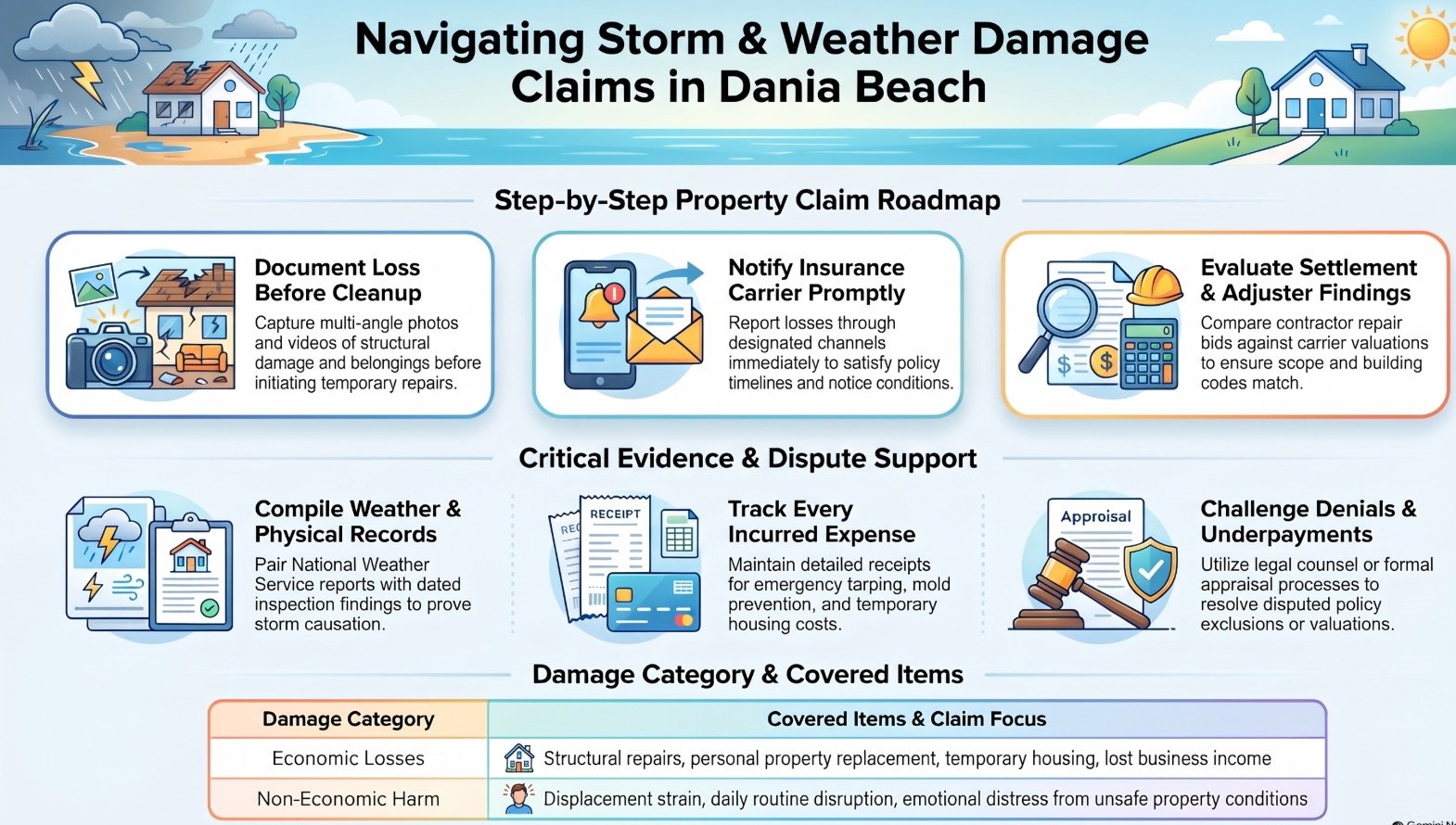
A Dania Beach property claim storm and weather damage lawyer can review policy terms, deadlines, exclusions, and coverage limits after a storm damages a home or business. The Law Offices of Anidjar and Levine may help document roof, water, hail, or wind losses, organize repair estimates and insurer communications, and address disputed valuations, delays, or denials. Separate injury claims may depend on who controlled a hazard and whether reasonable precautions were taken; learn more from a Dania Beach Personal Injury Lawyer. The following sections explain essential evidence, claim steps, and legal considerations.
Main Takeaways
- A Dania Beach storm-damage lawyer can review your policy, coverage limits, exclusions, deadlines, and the insurer’s stated reasons for its decision.
- Storm claims may involve wind, rain, flooding, hail, roof damage, water intrusion, or damaged personal property; coverage depends on policy terms and evidence.
- Document damage promptly with photographs, repair estimates, invoices, inspection reports, and communications with your insurer.
- Legal counsel can challenge delays, denials, or inadequate payments and explain options such as appraisal or other dispute resolution.
- Arrange prompt medical care and professional property inspections; preserve records of injuries, repairs, expenses, and ongoing effects.
How We Can Help With Your Dania Beach Property Claim Storm & Weather Damage Injury Claim
Storms and severe weather can cause extensive property damage in Dania Beach, from roof failures and flooding to fallen trees and wind-driven debris. When a property claim becomes difficult to manage, legal guidance can help owners pursue a fair review while protecting the resources needed to restore homes and businesses. A lawyer can examine policy language, identify relevant coverage provisions, and explain exclusions or conditions that may affect payment. Careful Policy interpretation can clarify what documentation the insurer requires and whether its decision reflects the contract and available evidence.
Claim advocacy may include organizing repair estimates, photographs, invoices, and communications, then presenting a clear account of the loss. Counsel can also respond to requests for information, address delays or disputed valuations, and help maintain accurate records throughout the process. This support allows property owners to focus on safety, recovery, and the people who depend on them. By providing steady, informed assistance, legal counsel can help make the claims process more manageable and accountable.
Don’t Wait. Call Our Florida Personal Injury Lawyers Now!
Understanding Dania Beach Property Claim Storm & Weather Damage Injury Cases


When severe weather damages a Dania Beach property, a claim may involve more than repair costs if a person is injured during the event or cleanup. These cases can require separate consideration of property coverage, bodily injury allegations, and the responsibilities of those involved. An insurer may assess whether the policy applies to the reported loss and whether the injured person’s circumstances fall within its terms.
OUR CONSULTATIONSARE FREE
START YOUR FREE CASE REVIEW

Documentation can help clarify the sequence of events, the damage observed, and the medical care received. Relevant records may include photographs, repair estimates, incident reports, correspondence, and treatment information. Prompt, accurate reporting can support a fair review while preserving details that may otherwise become difficult to verify.
Coverage disputes may arise over causation, notice, or the scope of benefits available. Policy exclusions can also affect whether particular losses are covered. A careful review of the policy and evidence can help property owners understand potential options and respond responsibly to people affected by the incident.
Common Causes of Dania Beach Property Claim Storm & Weather Damage


Storm and weather damage in Dania Beach can result from hurricane-force winds, heavy rainfall that causes flooding, and hail or flying debris. Tornadoes and other severe wind events may also damage roofs, windows, and structural components. Identifying the cause helps clarify the scope of property damage and the insurance issues involved.
Hurricane-Force Winds
Hurricane-force winds can damage Dania Beach properties by lifting shingles, tearing away roof coverings, breaking windows, and driving rain through newly opened gaps. These forces may also cause roof uplift, placing pressure on fasteners and structural connections. When those components fail, sections of roofing or other exterior materials can detach, exposing interior spaces to further damage. Windborne projectiles, including branches and loose outdoor objects, may strike walls, windows, and doors, creating openings that compromise a building’s protection. Damage can vary by property condition, construction, and the storm’s direction and duration. After a wind event, a careful inspection can help identify visible and concealed damage, document affected areas, and support timely repairs. Clear records and prompt attention can help property owners protect occupants and preserve the building’s safety.
Heavy Rainfall Flooding
Heavy rainfall can overwhelm drainage systems in Dania Beach, allowing water to collect around buildings, enter through low openings, or seep into roofs and walls. When drainage failures occur, stormwater may rise quickly, damaging flooring, drywall, electrical components, and personal property. Water intrusion can also weaken building materials and create conditions for mold if affected areas are not dried promptly. Floodwater contamination is an additional concern, since runoff may carry sewage, chemicals, or other harmful substances into homes and businesses. Property owners who document the source and extent of water damage can support a clearer review of the claim. Photographs, repair estimates, and records of cleanup efforts may help establish losses. Timely professional assessment can identify concealed moisture and inform appropriate repairs, while careful attention to safety protects occupants and responders.
Hail and Flying Debris
During severe weather in Dania Beach, hail and windborne debris can damage roofs, siding, windows, and other exposed parts of a property. Hailstones may dent metal, fracture shingles, or crack glass, while airborne branches and loose materials can puncture surfaces or break exterior fixtures. Hail impact patterns, including dents or scattered marks, may help distinguish hail damage from ordinary wear. Debris trajectories can also offer clues about where materials originated and how they struck a building. Prompt photographs, along with records of damaged items and repairs, can preserve useful evidence for an insurance review. A careful inspection may identify hidden damage, such as compromised roofing or water entry around broken windows. Clear documentation helps property owners present accurate claims and support timely repairs that protect occupants and neighboring properties.
Tornado and Wind Damage
Beyond localized hail or debris impacts, tornadoes and powerful winds can cause widespread structural damage to Dania Beach properties. Tornado path patterns may leave one building severely damaged while nearby structures show limited effects, depending on the storm’s route, intensity, and surrounding conditions. Straight-line winds can also tear roofing materials, break windows, damage siding, and topple trees onto homes or commercial buildings. Wind uplift physics helps explain how pressure differences lift roof edges and coverings, allowing wind and rain to enter and cause further interior damage. These forces may weaken connections between roofs, walls, and foundations, creating hazards for occupants and neighboring properties. A careful inspection can document visible damage, identify less obvious structural concerns, and preserve evidence relevant to an insurance claim. Prompt attention supports safer repairs and helps affected property owners protect their communities.
Legal Rights of Dania Beach Property Claim Storm & Weather Damage Injury Victims
Storms and severe weather can cause property damage and physical injuries, leaving affected individuals with legal rights that may depend on the cause of the loss and the available insurance coverage. Dania Beach residents may review their policies, document damage, and submit timely claims. Insurers must assess covered losses under policy terms and applicable law, while claimants may challenge unreasonable denials or inadequate payments.
Dania Beach residents may document storm damage, review policy coverage, and challenge claim decisions that conflict with policy terms or applicable law.
- Policy exclusions may limit recovery, but the insurer should identify the specific language supporting a coverage decision.
- Appraisal disputes over the amount of damage may require the policy’s appraisal process or other dispute resolution.
- People injured during a weather event may have separate legal options, depending on responsibility, evidence, and applicable deadlines.
Accurate records, photographs, repair estimates, medical documentation, and insurer correspondence can help clarify a claim. Individuals may seek qualified legal guidance to understand their rights and communicate effectively with insurers. Those assisting affected neighbors can help them access reliable information without making promises about outcomes. Each claim depends on its facts and governing policy provisions.
Why Do Dania Beach Property Claim Storm & Weather Damage Injuries Happen?
Severe weather can lead to property claims and physical injuries when high winds, flooding, lightning, or falling debris damage buildings and create hazardous conditions. In Dania Beach, intense rain can overwhelm drainage systems, while wind may loosen roofing, break windows, or send unsecured objects into walkways. These conditions can expose residents, visitors, workers, and emergency responders to slips, falling materials, electrical hazards, and structural instability.
The extent of harm may depend on how a property was designed, maintained, or repaired before a storm. Building code compliance matters because inadequate drainage, weak connections, or insufficient protective features can leave structures more vulnerable to severe weather. Poor maintenance, delayed repairs, and unsafe cleanup practices may also increase risks after a storm passes. Contractor negligence can contribute when construction or repair work fails to meet applicable standards or leaves hazards unaddressed. Property owners and service providers may have responsibilities to reduce foreseeable dangers, particularly where people rely on safe access to homes, businesses, and community facilities.
What Should You Do After a Dania Beach Property Claim Storm & Weather Damage Injury?
After a storm-related injury, the affected person should seek prompt medical attention and follow the provider’s treatment recommendations. They should document property damage with clear photographs, notes, and records of repair costs. They should also notify their insurer promptly and retain copies of all claim-related communications.
Seek Medical Attention
When storm or weather damage causes an injury at a Dania Beach property, seeking prompt medical attention should be the first priority, even if the injury initially appears minor. A qualified medical professional can assess the condition, provide Immediate Care, and identify problems that may not be readily apparent. If the injury is severe, contact emergency services without delay; property owners and witnesses should know where to find relevant Emergency Contacts. When it is safe to do so, the injured person should move away from hazards such as broken glass, unstable structures, or exposed electrical equipment. Follow medical instructions, and keep any recommended follow-up appointments. Prompt treatment supports the injured person’s health and creates a clear record of care, which may assist with later claim-related questions.
Document Weather Damage
Once medical needs have been addressed, documenting the storm-related damage can help preserve an accurate record of the incident. Photographs and videos should show affected rooms, structural problems, damaged belongings, and any visible hazards before cleanup begins, when it is safe to do so. A dated written account can note when the damage was discovered, the weather conditions, and any steps taken to protect people or property. An Insurance inventory listing damaged items, their approximate age, purchase details, and estimated value can support a clear record. Retain receipts for temporary repairs and emergency mitigation measures, along with relevant service reports. Store records securely and organize them by date. Careful documentation can help those assisting with recovery understand the scope of loss and the actions taken to limit further damage.
Contact Your Insurer
Prompt notice to the insurer can help establish a clear record of storm-related property damage and any resulting injury. After documenting the damage, the property owner should contact the insurance company through its designated reporting channel and provide the date, location, and known circumstances of the event. Policy notification requirements may specify how quickly notice must be given and what information should be included. The owner should review the policy, record the representative’s name and reference number, and retain copies of all communications. A prompt report does not require accepting a coverage decision or estimating losses without adequate information. Claim deadlines may apply to submitting forms, supporting evidence, and any appeal. Timely, accurate communication can support a fair review and help protect the owner’s ability to pursue covered repairs and related losses.
Critical Evidence in a Dania Beach Property Claim Storm & Weather Damage Injury Case
A well-documented claim can help establish how a storm caused property damage and related injuries. Photographs, official weather information, and repair records can clarify the extent and timing of the loss. Witness accounts and a dated timeline may further support the sequence of events.
- Storm damage photographs: Images of affected areas and belongings, taken promptly and before repairs, can preserve visible evidence.
- Weather reports and repair records: Local alerts, forecasts, estimates, and receipts can help connect the reported conditions to the damage and document repair costs.
- Witness statements and timelines: Accounts from people who observed the storm or its effects, organized alongside important dates, can help explain what happened.
Storm Damage Photographs
Photographs taken soon after a storm can preserve crucial evidence of property damage before repairs, cleanup, or changing weather conditions alter the scene. Clear images should show the full property, affected rooms, damaged materials, and close-up details such as cracks, leaks, or displaced roofing. A sequence of photographs from multiple angles can help document the extent and location of each loss. When safe, the property owner should photograph damage before moving items or beginning cleanup, while avoiding unstable structures and electrical hazards. Photo metadata, including timestamps and device details, may help establish when images were created; retain original files without editing. Secure image backups can reduce the risk of accidental loss. Organized photographs, labeled by date and location, can assist claim reviewers and professionals evaluating the property’s condition and necessary repairs.
Weather Reports And Alerts
Official weather reports and alerts can help establish the conditions surrounding storm damage at a Dania Beach property. National Weather Service records, local advisories, and radar data may document when severe weather developed, its direction, and its intensity. This information can help connect a reported loss to a particular storm and clarify whether wind, heavy rain, flooding, or hail affected the area. Radar interpretation requires care because images show estimated conditions, not necessarily the precise impact at one address. Forecast accuracy may also matter when evaluating what warnings were issued and when residents could reasonably respond. A property owner may preserve dated alerts, official reports, and relevant radar images for review by insurers or qualified professionals. Such evidence can support a careful, fair evaluation of the claim and help inform those assisting affected residents.
Repair Estimates And Receipts
Repair estimates and receipts can provide important evidence of the damage, the work required, and the costs incurred after a storm affects a Dania Beach property. A detailed estimate may identify damaged areas, proposed repairs, labor charges, and material expenses, helping an insurer assess the scope of a claim. Property owners can preserve Contractor invoices, payment confirmations, and receipts for temporary protective measures or completed work. These records help show that expenses were actually incurred and that repairs addressed storm-related damage. Material warranties may also document product specifications and coverage terms, supporting evaluation of replacement materials and repair quality. Clear, organized records can help claim reviewers and professionals resolve disputes fairly. Retain copies with related estimates, and unexplained changes or missing documentation may complicate review of claimed costs.
Witness Statements And Timelines
Alongside estimates and receipts, witness statements and a clear timeline can help establish how storm damage developed and when it was observed at a Dania Beach property. Neighbor accounts may describe wind intensity, rainfall, flooding, or conditions before and after the event. Statements from residents, workers, or visitors can also clarify when leaks, broken windows, or other hazards first appeared. An Event chronology should record the storm’s timing, discovery of damage, photographs, notifications to the insurer, and steps taken to protect the property. Contemporaneous notes and dated messages may strengthen recollections, while differences between accounts should be documented accurately rather than overlooked. A property owner can request contact details and written observations from willing witnesses. Organized, factual records help insurers and others reviewing the claim understand the sequence of events and fairly assess the reported damage.
Don’t Wait. Call Our Florida Personal Injury Lawyers Now!
Long-Term Effects of Dania Beach Property Claim Storm & Weather Damage Injuries
Storm damage can leave hidden structural defects that worsen over time, even after visible repairs are complete. Persistent moisture may also lead to mold growth and related health risks for occupants. These conditions can extend repair costs and create lasting financial strain for property owners.
Hidden Structural Damage
Although storm damage may appear limited to visible roof or exterior defects, moisture intrusion and structural movement can cause problems that emerge months later. Water can travel behind walls and beneath flooring, weakening materials that remain out of sight during an initial inspection. Concealed framing defects may develop as wood swells, shifts, or loses strength, while compromised foundation supports can contribute to uneven floors, widening cracks, and doors that no longer close properly. These changes may affect safety, repair costs, and the property’s long-term stability. A careful assessment can document conditions, identify likely damage pathways, and help distinguish storm-related effects from earlier wear. Clear records and timely professional evaluations also support accurate claim decisions, allowing property owners to address hazards responsibly and protect residents, workers, and visitors from avoidable structural risks.
Mold And Health Risks
When storm-related water intrusion is not promptly contained, persistent moisture can create conditions for mold growth in walls, ceilings, flooring, and ventilation systems. Mold exposure may aggravate asthma, trigger allergic reactions, and cause respiratory irritation, particularly among children, older adults, and people with existing health conditions. Some individuals may experience persistent coughing, congestion, or eye and skin irritation while affected materials remain damp or contaminated. These effects can continue after the storm has passed if moisture is concealed behind surfaces or carried through ventilation systems. Prompt inspection and appropriate Mold remediation can help limit exposure and prevent further growth. Property owners should also consider Indoor air quality testing when occupants report symptoms or contamination is suspected. Clear documentation of damage, inspection findings, and health concerns can assist responsible claim evaluation and support safer recovery decisions.
Lasting Financial Strain
The financial effects of storm and weather damage can persist long after a property is repaired, particularly when injuries or prolonged displacement disrupt daily life. For Dania Beach residents, medical appointments, temporary housing, and repair expenses may place sustained pressure on household budgets. Income disruption can follow when injuries prevent a person from working or when property damage interrupts a business. Reduced earnings may make it difficult to meet mortgage payments, replace necessary belongings, or cover ongoing care. Delayed insurance payments can deepen these challenges, especially when families must pay costs upfront. Over time, missed payments and increased borrowing may worsen credit, limiting access to affordable loans and housing. Careful documentation of losses, expenses, and work limitations can help clarify the lasting financial impact and support informed claim decisions.
Proving Liability in Dania Beach Property Claim Storm & Weather Damage Injury Cases
Storm damage does not automatically make a property owner liable for an injury in Dania Beach; the injured person generally must show that a hazardous condition existed and that the owner or responsible party failed to take reasonable steps to address it. Evidence may include photographs, maintenance records, inspection reports, witness accounts, and documentation showing when the danger appeared. These details can help establish whether the responsible party knew, or reasonably should have known, about hazards such as loose roofing, fallen branches, standing water, or exposed debris.
Negligent Maintenance may be relevant when an owner failed to inspect or repair storm-related damage within a reasonable time. Contractor Liability may also arise if a hired company performed repairs carelessly or left unsafe conditions behind. Determining responsibility requires examining who controlled the property, what duties applied, and whether reasonable precautions were taken. A careful investigation can clarify these issues and support accountability, while helping prevent similar injuries to visitors, workers, and neighbors.
Dealing With Insurance Companies After a Dania Beach Property Claim Storm & Weather Damage Injury
After responsibility for a storm-related injury is assessed, communication with insurers can affect how a Dania Beach property claim is evaluated. A careful review of the policy helps clarify which losses may be covered, what exclusions apply, and whether notice requirements have been met. Policy interpretation can be important when storm damage, unsafe property conditions, and resulting injuries overlap.
Insurers may request statements, photographs, repair records, medical documentation, or other information relevant to the claim. Providing accurate, consistent materials helps the carrier assess the circumstances without overstating or minimizing the harm. A property owner or injured person should avoid speculation and promptly correct any factual errors.
Adjuster negotiations may address disputed coverage, the value of documented losses, or responsibility for delays and unsafe conditions. Clear records and measured communication can support a fair review while preserving the interests of everyone affected. When questions arise about policy language or settlement terms, legal guidance may help explain available options and support informed decisions.
What to Expect During a Dania Beach Property Claim Storm & Weather Damage Injury Claim Process
A storm or weather damage claim typically begins with an initial review of the policy, reported losses, and relevant deadlines. The property owner then documents the damage while the insurer investigates and evaluates coverage. The process may conclude with a settlement offer, further negotiations, or a dispute over the claim.
Initial Claim Review
During the initial review of a Dania Beach storm or weather damage claim, the insurer typically examines the policy, reported damage, and available supporting evidence to determine whether coverage may apply. This Policy review includes checking coverage limits, deductibles, exclusions, and notice requirements that may affect the claim. The insurer may also assess whether the reported event falls within the policy period and whether any conditions require further inquiry. Coverage interpretation can influence which losses qualify and what benefits may be available under the contract. Claimants may receive requests for clarification or additional information as the insurer evaluates the submission. A careful review helps identify disputed terms, missed deadlines, or incomplete claim details early. Legal guidance may help property owners understand the insurer’s position and respond clearly and promptly while pursuing a fair resolution.
Damage Documentation
When storm or weather damage affects a Dania Beach property, clear documentation can help establish the extent, cause, and timing of the loss. Owners can record affected rooms, structural components, and personal belongings before cleanup or repairs begin, as long as conditions are safe. An Inventory checklist can identify damaged items, their approximate age, purchase price, and replacement cost. Photographs and videos should show both overall conditions and close details, including water lines, roof openings, and damaged materials. Preserving original files and photo metadata may help confirm when images were taken and whether they were altered. Receipts, repair estimates, maintenance records, and temporary housing expenses can supplement visual evidence. Organized copies should be stored securely and shared with authorized representatives, helping those responsible for the property present a clear, consistent account of the loss.
Insurer Investigation
An insurer’s investigation typically begins after a storm or weather damage claim is reported, with a review of the policy, reported losses, and available supporting records. The insurer may assign an adjuster to inspect the property, photograph affected areas, and compare observed conditions with the reported damage. The policyholder may be asked to provide repair estimates, receipts, maintenance records, or other relevant documents. Clear, timely responses can help the investigation proceed efficiently and support an accurate assessment. Adjuster independence matters because findings should reflect the evidence and observed conditions, not assumptions about the claim. The insurer also interprets coverage, applying policy terms, exclusions, and limits to the reported circumstances. Questions or disagreements about inspection findings may require clarification, additional documentation, or a qualified professional’s assessment before the investigation is complete.
Settlement Resolution
Once the insurer completes its investigation, settlement resolution centers on comparing the documented damage and repair costs with the policy’s coverage, exclusions, and limits. The insurer may present Settlement Offers based on its estimate, while the property owner can submit contractor bids, invoices, photographs, and other evidence supporting the claimed loss. A careful review helps determine whether an offer accounts for necessary repairs, related expenses, and applicable deductibles. If the parties disagree, further documentation or negotiation may clarify disputed amounts; unresolved issues may require legal guidance or formal proceedings. Before accepting payment, the owner should examine all Release Terms, including whether the agreement closes only the current damage claim or also affects future claims. Clear communication and complete records can support a fair resolution while helping owners restore safe, functional properties for their households and communities.
Compensation for Dania Beach Property Claim Storm & Weather Damage Injury Damages
Storm and weather damage can leave Dania Beach property owners facing substantial repair costs, temporary living expenses, and losses to personal belongings. Compensation may address covered losses when the policy terms and evidence support the claim. Depending on the circumstances, recoverable amounts may include reasonable repair or rebuilding costs, damaged contents, and additional expenses incurred while the home is unsafe or uninhabitable.
Temporary housing costs may include necessary lodging and related expenses, subject to policy limits, exclusions, and documentation requirements. Owners can support these requests with receipts, inventories, photographs, contractor estimates, and records showing the damage and resulting displacement. Prompt reporting and careful preservation of evidence can help clarify the scope of the loss.
Storm damage may also cause emotional distress, particularly when displacement or disruption affects daily life. Whether such harm is compensable depends on applicable law, policy language, and the facts. A careful review can help property owners understand available remedies and pursue a fair resolution while preserving resources for their families and community.
Economic vs Non-Economic Damages in Dania Beach Property Claim Storm & Weather Damage Cases
Storm and weather damage claims may involve economic losses, such as repair costs, temporary housing, and damaged belongings. Non-economic harm may also arise when property damage disrupts daily life or causes significant distress. Clear records, including estimates, receipts, photographs, and other supporting evidence, can help document the full extent of damages.
Economic Losses
Economic losses in Dania Beach property claims are the measurable financial costs caused by covered storm or weather damage. They may include repair expenses, replacement costs for damaged property, and reasonable charges for temporary protection or cleanup. When a storm disrupts a business, documented Business interruption losses may include lost revenue during the period operations cannot continue. Owners may also incur extra expenses to keep vital services available, relocate operations, or protect customers and employees while repairs proceed. Supporting records, such as invoices, estimates, payroll documents, and financial statements, can help establish the amount and connection to the covered event. Policy terms, limits, deductibles, and exclusions affect what may be recoverable. Careful accounting helps property owners present a clear claim and sustain services relied upon by employees, customers, and the surrounding community.
Non-Economic Harm
Beyond repair bills and lost income, property damage can create non-economic harm, such as stress, disruption to daily routines, or loss of use of a home or business. In Dania Beach, storm damage may force residents to relocate, interrupt family routines, or limit access to spaces used for work and community service. Emotional distress can arise from uncertainty, displacement, and the strain of managing an unsafe or unlivable property. Diminished enjoyment may also follow when a damaged home no longer provides comfort, privacy, or a dependable place to welcome others. These effects differ from measurable financial losses, yet they can meaningfully affect daily life. Whether such harm is recoverable depends on the policy terms, applicable law, and circumstances of the claim. A careful assessment distinguishes covered losses from general hardship.
Documenting Your Damages
When documenting a Dania Beach property claim, the record should distinguish measurable financial losses from non-economic effects and connect each claimed loss to the storm or weather event. Economic damages may include repair estimates, contractor invoices, receipts for emergency work, and costs for replacing damaged possessions. A dated Personal Belongings Inventory, supported by photographs, purchase records, or comparable pricing, can help establish the items’ condition and value before the loss. Temporary Housing Records, including lodging receipts and related expenses, can document reasonable costs incurred while the home is unsafe or undergoing repairs. Non-economic effects may involve disruption, distress, or loss of use, and should be described accurately without overstating their impact. Organized records help insurers and decision-makers assess the claim fairly and support a timely resolution for affected households and the wider community.
When a Dania Beach Property Claim Storm & Weather Damage Injury Case Goes to Trial vs Settlement
A storm or weather damage claim in Dania Beach may proceed to trial if the insurer disputes coverage, the extent of the loss, or the amount owed, and settlement negotiations fail. At trial, each side presents evidence, including policy documents, repair estimates, photographs, and testimony from relevant witnesses. The judge or jury evaluates that evidence and determines whether the insurer must pay and, if so, how much. Jury deliberations occur after the parties make closing arguments, and a verdict may resolve disputed issues but can involve uncertainty, time, and added expense.
A settlement negotiation offers another path. The parties may agree on payment and other terms without asking a court to decide the dispute. A negotiated resolution can provide greater predictability and avoid the demands of trial, though its terms may require careful review before acceptance. The appropriate course depends on the evidence, disputed issues, likely costs, and the owner’s priorities. In either process, clear communication can support a fair outcome and help restore a property serving its community.
Florida Laws That May Affect Your Dania Beach Property Claim Storm & Weather Damage Case
Florida law can shape how a Dania Beach property owner reports, documents, and pursues a storm or weather damage claim. Applicable rules may influence policy interpretation, repair standards, and the evidence needed to support a coverage request. Florida insurance regulations govern insurer duties and claim handling, while policy terms define covered losses, exclusions, deductibles, and required notice. Owners who maintain clear records can help insurers and repair professionals assess damage accurately and efficiently.
Relevant considerations may include:
- Policy language and claim procedures, including prompt notice and cooperation with the insurer.
- Building code compliance, which may affect repair scope when damaged structures require updates under applicable codes.
- Documentation such as photographs, inspection findings, repair estimates, and communication records.
Local requirements and the property’s condition can affect how restoration work proceeds. A careful review of applicable rules may help property owners make informed decisions and avoid overlooking obligations that could complicate a claim. Legal guidance can clarify rights and responsibilities while supporting a fair, orderly process for all involved.
Don’t Wait. Call Our Florida Personal Injury Lawyers Now!
The Statute of Limitations for Dania Beach Property Claim Storm & Weather Damage Injury Cases
Deadlines can determine whether a storm or weather damage claim remains legally actionable. Florida law sets time limits for filing property insurance lawsuits, and the applicable period may depend on the policy, the type of claim, and when the loss occurred. Limitation deadlines are not interchangeable with the insurer’s notice requirements or deadlines for submitting proof of loss. Missing any controlling date can restrict recovery, even when storm damage is substantial and the property owner acted in good faith.
Florida statutes and policy terms may change, and special rules can apply after a declared emergency or when an insurer denies a claim. Filing extensions are not automatic; a claimant should not assume that negotiations, inspections, or ongoing repairs pause the legal clock. Records of the storm date, damage discovery, claim notices, and insurer correspondence can help establish relevant dates. Prompt attention to these requirements supports fair, timely resolution and helps preserve resources needed to restore homes, businesses, and community services after severe weather.
How a Dania Beach Property Claim Storm & Weather Damage Lawyer Can Help You
When storm or weather damage leads to a disputed insurance claim, a Dania Beach property claim lawyer can help the property owner assess coverage, document losses, and respond to the insurer’s position. The lawyer reviews the policy’s terms, including Policy interpretation questions and Coverage exclusions, and explains how they may apply to the reported damage. This guidance can help owners pursue a fair resolution while protecting the resources needed to restore homes, businesses, and community spaces.
A Dania Beach property claim lawyer can review coverage, document storm damage, and help address disputes with the insurer.
The lawyer may also support the claim by:
- Organizing photographs, repair estimates, receipts, and other records that show the damage and its effects.
- Comparing the insurer’s assessment with available evidence and identifying disputed repair costs or damage findings.
- Preparing clear communications and negotiating with the insurer, while explaining relevant claim options to the property owner.
When to Contact a Dania Beach Property Claim Storm & Weather Damage Lawyer
After storm or weather damage, a property owner may benefit from contacting a Dania Beach property claim lawyer as soon as an insurer questions coverage, delays its decision, or offers less than the documented loss. Early guidance may also be appropriate when the cause or extent of damage is disputed, or when the insurer requests records that are difficult to gather while repairs and recovery are underway.
Policy deadlines can affect a claim, so owners should review their policy and promptly note reporting, documentation, and response requirements. A lawyer can help clarify what information may be needed and when it should be provided. Contact may be especially useful if a denial arrives, payment appears incomplete, or coverage disputes arise over storm-related damage. Property owners serving family members, tenants, or community members may also seek timely advice to protect those affected by unsafe conditions or interrupted services. Prompt attention can help preserve relevant records and keep claim decisions on a clear timeline.
Why You Need an Experienced Dania Beach Property Claim Storm & Weather Damage Lawyer
Because storm damage claims can involve disputed causes, complex policy terms, and extensive repair records, an experienced Dania Beach property claim lawyer can help property owners assess coverage and respond to insurer requests. This guidance can support a fair review while allowing owners to focus on protecting residents, employees, tenants, or customers affected by the damage.
A lawyer can examine policy language, identify relevant deadlines, and organize photographs, estimates, invoices, and other evidence. Careful documentation may help distinguish storm-related damage from preexisting conditions and clarify the scope of necessary repairs. Counsel can also explain Policy exclusions and how they may affect a particular loss, reducing the risk that important coverage questions go unanswered.
When an insurer disputes the amount of damage, appraisal clauses may offer a policy-based process for resolving valuation disagreements. An experienced lawyer can explain the process and help property owners understand their responsibilities. With informed support, owners can pursue a claim accurately, preserve records, and seek a resolution consistent with the policy and the needs of those relying on the property.
How to Choose the Right Dania Beach Property Claim Storm & Weather Damage Lawyer for Your Case
Choosing the right Dania Beach property claim storm and weather damage lawyer requires careful attention to experience, communication, and familiarity with insurance disputes. A suitable candidate should have handled claims involving wind, flooding, or other local weather events and understand how insurers evaluate property losses. Reviewing relevant case experience can help determine whether the lawyer is prepared to address disputed estimates, delayed decisions, or denied claims.
Prospective clients should ask how the lawyer will assess the policy, document damage, and explain available options. Clear answers can support informed decisions and reduce uncertainty during a stressful recovery. They should also discuss Attorney fee structures, including how fees are calculated and whether case expenses are separate.
Because clients may be balancing repairs with responsibilities to family, neighbors, or community members, timely updates matter. Discussing lawyer communication preferences at the outset can clarify response times and preferred contact methods. Carefully comparing qualifications, approach, and terms helps identify counsel suited to the claim.
About The Law Offices of Anidjar & Levine
The Law Offices of Anidjar & Levine represents clients in property insurance disputes, including claims involving storm and weather damage. The firm helps property owners understand policy requirements, document losses, and address insurer decisions. Its work may include reviewing claim records, communicating with insurance companies, and pursuing available legal remedies when a dispute remains unresolved.
Firm history provides context for the firm’s approach to client service. Its attorneys handle matters across several practice areas, including personal injury and insurance-related disputes. For property owners in Dania Beach, legal guidance can help clarify next steps after severe weather damages a home or business. Each claim depends on its policy language, evidence, and circumstances, so the firm evaluates matters individually rather than promising a particular result.
Community involvement reflects the firm’s connection to the people it serves. By supporting local initiatives and providing legal information, the firm helps residents access resources and make informed decisions. Its role is to explain options and advocate for clients during difficult claims.

Frequently Asked Questions
Does Homeowners Insurance Cover Temporary Housing After Storm Damage Makes My Home Unlivable?
Homeowners insurance may cover temporary housing when storm damage makes a residence unlivable, if the policy includes Additional Living Expenses coverage and the loss is covered. This benefit may pay reasonable costs above normal household expenses, including Hotel Reimbursement, while repairs are completed. Coverage limits, deductibles, and time restrictions vary by policy. The homeowner should document expenses, retain receipts, and contact the insurer promptly to confirm eligibility and obtain approval before making significant arrangements.
Can I File a Claim for Damage Discovered Months After a Hurricane?
A homeowner may file a claim for late damage discovered months after a hurricane, but coverage depends on the policy, evidence linking the damage to the storm, and applicable claim deadlines. The homeowner should promptly document affected areas, preserve repair records, and notify the insurer in writing. Delays can complicate investigation or jeopardize recovery, so a qualified professional can help assess the cause, review policy requirements, and protect the homeowner’s interests.
What Happens if My Insurer Says the Damage Resulted From Flooding Rather Than Wind?
If an insurer attributes damage to flooding rather than wind, coverage may depend on the policy’s exclusions, limits, and causation terms. Wind versus flood evidence, including inspection findings, photographs, repair records, and weather data, can help establish how damage occurred. Concurrent causation clauses may affect coverage when wind and flooding both contributed. The policyholder can request the insurer’s written basis, preserve evidence, and seek an independent assessment before challenging the decision through available review procedures.
Can I Dispute an Insurance Estimate That Excludes Matching Materials or Code Upgrades?
Yes. A policyholder can dispute an estimate that excludes matching material replacement or building code upgrades. The policy language and applicable state law determine whether those costs are covered, so the insurer’s written explanation should be reviewed carefully. Supporting evidence may include contractor estimates, photographs, product availability records, and local code requirements. The policyholder can submit a documented reconsideration request and, if necessary, seek assistance from a qualified public adjuster or attorney.
Should I Hire a Public Adjuster to Review My Storm Damage Claim?
Hiring a public adjuster may be worthwhile when storm damage is extensive, the insurer’s estimate appears incomplete, or the claim is disputed. The adjuster can inspect documented losses, assess claim valuation, and communicate with the insurer on the property owner’s behalf. Before signing an agreement, the owner should review public adjuster fees, services, and any cancellation terms. For a straightforward claim, an independent contractor’s estimate may provide sufficient guidance without additional representation.
—————————
Storm damage can leave Dania Beach property owners facing costly repairs, disputed insurance claims, and uncertainty about their legal options. A qualified property claim lawyer can review the policy, document losses, and address delays or denials. The Law Offices of Anidjar and Levine represents individuals seeking guidance after severe weather damages their property or causes injury. Prompt legal advice can help preserve evidence and clarify available remedies. Each claim depends on its facts, policy terms, and applicable Florida law. Learn more about a Dania Beach Personal Injury Lawyer.