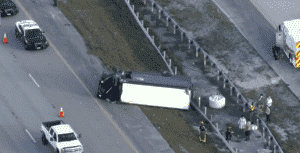
The Law Offices of Anidjar and Levine can investigate whether alcohol, drugs, fatigue, or distraction contributed to a collision and help injured people pursue compensation. Evidence may include witness accounts, photographs, medical records, toxicology results, and electronic data, though no single record automatically proves fault. Florida claims may address medical expenses, lost income, reduced earning capacity, and pain and suffering, subject to applicable law and evidence. Learn more from a Weston Personal Injury Lawyer. The following sections explain how these cases are assessed and when legal guidance may help.
Main Takeaways
- An impaired or distracted driving claim requires evidence connecting the driver’s conduct to the crash and resulting injuries.
- Preserve scene photos, witness details, medical records, police reports, and relevant phone or electronic records.
- Toxicology results, phone activity, or police observations may support a claim but do not prove impairment or distraction on their own.
- Investigators may examine vehicle damage, road conditions, witness accounts, and electronic data to reconstruct how the collision occurred.
- A Weston car accident lawyer can help assess liability, address shared-fault arguments, and pursue compensation for crash-related injuries.
How We Can Help With Your Weston Car Accident Impaired & Distracted Driving Injury Claim
When impaired or distracted driving causes a collision in Weston, an injured person may face medical expenses, lost income, and uncertainty about the next steps. Legal guidance can help clarify available options and reduce the burden of handling a claim alone. A law firm may begin with a Free consultation, listening carefully to the person’s concerns and explaining how representation could support their needs.
During a case assessment, the legal team can review relevant records, identify immediate priorities, and outline a practical plan. This may include organizing medical documentation, communicating with insurers, and tracking claim-related deadlines. Clear updates help the injured person understand what is happening and make informed decisions without unnecessary confusion.


The firm can also address questions as they arise and coordinate with appropriate professionals when additional information is needed. Its role is to provide attentive, dependable support while pursuing a fair resolution. Each person’s circumstances differ, so recommendations should reflect that individual’s facts, goals, and needs.
Don’t Wait. Call Our Florida Personal Injury Lawyers Now!
Understanding Weston Car Accident Impaired & Distracted Driving Injury Cases
OUR CONSULTATIONSARE FREE
START YOUR FREE CASE REVIEW

Impaired and distracted driving cases in Weston involve questions about how a driver’s conduct contributed to a collision and the resulting injuries. A claim generally requires evidence connecting the driver’s actions to the crash and showing the nature and extent of the harm. Relevant records may include police reports, witness accounts, photographs, medical documentation, and available vehicle or roadway data. Collectively, these materials can help establish the sequence of events and clarify disputed details.
Crash dynamics may be assessed through vehicle damage, impact locations, road conditions, and other physical evidence. Investigators may also consider roadway design, visibility, traffic controls, and the collision location when evaluating how events unfolded. Medical evidence can document injuries, treatment needs, and effects on daily activities, while employment records may help show lost income.
A careful review supports a fair assessment of responsibility and damages. It also helps injured people and their families understand the process and make informed decisions about seeking compensation.
Common Causes of Weston Car Accident Impaired & Distracted Driving


Impaired and distracted driving in Weston can result from alcohol, drugs, mobile device use, or fatigue. Each can reduce a driver’s judgment, attention, or ability to react safely to changing road conditions. Identifying the cause may help clarify how a collision occurred and who may be responsible.
Drunk Driving
Drunk driving is a serious cause of car accidents in Weston because alcohol can impair judgment, slow reaction time, and reduce a driver’s ability to control a vehicle. Even a modest amount of alcohol may affect a person’s ability to judge distance, recognize hazards, and respond safely to changing traffic conditions. These effects can place passengers, pedestrians, and other motorists at risk.
Law enforcement may use DUI checkpoints to identify drivers who appear impaired and discourage alcohol-related driving. However, prevention efforts cannot eliminate every crash. After a collision, investigators may examine driving behavior, test results, witness accounts, and other evidence to determine what occurred. In some cases, dram shop liability may also be relevant if an establishment unlawfully served alcohol to a person who later caused harm. Understanding these issues can help injured people pursue accountability and support safer roads.
Drug Impairment
Drug impairment can contribute to Weston car accidents when medications or illegal substances affect a driver’s judgment, coordination, alertness, or reaction time. Prescription pain relievers, sedatives, sleep aids, cannabis, and other drugs may reduce a person’s ability to respond safely to changing traffic conditions. Prescription interactions can intensify these effects, particularly when medications are combined with alcohol or other substances. Even when taken as directed, drugs may cause drowsiness, blurred vision, or delayed reactions, making it important for drivers to understand warnings and follow medical guidance. Drug recognition by trained officers may help identify signs of impairment, although the effects can vary by substance and individual. When a suspected impaired driver causes a collision, injured people may need medical care and support while the circumstances are investigated and responsibility is assessed.
Cell Phone Distraction
When drivers use cell phones behind the wheel, even brief distractions can increase the risk of a Weston car accident. Reading or sending a message shifts attention from traffic, while handling a device can take a driver’s hands off the wheel. Texting risks are especially serious because these actions may combine visual, manual, and cognitive distraction. A vehicle can travel a substantial distance before its driver notices a hazard or responds to changing road conditions.
Calls, navigation apps, and social media alerts may also divert attention, even when a driver does not intend to engage with them. Adjusting notification settings before travel can help limit interruptions, and drivers can pull over safely when communication is necessary. Avoiding phone use supports safer roads and helps protect passengers, pedestrians, and other motorists.
Drowsy Driving
Drowsy driving can impair judgment, slow reaction times, and make it harder for drivers to stay in their lane, increasing the risk of a Weston car accident. Sleep deprivation may cause drivers to overlook hazards, misjudge distance, or briefly fall asleep behind the wheel. Long work shifts, demanding caregiving responsibilities, untreated sleep disorders, and extended travel can all contribute to fatigue. Driving during hours when circadian rhythms naturally promote sleep may further reduce alertness, even if a driver believes they can remain focused.
Drivers can reduce risks by getting adequate rest, taking breaks on long trips, and arranging another driver when fatigue develops. Warning signs include frequent yawning, heavy eyelids, drifting between lanes, and difficulty recalling recent miles. When fatigue contributes to a collision, careful investigation can help clarify the circumstances and support those affected.
Legal Rights of Weston Car Accident Impaired & Distracted Driving Injury Victims
Impaired and distracted driving can cause serious collisions in Weston, leaving injured people with legal rights to pursue compensation. Florida law may allow an injured person to seek damages from a driver whose negligence caused the crash. These rights can help victims address losses while protecting their ability to support family members and remain engaged in their communities.
Injured people in Weston may have legal options to seek compensation when impaired or distracted driving causes a collision.
Key legal considerations may include:
- A claim may seek payment for medical expenses, lost income, reduced earning capacity, and pain and suffering.
- Evidence such as medical records, witness accounts, and crash reports can help establish fault and document losses.
- Comparative negligence may reduce compensation if an injured person shares responsibility, depending on the circumstances and applicable law.
- Punitive damages may be available in limited cases involving intentional misconduct or gross negligence, subject to legal requirements.
Deadlines apply to injury claims, and delay can affect access to evidence or recovery. An attorney can assess the facts, explain available options, and communicate with insurers. Prompt legal guidance may help injured people make informed decisions and pursue fair treatment.
Why Do Weston Car Accident Impaired & Distracted Driving Injuries Happen?
Weston car accidents involving impaired or distracted drivers often occur because alcohol, drugs, fatigue, or competing demands interfere with safe driving. These conditions can slow reaction time, weaken judgment, and make it harder to stay in your lane or spot hazards. A driver who looks at a phone, adjusts navigation, or reaches for an item may miss a signal, pedestrian, or stopped vehicle. Impairment can also encourage speeding, unsafe turns, and delayed braking, increasing the likelihood that a collision will cause serious injuries.
Other circumstances may compound these risks. Road design factors, including limited sightlines, confusing intersections, inadequate lighting, or poorly marked crossings, can leave drivers less time to respond. Weather, traffic congestion, and construction activity may further reduce visibility or room to maneuver. Vehicle safety systems, such as automatic emergency braking and lane-departure alerts, may help prevent or lessen some crashes, but they cannot replace attentive, sober driving. When a driver’s choices combine with roadway or vehicle limitations, people in nearby vehicles, on foot, or cycling may face avoidable harm.
What Should You Do After a Weston Car Accident Impaired & Distracted Driving Injury?
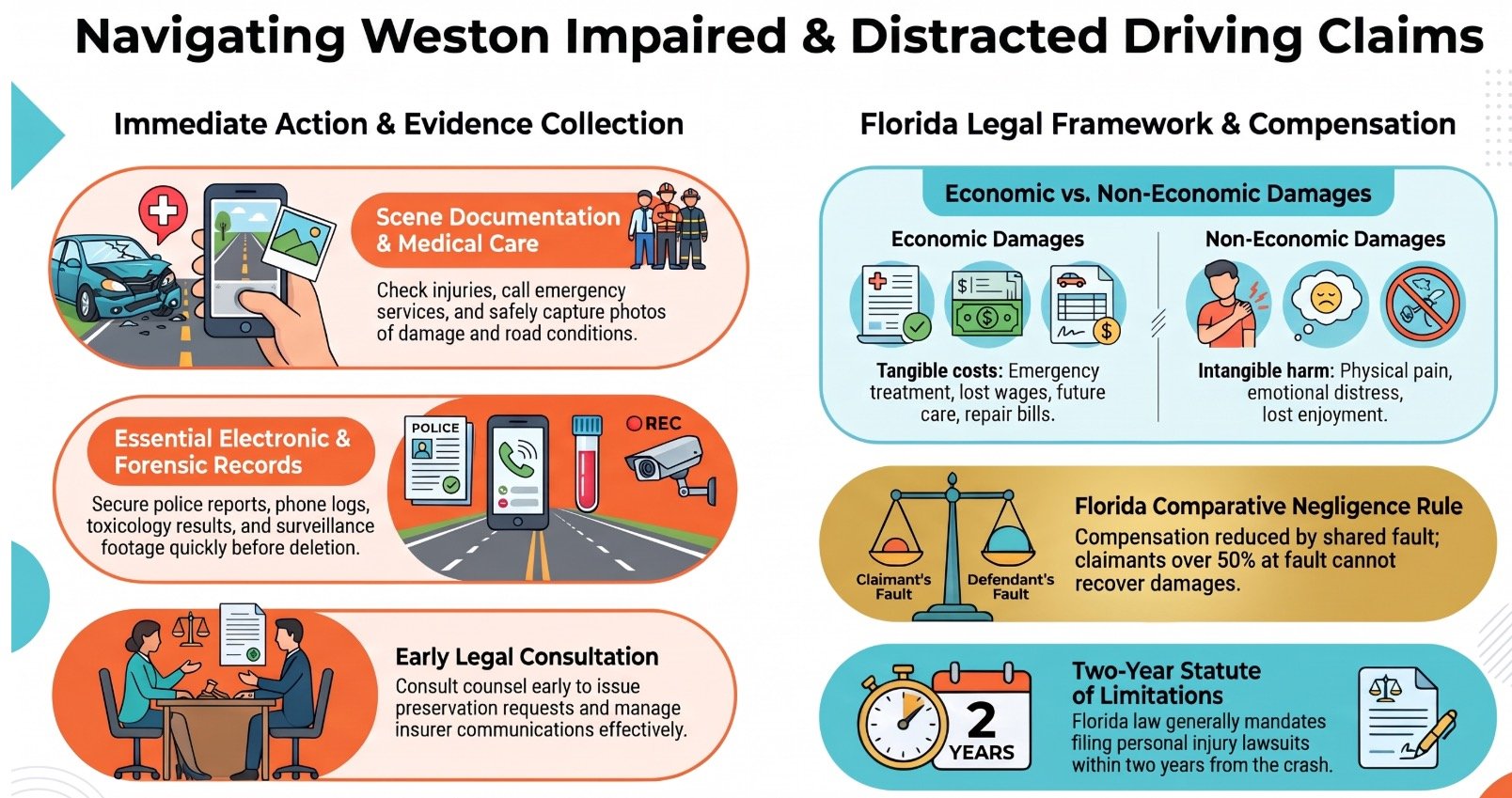
After a Weston car accident involving suspected impaired or distracted driving, injured individuals should first check for injuries and contact emergency services when needed. They should document the scene, gather witness information, and preserve relevant evidence when it is safe to do so. Consulting a qualified car accident lawyer can help clarify available legal options and protect their interests.
Check for Injuries
Because injuries may not be immediately apparent after a collision, everyone involved should be checked for signs of harm before attention turns to property damage. A calm injury assessment can help identify urgent concerns, including bleeding, confusion, difficulty breathing, or complaints of pain. If anyone appears injured, or their condition is uncertain, someone should contact Emergency services promptly and describe the location and known symptoms. Do not move an injured individual unless there is an immediate danger, such as fire or approaching traffic. Those at the scene can offer reassurance, keep others at a safe distance, and follow instructions from emergency dispatchers. Even when no visible injury is present, occupants should remain alert to developing symptoms and seek medical evaluation when appropriate. Prompt attention protects everyone’s well-being and helps responders provide suitable care.
Document the Scene
Once immediate safety and medical needs have been addressed, documenting the collision scene can help preserve an accurate account of what occurred. If it is safe to do so, the injured person or a companion can take Scene photographs showing vehicle positions, visible damage, traffic signals, signs, skid marks, and relevant surroundings. Images should capture both close details and wider views, without entering traffic or delaying medical care. Recording roadway conditions, including weather, lighting, surface hazards, and visibility, may also help clarify how the crash happened. Note the names and contact details of witnesses, along with the time and location of the collision. A brief written account can preserve observations while they remain clear. Store original images and notes securely, and leave them unaltered for accurate future reference.
Contact a Lawyer
When should an injured person contact a lawyer after a Weston car accident involving suspected impaired or distracted driving? Contacting counsel promptly can help preserve evidence, clarify available options, and reduce the risk of missed deadlines. A lawyer may advise the injured person on documenting medical treatment, reporting the collision, and communicating with insurers without making unsupported statements.
During an initial consultation, the attorney can review the known facts, explain possible next steps, and identify information needed to assess a claim. A Free case review may help an injured person understand whether legal representation is appropriate, while questions about attorney availability can clarify how quickly counsel can respond. Prompt guidance may also support a more orderly process for the injured person and others affected by the crash. The person should continue following medical advice and retain relevant records.
Critical Evidence in a Weston Car Accident Impaired & Distracted Driving Injury Case
Important evidence can help establish whether impairment or distraction contributed to a Weston collision.
Essential sources include:
- Police crash reports
- Toxicology test results
- Phone and app records
- Witness accounts and video evidence
Together, these records may clarify how the crash occurred and support an injury claim.
Police Crash Reports
Police crash reports can provide important evidence in a Weston car accident involving suspected impaired or distracted driving. Officers may document the collision location, vehicle damage, road conditions, witness statements, and observations made at the scene. These details can help clarify how the crash occurred and identify issues that require further investigation. A report may also record citations or describe conduct officers considered relevant, though it does not, by itself, establish legal responsibility. Report access varies by agency, and an injured person or authorized representative may need to request the document through the appropriate records office. If the report contains inaccurate names, dates, or other factual details, correction procedures may allow a request for review. Preserving the report and related records can support a careful assessment of the incident and help protect those affected.
Toxicology Test Results
Toxicology test results may help establish whether alcohol, prescription medication, or other substances affected a driver involved in a Weston car accident. These findings can provide important evidence when evaluating how a collision occurred and whether a driver’s impairment contributed to another person’s injuries. Laboratory procedures matter because proper collection, handling, and testing can affect a sample’s reliability. Records may identify the substances tested, the methods used, and when the sample was collected. Result interpretation requires careful attention to concentration levels, prescribed use, and the possible effects of combining substances. A positive result alone does not necessarily prove impairment at the time of a crash. Medical experts may explain what the findings indicate, while investigators and legal professionals assess them alongside other evidence. Accurate analysis supports a fair evaluation of responsibility and injury claims.
Phone And App Records
When a Weston car accident involves suspected distracted or impaired driving, phone and app records may help establish what a driver was doing before the collision. Call logs, text timestamps, navigation activity, and app usage may indicate whether a device was in use near the time of impact. Such information can support a careful review of the events leading to the crash, but it does not prove impairment or distraction on its own.
Because electronic records may be deleted or overwritten, prompt action can matter. Carrier preservation requests may help protect available subscriber and usage records, while app data retention policies vary by provider and record type. A lawyer can identify relevant sources, seek appropriate preservation, and pursue records through lawful procedures. These steps may help injured people and their families obtain reliable evidence and assess responsibility.
Witness And Video Evidence
Witness accounts and nearby video footage can help clarify how a Weston car accident occurred and whether distraction or impairment may have contributed. Promptly identifying witnesses can preserve details about vehicle movements, driver behavior, and statements made at the scene. Witness credibility may depend on a person’s opportunity to observe, consistency, and independence from the parties involved. Investigators can compare accounts with physical evidence and other records rather than relying on any single recollection.
Surveillance footage from nearby businesses, homes, traffic cameras, or vehicles may capture events before, during, or after a collision. Such recordings can be overwritten or deleted, so timely requests may be important. A careful review can reveal relevant conduct, but video may have limited angles or gaps and may not establish impairment on its own. Preserving this evidence can support a fair assessment and help injured people pursue accountability while maintaining the investigation’s accuracy.
Don’t Wait. Call Our Florida Personal Injury Lawyers Now!
Long-Term Effects of Weston Car Accident Impaired & Distracted Driving Injuries
Impaired and distracted driving crashes can cause injuries with effects that persist well beyond initial treatment. Some victims experience chronic pain or lasting cognitive impairment that interferes with daily activities and work. Emotional trauma may also continue, affecting well-being and relationships over time.
Chronic Pain
Chronic pain can persist long after a Weston car accident, even when visible injuries have recovered. Neck, back, joint, and soft-tissue damage may cause ongoing discomfort that interferes with work, household responsibilities, and community service. Symptoms can vary from day to day, making it difficult to predict how much activity a person can manage. Tracking pain flare patterns can help injured individuals and their healthcare providers identify triggers, assess treatment, and plan daily tasks. Some people require mobility adaptations, such as braces, assistive devices, or changes to their homes, to move safely and remain as independent as possible. Consistent medical care may support function and reduce complications, while clear records document the injury’s continuing effects. When another driver’s impaired or distracted conduct caused the collision, these lasting limitations may be relevant to evaluating its consequences.
Lasting Cognitive Impairment
After a Weston car accident, cognitive impairment may continue even after other injuries appear to recover. A brain injury can affect memory, attention, processing speed, and the ability to plan or complete familiar tasks. These changes may interfere with work, education, caregiving, and daily responsibilities, sometimes becoming more apparent when a person resumes normal routines. Neuropsychological testing can help identify specific difficulties and document how they affect functioning. Physicians may also recommend imaging, follow-up evaluations, or referrals to experts, depending on the injury and symptoms. Cognitive rehabilitation may provide structured strategies to strengthen skills or compensate for limitations, with goals tailored to each person’s needs. Consistent medical documentation can clarify the course of recovery and support informed decisions about treatment, accommodations, and assistance from family or community services.
Emotional Trauma
Emotional trauma can persist long after physical injuries from a Weston car accident begin to recover. Survivors may experience anxiety, sleep disruption, or heightened alertness, particularly when driving or encountering reminders of the collision. Emotional flashbacks can make an ordinary sound, intersection, or sudden stop feel connected to the crash, affecting concentration and confidence. These symptoms may interfere with work, caregiving, and daily routines, even when visible injuries have mended.
Trauma can also create relationship strain as survivors withdraw, become irritable, or struggle to explain their reactions to family and friends. Supportive responses from loved ones can help, but persistent symptoms may require care from a qualified mental health professional. Timely treatment can assist recovery and restore stability. When impaired or distracted driving caused the collision, documenting emotional effects may also help clarify the injury’s broader impact.
Proving Liability in Weston Car Accident Impaired & Distracted Driving Injury Cases
Proving liability in a Weston car accident involving impaired or distracted driving requires evidence that the driver’s conduct caused the collision and resulting injuries. Investigators may examine police reports, witness accounts, photographs, vehicle damage, and available video to establish how the crash occurred. Evidence of impairment can include field observations, toxicology results, and records related to alcohol or drug use. For distraction, phone records, electronic data, and witness statements may help show that attention was diverted from driving.
Negligence standards generally require proof that the driver failed to use reasonable care, breached that duty, and caused measurable harm. Medical records and expert assessments can connect injuries to the collision and document their effects on daily life. The evidence must also address possible liability defenses, such as claims that another driver caused the crash or that the injured person contributed to it. Careful preservation and review of relevant evidence can clarify responsibility and support a fair assessment of the injured person’s losses.
Dealing With Insurance Companies After a Weston Car Accident Impaired & Distracted Driving Injury
When an impaired or distracted driver causes a Weston car accident, insurance companies may quickly begin investigating the claim and evaluating their financial exposure. Their representatives may request documents, ask questions, or seek a recorded account before the injured person understands the full extent of the harm.
Insurer communication boundaries can help protect a claimant from unnecessary pressure while allowing vital information to be shared. Communications should remain accurate, measured, and limited to relevant facts. A claimant should avoid speculation about the collision, injuries, or recovery, since early statements may not reflect later medical findings.
Recorded statement risks warrant careful attention. An insurer may use a recorded response to challenge inconsistencies or dispute the severity of an injury. Before providing one, the injured person may benefit from understanding the request and obtaining legal guidance. Promptly preserving medical records, repair estimates, and relevant correspondence can support clear communication. Careful, respectful dealings with insurers also help keep attention on recovery and the needs of those affected.
What to Expect During a Weston Car Accident Impaired & Distracted Driving Injury Claim Process
A Weston impaired or distracted driving injury claim typically begins with an evaluation of the accident, injuries, and available legal options. Evidence is then collected to establish how the crash occurred and document the resulting losses, supporting negotiations with the insurer. If the parties cannot reach a fair settlement, the claim may proceed to trial.
Initial Case Evaluation
How does an initial case evaluation begin after an impaired or distracted driving crash in Weston? During an Initial Consultation, the injured person can describe the collision, resulting injuries, medical care, and concerns about recovery. The attorney may ask about the incident’s circumstances and explain how Florida law could apply, including potential claims against a driver whose impairment or inattention caused harm.
A Case Assessment considers the nature of the injuries, current and anticipated treatment, financial losses, and the impact on daily responsibilities. The attorney also discusses available legal options, likely procedural steps, and questions that may require further review. This early discussion helps clarify priorities and establish realistic expectations without promising a particular outcome. By understanding the person’s needs and obligations, counsel can recommend a course that supports informed decisions and a fair resolution while respecting the wider community affected by the crash.
Evidence Collection
Once the initial case evaluation is complete, evidence collection helps establish how an impaired or distracted driver caused the crash and what harm resulted. Counsel may obtain the police report, witness statements, photographs, and available video footage. Records concerning suspected impairment, such as relevant test results or officer observations, may also help clarify events. For distracted-driving claims, phone records or vehicle data may show whether attention was diverted, subject to applicable privacy and legal requirements. Evidence Preservation is important because vehicle damage, electronic data, and nearby camera recordings may be lost or overwritten. Surveillance Retrieval can involve promptly requesting footage from businesses, residences, or public agencies near the collision site. Medical records and expense documentation can connect the injuries to the crash and describe their effects. Careful collection supports an accurate account and helps protect the injured person’s interests.
Claim Negotiations
With the available evidence organized, claim negotiations can address who was responsible for the crash and the full extent of the resulting losses. In an impaired or distracted driving claim, the injured person’s representative may present records, witness accounts, and crash findings to the insurer. A Demand strategy should explain how the driver’s conduct caused the collision and document medical expenses, lost income, and other supported harm. The insurer may review liability, question certain costs, or request additional information before responding. Negotiations can involve clarifying disputed facts and providing updated treatment records as recovery continues. Accurate documentation and consistent communication help protect the injured person’s interests while allowing the insurer to assess the claim. Strong evidence may provide settlement leverage, but any proposed resolution should reflect the documented losses and the person’s ongoing needs.
Settlement Or Trial
After negotiations, a Weston car accident claim may resolve through a settlement or proceed to trial if the parties cannot agree on liability or compensation. A settlement provides an agreed payment in exchange for resolving the injury claim, subject to the injured person’s informed approval. Settlement timing depends on factors such as medical progress, evidence review, and insurer response. Accepting an offer generally ends the right to seek additional compensation for the same injuries, so the terms require careful evaluation.
If negotiations fail, Trial preparation may include organizing medical records, gathering witness testimony, consulting qualified experts, and developing evidence about impaired or distracted driving. At trial, each side presents its position, and a judge or jury determines liability and damages. The process can take longer and carries uncertainty. Clear guidance helps claimants make informed decisions while protecting their interests and supporting accountability.
Compensation for Weston Car Accident Impaired & Distracted Driving Injury Damages
Drivers impaired by alcohol or drugs, or distracted by phones and other devices, can cause serious crashes in Weston. When another person’s conduct causes an injury, compensation may help address the practical effects of the collision and support the injured person’s recovery. Available damages depend on the evidence, the severity of the harm, and applicable Florida law.
Medical expense coverage may include reasonable costs for emergency treatment, hospitalization, medication, rehabilitation, and future care related to the crash. Records and provider assessments can help establish which expenses are connected to the injuries. Lost income recovery may address wages missed during treatment and recovery, while evidence of work restrictions or lasting effects may support a claim for reduced earning capacity.
A claim may also seek compensation for physical pain, emotional distress, and limitations on daily activities. Careful documentation helps present the full impact of an injury. By pursuing fair compensation, injured people can obtain needed care and maintain greater stability as they work toward recovery.
Economic vs Non-Economic Damages in Weston Car Accident Impaired & Distracted Driving Cases
In Weston impaired and distracted driving cases, economic damages may include medical expenses, lost income, and other measurable financial losses. Non-economic damages address harm such as pain, emotional distress, and reduced quality of life. Establishing both categories typically requires reliable records and evidence connecting the losses to the collision.
Economic Losses
When an impaired or distracted driver causes a crash in Weston, the injured person may seek compensation for both economic and non-economic losses. Economic losses are measurable financial costs linked to the collision and its resulting injuries. They may include reasonable medical expenses, such as emergency care, follow-up treatment, rehabilitation, medication, and necessary medical equipment. An injured person may also claim lost wages for time missed from work while receiving treatment or recovering. If injuries limit the ability to perform prior duties or reduce future work opportunities, diminished earning capacity may be considered. Other documented costs, including transportation to appointments and certain household services, may also qualify when supported by evidence. Pay records, invoices, medical documentation, and employment information can help establish the amount and connection between these losses and the crash.
Non-Economic Harm
Beyond measurable financial costs, a Weston car accident caused by impaired or distracted driving may result in non-economic harm. These damages concern the personal effects of an injury rather than bills or lost income. Physical pain, emotional distress, and limitations on daily activities may alter how an injured person lives and participates in the community. Loss of enjoyment can arise when injuries prevent someone from pursuing hobbies, attending events, or carrying out valued routines. Relationship strain may also develop when pain, stress, or reduced independence affects communication and shared responsibilities with family members. These consequences can be significant even when they lack a fixed monetary value. In evaluating a claim, non-economic damages are considered alongside economic losses to reflect the broader impact of the collision on the injured person’s life.
Proving Damages
Proving damages in a Weston car accident case requires evidence that connects the impaired or distracted driving to the injured person’s losses. Economic damages include measurable costs such as emergency care, rehabilitation, medication, lost income, and vehicle repairs. Damage documentation, including medical records, invoices, wage statements, and repair estimates, can help establish these amounts. When injuries affect a person’s ability to work or require continuing treatment, records and qualified assessments may support claims for future expenses.
Non-economic damages address losses that do not have a direct price, such as pain, emotional distress, reduced mobility, and diminished enjoyment of daily activities. Consistent treatment records and clear accounts of how injuries affect ordinary responsibilities may help explain these effects. Careful evidence gathering allows a claim to reflect the full impact of the collision and supports a fair, well-grounded resolution.
When a Weston Car Accident Impaired & Distracted Driving Injury Case Goes to Trial vs Settlement
In a Weston car accident involving suspected impaired or distracted driving, the decision to settle or proceed to trial depends on the strength of the evidence, the extent of the injuries, and the parties’ willingness to resolve the claim. Settlement may provide a more predictable outcome and avoid the time, expense, and uncertainty of a courtroom proceeding. It can also allow injured people to focus on treatment and recovery while seeking compensation for documented losses.
Trial may be considered when the parties dispute responsibility, the seriousness of the injuries, or the value of the claim, and negotiations do not produce a fair resolution. Preparing for trial requires careful review of records, witness accounts, and other evidence. Trial testimony preparation helps witnesses present accurate, clear accounts under questioning. Counsel may also explain jury deliberation dynamics, including how jurors assess credibility and weigh competing evidence. Whether a case settles or proceeds to trial, informed decisions can support accountability and help protect the injured person’s interests.
Don’t Wait. Call Our Florida Personal Injury Lawyers Now!
Florida Laws That May Affect Your Weston Car Accident Impaired & Distracted Driving Case
Florida law can affect how responsibility and compensation are determined in a Weston car accident involving suspected impaired or distracted driving. Several rules may guide an injured person, family, or community member seeking accountability and support.
- Comparative fault: Florida comparative negligence may reduce an injured person’s recovery if they are found partly responsible. A claimant generally cannot recover damages if found more than 50 percent at fault, subject to statutory exceptions.
- No-fault benefits: Florida’s personal injury protection system may provide initial medical and lost-income benefits, regardless of fault, subject to policy limits and eligibility requirements.
- Serious injuries: A person may pursue damages from an at-fault driver when the injury meets Florida’s legal threshold, including significant or permanent injury.
- Coverage and evidence: Insurance coverage rules affect available benefits and claims. Police reports, witness accounts, and evidence of phone use or impairment may help establish what happened.
These laws can shape fair compensation and responsible resolution for those affected by a crash.
The Statute of Limitations for Weston Car Accident Impaired & Distracted Driving Injury Cases
How long an injured person has to act after a Weston car accident involving suspected impaired or distracted driving depends on the type of claim and the circumstances. Florida law generally gives an injured person two years to file a negligence lawsuit, measured from the date of the crash. A wrongful death action generally must be filed within two years of the date of death. Different rules may apply when a government entity is involved, when the injured person is a minor, or when the facts support a legal exception. These deadlines are separate from insurance notice requirements and do not pause simply because an investigation or treatment is ongoing. Missing a deadline can prevent a person or surviving family members from pursuing compensation in court, regardless of the seriousness of the harm or the other driver’s alleged conduct. Filing deadlines should accordingly be confirmed promptly, so those affected can protect their rights while focusing on recovery and supporting one another.
How a Weston Car Accident Impaired & Distracted Driving Lawyer Can Help You
When a Weston crash involves suspected impaired or distracted driving, a lawyer can help an injured person understand available legal options and protect a potential claim. The lawyer’s work can also support fair accountability and safer roads for the wider community.
- Investigating the collision: Counsel can review police reports, witness accounts, available video, and other records for evidence of impairment or distraction.
- Preserving information: A lawyer can identify relevant evidence and seek to prevent important records from being lost or overlooked.
- Assessing losses: The review may include medical expenses, lost income, future care needs, and other documented effects of the crash.
- Developing case strategy: Counsel can explain potential claims, evaluate liability, and communicate with insurers while seeking an outcome supported by the evidence.
An Attorney consultation can clarify how these services apply to the circumstances. By organizing the facts and explaining the process, legal counsel can help an injured person make informed decisions while pursuing a claim responsibly and contributing to community safety.
When to Contact a Weston Car Accident Impaired & Distracted Driving Lawyer
Prompt legal guidance may be important after a Weston collision involving suspected impairment or distraction, particularly when injuries are serious, fault is disputed, or evidence may be lost. You should consider contacting counsel as soon as you address immediate medical needs. Early Consultation Timing can matter because surveillance footage, vehicle data, and witness recollections may become unavailable or less reliable. Prompt notice also helps preserve records and clarify deadlines that could affect a claim.
Contact may be appropriate even when injuries initially seem minor, since symptoms can emerge later and treatment records may help document their development. A lawyer can explain available options without requiring an injured person to make immediate decisions about pursuing a case. When evaluating Attorney Selection, the person may ask about experience with impaired or distracted driving collisions, communication practices, and fee arrangements. Those seeking to support family members or protect others on the road can also request guidance about reporting concerns and preserving relevant information. Legal advice should not delay urgent care or emergency assistance.
Why You Need an Experienced Weston Car Accident Impaired & Distracted Driving Lawyer
An experienced Weston car accident lawyer can help identify and preserve evidence in collisions involving suspected impairment or distraction, where key facts may be disputed or difficult to establish. Prompt investigation can secure roadway footage, vehicle data, witness accounts, and records relevant to a driver’s conduct. These details may clarify how the crash occurred and help establish responsibility.
Local legal experience can also help counsel understand Florida procedures, applicable deadlines, and the practical demands of pursuing an injury claim in the area. An informed case strategy can organize evidence, address disputed issues, and present the injured person’s losses with accuracy. This work may include evaluating medical documentation, communicating with insurers, and preparing for litigation when a fair resolution is not offered.
For people focused on protecting and supporting those harmed, experienced representation can reduce avoidable burdens during recovery. Careful legal guidance helps ensure a claim is handled responsibly, relevant facts receive attention, and the injured person can make informed decisions about available options.
How to Choose the Right Weston Car Accident Impaired & Distracted Driving Lawyer for Your Case
Choosing the right Weston car accident impaired and distracted driving lawyer requires careful attention to the attorney’s experience, investigative approach, and communication practices. A suitable attorney should understand how impairment or distraction can affect a collision investigation and know how to preserve relevant evidence, such as crash reports, witness accounts, and available video. This preparation can help protect an injured person’s interests while supporting a fair review of the incident.
Attorney credentials offer one useful measure. Prospective clients can review licensing, relevant case experience, professional standing, and familiarity with Florida injury claims. They should also ask how the attorney evaluates liability, documents losses, and addresses insurance company questions.
Communication style matters throughout a claim. A lawyer should explain procedures clearly, respond within a reasonable time, and provide updates without overstating likely outcomes. A careful selection process helps clients choose counsel whose experience and approach align with their needs, allowing them to focus on recovery and responsibilities to others.
About The Law Offices of Anidjar & Levine
The Law Offices of Anidjar & Levine represents people injured in car accidents and other incidents throughout Florida, including Weston. The firm assists clients seeking accountability and compensation after crashes involving impaired or distracted driving. Its work includes explaining legal options, communicating with insurers, gathering relevant evidence, and preparing claims for negotiation or litigation.
Firm history reflects a practice focused on representing injured people and their families across Florida. The attorneys and staff handle cases involving serious injuries, property damage, and related losses. Their role is to provide clients with clear information and practical support while pursuing outcomes supported by the facts and applicable law.
Attorney values include responsiveness, preparation, and respect for each client’s circumstances. The firm describes its approach as service-oriented, with attention to the concerns of people maneuvering difficult periods after a collision. For Weston residents, this can include guidance through claim requirements, updates about case progress, and assistance evaluating proposed settlements before making decisions.
Frequently Asked Questions
Can I File a Claim if the Impaired Driver Was Not Charged With DUI?
Yes. An injured person may file a civil claim even if the driver was not charged with DUI. Civil liability standards differ from criminal standards, so a prosecutor’s decision not to charge does not determine whether compensation is available. The claim may rely on independent evidence, including witness accounts, crash reports, toxicology results, and driving records. A careful investigation can help establish negligence, causation, and damages under applicable law.
Can I Recover Damages if I Was a Passenger in the Vehicle?
Yes, an injured passenger may recover damages, even if the driver was not charged with impaired driving. Passenger injury damages may include compensation for medical expenses, lost income, pain, and other losses, subject to available insurance and evidence of fault. No-fault benefits may cover certain treatment and income losses regardless of who caused the collision. A claim against an at-fault driver may also be available, depending on the circumstances and applicable law.
What Happens if an At-Fault Driver Has No Insurance?
If an at-fault driver has no insurance, an injured person may seek compensation through their own Uninsured motorist coverage, if the policy includes it. This coverage may help pay for medical expenses, lost income, and other eligible losses, subject to policy limits and requirements. If coverage is unavailable or insufficient, a personal injury lawsuit may be considered against the responsible driver. Recovery can depend on the driver’s assets and the circumstances of the crash.
Can a Bar Be Liable for Serving Alcohol to the Driver?
A bar may be liable for serving alcohol to a driver when state law permits a claim and evidence shows the establishment served someone who was visibly intoxicated or underage. This claim, known as Dram Shop Liability, depends on the circumstances and applicable law. Overservice Evidence may include receipts, witness accounts, surveillance footage, or staff testimony. Such evidence can help establish whether the bar’s conduct contributed to the crash and resulting injuries.
Will My Claim Be Affected if I Was Not Wearing a Seat Belt?
Not wearing a seat belt may affect a claim, but it does not automatically prevent recovery. Under the Seat Belt Defense, the opposing party may argue that the failure to buckle up worsened the injuries. Comparative Negligence rules may reduce compensation if the evidence supports that argument, depending on the state’s law. The driver’s responsibility for causing the crash remains a separate issue, and injured people should seek legal guidance.
—————————
Impaired or distracted driving crashes in Weston can cause serious injuries, financial strain, and lasting disruption. If you’ve been hurt, a Weston Personal Injury Lawyer can explain your legal options and help you pursue compensation from those responsible. The Law Offices of Anidjar and Levine can review the circumstances, preserve important evidence, and handle communications with insurers while you focus on medical care and recovery. Because deadlines may apply, prompt legal guidance can help you make informed decisions and protect your claim.