

A Fort Lauderdale car accident involving vehicle or equipment failure may support a claim when evidence connects a defect, inadequate maintenance, or improper repair to the collision and resulting injuries. The Law Offices of Anidjar and Levine can review available records, identify potentially responsible parties, explain deadlines, and handle communications with insurers. Relevant evidence may include vehicle data, inspection and repair histories, witness accounts, and medical records. Learn more from a Fort Lauderdale Personal Injury Lawyer. The sections below explain how these claims are investigated, what legal options may apply, and how counsel can assist.
Main Takeaways
- A Fort Lauderdale lawyer can assess whether a vehicle defect, malfunction, poor maintenance, or improper repair contributed to a crash and injuries.
- Potentially responsible parties may include drivers, manufacturers, repair shops, maintenance providers, or parts suppliers, depending on the evidence.
- Preserve the vehicle, damaged parts, photographs, repair records, and available reports; avoid repairs or disposal before relevant inspections.
- Evidence may include inspection and maintenance histories, witness accounts, roadway conditions, vehicle data, and findings from qualified inspections.
- A lawyer can explain potential claims, deadlines, insurance issues, and compensation options; outcomes depend on the facts and applicable law.


How We Can Help With Your Fort Lauderdale Car Accident Vehicle & Equipment Failures Injury Claim
When a vehicle or equipment failure contributes to a Fort Lauderdale car accident, determining what went wrong can be essential to pursuing an injury claim. A legal team can help injured people and their families manage the steps that follow while keeping their needs central. Counsel may review available records, identify potentially responsible parties, and explain what evidence could support a claim.
Attorney guidance can help clarify deadlines, insurance communications, and the documentation needed to describe injuries and related losses. Depending on the circumstances, a claim may involve a vehicle manufacturer, parts supplier, repair business, or another party. A careful review can help assess Claim eligibility without promising a particular result.
Legal representatives can also communicate with insurers, organize supporting materials, and evaluate settlement proposals. If negotiations do not resolve the matter, counsel can explain available options and represent the claimant in further proceedings. This support allows injured individuals to focus on medical care and recovery while pursuing a fair, evidence-based resolution. Each case requires an assessment of its specific facts and applicable law.
OUR CONSULTATIONSARE FREE
START YOUR FREE CASE REVIEW

Understanding Fort Lauderdale Car Accident Vehicle & Equipment Failure Injury Cases
Vehicle and equipment failure cases arise when a defect, malfunction, or inadequate repair contributes to a Fort Lauderdale car accident and resulting injuries. These claims require careful examination of how the vehicle’s condition relates to the collision and the harm reported. A failure alone does not establish responsibility; evidence must connect the condition to the crash and support the injured person’s account.
Accident scene dynamics can help explain how events unfolded, including vehicle movement, impact points, and the sequence of contact. Investigators may consider photographs, witness statements, vehicle data, and inspection findings alongside roadway conditions. Medical records and expert assessments can clarify the nature of injuries and whether they are consistent with the collision.
Several parties may have relevant information, including drivers, repair providers, manufacturers, or insurers. Preserving the vehicle and related records can help maintain useful evidence. A thorough, impartial review supports fair evaluation of responsibility, damages, and the needs of people affected by the accident.
Common Causes of Fort Lauderdale Car Accident Vehicle & Equipment Failures
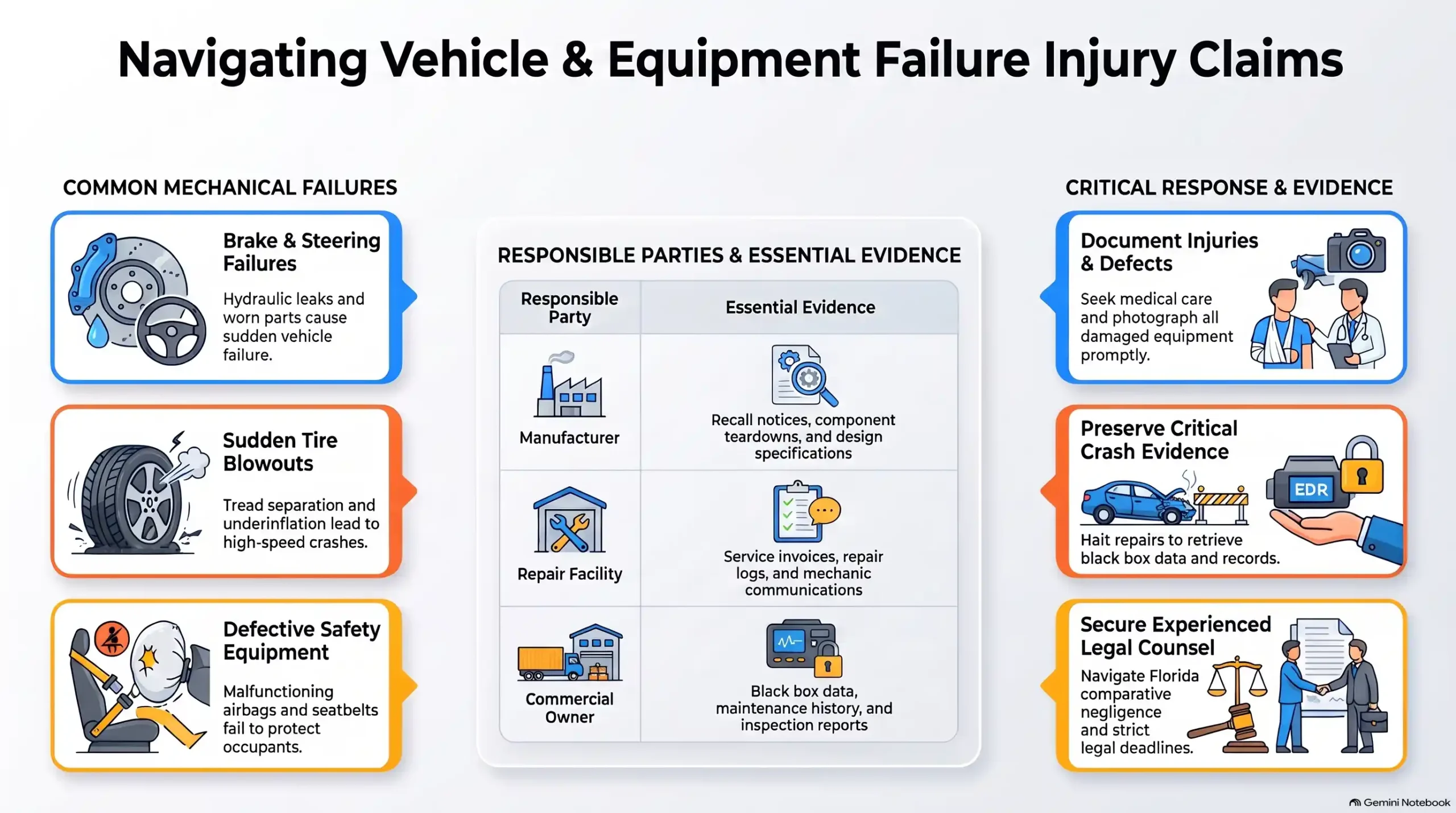
Vehicle and equipment failures in Fort Lauderdale car accidents may result from brake system malfunctions, tire blowouts, or defects in steering components. Faulty safety equipment, including airbags or seat belts, can also increase the risk of injury in a collision. Identifying the specific failure and its cause is necessary to evaluate responsibility for the resulting harm.
Brake System Failures
Brake system failures can prevent a driver from slowing or stopping in time to avoid a collision. In Fort Lauderdale traffic, a vehicle that cannot respond reliably to braking demands may endanger occupants, pedestrians, and other road users. Several mechanical problems can contribute to this hazard. Worn brake pads or damaged rotors may reduce stopping power, while overheated components can cause Brake fade during repeated or prolonged braking. Hydraulic leaks may lower fluid pressure, making the brake pedal less effective or causing braking capacity to fail. Defective master cylinders, faulty brake lines, and neglected maintenance can also compromise system performance. After a crash, inspecting the vehicle and reviewing maintenance records may help determine whether a defect or service failure played a role. Prompt attention to warning signs can help protect everyone sharing the road.
Tire Blowouts
When a tire suddenly loses air or separates from its structure, the driver may struggle to maintain control, particularly at highway speeds or in heavy Fort Lauderdale traffic. Common causes include underinflation, excessive heat, worn tread, overloading, and impact damage from potholes or road debris. Tread separation may occur when a tire’s layers weaken, sometimes after prolonged use or inadequate maintenance. A sudden failure can force a vehicle into adjacent lanes or leave it unable to stop safely, putting passengers and other road users at risk. Regular pressure checks, timely replacement, and professional inspections help prevent blowouts. When a crash follows a tire failure, investigators may examine maintenance records, tire condition, vehicle load, and available warnings to determine whether a defect or preventable maintenance issue contributed.
Steering Component Defects
Unlike a tire blowout, a steering component defect can impair a driver’s ability to direct a vehicle even when the tires remain intact. Steering linkage defects, including worn tie rods or damaged joints, may cause delayed, uneven, or unpredictable responses when a driver turns the wheel. Power steering failures can make steering unexpectedly difficult, particularly during low-speed movements or sudden evasive actions. These problems may result from faulty parts, inadequate maintenance, improper repairs, or manufacturing errors. A vehicle that does not respond reliably can cross lanes, leave the roadway, or collide with nearby traffic. Investigators may examine repair records, maintenance history, and damaged components to determine whether a defect contributed to a crash. Identifying the cause can help clarify responsibility and support efforts to protect other road users.
Faulty Safety Equipment
Faulty safety equipment can increase the severity of a Fort Lauderdale car accident by failing to protect occupants as intended. Airbag defects may prevent deployment, cause airbags to deploy unexpectedly, or release harmful fragments during impact. Seatbelt failures, including broken buckles, damaged webbing, or defective retractors, can leave occupants unsecured in a collision. These problems may stem from design flaws, manufacturing errors, inadequate repairs, or failure to address a safety recall. A vehicle’s safety systems should work in combination to reduce the risk of serious injury, but a defect can undermine that protection. After a crash, preserving the vehicle and documenting its condition may help identify whether equipment malfunction contributed to the harm. Careful investigation can clarify the cause and support accountability for those affected. Manufacturers, sellers, or repair providers may be responsible when their conduct contributes to the failure.
Don’t Wait. Call Our Florida Personal Injury Lawyers Now!


Legal Rights of Fort Lauderdale Car Accident Vehicle & Equipment Failures Injury Victims
A vehicle or equipment failure can leave a Fort Lauderdale crash victim injured and questioning who may be held responsible. Victim Rights include seeking compensation when another party’s negligence or a defective product contributed to harm. A careful review can help identify responsible parties and preserve evidence without placing blame prematurely.
Legal Options may include pursuing an insurance claim or filing a civil lawsuit, depending on the facts and applicable law.
A person serving an injured family member can support the process by organizing records and helping communicate with counsel.
- Seek medical care: Document injuries and follow recommended treatment, while retaining bills and related records.
- Preserve evidence: Keep the vehicle, damaged equipment, photographs, and available reports intact for qualified inspection.
- Obtain legal guidance: A lawyer can assess potential claims, deadlines, and available compensation, then explain decisions in understandable terms.
Florida’s comparative negligence rules may affect recovery if the injured person shares responsibility. Prompt, informed action can protect a claim and help guarantee that those affected receive fair consideration. Each case depends on its evidence and circumstances.
Why Do Fort Lauderdale Car Accident Vehicle & Equipment Failures Injuries Happen?
Vehicle and equipment failure injuries in Fort Lauderdale car accidents can result from defective parts, inadequate maintenance, or improper repairs. When a vital component fails, a driver may lose control or be unable to avoid a collision, placing occupants and others on the road at risk.
Manufacturing defects can make a vehicle part unsafe when it departs from its intended specifications during production. Design flaws may create a broader hazard by making a component unreliable even when it is manufactured correctly. Failures involving brakes, tires, steering systems, airbags, seat belts, or fuel systems can increase the likelihood or severity of injuries.
Poor maintenance and careless repairs can also contribute. Worn parts may remain in service, or replacement components may be installed incorrectly. In some cases, warning signs are overlooked or a vehicle is recalled but not repaired. These circumstances can affect drivers, passengers, pedestrians, and other road users, underscoring the importance of safe vehicle design, production, inspection, and repair practices.
What Should You Do After a Fort Lauderdale Car Accident Vehicle & Equipment Failure Injury?
After a crash involving a vehicle or equipment failure, the injured person should seek prompt medical care, even if symptoms initially seem minor. They should document the suspected defect with photographs, notes, and relevant repair or maintenance records. Preserving the vehicle, damaged parts, and other evidence may help establish how the failure contributed to the collision.
Seek Medical Care
Because injuries from a vehicle or equipment failure may not be immediately apparent, anyone involved in a Fort Lauderdale car accident should seek prompt medical care, even if symptoms seem minor. A medical professional can assess injuries that may worsen without timely attention, including head trauma, internal bleeding, and soft-tissue damage. Emergency symptoms such as difficulty breathing, severe pain, confusion, weakness, or loss of consciousness require immediate emergency services. For less urgent concerns, an examination at a clinic or physician’s office can identify injuries and guide appropriate treatment options. Following medical advice and attending recommended follow-up visits can support recovery and help prevent complications. Clear communication about symptoms and how the collision occurred may assist clinicians in evaluating the patient. Prompt care also helps injured people remain better able to meet personal responsibilities and support those who depend on them.
Document The Defect
If a mechanical or equipment failure may have contributed to a Fort Lauderdale car accident, documenting the suspected defect can help preserve important evidence. Once immediate medical needs and safety concerns are addressed, the injured person or a trusted representative can record what appears damaged or malfunctioning. Photographic Documentation should include clear images of the affected component, the vehicle’s overall condition, and relevant warning lights or dashboard messages. Photographs from several angles, taken in adequate lighting, may help show the defect’s location and apparent extent. Notes should identify when and where each image was taken and describe any unusual noises, smells, or vehicle behavior observed before the crash. Defect Preservation begins with careful, accurate recording rather than assumptions about cause. A qualified mechanic or investigator can later assess the condition and explain whether the suspected failure contributed to the collision.
Preserve Evidence
Documenting a suspected defect is only one part of protecting a vehicle failure claim; preserving the vehicle and related records may also help prevent important evidence from being lost or altered. After a Fort Lauderdale crash, the vehicle should not be repaired, dismantled, or discarded until its condition has been documented and relevant parties have had a reasonable opportunity to inspect it. Photographs, repair estimates, maintenance histories, recall notices, and communications with manufacturers or service providers may help clarify what failed and when. Evidence preservation also includes keeping damaged components and avoiding changes to electronic data when possible. A lawyer can advise on spoliation prevention, including written notices asking insurers, repair shops, or other parties to retain relevant materials. These steps can support a fair investigation and help protect the interests of everyone affected.
Critical Evidence in a Fort Lauderdale Car Accident Vehicle & Equipment Failures Injury Case
Evidence in a vehicle or equipment failure case can help establish the defect, identify who was responsible, and connect the failure to the injuries.
Essential sources may include:
- Vehicle inspection reports and maintenance or repair records.
- Black box data showing vehicle performance before and during the crash.
- Witness accounts and expert testimony about the failure and its role in the collision.
Vehicle Inspection Reports
Vehicle inspection reports can clarify whether a mechanical defect or maintenance failure contributed to a Fort Lauderdale car accident. These documents may record the vehicle’s condition, identify safety concerns, and show whether required inspection protocols were followed. In a serious injury claim, the reports can help establish when a defect was observed and whether it could have affected safe operation.
A careful review may also reveal report discrepancies, missing observations, or inconsistent descriptions of damaged components. Such findings can guide further investigation and help explain how a failure contributed to the collision. Qualified professionals may compare the reports with physical evidence and relevant safety standards. Their analysis can support a reliable account of events while helping injured people seek fair treatment. Inspection reports should be preserved promptly, since later changes to the vehicle may limit what they can establish.
Maintenance And Repair Records
When a mechanical failure may have contributed to a Fort Lauderdale car accident, maintenance and repair records can help establish the vehicle’s condition before the collision. These documents may show whether known problems were reported, whether recommended work was completed, and how frequently the vehicle received service. Service invoices, repair receipts, parts orders, and written communications with mechanics can help clarify what repairs were performed and when. Records may also identify recurring defects or repairs that were delayed, incomplete, or unsuccessful. A careful review can help injured people and their representatives evaluate whether a maintenance decision or repair contributed to the crash. Preserving original documents and requesting records from repair shops, fleet operators, or vehicle owners can support a reliable investigation and help guarantee that relevant evidence is available to those evaluating responsibility.
Black Box Data
Electronic data from a vehicle’s event data recorder, often called a black box, may help clarify how a Fort Lauderdale car accident occurred. Depending on the vehicle and the circumstances, the recorder may capture information about speed, braking, throttle input, seat belt use, and changes in motion shortly before or during a collision. This Event data can help identify whether a mechanical or equipment failure may have affected the vehicle’s operation. Preservation is important because data may be overwritten, lost, or rendered inaccessible if the vehicle is repaired or dismantled. A qualified professional can retrieve and interpret the information using appropriate methods. When considered alongside physical evidence and maintenance records, black box data may support crash reconstruction and help establish a clearer account of events for those seeking accountability and fair compensation.
Witness And Expert Testimony
Witness and expert testimony can help explain how a vehicle or equipment failure contributed to a Fort Lauderdale car accident. Eyewitnesses may describe what they observed before and after the collision, including unusual sounds, vehicle movement, or visible defects. Their accounts can help establish the sequence of events and identify details that physical evidence alone may not reveal.
Expert witnesses may include automotive engineers, mechanics, or accident reconstruction experts. They can examine damaged components, assess maintenance records, and explain whether a defect or failed part affected the driver’s ability to control the vehicle. Their opinions may also clarify whether a repair, inspection, or manufacturing issue contributed to the crash.
Careful testimony preparation helps confirm that witnesses provide accurate, consistent accounts based on personal knowledge or reliable analysis. This evidence can support a fair evaluation of responsibility and injury claims.
Don’t Wait. Call Our Florida Personal Injury Lawyers Now!
Long-Term Effects of Fort Lauderdale Car Accident Vehicle & Equipment Failures Injuries
Vehicle and equipment failures can cause injuries that continue to affect a person long after a Fort Lauderdale car accident. Chronic pain and reduced mobility may limit daily activities, while lasting cognitive effects can interfere with memory, concentration, or work. These conditions may also require ongoing treatment, creating substantial medical expenses over time.
Chronic Pain and Mobility
When a crash in Fort Lauderdale results from a vehicle or equipment failure, the injuries may continue to affect a person’s health and independence long after the collision. Persistent pain can arise from fractures, spinal injuries, damaged joints, or soft-tissue trauma. These conditions may limit walking, lifting, driving, and other daily activities, sometimes preventing a person from working or caring for family members.
A coordinated treatment plan may include physical therapy, medication, and other forms of Pain management. When injuries restrict balance or movement, mobility aids such as canes, walkers, or wheelchairs may help support safer daily routines. Recovery can require ongoing appointments, home adjustments, and assistance from others. Documenting symptoms, treatment, and functional limitations can help clarify the injury’s long-term effects and the support needed to preserve independence and participation in community life.
Lasting Cognitive Effects
A vehicle or equipment failure in a Fort Lauderdale crash can cause a traumatic brain injury, leading to lasting changes in memory, concentration, processing speed, or judgment. These difficulties may affect a person’s ability to manage responsibilities, communicate clearly, and participate in family or community life. Memory impairment can interfere with appointments, instructions, and familiar routines, while reduced concentration may make ordinary tasks harder to complete. Some injured people also experience personality changes, irritability, or difficulty regulating emotions, which can strain relationships and alter how they engage with others. The effects may be subtle at first and become more apparent as daily demands resume. A careful medical assessment can help identify cognitive changes and guide appropriate support. Family members and caregivers may provide useful observations about differences from the person’s prior behavior and abilities.
Ongoing Medical Expenses
Lasting injuries from a Fort Lauderdale crash caused by vehicle or equipment failure may require ongoing medical care long after initial treatment ends. Survivors may need rehabilitation, prescription medication, expert visits, assistive devices, or additional procedures. These costs can continue even when an injury is not immediately visible, particularly when cognitive, spinal, or orthopedic conditions require monitoring and support.
Accurate records of treatment, prescriptions, travel, and related expenses can help clarify the financial impact. Future budgeting may account for expected care, possible complications, and changes in a survivor’s ability to work or manage daily tasks. Payment options, including health coverage or structured arrangements with providers, may help families address expenses while a claim is reviewed. A qualified attorney can explain how documented future medical needs may be considered in a vehicle-failure injury claim.
Proving Liability in Fort Lauderdale Car Accident Vehicle & Equipment Failures Injury Cases
Vehicle or equipment failure can make a Fort Lauderdale car accident case more complicated because liability may extend beyond the driver to a manufacturer, repair shop, or maintenance provider. Establishing responsibility requires evidence connecting a specific failure to the collision and resulting injuries. Relevant records may include repair invoices, maintenance logs, vehicle inspection reports, and photographs documenting damaged components.
An investigation may also examine whether a part was improperly designed, assembled, or installed, or whether a service provider failed to identify a dangerous condition. Product recalls and manufacturing defects can support a claim, but they do not alone establish liability. Technical analysis may help determine how a component failed and whether proper maintenance or reasonable safety measures could have prevented the crash.
Prompt preservation of the vehicle and failed equipment can be important because repairs or disposal may eliminate evidence. Witness accounts, crash reports, and expert findings can help clarify each party’s role and support a careful, evidence-based assessment of responsibility.
Dealing With Insurance Companies After a Fort Lauderdale Car Accident: Vehicle & Equipment Failures Injury
When a Fort Lauderdale crash involves a suspected vehicle or equipment failure, insurance claims may involve more than the driver’s policy. Depending on the circumstances, insurers for a vehicle owner, manufacturer, repair shop, or parts supplier may also become involved. Each may assess responsibility and coverage differently, particularly when maintenance records, inspection findings, or product information are relevant.
Injured people may receive requests for documents or Recorded Statements from one or more insurers. Before responding, they can clarify who is requesting information, what policy applies, and whether the request concerns the crash or a potential defect. Careful, accurate communication helps avoid speculation about the cause or the extent of injuries. Medical records and repair documentation should be preserved and shared thoughtfully.
Coverage Disputes may arise over exclusions, policy limits, or which insurer must respond. A lawyer can review policy language, coordinate communications, and help protect an injured person’s interests while keeping attention on recovery and the needs of those who depend on them.
What to Expect During a Fort Lauderdale Car Accident Vehicle & Equipment Failures Injury Claim Process
A vehicle or equipment failure injury claim typically begins with an initial case review to assess the collision, injuries, and available evidence. The investigation may examine the suspected defect and preserve relevant records before the injury claim is filed. The process may then proceed through settlement negotiations or, if necessary, litigation.
Initial Case Review
During an initial case review, a Fort Lauderdale car accident lawyer examines how a vehicle or equipment failure may have contributed to the crash and resulting injuries. This Initial Case Review gives the injured person an opportunity to describe the collision, medical concerns, and immediate effects on daily life. The lawyer may review available records, such as the crash report, photographs, medical documentation, and insurance correspondence, to understand the circumstances and identify unanswered questions. A Claim Evaluation considers potential liability, the types of losses involved, and deadlines that could affect the claim. The lawyer can explain possible legal options, the information needed to assess the matter, and how communication with insurers may proceed. This early discussion also helps clarify expectations and supports informed decisions while the injured person focuses on recovery and family responsibilities.
Investigating Equipment Failure
Investigating equipment failure requires a Fort Lauderdale car accident lawyer to examine whether a defective or poorly maintained vehicle component contributed to the collision or injuries. The investigation may focus on brakes, tires, steering systems, airbags, seat belts, or other parts. Counsel can arrange for qualified experts to inspect the vehicle, preserve relevant components, and document their condition before repairs or disposal alter important evidence.
A Forensic teardown may reveal hidden damage, manufacturing defects, or signs of inadequate maintenance. Experts may also reconstruct failures, comparing physical evidence with vehicle data, repair records, and collision circumstances to assess how a component performed. The review can consider whether a failure caused the crash, worsened injuries, or affected occupant protection. Careful documentation helps clarify technical questions and supports a fair evaluation of responsibility, while respecting the need to protect evidence and serve those affected.
Filing the Injury Claim
Once vehicle or equipment evidence has been documented, the injured person may begin filing a claim against the parties potentially responsible for the crash or a defective component. The process may involve notifying an insurer, identifying each potentially liable party, and submitting records that support the reported injuries and losses. Required materials can include medical records, repair or inspection findings, photographs, and proof of expenses. Claim deadlines vary according to the parties involved and the legal basis for the claim, so timely action is important. Filing requirements may also differ between an insurance claim and a court filing. A lawyer can help organize documentation, confirm applicable deadlines, and explain what information must be provided. Careful preparation helps protect the injured person’s rights while supporting an accurate review of the claim.
Negotiating or Litigating the Claim
After a claim is filed, the parties may negotiate over responsibility, the value of the losses, and whether a vehicle or equipment defect contributed to the crash. Insurers may review medical records, repair estimates, crash reports, and expert findings before making or evaluating an offer. A careful Settlement strategy considers documented expenses, future treatment needs, lost income, and the strength of evidence linking a defect to the collision. If negotiations do not produce a fair resolution, the injured person may pursue litigation. The process can involve discovery, depositions, and testimony from medical, engineering, or accident reconstruction experts. Trial preparation requires organizing records, identifying witnesses, and addressing disputes over causation and damages. These steps can help clarify the evidence and support an informed decision about settlement or trial.
Compensation for Fort Lauderdale Car Accident Vehicle & Equipment Failure Injury Damages
When a vehicle or safety component fails and contributes to a Fort Lauderdale crash, injured people may seek compensation for losses caused by the defect or malfunction. Available recovery depends on the evidence, the injuries, and the responsible parties, which may include a manufacturer, repair provider, or other negligent party.
Compensation may address reasonable medical expenses, including emergency care, treatment, rehabilitation, and future services supported by medical evidence. An injured person may also seek payment for Lost income during recovery and diminished earning capacity if lasting limitations affect future work. Property damage, such as repair or replacement of the vehicle, may be included when supported by records.
Claims involving a failure require evidence connecting the component problem to the collision and resulting harm. Relevant materials may include vehicle inspection findings, maintenance records, photographs, and expert analysis. Prompt documentation can help preserve important information and clarify the extent of the losses. A careful assessment allows the claim to reflect the injured person’s practical needs and the consequences of the failure.
Economic vs Non-Economic Damages in Fort Lauderdale Car Accident Vehicle & Equipment Failures Cases
Vehicle or equipment failures may cause financial losses, such as medical bills, lost income, and repair costs. Injured people may also seek compensation for non-economic harm, including pain, emotional distress, and reduced quality of life. Establishing these damages typically requires clear records and evidence connecting the losses to the crash.
Economic Losses
Economic losses are the measurable financial costs a person incurs because a vehicle or equipment failure caused a Fort Lauderdale car accident. These damages may include emergency care, hospital treatment, medication, rehabilitation, and future medical services related to the injuries. They can also cover vehicle repair or replacement, damaged personal property, and reasonable transportation expenses while a vehicle is unavailable.
Lost wages may be recoverable when injuries prevent a person from working during recovery. If the injuries limit the ability to perform a job or require a lower-paying role, reduced earning capacity may also be considered. Documentation such as pay records, tax returns, medical opinions, repair estimates, and invoices can help establish the amount and connection to the crash. Careful accounting supports a fair claim and helps preserve resources for the injured person’s household and responsibilities.
Non-Economic Harm
Beyond financial costs, a Fort Lauderdale car accident caused by a vehicle or equipment failure may result in non-economic harm, such as physical pain, emotional distress, and loss of enjoyment of daily activities. These effects can influence a person’s relationships, routines, and ability to participate in meaningful activities. Emotional Distress may include anxiety, fear, or persistent mental strain following a collision. Such effects can be especially difficult when injuries disrupt caregiving, work in service of others, or community commitments. Lost Enjoyment may arise when pain or limitations prevent someone from pursuing hobbies, spending time with loved ones, or maintaining independence. Unlike medical bills or lost wages, these harms do not have a direct price tag. They nevertheless represent important consequences of an accident and may be considered separately from measurable economic losses under applicable law.
Proving Damages
After a Fort Lauderdale collision involving vehicle or equipment failure, establishing the extent of harm requires evidence that connects the failure to the injuries and resulting losses. Economic damages include measurable expenses and lost income, such as medical bills, rehabilitation costs, repair or replacement expenses, and wages lost during recovery. Damage documentation may include invoices, employment records, expert assessments, and proof of future care needs. A clear loss calculation helps show how these costs relate to the collision and supports a reliable claim.
Non-economic damages address harm without a fixed price, including pain, emotional distress, and reduced ability to participate in daily life. Medical records, personal accounts, and testimony from family or treating professionals can help describe these effects. Careful evidence gathering enables injured people and their representatives to present a complete account of losses and seek compensation that reflects the consequences of the failure.
When a Fort Lauderdale Car Accident Vehicle & Equipment Failures Injury Case Goes to Trial vs Settlement
When a vehicle or equipment defect contributes to a Fort Lauderdale car accident, the decision to settle or proceed to trial often depends on the strength of the evidence, the extent of the injuries, and whether the parties can agree on responsibility and compensation. A settlement may provide a defined resolution without the uncertainty, expense, and delay of a courtroom proceeding. Its timing can depend on whether medical treatment has clarified the injury’s lasting effects and whether investigators have obtained useful records, inspections, and expert assessments.
Trial may be considered when the parties dispute how the failure occurred, who bears responsibility, or what compensation is appropriate. Trial preparation can involve organizing maintenance histories, product information, photographs, witness accounts, and expert opinions to explain the defect and its consequences. The process also requires readiness to present evidence and respond to opposing arguments.
Neither path is automatically preferable. Careful evaluation of the available proof, likely outcomes, and the injured person’s needs can support an informed decision.
Don’t Wait. Call Our Florida Personal Injury Lawyers Now!
Florida Laws That May Affect Your Fort Lauderdale Car Accident Vehicle & Equipment Failures Case
Florida law may affect how a vehicle or equipment failure claim is investigated, assigned responsibility, and valued. Several legal principles can guide injured people and their representatives in assessing the evidence and identifying potentially responsible parties.
- Comparative negligence: Florida comparative negligence rules may reduce a claimant’s recoverable damages when the claimant is found partly at fault. Evidence about driving conduct, maintenance, and the failure itself can consequently matter.
- Product liability: Product liability standards may apply when a defective vehicle part or safety device contributed to a collision or injury. Claims may involve design, manufacturing, or warning issues, and the evidence must connect the alleged defect to the harm.
- Negligence and preservation of evidence: A driver, repair shop, manufacturer, or other party may face scrutiny if careless conduct contributed to a failure. Maintenance records, inspection findings, photographs, and the damaged component can help clarify what occurred. Careful documentation supports a fair review and helps protect the interests of everyone affected.
The Statute of Limitations for Fort Lauderdale Car Accident Vehicle & Equipment Failures Injury Cases
The evidence and liability issues in a vehicle or equipment failure case must be assessed within the time limits set by Florida law. In most Florida negligence cases, an injured person generally has two years from the accident date to file a lawsuit. Missing that deadline can prevent recovery, even when a defective component or maintenance failure contributed to the crash.
Calculating the deadline may require attention to when the injury occurred, who may be legally responsible, and whether a claim involves a government entity. Different notice requirements and shorter deadlines can apply to claims against public bodies. Product liability claims may also raise distinct questions about when a defect caused harm and whether statutory limits apply.
Tolling exceptions can pause or alter a filing period in limited circumstances, such as certain cases involving minors or a defendant’s absence from Florida. These rules are fact-specific and should not be assumed. Timely filing preserves the injured person’s ability to seek accountability and protect others from preventable hazards.
How a Fort Lauderdale Car Accident Vehicle & Equipment Failures Lawyer Can Help You
Because vehicle and equipment failure cases often involve technical evidence and several potentially responsible parties, a Fort Lauderdale car accident lawyer can help identify the cause of the crash and build a claim. The lawyer may coordinate a Legal Consultation to review the circumstances, explain available legal options, and determine what evidence is needed. A careful Case Strategy can help protect the injured person’s interests while pursuing fair accountability.
A lawyer may assist by:
- Investigating the failure: Reviewing maintenance records, inspection reports, photographs, and vehicle data can help establish whether a defective part, poor repair, or inadequate upkeep contributed to the collision.
- Identifying responsible parties: Depending on the evidence, responsibility may involve a driver, vehicle owner, repair shop, manufacturer, or another party. The lawyer can assess each role and applicable insurance coverage.
- Presenting the claim: Counsel can organize medical records, expense documentation, and expert findings, then communicate with insurers or opposing parties on the client’s behalf.
This work can help clients focus on recovery and their responsibilities to family and community.
When to Contact a Fort Lauderdale Car Accident Vehicle & Equipment Failures Lawyer
Prompt legal guidance may be appropriate when a crash appears connected to a vehicle defect, failed component, or inadequate repair. A driver or passenger should consider contacting counsel once immediate medical needs are addressed, particularly if brakes, tires, steering, airbags, or another safety system may have failed. Early consultation can help preserve relevant records and identify evidence that may otherwise be lost, including damaged parts, repair documents, photographs, and witness accounts. It may also clarify deadlines and the steps needed to protect a potential claim.
A person who wants to support injured family members or other affected people can seek guidance without delaying necessary treatment or making unsupported conclusions about fault. The attorney selection process may begin with reviewing experience involving vehicle and equipment failure claims, communication practices, and fee terms. Prompt contact is especially important when a vehicle has been repaired, moved, or declared a total loss, or when an insurer requests statements. Timely advice can help ensure decisions are informed and evidence is handled appropriately.
Why You Need an Experienced Fort Lauderdale Car Accident Vehicle & Equipment Failures Lawyer
When a crash may involve a vehicle defect or failed repair, an experienced Fort Lauderdale lawyer can help determine which parties may be responsible and what evidence is needed to support a claim. This work may require examining maintenance records, repair invoices, vehicle data, and inspection findings before relevant information is lost. A lawyer can coordinate with qualified experts to assess whether a component failed, a repair fell below accepted standards, or another factor contributed to the collision.
Attorney Experience matters when identifying legal issues that may involve manufacturers, repair shops, distributors, or other responsible parties. An informed assessment can help an injured person pursue accountability while preserving a clear record of the harm suffered. Effective Case Strategy also addresses deadlines, evidence preservation, and communication with insurers, reducing the risk that important details are overlooked. By managing these demands, counsel can help the injured person focus on recovery and family responsibilities while the claim is carefully evaluated and supported with evidence.
How to Choose the Right Fort Lauderdale Car Accident Vehicle & Equipment Failures Lawyer for Your Case
Choosing the right Fort Lauderdale lawyer for a vehicle or equipment failure claim requires evaluating the attorney’s experience with defective components, negligent repairs, and the evidence needed to establish responsibility. A careful review can help injured people select counsel prepared to protect their interests and pursue accountability.
Attorney credentials offer a useful starting point. Prospective clients can confirm Florida licensure, examine relevant experience, and ask whether the attorney has handled claims involving faulty brakes, tires, airbags, or repair work. They may also ask how the lawyer investigates a crash, preserves damaged parts, and works with qualified experts. Clear answers can indicate whether the attorney understands the demands of these cases.
Communication style also matters. A lawyer should explain legal options, likely challenges, fees, and case developments in plain language and respond to reasonable questions. Clients can assess whether the attorney listens carefully and treats their concerns with respect. Comparing consultations and reviewing written agreements can help individuals make an informed choice that supports their recovery and the pursuit of a fair result.
About The Law Offices of Anidjar & Levine
For individuals evaluating legal representation after a Fort Lauderdale car accident, The Law Offices of Anidjar & Levine represents one option for pursuing an injury claim.
The firm handles personal injury matters, including cases involving vehicle or equipment failures.
Its work may involve reviewing crash evidence, identifying potentially responsible parties, and explaining available legal procedures to injured people and their families.
Firm history and attorney credentials are relevant considerations when comparing counsel.
Prospective clients can review the firm’s background, lawyers’ qualifications, and experience with injury claims before deciding whether to seek representation.
They may also ask how the firm communicates, who will manage the case, and what support is available during investigation and negotiations.
A service-oriented approach should include careful attention to clients’ concerns and clear explanations of important decisions.
No lawyer can guarantee a particular outcome, and each claim depends on its facts, evidence, and applicable law.
Individuals can contact the firm to discuss their circumstances and assess whether its services fit their needs.
Frequently Asked Questions
Can a Vehicle Manufacturer Be Liable for a Crash Caused by a Defective Part?
A vehicle manufacturer may be liable when a defective part causes or contributes to a crash. Manufacturer liability generally depends on showing that the part was unreasonably dangerous, that the defect existed when the vehicle left the manufacturer’s control, and that it caused the injury. Defect evidence may include the failed component, maintenance records, crash reports, and expert analysis. Preserving the vehicle and related records can help clarify responsibility and support an injured person’s claim.
What if a Recalled Vehicle Part Contributed to My Fort Lauderdale Accident?
A recalled part that contributed to a Fort Lauderdale crash may support a product liability claim against the manufacturer or other responsible parties. The investigation should establish the defect, its role in causing the collision, and whether the vehicle owner received a recall notice before the crash. Recall notice timing may affect liability and the evidence available. Owners may also seek reimbursement for repairs, depending on recall terms and applicable law. Promptly preserve records and damaged parts.
Can I Pursue a Claim if Faulty Repairs Caused My Car Accident?
Yes, an injured person may pursue a claim if faulty repairs contributed to a car accident. Repair Shop Negligence may involve improper installation, overlooked defects, or failure to follow required procedures. Liability depends on evidence connecting the repair work to the crash and resulting harm. Maintenance Records, invoices, inspection reports, and expert findings can help establish that connection. A prompt investigation may preserve evidence and clarify the responsible parties under applicable law.
Who May Be Responsible When Defective Equipment Causes a Commercial Vehicle Crash?
Responsibility may extend to the commercial vehicle’s owner, employer, driver, manufacturer, or repair provider, depending on how the defect arose and who controlled inspection and maintenance. Employer Liability may apply when inadequate safety procedures, negligent oversight, or failure to remove unsafe equipment contributed to the crash. Maintenance Contractors may also be accountable for careless inspections or repairs. Investigators typically examine service records, component failures, and applicable safety requirements to identify responsible parties.
Can a Dashcam or Vehicle Data Recorder Help Identify a Mechanical Failure?
Yes. Crash scene video may show warning lights, smoke, unusual movement, or the sequence leading to impact, helping investigators assess whether a mechanical problem contributed. Event data recorder evidence can preserve vehicle speed, braking, throttle input, and other information immediately before a collision. Combined, these sources may help identify a failure, though neither proves its cause alone. A qualified inspection and timely preservation of the vehicle and recordings can support a reliable investigation.
—————————
Vehicle or equipment failures can leave Fort Lauderdale crash victims with serious injuries, mounting expenses, and questions about who is responsible.
A careful investigation may uncover defects, maintenance failures, or other contributing factors and help preserve important evidence.
The Law Offices of Anidjar and Levine can review the circumstances, explain your legal options, and pursue a claim where appropriate.
Learn more from a Fort Lauderdale Personal Injury Lawyer.
Prompt legal guidance can help you protect your rights and make informed decisions about recovery.

