

The Law Offices of Anidjar and Levine can investigate suspected alcohol or drug use, fatigue, or phone activity after a Fort Lauderdale car accident and assess evidence of fault. Relevant evidence may include crash reports, witness accounts, photographs, medical records, toxicology results, and preserved digital or surveillance footage. Counsel can explain claim options, communicate with insurers, help document medical expenses and other losses, and clarify applicable deadlines. Learn more about working with a Fort Lauderdale Personal Injury Lawyer. The sections below outline potential causes, legal rights, and steps that may support an injury claim.
Main Takeaways
- A Fort Lauderdale lawyer can assess whether evidence supports a claim involving an impaired or distracted driver.
- Police reports, witness accounts, photographs, and electronic records may help establish how the crash occurred.
- Toxicology results require context, including testing procedures, collection times, medical records, and other evidence.
- Seek prompt medical care, report the collision, and follow treatment recommendations to document injuries.
- Counsel can communicate with insurers, gather records, explain deadlines, and evaluate settlement offers; you decide whether to settle.


How We Can Help With Your Fort Lauderdale Car Accident Impaired & Distracted Driving Injury Claim
When an impaired or distracted driver causes a crash in Fort Lauderdale, an injured person may face mounting medical costs, lost income, and difficult insurance negotiations. A law firm can provide organized support so the injured person can focus on medical care and recovery. Its team may review available information, explain practical options, and help identify the steps needed to pursue compensation.
Claim eligibility depends on the circumstances and available evidence. Counsel can assess whether the facts support a claim and explain relevant deadlines without promising a particular result. If the matter proceeds, legal representation may include communicating with insurers, preparing claim materials, and evaluating settlement proposals against documented losses.
A service-minded legal team can also keep clients informed, respond to questions, and coordinate with appropriate professionals when additional records are needed. Clear guidance can help reduce avoidable confusion during a demanding period. Each case requires individual attention, and the client makes the decisions. By providing careful, respectful assistance, counsel can help an injured person make informed choices about the claim and its next steps.
OUR CONSULTATIONSARE FREE
START YOUR FREE CASE REVIEW

Understanding Fort Lauderdale Car Accident Impaired & Distracted Driving Injury Cases
Understanding an impaired or distracted driving injury case begins with identifying how the driver’s conduct contributed to the crash and what evidence supports that conclusion. Investigators may examine police reports, witness accounts, photographs, vehicle damage, and available electronic records. Collectively, these materials can help establish the sequence of events and distinguish confirmed facts from assumptions.
Crash dynamics provide important context. The location and severity of vehicle damage, impact angles, and post-collision positions may clarify how the collision unfolded. Roadway design, including lane configuration, signals, visibility, and intersection layout, may also affect how evidence is interpreted. These details should be considered alongside medical records documenting the injuries and their effects.
A careful assessment connects the available evidence to the legal questions of responsibility, causation, and damages. It also considers whether multiple parties or circumstances contributed to the outcome. This disciplined approach helps injured people and their families understand the claim, evaluate relevant information, and make informed decisions while pursuing fair treatment.
Common Causes of Fort Lauderdale Car Accident Impaired & Distracted Driving
Common causes of impaired and distracted driving crashes in Fort Lauderdale include alcohol or drug use, texting, and other phone-related distractions. These behaviors can reduce awareness, slow reaction times, and interfere with a driver’s ability to respond safely to changing road conditions. Drowsy driving also poses a serious risk because fatigue can impair judgment and control of the vehicle.
Alcohol and Drug Use
Alcohol and drug use can impair judgment, slow reaction times, and reduce a driver’s ability to maintain attention, increasing the risk of serious collisions on Fort Lauderdale roads. Alcohol metabolism varies by individual, so a person may remain impaired even after drinking has stopped or feel capable of driving before alcohol has cleared the body. Prescription medicines, over-the-counter products, and illegal substances can also affect coordination, alertness, and decision-making. Drug interactions may intensify these effects, particularly when substances are combined with alcohol or with one another. Drivers must understand warnings and avoid operating a vehicle when their abilities may be compromised. When impairment contributes to a crash, injured people may face medical expenses, lost income, and lasting harm. Prompt investigation can help clarify the circumstances and preserve relevant evidence.
Texting While Driving
Substance impairment can hinder a driver’s ability to react, but texting creates a separate, preventable distraction on Fort Lauderdale roads. Reading or composing a message takes a driver’s eyes off traffic, hands off the steering wheel, and attention away from changing road conditions. Even a brief glance can delay braking or prevent a driver from recognizing a pedestrian, cyclist, or slowing vehicle.
Texting distraction psychology helps explain why drivers may underestimate this danger. A message can trigger an immediate urge to respond, while reading shifts attention away from driving. The resulting risk affects passengers and other road users who depend on drivers to remain attentive.
Hands-free misconceptions can also minimize the perceived danger. Although voice features may reduce manual interaction, they do not eliminate cognitive distraction. Responsible driving requires postponing messages until the vehicle is safely parked.
Phone-Related Distractions
Phone-related distractions extend beyond texting and can interfere with a driver’s attention in several ways. Calls, navigation apps, music controls, and social media may prompt drivers to look away from traffic or divide their focus between the road and a device. Even brief interactions can delay recognition of changing signals, pedestrians, or vehicles slowing ahead.
Hands-free hazards remain a concern because voice commands and conversations can occupy a driver’s attention even when both hands stay on the wheel. Notification alerts may also draw attention through sounds, vibrations, or illuminated screens, encouraging a driver to check a device while moving. Drivers can reduce these risks by silencing alerts, setting navigation before departure, and avoiding phone use while driving. When a distracted driver causes a collision, injured people may need support and clear information about their legal options.
Drowsy Driving
Drowsy driving can impair judgment, slow reaction times, and make it harder to maintain attention on Fort Lauderdale roads. Sleep deprivation may cause drivers to miss traffic signals, drift out of their lanes, or respond too slowly to sudden hazards. Circadian disruption, including fatigue during overnight hours or after irregular shifts, can further reduce alertness behind the wheel. These risks may affect commuters, commercial drivers, and anyone traveling after inadequate rest. Warning signs can include frequent yawning, heavy eyelids, difficulty recalling recent miles, and inconsistent speed. When fatigue sets in, a driver should stop in a safe place and rest instead of continuing. Employers and families can help protect road users by encouraging adequate sleep and responsible travel planning. Recognizing fatigue early can prevent avoidable collisions and help keep streets safer for everyone.
Don’t Wait. Call Our Florida Personal Injury Lawyers Now!


Legal Rights of Fort Lauderdale Car Accident Impaired & Distracted Driving Injury Victims
When an impaired or distracted driver causes a crash in Fort Lauderdale, injured people may have the right to seek compensation from those legally responsible. These Legal Rights can include pursuing payment for medical care, lost income, pain, and other documented losses. Victim Protections also include access to legal counsel and the ability to present evidence supporting a claim. Each case depends on its facts, available proof, and applicable Florida law.
A claim may involve several forms of recovery:
- Compensation for reasonable medical expenses, including future treatment needs.
- Reimbursement for income lost during recovery and reduced earning capacity.
- Damages for physical pain, emotional distress, and diminished quality of life.
- Recovery for property damage and other documented losses.
People injured in a collision can preserve relevant documents, follow medical advice, and avoid signing settlement agreements until they understand the terms. A lawyer can explain deadlines, communicate with insurers, and help protect a claim while the injured person focuses on recovery and family responsibilities.
Why Do Fort Lauderdale Car Accident Impaired & Distracted Driving Injuries Happen?
Understanding why these collisions occur can help explain how impaired and distracted driving claims arise in Fort Lauderdale. Impairment from alcohol, drugs, or certain medications can reduce a driver’s judgment, coordination, and ability to respond to changing traffic. Distraction, including texting, adjusting navigation, or interacting with passengers, can divert attention from the road at crucial moments. When these behaviors occur at the same time, the risk of missing a signal, making an unsafe turn, or delaying braking may increase.
Local driving conditions can also contribute to collision circumstances. Roadway design, including complex intersections, limited sight lines, and frequent access points, may require drivers to pay closer attention. Heavy traffic and pedestrian activity can leave little room for error. Weather conditions such as rain can reduce visibility and traction, making impaired reactions or divided attention especially dangerous. These factors do not excuse careless conduct, but they may help clarify how an injury occurred. Understanding the contributing circumstances can support a fair assessment of responsibility and the effects on injured people and their families.
What Should You Do After an Impaired or Distracted Driving Car Accident in Fort Lauderdale?
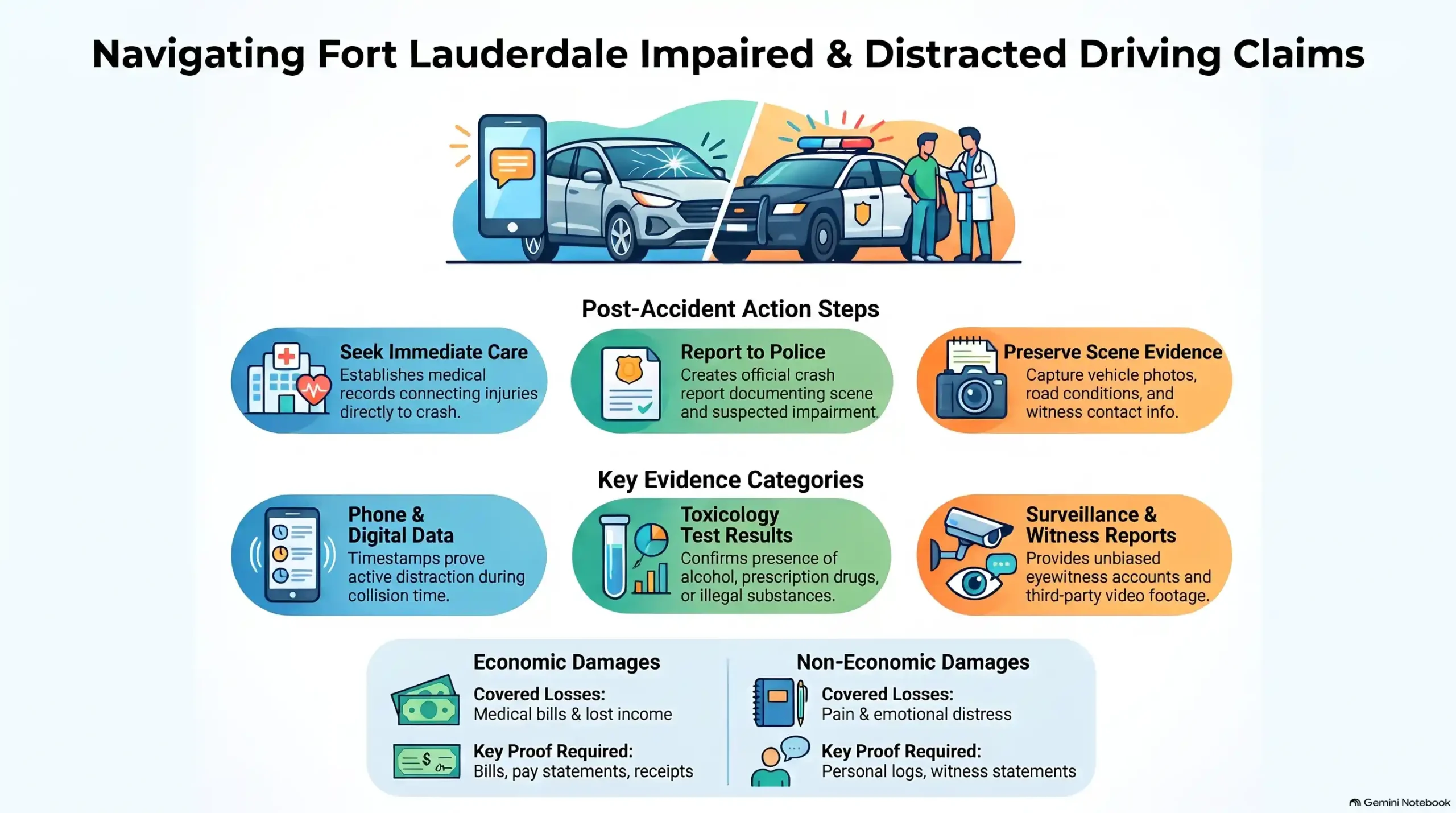
After an impaired or distracted driving crash, injured individuals should seek prompt medical care, even if their symptoms initially seem minor. They should report the collision to law enforcement and make sure an official record is created. Preserve photographs, witness details, and other relevant evidence to document what occurred.
Seek Immediate Medical Care
Even if a crash appears minor, anyone injured in a Fort Lauderdale collision involving an impaired or distracted driver should seek prompt medical care. Emergency evaluation can identify injuries that are not immediately apparent, including head trauma, internal bleeding, or soft-tissue damage. A qualified medical professional can assess the person’s condition, recommend appropriate tests, and provide treatment before symptoms worsen. Prompt care also supports a clear medical record of the injuries and their connection to the collision.
After the initial examination, the injured person should follow the provider’s instructions and attend recommended follow-up appointments. Monitor symptoms because pain, dizziness, confusion, or other effects may appear later. Any new or worsening symptoms warrant timely medical attention. Seeking care protects the injured person’s health and helps family members and caregivers respond responsibly, especially when the person may be unable to recognize or communicate changes.
Report the Crash
When a Fort Lauderdale collision involves suspected impaired or distracted driving, report the crash promptly to law enforcement. A timely Crash Notification allows officers to assess the scene, speak with those involved, and determine whether impaired driving or distraction may have contributed. The injured person or a companion should call 911 when anyone needs emergency care, traffic is obstructed, or a driver may be impaired. Dispatchers should receive the location, number of vehicles, and a clear description of immediate hazards. If the injured person cannot make the call, a witness or another responsible person can report the incident. Roadside Safety remains important while help is on the way; when possible, people should move away from traffic and follow dispatcher instructions. Officers can explain the next steps before leaving the scene.
Preserve Evidence
Preserve evidence as soon as it is safe, since details from an impaired or distracted driving crash may become harder to verify over time. Scene documentation can help establish how the collision occurred and identify contributing conditions. If medically able, the injured person or a companion can photograph vehicle damage, road conditions, traffic signals, visible injuries, and the vehicles’ positions. They should also record the date, time, location, weather, and names and contact details of witnesses. Keep damaged clothing, repair estimates, medical records, and crash-related receipts. Do not alter, discard, or repair relevant items before documenting their condition. Evidence preservation may also involve securing dashcam footage or nearby surveillance recordings before they are overwritten. A lawyer can help request records and preserve relevant evidence.
Don’t Wait. Call Our Florida Personal Injury Lawyers Now!
Critical Evidence in a Fort Lauderdale Car Accident Impaired & Distracted Driving Injury Case
Establishing whether impairment or distraction contributed to a crash requires reliable evidence from multiple sources.
Essential records may include:
- Police and crash reports
- Toxicology and impairment test results
- Phone and other digital records
- Witness statements and surveillance footage
Together, these materials can help clarify what occurred and support an assessment of responsibility.
Police and Crash Reports
Police and crash reports can provide essential evidence in a Fort Lauderdale car accident involving suspected impaired or distracted driving. Officers may document the scene, vehicle positions, road conditions, visible damage, witness statements, and observations about driver conduct. These details can help clarify how the collision occurred and identify evidence that may warrant further review.
Report Accuracy matters because incomplete or incorrect entries can affect how insurers and other parties assess a claim. A careful review may reveal errors, missing witness information, or differences between the report and other available evidence. Record Access is also important: injured people or their representatives may request the report through the appropriate law enforcement agency. Promptly obtaining and preserving this record can support a fair investigation, strengthen accountability, and help those affected pursue appropriate compensation for their injuries and losses.
Toxicology and Impairment Tests
Beyond the information recorded at the scene, toxicology and impairment tests may help determine whether alcohol or drugs affected a driver’s ability to operate a vehicle safely. Blood alcohol concentration results can indicate the amount of alcohol in a person’s system, while field sobriety observations may document coordination, balance, or attention concerns. Drug testing may identify substances, but drug metabolite persistence matters: some metabolites remain detectable after a drug’s impairing effects have passed. As a result, results require careful interpretation alongside collection times, medical records, witness accounts, and other evidence. Testing procedures, sample handling, and laboratory methods may also affect reliability. These findings can help clarify disputed questions about impairment and support a fair assessment of responsibility. Accurate evaluation serves injured people and promotes accountability without treating a test result as conclusive proof of impairment.
Phone and Digital Records
Phone and digital records can show whether a driver used a device or engaged with an application near the time of a Fort Lauderdale car accident. Call logs, text timestamps, and device activity may help establish when a driver interacted with a phone, while app metadata can indicate whether navigation, messaging, or other applications were active. Cell tower records may provide general location information, but they do not necessarily identify a phone’s precise position or prove who was using it. These materials may also help clarify whether the device was active before, during, or after a collision. Preservation is important because digital information can be deleted or overwritten. An attorney may seek relevant records through lawful procedures and assess them alongside other evidence to support a fair evaluation of the injured person’s claim.
Witness and Surveillance Evidence
Witness accounts and surveillance footage can provide independent evidence of how a Fort Lauderdale car accident occurred and whether impairment or distraction may have contributed. Eyewitness credibility depends on factors such as visibility, distance, attention, and consistency with other evidence. A witness may describe erratic driving, phone use, delayed braking, or signs of intoxication before or after a collision. Investigators can also seek surveillance footage from nearby businesses, residences, traffic cameras, or vehicles. Such recordings may show a driver’s conduct, the sequence of events, road conditions, and the impact itself. Footage can be overwritten or deleted, so prompt preservation requests may be important. Careful collection and review of these sources can help clarify disputed facts and support a fair assessment of responsibility, while respecting the needs and well-being of everyone affected.
Long-Term Effects of Fort Lauderdale Car Accident Impaired & Distracted Driving Injuries
Impaired and distracted driving injuries may cause chronic pain and lasting mobility loss, limiting a person’s ability to work or manage daily activities. Some individuals also experience cognitive changes and emotional effects that persist beyond initial treatment. These lasting impairments can require ongoing care and create substantial long-term expenses.
Chronic Pain And Mobility Loss
After a Fort Lauderdale car accident caused by impaired or distracted driving, injuries may lead to chronic pain and lasting mobility loss. Spinal damage, fractures, nerve injuries, and soft-tissue trauma can cause persistent discomfort that interferes with walking, lifting, working, and routine responsibilities. Some people require ongoing treatment, medication, assistive devices, or changes to their homes and daily activities. Chronic pain management may involve coordinated care from physicians and other qualified providers, with treatment plans adjusted as symptoms and functional needs change. Mobility rehabilitation can help injured people rebuild strength, balance, and range of motion, although recovery may be gradual and incomplete. Family members, caregivers, and community support services may assist with transportation, household tasks, and access to care. Documented medical needs can clarify the long-term effects of these injuries.
Cognitive And Emotional Effects
A Fort Lauderdale car accident caused by impaired or distracted driving can have lasting cognitive and emotional effects, particularly when injuries involve the brain or disrupt a person’s sense of safety. A person may experience difficulty concentrating, remembering information, or making decisions, which can affect relationships, education, and work. Emotional changes may include anxiety, depression, irritability, or post-traumatic stress, especially when reminders of the collision trigger distress. These effects can be difficult for families and caregivers, who may need to offer patience and practical support while respecting the injured person’s independence. Medical and mental health professionals can assess symptoms and recommend appropriate treatment. With consistent care and understanding, emotional resilience may strengthen over time, although recovery varies. Recognizing these challenges helps loved ones respond with compassion and encourages informed decisions about the person’s well-being.
Long-Term Care And Expenses
Long-term injuries from impaired or distracted driving crashes in Fort Lauderdale may require ongoing medical care, rehabilitation, or assistance with daily activities. The duration and cost of this support depend on the injuries and how they affect a person’s independence. Treatment may include physician visits, prescription medication, physical or occupational therapy, and assistive equipment. Some individuals also need Home modifications, such as ramps, accessible bathrooms, or widened doorways, to move safely through their residences. In-home assistance may help with bathing, meal preparation, transportation, and other routine tasks when injuries limit mobility or stamina. These needs can place sustained demands on both the injured person and their caregivers. Careful records of treatment, expenses, and functional limitations can help clarify future needs and support informed planning for continued care and recovery.
Proving Liability in Fort Lauderdale Car Accident Impaired & Distracted Driving Injury Cases
Proving liability in a Fort Lauderdale car accident involving impaired or distracted driving requires evidence that the driver’s conduct caused the crash and resulting injuries. Negligence standards generally require showing that a driver failed to use reasonable care and that this failure caused harm. Evidence may include crash-scene photographs, witness accounts, vehicle damage, and police observations. In suspected impairment cases, toxicology results, field sobriety observations, and relevant records may help establish the driver’s condition. For distraction claims, phone records, surveillance footage, and electronic data may show whether the driver was texting, using an app, or otherwise inattentive.
Medical records and qualified professional opinions can connect the collision to specific injuries and document their effects. Investigators may also examine road conditions, traffic signals, and vehicle data to clarify how the crash occurred. Under comparative fault rules, investigators may consider each party’s conduct, and an injured person’s share of responsibility can affect recovery. Careful evidence preservation supports a fair assessment of responsibility and helps protect the injured person’s interests.
Dealing With Insurance Companies After a Fort Lauderdale Car Accident Impaired & Distracted Driving Injury
Once you identify evidence of impaired or distracted driving, communicating with insurance companies becomes an important part of a Fort Lauderdale car accident claim. Insurers may request statements, records, and other information to assess responsibility and damages. Injured people can protect the accuracy of their accounts by providing factual, consistent responses and avoiding speculation about events or medical outcomes.
An insurer’s interests may differ from an injured person’s, particularly when liability or the value of losses is disputed. A prompt settlement offer may not reflect ongoing treatment needs, lost income, or other documented harm. Carefully reviewing the proposed terms can help prevent an uninformed release of claims. Policy limits may also restrict available coverage, even when losses are substantial. If an insurer denies a claim, the injured person can request the reasons in writing and preserve relevant correspondence and records. Clear, organized communication supports fair consideration while helping injured people focus on recovery and the needs of those who depend on them.
What to Expect During a Fort Lauderdale Car Accident Impaired & Distracted Driving Injury Claim Process
A Fort Lauderdale impaired or distracted driving injury claim typically begins with a case evaluation, including the injuries, available records, and crash circumstances. Evidence collection and insurance negotiations follow, and the strength of the documentation shapes the available options. The claim may end in a settlement or go to trial if the parties cannot reach an agreement.
Initial Case Evaluation
During an initial case evaluation, a Fort Lauderdale car accident lawyer reviews how impaired or distracted driving may have contributed to the collision and assesses the resulting injuries and losses. The initial consultation gives the injured person an opportunity to explain the incident, describe medical concerns, and identify practical needs, including support with treatment and daily responsibilities. The lawyer may ask about the crash circumstances, symptoms, missed work, and current recovery outlook to understand the claim’s scope. This discussion also helps clarify the legal process, likely challenges, and decisions that may require the client’s attention. A preliminary case valuation considers available information about injury severity, financial losses, and potential responsibility. It is not a guaranteed outcome, but it can help the client make informed choices, pursue fair compensation, and focus on recovery and family obligations.
Evidence Collection
What evidence can establish that impaired or distracted driving contributed to a Fort Lauderdale collision? A careful investigation may identify police reports, witness accounts, photographs, and nearby surveillance footage that clarify how the crash occurred. Officers’ observations, field sobriety test records, and toxicology results may help document suspected impairment. Phone records, vehicle data, and app activity may reveal whether a driver was using a device or failed to respond in time.
Prompt collection can matter because video may be overwritten and electronic records can change or disappear. Data Preservation measures help secure relevant materials before they are lost. A documented Evidence Chain records who collected, handled, and stored each item, supporting its reliability. Investigators may also inspect vehicles and roadway conditions. These steps can help establish facts and support accountability for people harmed in the collision.
Insurance Negotiations
Once investigators gather liability evidence, insurance negotiations typically focus on whether the impaired or distracted driver caused the Fort Lauderdale collision and the extent of the resulting losses. The insurer may review police reports, witness accounts, medical records, and proof of lost income before evaluating the claim. A claimant’s representative can present documented expenses, anticipated treatment needs, and how injuries affect daily responsibilities. The insurer may question fault, the seriousness of injuries, or whether treatment was necessary, so clear records and consistent explanations matter. Policy limits can restrict the funds available under a driver’s coverage, even when losses are substantial. Florida law also requires insurers to handle claims fairly; unreasonable conduct may raise bad-faith concerns. Careful communication helps protect the injured person’s interests while keeping the process focused on documented facts.
Settlement Or Trial
After insurance negotiations, a Fort Lauderdale car accident claim involving impaired or distracted driving may resolve through a settlement or proceed to trial. A settlement can provide compensation for medical expenses, lost income, and other documented losses without requiring a court decision. Settlement Timing depends on the severity of injuries, available evidence, and whether future care needs are understood. A careful review helps confirm that any proposed amount reflects the claimant’s circumstances and supports recovery.
If the parties cannot agree, the case may proceed to trial, where each side presents evidence and arguments. A judge or jury evaluates responsibility and damages, and Jury Verdicts may differ from settlement offers. Trial preparation can involve witness testimony, medical records, and expert opinions. In either path, a claimant’s decisions may depend on financial needs, accountability, and the ability to support family or community responsibilities.
Compensation for Fort Lauderdale Car Accident Impaired & Distracted Driving Injury Damages
When an impaired or distracted driver causes a Fort Lauderdale crash, injured people may seek compensation for collision-related losses. Available recovery depends on the evidence, the injuries, and the impact on daily life. Medical expenses may include emergency treatment, hospital care, rehabilitation, medication, and follow-up services. Records and provider assessments can show which costs relate to the crash and whether further care is needed.
An injured person may also seek payment for Lost wages when injuries prevent work or reduce earning capacity. Documentation from employers and medical providers can help establish the time missed and any lasting work limitations. Vehicle damage may include reasonable repair costs or the vehicle’s value if it cannot be repaired. Other collision-related expenses, such as transportation during repairs, may also be considered if records support them.
Careful documentation clarifies losses and supports a fair assessment. A claim may address both immediate needs and continuing effects, based on reliable evidence and applicable law.
Economic vs Non-Economic Damages in Fort Lauderdale Car Accident Impaired & Distracted Driving Cases
In impaired and distracted driving cases, damages may include economic losses, such as medical expenses and lost income, as well as non-economic harm, including pain and emotional distress. These categories reflect different collision impacts and may require different types of evidence. Clear documentation and credible testimony can help establish the extent and value of each loss.
Economic Damages
Economic damages are measurable financial losses from a car accident, including medical expenses, lost income, and the cost to repair or replace a vehicle. In Fort Lauderdale, these losses may follow a crash involving an impaired or distracted driver. Recoverable medical costs can include emergency care, hospital treatment, medication, rehabilitation, and other reasonable expenses related to injuries. Lost wages may cover income missed during recovery, while reduced earning capacity may apply when injuries limit a person’s future ability to work. Property losses can include vehicle repairs, replacement costs, and damage to personal items. Receipts, medical records, pay statements, repair estimates, and employment documentation can help establish the amount of these losses. Careful records support a clear assessment of financial needs and help guarantee that claims reflect documented costs.
Non-Economic Damages
Beyond documented financial losses, non-economic damages address the personal effects of injuries caused by an impaired or distracted driver. These damages may reflect physical pain, emotional distress, and disruption to a person’s daily life. Unlike medical bills or lost income, they do not have a fixed monetary value, yet they recognize that recovery involves more than financial costs. A crash may limit a person’s ability to care for family, contribute at work, or participate in community activities. Loss of enjoyment can arise when injuries prevent someone from pursuing hobbies, maintaining relationships, or completing ordinary routines. In Fort Lauderdale cases, the nature and extent of these effects depend on the circumstances and applicable law. Such compensation acknowledges the human impact of negligent driving while remaining distinct from economic damages.
Proving Your Losses
After identifying the personal effects of an impaired or distracted driving crash, an injured person must support each claimed loss with evidence. Economic damages may include medical bills, prescription costs, lost wages, and reduced future earning capacity. Records from providers, employers, and financial institutions can help establish these amounts. If injuries prevent a return to prior work, vocational rehabilitation assessments may document necessary retraining and its costs. A person may also recover household assistance expenses when they can no longer manage necessary tasks independently. Non-economic damages address harms without a fixed price, including pain, emotional distress, and reduced enjoyment of life. Personal accounts, treatment notes, and testimony from people familiar with the injured person’s daily life may help demonstrate these effects. Organized, consistent documentation strengthens a claim and supports a fair assessment of losses.
Don’t Wait. Call Our Florida Personal Injury Lawyers Now!
When a Fort Lauderdale Car Accident Impaired & Distracted Driving Injury Case Goes to Trial vs Settlement
Whether an impaired or distracted driving injury claim proceeds to trial or settles depends on the strength of the evidence, the extent of the injuries, and the parties’ willingness to resolve the dispute. Settlement can provide a more predictable resolution and avoid the demands of a courtroom, but the proposed amount must fairly account for the injured person’s documented losses and ongoing needs. Settlement timing may depend on whether medical treatment has progressed enough to assess the injury’s likely effects. Accepting an offer too early can leave important needs unaddressed, while waiting may prolong uncertainty.
If the parties cannot agree, a trial allows a judge or jury to evaluate the evidence and determine responsibility and compensation. Trial strategy may involve presenting witness accounts, medical records, and other evidence clearly and logically. The process can take longer and carries uncertainty, so each option requires careful consideration. The injured person’s priorities, circumstances, and readiness for resolution help guide the decision.
Florida Laws That May Affect Your Fort Lauderdale Car Accident Impaired & Distracted Driving Case
Florida laws governing impaired and distracted driving can affect how investigators examine and resolve a Fort Lauderdale car accident claim. These rules help establish what conduct may have contributed to a collision and what evidence may be relevant. Their application can support a fair assessment of responsibility and the harm suffered by those involved.
- Florida DUI laws prohibit driving while impaired and set standards for alcohol-related offenses. A criminal charge may provide relevant evidence, but it does not alone determine civil liability.
- Florida’s distracted driving statutes restrict certain uses of wireless devices while driving. Phone records, witness accounts, and available video may help show whether prohibited conduct occurred.
- Florida follows a comparative negligence system. An injured person’s share of responsibility may reduce recoverable damages, so evidence about each driver’s actions matters.
- Drivers must carry required insurance coverage. Policy terms and available coverage can affect how insurers evaluate compensation after a crash.
These legal principles can guide investigations and help claimants understand the issues that shape a potential recovery.
The Statute of Limitations for Fort Lauderdale Car Accident Impaired & Distracted Driving Injury Cases
Because filing deadlines can determine whether an injured person may pursue compensation, the statute of limitations is a key consideration in a Fort Lauderdale car accident case involving impaired or distracted driving. Under Florida law, a person generally has two years from the date of a negligence-based crash to file a personal injury lawsuit. Missing that deadline may prevent recovery, even when the other driver’s impairment or inattention appears clear.
Deadline calculations can depend on the claim’s circumstances, including when you discovered an injury and whether a potential defendant is a government entity. Claims involving government agencies may require earlier notice and follow separate procedures. Certain filing exceptions can also affect the time limit, such as cases involving minors or a defendant who cannot be located, but exceptions are narrow and fact-specific.
Prompt attention to applicable deadlines helps preserve a fair opportunity to seek accountability and support recovery. Assess each injured person’s circumstances carefully, because relying on a general deadline may risk losing important legal rights.
How a Fort Lauderdale Car Accident Impaired & Distracted Driving Lawyer Can Help You
After addressing filing deadlines, an injured person may need help establishing how impaired or distracted driving caused the crash and resulting harm. A Fort Lauderdale lawyer can organize evidence, assess losses, and explain available legal options. A careful Legal strategy may help protect the injured person’s interests while supporting a fair process for everyone affected.
Counsel may assist by:
- Gathering crash reports, witness accounts, photographs, and available video to clarify how the collision occurred.
- Seeking phone records, toxicology results, or other relevant evidence to evaluate suspected distraction or impairment.
- Reviewing medical records, treatment costs, lost income, and future needs to document the full impact of injuries.
- Communicating with insurers and preparing claims while keeping the injured person informed about decisions and risks.
Through attorney advocacy, counsel can present evidence clearly, address disputed facts, and pursue appropriate compensation under Florida law. This work may also reduce the burden on family members and allow injured people to focus on recovery, daily responsibilities, and supporting those who depend on them.
When to Contact a Fort Lauderdale Car Accident Impaired & Distracted Driving Lawyer
Prompt legal guidance may matter when a crash involves suspected impairment or distraction, especially if injuries require ongoing care or the cause of the collision is disputed. Early consultation can help an injured person understand which records to preserve, what deadlines may apply, and how to communicate carefully with insurers while treatment continues. It may also help protect information that could clarify what happened, including witness details, photographs, and available reports.
A person may want to contact counsel soon after receiving medical attention, especially when another driver’s conduct appears to have contributed to the collision or responsibility is contested. Early contact does not require certainty about every fact; you can discuss questions as evidence develops. When selecting an attorney, consider their experience with injury claims, communication style, and approach to serving clients and their families. A timely, informed choice can support orderly decision-making while the injured person focuses on recovery and household needs.
Why You Need an Experienced Fort Lauderdale Car Accident Impaired & Distracted Driving Lawyer
An experienced Fort Lauderdale car accident lawyer can help injured people assess evidence of impaired or distracted driving and understand how it may affect a claim. Such evidence may include crash reports, witness accounts, phone records, surveillance footage, and toxicology findings. An attorney can identify relevant information, preserve evidence before it is lost, and address disputes about how the collision occurred.
Attorney experience can also help injured people understand Florida’s insurance and liability rules, organize medical and financial documentation, and communicate with insurers without overlooking important details. A lawyer can explain available options and the potential consequences of accepting a settlement before the full extent of injuries is known.
A sound Case strategy is tailored to the facts, the harm suffered, and the evidence available. By evaluating responsible parties and damages, counsel can present a clear account of the loss and pursue appropriate compensation. This support allows injured people to focus on recovery while their legal interests receive careful attention.
How to Choose the Right Fort Lauderdale Car Accident Impaired & Distracted Driving Lawyer for Your Case
Choosing the right Fort Lauderdale car accident lawyer for an impaired or distracted driving case requires more than reviewing credentials. A careful selection process can help injured people pursue accountability while letting them focus on recovery. Attorney credentials should include experience handling collisions involving suspected intoxication, phone use, or other forms of driver inattention. A lawyer should also understand how to preserve evidence, assess damages, and address disputes with insurers.
Prospective clients can ask how the attorney would investigate the crash, who would manage the case, and what outcomes may be realistic. Clear answers help you see whether the lawyer’s communication style fits your needs. Regular updates, prompt responses, and clear explanations can support informed decisions throughout the process.
It is also useful to review the proposed fee arrangement and confirm how costs are handled. Choose a qualified professional who treats the client with respect and approaches the case with diligence and care.
About The Law Offices of Anidjar & Levine
For those evaluating legal representation after a Fort Lauderdale car accident, The Law Offices of Anidjar & Levine provides legal services to injured people and their families.
The firm represents clients pursuing compensation after collisions involving impaired or distracted driving and helps them understand the steps involved in a claim.
The firm’s history reflects a practice focused on injury law and client advocacy.
Its attorneys investigate accident circumstances, gather relevant records, communicate with insurers, and present claims based on available evidence.
Each matter depends on its specific facts, and outcomes cannot be guaranteed.
The firm’s role includes explaining legal options and helping clients make informed decisions during a demanding period.
Community involvement is also part of the firm’s public presence.
Through outreach and service initiatives, it seeks to support people and organizations in the communities where it works.
For individuals considering representation, clear communication, careful case preparation, and attention to a client’s needs can help define the attorney-client relationship.
Prospective clients may contact the firm to discuss their circumstances and available options.

Frequently Asked Questions
Can I Pursue a Claim if the Impaired Driver Was Never Arrested?
Yes, an injured person may pursue a civil claim even if the impaired driver was never arrested. An arrest isn’t required to establish liability, and Civil evidence standards differ from those used in criminal proceedings. Relevant proof may include crash reports, medical records, toxicology results, surveillance footage, and independent witness accounts. A prompt investigation can preserve evidence and clarify how the driver’s conduct caused the collision and resulting losses. The claim’s outcome depends on the evidence available.
What if the At-Fault Driver Was Using a Prescription Medication?
A driver may be liable even when impairment resulted from a prescribed medication rather than alcohol or illegal drugs. Prescription drug impairment can occur when a medication causes drowsiness, slowed reactions, or reduced judgment, particularly if the driver ignored warnings or drove despite known effects. Evidence of medication interactions, including medical records and pharmacy information, may help establish impairment and causation. The injured person may pursue compensation if evidence shows the driver’s conduct contributed to the collision. A careful investigation can clarify responsibility.
Can Passengers in the At-Fault Vehicle File Injury Claims?
Yes. Passengers injured in a crash may pursue claims against the at-fault driver, including a driver in their own vehicle, for losses such as medical expenses, lost income, and pain and suffering. Passenger liability claims depend on evidence of negligence and the harm caused. Comparative negligence defenses may reduce compensation if a passenger’s conduct contributed to the injury, though merely riding with an impaired driver does not automatically bar recovery. Legal review can clarify available remedies.
Does Florida’s No-Fault System Cover Injuries Caused by Distracted Driving?
Yes. Florida PIP coverage generally pays a portion of an injured person’s medical expenses and lost income after a crash, regardless of whether distracted driving caused it. Benefits are subject to policy limits, eligibility rules, and requirements for prompt treatment. No-fault exceptions may allow an injured person to pursue compensation from the at-fault driver when injuries meet Florida’s legal threshold. Evidence of distraction may help establish fault in such a claim.
Can I Recover Damages if I Was Injured by an Impaired Driver While Cycling?
Yes, an injured cyclist may recover damages when an impaired driver caused the collision. Cyclist injury compensation may include medical expenses, lost income, property damage, and pain and suffering, depending on the facts and applicable Florida law. Evidence such as police reports, witness statements, and toxicology results may support an impaired driver liability claim. The cyclist’s own conduct and available insurance coverage can affect recovery, so prompt legal guidance may help protect a claim.
—————————
Impaired and distracted driving crashes can cause serious injuries, financial strain, and uncertainty about what comes next.
A Fort Lauderdale Personal Injury Lawyer can investigate the collision, identify responsible parties, preserve evidence, and explain available legal options.
Prompt action can help protect key records and meet deadlines.
The Law Offices of Anidjar and Levine can review the circumstances of an injury claim and discuss practical next steps, helping victims make informed decisions about pursuing compensation.

