

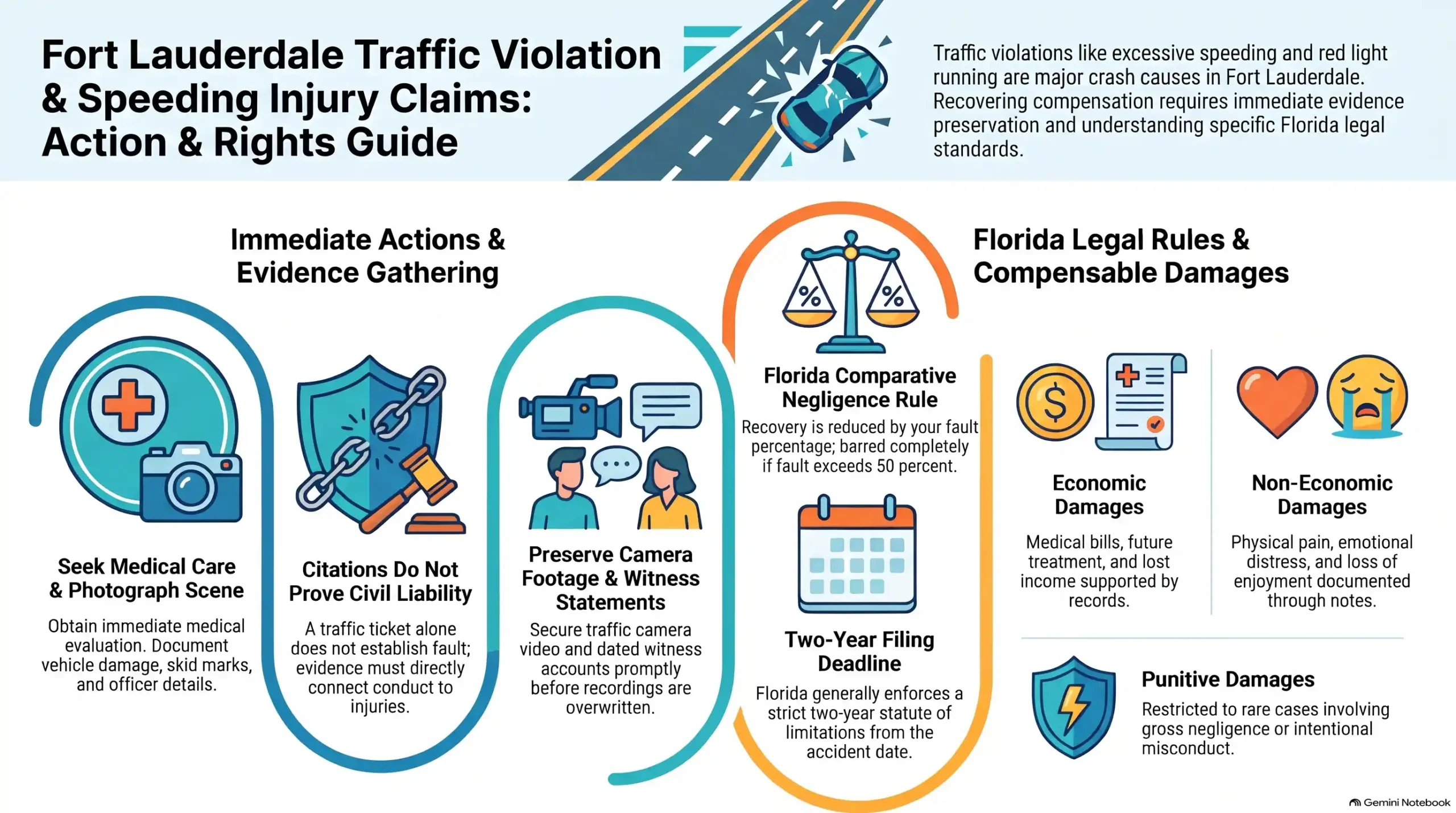
The Law Offices of Anidjar and Levine can investigate whether speeding, reckless driving, distraction, or failure to yield contributed to a Fort Lauderdale car accident. Evidence may include crash reports, witness accounts, photographs, traffic camera footage, and vehicle damage. A traffic citation alone does not establish civil liability; the evidence must connect a driver’s conduct to the crash and resulting injuries. Counsel can explain potential compensation, insurance issues, and applicable deadlines. Learn more from a Fort Lauderdale Personal Injury Lawyer. The following sections outline essential steps and considerations for an injury claim.
Main Takeaways
- A Fort Lauderdale car accident lawyer can review crash reports, medical records, witness accounts, and insurance communications.
- Speeding, reckless driving, unsafe lane changes, and failure to yield may support a negligence claim when linked to the crash and injuries.
- A traffic citation alone does not determine civil fault or compensation; responsibility depends on the evidence and circumstances.
- Preserve photos, witness details, officer information, and available camera footage promptly, since recordings may be overwritten.
- Seek medical care promptly, document symptoms and expenses, and ask prospective counsel about experience, fees, communication, and consultation options.


How We Can Help With Your Fort Lauderdale Car Accident Traffic Violations & Speeding Injury Claim
When a speeding or other traffic violation contributes to a Fort Lauderdale crash, an injured person may face medical expenses, lost income, and questions about who is legally responsible. A law firm can help by organizing the information needed to assess the claim and pursue a fair resolution. During Claim evaluation, counsel may review crash reports, medical records, insurance correspondence, and available witness accounts. This review can clarify the documented losses, identify unanswered questions, and help the injured person understand possible next steps.
A legal team can also communicate with insurers, track deadlines, and explain settlement proposals in clear terms. Its legal strategy should reflect the person’s circumstances, supported evidence, and stated priorities rather than rely on assumptions. When appropriate, counsel may seek additional records or consult qualified professionals to address disputed issues. Throughout the process, careful guidance can reduce avoidable burdens and help clients make informed decisions. The goal is to protect their interests while treating each person’s concerns with respect and care.
OUR CONSULTATIONSARE FREE
START YOUR FREE CASE REVIEW

Understanding Fort Lauderdale Car Accident Traffic Violations & Speeding Injury Cases
Understanding a Fort Lauderdale injury case involving speeding or another traffic violation requires examining how the driver’s conduct contributed to the crash and resulting harm. A careful review considers available evidence, including collision reports, witness accounts, photographs, and medical records. These materials can help establish what happened, whether a traffic rule was violated, and how the impact affected the injured person.
A citation may be relevant, but it does not alone determine civil responsibility or the value of an injury claim. Traffic citation consequences can differ from the legal findings in a personal injury matter, where the evidence and applicable standards guide the analysis. Investigators may also assess whether roadway design defects, visibility conditions, or other environmental factors contributed to the collision. This broader review helps confirm that responsibility is evaluated fairly and that injured people receive informed guidance. Clear explanations can support families as they consider treatment, documentation, and practical next steps during a difficult period.
Common Causes of Fort Lauderdale Car Accident Traffic Violations & Speeding
Common causes of Fort Lauderdale traffic violations and speeding-related crashes include excessive speed and reckless driving, which can reduce a driver’s ability to respond safely. Distraction and failure to yield may also lead to collisions when drivers overlook signals, pedestrians, or other vehicles. Running red lights creates additional hazards at intersections and can result in serious crashes.
Speeding and Reckless Driving
Speeding and reckless driving are frequent causes of serious traffic collisions in Fort Lauderdale, where heavy traffic, busy intersections, and changing road conditions demand careful attention. Excessive speed reduces a driver’s ability to respond to hazards and increases impact force when a crash occurs. Aggressive actions, such as unsafe passing or tailgating, can place passengers, pedestrians, and other motorists at risk. Florida law may treat driving that shows a willful or wanton disregard for safety as reckless, with consequences that can include fines, license penalties, or criminal charges. The specific reckless driving penalties depend on the circumstances and any resulting injuries or property damage. A careful review of the citation, evidence, and roadway conditions may identify valid speeding ticket defenses and clarify options for addressing an allegation responsibly.
Distracted Driving
Distracted driving can contribute to Fort Lauderdale traffic collisions when a driver’s attention shifts from the road to a phone, navigation system, passengers, or other activity. Even brief inattention can delay a driver’s response to changing traffic conditions and increase the risk of a crash. Texting and handheld calls may involve visual, manual, and mental distractions, while Cognitive Distraction can occur when a driver focuses on a conversation or task instead of driving. Hands-free technology may reduce the need to handle a device, but it does not eliminate mental distraction or guarantee safe driving. Drivers who limit device use and stay attentive help protect passengers, pedestrians, and other road users. When a collision occurs, evidence of distraction may help clarify how the incident happened and who may be responsible.
Failure to Yield
When drivers fail to yield as required, they can create dangerous conflicts at intersections, crosswalks, and merging lanes in Fort Lauderdale. Right-of-way rules help drivers determine who must proceed first, but hurried decisions or inattention can lead to collisions. Drivers turning across traffic should let approaching vehicles pass, while those entering a roadway should yield to traffic already on it. At pedestrian crossings, motorists must watch for people walking and yield when required, allowing them to cross safely. Failure to yield can cause serious injuries, particularly for pedestrians, cyclists, and occupants of smaller vehicles. Careful observation, patience, and compliance with traffic signs and markings help protect everyone using the road. When a collision occurs, identifying each driver’s actions can clarify how the crash happened and whether a traffic violation contributed.
Running Red Lights
Running a red light can cause severe collisions at busy Fort Lauderdale intersections, where cross traffic and pedestrians may enter as the signal changes. Drivers may proceed unlawfully because of distraction, impatience, speeding, or misjudgment of a changing signal. These choices can endanger people traveling by car, bicycle, or on foot, particularly near schools and commercial areas.
After a crash, investigators may review traffic signals, witness accounts, vehicle damage, and available video to determine how the collision occurred. Signal timing analysis can help establish whether the light changed before a vehicle entered the intersection. Red light camera disputes may involve questions about image accuracy, vehicle identification, or whether the driver had a reasonable opportunity to stop. Careful review can support fair decisions, help injured people pursue appropriate remedies, and promote safer streets for the community.
Don’t Wait. Call Our Florida Personal Injury Lawyers Now!


Legal Rights of Fort Lauderdale Car Accident Traffic Violations & Speeding Injury Victims
People injured in Fort Lauderdale car accidents caused by speeding or other traffic violations may have the right to seek compensation from the responsible driver. A claim may address documented losses and the personal consequences of an injury, subject to applicable law and available evidence. Those harmed can protect their interests while focusing on recovery and family responsibilities.
Potential damages may include:
- Medical expenses and necessary future care
- Lost income and reduced ability to earn
- Physical pain and lasting limitations
- Emotional distress affecting daily life
- Damage to a vehicle or other property
Comparative negligence rules may reduce compensation if an injured person shares responsibility for the collision. The degree of fault and supporting evidence can as a result matter. When the at-fault driver lacks insurance or sufficient coverage, uninsured motorist coverage may provide another route to benefits, depending on the policy. Promptly preserving records, bills, photographs, and witness information can help clarify a claim. Legal guidance can explain deadlines, coverage questions, and available options, allowing injured people to make informed decisions without overlooking the needs of those who depend on them.
Why Do Fort Lauderdale Car Accident Traffic Violations & Speeding Injuries Happen?
Fort Lauderdale car accidents involving speeding or other traffic violations often occur when drivers disregard traffic laws or fail to adjust to road conditions. Excessive speed reduces reaction time and increases collision force, while running red lights, unsafe lane changes, and following too closely can put nearby motorists, cyclists, and pedestrians at risk. Distraction, fatigue, impairment, and aggressive driving may also lead to violations that cause serious injuries.
Conditions beyond a driver’s control can also contribute. Road design hazards, including unclear signs, obstructed sightlines, confusing intersections, and inadequate lighting, may make safe decisions more difficult. Vehicle defects, such as faulty brakes or worn tires, can prevent a driver from responding effectively, even when they drive carefully. Poor weather and heavy traffic can further increase danger when drivers fail to slow down or maintain a safe distance. Understanding these contributing factors can help communities support safer roads and recognize how preventable conduct and hazardous conditions may combine to cause harm.
What Should You Do After a Fort Lauderdale Car Accident Involving Traffic Violations & Speeding?
After a Fort Lauderdale crash involving a traffic violation or speeding, injured individuals should seek medical attention promptly, even if their symptoms appear minor. They should document the scene, injuries, and relevant communications to preserve important evidence. Consulting a lawyer can help clarify legal options and protect their interests.
Seek Medical Attention
Even when injuries seem minor, anyone involved in a Fort Lauderdale car accident should seek prompt medical attention. Some conditions, including concussions and internal injuries, may not produce obvious symptoms immediately. A timely evaluation can identify problems early and help prevent complications.
If symptoms are severe or worsening, the injured person should call emergency services or go to an Emergency room without delay. For less urgent concerns, a prompt appointment with a physician can establish an appropriate course of care. The patient should describe all symptoms, explain when they began, and follow the clinician’s instructions.
When further evaluation is needed, the physician may refer the patient to a medical expert. Consistent follow-up supports recovery and helps make certain new or persistent symptoms receive attention. Prompt care also enables injured people to make informed decisions about their health and treatment.
Document the Accident
When it is safe to do so, documenting the accident can help preserve important details about the collision and any suspected traffic violations or speeding. Scene photographs can show vehicle damage, skid marks, traffic signals, road conditions, debris, and nearby signs. Images should be taken from several angles without entering unsafe areas or delaying emergency care. Notes can record the time, location, weather, direction of travel, and what was observed before and after impact. Vehicle positioning may help clarify how the collision occurred, so photographs should capture each vehicle’s location before it is moved, when circumstances permit. Names and contact information for witnesses can also be recorded, along with the responding officer’s details and any incident number. Accurate, respectful documentation may support a clearer account for everyone affected by the crash.
Contact a Lawyer
A Fort Lauderdale car accident lawyer can help an injured person understand how suspected speeding or other traffic violations may affect a claim. After obtaining medical care and documenting the collision, the injured person can contact counsel to discuss available options. A lawyer may review the crash report, photographs, witness information, and medical records, then explain how evidence could support or complicate a case. Prompt advice can also help preserve records and avoid statements that may be misunderstood by insurers.
Before choosing counsel, the injured person can ask about attorney credentials, experience handling traffic-violation injury claims, and the proposed approach to communication and case expenses. A Free consultation may provide an opportunity to ask questions and assess whether the lawyer’s services fit the person’s needs. Clear guidance can help the injured person pursue fair compensation while protecting personal interests and supporting a timely resolution.
Don’t Wait. Call Our Florida Personal Injury Lawyers Now!
Critical Evidence in a Fort Lauderdale Car Accident Traffic Violations & Speeding Injury Case
Reliable evidence can clarify how a crash occurred, who may be responsible, and how the injuries have affected the victim.
Essential records and accounts may include:
- Police crash reports
- Traffic camera footage
- Witness statements
- Medical records
- Medical bills
Together, these materials can preserve vital details and help establish the full impact of the collision.
Police Crash Reports
Police crash reports can provide essential evidence in a Fort Lauderdale car accident involving alleged speeding or other traffic violations. Officers may document the collision location, vehicle positions, road conditions, statements, observed damage, and citations issued. These details can help clarify how the crash occurred and identify issues requiring further investigation. However, a report is not a final determination of fault, and it may contain incomplete or disputed information. Injured people and their representatives should review the report carefully and compare its account with available records and witness statements. Report timelines may vary, so obtaining a copy promptly can support timely case preparation. If factual errors appear, report corrections may be requested through the appropriate agency, although changes are not guaranteed. Careful review can help protect an injured person’s interests and support an accurate assessment of responsibility.
Traffic Camera Footage
When available, traffic camera footage can provide an objective record of events leading up to a Fort Lauderdale car accident involving alleged speeding or other traffic violations. Video may show vehicle positions, traffic signals, lane changes, and the timing of a collision. These details can help clarify how a crash occurred and whether a reported violation contributed to injuries.
Camera preservation is important because public and private systems may overwrite recordings after a limited period. Prompt requests can help secure relevant footage before it is lost. The recording’s source, date, time, and handling should also be documented. Footage authentication helps establish that a video is complete, accurate, and tied to the location and incident in question. Careful review may support a fair assessment of responsibility and help those affected pursue appropriate remedies.
Witness Statements
Alongside traffic camera footage, witness statements can help explain how a Fort Lauderdale crash involving alleged speeding or other traffic violations occurred. Independent observers may describe vehicle speed, lane changes, traffic signals, road conditions, and the moments before impact. Their accounts can help clarify disputed details and support a careful review of how the collision unfolded.
Witness credibility depends on factors such as the observer’s location, visibility, attention, and consistency. Investigators may compare each account with physical evidence and other available records. Prompt statement preservation is important because memories can fade, and contact information may become difficult to obtain. A dated, detailed account can record what the witness personally saw without speculation. Respectful interviews also help preserve reliable information while recognizing that witnesses may be affected by a distressing event. These statements can help evaluate responsibility and identify evidence that serves the interests of everyone involved.
Medical Records and Bills
Medical records and bills are vital evidence in a Fort Lauderdale car accident injury case involving alleged speeding or other traffic violations. They document the injuries, treatment, and expenses attributed to the collision, helping clarify how the crash affected the injured person. Prompt medical evaluation can also create a timely record of symptoms and support continuity of care.
Medical Record Organization helps present this evidence clearly. Records may include emergency department notes, diagnostic imaging, physician assessments, prescriptions, therapy reports, and follow-up instructions. Organized documents allow reviewers to compare reported injuries with treatment over time and assess whether care followed medical recommendations.
Billing Discrepancies should be identified and addressed before damages are presented. Itemized statements, payment records, and insurer explanations can help distinguish accurate charges from errors. Careful review supports a reliable account of losses and helps make sure the injured person’s needs receive fair consideration.
Long-Term Effects of Fort Lauderdale Car Accident Traffic Violations & Speeding Injuries
Injuries from traffic violations or speeding crashes may cause chronic pain and limit mobility long after the collision. Survivors may also experience lasting emotional trauma that affects daily activities and relationships. Ongoing treatment and rehabilitation can create long-term medical expenses, making the impact both personal and financial.
Chronic Pain And Mobility
When a Fort Lauderdale crash results from speeding or another traffic violation, the effects may persist long after the initial treatment ends. Injuries to the spine, joints, or soft tissues can cause chronic pain that limits a person’s ability to work, care for family members, and participate in daily activities. Symptoms may fluctuate, requiring continued medical evaluation and a treatment plan tailored to changing needs. Pain management can include physical therapy, medication, injections, or other clinician-directed approaches. When injuries affect balance, strength, or walking, mobility aids such as braces, canes, or wheelchairs may support safer movement and greater independence. These needs can create ongoing expenses and require adjustments at home or work. Careful documentation of symptoms, treatment, and functional limitations can help clarify the lasting impact of a crash.
Lasting Emotional Trauma
The effects of a Fort Lauderdale crash caused by speeding or another traffic violation may extend beyond physical pain and mobility limits. Survivors may experience anxiety, disrupted sleep, irritability, or difficulty concentrating, particularly when driving or encountering traffic situations associated with the collision. Post-traumatic stress can affect daily routines, relationships, and a person’s ability to feel safe, even after visible injuries have recovered. These responses are not signs of weakness; they may reflect the psychological impact of a sudden, frightening event.
Emotional recovery often requires time, understanding, and appropriate support from qualified mental health professionals. Family members, coworkers, and community organizations can help by offering practical assistance without pressuring the survivor to recover on a fixed schedule. Recognizing persistent distress and seeking timely care may help individuals rebuild confidence and participate more fully in work, family life, and community activities.
Ongoing Medical Expenses
Although some crash-related conditions improve with time, serious injuries caused by speeding or other traffic violations may require ongoing medical care. Treatment can include expert appointments, physical therapy, diagnostic testing, assistive devices, and procedures that address complications arising months or years after a collision. These needs may affect a person’s ability to work and maintain daily responsibilities, while placing sustained pressure on household finances.
Future treatment costs can be difficult to estimate, particularly when recovery depends on continued evaluation or changing care plans. Prescription costs may also accumulate, especially when medication is needed for pain, inflammation, or other lasting symptoms. Organized records of medical visits, recommendations, bills, and medication expenses can help clarify the scope of care. A careful assessment of these ongoing needs supports informed planning and helps guarantee injured people can pursue appropriate treatment without overlooking long-term financial effects.
Proving Liability in Fort Lauderdale Car Accident Traffic Violations & Speeding Injury Cases
Establishing liability in a Fort Lauderdale car accident involving speeding or another traffic violation requires evidence connecting the driver’s conduct to the collision and resulting injuries. Investigators may review police reports, witness accounts, photographs, traffic camera recordings, and vehicle damage to determine how the crash occurred. Evidence of Driver conduct, such as excessive speed, failure to yield, or disregard of a traffic signal, can help show that a driver breached a duty of care. However, a violation alone does not establish responsibility; the evidence must also connect that conduct to the collision and the harm suffered.
Accident reconstruction may clarify vehicle speeds, positions, braking, and impact sequence. Medical records and qualified professional opinions can help establish that the collision caused specific injuries and related limitations. Each case depends on its facts, including whether another person’s actions contributed to the event. Careful evidence gathering supports a fair assessment of responsibility and helps injured people pursue accountability while protecting the interests of those affected by the crash.
Dealing With Insurance Companies After a Fort Lauderdale Car Accident Traffic Violations & Speeding Injury
After a Fort Lauderdale crash involving alleged speeding or another traffic violation, insurance companies may investigate the collision, assess fault, and evaluate claimed losses. Their representatives may request statements, medical records, repair estimates, and other information. Injured people can respond accurately while avoiding speculation about events they did not witness. Careful Policyholder communication helps preserve a clear record and reduces misunderstandings. Written correspondence, copies of submitted documents, and call notes can support organized communication with insurers.
Coverage terms, reporting deadlines, and cooperation requirements may affect how a policy applies. Missing a deadline, providing inconsistent details, or withholding requested information without explanation can trigger claim denial, depending on the policy and circumstances. A traffic citation may inform an insurer’s review, but it does not, by itself, resolve every question of coverage or responsibility. People assisting an injured neighbor or family member can help maintain records and encourage timely, truthful responses. Legal guidance may clarify policy obligations and protect the injured person’s interests during insurer communications.
What to Expect During a Fort Lauderdale Car Accident Traffic Violations & Speeding Injury Claim Process
A Fort Lauderdale injury claim typically begins with reporting the accident and gathering evidence, including photographs, witness details, and relevant records. The injured person then files a claim outlining the injuries and losses, while insurers review the available documentation. The process may conclude through a negotiated settlement or, if the parties cannot agree, further legal proceedings.
Reporting The Accident
Prompt reporting helps preserve vital evidence and creates an official record of a Fort Lauderdale car accident involving an alleged traffic violation or speeding. After a crash, drivers should contact law enforcement when required and request assistance if anyone is injured or traffic is obstructed. An officer’s report may document the circumstances and identify potential violations, but it does not determine civil liability. Florida reporting deadline rules may require a driver to notify law enforcement promptly when a crash involves injury, death, or qualifying property damage. Drivers should also meet applicable exchange requirements by providing identifying, vehicle, and insurance information to the other parties. Accurate, consistent reporting helps protect everyone’s interests and supports a fair claims process. Those involved should notify their insurers promptly and avoid speculation when describing the incident.
Gathering Evidence
Thorough evidence gathering can clarify how a Fort Lauderdale crash occurred and whether speeding or another traffic violation contributed to the injuries. Investigators may review the police report, witness accounts, photographs, and roadway conditions to establish a reliable sequence of events. They can also examine vehicle damage, skid marks, traffic signals, and available surveillance footage. Evidence preservation is important because physical traces and recordings may be lost, altered, or overwritten. Medical records can document the nature and progression of injuries, while repair estimates may help show the force of impact. Digital forensics may assist in retrieving relevant data from vehicle systems, phones, or nearby cameras, subject to applicable privacy rules. Careful documentation helps guarantee that evidence is organized, credible, and available for later evaluation by the parties involved.
Filing An Injury Claim
Once the available evidence has been reviewed, an injured person may begin the claim process by notifying the responsible driver’s insurer and submitting information about the crash, alleged traffic violations, and resulting injuries. The insurer may request medical records, treatment details, proof of expenses, and statements describing how the collision affected daily activities. Accurate, consistent documentation helps the claim handler assess liability and damages without overstating or minimizing the harm. Claim filing deadlines should be checked promptly because statutory limits may restrict how long an injured person has to pursue compensation. A lawyer can organize records, communicate with the insurer, and explain procedural requirements while protecting the claimant’s interests. A demand letter strategy may outline the facts, supporting evidence, injuries, and documented losses, providing a clear basis for the insurer’s review.
Resolving The Claim
After the insurer reviews the claim materials, the parties may negotiate a settlement based on evidence of fault, the traffic violations involved, and the documented injuries and losses. During Demand negotiations, the injured person or representative may present medical records, wage documentation, repair estimates, and other proof supporting the requested compensation. The insurer may accept the demand, reject it, or propose a different amount. Careful review helps make certain that any offer accounts for ongoing treatment, future expenses, and the effect of injuries on daily responsibilities and the ability to serve others.
If negotiations do not produce a fair resolution, the claimant may consider filing a lawsuit. A settlement should be evaluated before settlement approval, including its effect on liens and outstanding medical bills. Once accepted and signed, the agreement generally ends the claim.
Compensation for Fort Lauderdale Car Accident Traffic Violations & Speeding Injury Damages
When a traffic violation or excessive speed causes a Fort Lauderdale crash, injured victims may seek compensation for losses supported by evidence. A claim may address the harm caused by negligent driving, including injuries that require treatment, disrupt daily activities, or limit a person’s ability to work. Medical records, crash reports, witness statements, and other documentation can help establish how the violation contributed to the collision and the resulting harm.
Florida law may also permit recovery when a crash causes a fatal injury. In a Wrongful Death case, eligible survivors or the estate may pursue damages under applicable statutes, with the available recovery depending on the circumstances and the claimant’s relationship to the deceased. Punitive Damages may be considered in limited cases involving conduct that meets Florida’s legal standard for intentional misconduct or gross negligence; they are not automatic simply because a driver was speeding. Careful evaluation can help confirm that a claim reflects the documented consequences and applicable legal requirements.
Economic vs Non-Economic Damages in Fort Lauderdale Car Accident Traffic Violations & Speeding Cases
Economic damages may include medical expenses, lost income, and other measurable financial losses caused by a Fort Lauderdale car accident. Non-economic damages address less quantifiable harm, such as pain, emotional distress, and reduced quality of life. Establishing either category requires evidence that connects the claimed losses to the collision and supports their value.
Economic Damages
A speeding or other traffic violation may establish how a Fort Lauderdale crash occurred, but compensation depends on the losses the injured person can prove. Economic damages address measurable financial harm caused by the collision and resulting injuries. They may include reasonable medical expenses, rehabilitation costs, prescription charges, and necessary transportation to treatment. Records such as bills, receipts, employment documents, and provider reports can help substantiate these amounts.
Lost wages may be recoverable when injuries prevent a person from working during treatment or recovery. If the injuries limit future work or reduce income over time, diminished earning capacity may also be considered. Calculating that loss can require evidence of the person’s work history, expected career path, and medical restrictions. Careful documentation helps present a clear account of financial needs and supports a fair assessment of the resources required for recovery.
Non-Economic Damages
Beyond documented financial losses, injured people may seek non-economic damages for the personal effects of a Fort Lauderdale car accident. These damages address harms without a fixed price, including physical discomfort, emotional distress, and changes to daily life. Pain and Suffering may reflect the ongoing physical pain and mental strain caused by injuries, treatment, or recovery. Loss of Enjoyment may apply when an injured person can no longer participate in hobbies, family activities, or other meaningful parts of life as before. Unlike medical bills or lost wages, non-economic damages are not calculated from a direct financial total. Their purpose is to recognize the human impact of an accident and support a fair recovery. A traffic violation or speeding allegation may be relevant to the case, but it does not alone determine the value of these damages.
Proving Your Losses
Establishing the value of a Fort Lauderdale car accident claim requires evidence that connects the crash to the injured person’s losses. Economic damages include measurable costs such as medical bills, rehabilitation expenses, lost wages, and reduced future earning capacity. Receipts, invoices, pay records, and medical opinions can support these amounts. Careful loss documentation helps show when expenses arose and how they relate to the collision.
Non-economic damages address harms without a fixed price, including pain, emotional distress, and loss of enjoyment of daily activities. Treatment records, personal accounts, and statements from people familiar with the injured person’s circumstances may help explain these effects. Damage valuation considers both categories, the available evidence, and the impact on the person’s life. Accurate, organized records can help insurers, attorneys, and courts evaluate a claim fairly and responsibly.
Don’t Wait. Call Our Florida Personal Injury Lawyers Now!
When a Fort Lauderdale Car Accident Traffic Violations & Speeding Injury Case Goes to Trial vs Settlement
When a Fort Lauderdale car accident injury claim involves speeding or another traffic violation, the parties may resolve it through settlement or present it at trial. Settlement can provide a more predictable resolution, reduce the time and expense of litigation, and allow injured people to focus on recovery and responsibilities to their families or communities. However, an offer should be assessed against the documented injuries, financial losses, and likely outcome at trial.
Trial may become necessary when the parties dispute how the crash occurred, who is responsible, or what compensation is appropriate. Presenting a case requires organized evidence, credible witnesses, and a clear account of how the collision affected the injured person. Trial readiness can also strengthen settlement leverage by showing that a claimant is prepared to proceed if negotiations fail. Neither option guarantees a particular result. The decision depends on the evidence, the available terms, and the injured person’s priorities, guided by informed legal counsel.
Florida Laws That May Affect Your Fort Lauderdale Car Accident Traffic Violations & Speeding Case
The outcome of a Fort Lauderdale car accident claim involving speeding or another traffic violation may depend on how Florida law applies to the evidence. Florida’s statutory speed limits establish maximum speeds, but drivers must also adjust for traffic, weather, visibility, and road conditions. A lawful speed does not necessarily excuse unsafe driving.
Several legal principles may shape a claim and its effect on injured people:
- Traffic citations can support an account of negligent driving, but do not alone decide civil liability.
- Florida comparative negligence may reduce compensation if an injured person shares responsibility.
- Evidence such as crash reports, witness statements, and vehicle data can help clarify disputed conduct.
- A driver’s duty of reasonable care includes protecting passengers, pedestrians, and other road users.
- Clear documentation can help families pursue accountability while supporting recovery and community safety.
Each case turns on its facts and applicable law. Careful evaluation can identify how a violation, speed, or shared fault may affect responsibility and available damages. This process helps injured people make informed decisions and seek fair treatment.
The Statute of Limitations for Fort Lauderdale Car Accident Traffic Violations & Speeding Injury Cases
Because Florida law sets strict deadlines for filing injury claims, someone hurt in a Fort Lauderdale crash involving speeding or another traffic violation should promptly identify the applicable statute of limitations. In many negligence cases, Florida generally allows two years from the date of the crash to file a lawsuit. Missing that deadline can prevent an injured person from seeking compensation in court, regardless of how clearly another driver’s conduct contributed to the collision.
The applicable period may differ depending on the claim, the parties involved, or when an injury was discovered. Deadline Exceptions may apply in limited circumstances, while Tolling Rules can pause or affect the time available under specific conditions. These rules are fact-sensitive and should not be assumed to extend a filing period. A claim involving a government entity may also require earlier notice under separate procedures. Preserving access to legal remedies helps injured people and their families address medical needs and other losses without avoidable delay. Prompt attention to dates supports fair, orderly resolution.
How a Fort Lauderdale Car Accident Traffic Violations & Speeding Lawyer Can Help You
After addressing filing deadlines, injured people may need to determine how a lawyer can help protect their interests and pursue compensation. A Fort Lauderdale attorney can review crash reports, traffic citations, medical records, and witness accounts to assess how speeding or another violation contributed to the collision. Through a legal consultation, the injured person can understand available options and the evidence needed to support a claim.
An Attorney case strategy may include:
- Preserving records before important details are lost.
- Challenging inaccurate accounts that could shift blame.
- Documenting treatment costs and the disruption of daily responsibilities.
- Communicating with insurers so injured people can focus on recovery.
- Seeking fair compensation that helps restore stability for families and those who depend on them.
Counsel can also explain how traffic proceedings relate to a civil injury claim, while evaluating liability and damages under Florida law. This guidance can help people make informed decisions and pursue accountability without losing sight of their health, work, and service to others.
When to Contact a Fort Lauderdale Car Accident Traffic Violations & Speeding Lawyer
Prompt legal guidance may be important when a crash involves suspected speeding, a traffic citation, or disputed fault. Contact with a Fort Lauderdale car accident traffic violations and speeding lawyer can be appropriate soon after the collision, particularly when injuries, property damage, or conflicting accounts require careful attention. Early discussion may help preserve relevant records, identify reporting obligations, and clarify which deadlines apply.
A driver who receives a citation should seek advice before deciding how to respond or making statements about the incident. Citation defense may involve reviewing the alleged violation, available evidence, and its possible connection to the crash. Deadline awareness is crucial because court dates, response periods, and insurance requirements can arrive quickly. Missing a deadline may limit available options or create additional consequences.
Prompt consultation can also help a person understand what information to gather and how to communicate responsibly with insurers and others involved. Timely guidance supports informed decisions while allowing the injured person to focus on recovery and family responsibilities.
Why You Need an Experienced Fort Lauderdale Car Accident Traffic Violations & Speeding Lawyer
When a collision involves alleged speeding or another traffic violation, an experienced Fort Lauderdale car accident traffic violations and speeding lawyer can assess how the citation, crash evidence, and injury claim may affect one another. A careful review can identify disputed facts, preserve relevant records, and clarify how each party’s conduct may relate to the injuries and losses.
Attorney Experience matters when interpreting police reports, witness accounts, vehicle damage, and available electronic data. These materials may support or challenge an allegation, while a traffic citation does not, by itself, resolve civil responsibility. Counsel can explain the potential consequences of the citation and help ensure the injured person’s account and documented needs receive proper consideration.
A sound Case Strategy also accounts for medical evidence, insurance communications, deadlines, and the effects of an injury on daily responsibilities. By coordinating these issues, counsel can present a coherent claim, respond to opposing arguments, and pursue a fair resolution while keeping the client informed about significant decisions and developments.
How to Choose the Right Fort Lauderdale Car Accident Traffic Violations & Speeding Lawyer for Your Case
Choosing the right Fort Lauderdale car accident traffic violations and speeding lawyer requires more than reviewing a firm’s general experience. A careful evaluation helps injured people find counsel prepared to protect their rights and pursue a fair outcome. Prospective clients can examine Attorney credentials, including Florida Bar standing, relevant trial experience, and familiarity with traffic citations, speeding allegations, and collision claims. They should ask how the lawyer will assess evidence, explain legal options, and keep them informed as the case progresses.
A clear discussion of fee structures is also necessary. The lawyer should explain whether fees depend on recovery, identify any costs that may arise, and provide the terms in writing. During an initial consultation, clients can consider whether answers are direct, realistic, and responsive to their concerns. They may also ask who will handle routine communications and important decisions. Comparing these factors helps clients choose representation aligned with their needs, circumstances, and expectations while supporting accountability throughout the legal process.
About The Law Offices of Anidjar & Levine
The Law Offices of Anidjar & Levine represents people injured in car accidents and handles claims involving traffic violations and speeding allegations in Fort Lauderdale.
The firm assists clients seeking accountability and practical support after a collision, including individuals facing questions about fault, insurance coverage, or the consequences of an alleged traffic offense.
The firm’s history provides context for its work in personal injury law and its focus on helping people navigate difficult claims.
Its attorneys investigate accident circumstances, review available records, communicate with insurers, and explain legal options so clients can make informed decisions.
When a speeding allegation or other violation is raised, the legal team considers how the evidence relates to responsibility and the injuries reported.
Attorney credentials and experience are relevant factors for people evaluating legal representation.
The firm describes its lawyers’ backgrounds and practice areas so prospective clients can assess their qualifications.
Its approach centers on clear communication, careful case preparation, and service to people seeking fair treatment after serious accidents.
Frequently Asked Questions
Can a Speeding Ticket Affect My Car Insurance Rates in Florida?
Yes, a speeding ticket can affect car insurance rates in Florida. Insurers may raise premiums after reviewing a driver’s record, although the amount and timing vary by company, violation severity, and prior history. This potential Florida speeding ticket insurance surcharge is not automatic, and some insurers offer forgiveness programs. The impact of a speeding citation may also depend on whether the driver contests the ticket or qualifies for a reduced charge under applicable Florida law.
Should I Contest a Traffic Citation After a Crash?
A driver should consider contesting a traffic citation after a crash when the facts are disputed or the consequences could affect insurance, driving privileges, or a related claim. The decision should rest on evidence, not assumption. Relevant evidence for contesting a citation may include photographs, witness accounts, dashcam footage, and the officer’s report. The driver should also confirm post-crash ticket deadlines promptly, since missing a response date may limit available options and create additional penalties.
Can I Recover Damages if I Was Partly Responsible for the Accident?
Yes, an injured person may recover damages even when partly responsible for a Florida accident. Under Florida comparative negligence, compensation is generally reduced by the claimant’s share of fault; however, recovery is barred if that share exceeds 50 percent. Shared accident liability depends on the evidence, including crash reports, witness accounts, and medical records. A careful assessment can clarify responsibility, preserve relevant proof, and support a fair claim while respecting everyone affected.
What Happens if the Other Driver Was Cited but Denies Fault?
A citation may support a claim, but it does not automatically establish civil liability, and the other driver may still dispute responsibility. The injured party must present evidence showing how the collision occurred and who caused it. Independent witness statements, photographs, traffic camera footage, and accident reconstruction may help clarify conflicting accounts. An insurer or court weighs the full record, including each driver’s conduct, before determining fault and any available compensation.
Can a Traffic Violation Lead to Criminal Charges in Florida?
Yes, a Florida traffic violation can lead to criminal charges when the conduct meets statutory requirements for an offense. Ordinary infractions generally carry civil penalties, while serious behavior may result in misdemeanor or felony prosecution. Criminal penalties for reckless driving can include fines, license consequences, and possible jail time, depending on the circumstances and prior convictions. Leaving-the-scene charges may apply when a driver fails to stop and fulfill legal duties after a collision.
—————————
After a Fort Lauderdale crash involving speeding or another traffic violation, injured people may face medical expenses, lost income, and disputes over fault.
Promptly documenting the collision and seeking legal guidance can help protect their rights and clarify their options.
Fort Lauderdale Personal Injury Lawyer: The Law Offices of Anidjar and Levine reviews accident circumstances, explains the claims process, and represents injured clients seeking compensation.
Each case depends on its evidence, applicable law, and the extent of the injuries sustained.

