

The Law Offices of Anidjar and Levine can investigate how a collision occurred, identify potentially responsible parties, and explain available legal options for people with head or brain injuries. Because symptoms such as concussions and cognitive changes may emerge over time, prompt medical evaluation and careful documentation are important. Crash records, witness accounts, medical files, and employment information may help establish liability and losses. Learn more about working with a Fort Lauderdale Personal Injury Lawyer and the factors to consider when choosing counsel.
Main Takeaways
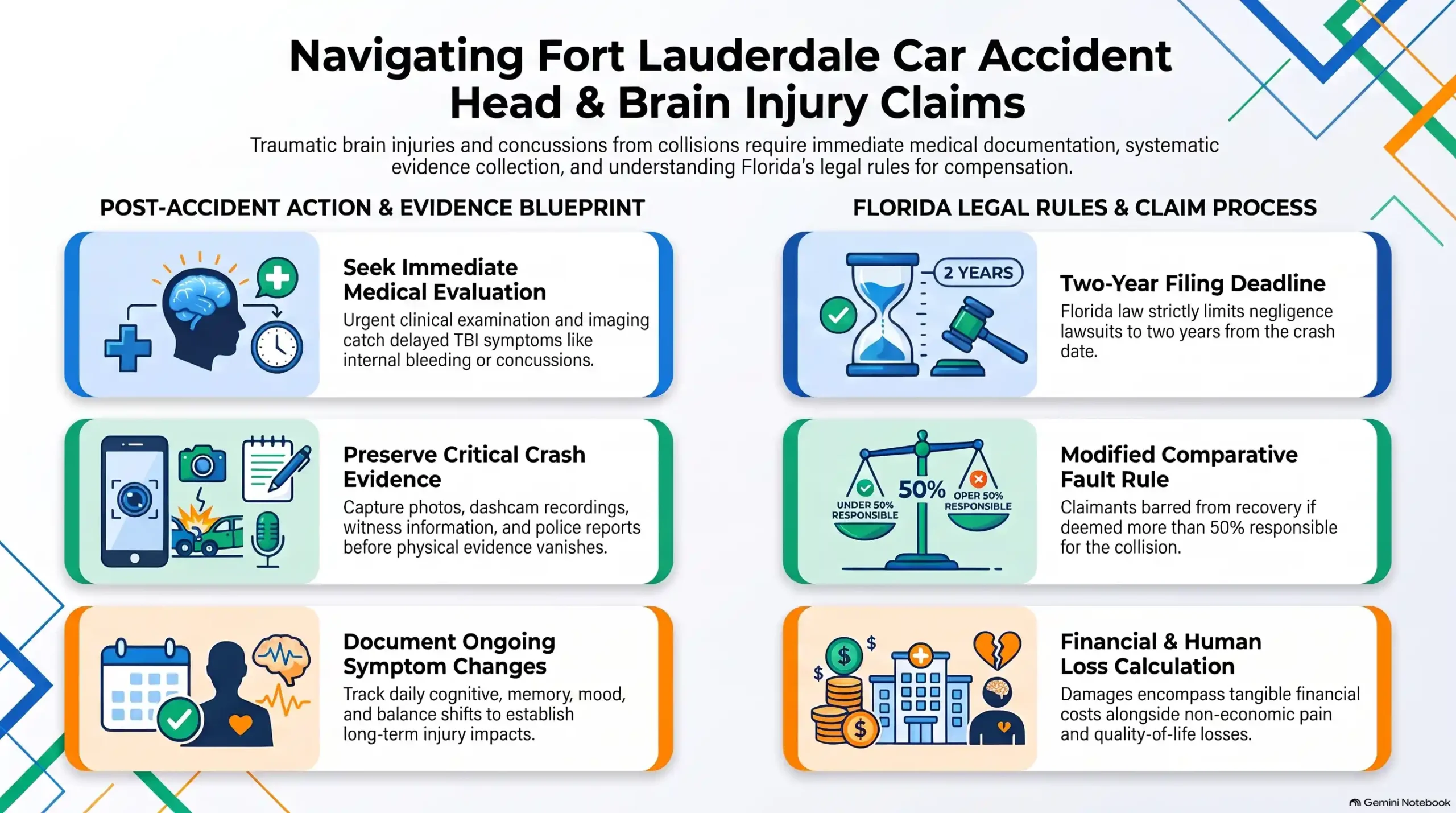
- A Fort Lauderdale car accident head and brain injury lawyer can explain legal options, deadlines, and potential next steps.
- Seek prompt medical care, even if symptoms are mild or appear after the crash.
- Preserve photographs, witness information, police reports, and communications related to the collision.
- Organize medical records and document changes in memory, balance, mood, concentration, work, and daily activities.
- Evidence such as crash records, video, medical assessments, and employment information may help establish liability and injury-related losses.


How We Can Help With Your Fort Lauderdale Car Accident Head & Brain Injury Claim
After a Fort Lauderdale car accident, head and brain injuries may require extensive medical care and affect a person’s ability to work and manage daily activities. Legal support can help injured individuals and their families address practical concerns while focusing on recovery. An attorney may gather medical records, employment information, and other documents that explain the injury’s effects and support a clear account of losses.
Claim preparation involves organizing evidence, reviewing available insurance coverage, and presenting the crash’s documented impact. Careful preparation can reduce avoidable delays and help ensure important information is considered. Counsel may also communicate with insurers, respond to requests, and explain procedural requirements in understandable terms.
Benefit coordination can help families identify how health insurance, disability benefits, or other available resources may relate to expenses and income disruption. Legal representatives can track deadlines and provide updates as the matter progresses. This assistance helps clients make informed decisions and focus on their health, responsibilities, and long-term needs.
OUR CONSULTATIONSARE FREE
START YOUR FREE CASE REVIEW

Understanding Fort Lauderdale Car Accident Head & Brain Injury Cases
Understanding a Fort Lauderdale car accident head or brain injury case begins with identifying the type and extent of the injury and how it relates to the collision. Medical records, examination findings, and the injured person’s reported symptoms help establish this connection and guide decisions about care and documentation.
Brain Injury Types may include concussions, contusions, and more severe traumatic injuries. Head injuries can also involve fractures, bleeding, or damage to surrounding tissue. Symptoms may appear immediately or develop over time, making careful medical evaluation important even when initial discomfort seems limited.
Diagnostic Challenges arise because some brain injuries are not visible on routine imaging, and symptoms can overlap with other conditions. Clinicians may use neurological assessments, imaging, and follow-up evaluations to clarify the diagnosis and monitor changes. Accurate records can explain how the injury affects daily activities, work, and future treatment needs. Understanding these factors supports informed decisions and helps others respond responsibly to the injured person’s needs.
Common Causes of Fort Lauderdale Car Accident Head & Brain
Head and brain injuries in Fort Lauderdale car accidents may result from several preventable driving behaviors. Common causes include distracted driving, speeding or reckless driving, and impaired driving under the influence of alcohol. Failure to yield can also trigger collisions that expose occupants to serious head trauma.
Distracted Driving
Distracted driving can cause a Fort Lauderdale car accident when a driver’s attention shifts from the road, even briefly. Texting, adjusting navigation, eating, or reaching for an object can divert visual, manual, or mental attention. These lapses may keep a driver from noticing traffic changes, pedestrians, or hazards in time to respond safely.
Hands-free technology risks also merit consideration. Although voice commands and in-car systems may keep a driver’s hands on the wheel, they can still draw attention away from driving. A conversation or complicated interface may occupy a driver’s thoughts at a pivotal moment. When a collision causes a head or brain injury, identifying the distraction may help clarify how the crash occurred and support an informed review of the injured person’s needs and available legal options.
Speeding and Reckless Driving
When a driver exceeds a safe speed or drives recklessly, the risk of a serious Fort Lauderdale car accident increases. Speed Limit Violations reduce the time available to respond to traffic changes and can increase collision force. For occupants, a sudden impact may cause a head injury, concussion, or traumatic brain injury, sometimes with lasting effects on memory, concentration, and daily activities.
Reckless conduct can include tailgating, weaving between lanes, or ignoring traffic signals. These Aggressive Actions endanger nearby drivers, passengers, pedestrians, and cyclists, who may have little opportunity to avoid a crash. A careful investigation can help establish how speed or unsafe driving contributed to the collision and resulting harm. Supporting injured people and their families may include preserving evidence, documenting losses, and explaining available legal options with care and respect.
Drunk Driving
Alcohol can impair judgment, coordination, and reaction time, increasing the likelihood of a serious Fort Lauderdale car accident. Drivers under the influence may fail to recognize hazards or respond safely, placing passengers, pedestrians, and other motorists at risk. A collision can cause traumatic brain injuries, including concussions and lasting cognitive or emotional difficulties. These effects may interfere with a person’s independence, work, and ability to care for family members.
Florida law imposes DUI penalties that may include fines, license suspension, and incarceration, depending on the circumstances. In some cases, dram shop liability may apply when an establishment unlawfully serves alcohol to a person who later causes a crash. Determining responsibility requires a careful review of available evidence, including police reports and witness accounts. Prompt legal guidance can help injured people pursue accountability and access recovery resources.
Failure to Yield
Failure to yield can cause serious Fort Lauderdale car accidents when drivers disregard right-of-way rules at intersections, crosswalks, or highway merges. Intersection violations may occur when a driver turns across oncoming traffic, enters an intersection against a signal, or fails to stop for a pedestrian. These actions can leave others with little time to avoid a collision. At higher speeds, the resulting impact may cause a traumatic brain injury, concussion, or other serious head injury.
Right-of-way disputes can arise when drivers disagree about who had permission to proceed, especially at uncontrolled intersections or during lane changes. Investigators may review traffic signals, vehicle damage, witness accounts, and available video to clarify how the crash occurred. A careful assessment can help injured people and their families understand their options and pursue appropriate support.
Don’t Wait. Call Our Florida Personal Injury Lawyers Now!


Legal Rights of Fort Lauderdale Car Accident Head & Brain Injury Victims
Head and brain injuries from car accidents can create lasting medical, financial, and personal challenges for victims in Fort Lauderdale. Florida law gives injured people options to seek benefits and, in some cases, compensation from responsible parties.
Understanding these rights can help victims and their families make informed decisions while protecting access to needed care.
- Seek available insurance benefits. Filing a PIP application may help cover eligible medical expenses and lost income, subject to policy terms and deadlines. Accurate records support the claim.
- Pursue accountability where permitted. When injuries meet Florida’s legal threshold, a victim may seek damages from an at-fault party for losses insurance may not cover, including certain future costs.
- Protect ongoing support. Victims can coordinate disability benefits with insurance claims and medical care. Careful review can reduce payment conflicts and preserve vital assistance.
A qualified attorney can explain applicable deadlines, evaluate evidence, and communicate with insurers. Timely guidance may also help families coordinate services and advocate for a victim’s dignity, recovery, and long-term well-being.
Why Do Head & Brain Injuries Happen in Fort Lauderdale Car Accidents?
When a collision forces the head to strike a hard surface or the brain to move suddenly within the skull, serious injury can occur. In Fort Lauderdale, these injuries may result from rear-end impacts, side collisions, rollovers, or crashes involving pedestrians and cyclists. Sudden acceleration or deceleration can cause the brain to shift inside the skull, even without a visible head wound.
Common contributing factors include distracted driving, speeding, impaired driving, fatigue, and failure to yield. Heavy traffic, abrupt lane changes, and unsafe following distances can increase the likelihood of a forceful impact. Roadway design may also affect crash risk when intersections, visibility, signage, or pedestrian crossings create hazards.
Vehicle safety features, including seat belts, airbags, and properly designed head restraints, can reduce injury severity, but they cannot prevent every brain injury. The type and seriousness of harm depend on collision forces, occupant position, and protective equipment. Understanding these factors helps communities support safer roads and protect travelers.
What Should You Do After a Fort Lauderdale Car Accident Head & Brain Injury?
After a suspected head or brain injury, the injured person should seek immediate medical care, even if symptoms appear mild. They should document the accident, preserve relevant records, and collect available evidence. Consulting a brain injury lawyer can help clarify legal options and protect the person’s interests.
Seek Immediate Medical Care
Because symptoms of a head or brain injury may not appear immediately, anyone involved in a Fort Lauderdale car accident should seek medical care as soon as possible, even if the initial impact seemed minor. A prompt evaluation can identify injuries that require treatment and help prevent complications. Emergency warning signs include worsening headache, repeated vomiting, confusion, unusual drowsiness, seizures, weakness, or loss of consciousness. If these symptoms occur, contact emergency services without delay. Even without severe symptoms, a medical professional can assess the person and recommend appropriate follow-up care. Concussion symptom tracking can help patients and caregivers notice changes in memory, balance, mood, or concentration after the crash. Clear observations can support informed treatment decisions and help providers respond to worsening symptoms. Timely care also helps injured people protect their health and get guidance for recovery.
Document The Accident
If the injured person is medically stable, documenting the accident can help preserve important evidence about how the crash occurred and what followed. A trusted companion may assist with these steps while respecting the injured person’s needs and privacy. The person should record the date, time, location, weather, and a factual account of events, noting any memory gaps rather than guessing. If it’s safe, take photographs of vehicle positions, damage, road conditions, traffic signs, and visible injuries. Witness names and contact details can help preserve independent observations. Dashcam Footage and nearby surveillance recordings may be overwritten, so identifying their sources promptly is important. Do not repair or discard the damaged vehicle before a Vehicle Inspection, when feasible. Also organize and keep medical records, receipts, and communications secure.
Contact A Brain Injury Lawyer
Once immediate medical needs are addressed and available evidence is preserved, a person with a suspected brain injury may benefit from consulting a Fort Lauderdale brain injury lawyer. A lawyer can explain legal options, identify deadlines, and help protect the injured person’s interests while medical care remains the priority. During a Free consultation, the lawyer may review available records, discuss how the collision affected the person’s health and daily responsibilities, and outline possible next steps. The injured person or a trusted family member can ask about experience with brain injury claims, communication practices, and expected case procedures. Many firms handle these matters on contingency, meaning they collect legal fees from a recovery rather than upfront. Clear guidance can help families pursue accountability while supporting the injured person’s recovery.
Don’t Wait. Call Our Florida Personal Injury Lawyers Now!
Critical Evidence in a Fort Lauderdale Car Accident Head & Brain Injury Case
A Fort Lauderdale car accident head and brain injury claim may depend on evidence that establishes how the collision occurred and the extent of the resulting harm.
Crucial evidence commonly includes:
- Accident-scene photographs showing vehicle damage, road conditions, and visible injuries.
- Medical records and witness statements documenting symptoms, treatment, and observations.
- Expert testimony explaining the collision or the nature and impact of the brain injury.
Accident Scene Photos
Photographs taken at the crash scene can preserve details that may be difficult to establish later, including vehicle positions, road conditions, visible damage, and nearby traffic signs. For a head or brain injury claim, these images may help clarify how the collision occurred and identify forces that could have affected occupants. When safe, take photographs from several distances and angles. Careful selection of scene angles can show the relationship between vehicles, roadway features, and points of impact. Images of debris, skid marks, weather, lighting, and obstructions may also provide useful context. Preserving photo metadata helps retain information about when and where images were created. Keep original files unchanged, and store copies securely. These records can support a fair investigation and hold those responsible accountable.
Medical Records
When a collision causes a suspected head or brain injury, medical records can document symptoms, examination findings, treatment, and changes in a patient’s condition over time. Emergency department notes, imaging reports, consultant assessments, and therapy records may help explain the injury’s severity and its effects on daily functioning. Consistent documentation can also show when symptoms emerged, whether they persisted, and how providers responded.
Record organization is important because complete, chronological files make relevant information easier to review. Missing records or unclear dates may complicate an assessment of the patient’s medical course. Provider correspondence, including referrals and treatment recommendations, can clarify why care was provided and what follow-up was advised. With appropriate authorization, records may be gathered from each treating provider and preserved for careful evaluation. Accurate documentation supports a fair understanding of the patient’s needs and the services required for recovery.
Witness Statements
Witness statements can provide an independent account of how a Fort Lauderdale collision occurred and what followed. People who saw the crash may describe vehicle movements, traffic signals, road conditions, and the timing of events. Their observations can help clarify disputed details and support a careful review of how the collision happened. Witnesses may also recall the injured person’s condition immediately afterward, including confusion, difficulty speaking, or other visible signs of head trauma. Such observations can add context to medical records without replacing clinical findings.
Witness credibility depends on factors such as the person’s opportunity to observe, memory, neutrality, and consistency. Investigators may document statements promptly because recollections can change over time. Assess statement inconsistencies fairly, since stress, limited visibility, or differing perspectives may explain variations. Accurate accounts can help decision-makers understand the event and its consequences.
Expert Testimony
While witness accounts may clarify what happened at the scene, expert testimony can explain how a collision caused a head or brain injury and how that injury affects the person’s health and daily functioning. Medical professionals may describe diagnostic findings, treatment needs, likely recovery, and lasting limitations. Accident reconstruction experts can analyze vehicle damage, road evidence, and collision forces to assess how the impact occurred. Expert witness qualifications matter because courts and opposing parties may examine an expert’s training, experience, and methods. Careful testimony preparation helps guarantee opinions are supported by records, testing, and reliable analysis. Experts may also explain complicated evidence in clear terms, helping judges or jurors evaluate the injury’s consequences. Their independent, well-supported explanations can clarify disputed issues and help decision-makers consider the injured person’s needs and future care.
Long-Term Effects of Fort Lauderdale Car Accident Head & Brain Injuries
Long-term effects of car accident head and brain injuries may affect memory, concentration, and other cognitive abilities. Some individuals also experience lasting physical or sensory changes, such as persistent pain, balance problems, or vision difficulties. Emotional and behavioral effects, including mood changes and irritability, may further disrupt daily life and relationships.
Cognitive and Memory Challenges
After a Fort Lauderdale car accident, a head or brain injury may affect memory, concentration, processing speed, and decision-making long after visible injuries have recovered. These changes can interfere with work, household responsibilities, and the ability to support family or community members. Working memory may make it difficult to retain instructions, follow conversations, or complete multi-step tasks. Some people also experience cognitive fatigue, requiring more time and effort to manage routine decisions or sustain attention. Symptoms may fluctuate, and demands that once felt manageable can become challenging. Medical evaluation can help identify cognitive changes and guide appropriate care, while documented observations may help providers assess progress. When these effects limit daily function, legal counsel can explain options for pursuing compensation and accessing resources that support recovery and continued service to others.
Physical and Sensory Changes
A head or brain injury from a Fort Lauderdale car accident can cause lasting physical and sensory changes, even after visible wounds have recovered. These effects may interfere with routine tasks, mobility, and a person’s ability to participate safely in work or community activities. Persistent headaches, dizziness, weakness, or reduced coordination can make walking, driving, and handling household responsibilities more difficult. Balance Problems may increase the risk of falls and limit independent movement, while Light Sensitivity can make screens, bright rooms, and outdoor settings uncomfortable. Some people also experience blurred vision, ringing in the ears, altered taste or smell, or numbness. Symptoms can vary in severity and may require ongoing medical assessment, therapy, or practical accommodations. Recognizing these changes can help families and caregivers provide appropriate support without assuming recovery is complete.
Emotional and Behavioral Effects
Although physical signs of a head or brain injury may improve, emotional and behavioral changes can persist and affect daily life. After a Fort Lauderdale car accident, an injured person may experience anxiety, depression, irritability, or difficulty controlling emotions. Personality changes can strain relationships and make familiar responsibilities harder to manage. Some individuals also withdraw socially, avoiding friends, family, or community activities they once valued. These effects may reflect changes in brain function rather than a lack of effort or concern for others. Family members and caregivers can support recovery by responding patiently, encouraging appropriate treatment, and noting changes in mood or behavior. Medical and mental health professionals can assess symptoms and recommend care. When these effects disrupt work, relationships, or independence, documentation may help explain the injury’s lasting impact.
Proving Liability in Fort Lauderdale Car Accident Head & Brain Injury Cases
Proving liability in a Fort Lauderdale car accident involving a head or brain injury requires evidence that another party’s negligence caused the collision and resulting harm. Investigators may review police reports, photographs, vehicle damage, traffic signals, and witness accounts to determine how the crash happened. Crash reconstruction can help clarify vehicle speeds, impact angles, and whether a driver had time to avoid the collision. Medical records and qualified professional assessments can connect the impact to a diagnosed head injury and document its effects.
Liability may rest with a driver who was speeding, distracted, impaired, or failed to yield. In some cases, roadway conditions or vehicle defects may point to additional responsible parties. Florida’s comparative negligence rules may reduce compensation if an injured person is found partly at fault, so evidence about each party’s conduct matters. Careful documentation supports a fair assessment and helps protect the injured person’s ability to pursue accountability while focusing on recovery.
Dealing With Insurance Companies After a Fort Lauderdale Car Accident Head & Brain Injury
After a Fort Lauderdale car accident causes a head or brain injury, insurance companies may request statements, medical records, and other information while the full effects of the injury remain unclear. Because symptoms can develop or change over time, injured people should avoid speculating about their condition or minimizing difficulties before receiving appropriate medical guidance. Recorded statements may be used to assess a claim, so handle questions carefully and keep responses accurate and limited to what you know.
Insurers may also review treatment records, employment information, and expense documentation. Providing relevant documentation can help clarify the injury’s impact, but broad authorizations may expose unrelated private information. Carefully review requested forms to protect confidentiality while sharing necessary information.
Policy limits may affect the resources available to address losses, and coverage can involve multiple policies. An attorney can communicate with insurers, review coverage terms, and help ensure an injured person’s interests are represented while recovery remains the priority.
What to Expect During a Fort Lauderdale Car Accident Head & Brain Injury Claim Process
A head or brain injury claim typically begins with prompt medical care, followed by gathering records, witness accounts, and other evidence related to the crash. The claim is then evaluated based on the injury’s effects, documented losses, and available evidence. Resolution may come through settlement negotiations or, if the parties cannot reach an agreement, a trial.
Initial Medical Care
Prompt medical care is essential when a car accident causes a possible head or brain injury, even if symptoms seem mild at first. Anyone with confusion, a worsening headache, vomiting, weakness, or loss of consciousness should get an urgent evaluation. At an Emergency department, clinicians may review symptoms, examine the head and neck, and perform a neurological assessment to check alertness, memory, balance, vision, and coordination. They may order imaging or observe the patient when needed to identify bleeding or other serious conditions. Treatment depends on the findings and may include medication, monitoring, or referral to a consultant. Follow discharge instructions carefully, and seek prompt medical attention for new or worsening symptoms. Timely care supports the injured person’s health and helps family members understand the next steps in recovery.
Evidence Collection
Because head and brain injuries may not be immediately apparent, evidence collection can help establish how the crash occurred and how it affected the injured person. Investigators may gather police reports, witness statements, scene photographs, vehicle damage records, and available surveillance footage. Medical records can document symptoms, diagnoses, treatment, and changes in daily functioning, while family members’ or caregivers’ observations may provide useful context. Preserving evidence matters because vehicles may be repaired, video may be overwritten, and physical conditions can change. A lawyer may request relevant records and notify responsible parties to retain materials. Digital forensics may help recover or examine data from phones, vehicle systems, or other electronic sources, when appropriate. Careful collection supports a clear account of events and helps protect the injured person’s interests throughout the claim process.
Claim Evaluation
Once the evidence is assembled, the claim can be evaluated to determine how the crash affected the injured person and what losses may be recoverable. This review considers medical records, diagnostic findings, treatment plans, and professional opinions about the head or brain injury. It also examines how symptoms affect daily activities, employment, and the person’s ability to contribute to family or community responsibilities. Documented expenses, lost income, anticipated care needs, and other supported losses inform settlement valuation. The assessment must account for uncertainty, including whether symptoms may persist or require additional treatment. During claim negotiation, the parties may examine the evidence, question the extent of certain losses, and discuss a fair resolution. Careful evaluation helps guarantee that the injured person’s needs and documented circumstances receive appropriate consideration throughout the process.
Settlement Or Trial
When does a head or brain injury claim resolve through settlement rather than trial? A settlement may be appropriate when liability is reasonably clear, medical evidence supports the injury, and both sides can agree on fair compensation. Negotiations may account for treatment costs, lost income, future care, and the effects of cognitive or physical limitations. Because symptoms can develop or change over time, careful documentation helps clarify the claim’s value.
If negotiations stall, mediation preparation can help the parties present evidence and explore resolution with a neutral mediator. Mediation does not require either side to accept an offer. When no agreement is reached, the case may proceed to trial. Jury considerations can include witness credibility, medical testimony, and the long-term consequences of the injury. The decision to settle or go to trial depends on the evidence, risks, and the injured person’s needs.
Compensation for Fort Lauderdale Car Accident Head & Brain Injury Damages
Compensation for a head or brain injury after a Fort Lauderdale car accident may cover medical care, lost income, reduced future earning capacity, and the effects of lasting impairments on daily life. The amount depends on the injury’s documented impact and the evidence connecting it to the collision.
Recoverable medical expenses may include emergency treatment, hospitalization, rehabilitation, medication, and necessary assistive services. Qualified providers should carefully assess future care needs, particularly when symptoms affect memory, communication, mobility, or independent living. Treatment records and functional changes help explain the support an injured person may need over time.
Documented treatment and functional changes can help establish the medical and assistive care needed over time.
A claim may also account for wages lost during recovery and work limitations that continue afterward. Family members or caregivers who provide substantial assistance may help document changes in daily responsibilities, although compensation must reflect legally recognized losses.
Settlement timelines vary with treatment progress, available records, and disputes about responsibility or injury severity. Resolving a claim before you understand your future needs may leave important expenses unaddressed. Careful preparation helps injured people access resources that support recovery and continued community participation.
Economic vs Non-Economic Damages in Fort Lauderdale Car Accident Head & Brain Cases
Economic damages in Fort Lauderdale head and brain injury cases may include medical expenses, lost income, and future care costs. Non-economic damages address losses such as pain, emotional distress, and reduced quality of life. Calculating a claim requires evaluating both categories alongside the available evidence and the injury’s lasting effects.
Economic Damages
In Fort Lauderdale car accident head and brain injury cases, economic damages cover measurable financial losses caused by the crash. These losses may include emergency treatment, hospital care, rehabilitation, prescription medication, and necessary medical equipment. Records such as invoices, treatment plans, and payment statements can help establish the amounts incurred and the care still required.
Injuries may also prevent a person from returning to work or earning at the previous level. Lost wages may account for income missed during recovery, while diminished earning capacity may reflect reduced future earnings when lasting impairments limit suitable employment. Documentation from employers, medical providers, and qualified financial professionals can help evaluate these claims. Careful calculation helps ensure compensation meets practical needs and supports a person’s ability to maintain stability and meet responsibilities after a serious crash.
Non-Economic Damages
Beyond measurable financial losses, non-economic damages address the personal effects of a head or brain injury caused by a Fort Lauderdale car accident. These damages may reflect pain and suffering, emotional distress, and changes to a person’s daily life that do not appear on bills or receipts. A brain injury can affect memory, concentration, communication, or emotional regulation, straining relationships and limiting independence. Loss of enjoyment may arise when symptoms prevent someone from participating in meaningful activities, family responsibilities, or community service. Unlike economic damages, which cover documented financial costs, non-economic damages recognize an injury’s human consequences. They aim to account for how an accident may alter well-being and daily routines, while acknowledging the injured individual’s dignity and personal circumstances.
Calculating Your Claim
Calculating a claim after a Fort Lauderdale car accident requires evaluating both documented financial losses and the injury’s personal effects. Economic damages may include emergency care, rehabilitation, medication, lost income, and reduced future earning capacity. Records such as bills, employment documents, and medical opinions help establish these amounts. For a head or brain injury, a careful Damage Valuation should also account for Future Costs, including ongoing treatment, assistive services, and possible changes in the person’s ability to work or live independently.
Non-economic damages address harms without a direct price, such as pain, emotional distress, cognitive limitations, and reduced enjoyment of daily life. Assessing them considers the injury’s severity, duration, and impact on relationships and responsibilities. A complete claim clearly presents both categories, supports fair compensation, and recognizes the injured person’s needs and the practical demands placed on family members and caregivers.
Don’t Wait. Call Our Florida Personal Injury Lawyers Now!
When a Fort Lauderdale Car Accident Head & Brain Injury Case Goes to Trial vs Settlement
Whether a Fort Lauderdale car accident head and brain injury case settles or proceeds to trial depends on the strength of the evidence, the extent of the injury, and the parties’ willingness to agree on fair compensation. Settlement can resolve a claim without a public hearing, allowing the injured person and family to focus on treatment and daily responsibilities. Negotiations may address medical needs, lost income, and the lasting effects of cognitive or physical impairment. A settlement requires agreement; if the parties cannot reach terms, the case may proceed to trial.
At trial, each side presents evidence and questions witnesses. Medical professionals may explain diagnoses, treatment, and expected recovery, while the injured person’s experiences can help clarify how the injury affects ordinary life. Courtroom testimony may also address disputed facts and the reliability of medical opinions. After hearing the evidence, jurors may deliberate and decide whether compensation is warranted and, if so, in what amount. Trial can provide a formal decision, but its outcome is uncertain and may take longer than settlement.
Florida Laws That May Affect Your Fort Lauderdale Car Accident Head & Brain Case
The outcome of a Fort Lauderdale car accident head and brain injury claim may depend on several Florida laws governing insurance benefits, fault, and filing deadlines. These rules can affect available compensation and the evidence needed to support a claim. Understanding them can help injured people pursue recovery while preserving resources for their families and communities.
- Florida no-fault rules: Personal injury protection coverage generally pays certain medical expenses and lost income regardless of fault. Benefits are limited, and serious injuries may allow an injured person to seek damages from an at-fault driver.
- Comparative negligence changes: Florida’s modified comparative negligence law may reduce damages according to a claimant’s share of fault. If a person is found more than 50 percent responsible, they generally cannot recover damages, so evidence of each driver’s conduct matters.
- Damage limits and proof: Claims require reliable documentation of injury-related losses. Medical records, expert opinions, wage information, and crash evidence may help establish the nature and extent of harm. These laws can shape negotiations and trial strategy, so a careful assessment is important for a fair resolution.
The Statute of Limitations for Fort Lauderdale Car Accident Head & Brain Injury Cases
Because legal deadlines can determine whether compensation remains available, the statute of limitations is a vital consideration in a Fort Lauderdale car accident head or brain injury case. Under Florida law, injured people generally have two years from the date of a crash to file a negligence lawsuit. Missing that deadline can prevent recovery, regardless of the injury’s severity or the value of the losses.
Head and brain injuries may not become apparent immediately. Even so, delayed diagnosis does not automatically pause the filing period, so timely medical evaluation and careful attention to dates are important. Families supporting an injured person may also need to preserve records and track relevant deadlines while care and recovery remain the priority.
Deadline extensions may apply in limited circumstances, but they are not automatic. Florida law provides minor exceptions when an injured person was under 18 at the time of the crash. Other circumstances may affect the deadline, so you should review the applicable rules promptly.
How a Fort Lauderdale Car Accident Head & Brain Lawyer Can Help You
How can legal counsel assist after a Fort Lauderdale car accident causes a head or brain injury? A lawyer can help an injured person and their family understand available options while protecting the resources needed for treatment and recovery. A Legal consultation may clarify potential claims, explain relevant procedures, and identify information that could support the case.
- Investigating the collision: Counsel can gather crash reports, witness accounts, photographs, and other evidence to assess how the incident occurred and who may be responsible.
- Documenting the injury: Medical records, medical professional opinions, and treatment details can help show the injury’s effects on daily activities, future care needs, and the person’s ability to work.
- Managing negotiations: A lawyer can communicate with insurers, evaluate settlement proposals, and develop a case strategy based on the evidence and documented losses.
This assistance can reduce administrative burdens and help families focus on supporting the injured person. Legal counsel can also explain the risks and benefits of available resolution options without guaranteeing an outcome.
When to Contact a Fort Lauderdale Car Accident Head & Brain Lawyer
Prompt legal guidance may be useful as soon as a head or brain injury is suspected after a Fort Lauderdale car accident, even if symptoms appear mild or develop later. An early consultation can help an injured person understand key deadlines, preserve relevant records, and identify practical steps while medical care remains the priority. A family member or caregiver may contact counsel when the injured person cannot manage calls or paperwork.
Contact is also appropriate when symptoms emerge days after a collision, medical providers recommend further evaluation, or an insurer requests statements or documents. A prompt discussion can clarify what information may be needed and how to avoid overlooking accident-related details. It does not require a confirmed diagnosis or a decision to pursue a claim.
Attorney selection should reflect the person’s circumstances, communication needs, and ability to make informed choices. If others are assisting, they should respect the injured person’s preferences and obtain proper authorization before sharing private information. Timely advice can support an orderly response.
Why You Need an Experienced Fort Lauderdale Car Accident Head & Brain Lawyer
An experienced Fort Lauderdale car accident head and brain lawyer can help address the legal and practical challenges that arise when a collision causes a suspected or diagnosed brain injury. These injuries may affect memory, concentration, mood, and a person’s ability to work or manage daily responsibilities. An attorney can help preserve evidence, explain insurance procedures, and pursue compensation supported by the available facts.
Understanding Traumatic Brain Mechanisms can clarify how impact, rapid movement, or a secondary strike may cause harm, even when symptoms are not immediately apparent. A lawyer can coordinate the collection of medical records and other documentation that helps connect the collision to the reported condition. Careful attention to a Neurological Diagnosis and its implications may also help establish the extent of treatment needs and related losses.
How to Choose the Right Fort Lauderdale Car Accident Head & Brain Lawyer for Your Case
Choosing the right Fort Lauderdale car accident head and brain lawyer requires careful consideration of the attorney’s experience with injury claims, communication practices, and approach to case preparation. A suitable attorney should understand how brain injuries may affect memory, employment, independence, and family responsibilities. Reviewing Attorney Credentials can help establish whether counsel is licensed in Florida, handles serious injury matters, and has experience evaluating medical evidence and liability.
Prospective clients should ask how the lawyer will provide updates, explain decisions, and involve the injured person or authorized family members in planning. Clear communication supports informed choices and helps guarantee that personal priorities remain central throughout the claim. Fee Structures should also be explained in writing, including how legal fees and case expenses are handled and whether payment is due if compensation is not obtained.
The attorney should describe a practical strategy for investigating the crash, documenting losses, and addressing disputes. A careful comparison helps families choose counsel whose methods, availability, and experience fit the case.
About The Law Offices of Anidjar & Levine
The Law Offices of Anidjar & Levine represents people injured in car accidents in Fort Lauderdale and throughout Florida.
The firm helps clients facing the physical, financial, and practical consequences of serious collisions, including head and brain injuries.
Its legal team can explain options, communicate with insurers, and pursue compensation based on the facts of a claim.
Firm History provides context about the firm’s development and its work representing injured people.
Its practice includes personal injury matters, allowing the attorneys to address the legal and procedural issues that may arise after a crash.
The firm’s approach centers on helping clients understand the process and make informed decisions about their cases.
Attorney Profiles offer information about the lawyers’ backgrounds, practice areas, and professional experience.
These profiles help prospective clients assess whether the firm’s services align with their needs.
Individuals considering legal representation can contact the office to discuss their circumstances, ask questions, and learn what steps may follow.

Frequently Asked Questions
Can a Concussion Occur Without Losing Consciousness?
Yes, a concussion can occur without loss of consciousness. Concussion Without Fainting is common, and unconsciousness is not required, which is an important point for anyone evaluating a possible head injury. Symptoms may include headache, dizziness, confusion, nausea, memory problems, or sensitivity to light and sound. Because signs can appear gradually, a person should receive medical evaluation after a suspected concussion. Emergency care is warranted for worsening symptoms, repeated vomiting, seizures, or difficulty waking.
How Are Traumatic Brain Injuries Diagnosed After a Car Accident?
Traumatic brain injuries after a car accident are diagnosed through a medical history, symptom review, and neurological examination. A clinician assesses alertness, memory, balance, coordination, vision, and reflexes while considering the collision’s force and circumstances. Diagnostic imaging, such as a CT scan, may identify bleeding, swelling, or skull fractures; an MRI may reveal injuries not visible on initial scans. Prompt evaluation supports appropriate treatment and helps protect patients from preventable complications.
Can Brain Injury Symptoms Appear Days After a Crash?
Yes, brain injury symptoms can emerge days after a crash. Delayed symptom onset may occur as swelling or other effects develop, while subtle warning signs include worsening headaches, confusion, dizziness, nausea, memory problems, or unusual fatigue. A person may initially appear well, so don’t dismiss changes. Prompt medical assessment is important, particularly if symptoms worsen or include repeated vomiting, seizures, weakness, or difficulty waking. Emergency care is necessary for severe or rapidly changing symptoms.
What Accommodations May Help Someone With a Brain Injury Return to Work?
Accommodations can help a person with a brain injury resume work safely and maintain reliable performance. Flexible scheduling may allow shorter shifts, gradual increases in hours, or breaks to manage fatigue and appointments. Workplace modifications can include reduced noise, written instructions, task checklists, adjusted lighting, and a quieter work area. Supervisors may also simplify duties or provide additional training. A clinician and employer can coordinate an individualized plan and review it regularly.
How Can Family Members Support a Loved One Recovering From a Brain Injury?
Family members can support a loved one recovering from a brain injury by offering consistent emotional support, listening without judgment, and encouraging participation in rehabilitation. They can help maintain routines, attend appointments, and communicate symptom changes or functional changes to clinicians. Patience is vital, since recovery may progress unevenly. Relatives should also arrange caregiver respite, share responsibilities, and seek guidance from qualified professionals to protect their own well-being and sustain reliable support.
—————————
A serious head or brain injury can affect a person’s health, independence, and financial stability long after a Fort Lauderdale car accident.
Prompt medical care and careful documentation can support recovery and help preserve a potential legal claim.
Fort Lauderdale Personal Injury Lawyer: The Law Offices of Anidjar and Levine can review the circumstances, explain your options, and pursue compensation when the evidence supports it.
Because every case depends on its facts, injured individuals should seek guidance before deciding whether to accept a settlement.

