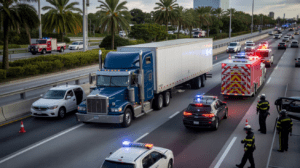
The Law Offices of Anidjar and Levine can investigate Fort Lauderdale truck accidents, preserve time-sensitive evidence, and identify parties whose conduct may have contributed, including drivers, trucking companies, maintenance providers, and cargo loaders. A Fort Lauderdale Personal Injury Lawyer can assess medical expenses, lost income, pain, and other documented losses, communicate with insurers, and explain settlement options. Because deadlines and comparative-fault rules may affect recovery, prompt guidance can matter. The following sections explain the claims process, potential liability, and practical steps after a crash.
Main Takeaways
- A Fort Lauderdale truck accident lawyer can review your records, explain potential claims, and offer a free consultation to discuss representation.
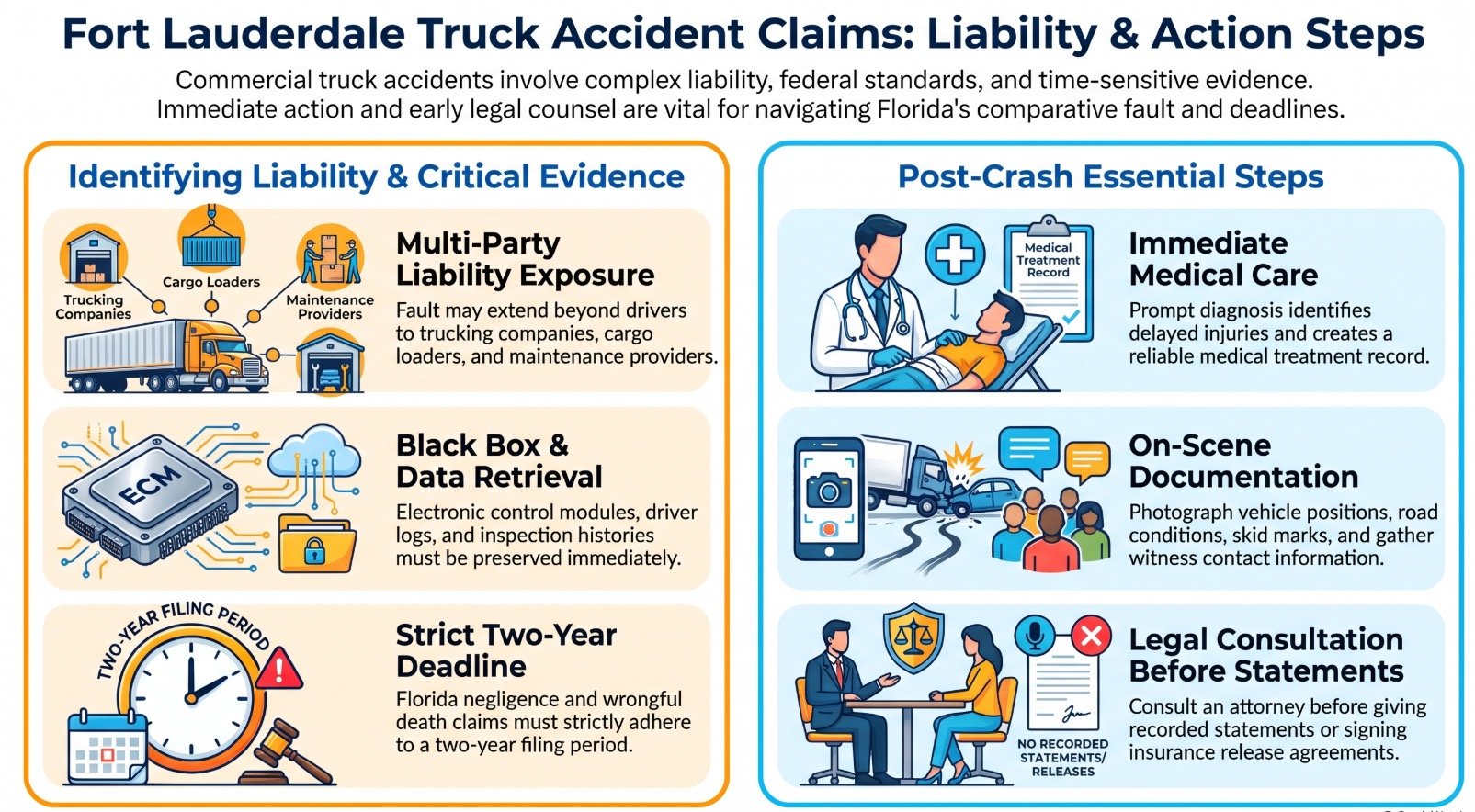
- Liability may involve the truck driver, carrier, vehicle owner, maintenance provider, cargo loader, or other responsible parties.
- Investigations may examine driver logs, electronic data, maintenance and loading records, witness accounts, photographs, and crash reports.
- Preserve evidence promptly, seek medical care, and consult a lawyer before giving recorded statements or signing releases.
- Florida deadlines and comparative-fault rules can affect recovery; contingency fees generally depend on obtaining compensation.
How We Can Help With Your Fort Lauderdale Truck Accident Claims & Liability Injury Claim
After a truck collision in Fort Lauderdale, an injured person may face medical expenses, lost income, and disputes over who is responsible. A legal team can provide organized support so the person can focus on treatment and recovery. Counsel may review available records, explain practical options, and identify information needed to evaluate the claim. This guidance can help prevent missed deadlines and reduce uncertainty during a demanding period.
A thoughtful Claim Strategy is shaped around the injured person’s circumstances, documented losses, and goals. The legal team can communicate with insurers, assess settlement proposals, and prepare a matter for further action when appropriate. Client Advocacy also means keeping the person informed, responding to questions, and treating concerns with respect. When family members or caregivers assist with recovery, clear communication helps them understand the process and support the client’s decisions.
With steady guidance and careful preparation, an injured person can make informed choices about pursuing compensation and seek a resolution that addresses the harm suffered.
Don’t Wait. Call Our Florida Personal Injury Lawyers Now!
Understanding Fort Lauderdale Truck Accident Claims & Liability Injury Cases


Understanding a Fort Lauderdale truck accident claim begins with identifying how the collision occurred and which parties may bear legal responsibility. Depending on the evidence, the injured person may seek compensation from a driver, trucking company, vehicle owner, maintenance provider, or another responsible entity. Each case requires a careful review of records, applicable duties, and the connection between a party’s conduct and the harm suffered.
OUR CONSULTATIONSARE FREE
START YOUR FREE CASE REVIEW

Broward trucking regulations and federal safety requirements may inform that review. Investigators may examine driver qualification files, trip records, inspection documents, and company policies to determine whether required standards were followed. Commercial fleet oversight can also affect liability when an organization controls vehicle operations, assigns work, or maintains trucks. Responsibility is not automatic, and multiple parties may share fault under Florida law. A clear understanding of the claim helps injured people and their families evaluate available options, preserve important evidence, and pursue accountability while focusing on recovery and the support of those affected.
Common Causes of Fort Lauderdale Truck Accident Claims & Liability
Truck accidents in Fort Lauderdale may result from driver fatigue or distracted driving, both of which can impair a driver’s ability to respond safely. Improper cargo loading can affect a truck’s stability, while poor vehicle maintenance may cause equipment failures. Identifying the cause is an important step in evaluating liability and potential claims.
Driver Fatigue


Driver fatigue can impair a commercial driver’s attention, reaction time, and judgment, increasing the risk of a serious collision on Fort Lauderdale roads. Long shifts, insufficient rest, demanding delivery schedules, and overnight driving may leave truck operators unable to respond safely to changing traffic conditions. Circadian rhythm disruption can intensify sleepiness when drivers work during hours their bodies are programmed to rest. Warning signs may include frequent yawning, heavy eyelids, drifting within a lane, and delayed responses. These microsleep warning signs warrant prompt attention because brief lapses in awareness can prevent a driver from recognizing hazards or braking in time. Federal hours-of-service rules limit driving and require rest periods, but violations or inadequate recovery may still contribute to crashes. Identifying fatigue-related evidence can help establish responsibility and support injured people seeking fair compensation.
Distracted Driving
Distracted driving can prevent commercial truck operators from noticing hazards, maintaining lane position, or responding promptly to traffic changes on Fort Lauderdale roads. Attention may shift to a mobile device, navigation system, dispatch message, or activity inside the cab. Even brief visual or manual distractions can reduce a driver’s ability to identify pedestrians, brake for slowing traffic, or maintain safe following distance.
Hands-free technology may reduce the need to handle a phone, but it does not eliminate risk. A driver can still experience Cognitive Distraction while listening, speaking, or processing information, diverting attention from road conditions. Employers and drivers are expected to follow applicable safety rules and prioritize public welfare. Evidence of device use, communications, and driving conduct may help clarify whether distraction contributed to a collision and resulting claims.
Improper Cargo Loading
Beyond driver conduct, the way cargo is loaded and secured can affect a commercial vehicle’s stability and control. Improper loading may shift a truck’s weight during braking, turning, or sudden maneuvers, increasing the risk of a rollover or loss of control. Uneven load distribution can also place excessive weight on particular axles, affect directional control, or make stopping more difficult. Cargo securement failures may allow freight to slide, fall, or spill onto the roadway, creating hazards for other motorists and pedestrians. Federal and state rules set requirements for securing cargo, but violations can still occur through rushed loading, inadequate equipment, or insufficient pre-departure inspections. When a crash involves shifting or unsecured freight, investigators may examine loading records, bills of lading, and witness accounts to identify responsible parties and support injured people seeking answers.
Poor Vehicle Maintenance
When a commercial truck is not properly maintained, worn or defective components can compromise its ability to stop, steer, or remain stable. Brake failure may prevent a driver from slowing in time to avoid a collision, while tire blowouts can cause sudden loss of control, particularly at highway speeds. Other maintenance problems, including faulty steering, damaged suspension, or defective lights, can also create hazards for nearby motorists and pedestrians.
Federal regulations require motor carriers and drivers to inspect, repair, and maintain commercial vehicles. Maintenance records, inspection reports, and repair histories may help establish whether a preventable defect contributed to a crash. Liability may depend on who controlled the vehicle’s upkeep and whether required repairs were delayed or ignored. Identifying these failures can support accountability and help injured people pursue compensation for resulting losses.
Legal Rights of Fort Lauderdale Truck Accident Claims & Liability Injury Victims
Truck accident victims in Fort Lauderdale may have the right to seek compensation when another party’s negligence causes their injuries. Florida law may allow an injured person to pursue damages for medical care, lost income, reduced earning capacity, and pain and suffering. A claim can involve a driver, trucking company, or other legally responsible party, depending on the evidence. Victims may also have rights when dealing with insurers:
Fort Lauderdale truck accident victims may pursue compensation for documented losses from drivers, trucking companies, or other responsible parties.
- Request a fair review of the claim and supporting records.
- Decline a settlement that does not reflect documented losses.
- Preserve evidence and obtain copies of relevant reports.
- Seek legal guidance before signing releases or agreements.
- Challenge Insurance bad faith when an insurer improperly handles a valid claim.
Punitive damages may be available in limited cases involving intentional misconduct or gross negligence, subject to legal standards. Deadlines and comparative-fault rules can affect recovery, so acting on time matters. Clear documentation and informed decisions help protect a victim’s interests while supporting accountability and responsible resolution for everyone affected.
Why Do Truck Accident Claims in Fort Lauderdale Happen?
Fort Lauderdale truck accident claims arise when negligent conduct or unsafe conditions contribute to a collision and resulting injuries. Common causes include driver fatigue, distraction, speeding, impaired driving, and failure to maintain a safe following distance. Commercial drivers may face demanding schedules, but pressure to meet delivery deadlines does not excuse unsafe decisions. Inadequate training or poor vehicle maintenance can also increase the risk of a crash.
Highway traffic patterns may create sudden stops, merging conflicts, and congestion, particularly near busy interchanges and construction zones. Large trucks need more distance to slow down and have wider blind spots, so careful operation is vital. Weather conditions, including heavy rain and reduced visibility, can further limit traction and reaction time. Improperly loaded or secured cargo may shift, destabilize a truck, or spill into surrounding lanes.
Identifying the contributing factors helps clarify how preventable hazards affected those involved. Carefully examining driver conduct, company practices, vehicle condition, and road conditions can support accountability and community safety.
What Should You Do After a Fort Lauderdale Truck Accident Claims & Liability Injury?
After a Fort Lauderdale truck accident, injured individuals should seek prompt medical care, even if their symptoms seem minor at first. They should document the scene, preserve relevant evidence, and record details about the vehicles and witnesses. Contacting a truck accident lawyer can help clarify potential claims and protect important evidence.
Seek Immediate Medical Care
Because serious injuries may not be immediately apparent after a collision, anyone involved in a Fort Lauderdale truck accident should seek prompt medical evaluation, even if symptoms seem minor. An Emergency room can assess urgent concerns, including head, neck, back, and internal injuries, and determine whether immediate treatment is necessary. If emergency care is not required, a physician or urgent care provider can still evaluate symptoms and recommend appropriate treatment. Tell medical professionals that a truck collision occurred and provide a clear account of any pain, dizziness, confusion, or changes in mobility. Following the recommended care plan and attending follow up appointments can help identify delayed symptoms and support recovery. Consistent treatment also creates a reliable medical record, which may help clarify how the collision affected the injured person’s health.
Document the Accident Scene
When it is safe to do so, documenting the truck accident scene can preserve details that may help establish how the collision occurred and who may be responsible. If injuries or traffic conditions make gathering information unsafe, the injured person should prioritize safety and follow emergency responders’ directions. Otherwise, Scene photographs can record vehicle positions, visible damage, road conditions, traffic signs, skid marks, and surrounding landmarks. Take images from several angles without entering active traffic or disturbing evidence. The person may also note the time, location, weather, and any details that could change quickly. Witness statements can provide independent accounts of events. Collect names and contact information, along with brief notes on what each witness observed. Accurate documentation may help clarify disputed facts and support a fair assessment of responsibility.
Contact a Truck Accident Lawyer
Prompt legal guidance can help an injured person understand which parties may be liable and what evidence to preserve after a truck collision in Fort Lauderdale. After obtaining necessary medical care, the injured person may contact a truck accident lawyer to discuss the crash, injuries, and available records. Counsel can explain potential claims involving the driver, trucking company, vehicle owner, or other responsible parties. A timely review may help preserve electronic data, maintenance records, and witness accounts before they are lost. Many firms offer a Free consultation, allowing the person to ask questions and assess whether representation is appropriate. The lawyer can also explain contingency fees, under which legal fees generally depend on a recovery. Clear advice may help an injured person protect their rights while focusing on recovery and supporting family or community responsibilities.
Critical Evidence in a Fort Lauderdale Truck Accident Claims & Liability Injury Case
Evidence can help establish how a Fort Lauderdale truck accident occurred and who may be responsible. The trucking company or other parties may hold relevant records, so timely preservation can be important.
Crucial evidence may include:
- Photographs, video, and physical evidence from the accident scene
- Truck black box data, including speed and braking information
- Driver records, such as qualifications, hours of service, and training
- Maintenance and inspection documentation
- Witness statements and available surveillance footage
Accident Scene Evidence
The moments after a truck collision can determine what information remains available to explain how it occurred. Photographs of vehicle positions, road conditions, skid marks, debris, traffic signs, and visible damage may help establish the sequence of events. Prompt documentation can also preserve details that weather, traffic, or cleanup crews may quickly alter.
Roadside witness interviews can identify independent accounts of the collision, including observations about speed, lane changes, signals, or driver conduct. Nearby surveillance footage capture may reveal the vehicles’ movements before impact, but recordings can be overwritten, making timely requests important. Investigators may also document lighting, sight lines, and roadway layout to assess whether hazards or visibility contributed.
These records can support a careful liability review and help protect injured people’s interests. Promptly preserving evidence may also help others affected by the collision seek a fair, fact-based resolution.
Truck Black Box Data
Beyond photographs and witness accounts, a commercial truck’s electronic control module may preserve data that helps clarify how the collision occurred. Depending on the vehicle and system, recorded information may include speed, braking activity, engine performance, and other operating conditions shortly before impact. This evidence can support event reconstruction by helping investigators compare vehicle activity with physical damage, roadway marks, and witness observations. Because some data may be overwritten or lost, prompt Data preservation is vital. A qualified professional may identify relevant systems, request that the trucking company retain the information, and arrange for a careful download. The data should be interpreted in context, since electronic records may be incomplete and do not independently establish fault. Preserving reliable records can help injured people and their families evaluate claims and pursue accountability.
Driver Records
A truck driver’s employment and qualification records can help clarify whether the driver was prepared and legally permitted to operate the vehicle involved in a Fort Lauderdale collision. These documents may include training history, prior driving experience, medical certifications, and records of traffic violations or disciplinary actions. Reviewing driver qualification materials can show whether the carrier followed required screening procedures and overlooked warning signs. License verification may establish that the driver held the proper class of commercial license and any required endorsements at the time of the crash. Records can also identify employment gaps or inconsistent information that warrant further investigation. When evaluated alongside other evidence, these materials may help determine whether the driver or trucking company contributed to the collision. Careful review supports a fair assessment of responsibility and accountability.
Maintenance Documentation
When a commercial truck’s mechanical condition is questioned after a Fort Lauderdale collision, maintenance documentation can help establish whether required inspections and repairs were completed. These records may show when a vehicle was serviced, which components were examined, and whether reported defects received timely attention. Maintenance logs and inspection records can also reveal recurring problems, missed service intervals, or repairs that were deferred before the crash.
A careful review may help clarify whether a mechanical failure contributed to the collision and whether the carrier, maintenance provider, or another responsible party had notice of a safety concern. Preserve records promptly because routine business practices may alter or destroy them. Accurate documentation supports a fair investigation, helps identify preventable hazards, and can inform decisions about accountability and compensation for those injured and the wider community.
Don’t Wait. Call Our Florida Personal Injury Lawyers Now!
Long-Term Effects of Fort Lauderdale Truck Accident Claims & Liability Injuries
Truck accident injuries may have lasting effects that extend well beyond the initial recovery period. Some individuals experience chronic pain or persistent mobility challenges that interfere with daily activities and work. These conditions can also contribute to emotional distress and ongoing financial strain.
Chronic Pain Conditions
Why can pain persist long after a Fort Lauderdale truck accident? Severe impact may damage nerves and soft tissues, while inflammation or complications during recovery can keep triggering discomfort. Some injured people develop neuropathic pain, which may feel burning, tingling, or sharp and can remain even after visible injuries recover. Others experience intricate regional pain syndrome, a less common condition involving persistent pain and changes in sensitivity or skin temperature. These conditions may interfere with sleep, concentration, and a person’s ability to fulfill work or family responsibilities. Accurate medical evaluation helps identify the source of symptoms and guide appropriate care. Consistent treatment records also document how pain affects daily life. When a truck accident causes chronic pain, careful legal review can help clarify liability and assess damages for ongoing medical needs and related losses.
Lasting Mobility Challenges
Persistent pain after a Fort Lauderdale truck accident can also limit mobility, particularly when injuries affect the spine, joints, muscles, or nerves. Reduced strength, balance, or flexibility may make walking, standing, and using stairs difficult. Some injured people require ongoing therapy to restore movement and prevent further physical decline. Gait rehabilitation can help improve walking patterns, coordination, and stability through supervised exercises and appropriate assistive devices. When recovery remains incomplete, adaptive equipment such as braces, walkers, or wheelchair supports may help individuals move more safely and participate in daily routines. Mobility limitations can also affect a person’s ability to care for or assist others. Medical evaluations and treatment records can document these lasting restrictions, including their effect on routine activities and the need for continuing support.
Emotional and Financial Strain
Beyond physical limitations, a serious Fort Lauderdale truck accident can create lasting emotional and financial strain. Survivors may experience anxiety, disrupted sleep, or difficulty returning to work and community responsibilities. These effects can influence family relationships and limit a person’s ability to serve others as before. Emotional recovery may require counseling, consistent support, and time, while symptoms can persist even after physical injuries improve.
Medical appointments, rehabilitation, and reduced earnings can place sustained pressure on a Household budget. Families may also face transportation costs, home modifications, or unpaid caregiving duties. When expenses continue, financial uncertainty can complicate treatment decisions and add stress. Careful records of losses and changes in daily life can help clarify the broader impact of an accident. A claim may account for documented damages, subject to applicable law and evidence.
Proving Liability in Fort Lauderdale Truck Accident Claims & Liability Injury Cases
Proving liability in a Fort Lauderdale truck accident claim requires evidence showing how the collision occurred and which parties contributed to it. Investigators may examine photographs, roadway conditions, vehicle damage, and electronic data from the truck to establish the sequence of events. Accident reconstruction can help clarify speed, braking, visibility, and the positions of vehicles before impact.
Responsibility may extend beyond the driver. A trucking company could be accountable for unsafe scheduling, inadequate training, or negligent supervision. A maintenance provider or cargo loader may also share liability if defective repairs or improperly secured freight contributed to the crash. Records such as inspection reports, driver logs, and employment files can help identify these issues.
Witness credibility matters when accounts differ, or physical evidence is incomplete. Consistent statements, clear observation, and corroborating details can strengthen a witness’s account. Careful preservation and review of evidence allow injured people and their representatives to determine how each party’s conduct affected the collision and to pursue accountability that supports community safety.
Dealing With Insurance Companies After a Fort Lauderdale Truck Accident Claims & Liability Injury
After a Fort Lauderdale truck accident, insurance companies may contact injured people soon after the collision to gather information and assess potential claims. Their representatives may request statements, medical details, or permission to review records. Injured people can respond carefully, provide accurate basic information, and avoid speculation about fault or injuries before the facts are clear.
Recorded conversations may be used to evaluate a claim, so a person can ask about the purpose of a call and take time to understand any request before answering. Written communications should also be reviewed for accuracy, and copies should be retained. If a question is unclear or a request seems overly broad, the person may seek legal guidance before responding.
Settlement pressure can arise when an insurer proposes payment before the full extent of injuries, treatment needs, or financial losses is known. A prompt offer may not reflect future care or other documented harm. Careful review helps protect the injured person’s interests while preserving the ability to make informed decisions.
What to Expect During a Fort Lauderdale Truck Accident Claims & Liability Injury Claim Process
A Fort Lauderdale truck accident claim typically begins with an initial case review to identify essential facts, injuries, and potential legal issues. The process then involves collecting evidence and evaluating liability among the parties involved. Once the claim’s value and supporting documentation are evaluated, the parties may pursue a negotiated resolution or other available legal remedies.
Initial Case Review
During the initial case review, a Fort Lauderdale truck accident lawyer examines how the collision occurred, the injuries involved, and the evidence available to identify potential liability. The discussion may address the parties involved, the impact on the injured person’s health and daily responsibilities, and the practical goals of pursuing a claim. Conflict screening helps determine whether the lawyer can ethically represent the prospective client, including whether existing professional obligations create a conflict. Consultation preparation can include organizing basic information about the crash, medical care, and communications with insurers so the lawyer can assess the matter efficiently. The lawyer may explain possible legal issues, applicable deadlines, and expected next steps, while clarifying that outcomes cannot be guaranteed. This initial assessment helps the injured person make informed decisions and understand how a claim may proceed.
Evidence Collection
Because truck-related evidence can be lost or altered, prompt collection is an important part of a Fort Lauderdale injury claim. During this stage, the injured person or their representative may gather photographs of the vehicles, roadway, visible injuries, and surrounding conditions. Medical records, repair estimates, and receipts can document treatment and related expenses. Evidence preservation may also involve requesting that trucking companies retain relevant records, such as driver logs, inspection reports, and electronic data, before routine deletion or changes occur. Witness interviews can help capture what people observed while their memories are still clear. Contact details and written statements may support accurate documentation. Investigators may also review available video footage from nearby businesses or traffic cameras. Organized records help the claim process move forward with reliable information and help ensure important details are not overlooked.
Liability Assessment
Once the available evidence has been reviewed, liability assessment focuses on identifying who may be legally responsible for the truck accident. This process considers the conduct of the truck driver, trucking company, vehicle maintenance providers, cargo handlers, and other parties whose actions may have contributed to the collision. Negligence Standards guide the review of whether a party failed to use reasonable care and whether that failure caused injury. Investigators may examine driving decisions, training practices, maintenance records, and compliance with applicable safety rules. Comparative Fault may also apply when more than one party, including an injured person, contributed to the accident. Courts evaluate each party’s potential responsibility based on the evidence and governing law. A careful assessment clarifies accountability and supports informed decisions about next steps in the injury claim process.
Claim Resolution
After evaluating liability and damages, a truck accident claim may be resolved through settlement negotiations or, if no agreement is reached, litigation. During negotiations, the injured person’s representative may present medical records, wage documentation, and evidence of the trucking company’s conduct to support a fair demand. Settlement timelines vary based on injury severity, treatment progress, insurer responsiveness, and the complexity of fault disputes. A claimant should understand that accepting a settlement generally ends the right to seek additional compensation for the same injuries. If direct discussions stall, mediation strategies may help the parties identify disputed issues and consider practical compromises with a neutral mediator. When resolution remains impossible, a lawsuit allows a court to determine liability and damages. Throughout the process, careful communication and informed decisions help protect the claimant’s interests.
Compensation for Fort Lauderdale Truck Accident Claims & Liability Injury Damages
What compensation may be available after a Fort Lauderdale truck accident depends on the injuries, financial losses, and evidence establishing liability. A claim may address medical care already received and treatment reasonably expected in the future. Medical expense recovery can include costs for emergency services, hospitalization, rehabilitation, medication, and necessary medical equipment, when supported by records and other evidence.
Injured people may also seek income replacement options for wages lost during recovery or reduced earning capacity when injuries limit their ability to work. Documentation from employers, healthcare providers, and financial records can help establish these losses. Depending on the circumstances, compensation may also cover property damage, such as repairing or replacing a vehicle and other belongings damaged in the collision.
The available recovery depends on the facts, applicable law, and the responsible parties’ insurance coverage. Promptly preserving records and identifying all potentially liable parties can help clarify the claim’s value. A careful assessment can also support a fair resolution while allowing injured people to focus on recuperation and their responsibilities to others.
Economic vs Non-Economic Damages in Fort Lauderdale Truck Accident Claims & Liability Cases
Truck accident claims may include economic damages, such as medical expenses and lost income, as well as non-economic damages for pain, suffering, and other personal losses. The types and value of recoverable damages depend on the collision circumstances and its effects on the injured person. Supporting records and other evidence help establish the extent and cause of each claimed loss.
Economic Damages
Economic damages compensate injured people for measurable financial losses caused by a truck accident. In Fort Lauderdale claims, these losses may include Medical expenses for emergency treatment, surgery, rehabilitation, medication, and necessary follow-up care. Records such as bills, treatment notes, and payment statements help document the amounts incurred and connect them to the collision.
You may also recover lost wages when injuries prevent you from working. Pay records, employer statements, and tax documents can help establish missed income. If the injury limits future work, evidence about the person’s occupation, earning history, and medical restrictions may support a claim for reduced future earnings.
Other documented costs may include transportation to appointments, damaged property, or paid assistance with necessary tasks. Careful recordkeeping helps clarify the financial impact and supports a fair assessment of the claim.
Non-Economic Damages
Although financial losses can often be documented through bills and employment records, non-economic damages address the personal effects of a truck accident that lack a fixed monetary value. These losses may include physical pain, emotional distress, and the disruption of ordinary routines. A person recovering from serious injuries may experience a Loss of Enjoyment when pain or limitations prevent participation in family activities, community service, or other meaningful pursuits. The effects can also reach beyond the injured person. Damaged Relationships may arise when injuries change household responsibilities, reduce social interaction, or place strain on family connections. Non-economic damages recognize that an accident can affect dignity, independence, and well-being, even when those consequences don’t show up in medical bills or lost wages. Their consideration helps account for the broader human impact of a truck collision.
Proving Your Losses
After identifying the ways a collision has affected an injured person, the next step is to support each claimed loss with reliable evidence. Economic damages may include medical bills, rehabilitation costs, lost wages, and Household service expenses incurred because injuries prevent routine tasks. Pay records, tax returns, invoices, and receipts help establish these amounts. When injuries limit future work, vocational assessments and medical opinions may support a claim for diminished earning capacity. Non-economic damages, such as pain, emotional distress, and reduced ability to enjoy daily activities, require different proof. Treatment records, personal accounts, and observations from family or coworkers may show how the harm affects ordinary life. Consistent documentation helps connect each loss to the truck collision and gives insurers or a court a clearer basis to evaluate the claim.
Don’t Wait. Call Our Florida Personal Injury Lawyers Now!
When a Fort Lauderdale Truck Accident Claims & Liability Injury Case Goes to Trial vs. Settlement
A Fort Lauderdale truck accident injury claim may settle or proceed to trial, depending on the evidence, the parties’ positions, and the extent of the losses. A settlement can provide compensation without a courtroom decision and may reduce the time, expense, and uncertainty involved in litigation. Negotiations may address medical costs, lost income, future care, and other documented harms. Evaluate any proposed agreement against the injured person’s needs and the strength of the available evidence.
If the parties cannot reach acceptable terms, a trial may allow a judge or jury to assess responsibility and damages. The process can include witness accounts, expert analysis, and trial testimony about the collision and its effects. After considering the evidence, the jury deliberates and reaches a verdict. Trial outcomes are not guaranteed, and proceedings may demand substantial preparation and time. Carefully comparing settlement terms and trial risks can help an injured person make an informed decision while preserving resources for recovery and future needs.
Florida Laws That May Affect Your Fort Lauderdale Truck Accident Claims & Liability Case
Florida law can shape how a Fort Lauderdale truck accident claim is investigated, valued, and resolved. Several rules may affect fault, available insurance, and the evidence needed to support an injured person’s recovery. Understanding these requirements can help claimants and their families make informed decisions while preserving resources for those who depend on them.
- Comparative negligence: Florida’s modified comparative negligence system may reduce compensation when an injured person shares responsibility. A claimant found more than 50 percent at fault generally cannot recover damages.
- Insurance requirements: Florida insurance rules and federal trucking requirements may determine which policies apply, including coverage maintained by the carrier or other responsible parties.
- Company responsibility: Employers may be liable for a driver’s conduct within the scope of employment, depending on the facts and applicable law.
- Safety standards: State and federal rules governing driver qualifications, vehicle maintenance, and hours of service may inform an investigation.
- Evidence: Records, inspection findings, and witness accounts can clarify whether a safety violation contributed to the collision.
These legal principles can guide claim evaluation and negotiations.
The Statute of Limitations for Fort Lauderdale Truck Accident Claims & Liability Injury Cases
Because legal deadlines can determine whether a claim proceeds, injured people and families should identify the applicable filing period for a Fort Lauderdale truck accident case as early as possible. Under Florida law, a negligence action for personal injury generally must be filed within two years of the accident. A wrongful death action generally must be filed within two years of the date of death, subject to applicable law.
Deadline calculations can depend on when the injury occurred, when a death occurred, and the type of claim asserted. A case involving a government entity may require earlier notice and compliance with additional procedures. Missing a controlling deadline can prevent a court from considering the claim, even when the evidence supports liability.
Some statutory exceptions may pause or alter a filing period in limited circumstances, such as certain cases involving minors or delayed discovery. These rules are fact-specific, and exceptions should not be assumed. Prompt attention to dates helps preserve accountability and support those harmed.
How a Fort Lauderdale Truck Accident Claims & Liability Lawyer Can Help You
When a commercial truck crash causes serious injury, a Fort Lauderdale truck accident claims and liability lawyer can investigate the collision, identify potentially responsible parties, and preserve evidence before it is lost. The lawyer can also coordinate with medical and financial professionals to document the harm and explain its effect on the injured person’s daily responsibilities.
Effective Legal representation may include:
- Reviewing crash reports, driver records, maintenance files, and available electronic data.
- Evaluating whether a driver, trucking company, maintenance provider, or another party may share liability.
- Communicating with insurers and evaluating settlement proposals against documented losses.
- Developing a Claim strategy grounded in evidence, applicable law, and the client’s circumstances.
- Preparing court filings and presenting the claim if negotiations do not produce a fair resolution.
When to Contact a Fort Lauderdale Truck Accident Claims & Liability Lawyer
Prompt action after a truck collision can help preserve evidence and protect a claim while the investigation is still developing. You may want to contact a lawyer as soon as injuries, disputed fault, or commercial vehicle involvement becomes apparent. Early legal consultation can help ensure relevant records, witness accounts, vehicle data, and scene evidence are identified before they are lost or altered.
Medical care should remain the immediate priority, and injured people should follow their providers’ instructions. Once urgent needs are addressed, legal guidance can help clarify reporting obligations, insurance communications, and deadlines that may affect a claim. This can be especially important when several parties or insurers are involved.
Early settlement risks also merit careful attention. An insurer may propose payment before the full extent of injuries, treatment needs, or financial losses is known. Reviewing any offer with counsel before signing a release can help prevent an injured person from giving up rights without understanding the consequences. Prompt advice supports informed decisions and preserves options during a difficult period.
Why You Need an Experienced Fort Lauderdale Truck Accident Claims & Liability Lawyer
Truck accident claims often involve commercial regulations, multiple potentially responsible parties, and evidence controlled by trucking companies or their insurers. An experienced Fort Lauderdale lawyer can identify relevant records, preserve evidence, and assess how the collision occurred. This work may include reviewing driver logs, maintenance histories, inspection reports, and available electronic data before vital information is lost or altered.
Complex Liability can arise when responsibility extends beyond the driver to a motor carrier, maintenance provider, cargo loader, or vehicle manufacturer. A lawyer familiar with truck claims can investigate each party’s role and apply applicable safety rules to the facts. That analysis supports Carrier Accountability and helps prevent a claim from being narrowed to the most visible participant.
For injured people and families, careful legal work can reduce the burden of dealing with insurers while they focus on recovery and community responsibilities. Counsel can evaluate documented losses, explain procedural obligations, and present a substantiated claim. Experienced representation helps guarantee that relevant evidence and legal duties receive serious consideration.
How to Choose the Right Fort Lauderdale Truck Accident Claims & Liability Lawyer for Your Case
Selecting the right Fort Lauderdale truck accident claims and liability lawyer requires careful evaluation of the attorney’s experience with commercial vehicle cases, investigation practices, and communication standards. A careful review can help injured people choose counsel prepared to protect their interests while they focus on recovery and family responsibilities.
Attorney credentials provide a useful starting point. Prospective clients can verify Florida licensure, relevant trial experience, and familiarity with trucking regulations, insurance disputes, and liability investigations. They may also ask how the lawyer preserves evidence, obtains driver and company records, and consults qualified experts when needed. Clear answers can indicate a methodical approach to building a claim.
The communication style should also suit the client’s needs. A lawyer should explain legal options in understandable terms, provide reasonable updates, and respond to questions with care. During an initial consultation, clients can assess whether the attorney listens closely and treats their concerns respectfully. Comparing these factors helps individuals make an informed choice and seek representation aligned with their circumstances.
About The Law Offices of Anidjar & Levine
With offices serving clients across Florida, The Law Offices of Anidjar & Levine represents people injured in truck collisions and other serious accidents. The firm helps clients investigate crashes, identify potentially responsible parties, and pursue compensation for documented losses. Its work may involve reviewing trucking records, coordinating with relevant professionals, and communicating with insurers while a claim develops.
Firm history reflects a practice focused on representing injured people and their families in personal injury matters. The firm’s approach emphasizes responsive communication and guidance through decisions that can affect a client’s recovery and financial stability. For truck accident claims, that support may include explaining applicable procedures, preserving evidence, and evaluating the conduct of drivers, carriers, or other parties.
Attorney credentials and experience are relevant considerations for anyone evaluating legal representation. Prospective clients can ask about an attorney’s background, how they handle trucking cases, and their approach to fees and case updates. Clear information helps individuals make informed choices while focusing on recovery and their responsibilities to loved ones and community.

Frequently Asked Questions
Can I Pursue a Claim if I Was a Passenger in the Truck?
Yes, a passenger may pursue a claim for injuries sustained in a truck crash, even when riding in the truck involved. Passenger Injury Claims may seek compensation from a negligent driver, trucking company, or another responsible party, depending on the evidence and applicable law. Shared-fault rules can affect recovery if the passenger’s own conduct contributed to the harm. Prompt medical care, preserved records, and legal guidance can help clarify available options.
What Happens if the Truck Driver Was Working for an Independent Contractor?
If the truck driver worked for an independent contractor, responsibility depends on the relationship and circumstances, not the job title alone. Employer liability may still apply if the company controlled the work, hired an unsafe driver, or negligently maintained the vehicle. The contractor’s insurance may provide coverage, and other policies could also apply. A careful review of contracts, dispatch records, and insurance documents can help identify responsible parties and available compensation.
Can a Truck Accident Claim Affect My Immigration Status?
A truck accident claim generally does not determine a person’s immigration status, and seeking compensation for injuries is not, by itself, an immigration violation. Immigration status protections and undocumented victim rights may apply, but eligibility and risks depend on individual circumstances and applicable law. A claimant should provide truthful information, preserve relevant records, and consult an attorney experienced in both injury claims and immigration matters before sharing sensitive details with insurers or other parties.
Are Truck Accident Settlements Taxable in Florida?
Truck accident settlements are generally not taxable in Florida when they compensate for physical injuries or illness. However, Taxable Settlement Portions may include punitive damages, interest, or compensation for lost wages, depending on how the award is structured. Federal tax treatment applies because Florida has no individual income tax. The recipient should review IRS Reporting Rules with a qualified tax professional, retain settlement documents, and distinguish injury compensation from taxable components before filing a return.
Can I Reopen My Claim if My Injuries Worsen After Settlement?
Reopening a claim after settlement is generally difficult, because a signed release often ends the right to seek additional compensation for the same injuries. The settlement release terms control, and most releases cover injuries that worsen or become apparent later. A narrow exception may apply if the agreement permits reopening or was affected by fraud or another legal defect. Prompt review of the release and worsening injury evidence can clarify available options and protect informed decisions.
—————————
Truck accident claims in Fort Lauderdale can involve serious injuries, disputed liability, and multiple responsible parties. Prompt investigation and careful documentation can help preserve evidence and clarify available legal options. An experienced attorney can assess the circumstances, communicate with insurers, and pursue compensation supported by the facts and applicable law. The Law Offices of Anidjar and Levine represents injured people after truck collisions and can explain the next steps based on each person’s situation and claim. Learn more from a Fort Lauderdale Personal Injury Lawyer.