A Plantation property claim fire and smoke damage lawyer can help property owners document losses, understand policy requirements, and respond to denied, delayed, or underpaid claims. The Law Offices of Anidjar and Levine may assess repair costs, damaged belongings, temporary housing expenses, and potential responsibility for the fire based on available evidence and applicable law. Prompt reporting, medical evaluation, photographs, receipts, and organized records can support a claim. Learn more about related legal services from a Plantation Personal Injury Lawyer. The following sections explain common causes, legal options, and how to evaluate representation.
Main Takeaways
- A Plantation fire and smoke damage lawyer can review your policy, claim deadlines, and reporting requirements.
- Document fire, smoke, soot, water, and firefighting damage with photographs, repair estimates, and receipts.
- Seek prompt medical care after smoke exposure or burns, and retain related records and expense documentation.
- Legal counsel can help challenge claim denials, delays, or underpayments and request clear explanations of coverage decisions.
- Potential recovery depends on policy terms, evidence, applicable law, and whether another party’s negligence contributed to the loss.
How We Can Help With Your Plantation Property Claim Fire & Smoke Damage Injury Claim
After a fire, smoke and heat can damage a property in ways that are not immediately visible, complicating insurance claims and recovery. A Plantation property claim fire and smoke damage lawyer can help property owners organize the steps needed to pursue a fair resolution. The process may begin with reviewing the policy, identifying deadlines, and documenting visible damage, odors, and affected belongings. Careful Claim preparation can help present a clear account of the loss and support requests for appropriate repairs or replacement.
Legal guidance may also help owners communicate with insurers, respond to information requests, and address disagreements about the scope or value of damage. Where repairs are needed, contractor coordination can help keep estimates, work plans, and claim records consistent. Counsel can explain options and help ensure communications stay organized and timely. This support allows owners to focus on restoring safe, usable spaces for their families, tenants, employees, or neighbors while the claim proceeds.
Don’t Wait. Call Our Florida Personal Injury Lawyers Now!
Understanding Plantation Property Claim Fire & Smoke Damage Injury Cases


Fire and smoke damage claims can involve both property losses and injuries caused by burns, smoke inhalation, or exposure to hazardous materials. Understanding how these injuries affect a claim helps property owners and their representatives document losses accurately and pursue appropriate recovery.
OUR CONSULTATIONSARE FREE
START YOUR FREE CASE REVIEW

Injury assessments may address the severity of burns, breathing difficulties, medical treatment, and the expected course of recovery. Smoke inhalation can cause serious harm even when visible burns are limited, so medical evaluation and records are important. A claim may also account for related expenses, lost income, and lasting physical effects, subject to the available evidence and applicable policy terms.
Prompt documentation can support a clear review of both injury and property damage. Medical records, photographs, repair estimates, and communications with insurers may help establish the extent of the loss. Those seeking to serve affected residents can help by encouraging timely care, preserving relevant records, and sharing reliable information about burn prevention and claim procedures. Each case depends on its facts and coverage.
Common Causes of Plantation Property Claim Fire & Smoke Damage


Plantation property fires may result from electrical system failures or kitchen and cooking incidents, each of which can cause substantial structural damage and smoke contamination. Lightning strikes and severe storms may also ignite fires or damage systems that increase fire risk. In addition, smoke from nearby fires can enter a property and cause damage even when the building itself does not burn.
Electrical System Failures
Electrical system failures can ignite fires when damaged wiring, overloaded circuits, faulty outlets, or malfunctioning electrical panels generate excessive heat or sparks. These conditions may develop gradually, making routine inspections and prompt repairs important for protecting occupants, visitors, and neighboring properties. Electrical panel malfunctions can cause breakers to trip repeatedly, circuits to overheat, or connections to fail. Faulty wiring hazards may include frayed insulation, loose connections, and outdated materials that cannot safely support modern electrical demand. When a fire occurs, smoke and heat can damage rooms beyond the point of origin, and firefighting efforts may cause additional property loss. A property owner’s records, inspection reports, and maintenance history may help clarify the cause and extent of damage. Careful documentation can also support a claim and help guarantee affected people receive appropriate assistance.
Kitchen and Cooking Fires
Cooking activities can create serious fire hazards when food is left unattended, grease overheats, or combustible items are placed near a stove or oven. In homes and service-oriented properties, kitchen fires can endanger residents, staff, visitors, and neighboring occupants. Kitchen grease fires may spread rapidly when hot oil ignites, and adding water can intensify the flames. Unattended stovetops are another common source of damage, particularly when cooking continues without supervision or burners remain on after use. Smoke can travel beyond the kitchen, affecting walls, furnishings, ventilation systems, and stored belongings even when flames are contained. After an incident, property owners may need to document visible damage, secure the premises, and promptly notify their insurer. Carefully reviewing the policy and claim evidence can clarify covered losses and necessary repairs.
Lightning and Storm Damage
Beyond kitchen-related incidents, lightning and severe storms can also cause fire and smoke damage to properties in Plantation. Lightning strikes may ignite roofing, attic materials, trees, or electrical components, while power surges can damage wiring and connected equipment. Even when crews quickly contain flames, smoke may spread through rooms and leave residue on walls, furnishings, and belongings. Severe weather can also expose a building to water intrusion, fallen branches, and structural damage that complicate repairs. Storm surges and intense rainfall may flood lower areas, creating additional hazards and disrupting access to the property. After an event, occupants should prioritize safety, document visible damage when conditions allow, and arrange qualified inspections. Clear records of repairs, expenses, and communications can help property owners present a thorough insurance claim and support timely recovery for everyone affected.
Smoke From Nearby Fires
When fires occur nearby, smoke can enter Plantation properties even if the buildings themselves are not touched by flames. Wind and changing weather may carry smoke, ash, and soot across neighborhoods, allowing particles to settle on roofs, furnishings, ventilation systems, and personal belongings. Windborne embers can also travel beyond a fire’s immediate area, creating additional ignition risks around homes and businesses. Properties located outside official evacuation zones may still experience substantial smoke contamination and require prompt assessment. Smoke residue can affect indoor air quality, damage materials, and leave persistent odors that ordinary cleaning may not remove. Property owners who document visible residue, odors, and affected items can provide useful evidence when reporting a claim. A qualified assessment helps establish the extent of damage and supports appropriate remediation and claim review.
Legal Rights of Plantation Property Claim Fire & Smoke Damage Injury Victims
Plantation property fire and smoke damage victims may have legal rights when another party’s negligence, a property defect, or an insurer’s failure to honor coverage contributes to their losses. These Victim Rights may include seeking payment for covered repairs, damaged belongings, temporary housing, and other documented expenses. Liability Standards depend on the facts, applicable law, and the duties owed by those responsible. A careful review can help property owners understand available options while protecting their ability to support family members, tenants, employees, and neighbors.
Potential legal protections include:
- The right to report a claim promptly and request a clear explanation of coverage decisions.
- The right to preserve photographs, receipts, repair estimates, and communications relevant to the loss.
- The right to challenge an insurer’s improper denial, delay, or underpayment through available procedures.
- The right to seek legal guidance about responsible parties, deadlines, and potential compensation.
Accurate records and timely action can strengthen a claim. Each matter requires an individual assessment, and legal outcomes depend on evidence, policy terms, and governing law.
Why Do Plantation Property Claims Involve Fire & Smoke Damage Injuries?
Understanding the causes of fire and smoke damage can help property owners identify potentially responsible parties and evaluate an insurance claim. Fires may begin because of faulty wiring, defective appliances, unattended cooking, heating equipment, or unsafe storage of flammable materials. In some cases, inadequate maintenance, building-code violations, or another party’s negligence can turn a small ignition source into a serious hazard.
Injuries occur through several pathways. Smoke inhalation can occur through exposure to toxic gases, fine particles, and oxygen-depleted air, which can impair breathing and damage the lungs. Heat and flames may cause burns, while hot smoke can injure airways even when skin contact is limited. Burn injury physiology involves tissue damage that may lead to fluid loss, infection risk, and complications beyond the initial wound. People escaping a fire may also suffer falls or other trauma. Understanding how a fire started and how exposure occurred can clarify the nature of injuries and the potential connection to property conditions or responsible conduct.
What Should You Do After a Plantation Property Claim Fire & Smoke Damage Injury?
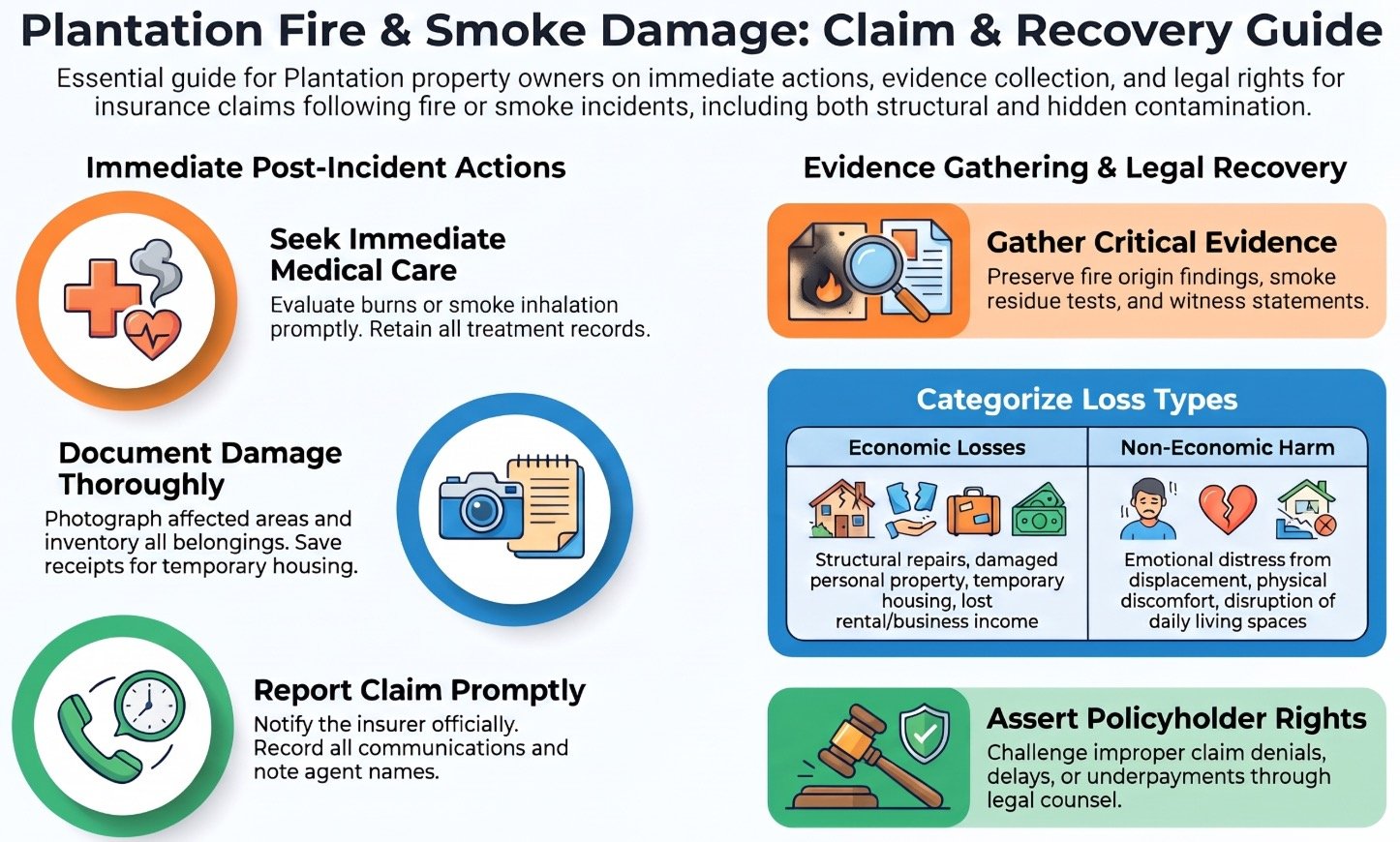
After a fire or smoke exposure, the injured person should seek prompt medical attention, even if symptoms seem mild at first. When safe, they should document property damage with photographs, records, and an inventory of affected belongings. The property owner should then contact the insurer promptly and follow the policy’s claim reporting requirements.
Seek Medical Attention
Because fire and smoke exposure can cause injuries that are not immediately apparent, anyone affected should seek medical attention promptly, even if symptoms seem mild or absent. A qualified medical professional can assess breathing, burns, eye irritation, and possible effects of toxic substances. Severe shortness of breath, confusion, chest pain, fainting, or significant burns require an immediate call to emergency services or a visit to the Emergency room. Others should arrange prompt evaluation and follow clinicians’ instructions, since symptoms may worsen after exposure. If chemicals or unknown materials may have been inhaled or ingested, Poison Control can provide guidance while medical care is arranged. Those assisting affected residents should prioritize safety, avoid re-entering hazardous areas, and help ensure each person receives appropriate care without delaying treatment for others.
Document the Damage
Document the fire and smoke damage as soon as it is safe to do so, before cleanup or repairs alter the scene. Photographs and videos should show each affected room, structural damage, soot, water intrusion, and damaged furnishings from multiple angles. A dated inventory can identify lost or damaged property, including sentimental belongings, with descriptions, approximate purchase dates, and available receipts or appraisals. Keep damaged items in place when practical, and avoid discarding anything until you have recorded it. If safety concerns or urgent repairs require removal, preserve samples, receipts, and clear images whenever possible. Record temporary expenses, including Temporary housing, meals, and necessary replacement items, and retain supporting documents. Organized evidence can help clarify the extent of the loss and assist those evaluating the property claim. Store copies securely outside the damaged home.
Contact Your Insurer
Once the damage has been recorded, the policyholder should promptly notify the insurer of the fire and smoke loss. A timely report creates an official record and helps the insurer begin its review. The policyholder should use the contact method specified in the policy, such as a claims phone line or claim portal, and note the date, time, and name of each representative contacted.
During the initial report, the policyholder should provide the Policy number, property address, date of loss, and a concise description of the damage. The insurer should also be told whether the home is safe to enter and whether temporary repairs or housing are needed. The policyholder should avoid guessing about the cause or extent of damage. Written confirmation, copies of submitted materials, and careful records of follow-up communications can support an orderly claim process and help others coordinate assistance.
Critical Evidence in a Plantation Property Claim Fire & Smoke Damage Injury Case
A strong Plantation fire and smoke damage injury claim depends on evidence that establishes the fire’s cause, property losses, and resulting harm. Essential records and accounts may include: 1. Fire origin evidence; 2. Smoke damage documentation; 3. Medical treatment records; 4. Witness statements. Combined, these materials can help clarify the incident and support an assessment of the claim.
Fire Origin Evidence
How a fire began can determine who may be responsible for the resulting property damage and smoke-related losses. Fire origin evidence can help determine whether a blaze resulted from an accident, equipment failure, unsafe conduct, or another cause. Investigators may examine the suspected area of origin, electrical components, appliances, and other physical evidence before damaged materials are altered or removed. Fire debris analysis can identify residues associated with accelerants, while burn pattern interpretation may help clarify how flames moved through the property. Document these findings carefully and review them alongside witness accounts, maintenance records, and relevant inspection reports. Preserving evidence supports a fair assessment of responsibility and helps property owners pursue appropriate remedies. A qualified investigator can explain the methods used, the limitations of the findings, and the conclusions supported by the available evidence.
Smoke Damage Documentation
Thorough smoke damage documentation can help establish the extent, source, and financial impact of losses in a Plantation property claim. Photographs and video should record visible residue, discoloration, odors, and damage across rooms, furnishings, ventilation systems, and stored belongings. Dated images taken before cleanup can preserve conditions that may otherwise change or disappear. Smoke pattern analysis may help qualified investigators assess how smoke traveled through the property and identify affected areas. Soot residue testing can help determine the nature and distribution of deposits when visual inspection alone is insufficient. A detailed inventory should describe damaged items, their condition, age, and estimated replacement or cleaning costs, supported by receipts where available. Inspection reports, cleanup proposals, and invoices can further document reasonable remediation needs and clarify the claimed property losses for insurers and other reviewers.
Medical Treatment Records
When fire or smoke exposure causes physical symptoms, medical treatment records can help establish the nature, timing, and extent of an injury connected to a Plantation property claim. Records may include examination notes, diagnostic results, prescriptions, referrals, and follow-up instructions. Collectively, these materials can show how symptoms developed and what care providers recommended. Consistent treatment helps document changes in a person’s condition, while gaps may require clear explanation. Provider coordination can help make certain relevant records are requested from physicians, clinics, hospitals, and other treating professionals. Accurate record retention preserves these documents and supports a complete claim file. Individuals should keep copies, confirm dates and provider details, and share information through appropriate channels. Careful documentation allows insurers and representatives to assess claimed injuries fairly, while supporting timely access to necessary medical care and services.
Witness Statements
Alongside medical treatment records, witness statements can help establish the circumstances and effects of a fire or smoke exposure in a Plantation property claim involving injury. Witnesses may describe when the incident began, what they observed, and how the injured person appeared before and after exposure. Their accounts can also document evacuation efforts, visible smoke, property conditions, and conversations with owners or responders. Witness credibility depends on factors such as firsthand knowledge, clear recollection, and willingness to provide accurate information. Statement consistency across interviews and other evidence may strengthen an account, while differences should be reviewed in context rather than assumed to undermine it. A careful record of each witness’s contact details and observations can help preserve useful evidence. These statements may assist insurers and decision-makers in evaluating responsibility, injury impacts, and the claim’s supporting facts.
Don’t Wait. Call Our Florida Personal Injury Lawyers Now!
Long-Term Effects of Plantation Property Claim Fire & Smoke Damage Injuries
Fire and smoke injuries may cause chronic respiratory problems that persist long after the immediate danger has passed. Some individuals also experience lasting skin damage, including scarring or sensitivity that requires ongoing care. Long-term emotional effects, such as anxiety or sleep disruption, may also affect recovery and daily life.
Chronic Respiratory Problems
Chronic respiratory problems can develop after a person inhales smoke, soot, or other airborne contaminants during a property fire, and symptoms may persist or worsen long after the visible damage is repaired. Affected individuals may experience persistent coughing, wheezing, shortness of breath, chest tightness, or reduced tolerance for physical activity. These effects can interfere with work, caregiving, and other responsibilities, making timely medical attention important. A healthcare provider may recommend Pulmonary function testing to assess airflow and lung capacity, along with examinations that identify inflammation or other injury. Tracking respiratory symptoms can document changes, triggers, and treatment responses over time. Medical records may also clarify how exposure relates to ongoing limitations. For people seeking to support affected residents, recognizing persistent symptoms and encouraging professional evaluation can help protect health and establish a clearer record of harm.
Lasting Skin Damage
Skin injuries from a property fire may leave lasting effects even after the immediate wounds have mended. Deep burns can damage tissue, limit movement, and require extended medical care. Permanent scarring may alter the skin’s texture, flexibility, and appearance, particularly when injuries affect joints or large areas. In severe cases, skin grafting is needed to cover damaged tissue, but graft sites may also develop scars or sensitivity. Ongoing treatment can include wound care, reconstructive procedures, and physical therapy to preserve function and reduce complications. These needs may create substantial costs and disrupt a person’s ability to work or manage daily responsibilities. Accurate medical records, photographs, and expense documentation can help establish the extent of the injury and support a property fire claim seeking resources for necessary care and recovery.
Long-Term Emotional Effects
Even after physical injuries recover, a property fire can leave lasting emotional effects. Survivors may experience post-traumatic stress, including intrusive memories, nightmares, or distress when encountering smoke, alarms, or damaged belongings. Persistent anxiety can affect sleep, concentration, and confidence in returning to the property. Some individuals also withdraw from family, neighbors, or community activities, even when they previously supported others. These effects may disrupt work, caregiving, and daily routines long after repairs are complete. A mental health professional can assess symptoms and recommend counseling or other appropriate care. Treatment records may also help document the incident’s consequences. When emotional harm follows a fire or smoke exposure, a Plantation property claim lawyer can explain how insurers may consider these effects in a claim and what evidence may be relevant.
Proving Liability in Plantation Property Claim Fire & Smoke Damage Injury Cases
Proving liability in a Plantation fire and smoke damage injury case requires evidence that a property owner or another responsible party failed to meet a legal duty and that this failure caused the harm. Establishing the Duty of Care involves identifying who controlled or maintained the property and what reasonable safety measures were required under the circumstances.
Evidence may include fire department reports, inspection records, maintenance logs, photographs, and witness accounts. These materials can help show whether a responsible party ignored faulty wiring, blocked exits, defective alarms, unsafe storage, or another known hazard. Expert analysis may clarify how the fire began, how smoke spread, and whether timely precautions could have reduced the injuries.
A claim based on Premises Negligence must also connect the alleged safety failure to specific harm. Medical records, treatment documentation, and testimony can establish the nature and extent of injuries. Careful evidence preservation supports a clear account of events and helps decision-makers assess responsibility fairly, particularly when several parties may have contributed.
Dealing With Insurance Companies After a Plantation Property Claim Fire & Smoke Damage Injury
After a fire or smoke-related injury at a Plantation property, insurance companies may investigate the incident and assess whether the policy covers the resulting losses. Their review may include incident reports, medical records, photographs, repair estimates, and witness statements. Injured residents, visitors, or workers can support a fair assessment by providing accurate information and preserving relevant documents. They should avoid speculation and carefully review requests before signing statements or authorizations.
Policy interpretation can affect whether medical expenses, damaged belongings, temporary housing, or other losses qualify for coverage. Policy language may contain exclusions, limits, deadlines, or conditions that require close attention. If an insurer questions the cause of the fire, the extent of smoke exposure, or the connection between the incident and an injury, clear supporting evidence may help address those concerns. Review a claim denial against the policy terms and available evidence. Legal guidance may help identify coverage issues and protect the interests of those affected.
What to Expect During a Plantation Property Claim Fire & Smoke Damage Injury Claim Process
The process typically begins with an initial review of the claim, including the available policy information and circumstances of the fire. The insurer then documents and evaluates evidence of property damage and related injuries to establish the scope of the losses. The claim may conclude through a settlement or proceed to litigation if the parties cannot resolve the dispute.
Initial Claim Review
During the initial claim review, an insurer evaluates the reported fire and smoke damage, relevant policy terms, and available evidence to determine how the claim will proceed. This stage may include a Policy review to identify applicable limits, deductibles, exclusions, and notice requirements. Coverage interpretation helps clarify which losses may qualify for payment and whether additional provisions apply. The insurer may also confirm the reported cause, property ownership, and the claimant’s authority to act for affected residents or organizations. Questions about the scope of coverage can arise when smoke affects areas beyond the fire’s origin or when multiple policies may apply. Understanding the insurer’s position helps claimants make informed decisions and support those relying on the property. Legal counsel may explain disputed terms and address delays or requests for clarification.
Fire Damage Documentation
Accurate documentation helps establish the extent and cause of fire and smoke damage to a Plantation property. Photographs and video should document affected rooms, structural conditions, and damaged belongings before cleanup or repairs begin, when safe to do so. Digital evidence may include dated images, inspection reports, fire department records, and communications with insurers or restoration professionals. Property owners should preserve receipts for emergency services, temporary repairs, and replacement items. Inventory tracking can organize damaged possessions by location, description, age, and estimated value, while noting whether each item can be repaired or must be replaced. A detailed record helps others understand the property’s condition and supports a consistent claim review. Store copies securely, and retain original documents whenever possible. Update documentation as additional damage becomes apparent.
Injury Claim Evaluation
How an injury claim is evaluated depends on the fire’s circumstances, the nature of the injuries, and the available evidence. In Plantation, an assessment may begin with medical records, treatment notes, and professional opinions documenting the person’s condition and care. Evidence about smoke exposure, burns, evacuation, or other fire-related events can help establish injury causation. Investigators may also review incident reports, witness accounts, and property records to understand how the event unfolded. Claim valuation considers documented medical expenses, lost income, anticipated treatment, and the injury’s effects on daily activities. Clear, organized records can help those handling the matter understand the losses and evaluate the support for each requested amount. A lawyer may identify missing information, coordinate relevant documentation, and explain how applicable insurance terms affect the review, while keeping the injured person’s needs at the center.
Settlement Or Litigation
Once the evidence and losses have been assessed, a Plantation fire and smoke damage injury claim may proceed through settlement negotiations or litigation. During settlement negotiations, the parties may exchange documentation, evaluate repair costs and related losses, and discuss a resolution. A claimant’s representative may present supporting evidence and respond to proposed terms, while considering whether an agreement adequately addresses the documented harm. No settlement is guaranteed, and the claimant generally retains the choice to accept or reject an offer.
If negotiations do not produce a fair resolution, you may consider litigation. A Litigation Strategy can include filing a lawsuit, conducting discovery, consulting qualified experts, and presenting evidence in court. The process may require substantial time and preparation. Throughout either path, clear communication and careful records can support an informed decision and help protect the claimant’s interests.
Compensation for Plantation Property Claim Fire & Smoke Damage Injury Damages
When a fire or smoke event damages a Plantation property, compensation may cover more than the cost of visible repairs. A claim may include reasonable expenses for cleaning, replacing damaged belongings, and restoring affected structures. Smoke can penetrate walls, ventilation systems, and furnishings, so qualified inspections may identify damage that is not immediately apparent.
If the property cannot be safely occupied, Temporary housing costs may be recoverable for the period reasonably required to complete repairs. Owners who rent out the property may also seek documented lost rental income. For a commercial property, business interruption losses may be considered when fire-related damage prevents normal operations. Records of expenses, income, repairs, and communications with the insurer can help substantiate these requests.
Coverage depends on the policy terms, exclusions, and evidence connecting each claimed loss to the event. A careful review can clarify available benefits and support a complete claim, helping property owners restore safe spaces for families, tenants, employees, and customers.
Economic vs Non-Economic Damages in Plantation Property Claim Fire & Smoke Damage Cases
In Plantation fire and smoke damage claims, economic losses may include repair costs, damaged belongings, temporary housing, and lost income. Non-economic harm can involve physical discomfort, emotional distress, or disruption to daily life. To establish either category, you need credible evidence connecting the claimed losses to the incident.
Economic Losses
Fire and smoke damage can create both economic and non-economic losses, but insurance claims generally focus on measurable financial harm. Economic losses are documented expenses or income reductions linked to the property damage. They may include repair costs, debris removal, temporary housing, and replacement of damaged equipment or inventory. Property owners who rent units may claim Lost rental income when tenants cannot safely occupy the premises. Businesses forced to close or reduce operations may seek compensation for business interruption, subject to policy terms and supporting records.
Reliable documentation helps establish the amount and cause of each claimed loss. Useful evidence can include invoices, contractor estimates, tax records, leases, payroll documents, and proof of prior earnings. A Plantation property claim lawyer may review policy limits, exclusions, and deadlines, then help organize evidence so the insurer can accurately assess covered financial losses.
Non-Economic Harm
Unlike economic losses, which can be measured through expenses or reduced income, non-economic harm concerns the personal effects of fire and smoke damage. For Plantation property owners and residents, these effects may include Emotional distress arising from displacement, uncertainty, or the loss of a familiar home environment. Smoke odors, soot, and damaged belongings can also disrupt daily routines and make living spaces feel unsafe or uncomfortable. These conditions may diminish enjoyment of a home, even after immediate repairs begin. Non-economic damages differ from costs such as cleanup, temporary housing, or lost rental income because they address human consequences rather than financial outlays. Their recognition reflects the broader impact a covered loss can have on individuals and families. The nature and extent of these personal effects can vary according to the circumstances of each claim.
Proving Damages
To support a fire or smoke damage claim, a Plantation property owner generally needs evidence connecting the loss to the amounts claimed. Economic damages may include repair costs, damaged personal property, temporary housing, and other documented expenses. Photographs, inventories, contractor estimates, receipts, and insurance records can help establish the extent and value of each loss. A policy may provide Replacement cost coverage, but payment terms can depend on completed repairs and policy conditions. Depreciation recovery may be available after repairs or replacement are documented, subject to applicable limits. Non-economic harm, such as disruption and loss of use, may require separate evidence and may not be covered by property insurance. Clear records help insurers and, when needed, courts assess the claim fairly, supporting a resolution that protects the owner’s ability to restore the property and serve its household or community.
When a Plantation Property Claim Fire & Smoke Damage Injury Case Goes to Trial vs Settlement
Whether a Plantation property claim involving fire and smoke damage settles or proceeds to trial depends on the evidence, the extent of the loss, and the insurer’s response to the claim. Settlement may provide a more predictable resolution and avoid the time, expense, and uncertainty of a courtroom dispute. It can also allow property owners to focus on restoring safe, functional living conditions for their households or tenants.
Trial may be considered when the parties cannot agree on the scope or value of covered damage, or when the insurer disputes responsibility despite supporting documentation. The decision requires weighing potential recovery against litigation costs, delay, and the possibility of an unfavorable verdict. Counsel can explain available options and help the property owner assess the practical consequences of each path.
If a case proceeds, trial testimony preparation helps witnesses present clear, consistent accounts of the damage and claim history. Jury deliberation dynamics may also affect how jurors understand the evidence, making organized records and credible testimony important.
Florida Laws That May Affect Your Plantation Property Claim Fire & Smoke Damage Case
Florida law can shape how a Plantation property owner documents, submits, and disputes a fire and smoke damage claim. Applicable statutes and policy terms may affect claim handling, required notices, and the evidence needed to support a covered loss. Understanding these rules can help owners protect their homes and maintain safe conditions for family members, tenants, and neighbors.
Florida law and policy terms can shape how Plantation property owners document, submit, and dispute fire and smoke damage claims.
- Policy language: Coverage depends on the specific contract, including exclusions, deductibles, and post-loss duties.
- Claim communications: Florida coverage statutes may establish requirements for insurers’ responses and claim practices.
- Damage documentation: Photographs, repair estimates, inventories, and qualified inspection reports can clarify the extent and cause of damage.
- Fair treatment: Policyholder protections may provide remedies when an insurer fails to meet legal or contractual obligations.
A property owner may benefit from reviewing the policy promptly and preserving relevant records. Legal guidance can help identify applicable requirements, address disputed coverage, and support a clear, accurate claim presentation while repairs and safety concerns are managed.
Don’t Wait. Call Our Florida Personal Injury Lawyers Now!
The Statute of Limitations for Plantation Property Claim Fire & Smoke Damage Injury Cases
After a fire or smoke-related injury at a Plantation property, the time allowed to file a legal claim may depend on the type of case and the facts surrounding the injury. Florida law sets different filing periods for personal injury claims, property damage actions, and claims involving government entities. Missing the applicable deadline can prevent recovery, even when the harm is serious and responsibility appears clear.
Deadline calculation requires identifying when the claim accrued and which statutory period applies. The date of the fire may not always determine when a claim begins, particularly when an injury or its connection to smoke exposure becomes apparent later. Specific procedural requirements may also affect the filing timeline.
Tolling exceptions can pause or alter a deadline in limited circumstances, such as certain legal disabilities or a defendant’s absence from the state. These exceptions are fact-specific and should not be assumed. Promptly preserving records and documenting injuries can support accurate assessment of applicable time limits and help protect the interests of those affected.
How a Plantation Property Claim Fire & Smoke Damage Lawyer Can Help You
A Plantation property claim fire and smoke damage lawyer can help injured occupants and property owners assess potential claims, identify responsible parties, and address communications with insurers. Counsel can also organize evidence and explain available legal options while keeping the interests of affected residents and the wider community in view.
- Evaluate losses: Review property damage, smoke exposure, medical records, repair estimates, and related expenses to clarify the scope of a claim.
- Investigate responsibility: Examine fire reports, building records, maintenance history, and other evidence to determine whether a landlord, contractor, manufacturer, or other party may be accountable.
- Manage insurance matters: Communicate with insurers, review policy terms, and assess settlement proposals so claimants can make informed decisions.
- Explain representation: Discuss attorney-client privilege and how confidential legal communications are protected. A lawyer may also explain a contingency fee structure, including how fees and case costs are handled.
This support can help claimants pursue fair outcomes while enabling displaced neighbors and vulnerable occupants to focus on safety, recovery, and community needs.
When to Contact a Plantation Property Claim Fire & Smoke Damage Lawyer
Prompt legal guidance may be important when a fire or smoke incident causes significant property damage, physical injury, or displacement. A property owner may consider an early claim consultation as soon as immediate safety needs are addressed and the extent of damage becomes clearer. Early contact can help preserve relevant records, clarify policy deadlines, and identify questions that require timely attention. It may also help owners coordinate repairs, temporary housing, or support for affected occupants.
Attorney Selection Timing can depend on the claim’s intricacy and the insurer’s response. Legal advice may be appropriate when coverage is disputed, payment appears insufficient, delays continue, or requests for documentation become difficult to manage. A consultation may also help before signing a release or accepting a settlement that could limit future recovery. Owners serving tenants, employees, or other community members may benefit from understanding their obligations while addressing the claim. Prompt, informed consideration can support orderly decisions without interrupting urgent safety measures or necessary property protection.
Why You Need an Experienced Plantation Property Claim Fire & Smoke Damage Lawyer
When fire or smoke damage leads to a complicated insurance claim, an experienced Plantation property claim lawyer can help owners assess coverage, organize supporting evidence, and respond to insurer requests. This guidance can be especially important when a damaged property serves employees, customers, tenants, or community members who depend on its safe operation.
A lawyer can review policy language and explain how Policy interpretation affects the claim, including deadlines, proof requirements, and limits on covered repairs. The lawyer may also examine coverage exclusions and assess whether the insurer has applied them consistently with the policy and available evidence. Clear documentation of fire damage, smoke residue, repair costs, and related losses can help support a complete claim.
When an insurer disputes the cause or extent of damage, experienced representation can help owners address those concerns through organized records and informed communication. This support allows property owners to pursue fair consideration while focusing on safety, recovery, and the needs of those affected by the loss.
How to Choose the Right Plantation Property Claim Fire & Smoke Damage Lawyer for Your Case
Because fire and smoke claims can involve disputed coverage, repair estimates, and strict policy deadlines, selecting the right Plantation property claim lawyer requires careful evaluation. A suitable lawyer should have experience handling residential or commercial property insurance disputes, including losses involving fire, soot, and smoke contamination. Reviewing Attorney credentials can help confirm licensing, relevant practice focus, and professional standing. The lawyer should also explain how the claim may proceed, what evidence could support it, and which decisions remain with the property owner.
During an initial consultation, the property owner can ask how the lawyer communicates with clients, evaluates insurer estimates, and coordinates with qualified restoration or inspection professionals. Clear answers can indicate whether the lawyer’s approach fits the owner’s needs and supports a timely, well-documented claim. The fee structure should be explained in writing, including any contingency terms, costs, and circumstances that could affect payment. Comparing these details helps property owners make an informed choice while preserving resources for recovery and community responsibilities.
About The Law Offices of Anidjar & Levine
The Law Offices of Anidjar & Levine represents individuals in property insurance disputes, including claims involving fire and smoke damage. The firm assists policyholders seeking a fair review of losses and clear answers about the claims process. Its work may include examining policy terms, organizing evidence of damage, communicating with insurers, and addressing disputes over coverage or payment.
Firm history reflects a practice serving clients across Florida in matters involving personal and property-related legal concerns. For Plantation property owners, local conditions and the scope of a loss can affect how a claim is documented and evaluated. The firm’s attorneys can review available records and explain potential next steps based on each case’s circumstances.
The attorney philosophy emphasizes attentive service, preparation, and direct communication. By helping clients understand their options, the firm aims to support informed decisions during a difficult recovery period. Outcomes depend on the policy language and facts, and no result is guaranteed. Each claim requires individual review.

Frequently Asked Questions
Does Homeowners Insurance Cover Smoke Damage to Personal Belongings?
Homeowners insurance often covers smoke damage to personal belongings when it results from a covered event, such as a fire, subject to policy limits, exclusions, and deductibles. Personal Belongings Coverage may pay to repair or replace affected items, but coverage varies by policy and circumstances. The insured should promptly notify the insurer, prevent further damage when safe, and preserve receipts, photographs, and other Smoke Damage Documentation to support the claim and assist the claims process.
Can I Stay in My Home While Fire Damage Repairs Are Underway?
Whether occupants can remain depends on the damage and the repair safety assessment. A qualified contractor or building official should determine whether fire, smoke, structural, electrical, or air-quality hazards make the home unsafe. If critical utilities are disconnected or hazardous materials require controlled removal, temporary relocation may be necessary. The household should follow written professional guidance, keep children and vulnerable residents away from work areas, and confirm when the property is safe to reoccupy.
What Does Additional Living Expenses Coverage Typically Pay For?
Additional living expenses coverage typically pays the reasonable increase in costs when a covered loss makes a home temporarily uninhabitable. It may include Temporary lodging, Meal expenses above normal food costs, laundry, transportation, and other necessary expenses. Coverage generally applies only to costs incurred during the repair period, subject to policy limits and documentation requirements. The insured should keep receipts, confirm eligibility with the insurer, and avoid assuming every added expense qualifies.
Should I Hire a Public Adjuster for a Fire Damage Claim?
Hiring a public adjuster may benefit a fire claim when damage is extensive, documentation is difficult, or the insurer’s estimate appears incomplete. The policyholder should compare Public adjuster fee structures, which commonly involve a percentage of the settlement, and confirm all fees in writing. Before hiring, verify public adjuster licensing requirements with the relevant state regulator, review references, and understand the agreement’s terms. A qualified professional can help present evidence and negotiate, but cannot guarantee payment.
Can Soot Damage Electronics Even if the Fire Was in Another Room?
Yes. Soot can travel through doorways, vents, and air currents, settling inside electronics even when the fire occurred in another room. This Electronics Soot Exposure may leave conductive residue that interferes with components, while hidden circuit corrosion can develop later as contaminants react with moisture. A qualified technician should inspect affected devices before powering them on. Prompt documentation and professional cleaning can help protect equipment and support accurate damage assessment.
—————————
Fire and smoke damage can leave property owners facing substantial losses, disputed coverage, and uncertainty about what to do next. A Plantation property claim lawyer can review your policy, assess the insurer’s decisions, and explain your options based on the evidence. Prompt action may help preserve records and protect important deadlines. The Law Offices of Anidjar and Levine can evaluate your claim and discuss whether legal representation may help pursue a fair resolution under the policy and applicable law. Learn more about a Plantation Personal Injury Lawyer.