

The Law Offices of Anidjar and Levine can explain your legal options after a car accident and help preserve evidence relevant to an injury claim. Spine, back, and neck injuries may cause pain, restricted movement, or nerve symptoms that develop hours or days later. A medical evaluation and consistent records can document symptoms, treatment, and effects on daily activities. Compensation may cover eligible medical expenses, lost income, and other documented losses, subject to insurance terms and legal requirements. Learn more from a Coral Springs Personal Injury Lawyer.
Main Takeaways
- A Coral Springs car accident lawyer can assess whether another driver’s negligence caused your spine, back, or neck injury.
- Preserve evidence, including crash reports, photographs, witness details, vehicle records, and medical documentation.
- Seek prompt medical evaluation; imaging and follow-up care can help document symptoms and guide treatment.
- Whiplash, spinal strain, and nerve symptoms may emerge hours or days after a collision, so report changes to a clinician.
- Ask a lawyer about liability, insurance claims, deadlines, and how documented treatment and daily limitations may affect your case.
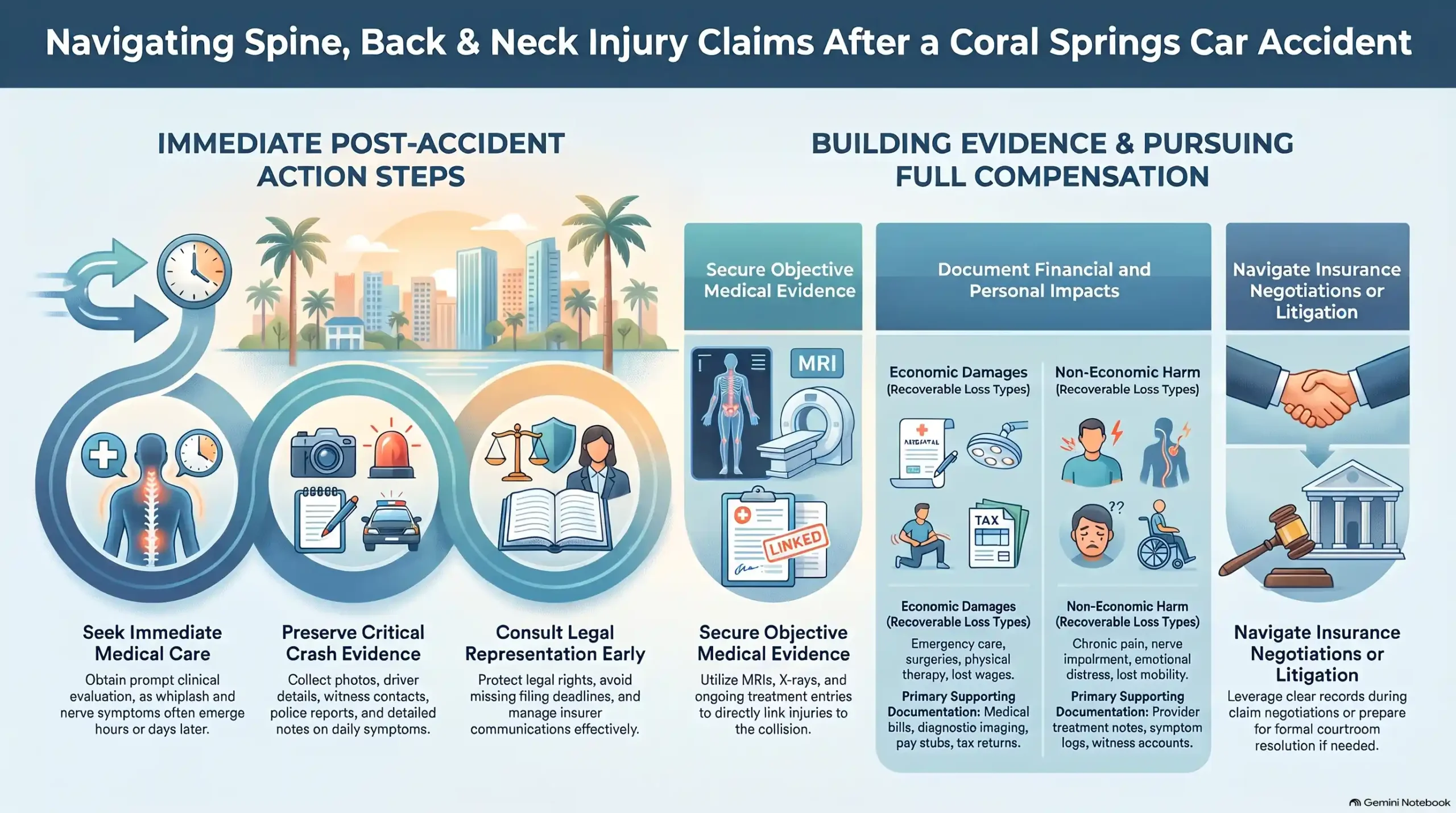


How We Can Help With Your Coral Springs Car Accident Spine, Back & Neck Injury Claim
After a Coral Springs car accident, spine, back, and neck injuries may require extensive medical care and can interfere with work and daily activities. A legal team can help an injured person pursue a claim while letting them focus on treatment and recovery. Counsel can communicate with insurers, organize relevant records, and respond to requests that may otherwise create additional demands during a difficult period.
An effective claim strategy begins with understanding the client’s needs and identifying practical steps to advance the matter. Attorneys can review available documentation, track expenses and lost income, and clearly and accurately present the effects of an injury. They can also explain important deadlines and provide updates so the client can make informed decisions.
Through careful advocacy, counsel can manage insurer communications, evaluate settlement offers, and seek a resolution that reflects documented losses. If negotiations don’t produce a fair outcome, the legal team can discuss options and prepare to pursue the claim through the appropriate legal channels.
OUR CONSULTATIONSARE FREE
START YOUR FREE CASE REVIEW

Understanding Coral Springs Car Accident Spine, Back & Neck Injury Cases
Spine, back, and neck injuries from Coral Springs car accidents can range from temporary strains to serious conditions that require ongoing treatment. Understanding the affected structures helps explain why symptoms and recovery needs differ. Spinal anatomy includes vertebrae, discs, nerves, muscles, and supporting ligaments, each of which can be injured independently or in combination. Damage can cause pain, stiffness, reduced mobility, numbness, or weakness, and some symptoms develop gradually.
Injury mechanisms influence the nature and extent of harm, but a person’s diagnosis depends on medical evaluation rather than assumptions about the collision. Clinicians may use examinations and imaging to identify injuries, assess nerve involvement, and recommend appropriate care. Accurate records can also help clarify how symptoms affect daily activities, employment, and responsibilities to family or community. Some cases resolve with conservative treatment, while others require rehabilitation or expert care. Prompt attention to new or worsening symptoms supports informed decisions and helps protect long-term health. Each case consequently requires careful review of medical evidence and individual needs.
Common Causes of Coral Springs Car Accident Spine, Back & Neck
Spine, back, and neck injuries in Coral Springs car accidents may result from distracted driving, speeding, or other reckless behavior that reduces a driver’s ability to respond safely. Rear-end collisions can subject occupants to sudden force, while failure to yield may lead to crashes at intersections. Identifying the cause can help clarify how an accident occurred and what factors contributed to the injuries.
Distracted Driving
Distracted driving is a preventable cause of Coral Springs car accidents that can leave occupants with serious spine, back, or neck injuries. Drivers may divert their attention by reading messages, adjusting navigation systems, eating, or reaching for objects inside the vehicle. Even brief visual or manual distractions can prevent a driver from noticing traffic conditions and responding in time.
Distraction can also be cognitive. A driver focused on a conversation or stressful thoughts may be less aware of hazards, even when both hands remain on the wheel. Hands-free mandates address certain device use, but they cannot eliminate cognitive distraction or every source of inattention. Preventive measures include silencing notifications, setting directions before travel, and stopping safely before attending to a task. Greater awareness helps protect passengers, pedestrians, and other road users from avoidable harm.
Speeding And Reckless Driving
When drivers exceed safe speeds or act recklessly, they have less time to respond to changing traffic conditions and may cause more forceful collisions. In Coral Springs, Speed Limit Violations can increase the likelihood that a crash will cause serious strain or impact to the spine, back, and neck. Higher speeds can increase the force transferred to vehicle occupants, potentially causing injuries that require medical evaluation and ongoing care. Aggressive Actions, such as unsafe lane changes or disregarding traffic signals, can also create sudden hazards for other road users. Responsible driving helps protect passengers, pedestrians, and nearby motorists from preventable harm. After a collision, injured individuals may benefit from prompt medical attention and clear documentation of symptoms and treatment. Legal guidance can help them understand available options and pursue appropriate support.
Rear-End Collisions
Rear-end collisions often occur when drivers follow too closely, become distracted, or fail to slow down for traffic conditions. Sudden stops, congested roads, and poor visibility can also leave a driver with insufficient time to respond. A rear-end impact may force occupants’ bodies forward while their heads move backward and then forward, straining the neck and back. These forces can cause symptoms such as stiffness, pain, or limited movement, sometimes appearing hours or days after the crash. Whiplash Mechanics help explain how rapid motion may affect muscles, ligaments, and other soft tissues, even when vehicle damage seems minor. Prompt medical evaluation can identify injuries and guide treatment. Careful documentation of symptoms and follow-up needs can also help injured people access appropriate support.
Failure To Yield
Failing to yield at intersections, driveway exits, or during lane changes can cause a vehicle to strike another car from the side or force a sudden evasive maneuver. These collisions may expose occupants to abrupt twisting or forward movement that strains the neck, back, or spine. Failure to Yield Intersections often occur when drivers overlook signs, misjudge approaching traffic, or proceed before a crossing vehicle has passed. Right-of-way violations can also happen when a driver turns across oncoming traffic or enters a roadway without checking for pedestrians and vehicles. Such conduct may leave others little time to respond safely. After a crash, prompt medical assessment can identify injuries that are not immediately apparent. Careful documentation of the scene, witness accounts, and medical treatment may help clarify how the collision occurred and support an injured person’s recovery.
Don’t Wait. Call Our Florida Personal Injury Lawyers Now!


Legal Rights of Coral Springs Car Accident Spine, Back & Neck Injury Victims
Coral Springs car accident victims with spine, back, or neck injuries may have the right to pursue compensation from a legally responsible party. Florida law may permit recovery for medical expenses, lost income, and other documented losses, subject to applicable insurance rules and legal requirements. Personal Injury Protection coverage can help pay certain initial costs, and PIP eligibility depends on the policy and circumstances. When injuries meet the legal threshold, an injured person may also seek damages from an at-fault driver. Uninsured motorists coverage may provide another source of benefits when the responsible driver lacks adequate insurance, depending on the policy.
These rights can help victims protect their health and support those who rely on them.
Careful documentation and timely legal guidance may preserve important options:
- Treatment records can connect injuries to the collision.
- Wage records can show how recovery affects household stability.
- Prompt action can help prevent missed deadlines and reduce added strain.
A qualified attorney can explain available claims, review coverage, and help pursue fair compensation while victims focus on recovery and their responsibilities to family and community.
Why Do Coral Springs Car Accident Spine, Back & Neck Injuries Happen?
Spine, back, and neck injuries in Coral Springs car accidents often occur when a sudden impact forces the body to move beyond its normal range. A rear-end collision can push the torso forward while the head briefly lags, then snaps back. These whiplash mechanics can strain the neck’s muscles, ligaments, and joints, even when vehicle damage appears limited.
Seatbelt biomechanics also influence how forces travel through the body. A properly worn belt restrains the chest and pelvis, but abrupt deceleration can still place stress on the spine. If the belt fits poorly or the occupant is positioned awkwardly, pressure may concentrate across the shoulder, ribs, or abdomen. Side impacts can twist the torso, while head-on crashes may compress or flex the spine. Vehicle speed, impact direction, seating position, and occupant health all affect injury patterns. These forces can produce pain, stiffness, or reduced mobility, sometimes with symptoms that develop gradually after the collision.
What Should You Do After a Coral Springs Car Accident Spine, Back & Neck Injury?
After a Coral Springs car accident, anyone with possible spine, back, or neck injuries should seek prompt medical care, even if symptoms initially seem mild. They should document the crash, preserve relevant records, and follow their medical provider’s guidance. A lawyer can explain potential legal options and help protect the injured person’s interests.
Seek Medical Care
Because back and neck injuries may not cause immediate or obvious symptoms, anyone involved in a Coral Springs car accident should seek prompt medical evaluation, particularly after a blow, sudden jolt, or unusual pain. A clinician can assess possible spinal or soft-tissue injuries and recommend appropriate treatment, even when discomfort initially seems minor. Emergency symptoms, including numbness, weakness, severe pain, difficulty walking, or loss of bladder or bowel control, require immediate emergency attention. If any of these signs appear, the injured person should call 911 rather than try to travel alone. For less urgent concerns, transportation options may include a trusted driver or a medical transport service, depending on the person’s condition. Following professional instructions and attending recommended follow-up visits can help address changing symptoms, support recovery, and reduce the risk of further harm.
Document the Accident
When it is safe, documenting the accident can preserve details that may later clarify how the collision occurred and how the injuries developed. A person involved should record the date, time, location, weather, traffic conditions, and direction of travel while those details remain clear. Exchange information with the other driver, including names, contact details, insurance information, and vehicle registration numbers. Witness names and contact information may also help establish an accurate account. If possible, photograph damage to all vehicles, their positions, visible road conditions, traffic signs, and any relevant debris. Take images from several angles without entering unsafe areas. A written account can note symptoms, statements made at the scene, and events leading up to the impact. Keep records factual and securely preserved.
Contact a Lawyer
Someone with a spine, back, or neck injury may benefit from contacting a Coral Springs car accident lawyer after addressing immediate medical needs. A lawyer can explain legal options, identify key deadlines, and help preserve collision-related evidence. Early guidance may also reduce the risk of overlooking records that could clarify how the injury affects daily activities and future care.
During an attorney consultation, the injured person can discuss medical treatment, insurance communications, and available documentation. The lawyer may review the circumstances and describe possible next steps without guaranteeing the outcome. A Free case review may help the person understand whether legal representation is appropriate and what information could be useful. By seeking informed advice, an injured person can make decisions that protect personal interests while staying focused on recovery and responsibilities to family and community.
Critical Evidence in a Coral Springs Car Accident Spine, Back & Neck Injury Case
A strong claim depends on evidence that documents both the collision and the lasting effects of spinal, back, or neck injuries.
Essential records may include:
- Medical records and diagnostic imaging that show the injury and its progression.
- Accident-scene evidence that preserves details that could otherwise be lost.
- Witness statements that help establish how the collision occurred and its consequences.
Medical Records
Medical records can establish how a Coral Springs car accident caused or worsened a spine, back, or neck injury and how that injury affected the patient over time. Treatment notes may document reported symptoms, examination findings, diagnoses, prescribed care, referrals, and changes in daily function. Consistent entries can help clarify when symptoms began and whether they continued, improved, or worsened. Records may also identify prior conditions, allowing providers and reviewers to distinguish earlier health concerns from accident-related changes. Patients can request copies from physicians, hospitals, therapists, and other treating professionals, then organize them by date and provider. Accurate Record retention helps preserve a clear account of care and expenses. Appropriate privacy safeguards protect sensitive information when records are shared with insurers, legal representatives, or other authorized parties.
Diagnostic Imaging
Beyond treatment notes, diagnostic imaging can provide objective evidence of spine, back, or neck injuries after a Coral Springs car accident. X-rays may reveal fractures or alignment changes, while computed tomography can show bone detail. Magnetic resonance imaging can identify disc injuries, soft-tissue damage, and nerve compression. These findings may help clinicians choose appropriate care and help injured people explain their condition clearly when seeking support. Clinicians should consider imaging results alongside symptoms, examination findings, and treatment history, since a scan alone may not establish when an injury occurred or how it affects daily function. Providers also assess MRI safety, including implanted devices and other contraindications. Understanding imaging limitations matters because some injuries may not show up on initial studies, and findings don’t always match pain severity.
Accident Scene Evidence
What happened at the scene can help clarify how a Coral Springs car accident caused spine, back, or neck injuries. Photographs, measurements, and roadway conditions may preserve details that later change or disappear. Skid mark analysis can help establish braking, vehicle movement, and the circumstances of impact. Investigators may also document vehicle damage patterns, including the location and severity of dents, broken parts, and structural deformation. These details can help explain the direction and force of a collision and support a careful assessment of how occupants were affected. Scene evidence may also record traffic signals, road design, debris, and weather conditions relevant to understanding the event. Preserving these materials promptly can help those evaluating injury claims and ensure decisions are based on a clear, reliable account of the collision.
Witness Statements
Witness statements can provide an independent account of how a Coral Springs collision occurred and what happened immediately afterward. Independent eyewitnesses may describe vehicle speed, traffic signals, lane changes, road conditions, and driver conduct. Their observations can help clarify disputed details and support a consistent account of the crash. Promptly recording each witness’s name and contact information can make later follow-up more reliable, while memories remain fresh.
Passenger observations may also help explain what occupants experienced, including the force of impact, immediate pain, or difficulty moving. Although passengers may be connected to a person involved, their statements can still provide relevant details when carefully documented and compared with other evidence. Witness accounts do not establish a diagnosis, but they may help show when symptoms began and how the collision unfolded. Accurate, respectful interviews can preserve useful information and assist a fair review of the injury claim.
Don’t Wait. Call Our Florida Personal Injury Lawyers Now!
Long-Term Effects of Coral Springs Car Accident Spine, Back & Neck Injuries
Spine, back, and neck injuries from a car accident may cause chronic pain that persists long after initial treatment. Some injured individuals also experience reduced mobility, which limits routine activities and affects their ability to work. Lasting nerve damage can produce numbness, weakness, or other symptoms that require ongoing medical care.
Chronic Pain
How long pain lasts after a Coral Springs car accident depends on the severity of the injury, the treatment required, and the individual’s recovery. Some people improve within weeks, while others experience persistent discomfort from spinal, back, or neck injuries. Chronic pain may continue after initial treatment and can require ongoing medical evaluation, medication, or physical therapy. Pain flare-ups may occur during ordinary activities or without an obvious trigger, making symptoms difficult to predict. Sleep disruption is also common when discomfort worsens at night, potentially affecting concentration, mood, and daily responsibilities. Consistent care can help identify effective ways to manage symptoms and support overall well-being. Medical records documenting pain, treatment, and its effects on daily life may also help clarify the injury’s long-term consequences for the affected person and those who depend on them.
Reduced Mobility
Reduced mobility can persist after a Coral Springs car accident when spine, back, or neck injuries limit a person’s ability to move comfortably. Stiffness, restricted joint movement, and difficulty bending or turning may interfere with ordinary tasks. These effects can make standing, walking, climbing stairs, or reaching difficult, even after initial treatment ends. Gait Changes may develop when an injured person adjusts posture or stride to avoid discomfort or protect an affected area. These changes can affect balance and make routine activities more challenging. Daily Limitations may include trouble dressing, preparing meals, driving, or completing work responsibilities. When mobility remains restricted, a person may need ongoing rehabilitation, adaptive equipment, or assistance from others. Medical evaluations can document functional changes and help guide care and recovery planning over time.
Lasting Nerve Damage
When a Coral Springs car accident damages the spine, back, or neck, nerve symptoms may continue after the initial injury has recovered. Persistent numbness, tingling, weakness, or burning pain can interfere with work, caregiving, and routine activities. The affected person may need ongoing medical evaluation to identify the source of symptoms and monitor changes over time.
Nerve Regeneration varies with the type and severity of damage, the injury’s location, and the person’s response to treatment. Some nerves recover gradually, while others may sustain lasting impairment. A Neurological Prognosis can help clarify likely recovery, recommended care, and potential long-term limitations. Medical records, diagnostic findings, and treatment plans may also document how the injury affects daily responsibilities. Understanding these consequences can support informed decisions about future care and the assistance needed to maintain safety and independence.
Proving Liability in Coral Springs Car Accident Spine, Back & Neck Injury Cases
Proving liability in a Coral Springs car accident involving a spine, back, or neck injury requires evidence that another party’s negligence caused the crash and resulting harm. Investigators may examine police reports, photographs, vehicle damage, and witness statements to establish how the collision occurred. Traffic citations can support a negligence claim, although a citation alone does not determine legal responsibility. Evidence of vehicle maintenance may also matter when a mechanical failure, such as defective brakes or worn tires, contributed to the crash.
Medical records document injuries, treatment, and the connection between the collision and the affected person’s condition. Because spine, back, and neck symptoms can develop or worsen over time, consistent evaluations and careful documentation may clarify the extent of harm. Accident reconstruction experts may analyze physical evidence and explain the forces involved. Preserving relevant records and identifying witnesses promptly can strengthen a factual account. A thorough, evidence-based review helps determine responsibility and supports efforts to protect injured people’s rights.
Dealing With Insurance Companies After a Coral Springs Car Accident Spine, Back & Neck Injury
After a Coral Springs car accident involving a spine, back, or neck injury, insurance companies may request statements, medical records, and other information while evaluating a claim. Their representatives may ask about the collision, symptoms, treatment, and daily limitations. Careful, accurate communication helps prevent misunderstandings, while incomplete or speculative answers can complicate how an injury is assessed.
Recorded Statements may be requested soon after a crash, before the full extent of an injury is known. An injured person can ask about the statement’s purpose, who will receive it, and whether providing it is required. Share medical information through appropriate channels, with attention to privacy and relevance.
Policy terms also matter. Coverage Limits may affect which expenses or losses an insurer can pay, even when injuries require substantial care. Reviewing available coverage and preserving bills, treatment records, and correspondence can clarify the information. A qualified attorney may help with communications and explain your options without promising a specific result.
What to Expect During a Coral Springs Car Accident Spine, Back & Neck Injury Claim Process
A Coral Springs car accident spine, back, or neck injury claim typically begins with an evaluation of the circumstances, injuries, and available evidence. Medical records and treatment documentation help establish the injury, while insurers assess the claim during negotiations. If the parties cannot reach an acceptable settlement, the dispute may proceed to litigation.
Initial Claim Evaluation
When a Coral Springs car accident claim involves spine, back, or neck injuries, the initial evaluation establishes how the collision, medical findings, and documented losses may affect its value. The review typically begins with a liability assessment, examining how the crash occurred, available reports, witness accounts, and each party’s role. This helps identify potential disputes over responsibility and the evidence needed to address them. The next step is claim valuation, which considers the injury’s reported effects, treatment-related expenses, lost income, and other legally recoverable losses. An attorney may also review insurance coverage, policy limits, and deadlines that could influence available recovery. Early evaluation can clarify the claim’s strengths, risks, and practical next steps. It also helps set realistic expectations while preserving the injured person’s ability to pursue fair compensation and support those who depend on them.
Medical Documentation
Medical documentation provides the foundation for evaluating how a Coral Springs collision caused spine, back, or neck injuries and affected the injured person’s daily life. Records may include emergency department notes, imaging results, examination findings, therapy records, and expert reports. Collectively, these materials show when symptoms began, how they developed, and what care was recommended.
A clear treatment chronology helps connect the collision to reported symptoms and documents whether the injured person followed prescribed care. Consistent records can also describe limitations in mobility, work, sleep, and household responsibilities. Provider credentials and the basis for each diagnosis may be relevant when reviewing medical opinions. The injured person can help preserve an accurate record by attending appointments, reporting symptom changes, and keeping copies of bills and treatment documents. Complete documentation supports a careful, fair assessment of the claim.
Insurance Negotiations
With medical records assembled, insurance negotiations can focus on how the Coral Springs collision affected the injured person’s health, daily activities, and future care needs. The insurer may review treatment records, wage information, and other evidence before evaluating responsibility and the claimed losses. Clear, organized documentation helps present the circumstances accurately and supports a fair assessment.
An adjuster may request additional information or ask questions about symptoms, treatment, and recovery. Responses should match the medical record, and unresolved questions may require clarification from providers. Policy limits can affect the amount available under the applicable coverage, while settlement authority determines what the adjuster can approve without further review. These factors shape the negotiation process but do not, by themselves, establish the claim’s value. Careful communication helps protect the injured person’s interests while keeping the discussion grounded in documented needs and evidence.
Settlement Or Litigation
After negotiations, a spine, back, or neck injury claim may resolve through settlement or proceed to litigation if the parties cannot agree on responsibility or compensation. A settlement can provide compensation without a trial, but its terms should reflect documented losses, medical needs, and the injury’s likely effects. Before accepting an offer, the injured person should review its scope and understand that signing a release can end further claims arising from the crash.
If negotiations stall, mediation may help the parties discuss disputed issues with a neutral facilitator. An effective Mediation strategy relies on clear evidence, realistic evaluations, and informed decision-making. If no agreement is reached, litigation lets a court assess liability and damages. Trial preparation may include gathering records, consulting qualified experts, and organizing testimony to present the claim accurately and support a fair outcome.
Don’t Wait. Call Our Florida Personal Injury Lawyers Now!
Compensation for Coral Springs Car Accident Spine, Back & Neck Injury Damages
Spine, back, and neck injuries from a Coral Springs car accident can lead to substantial compensation claims when they cause medical expenses, lost income, or lasting limitations. A claim may address necessary treatment, including emergency care, imaging, rehabilitation, medication, and recommended follow-up services. Records from treating providers help document the injury, explain its connection to the collision, and establish the care required.
Compensation may also account for time away from work and reduced ability to perform job duties. When symptoms interfere with daily activities or require ongoing assistance, those effects can inform the claim’s assessment. A careful claim valuation considers the available medical evidence, documented financial losses, prognosis, and the practical impact of the injury. Policy limits may restrict the amount an insurer can pay, even when documented losses are higher. The at-fault party’s available coverage and other applicable sources of recovery may consequently matter. Accurate records and a clear account of treatment needs can support a fair evaluation and help preserve resources for continued care.
Economic vs Non-Economic Damages in Coral Springs Car Accident Spine, Back & Neck Cases
In Coral Springs spine, back, and neck injury claims, economic losses may include medical expenses, lost income, and future care costs. Non-economic harm can involve pain, emotional distress, and reduced ability to participate in daily activities. Establishing both categories requires credible evidence linking the injuries to the collision and documenting their effects.
Economic Losses
A spine, back, or neck injury from a car accident can create both immediate expenses and lasting financial consequences. Economic losses include measurable costs tied to treatment, recovery, and reduced ability to work. They may include emergency care, diagnostic imaging, surgery, medication, physical therapy, and necessary medical equipment. Courts may also consider future treatment expenses when supported by medical evidence.
Lost wages can arise when an injured person misses work during recovery or medical appointments. If the injury limits the person’s ability to perform prior duties or requires a lower-paying role, diminished earning capacity may also be relevant. Documentation such as pay records, employer statements, tax returns, and medical assessments can help establish these losses. A careful accounting allows an injured person to seek compensation for verified financial harm while supporting family and community responsibilities.
Non-Economic Harm
Although economic damages reflect measurable financial losses, non-economic damages address the personal effects of a spine, back, or neck injury after a Coral Springs car accident. These harms may include physical pain, reduced mobility, and disruption to ordinary routines. A person who once managed household responsibilities, cared for family members, or participated in community activities may face new limitations. Emotional distress can also arise from persistent discomfort, uncertainty about recovery, or dependence on others for daily support. Loss of enjoyment may reflect an inability to pursue hobbies, maintain relationships in familiar ways, or participate in meaningful service. Unlike medical bills or lost income, these damages do not have a direct price tag. They recognize how an injury can affect dignity, independence, and quality of life beyond its financial consequences.
Proving Damages
How can damages be established after a Coral Springs car accident causes a spine, back, or neck injury? A claim generally requires reliable evidence connecting the collision to the injury and documenting its effects. Economic damages include medical bills, rehabilitation expenses, lost income, reduced earning capacity, and future care costs. Medical records, treatment plans, wage statements, and qualified professional assessments can help support these amounts. Organize your damage documentation consistently, including records of appointments, prescriptions, travel for treatment, and changes in work duties.
Non-economic damages address harms without a fixed price, such as pain, limitations in daily activities, and loss of enjoyment. Personal accounts may explain these effects, while treatment records and statements from people familiar with the injured person can provide context. Careful evidence gathering helps present a complete, credible account of losses and supports fair evaluation.
When a Coral Springs Car Accident Spine, Back & Neck Injury Case Goes to Trial vs Settlement
When settlement negotiations fail to produce a fair resolution, a Coral Springs car accident spine, back, or neck injury case may proceed to trial. A settlement can provide compensation without a courtroom decision, often resolving the claim sooner and with less uncertainty. The injured person generally agrees to release the claim in exchange for the negotiated payment. Before accepting, the person may consider whether the amount addresses documented losses and anticipated care.
At trial, each side presents evidence, questions witnesses, and asks a judge or jury to decide responsibility and damages. Trial preparation may involve organizing medical records, consulting qualified professionals, and preparing the injured person for courtroom testimony. The process can take longer, and its outcome is not guaranteed. A verdict may differ from earlier settlement offers.
The choice depends on the evidence, the injury’s effects, and the parties’ positions. Careful evaluation can help an injured person pursue a fair result while preserving resources for recovery and daily responsibilities.
Florida Laws That May Affect Your Coral Springs Car Accident Spine, Back & Neck Case
Whether a Coral Springs car accident spine, back, or neck injury claim settles or goes to trial, Florida law shapes your options and deadlines.
Several rules may determine which benefits apply, what evidence matters, and how responsibility is assessed.
- Florida’s no-fault system generally requires injured people to seek initial medical benefits through personal injury protection coverage. Florida no-fault thresholds may affect whether an injured person can pursue pain-and-suffering damages, so accurate medical documentation matters.
- Florida’s comparative negligence rules can reduce compensation when an injured person shares responsibility for a crash. A careful review of the collision evidence can help ensure fault isn’t assigned unfairly.
- Insurance requirements and available coverage may influence recovery for medical care, lost income, and other losses. Clear records can help protect a household’s stability and support those who depend on the injured person.
Understanding these rules can help injured people make informed decisions and preserve resources for recovery, family responsibilities, and continued service to others.
The Statute of Limitations for Coral Springs Car Accident Spine, Back & Neck Injury Cases
Because spine, back, and neck injuries may require ongoing treatment, the deadline for filing a Coral Springs car accident lawsuit can affect a person’s ability to seek compensation. Florida law generally sets a time limit for bringing a negligence claim, and missing it may prevent an injured person from recovering damages through the courts. The applicable period depends on when the crash occurred and the type of claim, so confirm the current law.
Calculating the statute deadline requires attention to key dates, including the accident date and any legally relevant date when an injury was discovered. Delayed symptoms do not automatically change the filing deadline. Tolling exceptions and extensions may apply in limited circumstances, such as when a claimant is a minor or a defendant cannot be located, but their availability depends on specific facts and statutory requirements.
Prompt attention to deadlines helps preserve legal options while injured people focus on treatment and family responsibilities. Missing a deadline can bar even a well-supported claim.
How a Coral Springs Car Accident Spine, Back & Neck Lawyer Can Help You
A Coral Springs car accident spine, back, and neck lawyer can help an injured person assess a claim, preserve relevant evidence, and address communications with insurers. Counsel can review medical records, crash reports, witness statements, and insurance terms to identify issues affecting responsibility and damages. A sound Legal Strategy can account for treatment needs, lost income, and the lasting effects of an injury, while Case Preparation organizes reliable documentation for negotiations or litigation.
This support may help an injured person focus on recovery and family responsibilities while the claim receives careful attention.
It can also help protect the interests of others who depend on accurate, fair outcomes:
- Clear records can help connect the collision to needed care and reduce a household’s uncertainty.
- Organized evidence can give insurers a fuller account of the injury’s impact on work and daily life.
- Thoughtful advocacy can help pursue accountability without overstating the facts.
A lawyer can explain your options, evaluate settlement offers, and communicate the claim’s documented value.
When to Contact a Coral Springs Car Accident Spine, Back & Neck Lawyer
After a crash, early legal guidance may help preserve evidence and clarify important deadlines. A person with back, neck, or spinal pain should consider contacting a Coral Springs car accident lawyer promptly, especially when symptoms appear hours or days later. Timely advice can help the injured person understand practical next steps while focusing on medical care and family responsibilities.
An Immediate Consultation may be appropriate when injuries require ongoing treatment, fault is disputed, or an insurer requests statements or documents. The lawyer can review the circumstances, explain available options, and identify records that may need protection, such as photographs, medical reports, and witness contact information. This early review can also help prevent avoidable gaps in the collision account.
Legal Deadlines may limit how long an injured person has to pursue a claim, and certain circumstances can affect those time limits. Prompt contact lets the lawyer review key dates and explain what action may be needed. Seeking guidance early supports informed decisions and helps protect the person’s ability to seek fair compensation.
Why You Need an Experienced Coral Springs Car Accident Spine, Back & Neck Lawyer
The effectiveness of a spinal, back, or neck injury claim can depend on the lawyer’s experience with these challenging cases. Such injuries may require ongoing treatment, careful documentation, and consideration of how symptoms affect daily responsibilities and future needs. An experienced Coral Springs attorney can assess the connection between the collision and the reported condition, organize relevant medical evidence, and address disputes about injury severity or cause.
A well-planned Case Strategy can help preserve records, meet filing deadlines, and present losses clearly and with supporting evidence. The lawyer may coordinate with medical professionals to understand diagnoses and treatment recommendations while ensuring that the injured person’s account remains accurately represented. This work can be especially important when a person’s ability to care for family members, serve the community, or maintain employment has changed.
Attorney Credentials and relevant case experience can inform how counsel evaluates complex evidence and communicates with insurers. Experienced representation can help an injured person pursue a fair resolution while focusing on recovery and vital responsibilities.
How to Choose the Right Coral Springs Car Accident Spine, Back & Neck Lawyer for Your Case
Choosing the right Coral Springs car accident lawyer for a spine, back, or neck injury claim requires careful consideration of the attorney’s experience, communication style, and approach to case preparation. A prospective client can ask how the lawyer has handled similar injury claims, evaluated medical evidence, and addressed disputes over fault or future care. These Lawyer selection criteria help show whether counsel can protect the client’s interests while keeping the claim grounded in documented facts.
Clients should also discuss communication expectations before representation begins. The attorney should explain who will provide updates, how quickly they typically answer questions, and how they will review important decisions. Clear communication supports informed choices and helps clients remain focused on recovery and their responsibilities to family and community. Carefully reviewing the fee agreement, proposed strategy, and available time for the case can further clarify whether the lawyer’s approach fits the client’s needs. The choice should rest on demonstrated competence, transparency, and a respectful working relationship.
About The Law Offices of Anidjar & Levine
The Law Offices of Anidjar & Levine represents people injured in motor vehicle accidents, including those seeking legal guidance after a crash in Coral Springs.
The firm assists clients with injury claims involving spinal, back, and neck harm, which may require ongoing treatment and affect daily responsibilities.
Its attorneys can explain legal options, review available evidence, and communicate with insurers on a client’s behalf.
The firm’s history informs its approach to serving injured people and their families.
The firm handles personal injury matters and helps clients understand the steps involved in pursuing compensation.
Its attorneys assess each case based on its facts rather than assuming that every collision or injury follows the same pattern.
The firm’s attorneys value professional diligence, clear communication, and attention to clients’ concerns.
These principles can guide interactions with people facing medical, financial, and practical challenges after a crash.
By providing legal guidance and case support, the firm helps clients make informed decisions as their claims proceed.

Frequently Asked Questions
Can a Pre-Existing Back Condition Affect My Coral Springs Car Accident Claim?
Yes, a pre-existing back condition can affect a Coral Springs car accident claim, but it does not automatically prevent recovery. Florida law may allow compensation when a collision aggravates a prior condition, even if it existed beforehand. Medical Record Documentation is important for distinguishing earlier symptoms from new or worsened injuries. Prompt treatment, consistent reporting, and relevant medical records can help clarify how the crash affected the person’s condition and daily functioning.
What if My Neck Pain Appeared Several Days After the Collision?
Neck pain that begins several days after a collision can still be related to the crash, since some injuries become noticeable only after inflammation develops. A qualified medical professional should assess delayed neck pain promptly, evaluate symptoms, and recommend appropriate care. Consistent Symptom Documentation, including when pain began, how it changes, and how it affects daily activities, can support treatment decisions and help clarify the connection between the collision and the injury.
Can Passengers File Claims for Spine or Back Injuries After a Crash?
Yes. Passengers may pursue Passenger Injury Claims for documented spine or back injuries caused by a crash, including symptoms that emerge later. They may seek compensation from an at-fault driver’s insurer or, where applicable, other responsible parties. Shared Fault Rules can affect recovery if a passenger’s conduct contributed to the collision or worsened an injury, although simply riding with a driver does not automatically establish fault. Medical records and prompt legal guidance can help clarify available options.
Do I Need to Attend an Independent Medical Examination Requested by an Insurer?
Whether attendance is required depends on the policy, claim type, and applicable law. An injured person should review the insurer’s written request and promptly consult counsel before declining, since missing an examination may affect benefits or a claim. IME appointment requirements vary, and the insurer selects the examiner. Examination preparation tips include bringing identification, listing current symptoms and medications, and answering questions accurately. Avoid speculation and ask for clarification about the examination’s scope.
Can I Pursue a Claim if the At-Fault Driver Was Uninsured?
Yes, an injured person may pursue compensation after a crash caused by an uninsured driver. Uninsured motorist coverage may pay for covered injuries and losses, subject to policy terms and limits. Personal injury protection may also cover medical expenses and certain lost income, regardless of fault. Available options depend on your insurance policy, the accident circumstances, and applicable law. Promptly reporting the collision and preserving medical and financial records can help protect a claim.
—————————
A Coral Springs car accident involving a spine, back, or neck injury can raise difficult questions about medical care, insurance coverage, and financial recovery.
Prompt treatment and careful documentation may help protect a claim, while legal guidance can clarify deadlines and available options.
Coral Springs Personal Injury Lawyer: The Law Offices of Anidjar and Levine can review the circumstances, explain the process, and pursue compensation supported by the evidence.
Each case depends on its specific facts, injuries, and applicable law.

