A Coral Springs car accident road and highway conditions lawyer from The Law Offices of Anidjar and Levine can investigate whether potholes, standing water, faded markings, debris, or inadequate construction signs contributed to a collision. The review may include photographs, witness accounts, crash reports, maintenance records, and professional roadway analysis. An attorney can identify potentially responsible agencies, contractors, or other parties, explain applicable deadlines, and pursue compensation for documented injuries and losses. Learn more about working with a Coral Springs Personal Injury Lawyer. The sections below outline how these claims are evaluated and what steps may help protect a case.
Main Takeaways
- A Coral Springs road-condition lawyer can assess whether a pothole, standing water, debris, or another roadway hazard contributed to a crash.
- Potentially responsible parties may include drivers, public agencies, maintenance contractors, or property owners.
- Preserve scene photos, witness details, crash reports, medical records, and documentation of the road hazard.
- An investigation may review maintenance records, inspection history, construction signage, drainage, and applicable roadway standards.
- Government claims may involve special notice rules and deadlines; prompt legal review can help identify requirements and preserve evidence.


How We Can Help With Your Coral Springs Car Accident Road & Highway Conditions Injury Claim
When unsafe road or highway conditions contribute to a collision in Coral Springs, an injured person may have a claim against a driver, a government agency, a contractor, or another responsible party. Legal counsel can help identify potential claims and explain the steps involved in pursuing them. A careful Claim Evaluation may include reviewing available records, examining photographs, consulting qualified professionals, and evaluating how the incident affected the injured person. Counsel can also communicate with insurers and other parties, organize supporting documents, and track applicable deadlines.
Roadway accountability depends on who controlled, maintained, or repaired the location and whether relevant duties were met. An attorney can investigate those questions while treating the injured person’s concerns with respect and providing clear updates. The goal is to present reliable evidence, seek fair consideration of documented losses, and help the person make informed decisions. Each case depends on its facts, and no particular outcome can be guaranteed.
OUR CONSULTATIONSARE FREE
START YOUR FREE CASE REVIEW

Understanding Coral Springs Car Accident Road & Highway Conditions Injury Cases
Road and highway condition injury cases in Coral Springs arise when a hazardous feature, such as a pothole, obstructed sign, or unsafe construction zone, contributes to a car accident. These claims examine how the roadway’s condition affected the crash and whether a responsible party failed to meet an applicable duty of care. Relevant parties may include public agencies, contractors, or private property owners, depending on who controlled or maintained the location.
A careful review considers the accident scene, maintenance records, inspection history, photographs, witness accounts, and available crash reports. Road design standards may help determine whether a roadway feature was planned and maintained appropriately. Investigators may also assess traffic flow patterns to understand how drivers approached the area and whether warning measures were adequate.
Injury documentation and evidence linking the roadway condition to the collision are important. Because notice requirements and filing deadlines can apply to claims involving government entities, prompt legal review can help preserve evidence and clarify available options. This process supports fair accountability and informed decisions.
Common Causes of Coral Springs Car Accident Road & Highway Conditions
Damaged pavement or poor roadway drainage can contribute to Coral Springs car accidents. Inadequate construction signage and faded lane markings may also leave drivers with limited time or information to respond safely. Identifying these hazards can help clarify how a collision occurred and which parties may bear responsibility.
Potholes and Uneven Pavement
Potholes and uneven pavement can cause drivers to lose control, damage their vehicles, or collide with nearby traffic. In Coral Springs, deteriorating road surfaces may create sudden hazards, particularly when drivers cannot see defects in time to respond safely. A vehicle striking a deep pothole may damage its tires, wheels, suspension, or alignment. Drivers who swerve abruptly to avoid pavement defects may enter another lane or place nearby motorists and pedestrians at risk. These conditions can be especially dangerous for motorcyclists and cyclists, whose balance depends on a stable riding surface. Depending on the circumstances, road agencies and maintenance contractors may be responsible for inspecting, repairing, or warning about hazardous areas. Prompt reporting can help protect other road users. Documenting the location, conditions, and any resulting injuries may help evaluate a claim.
Poor Roadway Drainage
When drainage systems fail to carry water away from streets, standing water can reduce tire traction and make it harder for drivers to see pavement hazards. In Coral Springs, heavy rain may expose weaknesses in drainage design, including blocked inlets, undersized pipes, or poorly graded road surfaces. Stormwater ponding can conceal potholes, collect near intersections, and cause vehicles to hydroplane, particularly when drivers encounter water at speed. These conditions may also force sudden braking or turning, increasing risks for nearby road users. Public agencies responsible for road maintenance can help prevent these hazards through regular inspections, timely drain clearing, and repairs that address recurring water accumulation. When a roadway remains unsafe despite known drainage problems, records of complaints, maintenance, and prior flooding may help clarify whether responsible parties took reasonable steps to protect the public.
Inadequate Construction Signage
Construction zones can create sudden hazards when signs are missing, obscured, poorly placed, or inconsistent with the work underway. Drivers rely on clear instructions to anticipate lane shifts, reduced speeds, detours, and workers near the roadway. Advance warning gives motorists time to adjust their speed and position safely, especially when traffic is heavy or visibility is limited. Signs placed too close to a work area may leave little time to respond, while conflicting messages can cause hesitation or abrupt movements. Sign visibility also matters: foliage, equipment, darkness, weather, or poor placement may prevent drivers from seeing necessary directions. Contractors and responsible agencies generally must use appropriate temporary traffic controls and maintain them as conditions change. When inadequate signage contributes to a collision, reviewing the work plan, inspection records, and site conditions can help clarify responsibility.
Faded Lane Markings
Faded lane markings can make it difficult for drivers to identify lane boundaries, turning lanes, and roadway edges, particularly at night or during rain. In Coral Springs, marking deterioration may result from heavy traffic, weather exposure, aging pavement, or delayed maintenance. When paint or reflective materials wear away, drivers may drift between lanes, misjudge turns, or enter areas intended for opposing traffic. Visibility reduction can be especially serious at intersections and on roads with limited lighting, where motorists have less time to respond to hazards. These conditions can also make it harder for pedestrians and cyclists who rely on clear roadway guidance. Transportation agencies generally must inspect and maintain public roads. When unclear markings contribute to a collision, identifying the cause can help establish whether maintenance failures played a role and support safer conditions for everyone.


Legal Rights of Coral Springs Car Accident Road & Highway Conditions Injury Victims
Road defects, unsafe work zones, and inadequate traffic controls can contribute to serious Coral Springs car accidents, and injured people may have legal rights beyond claims against another driver. A careful review can identify responsible parties and clarify available remedies. These rights may help victims pursue accountability while protecting others’ safety.
Road hazards and unsafe work zones may create legal claims beyond those against another driver.
- Potential defendants: A claim may involve a public agency, contractor, property owner, or other party whose conduct contributed to the unsafe condition.
- Evidence preservation: Photographs, witness statements, medical records, and maintenance reports can help establish what happened and document resulting losses.
- Government claims: Government immunity rules and special notice deadlines may limit claims against public entities, so prompt legal review is important.
- Shared responsibility: Under comparative negligence, an injured person’s assigned share of fault may reduce compensation, depending on applicable law.
Recoverable damages may include medical expenses, lost income, and pain and suffering. Timely guidance can help victims understand filing requirements, evaluate evidence, and pursue fair treatment without overlooking duties owed to the wider community.
Don’t Wait. Call Our Florida Personal Injury Lawyers Now!
Why Do Coral Springs Car Accident Road & Highway Conditions Injuries Happen?
When roadway conditions are unsafe, drivers may have little time to respond, and a collision can cause serious injuries. In Coral Springs, crashes may result from hazards such as potholes, uneven pavement, standing water, poor drainage, or debris that reduces traction and vehicle control. Faded lane markings and inadequate lighting can also make it difficult to see road edges, intersections, and other traffic, especially at night or in heavy rain.
Road and highway conditions are not the only contributing factors. Driver fatigue can slow reaction time and impair judgment, making it harder to adjust to changing surfaces or traffic. Distracted or speeding drivers may also fail to notice hazards in time to avoid a collision. Vehicle defects, including worn tires or faulty brakes, can further limit a vehicle’s ability to respond safely. In some collisions, several factors combine, increasing the risk of harm to drivers, passengers, and others sharing the road. Understanding these causes clarifies how preventable hazards affect community safety.
What Should You Do After a Coral Springs Car Accident Involving Road & Highway Conditions?
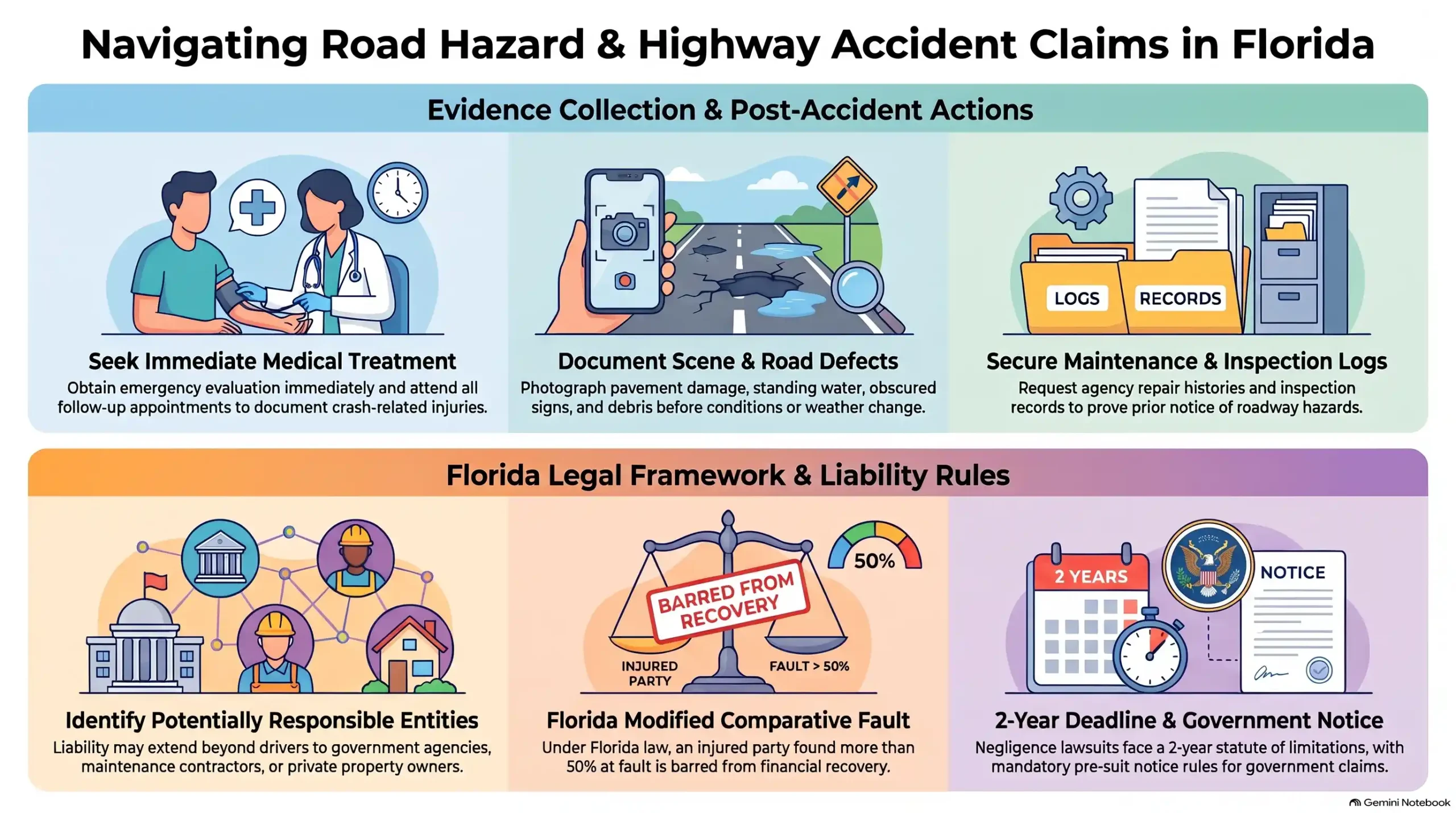
After a road-condition-related crash, injured individuals should seek prompt medical care, even if their symptoms initially seem minor. When it is safe, they should document relevant conditions, such as damaged pavement, standing water, or missing signs. A Coral Springs car accident lawyer can clarify your legal options and help preserve important evidence.
Seek Medical Care
Prompt medical evaluation is essential after a Coral Springs car accident, particularly when road or highway conditions may have caused injuries. Anyone experiencing severe pain, bleeding, difficulty breathing, confusion, or loss of consciousness should receive emergency assistance without delay. An emergency room visit can identify urgent injuries, including conditions that may not be immediately apparent. Even when symptoms seem mild, an injured person should contact a qualified healthcare provider promptly and describe all discomfort, changes, and relevant medical history. Following professional guidance supports recovery and helps prevent complications. Follow-up appointments allow clinicians to monitor symptoms, adjust treatment, and assess recovery over time. Keeping appointments and following prescribed care instructions can also provide continuity for those supporting the injured person. Medical attention should take priority over other post-collision tasks.
Document Road Conditions
Once you’ve addressed immediate medical needs, documenting road and highway conditions can help preserve information about factors that may have contributed to a Coral Springs car accident. If it is safe, an injured person or a trusted companion can photograph the scene, including pavement damage, debris, standing water, construction zones, missing signs, and traffic signals. Images should show both close details and the broader roadway layout. Notes can record the time, location, traffic flow, and any Weather conditions, such as rain or glare, that affected driving. They can also describe visibility concerns, including darkness, smoke, or obstructed sightlines. Witness names and contact details may help clarify what others observed. Gather records without entering traffic or delaying needed care, and preserve them in their original form.
Contact a Lawyer
When road or highway conditions may have contributed to a Coral Springs car accident, a lawyer can help an injured person preserve relevant evidence and assess potential claims. A lawyer may review photographs, medical records, witness accounts, and reports concerning signs, pavement, drainage, or construction. Prompt advice can help prevent evidence from being lost and clarify whether a public agency, contractor, or another party may bear responsibility.
An injured person can ask about attorney availability, the firm’s experience with roadway-related crashes, and the steps involved in a Free consultation. The consultation may provide an opportunity to discuss deadlines, possible costs, and available legal options without making immediate decisions. Timely communication can also help protect the person’s interests while allowing continued attention to medical care and the needs of others affected.
Critical Evidence in a Coral Springs Car Accident Road & Highway Conditions Injury Case
Establishing how road or highway conditions contributed to a Coral Springs car accident often depends on timely, reliable evidence. Relevant records and accounts can clarify the hazard, who is responsible for maintenance, and the cause of the injuries.
Essential evidence may include:
- Crash scene photographs
- Roadway hazard documentation
- Maintenance and inspection records
- Witness and expert statements
Crash Scene Photographs
Photographs taken at a crash scene can preserve details about road and highway conditions that may change or disappear soon after a collision. Clear images can help explain what the setting looked like when the incident occurred and support a fair assessment of what happened. Photo angles should show the broader scene and relevant features from several positions, without assuming what caused the crash. Involved drivers, witnesses, or responding personnel may take images, provided safety and emergency needs come first. Preserving metadata can help establish when and where digital photographs were created, so retain original files without edits or compression when possible. A careful, accurate photographic record can help injured people, insurers, and legal professionals evaluate evidence and pursue responsible outcomes for those affected.
Roadway Hazard Documentation
Alongside scene photographs, roadway hazard documentation can preserve evidence of conditions that may have contributed to a Coral Springs car accident. Records may identify potholes, uneven pavement, standing water, obstructed signs, or damaged barriers near the collision site. Witness accounts, dated observations, and reports submitted to responsible agencies can help establish when someone noticed a hazard and how it affected road users. Hazard reporting may also show whether drivers or community members raised concerns before the crash. Independent roadway surveys can document measurements, sight lines, surface conditions, and other physical features while evidence remains available. This documentation can help investigators evaluate the roadway’s role and identify parties responsible for public safety. Careful preservation supports fair review and helps protect others from similar hazards, without replacing evidence about repair or inspection practices.
Maintenance And Inspection Records
When road conditions may have contributed to a Coral Springs car accident, maintenance and inspection records can help clarify what the responsible agency or property owner knew and when. These documents may show whether someone reported a hazard, how quickly repairs were considered, and whether corrective work was completed. Maintenance logs can identify recurring problems, such as drainage failures, damaged pavement, or malfunctioning traffic controls. Inspection schedules may reveal how often roads or facilities were reviewed and whether required checks were missed. A careful review can also disclose gaps between reported defects and repair efforts, helping establish whether reasonable safety measures were taken. A city, county, state agency, contractor, or private property owner may hold these records. Preserving them promptly can support a fair assessment of responsibility and protect injured people’s ability to seek appropriate compensation.
Witness And Expert Statements
Maintenance and inspection records can show what a responsible party knew about a road hazard, while witness and expert statements can explain how that condition contributed to a Coral Springs car accident. Eyewitnesses may describe visibility, traffic flow, weather, and the moments before impact. Their observations can help establish whether a driver encountered a dangerous roadway condition and had time to respond. Eyewitness credibility depends on factors such as viewing distance, lighting, attention, consistency, and any relationship to the parties. Accident reconstruction experts or roadway engineers may testify about vehicle movement, sight lines, surface defects, drainage, or signage. Their analysis can connect physical evidence to the collision and clarify whether safer maintenance or warnings could have prevented it. Combined, reliable accounts can support a fair assessment of responsibility and damages.
Long-Term Effects of Coral Springs Car Accident Road & Highway Conditions Injuries
Injuries caused by hazardous road or highway conditions may have effects that continue long after the initial treatment ends. Some people experience chronic pain or lasting mobility limitations that interfere with work and daily activities. Emotional and psychological effects may also persist, making thorough assessment and appropriate support important.
Chronic Pain
Chronic pain can persist long after a Coral Springs car accident, even after visible injuries have recovered. It may follow damage to muscles, joints, nerves, or other tissues, and can affect sleep, concentration, and emotional well-being. Symptoms may vary from day to day, with pain flare-ups triggered by activity, stress, or changes in routine. A careful medical assessment can help identify possible causes and guide treatment. Chronic pain management may involve coordinated care, prescribed medication, therapeutic approaches, and regular follow-up with qualified providers. Keeping records of symptoms, appointments, and treatment responses can help clinicians evaluate progress and support continuity of care. When road or highway conditions contribute to a collision, documenting the injury and its lasting effects may also help those reviewing a potential legal claim.
Lasting Mobility Limitations
When a Coral Springs car accident damages the bones, joints, muscles, or nerves, lasting mobility limitations may affect a person’s ability to walk, bend, lift, or manage routine activities. Recovery may require ongoing physical therapy, follow-up care, or changes at home and at work. Some individuals use Mobility aids, such as canes, walkers, or wheelchairs, to move more safely and preserve independence. Others may need adaptive transportation to attend medical appointments, maintain employment, or participate in community life. These needs can create ongoing expenses and affect a person’s ability to care for or support others. Medical records and professional assessments can help document functional restrictions, treatment needs, and expected duration. A clear record may also help evaluate how the injury affects daily responsibilities and future care needs.
Emotional and Psychological Effects
Beyond physical limitations, a Coral Springs car accident may also have lasting emotional and psychological effects. Emotional trauma can develop after a collision, particularly when injuries are severe or the crash involved dangerous road or highway conditions. Affected individuals may experience anxiety, persistent fear of driving, difficulty concentrating, or heightened stress in situations that resemble the accident. Sleep disturbances, including recurring nightmares or trouble falling asleep, can further affect health, work, and family responsibilities. These effects may continue after physical injuries begin to recover, making daily activities and relationships more challenging. Qualified mental health professionals can evaluate and identify symptoms and guide appropriate care. When another party’s negligence contributed to the crash, documentation of psychological effects may also help establish the full impact of the injuries in a legal claim.
Proving Liability in Coral Springs Car Accident Road & Highway Conditions Injury Cases
Proving liability in a Coral Springs car accident caused by unsafe road or highway conditions requires evidence that identifies the hazard, establishes who had a duty to address it, and connects the hazard to the crash and resulting injuries. Relevant evidence may include photographs, maintenance records, inspection reports, traffic-control plans, and witness statements. These materials can show whether a dangerous pothole, obstructed sign, poor drainage, or missing barrier existed before the collision and whether responsible parties knew, or reasonably should have known, about it.
Responsibility may rest with a government agency, contractor, property owner, or another entity, depending on who controlled the roadway and caused or failed to correct the danger. Government liability can involve special notice rules and deadlines, so promptly identifying the right agency matters. In some cases, roadway design or construction choices may have created an unreasonable risk. Medical records and crash analysis can help establish how the condition contributed to injuries, supporting a clear, evidence-based account of responsibility.
Dealing With Insurance Companies After a Coral Springs Car Accident Road & Highway Conditions Injury
After a Coral Springs crash linked to unsafe road or highway conditions, insurance claims may involve more than the injured person’s auto insurer. Depending on the circumstances, a driver’s insurer, a vehicle owner’s carrier, or a public entity’s risk administrator may also become involved. Each may assess fault and coverage from its own perspective.
Injured people should provide accurate information and avoid speculating about the cause or extent of harm. Because recorded statements can be used to evaluate a claim, consider questions carefully, and unclear requests may warrant legal guidance before responding. Medical records, photographs, repair documents, and other relevant evidence can help explain the losses and the conditions reported.
Review settlement offers against documented expenses, anticipated care, lost income, and other legally recognized damages. An early offer may not reflect an injury’s full impact. Careful communication helps protect the injured person’s interests while supporting a fair, evidence-based resolution.
Don’t Wait. Call Our Florida Personal Injury Lawyers Now!
What to Expect During a Coral Springs Car Accident Road & Highway Conditions Injury Claim Process
A Coral Springs car accident claim typically begins with an initial case review to assess the collision, injuries, and available legal options. Evidence collection then helps establish how road or highway conditions contributed to the crash, while negotiations address the claim’s value and potential resolution. Once the parties reach an agreement or a different outcome is reached, the claim concludes with resolution and payment.
Initial Case Review
During the initial case review, a Coral Springs car accident lawyer examines how road or highway conditions may have contributed to the crash and resulting injuries. The Initial consultation gives the injured person an opportunity to describe the incident, explain its effects, and identify immediate concerns. The lawyer may ask about the location, direction of travel, weather, and circumstances surrounding the collision, while clarifying the person’s goals and questions.
A case assessment then considers whether the known circumstances may support a claim and which parties could bear responsibility. The review may address applicable deadlines, potential insurance issues, and the general steps involved in pursuing compensation. It also helps determine whether the matter fits the lawyer’s practice and what guidance may be appropriate. No outcome can be guaranteed, and the assessment may change as the claim develops.
Evidence Collection
When road or highway conditions may have contributed to a collision, evidence collection helps clarify how the crash occurred and whether those conditions played a role in the injuries. A careful review may include photographs of the roadway, traffic signs, lighting, debris, and vehicle damage. Investigators may also seek maintenance records, construction notices, inspection reports, and available surveillance or traffic-camera footage. Medical records and witness accounts can help document the injuries and connect them to the incident. Preserving evidence matters because road conditions can change quickly and recordings may be overwritten. Counsel may send requests to relevant agencies or businesses to retain records and footage. Digital backups of photographs, videos, and documents can protect important materials from loss and support an organized, accurate account of the collision for everyone involved.
Claim Negotiations
With evidence preserved, claim negotiations can focus on how road or highway conditions contributed to the collision and resulting injuries. Counsel may present photographs, maintenance records, witness accounts, and medical documentation to explain the claim’s factual and financial basis. The insurer may question whether a hazard existed, whether a responsible party had notice, or whether another driver contributed to the crash. A careful Settlement strategy addresses these issues with evidence and a reasoned evaluation of liability, injury effects, and future needs. Negotiation tactics may include responding to disputed facts, clarifying gaps in the insurer’s evaluation, and supporting requested compensation with relevant records. Throughout discussions, counsel can keep the injured person’s needs and community responsibilities in view while evaluating proposals. The parties may exchange information and revise positions as negotiations proceed.
Resolution And Payment
A claim may resolve through a negotiated settlement or, if the parties cannot agree, through litigation. Once the parties reach an agreement, the written release typically states the payment amount and terms. The injured person should review those terms carefully because signing may end the right to seek further compensation for the same collision.
Settlement timing depends on factors such as treatment progress, evidence collection, liability disputes, and insurer review. Resolving a claim before the person’s medical condition is understood may leave future expenses uncompensated. If litigation is necessary, court scheduling and additional proceedings can extend the process.
After you complete the required documents, payment methods may include a check or electronic transfer, subject to the settlement terms. The court may deduct outstanding medical bills, liens, or legal fees before distributing funds. Clear accounting helps ensure payments are handled responsibly.
Compensation for Coral Springs Car Accident Road & Highway Conditions Injury Damages
Road and highway conditions can cause serious car accident injuries in Coral Springs, especially when hazards such as potholes, inadequate signage, or unsafe construction zones go unaddressed. When a dangerous condition causes a collision, an injured person may seek compensation from a responsible party, depending on the evidence and applicable law. Potentially responsible parties may include a property owner, contractor, or government agency charged with maintaining the roadway. Identifying the proper party requires examining maintenance records, construction plans, warning signs, and the circumstances of the crash.
Compensation may address treatment costs, rehabilitation, medication, and other documented care needs. Medical Expense Recovery can help an injured person manage collision-related bills and pursue necessary future treatment when supported by medical evidence. Lost Income Compensation may cover wages missed during recovery and, in appropriate cases, reduced future earning ability. Promptly document injuries, expenses, and work absences to support a claim. A careful investigation also helps preserve evidence and clarify how the road hazard contributed to the injuries.
Economic vs Non-Economic Damages in Coral Springs Car Accident Road & Highway Conditions Cases
Damages in road and highway condition cases may include economic losses, such as medical bills, lost income, and repair costs. They may also cover non-economic harm, including pain, emotional distress, and reduced quality of life. Establishing these damages generally requires evidence linking the collision and resulting losses to the hazardous road condition.
Economic Losses
When road or highway conditions contribute to a Coral Springs car accident, economic losses are the measurable financial costs linked to the resulting injuries and property damage. These damages may include emergency care, hospital treatment, medication, rehabilitation, and future medical services supported by evidence. Repair or replacement costs for a damaged vehicle and other personal property may also qualify. If injuries prevent a person from working, Lost wages can reflect income missed during recovery. Reduced earnings may apply when lasting limitations affect the person’s ability to perform prior duties or maintain the same work schedule. Records such as medical bills, repair estimates, pay statements, and employment documentation help establish the amount and cause of these losses. Careful accounting supports a fair claim and helps preserve resources for ongoing needs. Each loss must be connected to the collision and substantiated.
Non-Economic Harm
Beyond measurable expenses, a Coral Springs car accident may cause non-economic harm that affects a person’s daily life and well-being. Unlike medical bills or lost income, these losses concern the personal consequences of an injury. Emotional distress may include fear, anxiety, sleep disruption, or continuing stress related to travel and recovery. Physical pain can limit routine activities, strain family relationships, and interfere with a person’s ability to care for others. Some injuries also reduce enjoyment of hobbies, community involvement, and everyday experiences. The effects may continue after initial treatment ends, particularly when recovery is prolonged or limitations remain. Non-economic damages recognize that an accident’s impact is not measured only by financial costs. Their nature and significance depend on the individual circumstances and the harm experienced.
Proving Damages
How can an injured person establish the value of losses after a crash involving Coral Springs road or highway conditions? Evidence should connect the unsafe condition and collision to each claimed harm. Economic damages include documented medical bills, rehabilitation costs, lost income, and reduced future earning capacity. Records, receipts, employer statements, and expert assessments can help establish these amounts. A treating provider’s Medical Prognosis may explain whether recovery is expected or ongoing treatment is needed. Future Care estimates should identify anticipated services and costs, supported by qualified medical opinions.
Non-economic damages address pain, emotional distress, loss of mobility, and reduced ability to participate in daily life. Consistent treatment records and accounts from the injured person and those familiar with the changes can support these claims. Clear, organized evidence helps decision-makers assess both measurable expenses and personal effects fairly.
When a Coral Springs Car Accident Road & Highway Conditions Injury Case Goes to Trial vs Settlement
In Coral Springs, a car accident claim involving hazardous road or highway conditions may be resolved through settlement or proceed to trial, depending on the evidence, the parties’ positions, and the extent of the injuries. Settlement can provide a defined resolution without the time and uncertainty of a courtroom proceeding. Negotiations may address medical expenses, lost income, continuing care, and other documented effects of the collision. A carefully evaluated offer can also allow injured people to focus on recovery and preserve resources for their families and community.
If the parties cannot agree on responsibility or fair compensation, the case may proceed to trial. Evidence about the road hazard, the crash, and resulting harm is presented for a judge or jury to evaluate. Witness accounts, records, and trial testimony may help explain how conditions contributed to the collision. Jury deliberations follow the presentation of evidence and arguments, and the outcome is not guaranteed. Each path requires preparation, clear documentation, and informed assessment of the case’s needs and risks.
Florida Laws That May Affect Your Coral Springs Car Accident Road & Highway Conditions Case
Florida law can shape a Coral Springs car accident claim when a road or highway condition may have contributed to the crash. Several legal principles guide how responsibility is assessed and what evidence matters. Understanding them can help injured people pursue accountability while supporting safer roads for the wider community.
- Negligence: A claim may examine whether a driver, property owner, or public entity failed to use reasonable care and whether that failure contributed to the collision.
- Comparative fault: Florida’s modified comparative negligence rule may reduce a claimant’s recovery based on their share of responsibility. A person found more than 50 percent at fault generally cannot recover damages.
- Public-entity claims: Florida sovereign immunity may limit claims against government agencies, although statutory exceptions permit certain negligence actions subject to specific requirements.
- Notice and records: Governmental notice rules can affect claims involving public roads. Maintenance logs, inspection records, photographs, and witness accounts may help establish what an agency knew and whether it had a reasonable opportunity to respond.
The Statute of Limitations for Coral Springs Car Accident Road & Highway Conditions Injury Cases
Because road-condition claims may involve both private parties and government entities, the deadline to file a Coral Springs car accident injury lawsuit can depend on who is responsible and the circumstances of the crash. Florida law generally gives injured people two years to file a negligence lawsuit, including many claims arising from roadway hazards. Missing the applicable deadline may prevent recovery, even when evidence supports the claim.
Filing deadlines can differ when a public agency may be responsible for a dangerous road, inadequate maintenance, or a missing warning. Florida law requires Government notice before a lawsuit against a state or local government entity, subject to statutory deadlines and specific content requirements. The notice period is separate from the filing deadline, and additional rules may apply.
Because identifying the responsible party and the date a claim accrues can affect these deadlines, prompt attention is important. Preserving the opportunity to seek compensation can help injured people and their families address the consequences of a serious crash.
Don’t Wait. Call Our Florida Personal Injury Lawyers Now!
How a Coral Springs Car Accident Road & Highway Conditions Lawyer Can Help You
When a crash involves a dangerous road or highway condition, a lawyer can help identify who may be legally responsible and what evidence supports the claim. The review may consider Local road design, maintenance practices, construction activity, and whether a public or private entity knew or should have known about a hazard. A careful investigation can support fair accountability while helping injured people access recovery resources.
A lawyer may assist by:
- Examining crash reports, photographs, witness accounts, and available roadway records to clarify how the condition contributed to the collision.
- Consulting qualified engineers or safety professionals to assess visibility, signage, drainage, pavement defects, or design concerns.
- Identifying potentially responsible parties, including property owners, contractors, agencies, or drivers, and evaluating municipal accountability under applicable rules.
- Organizing medical documentation, wage information, and other loss records to present a substantiated claim and respond to disputes.
This work can also help communities recognize recurring hazards. By documenting conditions and pursuing appropriate remedies, counsel may support safer roads for residents and other travelers.
When to Contact a Coral Springs Car Accident Road & Highway Conditions Lawyer
Early legal guidance can help preserve evidence and clarify responsibility after a crash involving a road or highway hazard. Contacting counsel soon after addressing medical needs may help secure photographs, witness details, vehicle data, and records of road conditions before they are lost or changed. Early legal consultation can also help identify reporting deadlines and determine which parties may need notice, including a public agency or contractor. Consider seeking guidance when injuries are serious, the hazard’s cause is disputed, or an insurer requests a statement or release. Prompt contact is also appropriate if a dangerous condition may affect other road users, since timely reporting can support measures that protect the community. Attorney selection criteria may include experience with roadway claims, clear communication, and familiarity with Florida procedures. A prospective client can ask about fees, expected timelines, and how the firm provides updates. A timely, informed choice helps preserve options while recovery and practical responsibilities remain the priority.
Why You Need an Experienced Coral Springs Car Accident Road & Highway Conditions Lawyer
An experienced Coral Springs car accident road and highway conditions lawyer can help determine whether a hazardous roadway contributed to a crash and who may be legally responsible. This work can clarify whether unsafe maintenance, poor drainage, obstructed signs, or inadequate lighting played a role. It may also identify whether a public agency, contractor, or private property owner had responsibility for addressing the hazard.
Roadway design and maintenance records can reveal whether a dangerous condition was known, reasonably preventable, or connected to established safety standards. An attorney can gather relevant evidence, coordinate qualified assessments, and explain how liability rules may apply. When a government entity is involved, municipal accountability questions and notice requirements can affect how a claim proceeds.
Experienced legal guidance can help injured people and families pursue a fair review while preserving evidence and meeting applicable deadlines. This support can also help communities identify recurring hazards, promote safer roads, and reduce the risk of similar crashes.
How to Choose the Right Coral Springs Car Accident Road & Highway Conditions Lawyer for Your Case
Choosing the right Coral Springs car accident road and highway conditions lawyer requires careful evaluation of experience, investigative resources, and familiarity with claims involving roadway hazards. A qualified attorney should understand how poor maintenance, unsafe design, construction activity, or missing warnings may contribute to a collision. Reviewing Lawyer credentials can help confirm relevant training, licensing, and experience handling injury claims involving public or private roadways.
The lawyer should also explain how they will gather evidence, including photographs, maintenance records, traffic reports, and witness accounts. Clear client communication matters throughout the process. A dependable representative provides timely updates, answers questions directly, and explains available options without making unrealistic promises.
Potential clients can ask about case strategy, fee arrangements, and how the lawyer coordinates with investigators or experts. Careful selection helps ensure injured people receive informed guidance as their legal representative works to establish responsibility and pursue fair compensation for losses. A thoughtful consultation can clarify whether the lawyer’s methods and experience fit the case.
About The Law Offices of Anidjar & Levine
The Law Offices of Anidjar & Levine represents people injured in car accidents, including collisions involving roadway hazards in Coral Springs.
The firm assists clients seeking answers after crashes linked to unsafe road design, poor maintenance, inadequate signage, or other dangerous conditions.
Its attorneys can review available evidence, explain legal options, and pursue claims for losses supported by the facts.
The firm’s history reflects a focus on representing injured people and helping them navigate complex legal matters.
The firm’s work may include investigating how a roadway condition contributed to a collision, identifying potentially responsible parties, and communicating with insurers.
Each case depends on its specific circumstances, and no outcome can be guaranteed.
Community involvement is also part of the firm’s public-facing work.
By engaging with local communities and sharing information about legal rights, the firm seeks to make assistance more accessible to people facing difficult circumstances.
Its approach emphasizes attentive service, clear communication, and practical guidance throughout the claims process.

Frequently Asked Questions
Can I Recover Damages if a Road Defect Contributed to My Coral Springs Crash?
A driver may recover damages if a road defect contributed to a Coral Springs crash and you can establish a responsible party’s negligence. Potential claims may involve a government agency or contractor responsible for maintenance, design, or negligent construction. Evidence such as photographs, inspection records, and witness accounts can help show how the defect caused harm, including at dangerous intersections. Prompt legal review matters because notice rules and filing deadlines may apply.
Who Maintains the Road Where My Coral Springs Car Accident Occurred?
Responsibility depends on road ownership and the agency responsible for maintaining that specific location. In Coral Springs, the city, Broward County, or the Florida Department of Transportation may maintain a road, depending on its classification. You can identify the responsible agency through public maps, signs, or maintenance records. Carefully reviewing the crash location and agency records can help determine who had a duty to address the road condition.
Can Poor Weather Affect Responsibility for a Coral Springs Car Accident?
Poor weather can affect responsibility for a Coral Springs car accident, but it does not automatically excuse a driver’s conduct. Drivers must adjust speed, following distance, and attention to conditions such as rain, flooding, or reduced visibility. Weather-related driver negligence may include failing to slow down or maintain control. Investigators can assess adverse weather evidence, vehicle damage, road conditions, and witness accounts to determine whether a driver acted reasonably and contributed to the collision.
What if a Road Hazard Appeared After My Coral Springs Accident?
If a road hazard appeared after a Coral Springs accident, it may still help explain the crash, but you must establish its timing and connection. The affected person should report it to authorities and promptly document the hazard, including photographs, witness details, and maintenance records when available. Scene preservation matters because road conditions can change quickly. Investigators can assess whether the hazard existed before impact and whether a responsible party failed to address it.
Can a Passenger File a Claim After a Coral Springs Road-Condition Crash?
Yes. A passenger may file a claim after a Coral Springs crash caused by unsafe road conditions, even if the passenger bears no responsibility for the collision. Eligibility for a passenger claim depends on the evidence, applicable deadlines, and each party’s role in causing the injuries. Insurance coverage options may include benefits under the driver’s policy, another involved driver’s policy, or available uninsured motorist coverage. Prompt medical care and careful documentation can help protect the passenger’s interests.
—————————
Road and highway conditions can contribute to serious Coral Springs car accidents, but determining responsibility requires careful investigation of the evidence and applicable law.
Injured victims may have options for pursuing compensation for medical expenses, lost income, and other documented losses.
Prompt legal guidance can help preserve evidence, clarify deadlines, and address communications with insurers.
The Law Offices of Anidjar and Levine can review a claim’s circumstances and explain potential next steps based on the facts.
Learn more from a Coral Springs Personal Injury Lawyer.