
A Port St. Lucie property claims water and pipe damage lawyer can help property owners review policy terms, insurer decisions, and deadlines after a leak or flood. The Law Offices of Anidjar and Levine can assist with disputed causes, repair scopes, or coverage explanations. Effective claims often depend on prompt notice, reasonable steps to limit further damage, and organized evidence, such as photographs, inspection reports, repair estimates, and receipts. For related legal information, visit our Port St. Lucie Personal Injury Lawyer page. The following sections explain common damage sources, documentation, potential rights, and when counsel may assist.
Main Takeaways
- A Port St. Lucie property claim lawyer can review your policy, claim file, repair estimates, and the insurer’s reasons for limiting or denying payment.
- Water and pipe claims may involve burst or corroded pipes, appliance leaks, drainage problems, storms, or disputed causes of damage.
- Photograph affected areas, preserve original files, keep receipts and inspection reports, and document mitigation and repairs.
- Notify your insurer promptly, take reasonable steps to prevent further damage, and track policy deadlines and requested documents.
- A lawyer can help communicate with the insurer and address disputes over coverage, damage scope, or policy terms.
How We Can Help With Your Port St. Lucie Property Claim Water & Pipe Damage Injury Claim
A Port St. Lucie property claim lawyer can help property owners respond to water and pipe damage with organized, informed support. The attorney reviews policy documents, claim records, repair estimates, and communications with the insurer to identify relevant obligations and deadlines. This careful review can help clients understand available options and make decisions based on the facts.
A clear Claim strategy may include documenting damage, preserving receipts, coordinating professional assessments, and presenting a well-supported request for benefits. When coverage disputes arise, counsel can examine the insurer’s stated reasons, compare them with the policy language, and address gaps or errors through appropriate communication. The lawyer may also help organize evidence and explain the steps involved in seeking further review.
Throughout the process, the attorney can provide practical guidance, monitor important deadlines, and communicate with the insurance company on the client’s behalf. This support allows property owners to focus on household needs while pursuing a fair evaluation of their claim.
Don’t Wait. Call Our Florida Personal Injury Lawyers Now!
Understanding Port St. Lucie Property Claim Water & Pipe Damage Injury Cases


When water or pipe damage affects a Port St. Lucie property, the resulting claim may involve more than repairs to walls, flooring, or personal belongings. A property damage injury case considers whether unsafe conditions caused physical harm, how that harm affected daily life, and what evidence supports the connection. Water contamination may create health concerns that require prompt assessment, while mold exposure can contribute to respiratory symptoms or other documented effects. Medical records, inspection findings, photographs, repair estimates, and communications with the insurer may help establish the extent of loss and injury. Each claim depends on its facts, including when the issue was discovered, the property’s condition, and the policy terms available. A careful review can clarify which losses may be covered and what information is needed to support a fair evaluation. For residents seeking to protect their families and assist affected neighbors, understanding these issues can encourage timely, informed steps without minimizing health risks.
Common Causes of Port St. Lucie Property Claim Water & Pipe Damage
Water and pipe damage in Port St. Lucie properties can result from burst pipes, leaking plumbing, or appliance failures. Roof and window leaks can also let water enter and damage interior materials. Identifying the source can help clarify the cause and scope of a property claim.
Burst Pipes
OUR CONSULTATIONSARE FREE
START YOUR FREE CASE REVIEW

Why Do Pipes Burst in Port St. Lucie? Although the region rarely experiences prolonged freezes, sudden cold snaps can expose vulnerable plumbing to damaging temperatures. Pipes in unheated garages, exterior walls, crawl spaces, or vacant properties may be at greater risk when temperatures fall. Aging materials, corrosion, excessive water pressure, and shifting structures can also weaken pipes until they rupture. A burst line may release substantial water quickly, damaging floors, walls, furnishings, and personal belongings. Property owners can reduce some risks through timely maintenance, pressure checks, and appropriate pipe insulation. Freeze prevention measures, such as protecting exposed lines and maintaining safe indoor temperatures, may be especially important during cold weather. When a rupture causes property damage, prompt documentation and careful review of the insurance policy can help support a claim and recovery.
Leaking Plumbing
Leaking plumbing can cause significant property damage in Port St. Lucie when small, persistent leaks go unnoticed. Water may escape from supply lines, drain connections, joints, or concealed pipes, gradually damaging drywall, flooring, cabinetry, and structural materials. Even a slow drip can encourage mold growth and create costly repair needs if moisture remains trapped.


Plumbing leak detection can help identify hidden problems before damage spreads. Warning signs may include unexplained increases in water use, damp spots, discoloration, musty odors, or reduced water pressure. Pipe corrosion causes can include age, mineral buildup, water chemistry, and prolonged exposure to moisture. Corroded pipes may develop pinhole leaks or weakened joints, requiring prompt assessment. Property owners who document the source, affected areas, and repair steps can support a clear insurance claim and help protect their households and community members.
Appliance Failures
Appliance failures can release substantial amounts of water into Port St. Lucie homes, damaging floors, walls, cabinets, and personal property. An Appliance malfunction may involve a broken washing machine hose, a dishwasher connection, or a water heater that suddenly stops containing water. Refrigerator leaks can develop when a supply line cracks, a fitting loosens, or a defrost drain becomes blocked. Even a slow leak may remain unnoticed behind an appliance, allowing moisture to spread and contribute to mold growth. Property owners can reduce further damage by shutting off the water supply, documenting affected areas, and arranging prompt repairs. When filing an insurance claim, photographs, repair records, and damaged-item inventories can help establish the loss. A qualified professional can assess coverage, evaluate the insurer’s response, and explain available options.
Roof And Window Leaks
When storms, aging materials, or poor installation compromise a roof or window, water can enter a Port St. Lucie property and damage ceilings, walls, insulation, and belongings. Wind-driven rain may penetrate around roof edges, damaged shingles, loose siding, or poorly sealed window frames, even when no opening is visible from inside. Flashing defects near chimneys, vents, and window openings can also direct water into vulnerable areas. Over time, repeated moisture may encourage mold growth, weaken building materials, and create conditions that require extensive repairs. Property owners serving family members, tenants, or customers may need to document the affected areas promptly and take reasonable steps to prevent further damage. Photographs, repair records, and professional inspections can help clarify how the leak occurred and support an accurate insurance claim.
Legal Rights of Port St. Lucie Property Claim Water & Pipe Damage Injury Victims
Property owners and other injured parties in Port St. Lucie may have legal protections when water or pipe damage affects a home, business, or personal property. Policyholder rights can include fair review of a covered claim, access to policy information, and a written explanation when an insurer denies or limits payment. The precise protections depend on the policy, applicable law, and the facts of the loss.
To protect their interests and support those who rely on them, affected parties may consider these steps:
- Review the policy’s coverage terms, exclusions, notice requirements, and claim deadlines.
- Preserve relevant records, including insurer communications, repair estimates, photographs, and receipts.
- Request clarification of disputed decisions and seek qualified legal guidance when needed.
A property owner may also have duties to report damage promptly and take reasonable steps to prevent further loss. Careful documentation and timely communication can help confirm that claims are assessed accurately. Legal counsel can explain available options without promising a particular outcome.
Why Do Port St. Lucie Property Claim Water & Pipe Damage Injuries Happen?
Why do water and pipe damage injuries occur in Port St. Lucie? These losses often result from aging plumbing, sudden failures, or conditions that allow water to enter and damage a property. Pipe corrosion can weaken metal lines over time, eventually causing leaks or ruptures that affect walls, flooring, and personal belongings. Poor installation, worn seals, clogged drains, and failed appliance connections may also lead to unexpected water release.
Although freezing temperatures are less common in this region, occasional cold snaps can stress vulnerable pipes. Pipes in unheated areas or near exterior walls may freeze, expand, and crack, releasing water as they thaw. Heavy rainfall, storm-related damage, and inadequate drainage can further contribute to property losses when water reaches areas not designed to withstand prolonged exposure.
The resulting damage may disrupt housing, business operations, and community services. Understanding common causes helps property owners recognize how maintenance issues, weather, and plumbing failures can combine to create substantial claims.
What Should You Do After a Port St. Lucie Property Claim Water & Pipe Damage Injury?
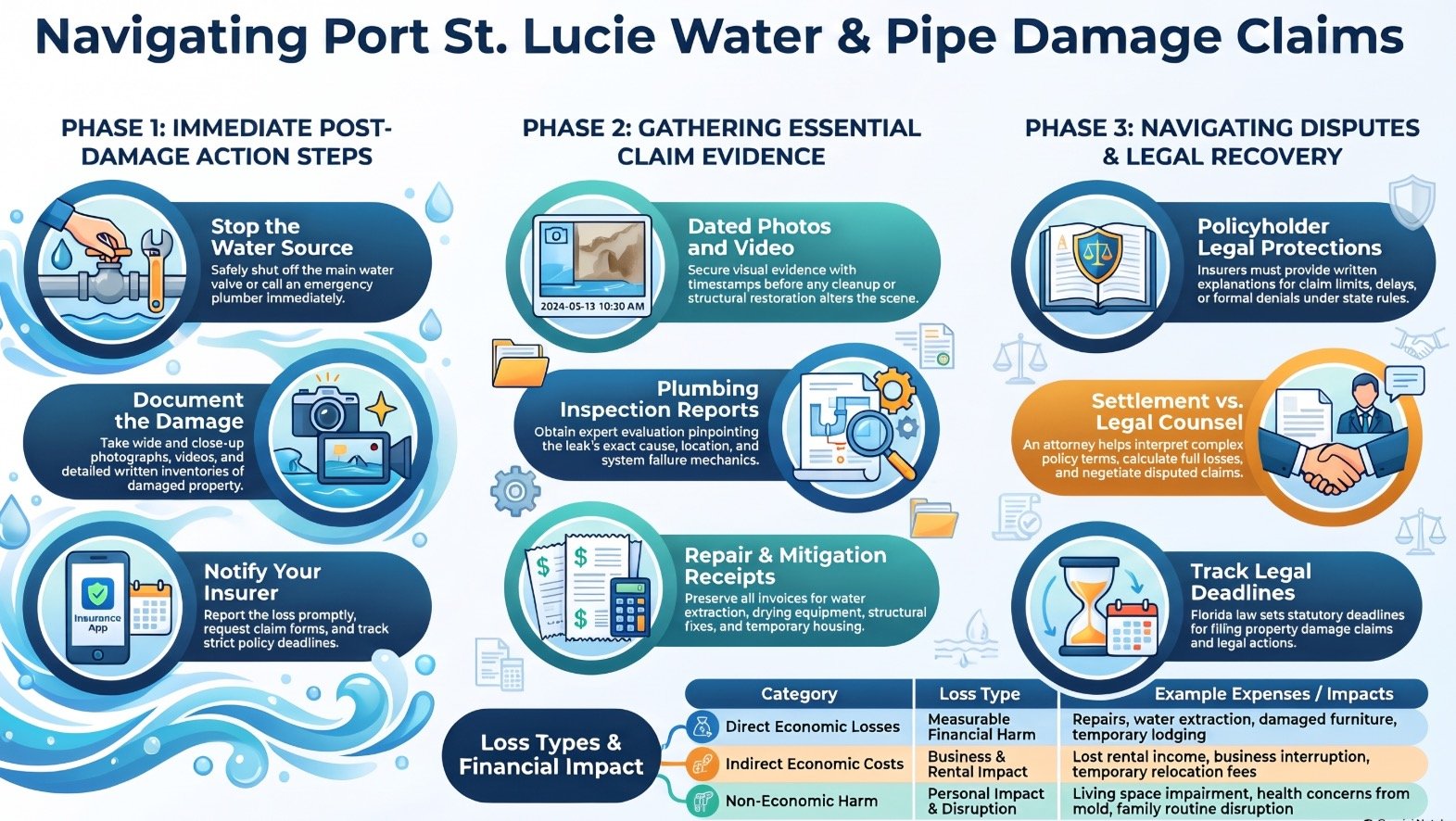
After water or pipe damage, the property owner should stop the water source when it is safe to do so and take reasonable steps to prevent further harm. Photographs, videos, receipts, and notes can help document the damage and related expenses. The owner should then notify the insurer promptly and follow the policy’s reporting requirements.
Stop the Water
Stopping the water source is the first priority when a pipe failure or leak threatens a Port St. Lucie property. If it is safe to do so, the occupant should close the nearest shutoff valve or the main water supply valve. This step can limit further flooding and reduce risks to residents, visitors, and responding workers. If the valve is inaccessible, damaged, or unfamiliar, no one should attempt a repair that could cause injury or worsen the leak. Instead, the property owner or responsible manager should contact an emergency plumber and explain the location and severity of the problem. In a shared building, prompt notice to management and affected occupants can help protect others and coordinate access. Electrical hazards or contaminated water require distance and appropriate emergency assistance.
Document the Damage
Once the water source is controlled and the area is safe to enter, the property owner or manager should document the damage promptly. Photographs and video should show each affected room, damaged materials, standing water, and the apparent source, when visible. Images should include wide views and close details, with dates and locations recorded. A written inventory can identify damaged furnishings, equipment, documents, and building components, including their approximate age and condition before the incident. A qualified restoration professional can use moisture mapping to identify hidden wet areas and track drying progress. Retain records of cleanup, temporary repairs, and removed materials, along with receipts and service reports. Salvage prioritization can guide careful handling of items that may be restored or are critical to residents, staff, or daily operations.
Contact Your Insurer
Once the immediate damage is documented, the property owner or manager should promptly notify the insurer and ask how to submit a water or pipe damage claim. The initial report should identify the affected areas, describe when the damage was discovered, and explain any steps taken to prevent further loss. The insurer can provide claim forms, inspection procedures, and instructions for preserving damaged materials. The owner or manager should review Policy coverage, including exclusions, deductibles, and requirements for emergency repairs, rather than assume every expense will be reimbursed. Claim deadlines may apply to notice, proof of loss, or supporting records, so track dates and communications carefully. Accurate, timely cooperation can help the insurer assess the claim and support repairs that protect occupants and others who depend on the property.
Critical Evidence in a Port St. Lucie Property Claim Water & Pipe Damage Injury Case
A well-supported water or pipe damage claim depends on evidence that documents the loss, its cause, and resulting expenses. Essential materials include: 1. dated photographs of the damage and affected areas; 2. plumbing inspection reports and repair or cleanup records; and 3. witness accounts and expert statements.
Photographs of Water Damage
Photographs can provide essential evidence in a Port St. Lucie property claim involving water or pipe damage. Clear images may document the affected rooms, damaged materials, standing water, and visible changes to personal belongings. They can show the property’s condition before cleanup or repairs alter the scene, while giving insurers and other reviewers a direct record of reported losses.
Images are most useful when taken promptly and from multiple angles. Close-up and wider views can establish both specific damage and its location within the property. Photo Metadata, including dates and times, may help confirm when images were captured. Image Storage should preserve original files in a secure, organized location, with backup copies available. A consistent record can help property owners and their representatives present a clear, accurate account of the damage.
Plumbing Inspection Reports
Beyond documenting visible damage, plumbing inspection reports can help explain how water entered a property and whether a pipe or plumbing component failed. A qualified inspector may identify the source, describe affected systems, and note conditions that contributed to the event. The report’s value depends on Report accuracy and a clear account of the inspection methodology, including what was examined, what testing was performed, and any limits on the findings. Photographs, measurements, and relevant observations can support conclusions and help insurers evaluate a claim fairly. Reports should distinguish confirmed facts from professional opinions and avoid assumptions about cause or timing. When findings are disputed, a second assessment may clarify the evidence. Reliable documentation can help property owners present a complete account while supporting a timely, impartial review of their claim.
Repair and Cleanup Records
Repair and cleanup records can provide essential evidence in a Port St. Lucie property claim involving water or pipe damage. These documents show what work was performed, when it occurred, and which materials or services were required to address the loss. Mitigation invoices may itemize emergency water removal, drying equipment, and protective measures, helping establish reasonable expenses incurred to limit further damage. Remediation logs can record moisture readings, affected areas, equipment use, and cleanup progress. Collectively, these records may help connect necessary repairs to the reported incident and support an accurate assessment of property damage. Organized, dated documentation also allows insurers and claim reviewers to evaluate costs and decisions more efficiently. Property owners who keep complete records can help ensure repair needs and financial losses are considered fairly.
Witness and Expert Statements
Witness and expert statements can clarify how water or pipe damage occurred, what conditions were present, and how the incident affected a Port St. Lucie property owner. Neighbors, tenants, employees, or first responders may describe leaks, flooding, maintenance activity, or hazards they observed. Their accounts can help establish when damage began and whether it worsened over time. Witness credibility depends on firsthand knowledge, consistency, and impartiality, so record statements accurately and promptly.
Expert testimony may explain the source of a failure, the progression of water intrusion, and the reasonable scope of repairs. Plumbers, engineers, and restoration professionals can connect physical findings to documented losses. Their opinions are most useful when grounded in inspections, photographs, service records, and accepted methods. In combination, reliable statements can clarify disputed facts and support a fair evaluation of the claim.
Long-Term Effects of Port St. Lucie Property Claim Water & Pipe Damage Injuries
Water and pipe damage can have lasting effects beyond the initial property loss. Persistent moisture may contribute to chronic respiratory problems, while unrepaired damage can weaken structures and create ongoing financial strain. These consequences may require continued medical care, repairs, and careful documentation when evaluating a property claim.
Chronic Respiratory Problems
When moisture from a leak or flood remains in a Port St. Lucie property, damp materials can support mold growth and release spores into indoor air. Mold exposure may contribute to coughing, wheezing, nasal irritation, and persistent breathing discomfort, particularly among children, older adults, and people with existing respiratory conditions. For some occupants, continued contact can lead to asthma aggravation or make symptoms harder to control. These effects may not end when visible water is removed, so prompt assessment and appropriate cleanup can help protect residents and others who enter the property. Medical evaluation can document symptoms and guide treatment, while photographs, repair records, and related evidence may help explain the conditions that caused the exposure. A property claim may address covered losses, subject to policy terms and supporting documentation.
Persistent Structural Damage
Beyond respiratory effects, prolonged moisture can weaken a property’s structural components, including drywall, flooring, framing, and support materials. When water remains trapped after a pipe leak or other covered event, materials may swell, separate, or lose strength. Over time, warped framing can cause doors and windows to stick, floors to slope, and walls to crack. Persistent saturation may also contribute to foundation settlement, particularly when soil beneath the structure shifts or loses stability. These conditions can compromise safety and make rooms unsuitable for ordinary use. A timely, thorough inspection can help identify concealed damage before it spreads to connected building components. For property owners seeking to protect occupants and preserve safe housing, documenting visible changes and obtaining qualified assessments can clarify the extent and cause of structural deterioration.
Ongoing Financial Strain
Although repairs may restore a damaged property, water and pipe damage can create financial strain that continues long after the initial incident. Even after visible work is complete, homeowners may face uncovered expenses for temporary housing, damaged belongings, inspections, or additional repairs. Delayed claim payments can intensify Budget pressure, forcing families to redirect savings from vital needs or community responsibilities. When residents rely on credit to cover urgent costs, interest and repayment obligations may create lasting credit strain. Disputes over the scope or value of a claim can further postpone reimbursement and make financial planning difficult. Careful documentation of damage, expenses, and communications may help clarify the claim. A qualified property claim lawyer can review policy terms and help address disputes, helping affected residents pursue benefits available under their coverage.
Don’t Wait. Call Our Florida Personal Injury Lawyers Now!
Proving Liability in Port St. Lucie Property Claim Water & Pipe Damage Injury Cases
Proving liability in a Port St. Lucie property claim involving water or pipe damage requires evidence connecting a responsible party’s conduct to the loss. The analysis often begins with the Duty of Care owed by a property owner, manager, contractor, or other party responsible for maintaining plumbing and premises. Negligence Standards generally require showing that the party failed to act reasonably, that the failure caused the damage, and that measurable losses followed.
Relevant evidence may include maintenance records, repair invoices, inspection reports, photographs, plumbing assessments, and statements from people who observed the conditions. A qualified professional may help identify the source of a leak, determine how long it existed, and assess whether timely maintenance could have prevented further damage. Records documenting affected rooms, damaged belongings, and repair costs can clarify the scope of harm.
Because water damage may worsen quickly, preserving accurate documentation is important. A careful factual review can help establish responsibility and support a fair resolution for those affected.
Dealing With Insurance Companies After a Port St. Lucie Property Claim Water & Pipe Damage Injury
When water or pipe damage affects a Port St. Lucie property, insurance discussions can influence whether the owner receives support for repairs and related losses. A careful policy review helps identify coverage terms, exclusions, notice requirements, and duties that may apply. Policy interpretation can be complicated, particularly when the insurer and property owner disagree about the cause or scope of damage. Clear records, including photographs, repair estimates, invoices, and communications, can help present the facts accurately.
During adjuster communications, the property owner may be asked to explain the incident, provide documents, or permit an inspection. Responses should be accurate and consistent with available evidence. An attorney can review correspondence, explain policy language, and help the owner avoid unsupported statements or overlooked deadlines. This guidance can also support a fair, respectful exchange with the insurer, keeping the focus on the property owner’s needs and the evidence relevant to the claim.
What to Expect During a Port St. Lucie Property Claim Water & Pipe Damage Injury Claim Process
A water or pipe damage claim typically begins with an initial review of the loss, the policy, and the available evidence. The process then involves documenting damage and responding to the insurer’s investigation, which may include inspections and requests for additional information. Once the insurer assesses the evidence and coverage, the claim moves toward resolution and recovery.
Initial Claim Review
During the initial claim review, an insurer evaluates the reported water or pipe damage, the available evidence, and the policy terms that may govern coverage. This stage helps determine how the claim will proceed and what obligations apply to both parties.
A policy review considers relevant provisions, exclusions, limits, deductibles, and notice requirements. The insurer may assess whether the reported cause of loss falls within the policy’s terms and whether any conditions affect the claim. A coverage analysis may also identify questions requiring clarification before a decision is made.
The property owner may receive requests for information or updates on the review’s status. Prompt, accurate responses can help the process move forward and support a fair assessment. A lawyer may explain policy language, identify potential coverage concerns, and help keep communications organized and consistent throughout the review.
Damage Documentation
Careful documentation helps establish the extent and cause of water or pipe damage in a Port St. Lucie home or business. During this stage, the property owner or representative records affected rooms, visible damage, and the dates when problems were discovered. Photographs and video can preserve conditions before cleanup or repairs change the scene. Moisture tracking, including readings taken over time, may help show how far water traveled and whether materials remain damp. A written inventory should identify damaged belongings, their age, condition, and approximate replacement cost. Inventory valuation supports a clear assessment of personal property losses and helps prevent important items from being overlooked. Receipts, repair estimates, and maintenance records can provide useful context. Organized, accurate records also help others understand the property’s needs and support informed decisions about necessary restoration.
Insurance Investigation
Once you organize your damage records, the insurer typically begins investigating the Port St. Lucie water and pipe damage claim. The claim investigation may include reviewing photographs, repair estimates, maintenance records, and the policy’s coverage terms. An adjuster may contact the property owner to clarify when the damage occurred, what areas were affected, and whether emergency steps were taken to limit further loss. An Independent adjuster may inspect the property, take measurements, and document visible conditions. The owner should provide accurate information and preserve relevant records, while avoiding speculation about the cause or extent of damage. If the water source is unclear, the insurer may request additional inspection or expert input. Prompt, organized cooperation can help make certain the investigation considers the available evidence and the circumstances surrounding the reported loss.
Resolution And Recovery
After completing its investigation, the insurer may approve, partially approve, or deny the Port St. Lucie property claim. A written decision should identify covered damage, exclusions, and any payment calculation. If the claim is approved, the insurer may issue payment in stages, such as an initial amount followed by recoverable depreciation after repairs are documented. Settlement options may include accepting the insurer’s offer, negotiating disputed amounts, or pursuing available review procedures. The property owner should compare any proposed settlement with repair estimates, policy limits, and documented expenses before agreeing.
The recovery timeline depends on the extent of water or pipe damage, contractor availability, and the time needed to complete repairs. Prompt documentation and clear communication can help reduce avoidable delays. If a dispute remains, legal guidance may clarify your rights and next steps while supporting a fair resolution.
Compensation for Port St. Lucie Property Claim Water & Pipe Damage Injury Damages
When a Port St. Lucie property suffers water or pipe damage, compensation may help restore the home and address losses caused by the incident. The available recovery depends on the policy, the source of the damage, and the evidence supporting the claim. A careful assessment can identify affected rooms, damaged materials, and necessary repairs.
Covered expenses may include reasonable repair or rebuilding costs, drying and cleanup, and Replacement housing when the property cannot be safely occupied during restoration. Compensation may also address damaged personal belongings, subject to policy terms, exclusions, and applicable limits. Receipts, photographs, inventories, contractor estimates, and temporary lodging records can help document these costs.
Insurers may dispute the cause, scope, or value of reported damage. Prompt notice and organized records can support a complete review and reduce avoidable delays. A property owner may seek guidance to understand coverage, respond to information requests, and pursue benefits owed under the policy. Any resolution should reflect documented losses and applicable coverage provisions.
Economic vs Non-Economic Damages in Port St. Lucie Property Claim Water & Pipe Damage Cases
Economic losses in water and pipe damage claims may include repair costs, damaged belongings, and temporary housing expenses. Non-economic harm can involve disruption, inconvenience, or emotional distress, though recovery depends on the applicable policy and law. Claimants generally need records and other evidence to substantiate each category of damages.
Economic Losses
Water and pipe damage can create losses that extend well beyond repair costs. Economic losses are measurable financial harms caused by property damage and the disruption it creates. They may include reasonable expenses for drying, cleanup, temporary repairs, replacement materials, and damaged personal or business property. Owners may also incur costs for temporary housing, storage, or relocation when they cannot safely occupy a property.
For landlords, lost rental income may result when water damage makes a unit unavailable to tenants. Businesses may experience business interruption losses if repairs prevent normal operations, reduce sales, or require temporary closure. Documentation helps establish the amount and cause of these losses. Relevant records can include invoices, receipts, lease agreements, tax documents, photographs, and repair estimates. A careful claim review can identify covered financial losses and support a clear, evidence-based request for payment.
Non-Economic Harm
Not every consequence of water or pipe damage appears on an invoice. Beyond repair costs and temporary housing expenses, property damage can disrupt routines, privacy, and a household’s sense of security. Emotional Distress may arise when residents face prolonged displacement, uncertainty about repairs, or repeated exposure to damaged living conditions. These effects can be especially significant for families caring for children, older adults, or people with health needs.
Loss of enjoyment of a home may also follow when rooms become unusable or ordinary activities are interrupted. A damaged kitchen, bedroom, or gathering space can limit how occupants use their property and spend time jointly. Such non-economic harm differs from measurable financial loss, but it can still affect daily well-being. The nature and extent of these effects depend on the circumstances and applicable insurance policy terms.
Proving Damages
Establishing a property damage claim requires evidence that connects the reported loss to specific financial and personal effects. In Port St. Lucie, owners can document economic damages with repair estimates, invoices, receipts, photographs, and records of damaged belongings. Damage valuation should account for the source and extent of water or pipe damage, necessary repairs, and any applicable policy terms. Mitigation expenses, such as reasonable costs to stop further water intrusion or prevent mold, should also be supported by dated records and proof of payment.
Non-economic harm may include disruption, inconvenience, or loss of use while the property is repaired. Although these effects can be harder to measure, consistent notes, correspondence, and evidence of temporary living arrangements may help explain their impact. Clear, organized documentation enables insurers and other reviewers to assess both financial losses and personal consequences fairly.
When a Port St. Lucie Property Claim Water & Pipe Damage Injury Case Goes to Trial vs Settlement
When an insurer disputes the cause or value of water and pipe damage, a Port St. Lucie property claim may require a choice between settlement and trial. Settlement negotiation can resolve the dispute without a courtroom hearing. The parties may compare repair estimates, inspection findings, photographs, and other claim records, then discuss payment terms. A settlement can provide a defined outcome sooner, but the claimant must assess whether the proposed amount addresses documented losses and necessary repairs.
If negotiations do not produce an acceptable agreement, trial may allow a judge or jury to evaluate the evidence and decide the dispute. Trial preparation can involve organizing records, preparing witnesses, and presenting qualified opinions about the damage and its cost. The process may take longer, and its outcome is uncertain, so the claimant should weigh potential benefits against added time and expense. Counsel can explain available options, help protect the claimant’s interests, and support a fair resolution that restores safe, usable property.
Florida Laws That May Affect Your Port St. Lucie Property Claim Water & Pipe Damage Case
Florida law can shape how a Port St. Lucie property owner pursues a water or pipe damage claim. The governing policy, state insurance rules, and evidence of the loss may affect coverage and the insurer’s review. Careful attention to these requirements can help preserve resources for household recovery and community responsibilities.
- Policy terms define covered causes of loss, exclusions, deductibles, and duties after damage. Florida policy exclusions may limit payment for certain leaks, wear, or repeated seepage, depending on the wording and facts.
- Insureds generally must provide prompt notice, protect property from further damage, and cooperate with reasonable claim investigation. Review notice requirements and policy deadlines carefully, and keep records of communications.
- Florida law regulates insurer claim handling and may provide remedies when insurers violate statutory duties. The specific facts, policy language, and applicable regulations determine whether those protections apply.
A qualified professional can assess coverage questions, document the loss, and explain available options without disrupting necessary repairs or service to others. Each claim requires an individualized review.
Don’t Wait. Call Our Florida Personal Injury Lawyers Now!
The Statute of Limitations for Port St. Lucie Property Claim Water & Pipe Damage Injury Cases
How long a property owner has to pursue a water or pipe damage claim can depend on the type of claim, the policy terms, and the date the loss occurred. Florida law sets deadlines for filing lawsuits, while an insurance policy may impose separate requirements for reporting damage and submitting a claim. Missing either deadline can limit recovery, even when the damage disrupts a household or affects the owner’s ability to maintain a safe property.
Deadline calculation requires identifying the applicable legal period and determining when it began. The date of discovery may matter in some circumstances, but it does not automatically extend the time to sue. Policy tolling may also affect a deadline when specific legal or contractual conditions apply; it should not be assumed without reviewing the policy and relevant facts. Because deadlines can change with the claim type and loss date, prompt attention to notices, records, and filing requirements can help preserve options. A timely, accurate claim also supports fair consideration of the property owner’s documented losses.
How a Port St. Lucie Property Claim Water & Pipe Damage Lawyer Can Help You
A Port St. Lucie property claim water and pipe damage lawyer can help policyholders understand their rights and present a well-supported claim.
The lawyer’s work may include:
- Coverage interpretation: Reviewing policy language, exclusions, endorsements, and limits to explain how provisions may apply to the reported water or pipe damage. Clear guidance can help property owners make informed decisions while protecting resources needed for their households and communities.
- Evidence organization: Examining inspection reports, photographs, repair estimates, invoices, and related records to document the damage and its financial impact. A complete, consistent file can make the claim easier to evaluate.
- Claim negotiation: Communicating with the insurer, addressing disputed valuations, and presenting supporting documentation in response to questions or proposed settlements. This process can promote a fair assessment without overstating the loss.
When to Contact a Port St. Lucie Property Claim Water & Pipe Damage Lawyer
When water or pipe damage appears likely to involve a substantial loss, disputed coverage, or delays in the claims process, early legal guidance may help protect the property owner’s interests. A Port St. Lucie property owner may also consider speaking with counsel when an insurer requests extensive documentation, questions the cause of damage, or offers an amount that appears insufficient to address necessary repairs.
Prompt attention can be important when Coverage deadlines are approaching or the policy requires timely notice, inspections, or proof of loss. An attorney can review the relevant policy language and help identify whether policy exclusions may affect the claim. Legal guidance may also be appropriate if the property owner receives a denial or experiences repeated delays without a clear explanation.
Seeking advice early can help owners understand available options while preserving records and meeting claim requirements. This step may be especially useful when damaged property affects tenants, employees, or others who depend on the building’s safe and timely restoration.
Why You Need an Experienced Port St. Lucie Property Claim Water & Pipe Damage Lawyer
Because water and pipe damage claims can involve complicated policy terms, disputed causes, and strict deadlines, an experienced Port St. Lucie property claim water and pipe damage lawyer can help policyholders pursue a fair review. The lawyer can examine coverage language, identify relevant exclusions, and explain how Policy interpretation may affect the insurer’s obligations. This guidance can be especially valuable when the source of a leak, the timing of damage, or the scope of necessary repairs is contested.
A lawyer can also organize records, coordinate assessments, and present evidence that supports the claimed losses. During claim negotiation, counsel can address inadequate estimates, delayed responses, or denials that do not account for the available documentation. Clear advocacy may help homeowners protect their property and restore safe living conditions without diverting attention from family or community responsibilities. When an insurer disputes responsibility, experienced representation can clarify options and help ensure important procedural requirements are met throughout the claim process.
How to Choose the Right Port St. Lucie Property Claim Water & Pipe Damage Lawyer for Your Case
Choosing the right Port St. Lucie property claim water and pipe damage lawyer requires careful comparison. A suitable attorney should understand Florida insurance policies, property damage claims, and common disputes involving leaks, burst pipes, and delayed repairs. Reviewing an Attorney’s credentials can help determine whether counsel has relevant training, licensing, and experience handling similar claims. The lawyer should also explain how evidence, policy terms, and claim deadlines may affect the case.
A prospective client can ask how the attorney evaluates damage documentation, communicates with insurers, and addresses disputed or underpaid claims. Communication style matters because clear, timely updates help property owners make informed decisions and coordinate necessary repairs. The attorney should answer questions directly, describe potential options without promising a result, and identify who will handle day-to-day matters. References and publicly available disciplinary records may offer additional context. By evaluating experience, responsiveness, and transparency, property owners can select counsel whose approach fits their needs and supports a fair review of the claim.
About The Law Offices of Anidjar & Levine
The Law Offices of Anidjar & Levine represents clients in property damage matters, including disputes involving water intrusion and pipe damage. The firm assists property owners seeking answers after a leak, burst pipe, or other water-related event affects a home or business. Its attorneys can review claim documents, communicate with insurers, and explain options as clients pursue a fair resolution.
The firm’s history provides context for its approach to legal service. The attorneys have handled insurance disputes and property loss matters, helping clients understand the steps involved in filing a claim. Each case depends on its facts, policy terms, and supporting evidence, so the firm evaluates those details and advises clients on potential next steps.
Community involvement reflects a commitment to serving people beyond the courtroom. The firm’s work with individuals and families informs its focus on clear communication and practical guidance. For Port St. Lucie property owners, this support can help bring structure to a challenging claims process.

Frequently Asked Questions
Does Homeowners Insurance Cover Mold Caused by a Sudden Pipe Leak?
Homeowners insurance may cover mold caused by a sudden, accidental pipe leak when the resulting water damage is covered, and the homeowner takes prompt steps to limit further harm. Coverage varies by policy, and policy exclusions may restrict payment for mold remediation, especially if the leak resulted from neglect or went unrepaired. Insurers may require documentation, timely notice, and reasonable mitigation. The policy’s terms determine available coverage and applicable limits.
Can I Stay in My Home During Water Damage Repairs?
A homeowner may remain in the home during water damage repairs if the property is safe and vital services remain available. A qualified professional should complete a home safety assessment, considering electrical hazards, contaminated water, structural concerns, and drying equipment. If conditions pose health or safety risks, Temporary relocation during repairs may be necessary, particularly for children, older adults, or people with medical needs. The insurer’s policy may cover reasonable temporary housing costs.
How Can I Prevent Frozen or Burst Pipes in My Port St. Lucie Home?
Homeowners can reduce frozen or burst-pipe risks by insulating exposed pipes, sealing drafts near plumbing, and maintaining indoor heat during cold weather. They should disconnect and drain outdoor hoses, protect irrigation components, and know where the main shutoff valve is located. During unusually cold periods, allowing a small, steady flow from vulnerable faucets may help. Promptly repairing leaks and arranging regular plumbing inspections also protects household safety and limits preventable water damage.
Should I Hire a Public Adjuster for a Water Damage Claim?
A homeowner may benefit from hiring a public adjuster when water damage is extensive, the insurer disputes coverage, or the proposed settlement appears inadequate. The adjuster can assess losses, prepare the claim, and manage claim documentation, helping ensure relevant evidence and repair estimates are presented clearly. Review public adjuster fees before signing an agreement, including how compensation is calculated. For straightforward claims, independent review may be sufficient before retaining professional representation.
What Happens if a Plumbing Contractor’s Work Caused the Pipe Damage?
If a plumbing contractor’s work caused pipe damage, the property owner may have a contractor liability claim, especially when evidence shows Negligent Installation or failure to follow applicable standards. The owner should document the damage, preserve invoices and repair records, and obtain an independent inspection before repairs obscure the cause. The contractor’s insurer may cover eligible losses, while the homeowner should also notify their property insurer promptly and review policy requirements.
—————————
Water and pipe damage claims can involve costly repairs, disputed coverage, and strict policy deadlines. A Port St. Lucie property claim lawyer can review your policy, assess the evidence, and communicate with the insurer about the loss. The Law Offices of Anidjar and Levine represent property owners seeking a fair resolution. Prompt legal guidance may help protect your rights and address claim disputes before they become more difficult to resolve. Learn more about a Port St. Lucie Personal Injury Lawyer. Each case depends on its specific facts and coverage terms.