
The Law Offices of Anidjar and Levine can investigate whether improper loading, excessive weight, shifting cargo, or trucking rule violations contributed to a collision. The investigation may include reviewing driver logs, inspection and maintenance files, loading records, electronic data, and witness accounts to identify potentially responsible parties. Legal counsel can help preserve evidence, communicate with insurers, assess documented losses, and pursue compensation through negotiation or litigation. Learn more about working with a Port St. Lucie Personal Injury Lawyer. The sections below explain common causes, legal rights, and steps injured people may consider.
Main Takeaways
- Federal and Florida rules govern commercial truck safety, including driver qualifications, maintenance, hours of service, cargo securement, and weight limits.
- Overloaded, unevenly distributed, or improperly secured cargo can increase stopping distances, cause shifting or spills, and contribute to crashes.
- Drivers, carriers, shippers, and loading contractors may share responsibility, depending on who arranged, loaded, secured, and inspected the freight.
- A lawyer can investigate loading records, weight tickets, inspection reports, photographs, witness accounts, and company documents to assess potential claims.
- After a crash, seek medical care, document the scene when safe, preserve records, and consult a Port St. Lucie truck accident lawyer about deadlines and next steps.
How We Can Help With Your Port St. Lucie Truck Accident Trucking Regulations & Loading Injury Claim
A Port St. Lucie truck accident lawyer can help an injured person pursue a loading-related claim with careful attention to the evidence and practical needs involved. The legal team can listen to the client’s account, explain available options, and manage communications with insurers so the client can focus on recovery and family responsibilities.
A thorough investigation may examine cargo inspection records, loading supervision practices, photographs, witness statements, and relevant company documents. These materials can help establish how the incident occurred and identify parties whose conduct may have contributed. The attorney can also gather medical records and other documentation to describe the injury’s effect on daily life, work, and future care needs.


When appropriate, counsel can coordinate with qualified professionals, organize supporting evidence, and present a clear demand for fair compensation. The process may include negotiation or, when necessary, litigation. Throughout the claim, a responsible legal representative should provide timely updates, answer questions, and treat the client with respect.
Don’t Wait. Call Our Florida Personal Injury Lawyers Now!
Understanding Port St. Lucie Truck Accident Trucking Regulations & Loading Injury Cases
OUR CONSULTATIONSARE FREE
START YOUR FREE CASE REVIEW

When a truck’s cargo shifts, falls, or is improperly secured, the resulting collision may raise questions about both trucking regulations and the conduct of those responsible for loading. In Port St. Lucie, evaluating a claim requires understanding which safety duties applied and whether a breach contributed to the injuries.
Federal motor carrier rules address cargo securement, inspection, and the responsibilities of carriers and drivers. Florida regulations may also affect commercial vehicle operation and related claims. Depending on the circumstances, responsibility may involve a trucking company, a shipper, a loading contractor, or another party. Records such as bills of lading, inspection reports, photographs, and driver logs can help clarify how the cargo was handled and whether required procedures were followed.


Loading injuries may involve serious physical harm, lost income, and continuing care needs. A careful review can identify relevant evidence, applicable deadlines, and potential sources of accountability. Understanding these issues helps injured people and their families pursue fair treatment while supporting safer practices for everyone who shares the road.
Common Causes of Port St. Lucie Truck Accident Trucking Regulations & Loading
Truck accidents involving trucking regulations and loading may result from overloaded cargo, improper load securement, or violations of applicable weight limits. These conditions can impair vehicle control, increase stopping distances, or allow cargo to shift during transit. Regulatory noncompliance may also contribute to crashes and warrant careful examination after an accident.
Overloaded Cargo
Excess cargo can make a commercial truck harder to control and increase collision force. When a truck exceeds legal weight limits, its brakes and tires may face demands beyond their rated capacity. The added weight can lengthen stopping distances, strain mechanical systems, and reduce steering responsiveness, especially during sudden maneuvers or on wet roads. Uneven load distribution may also affect stability and contribute to cargo shifting, raising the risk of a rollover or loss of control. These hazards can endanger motorists, passengers, and pedestrians who share Port St. Lucie roads. Federal and Florida regulations set weight limits to protect public safety and infrastructure. Carriers and drivers must monitor cargo weight and comply with applicable limits before a trip begins. Records and inspection findings may help establish whether overloading contributed to a crash.
Improper Load Securement
Improperly secured cargo can shift, fall from a trailer, or destabilize a truck, creating serious hazards on Port St. Lucie roads. Federal and state rules require carriers to secure freight against movement during normal driving, sudden stops, and evasive actions. When straps, chains, blocking, or tie-down points are inadequate, a Load shift may cause the driver to lose control or force nearby motorists to react abruptly. Cargo spillage can also obstruct lanes, strike other vehicles, or endanger people who stop to assist. Proper securement depends on the cargo’s type, shape, and packaging, as well as regular in-trip inspections. Drivers and carriers share responsibility for checking restraints before departure and addressing loosened equipment promptly. These precautions protect road users and reduce preventable injuries and property damage throughout the community.
Weight Limit Violations
Overloaded commercial vehicles can place excessive stress on tires, brakes, and suspension systems, increasing the risk of a crash on Port St. Lucie roads. Weight limit violations may also impair steering and lengthen stopping distances, making it harder for drivers to respond to traffic or roadway hazards. Uneven cargo distribution can cause Axle Overloading, concentrating excessive force on particular tires and components. This imbalance may contribute to tire failure, reduced vehicle stability, or loss of control, especially during turns and sudden actions. Some carriers or drivers may evade weigh stations to avoid inspection, allowing unsafe loads to continue on public roads. After a weight-related crash, investigators may review shipment records, scale data, vehicle condition, and loading practices to identify contributing factors and determine responsibility.
Regulatory Noncompliance
When trucking companies or drivers fail to follow applicable safety rules, the resulting violations can increase crash risks on Port St. Lucie roads. Noncompliance may involve inadequate driver qualification checks, hours-of-service violations, poor vehicle maintenance, or failure to secure cargo properly. Each lapse can impair a truck’s safe operation and place nearby motorists, passengers, and pedestrians at risk. Federal and state requirements establish standards intended to prevent these hazards and protect the public. FMCSA compliance audits can reveal patterns of violations, incomplete records, and weak safety practices within a carrier’s operations. Such findings may affect carrier safety ratings and prompt corrective measures, but an inspection or rating alone does not establish the cause of a particular collision. Investigators may review records, vehicle evidence, and witness accounts to determine whether regulatory violations contributed to a crash.
Legal Rights of Port St. Lucie Truck Accident Trucking Regulations & Loading Injury Victims
Truck accident victims in Port St. Lucie may have legal rights when a collision involving trucking regulations or loading practices causes injury. These Victim Rights can include seeking compensation for medical expenses, lost income, rehabilitation, and other documented losses. Legal Protections also help preserve access to evidence and fair treatment during an insurance claim.
A careful review of the circumstances can clarify available options without assuming that every claim will produce the same result.
- Victims may pursue a claim against parties whose conduct contributed to the injury, subject to applicable Florida law and evidence.
- They may request relevant records, including inspection materials, loading documents, and communications, through lawful procedures.
- They may consult an attorney to assess deadlines, identify responsible parties, and communicate with insurers while protecting their interests.
Prompt medical care and accurate records can support both recovery and a claim. Those affected may also benefit from trusted advocates who help them understand choices, coordinate practical support, and make informed decisions throughout the process.
Why Do Port St. Lucie Truck Accident Trucking Regulations & Loading Injuries Happen?
Port St. Lucie truck accidents involving trucking regulations and loading injuries often result from preventable failures in safety practices. Federal and state rules govern driver qualifications, vehicle maintenance, hours of service, cargo securement, and weight limits. When carriers or drivers disregard these requirements, trucks may become difficult to control, stop, or navigate safely.
Improper loading is another common cause. Unsecured, unevenly distributed, or overweight cargo can shift during transit, destabilize a truck, or fall onto the roadway. These events can endanger occupants of nearby vehicles and people working around loading areas. Inadequate inspections may allow defective equipment, worn tires, or faulty brakes to remain in service.
Other contributing conditions include driver fatigue, distraction, speeding, and roadway hazards such as debris, poor visibility, or wet pavement. Scheduling pressure and insufficient training can compound these risks. Understanding how regulatory violations and loading errors contribute to crashes helps communities recognize the importance of responsible trucking practices and safer commercial operations.
What Should You Do After a Port St. Lucie Truck Accident Trucking Regulations & Loading Injury?
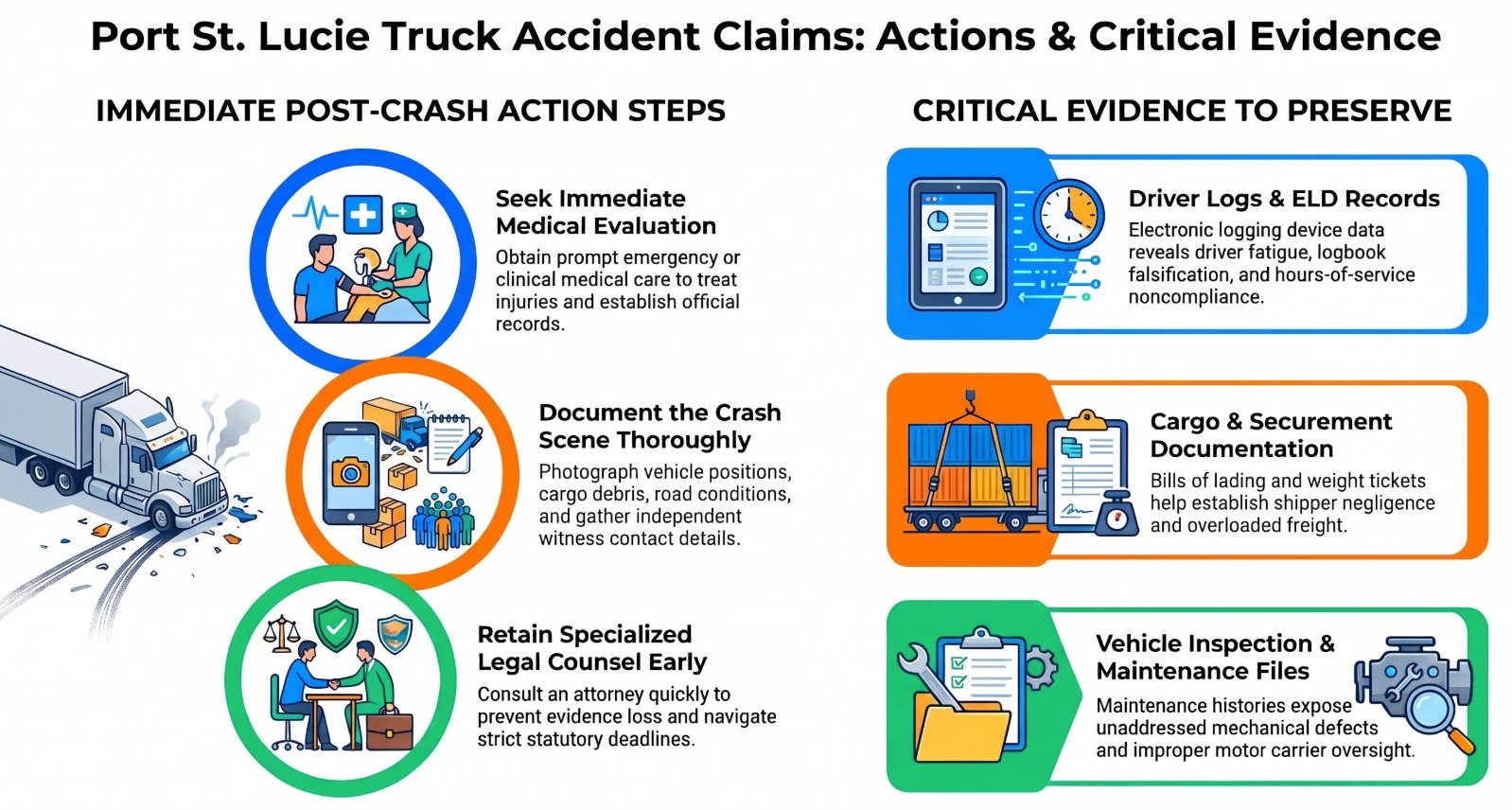
After a Port St. Lucie truck accident involving trucking regulations or loading issues, injured individuals should seek prompt medical care, even if their symptoms seem minor at first. They should document the scene, preserve relevant records, and gather available witness information. Consulting a trucking lawyer can help clarify potential claims and preserve important evidence.
Seek Medical Care
Even when injuries seem minor, anyone involved in a Port St. Lucie truck collision should seek medical care promptly. Some conditions, including head, neck, and internal injuries, may not produce immediate symptoms. A timely assessment can identify problems early and help prevent complications. If a person has severe pain, difficulty breathing, confusion, heavy bleeding, or loss of consciousness, emergency services should be contacted. An Emergency room can evaluate urgent injuries and arrange appropriate treatment. For less urgent symptoms, a prompt appointment with a physician can establish a clear medical record and guide recovery. Patients should describe all symptoms, follow treatment instructions, and attend recommended follow-up visits. Consultant referrals may be needed for injuries requiring focused evaluation, such as orthopedic or neurological care. Consistent treatment supports recovery and documents the collision’s effects.
Document the Scene
When safe, documenting the scene can preserve important evidence after a Port St. Lucie truck accident. A person involved should first follow medical guidance and avoid entering traffic or approaching damaged vehicles. If conditions permit, photographs can record vehicle positions, visible damage, skid marks, debris, traffic signs, and nearby loading materials. Photographing Road Conditions may help show whether poor visibility, standing water, or roadway hazards affected the collision. Take images from several angles without disturbing evidence. Identifying Witnesses is also important; their names and contact details can help preserve independent accounts of what occurred. Note the time, location, weather, and any statements made at the scene. Store records securely and share them only with appropriate parties, and keep original files unchanged.
Contact a Trucking Lawyer
A trucking lawyer can help preserve evidence and assess potential claims following a Port St. Lucie truck accident involving trucking regulations or loading practices. After obtaining medical care and documenting the scene, an injured person or family member can contact counsel promptly. Early legal guidance may help secure driver logs, inspection records, loading documents, and electronic data before they are lost or changed. These materials can clarify whether a carrier, driver, shipper, or loading contractor failed to meet applicable duties.
Before choosing representation, prospective clients can review attorney credentials, relevant trucking case experience, and communication practices. A Free consultation may provide an opportunity to discuss the collision, available records, deadlines, and possible next steps without an immediate commitment. Counsel can also explain how claims may support fair recovery while helping protect others from preventable trucking hazards. Prompt, informed action can strengthen the investigation.
Critical Evidence in a Port St. Lucie Truck Accident Trucking Regulations & Loading Injury Case
A thorough review of evidence can help establish whether trucking rules, loading practices, or vehicle upkeep contributed to a Port St. Lucie crash. Crucial records include: 1. driver logs and hours, 2. cargo securement records, and 3. inspection and maintenance files. Crash scene evidence can also document vehicle positions, road conditions, and other details relevant to determining how the collision occurred.
Driver Logs and Hours
Driver logs and hours-of-service records can reveal whether a truck driver was fatigued or operating beyond legal limits before a Port St. Lucie collision. These records may document driving time, rest periods, duty status changes, and required breaks. ELD data can help investigators compare reported hours with vehicle activity and identify possible inconsistencies. Prompt ELD data preservation is important because electronic records may be overwritten or lost under routine retention practices. Investigators may also examine paper logs, dispatch communications, fuel receipts, and other time-stamped records to assess whether the driver’s account is accurate. Evidence of logbook falsification or hours-of-service violations may support an inquiry into fatigue and regulatory compliance. Careful review can help clarify how the crash occurred and identify responsible parties, while preserving evidence for injured people seeking accountability.
Cargo Securement Records
Beyond hours-of-service records, cargo securement documents can show whether freight was properly loaded and restrained before a Port St. Lucie truck accident. Bills of lading, loading diagrams, photographs, weight tickets, and tie-down records may identify who handled the cargo and what precautions were taken. Shipper correspondence can clarify loading instructions, reported concerns, or changes made before departure. These materials may help determine whether shifting or falling freight contributed to a collision or worsened injuries. Their preservation matters because routine retention policies may allow records to be deleted or discarded. A prompt request can help protect relevant documents and support a careful review of responsibility. Attorneys may compare the records with witness accounts and physical evidence to explain how loading decisions affected people harmed in the crash and to seek fair accountability.
Inspection and Maintenance Files
When a mechanical defect may have contributed to a Port St. Lucie truck accident, inspection and maintenance files can help establish whether the vehicle was kept in safe operating condition. These records may show scheduled inspections, reported defects, repair orders, parts replaced, and the dates work was completed. Comparing entries can reveal whether a problem was identified but left unresolved or whether maintenance followed applicable requirements. Record retention practices matter because missing or incomplete files may limit a fair assessment of the truck’s condition before the collision. Audit trails can clarify who entered information, when changes occurred, and whether records were altered. Preserving these materials supports a careful investigation and helps injured people seek accountability. A qualified review may also identify maintenance practices that could place other road users at risk.
Crash Scene Evidence
What happened at the scene of a Port St. Lucie truck crash may determine how responsibility is assessed and whether loading or regulatory violations contributed. Prompt evidence preservation can help protect injured people and support a reliable investigation. Photographic Documentation should capture vehicle positions, road conditions, skid marks, cargo, damaged equipment, and visible injuries before the scene changes. Images of load restraints, shifted freight, or spilled materials may reveal whether cargo was secured properly. Conduct witness interviews promptly, while observations remain clear. Drivers, bystanders, first responders, and nearby workers may describe vehicle movements, warnings, loading practices, or events immediately before impact. Investigators may also document weather, lighting, traffic controls, and surveillance sources. Careful collection and secure preservation of these materials can help insurers, attorneys, and public agencies evaluate the crash fairly and accurately.
Long-Term Effects of Port St. Lucie Truck Accident Trucking Regulations & Loading Injuries
Truck accident injuries linked to trucking regulations or improper loading may cause chronic pain that persists long after initial treatment. Some victims also face lasting mobility limitations that affect daily activities and their ability to work. Ongoing care, rehabilitation, and related expenses can create substantial long-term medical costs.
Chronic Pain
Chronic pain can persist long after a Port St. Lucie truck accident, particularly when injuries result from unsafe loading or violations of trucking regulations. Damaged nerves, soft-tissue trauma, and spinal injuries may cause recurring discomfort that interferes with sleep, concentration, and routine responsibilities. Symptom severity and duration can vary, so regular medical evaluation helps identify appropriate care and track changes over time. Pain management may involve medication, physical therapy, or other clinician-directed treatments, with plans adjusted as the person’s needs evolve. Persistent symptoms can also contribute to emotional distress, including anxiety or frustration, and may affect family relationships and work. Support from healthcare providers and loved ones can help injured people maintain dignity and participate in care decisions. Clear records of treatment and expenses may also assist when pursuing compensation for accident-related losses.
Lasting Mobility Limitations
When injuries from a Port St. Lucie truck accident cause lasting mobility limitations, daily routines and independence may change substantially. Spinal, joint, or nerve damage can restrict walking, standing, lifting, or using stairs. These limitations may affect a person’s ability to work, care for family, and participate in community life. Support from relatives, caregivers, and local services can help preserve dignity while considering practical adjustments. Assistive mobility devices, such as canes, walkers, or wheelchairs, may help an injured person move more safely and remain engaged in important activities. Adaptive vehicle modifications can also support access to work, appointments, and community responsibilities. The extent of these needs depends on the injury and recovery. Careful documentation of functional changes can clarify how the collision continues to affect everyday life.
Long-Term Medical Costs
Although some injuries from a Port St. Lucie truck accident improve with initial care, others require years of treatment and monitoring. Spinal damage, traumatic brain injuries, and severe fractures may lead to recurring appointments, rehabilitation, prescription medications, or additional procedures. These expenses can continue after an injured person returns home, affecting household finances and access to necessary care.
Future treatment needs may be difficult to predict soon after a collision. Medical professionals can document likely care plans, expected costs, and potential changes in function. This information can help establish the long-term impact of injuries linked to trucking regulations or loading failures. Some individuals also need assistive technology, home modifications, or ongoing personal support. Careful records of medical recommendations and related expenses can clarify the resources required for recovery and daily participation.
Don’t Wait. Call Our Florida Personal Injury Lawyers Now!
Proving Liability in Port St. Lucie Truck Accident Trucking Regulations & Loading Injury Cases
Proving liability in a Port St. Lucie truck accident involving trucking regulations or loading requires evidence that identifies how the crash occurred and who failed to meet a legal duty. Investigators may review driver logs, inspection records, maintenance files, dispatch communications, and electronic vehicle data. These materials can show whether a driver or carrier ignored safety rules, overlooked a known defect, or allowed an unsafe vehicle to operate.
Loading practices also require careful examination. Unsecured, unevenly distributed, or overweight cargo may shift, impair control, or contribute to a collision. Bills of lading, loading records, photographs, and witness statements can help establish who arranged, secured, and inspected the freight. The evidence may support a finding of third-party loading responsibility when a shipper or contractor handled cargo improperly. Negligent carrier oversight may also apply if the carrier failed to verify safe loading or enforce required procedures. Clear documentation helps determine each party’s role and supports accountability for resulting injuries.
Dealing With Insurance Companies After a Port St. Lucie Truck Accident Trucking Regulations & Loading Injury
After a Port St. Lucie truck accident involving trucking regulations or loading practices, injured people may face calls from one or more insurance companies. Adjusters represent insurers, not the injured person, and their questions may be designed to clarify facts while also limiting the company’s financial exposure. Understanding Claim Adjuster Tactics can help prevent avoidable misunderstandings during a stressful period.
An adjuster may request medical records, ask about prior conditions, or seek a quick settlement before the full impact of an injury is known. Injured people should review any proposed release carefully and avoid signing documents they do not understand. Recorded Statements can also create risks when a person is in pain, uncertain about details, or unaware of relevant trucking and cargo rules. They may ask for questions in writing and seek legal guidance before responding.
Clear, accurate communication matters, but avoid speculation. Preserving correspondence, bills, and other relevant records can support informed discussions and help protect fair compensation.
What to Expect During a Port St. Lucie Truck Accident Trucking Regulations & Loading Injury Claim Process
A Port St. Lucie truck accident claim typically begins with a case evaluation, including the injuries, potential liability, and applicable trucking or loading regulations. Evidence is then gathered and the claim filed, with records and documentation used to support the injured person’s position. The process may conclude with a negotiated settlement or proceed to trial if the parties cannot reach an agreement.
Initial Case Evaluation
When a truck collision may involve violations of trucking regulations or improper cargo loading, the initial case evaluation focuses on how the crash occurred and what evidence supports a claim. The review typically considers the reported injuries, treatment, financial losses, and the circumstances surrounding the collision. A lawyer may ask how the truck was operated, whether cargo shifted or fell, and what parties had responsibility for loading or transport. This preliminary Liability assessment can include the driver, motor carrier, cargo loader, or other involved parties, depending on the known facts. Case worthiness depends on whether the available information supports a connection between a legal duty, a breach, and the claimed injuries. The evaluation also identifies unanswered questions, potential deadlines, and practical next steps, helping injured people make informed decisions while preserving their ability to seek appropriate compensation.
Evidence Collection
Building on the initial case evaluation, evidence collection helps establish how a Port St. Lucie truck collision occurred and whether trucking regulations or loading practices contributed. Counsel may identify records that clarify the driver’s actions, the carrier’s procedures, and the condition of the cargo and vehicle. Evidence preservation is important because electronic data, inspection records, photographs, and physical materials may be lost or altered over time. Promptly requesting that relevant information be retained can help preserve a reliable account of the event. Investigators may also interview passengers, motorists, first responders, or others who observed the collision or its aftermath. Their observations can help explain road conditions, vehicle movement, and visible loading problems. Medical records and injury documentation may further connect the incident to the harm experienced, while respecting the claimant’s privacy and recovery needs.
Claim Filing
After identifying and preserving essential evidence, filing a claim begins the formal process of seeking compensation for injuries from a Port St. Lucie truck accident. The injured person or an authorized representative generally notifies the responsible parties and their insurers, identifying the collision, injuries, and basis for liability. Filing deadlines vary by claim and parties involved, so promptly reviewing applicable time limits can help protect the injured person’s rights. Complete claim documentation may include medical records, bills, wage information, crash reports, and evidence of trucking regulations or loading violations. The claim is then submitted to the appropriate insurer or other responsible entity for review. Accurate, organized information helps decision-makers assess the reported losses and investigate the circumstances. Counsel may assist with forms, communications, and procedural requirements while keeping the claimant informed.
Settlement or Trial
Once the claim and supporting evidence have been reviewed, the parties may negotiate a settlement or proceed toward trial if they cannot agree. Settlement negotiations may address medical expenses, lost income, future care, and other documented losses arising from a trucking regulation or loading violation. The injured person’s legal representative may present evidence, respond to insurer proposals, and explain the claim’s value. Review any agreement carefully, since accepting a settlement generally ends the claim. If negotiations do not resolve the dispute, the process moves to trial preparation. This may involve organizing records, consulting qualified experts, preparing witnesses, and developing evidence about liability and damages. At trial, each side presents its position, and a judge or jury determines the outcome. The process can take time, so clear communication helps the injured person make informed decisions.
Compensation for Port St. Lucie Truck Accident Trucking Regulations & Loading Injury Damages
Compensation for injuries caused by trucking regulation violations or improper cargo loading in Port St. Lucie may address the documented effects of a crash on an injured person’s health, work, and daily responsibilities. The available recovery depends on the evidence, the severity of the harm, and the parties legally responsible. Medical records, employment information, and expert assessments can help show how injuries affect a person’s ability to function and return to work.
A claim may include treatment expenses, rehabilitation needs, and reasonable costs associated with ongoing care. Lost income may also be considered when injuries prevent a person from working during recovery. If lasting limitations reduce the ability to earn at the prior level, diminished earning capacity may be supported through vocational or financial analysis. Evidence may also show how the injuries affect mobility, independence, and family obligations. Careful documentation can help present a complete account of the harm and support a fair resolution. The assessment should reflect the injured person’s circumstances and future needs.
Economic vs Non-Economic Damages in Port St. Lucie Truck Accident Trucking Regulations & Loading Cases
Economic damages may include medical expenses, lost income, and other measurable financial losses caused by a truck accident involving regulatory or loading violations. Non-economic damages address harms such as pain, emotional distress, and reduced quality of life. Establishing both categories typically requires reliable records and evidence connecting the losses to the crash.
Economic Losses
When a truck crash in Port St. Lucie results from unsafe loading or a trucking regulation violation, economic losses may include measurable financial harm. These damages can cover medical bills, rehabilitation costs, prescription expenses, and necessary assistive equipment. Property damage, such as vehicle repair or replacement, may also be considered. Lost wages can reflect income missed during recovery, while reduced earning capacity may account for lasting limits on a person’s ability to work or advance professionally. Documentation helps establish the amount and connection of each claimed loss to the collision. Relevant records may include pay statements, tax returns, medical invoices, employment information, and repair estimates. A careful assessment can help injured people and their families seek fair compensation while preserving resources needed for recovery and continued household support.
Non-Economic Harm
Beyond measurable financial losses, a person injured in a Port St. Lucie truck accident may experience harm that does not appear on bills or wage records. Non-economic damages address the personal effects of a collision, including physical pain, emotional distress, and disrupted routines. A serious injury may limit a person’s ability to care for family, participate in community life, or pursue meaningful activities. Diminished enjoyment of life can persist even after medical treatment ends, especially when lasting symptoms or mobility restrictions remain. These losses recognize that recovery involves more than replacing income or paying expenses. In cases involving trucking regulations or improper loading, the consequences may affect both the injured person and those who depend on that person’s support. Non-economic harm reflects these human costs.
Proving Damages
To recover damages after a Port St. Lucie truck accident, an injured person must connect each claimed loss to the collision and support it with reliable evidence. Economic damages include medical expenses, rehabilitation costs, lost wages, and reduced future earnings. Medical documentation, employer records, pay statements, and expert assessments can establish the amount and expected duration of these losses. In cases involving trucking regulations or improper loading, inspection reports, cargo records, and witness accounts may help explain how the crash caused the injuries and resulting expenses.
Non-economic damages address pain, emotional distress, loss of independence, and reduced enjoyment of daily activities. These harms do not have a fixed price, so consistent treatment records and clear descriptions of their effects can assist evaluation. Careful documentation helps guarantee that compensation reflects both measurable costs and personal consequences. Each claim depends on its facts and applicable law.
When a Port St. Lucie Truck Accident Trucking Regulations & Loading Injury Case Goes to Trial vs Settlement
Whether a Port St. Lucie truck accident injury case goes to trial or settles depends on the evidence, disputed issues, and the parties’ willingness to reach a fair outcome. In settlement negotiations, each side evaluates the documented losses, the strength of liability evidence, and the uncertainty of a courtroom decision. A negotiated resolution may provide compensation sooner and reduce the demands of continued litigation, while allowing injured people to focus on recovery and family responsibilities.
If the parties cannot agree, the case may go to trial. Each side presents evidence and arguments, and a judge or jury assesses responsibility and damages. After the evidence and legal instructions are presented, the jury deliberates, but the outcome cannot be guaranteed. Trial can take more time and cost more, but it may be necessary when a settlement offer does not reasonably address the harm. Careful preparation helps ensure the injured person’s account and supporting evidence are clearly presented, whether resolution occurs before or during trial.
Don’t Wait. Call Our Florida Personal Injury Lawyers Now!
Florida Laws That May Affect Your Port St. Lucie Truck Accident Trucking Regulations & Loading Case
Florida law can shape how a Port St. Lucie truck accident case involving regulations or loading is evaluated. Relevant Florida Statutes may address negligence, commercial vehicle duties, and responsibility for unsafe cargo. Federal motor-carrier rules may also apply, while agency oversight can help establish whether a carrier or driver followed required safety practices.
These sources may guide an investigation into:
- Driver conduct: Evidence may show whether a driver operated the truck safely, inspected equipment, and followed applicable rules.
- Loading practices: Records, photographs, and witness accounts may help determine whether cargo was secured and distributed properly, and whether a shipper or loading contractor contributed to a hazard.
- Shared responsibility: Florida’s comparative-fault framework may affect how responsibility and recoverable damages are assessed when more than one party’s conduct contributed to the collision.
A careful review can clarify which duties applied and who may have failed to meet them. Identifying those issues can support accountability and help protect others from similar preventable harm.
The Statute of Limitations for Port St. Lucie Truck Accident Trucking Regulations & Loading Injury Cases
Identifying the parties responsible for unsafe trucking or loading practices is only part of a claim; filing deadlines can also affect whether an injured person may pursue compensation. Florida law generally gives an injured person two years from the date of a negligence-related injury to file a lawsuit. A wrongful death action generally must be filed within two years of the date of death. Missing the deadline may bar recovery, even when evidence shows a trucking company, driver, or loading contractor contributed to the harm.
Deadline calculation depends on the claim type and relevant events, so the injury date alone may not resolve every case. Different rules can apply to claims involving government entities, minors, or injuries that could not reasonably have been discovered earlier. These filing exceptions are limited and fact-specific, and you should not assume they extend a deadline. Prompt attention to dates can preserve the opportunity to seek accountability and protect the interests of affected families and communities.
How a Port St. Lucie Truck Accident Trucking Regulations & Loading Lawyer Can Help You
A Port St. Lucie truck accident trucking regulations and loading lawyer can help injured people understand how federal and state safety requirements relate to a collision. Through regulatory knowledge, counsel can examine driver qualification records, inspection reports, hours-of-service logs, and cargo documents to identify possible violations or unsafe loading practices. This work can clarify how the incident occurred and which parties may bear responsibility.
Regulatory records and cargo documents can reveal whether safety violations or unsafe loading contributed to a Port St. Lucie truck collision.
Legal Guidance may include:
- Reviewing available records, crash reports, and evidence concerning the vehicle, driver, carrier, and cargo.
- Explaining potential claims and communicating with insurers or other involved parties on the injured person’s behalf.
- Coordinating with qualified investigators or other professionals when technical questions about regulations, vehicle condition, or load securement arise.
A lawyer can also organize evidence and present the facts clearly and in an orderly way. This support helps injured individuals and their families pursue accountability while allowing them to focus on recovery and community responsibilities. Each matter depends on its specific evidence and circumstances.
When to Contact a Port St. Lucie Truck Accident Trucking Regulations & Loading Lawyer
When a truck crash in Port St. Lucie causes injury, contacting a lawyer promptly can help preserve information relevant to trucking regulations and cargo loading. Early consultation is especially important when the cause is uncertain, a commercial vehicle may have been improperly loaded, or several parties could share responsibility. A lawyer can advise the injured person on practical next steps while evidence, such as photographs, witness accounts, and vehicle records, may still be available.
Contact an attorney if an insurer requests a recorded statement, offers a settlement, or asks for documents before the full impact of the injuries is known. Careful review can help prevent premature decisions and support an accurate account of the event.
Deadline awareness matters because legal filing periods and notice requirements may apply. Their timing can depend on the circumstances and parties involved. Seeking advice soon after the collision gives the injured person a clearer opportunity to understand applicable time limits and make informed choices.
Why You Need an Experienced Port St. Lucie Truck Accident Trucking Regulations & Loading Lawyer
Because commercial truck cases can involve overlapping safety rules and technical loading issues, an experienced Port St. Lucie truck accident lawyer can help identify how a violation or improperly secured cargo contributed to a collision. Federal and state requirements may govern driver conduct, vehicle maintenance, cargo weight, and load securement. A lawyer familiar with these standards can examine records, preserve relevant evidence, and explain how the facts relate to applicable duties.
This support can also help injured people pursue accountability while protecting their ability to focus on recovery and family responsibilities. Attorney qualifications matter because handling trucking claims requires knowledge of transportation regulations, liability issues, and the evidence needed to establish losses. Counsel may coordinate with qualified investigators or technical professionals when an accident involves complicated loading conditions. Local resources can provide practical knowledge of Port St. Lucie roads, courts, and community services. With informed legal guidance, claimants can better understand their options and make decisions based on evidence, applicable law, and the needs of those affected by the crash.
How to Choose the Right Port St. Lucie Truck Accident Trucking Regulations & Loading Lawyer for Your Case
Choosing the right Port St. Lucie truck accident lawyer requires careful attention to experience, investigation methods, and the needs of those affected. A suitable attorney should understand federal and Florida trucking rules, cargo securement standards, and how improper loading can contribute to a collision. The lawyer should also know how to preserve records, identify responsible parties, and work with qualified experts when needed.
Lawyer Credentials can help families assess an attorney’s training, licensing, relevant case experience, and professional standing. They may ask how the lawyer has handled claims involving driver conduct, carrier oversight, or loading practices, and what evidence typically matters. Clear answers can show whether the attorney is prepared to address the case’s specific issues.
Client Communication is equally important. The lawyer should explain procedures, respond within reasonable timeframes, and provide updates in language clients can understand. A thoughtful consultation allows injured people and their families to evaluate the attorney’s approach, discuss practical concerns, and make an informed decision without pressure.
About The Law Offices of Anidjar & Levine
The Law Offices of Anidjar & Levine represents people injured in truck accidents and families affected by fatal collisions in Port St. Lucie. The firm handles claims involving trucking regulations, cargo loading, driver conduct, and other issues that may contribute to serious crashes. Its attorneys review available evidence, explain legal options, and pursue compensation when another party’s negligence caused harm.
Firm history reflects a practice focused on representing injured people and their families in Florida. The firm’s work includes investigating complicated accident claims, communicating with insurers, and preparing cases for negotiation or litigation. Each matter requires attention to its specific facts, applicable deadlines, and the needs of those affected.
Community involvement is also part of the firm’s public presence. Through outreach and service efforts, the firm supports individuals and organizations across Florida. For Port St. Lucie residents, its role includes providing information about legal rights and helping clients manage the practical demands of a truck accident claim.

Frequently Asked Questions
Can a Truck’s Cargo Securement Records Reveal Who Was Responsible for a Shifting Load?
Yes. A truck’s cargo securement records can help identify who handled loading, inspected restraints, and approved the shipment, providing evidence relevant to who was responsible for the load. These documents may include bills of lading, inspection checklists, photographs, and driver reports. However, records do not always establish fault on their own; investigators may compare them with regulations, witness accounts, and physical evidence. Promptly preserving securement documentation can clarify each party’s role and support a fair review.
Which Federal Rules Govern Commercial Truck Cargo Securement?
Federal cargo securement rules are found in 49 C.F.R. Part 393, Subpart I, enforced by the Federal Motor Carrier Safety Administration (FMCSA). These FMCSA securement standards set cargo tie-down requirements for commercial vehicles, including minimum working load limits and rules for preventing cargo movement, loss, or shifting. Specific provisions address different freight types, such as logs, metal coils, and heavy vehicles. Compliance helps protect drivers and other road users.
Can a Shipper Be Liable for Improperly Loading a Truck?
A shipper may be liable when improper loading contributes to a truck crash or resulting injuries. Shipper Loading Negligence can arise if the shipper fails to secure cargo, distributes weight unsafely, or provides inaccurate loading information. Cargo Preparation Duties may also require the shipper to prepare freight so it can be transported safely. Liability depends on the facts, applicable regulations, and each party’s role, so an investigation may be necessary.
What Happens if a Truck’s Load Exceeds Legal Weight Limits?
A truck carrying more than the legal weight limit may be stopped, inspected, and required to unload or redistribute its cargo before continuing. The carrier or responsible parties may face overweight fines, citations, and delays, while repeated or serious violations can affect operating authority. Permit requirements may allow certain oversized loads to travel legally, but permits impose route, timing, and safety conditions. Excess weight can also increase crash risks and complicate liability when others are harmed.
Are Cargo Inspections Required Before a Truck Begins Its Trip?
Yes, drivers generally must conduct pre-trip inspections before beginning a trip, including checks that cargo is properly secured and does not obstruct safe vehicle operation. Federal rules require drivers to inspect cargo securement within the first 50 miles and recheck it during the trip under specified conditions. These inspections help protect other road users by identifying shifting loads, damaged restraints, or other hazards that could cause cargo loss or impair vehicle control.
—————————
A truck accident involving improper loading practices or regulatory violations can leave an injured person facing serious medical, financial, and legal challenges. Preserving evidence and identifying every responsible party may be critical to evaluating a claim. The Law Offices of Anidjar and Levine can review the circumstances, explain your legal options, and pursue compensation when the evidence supports it. Learn more about working with a Port St. Lucie Personal Injury Lawyer. Prompt legal guidance can help protect important records and clarify the steps ahead.