
The Law Offices of Anidjar and Levine can investigate whether trucking regulation violations, unsafe loading, or shifting cargo contributed to a Naples truck accident. The review may include driver logs, maintenance records, weight documents, loading plans, and electronic data to identify responsible parties and preserve evidence. Injured people may seek compensation for medical care, lost income, pain, and lasting limitations. Prompt medical attention and careful documentation can support a claim. Learn more from a Naples Personal Injury Lawyer. The sections below explain common causes, legal rights, and how counsel may help.
Main Takeaways
- A Naples truck accident lawyer can investigate whether federal or Florida safety regulations were violated and contributed to the crash.
- Cargo investigations may examine weight records, loading plans, bills of lading, and whether freight was balanced and properly secured.
- Potentially responsible parties may include the truck driver, motor carrier, cargo loader, or maintenance provider, depending on their conduct.
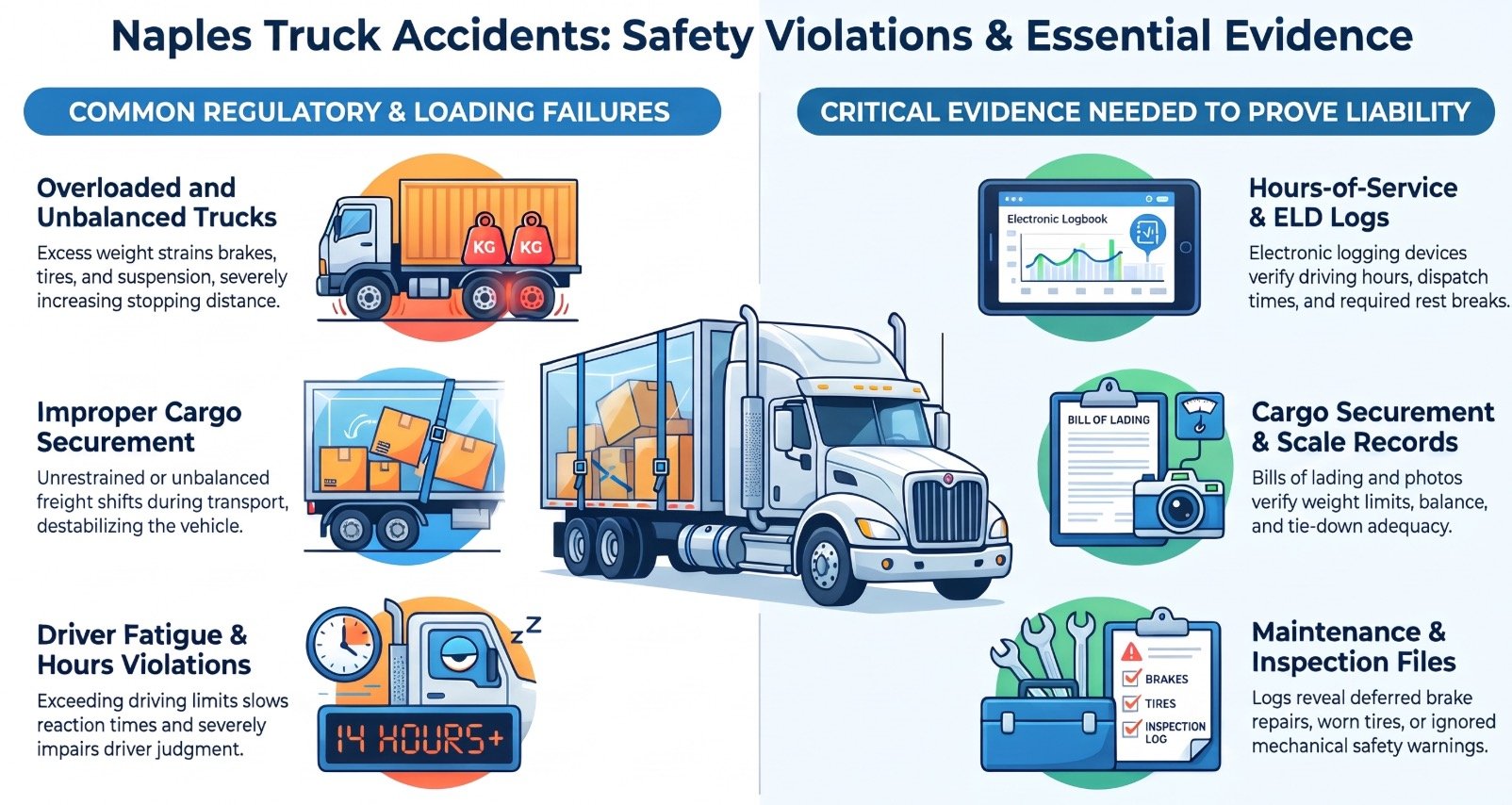
- Electronic logs, inspection and repair records, photographs, and witness accounts can help establish how the crash occurred and who may be liable.
- Seek prompt medical care, document the scene when safe, and preserve relevant evidence for your claim.
How We Can Help With Your Naples Truck Accident Trucking Regulations & Loading Injury Claim
Truck accident claims involving trucking regulations or improper loading often require a careful investigation of how the crash occurred and who may be responsible. A legal team can help injured people and their families manage the process while protecting their ability to seek fair compensation. The work may include organizing medical records, documenting financial losses, and preserving photographs, witness accounts, and other relevant materials. Careful Claim preparation can clearly show the collision’s impact and support a well-documented recovery request.
Legal guidance can also help clients understand deadlines, insurance communications, and the decisions that may arise during a claim. Counsel can review settlement proposals, explain available options, and communicate with insurers on the client’s behalf. This support may let injured people focus on treatment, family responsibilities, and recovery instead of navigating unfamiliar procedures alone. Each matter requires attention to the client’s circumstances and goals. A measured, responsive approach helps ensure that important information is addressed and that clients can make informed decisions throughout the process.
Don’t Wait. Call Our Florida Personal Injury Lawyers Now!
Understanding Naples Truck Accident Trucking Regulations & Loading Injury Cases


When a commercial vehicle collision involves possible regulatory violations or improperly secured cargo, determining responsibility requires more than examining the immediate cause of the crash. A careful review may consider the duties of the motor carrier, driver, shipper, and any other party involved in preparing or transporting the load. Federal trucking standards establish requirements for vehicle operation, driver qualifications, inspections, and cargo securement. Applicable cargo loading protocols may also govern how freight is distributed, restrained, and documented before a trip begins.
OUR CONSULTATIONSARE FREE
START YOUR FREE CASE REVIEW

In a Naples injury case, investigators may examine records, inspection reports, photographs, electronic data, and witness accounts to assess whether required practices were followed. The significance of a violation depends on the evidence and its connection to the injuries. A thorough, impartial analysis can help clarify each party’s role and preserve information relevant to a claim. Understanding these responsibilities also supports safer transportation practices and helps injured people and their families pursue informed decisions about available legal options.
Common Causes of Naples Truck Accident Trucking Regulations & Loading
Common causes of Naples truck accidents include overloaded vehicles and improperly secured cargo, both of which can affect stability and increase crash risk. Driver fatigue may also impair judgment and reaction time, particularly during long routes or demanding schedules. Equipment violations, including defective brakes or worn tires, can further compromise a truck’s safe operation.
Overloaded Trucks


Because overloaded trucks require more distance to stop and place added strain on tires, brakes, and suspension systems, excess cargo can increase the risk of a serious crash on Naples roads. Weight limit violations may arise when carriers or drivers fail to account for cargo weight, vehicle weight, or applicable road restrictions. Poor axle load distribution can also place excessive pressure on specific tires and components, impairing stability and vehicle control. These conditions may contribute to tire failures, longer stopping distances, or difficulty responding to traffic hazards. Trucking companies and drivers have a responsibility to follow federal and state weight rules and to verify loads before a vehicle enters public roads. When an overloaded truck causes a collision, investigators may review scale records, inspection reports, and company practices to determine whether regulatory failures contributed to the harm.
Improper Cargo Securement
Improperly secured cargo can shift, fall, or spill from a truck, creating hazards for other motorists on Naples roads. Federal and Florida rules require cargo to remain restrained during normal transport conditions. When drivers or loading crews fail to inspect restraints, unsecured freight may strike nearby vehicles, block traffic, or force sudden evasive actions. Load Shift Dynamics can also destabilize a truck, particularly when cargo moves during braking, cornering, or a collision. Proper tie-down tension, suitable restraint equipment, and balanced placement help reduce these risks. Responsibility may involve the carrier, driver, shipper, or loading contractor, depending on who controlled the cargo and failed to meet applicable duties. A careful investigation can identify preventable securement failures and support safer roads for the wider community.
Driver Fatigue
When truck drivers operate without adequate rest, fatigue can slow reaction times, impair judgment, and increase the risk of a serious crash on Naples roads. Long shifts, irregular schedules, and overnight routes may leave drivers unable to remain alert, placing passengers and other road users at risk. Circadian rhythm disruptions can make it especially difficult to maintain concentration during hours when the body is naturally inclined to sleep. Some medical conditions, including sleep apnea, may also prevent restorative rest. Screening for sleep apnea and timely treatment can help identify concerns that affect a driver’s fitness for duty. Carriers and drivers must follow hours-of-service requirements, plan realistic schedules, and recognize signs of exhaustion. When fatigue contributes to a collision, a careful review of records and circumstances may help clarify what occurred.
Equipment Violations
Defective truck equipment can contribute to serious crashes on Naples roads, particularly when essential systems fail under demanding driving conditions. Brake system defects may reduce stopping power or cause uneven braking, leaving a driver unable to respond safely to traffic changes. Worn tires, improper inflation, and neglected inspections can also lead to tire blowouts, loss of control, or debris hazards for nearby motorists.
Federal and state rules require carriers to maintain commercial vehicles and address safety problems before trucks return to service. Drivers and maintenance personnel may share responsibility when warning signs are ignored or inspections are incomplete. After a collision, records such as inspection reports, repair invoices, and maintenance logs can help establish whether equipment failures contributed. Identifying these issues can support accountability and help protect other people traveling on Naples roads.
Legal Rights of Naples Truck Accident Trucking Regulations & Loading Injury Victims
Federal and Florida trucking regulations govern how commercial vehicles are maintained, operated, and loaded, and violations may help establish liability after a Naples truck accident. Injured people may seek compensation when a driver, carrier, loading contractor, or another responsible party failed to meet a legal duty. Protecting legal rights starts with understanding available claims and deadlines. A careful review can also identify third-party liability when responsibility extends beyond the truck driver.
Victims may have rights to pursue damages for:
- Medical expenses, rehabilitation, and necessary future care.
- Lost income, reduced earning capacity, and related financial losses.
- Pain, disability, and effects on daily activities.
- Wrongful death damages for eligible surviving family members.
A lawyer can assess records, explain procedural requirements, and communicate with insurers while protecting a client’s interests. Prompt guidance may help prevent avoidable errors and support a fair evaluation of the harm. Each claim depends on its facts, evidence, and applicable law.
Why Do Trucking Regulations & Loading Injuries Happen in Naples?
Truck regulation and loading injuries in Naples often occur when safety requirements are ignored, or practical safeguards fail. A driver may exceed permitted hours, drive while fatigued, or fail to inspect brakes, tires, and other critical equipment. Carriers can increase risk by neglecting maintenance, providing inadequate training, or overlooking compliance. These failures may reduce a driver’s ability to respond safely and increase the likelihood of a collision.
Loading-related injuries can arise when cargo is improperly secured, unevenly distributed, or heavier than the vehicle’s limits allow. Shifting freight can destabilize a truck, while falling materials may endanger nearby motorists and workers. Inadequate loading procedures and rushed inspections can allow these hazards to go unnoticed.
Other conditions can compound the danger. Roadway design, including narrow lanes or limited visibility, may challenge large vehicles, while weather conditions can make braking and handling more difficult. When preventable safety failures combine with these factors, serious injuries may result, affecting families, workers, and the wider community.
Don’t Wait. Call Our Florida Personal Injury Lawyers Now!
What Should You Do After a Naples Truck Accident Trucking Regulations & Loading Injury?
After a Naples truck accident involving a regulatory violation or loading injury, the injured person should seek prompt medical care, even if symptoms initially appear minor. They should document the scene, injuries, vehicle damage, and any available witness information. A truck accident lawyer can assess the evidence and explain potential legal options.
Seek Medical Care
Because injuries from a Naples truck accident may not be immediately apparent, prompt medical evaluation is an important first step, even when symptoms seem minor. A qualified healthcare professional can identify hidden trauma, assess pain, and recommend appropriate treatment. Delaying care may let some conditions worsen and complicate recovery.
The injured person should describe all symptoms accurately, including discomfort that develops after the collision, and provide relevant medical history. Following the clinician’s instructions supports recovery and helps prevent avoidable complications. Follow-up appointments allow providers to monitor progress, adjust treatment, and address new or persistent symptoms. Handle medication management carefully, take prescriptions as directed, and discuss concerns with a healthcare professional. Consistent care can also help injured individuals regain function and continue meeting responsibilities to family, coworkers, and the wider community.
Document the Accident
When it is safe, documenting the accident can preserve details that may clarify how the collision occurred and whether trucking regulations or loading practices contributed. The injured person or a companion can record the date, time, location, weather, traffic conditions, and sequence of events while memories remain clear. Scene photographs should show vehicle positions, damage, road conditions, skid marks, visible cargo, and any relevant signs or signals. Take images from several angles without entering traffic or disturbing evidence. Witness contacts, including names and reliable phone numbers, can help preserve independent accounts of what occurred. The truck’s company name, license plate, and identifying numbers may also be noted if safely visible. Records of conversations with responding officers and copies of available reports should be retained for accuracy and future reference.
Contact a Truck Accident Lawyer
Prompt legal guidance can help an injured person preserve evidence and understand the steps involved in a Naples truck accident claim. After seeking medical care and documenting the crash, the injured person may contact a lawyer familiar with trucking regulations, cargo loading practices, and commercial insurance claims. Counsel can identify potentially responsible parties, request records before they are lost, and explain deadlines for pursuing compensation. A lawyer may also communicate with insurers, allowing the injured person to focus on treatment and family responsibilities. Free consultations offer an opportunity to discuss the circumstances and evaluate next steps without an initial meeting fee. Many firms offer contingency fees, meaning they generally collect legal fees only if they recover compensation. Before signing an agreement, the client should carefully review its terms, costs, and responsibilities.
Critical Evidence in a Naples Truck Accident Trucking Regulations & Loading Injury Case
Key evidence can help establish whether a trucking company or driver violated safety requirements or mishandled cargo.
Relevant records and physical documentation may include:
- Driver qualification records
- Hours-of-service logs
- Cargo securement evidence
- Inspection and maintenance records
Reviewing these materials can clarify how the crash occurred and whether regulatory or loading failures contributed.
Driver Qualification Records
Driver qualification records can reveal whether a truck driver met federal hiring, licensing, medical, and training requirements before a crash. These files may include the driver’s application, employment history, motor vehicle record, license details, medical certification, and required safety documentation. In a Naples truck accident case, missing, incomplete, or inconsistent records may raise questions about whether the carrier properly screened and qualified the driver. They may also show whether the company identified known concerns before assigning the driver to a commercial vehicle. Record retention and audit readiness practices can help establish whether required materials were maintained and available for review. Attorneys may compare these records with other evidence to assess compliance and responsibility. Careful examination can support a clearer account of events and help injured people pursue fair treatment and accountability.
Hours-of-Service Logs
Beyond qualification records, hours-of-service logs can show whether a truck driver followed federal limits on driving and rest before a Naples crash. These records may help establish whether fatigue contributed to a collision and whether a carrier monitored compliance. Electronic logging devices automatically record driving time and related data, which investigators can compare with dispatch records, fuel receipts, toll transactions, and other time-stamped evidence. Investigators may also review edits, annotations, and supporting documents for inconsistencies that suggest logbook falsification or inaccurate reporting. A careful review can identify extended driving periods, inadequate rest, or patterns of violations before the crash. Preserving these materials promptly matters because electronic records may be altered, overwritten, or lost under routine retention practices. Reliable evidence can clarify responsibility and support accountability for those harmed.
Cargo Securement Evidence
Cargo securement evidence can help explain how a load shifted, spilled, or fell and whether that movement contributed to a Naples truck accident. Photographs taken at the scene may show the cargo’s position, damaged restraints, broken packaging, or debris on the roadway. Cargo Photographing should preserve wide views and close details before items are moved, when safety and emergency response allow. Bills of lading, loading plans, weight records, and driver or shipper communications can help establish what was loaded and how it was arranged. Seal Documentation may show whether a trailer seal was intact, altered, or replaced, helping clarify access to the cargo before the crash. These materials can assist injured people, witnesses, and investigators in reconstructing events and identifying responsible parties. Prompt preservation may prevent important evidence from being lost.
Inspection and Maintenance Records
When a truck’s mechanical condition or a loading-related defect may have contributed to a Naples accident, inspection and maintenance records can help show what the carrier knew and when it knew it. These documents may identify worn brakes, tire damage, steering problems, or equipment failures that affected safe operation. Maintenance schedules can establish whether required service occurred on time and whether repairs were completed before the truck returned to the road. Discrepancies among driver reports, repair invoices, and company logs may reveal unresolved hazards or incomplete documentation. Investigators may also compare records with cargo securement evidence to assess whether loading practices placed added strain on vehicle components. Preserving these materials can clarify responsibility and support an accurate account of preventable risks, while serving injured people and the broader community.
Long-Term Effects of Naples Truck Accident Trucking Regulations & Loading Injuries
Truck accident injuries linked to regulatory violations or improper loading can produce effects that persist well beyond initial treatment. Some people experience chronic pain and lasting mobility limits that interfere with work and daily activities. Long-term emotional effects, including anxiety or trauma-related distress, may also require ongoing care.
Chronic Pain
Chronic pain may emerge weeks or months after a Naples truck accident, even when initial injuries appear manageable. A collision or improperly secured cargo can damage muscles, joints, nerves, or other tissues, causing persistent discomfort that requires ongoing attention. Symptoms may fluctuate, worsen with routine activities, or disrupt concentration and daily responsibilities. Sleep disruption can further affect a person’s health, mood, and ability to participate in family or community life.
A qualified medical provider can assess the source of continuing symptoms and recommend appropriate pain management, which may include medication, therapy, or other care. Consistent records of symptoms, appointments, and treatment can help clarify the injury’s course. When trucking regulations or loading practices may have contributed, those records may also assist a legal review of the resulting harm and related expenses.
Lasting Mobility Limits
Lasting mobility limits may develop after a Naples truck accident, particularly when collision forces or improperly secured cargo damage the bones, joints, muscles, or nerves. Fractures, spinal injuries, and severe soft-tissue damage can restrict walking, balance, lifting, or the ability to perform routine tasks. Some individuals regain function through treatment and rehabilitation, while others experience lasting limitations that require changes to daily routines. A careful assessment can identify needed services and help families coordinate practical support. Assistive technology, including mobility devices and adapted equipment, may improve independence and reduce barriers at home or work. Accessible housing can also support safer movement through widened doorways, ramps, and modified bathrooms. Medical records, rehabilitation plans, and evaluations of future care needs may document how the injury affects long-term mobility and the assistance needed.
Long-Term Emotional Effects
Emotional effects may continue long after a Naples truck accident, especially when serious injuries result from unsafe loading or violations of trucking regulations. Survivors may experience persistent fear, low mood, or difficulty concentrating as they adjust to pain, treatment, and changes in daily routines. Anxiety triggers can include passing large trucks, hearing sudden braking, or traveling near busy roadways. These reactions may interfere with work, sleep, and confidence behind the wheel, even as physical recovery progresses.
Emotional distress can also create relationship strain when family members take on caregiving duties or struggle to understand a survivor’s needs. Clear communication and appropriate mental health support may help families respond with patience and practical assistance. Recognizing lasting emotional effects is important when evaluating a collision’s full impact and planning recovery. Survivors may benefit from documenting symptoms and discussing them with qualified providers.
Proving Liability in Naples Truck Accident Trucking Regulations & Loading Injury Cases
When a commercial truck crash in Naples involves a regulatory violation or improperly secured cargo, proving liability requires more than showing that a collision occurred. Evidence must connect a specific failure to the injuries and losses. Records may reveal whether the carrier followed federal and state safety rules, inspected equipment, and trained its drivers. Bills of lading, loading plans, photographs, and cargo documents can help establish who loaded the shipment and whether its weight or restraints were unsafe.
Negligence standards require proof that a responsible party failed to use reasonable care and that the failure caused harm. Potentially responsible parties may include the driver, trucking company, cargo loader, or maintenance provider. Investigators may review electronic logs, vehicle data, inspection reports, and witness accounts to clarify how the crash occurred. Liability apportionment depends on each party’s conduct and its contribution to the injuries. A careful, evidence-based assessment can help injured people pursue accountability while supporting safer practices for everyone who shares Naples roads.
Don’t Wait. Call Our Florida Personal Injury Lawyers Now!
Dealing With Insurance Companies After a Naples Truck Accident Trucking Regulations & Loading Injury
After a Naples truck accident involving a regulatory violation or unsafe cargo, insurance companies may contact injured people before the facts are fully established. Their representatives may seek information about the crash, injuries, or medical history while the injured person is still receiving care. A prompt response is not required simply because an insurer requests one.
Recorded statement risks include incomplete descriptions, uncertain estimates, or answers taken out of context. Injured people can ask who the representative works for, clarify the request’s purpose, and avoid speculation. Written communications should remain accurate and focused on known facts. Medical records and bills should be shared only after the scope and relevance of the request are understood.
Claim denial tactics may include disputing injury severity, attributing symptoms to prior conditions, or questioning cargo-related evidence. Preserving relevant documents and consulting qualified counsel can help protect a fair review. Clear communication also helps the injured person focus on recovery and responsibilities to family, coworkers, and the community.
What to Expect During a Naples Truck Accident Trucking Regulations & Loading Injury Claim Process
A Naples truck accident claim typically begins with an initial case review to assess the collision, injuries, and potential liability. The process then involves collecting evidence, including records related to trucking regulations and cargo loading, before the parties negotiate over compensation. If negotiations do not produce an acceptable resolution, the claim may proceed to settlement through other means or to trial.
Initial Case Review
The initial case review establishes how the collision occurred, what injuries and losses resulted, and which parties may be responsible. During this stage, a lawyer considers whether the circumstances support a claim involving a commercial truck, including possible concerns about loading practices or trucking rules. Case eligibility may depend on the connection between the crash and the reported harm, the parties involved, and applicable deadlines. The review also helps identify immediate needs, such as medical care, income support, or assistance with vital responsibilities. To prepare for the consultation, the injured person can organize a clear account of the collision, treatment received, work limitations, and questions about the process. The lawyer may explain potential legal options, expected next steps, and the client’s role. This discussion supports informed decisions while keeping the focus on recovery and fair accountability.
Evidence Collection
How evidence is gathered can shape the evaluation of a truck accident claim involving loading practices or trucking regulations. Investigators may document vehicle positions, road conditions, skid marks, and visible damage before the scene changes. Scene photography can preserve details relevant to cargo shifts, improper securing, or potential equipment failures. Witness interviews may clarify how the collision occurred and whether loading or driving practices appeared unsafe. Investigators can also request records, including driver logs, inspection reports, maintenance histories, bills of lading, and cargo securement documentation. Electronic data from the truck may help establish speed, braking, and hours of operation. Preserving this material promptly supports a careful review and reduces the risk of losing important information. The process may also involve consulting qualified professionals to interpret technical records and explain their relevance to the claim.
Claim Negotiations
Once evidence is reviewed, claim negotiations typically begin with an assessment of liability, injuries, and financial losses. In a Naples truck accident involving trucking regulations or loading practices, the parties may examine driver records, cargo documentation, medical reports, and repair estimates to evaluate the claim. The injured person’s representative may present an evidence-supported demand and explain how unsafe loading, regulatory violations, or other conduct contributed to the collision. Insurers may respond with questions, requests for additional documentation, or Settlement Offers that do not fully reflect documented losses. Negotiation Tactics can include comparing the offer with verified expenses, anticipated treatment needs, lost income, and other supported damages. Clear communication and careful review help protect the claimant’s interests while keeping discussions informed. Each response should be documented and assessed against the available evidence.
Settlement Or Trial
After negotiations conclude, a Naples truck accident claim may resolve through a settlement or proceed to trial, depending on the evidence and the parties’ positions. A settlement can provide compensation without the uncertainty, delay, and expense of a courtroom decision. Before accepting an offer, the injured person should understand how it addresses medical costs, lost income, future care, and other documented losses. Mediation strategy may help the parties identify disputed issues and explore resolution with a neutral facilitator while preserving time and resources.
If settlement efforts fail, a trial lets a jury assess evidence on loading practices, trucking regulations, liability, and damages. Juries may consider witness credibility, records, expert opinions, and whether safety duties were followed. The outcome is not guaranteed, so preparation and informed decisions remain crucial throughout the process.
Compensation for Naples Truck Accident Trucking Regulations & Loading Injury Damages
When a truck crash involves violations of federal or Florida safety rules, or improper cargo loading, those failures may support a claim for compensation. An injured person may seek payment for reasonable medical expenses, including emergency treatment, surgery, rehabilitation, medication, and future care related to the collision. Records from providers can help establish the treatment required and its connection to the crash.
A claim may also address Lost wages when injuries prevent a person from working during recovery. If lasting limitations affect the ability to perform prior duties or earn at the former level, diminished earning capacity may be considered. Employment records, wage statements, and professional assessments can help document these losses.
Compensation may depend on evidence showing how a regulatory violation or loading failure contributed to the collision and resulting injuries. Preserving photographs, cargo records, inspection documents, and witness information may assist in evaluating responsibility. A careful review can help make certain that the injured person’s needs are presented accurately and that any proposed resolution reflects the documented consequences.
Economic vs Non-Economic Damages in Naples Truck Accident Trucking Regulations & Loading Cases
Truck accident claims involving trucking regulation or loading violations may include economic damages, such as medical expenses and lost income, as well as non-economic damages for pain and reduced quality of life. The categories are assessed separately, although both may reflect the effects of the same collision. Clear records and other reliable evidence help establish the losses and support the amount claimed.
Economic Damages
In Naples truck accident cases involving trucking regulations or improper loading, economic damages compensate injured people for measurable financial losses caused by the collision. These losses may include emergency treatment, hospital care, rehabilitation, medication, and necessary medical equipment. When a crash prevents someone from working, Lost wages can account for income missed during recovery. If injuries limit future work or require a lower-paying role, diminished earning capacity may reflect the difference between expected earnings before and after the collision. Other recoverable expenses can include transportation to appointments, household assistance, and repair or replacement of damaged property. Records such as bills, pay statements, tax returns, and employment documentation help establish the amount and cause of these costs. Careful calculation supports fair compensation and helps injured people maintain financial stability while pursuing recovery and meeting ongoing obligations.
Non-Economic Damages
Beyond measurable financial losses, non-economic damages address the personal effects of a Naples truck collision involving regulatory violations or improper loading. These damages may reflect physical pain, emotional strain, and disruption to daily life, rather than expenses with a direct dollar amount. Emotional distress can include anxiety, fear, or persistent difficulty coping after a serious crash. Loss of enjoyment may arise when injuries prevent a person from taking part in family activities, community service, work that provides purpose, or other meaningful routines. These effects can also influence relationships and a person’s sense of independence. In cases involving unsafe loading or trucking rule violations, non-economic damages recognize that the consequences extend beyond medical bills and lost income. They aim to account for the human impact of an injury and its lasting effects on well-being.
Proving Your Losses
When a Naples truck collision involves alleged trucking regulation violations or improper loading, proving losses requires evidence that connects the crash to both financial harm and personal effects. Economic damages may include medical bills, rehabilitation costs, lost income, and reduced future earning capacity. Wage documentation, tax records, employer statements, and medical opinions can help establish these amounts and show how injuries affect continued employment. Household services records may show the cost of replacing tasks the injured person can no longer perform. Non-economic damages address pain, emotional distress, loss of independence, and diminished enjoyment of daily life. Personal accounts, treatment notes, and family members’ observations may help describe these effects. Organized evidence allows a claim to present the full impact of the collision while supporting accountability and fair compensation for the injured person.
When a Naples Truck Accident Trucking Regulations & Loading Injury Case Goes to Trial vs Settlement
A Naples truck accident case involving trucking regulation violations or improper loading may settle or go to trial, depending on the evidence, the parties’ positions, and the extent of the injuries. Settlement negotiations may offer a more predictable resolution and avoid the time and uncertainty of a courtroom proceeding. The parties may discuss responsibility, documented losses, and the compensation needed to address the injured person’s circumstances and support recovery.
If negotiations do not produce an acceptable agreement, the case may proceed to trial. Each side presents evidence and arguments for a judge or jury to evaluate. Jury selection begins the process, followed by opening statements, witness examination, and courtroom testimony concerning the crash, loading practices, and resulting harm. The decision-maker evaluates the evidence before reaching a verdict, and the process may require substantial preparation and time. Whether the case is resolved through settlement or trial, careful case development can clarify disputed issues and support a fair outcome for those affected.
Florida Laws That May Affect Your Naples Truck Accident Trucking Regulations & Loading Case
Florida and federal laws may shape how investigators and courts handle a Naples truck accident case involving regulatory violations or improper loading. These rules can help establish which parties had safety duties and whether a breach contributed to a collision. Federal motor carrier requirements may address driver qualifications, hours of service, vehicle maintenance, and cargo securement. Florida law also governs negligence claims and how responsibility is allocated.
Federal and Florida safety laws can help identify trucking violations, responsible parties, and how negligence contributed to a Naples crash.
Relevant considerations may include:
- Whether the carrier or driver violated applicable safety regulations.
- Whether cargo was properly loaded, balanced, and secured.
- Whether inspection, dispatch, or maintenance records show a safety failure.
- How Florida negligence standards apply to the conduct of each responsible party.
Under comparative fault rules, an injured person’s recovery may be reduced according to that person’s share of responsibility. Evidence may also identify a motor carrier, shipper, loader, or maintenance provider whose actions contributed to harm. Careful review can clarify accountability and support a fair resolution that recognizes the needs of injured people and their families.
The Statute of Limitations for Naples Truck Accident Trucking Regulations & Loading Injury Cases
The deadline for filing a Naples truck accident claim may depend on the type of injury and the parties involved, even when trucking violations or improper loading contributed to the crash. Florida law sets time limits for personal injury lawsuits, and missing the applicable Filing deadline can prevent an injured person from seeking compensation in court. Different rules may apply when a claim involves a wrongful death, a government entity, or another legally distinct circumstance.
The Discovery rule may affect when a limitations period begins in certain cases, particularly if an injury or its connection to the crash was not immediately apparent. However, it does not automatically extend the filing deadline; the facts and governing law determine whether it applies. Evidence of loading practices, driver conduct, and regulatory violations may also become harder to obtain as time passes. Prompt attention to the applicable deadline helps preserve the opportunity to pursue accountability and protect the interests of those harmed.
How a Naples Truck Accident Trucking Regulations & Loading Lawyer Can Help You
Investigating a Naples truck accident involving alleged regulatory violations or improper loading requires careful coordination of legal and factual evidence. A lawyer can help injured people and families understand how trucking rules, cargo practices, and available records relate to responsibility. Through Legal consultation, counsel can explain your rights, assess the evidence, and identify practical steps to support a fair resolution.
A lawyer can connect trucking regulations, cargo practices, and available evidence to help clarify responsibility after a Naples truck accident.
A lawyer may assist by:
- Reviewing driver logs, inspection records, maintenance files, and applicable safety requirements.
- Examining bills of lading, loading documents, cargo securement, and weight information.
- Coordinating with qualified investigators or experts to clarify how a violation may have contributed to the collision.
- Communicating with insurers and other parties while preserving relevant evidence and documenting losses.
This work can help build a claim strategy grounded in verified facts rather than assumptions. Counsel may also evaluate medical expenses, lost income, and other documented effects, while keeping the client informed about options. Careful preparation can support accountability and help protect affected parties’ interests.
When to Contact a Naples Truck Accident Trucking Regulations & Loading Lawyer
Prompt legal guidance may be appropriate when a truck crash raises questions about driver compliance, vehicle maintenance, cargo loading, or securement. A timely Attorney Consultation can help an injured person or family understand what information matters and what steps can protect their interests while they focus on recovery.
Early Warning Signs include shifting cargo, damaged tie-downs, overloaded trailers, worn tires, or records suggesting missed inspections. Concerns may also arise when a driver appears fatigued, a carrier delays reporting, or accounts of the crash conflict. These circumstances do not establish fault, but they can signal that careful review is warranted.
Contact may be appropriate soon after medical needs are addressed, particularly when injuries are serious, evidence could be altered, or questions about responsibility remain unresolved. Witness recollections, vehicle condition, and loading records may become harder to verify over time. A lawyer can discuss the circumstances, explain relevant deadlines, and identify practical next steps without disrupting efforts to support affected people and their families.
Why You Need an Experienced Naples Truck Accident Trucking Regulations & Loading Lawyer
When a truck crash may involve regulatory violations or unsafe cargo loading, an experienced Naples truck accident lawyer can help assess how those issues relate to the collision and resulting injuries. Trucking cases may require careful review of driver records, inspection reports, hours-of-service data, and cargo securement practices. A lawyer familiar with these matters can identify relevant evidence and explain how federal or state requirements may apply.
Timely investigation can be important because records, vehicle data, and witness accounts may become harder to obtain. Preserving trucking company communications can help document notice, decisions, and responses concerning the truck or its load. Counsel may also help coordinate cargo owner investigations when several businesses participated in preparing, securing, or transporting freight. This work can clarify each party’s role without assuming that a violation caused the crash. By organizing evidence and evaluating potential responsibility, an experienced lawyer can support an informed claim and help injured people pursue accountability while they focus on recovery and obligations to others.
How to Choose the Right Naples Truck Accident Trucking Regulations & Loading Lawyer for Your Case
Choosing the right Naples truck accident lawyer requires more than finding counsel familiar with trucking regulations and cargo-loading practices. A careful selection can help an injured person pursue accountability while protecting the interests of family members and others affected by the crash.
When evaluating candidates, clients should review Attorney Credentials, including Florida licensure, relevant case experience, and familiarity with federal and state trucking rules. They can ask how the lawyer investigates driver records, maintenance histories, cargo securement, and company procedures. Clear answers help show whether counsel can identify responsible parties and preserve important evidence.
Communication also matters. A lawyer should explain case developments, respond within reasonable timeframes, and provide realistic assessments rather than promises. Prospective clients should discuss Fee Structures, including contingency terms, case expenses, and any payment obligations if recovery is not obtained. Written agreements should be reviewed before signing.
Clear communication and a written fee agreement can help clients understand expectations before choosing a lawyer.
Comparing several qualified attorneys can clarify differences in experience, approach, and accessibility. The decision should rest on informed judgment and confidence in the lawyer’s ability to serve the client’s needs.
About The Law Offices of Anidjar & Levine
The Law Offices of Anidjar & Levine represents people injured in truck accidents in Naples and throughout Florida. The firm helps clients who want answers after collisions involving commercial vehicles, including incidents connected to trucking regulations, cargo securement, or improper loading. Its attorneys review available evidence, explain potential legal options, and handle communications with insurers and other parties. This work can help injured people focus on medical care and recovery while the firm evaluates their claims.
Firm history provides context for the firm’s approach to representing individuals and families facing difficult circumstances. Attorneys work to understand each client’s situation and identify issues that may affect a claim, such as driver conduct, company practices, or loading procedures. Community involvement also reflects the firm’s connection to the people and places it serves. For prospective clients, learning about the firm’s services, experience, and communication practices can help them assess whether its representation aligns with their needs after a truck accident.

Frequently Asked Questions
Which Federal Agencies Regulate Commercial Truck Loading and Cargo Securement?
Federal commercial truck loading and cargo securement rules are primarily administered by the Federal Motor Carrier Safety Administration (FMCSA), an agency within the Department of Transportation. FMCSA enforcement covers carrier and driver compliance with cargo securement standards. The Occupational Safety and Health Administration (OSHA) provides workplace oversight, including worker safety during loading, although its authority over transportation activities may be limited. Other federal agencies can regulate particular cargo, such as hazardous materials, based on its contents.
What Cargo Securement Rules Apply to Trucks Traveling Through Florida?
Florida cargo securement rules generally follow federal regulations in 49 C.F.R. Part 393, Subpart I. Carriers and drivers must prevent cargo from leaking, spilling, blowing, or falling and must use suitable tiedowns, blocking, or bracing based on the load’s weight and type. They must inspect securement before travel and during required intervals. These safeguards reduce cargo shifting hazards, protect other road users, and support safe, reliable transportation throughout Florida.
Can a Shipper Be Liable for Improperly Loading a Commercial Truck?
A shipper may be liable for improperly loading a commercial truck when its conduct creates an unsafe load or violates applicable duties. Shipper Loading Liability depends on who controlled the loading, whether the shipper arranged or performed it, and whether the hazard was reasonably foreseeable. Improper Loading Claims may examine weight distribution, cargo securement, and warnings provided to the carrier. Evidence such as loading records, photographs, and witness accounts can help establish responsibility and support injured people seeking fair compensation.
How Do Weigh Stations Inspect Trucks for Overloading in Florida?
In Florida, weigh station inspections use fixed or portable scales to assess a truck’s gross weight and individual axle weights. Officers may direct vehicles through an initial screening, then conduct a closer measurement if readings suggest a violation. They also review registration, permits, and vehicle condition. When a truck exceeds applicable axle weight limits or other legal thresholds, officials may require it to unload or redistribute cargo and may issue citations or restrict further travel.
Are Trucking Companies Required to Train Employees on Cargo Securement?
Yes. Federal rules require motor carriers to make certain employees responsible for cargo securement understand applicable requirements and can perform their assigned duties safely. Employee Training Requirements depend on each worker’s role and the cargo involved, but training should address securement methods, equipment, inspection, and load-specific risks. Securement Training Records can help demonstrate that instruction occurred and support consistent practices. Proper training protects drivers, other road users, and cargo from preventable hazards.
—————————
Truck accident claims involving loading practices or regulatory violations may require a careful review of driver conduct, cargo records, and applicable safety rules. Injured people in Naples may have legal options for pursuing compensation, but deadlines and evidence requirements can affect a claim. The Law Offices of Anidjar and Levine can review the circumstances, explain possible next steps, and help identify responsible parties. Learn more from a Naples Personal Injury Lawyer. Prompt legal guidance may help preserve important evidence and support an informed decision after a serious collision.