

Law Offices of Anidjar and Levine can assess whether speeding or another traffic violation contributed to a crash and explain an injured person’s options under Florida law. A citation alone does not establish fault; evidence such as crash reports, witness accounts, photographs, and camera footage may help clarify what happened. Claims may involve medical expenses, lost income, and comparative fault. Learn more from a Port St. Lucie Personal Injury Lawyer.
Main Takeaways
- A Port St. Lucie car accident lawyer can assess how speeding or another alleged traffic violation may affect your claim.
- A citation or accusation alone doesn’t establish fault; evidence and the crash circumstances matter.
- Police reports, witness accounts, photos, camera footage, and crash reconstruction may help clarify what happened.
- Preserve evidence promptly and document injuries, treatment, expenses, and other effects of the crash.
- A lawyer can communicate with insurers, evaluate settlement offers, explain fees, and discuss deadlines and possible litigation.


How We Can Help With Your Port St. Lucie Car Accident Traffic Violations & Speeding Injury Claim
When a traffic violation or speeding causes a crash in Port St. Lucie, an injured person may need practical guidance while managing medical care, missed work, and insurance demands. A car accident lawyer can help organize the claim, explain available options, and handle communications with insurers so the client can focus on recovery and family responsibilities.
The legal team may gather relevant records, preserve evidence, identify responsible parties, and prepare a clear account of the losses. It can also review settlement proposals and advise whether an offer reasonably addresses documented expenses and other impacts. Each step should reflect the client’s circumstances, priorities, and informed choices.
Client communication should remain timely and clear, with updates on progress, requests for information, and major decisions. A transparent Legal fee structure can clarify how fees are calculated and when payment may be due. This service-oriented approach helps clients make considered decisions while pursuing fair treatment and appropriate compensation through the claim process.
OUR CONSULTATIONSARE FREE
START YOUR FREE CASE REVIEW

Understanding Port St. Lucie Car Accident Traffic Violations & Speeding Injury Cases
Traffic violations and speeding can shape how a Port St. Lucie injury case is evaluated, but a citation alone does not determine who is legally responsible. Investigators and insurers may examine crash reports, witness accounts, physical evidence, and applicable traffic laws to assess whether a driver’s conduct contributed to the collision. The injured person’s losses, including medical expenses, lost income, and lasting limitations, also help define the claim.
Local crash patterns and traffic enforcement trends can provide context for understanding how roadway incidents are documented and addressed. However, each collision requires an individual review of the available facts rather than assumptions based on broader statistics. Timely evidence preservation can help clarify disputed details and support a fair assessment of responsibility and damages.
A careful review may also identify issues involving insurance coverage, comparative fault, and claim filing deadlines. Clear guidance helps injured people make informed decisions while protecting their ability to pursue appropriate compensation.
Common Causes of Port St. Lucie Car Accident Traffic Violations & Speeding
Common causes of traffic violations and speeding-related crashes in Port St. Lucie include speeding, reckless driving, and distracted driving. Failure to yield and running red lights can also create dangerous intersection conflicts. Identifying the conduct that contributed to a collision can help clarify how the crash occurred and who may be responsible.
Speeding and Reckless Driving
Speeding and reckless driving frequently cause serious car accidents in Port St. Lucie. Excessive speed reduces a driver’s ability to respond to changing road conditions and increases impact force in a collision. Aggressive actions, such as tailgating, unsafe passing, and running red lights, can put other motorists, passengers, and pedestrians at risk. These behaviors can cause preventable injuries and significant property damage.
Florida law imposes speeding penalties that may include fines, points on a driver’s license, and increased insurance costs. More dangerous conduct can result in reckless driving charges, which carry more serious legal consequences. After a crash, investigators may examine vehicle damage, witness accounts, and available records to assess whether a traffic violation contributed. Understanding these factors can help injured people pursue accountability and support safer roads throughout the community.
Distracted Driving
When drivers divert their attention from the road, even briefly, they may miss changing traffic conditions or not respond in time to prevent a collision. Distracted driving includes visual, manual, and mental activities that compete with safe vehicle operation. Reading messages, adjusting navigation, eating, or reaching for objects can take a driver’s eyes or hands away from driving. Hands-free technology may reduce manual demands, but it does not eliminate cognitive distraction. A driver focused on a conversation or voice command may still miss important roadway information or react too slowly. In Port St. Lucie, these lapses can contribute to crashes and traffic violations, including speeding when a driver fails to monitor vehicle speed. Recognizing distraction’s risks supports safer choices and helps protect passengers, pedestrians, and other road users.
Failure to Yield
Failure to yield occurs when a driver does not give another road user the right of way as required by traffic laws or road conditions. In Port St. Lucie, these incidents may happen at intersections, when entering a roadway, or when turning across approaching traffic. Yield sign violations can lead to collisions if a driver proceeds without checking for vehicles, cyclists, or pedestrians. Drivers must also respect pedestrian right of way at marked crossings and remain alert where people may be crossing. A failure to yield can cause serious injuries, particularly for people outside a vehicle who have little protection. Careful observation, reduced speed, and patience help drivers protect others and prevent avoidable crashes. When a collision occurs, evidence about signs, visibility, and vehicle movements can help clarify how the right-of-way rules applied.
Running Red Lights
Running a red light happens when a driver enters an intersection after the signal turns red, increasing the risk of collision with cross traffic, pedestrians, and cyclists. In Port St. Lucie, these crashes may result from distraction, impatience, excessive speed, or misjudging a changing signal. Signal timing can affect how drivers respond, while poor intersection visibility may make signs, signals, or approaching traffic harder to see. Drivers approaching an intersection should slow down, stay alert, and stop when required rather than try to beat a changing light. A driver who has entered legally should still watch for vehicles that fail to stop and take reasonable steps to protect others. After a collision, investigators may review signal records, witness accounts, vehicle damage, and roadway conditions to determine how the violation contributed.
Don’t Wait. Call Our Florida Personal Injury Lawyers Now!


Legal Rights of Port St. Lucie Car Accident Traffic Violations & Speeding Injury Victims
Traffic violations and speeding can contribute to serious crashes in Port St. Lucie. Injured people may have legal options to seek compensation when another party’s negligence causes harm. A careful review of the evidence can clarify responsibility and help protect everyone’s rights.
Speeding crashes in Port St. Lucie may leave injured people with legal options when another party’s negligence causes harm.
Victims may be entitled to recover documented losses, subject to Florida law and the facts of the case. Important considerations include:
- Medical expenses, rehabilitation costs, lost income, and other supported damages
- Comparative negligence, which may reduce recovery if an injured person shares responsibility
- Uninsured motorists coverage, which may provide a claim option when an at-fault driver lacks insurance
Insurance companies may request statements or records, but claimants can seek legal guidance before responding or accepting a settlement. Accurate documentation and timely action can support a fair evaluation. Those assisting an injured neighbor or family member can help preserve records and encourage informed decisions without making promises about the outcome. Each claim depends on its specific circumstances and applicable legal requirements.
Why Do Port St. Lucie Car Accident Traffic Violations & Speeding Injuries Happen?
Speeding and other traffic violations can cause serious crashes in Port St. Lucie. Drivers who exceed posted limits have less time to respond to hazards and may need greater distance to stop. Distracted driving, unsafe lane changes, tailgating, and failure to yield can also place nearby motorists, passengers, cyclists, and pedestrians at risk. These violations may reflect choices that disregard others’ safety, though conditions can also contribute to a collision.
Roadway design can influence how drivers maneuver through intersections, curves, merging lanes, and areas with limited visibility. Confusing signs, obstructed sightlines, or poorly marked crossings may increase the chance of errors, particularly when a driver is traveling too fast. Weather conditions, including heavy rain or reduced visibility, can make roads slippery and impair a driver’s ability to judge distance. When these factors combine with speeding or another traffic violation, the resulting impact may cause severe injuries. Understanding contributing circumstances can help communities identify risks and support safer travel for everyone.
What Should You Do After a Port St. Lucie Car Accident Involving Traffic Violations & Speeding?
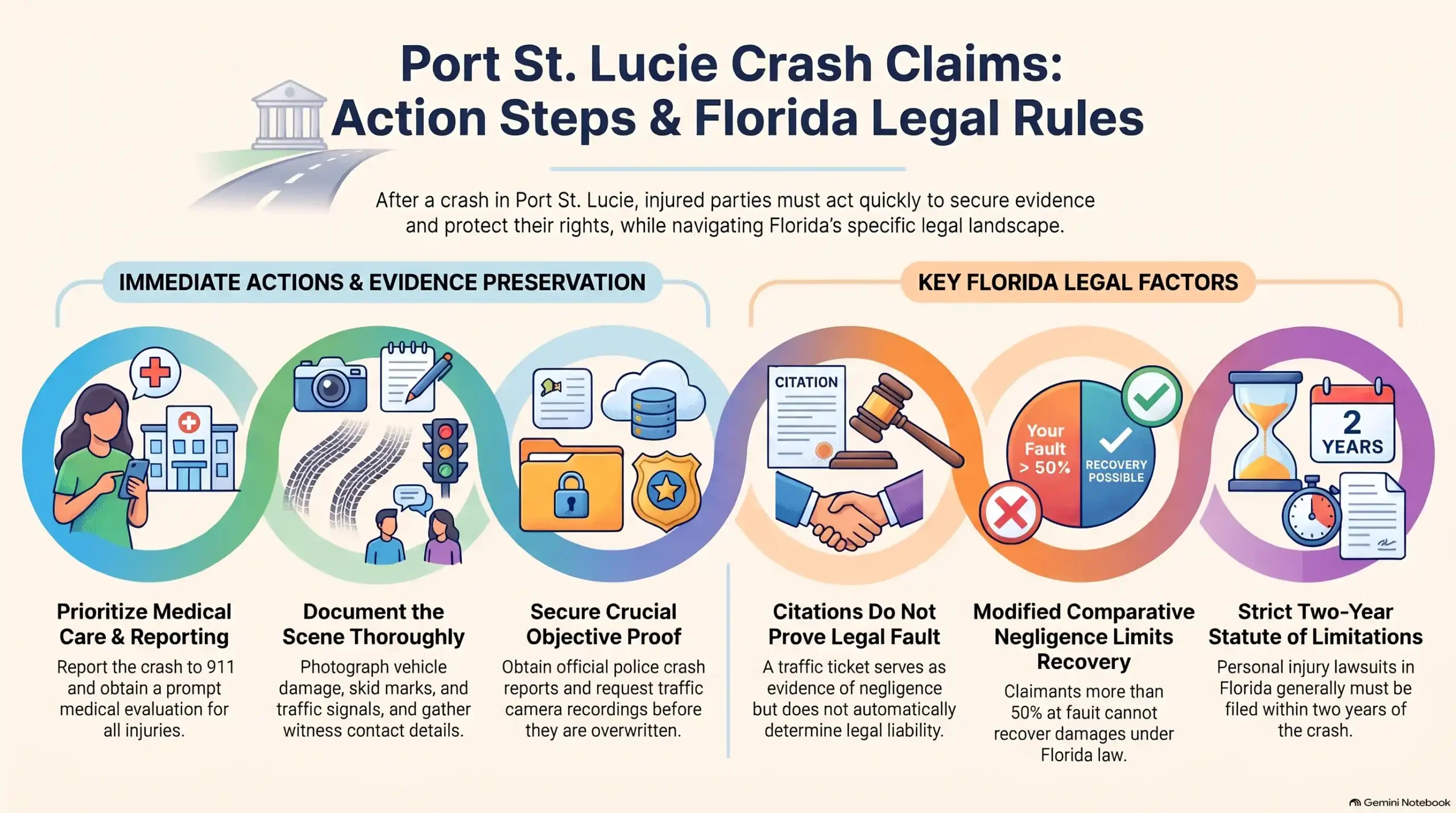
After a Port St. Lucie crash involving a traffic violation or speeding, first check for injuries and call emergency services if needed. Report the crash to law enforcement, especially if anyone is injured or property is damaged. If it is safe, those involved should document the scene by recording relevant details and photographing vehicle damage, road conditions, and traffic signs.
Check for Injuries
Because injuries may not be immediately apparent after a collision, check everyone involved for signs of harm before anyone moves unnecessarily. A calm, careful assessment can help protect passengers, other drivers, pedestrians, and anyone who may be unable to request assistance. If a person is unconscious, confused, bleeding heavily, or reporting severe pain, bystanders should avoid moving them unless an immediate danger makes movement necessary. Move to a safe location only if you can do so without worsening an injury or creating another hazard. Call emergency services promptly and provide the location, the number of people affected, and any visible medical concerns. While waiting, keep injured individuals as still and comfortable as possible, and follow the dispatcher’s instructions. Even when symptoms seem minor, medical evaluation can identify injuries that require timely care.
Report the Crash
Once you’ve addressed immediate safety and medical needs, report the crash to law enforcement, especially if someone is injured, traffic is obstructed, or a driver may have violated traffic laws. If vehicles create a hazard and can be moved safely, drivers should move to Safety without leaving the scene. Calling 911 lets dispatchers send officers and emergency responders as needed. Drivers should provide the location, describe any injuries or immediate dangers, and answer questions accurately. They should follow lawful instructions and avoid speculation about fault. When conditions permit, those involved should Exchange Information, including names, contact details, insurance information, and vehicle identification. A cooperative, calm approach can help protect everyone’s well-being and help officers prepare an accurate report. Drivers should request the report number before departing.
Document the Scene
With the crash reported and immediate hazards addressed, documenting the scene helps preserve an accurate record of what happened. If it is safe, a person involved or a willing bystander can photograph vehicle positions, damage, skid marks, traffic signals, road conditions, and nearby signs before vehicles are moved. Images should capture both broad views and specific details, including any visible injuries, without delaying medical care or creating further danger. When practical, preserve physical debris, note its location, and avoid contact if it may be hazardous. Witness names and contact information can also help clarify how the collision happened. A brief written account should record the time, location, weather, and observed traffic violations. These steps may help injured people, insurers, and investigators evaluate events fairly and accurately.
Don’t Wait. Call Our Florida Personal Injury Lawyers Now!
Critical Evidence in a Port St. Lucie Car Accident Traffic Violations & Speeding Injury Case
Establishing how a speeding or traffic violation caused a crash often depends on preserving reliable evidence.
Crucial sources may include:
- Police crash reports and witness statements
- Traffic camera footage
- Medical records documenting injuries
Together, these materials can help clarify fault, confirm the sequence of events, and show the extent of harm.
Police Crash Reports
How can a police crash report help clarify a Port St. Lucie traffic violation or speeding injury case? The report may document the crash location, date, vehicle positions, road conditions, apparent damage, and the responding officer’s observations. These details can help establish an initial account of events and identify issues requiring further investigation. A report is not a final determination of fault, and other evidence may challenge or supplement its conclusions. Retrieving the report early is an important step; an injured person or authorized representative can request it from the appropriate law enforcement agency or Florida’s crash records system. Careful review may also reveal errors in the report, such as incorrect names, vehicle details, or location information. Promptly identifying inaccuracies can help preserve a clearer record and support a fair evaluation of the claim.
Witness Statements
Witness statements can provide an independent account of a Port St. Lucie collision, including what a person observed before, during, and after impact. Their descriptions may help clarify vehicle movements, apparent speeding, traffic signal compliance, and the sequence of events. Investigators and legal representatives may contact witnesses promptly because memories can fade and contact information may become difficult to verify. Witness credibility depends on factors such as the person’s opportunity to observe, distance from the crash, attention, and consistency over time. Statement inconsistencies do not automatically make an account unreliable, but they may require careful comparison with other evidence and follow-up questions. A clear record of each witness’s observations can help evaluate disputed traffic violations and support a fair assessment of injuries, responsibility, and the needs of those affected.
Traffic Camera Footage
Traffic camera footage may provide an objective record of a Port St. Lucie collision, including vehicle movements, signal timing, and apparent speed. Such recordings can help clarify disputed traffic violations and show how events unfolded before impact. However, not every intersection has a camera, and available footage may capture only part of the roadway or incident.
Camera retention periods vary by agency and system, so relevant recordings may be overwritten or deleted quickly. Prompt requests to the responsible public agency or business can help preserve potentially useful evidence. Footage authentication is also important; records may need to establish when and where a video was recorded and whether it remained unaltered. A qualified attorney can identify likely sources, seek preservation, and assess whether footage supports a fair, accurate evaluation of the collision.
Medical Records
When a Port St. Lucie crash involves a traffic violation or speeding, medical records can help establish how the collision affected an injured person. Emergency department notes, diagnostic images, treatment plans, and follow-up reports may document symptoms, injuries, and recovery over time. These records can also help connect the reported harm to the crash and clarify whether care was consistent with the injury.
Organizing medical records supports a clear, chronological account of treatment and expenses. Accurate, complete documentation can help insurers, medical professionals, and courts evaluate a claim. Provider coordination can help obtain relevant records, address missing information, and ensure clinicians’ findings are understood together. Careful handling of sensitive health information is vital. Organized evidence can help claim reviewers make informed decisions and support a fair assessment of the injured person’s needs.
Long-Term Effects of Port St. Lucie Car Accident Traffic Violations & Speeding Injuries
Traffic violations and speeding can cause injuries with effects that persist long after the collision. Some people experience chronic pain or disability, while others face lasting emotional trauma that disrupts daily life. Continued treatment and rehabilitation may also create substantial medical costs over time.
Chronic Pain and Disability
After a Port St. Lucie traffic violation or speeding crash, injuries may cause chronic pain and lasting physical limitations. Persistent back, neck, or joint pain can interfere with walking, lifting, sleeping, and other daily activities. Some people require ongoing treatment, medication, or rehabilitation, while others face reduced mobility or permanent impairment. Pain management may include coordinated care from physicians and therapists, with treatment plans adjusted as symptoms and functional needs change. Disability accommodations at work, school, or home can help injured people maintain independence and participate safely in routine activities. Documented medical evaluations, treatment records, and reports of functional restrictions may clarify how an injury affects daily life. When another driver’s conduct caused the collision, these records can also help establish the extent of losses and the support needed for long-term care and recovery.
Lasting Emotional Trauma
A serious collision caused by speeding or another traffic violation can leave lasting emotional effects, even after physical injuries begin to recover. Survivors may experience anxiety, sleep disruption, irritability, or difficulty concentrating as they adjust to changes in daily routines and personal independence. Post-traumatic stress can develop after a frightening crash, leading to intrusive memories, heightened alertness, or avoidance of driving and familiar roads. Emotional triggers, such as sirens, sudden braking, or passing the collision location, may intensify distress without warning. These reactions can affect relationships, work, and participation in community life. Compassionate support from family, professionals, and others can help survivors feel understood and reduce isolation. Recognizing emotional harm is key to understanding the lasting consequences of traffic violations and speeding injuries in Port St. Lucie.
Ongoing Medical Costs
Emotional recovery may continue alongside the physical treatment required for serious injuries caused by speeding or other traffic violations in Port St. Lucie. Long-term medical needs can include follow-up appointments, rehabilitation, medication, assistive devices, or additional procedures. These expenses may persist after initial insurance payments or emergency care have ended, creating financial pressure for injured people and their families.
A documented treatment plan can help clarify likely future needs and support informed decisions. Future treatment budgeting should account for expected care, possible complications, and changes in a person’s ability to work or manage daily activities. Healthcare cost forecasting may also help identify hard-to-predict expenses, such as renewed therapy or expert consultations. Accurate records, provider assessments, and billing statements can help establish the scope of ongoing costs. Careful planning supports continuity of treatment and helps preserve resources for recovery and vital household needs.
Proving Liability in Port St. Lucie Car Accident Traffic Violations & Speeding Injury Cases
When a traffic violation or excessive speed contributes to a crash, proving liability requires evidence that the driver’s conduct caused the collision and resulting injuries. In Port St. Lucie, relevant evidence may include police reports, witness accounts, traffic camera footage, vehicle damage, and physical marks at the scene. These records can help establish whether a driver failed to obey a signal, followed too closely, or traveled too fast for conditions.
Accident reconstruction may clarify vehicle speed, movement, and the sequence of impacts. Investigators may also examine roadway design, visibility, signage, and surface conditions to determine whether environmental factors contributed to the collision. A careful review distinguishes a proven violation from an assumption and connects the conduct to the harm suffered.
Medical records and qualified professional opinions can document injuries and explain how they relate to the crash. Promptly preserving evidence supports a reliable assessment and helps injured people pursue accountability. Clear, well-supported findings can also inform efforts to promote safer roads and protect other community members.
Dealing With Insurance Companies After a Port St. Lucie Car Accident: Traffic Violations & Speeding Injury
Evidence establishing that speeding or another traffic violation caused a Port St. Lucie collision can strengthen an injured person’s insurance claim, but insurers may still question responsibility, injury severity, or the value of losses. A claim adjuster may request prompt access to medical records, ask for a recorded account, or propose an early settlement before the full impact of injuries is known. These Claim adjuster tactics may affect how evidence is interpreted and whether compensation reflects documented harm.
Risks of recorded statements include inaccurate summaries, misunderstood answers, and comments taken out of context. An injured person can provide basic information while avoiding speculation about fault, speed, or medical recovery. Supporting materials, such as the crash report, photographs, witness details, and treatment records, can help present a clear account. Careful communication also protects the interests of passengers, family members, and others affected by the collision. Legal guidance may help assess requests, preserve relevant evidence, and respond accurately without making unsupported statements or accepting an inadequate offer.
What to Expect During a Port St. Lucie Car Accident Traffic Violations & Speeding Injury Claim Process
A Port St. Lucie car accident claim typically begins with a case evaluation, including the reported traffic violations, injuries, and available documentation. We then gather evidence to support the claim, followed by negotiations with the insurance company over liability and compensation. If the parties cannot reach a fair settlement, the injured person may pursue litigation.
Initial Case Evaluation
An initial case evaluation helps determine how a traffic violation or speeding allegation may affect an injury claim after a Port St. Lucie collision. The review considers the reported circumstances, the nature of the injuries, and the parties’ accounts to identify issues that may shape the claim. A liability review examines whether a driver’s conduct may have contributed to the crash and how any disputed fault could affect responsibility. This assessment also considers whether an alleged violation supports or complicates the injured person’s position; an allegation alone does not establish fault or guarantee recovery. A case value assessment weighs the apparent harm, treatment needs, and potential financial losses without promising a specific result. The evaluation clarifies options, likely challenges, and practical next steps, enabling informed decisions while letting the injured person focus on recovery and daily responsibilities.
Evidence Collection
After the initial review, evidence collection helps establish how the collision occurred and how a traffic violation or speeding allegation may relate to the injuries. The process may include obtaining the crash report, photographs, witness accounts, and available surveillance footage. Investigators may document road conditions, traffic controls, vehicle positions, and visible damage before those details change. Vehicle inspections can identify impact points and damage patterns that help clarify the sequence of events. When available and lawfully accessible, electronic data from a vehicle may record speed, braking, or other information relevant to the collision. Medical records and treatment documentation can link reported injuries to the crash and show how they progressed. Careful preservation and review of these materials support an accurate account and help guarantee that each person’s role and circumstances are considered fairly.
Insurance Claim Negotiations
When the available evidence clarifies how a Port St. Lucie driver’s traffic violation or speeding contributed to a collision, negotiations with the insurer can focus on responsibility, documented losses, and the injured person’s needs. The claim may include medical expenses, lost income, property damage, and other related losses. A demand letter strategy presents this information in an organized, persuasive format and explains how the evidence and records support the requested compensation. Insurers may review treatment documentation, liability facts, and the consistency of reported injuries before responding. A policy limits analysis helps assess available coverage and whether it may address the claimed losses. During discussions, counsel can respond to questions, correct factual disputes, and provide relevant records. Clear communication helps protect the injured person’s interests while keeping negotiations grounded in evidence and applicable coverage.
Settlement Or Litigation
After negotiations, the claim may resolve through settlement or proceed to litigation if the parties cannot agree on responsibility or compensation. A settlement can provide compensation without a trial, but its terms should reflect documented losses, medical needs, and the evidence concerning traffic violations or speeding. Before accepting an offer, the injured person may review its scope, including any release of future claims, with qualified counsel.
If negotiations stall, mediation may help the parties explore resolution with a neutral facilitator. Mediation preparation includes organizing records, evaluating damages, and identifying acceptable terms. If mediation does not produce an agreement, litigation strategy may involve filing a lawsuit, exchanging evidence, taking testimony, and presenting the case in court. The process can take time and require ongoing documentation. Throughout either path, careful attention to accurate records and fair treatment can support a responsible resolution.
Compensation for Port St. Lucie Car Accident Traffic Violations & Speeding Injury Damages
A driver’s traffic violation or excessive speed may support a compensation claim if it contributed to a Port St. Lucie crash that caused injury. Compensation may address the harm and practical losses resulting from the collision, subject to evidence, applicable law, and the circumstances of the case. A claim may include medical expenses for emergency care, treatment, rehabilitation, medication, and reasonably anticipated future care. Healthcare provider records can help establish the nature of an injury and the treatment it requires.
Injured people may also seek recovery for Lost wages when injuries prevent them from working. If injuries limit future employment or reduce earning capacity, diminished earning capacity may be relevant. Documentation from employers, medical professionals, and financial experts can help explain these losses. A claim may also cover physical pain, limitations, and disruptions to daily activities. Careful evaluation helps ensure requested compensation reflects the injury’s effects, avoids unsupported estimates, and recognizes the needs of those affected.
Economic vs Non-Economic Damages in Port St. Lucie Car Accident Traffic Violations & Speeding Cases
In Port St. Lucie speeding and traffic-violation cases, economic damages may include medical expenses, lost income, and other measurable financial losses. Non-economic damages address harm such as pain, emotional distress, and reduced quality of life. To establish either category, you must provide evidence linking the crash to the claimed losses.
Economic Losses
What financial harm can follow a speeding-related crash in Port St. Lucie? Economic losses include measurable expenses and income disruptions caused by the collision. An injured person may seek payment for reasonable medical care, such as emergency treatment, follow-up visits, medication, rehabilitation, and necessary medical equipment. Vehicle repair or replacement costs and certain transportation expenses may also qualify when supported by records.
You may recover lost wages when injuries prevent you from working, including documented missed shifts or reduced hours. If lasting limitations affect the ability to perform a job or earn the same income, reduced earning capacity may also be considered. Pay records, employer statements, invoices, and medical documentation can help establish these losses. A careful accounting enables an insurer, court, or legal representative to evaluate the financial impact and support a fair claim.
Non-Economic Harm
Beyond measurable expenses, a speeding-related crash may cause non-economic harm that affects an injured person’s daily life. These losses don’t have a direct price tag, yet they can substantially change a person’s routines, independence, and well-being. Physical pain may limit ordinary activities, while emotional distress can interfere with sleep, concentration, and confidence. Loss of enjoyment of life may arise when injuries prevent someone from participating in hobbies, community activities, or family traditions that once mattered. Pain, stress, or caregiving demands can also strain personal relationships by affecting communication and shared responsibilities. In Port St. Lucie traffic violation and speeding cases, non-economic damages are distinct from medical bills and lost income. Recognizing these effects helps present the human consequences of a collision alongside its financial costs and supports a fair assessment of the injured person’s needs.
Proving Damages
Proving damages in a Port St. Lucie car accident case requires evidence connecting the collision to specific losses. Economic damages include measurable expenses and lost income, such as medical bills, rehabilitation costs, vehicle repairs, and wages lost during recovery. Organized damage documentation, including receipts, invoices, employment records, and treatment notes, can help establish these amounts.
Non-economic damages address harms without a fixed price, including pain, emotional distress, and reduced ability to participate in daily activities. Consistent medical records and personal accounts may help explain how these effects changed the injured person’s life. In complicated cases, expert testimony from medical, vocational, or financial professionals can clarify injury-related needs and future losses. A careful presentation of both damage categories helps decision-makers assess the full impact and supports fair compensation, while respecting the evidence and circumstances of each claim.
Don’t Wait. Call Our Florida Personal Injury Lawyers Now!
When a Port St. Lucie Car Accident Traffic Violations & Speeding Injury Case Goes to Trial vs Settlement
When a speeding or traffic-violation crash causes injuries in Port St. Lucie, the injured person may resolve a claim through settlement or proceed to trial. Settlement can provide a more predictable outcome and avoid the time, expense, and uncertainty of presenting evidence in court. Before accepting an offer, the injured person should consider whether it fairly accounts for documented losses, ongoing care, and the practical value of a timely resolution. Careful evaluation of a settlement offer can help identify gaps between the proposed payment and the evidence.
Trial may be appropriate when the parties dispute responsibility, the extent of injuries, or the value of the claim and cannot reach an acceptable agreement. A judge or jury then reviews testimony, records, and other evidence before deciding the outcome. Jury decision factors may include witness credibility, consistency of medical documentation, and the strength of evidence connecting the crash to the injuries. Counsel can explain the risks and procedures while helping the injured person pursue a fair resolution.
Florida Laws That May Affect Your Port St. Lucie Car Accident Traffic Violations & Speeding Case
Florida law shapes how a Port St. Lucie car accident traffic violations and speeding case is evaluated, including whether an injured person can recover damages. A traffic citation may show negligence, but it does not automatically establish fault in a civil claim. The circumstances and supporting evidence remain important.
A traffic citation may support a negligence claim, but fault depends on the circumstances and evidence.
Key rules may include:
- No Fault Threshold: Florida’s personal injury protection system generally covers initial medical expenses and lost income. A person may pursue pain-and-suffering damages when injuries meet the statutory threshold, such as a significant and permanent loss of an important bodily function.
- Comparative Negligence: Under Florida’s modified comparative negligence rule, a claimant’s recovery may be reduced by their share of responsibility. A claimant found more than 50 percent at fault generally cannot recover damages.
- Evidence and duties: Speed limits, right-of-way rules, and witness accounts can help establish how a collision occurred and whether a driver breached a legal duty.
Understanding these rules can help injured people assess their options and make informed decisions as they pursue fair treatment.
The Statute of Limitations for Port St. Lucie Car Accident Traffic Violations & Speeding Injury Cases
Although a speeding citation may affect how a Port St. Lucie driver responds after a collision, it does not determine the deadline for filing an injury claim. Florida law generally allows two years from the date of a negligence-based car accident to bring a personal injury lawsuit. Missing that deadline may prevent an injured person from seeking compensation through the courts, even when another driver’s conduct caused the harm.
Different deadlines may apply to property damage claims, government defendants, or other circumstances. Deadline Exceptions can be narrow and fact-specific, so injured people should not assume that an extension applies. The time to challenge a traffic citation is separate from the time to file an injury lawsuit. Citation Appeals generally follow short procedures and deadlines set by Florida law, and a citation dispute does not pause the injury-claim deadline. Prompt attention to both timelines can help preserve legal options and support fair accountability for those harmed in a crash.
How a Port St. Lucie Car Accident Traffic Violations & Speeding Lawyer Can Help You
A Port St. Lucie car accident traffic violations and speeding lawyer can help injured people understand how a citation may affect an insurance claim or injury case. The lawyer reviews available evidence, explains relevant legal issues, and works to protect the client’s interests while respecting the needs of others involved.
Legal support may include:
- Examining crash reports, witness accounts, photographs, and citation records
- Challenging inaccurate allegations and addressing the effect of a traffic violation
- Communicating with insurers and organizing documentation related to losses
An Attorney consultation can clarify the lawyer’s approach, identify potential concerns, and explain what information may help evaluate the matter. Clients can also ask about the fee structure, including how fees are calculated and which expenses may be separate. Clear communication helps clients make informed decisions and understand their responsibilities throughout the legal process. By presenting evidence carefully and responding to opposing arguments, counsel can help pursue a fair resolution while supporting accountability and safer roads for the community.
When to Contact a Port St. Lucie Car Accident Traffic Violations & Speeding Lawyer
After a crash involving a traffic citation or alleged speeding, contacting a Port St. Lucie car accident traffic violations and speeding lawyer promptly can help preserve important information. An early consultation lets counsel review the citation, crash reports, witness details, and insurance communications while records and recollections remain available. A timely discussion may also clarify which issues require attention before deadlines pass.
Contact is especially important when an injured person faces medical expenses, missed work, disputed fault, or questions about how a citation could affect a claim. Drivers should avoid assuming that paying a ticket or admitting fault resolves every matter. They can gather relevant documents and provide accurate information so the circumstances can be assessed.
Deadline awareness is critical because citation responses, insurance notices, and legal claims may carry separate time limits. Prompt guidance can help individuals understand upcoming obligations and make informed choices. Seeking advice early also supports responsible decisions that protect everyone affected by the collision.
Why You Need an Experienced Port St. Lucie Car Accident Traffic Violations & Speeding Lawyer
When a traffic citation or speeding allegation follows a collision, an experienced Port St. Lucie car accident traffic violations and speeding lawyer can help clarify how the allegation may affect the injured person’s claim. A citation alone does not determine who caused a crash, and the circumstances require careful review. Counsel can examine available records, identify relevant evidence, and explain the legal issues in terms the client can understand.
Attorney experience matters when a case involves disputed fault, conflicting accounts, or questions about whether a driver acted reasonably. A lawyer can assess how traffic laws and collision evidence interact, respond to allegations, and present the client’s position through appropriate legal channels. This work can help ensure a fair process while letting injured people focus on recovery and their responsibilities to family and community.
Local knowledge also helps counsel understand Port St. Lucie procedures and roadway conditions. Informed guidance can support sound decisions and a clear, evidence-based response throughout the case.
How to Choose the Right Port St. Lucie Car Accident Traffic Violations & Speeding Lawyer for Your Case
Choosing the right Port St. Lucie car accident traffic violations and speeding lawyer requires careful attention to experience, qualifications, and approach. Prospective clients can review Attorney credentials, including Florida licensure, relevant training, and a track record of handling traffic citations and accident-related claims. Experience with the specific violation or crash circumstances may help counsel identify available defenses and explain potential consequences.
Client communication is also important. A lawyer should explain the process clearly, answer questions promptly, and set realistic expectations without promising a specific result. During an initial consultation, the client can ask who will manage the case, what evidence may be needed, and how fees are structured. These questions help establish whether the lawyer’s working style suits the client’s needs.
A careful choice supports informed decisions and helps protect the client’s interests. Comparing several qualified lawyers, checking public disciplinary records, and reviewing written agreements can help a person select counsel prepared to address the case with diligence and respect.
About The Law Offices of Anidjar & Levine
The Law Offices of Anidjar & Levine represents people injured in car accidents, including those in Port St. Lucie.
The firm helps clients deal with the consequences of collisions, including injuries, financial losses, and questions about legal responsibility.
Its attorneys can review crash circumstances, explain options, and pursue compensation when another party’s conduct caused harm.
The firm’s history reflects a focus on representing injured people and helping them navigate the legal process.
For cases involving traffic violations or speeding, the firm may examine police reports, witness accounts, medical records, and other relevant evidence.
Each case depends on its facts, and the firm cannot guarantee any outcome.
Community involvement is also part of the firm’s public presence.
Its work serving individuals and families reflects an emphasis on access to legal guidance after serious accidents.
Port St. Lucie residents can contact the firm to discuss their circumstances and learn whether legal representation may be appropriate.
Frequently Asked Questions
Can a Speeding Ticket Affect My Florida Driver’s License or Insurance Rates?
Yes. A Florida speeding ticket can add points to a driver’s record, and too many can increase the risk of license suspension. The consequences depend on the speed, prior violations, and whether the driver completes an approved course or successfully contests the citation. A ticket may also increase insurance premiums, although insurers set rates differently. Addressing the citation promptly can help drivers understand their options and protect their ability to serve others reliably.
What Happens if I Miss My Traffic Citation’s Payment or Court Deadline?
Missing a traffic citation payment or court deadline can trigger additional fees, license suspension, or a referral to collections. Late Payment Penalties may increase the amount owed, while Missed Court Consequences can include a failure-to-appear finding, a suspended license, or a warrant, depending on the citation and circumstances. The driver should promptly contact the issuing clerk or court to confirm requirements, request available options, and resolve the matter before further enforcement occurs.
Can I Contest a Traffic Ticket Without Appearing in Court?
Yes, a driver may be able to contest a traffic ticket without appearing in court, depending on the issuing jurisdiction and the type of citation. Some jurisdictions offer online ticket contesting through an official court portal, while others allow written hearing requests. The driver should confirm local procedures, filing deadlines, and required evidence with the court. Missing a deadline or using the wrong process may result in added penalties or a default finding.
Do Traffic Violations Add Points to My Florida Driving Record?
Yes. Many moving violations add points to a Florida driving record, although some offenses carry no points and certain violations may qualify for reduced penalties. Under Florida’s traffic violation point system, the assigned number depends on the offense and circumstances. Accumulating points can lead to license suspension under point thresholds, so drivers should review citations carefully, meet response deadlines, and seek reliable guidance to understand their options and protect their ability to serve others.
Can a Traffic Citation Be Dismissed if the Officer Fails to Appear?
A traffic citation may be dismissed if the officer fails to appear, but dismissal is not automatic. The court may continue the hearing, excuse the officer’s absence, or consider other evidence, depending on the circumstances and applicable procedures. The likelihood of dismissal can vary by court, citation type, and case history. A driver should attend the scheduled hearing, preserve relevant records, and confirm local requirements before relying on the officer’s absence as a defense.
—————————
After a Port St. Lucie crash involving speeding or another traffic violation, injured people may face medical costs, lost income, and disputes over fault.
Prompt medical care, careful documentation, and timely legal guidance can help protect their interests.
The Law Offices of Anidjar and Levine can review the facts, explain your options, and pursue compensation when the evidence supports it.
Learn more about working with a Port St. Lucie Personal Injury Lawyer.
Each claim depends on its specific facts, so early action can help preserve important records and clarify next steps.

