

A Port St. Lucie car accident lawyer can explain your claim options, identify deadlines, and help preserve evidence such as medical records, photographs, and repair estimates. Legal guidance may also help with communications with your insurer, disputed fault, and Florida no-fault benefits. Potential compensation depends on your injuries, available coverage, and each party’s responsibility. The Law Offices of Anidjar and Levine can review your case details and clarify fees and costs. Learn more about a Port St. Lucie Personal Injury Lawyer and the factors to weigh when choosing counsel.
Main Takeaways
- A Port St. Lucie car accident lawyer can explain your legal options, claim procedures, and deadlines under Florida law.
- A lawyer may organize evidence, communicate with insurers, address disputes, and keep you informed about your claim.
- Ask about free consultations, contingency-fee terms, and any case costs you may owe.
- Florida no-fault benefits may cover qualifying medical expenses and lost income; in some cases, additional compensation may be available.
- Potential damages include medical costs, lost wages, pain and suffering, and property damage; shared fault may reduce recovery.


How We Can Help With Your Port St. Lucie Car Accident Injury Claim
A Port St. Lucie car accident lawyer can provide practical support to people seeking fair treatment after an injury. The firm can explain your legal options, outline key deadlines, and help you understand what to expect during the claims process. Local legal guidance can also connect a client’s concerns with area-specific procedures and resources.
Each matter calls for careful attention to the client’s needs, priorities, and circumstances. A personalized claim strategy may include organizing records, communicating with insurers, and preparing a clear account of the losses involved. The lawyer can handle routine correspondence and address disputes, allowing clients to focus on medical care and family responsibilities.
Throughout representation, the firm can provide updates, answer questions, and explain significant decisions in plain language. This steady communication helps clients make informed choices without pressure. With responsive service and diligent advocacy, counsel can protect a client’s interests and pursue an appropriate resolution while treating everyone with respect.
OUR CONSULTATIONSARE FREE
START YOUR FREE CASE REVIEW

Understanding Port St. Lucie Car Accident Injury Cases
Understanding a Port St. Lucie car accident injury case begins with identifying the people affected and the evidence needed to evaluate their losses. An injured person may face medical expenses, time away from work, ongoing treatment, and changes to daily responsibilities. A careful review clarifies how the injury affected that person and what support they may need.
Local traffic patterns and seasonal congestion can provide relevant context when investigators examine an incident. Investigators may consider the location, roadway layout, available records, witness accounts, and documented injuries to develop a clear account of events. Medical records and employment information can also help establish the extent of the harm and its practical consequences.
Each case depends on its specific facts, and outcomes cannot be determined in advance. Timely documentation preserves useful information and helps those involved understand their options. A thorough, respectful process supports informed decisions while recognizing the needs of injured people and their families.
Common Causes of Port St. Lucie Car Accidents
Car accidents in Port St. Lucie may result from distracted driving, speeding, or aggressive behavior behind the wheel. Impaired driving also creates serious risks by reducing a driver’s judgment and reaction time. Dangerous road conditions, including poor maintenance or inadequate visibility, can further contribute to collisions.
Distracted Driving
When drivers divert their attention from the road, even briefly, they can create serious risks for everyone nearby. In Port St. Lucie, distracted driving may affect motorists, passengers, pedestrians, and cyclists who depend on drivers to remain alert. Phone distractions include texting, reading messages, checking navigation, or handling calls while driving. Dashboard distractions, such as adjusting entertainment systems or checking vehicle controls, can also pull a driver’s eyes and attention away from surrounding traffic. Other common distractions include eating, reaching for objects, and interacting with passengers. These actions can delay a driver’s response to changing conditions and reduce awareness of nearby road users. Preventing distraction requires drivers to prepare before traveling, secure devices, and stay focused on driving. Such care helps protect the broader community.
Speeding And Aggressive Driving
Speeding and aggressive driving can make Port St. Lucie roads more dangerous for drivers, passengers, cyclists, and pedestrians. Excessive speed reduces the time available to respond to changing traffic conditions and increases impact force in a collision. Tailgating, unsafe lane changes, and ignoring traffic signals can further raise the risk of serious injury.
Speed Limit Enforcement helps discourage dangerous conduct and supports safer travel throughout the community. Road Rage Prevention also matters because hostile reactions, such as deliberate blocking or confrontational gestures, can quickly escalate routine disputes into hazardous encounters. Drivers who maintain a safe following distance, obey posted limits, and allow others space to merge help protect everyone using the road. When a crash occurs, evidence of speed or aggressive behavior may help establish how the collision happened and who may be legally responsible.
Impaired Driving
Impaired driving remains a serious cause of collisions in Port St. Lucie. Alcohol, cannabis, prescription medications, and other substances can reduce judgment, coordination, and reaction time, increasing the risk of a crash. Drivers who choose to operate a vehicle while impaired may endanger passengers, pedestrians, and other motorists. Law enforcement uses DUI checkpoints and other measures to deter impaired driving and identify unsafe drivers. After a collision, evidence such as toxicology results, witness accounts, and police reports may help establish whether impairment contributed to the incident. In some cases, dram shop liability may apply when a business unlawfully serves alcohol to a visibly intoxicated person who later causes harm. Careful investigation can clarify responsibility and help injured people pursue appropriate compensation while supporting safer choices throughout the community.
Dangerous Road Conditions
Dangerous road conditions can contribute to serious car accidents in Port St. Lucie. Potholes, uneven pavement, poor drainage, and faded lane markings can make it harder for drivers to maintain control or respond safely to changing traffic. Roadway design flaws, including inadequate sight lines, confusing intersections, and poorly placed signs, may also increase collision risks. When a road defect or maintenance issue contributes to a crash, the circumstances and responsible parties may require careful review.
Hazardous work zones can create additional dangers when signs, barriers, or lane changes are unclear or improperly placed. Drivers may have limited time to react, especially in heavy traffic or reduced visibility. Public agencies, contractors, or other parties may have duties related to road maintenance and work-zone safety. Identifying the cause can help injured people understand available options and pursue accountability.
Don’t Wait. Call Our Florida Personal Injury Lawyers Now!


Legal Rights of Port St. Lucie Car Accident Injury Victims
After a car accident in Port St. Lucie, an injured person may be entitled to insurance benefits and, in some cases, compensation from the at-fault party. Florida no-fault benefits generally cover qualifying medical expenses and lost income, subject to policy limits and legal requirements. Prompt medical care and accurate records can help protect a claim.
Depending on the circumstances, an injured person may pursue damages beyond those benefits. Florida’s comparative negligence rules can reduce recovery when the claimant shares responsibility, so evidence and careful evaluation matter.
A claim may address:
- Reasonable medical expenses and future treatment needs
- Lost wages and reduced earning capacity
- Pain, suffering, and effects on daily activities
- Property damage and related out-of-pocket costs
Deadlines, coverage terms, and disputes over fault can affect your options. A person seeking to support family members or return to community responsibilities may benefit from understanding these rights early. Legal guidance can clarify applicable procedures, preserve relevant documentation, and help ensure insurers consider the claim fairly and within the governing rules.
Why Do Car Accidents in Port St. Lucie Happen?
Understanding the causes of a Port St. Lucie car accident can help explain why serious injuries occur across the community. Collisions often result from driver inattention, speeding, impaired driving, unsafe lane changes, or following too closely. These choices reduce reaction time and increase impact force, putting drivers, passengers, cyclists, and pedestrians at risk.
Seasonal traffic patterns may also contribute to crashes. Increased travel during holidays, school breaks, and peak visitor periods can create congestion and unpredictable driving conditions on local roads. Heavy rain can further reduce visibility and traction, making it harder for motorists to respond safely.
In some cases, vehicle safety defects, such as faulty brakes, defective tires, or malfunctioning airbags, may worsen a collision or its consequences. Road design, poor maintenance, and obstructed sightlines can also contribute. Identifying these contributing factors provides a clearer account of how an injury occurred and helps the community recognize preventable risks.
What Should You Do After a Port St. Lucie Car Accident Injury?
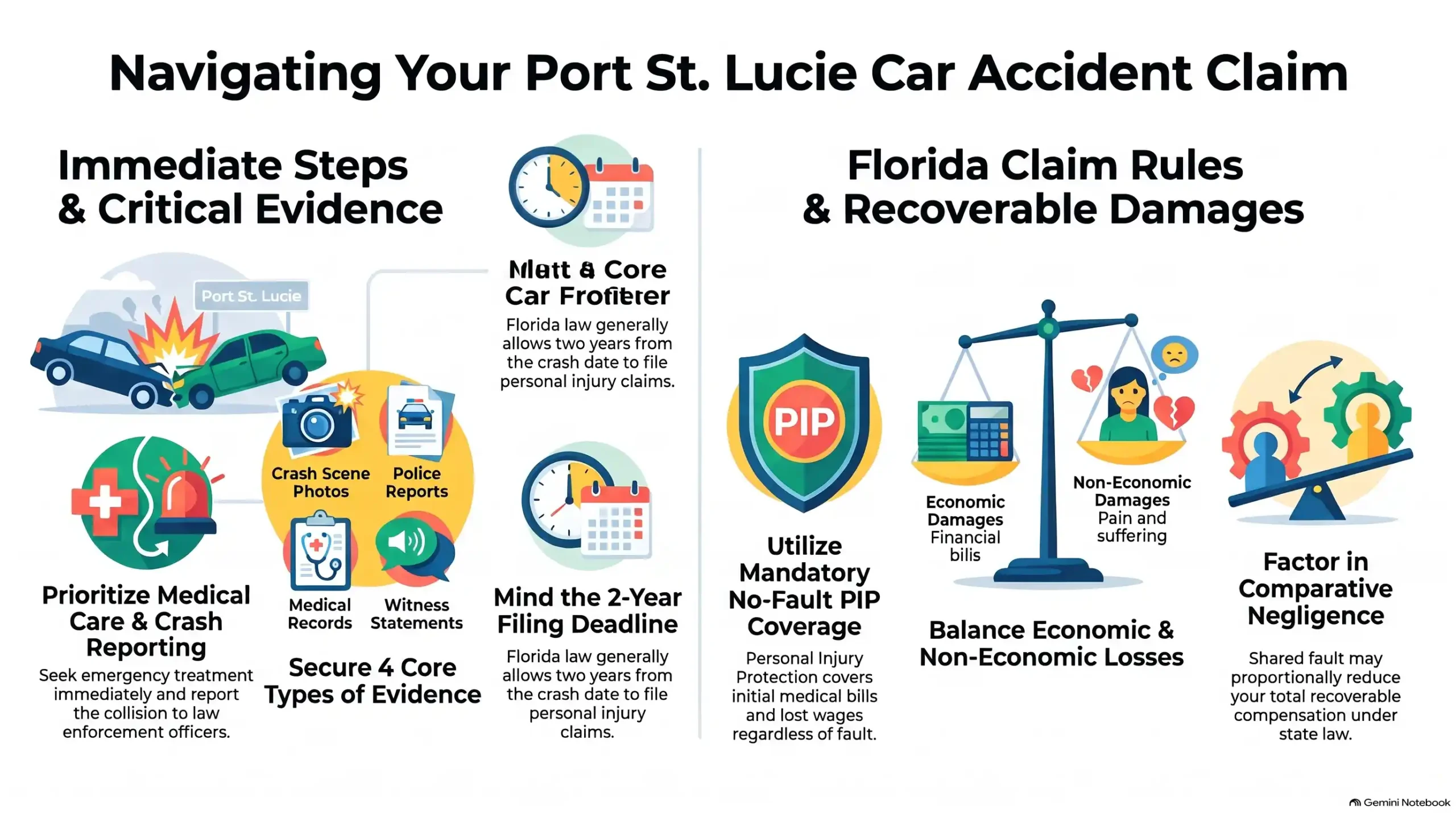
After a Port St. Lucie car accident, injured individuals should first check for injuries and seek emergency medical care when needed. They should report the crash to law enforcement and preserve key information, including witness details and photographs. A car accident lawyer can explain available legal options and help protect their interests.
Check for Injuries
Safety comes first at the scene of a Port St. Lucie collision. Once vehicles are out of immediate danger, those involved should check for visible injuries and determine whether anyone needs urgent medical attention. A calm, careful approach can help protect injured people while avoiding unnecessary movement that could worsen harm.
They should assess immediate symptoms, including pain, bleeding, dizziness, confusion, difficulty breathing, or weakness. Some injuries may not be apparent at first, so monitor for changes and encourage them to describe how they feel. Anyone with serious symptoms should receive emergency medical care promptly. People should not move someone who may have a head, neck, or back injury unless remaining in place presents an immediate danger. Even when symptoms seem minor, a medical evaluation can identify injuries that require timely treatment and provide appropriate guidance.
Report the Crash
If a crash in Port St. Lucie causes an injury, the driver should report it to law enforcement promptly. An officer can document the scene, gather statements, and prepare an official report that may help clarify what occurred. Emergency notification is especially important when anyone is hurt, traffic is blocked, or a hazard threatens other road users. The driver should provide accurate information about the location, injuries, vehicles, and immediate dangers, without guessing about details that remain uncertain.
If it is safe, the driver can turn on hazard lights and warn approaching traffic while waiting for responders. However, roadway clearance should not come at the expense of safety or evidence. Move vehicles only when necessary to prevent further danger or when authorities direct you to do so. The driver should follow responders’ instructions and preserve relevant records.
Contact a Lawyer
Seeking legal guidance can help an injured person understand the steps involved in pursuing a car accident claim in Port St. Lucie. A lawyer can review the evidence, explain your options, and identify deadlines that may affect your claim. Early advice may also help preserve records, including medical bills, repair estimates, photographs, and witness information.
An injured person can ask whether the firm offers a Free consultation to discuss the crash and assess possible next steps. During that meeting, the lawyer may explain how contingency fees work, including whether payment is due only if compensation is recovered and what costs may remain the client’s responsibility. Clear answers can help a person make an informed decision about representation. Prompt communication also allows counsel to coordinate with insurers while the injured person focuses on treatment and recovery.
Critical Evidence in a Port St. Lucie Car Accident Injury Case
Evidence helps establish how a Port St. Lucie crash occurred and the extent of the resulting injuries. Relevant records and firsthand accounts can support a claim and clarify disputed facts.
Important evidence
- Crash scene photos: Images of vehicle damage, road conditions, traffic signs, and visible injuries.
- Police accident report: An official record of the collision, the parties involved, and responding officers’ observations.
- Medical records: Documentation of diagnoses, treatment, and the connection between the crash and reported injuries.
- Witness statements: Accounts from people who observed the collision or its immediate aftermath.
Crash Scene Photos
Photographs taken at a Port St. Lucie crash scene can preserve details that may change or disappear before an investigation is complete. Images of vehicle damage, road conditions, debris, traffic signs, and visible injuries may help explain how the collision occurred and document its effects. Camera angles matter: wide views establish the scene, while close images show specific damage or hazards. Clear photo timestamps can help place images in sequence and compare them with other evidence. When safe, drivers or witnesses may photograph the scene without entering traffic or disturbing evidence. These records can support a careful assessment of responsibility and losses, helping injured people pursue fair treatment. Images should remain unaltered, with original files preserved and shared with a qualified legal professional for review.
Police Accident Report
After a Port St. Lucie crash, the responding officer may prepare a police accident report documenting the reported events, involved parties, vehicle details, roadway conditions, and observations made at the scene. This report can provide important evidence in an injury claim, but it does not determine fault. Its accuracy and completeness may affect how insurers evaluate the collision, so identify errors or missing information promptly.
Access to the report depends on the agency that handled the crash and applicable release procedures. The filing process generally involves requesting the report through the relevant law enforcement department or authorized state system, with identifying details such as the crash date and location. A lawyer can review the document, compare it with other available evidence, and address inconsistencies while preserving a clear, reliable account for claim evaluation and resolution.
Medical Records
Medical records can establish the nature, severity, and progression of injuries sustained in a Port St. Lucie car accident. Emergency department notes, diagnostic images, treatment plans, and follow-up evaluations may connect reported harm to the collision and document its effects over time. Consistent care and accurate descriptions help clarify the medical course, while gaps or delays may require explanation. Records can also support claims for treatment costs, lost income, and future care needs when providers document relevant limitations and recommendations. Patients should request copies, check them for errors, and preserve bills, prescriptions, and referral documents. Record Retention matters because insurers and legal representatives may need a complete file during claim review. Privacy Protections should guide how records are shared; limit authorization to relevant information and appropriate recipients.
Witness Statements
Witness statements can provide an independent account of how a Port St. Lucie car accident occurred. People who saw the collision may describe vehicle movements, traffic signals, road conditions, and events immediately afterward. Their observations can help clarify disputed details and support a careful assessment of responsibility.
Witness credibility depends on factors such as the person’s opportunity to observe, consistency, and potential bias. A statement should distinguish what the witness directly saw from what others later assumed or reported. Prompt interviews can help preserve accurate recollections before time affects memory or witnesses become difficult to locate.
Statement preservation is consequently important. Contact details, written accounts, photographs, and recorded interviews may help document relevant observations. Gather these materials lawfully and handle them respectfully, especially when witnesses are assisting injured people or responding to a stressful event.
Don’t Wait. Call Our Florida Personal Injury Lawyers Now!
Long-Term Effects of Port St. Lucie Car Accident Injuries
Car accident injuries may lead to chronic pain and reduced mobility that interfere with daily activities long after the initial treatment. Some individuals also experience lasting cognitive or emotional effects, including difficulties with concentration, memory, or mood. The extent of these effects can shape the need for ongoing medical care, rehabilitation, and support.
Chronic Pain and Mobility
Although some injuries from a Port St. Lucie car accident appear minor at first, lasting pain and reduced mobility may develop over time. Neck, back, joint, and soft-tissue injuries can make walking, lifting, driving, or completing routine tasks difficult. These limitations may affect a person’s ability to work and fulfill family or community responsibilities.
A medical provider can assess persistent symptoms and recommend appropriate Pain management, including medication, physical therapy, or other supervised care. Mobility rehabilitation can help restore strength, flexibility, balance, and safe movement through a structured treatment plan. Progress varies according to the injury and the consistency of care. Keeping records of symptoms, appointments, treatment costs, and daily limitations can help document the injury’s continuing effects. Timely medical attention can also identify complications and support informed recovery decisions.
Cognitive and Emotional Effects
After a Port St. Lucie car accident, cognitive and emotional effects may persist long after visible injuries improve. A person may experience memory problems, difficulty concentrating, slowed processing, or trouble making decisions, affecting work, family responsibilities, and community service. Emotional changes can include anxiety, irritability, depression, and post-traumatic stress, particularly when reminders of the collision trigger distress. These challenges may strain relationships and reduce confidence in daily activities. Recognizing these effects matters because they are not always apparent to others, yet they can substantially limit a person’s independence and ability to support those around them. Qualified professionals can evaluate how symptoms affect functioning. Cognitive rehabilitation may help address specific thinking difficulties through structured strategies and practice. Documenting symptoms and their impact can also help establish an accident’s lasting consequences.
Ongoing Medical Care
Cognitive and emotional symptoms may require continued care alongside treatment for physical injuries. After a Port St. Lucie collision, some people need follow-up appointments, rehabilitation, counseling, or medication management as their conditions develop. A physician can assess progress and adjust the care plan when pain, limited mobility, sleep problems, or distress persists. Consistent treatment may help prevent complications and document how injuries affect daily activities.
Care coordination connects primary care providers, specialists, therapists, and other professionals involved in recovery. Clear communication helps each provider understand prior findings, current symptoms, and recommended next steps. Treatment continuity matters especially when a patient changes providers or needs multiple forms of care. Keeping appointment records, following medical instructions, and reporting new symptoms can support informed decisions. These steps also help families and caregivers provide practical assistance while respecting the injured person’s needs and independence.
Proving Liability in Port St. Lucie Car Accident Injury Cases
Proving liability in a Port St. Lucie car accident injury case requires evidence showing how the collision occurred and who failed to use reasonable care. Investigators may review the crash scene, vehicle damage, road conditions, and applicable traffic laws. Traffic camera footage can help establish vehicle positions, signals, or unsafe actions. Vehicle black box data may also record speed, braking, and other events immediately before impact.
Witness statements can provide an independent account, while police reports may document observations and identify potential violations. Medical records connect the collision to reported injuries and help clarify the harm sustained. Photographs, expert analysis, and consistent timelines can strengthen the factual picture when evidence is incomplete or disputed.
Each case depends on its specific circumstances, and no single item automatically proves fault. Careful documentation helps protect the injured person’s ability to seek accountability and supports a fair assessment of responsibility. Preserving relevant evidence promptly matters, since recordings and physical details may become unavailable over time.
Dealing With Insurance Companies After a Port St. Lucie Car Accident Injury
Once the evidence clarifies how a Port St. Lucie collision occurred, injured people may need to communicate with insurers while managing medical care and other responsibilities. Careful communication can help protect accurate information and support a fair review of the harm suffered. Claim Adjusters may request details about the crash, injuries, treatment, and missed work. Answer their questions truthfully, but don’t guess or present uncertain facts as definite. Documents such as medical records, repair estimates, and photographs can help keep discussions grounded in verifiable information.
Recorded Statements require particular care. An insurer may ask for a statement soon after the collision, when symptoms or circumstances remain unclear. Before agreeing, an injured person may seek legal guidance on the request, its purpose, and how the insurer could use the statement. Any account should remain factual and consistent with available evidence. Respectful, organized communication can help prevent misunderstandings while allowing insurers to assess the claim responsibly.
What to Expect During a Port St. Lucie Car Accident Injury Claim Process
A Port St. Lucie car accident injury claim generally begins with an initial case review to assess the circumstances, available evidence, and potential losses. Medical care and thorough documentation help establish the nature and extent of the injuries, while the claim proceeds through negotiations with the insurer. If negotiations don’t produce an acceptable resolution, the dispute may move to settlement discussions or trial.
Initial Case Review
During an initial case review, a Port St. Lucie car accident lawyer gathers crucial information about the collision and the injured person’s concerns. This discussion helps establish what happened, identify potential legal issues, and determine how the claim may proceed. Intake preparation may include collecting the crash date and location, the parties involved, available insurance details, and any reports or correspondence already received. The lawyer may ask about deadlines, statements made to insurers, and the client’s goals for resolving the matter. Case eligibility depends on facts such as how the collision occurred, whether another party may bear responsibility, and whether a viable claim can be pursued under Florida law. The review also gives the client an opportunity to ask questions and understand the lawyer’s role, anticipated steps, and communication process before deciding whether to proceed.
Medical Care and Documentation
Prompt medical evaluation matters after a car accident, even when injuries initially seem minor. A licensed provider can identify conditions that may not be immediately apparent and recommend appropriate care. Following medical advice and attending scheduled appointments helps create a clear record of the injuries and their effects.
Treatment timelines vary according to the type and severity of each injury. Medical records, diagnostic results, prescriptions, and rehabilitation notes can document symptoms, treatment, and progress over time. Consistent documentation may also help explain how an injury affects daily activities and work responsibilities.
Provider coordination supports continuity of care when multiple clinicians are involved. With proper authorization, relevant records can be gathered and organized for the claim review. Accurate, timely documentation clearly presents the injured person’s circumstances while supporting an informed assessment of the case.
Insurance Negotiations
How an insurer evaluates a claim can shape the negotiations that follow a Port St. Lucie collision. After reviewing medical records, repair estimates, and other supporting evidence, the adjuster may assess responsibility and calculate a proposed payment. Demand valuation depends on documented losses, how injuries affect daily activities, and available coverage. A claimant or representative may present a written demand explaining the evidence and requested compensation. Insurers may question treatment, dispute fault, or request additional records before responding. Negotiation tactics can include comparing the offer with documented expenses, correcting factual errors, and providing relevant evidence in a measured manner. Clear, accurate communication can help keep discussions focused and protect the injured person’s interests. Careful review of each proposal allows informed decisions throughout the claim process without overlooking important details.
Settlement or Trial
Once negotiations reach an impasse, the injured person may need to decide whether to accept a settlement or pursue a lawsuit. A settlement can provide compensation without the uncertainty and added demands of a trial. Before accepting, the claimant should review the proposed amount, outstanding medical expenses, future care needs, lost income, and any release of legal claims. Settlement timing depends on the available evidence, treatment progress, and insurer responses; accepting too early may leave future losses uncompensated.
If the parties cannot agree, filing suit allows a court to resolve disputed issues. Trial preparation may involve gathering records, interviewing witnesses, consulting qualified experts, and preparing testimony. The process can take considerable time and does not guarantee a particular outcome. Carefully comparing the risks, costs, and potential recovery can help the injured person make an informed decision that supports financial stability and ongoing responsibilities.
Compensation for Port St. Lucie Car Accident Injury Damages
Compensation for car accident injuries in Port St. Lucie may address the harm an injured person suffers and the practical support needed during recovery. The amount available depends on the evidence, injury severity, and the circumstances of the collision. Careful documentation helps show how the crash affected the person’s health, work, and daily responsibilities.
Recoverable losses may include medical expenses, rehabilitation costs, and income missed while the injured person receives treatment. Employers can support lost wages with payroll records, pay stubs, and medical documentation. When injuries limit a person’s ability to return to the same work or earn at the former level, diminished earning capacity may also be considered. Future treatment needs and continuing work restrictions may require assessments from qualified professionals.
A claim should reflect the full impact of the injuries, not just immediate bills. Organized records, consistent medical care, and a clear account of resulting limitations can help establish a fair basis for compensation and support the injured person’s recovery.
Economic vs Non-Economic Damages in Port St. Lucie Car Accident Cases
Car accident claims may include economic damages, such as medical expenses and lost income, as well as non-economic damages for pain and reduced quality of life. These categories reflect different types of harm and require distinct forms of evidence. Calculating a claim involves evaluating both documented financial losses and the broader effects of the injuries.
Economic Damages
Economic damages are the measurable financial losses a person incurs after a car accident, including medical expenses, lost income, and future care costs. In Port St. Lucie, these losses may include emergency treatment, rehabilitation, prescription medication, and transportation to medical appointments. Receipts, invoices, pay records, and medical documentation can help establish the amount and connection to the collision.
You may claim lost wages if injuries prevent you from working during recovery. If injuries limit future work or reduce the ability to earn at the prior level, diminished earning capacity may also be considered. Calculating that loss can require employment records, medical opinions, and analysis of expected career earnings. Careful accounting shows how the financial impact affects a person’s ability to meet obligations and support dependents.
Non-Economic Damages
While economic damages cover documented financial losses, non-economic damages account for the personal effects of a collision that lack a direct price, such as physical pain, emotional distress, and reduced enjoyment of daily activities. These harms may affect a person’s independence, relationships, and ability to participate in routines that once brought meaning or connection. Emotional distress can include anxiety, fear, or sleep disruption following a crash. Loss of enjoyment may describe diminished ability to pursue hobbies, family activities, or community service. Unlike medical bills or lost wages, these effects don’t appear on a single invoice. They may be described through personal accounts and information from people familiar with the injured person’s daily life. Recognizing these consequences helps present a fuller account of how an accident can alter someone’s life and responsibilities.
Calculating Your Claim
After a collision in Port St. Lucie, claim calculation begins with identifying the losses supported by evidence. Economic damages include measurable expenses such as medical bills, rehabilitation costs, lost wages, and property damage. Records, invoices, and employment documentation help establish these amounts and show how the crash affected the injured person’s finances.
Non-economic damages address losses without a fixed price, including pain, emotional distress, and reduced ability to enjoy daily activities. Courts may evaluate them based on injury severity, treatment duration, and lasting effects. Damage valuation should account for both categories without double-counting the same harm. A thorough assessment may also consider future care needs and diminished earning capacity when supported by reliable evidence. Clear documentation lets insurers and decision-makers review the claim fairly, while careful analysis helps ensure compensation reflects the full impact of the collision.
When a Port St. Lucie Car Accident Injury Case Goes to Trial vs. Settlement
A Port St. Lucie car accident injury case may resolve through settlement or proceed to trial, depending on the evidence, disputed issues, and parties’ willingness to agree. A settlement can provide compensation without a courtroom hearing and may reduce the time, expense, and uncertainty involved in litigation. Before accepting an offer, an injured person typically considers whether it fairly addresses documented losses and anticipated needs.
If negotiations do not produce an acceptable agreement, a trial may allow both sides to present evidence to a judge or jury. This process can include witness interviews, courtroom testimony, and review of medical records and other relevant materials. After the presentation of evidence and closing arguments, the jury deliberates and decides the issues assigned to it. A trial may result in an award, but its outcome is not guaranteed, and proceedings can take longer than settlement discussions. A lawyer can explain the practical differences and help the injured person evaluate available options while keeping recovery and responsibilities in view.
Don’t Wait. Call Our Florida Personal Injury Lawyers Now!
Florida Laws That May Affect Your Port St. Lucie Car Accident Case
Whether a Port St. Lucie crash involves a minor collision or life-changing injuries, Florida law can shape available insurance benefits and responsibility for losses. Florida’s no-fault insurance framework generally requires drivers to seek initial medical expense and lost-income benefits through personal injury protection coverage, regardless of fault. Serious injuries may allow an injured person to pursue compensation from an at-fault driver, subject to applicable legal requirements.
Several rules may affect how a claim is evaluated:
- Personal injury protection typically covers a portion of eligible medical expenses and lost income, within policy limits.
- Drivers must meet Florida’s insurance requirements, including required personal injury protection coverage.
- Comparative negligence rules for crash claims may reduce damages when an injured person shares responsibility.
- Evidence such as collision reports, medical records, and witness accounts can help clarify fault and losses.
These rules can influence settlement discussions and trial outcomes. Careful documentation helps protect injured people and their families while supporting a fair assessment of each party’s conduct.
The Statute of Limitations for Port St. Lucie Car Accident Injury Cases
How long an injured person has to file a lawsuit can determine whether a Port St. Lucie car accident claim receives consideration in court. Florida law generally allows two years from the date of a crash to bring a negligence action for personal injuries. Missing that deadline may result in dismissal, even when the evidence supports the claim.
Deadline calculation can depend on the facts and the type of legal action. The filing period may differ for wrongful death claims or cases involving government entities, which can require earlier notice and additional steps. Accurate records of the collision date, injuries, and related events help clarify when the clock starts running.
Statute exceptions may apply in limited circumstances, such as when an injured person is a minor or a defendant cannot be located. These rules are fact-specific and should not be assumed to extend the filing period. Prompt attention to deadlines preserves the opportunity to seek accountability and pursue compensation for harm.
How a Port St. Lucie Car Accident Lawyer Can Help You
A Port St. Lucie car accident lawyer can help an injured person understand legal options, pursue fair compensation, and manage the demands of a claim. During a Legal consultation, counsel can explain relevant rights, review available information, and clarify how the process may affect the client and those who depend on them.
A lawyer’s support may include:
- Gathering crash reports, medical records, photographs, and witness accounts to organize the evidence.
- Communicating with insurers and other parties, helping reduce the burden of repeated inquiries.
- Evaluating documented losses, including treatment costs, lost income, and effects on daily responsibilities.
- Developing a case strategy tailored to the facts, applicable law, and the client’s recovery needs.
Counsel can also identify gaps in the record, explain settlement terms, and prepare clear responses to disputed issues. This guidance allows an injured person to make informed decisions without losing sight of family, work, or community obligations. A careful, service-oriented approach supports accountability and helps protect the client’s interests throughout the claim.
When to Contact a Port St. Lucie Car Accident Lawyer
Prompt legal guidance can be valuable after a Port St. Lucie car accident, particularly when someone is injured, fault is disputed, or an insurer requests a recorded statement. Consider contacting a lawyer promptly, before signing a release or accepting a settlement that may not cover future medical needs. Early consultation helps you understand deadlines, preserve relevant records, and respond to insurance communications while continuing necessary treatment.
A consultation may also help clarify what information is needed to assess a potential claim. The injured person can gather the crash report, photographs, medical records, and correspondence, while avoiding speculation about responsibility. If injuries appear minor, symptoms worsen, or financial losses become difficult to document, legal guidance may still be appropriate.
Before choosing representation, ask about attorney fee arrangements, including whether fees depend on recovery and which costs may be separate. Timely advice supports informed decisions and helps individuals protect their interests without delaying care or responsibilities to others.
Why You Need an Experienced Port St. Lucie Car Accident Lawyer
When a car accident involves serious injuries, disputed liability, or substantial financial losses, an experienced Port St. Lucie car accident lawyer can help protect an injured person’s interests. These cases may require careful review of crash reports, medical records, witness accounts, and insurance communications. A lawyer can organize this evidence, identify relevant legal issues, and explain available options in clear terms.
Local attorney experience also provides practical knowledge of regional procedures, court practices, and factors that may affect a claim. This familiarity can help counsel anticipate challenges and communicate effectively with insurers and other parties. A personalized legal strategy considers the specific injuries, financial impact, and collision circumstances rather than relying on a standard approach.
How to Choose the Right Port St. Lucie Car Accident Lawyer for Your Case
Choosing the right Port St. Lucie car accident lawyer requires careful consideration of the person’s experience, approach, and ability to address the injured party’s needs. Prospective clients can review Attorney Credentials, including Florida licensure, relevant case experience, and disciplinary history. Experience handling similar collisions may help counsel identify evidence, assess losses, and explain available options.
Communication Style also matters. A lawyer should explain the process clearly, respond within a reasonable time, and leave room for questions. This is especially important when an injured person is managing medical care, work disruptions, and concerns about supporting family members. During an initial consultation, the client can ask who will handle routine updates, how fees are structured, and what information is needed to evaluate the claim.
The right choice should reflect the client’s priorities, not pressure to decide quickly. Comparing several qualified lawyers can help a person select representation that is informed, accessible, and focused on pursuing a fair outcome.
About The Law Offices of Anidjar & Levine
The Law Offices of Anidjar & Levine represents people injured in car accidents and other incidents throughout Florida, including Port St. Lucie.
The firm assists clients seeking compensation after injuries disrupt their health, work, and daily responsibilities.
Its legal team handles claims involving insurance companies, investigates accident circumstances, and explains available options so clients can make informed decisions.
The firm’s history reflects a practice focused on representing injured people and helping them manage difficult legal and practical challenges.
The firm’s work may include gathering records, communicating with insurers, and pursuing a resolution through negotiation or litigation when appropriate.
Each matter depends on its facts, applicable law, and the client’s circumstances.
The attorney philosophy emphasizes attentive service, clear communication, and careful preparation.
By listening to clients and addressing their concerns, the firm provides support while pursuing their legal interests.
For Port St. Lucie residents, this approach can help clarify the steps involved in a claim and the responsibilities that may arise during the process.
Frequently Asked Questions
Can I Recover Compensation if I Was a Passenger in a Port St. Lucie Car Accident?
Yes, an injured passenger may recover compensation after a car accident, even if the driver of the vehicle carrying them was partly responsible. Passenger Liability Claims may involve another driver, the vehicle’s driver, or multiple parties, depending on the evidence. Medical Expense Recovery may include reasonable treatment costs, lost income, and other damages. Florida’s insurance rules and filing deadlines can affect recovery, so prompt legal review may help protect the passenger’s rights.
What Happens if the At-Fault Driver Has No Car Insurance?
If the at-fault driver has no insurance, an injured passenger may still seek compensation through available coverage. Personal injury protection generally pays initial medical expenses and a portion of lost wages, regardless of fault. If available under the passenger’s or household member’s policy, uninsured motorist coverage may cover additional losses, including pain and suffering. A careful review of applicable policies and accident records can clarify options and help protect the passenger’s interests.
Can I File a Claim if a Loved One Died in a Port St. Lucie Car Accident?
Yes, eligible family members may file a claim after a loved one dies in a Port St. Lucie car accident, provided evidence supports that another party’s negligence caused the death. Wrongful death eligibility generally depends on the survivor’s relationship to the deceased and Florida law. A personal representative may also pursue survival action damages for losses the deceased experienced before death. Prompt legal guidance can help preserve evidence and clarify deadlines.
Are Rideshare Accidents Handled Differently From Other Car Accidents?
Yes. Rideshare accidents can involve different insurance rules because coverage depends partly on the driver’s app status at the time of the collision. Rideshare insurance coverage may vary depending on whether the driver was offline, waiting for a ride request, or transporting a passenger. Determining app status can help identify which policy applies. Injured people may need to preserve trip records, obtain the crash report, and document losses to support a claim.
Can I Still Pursue a Claim if I Was Driving a Rental Car?
Yes, an injured person can pursue a claim even if they were driving a rental car. The claim generally depends on who caused the collision, while available compensation may involve the responsible driver’s insurance and applicable Rental insurance coverage. Credit card protection may cover certain rental vehicle damage, but it does not necessarily pay for injuries or replace liability coverage. Promptly reporting the crash and preserving rental documents can help protect the injured person and clarify coverage options.
—————————
A car accident can leave an injured person facing medical expenses, lost income, and uncertainty about what comes next.
Prompt legal guidance can clarify your options, preserve important evidence, and help you communicate with insurers.
The Law Offices of Anidjar and Levine represent people pursuing compensation after serious collisions in Port St. Lucie.
Each claim depends on its facts, and a careful review can help identify relevant deadlines, potential liability, and the steps needed to protect the injured person’s rights.
Learn more about working with a Port St. Lucie Personal Injury Lawyer.

