

The Law Offices of Anidjar and Levine can review an insurer’s decision, explain relevant policy terms, exclusions, and deadlines, and identify available options. Disputes may involve the cause of damage, repair costs, depreciation, or coverage. Prompt photographs, estimates, receipts, inspection reports, and claim correspondence can help document a loss. Depending on the policy and circumstances, next steps may include requesting a written explanation, submitting evidence, pursuing an appeal, or considering appraisal or mediation. Learn more about a Naples Personal Injury Lawyer and related legal considerations.
Main Takeaways
- A Naples property claim lawyer can review your policy, claim correspondence, deadlines, and the insurer’s stated reasons for its decision.
- Request a written explanation identifying the policy provisions behind a denial, delay, or disputed damage estimate.
- Preserve photographs, videos, repair estimates, receipts, inspection reports, and other evidence of the damage and related expenses.
- Depending on your policy and dispute, options may include submitting additional evidence, requesting reconsideration, appraisal, mediation, or legal action.
- Follow applicable deadlines and document communications; legal guidance can help assess your options based on the policy and evidence.


How We Can Help With Your Naples Property Claim Disputes & Process Injury Claim
When a property claim is disputed or delayed, an experienced Naples property claim lawyer can help assess the insurer’s decision, organize supporting evidence, and explain the available options. This support helps property owners make informed choices while protecting homes, businesses, and the people who depend on them.
Counsel may review policy language, coverage limits, exclusions, deadlines, and claim correspondence to identify issues affecting payment. Careful Policy interpretation can clarify what the insurer agreed to cover and whether its decision aligns with the policy and documented loss. A lawyer can also help gather repair estimates, photographs, invoices, and expert assessments that support a clear account of damage.
When the parties disagree about the amount of loss, appraisal options may offer a structured way to address valuation concerns, subject to the policy’s terms. Legal guidance can help owners understand the process, evaluate potential costs, and consider whether appraisal is appropriate. Throughout representation, the focus remains on practical solutions, fair treatment, and preserving resources needed to restore the property.
OUR CONSULTATIONSARE FREE
START YOUR FREE CASE REVIEW

Understanding Naples Property Claim Disputes & Process Injury Cases
Understanding a Naples property claim dispute begins with identifying the policy terms, the cause and extent of the damage, and the insurer’s stated basis for its decision. A careful review clarifies which benefits may apply, what evidence supports the claim, and whether the insurer followed the policy’s requirements. Relevant records can include photographs, repair estimates, inspection reports, correspondence, and proof of expenses. These materials allow the property owner and insurer to assess the loss using a consistent factual record.
When parties disagree about the amount of damage, Policy appraisal may provide a structured way to obtain independent evaluations under the policy’s procedures. Claim mediation can offer a separate opportunity for the parties to discuss disputed issues with a neutral facilitator. Each process has distinct requirements and may not resolve every disagreement. A qualified review can help property owners understand available options, preserve important documentation, and pursue a fair resolution while maintaining accurate records for those affected by the loss.
Common Causes of Naples Property Claim Disputes & Process
Naples property claim disputes often arise after wind or hurricane damage, when parties disagree over the extent of covered repairs. Water intrusion can also lead to disagreements over the damage source, while claim denials and delays can complicate recovery. Policyholders and insurers may further dispute how policy terms apply to specific losses.
Wind and Hurricane Damage
Strong winds and hurricanes can damage roofs, windows, siding, and other parts of a property, while driving rain may cause additional interior damage. In Naples, hurricane winds can loosen shingles, break window seals, or displace exterior materials, leaving a building vulnerable to further harm. Roof uplift may occur when pressure differences lift roofing components, particularly where materials are aged, improperly secured, or weakened by prior storms. After an event, disputes may arise over whether wind caused the reported damage, a preexisting condition, or another cause. Insurers may also disagree with property owners about the scope, timing, or cost of necessary repairs. Clear photographs, inspection records, maintenance documents, and a detailed inventory can help establish the property’s condition and support an accurate assessment. Prompt, careful documentation can also assist those responsible for protecting occupants and restoring the property.
Water Intrusion Disputes
Water intrusion can follow a storm, plumbing failure, roof leak, or drainage problem, and disputes often center on the source, duration, and extent of the resulting damage. In Naples, heavy rain and humidity can worsen moisture problems when water enters through damaged building materials or remains trapped indoors. Plumbing failures may affect walls, flooring, insulation, and personal property, while gradual leaks can make it difficult to determine when damage began. Property owners and insurers may also disagree about whether reported conditions resulted from a covered event, prior maintenance concerns, or a combination of causes. Clear photographs, repair records, and professional assessments can document affected areas and support an accurate evaluation. Prompt drying and appropriate Mold remediation may limit further harm and protect occupants, particularly children, older adults, and people with respiratory sensitivities.
Claim Denials and Delays
When an insurer denies or delays a property claim, the dispute may turn on the policy’s coverage terms, the evidence submitted, or the time needed to investigate the reported damage. In Naples, homeowners may face delays while an insurer requests records, schedules inspections, or evaluates repair estimates. A written denial or prolonged silence can leave residents uncertain about how to protect their property and meet urgent repair needs.
A careful review of the claim file can identify missing documents, inconsistent findings, or unanswered requests. A Claim denial appeal may present additional photographs, contractor reports, receipts, and a clear timeline of communications. When an insurer’s handling raises bad-faith concerns, the record may help establish whether the review was thorough and timely. Prompt, organized follow-up can support a fair resolution while preserving evidence and documenting ongoing damage.
Policy Coverage Disagreements
Policy coverage disagreements often arise when an insurer and property owner interpret the policy differently or dispute the cause and extent of damage. In Naples, questions may concern whether wind, water intrusion, mold, or another event caused the loss. Policy language defines covered property, required conditions, and limits, but terms may be unclear when several causes contribute to damage. Insurers may also rely on coverage exclusions to deny specific repairs, while owners may contend that the exclusion does not apply to the circumstances. Disputes can involve depreciation, repair methods, matching materials, or the distinction between sudden damage and gradual deterioration. A careful review of the policy, inspection findings, photographs, and repair estimates can help clarify the disagreement. When the parties cannot resolve coverage questions, legal guidance may help protect the owner’s interests and support a fair process.
Don’t Wait. Call Our Florida Personal Injury Lawyers Now!


Legal Rights of Naples Property Claim Disputes & Process Injury Victims
In Naples, property owners and injured claimants have legal rights when a property-related claim is disputed, including the right to seek a fair review of the evidence and challenge an insurer’s decision through available legal procedures. These protections can help claimants pursue accurate decisions while preserving resources for families and communities affected by property loss or injury. Homeowner standing may allow an owner with a direct interest in the property to bring or participate in a claim, subject to applicable policy terms and law. Depending on the dispute, available rights may include:
Property owners may challenge disputed claim decisions and seek a fair review, subject to policy terms and applicable law.
- Requesting a written explanation of a claim decision and relevant policy provisions.
- Submitting records, estimates, photographs, and other evidence for consideration.
- Exercising appraisal rights when the policy permits appraisal of a valuation disagreement.
- Seeking legal review or filing suit within applicable deadlines.
Claimants should retain notices and correspondence, meet procedural deadlines, and avoid assuming that an initial determination is final. A qualified lawyer can explain your options and help protect your interests while you pursue a fair resolution.
Why Do Naples Property Claim Disputes & Process Injuries Happen?
Naples property claim disputes often arise because insurers and property owners interpret the cause, scope, or value of damage differently. Severe storms, flooding, fires, and plumbing failures can affect homes and businesses, while policy language may limit or exclude particular losses. Disagreements may focus on whether damage resulted from a covered event, preexisting conditions, or multiple causes. Estimates can also differ when the parties assess repair methods, material costs, or the extent of structural damage.
Some disputes involve questions about who is responsible for unsafe property conditions. Building code violations may contribute to damage or injuries when construction fails to meet applicable safety standards. Negligent maintenance, such as unrepaired leaks, deteriorated walkways, or faulty electrical systems, can create hazards and complicate efforts to determine when a loss occurred. In shared spaces, unclear duties between owners, managers, and contractors may further obscure accountability. These circumstances can place added pressure on people seeking to protect occupants, neighbors, and community members from preventable harm.
What Should You Do After a Naples Property Claim Dispute or Injury?
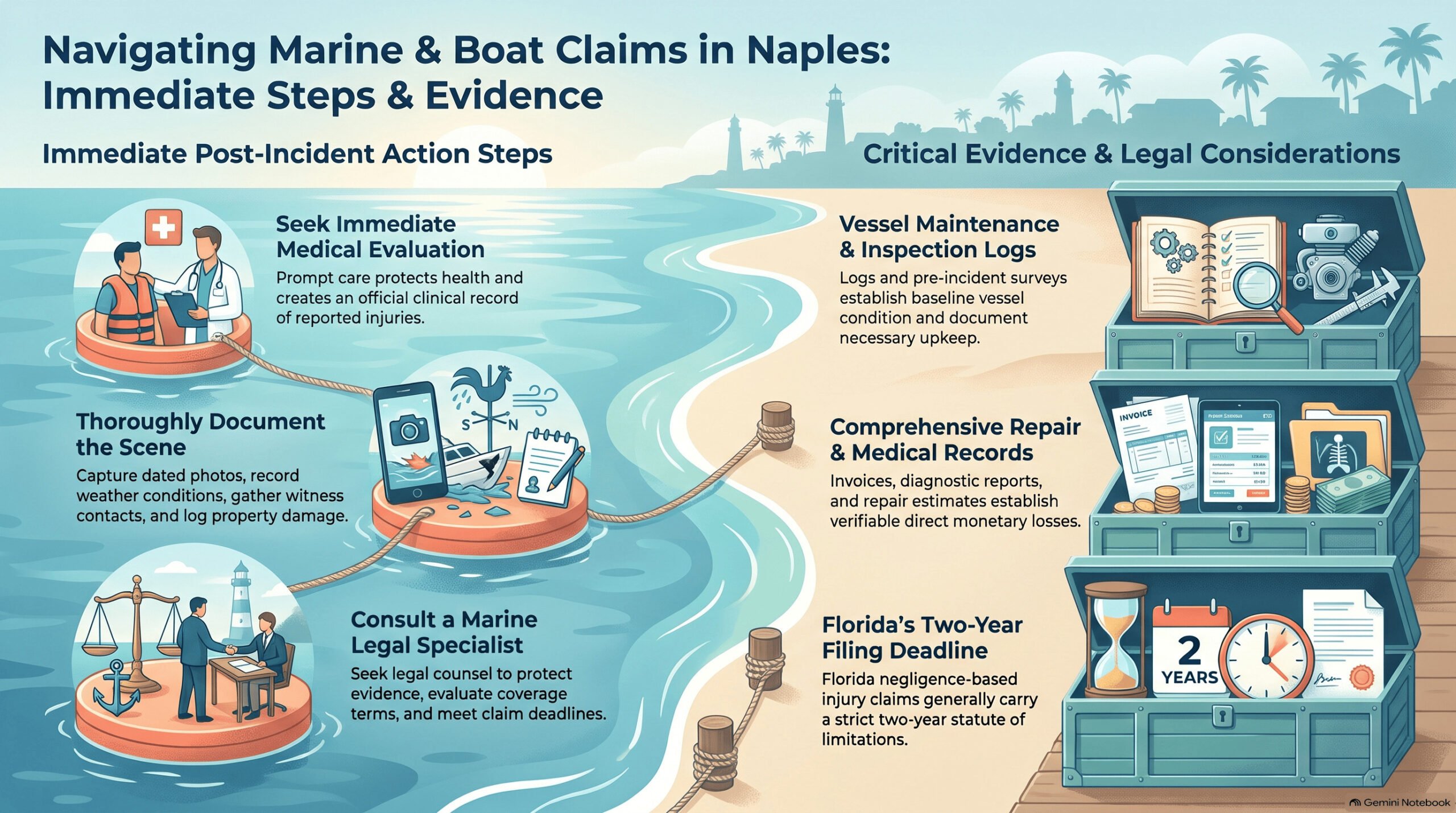
After a property claim dispute or related injury, the affected person should document the damage with clear photographs, records, and a written account of events. Notify the insurer promptly, and keep copies of all communications and claim documents. If the claim is denied, delayed, or disputed, a lawyer can clarify options and protect the person’s interests.
Document the Damage
When a property loss occurs, prompt, careful documentation can establish the extent of the damage and support a claim. The affected property owner should photograph and video each damaged area before cleanup or repairs, capturing wide views and close details. When possible, images should include dates and show the condition of rooms, belongings, and building materials. A written inventory can identify damaged items, their approximate age, purchase cost, and current condition. Organize and preserve receipts, repair estimates, and records of temporary expenses. For water losses, qualified professionals may use Moisture mapping to identify affected areas beyond visible staining. Material sampling can help determine whether building components require expert testing or removal. Accurate records may also help contractors, adjusters, and legal counsel evaluate the loss and address the needs of those affected.
Notify Your Insurer
Once the property owner has documented the damage, they should notify the insurer promptly and follow the policy’s instructions for reporting a loss. The notice should identify the property, describe the damage and its apparent cause, and state when the loss occurred, if known. Insurer notification deadlines vary by policy and circumstances, so the owner should review the applicable terms and retain proof of when and how notice was sent. Photographs, repair estimates, receipts, and a concise account of events can help the insurer assess the report. The owner should provide accurate information, avoid speculation, and keep copies of all communications. After notice, the insurer may confirm receipt, assign a claim number, and explain next steps. Claim acknowledgment requirements and response periods may depend on governing rules and policy provisions.
Consult a Lawyer
A property owner may benefit from consulting a lawyer if an insurer delays a decision, disputes the cause or value of damage, or denies coverage. An Attorney consultation can help clarify policy terms, filing deadlines, and the records needed to support a claim. Before meeting with counsel, the owner should gather the insurance policy, claim correspondence, photographs, repair estimates, receipts, and any inspection reports. These materials may help identify disputed facts and explain the insurer’s position.
A lawyer can advise on options, including requesting a written explanation, submitting additional evidence, or pursuing a formal appeal. The owner should avoid altering or discarding damaged property before documenting it, unless safety requires immediate action. Prompt advice may help preserve evidence and keep the claim process organized. Clear records also support fair resolution and responsible stewardship of the property.
Don’t Wait. Call Our Florida Personal Injury Lawyers Now!
Critical Evidence in a Naples Property Claim Disputes & Process Injury Case
Reliable evidence can clarify how an incident occurred, the injuries sustained, and what each party says.
Essential materials in a Naples property injury claim may include:
- Incident scene documentation
- Photographs and videos
- Medical records and reports
- Witness statements and testimony
Promptly collecting and preserving these records can support an accurate assessment of the claim.
Incident Scene Documentation
How can you establish a property’s condition after an injury occurs? Incident scene documentation creates a reliable record of conditions relevant to a Naples property claim. Prompt, careful documentation can help preserve evidence before repairs, cleanup, or ordinary use changes the area. A qualified professional may record measurements, surface conditions, lighting, and maintenance concerns, noting when and where each observation was made. Moisture mapping can identify the extent and pattern of water intrusion, while a structural inspection can assess damage, instability, or other hazards. Written records should distinguish direct observations from reported information and identify the people involved in the inspection. When appropriate, property representatives may be asked to preserve relevant materials and maintenance records. Organized documentation supports a fair review, clarifies disputed facts, and can help those responsible address hazards and prevent further harm.
Photographs And Videos
When conditions may change after an injury, photographs and videos can preserve visual evidence relevant to a Naples property claim. Images may show hazards, lighting, warning signs, walkways, and the surrounding area as they appeared near the time of the incident. A careful record can clarify disputed facts and support fair claim consideration, especially when it helps those seeking accountability and safer conditions for others.
Take photographs from multiple angles, with close-up views and wider context, without altering the scene. Photo metadata, including dates and times, may help establish when images were created, though it should be preserved and assessed carefully. Video authentication can help determine whether a recording is genuine and unaltered. Original files, backups, and a clear record of who collected or transferred them can strengthen reliability.
Medical Records And Reports
Medical records and reports can provide essential evidence in a Naples property claim by documenting the injuries, treatment, and medical opinions connected to an incident. These records may include emergency department notes, diagnostic imaging, treatment plans, prescriptions, and follow-up assessments. Collectively, they can show when symptoms began, how care progressed, and whether providers connected an injury to the reported event.
A carefully prepared Medical Chronology can organize appointments, diagnoses, procedures, and recovery milestones in a clear sequence. Physician Narratives may explain clinical findings, functional limitations, and the expected course of treatment in terms relevant to the claim. Accurate, consistent documentation helps decision-makers evaluate the nature and extent of harm and the support for claimed expenses. Claimants can preserve complete records, review them for errors, and provide relevant materials through appropriate channels while protecting private medical information.
Witness Statements And Testimony
Witness statements can clarify how a property incident occurred and what conditions were present before or after it. In a Naples property claim, visitors, employees, maintenance workers, and nearby residents may describe hazards, warnings, lighting, or the response after an injury. Their accounts can help establish a timeline and identify evidence to preserve, including photographs or inspection records. Witness credibility depends on factors such as firsthand knowledge, consistency, impartiality, and the ability to recall events accurately. Assess differences between accounts carefully rather than dismissing them, since they may reveal uncertainty or important details. Deposition preparation helps witnesses understand the process, review relevant records, and provide truthful, precise answers. Clear testimony can support a fair evaluation of responsibility and damages while respecting each person’s role in resolving the dispute.
Long-Term Effects of Naples Property Claim Disputes & Process Injuries
Long-running property claim disputes can create ongoing financial strain as owners face uncovered costs and uncertainty about reimbursement. Delayed repairs can worsen property damage and disrupt the normal use of a home or business. The process can also cause lasting personal stress, especially when resolution remains uncertain.
Ongoing Financial Strain
When a property claim dispute remains unresolved, the financial effects can extend well beyond the initial damage. Homeowners may face mounting expenses while waiting for a clear decision, including temporary housing costs, emergency services, and professional assessments. These demands can deplete budgets, leaving fewer resources for household needs or community commitments. If claim payments are delayed or disputed, some residents may rely on credit cards or loans to manage ordinary obligations. Over time, this can create credit strain through higher balances, interest charges, and missed payments. Financial pressure may also disrupt savings plans and limit a household’s ability to support family members or contribute to local organizations.
Delayed Property Repairs
Delayed property repairs can turn an unresolved claim into a lasting household problem. When an insurer disputes coverage or delays payment, damaged areas may remain exposed, unsafe, or unusable for extended periods. Moisture intrusion can worsen, while temporary fixes may fail to protect walls, flooring, and personal belongings. These conditions can also affect neighbors, tenants, and others who rely on the property.
Effective Contractor coordination may become difficult when repair schedules depend on uncertain claim funds or changing estimates. Contractors may postpone work, revise bids, or require payment before beginning necessary repairs. Repair financing can help address immediate needs, but borrowing may create additional obligations if the claim remains unresolved. Keeping photographs, invoices, inspection reports, and written communications organized can support a clear record of damage, repair costs, and steps taken to limit further property loss.
Lasting Personal Stress
Property claim disputes can impose lasting personal stress, particularly when unresolved damage disrupts daily routines and creates uncertainty about repairs, finances, or the property’s future. Prolonged negotiations or unclear coverage decisions may also affect sleep, concentration, and confidence in planning. These pressures can strain family relationships when household members disagree about expenses, temporary living arrangements, or next steps. A measured approach can help residents protect their well-being while pursuing a fair resolution. Keeping organized records, setting practical communication boundaries, and seeking reliable guidance may reduce avoidable uncertainty. Anxiety management may include support from qualified professionals, especially when stress begins to interfere with daily responsibilities. Community organizations can also help connect affected residents with useful resources. Addressing personal strain alongside the claim process supports steadier decision-making and helps families maintain stability during a difficult period.
Proving Liability in Naples Property Claim Disputes & Process Injury Cases
Establishing liability in a Naples property claim dispute requires evidence that the responsible party failed to meet a legal duty and that the failure caused the loss or injury. A claim may involve a property owner, manager, contractor, or another party responsible for maintaining safe conditions. The Duty of Care depends on the relationship and circumstances, including who controlled the premises and what safety measures were reasonable.
Evidence can show whether a dangerous condition existed, how long it remained, and whether the responsible party knew or should have known about it. Hazard foreseeability matters because a predictable risk may require inspection, repair, warnings, or restricted access. Photographs, incident reports, maintenance records, witness accounts, and medical documentation can help establish these facts.
The injured person must also connect the alleged failure to the harm suffered. A careful review of timelines, site conditions, and applicable safety standards can clarify responsibility and support a fair assessment of the claim. Each case turns on its specific evidence.
Dealing With Insurance Companies After a Naples Property Claim Disputes & Process Injury
After a Naples property injury, insurance companies may investigate the incident, assess coverage, and evaluate the claimed losses. Their representatives may request statements, photographs, medical records, or other documents to understand what happened and determine how the policy will respond. Injured people who are focused on recovery and supporting others may benefit from keeping communications organized and factual.
Recorded calls can clarify details, but a claimant should listen carefully to each question and avoid guessing or minimizing symptoms. If a request is unclear, the claimant may ask for it in writing and seek guidance before responding. Consistent records of correspondence, expenses, and treatment can help prevent misunderstandings about the losses being presented.
Before signing settlement releases, the claimant should review the terms and understand whether acceptance would resolve only particular expenses or all claims related to the incident. A lawyer can explain the document’s effect, identify disputed issues, and help protect the claimant’s interests while communications with the insurer continue.
What to Expect During a Naples Property Claim Disputes & Process Injury Claim Process
A Naples property claim typically begins with an initial review of the policy, reported damage, and supporting records. The claimant then documents the loss while the insurer investigates and evaluates the claim, then negotiates coverage and compensation. If the parties cannot reach an agreement, dispute resolution may involve further review, mediation, or legal proceedings.
Initial Claim Review
During the initial review, a Naples property claim disputes and process lawyer examines the insurance policy, the reported damage, and the insurer’s response to identify disputed issues and relevant deadlines. Policy review clarifies coverage terms, exclusions, notice requirements, and the duties of the policyholder and insurer. The lawyer may compare those provisions with the claim correspondence to determine whether the insurer has explained its position and followed applicable procedures. The lawyer also assesses the claim timeline, including when the loss was reported, when the insurer responded, and whether required steps occurred within stated deadlines. This early assessment can help identify unanswered questions and guide practical next steps. By clarifying the process and responsibilities, counsel can support an orderly resolution while helping the policyholder pursue fair treatment and preserve the opportunity to challenge an insurer’s decision.
Damage Documentation
Photographs, repair estimates, and inspection records can help establish the extent and cause of property damage in a Naples insurance claim. A clear record helps the property owner and recovery teams understand what was affected and what work may be required. Gather documentation promptly, before damaged materials are removed or repairs alter the site, when safe to do so. Dated images should show both overall conditions and close details, while written notes can identify locations, observed damage, and when it was discovered. Moisture Mapping may help document water intrusion and elevated moisture in areas not visible on surfaces. Receipts, purchase records, and photographs of damaged belongings can support Inventory Valuation. Organized copies of all records help preserve an accurate account of the loss for later review.
Insurer Negotiations
Once you’ve documented the damage and supporting records, insurer negotiations typically focus on the scope of covered repairs, the value of damaged property, and the policy terms. The insurer may review estimates, request additional information, or propose an amount that differs from the claimant’s assessment. A careful Settlement strategy compares each offer with documented losses and applicable coverage, while accounting for repair costs and the practical needs of affected occupants. Effective negotiation tactics include presenting organized evidence, identifying specific gaps in the insurer’s evaluation, and responding promptly to reasonable requests. Clear, professional communication can help keep discussions focused on the claim’s facts and policy language. Claimants should review proposed releases and payment terms before accepting an offer, since those terms may affect their ability to recover for documented property losses.
Dispute Resolution
When negotiations do not resolve a property claim, the dispute may proceed through the policy’s appraisal, mediation, or litigation procedures, depending on the issue and applicable terms. Each path has distinct requirements, timelines, and potential costs. Appraisal procedures generally address disagreements about the amount of a covered loss, while questions about coverage or policy interpretation may require another process. Mediation can provide a structured setting for the parties to discuss evidence and seek a voluntary resolution with a neutral facilitator. If informal or alternative methods do not resolve the dispute, litigation may allow a court to assess the parties’ positions. Throughout the process, organized records, clear communication, and attention to deadlines can help property owners protect their interests while pursuing a fair outcome. Counsel may explain available procedures and support informed decisions.
Compensation for Naples Property Claim Disputes & Property Damage Damages
Compensation in a Naples property claim dispute may cover the cost to repair or replace damaged property, as well as certain related losses, depending on the policy terms and the evidence supporting the claim. Covered expenses may include Temporary housing when a residence becomes uninhabitable, along with reasonable costs to protect personal belongings from further damage. A claim may also seek payment for damaged contents, debris removal, or repairs needed to prevent further loss, subject to applicable limits and exclusions.
The amount available depends on the policy’s coverage, deductibles, valuation method, and documentation of the loss. Photographs, inventories, repair estimates, receipts, and correspondence with the insurer can help establish the scope and value of claimed damage. If a claim is delayed, underpaid, or denied, a careful review may identify disputed items and clarify what evidence is needed. A lawyer can assess the policy and claim record, explain available options, and help pursue benefits supported by the evidence. Prompt, accurate records can also support a fair resolution and protect the property owner’s interests.
Economic vs Non-Economic Damages in Naples Property Claim Disputes & Process Cases
In Naples property claim disputes, economic losses may include repair costs, replacement expenses, and other documented financial setbacks. Non-economic harm can involve disruption, inconvenience, or emotional distress, depending on the circumstances and applicable law. To establish either category, you need credible evidence linking the claimed damages to the dispute.
Economic Losses
Economic losses in Naples property claim disputes generally include measurable financial harm caused by property damage, such as repair costs, temporary housing expenses, lost rental income, and damage to personal belongings. They may also include reasonable costs for emergency mitigation, debris removal, and replacing necessary items when supported by records. For commercial owners, Business interruption can produce lost revenue while damaged premises are repaired or made safe. Claimants typically benefit from preserving invoices, contracts, photographs, payment records, and other evidence that connects each expense to the covered event. Insurers may review estimates, policy limits, deductibles, exclusions, and proof of loss when evaluating these amounts. Careful accounting clarifies the financial impact, supports a fair claim review, and helps property owners access resources to restore homes, businesses, and services for their communities.
Non-Economic Harm
Beyond repair bills, lost income, and other measurable costs, property damage can cause personal hardship that is harder to quantify. Non-economic harm may include Emotional distress, disruption of daily routines, and diminished enjoyment of a home or other property. For Naples residents, damage can affect a place used to care for family, welcome neighbors, or support community service. The resulting strain may be significant even when it does not appear on an invoice. These effects differ from economic losses, which are tied to specific financial amounts such as repair expenses or temporary housing costs. Whether you can recover non-economic harm depends on the circumstances and applicable law. A claim may address the personal impact of property damage and its financial consequences, but each type of harm requires separate consideration.
Proving Damages
Proving damages in a Naples property claim requires clear evidence connecting the loss to the damage and establishing its value. Economic damages may include reasonable repair costs, replacement expenses, temporary housing, and other documented outlays caused by the covered event. Repair cost estimates, contractor invoices, photographs, inspection reports, and receipts can help show the property’s condition and the work required. Contents valuation may rely on inventories, purchase records, photographs, and evidence of age and condition. These records help distinguish actual losses from unrelated maintenance or preexisting damage.
Non-economic harm may involve disruption, inconvenience, or loss of use, where applicable under governing law and policy terms. A claimant should maintain organized records and provide accurate, consistent information. Clear documentation supports fair evaluation, helps resolve disputes, and allows decision-makers to assess each claimed loss responsibly.
Don’t Wait. Call Our Florida Personal Injury Lawyers Now!
When a Naples Property Claim Disputes & Process Injury Case Goes to Trial vs Settlement
When a Naples property claim dispute involving an injury cannot be resolved through negotiation, the parties may need to decide whether to proceed to trial or accept a settlement. Each option involves different considerations, including the time, expense, uncertainty, and potential impact on those seeking accountability and support.
A settlement can provide a defined resolution without requiring the injured person and other witnesses to testify in court. The parties may agree on compensation and terms, allowing them to focus on recovery and future needs. However, settlement discussions require careful evaluation of the available evidence and the proposed amount.
At trial, each side presents evidence and arguments before a judge or jury. Courtroom testimony may help explain how the injury occurred and affected the claimant’s life. After considering the evidence, jurors deliberate and reach a decision. A trial can offer a formal determination, but its outcome is not guaranteed. An attorney can explain these trade-offs and help clients make informed decisions consistent with their priorities.
Florida Laws That May Affect Your Naples Property Claim Disputes & Process Case
Florida law can shape how a Naples property claim involving an injury is investigated, filed, and resolved. The applicable rules depend on whether the dispute involves unsafe conditions, property damage, insurance coverage, or multiple issues. A careful review helps claimants and property owners understand their responsibilities and support a fair process.
Relevant Florida statutes and policy terms may affect evidence, liability, and available remedies.
Important considerations include:
- Premises-liability rules may require assessing the hazard, notice, and reasonable safety measures.
- Comparative-fault principles may affect responsibility when more than one party contributed to an injury.
- Insurance policies may define covered losses, notice requirements, and documentation duties.
- Appraisal clauses may provide a process for resolving certain disagreements about the amount of a covered loss.
These requirements can influence how parties preserve records, communicate with insurers, and evaluate settlement positions. Clear documentation and prompt attention to safety concerns can also help protect others from similar harm. Legal guidance may clarify which rules apply to the specific dispute.
The Statute of Limitations for Naples Property Claim Disputes & Process Injury Cases
How long a claimant has to file a Naples property injury case depends on the claim type and the facts involved. Florida law sets Filing Deadlines that may differ for negligence, property damage, and claims involving a government entity. For many negligence actions, the general deadline is two years from the date the injury occurred. Property damage claims may have a different limitations period, so the nature of the loss matters.
The filing period can also depend on when an injury or damage was discovered and whether special notice requirements apply. Claims against public bodies may require written notice before a lawsuit, with separate deadlines that can affect the process. Tolling Exceptions may pause or alter a limitation period in limited circumstances, such as when a claimant is legally incapacitated or a defendant cannot be located. These rules are fact-specific and should not be assumed to extend time. Promptly preserving records and identifying important dates can help protect a claimant’s ability to seek accountability and pursue a fair resolution.
How a Naples Property Claim Disputes & Process Lawyer Can Help You
A Naples property claim disputes and process lawyer can help a claimant assess the facts, identify applicable deadlines, and determine which legal options may be available. Through an Attorney case assessment, counsel can review policy terms, repair estimates, photographs, correspondence, and other records to clarify the dispute and identify relevant evidence.
The lawyer may also explain the claims process and assist with communications, negotiations, or formal proceedings. This support can help property owners pursue a fair resolution while preserving resources needed for their families, employees, or community responsibilities.
Depending on the circumstances, legal representation may include:
- Organizing claim documents and identifying missing information.
- Evaluating insurer decisions against policy language and supporting evidence.
- Preparing clear responses to requests, denials, or settlement proposals.
- Presenting the claimant’s position in negotiations or litigation.
A lawyer can explain potential risks, costs, and available remedies without guaranteeing an outcome. With informed guidance, claimants can make considered decisions, communicate their concerns accurately, and seek accountability through appropriate legal channels.
When to Contact a Naples Property Claim Disputes & Process Lawyer
If an insurer delays a decision, denies coverage, or offers less than the documented loss supports, a property owner should consider contacting a Naples property claim disputes and process lawyer. Early guidance can help clarify deadlines, preserve relevant records, and identify the next steps before a disagreement becomes harder to resolve.
Legal review may be appropriate when a claim remains unanswered despite follow-up, an adjuster’s estimate omits visible damage, or the insurer relies on a policy provision the owner does not understand. A lawyer can assess whether the insurer’s position aligns with the policy language and the available evidence. This interpretation may help the owner understand options without assuming the outcome.
If the parties dispute the amount of damage, an Independent appraisal may be considered where the policy allows it. Prompt advice also helps when repair decisions cannot wait, communication becomes unclear, or the owner needs to serve tenants, employees, or neighbors while addressing property conditions.
Why You Need an Experienced Naples Property Claim Disputes & Process Lawyer
An experienced Naples property claim disputes and process lawyer can help property owners evaluate an insurer’s position, organize supporting evidence, and respond within applicable deadlines. This guidance can be especially valuable when a damaged home or business affects employees, tenants, customers, or community services. A lawyer can explain policy provisions, exclusions, and notice requirements in clear terms, helping owners understand which losses may be covered and what documentation may be needed.
Careful Policy interpretation can reveal whether an insurer has applied the contract consistently to the reported damage. Counsel may also coordinate records, repair estimates, photographs, and expert findings to address disputed facts. When valuation remains contested, an appropriate appraisal strategy can help present the property’s condition and repair costs through the policy’s available procedures. Legal support can further reduce avoidable delays by tracking communications and preserving relevant evidence. With informed assistance, property owners can pursue a fair review while maintaining responsible operations and focusing on the people who depend on their property.
How to Choose the Right Naples Property Claim Disputes & Process Lawyer for Your Case
Selecting the right Naples property claim disputes and process lawyer requires careful attention to the lawyer’s experience with insurance claims, familiarity with Florida law, and approach to disputed losses. A careful review can help property owners secure fair consideration while protecting resources needed for their families, employees, or communities.
Prospective clients should verify Attorney credentials, including Florida licensure, relevant practice history, and experience handling disputes involving similar property damage. They can ask how the lawyer evaluates policy terms, documents losses, communicates with insurers, and prepares a claim if negotiations do not resolve the disagreement. Clear answers help reveal whether the lawyer’s process fits the case and the client’s priorities.
Lawyers should also explain fee structures before representation begins. Clients should understand how fees and case expenses are calculated, when payment is due, and what costs may remain their responsibility. Comparing these terms with communication practices and realistic assessments of potential outcomes can help you make an informed choice. The selected lawyer should provide candid guidance and treat the claim with diligence and respect.
About The Law Offices of Anidjar & Levine
The Law Offices of Anidjar & Levine represents clients in property claim disputes, including disagreements over coverage, damage assessments, and claim handling.
The firm assists property owners seeking clear information and a fair review of insurance decisions after damage affects their homes or businesses.
Firm history provides context for the firm’s work and its approach to client service.
Its attorneys handle matters involving disputed claims, delayed decisions, and questions about whether an insurer has met its obligations.
Each case depends on its policy language, evidence, and circumstances, so the firm’s review focuses on the specific facts rather than assumptions.
Attorney credentials and relevant experience can help clients understand how counsel may address a dispute.
The firm can explain options, discuss next steps, and communicate with insurers on the client’s behalf.
Its role includes helping clients organize records and clearly present claim concerns.
For people seeking to protect their property and support their households, informed legal guidance can make the process more manageable.
Frequently Asked Questions
Can I Reopen a Property Insurance Claim That Was Previously Denied?
A denied property insurance claim may be reopened or challenged, depending on the policy, the reason for denial, and applicable deadlines. The policyholder should review the denial letter, gather supporting records, and promptly request reconsideration or file an appeal. Denial Appeal Deadlines can be short, so timely action matters. Newly Discovered Damage may support a supplemental claim if documented and reported under policy requirements. A qualified professional can help assess options and protect the policyholder’s interests.
What Happens if My Insurer Requests an Examination Under Oath?
An examination under oath requires the policyholder to answer questions under oath about the loss, property, and insurance claim. The insurer may use the Recorded Testimony to assess coverage and investigate inconsistencies. The policyholder should review relevant records, answer truthfully, and avoid guessing; inaccurate statements can harm the claim. Examination Preparation may include organizing documents and understanding the requested topics. Policy terms and deadlines matter, so qualified legal guidance can help protect the policyholder’s rights and support a fair review.
Can I Dispute an Insurer’s Estimate Without Hiring a Public Adjuster?
Yes. A policyholder may dispute an insurer’s estimate without hiring a public adjuster. Reviewing an insurer’s damage estimate can reveal omitted repairs, inaccurate measurements, or pricing that doesn’t reflect the necessary work. The policyholder can submit photographs, receipts, and a written explanation of disputed items. Requesting an independent contractor estimate may provide useful supporting evidence. The insurer should receive the materials promptly, and the policyholder should retain copies and follow applicable policy deadlines.
Does Filing a Property Claim Affect My Future Insurance Premiums?
Filing a property claim can affect future insurance premiums, but it doesn’t automatically increase them. Premium impact depends on the insurer’s rules, the claim’s cause and cost, and applicable state regulations. Claim frequency may also influence renewal decisions, as repeated claims can signal greater risk. Before filing, the policyholder can review coverage, deductibles, and potential consequences with the insurer or a qualified adviser and ensure valid losses are reported accurately and promptly.
Can a Mortgage Lender Receive Part of My Property Claim Settlement?
Yes, a mortgage lender may receive part or all of a property claim settlement when the policy protects its financial interest. A Mortgagee endorsement can name the lender as a payee, particularly for substantial structural damage. The settlement allocation depends on the policy, loan documents, and repair costs. The lender may hold funds in escrow and release them as repairs proceed, helping guarantee the property is restored and the borrower’s obligations remain protected.
—————————
Property claim disputes can involve complex policy terms, contested damage assessments, and strict deadlines.
Property owners should document their losses, preserve relevant records, and understand the full effect of a settlement before accepting it.
An experienced Naples lawyer can review the claim, explain your legal options, and help you address disputes with the insurer.
The Law Offices of Anidjar and Levine can help clients assess their circumstances and pursue a resolution based on the evidence and applicable law.
For related legal assistance, visit our Naples Personal Injury Lawyer page.

