

The Law Offices of Anidjar and Levine can assess injuries or vessel damage after collisions, groundings, storms, mechanical failures, or marina hazards. A lawyer may review maintenance records, witness accounts, medical documentation, repair estimates, contracts, and insurance correspondence to evaluate liability and potential losses. Maritime rules, deadlines, and coverage terms can vary depending on the incident and parties involved. Learn more about a Naples Personal Injury Lawyer and how counsel may help.
Main Takeaways
- A Naples boat and marine claims lawyer can review coverage, exclusions, deadlines, and insurer requests after vessel or dock damage.
- Document damage promptly with dated photos, repair estimates, receipts, maintenance records, and incident reports.
- Preserve damaged parts and original files, and keep copies of all communications with the insurer and repair professionals.
- Record the incident details, weather, water conditions, witness contacts, and any injuries; seek medical care promptly.
- Ask a qualified lawyer about claim disputes, denied or delayed payments, and options for pursuing covered property losses.


How We Can Help With Your Naples Property Claim Boat & Marine Claims Injury Claim
A Naples property claim involving a boat or other marine incident can raise complicated questions about liability, insurance coverage, and the full extent of an injury. A careful review can help clarify available options and identify practical steps for protecting an injured person’s interests. Counsel may examine marina records, insurance correspondence, repair estimates, and other relevant documents, then explain the issues in clear terms.
Marina contract review can reveal duties, exclusions, and procedures that affect a property claim. When dockage fee disputes arise alongside damage or service concerns, organized documentation can help distinguish contractual disagreements from losses requiring separate attention. A lawyer can communicate with insurers, marina operators, and other involved parties, while keeping the client informed about deadlines and requested information.
The process can also include evaluating repair or replacement costs, coordinating supporting records, and evaluating proposed resolutions. By approaching each matter with diligence and respect, legal counsel can help clients pursue a fair outcome while reducing avoidable confusion and supporting their ability to focus on recovery and daily responsibilities.
OUR CONSULTATIONSARE FREE
START YOUR FREE CASE REVIEW

Understanding Naples Property Claim Boat & Marine Claims Injury Cases
When an injury occurs during a boating or other marine incident in Naples, determining responsibility requires a careful review of how the event happened and who controlled the vessel, dock, or related activity. The legal analysis may involve vessel ownership, operator duties, marina responsibilities, and the terms of any applicable agreements. Assess each party’s role against relevant safety obligations and the available evidence.
A claim may also raise questions about insurance coverage, notice requirements, and the proper forum for resolving a dispute. Marina contract disputes can affect responsibility for maintenance, access, or services, while salvage rights may determine who can recover or handle property after an incident. These issues can shape how an injury claim proceeds, even if they do not establish liability on their own.
A careful review helps clarify the rights of injured people and the duties owed by those responsible for marine operations. Accurate documentation and timely legal guidance can support a fair resolution while preserving evidence and protecting everyone’s interests.
Common Causes of Naples Property Claim Boat & Marine Claims
Boat and marine property claims in Naples often arise from hurricanes and severe storms that can damage vessels, docks, and related equipment. Collisions and groundings may cause substantial physical losses, while theft and vandalism can result in missing or damaged property. Mechanical failures are another frequent source of claims, especially when they disrupt vessel operations or cause further damage.
Hurricane And Storm Damage
Severe hurricanes and coastal storms can damage Naples vessels through high winds, storm surge, flooding, and flying debris. These events may tear mooring lines, damage hulls, break windows, or destroy onboard equipment. Prolonged rain and rising water can also affect electrical systems, interiors, and stored property. Owners who take storm-preparation and flood-prevention measures may reduce foreseeable losses, such as securing vessels, checking protective covers, and following marina guidance. After a storm, prompt documentation can help establish the extent and cause of damage. Photographs, repair estimates, maintenance records, and communications with insurers may support a claim. Policy terms, deductibles, exclusions, and notice requirements can affect available coverage. Carefully reviewing the policy and reporting promptly may help owners pursue a fair resolution while preserving resources for safe vessel recovery.
Collisions And Groundings
Beyond storm-related losses, collisions and groundings commonly damage vessels in Naples waters. Heavy recreational traffic, limited visibility, operator inattention, and unfamiliar channels can contribute to collisions with other boats, docks, or navigation structures. Groundings may occur when vessels enter shallow areas, misread local markers, or travel during changing tides. Resulting damage can affect hulls, propellers, engines, and onboard equipment, and may also cause injuries or damage to another party’s property.
Collision liability depends on the circumstances, applicable policy terms, and evidence about each operator’s conduct. Photographs, witness accounts, incident reports, and repair estimates can help document a claim. Grounding prevention includes checking charts and tide information, maintaining a safe speed, and following marked routes. Prompt reporting and careful recordkeeping can support an accurate assessment and help preserve resources for affected people.
Theft And Vandalism
Although theft and vandalism may occur while a vessel is docked or stored, these losses can also affect boats left unattended at marinas or private properties. Common incidents include stolen equipment, missing electronics, damaged navigation systems, cut lines, and deliberate damage to hulls or interiors. Weak Marina security, limited lighting, and inadequate access controls may increase exposure, although responsibility depends on the circumstances and applicable policy terms. Owners can reduce risk by documenting the vessel’s condition, maintaining an inventory of onboard property, and promptly reporting suspicious activity. When a loss occurs, photographs, receipts, police reports, and marina records may help establish what was taken or damaged. Reviewing coverage carefully can clarify whether the policy covers theft and vandalism, what deductibles apply, and what exclusions apply. Timely notice supports a fair assessment and helps protect the owner’s interests.
Mechanical Failures
Mechanical failures can leave a vessel stranded, damage other onboard systems, or create safety risks for its occupants. In Naples, engine trouble may result from worn components, fuel contamination, electrical faults, overheating, or inadequate lubrication. Routine inspections and adherence to maintenance schedules can help identify developing problems before they cause substantial damage. Owners who document service, repairs, and operating conditions may also strengthen the factual record when presenting a property claim.
After a breakdown, a qualified marine technician can conduct Engine diagnostics to determine the cause and extent of the failure. Photographs, repair estimates, invoices, and preserved damaged parts may help establish the loss. Policy terms differ, and coverage may depend on the cause, exclusions, and maintenance history. Timely notice to the insurer and careful recordkeeping can support an accurate review while helping protect the vessel and its occupants.
Don’t Wait. Call Our Florida Personal Injury Lawyers Now!


Legal Rights of Naples Property Claim Boat & Marine Claims Injury Victims
Boat and marine accident victims in Naples may have legal rights to seek compensation when another party’s negligence causes injury or property damage. The applicable rules depend on where an incident occurred, the vessel’s status, and the parties involved. Maritime jurisdiction may affect which laws and deadlines govern a claim, so prompt legal guidance can help an injured person. Passenger rights can include pursuing damages for documented losses when a responsible party breached a legal duty. A careful review can also help protect others by clarifying safety obligations and supporting accountable conduct.
Potential recoverable losses may include:
- Medical expenses, from emergency treatment to rehabilitation.
- Lost income and reduced ability to work.
- Repair or replacement costs for damaged property.
- Pain, suffering, and other legally recognized harm.
Evidence such as medical records, photographs, repair estimates, and witness accounts may help establish the claim. Each matter depends on its facts, and deadlines can limit recovery. A qualified attorney can explain your options and help you preserve relevant documentation.
Why Do Naples Property Claim Boat & Marine Claims Injuries Happen?
Naples boat and marine injuries often occur when unsafe conditions, operator errors, or inadequate maintenance create hazards on the water or at a marina. Common causes include collisions, falls, capsizing, and injuries from unsecured equipment. Congested waterways, limited visibility, changing weather, and wakes can increase risks, particularly when operators fail to adjust speed or maintain a proper lookout.
Insufficient navigation training may leave operators unprepared to interpret markers, follow right-of-way rules, or respond to emergencies. Distraction, fatigue, alcohol, and excessive speed can further impair judgment and control. Mechanical failures may also contribute when critical systems are neglected, or defects go unnoticed. Consistent Boat maintenance reduces preventable hazards, while proper navigation training supports safer decisions around passengers, other vessels, and marina structures.
At docks and waterfront properties, slippery surfaces, poor lighting, damaged walkways, and inadequate safety equipment can create additional dangers. These conditions may affect visitors, workers, and passengers, underscoring the importance of responsible upkeep and careful operation throughout Naples’s waterways.
What Should You Do After a Naples Property Claim Boat & Marine Claims Injury?
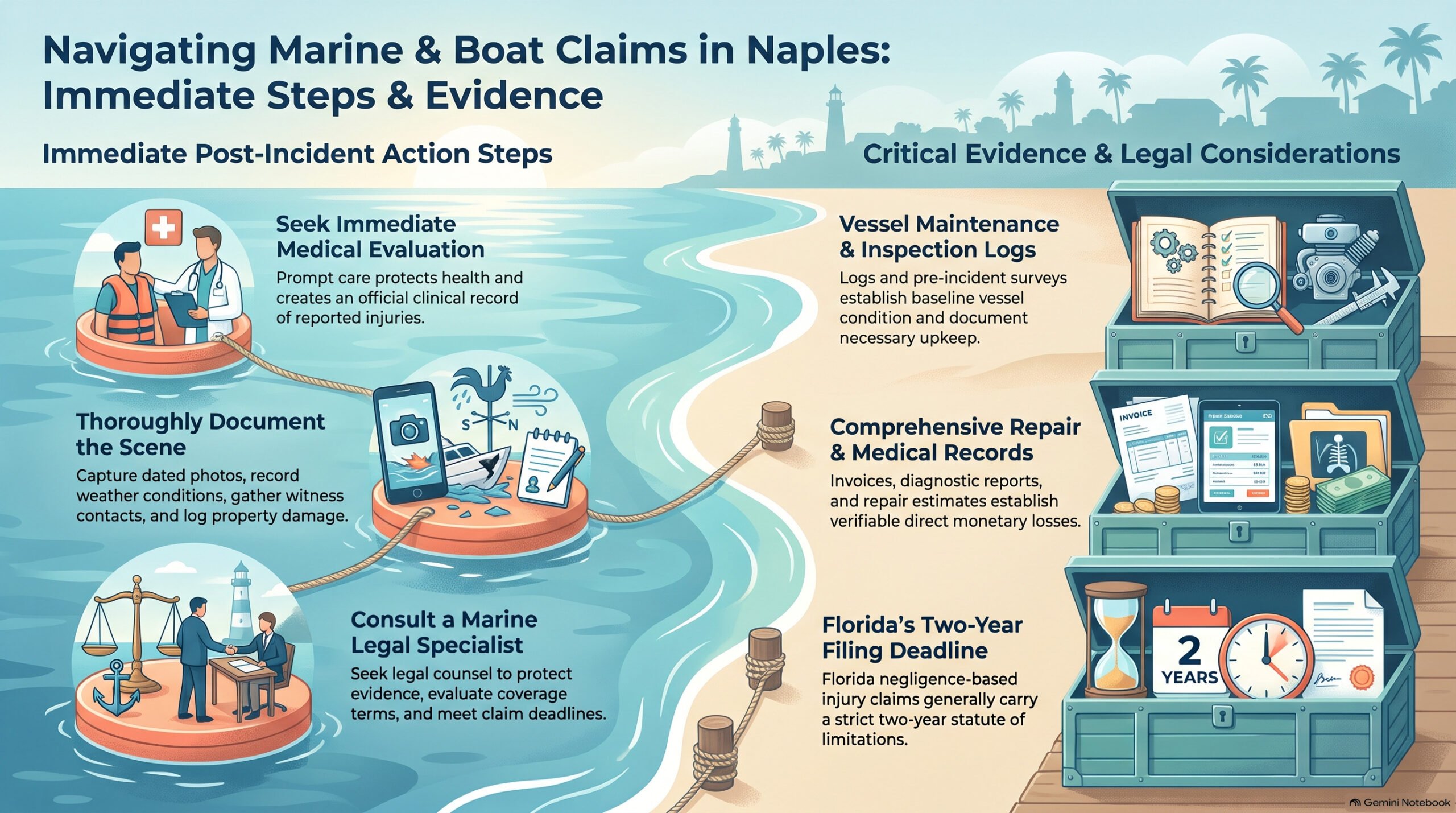
After a boat or marine injury, prioritize prompt medical care, even if symptoms initially seem minor. The injured person should document the incident by preserving photographs, witness details, and relevant records. A marine lawyer can clarify your legal options and help preserve key evidence.
Seek Medical Care
Prompt medical evaluation is vital after an injury involving a boat, vessel, or other marine property, even when symptoms initially seem minor. A qualified healthcare professional can assess visible injuries and identify conditions that may not become apparent immediately. Medical evaluation also creates a reliable clinical record of reported symptoms, examination findings, and recommended care.
Injured individuals should describe how the incident occurred, when symptoms began, and whether those symptoms have changed. This information can help clinicians choose appropriate treatment options, including diagnostic testing, medication, follow-up appointments, or referrals to specialists. Following medical instructions and attending scheduled visits can support recovery and reduce the risk of complications. If symptoms worsen or new concerns arise, prompt reassessment is important. Seeking care without delay also helps individuals understand their health needs and make informed decisions while protecting their ability to return to daily responsibilities safely.
Document the Incident
Accurate documentation can help preserve important details about a boat or marine property injury. Once immediate medical needs are addressed, the injured person or a responsible companion can record what happened while observations remain fresh. A clear account should include the date, time, location, vessel involved, activities underway, and sequence of events. A Weather chronology can note changing wind, rain, visibility, water conditions, and any relevant forecasts. Photographs or video may capture the scene, equipment, hazards, and visible injuries, provided recording does not create additional risk or delay care.
A damage inventory should list affected property, describe its condition, and identify repair or replacement needs. Receipts, repair estimates, witness names, and copies of incident reports can support the record. Notes should distinguish direct observations from assumptions and preserve original files. Organized documentation can help those responsible for assisting the injured person understand the incident accurately.
Contact a Marine Lawyer
Once the incident and property damage have been documented, contacting a marine lawyer can help clarify the options for pursuing a claim. A lawyer familiar with boating and marine insurance matters can review available records, explain relevant deadlines, and identify potential sources of compensation. During an Initial consultation, the injured person can describe the event, share photographs, repair estimates, medical records, and insurer correspondence, and ask how the claim may proceed. The lawyer can also explain what additional evidence may be useful and whether communication with an insurer should be handled through counsel.
Attorney availability is an important consideration, particularly when deadlines or urgent repairs are involved. Promptly asking about scheduling, fees, and the scope of representation helps set clear expectations. Careful legal guidance can support a fair resolution while helping protect everyone affected by the incident.
Don’t Wait. Call Our Florida Personal Injury Lawyers Now!
Critical Evidence in a Naples Property Claim Boat & Marine Claims Injury Case
A strong Naples boat or marine injury claim may depend on evidence that preserves the scene, documents the vessel’s condition, and connects the incident to resulting losses.
Essential records may include:
- Photographs and measurements of the incident scene
- Vessel inspection and maintenance records
- Statements from witnesses
- Medical bills and repair records
Together, these materials can clarify how the incident occurred and support an accurate claim assessment.
Incident Scene Documentation
What conditions existed at the scene can be as important as how an injury occurred. In a Naples boat or marine injury claim, prompt documentation can preserve details that may otherwise disappear. Scene photographs should show the surrounding area, the vessel’s position, visible hazards, lighting, and any relevant warning signs. Images taken from several angles can provide a clearer record than a single close-up. Weather conditions, including rain, wind, visibility, and water movement, may help explain how the incident unfolded. Record witness names and contact details, along with their observations, while memories remain fresh. Notes should identify the date, time, location, and changes made after the event. Careful, accurate records can help insurers and legal professionals assess the circumstances and support a fair review of the injured person’s claim.
Vessel Inspection Records
When a vessel is involved in an injury incident, its inspection records can help establish whether a maintenance issue or safety defect contributed to the event. These documents may show the vessel’s condition before the incident and whether required checks were completed. Maintenance logs can identify repairs, recurring problems, and overdue service affecting engines, steering systems, safety equipment, or other components. Survey reports may provide independent assessments of structural condition and compliance with applicable standards. Comparing dated records with post-event damage documentation can help clarify whether a defect existed beforehand or developed later. Preserving original records, including digital entries and related invoices, supports a reliable review. Accurate inspection documentation can help responsible parties understand what happened, address hazards, and meet their obligations to injured people and others who depend on safe vessel operations.
Witness Statements
Because events on the water can unfold quickly, witness statements may provide important evidence in a Naples boat or marine injury claim. Passengers, nearby boaters, dock workers, and other observers may describe what they saw before, during, and after an incident. Their accounts can help clarify vessel movements, weather conditions, warnings, and the actions of those involved.
Eyewitness credibility depends on factors such as the observer’s location, visibility, attention, and ability to recall events accurately. Independent accounts may be especially useful when they align with other reliable evidence. Promptly preserving statements can reduce the risk that memories fade or details become confused. Record names and contact information, and document accounts in the witness’s own words when possible. A careful process respects witnesses while preserving information that may help fairly evaluate the claim.
Medical and Repair Records
Medical and repair records can provide essential documentation in a Naples boat or marine injury claim involving property damage. These materials help establish the nature of the injury, the treatment received, and the cost to restore damaged property. Consistent medical notes may link reported symptoms to the incident, while Medical billing statements can document expenses and support reimbursement requests. Repair estimates, invoices, photographs, and inspection reports can describe vessel damage, identify necessary work, and show whether repairs were completed. Collectively, these records give insurers and other decision-makers a clearer basis for evaluating a claim. Claimants can preserve original documents, request copies from providers and repair professionals, and organize records by date. Accurate, complete documentation can help ensure injured people and affected property owners receive fair consideration.
Long-Term Effects of Naples Property Claim Boat & Marine Claims Injuries
Boat and marine injuries may cause chronic pain and reduced mobility, limiting a person’s ability to work and manage daily activities. Some injuries also produce lasting cognitive effects that can affect memory, concentration, and decision-making. These ongoing medical and functional needs may create substantial financial strain through treatment costs and lost income.
Chronic Pain And Mobility
Chronic pain and reduced mobility can persist long after a boating or marine-related injury, affecting a person’s ability to work, manage daily tasks, and participate in familiar activities. Injuries to the back, shoulders, knees, or other joints may limit lifting, walking, or maintaining balance. Pain flare-ups can occur after exertion or prolonged activity, while joint stiffness may make movement difficult after periods of rest. These symptoms can require ongoing medical care, physical therapy, medication, or changes to daily routines. For people who serve others through caregiving, community work, or demanding occupations, reduced strength and endurance may also affect their ability to meet responsibilities safely. Consistent documentation of symptoms, treatment, and functional limitations can help clarify the injury’s continuing impact and support informed decisions about recovery and available legal options.
Lasting Cognitive Effects
When a boating or marine-related injury involves a head impact or oxygen deprivation, cognitive effects may continue after the immediate physical injuries have improved. Affected individuals may experience difficulty concentrating, recalling recent events, processing information, or managing familiar tasks. These changes can disrupt communication with family, colleagues, and others who depend on reliable support. Executive dysfunction may affect planning, judgment, impulse control, and the ability to complete activities in sequence. A medical assessment can help identify the nature and extent of these impairments, while a structured treatment plan may address daily challenges. Memory rehabilitation, cognitive therapy, and practical strategies can support safer routines and greater independence. Progress varies, and some individuals require ongoing assistance. Clear documentation of symptoms and professional evaluations can help explain how the injury has changed a person’s cognitive abilities.
Ongoing Financial Strain
The long-term effects of a Naples boating or marine injury can extend beyond physical and cognitive limitations, creating sustained financial strain. Ongoing treatment, rehabilitation, medication, and assistive equipment may generate costs long after an initial claim is filed. At the same time, reduced work capacity or missed employment can limit household income, while family members may need to provide care or adjust their schedules. These pressures can complicate Household Budgeting and make routine expenses harder to manage. Careful review of medical bills, lost earnings, and future care needs can clarify the injury’s financial impact. Debt Management may also become necessary when expenses exceed available resources. For individuals focused on supporting their families and communities, understanding these lasting costs can inform responsible planning and discussions with qualified legal counsel about potential compensation.
Proving Liability in Naples Property Claim Boat & Marine Claims Injury Cases
Establishing liability in a Naples boating injury claim requires evidence linking the accident to a responsible party’s conduct or the condition of their property. Relevant proof may include photographs, witness accounts, vessel records, maintenance documents, and official incident reports. These materials can help clarify whether a boat operator acted carelessly, a vessel owner neglected necessary upkeep, or a property owner failed to address a hazardous dock or walkway.
A careful investigation also considers applicable Maritime jurisdiction rules, which may determine which laws govern an incident on navigable waters or near shore. The location, vessel activity, and relationship between the injury and maritime commerce can affect that analysis. Where more than one person contributed to an accident, comparative negligence standards may influence how responsibility and damages are assessed.
Accurate evidence preservation supports a fair evaluation and helps protect injured people and their families. A qualified legal professional can identify responsible parties, assess relevant rules, and explain how documented facts relate to the claim without overstating what the evidence proves.
Dealing With Insurance Companies After a Naples Property Claim Boat & Marine Claims Injury
After a Naples boating injury, insurance companies may contact the injured person to gather information, assess liability, and evaluate potential losses. Their representatives may request recorded statements, medical authorizations, or incident details. Injured individuals should understand that these requests can affect how insurers assess a claim and should avoid speculation or estimates they cannot verify.
Clear policy communication helps ensure questions, deadlines, and coverage positions are addressed accurately. The injured person can request written explanations of relevant policy terms and preserve copies of correspondence. Prompt, factual responses may support clear communication while avoiding unnecessary disclosures.
Thorough claim documentation is also important. Records may include photographs, witness information, medical bills, repair estimates, and notes describing how the injury affects daily responsibilities. Keeping these materials organized can help explain the losses and support a consistent account of events. A lawyer may review communications, clarify coverage issues, and help protect the injured person’s interests while negotiations with insurers continue. This guidance can also help families focus on recovery and practical support.
What to Expect During a Naples Property Claim Boat & Marine Claims Injury Claim Process
A Naples boat or marine injury claim typically begins with an assessment of the incident, injuries, insurance coverage, and potential losses. Evidence collection then supports negotiations with insurers, where the parties may reach a settlement or pursue another resolution. If negotiations do not produce a fair outcome, litigation may follow to seek recovery through the courts.
Initial Claim Assessment
During the initial assessment of a Naples boat or marine injury claim, the attorney reviews how the incident occurred, the injuries and losses involved, and the available insurance coverage. This early evaluation helps clarify the claim’s scope and identify the issues that may affect recovery. A Coverage review considers relevant boat owner, marina, or other applicable policies, while policy interpretation examines their terms, limits, exclusions, and notice requirements. The attorney may assess how the injuries have affected the claimant’s health, work, and daily responsibilities, along with documented financial losses. This review also helps determine whether additional responsible parties or insurance sources may be involved. By explaining potential options and practical considerations, the attorney can support informed decisions and help the claimant pursue a fair resolution while preserving the ability to serve family and community.
Evidence Collection
Once the initial review identifies the issues and potential coverage sources, evidence collection helps establish how the Naples boat or marine incident occurred and how it caused the claimed injuries or losses. The process may include gathering photographs, video, witness statements, incident reports, medical records, repair estimates, and vessel maintenance documents. Evidence preservation is important because damaged property may be repaired, moved, or altered, while electronic records can be lost. A qualified professional may inspect the vessel, dock, or equipment and document relevant conditions before changes occur. Surveyor coordination can help arrange an inspection, clarify the scope of damage, and make certain findings are recorded in a useful format. Counsel may also organize records and identify gaps requiring follow-up. Careful collection supports an accurate account of the event and its effects on injured people and property.
Negotiation And Resolution
Negotiation and resolution begin after the available evidence, claimed losses, and potential insurance coverage have been reviewed. The parties may exchange settlement proposals addressing repair costs, medical expenses, lost income, and other documented harm. A claim representative may request additional records or clarification before evaluating the demand. Counsel can explain how the evidence supports the requested amount and identify disputed issues that may affect resolution. Mediation preparation may include organizing records, outlining essential facts, and evaluating each position’s strengths and limits. Before discussions proceed, confirm the insurer’s settlement authority so you can evaluate any offer realistically. A resolution should account for the injured person’s needs and the effects on family or community responsibilities. Any proposed agreement requires careful review of its terms, release language, and payment conditions.
Litigation And Recovery
If settlement discussions do not resolve a Naples boat or marine injury claim, litigation may provide a path to determine liability and compensation. The process may begin with filing a complaint, followed by discovery, where parties exchange records, question witnesses, and assess evidence such as maintenance logs, photographs, and medical reports. A court may consider whether an operator, owner, manufacturer, or another party failed to meet a legal duty. Counsel can help claimants present clear evidence while protecting their interests and addressing subrogation claims asserted by insurers or other payors. If the case proceeds to trial, a judge or jury determines responsibility and damages. Recovery may include medical costs, lost income, and other proven losses. Separate disputes over salvage rights or damaged vessels may also require resolution. Throughout litigation, careful documentation supports fair outcomes.
Compensation for Naples Property Claim Boat & Marine Claims Injury Damages
Compensation after a boat or marine accident in Naples depends on the injuries, financial losses, and circumstances of the incident. A claim may address reasonable medical care, rehabilitation, and other documented costs arising from an injury. When a vessel or other property is damaged, recovery may also include repair or replacement costs, subject to the applicable policy, evidence, and responsibility for the loss.
Owners and operators may seek compensation for Lost Charter Income when an accident prevents scheduled service and records support the claimed amount. Salvage Expenses may also be considered when reasonable steps were necessary to recover or protect a vessel after the incident. Receipts, repair estimates, medical records, photographs, and witness accounts can help establish the scope and cause of claimed losses. A lawyer can review available coverage, identify responsible parties, and present supporting documentation to insurers or a court. Careful assessment helps confirm that claims reflect actual needs and that recovery efforts remain grounded in verifiable evidence.
Economic vs Non-Economic Damages in Naples Property Claim Boat & Marine Claims Cases
Economic losses in Naples boat and marine claims may include repair costs, lost income, and other documented expenses. Non-economic harm can involve pain, emotional distress, or reduced enjoyment of life, depending on the circumstances and applicable law. Proving either category requires reliable evidence linking the claimed damages to the incident.
Economic Losses
In Naples, economic losses in a boat or marine property claim generally include measurable financial harm, such as repair costs, reduced vessel value, and lost income from interrupted business use. Owners may seek payment for reasonable repairs, replacement of damaged equipment, towing, storage, and other expenses directly tied to the incident. A documented appraisal can help establish diminished resale value when damage affects a vessel’s market price, even after repairs are completed. Commercial operators may recover lost charter revenue when a vessel cannot safely serve customers during repairs. Records such as invoices, repair estimates, booking histories, and income statements can support these calculations. Careful documentation helps insurers and decision-makers assess the claim fairly, preserve resources for affected owners, and distinguish proven financial losses from unsupported estimates.
Non-Economic Harm
Beyond repair expenses, lost income, and other measurable costs, a Naples boat or marine property claim may involve non-economic harm, such as inconvenience, loss of use, or disruption to personal activities. These effects can arise when damage prevents an owner from using a vessel for transportation, recreation, or community service. Loss of Enjoyment may reflect the reduced ability to participate in customary activities or shared experiences on the water. Emotional Distress may also occur when a marine property loss creates persistent worry, frustration, or disruption to daily routines. Non-economic harm differs from financial losses because it concerns personal impacts rather than direct monetary costs. The nature and availability of recovery for these effects can depend on the claim, applicable policy language, and governing law. Courts may consider these impacts alongside economic damages.
Proving Marine Damages
Establishing marine damages in a Naples property claim requires evidence that connects the reported loss to specific financial costs and personal impacts. Economic damages may include repair invoices, replacement costs, towing charges, storage fees, and documented loss of use. A qualified surveyor can provide a Hull valuation by examining the vessel’s condition, age, market value, and pre- and post-incident damage. A salvage assessment may clarify whether recovery is practical and what related expenses are reasonable. Photographs, maintenance records, purchase documents, and communications with the insurer can support the claim and establish a clear timeline. Non-economic harm may involve disruption, distress, or loss of meaningful recreational use, though such damages require credible, specific support. Organized evidence helps insurers and decision-makers evaluate the full impact while enabling claimants to seek fair treatment and protect resources that serve their families and community.
Don’t Wait. Call Our Florida Personal Injury Lawyers Now!
When a Naples Property Claim Boat & Marine Claims Injury Case Goes to Trial vs Settlement
A Naples boat or marine injury claim may proceed to trial when liability, damages, or the value of the loss remains disputed, while settlement can resolve the case without a court decision. The choice depends on the evidence, the parties’ positions, and the injured person’s priorities. Settlement Offers may provide a timely, predictable resolution and reduce the demands of continued litigation. A negotiated agreement can also help parties focus on recovery and practical needs rather than a prolonged dispute.
Trial may be appropriate when negotiations fail or when a party seeks a formal determination of responsibility and compensation. Each side presents evidence and arguments, and a judge or jury evaluates the case. After the presentation of evidence and instructions, the jury deliberates and reaches a verdict. A trial can add time, expense, and uncertainty, so outcomes cannot be guaranteed. Carefully comparing potential benefits, risks, and personal circumstances can help an injured person make an informed decision while preserving the ability to serve family and community.
Florida Laws That May Affect Your Naples Property Claim Boat & Marine Claims Case
Whether a Naples boat or marine injury claim is resolved through settlement or trial, Florida law governs pivotal questions about liability, damages, and filing deadlines. State statutes and insurance rules may shape how investigators handle an incident and which losses you can pursue.
The governing details depend on the vessel, policy, and circumstances.
- Negligence principles may determine whether an operator or other party failed to use reasonable care, such as by overlooking a hazard on a crowded dock.
- Comparative fault rules can affect recovery when an injured person’s conduct also contributed to the event.
- A policy’s marine insurance exclusions may limit coverage for certain vessels, activities, or types of damage, so review carefully.
- A Florida policy appraisal provision may offer a process for resolving disagreements about the amount of covered property loss, subject to the contract’s terms.
Clear records, prompt reporting, and cooperation with responsible parties can support a fair evaluation while helping protect those affected.
The Statute of Limitations for Naples Property Claim Boat & Marine Claims Injury Cases
How long an injured person has to file a Naples boat or marine injury claim depends on the facts and the law that governs the incident. Florida law generally sets a two-year deadline for negligence-based personal injury actions, though other claims may follow different periods. Cases involving a commercial vessel, federal maritime law, or an accident outside Florida may require separate analysis.
Deadline calculation begins with identifying the incident date and the legal basis for the claim. In some circumstances, delayed discovery, a defendant’s absence, or other statutory rules may affect the filing period. Claims against government entities can also require advance notice and shorter procedural deadlines. These requirements may apply before a lawsuit can proceed.
Jurisdictional exceptions may change which limitation period controls, particularly when maritime law or another state’s law applies. Missing a deadline can bar recovery, even when an injured person has a valid claim. Prompt attention to applicable dates helps preserve options and supports an orderly process for addressing losses and responsibilities.
How a Naples Property Claim Boat & Marine Claims Lawyer Can Help You
A Naples property claim boat and marine claims lawyer can assess the incident, identify the laws and deadlines that may apply, and explain the available legal options.
The lawyer can also organize evidence and communicate with insurers so claimants can focus on protecting passengers, crew, and others who depend on them.
- A damaged hull, scattered debris, and repair estimates can help document the vessel’s condition and the cost of restoring it.
- Photographs, witness accounts, maintenance records, and weather reports may clarify how the loss occurred.
- Policy language can reveal coverage limits, Policy exclusions, and appraisal clauses that affect the insurer’s evaluation.
- A clear claim file can support discussions about repairs, replacement costs, lost use, or related property damage.
The lawyer may review the insurer’s investigation, identify gaps in its reasoning, and present supporting records in an organized manner. If a disagreement concerns valuation, the lawyer can explain appraisal procedures and their potential consequences. This work can help confirm that a claim is evaluated under the policy and applicable law.
When to Contact a Naples Property Claim Boat & Marine Claims Lawyer
Prompt legal guidance may be important when a boat or marine property claim is denied, delayed, undervalued, or complicated by disputed facts. A vessel owner may also consider contacting counsel when an insurer requests extensive documentation, questions the cause of damage, or offers a settlement that appears inconsistent with repair estimates. Early attention can help preserve records and clarify what information is needed while the matter is still active.
A Policy review may be useful when coverage terms, exclusions, deductibles, or valuation provisions are unclear. A lawyer can assess the policy language and explain how it may apply to the reported loss. Claim deadlines also warrant careful attention, since policies and applicable laws may set time limits for notice, proof of loss, or legal action. Owners should seek guidance promptly after learning of a potential dispute, especially when repairs, storage, or safety decisions cannot wait. Timely advice can support informed choices and help protect the interests of those who depend on the vessel.
Why You Need an Experienced Naples Property Claim Boat & Marine Claims Lawyer
When a vessel sustains damage or an insurer disputes a marine property claim, an experienced Naples lawyer can help clarify the policy terms, assess the evidence, and identify practical next steps. Marine losses may involve complicated questions about navigation, maintenance, storm damage, or the scope of covered property. A lawyer familiar with these issues can organize records, evaluate repair estimates, and explain how policy language applies to the facts.
Insurers may rely on Policy Exclusions or issue Claim Denials based on incomplete information, disputed causation, or interpretations that warrant review. Counsel can examine the stated reasons, compare them with the policy and supporting evidence, and communicate a focused response. This assistance can reduce confusion for vessel owners and help them protect the resources they need for safe operations and service to their communities. Experienced guidance also supports timely decisions, preserves relevant documentation, and helps prevent avoidable procedural errors while a claim is being evaluated or challenged through available remedies.
How to Choose the Right Naples Property Claim Boat & Marine Claims Lawyer for Your Case
Choosing the right Naples property claim boat and marine claims lawyer requires careful attention to the attorney’s experience with vessel losses, insurance disputes, and the policy terms that govern marine coverage. When selecting an attorney, consider whether counsel has handled claims involving storm damage, sinking, theft, or disputes over repair estimates. A lawyer should explain the available options, likely challenges, and evidence needed to support the claim in clear terms. This helps boat owners make informed decisions while protecting property that may be vital to family, work, or community service.
Before retaining counsel, prospective clients can ask about relevant case experience, communication practices, and who will manage the claim. They should also review fee structures, including how fees are calculated and whether costs may arise separately. Written terms can clarify expectations and prevent misunderstandings. Careful comparison of qualifications and services allows claimants to choose representation suited to their circumstances, without relying solely on advertising or promises of a particular outcome.
About The Law Offices of Anidjar & Levine
The Law Offices of Anidjar & Levine represents clients in property and marine insurance disputes, including claims involving damaged or lost vessels.
The firm assists policyholders seeking fair consideration of covered losses and clear answers from insurers.
Its work may include reviewing policy terms, documenting damage, communicating with insurance companies, and pursuing available remedies when a claim is delayed, underpaid, or denied.
Firm history provides context for the firm’s approach to client service and insurance disputes.
Prospective clients can review the firm’s background, practice areas, and published information to understand its experience.
Attorney credentials, including education, licensing, and professional experience, may also help clients assess whether the firm’s services fit their needs.
For boat owners and others facing property loss, the firm can explain relevant claim procedures and potential next steps.
Its attorneys evaluate each matter based on the policy, evidence, and circumstances.
This guidance can help clients protect their interests while making informed decisions during a demanding recovery process.
Frequently Asked Questions
Can I File a Boat Insurance Claim for Damage Caused by a Named Storm?
A boat owner may file an insurance claim for damage caused by a named storm, subject to the policy’s terms, exclusions, and reporting requirements. Named storm coverage may protect against specified wind or storm-related losses, but coverage varies by policy. The insurer may apply hurricane deductibles, which can be higher than standard deductibles. The owner should document damage, take reasonable steps to prevent further loss, and promptly notify the insurer.
What Should I Do if My Marina Refuses to Release My Damaged Vessel?
If a marina refuses to release a damaged vessel, the owner should request a written explanation, an itemized account of charges, and the legal basis for continued possession. The owner should preserve contracts, repair records, insurance communications, and photographs, while avoiding confrontation or unauthorized removal. Because vessel lien disputes can turn on notice and payment requirements, counsel can assess marina release rights, challenge improper liens, and seek appropriate resolution while protecting the vessel and others’ interests.
Does Boat Insurance Cover Salvage, Towing, or Emergency Repairs?
Boat insurance may cover salvage, towing, and emergency repairs, but coverage depends on the policy’s wording, exclusions, and policy limits. Some policies reimburse reasonable emergency services needed to protect the vessel or prevent further damage, while others require advance approval or impose separate sublimits. The insured should document the incident, retain invoices and photographs, and notify the insurer promptly. Before authorizing costly work, the policyholder should confirm applicable requirements and coverage with the insurer.
Can I Dispute an Insurer’s Estimate of My Vessel’s Repair Costs?
Yes. A vessel owner may dispute an insurer’s repair estimate when it omits damage, understates labor or material costs, or relies on an inadequate repair scope. Start by submitting a written explanation that identifies specific discrepancies and includes supporting documentation, such as repair bids, photographs, and invoices. Independent damage appraisals can provide an objective assessment. The owner should follow policy deadlines and preserve communications, since unresolved differences may require formal appraisal or legal review.
What Happens if My Boat Is Damaged While Stored at a Marina?
When a boat is damaged at a marina, responsibility depends on how the damage occurred, the marina’s duties, and the terms of the storage agreement. The owner should promptly document the damage, notify the marina and insurer in writing, and preserve photographs, repair estimates, and vessel maintenance records. Marina storage agreements may limit liability or require specific notice procedures. A qualified marine professional can assess the cause, while counsel can review coverage and available recovery options.
—————————
A property or marine claim may involve substantial losses, disputed coverage, and strict deadlines.
The Law Offices of Anidjar and Levine can review the circumstances, explain your legal options, and pursue compensation supported by the evidence.
If you’re facing a denied claim, delayed payment, or an injury connected to a boating incident, consider seeking legal guidance promptly.
Early advice can help protect important records and clarify your rights and responsibilities.
Learn more from a Naples Personal Injury Lawyer.

