
The Law Offices of Anidjar and Levine can help Naples property owners document fire and smoke damage, contaminated belongings, and related expenses, then compare the evidence with policy terms. The firm may organize records, communicate with the insurer, address delays or disputed payments, and request clear explanations of coverage decisions. Separate injury or liability claims may require medical documentation and evidence of another party’s responsibility. Learn more about a Naples Personal Injury Lawyer. The sections below explain causes, documentation, safety concerns, and how legal guidance may support a claim.
Main Takeaways
- A Naples property claim lawyer can review your policy, document fire and smoke damage, and challenge claim decisions that conflict with the evidence.
- Preserve photographs, repair estimates, damaged-item inventories, receipts, inspection reports, and insurer correspondence to support your property claim.
- Report the fire promptly through your insurer’s designated channel, provide accurate known facts, and keep claim numbers and representative details.
- Smoke and soot may damage rooms and belongings beyond the fire’s origin; document affected areas and assess safe occupancy and cleaning needs.
- Property damage and personal injury claims require different evidence; medical records may help document health effects from smoke exposure.
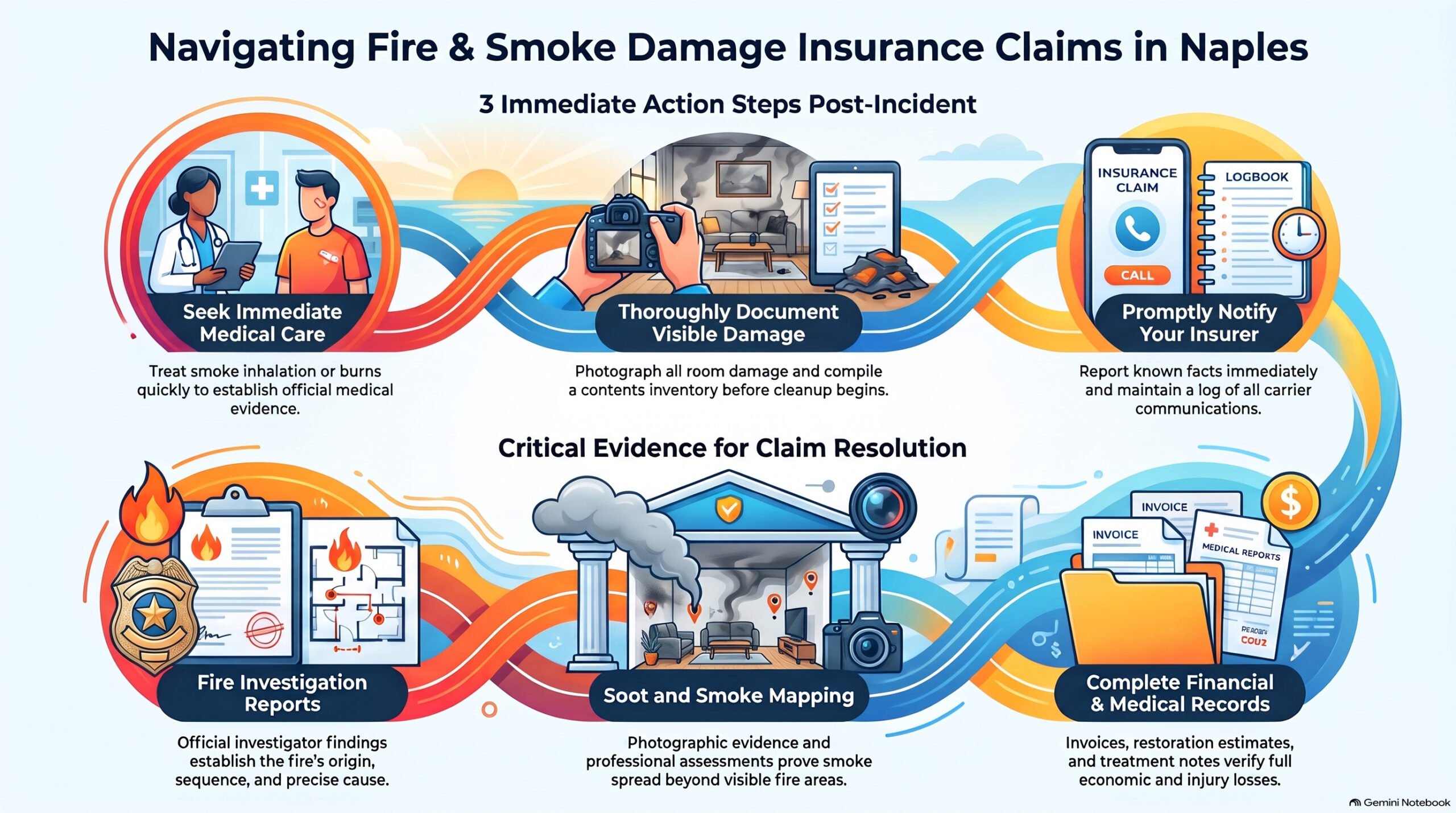
Navigating Fire Insurance Claims


How We Can Help With Your Naples Property Claim Fire & Smoke Damage Injury Claim
After a fire, a Naples property claim lawyer can help property owners document fire and smoke damage, review policy terms, and address disputes with the insurer. The lawyer’s role centers on organizing the claim and helping clients pursue a fair, policy-based resolution.
Support may include reviewing correspondence, identifying requested records, and explaining deadlines or policy provisions in clear terms. A well-developed claim strategy can present repair estimates, photographs, inventories, and other relevant documentation in a consistent, accessible format. The lawyer may also communicate with the insurer, answer coverage questions, and challenge decisions that appear inconsistent with the policy or the evidence.
For owners managing urgent repairs and community responsibilities, reliable guidance can reduce administrative burdens and free up time for practical needs. Through attorney advocacy, counsel can seek timely claim review and explain available next steps. Each matter requires an individual review, since policy language, property conditions, and insurer responses differ. The objective is informed, orderly representation throughout the claims process.
OUR CONSULTATIONSARE FREE
START YOUR FREE CASE REVIEW

Understanding Naples Property Claim Fire & Smoke Damage Injury Cases
Understanding a Naples property claim for fire and smoke damage starts with distinguishing physical property damage from any personal injury caused by the incident. A property claim may address repairs, replacement of damaged belongings, and related expenses, while an injury claim concerns harm to a person’s health. These claims can overlap, but each requires evidence suited to the losses being asserted.
Smoke exposure may cause breathing difficulties, irritation, or other health effects that require prompt medical assessment. Soot contamination can affect indoor surfaces and belongings, and may raise concerns about safe occupancy and appropriate cleaning. Medical records, photographs, repair assessments, and receipts can help document the nature and extent of claimed losses. When several people rely on the affected property, careful documentation can also help protect their well-being and clarify responsibility. A lawyer can review policy terms, organize relevant evidence, and explain available options without treating property damage as proof of personal injury. Each case depends on its facts and supporting records.
Common Causes of Naples Property Claim Fire & Smoke Damage
Naples property fires may begin with unattended cooking, overheated appliances, or other kitchen hazards. Electrical malfunctions and lightning strikes can also ignite fires, sometimes causing smoke damage beyond the area of origin. During dry conditions, wildfires and brush fires may threaten homes and surrounding property.
Kitchen Fires
Kitchen fires can spread quickly through a home, causing damage from flames, heat, and smoke that may extend well beyond the cooking area. Unattended stovetops, overheated cooking oil, and combustible items placed near burners are frequent causes. Grease buildup can also ignite, allowing flames to move into nearby cabinets or other surfaces. Smoke may travel through hallways and ventilation pathways, leaving residue and odors in rooms far from the kitchen. Working smoke alarms, accessible extinguishers, and properly maintained Fire Suppression equipment can help limit harm and support safe evacuation. Effective Kitchen Ventilation reduces grease accumulation but does not eliminate fire risk. After an incident, property owners may document visible damage, avoid disturbing affected areas, and seek qualified assistance. A careful assessment can help determine the fire’s scope and support a complete insurance claim.
Electrical Malfunctions
When electrical systems are damaged, overloaded, or improperly maintained, they can ignite fires that cause extensive property damage. Wiring defects, including frayed insulation, loose connections, or aging components, may generate heat and sparks near combustible materials. Overloaded circuits can also exceed a system’s capacity, increasing the risk of overheated wiring and ignition. Faulty outlets, damaged extension cords, and malfunctioning appliances are additional sources of electrical fires in homes and commercial properties. After an incident, the cause may not be immediately apparent, especially when flames damage the electrical panel or wiring. A careful investigation can help establish how the fire began and identify the resulting losses. Accurate records, photographs, and professional assessments may support a property claim and help owners pursue repairs that restore safe conditions for occupants and visitors.
Lightning Strikes
Unlike fires caused by electrical malfunctions within a property, lightning strikes can introduce an ignition source from outside. A direct strike may ignite roofing, attic materials, or nearby structural components, while an electrical surge can damage wiring and connected equipment. Even when flames are limited, smoke and heat can still affect interior finishes, contents, and air quality. Lightning Strike Risks include hidden damage that becomes apparent only after inspection, such as compromised circuits or weakened building materials. Property owners should document visible conditions, preserve damaged items when safe, and arrange qualified assessments before repairs begin. Surge Protection devices and properly maintained grounding systems may reduce certain electrical hazards, although they cannot eliminate all risks. A thorough record of the event, mitigation work, and repair costs can support an accurate property insurance claim and help protect occupants.
Wildfires and Brush Fires
Wildfires and brush fires can threaten Naples properties when dry vegetation, wind, or nearby ignition sources allow flames to spread toward buildings. Embers may travel ahead of a fire, igniting roofs, landscaping, or outdoor structures and causing smoke damage even when flames do not reach a home. Property owners can reduce exposure through brush fire prevention, including clearing dead vegetation, maintaining defensible space, and storing combustible materials away from buildings. Local fire guidance can help determine appropriate measures for each property. Wildfire evacuation planning also protects residents, visitors, and emergency responders by identifying routes, communication methods, and vital documents before a threat develops. After a fire, owners should document visible damage, limit further loss when safe, and promptly notify their insurer. Careful records can support a clear property claim.
Don’t Wait. Call Our Florida Personal Injury Lawyers Now!


Legal Rights of Naples Property Claim Fire & Smoke Damage Injury Victims
Naples property owners and occupants affected by fire or smoke damage may have legal rights under their insurance policies and Florida law. Policyholder rights may include submitting a covered claim, receiving a timely investigation, and obtaining a clear explanation of the insurer’s decision. The policy’s terms, limits, deadlines, and coverage exclusions determine which losses qualify for payment.
A careful, well-documented claim can help protect affected households and support fair treatment of others facing similar losses.
Relevant steps may include:
- Review the policy and identify applicable coverage, limits, and exclusions.
- Photograph damage, preserve receipts, and keep communication records.
- Request written explanations for partial denials, delays, or payment calculations.
- Consider legal guidance when disputes arise over coverage or claim handling.
Florida law may provide remedies when an insurer fails to meet its obligations, but outcomes depend on the facts and policy language. Owners and occupants should avoid signing releases or accepting settlements without understanding their effect. Prompt attention to deadlines can preserve available options and support an informed resolution.
Why Do Fire & Smoke Damage Injuries Happen in Naples Properties?
Fire and smoke injuries in Naples properties can result from faulty wiring, unattended cooking, heating equipment failures, or improperly maintained appliances. These hazards can develop when electrical systems are overloaded, damaged cords remain in use, or cooking areas are left unsupervised. Heating devices placed too close to furniture or other combustible materials can also ignite a fire, particularly when equipment lacks regular maintenance.
Smoke inhalation risks arise because fires release gases and particles that can impair breathing, reduce oxygen, and cause serious harm before occupants recognize the danger. Smoke can spread through hallways and rooms even when flames remain confined, exposing residents, visitors, and first responders. Older adults, children, and people with respiratory conditions may be more vulnerable.
Fire injury prevention depends on working alarms, clear exits, safe appliance use, and properly maintained electrical and heating systems. Property owners and managers can reduce fire risk and limit potential injuries by addressing known hazards. Diligent maintenance and accessible safety measures help protect everyone who uses a building.
What Should You Do After a Naples Property Claim Fire & Smoke Damage Injury?
After a fire or smoke-related injury, the affected person should seek prompt medical care, even if symptoms initially appear minor. Document property damage with photos, videos, and records of damaged belongings. After addressing immediate safety and medical needs, they should contact the insurer to report the loss and ask about the claims process.
Seek Medical Care
Anyone exposed to fire, smoke, or soot should seek prompt medical evaluation, even if symptoms seem mild or have not yet appeared. Smoke inhalation can cause delayed breathing problems, while burns may worsen beneath the skin. Evacuate immediately; once everyone is safely away from the hazard, a qualified clinician can assess injuries and recommend appropriate treatment. For severe breathing difficulty, confusion, extensive burns, or loss of consciousness, emergency services should be contacted immediately. For minor burns, provide burn first aid by cooling the area with clean, cool running water, and do not apply ice or ointments unless a medical professional advises it. People should avoid reentering a damaged building to retrieve belongings or assist others when conditions remain unsafe. Prompt care protects health and creates a reliable medical record of fire-related symptoms and treatment.
Document Fire Damage
Once the property is safe to enter, the owner should document fire and smoke damage before cleanup or repairs begin. Clear records support an accurate assessment and help protect everyone affected. The owner should photograph and video each room, showing damage to walls, ceilings, floors, fixtures, and personal belongings. Images should include wide views and close-ups, with dates preserved when possible. Fire Scene Sketching can provide a simple layout showing where damage occurred and where important items were located. A detailed Contents Inventory should list damaged or destroyed belongings, including descriptions, approximate purchase dates, and estimated values. Receipts, warranties, and available product information may help verify those entries. When practical, the owner should also keep damaged items undisturbed and record any steps taken to prevent further harm.
Contact Your Insurer
Prompt notice to the insurer can help preserve a fire and smoke damage claim and begin evaluating the loss. The property owner should report the incident as soon as reasonably possible, using the insurer’s designated phone number or online claim system. The initial report should identify the date, location, apparent cause, and known damage without speculation. A claims representative can explain inspection procedures, documentation requirements, and steps to protect the property from further harm. The owner should keep copies of communications, record claim numbers, and note the names and roles of representatives. A policy review can clarify notice duties, exclusions, and coverage limits for repairs, contents, and temporary housing. If instructions are unclear or a proposed settlement appears inadequate, the owner may seek qualified guidance before signing releases or accepting payment.
Don’t Wait. Call Our Florida Personal Injury Lawyers Now!
Critical Evidence in a Naples Property Claim Fire & Smoke Damage Injury Case
Important evidence can help establish how a fire occurred, the extent of property damage, and whether injuries resulted. A well-supported claim may rely on official findings, clear records, and accounts from people with direct knowledge.
Essential evidence may include:
- Fire investigation reports
- Photographs and other documentation of smoke damage
- Medical treatment records
- Witness statements
Fire Investigation Reports
When fire or smoke damages a Naples property, an investigation report can help establish how the incident began and what caused the resulting losses. Fire investigators prepare these reports, which may describe the fire’s origin, sequence, and circumstances, along with evidence supporting their conclusions. Their findings can help property owners, insurers, and others responsible for resolving claims assess whether a policy applies and who may bear responsibility. The report’s value depends on the investigator’s qualifications, methods, and reliable documentation of observations. Report authentication may also matter when a report is submitted as evidence, since its source and integrity must be established. A careful review can identify unsupported assumptions, conflicting findings, or gaps requiring follow-up. These steps support a fair, informed claim process and help protect affected occupants and property owners.
Smoke Damage Documentation
Beyond identifying how a fire began, a property claim must document the smoke damage it caused. Detailed records can help establish where smoke traveled, which materials were affected, and what restoration measures may be necessary. Photographs should show visible staining, discoloration, and residue across rooms, furnishings, and building surfaces. Soot residue mapping can connect affected areas and illustrate the extent of contamination, including damage that may not be obvious at first inspection. A qualified professional may also conduct a Smoke odor assessment to record persistent odors and identify materials that absorbed smoke. Inspection notes, dated images, cleaning estimates, and descriptions of damaged property can support a clear account of losses. Organized documentation helps insurers evaluate the claim and enables property owners to seek fair consideration while protecting others’ safety and interests.
Medical Treatment Records
Medical treatment records can help establish the nature, timing, and extent of injuries linked to a fire or smoke exposure. In a Naples property claim, these records may document respiratory irritation, burns, eye symptoms, or other conditions requiring care. Provider notes can describe reported symptoms, examination findings, diagnoses, and recommended treatment, helping connect medical concerns with the incident. Accurate records also support a clear treatment chronology, showing when symptoms began, which providers evaluated the patient, and how care progressed. Consistent follow-up documentation may clarify whether injuries improved, persisted, or required additional intervention. Claimants should retain visit summaries, test results, prescriptions, referrals, and billing statements, while requesting corrections if information is inaccurate. Organized medical evidence helps insurers and legal representatives evaluate injury-related losses and determine appropriate support for affected individuals.
Witness Statements
Witness statements can provide important evidence in a Naples property claim involving fire or smoke-related injuries. Eyewitness accounts may describe how the fire began, the conditions inside the property, and whether alarms, exits, or safety measures functioned properly. Residents, visitors, neighbors, and first responders may each offer details that help clarify the incident and its effects. Their observations can also support or challenge information in inspection reports and medical records.
Promptly preserving statements helps protect these accounts before memories fade or witnesses become hard to locate. A record should identify each witness, document the date and circumstances of the conversation, and accurately reflect the person’s own words. Investigators should avoid leading questions and preserve relevant contact information. Careful documentation allows insurers, attorneys, and other reviewers to assess the evidence fairly and understand how the event affected those seeking assistance.
Long-Term Effects of Naples Property Claim Fire & Smoke Damage Injuries
Fire and smoke exposure can cause lasting health effects that persist after the immediate danger passes. Some individuals develop chronic respiratory problems or persistent skin irritation, while others experience long-term emotional distress. These conditions may require ongoing treatment and should be documented when evaluating a property damage claim.
Chronic Respiratory Problems
After a property fire, smoke exposure can cause respiratory problems that persist long after visible damage is repaired. Fine particles and toxic gases may irritate the airways, worsen asthma, or cause persistent coughing and shortness of breath. Airway inflammation can continue after occupants leave the damaged property, particularly when soot or chemical residues remain in the environment. In severe cases, prolonged exposure may contribute to pulmonary fibrosis, a condition that scars lung tissue and limits breathing. Medical evaluation can identify lasting effects and guide treatment, while records may help establish when symptoms began and how they relate to the fire. Property owners and insurers should take reported health concerns seriously, arrange qualified assessments, and preserve relevant documentation. Timely attention can support affected occupants and inform fair claim decisions.
Persistent Skin Irritation
Persistent skin irritation can continue after a fire, especially when soot, smoke residues, or contaminated materials remain in a property. Direct contact with these substances can inflame the skin, while cleanup products and damaged building materials can add more irritants. Dermatitis Symptoms may include redness, itching, dryness, swelling, or painful cracking, and they can persist as long as exposure continues. Contact Triggers vary by person and may include ash, cleaning agents, insulation fibers, or residue on clothing and household surfaces. Affected residents and workers should limit contact with contaminated areas, use suitable protective equipment, and seek medical evaluation when symptoms worsen or do not resolve. Photographs, treatment records, and exposure notes can help document the condition. Prompt remediation may reduce ongoing exposure and support a clear assessment of related property damage claims.
Long-Term Emotional Distress
When fire or smoke damage disrupts a home, emotional effects may continue long after the immediate danger has passed. Residents may experience persistent worry, sleep disruption, difficulty concentrating, or distress when reminded of the incident. These effects can strain family relationships and disrupt work, caregiving, and daily routines. Some individuals may also feel unsettled by displacement, damaged possessions, or uncertainty about when their home will be safe again.
Recognizing these reactions can help residents seek appropriate support without minimizing their experience. Trauma counseling may provide a structured setting to address distress, while anxiety management strategies can support daily functioning. Family members, neighbors, and community organizations may assist by offering practical help and respectful attention. When emotional symptoms persist or worsen, consultation with a qualified mental health professional can clarify available care and encourage recovery over time.
Proving Liability in Naples Property Claim Fire & Smoke Damage Injury Cases
Proving liability in a Naples fire and smoke damage claim requires evidence linking the loss to a party’s negligence, breach of duty, or other legal responsibility. Investigators may examine the fire’s origin, building conditions, maintenance records, and witness accounts to determine how the incident began and whether it could have been prevented. Photographs, inspection reports, and qualified expert analysis can help establish the cause and document resulting property damage or injuries.
Negligent Fire Prevention may involve ignored hazards, defective alarms, blocked exits, or failures to maintain electrical or fire-suppression systems. Responsibility may rest with a property owner, manager, contractor, manufacturer, or another party, depending on the facts. Third-party liability can arise when someone outside the property’s ownership or management contributed to the fire through unsafe work or a defective product.
A careful investigation can preserve evidence and clarify each party’s role. This process supports accountability and helps affected people pursue a fair resolution based on documented facts.
Dealing With Insurance Companies After a Naples Property Claim Fire & Smoke Damage Injury
Once the cause and scope of a Naples fire loss are documented, communication with insurers becomes an important part of pursuing recovery. Property owners and their representatives should provide accurate information and avoid speculation about the fire or the extent of the damage. Insurers may request photographs, repair estimates, inventories, and records of temporary expenses. Organized documents can help clarify what has been reported and support consistent responses.
A claim communication log should record dates, contact names, reference numbers, requests, and conversation summaries. Recorded insurer calls may preserve details, but review applicable consent laws and insurer policies before recording. Written follow-up can confirm important instructions and reduce misunderstandings. Keep statements factual, and review documents for accuracy before submission.
When several occupants, employees, or neighboring property owners are affected, communications may require coordination. A qualified lawyer can review policy terms, address disputed requests, and help protect the interests of those seeking fair treatment. Careful, respectful communication supports accountability without obstructing a thorough investigation or others’ needs.
What to Expect During a Naples Property Claim Fire & Smoke Damage Injury Claim Process
A fire and smoke damage claim typically begins with promptly reporting the loss to the insurer and preserving incident records. The property owner should document visible damage and related losses, while the insurer reviews the policy, evidence, and claim valuation. If the parties disagree about coverage or payment, the dispute may require further review or formal resolution.
Reporting the Fire Loss
When a fire or smoke event damages a Naples property, promptly notifying the insurer is a vital first step in the claims process. The policyholder or an authorized representative should contact the carrier as soon as reasonably possible, using the reporting method specified in the policy. The initial report generally identifies the insured property, the date of loss, the known cause, and the immediate effects on occupancy or operations. A claim representative can provide a claim number, explain required forms, and outline the next steps. Tracking deadlines carefully helps prevent missed policy requirements and supports timely communication with the insurer. The claimant should record when they gave notice, who they spoke with, and any instructions they received. If circumstances limit reporting, communicate the reason and any subsequent contact promptly. Clear, timely notice allows the insurer to begin its review.
Documenting Fire and Smoke Damage
Thorough documentation helps establish the extent and cause of fire and smoke damage during a Naples property claim. Property owners can photograph affected rooms, furnishings, appliances, and structural surfaces before cleanup begins, as long as the site is safe to enter. Images should show both wide views and close details, with dates and locations recorded when possible. A written inventory can identify damaged belongings, their approximate age, condition, and replacement cost, supported by receipts or other available records. Smoke may travel beyond the burned area, leaving Hidden soot in vents, wall cavities, and other concealed spaces. Qualified inspectors can document these conditions and assess whether odor remediation or expert cleaning is needed. Keeping copies of reports, photographs, inventories, and cleanup records helps preserve an organized account of the loss and its effects on occupants.
Reviewing the Insurance Claim
Once you assemble the documentation, the insurer reviews the fire and smoke damage claim to assess coverage, the reported cause of loss, and the estimated cost of repairs or replacement. The adjuster may inspect the property, examine photographs and receipts, and request additional records to verify the reported damage. Coverage interpretation depends on the policy language, applicable limits, and the facts surrounding the fire. The review may distinguish direct fire damage from smoke residue, water damage from firefighting, and damage to personal belongings. Policy exclusions and conditions may affect which losses qualify for payment, while deductibles and coverage limits shape the potential benefit. Claimants who provide organized, accurate information can help the insurer evaluate the loss efficiently and support a fair review. The insurer’s written assessment should explain its findings and any proposed payment.
Resolving Claim Disputes
If the insurer’s written assessment does not reflect the documented fire and smoke damage, the property owner may dispute the decision or proposed payment. The owner can submit repair estimates, photographs, inventories, and expert reports that explain the scope and cost of the loss. A written response should identify specific disagreements and request reconsideration within any applicable deadlines. If direct discussions do not resolve the matter, the policy may include an Appraisal clause that allows qualified appraisers to evaluate the damage amount. The parties may also consider mediation options, where a neutral mediator facilitates settlement discussions without deciding the outcome. Legal counsel can review policy terms, explain procedural choices, and help protect the owner’s rights. These steps may support a fair resolution while preserving resources to restore the property and support affected occupants.
Compensation for Naples Property Claim Fire & Smoke Damage Injury Damages
Compensation for fire and smoke damage to a Naples property may cover more than visible repairs, depending on the policy terms and the losses supported by evidence. Covered property damage may include structural repairs, smoke removal, cleaning, and replacement of belongings that cannot reasonably be restored. The insurer may also consider reasonable costs incurred while the home is unsafe or uninhabitable. The insurer may pay for temporary housing, meals, and other additional living expenses when the policy provides that coverage and receipts document the amounts. For commercial properties, business interruption coverage may address lost income or continuing expenses during a covered closure, subject to policy limits and requirements.
A well-supported claim can help property owners restore safe living or working conditions and maintain vital services for tenants, employees, and customers. Useful documentation may include photographs, repair estimates, inventories, invoices, and records showing the property’s condition before and after the fire. Coverage varies, so policy language and evidence determine which losses qualify and how much is available. A lawyer can review disputed coverage and help organize supporting records.
Economic vs Non-Economic Damages in Naples Property Claim Fire & Smoke Damage Cases
Fire and smoke claims may include economic losses such as repair costs, damaged belongings, and temporary housing expenses. Non-economic harm may also arise from disruption, distress, or loss of use of the property. Clear documentation of both categories can help establish the scope and value of a claim.
Economic Losses
A Naples property claim involving fire and smoke damage may include several forms of economic loss, which are distinct from non-economic harm. These losses are measurable financial costs tied to the damage and its consequences. They may include repair or rebuilding expenses, replacing damaged belongings, and reasonable costs to clean or remove smoke residue. If you cannot occupy the property, you may also recover temporary housing and related displacement expenses, subject to the policy’s terms and limits. For a business, lost income and continuing expenses during a closure may support a Business interruption claim. Documentation such as receipts, estimates, invoices, payroll records, and financial statements can help establish the amount and cause of each loss. Careful records help insurers and property owners assess claims accurately and direct resources to restore homes, businesses, and community services.
Non-Economic Harm
While economic losses reflect measurable expenses, non-economic harm concerns the personal effects of fire and smoke damage, such as emotional distress, disruption to daily life, or loss of use and enjoyment of a home. For Naples homeowners, these effects may include anxiety about returning to a damaged residence, discomfort from lingering odors, and strain caused by temporary displacement. Loss of sentimental belongings can carry particular weight because family photographs, heirlooms, and personal keepsakes may hold meaning beyond their market value. Disruption of daily routines may also affect work, caregiving, rest, and community involvement. These consequences are distinct from repair costs and other measurable expenses, yet they can substantially affect a household’s well-being. A property claim may cover non-economic harm if the policy terms and Florida law support it. Each claim depends on its circumstances.
Documenting Damages
Careful documentation helps Naples homeowners distinguish measurable economic losses from the personal effects of fire and smoke damage. Economic damages may include repair costs, damaged belongings, temporary housing, and other incident-related expenses. A dated Photograph Inventory can record affected rooms and possessions before cleanup or repairs begin. Receipts, invoices, payment records, and proof of additional living expenses help establish the amount and timing of financial losses.
Qualified professionals can provide restoration estimates that describe necessary work, materials, and projected costs. Homeowners should keep inspection reports and communications with the insurer and note changes in the property’s condition. Non-economic harm, such as disruption, distress, or loss of comfort, may be harder to quantify. A clear, organized record helps explain both categories and supports a fair review of the claim.
Don’t Wait. Call Our Florida Personal Injury Lawyers Now!
When a Naples Property Claim Fire & Smoke Damage Injury Case Goes to Trial vs Settlement
When negotiations fail to produce a fair resolution, a Naples fire and smoke damage claim may proceed to trial, where a judge or jury evaluates the evidence and determines liability and damages. Before that point, Settlement negotiations may continue through written offers, mediation, or direct discussions. A settlement can provide compensation sooner and avoid the uncertainty, expense, and public nature of a courtroom proceeding. However, parties should assess an offer against documented losses and the practical needs of those affected, including repairs, temporary housing, and disrupted work.
If the parties cannot agree, trial preparation becomes critical. Counsel may organize photographs, repair estimates, expert opinions, and witness testimony to explain the fire’s impact and support the requested recovery. At trial, each side presents its account, and the decision-maker weighs the evidence. The process may take longer, and its outcome is not guaranteed. A claimant’s choice between settlement and trial depends on the strength of the evidence, the available offer, and the willingness to pursue a formal decision.
Florida Laws That May Affect Your Naples Property Claim Fire & Smoke Damage Case
Florida law shapes how a Naples property owner pursues compensation for fire and smoke damage, including deadlines for filing a claim or lawsuit and the duties insurers and policyholders must meet. Several legal rules may affect how a loss is documented, evaluated, and resolved. Understanding these requirements can help property owners protect their households and support others who depend on a safe, functional home.
Florida law governs fire damage claims, insurer duties, and filing deadlines, making careful documentation essential for Naples property owners.
- Policy terms: Coverage depends on the policy’s language, exclusions, limits, and required notice procedures.
- Insurer duties: Florida law requires insurers to handle claims promptly, communicate appropriately, and conduct fair investigations.
- Policyholder protections: Homeowners may have rights when an insurer delays, denies, or underpays a covered claim, subject to applicable law and policy conditions.
- Repair standards: The Florida matching statute may affect whether replacement materials must reasonably match undamaged portions of a property.
Owners should preserve photographs, receipts, inspection reports, and communications with the insurer. Careful records can clarify the extent of damage and help professionals assess whether the proposed repair scope addresses smoke residue and fire-related harm.
The Statute of Limitations for Naples Property Claim Fire & Smoke Damage Injury Cases
A fire or smoke loss may create separate deadlines for an insurance claim and a lawsuit, and missing either can limit a Naples property owner’s options. Florida law generally sets a five-year limitation period for filing a lawsuit based on a written contract, including many property insurance disputes. The applicable period may depend on the policy, the type of claim, and when the relevant loss or breach occurred. A policy may also impose a notice requirement or other Policy deadline that arrives well before a lawsuit deadline. Review those contractual requirements promptly, since late notice can complicate recovery even when a lawsuit remains timely.
Certain limitation exceptions may alter how a deadline applies, but they depend on specific facts and legal rules. A property owner should preserve the policy, claim correspondence, repair records, and evidence of the fire or smoke damage. Timely attention to both deadlines helps protect the owner’s interests and supports a fair resolution for those affected by the loss.
How a Naples Property Claim Fire & Smoke Damage Lawyer Can Help You
After a fire or smoke loss, a Naples property claim lawyer can help an owner assess the policy, document the damage, and address the insurer’s requests. The lawyer’s work can support a fair review while helping the owner protect a home or business that serves family, employees, customers, or the wider community.
A Naples property claim lawyer can help document fire or smoke damage, review coverage, and respond to insurer requests.
- Policy interpretation: The lawyer explains key terms, exclusions, deadlines, and post-loss duties.
- Coverage analysis: The lawyer compares policy provisions with the reported fire, smoke, and related damage.
- Evidence organization: The lawyer helps assemble photographs, repair estimates, inventories, receipts, and expert findings.
- Claim communication: The lawyer reviews insurer requests and prepares clear responses supported by available records.
This assistance can clarify disputed issues, identify missing documentation, and help present the loss accurately. If the insurer questions the cause, scope, or value of damage, counsel can assess the position and explain available options. A careful, well-supported claim may help owners pursue benefits while keeping the property usable for those who depend on it.
When to Contact a Naples Property Claim Fire & Smoke Damage Lawyer
Timely legal guidance can help when a fire or smoke claim faces delays, disputed coverage, or questions about the extent of the damage. A Naples property owner may want to contact a lawyer when an insurer repeatedly requests documentation, offers a settlement that seems inconsistent with repair estimates, or questions whether smoke affected areas beyond the visible fire damage. Early review can clarify what information the policy requires and help prevent avoidable misunderstandings.
Paying attention to Policy deadlines matters because notice, proof-of-loss, and appeal requirements may impose specific time limits. A lawyer can review the policy language, correspondence, inspection findings, and repair records to identify issues that may need prompt attention. Coverage exclusions may also warrant legal review, especially when an insurer relies on an exclusion to limit or deny payment. Owners who manage property for tenants, relatives, or community members may seek guidance to understand their obligations and communicate accurately. Contact us before signing a release or accepting a disputed final payment.
Why You Need an Experienced Naples Property Claim Fire & Smoke Damage Lawyer
Because fire and smoke claims can involve disputed damage assessments, policy exclusions, and complicated repair costs, an experienced Naples property claim lawyer can help property owners evaluate the insurer’s position and present supporting evidence. This guidance is especially important when damage affects a home, business, or community space others rely on.
An attorney’s experience can help identify gaps in an insurer’s evaluation, organize repair estimates, and explain how smoke residue or hidden damage may affect the property. A lawyer may also review policy language, deadlines, and communications to help prevent avoidable errors during the claim process. This work supports a more complete and accurate presentation of the loss.
A sound Claim Strategy is based on the policy, available records, and the specific damage reported. Counsel can coordinate evidence, address insurer questions, and respond to an underpayment or denial when warranted. With informed legal support, property owners can pursue fair consideration while focusing on restoring spaces used by families, employees, and neighbors.
How to Choose the Right Naples Property Claim Fire & Smoke Damage Lawyer for Your Case
Choosing the right Naples property claim fire and smoke damage lawyer requires carefully reviewing the attorney’s experience with property insurance disputes, familiarity with relevant policy terms, and ability to assess both visible and hidden damage. A qualified attorney should understand how insurers evaluate fire-related losses and be prepared to examine repair estimates, inspection reports, and documentation of smoke contamination. These skills can help identify disputed issues and support a well-documented claim.
Review Attorney credentials, including relevant licensing, professional history, and experience handling property insurance matters. Prospective clients may also ask how the lawyer approaches claim investigations, communicates with insurers, and explains available options. Clear communication matters because clients need timely updates and straightforward answers while managing repairs and other responsibilities.
The attorney should explain fees, expected procedures, and possible challenges without promising a particular result. Carefully comparing experience, responsiveness, and case strategy can help property owners choose counsel that fits their circumstances and priorities.
About The Law Offices of Anidjar & Levine
The Law Offices of Anidjar & Levine represents clients in a range of legal matters, including property insurance claim disputes.
In Naples, the firm assists property owners addressing fire and smoke damage claims, including disputes over coverage, repair costs, and claim delays.
Its attorneys can review policy terms, assess insurer communications, and explain available options so clients can make informed decisions.
Firm history reflects a practice serving individuals and families across Florida in matters that can affect their security and well-being.
The firm helps clients pursue accountability when an insurer’s response does not adequately address covered losses.
Its attorneys may gather relevant records, communicate with insurers, and prepare claims for negotiation or litigation when appropriate.
Attorney values include careful preparation, clear communication, and attention to each client’s circumstances.
These principles support a service-focused approach for people seeking practical guidance after property damage.
The firm explains the process, identifies potential issues, and advocates for a fair resolution under the applicable policy and law.
Frequently Asked Questions
Can I File a Fire Damage Claim if My Home Was Vacant?
A homeowner may file a fire damage claim even if the property was vacant, but coverage depends on the policy’s terms and circumstances. Insurers may apply vacancy exclusions or require compliance with specific policy conditions, such as notifying the company after the home becomes unoccupied. The claimant should review the policy, document the damage and vacancy period, and promptly report the loss. A qualified adviser can help clarify coverage and support a fair review.
Does Homeowners Insurance Cover Smoke Damage to Personal Belongings?
Homeowners insurance may cover smoke-damaged personal belongings when smoke results from a covered event, such as a fire, subject to policy terms, exclusions, and limits. Personal Belongings Coverage generally applies to items inside the home, but insurers may require proof of ownership, damage, and value. Insurers may also cover reasonable, documented smoke-residue cleaning costs. A prompt inventory, photographs, and professional assessment can help the household present a clear, accurate claim.
Can I Stay in My Home While Fire Damage Repairs Are Underway?
A homeowner may remain in the home during fire repairs only if the property is safe and the work can be completed without exposing occupants to hazards. Qualified professionals should assess structural stability, air quality, utilities, and access before anyone returns. Repair safety precautions may require restricting access or temporarily relocating occupants. Temporary housing options can include a hotel, rental, or insurer-arranged accommodation, depending on policy coverage and the repair conditions.
What Should I Do if My Insurer Requires an Examination Under Oath?
If an insurer requires an examination under oath, the policyholder should review the written request promptly and consult a qualified property-claims attorney before responding. Preparing for an Examination includes gathering relevant records, reviewing prior statements, and answering questions truthfully without guessing. Understanding Your Rights helps the policyholder identify the examination’s scope, request clarification, and avoid signing inaccurate transcripts. The policyholder should comply with valid policy requirements, document communications, and carefully preserve all claim-related evidence.
Can a Public Adjuster Help Document Fire and Smoke Damage?
Yes, a public adjuster can help document fire and smoke damage by inspecting affected areas, organizing Photographic Evidence, and preparing a detailed Damage Inventory. This record may identify damaged contents, structural conditions, and related losses for the insurer’s review. The adjuster can also help maintain consistent documentation as repairs proceed. The policyholder remains responsible for providing accurate information and should retain receipts, reports, and copies of all claim communications.
—————————
Fire and smoke damage can leave Naples property owners facing costly repairs, disputed insurance claims, and uncertainty about their next steps.
A qualified property claim lawyer can review the policy, assess the insurer’s response, and explain available options.
The Law Offices of Anidjar and Levine represents clients seeking fair consideration of property damage claims.
Prompt legal guidance can help preserve evidence and address deadlines, allowing claimants to make informed decisions about pursuing compensation for covered losses.
Learn more about a Naples Personal Injury Lawyer.

