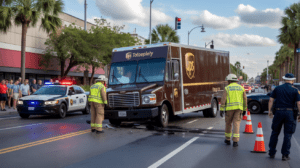
A Tampa truck accident attorney at The Law Offices of Anidjar and Levine investigates whether a driver, motor carrier, vehicle owner, manufacturer, maintenance provider, or cargo handler contributed to a collision and resulting injuries. The review may include driver logs, dispatch records, inspection and repair documents, electronic data, witness accounts, and company policies. Injured people may pursue compensation for medical care, lost income, reduced earning capacity, pain, and other losses when negligence caused harm. For additional legal guidance, visit our Tampa Personal Injury Lawyer page. The following sections explain liability, evidence, and available legal options.
Main Takeaways
- A Tampa truck accident lawyer can investigate drivers, trucking companies, vehicle owners, maintenance providers, and cargo handlers.
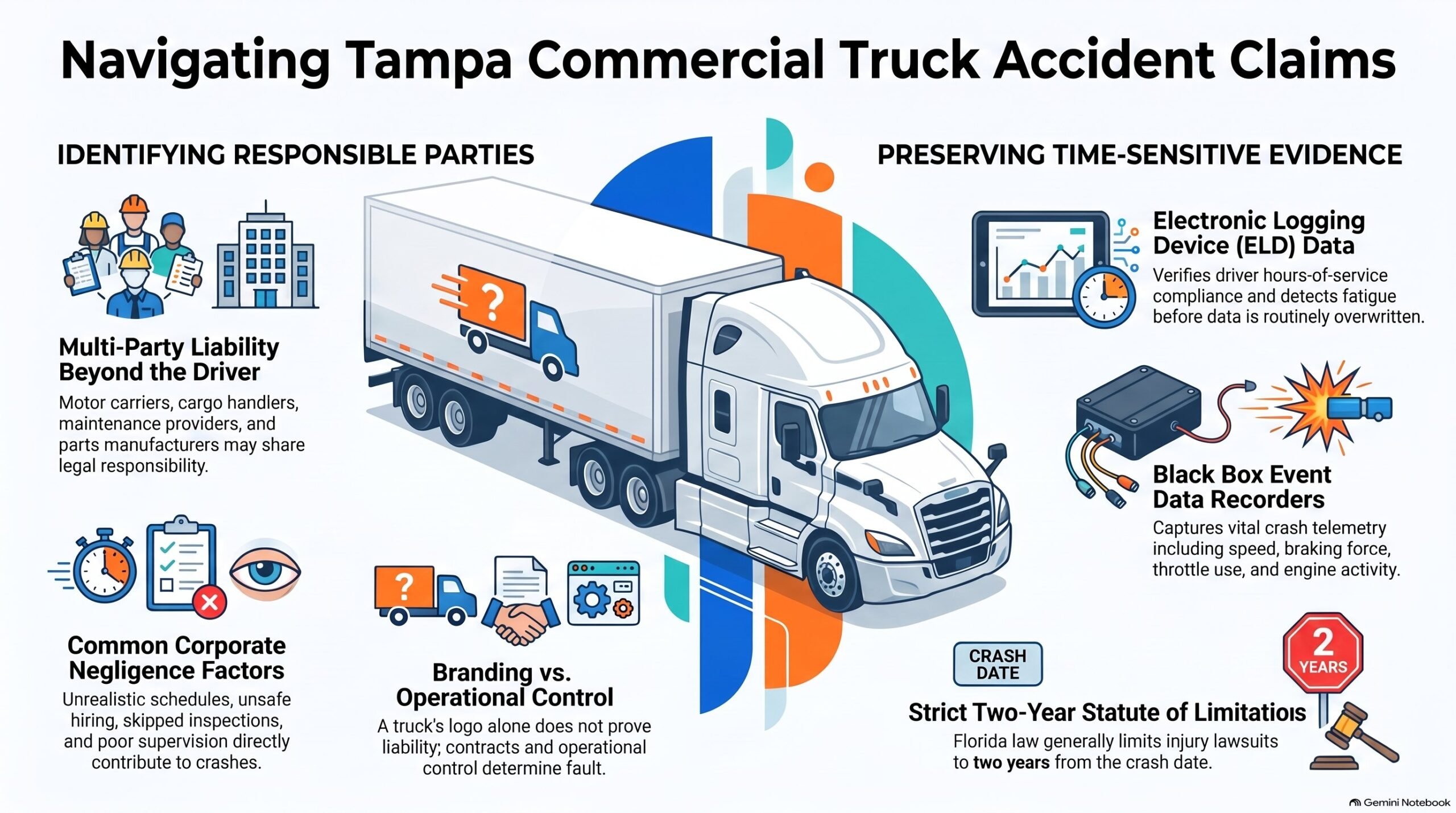
- Company responsibility may involve unsafe hiring, inadequate training, unrealistic schedules, poor supervision, or neglected vehicle maintenance.
- Driver qualification files, dispatch records, safety policies, and contracts may help show how a company or contractor contributed to the crash.
- Preserve crash photos, witness details, medical records, and relevant truck data; electronic logs and maintenance records may be time-sensitive.
- A truck’s brand or logo alone does not establish liability; ownership, operational control, contracts, and evidence help identify responsible parties.


How We Can Help With Your Tampa Truck Accident Companies & Brands Injury Claim
When a truck collision causes serious injuries, identifying the responsible parties may require examining the driver’s conduct, the trucking company’s safety practices, and the roles of vehicle owners, maintenance providers, or cargo handlers. A careful investigation can help an injured person understand available options and pursue a claim supported by reliable evidence.
Legal counsel may gather crash reports, photographs, witness accounts, medical records, and relevant company documents. Reviewing Company safety policies can reveal whether required training, inspections, or supervision were provided. Examining brand accountability standards may also help clarify how a company oversees vehicles and contractors operating under its name. These inquiries can identify gaps in responsibility without assuming that any party is liable before the facts are established.
A lawyer may communicate with insurers, organize documentation, assess losses, and explain procedural deadlines. This support can reduce the burden on people managing treatment and recovery. By presenting a clear, evidence-based account, counsel can seek fair compensation while helping clients make informed decisions throughout the claim.
OUR CONSULTATIONSARE FREE
START YOUR FREE CASE REVIEW

Understanding Tampa Truck Accident Companies & Brands Injury Cases
Understanding a Tampa truck accident injury case begins with identifying the people and businesses whose actions may have contributed to the collision or resulting harm. Commercial Trucking often involves several parties, including a driver, motor carrier, vehicle owner, maintenance provider, or freight company. Each may have distinct responsibilities, and the facts determine which parties may bear legal responsibility.
A careful review can clarify how business relationships, contracts, and company records relate to the injured person’s losses. Relevant evidence may include driver logs, employment documents, vehicle ownership information, inspection records, and communications among companies. These materials can help establish who controlled particular aspects of the operation and whether that control is legally significant.
Corporate Accountability means evaluating each responsible entity fairly, rather than assuming that one company alone explains the harm. A thorough case assessment also considers medical expenses, lost income, ongoing care needs, and other documented effects. This process supports informed decisions and helps injured people pursue appropriate compensation while protecting their ability to focus on recovery.
Common Causes of Tampa Truck Accident Companies & Brands
Truck accidents in Tampa may result from driver fatigue, distracted driving, or inadequate attention to road conditions. Improper truck maintenance can also contribute to mechanical failures, while unsafe cargo loading may affect a vehicle’s balance and control. Identifying the cause is an important step in evaluating how an accident occurred.
Driver Fatigue
Driver fatigue is a significant risk factor in Tampa truck accidents, as long hours, inadequate rest, and demanding schedules can impair a commercial driver’s alertness and reaction time. Circadian rhythm disruption can make overnight or irregular shifts especially difficult, while extended driving increases the risk of delayed responses, poor judgment, and falling asleep at the wheel. Federal hours-of-service rules limit driving time and require rest periods, but violations or inadequate recovery can still leave drivers dangerously tired. Carriers must set realistic schedules, monitor compliance, and address fatigue risks. Sleep apnea screening can also help identify a medical condition that interferes with restorative sleep. When a fatigued driver causes a collision, an investigation may examine logs, dispatch records, and company practices to clarify how the crash occurred and support affected people seeking accountability.
Distracted Driving
Distracted driving can prevent a commercial driver from noticing hazards or responding in time to avoid a collision. For truck operators traveling through Tampa, even a brief lapse in attention may place nearby motorists, cyclists, and pedestrians at risk. Mobile phone use, including texting, calls, or navigation adjustments, can draw a driver’s eyes and hands away from the road. In-cab distractions may also include eating, reaching for objects, interacting with dispatch devices, or attending to passengers. These activities can reduce awareness of traffic signals, sudden braking, and changing road conditions. Trucking companies and drivers have a responsibility to limit avoidable distractions and maintain focus while operating large vehicles. When a collision occurs, investigators may review available records and witness accounts to determine whether distraction contributed to the crash and resulting harm.
Improper Truck Maintenance
When commercial vehicles are not properly maintained, worn or defective components can make routine travel hazardous. Brake systems, tires, steering parts, and lights require regular inspection to help confirm a truck can operate safely in changing traffic conditions. Preventive maintenance allows trucking companies to identify wear, address mechanical problems, and keep service records that demonstrate responsible oversight. When inspections are skipped, or repairs are delayed, a vehicle may remain on the road despite a known safety concern. A sudden brake failure or tire malfunction can leave a driver with little time to respond, putting nearby motorists and pedestrians at risk. Companies that manage fleets have a duty to follow maintenance schedules and act on reported defects. After a collision, maintenance logs and repair records may help determine whether neglect contributed to the crash.
Unsafe Cargo Loading
Improperly loaded cargo can shift, spill, or destabilize a commercial truck, increasing the risk of a rollover or collision. In Tampa, unsafe loading may result from inadequate restraints, overloaded trailers, or cargo placed unevenly across the vehicle. These conditions can impair steering and braking, especially during sudden stops, sharp turns, or emergency maneuvers.
Federal and state requirements establish Load securement standards intended to keep freight contained during transit. Carriers, shippers, and loading crews may each have responsibilities for inspecting restraints and verifying secure placement. Proper cargo weight distribution also helps preserve vehicle balance and reduce strain on tires and suspension components. When these precautions are ignored, other road users may face serious danger. Examining loading records, inspection reports, and shipment details can help identify how unsafe practices contributed to a crash.
Don’t Wait. Call Our Florida Personal Injury Lawyers Now!


Legal Rights of Tampa Truck Accident Companies & Brands Injury Victims
Truck accident victims in Tampa may have legal rights to seek compensation when a driver, trucking company, vehicle manufacturer, or other responsible party’s negligence causes injury. Victim rights may include pursuing payment for medical care, lost income, pain, and other documented losses. A claim can also seek accountability from companies whose conduct contributed to harm.
Tampa truck accident victims may seek compensation from negligent drivers, trucking companies, manufacturers, or other responsible parties.
Depending on the evidence and applicable law, injured people or their families may be able to pursue:
- Compensation for treatment, rehabilitation, and future care needs.
- Recovery of income lost during recovery and reduced earning capacity.
- Damages for physical pain, emotional distress, and diminished quality of life.
- A wrongful death claim when a loved one dies from crash injuries.
Corporate accountability can help protect the public by requiring responsible parties to answer for preventable harm. Records, medical documentation, and witness accounts may support a claim. Because deadlines and legal rules can affect available remedies, prompt guidance from a qualified attorney can help preserve evidence and clarify options.
Why Do Tampa Truck Accident Injuries Happen?
Tampa truck accident injuries often occur when preventable safety failures combine with the size and weight of commercial vehicles. Because these vehicles require greater distance to stop and can cause extensive harm in a collision, a single lapse may endanger drivers, passengers, and pedestrians.
Some crashes stem from driver conduct, including speeding, distraction, fatigue, or impaired judgment. Tight delivery schedules and inadequate rest can increase fatigue, while insufficient training may leave drivers unprepared for hazardous conditions or emergency maneuvers. Poor maintenance can also allow worn tires, malfunctioning lights, or defective braking systems to compromise vehicle control.
Truck design flaws may contribute when a component fails or the vehicle is difficult to handle safely. Improperly secured cargo can shift, destabilize a truck, or fall into traffic. Companies may also contribute to risk through weak inspection practices, unsafe operating policies, or failure to address known defects. Identifying the contributing factors helps clarify how preventable failures affect the wider community and why accountability matters.
What Should You Do After a Tampa Truck Accident Injury?
After a Tampa truck accident, injured individuals should check themselves and others for injuries and seek emergency medical care when needed. If it is safe, they should document the scene by taking photographs and collecting relevant details. They may also contact a lawyer to understand their legal options and protect their interests.
Check For Injuries
Check for injuries immediately, but do not move anyone with a serious neck, back, or head injury unless staying put poses an immediate danger. A calm, careful response can protect everyone involved while helping emergency personnel provide effective care.
Look for Visible injuries, including bleeding, burns, swelling, or difficulty breathing. Ask injured people whether they feel pain, dizziness, numbness, confusion, or weakness, but do not assume someone is unharmed because no injury is apparent. Hidden injuries, such as internal bleeding or a concussion, may develop without obvious signs and require prompt medical assessment.
Call 911 and clearly report the crash location, the number of people involved, and any observed symptoms. Follow the dispatcher’s instructions, keep people away from traffic when it is safe, and offer reassurance without giving food, drink, or medication. Encourage each person to accept professional evaluation, even if symptoms seem minor.
Document The Scene
When it is safe, document the truck accident scene before vehicles or debris are moved. Clear records can help preserve details that may otherwise be lost and support an accurate account of what occurred. Photographing Debris, vehicle positions, skid marks, traffic signals, road conditions, and visible damage can provide useful context. Take images from several angles, with wider views showing the overall scene and closer views capturing specific details. If possible, note the date, time, location, weather, and direction of travel. Witness Interviews may help identify people who observed the collision. Record their names and contact information, and ask for brief, factual descriptions without suggesting answers. Keep notes and original photographs secure, and avoid disturbing evidence or entering unsafe areas while assisting others.
Contact A Lawyer
Once immediate medical and safety needs are addressed, an injured person may benefit from contacting a Tampa truck accident lawyer promptly. Early legal guidance can help preserve evidence, clarify deadlines, and identify the companies or insurers involved. A lawyer may review photographs, witness details, medical records, and other documentation gathered at the scene, while advising the injured person to avoid speculative statements about fault.
During an initial discussion, the lawyer can explain potential claims, likely next steps, and how representation may support recovery and accountability. A Free consultation may allow the injured person to ask questions and understand possible fees before deciding whether to proceed. The person should also confirm the attorney’s availability, especially if time-sensitive evidence or communications require attention. Prompt contact can help protect legal options while allowing the injured person to focus on treatment and recovery.
Don’t Wait. Call Our Florida Personal Injury Lawyers Now!
Critical Evidence in a Tampa Truck Accident Companies & Brands Injury Case
Important evidence can help establish how a truck crash occurred and whether safety failures contributed to a person’s injuries. Trucking companies may hold records in systems that can be overwritten or lost, so prompt preservation is important.
Essential sources include:
- Electronic logging data that may reveal driving hours and rest periods.
- Black box records that may capture speed, braking, and other crash details.
- Maintenance and inspection logs that can expose unresolved safety concerns.
- Driver and company records that may show training, qualifications, or policy violations.
Electronic Logging Data
Electronic logging device (ELD) data can help establish whether a truck driver complied with federal hours-of-service limits before a Tampa crash. These records may show driving periods, rest breaks, duty status changes, and possible gaps in required off-duty time. When fatigue may have contributed to a collision, a careful review can help clarify the driver’s schedule and identify issues that warrant further investigation.
ELD data preservation is important because records may be overwritten or lost under routine retention practices. A prompt request can help protect relevant information from the driver’s logs and associated records. Timestamp verification can help determine whether entries align with dispatch documents, delivery schedules, and other reliable evidence. Investigators may also assess whether edits, annotations, or unexplained inconsistencies affect the records’ accuracy. Preserving and reviewing this information can support a fair assessment of responsibility, help injured people pursue accountability, and protect public safety.
Black Box Records
Beyond ELD data, a truck’s event data recorder, often called its black box, may provide a time-specific account of vehicle activity before and during a Tampa collision. Depending on the system, records may capture speed, braking, throttle use, engine activity, and other details surrounding an impact. These facts can help clarify how the truck was operated and whether a driver’s or company’s account matches the recorded events. Because data may be overwritten or lost when a vehicle is repaired, Black Box Data Preservation can be time-sensitive. A lawyer may send a preservation request and arrange qualified Event Recorder Analysis to interpret the information accurately. Such evidence can support a fair investigation, help identify responsible parties, and help injured people and their families seek accountability and resources for recovery.
Maintenance and Inspection Logs
Maintenance and inspection logs can reveal whether a truck’s brakes, tires, lights, and other safety systems were properly checked and serviced before a Tampa collision. These records may show missed inspections, recurring defects, delayed repairs, or work completed shortly before the crash. Comparing entries with maintenance invoices and parts records can help establish whether reported problems were addressed and whether the vehicle was returned to service safely.
Record retention practices matter because logs may be altered, lost, or overwritten over time. A prompt preservation request can help protect paper files and electronic audit trails, including dates, edits, and user activity. Qualified professionals can review records carefully to identify gaps or inconsistencies without assuming any single entry proves fault. Preserving this evidence supports a fair investigation and helps injured people seek accountability while protecting others from preventable harm.
Driver and Company Records
While maintenance logs can document a truck’s condition, driver and company records may clarify who operated the vehicle and whether established safety procedures were followed. Driver qualification files can show whether the carrier verified a driver’s license, training, medical qualifications, and required safety history before assigning the trip. Employment history may reveal prior driving roles, gaps, or repeated safety concerns that warranted review. Dispatch records, schedules, and communications can help establish the route, delivery demands, and instructions given before the collision. Training materials and policy acknowledgments may indicate whether the company communicated rules on fatigue, inspections, and safe operation. These records can also identify who made crucial decisions and whether company practices contributed to the events. Preserving them promptly helps investigators assess responsibility and supports a fair, evidence-based review.
Long-Term Effects of Tampa Truck Accident Injuries
Truck accident injuries may cause chronic pain and limited mobility, affecting a person’s ability to work and manage daily activities. Lasting brain injuries can impair memory, concentration, and other cognitive functions. These physical and cognitive effects may also contribute to emotional distress and sustained financial strain.
Chronic Pain and Mobility
Chronic pain and reduced mobility can persist long after a Tampa truck accident, particularly when injuries affect the spine, joints, nerves, or soft tissues. These limitations may interfere with work, household responsibilities, and the ability to assist family or community members. Treatment can include physical therapy, medication, expert care, and structured Pain management plans tailored to the person’s condition. Some individuals also rely on mobility aids, such as braces, canes, or wheelchairs, to move safely and preserve independence. Recovery may require ongoing appointments and adjustments as symptoms change. Medical records documenting pain levels, functional restrictions, and treatment needs can help explain an injury’s lasting effects. When evaluating a claim, the long-term cost of care and the impact on daily activities may help explain the full extent of the harm.
Lasting Brain Injuries
Lasting brain injuries can create significant challenges after a Tampa truck accident, even when other physical injuries begin to improve. A traumatic brain injury may affect memory, attention, processing speed, balance, or communication, and symptoms can persist long after the crash. Some effects are subtle, making it difficult for family members, coworkers, or caregivers to recognize why familiar tasks have become harder.
A thorough medical evaluation can identify impairments and guide an individualized treatment plan. Cognitive rehabilitation may help a person practice strategies for attention, memory, and daily routines. Neuroplasticity research also informs rehabilitation approaches by examining how the brain can adapt and form new connections after injury. Progress varies, and ongoing assessment helps clinicians adjust care as needs change. Accurate records of symptoms and treatment can clarify the injury’s lasting effects.
Emotional and Financial Strain
When injuries from a Tampa truck accident persist, their effects may extend beyond physical symptoms and disrupt a person’s emotional well-being and financial stability. Ongoing pain, sleep difficulties, or cognitive changes can contribute to anxiety, frustration, and reduced independence. These challenges may affect a person’s ability to work, manage daily responsibilities, or participate in activities that once provided purpose and connection.
Medical appointments, rehabilitation, and reduced income can place sustained pressure on Household Budgeting. Families may need to adjust expenses, use savings, or rely on assistance while care continues. Relationship Stress can also arise when household roles change or relatives take on caregiving duties. Clear communication and practical support may help families address these demands. Understanding the full impact of an injury can guide informed decisions about treatment, financial planning, and available legal options.
Proving Liability in Tampa Truck Accident Companies & Brands Injury Cases
Proving liability in a Tampa truck accident case requires identifying who caused the crash and establishing how that party’s conduct contributed to the injuries. Evidence may show that a driver violated traffic rules, drove while fatigued, or failed to inspect the vehicle. Investigators can review crash reports, electronic logging data, maintenance records, witness statements, and available video to reconstruct events and assess responsibility.
Liability may extend beyond the driver. A trucking company could face claims for unsafe hiring, inadequate training, unrealistic schedules, or neglected maintenance. Such conduct may support a finding of Corporate negligence when it contributed to the collision. Manufacturers, maintenance providers, cargo loaders, or other contractors may also bear responsibility if a defective part, careless repair, or improperly secured load played a role. This potential third-party liability requires examining each participant’s actions and duties.
A careful investigation helps preserve relevant evidence and clarify how injuries occurred. Establishing responsibility supports fair accountability and helps injured people pursue appropriate remedies while protecting the community from preventable harm.
Dealing With Insurance Companies After a Tampa Truck Accident: Companies & Brands Injury
Once potential responsibility is identified, injured people may need to communicate with insurers representing the truck driver, trucking company, or other involved parties. These discussions can affect how evidence and losses are understood, so careful, accurate communication is important. Insurers may request recorded statements, medical information, or collision details. Before responding, an injured person may benefit from understanding the request and considering whether legal guidance is appropriate.
A Reservation of rights letter may explain that an insurer is investigating coverage while reserving the ability to raise policy defenses. It does not, by itself, determine fault or guarantee payment. Injured people should preserve relevant correspondence and avoid guessing about facts or minimizing symptoms. Consistent claim documentation can include medical bills, treatment records, repair estimates, photographs, and proof of missed work. Clear records help present the impact of the crash without overstating it.
Those who assist injured people can support them by organizing documents, tracking insurer communications, and encouraging timely medical care while respecting privacy and individual choices.
What to Expect During a Tampa Truck Accident Companies & Brands Injury Claim Process
A Tampa truck accident injury claim typically begins with an initial review of the circumstances and the available information. The process then involves collecting evidence, evaluating damages, and negotiating a potential settlement with insurers. If negotiations do not resolve the dispute, litigation may follow before the claim reaches a final resolution.
Initial Claim Review
During the initial claim review, a Tampa truck accident lawyer examines the available evidence, injury records, insurance coverage, and collision circumstances to assess potential liability and damages. This assessment helps identify responsible parties, which may include a driver, carrier, maintenance provider, or another company. Claim eligibility depends on the facts, applicable deadlines, and whether the injured person can establish a legally recognized basis for compensation. The lawyer also considers how injuries affect medical needs, daily activities, and future care, while explaining the claim’s possible scope in clear terms. The review timeline varies with the intricacy of the crash, the number of parties involved, and the completeness of existing records. This early evaluation supports informed decisions and helps injured people pursue accountability while protecting their ability to serve family and community.
Evidence Collection
As the claim progresses, evidence collection helps establish how the truck accident occurred, who may be responsible, and how the injuries affect the claimant. Evidence preservation is important because vehicle damage, roadway conditions, electronic data, and company records may change or become unavailable. A legal team may send preservation requests to trucking companies and other parties, seeking records such as driver logs, maintenance files, inspection reports, and onboard system data. Investigators may photograph the scene, document vehicle damage, and obtain available surveillance footage. Witness interviews can clarify how the collision unfolded and identify details that physical records may not show. Medical records and treatment documentation help connect the crash to the claimant’s injuries and describe their effects on daily life. Careful, timely collection supports a reliable assessment of the claim and accountability for those affected.
Settlement Negotiations
Settlement negotiations begin once the available evidence and the claimant’s injuries provide a clearer basis for evaluating the claim. The claimant or legal representative presents a demand outlining the losses and compensation sought. Demand evaluation considers medical expenses, lost income, anticipated care, property damage, and the collision’s impact on daily life. The trucking company, insurer, or other responsible party may review the documentation and respond with questions or a proposed amount. A counteroffer strategy should be grounded in the evidence, the claimant’s needs, and the risks of accepting less than the claim may warrant. Clear communication helps keep discussions focused and supports fair consideration of the injured person’s circumstances. Throughout this process, the claimant should review proposed terms carefully and understand what rights a settlement would release before agreeing.
Litigation and Resolution
If settlement negotiations do not resolve a Tampa truck accident claim, litigation may provide a formal process for determining liability and compensation. The injured person’s legal team may file a lawsuit, identify responsible parties, and exchange evidence through discovery. This stage can involve reviewing driver logs, company safety policies, vehicle records, medical documentation, and expert opinions. Courtroom preparation includes organizing evidence, preparing witnesses, and developing clear arguments about how the collision occurred and what losses resulted. The court may also encourage resolution through mediation strategy, allowing both sides to evaluate the evidence with a neutral mediator. If mediation does not produce an agreement, the case may proceed to trial, where a judge or jury considers liability and damages. The process concludes with a decision or an approved settlement, subject to applicable procedures.
Compensation for Tampa Truck Accident Companies & Brands Injury Damages
Compensation after a Tampa truck accident may cover medical expenses, lost income, reduced earning capacity, property damage, and pain and suffering. A claim may also account for future treatment, rehabilitation, and necessary support services when injuries create lasting needs. Careful documentation helps establish how the collision affected the injured person’s health, work, and daily responsibilities.
Depending on the circumstances, a court may award Punitive Damages when a defendant’s conduct meets Florida’s legal standard for particularly harmful behavior. These damages are distinct from compensation intended to address the injured person’s losses. When a crash results in a fatality, eligible surviving family members may pursue a Wrongful Death claim for legally recognized damages. Such claims can include losses tied to support, services, and companionship, subject to applicable law.
A lawyer can assess available evidence, identify responsible parties, and explain potential recovery. Pursuing fair compensation may help injured people and families secure needed care, stability, and resources while allowing them to focus on recovery and supporting one another.
Economic vs Non-Economic Damages in Tampa Truck Accident Companies & Brands Cases
Truck accident claims may include economic losses such as medical bills, lost income, and other documented expenses. They may also account for non-economic harm, including pain, emotional distress, and reduced quality of life. Establishing the value of these damages generally requires clear records and evidence linking the losses to the crash.
Economic Losses and Expenses
Economic losses in a Tampa truck accident case include measurable financial costs caused by the collision, such as medical bills, lost wages, reduced earning capacity, and property damage. These expenses may include emergency treatment, hospital care, rehabilitation, prescription medication, and necessary medical equipment. Records such as invoices, pay statements, tax returns, and repair estimates can help establish the amount of each claimed loss. Lost Wages may cover income missed during recovery, while reduced earning capacity may address lasting limits on a person’s ability to work. A claim may also account for Household Services when injuries prevent someone from completing routine tasks, such as cleaning or childcare, and paid assistance becomes necessary. Careful documentation clarifies the financial impact and supports a fair assessment of the resources needed for recovery and ongoing practical needs.
Non-Economic Harm
Beyond measurable financial losses, a Tampa truck accident may cause non-economic harm, including physical pain, emotional distress, loss of enjoyment of life, and disruption to personal relationships. Unlike medical bills or lost wages, these effects do not have a direct price. Pain and suffering may include ongoing discomfort, anxiety, or the strain of adapting to lasting injuries. Loss of enjoyment can arise when a person can no longer participate in valued activities, fulfill family responsibilities, or maintain meaningful routines. These harms may also affect relationships with relatives, friends, and others who rely on the injured person’s support. In truck accident claims involving companies or brands, non-economic damages recognize the human consequences of a collision beyond its financial costs. Their significance depends on how the injuries affect daily life and well-being.
Proving Your Damages
When a Tampa truck collision involves a company vehicle or commercial brand, proving damages requires evidence that connects the crash to the injured person’s losses. Economic damages include measurable costs, such as treatment expenses, prescription charges, rehabilitation, and income missed during recovery. Organizing medical bills helps present itemized statements, payment records, and provider notes in a clear timeline. Wage loss documentation may include pay stubs, employer statements, tax records, and evidence of reduced earning capacity. These materials can help distinguish crash-related losses from unrelated expenses.
Non-economic damages address effects without a fixed price, including pain, emotional distress, and limits on daily activities. Consistent medical records, personal accounts, and observations from family or caregivers may support these claims. Careful documentation enables a fair assessment and helps injured people access the resources they need for recovery.
Don’t Wait. Call Our Florida Personal Injury Lawyers Now!
When a Tampa Truck Accident Companies & Brands Injury Case Goes to Trial vs Settlement
A Tampa truck accident injury case may resolve through a negotiated settlement or proceed to trial, depending on the evidence, the parties’ positions, and the injured person’s needs. Settlement discussions can provide a more predictable resolution and may spare the injured person and family the demands of a public courtroom process. The terms should account for documented losses, future care, and the practical value of timely payment. A settlement is not assured, however, and negotiations may stall when the parties disagree about responsibility or damages.
If no acceptable agreement is reached, a trial allows each side to present evidence and question witnesses before a judge or jury. Trial testimony preparation helps witnesses clearly and accurately explain events and the effects of the injuries. Counsel may also address Jury deliberation dynamics when evaluating the uncertainty of a verdict. The injured person’s capacity, financial needs, and priorities for supporting family or community responsibilities can inform the decision. Each path involves distinct costs, timelines, and risks.
Florida Laws That May Affect Your Tampa Truck Accident Companies & Brands Case
Florida laws governing liability, deadlines, and recoverable damages in truck accident cases also shape the choice between settlement and trial. Florida negligence standards generally require evidence that a party failed to use reasonable care and that the failure caused harm. Comparative fault may reduce an injured person’s recovery when they share responsibility, making a thorough investigation vital.
Commercial liability rules may also affect which companies or individuals can be held accountable. Depending on the evidence, responsibility may involve a driver, motor carrier, maintenance provider, or another business connected to the truck’s operation. Relevant records can help establish who controlled the work and whether safety duties were neglected.
These legal principles can influence the path toward meaningful accountability:
- A family may face lasting hardship after a preventable collision.
- A careful review can identify every responsible party.
- Clear evidence can help protect an injured person’s right to fair compensation.
- Accountability may encourage safer practices that protect other road users.
Recoverable damages may include medical costs, lost income, and pain and suffering, subject to applicable law.
The Statute of Limitations for Tampa Truck Accident Companies & Brands Injury Cases
Because Florida law sets strict deadlines for filing injury claims, the statute of limitations can determine whether a Tampa truck accident case may proceed in court. For many negligence claims, Florida generally allows two years from the date of the accident to file suit. Missing that deadline can bar recovery, regardless of the seriousness of the injuries or the value of the losses. Different periods may apply when a claim involves a government entity, a wrongful death, or another legal basis, and notice requirements may shorten the time available.
Deadline exceptions are limited and depend on the facts and applicable law. Claim tolling may pause a filing period in certain circumstances, such as when a defendant cannot be located or the injured person is legally incapacitated. These rules are fact-specific and do not automatically extend a deadline. Prompt attention to dates, records, and applicable notice rules helps protect the ability to seek accountability and support those affected by a crash.
How a Tampa Truck Accident Companies & Brands Lawyer Can Help You
After identifying the filing deadlines that may apply, injured people and their families can benefit from understanding how a Tampa truck accident lawyer may assist with a claim. Counsel can investigate the crash, preserve relevant records, and identify parties whose decisions or conduct contributed to the harm. This may include a motor carrier, vehicle owner, maintenance provider, or manufacturer. A careful review of corporate policies, driver records, inspection reports, and electronic data can help clarify responsibility and support Brand accountability.
A lawyer may also handle communications with insurers, assess documented losses, and present evidence of how injuries affect daily life. This support can help families pursue fair compensation while letting them focus on recovery and caring for others.
- Preserve evidence that might otherwise be lost.
- Identify unsafe practices that place other road users at risk.
- Organize medical and financial records into a clear claim.
- Seek resources for treatment, household needs, and future support.
The process can also encourage safer practices by requiring companies to answer for preventable harm.
When to Contact a Tampa Truck Accident Companies & Brands Lawyer
Prompt contact with a Tampa truck accident lawyer can be important when a crash causes serious injuries, involves a commercial vehicle, or raises questions about company practices. A timely Immediate Consultation can help an injured person understand available next steps while vital records, vehicle data, and witness accounts may still be accessible. This contact can be especially useful when a trucking company or insurer has already requested statements, offered a settlement, or begun reviewing the collision.
Early Representation may also help clarify which parties could be responsible, including a driver, carrier, maintenance provider, or other business. A lawyer can explain deadlines that may affect a claim and identify information that should be preserved. Seeking guidance does not require you to pursue litigation; it helps you make informed decisions about recovery and accountability. Prompt attention can support a fair process and help protect the interests of injured people, families, and others affected by a serious truck crash.
Why You Need an Experienced Tampa Truck Accident Companies & Brands Lawyer
When a truck crash involves serious injuries or a commercial carrier, an experienced Tampa truck accident lawyer can help identify responsible parties and assess the evidence. Trucking cases may involve drivers, employers, maintenance providers, manufacturers, or other businesses whose actions contributed to a collision. Determining how each party’s conduct affected the crash requires careful review of records, vehicle data, safety practices, and applicable regulations.
An experienced lawyer can preserve evidence, coordinate with investigators, and address communications from insurers and corporate representatives. This work can help injured people and their families pursue fair compensation while reducing the burden of handling a complicated claim alone. It can also support Corporate accountability by examining whether a company failed to maintain vehicles, train drivers, or enforce safe procedures. Protecting brand reputation does not replace the need for a thorough investigation; reliable findings help distinguish responsible conduct from negligence. A focused legal response can clarify the facts and promote safer practices across the trucking industry.
How to Choose the Right Tampa Truck Accident Companies & Brands Lawyer for Your Case
Selecting the right Tampa truck accident lawyer requires more than comparing advertisements or promises of quick results. A careful Attorney selection process helps injured people identify counsel prepared to protect their interests and pursue fair compensation. The lawyer should have substantial experience with commercial vehicle claims, including cases involving trucking companies, manufacturers, and complicated evidence. Prospective clients can ask who will handle the case, how updates will be provided, and what steps may be taken to preserve records and investigate responsibility.
Clear communication is vital, particularly when a person is recovering and managing financial pressure. A lawyer should explain legal options in plain language, answer questions directly, and set realistic expectations without guaranteeing an outcome. The fee structure also merits close review. Clients should understand whether fees depend on recovery, which costs may be charged separately, and when payment is due. Comparing these factors can help individuals choose representation aligned with their needs and focus on recovery and supporting those who depend on them.
About The Law Offices of Anidjar & Levine
Among the firms serving injured people in the Tampa area, The Law Offices of Anidjar & Levine handles personal injury claims, including truck accident cases.
Its work may involve investigating a collision, communicating with insurers, gathering records, and pursuing compensation for losses supported by evidence.
These steps can help clients understand their options while allowing them to focus on medical care and family responsibilities.
Firm history and attorney credentials are relevant considerations for people comparing legal representation.
The firm reports serving injury victims in Florida, and its attorneys handle matters involving vehicle crashes and other personal injuries.
Prospective clients can review publicly available information about lawyers’ education, licenses, and professional experience, then ask how those qualifications relate to commercial truck claims.
They may also ask about case communication, fee arrangements, and the services provided at each stage.
A careful review helps individuals make informed decisions and choose counsel whose approach aligns with their needs and priorities.
No firm can guarantee a particular outcome in a claim.

Frequently Asked Questions
Can I File a Claim if the Truck Involved Was Leased?
Yes, an injured person may be able to file a claim when the truck involved was leased. Leased Truck Ownership does not automatically determine responsibility; the driver, carrier, vehicle owner, or another party may be liable depending on the facts. Lease Agreement Terms can clarify who controlled maintenance, operation, and safety duties. A careful investigation can identify responsible parties and help preserve evidence needed to pursue fair compensation for those harmed.
What if the Truck Driver Was an Independent Contractor?
An independent contractor designation does not automatically prevent an injured person from pursuing a claim. Employer liability may depend on the company’s control over the driver, the work performed, and whether contractor classification accurately reflects the working relationship. The motor carrier, truck owner, or another responsible party may also face liability for negligent hiring, supervision, maintenance, or safety violations. A careful review of contracts, records, and crash evidence can help identify responsible parties and protect those affected.
Can Multiple Companies Share Responsibility for a Truck Accident?
Multiple companies can share responsibility for a truck accident when their actions or failures contributed to the collision or resulting injuries. Identifying liable parties may involve examining the driver, motor carrier, vehicle owner, maintenance provider, or cargo loader. Contracts and independent-contractor arrangements do not automatically determine liability. Evidence such as safety records, inspection reports, and delivery documents can clarify each party’s role, support fair apportionment of fault, and help injured people pursue appropriate compensation.
Are Truck Accident Claims Different When the Truck Carries Hazardous Materials?
Yes. Claims involving trucks carrying hazardous materials may require additional investigation because federal and state rules govern cargo classification, packaging, labeling, driver training, and emergency response. Liability may extend beyond the driver or carrier to a shipper, loader, or other responsible company. A release can also require Hazmat spill cleanup and create toxic exposure injuries, property damage, and evacuation costs. Preserve evidence promptly to establish causation and identify responsible parties.
Can I Pursue a Claim if a Defective Truck Part Caused the Crash?
A claim may be possible if a defective truck part caused the crash and resulting injuries. Product liability law may allow an injured person to seek compensation from a manufacturer, distributor, or other responsible party. Evidence must establish that the part was defective and that the defect contributed to the collision. Manufacturing defects, design flaws, and inadequate warnings may each support a claim. An investigation can identify responsible parties and preserve evidence.
—————————
Truck accidents involving commercial companies and brands can leave injured people facing complicated claims, multiple responsible parties, and significant financial losses.
Prompt investigation and careful documentation can help preserve evidence and clarify available legal options.
The Law Offices of Anidjar and Levine represent people pursuing compensation after serious truck crashes in Tampa.
Those affected may benefit from speaking with an experienced Tampa Personal Injury Lawyer about deadlines, liability, and the steps needed to protect their rights and move forward with confidence.