

The Law Offices of Anidjar and Levine help St. Petersburg boat owners assess marine property claims, review insurance coverage, and address disputes over damage, responsibility, or claim value. Our team can examine policies, repair estimates, photographs, maintenance records, and marina agreements to identify potential recovery options and protect important evidence. When another party’s negligence may have caused your losses, we can explain your rights and help pursue a resolution. Learn more about our St. Petersburg Personal Injury Lawyer services. The sections below outline common causes, legal considerations, and how we can assist.
Main Takeaways
- A St. Petersburg boat and marine claims lawyer can review policies, repair estimates, photographs, and other evidence.
- Applicable law and deadlines may depend on where the incident occurred and whether federal maritime law applies.
- Potential claims may involve storm damage, collisions, groundings, theft, vandalism, mechanical failures, or fires.
- Operators, marinas, property owners, or maintenance providers may be responsible when negligence contributed to damage or injury.
- Promptly report the incident, document losses, preserve records, and review settlement offers before accepting them.
How We Can Help With Your St. Petersburg Property Claim Boat & Marine Claims Injury Claim
When a boating accident damages your property or causes an injury, we can help you pursue a claim and protect your interests. We’ll listen carefully, learn how the incident affected you, and identify practical steps toward a fair resolution. Our work may include reviewing insurance policies, repair estimates, photographs, witness accounts, and other records supporting your position.


We’ll communicate with insurers and opposing parties on your behalf, explain your options, and help you make informed decisions. If a dispute involves Marina contract disputes or salvage fee challenges, we’ll examine the relevant agreements, charges, and circumstances to assess whether the demands are justified. We’ll also organize evidence, track deadlines, and prepare clear arguments that address your losses and concerns.
You merit attentive representation that respects your priorities and the people who depend on you. We’ll pursue a resolution with care and persistence, while keeping you informed throughout the process. Our goal is to reduce avoidable burdens and help you focus on recovery and moving forward.
Understanding St. Petersburg Property Claim Boat & Marine Claims Injury Cases
OUR CONSULTATIONSARE FREE
START YOUR FREE CASE REVIEW

Boat and marine injury cases in St. Petersburg can involve complicated questions about where a claim belongs, who may be responsible, and which insurance policies apply. We’ll help you understand how the facts, location, and type of watercraft may shape your legal options. Maritime jurisdiction can depend on whether an incident occurred on navigable waters and whether federal maritime law applies alongside Florida law. These distinctions may affect deadlines, available remedies, and the evidence needed to support a claim.
Vessel ownership also matters because the owner, operator, employer, or another party may have different duties and insurance coverage. We’ll review ownership records, relevant agreements, and available policies to identify potential sources of recovery. If you’re pursuing a claim while supporting an injured family member or helping protect a crew, we’ll explain each step in clear terms. Our goal is to help you make informed decisions, preserve important information, and seek fair treatment without losing sight of your responsibilities to others.
Common Causes of St. Petersburg Property Claim Boat & Marine Claims


We commonly see boat and marine property claims arise from storms and hurricanes, collisions, and groundings. Theft and vandalism can also cause substantial losses, while mechanical failures and fires may damage vessels and equipment. As we review your claim, we’ll identify the cause of the damage and assess how it may affect your coverage.
Storm and Hurricane Damage
Storms and hurricanes can damage boats and marine property through high winds, flying debris, storm surge, flooding, and prolonged exposure to rain. These forces may tear canvas, break windows, damage docks, or leave vessels and equipment submerged. Saltwater and moisture can also corrode components and worsen damage after the storm has passed.
Hurricane preparation can reduce losses and support a stronger insurance claim. We encourage you to document your vessel and property before severe weather, secure loose items, follow evacuation guidance, and keep receipts for protective measures. After conditions are safe, photograph damage, prevent further deterioration when possible, and notify your insurer promptly. Review your policy to understand exclusions, deductibles, reporting deadlines, and storm surge coverage. If the insurer disputes the cause or value of damage, we can help you assess the denial, organize supporting records, and pursue fair treatment while protecting your ability to serve others.
Collisions and Groundings
When a vessel strikes another boat, a dock, or a submerged object, the impact can damage the hull, engine, or onboard equipment. Groundings may also occur when a boat runs aground in shallow water, near a channel, or on an unmarked obstruction. These incidents can result from poor visibility, navigation errors, equipment failure, or unexpected water conditions.
After an incident, we can help you document the damage, preserve repair estimates, and review your policy’s reporting requirements. A prompt grounding response matters: move people to safety, contact the appropriate authorities, and, when possible, avoid further damage. Don’t assume the other operator or insurer will accept responsibility. We can assess collision liability, examine relevant records, and explain available claim options. A careful, timely approach can support a fair resolution and help you return to serving your community.
Theft and Vandalism
Theft and vandalism can leave boat owners facing costly repairs, missing equipment, or damage to a vessel kept at a marina, dock, or private property. We can help you document what happened and understand the steps involved in presenting a property claim. Report the incident promptly to law enforcement, your marina, and your insurer, and preserve photographs, receipts, registration records, and any available surveillance footage. These records may support your account of the loss and help identify covered damage or missing property. Marina security measures, including controlled access, lighting, and camera systems, may also provide useful evidence. If your vessel is missing, prompt reporting can help recover a stolen vessel and create a clear record for your claim. We can review policy terms, deadlines, and insurer requests so you can pursue a fair resolution.
Mechanical Failures and Fires
Mechanical failures and onboard fires can cause extensive damage to a boat, its equipment, and nearby property. Engine overheating may result from neglected maintenance, blocked cooling systems, or defective parts, while fuel line ignition can turn a small leak into a serious fire. Electrical faults, worn hoses, and failed pumps may also contribute to losses. When these events occur, we can help you document the damage, identify the suspected cause, and present a clear claim to your insurer. When it’s safe, preserve damaged components, photograph affected areas, and keep repair estimates, service records, and receipts. Prompt reporting matters, but don’t discard evidence or authorize major repairs before documenting the loss. These steps support a thorough review and help protect your ability to recover covered costs.
Legal Rights of St. Petersburg Property Claim Boat & Marine Claims Injury Victims
After a boating accident or marine-related injury in St. Petersburg, you may have legal rights that protect your health, income, and future. We can help you understand which laws apply and identify those responsible for your losses. Claims involving navigable waters may fall under federal maritime law, Florida law, or both. The applicable rules depend on the circumstances and the parties involved.
After a St. Petersburg boating accident, the applicable laws depend on the waters, circumstances, and parties involved.
You may be entitled to recover medical expenses, lost wages, pain, and other documented harm. We’ll assess deadlines, insurance coverage, and available legal remedies, preserve evidence, and communicate with insurers. Maritime liens may also affect claims involving vessels or unpaid maritime services, so we’ll explain whether they matter to your case.
Your rights may include:
- Seeking compensation from a negligent party.
- Filing within the applicable legal deadline.
- Reviewing settlement offers before accepting.
- Obtaining legal guidance about maritime protections.
Why Do St. Petersburg Property Claim Boat & Marine Claims Injuries Happen?
Boat and marine injuries in St. Petersburg often happen when operators, property owners, or service providers fail to take reasonable care. Crowded waterways, sudden weather changes, and limited visibility increase risk, but preventable conduct also plays a major role. An operator may travel too fast, ignore navigation rules, or fail to watch for swimmers and nearby vessels. Equipment failures, inadequate maintenance, and unsafe loading can also cause collisions, falls, or other serious harm.
Marinas and boat rental businesses must protect visitors and customers. Poorly maintained docks, missing safety equipment, inadequate warnings, or careless fueling and repair work may contribute to injuries. These circumstances can lead to marina negligence claims when a business fails to address a known hazard, and it causes harm. After an incident, insurers may dispute responsibility, coverage, or the value of losses, creating Boat insurance disputes. We can help you understand how specific decisions and safety failures may have contributed, while recognizing the people affected and the importance of accountability.
What Should You Do After a St. Petersburg Property Claim Boat & Marine Claims Injury?
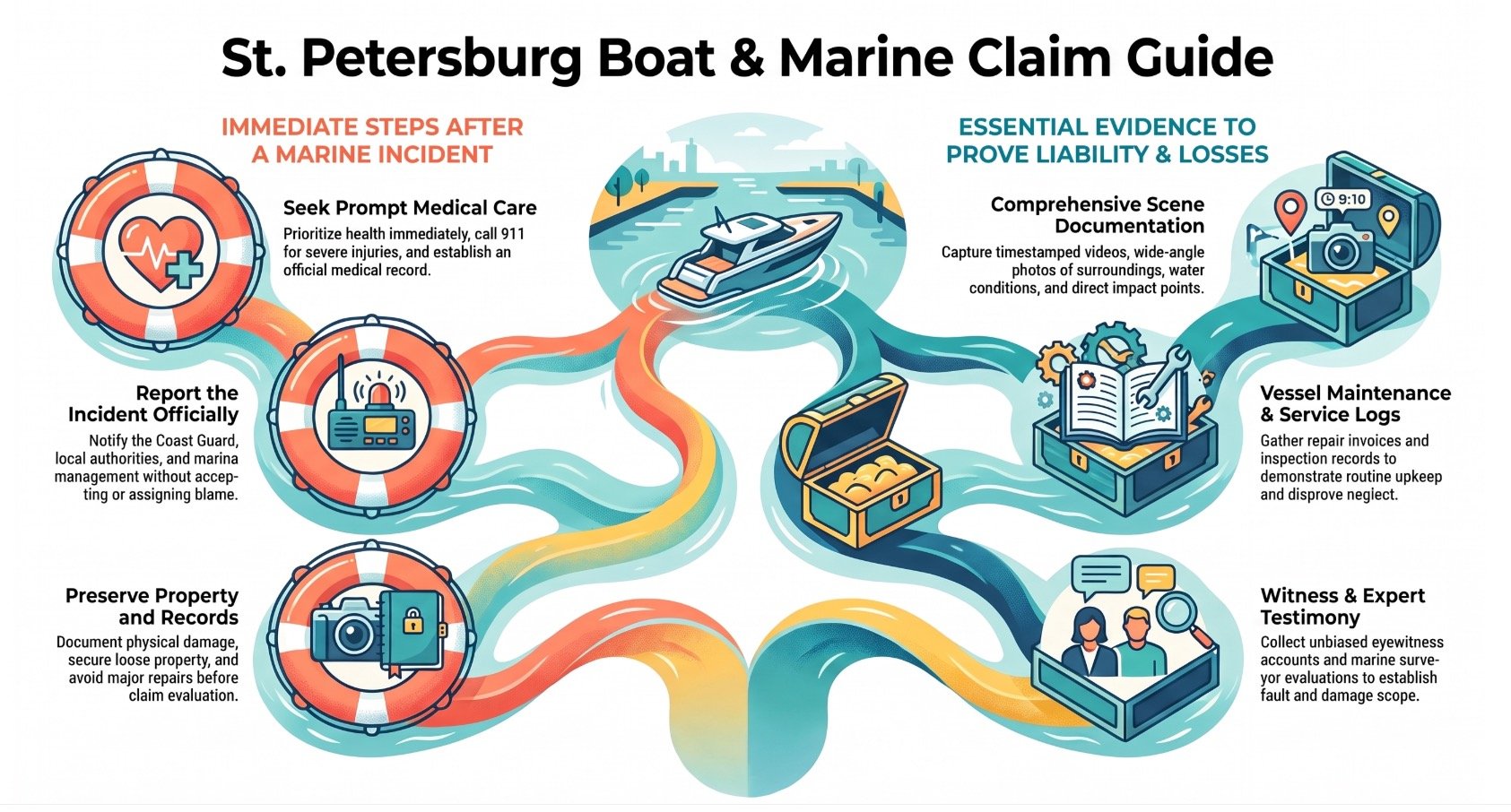
After a boat or marine injury, we should seek medical care promptly, even if symptoms seem minor. Report the incident to the appropriate authorities or property owner, and request a copy of the report. We should also preserve evidence, including photographs, witness details, and relevant records.
Get Medical Care
Prioritize prompt medical care after a boating injury, even if your symptoms seem minor. We encourage you to call 911 for severe bleeding, trouble breathing, loss of consciousness, or suspected spinal injuries. Emergency stabilization can protect your health and help prevent complications while responders transport you to appropriate care. For less urgent injuries, contact a medical professional promptly and describe how the incident occurred, your symptoms, and any changes you notice.
Follow the treatment plan, attend scheduled appointments, and ask questions when instructions are unclear. Some injuries, including head trauma and internal damage, may not become apparent immediately. Your provider can monitor your recovery and arrange expert referrals when needed. Seeking care and following medical guidance helps protect your well-being and provides a clearer record of your injuries.
Report the Incident
After you’ve addressed your medical needs, promptly report the incident to the appropriate authorities and the vessel’s owner or operator. If the injury occurred on navigable waters, contact the U.S. Coast Guard or local law enforcement, depending on the circumstances and applicable reporting requirements. Provide a clear, factual account of what happened, when and where it occurred, and who was involved. Don’t speculate about the cause or accept blame while details remain uncertain.
Notify the marina as soon as practical, and ask the property manager to document your report. If a boat owner, operator, or marina representative provides an incident form, review it carefully and correct any inaccuracies before signing. Keep your statements consistent and focused on known facts. Prompt incident reporting can help responsible parties respond, support safety measures, and create an official record for those affected.
Preserve Evidence
Preserving evidence can help establish how a St. Petersburg boating incident caused your property damage or injury. Document the scene as soon as it’s safe, taking clear photographs of the vessel, damaged belongings, visible injuries, and surrounding conditions. Keep damaged items, repair estimates, receipts, and relevant communications, and don’t discard or repair property until we’ve documented its condition. Evidence preservation also means saving messages, witness names, incident reports, and any available video. We can create a detailed damage inventory that lists each affected item, its age, estimated value, and observed damage. Store records in a secure location and make copies so they remain accessible. If others depend on your boat or property, careful documentation can support a fair claim and help us address their needs responsibly.
Critical Evidence in a St. Petersburg Property Claim Boat & Marine Claims Injury Case
To support your boat or marine injury claim, we’ll help you identify and preserve evidence that shows how the accident occurred and how it affected you. Collect records promptly, since physical conditions can change and important details may be lost.
Crucial evidence includes:
- Photographs and videos documenting the accident scene, vessel, and visible hazards
- Vessel maintenance and inspection records
- Medical records documenting your treatment and injuries
- Witness accounts and expert statements about the incident and its cause
Accident Scene Documentation
When a boating accident occurs, clear scene documentation can help establish how the incident happened and who may be responsible. We can help you preserve details before weather, tides, cleanup, or vessel movement changes the scene. Take wide-angle scene photos that show the full area, nearby boats, dock structures, water conditions, and visible damage. Then capture closer images of impact points, debris, safety equipment, and any hazards, keeping each item in context. A timestamped video walkthrough can record the scene continuously and show distances, sightlines, and the positions of people and vessels. Note the date, time, location, and witness names, and avoid altering or moving evidence unless safety requires it. These careful steps may support a fair claim and help protect everyone affected by the accident.
Vessel Maintenance Records
Vessel maintenance records can reveal whether a mechanical failure, neglected repair, or faulty component contributed to a boating accident. We can review Maintenance logs, invoices, inspection reports, and repair notes to establish what work the vessel received and when. These documents may show whether an owner or operator followed recommended service intervals, addressed known defects, or postponed necessary repairs. We can also compare records with the vessel’s condition and the circumstances of the incident to identify possible gaps or inconsistencies. If a manufacturer, repair facility, or other party handled maintenance, those records may help clarify who had responsibility for a particular task. Preserving these materials promptly matters because records can be lost, altered, or overlooked. By examining them carefully, we can help you build a clear account of the vessel’s upkeep and support a fair property claim.
Medical Treatment Evidence
Medical treatment evidence can document the nature, timing, and extent of injuries sustained in a boating accident. We can help you organize emergency records, diagnostic results, prescriptions, and follow-up notes to show how the injury affected your health. Clear treatment timelines can connect symptoms and care to the incident while identifying gaps that may require explanation. Provider credentials also matter; records from qualified physicians and other licensed clinicians can support the reliability of medical findings. Keep copies of bills, referrals, discharge instructions, and communications about treatment, and follow your care team’s recommendations. If cost or access creates barriers, tell us so we can consider how those circumstances affect the record. Careful documentation helps us present your losses accurately and pursue a claim that recognizes everyone affected.
Witness And Expert Statements
Witness and expert statements can clarify how a boating accident occurred, what damage it caused, and who may be responsible. We can help you identify people who saw the collision, unsafe operation, or water conditions. Their timely accounts may preserve details that are harder to recall later, and witness credibility depends on consistency, firsthand knowledge, and freedom from bias.
Expert testimony can explain technical issues, such as vessel damage, navigation practices, or the cause of a mechanical failure. We may consult qualified marine professionals to assess evidence and present clear, well-supported conclusions. These statements can also connect the incident to your property losses or injuries and address disputed claims. By gathering reliable accounts and reviewing them carefully, we can help you pursue a fair resolution while supporting everyone affected by the accident.
Long-Term Effects of St. Petersburg Property Claim Boat & Marine Claims Injuries
We’ll examine how boat and marine injuries can cause chronic pain and limit your mobility long after the incident. We’ll also consider lasting cognitive effects that may affect your daily activities and ability to work. These ongoing challenges can require continued treatment, creating medical expenses that warrant careful documentation.
Chronic Pain and Mobility
After a boat or marine injury, chronic pain and reduced mobility can continue long after the immediate wounds have recovered. Chronic Pain may affect your ability to walk, lift, reach, or remain on your feet throughout the day. Mobility Limitations can make routine tasks difficult and restrict your participation in work, family responsibilities, and community service. We encourage you to follow your treatment plan and tell your providers how symptoms affect daily activities. Keep records of appointments, medication, physical therapy, and changes in your abilities. These details can help show the lasting impact of an injury when you pursue a property claim. We can review relevant evidence and explain your options for seeking compensation for documented losses, including ongoing care and support needs. Your recovery merits careful attention and respect.
Lasting Cognitive Effects
Boat and marine injuries can also cause lasting cognitive effects, even after visible wounds heal. A head impact, oxygen deprivation, or other trauma may affect how you remember information, concentrate, and make decisions. Memory impairment can disrupt work, family responsibilities, and the dependable service you provide to others. Executive dysfunction may make it harder to plan tasks, manage time, or respond calmly under pressure. These changes can be subtle, and people around you may not immediately recognize their cause. We can help you document how cognitive symptoms affect your daily life and relationships through medical assessments and observations from people who know you well. Clear evidence can connect these lasting challenges to the incident and support a property claim that reflects their real effect on your ability to serve others.
Ongoing Medical Expenses
Even when initial treatment ends, boat and marine injuries may require ongoing care, including follow-up visits, medication, rehabilitation, or future procedures. These needs can continue for months or years, affecting your health, work, and ability to support those who depend on you. We can help you document anticipated care through medical records, provider recommendations, and a qualified assessment of future needs. Future care costs may include transportation, assistive equipment, therapy, and expert visits, not only hospital bills. A clear estimate can help us understand the injury’s long-term financial impact and present a more complete property claim. If insurers question the affordability of treatment or the need for continued care, organized evidence can support your position. We’ll work to make certain your claim reflects reasonable ongoing expenses, so you can focus on recovery and serving your community.
Proving Liability in St. Petersburg Property Claim Boat & Marine Claims Injury Cases
Proving liability in a St. Petersburg property claim involving a boat or other marine injury requires showing how another party’s conduct caused harm. We can help you identify the responsible person or business and organize evidence that supports your account. The facts may involve a vessel operator, property owner, marina, or maintenance provider.
Each party’s Duty of Care depends on the circumstances, including where the incident occurred and what responsibilities they controlled. Negligence Standards generally require proof that someone failed to act with reasonable care and that this failure contributed to your injury. We’ll examine whether a hazard existed, whether the responsible party knew or should have known about it, and whether reasonable steps could have prevented the incident.
Useful evidence may include photographs, witness statements, incident reports, maintenance records, and medical documentation. We can also review applicable safety rules and timelines. By carefully connecting the evidence to the cause of your injury, we can present a clear, well-supported claim and help you pursue accountability while protecting others from similar harm.
Dealing With Insurance Companies After a St. Petersburg Property Claim Boat & Marine Claims Injury
After a boat or marine injury in St. Petersburg, we can help you communicate with insurers while you focus on recovery and supporting those who depend on you. Insurance representatives may request statements, records, or access to information about the incident. We should respond carefully, provide accurate details, and avoid speculation or signing broad releases before understanding their effect.
We can review the policy, identify applicable coverage, and explain Policy limits that may affect available compensation. If an insurer offers payment, we can assess whether it reflects documented losses, including medical expenses, missed work, and other injury-related costs. A prompt offer does not necessarily account for future needs.
When insurers dispute a claim or deny it, we can review the stated reasons, compare them with the policy language and available evidence, and challenge unsupported conclusions. We’ll keep communications organized and protect your interests throughout discussions. Our goal is to pursue fair treatment while helping you make informed decisions for yourself and your family.
What to Expect During a St. Petersburg Property Claim Boat & Marine Claims Injury Claim Process
We’ll begin by evaluating your claim, identifying the losses and coverage issues that may affect its value. Then we’ll gather relevant records, photographs, and other evidence to support your position. Once we recognize the claim’s strengths, we’ll negotiate with the insurer and work toward a clear resolution.
Initial Claim Assessment
During the initial assessment of a St. Petersburg boat or marine property claim, we learn what happened, what losses you’re facing, and what outcome you need. We’ll listen carefully, explain the process, and identify urgent concerns that could affect your home, vessel, livelihood, or ability to serve others. Our Policy review examines the relevant terms, exclusions, deadlines, and notice requirements. Through coverage analysis, we assess whether the policy may apply to the reported damage and what benefits could be available. We’ll also consider the insurer’s position, any stated reasons for delay or denial, and the steps needed to address unresolved issues. At this stage, we’ll clarify your options and set up a practical plan. We won’t promise a particular result, but we’ll give you a clear, informed assessment of the claim.
Evidence Collection
After we assess your St. Petersburg boat or marine property claim, we’ll gather evidence that explains what happened and documents your losses. We may inspect the vessel, damaged equipment, and surrounding area, while noting conditions that could change or disappear. We’ll also request relevant repair records, purchase receipts, maintenance logs, incident reports, and witness accounts. Your photographs and videos can show the damage, but please preserve the original files and photo metadata, which may confirm when and where the images were taken. We’ll organize documents and digital files in secure Evidence storage, track their sources, and avoid altering originals. If you’ve helped others by responding to the incident, tell us what you observed and did. Your timely, accurate information helps us build a reliable claim record.
Settlement Negotiations
When the evidence establishes the scope of your boat or marine property losses, we’ll present a settlement demand to the insurer and explain the basis for the amount requested. Our Demand letter strategy will connect repair estimates, vessel records, photographs, and other supporting materials to the policy terms and documented losses. We’ll also address disputed issues, identify gaps in the insurer’s evaluation, and respond to requests for information. Throughout negotiations, we’ll keep you informed, explain proposed terms, and help you weigh each offer against your needs and responsibilities. If discussions stall, we’ll assess whether mediation could help both sides communicate productively. Our mediation preparation will organize the evidence, clarify your priorities, and anticipate the insurer’s arguments. We’ll advocate firmly while keeping negotiations focused on a fair assessment of your claim.
Claim Resolution
As negotiations progress, claim resolution depends on a clear agreement on what the policy covers, what the evidence supports, and any conditions attached to payment. We’ll review the proposed terms with you, explain exclusions or deadlines, and confirm that the settlement accounts for documented damage to your boat, equipment, and related property. Strong Claim file organization helps us track estimates, photographs, repair invoices, policy correspondence, and insurer decisions, so important details aren’t overlooked. If the insurer disputes the extent or value of damage, appraisal disputes may require an independent assessment under the policy’s procedures. We’ll help you understand your options before you accept an offer or release claims. Once you approve the resolution, we’ll verify required documents and payment steps, keeping you informed so you can focus on serving your family and community.
Compensation for St. Petersburg Property Claim Boat & Marine Claims Injury Damages
A boat or marine incident in St. Petersburg can damage a vessel, equipment, or other property and disrupt your ability to serve your family or community. We can help you document the loss and present a clear claim to the responsible insurer. Keep photographs, repair estimates, receipts, ownership records, and communications related to the incident. These materials can establish your property’s condition before the loss and support the amount you request.
Compensation may include reasonable Repair reimbursement for restoring damaged property to its prior condition. If repairs cannot fully restore a vessel’s market value, diminished value may also be relevant. We’ll review the policy, applicable evidence, and insurer’s assessment to identify covered losses and challenge unsupported reductions. Prompt reporting and careful records can help protect your position while the claim is evaluated. We’ll explain each step, answer your questions, and pursue a fair resolution so you can focus on the people who depend on you.
Economic vs. Non-Economic Damages in St. Petersburg Property Claim Boat & Marine Claims Cases
We distinguish economic losses, such as repair costs and lost income, from non-economic harm, including pain and disruption to your life. To support your claim, we’ll help document each category with relevant records and credible evidence. This proof can clarify the full impact of your boat or marine loss.
Economic Losses
What can you recover after damage to a boat or other marine property in St. Petersburg? We can help you identify the economic losses your claim may include and organize records that support their value. Depending on the policy, evidence, and applicable law, recoverable costs may include reasonable repairs, replacement of damaged equipment, salvage, towing, storage, and inspection expenses. If the vessel served a commercial purpose, you may also claim lost revenue tied to its unavailability. Business interruption losses can include documented income you couldn’t earn while repairs kept the boat out of service. We’ll help connect each claimed amount to the damage and provide invoices, contracts, repair estimates, and financial records. Careful documentation can clarify the scope of your loss and support a fair evaluation by the insurer.
Non-Economic Harm
Although repair bills, towing charges, and lost business income can be measured in dollars, boat damage may also cause stress, inconvenience, or a loss of personal enjoyment. These effects can matter when you rely on your vessel to serve your family, community, or customers. Emotional distress may arise from uncertainty, disrupted plans, or concern about whether the boat can be restored. Diminished enjoyment can reflect missed outings, reduced access to the water, or limits on activities that once brought value to your life. Such harm differs from economic loss because it concerns personal impact rather than a direct financial expense. We can help you understand how these experiences may fit within your claim and what compensation may be available under applicable law. Each case depends on its circumstances and the terms of the governing policy.
Proving Damages
To prove damages in a St. Petersburg boat or marine property claim, we must connect each loss to the incident and support it with reliable evidence. Economic damages include repair costs, replacement value, salvage expenses, towing, storage, and documented loss of use. We can strengthen these claims with invoices, photographs, maintenance records, and independent repair estimates. Damage valuation may require a marine surveyor to assess the vessel’s condition before and after the event and distinguish new damage from preexisting wear.
Non-economic damages may involve distress or disruption caused by the loss, when applicable under governing law and supported by the facts. We’ll help you organize records, present a clear account of the impact, and respond to insurer challenges. Careful proof supports a fair resolution and helps protect resources others depend on.
When a St. Petersburg Property Claim Boat & Marine Claims Injury Case Goes to Trial vs. Settlement
When a boat or marine injury claim arises from a property incident in St. Petersburg, we can help you assess whether settlement or trial better serves your needs. Settlement may resolve the dispute sooner, limit uncertainty, and spare you the demands of presenting evidence in court. We’ll review the available proof, your losses, and the other party’s offer before advising you on its value.
If negotiations don’t produce a fair result, we may prepare to present your case at trial. You should understand that a judge or jury will evaluate the evidence, and the process can take time. Your testimony, along with testimony from witnesses and qualified professionals, may help explain how the incident occurred and affected your life. Jury deliberations follow the presentation of evidence and arguments, but no outcome is guaranteed.
We’ll discuss the risks, costs, and likely timelines of each path with you. As a team, we can choose an approach that reflects your priorities and supports your recovery.
Florida Laws That May Affect Your St. Petersburg Property Claim Boat & Marine Claims Case
Florida law can shape how we investigate and pursue a St. Petersburg boat or marine property claim. We’ll review the policy, applicable statutes, and evidence to identify the rules that may affect coverage and payment. Because a successful claim can help you protect your family, employees, or community, we’ll explain your options clearly and act with care.
We’ll review your policy, the evidence, and Florida law to clarify your options for a St. Petersburg marine property claim.
- Florida policy exclusions may limit coverage for certain damage, causes, or circumstances. We’ll compare the insurer’s position with the policy language and facts.
- Policy duties may require prompt notice, cooperation, and reasonable steps to prevent further damage. We’ll help you document compliance and preserve evidence.
- Appraisal clauses may provide a process for resolving disputes over the amount of a covered loss. We’ll assess whether appraisal fits your circumstances and explain its limits.
- Florida insurance rules and contract principles can affect how we handle your claim and what remedies are available. We’ll examine relevant requirements before advising you on next steps.
These rules depend on the policy and loss. We’ll tailor our guidance to your claim and keep your priorities central.
The Statute of Limitations for St. Petersburg Property Claim Boat & Marine Claims Injury Cases
How much time do you have to pursue a boat or marine property claim in St. Petersburg? The answer depends on what happened, who suffered harm, and the type of claim. Florida law sets deadlines for personal injury lawsuits, while property damage claims may follow different limitation periods. The applicable period can also depend on when the loss occurred and whether a government entity is involved.
We should distinguish a court filing deadline from your insurance policy requirements. Policy deadlines and contractual notice provisions may require prompt reporting, documentation, or other steps, sometimes well before a lawsuit limitation period expires. Missing a policy requirement could affect coverage even when you still have time to file in court.
If you’re assisting an injured person or helping protect shared property, preserve relevant records and note important dates as soon as possible. We can’t assume every claim follows the same timeline. Acting promptly helps protect the opportunity to seek compensation and support those who depend on a fair resolution.
How a St. Petersburg Property Claim Boat & Marine Claims Lawyer Can Help You
A St. Petersburg property claim boat and marine claims lawyer can help you pursue a fair insurance resolution while protecting the resources your family or organization needs to serve others. We review your policy, explain its terms, and assess how the insurer applied them to your loss. Through careful Policy interpretation, we identify relevant exclusions, limits, and duties without overlooking the practical impact on your recovery.
A marine claims lawyer can clarify your coverage and help pursue a fair resolution that protects what matters most.
We can also organize claim records, document property damage, and present supporting evidence clearly and persuasively. If the insurer questions responsibility or the amount owed, we can address coverage disputes with reasoned arguments grounded in the policy and available facts.
Our work may include:
- Reviewing the policy and explaining applicable coverage.
- Preparing damage documentation and claim materials.
- Responding to insurer requests and challenging unsupported positions.
- Negotiating for a resolution that reflects covered losses.
When to Contact a St. Petersburg Property Claim Boat & Marine Claims Lawyer
Contact us promptly when a boat or marine property claim is delayed, undervalued, denied, or disputed. Early guidance can help you understand what your insurer expects and protect important records while the facts remain clear. If an adjuster questions the cause of damage, requests repeated documentation, or offers less than the repair estimate, we can review the situation with you.
A Coverage denial may rely on exclusions, deadlines, or disputed evidence. We can examine the insurer’s stated reasons and explain how policy interpretation may affect your options. Contact us as well if a storm, collision, fire, or theft has damaged a vessel, dock, or related property and you’re unsure how to report the loss.
Prompt advice matters when repair decisions, storage costs, or safety concerns require action. We’ll help you identify practical next steps and communicate clearly with the insurer, so you can focus on your family, crew, and community while your claim moves forward.
Why You Need an Experienced St. Petersburg Property Claim Boat & Marine Claims Lawyer
An experienced St. Petersburg property claim boat and marine claims lawyer can help you pursue a fair resolution when damage threatens your vessel, livelihood, or ability to serve your community. We know a serious loss can disrupt daily responsibilities, and we’ll protect your interests while you focus on what matters.
Marine insurance policies contain detailed terms, exclusions, and duties that may affect your claim. Through careful Policy interpretation, we can explain how those provisions apply to your circumstances and identify where an insurer’s position may conflict with the contract. When coverage disputes arise, we can organize supporting records, communicate with the insurer, and challenge an inadequate denial or payment using evidence and applicable law.
Experienced legal guidance also helps you meet deadlines, respond to requests, and avoid statements or omissions that could weaken your claim. We’ll pursue a clear, documented process and seek the benefits your policy provides, so you can make informed decisions and move forward with greater confidence.
How to Choose the Right St. Petersburg Property Claim Boat & Marine Claims Lawyer for Your Case
Choosing the right St. Petersburg boat and marine claims lawyer starts with understanding your needs and the help you want to provide others. Look for counsel that handles property insurance disputes involving vessels, docks, and related marine losses. Relevant experience helps us assess policy language, document damage, and respond to the insurer’s position.
Review Lawyer credentials, including Florida licensure, professional standing, and experience with claims similar to yours. We can ask how the lawyer approaches investigations, communicates case developments, and prepares for negotiation or litigation. Clear answers help us judge whether the working relationship will support informed decisions.
Before hiring counsel, we should discuss the fee structure, including how fees are calculated, which costs may arise, and when payment is due. We should also ask what records to gather, such as the policy, photographs, repair estimates, and insurer correspondence. By comparing experience, communication, and costs, we can choose representation suited to our claim and priorities.
About The Law Offices of Anidjar & Levine
The Law Offices of Anidjar & Levine represents people facing property insurance disputes, including claims involving boats and other marine property. We recognize that damage to a vessel can disrupt your work, family responsibilities, and future plans. Our role is to help you understand your options and pursue a fair response from the insurer.
Firm history reflects a practice built around representing injured people and policyholders throughout Florida. We bring that experience to each matter, reviewing the policy, claim records, and insurer communications to identify issues that may affect your recovery. We’ll explain the process in clear terms and keep you informed as your case moves forward.
We also recognize that serving clients means contributing to the communities where they live and work. Our community involvement reflects a commitment to supporting people beyond the legal process. When you contact us about a boat or marine property claim, we’ll listen to your concerns, discuss practical next steps, and treat your matter with care and attention.
Frequently Asked Questions
Can I Pursue a Claim if My Boat Was Damaged While Stored at a Marina?
Yes, we can help you pursue a claim if your boat was damaged while stored at a marina. Your recovery may depend on evidence of Marina negligence, the cause of the damage, and the terms of your storage agreements. We recommend documenting the damage, preserving photographs and repair estimates, and promptly notifying the marina and your insurer. We can review the relevant records, assess responsibility, and explain your options for seeking compensation under applicable law.
Does Homeowners Insurance Cover Damage to a Boat Kept on My Property?
Homeowners insurance may cover boat damage on your property, but coverage is often limited and depends on your policy. We recommend reviewing Homeowners policy coverage limits, including restrictions based on the boat’s size, type, and value. Detached structure exclusions may also affect coverage if you store the boat in a separate garage or shed. We can help you review the policy, identify applicable exclusions, and determine whether a claim is appropriate.
What Should I Do if a Hurricane Damages My Boat or Marine Equipment?
After a hurricane damages your boat or marine equipment, protect people first and avoid unsafe areas. Once conditions permit, prevent further damage without risking injury, and photograph all damage before moving or repairing items. Keep receipts, repair estimates, ownership records, and communications with your insurer. Review your policy and report the loss promptly, because marine insurance deadlines may limit coverage. We can help you document the claim, address disputes, and support a fair resolution.
Can a Marina Limit Its Responsibility for Damage Through a Contract?
Yes, a marina may use contracts to limit its contractual liability, but those provisions aren’t automatically enforceable. We should review the exact wording, how the agreement was presented, and the circumstances of the loss. Marina waivers may not protect a marina from every claim, particularly where negligence, statutory duties, or public policy limits apply. If your boat or equipment was damaged, preserve the contract, photographs, repair records, and communications so we can assess your options.
Are Boat Repairs Covered if Replacement Parts Are Unavailable?
Boat repairs may be covered when replacement parts are unavailable, but your policy and the circumstances determine how much we’ll pay. We’ll review your coverage for Repair cost coverage, including whether it pays for a suitable substitute, custom fabrication, or only the value of obsolete parts. Document the damage, repair estimates, and efforts to locate components. We can help you challenge an inadequate settlement and pursue a fair resolution that supports your needs and responsibilities.
—————————
Boat and marine property claims can involve complicated insurance terms, disputed damage, and strict deadlines. We can review your policy, document your losses, communicate with the insurer, and explain your legal options. If you also sustained an injury, our St. Petersburg Personal Injury Lawyer can assess how it affects your claim and identify steps to protect your interests. The Law Offices of Anidjar and Levine are ready to discuss your circumstances and help you pursue a fair resolution under Florida law.

