The Law Offices of Anidjar and Levine can investigate who caused a rideshare collision, identify potentially responsible parties, and determine which insurance policies may apply. Responsibility may involve the rideshare driver, another motorist, a vehicle owner, or a maintenance provider; app status can affect available coverage. An attorney can help preserve trip records, witness accounts, and medical evidence, communicate with insurers, and assess potential compensation for injuries and losses. A Tampa Personal Injury Lawyer can explain how liability, evidence, and legal options may shape a claim.
Main Takeaways
- A Tampa rideshare accident lawyer can investigate the crash, identify potentially responsible parties, and explain your legal options.
- At-fault parties may include the rideshare driver, another motorist, a vehicle owner, an employer, or a maintenance provider.
- Liability may involve distracted driving, speeding, unsafe pickups, impairment, vehicle defects, or hazardous road conditions.
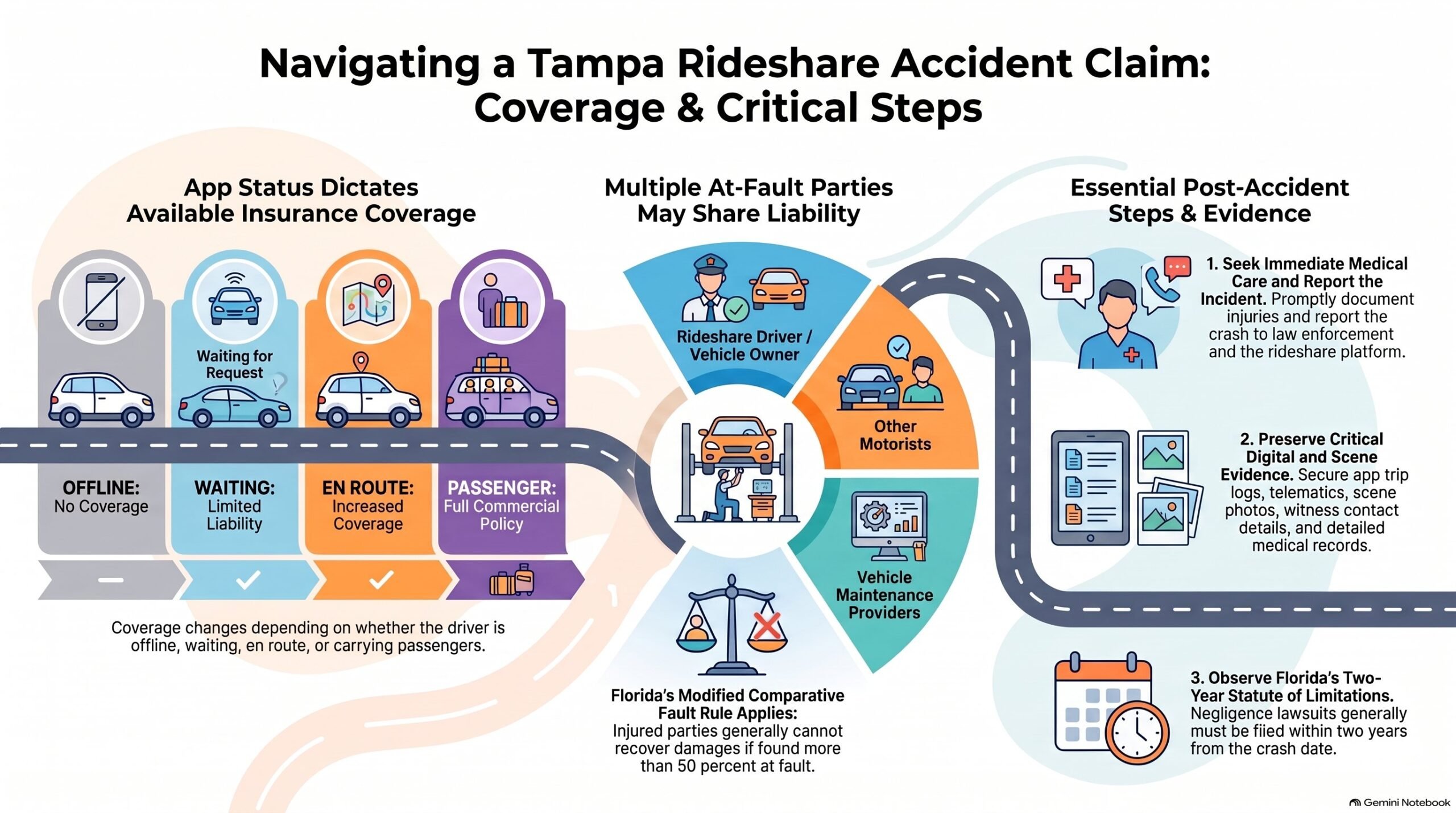
- The driver’s app status—offline, waiting for a ride, en route, or carrying a passenger—can affect which insurance coverage applies.
- Preserve crash reports, photos, witness details, trip records, and medical documents to help assess fault and support an insurance claim.


How We Can Help With Your Tampa Rideshare Accident At-Fault Party Injury Claim
Determining who is responsible for a Tampa rideshare accident can require a careful review of the crash, the driver’s rideshare status, and the applicable insurance coverage. A legal team can help an injured person organize relevant records, communicate with insurers, and understand the steps involved in pursuing a claim. This support can reduce confusion during a difficult period and help the person focus on recovery and family responsibilities.
The review may include police reports, medical documentation, trip details, and available witness accounts. These materials can help clarify which parties or policies may be relevant without assuming an outcome. A Legal Consultation can also explain deadlines, potential challenges, and what information may be needed to assess Claim Eligibility. With a clear understanding of the process, an injured person can make informed decisions about next steps. Counsel can provide steady guidance, answer questions, and help ensure communications remain accurate and organized while the claim is evaluated.
OUR CONSULTATIONSARE FREE
START YOUR FREE CASE REVIEW

Understanding Tampa Rideshare Accident At-Fault Parties Injury Cases
Tampa rideshare accident injury cases can involve several potentially responsible parties, depending on how the collision occurred and the driver’s status in the rideshare app. The driver may be responsible for negligent conduct, while another motorist, a vehicle owner, or a maintenance provider may also be involved. The rideshare company’s potential responsibility depends on the facts, applicable law, and how its policies relate to the injury. Rideshare Company Oversight may be relevant when evaluating app procedures, driver screening, and insurance arrangements, but company involvement does not establish liability on its own.
Tampa Traffic Patterns can affect how investigators interpret the events and assess each party’s actions. A careful review may include trip and app records, insurance documents, witness accounts, vehicle inspections, and available roadway evidence. The driver’s app status at the time of the incident can affect which insurance coverage applies. Identifying all potentially responsible parties helps injured people pursue appropriate compensation and supports a fair, evidence-based resolution.
Common Causes of Tampa Rideshare Accident At-Fault Parties
Rideshare collisions in Tampa may result from driver distraction, excessive speed, or reckless actions that reduce reaction time and increase crash severity. Impaired driving can also compromise judgment and vehicle control, while unsafe passenger pickups may create hazards for nearby traffic and pedestrians. Identifying the cause is an important step in determining which parties may be responsible.
Distracted Driving
Distracted driving is a common cause of rideshare collisions in Tampa, where drivers may divert their attention to navigation apps, passenger messages, or other phone activity. Even brief Driver Distraction can prevent a driver from noticing a pedestrian, cyclist, or vehicle entering the roadway. Phone Notifications may interrupt attention during a trip, while adjusting a route or responding to a rider can take a driver’s eyes and focus away from traffic. Rideshare drivers also face pressure to locate pickup points and follow changing directions, making attentive driving especially important. When a collision occurs, evidence such as app records, witness accounts, and available video may help clarify whether distraction contributed. Understanding the cause can support injured passengers and others seeking accountability, while helping identify steps that may reduce similar risks for the community.
Speeding and Reckless Driving
When a rideshare driver exceeds safe speeds or makes aggressive moves, the limited time available to respond can increase the risk of a serious collision. Speed Limit Violations may reduce a driver’s ability to stop before reaching a hazard, especially on congested Tampa streets or near intersections. Aggressive Actions, such as abrupt lane changes, tailgating, and unsafe turns, can also endanger passengers, pedestrians, and other motorists. A driver’s decision to hurry between pickups or meet a scheduled arrival time does not excuse conduct that places others at risk. After a crash, evidence such as traffic camera footage, vehicle data, witness accounts, and police reports may help clarify how speed or reckless actions contributed. Identifying responsible parties can support injured people seeking accountability and help protect others who share the road.
Impaired Driving
Impaired driving is another serious cause of rideshare collisions in Tampa, particularly when alcohol, illegal drugs, or impairing medications affect a driver’s judgment and reaction time. An impaired driver may misjudge distances, miss traffic signals, or fail to respond promptly to changing road conditions. These lapses can endanger passengers, other motorists, cyclists, and pedestrians.
Substance interactions may increase impairment when alcohol is combined with prescription or over-the-counter medication. Rideshare drivers are responsible for recognizing when they are not fit to drive and for avoiding trips while affected. After a crash, evidence such as witness accounts, vehicle records, and toxicology results may help establish whether impairment contributed. Impairment testing can also inform an investigation, although its timing and results require careful evaluation. Determining responsibility depends on the facts, applicable law, and available evidence.
Unsafe Passenger Pickups
Unsafe passenger pickups can create hazards when a rideshare driver stops in a travel lane, blocks a crosswalk, or pulls over where visibility is limited. These choices may force passengers to enter traffic and leave other drivers little time to react. In busy Tampa areas, congestion, parked vehicles, and nighttime conditions can further reduce curbside visibility. Drivers who ignore designated pickup zones or stop abruptly may contribute to collisions involving cyclists, pedestrians, and nearby motorists. Responsibility may depend on whether the driver followed traffic laws, exercised reasonable care, and chose a safe place to load passengers. A passenger’s actions, roadway design, or another driver’s conduct may also be relevant. A careful investigation can identify contributing factors and help injured people access appropriate support while improving safety for others who use the same streets.
Don’t Wait. Call Our Florida Personal Injury Lawyers Now!


Legal Rights of Tampa Rideshare Accident At-Fault Parties Injury Victims
In Tampa rideshare accidents, injured victims may pursue compensation from any party whose negligence contributed to the crash, including a rideshare driver, another motorist, or a company responsible for vehicle maintenance. Passenger Rights include seeking payment for documented losses, regardless of whether the injured person was a passenger, pedestrian, or occupant of another vehicle. Rideshare Accountability may involve reviewing available insurance coverage and identifying each responsible party.
Victims may have the right to seek compensation for:
- Medical care, rehabilitation, and related treatment expenses.
- Lost income and reduced ability to earn a living.
- Physical pain and the effects of lasting injuries.
- Property damage, including repair or replacement costs.
- Other losses supported by records and applicable law.
A careful assessment can help confirm that claims reflect the full impact of an injury and are directed to appropriate insurers or parties. Preserving records, following medical guidance, and obtaining informed legal advice can support a fair process while helping victims protect their rights and pursue recovery.
Why Do Tampa Rideshare Accident At-Fault Parties Injuries Happen?
Tampa rideshare accident injuries occur when negligent driving, unsafe road conditions, or vehicle defects cause a collision and expose occupants or others to sudden impact. These incidents may involve rideshare drivers, other motorists, passengers, cyclists, or pedestrians, each of whom can face serious harm.
Common causes include speeding, distracted driving, unsafe lane changes, failure to yield, and following too closely. Drivers who watch navigation screens or respond to ride requests may overlook hazards, while fatigue can impair attention and judgment. Traffic congestion can increase the risk of sudden stops and close following, particularly near busy intersections and pickup areas.
Roadway design may also contribute when confusing lane markings, limited visibility, poorly timed signals, or inadequate pedestrian crossings make safe travel more difficult. Rain and standing water can further reduce traction and visibility. In some collisions, worn tires, faulty brakes, or other vehicle defects prevent a driver from avoiding impact. Identifying the contributing conditions helps clarify how injuries occurred and which parties may bear responsibility.
What Should You Do After a Tampa Rideshare Accident With At-Fault Parties?
After a Tampa rideshare accident, injured individuals should seek prompt medical care, even if their symptoms initially seem minor. They should report the crash to law enforcement and the rideshare company to ensure the incident is documented. Preserving photographs, witness details, trip records, and medical documents can help clarify how the collision occurred and who may be responsible.
Seek Medical Care
Prompt medical evaluation is essential for anyone injured in a Tampa rideshare accident, even when symptoms appear minor or develop later. A qualified healthcare professional can identify injuries that may not be immediately apparent, including head, neck, and internal injuries. Urgent evaluation is especially important when a person experiences severe pain, confusion, difficulty breathing, weakness, or loss of consciousness. For less obvious symptoms, timely assessment can still help prevent complications and guide appropriate treatment.
The injured person should describe the collision and all symptoms accurately, follow the clinician’s instructions, and attend recommended follow-up appointments. Keeping records of diagnoses, treatment, prescriptions, and related expenses can support continuity of care. Symptom monitoring is also important because pain, dizziness, or restricted movement may emerge or worsen over time. Prompt attention to changing symptoms can protect health and help caregivers provide informed support.
Report the Crash
Once immediate medical needs are addressed, report the crash promptly to law enforcement and the rideshare company. A police report can document the incident, identify involved parties, and support a clear account of what occurred. The injured person or a representative should provide accurate information and request the report number and instructions for obtaining a copy. If anyone remains in danger, contact emergency services without delay. The rideshare company should also be notified through its app or designated support channel, with the trip details and the date and location of the collision. Emergency contacts may help communicate with family members or coordinate assistance. If vehicles obstruct traffic, responders should manage roadway clearance when safe. Timely reporting helps protect others and supports appropriate follow-up.
Preserve Evidence
Preserving evidence can help establish how a Tampa rideshare collision occurred and who may be responsible. After receiving necessary medical care, an injured person can take photographs of vehicle damage, road conditions, visible injuries, and the crash location. Also record names and contact details for witnesses, the driver, and other involved parties. Receipts, medical records, repair estimates, and communications with the rideshare company may document losses and relevant events.
Evidence preservation may require prompt action because vehicle data, app records, dashcam footage, and surveillance recordings can be lost or overwritten. A lawyer can identify relevant records and send spoliation notices to the rideshare company, driver, or other parties, requesting that they retain potentially important materials. Original files should remain unaltered, with copies stored securely. Organized documentation supports a fair review of responsibility and helps protect the interests of everyone affected.
Critical Evidence in a Tampa Rideshare Accident At-Fault Parties Injury Case
Evidence can help establish how a Tampa rideshare crash occurred, who may be responsible, and the extent of the resulting injuries.
Relevant records and documentation may include:
- Rideshare app trip and communication records
- Driver and vehicle data
- Photographs, video, and other crash-scene evidence
- Witness statements
- Medical records and injury documentation
Rideshare App Records
Rideshare app records can establish which party may be responsible for a Tampa crash by showing whether a driver was logged in, awaiting a request, traveling to pick up a passenger, or completing a trip. This timeline can clarify which insurance policy may apply and whether a rideshare company’s coverage was active when the collision occurred. Records may also document trip acceptance, cancellation, route changes, and communications through the platform. Preserving these materials promptly can help injured people and their families pursue an accurate review of the event. Data retention practices vary, so a timely request may be important before relevant information is deleted. Privacy safeguards should limit disclosure to information needed for the claim and protect unrelated passenger details. Careful review can support fair accountability while respecting everyone’s rights.
Driver and Vehicle Data
When a Tampa rideshare crash involves disputed fault, driver and vehicle data can help explain how it occurred. Telematics Data may record speed, braking, acceleration, and vehicle location shortly before impact. These records can help clarify whether a driver reacted appropriately, followed traffic conditions, or engaged in conduct that contributed to the collision. Vehicle Diagnostics may reveal warning lights, brake problems, tire issues, or other mechanical conditions relevant to vehicle operation. Maintenance histories and inspection records can also show whether a known defect was addressed before the trip. Because this information may be stored electronically or held by a rideshare company, fleet operator, or repair provider, preserving it promptly can be important. Careful review helps identify responsible parties and supports a fair assessment of injuries and accountability.
Crash Scene Evidence
Skid marks, debris patterns, vehicle positions, and roadway conditions can help reconstruct a Tampa rideshare crash and clarify how it occurred. Prompt documentation may preserve details that change as vehicles are moved, traffic resumes, or weather alters the scene. Photographs can show vehicle damage, lane markings, traffic signs, sight lines, and nearby hazards. Skid mark analysis may help estimate braking, direction of travel, and the point of impact, although conclusions depend on reliable measurements and qualified interpretation. Roadway debris can indicate where a collision occurred and which vehicles were involved. Investigators may also examine road design, lighting, construction, and surface conditions to assess whether factors beyond driver conduct contributed. Careful scene evidence collection supports a fair evaluation of responsibility and can help injured people pursue accountability without overlooking others affected by the crash.
Witness and Medical Records
Beyond physical evidence at the scene, witness accounts and medical records can help establish how a Tampa rideshare crash occurred and what injuries followed. Witness Statements from passengers, nearby drivers, pedestrians, or business employees may clarify vehicle movements, traffic signals, and events immediately before impact. Their observations can help distinguish each party’s role and identify details that drivers may not have noticed. Promptly recording contact information and preserving accounts can reduce the risk of memory fading.
Medical Records document symptoms, diagnoses, treatment, and recovery after the collision. Consistent records can link reported injuries to the crash and show how they affected daily activities. They may also reveal prior conditions that require careful consideration. In combination, reliable witness evidence and complete medical documentation can support a fair assessment of responsibility and damages, helping injured people pursue appropriate care and accountability.
Long-Term Effects of Tampa Rideshare Accident At-Fault Parties Injuries
Injuries from a Tampa rideshare accident may lead to chronic pain and reduced mobility that interfere with daily activities. Some victims also experience lasting emotional trauma, including anxiety or distress related to travel. Ongoing treatment and rehabilitation can create substantial long-term costs that may affect financial stability.
Chronic Pain and Mobility
After a Tampa rideshare crash, pain and limited mobility may persist long after the initial injuries appear to recover. Ongoing discomfort can result from fractures, soft-tissue damage, or injuries to the back and joints. These conditions may interfere with walking, lifting, sleep, and routine responsibilities, including work and caregiving. A treating provider can assess symptoms, recommend appropriate Pain management, and monitor whether treatment is improving function. Physical therapy may help restore strength and flexibility, while mobility aids such as canes or braces can support safer movement when needed. Some people need ongoing care or changes to their daily routines because symptoms persist or worsen over time. Keeping records of medical visits, restrictions, and related expenses can help clarify the injury’s lasting effects when responsibility for the crash is evaluated.
Lasting Emotional Trauma
A Tampa rideshare crash can cause lasting emotional trauma, particularly when a person experiences severe injuries, frightening circumstances, or a prolonged recovery. Survivors may develop anxiety, depression, sleep disturbances, or post-traumatic stress symptoms that affect relationships, work, and daily responsibilities. Trauma triggers can include traffic sounds, vehicle travel, emergency sirens, or reminders of the collision. These reactions may arise long after physical injuries become apparent and can make ordinary activities feel difficult.
Emotional effects can also influence a survivor’s ability to support family members, colleagues, and others who rely on them. Recognizing these challenges is an important step toward recovery. Mental health professionals can assess symptoms and recommend appropriate coping strategies, such as counseling, structured routines, and support from trusted people. Documenting emotional changes may also help explain how the crash has affected the survivor’s life.
Long-Term Treatment Costs
Emotional trauma may continue alongside physical complications, and both can create substantial long-term treatment costs for people injured in Tampa rideshare crashes. Serious injuries may require continuing medical appointments, rehabilitation, prescription medication, assistive devices, or home modifications. Some people also need counseling to address persistent anxiety, sleep disruption, or other effects of the collision. These expenses can extend well beyond initial emergency care and may change as a person’s condition develops.
Future care planning helps identify likely services and their expected duration. Medical records, expert assessments, and rehabilitation plans can support cost forecasting, while accounting for possible changes in treatment needs. A careful estimate can help injured people and their families understand the financial demands of recovery. When another party’s negligence caused the crash, documented long-term costs may be relevant to evaluating a compensation claim.
Don’t Wait. Call Our Florida Personal Injury Lawyers Now!
Proving Liability in Tampa Rideshare Accident At-Fault Parties Injury Cases
Proving liability in a Tampa rideshare accident requires evidence showing how the crash occurred and which parties contributed to it. Investigators may review police reports, photographs, vehicle damage, witness accounts, and available video to establish the sequence of events. Medical records can connect the collision to reported injuries, while qualified experts may assess roadway conditions or vehicle performance.
Responsibility may extend beyond the driver. A rideshare driver may be accountable for unsafe speed, distraction, or failure to yield. Negligent vehicle maintenance could also contribute if worn brakes, defective tires, or missed repairs played a role. Depending on the driver’s work relationship and the circumstances, employer liability may apply, as may liability involving another motorist or a vehicle owner.
Careful evidence preservation helps clarify each party’s conduct and its connection to the harm. A thorough review supports fair accountability and helps injured people pursue the resources needed for recovery, while recognizing the importance of accurate, well-supported findings.
Dealing With Insurance Companies After a Tampa Rideshare Accident At-Fault Parties Injury
After a Tampa rideshare accident, insurance coverage may depend on who caused the crash and whether the rideshare driver was logged into the app or transporting a passenger. An injured person may need to communicate with the driver’s insurer, the rideshare company’s insurer, or another motorist’s carrier. Each insurer may assess responsibility and available coverage differently, making accurate, consistent information important.
Adjuster Communications should remain factual and limited to information the injured person can verify. Dates, locations, parties involved, and known circumstances can be stated clearly, while uncertain details should not be guessed. Direct requests for documents or explanations of coverage to the appropriate representative.
Recorded Statements may be requested soon after the collision. Before agreeing, an injured person can clarify who is requesting the statement, its purpose, and whether participation is required. Careful communication helps prevent misunderstandings and supports fair consideration of the person’s injuries, while preserving the ability to focus on recovery and family responsibilities.
What to Expect During a Tampa Rideshare Accident At-Fault Parties Injury Claim Process
A Tampa rideshare injury claim typically begins by identifying all potentially at-fault parties and gathering evidence, such as crash reports, witness statements, and trip records. The injured person or their representative then files claims with the relevant insurers, whose coverage may depend on the driver’s status at the time of the collision. The process may proceed through settlement negotiations or, if liability or compensation remains disputed, litigation.
Identify At-Fault Parties
When a Tampa rideshare crash causes injuries, identifying every potentially responsible party is an early step in the claim process. The review may consider the rideshare driver, another motorist, a vehicle owner, or a company whose conduct contributed to the collision. Vehicle ownership can matter when the driver used a car owned by someone else, since the owner’s role and applicable insurance may require examination. Employer responsibility may also arise if a driver was performing work duties for a separate employer when the crash occurred. The rideshare company’s potential role depends on the driver’s status in the app and the circumstances of the trip. More than one party may share legal responsibility. Careful identification helps injured people pursue appropriate claims while protecting their ability to seek fair compensation and support.
Gather Evidence
Building a strong Tampa rideshare accident claim requires evidence that clarifies how the crash occurred, who may be responsible, and the extent of the injuries. After identifying potential at-fault parties, injured people can preserve records that help establish the sequence of events. An Evidence log can list dates, locations, witnesses, vehicle details, and steps taken to document the collision. Photographs of vehicle damage, road conditions, traffic signs, and visible injuries may provide useful context. Camera footage from nearby businesses, traffic systems, or rideshare vehicles may capture important moments, but recordings can be overwritten, so preserve them promptly. Medical records, treatment notes, and receipts can show the nature and progression of injuries. Witness contact information and official incident reports may also support a clear, reliable account for later review by qualified professionals.
File Insurance Claims
After preserving essential evidence, injured people can notify the insurers that may cover a Tampa rideshare accident, including the rideshare driver’s personal insurer, the rideshare company’s insurer, and any other involved driver’s carrier. Each insurer may request a statement, incident details, medical records, or documentation of financial losses. Claim deadlines vary by policy and applicable law, so prompt notice helps protect access to potential coverage. Injured people should keep copies of submitted forms and maintain organized records of adjuster correspondence, including requests, responses, and claim numbers. This helps them provide accurate information and avoid guessing about fault or injury severity. Because rideshare coverage may depend on the driver’s app status, insurers may ask when a trip was accepted or completed. A lawyer can help identify relevant policies, clarify filing requirements, and support timely, complete claim submissions.
Negotiate or Litigate
Once insurers have reviewed the claims, injured people may negotiate a settlement or pursue litigation if the parties cannot agree. During negotiations, the parties assess medical records, lost income, liability evidence, and anticipated future needs. A documented account of the crash and its effects can strengthen Settlement Leverage and support a fair resolution. Evaluate any offer against the full scope of damages, not just immediate expenses. If negotiations stall, filing a lawsuit may allow formal evidence gathering and, when necessary, a trial. Litigation can involve deadlines, depositions, and added costs, so each step requires careful consideration. Counsel may develop a Trial Strategy based on the available evidence, applicable law, and the injured person’s objectives. Throughout the process, clear communication helps injured people make informed decisions while preserving their ability to seek accountability.
Compensation for Tampa Rideshare Accident At-Fault Parties Injury Damages
Compensation for injuries in a Tampa rideshare accident depends on the evidence, the severity of the harm, and who is legally responsible. A claim may involve the rideshare driver, another motorist, a vehicle owner, or a company, depending on how the collision occurred and the applicable insurance coverage. Careful investigation can help identify responsible parties and preserve records needed to support a fair assessment.
Recoverable compensation may address medical care, rehabilitation, prescription costs, and future treatment related to the injuries. Lost income may also be considered when injuries prevent a person from working, while diminished earning capacity may apply if lasting limitations reduce future employment options. Documentation from healthcare providers, employers, and financial records can help establish the extent of these effects.
A claim may also cover reasonable expenses related to mobility changes or required assistance. Each injured person’s circumstances differ, so the amount depends on reliable proof and the established legal responsibility. Timely guidance can help protect the injured person’s interests and support a complete, carefully documented claim.
Economic vs Non-Economic Damages in Tampa Rideshare Accident At-Fault Parties Cases
In Tampa rideshare accident cases, economic damages may include medical expenses, lost income, and other documented financial losses. Non-economic damages address harm such as pain, emotional distress, and reduced quality of life. Establishing both categories typically requires evidence linking the losses to the crash and supporting their extent.
Economic Losses
Economic losses in a Tampa rideshare accident case are the measurable financial costs linked to the crash, such as medical expenses, lost wages, reduced earning capacity, and property damage. These losses may include emergency care, follow-up treatment, medication, rehabilitation, and other reasonable expenses supported by records. Lost wages can reflect income missed during recovery, while reduced earning capacity may apply when lasting injuries limit a person’s ability to perform prior work or earn at the same level. Property damage may cover repair or replacement of a vehicle and damaged belongings. Clear documentation, including bills, pay records, repair estimates, and professional assessments, helps establish the amount and connection of each claimed expense to the collision. Identifying responsible parties and available insurance coverage can also affect how these financial losses are evaluated and pursued.
Non-Economic Harm
Although they do not appear on bills or pay records, non-economic damages may address the personal effects of a Tampa rideshare crash, including physical pain, emotional distress, loss of enjoyment of life, and lasting limitations. These harms can affect how an injured person participates in family life, work, and community responsibilities. Loss of enjoyment may reflect an inability to pursue meaningful activities, maintain routines, or serve others as before. A serious injury may also strain close relationships, including through diminished companionship when a person cannot provide the same support or share ordinary experiences with loved ones. Unlike medical expenses or lost wages, these damages do not have a direct price tag. They recognize that a crash can change daily life and personal connections beyond measurable financial losses.
Proving Damages
To recover compensation after a Tampa rideshare crash, an injured person must support the claimed losses with evidence. Economic damages may include medical bills, rehabilitation costs, lost wages, and reduced future earning capacity. Damage documentation such as invoices, pay records, treatment notes, and expert reports can establish these amounts and connect them to the collision. Non-economic damages address less measurable effects, including pain, emotional distress, and limits on daily activities. Consistent medical records, personal accounts, and testimony from people familiar with the injured person’s life may help demonstrate these harms. Valuation methods differ by category: financial losses are generally calculated from documented expenses and projected needs, while non-economic losses require assessment of severity, duration, and impact. Clear, organized evidence helps decision-makers evaluate each claim and supports a fair resolution for those affected.
When a Tampa Rideshare Accident At-Fault Parties Injury Case Goes to Trial vs Settlement
When the parties dispute fault, insurance coverage, or the value of an injury claim, a Tampa rideshare accident case may require a decision between settlement and trial. A settlement can resolve the claim without a courtroom verdict, providing a defined outcome and avoiding the uncertainty of trial. Its terms may also address payment timing and other practical concerns. However, evaluate an offer against documented losses, anticipated future needs, and the strength of available evidence.
Trial may be considered when negotiations do not produce an acceptable resolution or when important facts remain contested. Trial preparation can involve organizing records, identifying witnesses, and presenting evidence clearly and persuasively. The process may require more time and resources, and the result rests with a judge or jury.
Settlement timing depends on the development of evidence, the parties’ positions, and the injured person’s circumstances. Careful evaluation helps ensure decisions account for recovery needs and the value of a fair resolution.
Florida Laws That May Affect Your Tampa Rideshare Accident At-Fault Parties Case
The choice between settlement and trial may depend in part on Florida laws governing fault, insurance coverage, and injury claims. These rules help determine which parties may be responsible and what resources may address documented losses.
A careful review can support a fair outcome while preserving the injured person’s ability to focus on recovery and family responsibilities.
- Comparative negligence may reduce compensation when an injured person shares responsibility for a crash.
- Florida’s modified comparative fault rule generally bars recovery if the claimant is more than 50 percent at fault.
- Rideshare insurance coverage can change based on whether the driver was offline, waiting for a request, or transporting a passenger.
- Insurance stacking may allow eligible policy limits to be combined, subject to policy terms and applicable law.
- Florida’s no-fault system may require an injured person to seek initial benefits through personal injury protection coverage.
Because coverage and fault questions can overlap, records, app data, and insurance documents may clarify the applicable rules. A lawyer can assess these issues and explain available options without promising a particular result.
Don’t Wait. Call Our Florida Personal Injury Lawyers Now!
The Statute of Limitations for Tampa Rideshare Accident At-Fault Parties Injury Cases
Although fault and insurance coverage can shape a rideshare injury claim, filing deadlines may determine whether a lawsuit can proceed. Florida law generally gives an injured person two years from the date of a negligence-related injury to file a lawsuit. Missing that deadline can bar recovery, even when evidence strongly supports the claim. A separate deadline may apply to wrongful death actions, generally measured from the date of death.
The applicable period can depend on the claim’s facts, the parties involved, and when the injury or its cause became known. Deadline exceptions may affect the filing period in limited circumstances, including certain cases involving minors or defendants who cannot be located. Claim tolling may also pause a deadline under specific legal conditions, but it should not be assumed to apply automatically.
Prompt attention to dates helps preserve legal options and supports an orderly process for addressing injuries and losses. Accurate records of the collision and related events can clarify which filing period governs.
How a Tampa Rideshare Accident At-Fault Parties Lawyer Can Help You
A Tampa rideshare accident at-fault parties lawyer can investigate the collision, identify potentially responsible parties, and assess which insurance policies may apply. This work can help injured people pursue fair compensation while supporting accountability and safer transportation for the community.
A lawyer may assist by:
- Gathering crash reports, photographs, witness accounts, and other relevant evidence.
- Examining driver conduct, vehicle condition, and possible responsibility by the company or a third party.
- Reviewing rideshare app records and insurance coverage tied to the driver’s status.
- Organizing medical records, wage information, and documented losses to support a claim.
- Communicating with insurers and presenting evidence in settlement discussions or court proceedings.
During a Legal Consultation, counsel can explain available options and clarify the roles of each potentially responsible party. A Case Evaluation may identify evidence gaps, likely coverage issues, and factors affecting the claim’s value. This guidance can help an injured person make informed decisions, protect the accuracy of the record, and seek a resolution that reflects the harm suffered without overlooking broader community interests.
When to Contact a Tampa Rideshare Accident At-Fault Parties Lawyer
Prompt legal guidance may be important after a Tampa rideshare accident, particularly when injuries, disputed fault, or multiple insurance policies complicate the claim. Contacting a lawyer soon after the collision can help preserve relevant information while details remain clear. An early consultation may be especially useful when a passenger, rideshare driver, another motorist, or the rideshare company could share responsibility.
After receiving medical care and documenting the incident, a person should consider seeking legal guidance rather than waiting for an insurer to determine fault. Prompt contact may clarify deadlines, identify records to retain, and reduce the risk of misunderstood statements. Attorney Availability can vary, so contacting a firm early may allow time to discuss the circumstances and learn whether representation is possible.
Those involved in a crash may also seek guidance when injuries emerge later, liability is contested, or settlement communications begin. Timely advice can support an orderly process and help claimants make informed decisions while respecting the needs of others affected.
Why You Need an Experienced Tampa Rideshare Accident At-Fault Parties Lawyer
When fault is disputed or several parties may have contributed to a Tampa rideshare crash, an experienced lawyer can help clarify the legal and insurance issues. A rideshare collision may involve the driver, another motorist, a vehicle owner, or a transportation company, while coverage can depend on the driver’s status in the app. Careful investigation can identify relevant evidence, preserve records, and establish how each party’s conduct contributed to the harm.
A sound Legal Strategy also helps address competing accounts and insurer efforts to shift responsibility. Counsel can assess police reports, witness statements, trip data, and applicable insurance policies, then present a supported claim on behalf of the injured person. This work can reduce uncertainty for families seeking fair treatment and recovery resources.
Local Experience matters because Tampa roads, traffic patterns, and court procedures can shape a case. A lawyer familiar with the area can evaluate local circumstances and pursue accountability through informed, practical decisions.
How to Choose the Right Tampa Rideshare Accident At-Fault Parties Lawyer for Your Case
Choosing the right Tampa rideshare accident at-fault parties lawyer requires more than reviewing a firm’s advertising. A careful Attorney Selection process helps an injured person identify counsel who can assess responsibility fairly and protect the interests of everyone affected by a collision. The lawyer should explain how liability may involve a rideshare driver, another motorist, or a company, and describe the steps needed to investigate each possibility.
Case Experience matters because rideshare claims can involve layered insurance coverage, app records, and disputed accounts of the crash. Prospective clients can ask about similar cases, evidence preservation, communication practices, and how the lawyer will keep them informed. Clear answers help reveal whether counsel can manage the claim with diligence and respect.
A suitable lawyer should also discuss fees, likely challenges, and realistic options without promising a particular result. By comparing qualifications and seeking direct, understandable guidance, an injured person can make an informed choice, pursue accountability, and focus on recovery and daily responsibilities.
About The Law Offices of Anidjar & Levine
The Law Offices of Anidjar & Levine represents people injured in accidents, including collisions involving rideshare vehicles.
The firm assists clients seeking answers about liability, insurance coverage, and the steps available after a crash.
Its attorneys review the circumstances of an incident, identify potentially responsible parties, and explain legal options in clear terms.
This work can help injured people make informed decisions while they focus on medical care and recovery.
The firm’s history reflects its work on behalf of individuals affected by serious accidents.
The firm handles injury claims and communicates with insurers and other parties involved in a case.
Each matter depends on its specific facts, and outcomes are not guaranteed.
Community involvement is also part of the firm’s public presence.
Through service and outreach, the attorneys and staff support people and organizations in the communities they serve.
Those seeking legal guidance can contact the firm to discuss their circumstances and learn whether representation may be appropriate.
Frequently Asked Questions
Can I Sue Both the Rideshare Driver and Another Driver After a Crash?
Yes, an injured person may pursue claims against both the rideshare driver and another driver if evidence indicates that each contributed to the crash. Under Comparative Negligence principles, responsibility may be divided among parties, affecting the compensation available. Insurance Coordination can be complicated because coverage may depend on each driver’s conduct and the rideshare driver’s app status. A careful investigation can identify applicable policies and help guarantee all responsible parties are considered.
Does Rideshare Coverage Apply if the Driver Was Logged in but Waiting for a Request?
Yes, coverage may apply when a rideshare driver is logged into the platform and waiting for a request. This period is often called App On Coverage or Waiting Period Protection, and it may provide limited liability coverage if the driver causes a crash. The available protection depends on the rideshare company’s policy, state law, and the driver’s personal insurance. Injured people should confirm the driver’s app status and obtain the applicable policy details.
What Happens if I Was a Passenger in a Rideshare Vehicle When the Crash Occurred?
A passenger injured in a rideshare crash may pursue compensation from the at-fault driver, the rideshare company’s applicable insurance, or another responsible party. A Passenger injury claim can include medical expenses, lost income, and other documented losses. Coverage depends on the driver’s app status and the circumstances of the collision. If the responsible driver lacks adequate insurance, uninsured motorist coverage may apply. Prompt medical care and careful records can support a fair review.
Can I Pursue a Claim if I Was Injured While Entering or Exiting a Rideshare Vehicle?
Yes, an injured passenger may pursue a claim after a rideshare-related injury while entering or exiting the vehicle. Doorway injuries and curbside falls may involve driver negligence, unsafe stopping locations, hazardous conditions, or another party’s conduct. Responsibility depends on how the incident occurred and the available evidence. The injured person should document the scene, seek medical care, preserve trip details, and obtain legal guidance to assess potential claims and applicable insurance coverage.
How Are Rideshare Accident Claims Affected When Multiple Parties Share Fault?
When multiple parties share fault, rideshare accident compensation may be divided according to each party’s responsibility. Comparative Negligence rules can reduce an injured person’s recovery if that person also contributed to the crash, depending on applicable state law. Damage Apportionment determines how liability is allocated among drivers, rideshare companies, or other responsible parties. Evidence such as trip records, witness accounts, and crash reports can help clarify each party’s role.
—————————
Determining who is responsible for a Tampa rideshare accident requires a careful review of the crash, the driver’s app status, and available insurance coverage.
Injured people should preserve evidence, seek appropriate medical care, and avoid accepting a settlement before understanding the full impact of their injuries.
The Law Offices of Anidjar and Levine can investigate potential at-fault parties, explain your options, and help you pursue compensation within Florida’s deadlines.
Prompt action can preserve key evidence and support a stronger claim.
For guidance after a rideshare crash, contact a Tampa Personal Injury Lawyer.