

A Largo property claims lawyer can help you assess an injury or property damage claim, review relevant insurance terms, and understand your options. The Law Offices of Anidjar and Levine can help organize records, document losses, communicate with insurers, and evaluate whether an owner or insurer may be responsible. Prompt medical care, photographs, witness details, and timely notice can help preserve important evidence. Each claim depends on its facts and available coverage. Learn more about working with a Largo Personal Injury Lawyer, the legal considerations involved, and how to choose counsel.
Main Takeaways
- A Largo property claims lawyer can review your policy, explain coverage, exclusions, deadlines, and potential obstacles.
- For injuries on unsafe property, a lawyer can assess negligence, review evidence, and explain how Florida comparative negligence rules may affect your recovery.
- Seek medical care promptly, document the hazard and injuries, and preserve reports, photographs, witness details, and treatment records.
- A lawyer can request maintenance logs and surveillance footage, organize supporting records, and handle communications with the insurer.
- Ask about Florida premises liability experience and communication practices; a free consultation can clarify options without committing to representation.
How We Can Help With Your Largo Property Claims Injury Claim
When a property-related injury disrupts your health and finances, we can help you pursue a claim with care and focus. We’ll listen to your concerns, explain your options, and help you make informed decisions while you focus on recovery.
Our work begins with a careful Policy review. We examine relevant documents, identify coverage terms, and assess potential obstacles so you understand what may affect your claim. We’ll also help gather records, organize evidence, and communicate with insurers on your behalf. By addressing requests promptly and accurately, we can reduce avoidable delays and keep the process moving.
Together, we’ll develop a claim strategy tailored to your circumstances and goals. We’ll evaluate available information, explain the steps ahead, and prepare you for important decisions. If negotiations become necessary, we’ll present your position clearly and support it with relevant documentation. Throughout the process, we’ll provide steady guidance, answer your questions, and treat your concerns with respect. Our aim is to protect your interests while helping you pursue fair compensation.
Don’t Wait. Call Our Florida Personal Injury Lawyers Now!
Understanding Largo Property Claims Injury Cases


Property claims injury cases arise when someone is harmed by an unsafe condition on another person’s property, such as a wet floor, damaged walkway, or inadequate lighting. When you’re helping an injured person, understanding how the claim works can clarify what evidence and decisions matter. We can assess whether the property owner or another responsible party had a duty to maintain safe conditions and failed to meet it. We’ll also consider whether that failure contributed to the injury and what losses followed.
OUR CONSULTATIONSARE FREE
START YOUR FREE CASE REVIEW

Claim eligibility depends on the facts, applicable law, and available insurance coverage. A policy may define covered incidents, impose reporting requirements, or exclude certain losses. Careful policy interpretation helps us identify the insurer’s obligations and any limits that may affect recovery. We can review records, incident reports, medical documentation, and correspondence to build a clear account of the claim. By explaining each step and responding to your questions, we help you make informed choices while pursuing fair treatment for the injured person.
Common Causes of Largo Property Claims
Largo property claims often arise from hurricanes and wind, roof leaks, or other water damage. Fire and smoke can also cause significant losses, while theft and vandalism may damage property or belongings. We’ll explain how these common events can affect your claim and what evidence may help support it.
Hurricane and Wind Damage


Because Largo faces powerful storms and sustained coastal winds, hurricanes can damage roofs, siding, windows, and other parts of a home in a matter of hours. These forces may also dislodge exterior fixtures, break fences, or send debris against neighboring properties. When damage affects your home, we can help you document what happened and understand the steps involved in presenting a property claim. Clear photographs, repair estimates, and records of damaged belongings can support a thorough review. We encourage homeowners to prepare before a storm arrives, including securing outdoor items and reviewing insurance coverage. Wind mitigation measures, such as reinforced roof connections and impact-rated windows, may reduce vulnerability and help protect residents. If an insurer disputes the extent or cause of storm damage, we can explain your options and advocate for fair consideration.
Roof Leaks and Water Damage
When water enters through a damaged roof, even a small leak can cause stained ceilings, damaged insulation, and deterioration inside your home. Act promptly, since moisture can spread behind walls and weaken building materials before visible damage appears. Roof Leak Detection can help identify the source, whether it involves worn shingles, failed flashing, blocked drainage, or aging roof components. Document affected areas, keep receipts, and notify your insurer as soon as possible. We can help you understand policy requirements and present clear evidence of the loss. Qualified professionals can assess the damage, limit further moisture, and plan appropriate Water Damage Restoration. By addressing the problem carefully, we can protect your property and help preserve a safe, healthy space for the people who depend on it.
Fire and Smoke Damage
How does a fire affect more than the areas it directly burns? Flames can damage structural materials, but smoke and heat may also spread through walls, ceilings, and ventilation systems. Even a contained kitchen fire can leave soot on surfaces and odors in rooms far from the source. We can help you understand the scope of damage and document affected property for an insurance claim.
Prompt action matters. Soot residue cleanup can prevent contaminants from causing further staining or corrosion, while Smoke odor remediation may require expert treatment of furnishings, fabrics, and building materials. Your insurer may assess the cause, extent, and cost of repairs before approving benefits. Keep photographs, receipts, and records of cleanup efforts, and avoid discarding damaged items until you’ve documented them. Careful documentation helps support a complete claim and protects the resources your household needs to serve others.
Theft and Vandalism Damage
Theft and vandalism can damage a Largo property in ways that extend beyond missing belongings or broken windows. Burglars may take electronics, tools, or valuables, while Jewelry theft can leave families facing both financial loss and personal distress. Vandalism may include damaged doors, shattered fixtures, defaced walls, or deliberate destruction of shared spaces. These incidents can interrupt a business’s operations or make a home less secure for residents and visitors.
We can help you document property damage, preserve receipts, photographs, police reports, and repair estimates, and review your insurer’s response. Prompt reporting and careful records can support a clearer claim. Graffiti cleanup and other repairs may require qualified professionals, especially when damage affects safety or accessibility. By understanding your policy and its deadlines, we can help you pursue the coverage available and restore a safe, welcoming property for everyone who depends on it.
Legal Rights of Largo Property Claims Injury Victims
If you’re injured because a property owner failed to address an unsafe condition, you may have the right to seek compensation under Florida law. Under Florida premises liability law, an owner or occupier may be responsible when negligence harms someone lawfully on the property. We can help you understand your options and protect your ability to pursue a fair claim.
Florida property owners may be responsible when negligence leads to injury on their property.
Depending on the evidence, compensation may cover:
- Medical expenses and necessary future treatment
- Lost income and reduced earning capacity
- Pain, suffering, and limitations on daily activities
- Other documented losses connected to your injury
Florida’s comparative negligence rules may reduce recovery if your own actions contributed to the incident, but they don’t automatically bar a claim. We’ll assess how responsibility may be allocated and explain the effect on potential compensation. Promptly preserving records, photographs, witness details, and medical documentation can support your account. You deserve clear guidance while you focus on recovery and the people who rely on you. We can review deadlines and help you make informed decisions.
Why Do Largo Property Claims Injuries Happen?
Why do property-related injuries happen in Largo? They often occur when owners, managers, or contractors fail to address hazards that could have been prevented. We may encounter wet floors without warning signs, uneven walkways, broken stairs, loose handrails, or poorly lit common areas. These conditions can turn routine visits into dangerous situations for residents, workers, and guests.
Aging infrastructure can contribute to injuries when roofs, plumbing, pavement, or building systems deteriorate without timely inspection and repair. Faulty construction may also leave structural defects, unsafe surfaces, or inadequate barriers that expose people to avoidable risks. In some cases, several factors combine: a maintenance delay, an unnoticed leak, and insufficient lighting can create a serious fall hazard.
Property owners must take reasonable steps to keep premises safe. When they overlook known problems or fail to inspect areas regularly, others may suffer harm. Understanding these common causes helps us recognize how preventable hazards affect the people our community serves.
What Should You Do After a Largo Property Claims Injury?
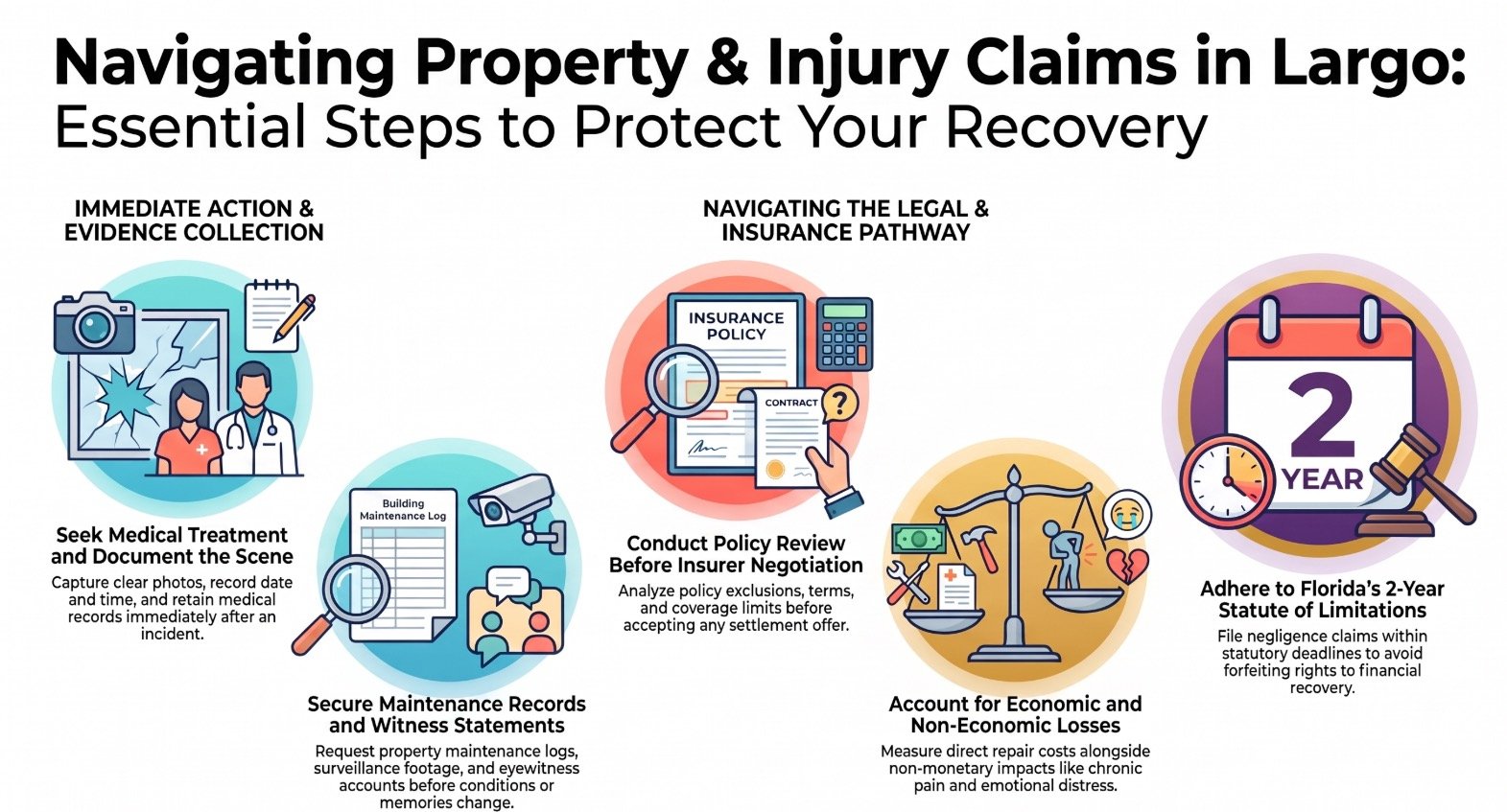
After a property injury in Largo, we recommend seeking medical care promptly, even if your symptoms seem minor. We can help you document the scene by preserving photographs, witness details, and any incident reports. Once you’ve addressed your immediate needs, we can discuss contacting a lawyer to protect your interests and evaluate your claim.
Seek Medical Care
Seek medical care promptly after a property-related injury in Largo, even when your symptoms seem minor. Some conditions worsen over time, and a qualified provider can identify concerns that aren’t immediately obvious. If you face severe pain, heavy bleeding, difficulty breathing, or another emergency, call 911 or go to the nearest emergency department for urgent treatment. Otherwise, arrange an evaluation as soon as possible and describe how the injury occurred, what symptoms you’ve noticed, and any changes since the incident.
Follow your provider’s instructions, take prescribed medication as directed, and attend all follow-up appointments. Consistent care supports your recovery and helps clinicians monitor your progress. If serving others matters to you, remember that caring for your own health enables you to return safely to family, work, and community responsibilities. Don’t delay needed care because you hope symptoms will resolve.
Document The Scene
When it’s safe to do so, document the scene of your Largo property injury before conditions change. We can help preserve an accurate record by taking clear photographs of the area, including hazards, warning signs, lighting, and the path we traveled. Capture wide views and close-ups, and note the date and time. Photograph damaged belongings to show the extent of loss; include identifying details, and keep receipts or proof of value when available.
Creating a room-by-room damage inventory helps us organize what was affected. List each item, describe its condition, and record estimated repair or replacement costs. Save relevant messages, incident reports, and witness names, and keep original files unchanged. If a dangerous condition remains, don’t disturb it; prioritize safety and ask responsible staff to preserve the area.
Contact A Lawyer
How can a lawyer help after an injury at a Largo property? We can assess your situation, explain your options, and help protect your interests while you focus on recovery. Contact a lawyer promptly after receiving necessary medical care, especially if a property owner or insurer requests a statement or offers payment. We can review incident records, photographs, witness details, and medical documentation to identify evidence that may support your claim. Ask about the attorney’s credentials, including experience handling premises liability cases in Florida, and how the lawyer communicates with clients. A Free consultation can help you understand potential next steps without committing to representation. Bring your records and questions, and describe what happened accurately. By seeking informed guidance, we can pursue accountability while supporting safer spaces for everyone in our community.
Critical Evidence in a Largo Property Claims Injury Case
Strong evidence can help us establish how your injury occurred and who may be responsible. We’ll focus on records that preserve the scene, document your injuries, and show whether the property was properly maintained.
Gather these materials promptly, since conditions and recollections can change over time.
- Incident scene photos: Images of the hazard, surrounding area, and any warning signs or barriers.
- Witness statements: Names and contact details, along with accounts of what witnesses saw.
- Medical records: Documentation of your diagnosis, treatment, and related expenses.
- Property maintenance logs: Records of inspections, repairs, and reports of prior hazards.
Incident Scene Photos
Photographs taken at the scene can preserve details that may change or disappear before an injury claim is investigated. We can help you document the area promptly, especially when a spill is cleaned, a hazard is repaired, or property conditions shift. Capture the entire location, then take closer images of the specific danger and any visible injuries. Camera angle selection matters: include several perspectives and landmarks to show where the hazard was and how it related to the surrounding space. Use adequate lighting, avoid altering images, and keep original files. Preserving image metadata can help establish when and where a photo was taken, so retain files with their dates and location data intact. These careful steps support a fair review and help us advocate for safer conditions for everyone.
Witness Statements
When a property hazard causes an injury, witnesses may provide details that the scene and photographs cannot capture. Their observations can clarify how long a spill remained, whether staff knew about a dangerous condition, or what happened immediately before a fall. We can help you identify people who saw the incident and request their accounts while memories remain fresh. Eyewitness Accounts may also come from employees, nearby customers, or others who noticed the hazard before the injury. Record each person’s name and contact information, then preserve their words accurately rather than relying on informal summaries. Statement Consistency matters, but witnesses need not use identical language; independent recollections can differ in minor ways. We can carefully compare accounts, address discrepancies, and present reliable evidence supporting your claim while respecting everyone involved.
Medical Records
Witness accounts can explain what happened at a property, while medical records show how the injury affected your health. These documents can connect the incident to your symptoms, treatment, and recovery needs. We can help you gather records from emergency departments, physicians, therapists, and other providers who treated you. Prompt Provider Requests may reduce delays and help preserve a clear account of your care. Through careful Record Organization, we can arrange notes, test results, prescriptions, and bills by date and provider. This process helps us identify gaps, track changes in your condition, and present consistent evidence to insurers. You can also review the records for errors and tell us about missing treatment or incorrect details. Accurate documentation supports your claim and helps others understand the full impact of your injury.
Property Maintenance Logs
Property maintenance logs can reveal whether an owner or manager knew about a hazard and took steps to address it. In a Largo property injury case, we can use these records to establish when staff inspected an area, reported a defect, or completed repairs. Entries may also show delays, repeated complaints, or gaps in routine care. We’ll compare the logs with your account, photographs, witness statements, and medical records to assess how the hazard caused your injuries.
Owners may follow Retention schedules that affect how long they preserve maintenance records, so we should request relevant documents promptly. We can also review inspection protocols to determine whether staff followed reasonable procedures before your injury. By examining these details carefully, we help you present clear evidence, support fair accountability, and protect the safety of others who use the property.
Long-Term Effects of Largo Property Claims Injuries
Property claim injuries can affect your health and daily life long after the initial incident. We’ll examine how chronic pain and lasting mobility limitations may restrict routine activities and require ongoing care. We’ll also consider emotional distress, which can influence your well-being and recovery.
Chronic Pain
When an injury from an unsafe property causes chronic pain, its effects can continue long after the initial accident. We can help you understand how persistent symptoms may affect your daily responsibilities and your ability to care for others. Pain flare patterns may vary, with discomfort increasing after certain activities or without an obvious trigger. Keeping a record of symptoms, treatment, and possible triggers can help your medical providers assess your condition and guide appropriate care. Chronic pain can also disrupt sleep, making it harder to rest, concentrate, and manage daily demands. We encourage you to follow your treatment plan and report changes to your providers. In a property injury claim, clear medical documentation can help connect ongoing pain to the incident and show how it affects your life. We can help you preserve relevant records and understand your options.
Lasting Mobility Limitations
Chronic pain can also limit mobility over time, especially when an injury affects the back, joints, or legs. You may find it harder to walk, climb stairs, stand for long periods, or complete tasks that once felt routine. These changes can affect your ability to care for family, volunteer, or serve others in your community.
We can help you document how mobility limits affect daily life and identify the support your recovery requires. Assistive device adaptation may include selecting and learning to use a cane, walker, brace, or wheelchair safely. Accessible transportation planning can help you reach medical appointments, work, and community activities when driving or using standard transit becomes difficult. Your treatment records, rehabilitation assessments, and related expenses may help show the lasting impact of a property injury when you pursue a claim.
Emotional Distress
An injury on someone else’s property can affect more than your physical health; it may also lead to lasting anxiety, depression, or fear of returning to the place where you were hurt. These responses can disrupt sleep, strain relationships, and make daily responsibilities harder to manage. You may also feel isolated when others can’t see the emotional effects of your injury. We encourage you to seek support from a qualified mental health professional and to tell your medical providers about changes in your mental wellbeing. Treatment can help you build emotional resilience and regain confidence as you recover. If another party’s negligence contributed to the incident, we can help you understand whether your emotional distress may be considered in a property injury claim. Keep records of symptoms, care, and related expenses to support your account.
Don’t Wait. Call Our Florida Personal Injury Lawyers Now!
Proving Liability in Largo Property Claims Injury Cases
To prove liability in a Largo property injury case, we must show that the property owner or another responsible party failed to use reasonable care and that this failure caused your injury. We’ll examine whether the responsible party had a Duty of Care, such as maintaining safe walkways, addressing hazards, or warning visitors about known dangers. We’ll also consider whether the party knew, or reasonably should have known, about the unsafe condition and had enough time to correct it.
The Burden of Proof rests with you, so we’ll gather evidence that supports each part of your claim. Photographs, incident reports, maintenance records, witness accounts, and medical documentation can help establish what happened and how the hazard contributed to your injuries. We’ll assess the property’s condition and identify who controlled or maintained the area. By organizing reliable evidence and presenting a clear account, we can help you pursue accountability while keeping your recovery and responsibilities in view.
Dealing With Insurance Companies After a Largo Property Claims Injury
After a Largo property injury, insurance companies may contact you to discuss the incident and evaluate your claim. We can help you handle these conversations carefully, protect your interests, and stay focused on recovery. Answer questions truthfully, but don’t guess about details or accept blame before you understand what happened. Avoid signing releases or agreeing to a settlement without reviewing what rights you may give up.
Keep Insurer communication records, including emails, letters, call dates, and the names of representatives. Brief, accurate notes can help us clarify what was said and identify unanswered questions. If an insurer requests documents, we can help determine what is relevant and appropriate to share.
Pay close attention to reservation of rights letters. These notices may explain that the insurer is investigating while reserving its ability to dispute coverage. We can review the language with you, explain potential concerns, and help you respond thoughtfully. Clear communication supports fair consideration while you continue serving your family and community.
What to Expect During a Largo Property Claims Injury Claim Process
We’ll begin by evaluating your claim, then gather evidence to support your account of the property-related injury. We’ll use that evidence to negotiate with the insurer and evaluate any settlement offer. If negotiations don’t produce a fair resolution, we’ll explain whether litigation may be appropriate.
Initial Claim Assessment
What should you expect during the initial assessment of a Largo property injury claim? We’ll begin by listening to your account and clarifying how the incident affected you and others who depend on your care. This conversation helps us understand your priorities and identify which questions need prompt attention.
Next, we’ll review your coverage and interpret your policy to determine which provisions may apply, which notice requirements matter, and whether exclusions or limits could affect recovery. We’ll explain our assessment in straightforward terms, discuss potential claim paths, and identify practical steps for protecting your interests. We’ll also consider how the claim may affect your household, work, and ability to support loved ones. At this stage, we focus on defining the issues and setting a responsible course forward, without promising a particular outcome.
Evidence Collection
With the claim issues defined, we’ll gather and preserve evidence that can clarify how the injury occurred and who may be responsible. We’ll photograph the hazard, surrounding area, lighting, warning signs, and any visible injuries, while conditions remain unchanged. We’ll also seek incident reports, maintenance records, surveillance footage, and witness contact information before these materials disappear or become harder to obtain. Keep the clothing and footwear you wore, and save receipts or other records related to treatment and missed work. Preserving evidence matters because clear, timely documentation helps us present an accurate account and support a fair review. We’ll organize your records and track adjuster correspondence, noting requests and responses without speculating about disputed facts. By protecting reliable information, we can help guarantee your concerns receive careful, responsible attention throughout the claim process.
Negotiations With Insurers
Once we’ve organized the evidence, we can begin discussions with the insurer about responsibility, injuries, and potential compensation. We’ll present a clear account of what happened, explain how the incident affected your health and daily life, and support each point with relevant records. During Policyholder negotiation, we’ll review the insurer’s questions and requests, help you respond accurately, and identify any gaps or disputed facts. We’ll also assess proposed compensation against documented losses, including medical expenses, lost income, and necessary property repairs. Careful preparation can strengthen your settlement leverage and help keep discussions grounded in the evidence. We’ll communicate professionally and protect your interests while recognizing that insurers may challenge liability or the value of a claim. Our goal is to pursue fair consideration without overlooking your recovery or responsibilities to those who depend on you.
Settlement Or Litigation
After negotiations, we’ll help you decide whether a settlement fairly covers your documented losses and future needs. Settlement offers may cover repairs, damaged belongings, temporary housing, and other eligible expenses, but you don’t have to accept an amount that falls short. We’ll review the evidence, explain your options, and discuss how each decision may affect your recovery and responsibilities to those who depend on you.
If the insurer won’t make a fair offer, we can explain whether filing a lawsuit is appropriate. Litigation may let you present your claim in court, but it can take more time, require more preparation, and cost more. We’ll discuss litigation costs, potential outcomes, and practical considerations before recommending next steps. Throughout the process, we’ll keep you informed so you can make decisions with confidence.
Compensation for Largo Property Claims Injury Damages
A property-related injury can lead to substantial medical expenses, lost income, and lasting effects on daily life. If a property owner failed to address a hazard and you’re hurt, we can help you pursue compensation supported by reliable evidence. Our team reviews medical records, incident reports, photographs, witness accounts, and other documentation to understand how the injury occurred and what recovery requires.
We also examine insurance policies and applicable Coverage limits, since available funds may affect how a claim proceeds. A careful claim valuation considers the documented consequences of your injury and the evidence connecting them to unsafe property conditions. We’ll explain what information may strengthen your case, identify gaps that need attention, and communicate with insurers on your behalf.
Economic vs. Non-Economic Damages in Largo Property Claims Cases
We’ll first identify economic losses, such as repair costs and other documented expenses tied to your property claim. We’ll also consider non-economic harm, including disruption and loss of use when supported by the facts. Comparing these damage types helps us assess the full scope of your claim.
Economic Losses
When property damage disrupts your home or business, the financial impact may extend beyond the cost of repairs. Economic losses are measurable expenses or income reductions tied to the damage. We can help you identify and document costs such as emergency repairs, debris removal, damaged belongings, and reasonable increases in utility or transportation expenses. If you must leave your home while repairs proceed, Temporary housing costs may also qualify, subject to your policy and supporting records.
For a business, Lost profits may arise when property damage interrupts operations or limits customer access. We’ll help you connect claimed losses to reliable records, including invoices, payroll information, tax returns, and sales reports. Keep receipts and note when each expense occurred. Careful documentation helps us present a clear, supportable claim and pursue the compensation available under your coverage.
Non-Economic Harm
Property damage can cause more than measurable financial losses; it may also disrupt your sense of security, comfort, and daily routine. Emotional strain may follow when damage leaves your home unsettled or prevents you from using important spaces. You might feel anxious about safety, frustrated by ongoing repairs, or burdened by uncertainty about when normal life will return. These effects merit careful attention, especially when your household depends on a stable, welcoming place to live.
We can help you document how the loss has affected your daily activities, relationships, and peace of mind. Diminished enjoyment of your home may be relevant when evaluating a property claim, although coverage and available remedies depend on the policy and facts. By listening closely and presenting clear evidence, we can support a fair review while helping you protect the people who rely on you.
Comparing Damage Types
A clear comparison between economic and non-economic damages helps show the full impact of a property loss. Economic damages cover measurable financial costs, such as repairs for Structural damage, replacement of items affected by contents damage, temporary housing, and lost income. We can document these losses with estimates, invoices, receipts, and records that connect each expense to the incident.
Non-economic damages cover personal effects that don’t have a clear price tag. A damaged home may disrupt routines, reduce privacy, and create ongoing stress for you and your family. While these effects differ from repair bills, they can still matter when evaluating a claim.
When a Largo Property Claims Injury Case Goes to Trial vs. Settlement
Although many Largo property injury claims settle before trial, we may recommend taking a case to court when the insurer disputes liability, challenges the extent of your injuries, or refuses to offer fair compensation. A settlement can resolve your claim without a public hearing, lengthy proceedings, or the uncertainty of a jury’s decision. We’ll assess any offer against your documented losses, future care needs, and the impact of your injuries on daily life.
If negotiations fail, we’ll guide you through trial preparation, explain what to expect, and present evidence supporting your account. At trial, both sides can question witnesses and challenge the evidence. The jury then deliberates and decides whether compensation is warranted and, if so, how much.
We’ll discuss the risks, costs, and potential benefits of each path with you. Our goal is to help you make an informed choice that supports your recovery and protects your ability to serve those who depend on you.
Don’t Wait. Call Our Florida Personal Injury Lawyers Now!
Florida Laws That May Affect Your Largo Property Claims Case
Florida law sets deadlines, liability standards, and insurance rules that can shape how we pursue your Largo property injury claim. These rules help determine who may be responsible, what coverage applies, and how we document losses. When you’re focused on serving your family or community, understanding these requirements can help you make informed decisions and protect your recovery.
Understanding Florida’s liability, insurance, and deadline rules can help protect your recovery after a Largo property injury.
- Premises liability: We assess whether an owner or occupier failed to use reasonable care and whether that failure caused your injury.
- Comparative fault: Florida’s negligence rules may reduce compensation if you share responsibility, so we examine the evidence carefully.
- Insurance terms: Policy exclusions may limit coverage, while appraisal disputes can arise over the value of covered property damage.
- Claim documentation: We organize incident reports, photographs, medical records, repair estimates, and witness accounts to support your position.
The applicable laws and policy language depend on the facts of your case. We can review those details, explain potential obstacles, and help you pursue a fair resolution while keeping your priorities in view.
The Statute of Limitations for Largo Property Claims Injury Cases
Because filing deadlines can determine whether you may pursue compensation, we identify the statute of limitations that applies to your Largo property injury case as early as possible. Florida law generally gives an injured person two years to file a negligence lawsuit, though the deadline may differ depending on the claim and when the injury occurred. Missing the applicable deadline can prevent you from recovering damages, even when the property owner failed to maintain a safe environment.
Claim filing deadlines can also be affected by who owns or manages the property. Claims involving government entities may require formal notice within a shorter period, followed by additional procedural steps. We also consider limitation exceptions, such as circumstances that may pause or extend a deadline under Florida law. These exceptions are narrow and depend on specific facts, so you shouldn’t assume they apply without careful review. Preserve relevant records and note important dates, including when the injury happened and when you discovered its effects. Acting promptly helps protect your ability to seek accountability and support those who depend on you.
How a Largo Property Claims Lawyer Can Help You
When you’re recovering from a property injury, we can manage the legal work while you focus on your health. We’ll assess how the incident happened, identify who is responsible, and explain your options in clear terms. Our work can help you pursue fair compensation while preserving your ability to support family, colleagues, and others who depend on you.
We’ll handle the legal work so you can focus on healing, understand your options, and pursue fair compensation.
We can provide focused assistance by:
- Gathering incident reports, photographs, witness accounts, and medical records to document your losses.
- Conducting a Policy Review to explain relevant terms, exclusions, and available benefits.
- Addressing Coverage Disputes with insurers and challenging unsupported denials or delays.
- Calculating documented medical costs, lost income, and other legally recoverable damages.
We’ll manage communications, prepare evidence, and negotiate with insurers on your behalf. If negotiations don’t produce a reasonable resolution, we can explain the litigation process and represent your interests in court. Throughout the claim, we’ll keep you informed, discuss important decisions, and help you weigh practical options. Our goal is to pursue accountability and a result that reflects the harm you’ve experienced.
When to Contact a Largo Property Claims Lawyer
Act promptly if a property claim involves serious injuries, unclear responsibility, or an insurer that delays, disputes, or denies coverage. Early guidance can help us protect your interests while you focus on keeping your household, business, or community safe. Contact a Largo property claims lawyer when damage is extensive, the cause is uncertain, or several parties may share responsibility. We can help you understand what information to preserve and which communications require careful attention.
Don’t wait until a deadline approaches. Early claim deadlines may apply under your policy or Florida law, and missing one can limit your options. Reach out if an insurer requests recorded statements, offers a settlement that may not cover repairs, or questions whether the loss is covered. Policy exclusions can affect a claim, but their application may depend on the policy wording and facts. We can review the situation, explain practical next steps, and help you respond promptly and informedly.
Why You Need an Experienced Largo Property Claims Lawyer
An experienced Largo property claims lawyer can help us evaluate policy language, document the loss, and respond effectively to an insurer’s challenges. When a home or business suffers damage, a well-supported claim can protect the resources needed to restore a safe, functional space for family members, employees, and neighbors.
Property policies often contain exclusions, conditions, and deadlines that affect what an insurer must pay. Through careful Coverage Interpretation, we can identify relevant provisions and explain how they apply to the documented damage. We can also organize estimates, photographs, repair records, and communications to present a clear account of the loss.
Effective Policyholder Advocacy matters when an insurer disputes the cause, scope, or value of damage, or delays a decision. We can address those concerns with evidence and timely responses, helping you understand your options and make informed decisions. By managing claim communications and challenging unsupported positions, we can keep the focus on fair treatment and a practical path to recovery.
How to Choose the Right Largo Property Claims Lawyer for Your Case
Choosing the right Largo property claims lawyer starts with evaluating the attorney’s experience handling disputes like yours and their communication style. Ask how the lawyer has handled denied, delayed, or underpaid claims involving damage similar to yours. We can also review Lawyer credentials, including Florida licensure, relevant experience, and any disciplinary history, to make an informed choice.
During an initial consultation, explain your goals and ask who will manage your case, how often you’ll receive updates, and what documents you should provide. A lawyer who listens carefully and explains options clearly can help us make decisions that support our household and community responsibilities.
Discuss Fee structures before signing an agreement. Ask whether payment depends on the outcome, what costs may arise, and how those expenses are handled. Compare written agreements, not just quoted rates. We should choose counsel whose experience, communication practices, and terms fit our needs, and whose guidance helps us pursue a fair resolution responsibly.
About The Law Offices of Anidjar & Levine
When evaluating counsel for a property claim, we can also consider The Law Offices of Anidjar & Levine’s background and services. Before deciding whether to seek representation, we should review the firm’s experience, its approach to client communication, and the types of matters it handles.
Firm history can provide context, but we shouldn’t treat it as a substitute for evaluating how the firm will address our specific circumstances. We can ask about experience with property damage disputes, insurance claims, denied or delayed payments, and the steps involved in pursuing a resolution. Clear answers can help us understand what to expect and how to prepare.
We should also verify attorney credentials, including licensing and relevant experience, and ask who will manage our case. A careful discussion can clarify fees, timelines, and available options. As we consider counsel, we can focus on finding a team that communicates directly, explains decisions, and treats our concerns with respect. That approach helps us make an informed choice while protecting our interests.
Frequently Asked Questions
Can a Lawyer Help With a Denied Property Insurance Claim?
Yes, we can help you respond when your property insurer denies a claim. We’ll review your policy, the denial letter, and supporting evidence to identify whether the insurer applied coverage terms correctly. Our guidance can help you challenge claim denials, appeal coverage decisions, and present a clear record of your losses. We’ll explain your options, deadlines, and potential next steps so you can make informed decisions and protect your interests.
What Does It Cost to Hire a Largo Property Claims Lawyer?
Hiring a property claims lawyer may cost nothing upfront if we agree to a contingency fee, typically a percentage of any recovery. Other Attorney fee structures include hourly billing or a flat fee, depending on the case and services required. We’ll explain the arrangement before you sign. You may also owe litigation expenses, such as filing fees or expert costs, whether or not the case succeeds, so confirm who pays them and when.
Can I Switch Lawyers During an Ongoing Property Claim?
Yes, you can change lawyers during an ongoing property claim, and we can help you manage the handover responsibly. Changing Attorneys Mid Claim generally requires written notice to your current lawyer and clear arrangements for transferring your case materials. Notice and File Transfer should preserve deadlines, evidence, and communication with the insurer. Before switching, review your fee agreement and discuss any outstanding costs, so your decision doesn’t disrupt your claim or delay service to those relying on you.
Do I Need a Lawyer for a Small Property Insurance Dispute?
You don’t always need a lawyer for a small property insurance dispute. We can help you assess the insurer’s decision, organize claim documentation, and compare repair estimates before you respond. If the disagreement involves a modest amount and the insurer explains its position clearly, you may resolve it directly. Seek legal advice if the insurer denies coverage, delays payment, or offers far less than the documented repairs require, especially before you sign a settlement or miss a deadline.
Can a Lawyer Help if My Insurer Delays Inspecting My Property?
Yes, a lawyer can help when your insurer delays inspecting your property. We can review your policy, document missed appointments, and explain Inspection delay remedies available under your state’s insurance laws. We can also guide insurer communication strategies, including clear written requests and organized records of damage and expenses. If the delay threatens further harm, we can help you seek timely action while you continue reasonable mitigation and protect evidence for your claim.
—————————
If unsafe property conditions in Largo injured you, you don’t have to handle the claims process alone. A Largo Personal Injury Lawyer can review what happened, explain your legal options, and help you pursue compensation for documented losses. Acting promptly may preserve evidence and protect your ability to bring a claim. Contact The Law Offices of Anidjar and Levine to discuss your situation and learn how the team can support you through the next steps.

