

The Law Offices of Anidjar and Levine help Ocala property owners pursue insurance benefits after storms, fires, leaks, theft, vandalism, or other covered losses. Counsel reviews policy language, exclusions, deadlines, and proof requirements while organizing photographs, estimates, invoices, medical records, and communications. If hazardous property conditions cause injury, an Ocala Personal Injury Lawyer may also evaluate premises liability, treatment needs, lost income, and long-term effects. Legal support can address claim delays, underpayment, denials, and disputed responsibility.
Main Takeaways
- An Ocala property claims lawyer reviews your policy, identifies covered losses, and explains proof requirements, exclusions, and deadlines.
- They help document storm, fire, smoke, water, theft, vandalism, and structural damage through photographs, estimates, invoices, and communications.
- Lawyers investigate disputed claims, insurer delays, underpayments, and potential liability for dangerous property conditions causing injuries.
- After an injury, seek medical care, preserve evidence, photograph hazards, collect witness information, and retain treatment records.
- Legal assistance may support negotiations or litigation seeking fair property compensation, medical expenses, lost income, and other damages.
How We Can Help With Your Ocala Property Claims Injury Claim
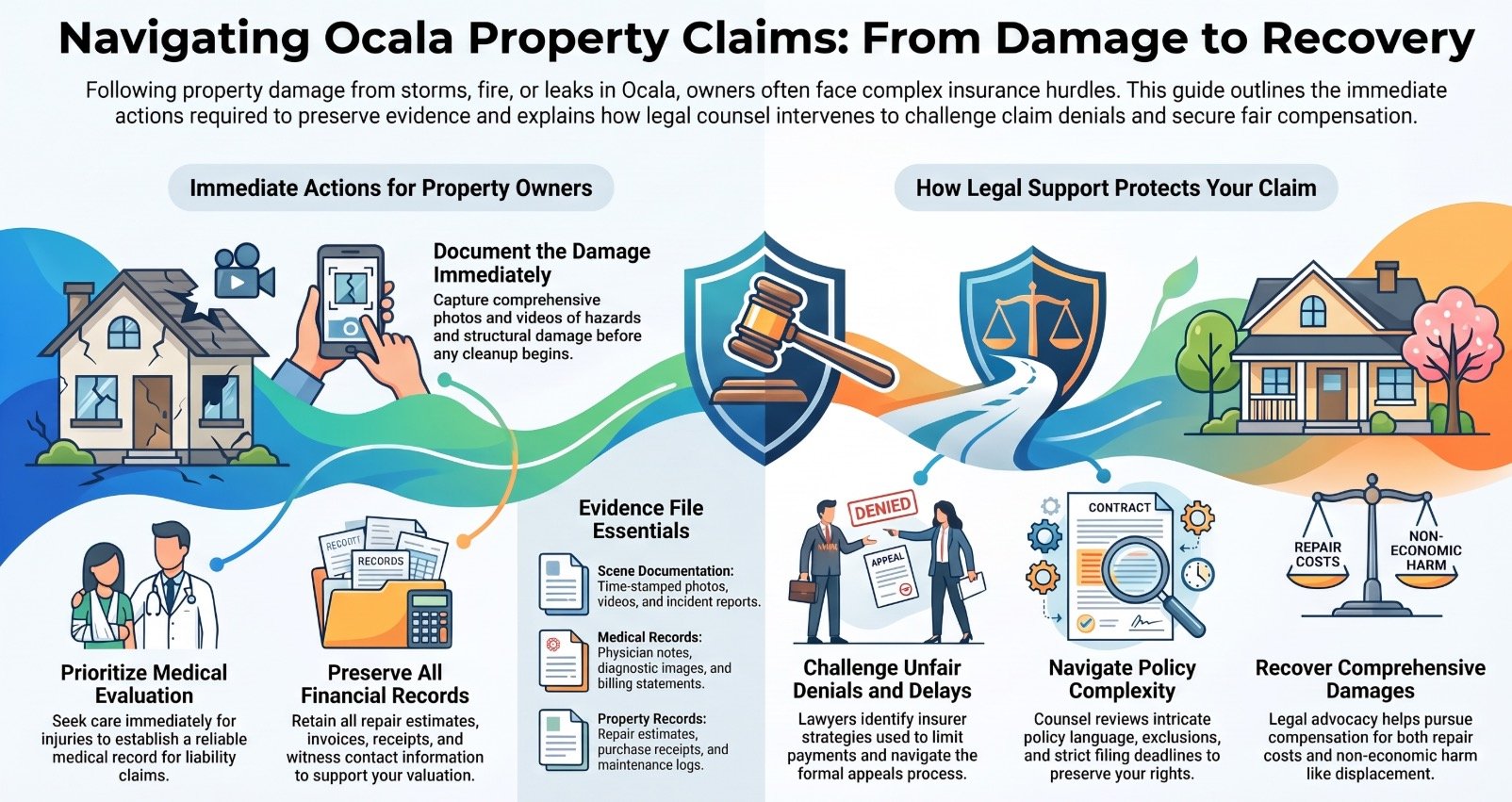
When an Ocala property claim involves significant damage or an insurer’s refusal to provide fair compensation, an experienced property claims lawyer can protect the policyholder’s legal and financial interests. The lawyer can review the policy, assess covered losses, and explain available options in clear terms. This assistance helps property owners make informed decisions while focusing on restoring homes, businesses, and community resources.
Support may include documenting structural damage, gathering repair estimates, and organizing photographs, invoices, and correspondence. Staying aware of policy deadlines can help protect important rights and prevent avoidable procedural problems. Counsel can also communicate with adjusters, challenge incomplete investigations, and identify claim denial strategies used to limit or withhold payment. When necessary, the lawyer may negotiate with the insurer or pursue appropriate legal remedies on the policyholder’s behalf.
A dedicated legal advocate reduces administrative burdens, preserves evidence, and pursues a fair evaluation of the claim. This approach promotes accountability while helping affected individuals and organizations recover resources needed for safe, stable recovery.
Understanding Ocala Property Claims Injury Cases


Ocala property claims injury cases generally arise when property damage creates physical hazards, causes personal injuries, or leads to disputes over insurance coverage and compensation. These matters require careful review of the event, the property’s condition, and the losses sustained by affected individuals. Investigating liability may involve identifying responsible parties, evaluating notice of a dangerous condition, and determining whether reasonable precautions were taken. Medical records, photographs, witness accounts, repair estimates, and insurance documentation can help establish the connection between the incident and the claimed damages. Coverage language also warrants close attention because policy provisions, exclusions, deadlines, and proof requirements may influence recovery. A thorough assessment considers immediate medical needs, ongoing treatment, lost income, property losses, and other documented consequences. Legal professionals serving injured community members can help preserve evidence, communicate with insurers, and pursue an appropriate resolution while maintaining accuracy, fairness, and respect for each person’s circumstances. Early guidance may prevent avoidable errors during the claims process.
Don’t Wait. Call Our Florida Personal Injury Lawyers Now!
Common Causes of Ocala Property Claims
OUR CONSULTATIONSARE FREE
START YOUR FREE CASE REVIEW

Ocala property claims commonly arise from hurricanes and severe storms, which may damage roofs, structures, and personal belongings. Fire and smoke damage, plumbing failures, and water leaks can also create substantial repair costs and disrupt a property’s use. Theft and vandalism represent additional causes of loss, often requiring careful documentation and timely insurance review.
Hurricane And Storm Damage
Severe weather can cause extensive property damage in Ocala, particularly through hurricanes, tropical storms, high winds, and heavy rainfall. These events may remove roofing materials, break windows, damage siding, and allow water to enter ceilings, walls, and flooring. Flooding can also affect foundations, electrical systems, personal belongings, and detached structures. Prompt documentation is important. Photographs, videos, repair estimates, receipts, and communications with insurers can help establish the scope and timing of the loss. Standing water requires immediate attention because delayed drying may lead to structural deterioration and conditions requiring Mold remediation. Property owners and managers should arrange qualified inspections while preserving damaged materials when reasonably safe. Tenants should review lease provisions and understand tenant rights concerning habitability, notice, temporary relocation, and responsibility for reporting storm-related conditions to landlords.
Fire And Smoke Damage


Fire and smoke damage can result from kitchen accidents, electrical failures, heating equipment, lightning, or nearby wildfires, creating losses that extend beyond the visibly burned areas. Smoke can infiltrate walls, insulation, furnishings, and air systems, leaving persistent odors and corrosive residue even when flames remain contained. Occupants may experience smoke exposure symptoms, including coughing, headaches, throat irritation, breathing difficulty, or eye discomfort, requiring prompt medical attention when appropriate. Firefighters, neighbors, and property owners may also face unsafe conditions from weakened structures and contaminated belongings. Immediate documentation, professional cleaning, and careful inventorying can help preserve evidence and support a fair claim. Emergency roof mitigation may be necessary when firefighting efforts or flames compromise the roof, limiting further weather exposure while qualified professionals assess structural safety and repair needs.
Plumbing And Water Leaks
Beyond fire-related losses, plumbing failures and water leaks are common sources of Ocala property claims. Broken supply lines, deteriorated pipes, appliance connections, and clogged drains can release large amounts of water, damaging flooring, walls, cabinetry, and personal belongings. Hidden leaks may remain undiscovered until structural deterioration or Mold growth becomes apparent.
Prompt action can reduce additional harm. Property owners should shut off affected water lines, document visible damage, preserve damaged materials when safe, and notify insurers promptly. Professional drying and restoration services may help limit contamination and secondary losses. Pipe burst prevention includes insulating vulnerable plumbing, maintaining appropriate indoor temperatures, repairing corrosion, and monitoring unusual pressure or moisture.
Coverage often depends on the policy’s language, the leak’s cause, and whether the damage was sudden or developed gradually. Careful records and informed guidance can help affected owners present accurate claims and pursue fair treatment.
Theft And Vandalism
Theft and vandalism can create substantial property losses in Ocala, particularly when forced entry damages doors, windows, locks, walls, or security systems. Stolen belongings may include electronics, tools, jewelry, business equipment, and personal records. Vandalism can also occur without theft, leaving broken fixtures, defaced surfaces, or damaged landscaping that requires immediate repair.
Property owners should report incidents promptly to law enforcement and preserve photographs, video footage, receipts, repair estimates, and police reports. Thorough claim documentation can help establish the nature and value of covered losses. Insurers may investigate whether policy exclusions, security conditions, occupancy issues, or inadequate proof affect coverage. Review an insurance denial carefully, especially when the stated reasons conflict with policy language or available evidence. Legal guidance may help property owners pursue fair treatment while addressing urgent safety and repair needs.
Legal Rights of Ocala Property Claims Injury Victims
When property damage causes physical injury, Ocala victims may have legal rights beyond reimbursement for the damaged premises or belongings. Depending on the circumstances, an injured person may pursue compensation for medical treatment, lost income, pain, and other legally recognized losses.
A careful evaluation can clarify which parties may be responsible and which deadlines apply.
- Premises liability principles may support a claim when an owner, occupier, or responsible party failed to address a dangerous condition or provide reasonable protections.
- Insurance policy analysis may identify coverage, exclusions, notice requirements, and available benefits under property, liability, or other applicable policies.
- Documented medical records, photographs, repair estimates, witness information, and communications can help preserve evidence and support an accurate demand.
Victims may also have the right to consult counsel before providing recorded statements or accepting settlement offers. A qualified Ocala property claims lawyer can help protect those rights, coordinate with insurers, and pursue fair compensation while treating each individual’s circumstances with diligence and respect.
Why Do Ocala Property Claims Injuries Happen?
Why do Ocala property claims injuries happen? They often arise when unsafe conditions, storm damage, or neglected maintenance create hazards on residential or commercial premises. A damaged roof may permit water intrusion, while unstable structures, exposed wiring, or contaminated areas can threaten occupants, contractors, and visitors. These risks may worsen when an insurer’s Insurance delay prevents timely repairs and leaves dangerous conditions unresolved.
Disputes can also arise when claim documentation is incomplete, inconsistent, or lacks sufficient detail. Without a thorough property inspection, important damage and safety concerns may remain undiscovered, allowing preventable injuries to occur. Evidence preservation is equally significant because photographs, repair records, witness accounts, and professional findings may establish how the condition developed and whether responsible parties received notice.
Property owners, insurers, and contractors each may influence safety through maintenance decisions, inspections, communication, and claims handling. Understanding these contributing factors helps service-oriented professionals recognize why prompt, fair claim administration and careful hazard management are crucial to protecting affected individuals.
What Should You Do After an Ocala Property Claims Injury?
After a property-related injury, the injured party should seek immediate medical care and follow the provider’s recommendations. Document the property’s condition, take photographs, gather witness information, and keep related records to preserve important evidence. Consulting an Ocala property claims lawyer may clarify available remedies and help prepare a claim.
Seek Immediate Medical Care
Prompt medical evaluation is essential following an injury related to an Ocala property claim, even if the initial symptoms appear minor. A qualified healthcare professional can identify hidden conditions, provide appropriate recovery, and establish a reliable medical record. Timely care may also prevent complications and support a person’s recovery, allowing family members and caregivers to respond responsibly to changing needs.
Patients should describe how the incident occurred, identify all symptoms, and follow prescribed instructions. They should attend recommended follow-up appointments and retain records of diagnoses, treatment, expenses, and work restrictions. Consistent medical care can clarify the injury’s impact during an insurance bad faith dispute or settlement negotiation. Delaying treatment may create questions about causation, severity, or responsibility. Anyone facing serious harm should prioritize health and consult qualified legal counsel regarding available protections.
Document The Property
Because property conditions can change quickly, an injured person should photograph and document the scene as soon as it is reasonably safe to do so. Images should show the entire area, specific hazards, lighting, warning signs, and footwear or personal items involved. A written account should record the date, time, location, weather, and events leading to the injury. Preserving this information creates a reliable photo timeline before repairs or cleanup alter important details. Collect names and contact information for witnesses promptly, since accurate recollections can support witness credibility. Copies of incident reports, medical records, receipts, and correspondence provide valuable Insurance documentation. If property damage occurred, repair estimates and invoices should be retained. These organized records can help present a clear, accurate account to insurers and other responsible parties.
Consult A Claims Lawyer
When should an injured property visitor consult a claims lawyer? Consultation is prudent when a hazardous condition caused significant harm, medical treatment is ongoing, or the property owner disputes responsibility. Early legal guidance can protect evidence, identify applicable insurance coverage, and prevent statements that could weaken a claim. A lawyer can help manage the claims timeline, ensuring notice requirements, medical documentation, and filing deadlines receive timely attention. If an insurer delays payment, offers inadequate compensation, or refuses liability, counsel may evaluate policy language and pursue Insurance denial appeals. Professional representation also helps coordinate communications with property managers, insurers, and medical providers while preserving the injured visitor’s interests. Individuals serving others should seek prompt, informed assistance rather than letting uncertainty compromise recovery or the fair resolution of a legitimate property injury claim.
Critical Evidence in an Ocala Property Claims Injury Case
Critical evidence may establish the condition of the scene, the extent of injuries, and the resulting losses in an Ocala property claims case.
Key materials commonly include:
- Incident scene photos and witness statements;
- Medical treatment records; and
- Property damage documentation.
Together, these records can support liability, injury causation, and the claim’s value.
Incident Scene Photos
Photographs taken at a property incident scene can preserve conditions that may change, be repaired, or disappear before an insurance investigation or legal inspection occurs. Images should document hazards, structural damage, lighting, warning signs, property layout, and surrounding conditions from multiple distances and angles. A consistent record can help clarify what was present and support a fair evaluation of responsibility and losses. The person taking photographs should note photo timestamps and preserve metadata by retaining original files rather than relying only on edited or compressed copies. Take care when images include residents, visitors, or private belongings. Consent requirements may apply, particularly when photographing occupied areas or individuals. Organized files, written descriptions, and secure backups can help preserve reliable evidence for those seeking to serve affected property owners.
Medical Treatment Records
Medical treatment records provide essential evidence in an Ocala property claims injury case by documenting the nature, severity, and progression of the injuries involved. Physician notes, diagnostic images, prescriptions, and therapy records can establish when symptoms began and how consistently you pursued treatment. These materials may connect the reported condition to the incident while identifying preexisting issues that insurers could otherwise emphasize. Complete records also show recommended care, missed appointments, functional limitations, and related expenses. With proper authorization, the injured individual can collect records from every relevant provider and preserve billing statements with clinical documentation. Organized evidence supports informed insurance negotiation tips and helps counsel evaluate claim denial appeals. Accurate medical documentation allows advocates to present a clear, responsible account of harm while protecting the claimant’s opportunity to receive appropriate compensation.
Property Damage Documentation
When a property loss occurs, thorough damage documentation establishes the property’s condition and the scope of the resulting financial harm in an Ocala property claims injury case. Photographs and videos should capture each affected area, structural condition, damaged belongings, and visible hazards before cleanup or repairs begin. Emergency repair photos can preserve evidence when immediate action is necessary to prevent additional damage. Written inventories should identify items, purchase dates, estimated values, and receipts when available. Contractors’ estimates, invoices, inspection reports, and mitigation records can further demonstrate reasonable costs and the work performed. Organized documentation may also clarify insurance denial reasons by comparing policy requirements with observed conditions. Careful preservation of these materials helps legal representatives evaluate coverage, challenge unsupported conclusions, and pursue fair treatment for affected property owners and their families.
Witness Statements
Witness statements can provide essential evidence in an Ocala property claims injury case by documenting the property’s condition, the cause of the loss, and the events surrounding the damage. Independent observers may confirm when a hazard appeared, whether warnings were provided, and how an incident affected occupants or visitors. Promptly obtaining witness statements can preserve accurate recollections before details fade or accounts change. Each statement should identify the witness, describe personal observations, and distinguish direct knowledge from assumptions. Photographs, messages, and other records may support the witness’s account and establish a reliable timeline. Witness credibility issues can arise when testimony conflicts, the witness has a personal interest, or the account lacks specific details. Careful interviews and consistent documentation help present evidence fairly, support responsible claim evaluation, and protect legitimate interests.
Don’t Wait. Call Our Florida Personal Injury Lawyers Now!
Long-Term Effects of Ocala Property Claims Injuries
Long-term injuries from property claims may cause chronic pain and reduced mobility, affecting a person’s ability to work and perform daily activities. Emotional and psychological effects, including anxiety or ongoing distress, may also require continued treatment and support. These conditions can create substantial ongoing medical expenses, including rehabilitation, medication, and expert care.
Chronic Pain And Mobility
How can a property-related injury affect a person’s daily mobility years after the incident? Persistent pain from falls, structural hazards, or inadequate maintenance may restrict walking, standing, lifting, and driving long after visible wounds recover. Joint damage, nerve irritation, and recurring inflammation can make ordinary tasks require careful planning or assistance. A person may need mobility aids, modified housing, or workplace accommodations to remain independent and safe. Medical records should document changing symptoms, functional limitations, and the treatment timeline, including therapy, diagnostic testing, procedures, and periods of improvement or decline. Medication side effects may also cause dizziness, fatigue, or reduced coordination, creating additional safety concerns. A thorough evaluation can clarify how an injury continues to affect mobility and what services, expenses, and practical support may be needed for long-term recovery and daily functioning.
Emotional And Psychological Effects
Although physical injuries may mend, a property-related incident can produce lasting emotional and psychological effects that interfere with a person’s safety, independence, and quality of life. Survivors may experience post-incident anxiety, disrupted sleep, irritability, or fear of returning to the location where the event occurred. These symptoms can affect relationships, employment, and participation in ordinary activities. Insurance stress may intensify the burden when individuals must repeatedly explain losses, document conditions, or respond to conflicting insurer decisions. Claim delays and Compensation barriers can create uncertainty, particularly when household stability depends on a timely resolution. Supportive family members, counselors, and trusted advocates may help affected individuals recognize these concerns and pursue appropriate assistance. A property claims lawyer can also address procedural obstacles, helping protect the individual’s interests while reducing avoidable strain during recovery.
Ongoing Medical Expenses
Injuries arising from a property incident may require ongoing medical care after initial treatment ends. Follow-up visits, rehabilitation, prescription medication, and corrective procedures can create substantial expenses for injured individuals and their families. These costs may continue for months or years, particularly when an injury causes permanent limitations or requires periodic monitoring.
Homeowners insurance may provide benefits for reasonable medical expenses when a property condition caused or contributed to the injury. However, policy coverage depends on the policy language, applicable exclusions, liability findings, and available limits. Careful documentation is critical. Medical records, treatment plans, invoices, and expert opinions can help establish both the necessity and expected duration of care. A property claims lawyer can evaluate available coverage, identify responsible parties, and pursue compensation that accounts for future medical needs.
Proving Liability in Ocala Property Claims Injury Cases
Establishing liability in an Ocala property injury claim requires evidence that the property owner or responsible party knew, or reasonably should have known, about a dangerous condition and failed to address it within a reasonable time. Useful proof may include photographs, surveillance footage, incident reports, inspection records, maintenance logs, and witness statements. Documentation should show where the hazard existed, how long it remained, and whether reasonable safety measures were available. Medical records can connect the incident to the claimed injuries, while testimony may explain how the condition caused the fall or other harm. Evidence preservation is crucial because video systems, electronic records, and physical conditions may change or disappear. Injured individuals should avoid altering the scene and should promptly document relevant details. Careful insurer communication also matters, particularly when statements could affect how liability is interpreted. A qualified legal professional can organize the evidence, identify responsible parties, and present a clear, service-oriented claim that supports fair treatment for the injured person.
Dealing With Insurance Companies After an Ocala Property Claims Injury
When an Ocala property injury claim is reported, the injured person may need to communicate with one or more insurance companies while evidence and medical records are still developing. Statements should remain accurate, limited, and consistent with documented facts. Adjusters may request recorded interviews, authorizations, photographs, or medical information during a coverage investigation. Before signing releases or accepting payment, the claimant should understand whether the proposal addresses all present and future losses.
A qualified Ocala property claims lawyer can review policy language, preserve evidence, and identify defenses to delay, underpayment, or exclusion arguments. Denied claim strategies may include submitting additional documentation, challenging factual findings, requesting reconsideration, and pursuing available administrative or legal remedies. When liability, causation, or damages remain disputed, expert testimony may clarify unsafe conditions, medical consequences, or necessary repairs. Counsel can also explain how settlement discussions may relate to the lawsuit timeline without promising a particular result. Careful communication helps protect the claimant’s interests while supporting a fair resolution and serving affected individuals responsibly.
What to Expect During an Ocala Property Claims Injury Claim Process
The Ocala property claims injury process typically begins with an initial assessment of the damage, coverage, and supporting circumstances. Evidence is then gathered and presented while negotiations with insurers address the claim’s value and applicable policy terms. The process concludes when the parties reach a resolution or pursue further legal remedies if a fair settlement is not offered.
Initial Claim Assessment
During an initial claim assessment, an Ocala property claims lawyer reviews the loss circumstances, available insurance coverage, and evidence supporting the policyholder’s position. The assessment typically identifies reporting deadlines, policy requirements, exclusions, and potential disputes concerning causation or valuation. Counsel may explain Insurance communication strategies so the policyholder can respond accurately while preserving contractual rights and avoiding unnecessary statements that could complicate review. A Damage documentation checklist may organize records such as photographs, repair estimates, receipts, maintenance history, and correspondence, although detailed evidence gathering occurs separately. The lawyer also evaluates whether the insurer’s proposed adjustment appears consistent with the policy and the property’s condition. Clear guidance at this stage helps the policyholder make informed decisions, coordinate with affected occupants, and pursue a fair resolution.
Gathering Property Evidence
Strong property evidence gives an Ocala property claims lawyer a reliable basis to evaluate the loss and challenge an insurer’s conclusions. Documentation typically begins with dated photographs and videos showing damaged materials, affected rooms, exterior conditions, and nearby hazards. Witness statements, maintenance records, purchase receipts, inspection reports, and prior repair invoices can establish the property’s condition before the event. Accurate roof measurements are especially important when wind or storm damage requires assessing surface area, materials, and replacement scope. Professionals may inspect concealed damage, preserve damaged components, and record safety concerns before cleanup or emergency work alters the evidence. Organized records also help estimate repair costs by linking each observed condition to the required labor, materials, and code requirements. This evidence supports a complete, service-oriented review of the claim.
Negotiating With Insurers
Although insurers may present settlement offers as conclusive, negotiation generally requires careful review of the policy, available evidence, repair estimates, and the insurer’s stated reasons for accepting or limiting coverage. Adjuster communication should remain factual, organized, and documented throughout the claim. Representatives may request written explanations for valuation differences, identify overlooked damage, and submit photographs, invoices, expert opinions, or contractor estimates supporting the property owner’s position. They may also clarify deadlines, required forms, and any conditions attached to an offer without making unsupported concessions. Effective claim denial handling involves examining the cited exclusions, reporting inconsistencies, and procedural grounds, then responding with relevant policy language and evidence. A measured approach helps protect the owner’s interests while preserving professional relationships and allowing informed decisions before the claim reaches a final resolution.
Resolving Your Claim
Resolving an Ocala property claim typically requires confirming the covered damage, reviewing the insurer’s valuation, and documenting any remaining disagreement before finalizing a settlement. The claimant should compare repair estimates, policy provisions, photographs, invoices, and adjuster reports to identify incomplete assessments or documentation errors. Evidence preservation remains critical, particularly when damaged materials must be removed to protect occupants or prevent further loss. If an Insurance denial occurs, review the written explanation against the policy’s exclusions, conditions, and deadlines. Coverage disputes may require additional inspections, expert opinions, or a formal appeal supported by organized records. Once the parties agree on responsibility and value, review settlement documents carefully before accepting them. If negotiations fail, legal counsel can explain available remedies and help protect the claimant’s interests throughout the process.
Compensation for Ocala Property Claims Injury Damages
What compensation may be available in an Ocala property claims injury case depends on the nature of the loss, the extent of the injuries, and the evidence establishing liability. A careful review of policy coverage can identify applicable benefits, exclusions, deductibles, and conditions affecting payment. Counsel may also evaluate whether injuries resulted from unsafe property conditions, delayed repairs, or another responsible party’s conduct.
Prompt claim documentation supports the process by preserving photographs, medical records, repair estimates, witness information, correspondence, and other proof. Track insurance timelines closely because notice requirements, investigation periods, and filing deadlines may affect available remedies. A representative serving the claimant’s interests can communicate with insurers, challenge unsupported denials, and protect the record from incomplete assessments.
The appropriate settlement strategy depends on documented facts, anticipated treatment, liability evidence, and the insurer’s position. Before accepting an offer or signing a release, the claimant should understand its scope and potential effect on unresolved injuries or related claims.
Economic vs Non-Economic Damages in Ocala Property Claims Cases
Ocala property claims may involve economic damages, such as repair costs, lost rental income, and temporary relocation expenses. Non-economic harm can include inconvenience, disruption, and diminished use of the property, depending on the claim and applicable law. Establishing either category generally requires organized records, professional assessments, and evidence connecting the losses to the insurer’s conduct or covered damage.
Economic Damage Categories
Although property claims often center on the cost of repairing or replacing damaged structures, recoverable losses may include several distinct economic damage categories. Direct property loss can involve structural damage, damaged contents, landscaping, equipment, and other covered assets. Repair costs may include labor, materials, permits, debris removal, and temporary measures needed to protect the premises from additional damage. When restoration is impractical, replacement expenses may reflect the cost of comparable materials, fixtures, and personal property, subject to policy limits and valuation provisions. A covered event may also cause business interruption, including lost income, continuing operating expenses, and extra expenses incurred to maintain operations elsewhere. Documentation such as invoices, estimates, inventory records, payroll information, and financial statements helps establish these losses and supports fair evaluation by insurers and claims professionals.
Non-Economic Harm Explained
When a covered property loss affects more than repair costs and financial records, the resulting harm may include non-economic damages that are more difficult to measure. Such harm can involve disrupted routines, loss of privacy, anxiety, diminished comfort, and the strain of living in unsafe or unusable conditions. Pain impacts may arise when property damage creates health risks, aggravates existing conditions, or requires prolonged displacement. Unlike economic damages, these losses do not have a simple invoice or market price. Their significance may depend on the household’s circumstances, the disruption’s duration, and its effect on daily life. Liability evidence concerns responsibility for the loss, while non-economic harm concerns the human consequences that follow. A careful assessment recognizes these consequences and supports fair treatment for affected property owners and families.
Proving Property Claim Damages
Proving property claim damages in Ocala requires clear evidence connecting the covered loss to both measurable expenses and documented effects on the occupants’ lives. Economic damages may include repair invoices, temporary housing, damaged personal property, mitigation costs, and lost use supported by receipts, estimates, photographs, and contractor statements. Non-economic effects, such as displacement, interrupted routines, and diminished enjoyment of the home, require contemporaneous records, witness accounts, and, when appropriate, medical documentation. Insurance adjuster tactics may minimize scope, question causation, or demand unnecessary proof. Promptly preserving photographs, communications, and damaged materials helps prevent evidence spoliation. Detailed timelines can address fault allocation disputes involving contractors, maintenance, or weather. A sound settlement negotiation strategy organizes evidence, separates covered from excluded losses, and presents a credible valuation that supports fair resolution for affected occupants and their families.
When an Ocala Property Claims Injury Case Goes to Trial vs. Settlement
The decision to resolve an Ocala property claims injury case through settlement or trial depends on the strength of the evidence, the extent of the injuries, and the parties’ willingness to accept litigation risks. Settlement may provide a faster, more predictable resolution, allowing an injured person to address medical expenses, repairs, and related needs without prolonged court involvement. However, the amount offered must reasonably reflect documented losses and future consequences.
Trial strategy becomes important when insurers deny responsibility, undervalue damages, or refuse meaningful negotiations. Evidence gathering includes preserving photographs, estimates, medical records, communications, and inspection reports. Witness preparation helps present clear testimony about the incident, property conditions, injuries, and financial impact. Counsel may also evaluate expert opinions when technical issues affect liability or valuation.
Settlement timelines vary according to investigation, negotiations, and required documentation. A trial can take much longer and carries uncertainty, although it may give a judge or jury an opportunity to award appropriate damages. Careful preparation enables informed decisions that protect the claimant’s interests while supporting fair treatment.
Florida Laws That May Affect Your Ocala Property Claims Case
Florida laws may affect an Ocala property claims case by establishing filing deadlines, insurance obligations, and standards for proving covered losses. These rules can guide policyholders, adjusters, and attorneys who seek fair treatment for individuals and families facing property damage.
- Policy language controls coverage, including Florida coverage exclusions for wear, flooding, neglect, or other stated risks. Careful review may clarify whether an insurer must pay for specific repairs.
- Insurers generally must investigate claims promptly, communicate decisions, and provide reasonable explanations. Delays, inadequate inspections, or unsupported denials may support a coverage dispute.
- Policyholders should document damage, preserve receipts, cooperate with reasonable requests, and monitor claim dispute deadlines established by the policy or applicable law.
Florida regulations may also address proof-of-loss forms, appraisal procedures, mediation, and unfair claim practices. Because requirements vary by policy language and loss circumstances, organized records and timely professional guidance can help protect a claimant’s interests. A qualified Ocala property claims lawyer may evaluate coverage, communications, documentation, and available remedies while promoting an informed resolution for those requiring assistance.
The Statute of Limitations for Ocala Property Claims Injury Cases
When property damage causes related bodily injuries, the applicable statute of limitations may determine how long an injured person has to pursue compensation. In Florida, the deadline depends on the legal theory involved, the date of the injury, and whether another person’s negligence caused the harm. Bodily injury deadlines may differ from deadlines governing damage to a home, vehicle, or other property, so combining claims does not necessarily create one uniform filing period.
Insurance policies also impose notice, proof-of-loss, and suit-limitation requirements. These contractual provisions can establish insurance dispute timelines that operate alongside statutory deadlines. Missing either type of deadline may result in a denied claim or loss of the right to seek judicial relief, even when the underlying loss appears well documented.
Because exceptions and special rules may apply, including provisions affecting minors or delayed discovery, the relevant dates should be recorded carefully. Prompt attention helps preserve accurate evidence and supports informed decisions benefiting everyone affected by the incident.
Don’t Wait. Call Our Florida Personal Injury Lawyers Now!
How an Ocala Property Claims Lawyer Can Help You
After identifying the applicable deadlines, an Ocala property claims lawyer can help preserve the claim and evaluate the available legal options.
The lawyer may organize the matter around three critical areas:
- Insurance claim timing: Counsel can review policy deadlines, notice requirements, and correspondence to determine whether the insurer handled the claim consistently with the policy and applicable law.
- Property preservation: The lawyer can advise on reasonable repairs, mitigation, and protection against additional damage while helping maintain evidence needed to assess responsibility and covered losses.
- Incident documentation: Counsel can collect photographs, estimates, receipts, inspection reports, witness accounts, and other records that clarify the event, the resulting damage, and the claimed value.
A lawyer may also communicate with adjusters, identify disputed coverage provisions, and organize supporting materials for a demand or litigation. This structured assistance can help property owners serve affected families, businesses, and communities responsibly by pursuing accurate compensation without sacrificing important evidence or procedural protections.
When to Contact an Ocala Property Claims Lawyer
Prompt attention can be important when property damage creates uncertainty about insurance coverage, repair obligations, or claim deadlines. A property owner should contact an Ocala property claims lawyer when an insurer delays inspection, requests repeated documentation, undervalues the loss, or denies a claim without a clear explanation. Early guidance may also be appropriate after storms, fires, plumbing failures, or other events that create substantial damage and complicated evidence requirements.
Legal consultation becomes especially relevant when policy language is difficult to interpret, multiple causes contributed to the loss, or contractors and insurers provide conflicting recommendations. An attorney can help preserve photographs, estimates, receipts, correspondence, and other records before facts become harder to establish. Prompt review may also help identify delayed claim deadlines, notice requirements, and potential procedural barriers. When settlement discussions stall, a lawyer can evaluate an insurance dispute strategy and explain available options. Seeking assistance early can help property owners make informed decisions while protecting resources needed for safe, responsible repairs.
Why You Need an Experienced Ocala Property Claims Lawyer
An experienced Ocala property claims lawyer can provide informed guidance when an insurer disputes coverage, questions the cause of damage, or undervalues a legitimate loss. Legal counsel helps policyholders understand policy provisions, identify procedural requirements, and respond effectively to denied claim letters without overlooking important deadlines.
Experienced representation also supports evidence preservation. Photographs, repair estimates, invoices, inspection reports, and communications can establish the extent and cause of property damage. A lawyer can organize this information and address incomplete or inaccurate assessments by insurance adjusters.
When liability or valuation remains contested, counsel can evaluate policy language, applicable Florida law, and the insurer’s investigation. This analysis may reveal coverage errors or unreasonable claim handling that could otherwise reduce recovery. During settlement negotiation, an attorney can present documented losses, challenge unsupported positions, and pursue a resolution that reflects the policyholder’s legitimate interests. This support lets property owners focus on safety and recovery while their rights receive careful, informed protection.
How to Choose the Right Ocala Property Claims Lawyer for Your Case
When selecting an Ocala property claims lawyer, policyholders should evaluate the attorney’s experience with cases involving disputed coverage, property damage valuation, and insurer claim investigations. A qualified professional should explain policy coverage limitations clearly, identify potential claim weaknesses, and outline realistic alternatives without promising a particular outcome.
Policyholders may also consider the lawyer’s record handling insurance negotiation, documentation practices, and communication with clients, adjusters, and opposing counsel. The attorney should demonstrate an ability to review policies, organize evidence, assess repair estimates, and address delays or denials through an orderly strategy.
References, professional credentials, and experience with Florida property insurance law can provide additional insight. During an initial consultation, the policyholder should ask about fees, anticipated procedures, timelines, and responsibilities. A suitable lawyer will answer directly and ensure the client understands important decisions. Selecting counsel based on competence, transparency, and service-oriented attention can help protect a policyholder’s interests while supporting a fair resolution of the property claim.
About The Law Offices of Anidjar & Levine
The Law Offices of Anidjar & Levine represents policyholders seeking informed guidance in property insurance disputes. Its attorneys assist individuals, families, and business owners who face damage claims involving homes, commercial buildings, and other insured property.
The firm’s Local Legal Team evaluates policy language, investigates reported losses, and helps clients understand potential coverage issues. Its work may address storm damage, water intrusion, fire, mold, and disputes concerning claim valuation or delays. By organizing documentation and communicating with insurers, the attorneys seek to protect policyholders’ interests throughout the claims process.
The firm also emphasizes individualized attention, recognizing that property damage can affect housing, financial stability, and community responsibilities. A Proven Track Record reflects experience handling insurance-related matters and pursuing appropriate resolutions through negotiation or, when necessary, litigation. During a consultation, prospective clients can discuss available options while the firm assesses the circumstances, applicable policy provisions, and supporting evidence. Its approach is centered on accountability, informed decision-making, and service to those seeking fair treatment.
Frequently Asked Questions
Can I File a Property Claim for Damage Caused by Mold or Hidden Defects?
You may file a property claim for mold or hidden defects, but coverage depends on the policy, cause, timing, and applicable exclusions. Mold arising from a covered water loss may receive limited or full benefits, while gradual deterioration and poor maintenance are often excluded. Policyholders should document conditions promptly, preserve damaged materials, and consider mold inspection options. Evidence of hidden defects, including photographs, expert reports, receipts, and repair records, can support causation and valuation.
What Happens if My Ocala Property Is Damaged While Vacant or Unoccupied?
Damage to an Ocala property while vacant or unoccupied may trigger coverage restrictions, exclusions, or reduced benefits. A policyholder should review vacancy provisions, maintain required security measures, and promptly notify the insurer when circumstances change. Insurance obligations may include reasonable maintenance, property inspections, utility management, and timely reporting. Liability coverage can also be affected if unsafe conditions develop. Documenting damage and preserving records supports a fair claim evaluation and helps protect available benefits.
Does My Homeowners Insurance Cover Damage From Wear and Tear?
Homeowners insurance generally does not cover damage caused by ordinary wear and tear, gradual deterioration, poor maintenance, or aging materials. Policies cover sudden, accidental events, such as storms or burst pipes. Insurance exclusions may also apply to mold, corrosion, mechanical breakdowns, or deferred repairs. Coverage limits determine the maximum payable amount for covered losses, while endorsements may expand protection. Policyholders should review their terms and promptly document developing damage.
Can I Pursue a Claim Against a Contractor for Negligent Property Repairs?
A property owner can often pursue a claim against a contractor for negligent property repairs when the work caused additional damage or failed to meet professional standards. The contractor’s Duty of care may arise from law and the agreement. To establish contractor negligence, the owner generally needs proof of breach, such as photographs, expert evaluations, invoices, and correspondence. Repair contract terms may define warranties, deadlines, notice requirements, and available remedies. Legal advice can clarify deadlines and strategy.
How Do Public Adjusters Differ From Ocala Property Claims Lawyers?
Public adjusters represent policyholders in documenting damage, valuing losses, and negotiating insurance settlements. Ocala property claims lawyers provide legal guidance when disputes involve denied coverage, delayed payments, bad-faith conduct, liability, or litigation. A public adjuster’s role centers on claim preparation and Coverage advocacy, while a lawyer develops claim strategy, interprets contracts, preserves legal rights, and pursues remedies in court. Depending on circumstances, policyholders may benefit from both professionals’ coordinated assistance.
—————————
Property claim disputes may involve complex insurance policies, strict filing deadlines, and substantial financial consequences. An experienced Ocala property claims lawyer can assess the loss, interpret coverage, document damages, and pursue the compensation a policyholder may be entitled to receive. The Law Offices of Anidjar and Levine offers guidance throughout the claims process, from the initial review through negotiation or litigation. For assistance with related injury matters, visit an Ocala Personal Injury Lawyer. Prompt legal consultation can help protect important rights and support a thorough, well-prepared claim resolution.


