The Law Offices of Anidjar and Levine can investigate how a motorcycle crash occurred, identify potentially responsible drivers or other parties, and explain an injured rider’s legal options. Common causes include distracted driving, failure to yield, unsafe lane changes, speeding, and hazardous road conditions. Evidence such as photographs, witness accounts, police reports, and medical records may help establish liability and document losses. Florida deadlines and comparative fault rules can affect a claim. For related legal guidance, visit our Tampa Personal Injury Lawyer page.
Main Takeaways
- A Tampa motorcycle accident lawyer can investigate whether distraction, failure to yield, unsafe lane changes, speeding, or road hazards contributed to a crash.
- Evidence may include crash reports, photographs, witness accounts, traffic footage, vehicle damage, and records showing road or visibility conditions.
- Police reports provide initial observations, not final fault decisions; review them for accuracy and ask the agency about corrections if needed.
- A lawyer can assess whether another party’s negligence caused documented injuries and losses, while considering Florida’s comparative-fault rules.
- Preserve records promptly, follow medical advice, and consult a lawyer about deadlines before accepting a settlement or signing a release.


How We Can Help With Your Tampa Motorcycle Accident Causes Injury Claim
When a motorcycle crash causes serious injuries, an attorney can help an injured rider pursue compensation and manage the legal process. Counsel can explain your options, outline key deadlines, and help you understand what information may support your claim. This guidance can reduce uncertainty while the injured person focuses on medical care and daily needs.
Effective Claim Documentation may include medical records, treatment expenses, wage information, and communications related to the injury. An attorney can organize these materials, identify missing information, and present the claim clearly to insurers or other responsible parties. Careful preparation helps guarantee that the rider’s losses are accurately described.
Recovery Planning can also involve coordinating legal steps with ongoing treatment needs. Counsel may track case progress, respond to requests, and provide updates so the rider can make informed decisions. When appropriate, the attorney can negotiate for a resolution or prepare the matter for further proceedings. This support allows injured riders and their families to focus more on recovery and stability.
OUR CONSULTATIONSARE FREE
START YOUR FREE CASE REVIEW

Understanding Tampa Motorcycle Accident Causes Injury Cases
Understanding how a motorcycle crash occurred is an important part of evaluating an injury claim in Tampa. A careful review can help clarify how the incident unfolded, which evidence may be relevant, and whether another party’s conduct contributed to the harm. This process supports a fair assessment of the injured rider’s needs and the responsibilities of those involved.
Investigators may examine the scene, vehicle damage, photographs, witness accounts, and available records. Roadway design can also matter, including visibility, lane layout, signage, and surface conditions. Weather conditions may affect what participants could see or how they could respond, so they should be considered alongside other facts rather than treated as a complete explanation.
Medical documentation is another important part of an injury case. It can connect reported symptoms and treatment to the collision and help describe the effects on daily activities. A thorough, evidence-based evaluation can help the parties understand the claim and pursue an informed resolution.
Common Causes of Tampa Motorcycle Accidents
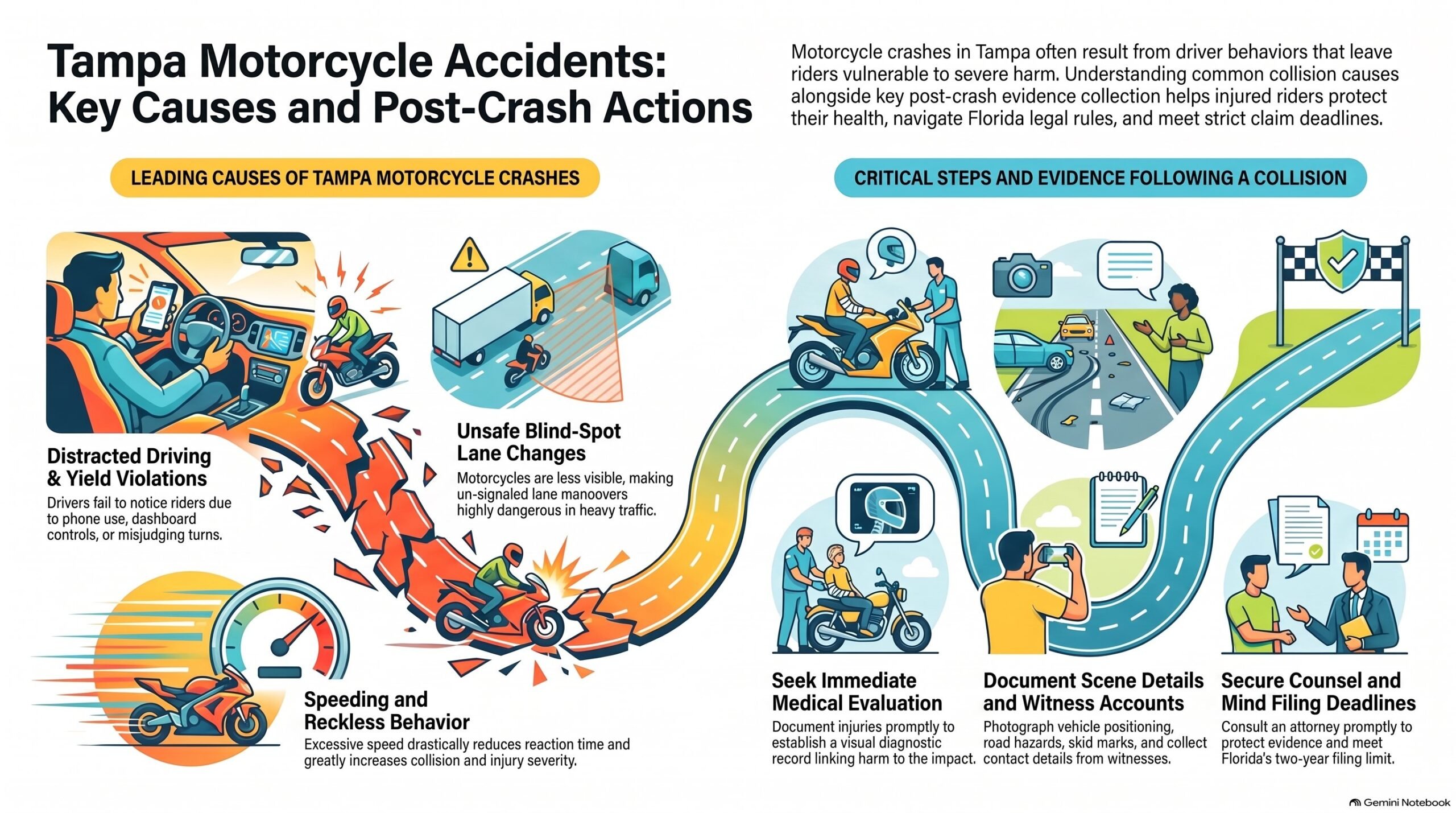
Motorcycle crashes in Tampa often result from driver behaviors that leave riders with little time to react. Common factors include distracted driving, failure to yield, and unsafe lane changes. Speeding and reckless driving can further increase the likelihood and severity of a collision.
Distracted Driving
Distracted driving is a significant cause of motorcycle crashes in Tampa, where a brief lapse in attention can prevent a driver from noticing a rider or responding safely to changing traffic conditions. Phone Distraction can occur when motorists read messages, make calls, or use navigation applications while moving. Even a brief glance away from the road can delay braking or maneuvering, leaving a motorcyclist little time to avoid danger. Dashboard Distraction also poses risks when drivers adjust screens, climate controls, or audio systems instead of monitoring surrounding traffic. These actions can reduce awareness of nearby motorcycles, which may be less visible than larger vehicles. Attentive drivers help protect riders and other road users. After a collision, evidence such as phone records, vehicle data, and witness accounts may help clarify whether distraction contributed.
Failure to Yield
When drivers fail to yield the right of way, motorcyclists in Tampa may face sudden hazards at intersections, during turns, or when vehicles enter traffic. A driver turning left may misjudge a motorcycle’s speed or overlook it in approaching traffic, creating a collision risk. Drivers entering from driveways or side streets also must wait until the roadway is clear. Intersection visibility can be limited by parked vehicles, weather, or poor lighting, but drivers remain responsible for checking carefully before proceeding. Signal compliance matters because traffic signals and signs establish who has the right of way and help prevent conflicting movements. When a crash occurs, investigators may review the scene, witness accounts, and available records to determine whether a driver failed to yield. Careful analysis can help clarify responsibility and support injured riders seeking fair treatment.
Unsafe Lane Changes
Because motorcycles are smaller and less visible than passenger vehicles, an unsafe lane change can create an immediate collision risk on Tampa roads. Drivers who move between lanes without checking surrounding traffic may strike a rider traveling beside or behind them. Limited visibility, distracted attention, and failure to signal can make these lane changes especially dangerous in congestion and at highway entrances. Proper mirror adjustment helps drivers monitor nearby vehicles, but mirrors alone may not reveal a motorcycle in an adjacent lane. Drivers should check blind spots directly, signal in advance, and confirm the lane is clear before changing lanes. These precautions protect riders and other road users. When a collision occurs, evidence such as witness accounts, vehicle damage, and traffic footage may help establish how the lane change contributed to the crash.
Speeding and Reckless Driving
Speeding and reckless driving can turn a routine trip into a serious danger for motorcyclists in Tampa. Excessive Speed reduces a driver’s ability to respond to traffic changes, road hazards, and motorcycles in nearby lanes. Because motorcycles offer less physical protection than passenger vehicles, even a brief braking delay can cause severe injuries. Street Racing creates additional risks when drivers accelerate aggressively, weave through traffic, or disregard signals and posted limits. These actions can endanger riders traveling lawfully, who have little time to avoid a collision. Investigators may review witness statements, crash reports, vehicle damage, and available video to determine whether dangerous speed or conduct contributed to an accident. Identifying these factors can help injured riders and their families pursue accountability and seek support for recovery.
Don’t Wait. Call Our Florida Personal Injury Lawyers Now!


Legal Rights of Tampa Motorcycle Accident Injury Victims
Motorcycle accident victims in Tampa may have the right to seek compensation when another party’s negligence causes their injuries. Depending on the evidence and applicable law, an injured rider may pursue payment for medical expenses, lost income, reduced earning capacity, and pain and suffering. A claim may involve a negligent driver, vehicle owner, or another responsible party.
Tampa motorcycle accident victims may seek compensation for medical costs, lost income, reduced earning capacity, and pain and suffering when negligence causes their injuries.
Victims can protect their interests by preserving records, following medical advice, and avoiding statements that could be misunderstood. A qualified attorney can explain deadlines, assess available evidence, and handle communications with insurers. Legal guidance may also help families supporting an injured rider understand the process and make informed decisions.
Key rights and considerations may include:
- Seeking compensation for documented losses and injury-related harm.
- Obtaining and preserving medical, employment, and crash records.
- Consulting counsel before accepting a settlement or signing a release.
- Pursuing a claim within Florida’s applicable filing deadline.
Community organizations can complement legal support through motorcycle safety advocacy and rider community support, helping injured riders access reliable resources while their claims proceed.
Why Do Motorcycle Accident Injuries Happen in Tampa?
Why do motorcycle accidents cause serious injuries in Tampa? Motorcyclists have less physical protection than people inside passenger vehicles, so a collision can expose them to direct impact with another vehicle, the roadway, or nearby objects. Even at moderate speeds, these forces may cause fractures, head trauma, spinal injuries, or extensive road rash.
Driver behavior often contributes to crashes. Motorists may fail to yield, change lanes without checking blind spots, follow too closely, or become distracted. Motorcyclists can also lose control when speeding or misjudging traffic, although responsibility depends on the circumstances of each incident.
Tampa road conditions may increase risks when standing water, uneven pavement, loose gravel, or poorly marked construction zones reduce traction and visibility. Motorcycle protective gear, including a properly fitted helmet, jacket, gloves, and boots, can reduce some injuries but cannot eliminate crash forces. Understanding these factors helps communities support safer travel and recognize why motorcycle collisions can produce severe harm.
What Should You Do After a Tampa Motorcycle Accident Causes Injury?
After a Tampa motorcycle accident injury, the injured person should seek medical care promptly, even if symptoms initially seem minor. When it is safe, document the scene and preserve relevant evidence to help establish what occurred. Consulting a motorcycle accident lawyer may clarify available legal options and important deadlines.
Seek Medical Care
Because some motorcycle crash injuries are not immediately apparent, anyone hurt in a Tampa collision should seek medical care as soon as possible. A prompt evaluation can identify conditions such as head trauma, internal bleeding, or fractures that may worsen without treatment. If injuries appear severe or urgent, the injured person should go to the Emergency room or ask someone to call emergency services. Medical professionals can assess symptoms, recommend appropriate treatment, and explain warning signs that require immediate attention. Even when initial symptoms seem minor, a medical evaluation provides guidance and helps protect the person’s health. The injured person should follow treatment instructions and attend all recommended follow-up appointments. Consistent care supports recovery and creates a clear medical record of diagnosed injuries, treatment, and ongoing symptoms for those assisting with the claim.
Document The Scene
If it is safe, an injured motorcyclist or another person at the scene should document the collision before vehicles or debris are moved. Photographs can preserve important details for everyone affected, including witnesses and responding officials. Images should show each vehicle’s position, visible damage, traffic signs, signals, and nearby landmarks from several angles. The record should also capture Roadway Conditions, such as wet pavement, loose gravel, potholes, or poor lighting. Skid Marks, debris, and fluid spills may help explain how the crash occurred, so photograph them without disturbing them. A written account can note the time, weather, direction of travel, and names and contact details of witnesses. If taking photographs would create danger or delay emergency care, safety and medical assistance should remain the priority.
Contact A Lawyer
Once immediate medical needs are addressed and you’ve recorded available scene details, an injured motorcyclist may benefit from contacting a Tampa motorcycle accident lawyer. Prompt advice can help preserve evidence, clarify deadlines, and prevent avoidable errors when communicating with insurers. During an Initial Consultation, the lawyer can review the collision, injuries, available records, and questions about potential next steps. The motorcyclist should provide accurate information and share relevant photographs, witness details, medical records, and insurance correspondence. Legal Representation may help identify responsible parties, assess documented losses, and manage claims while the injured person focuses on treatment and recovery. A lawyer can also explain the process, discuss possible outcomes, and outline fees before the client decides how to proceed. Careful guidance supports informed decisions and helps protect the motorcyclist’s interests throughout the claim.
Don’t Wait. Call Our Florida Personal Injury Lawyers Now!
Critical Evidence in a Tampa Motorcycle Accident Causes Injury Case
Evidence is vital to establishing how a Tampa motorcycle accident occurred and the extent of the resulting injuries. Records and firsthand accounts can help clarify disputed facts and support an injury claim.
Important evidence may include:
- Police accident reports
- Photographs of the crash scene and vehicle damage
- Witness statements
- Medical records documenting injuries and treatment
Police Accident Reports
A police accident report can provide an important early record of a Tampa motorcycle crash and the circumstances surrounding it. It may identify the people involved, summarize statements, note citations, and record the responding officer’s initial observations. These details can help clarify how investigators first understood the collision, but the report is not a final determination of fault and may contain incomplete or disputed information.
Access to the report generally depends on agency procedures and applicable disclosure rules. An injured person or authorized representative can request the report from the responding law enforcement agency and review it for accuracy. If a factual error appears, correction procedures may include contacting the agency, providing supporting information, and requesting that the agency consider a supplement or amendment. Prompt review can help preserve reliable records and support a fair evaluation of the injury claim and the needs of those affected.
Scene Photographs
When available, scene photographs can document conditions that may change or disappear after a Tampa motorcycle crash. Images of vehicle positions, skid marks, debris, roadway defects, and traffic controls may help clarify how the collision occurred. Camera Angles matter because a wide view can show the surrounding layout, while close images may preserve details such as damage or tire marks. Photographs taken from several positions can provide a more complete record than a single image. Document weather conditions, lighting, and visibility, since they may affect a rider’s ability to perceive hazards or respond. Prompt, careful photography can support a reliable review of the crash and help identify safety concerns that could affect others. Preserve original files with dates and locations when known.
Witness Statements
Witness statements can preserve details about a Tampa motorcycle crash that may be difficult to establish from physical evidence alone. People who saw the collision may describe vehicle positions, traffic signals, road conditions, and actions taken just before impact. Their accounts can help clarify how the crash occurred and identify conduct that may have contributed to a rider’s injuries.
Investigators or attorneys may record each witness’s observations, contact information, and relationship to those involved. Witness credibility can depend on the person’s opportunity to observe, ability to recall events, and consistency over time. Statement inconsistencies do not automatically make an account unreliable, but they may require careful comparison with other available evidence. Prompt interviews can help preserve recollections before they fade and support a fair assessment of responsibility, particularly when witnesses are willing to assist an injured person.
Medical Records
Because motorcycle injuries may not be fully apparent at the crash scene, medical records can provide compelling evidence of their nature and extent. Emergency department notes, diagnostic imaging, and follow-up evaluations can document when symptoms appeared and how the injuries developed. These records may also connect the crash to conditions such as fractures, head trauma, or soft-tissue damage.
Medical Record Organization helps present this evidence clearly. A complete file may include treatment plans, prescriptions, referrals, and billing statements, arranged by date and provider. Accurate records can help explain the required care and its ongoing effects on daily activities.
Provider Coordination can help make certain that relevant records are requested from each treating professional. Consistent documentation can support a reliable account of the injury, while gaps or conflicting entries should be reviewed carefully before drawing conclusions.
Long-Term Effects of Tampa Motorcycle Accident Injuries
Motorcycle accident injuries may cause chronic pain and limited mobility, affecting a person’s ability to work and manage daily activities. Traumatic brain injuries can also lead to lasting changes in memory, concentration, or coordination. Emotional and psychological effects, including anxiety and depression, may persist and require ongoing care.
Chronic Pain and Limited Mobility
When motorcycle accident injuries damage bones, joints, nerves, or soft tissue, pain and restricted movement may persist long after initial treatment ends. Chronic symptoms can interfere with walking, lifting, working, and completing daily tasks, reducing a person’s independence and ability to support family or community responsibilities. Effects vary, with some individuals experiencing recurring pain while others face lasting weakness or stiffness. Chronic pain management may involve coordinated medical care, prescribed treatment, and strategies for safely performing routine activities. Mobility rehabilitation can help restore strength, flexibility, balance, and confidence through an individualized plan. Progress may be gradual, and ongoing assessments can help providers adjust care as needs change. Treatment records, limitations, and related expenses may also clarify the continuing impact of the injuries when compensation is considered.
Traumatic Brain Injury Effects
A traumatic brain injury from a Tampa motorcycle accident can cause lasting changes in memory, concentration, mood, or physical coordination, even after visible injuries have recovered. These effects may interfere with daily responsibilities, work, and a person’s ability to support family or community members. Cognitive impairment can make it difficult to process information, follow instructions, or make decisions, while sensory sensitivity may cause discomfort in response to light, noise, or movement. Some individuals also experience headaches, dizziness, fatigue, or disrupted sleep. Symptoms can emerge gradually, so ongoing medical evaluation is important even when initial examinations appear reassuring. Rehabilitation may involve coordinated care from physicians, therapists, and other experts. Accurate records of symptoms and treatment can help clarify how the injury affects long-term functioning and what support may be needed.
Emotional and Psychological Impacts
Beyond physical symptoms, a Tampa motorcycle accident can leave lasting emotional and psychological effects. Survivors may experience anxiety, depression, sleep disturbances, or fear of riding and traveling near traffic. Some develop post-traumatic stress, including intrusive memories, heightened alertness, or distress when reminded of the collision. These reactions can interfere with work, relationships, and daily routines, even after visible injuries improve. Emotional effects may also affect family members who provide care or witness a loved one’s struggle. Timely support from qualified mental health professionals can help survivors understand symptoms and identify appropriate treatment. A steady recovery may involve counseling, medical care, and practical assistance from family, employers, and community services. Recognizing these needs supports emotional recovery and helps injured people regain stability, independence, and confidence over time.
Proving Liability in Tampa Motorcycle Accident Injury Cases
Proving liability in a Tampa motorcycle accident injury case requires evidence connecting another party’s conduct to the crash and resulting harm. Negligence evidence may include police reports, photographs, traffic camera footage, witness accounts, and vehicle damage. These materials can help establish whether a driver failed to yield, followed too closely, or made an unsafe turn. Maintenance records or roadway conditions may also matter when a defective motorcycle component or hazardous surface contributed to the collision.
A claim generally requires showing that the responsible party owed a duty of care, breached that duty, and caused injuries that led to measurable losses. Medical records and expert assessments can connect the collision to physical harm and document its effects on daily life. Promptly preserving evidence is important because vehicles may be repaired, scenes change, and witnesses become harder to locate.
Florida’s comparative fault rules may reduce recovery if an injured rider shares responsibility. Careful fact-finding helps clarify each party’s role and supports a fair assessment of accountability.
Dealing With Insurance Companies After a Tampa Motorcycle Accident Causes Injury
After a Tampa motorcycle accident causes injury, insurance companies may contact the rider to request statements, records, or authorization to review medical history. A rider may respond courteously while protecting personal interests and allowing time to understand each request. Claim Adjuster Tactics can include asking questions before the full extent of an injury is known, emphasizing gaps in treatment, or seeking broad medical releases. These requests may affect how an insurer evaluates responsibility and damages.
Recorded Statement Risks include incomplete recollections, misunderstood answers, and comments taken out of context. A rider can avoid speculation, correct inaccurate assumptions, and decline to provide a recorded account until they receive appropriate guidance. Medical information should generally be limited to records relevant to the accident and claimed injuries rather than unrestricted access to unrelated history.
Careful, respectful communication helps preserve accurate information and supports a fair review. Riders should keep copies of correspondence, avoid signing documents they do not understand, and seek qualified legal advice when questions arise.
What to Expect During a Tampa Motorcycle Accident Causes Injury Claim Process
A Tampa motorcycle injury claim typically begins with an initial case evaluation to assess the crash circumstances and potential losses. Evidence collection and fault determination then help establish how the collision occurred and who may be responsible. The claim may conclude through settlement negotiations or proceed to trial if the parties cannot reach an agreement.
Initial Case Evaluation
During an initial case evaluation, a Tampa motorcycle accident lawyer reviews how the crash occurred, the injuries involved, and the available evidence to assess potential legal claims. This Initial Case Screening helps determine whether the circumstances may support a claim and what questions require further review. The lawyer may ask about medical treatment, missed work, insurance communications, and how the injuries affect daily responsibilities. A Claim Viability Review considers whether another party may bear legal responsibility, whether the injured person has suffered compensable losses, and whether deadlines or other legal issues could affect the matter. The evaluation also gives the injured person an opportunity to understand the general process, discuss priorities, and consider possible next steps. It does not guarantee a particular outcome or establish final case value. The lawyer can explain available representation options and clarify what decisions remain with the client.
Evidence Collection
Once representation begins, evidence collection helps establish how the motorcycle crash occurred, who may be responsible, and how the injuries affected the rider. Counsel may obtain the police report, photographs, witness statements, and available traffic camera footage. Counsel may also document vehicle debris, roadway conditions, and damage to the motorcycle or other vehicles before conditions change or materials are removed. Medical records and treatment notes can describe the injuries, care received, and expected recovery needs. Employment records may help show missed work and related income loss. When appropriate, investigators or qualified professionals may inspect the scene and preserve relevant physical evidence. The rider can support this process by keeping receipts, following medical guidance, and promptly sharing requested information. Organized documentation helps present a clear account of the claim and its impact.
Fault Determination
With the evidence organized, the next step is to determine how the crash occurred and which parties may be legally responsible. Investigators and legal professionals may compare witness accounts, photographs, police reports, and vehicle damage to assess each person’s conduct. Accident reconstruction can help clarify vehicle positions, speed, visibility, and the sequence of events when accounts differ or physical evidence is complicated. The review may consider whether a driver failed to yield, followed too closely, or violated a traffic rule. It may also examine whether road conditions, a vehicle’s maintenance history, or mechanical defects contributed to the collision. In Florida, fault may be shared among multiple parties, and the injured rider’s actions can affect the claim. A careful, evidence-based assessment helps identify responsible parties and supports fair accountability.
Settlement or Trial
After fault and damages have been evaluated, the claim may proceed toward settlement or, if the parties cannot agree, trial. Settlement discussions may involve reviewing medical records, repair estimates, lost income, and other evidence to determine a fair amount. A considered Mediation strategy can help both sides address disputed issues with a neutral mediator while preserving the opportunity to resolve the claim without a court decision. Settlement timing depends on the claimant’s medical progress, the availability of reliable documentation, and the insurer’s response. Accepting an offer generally ends the claim, so review its terms carefully before approval. If negotiations fail, the case may proceed to trial, where each side presents evidence and a judge or jury decides liability and damages. Preparation supports an informed resolution and accountability.
Compensation for Tampa Motorcycle Accident Causes Injury Damages
A motorcycle accident caused by another party’s negligence may leave an injured rider facing medical expenses, lost income, and lasting physical effects. Compensation may address documented losses connected to the collision, depending on the facts of the claim and applicable law. Records such as treatment bills, repair estimates, and proof of missed work can help establish the extent of a rider’s needs.
Recoverable expenses may include emergency care, follow-up treatment, medication, rehabilitation, and necessary medical equipment. A claim may also cover motorcycle repair costs and Helmet replacement expenses when the crash damages the bike or protective gear. If injuries prevent a rider from working, evidence of reduced earnings may support a request for lost income. Future care needs may require medical opinions and other reliable documentation.
A careful assessment can help confirm that the claim reflects the full impact of the injuries and property damage. Legal guidance may help gather records, evaluate available evidence, and present a clear demand to the responsible party or insurer.
Economic vs Non-Economic Damages in Tampa Motorcycle Accident Cases
Economic damages are calculated from documented financial losses, including medical expenses, lost income, and property damage. Non-economic damages address less tangible harms, such as pain, emotional distress, and reduced quality of life. Comparing these damage types helps clarify how a Tampa motorcycle accident claim may account for both measurable costs and personal losses.
Economic Damage Calculations
When a motorcycle crash in Tampa causes injury, damages generally fall into two categories: economic losses and non-economic harm. Economic damages represent measurable financial costs and income losses supported by records, estimates, or other reliable evidence. Calculations may include medical bills already incurred, anticipated treatment costs, rehabilitation, prescription expenses, and necessary assistive equipment. Past Income can be established through pay statements, tax returns, or employer records showing earnings missed during recovery. Future Earnings may require evidence of lasting work restrictions, reduced hours, or diminished ability to perform a particular occupation. Experts may assess projected losses using work history, wage trends, expected career duration, and medical opinions. Receipts, invoices, and benefit records help document expenses, while careful review prevents duplication. Reliable calculations can clarify the resources needed for recovery and accountability.
Non-Economic Losses
Beyond documented financial costs, a Tampa motorcycle crash may cause non-economic losses that affect a person’s daily life and well-being. These harms can include physical pain, emotional distress, and the disruption of ordinary routines. A rider may experience anxiety about traveling, difficulty sleeping, or reduced ability to participate in family and community activities. Loss of enjoyment may arise when injuries prevent someone from pursuing hobbies, social connections, or meaningful responsibilities. Some people also face diminished independence if they need assistance with personal tasks or cannot return to familiar roles. The nature and duration of these effects vary, and their impact may change during recovery. Careful documentation of symptoms, treatment, and daily limitations can help explain how the collision affected the injured person’s life and inform a fair assessment of the claim.
Comparing Damage Types
In a Tampa motorcycle accident claim, damages are generally divided into economic and non-economic losses. Economic damages cover measurable financial harm, including medical bills, rehabilitation costs, lost wages, and motorcycle repairs or replacement. Repair estimates may distinguish Cosmetic Damage, such as scratched paint or broken mirrors, from Structural Damage affecting the frame, fork, or other safety components. Photographs, invoices, medical records, and wage statements can help document these losses and support a clear accounting.
Non-economic damages address harm without a fixed price, such as pain, emotional distress, reduced mobility, and loss of enjoyment of daily activities. These effects may continue after treatment ends and can influence a person’s ability to work, care for family, or serve the community. Evaluating both categories helps present the full impact of the accident while avoiding duplicate recovery for the same loss.
Don’t Wait. Call Our Florida Personal Injury Lawyers Now!
When a Tampa Motorcycle Accident Causes Injury Case Goes to Trial vs Settlement
A Tampa motorcycle injury case may resolve through settlement or proceed to trial, depending on the evidence, the parties’ positions, and the potential value of the claim. Settlement can provide a defined resolution without the uncertainty and extended schedule of court proceedings. Negotiations may occur before or after a lawsuit is filed, and any proposed amount should be assessed against documented losses, anticipated care, and the strength of available evidence.
If the parties cannot reach acceptable terms, a trial allows a judge or jury to evaluate disputed facts and determine responsibility and damages. Trial preparation may include organizing medical records, securing witness testimony, consulting qualified experts, and preparing exhibits. During jury selection, the court and attorneys assess prospective jurors for impartiality. The process can require substantial time and careful preparation, and the outcome remains uncertain. A reasoned comparison of settlement and trial can help an injured person make informed decisions, pursue fair compensation, and focus on recovery.
Florida Laws That May Affect Your Tampa Motorcycle Accident Causes Case
Florida law can shape how responsibility and compensation are evaluated after a Tampa motorcycle accident. Understanding the rules that apply can help injured riders and their families make informed decisions and support a fair assessment of the harm suffered.
Several legal requirements may influence a claim:
- Florida helmet requirements generally require riders under 21 to wear helmets. Riders 21 or older may ride without one if they carry qualifying medical insurance coverage.
- Motorcycle insurance minimums differ from Florida’s requirements for standard passenger vehicles. Riders should verify applicable coverage and whether additional policies may help address losses.
- Florida’s comparative fault rules may reduce compensation when an injured person is found partly responsible. Evidence about conduct, road conditions, and other circumstances can affect that assessment.
- A rider’s insurance policy may not provide personal injury protection benefits in the same way as an automobile policy. Available coverage depends on the policy and facts.
These rules can interact with evidence and coverage terms. Careful review can clarify potential responsibilities and available options for those seeking recovery.
The Statute of Limitations for Tampa Motorcycle Accident Causes Injury Cases
Because filing deadlines can determine whether an injury claim proceeds, the statute of limitations is an important consideration after a Tampa motorcycle accident. Florida law generally gives an injured person two years from the date of a negligence-based crash to file a lawsuit. Missing this Filing deadline may prevent recovery in court, regardless of the seriousness of the injuries or the strength of the evidence.
The time limit may differ when a claim involves a government entity, a wrongful death, or another legal basis. Certain limitations exceptions may pause or alter the deadline, including circumstances involving a minor or a defendant who cannot be located. These rules depend on the facts and applicable law, so assumptions about extra time can be risky.
Prompt attention to the filing period helps preserve access to legal remedies and supports a fair review of the incident. As time passes, records, witness accounts, and medical documentation may become harder to obtain. A timely claim can also protect the interests of others affected by the crash.
How a Tampa Motorcycle Accident Lawyer Can Help You
After a Tampa motorcycle crash, a lawyer can help an injured person understand available legal options and protect the claim from avoidable setbacks. The lawyer may investigate how the collision occurred, identify potentially responsible parties, and preserve evidence such as photographs, witness accounts, and relevant records. This work can support a clear account of the harm and its causes.
A qualified attorney can also assess damages, handle insurer communications, and explain proposed settlement terms. Attorney qualifications matter: experience with motorcycle injury claims and knowledge of Florida law can help guide decisions. Clear communication keeps the injured person informed about progress, options, and next steps.
A lawyer may assist by:
- Gathering and organizing evidence related to the crash.
- Reviewing medical records and documenting losses.
- Communicating with insurers on the client’s behalf.
- Evaluating settlement offers and explaining legal options.
When to Contact a Tampa Motorcycle Accident Causes Lawyer
Prompt legal guidance can help preserve evidence and protect a motorcycle accident claim from avoidable problems. After a collision, an injured rider may face medical needs, insurance inquiries, and uncertainty about who caused the crash. Early Legal Consultation can help clarify immediate steps, including documenting injuries, preserving photographs, and keeping records of expenses and communications. Prompt contact is especially important when a vehicle or roadway condition may be repaired, witnesses may become difficult to locate, or insurers request statements before the facts are clear.
Attorney Selection Timing also matters. A rider need not wait until treatment ends or every loss is calculated before seeking advice. Early discussion can help identify deadlines and reduce the risk of missed documentation, while allowing the injured person to focus on recovery and family responsibilities. If serious injuries, disputed fault, or a fatality are involved, timely contact can support orderly claim handling and help protect the interests of those affected.
Why You Need an Experienced Tampa Motorcycle Accident Lawyer
An experienced Tampa motorcycle accident lawyer can investigate how a crash occurred and identify the evidence needed to support a claim. This work may include reviewing police reports, examining vehicle damage, locating witnesses, and preserving available video or electronic records. A careful investigation can clarify whether driver inattention, unsafe lane changes, road hazards, or another factor contributed to the collision.
Attorney Experience matters because motorcycle cases can involve disputed accounts, serious injuries, and challenging questions about responsibility. An attorney familiar with these claims can assess medical documentation, consult appropriate experts, and explain how Florida law may affect recovery. This knowledge helps prevent important evidence or deadlines from being overlooked.
A sound Case Strategy connects the evidence to the injured person’s needs and the facts of the crash. It may guide negotiations with insurers or preparation for court if a fair resolution is not offered. By handling legal demands, counsel can help injured riders and families focus on treatment, recovery, and supporting one another.
How to Choose the Right Tampa Motorcycle Accident Causes Lawyer for Your Case
Choosing the right Tampa motorcycle accident lawyer requires more than comparing advertisements or fee arrangements. A careful evaluation begins with experience handling motorcycle crash claims and a clear understanding of how attorneys investigate causes, preserve evidence, and address disputed fault. Relevant experience can help a lawyer assess the specific circumstances of a collision and explain practical options without promising a particular result.
Lawyer communication is another important consideration. During an initial consultation, prospective clients can ask who will handle the case, how often updates are provided, and how questions are answered. Clear, respectful communication supports informed decisions and helps clients remain engaged throughout a difficult process.
The fee structure should also be explained in writing, including how legal fees are calculated and whether case expenses are separate. Clients can review the agreement carefully and request clarification before signing. A suitable lawyer should demonstrate sound judgment, responsiveness, and respect for the client’s goals, while pursuing accountability and fair compensation with diligence and care.
About The Law Offices of Anidjar & Levine
The Law Offices of Anidjar & Levine represents people injured in motorcycle crashes in Tampa and throughout Florida.
The firm assists clients seeking accountability after collisions caused by driver negligence, unsafe road conditions, or other contributing factors.
Its attorneys review available evidence, explain legal options, and manage communications with insurers while clients focus on recovery.
Firm History reflects the firm’s work representing injured people and families across Florida.
Its approach centers on understanding each client’s circumstances and preparing claims based on documented losses and relevant facts.
The legal team may investigate crash details, consult qualified professionals, and pursue compensation through negotiation or litigation when appropriate.
Community Involvement is also part of the firm’s public-facing work.
The firm supports community initiatives and provides information intended to help people understand their legal rights.
For Tampa motorcyclists, selecting counsel involves considering experience, communication, and the resources available to investigate a claim.
The firm provides legal guidance and advocates for clients throughout the process.
Frequently Asked Questions
Can I Recover Damages if I Was Partially at Fault for a Tampa Motorcycle Crash?
Yes, an injured rider may recover damages even if they were partially at fault. Under Florida comparative negligence, compensation is generally reduced by the rider’s percentage of responsibility. However, a person found more than 50% at fault for a negligence claim generally cannot recover damages. Shared fault damages depend on the evidence, including crash reports, witness accounts, and medical records. A careful investigation can clarify responsibility and help protect the injured rider’s rights.
Does Florida Require Motorcyclists to Wear Helmets?
Florida does not require every motorcyclist to wear a helmet. Riders under 21 must wear helmets that meet federal safety standards, regardless of insurance coverage. For riders 21 and older, Florida helmet age requirements permit riding without a helmet if they carry at least $10,000 in medical benefits coverage for injuries from a motorcycle crash. These helmet exemption criteria do not eliminate the need for eye protection, which remains required for all riders.
Can a Passenger File a Claim After a Tampa Motorcycle Accident?
Yes. A passenger injured in a Tampa motorcycle accident may file a claim against a responsible driver, the motorcycle operator, or another liable party, depending on the circumstances. Passenger injury claims can seek compensation for medical costs, lost income, and other documented losses. Prompt medical care and preservation of motorcycle accident evidence, including photographs, witness details, and crash reports, can help clarify responsibility. Florida’s insurance rules and filing deadlines may affect available options.
What if the At-Fault Driver Has No Insurance?
If the at-fault driver has no insurance, an injured person may seek compensation through their own uninsured motorist coverage, if the policy includes it. Personal injury protection may also cover certain medical expenses and lost wages, subject to policy terms and Florida law. A passenger may have access to coverage under their own policy or the motorcycle operator’s policy. Promptly reporting the crash and preserving records can help clarify available options.
Can a Family Pursue a Claim After a Fatal Motorcycle Accident?
Yes. After a fatal motorcycle accident, eligible family members or the estate representative may pursue a Wrongful death claim against a party whose negligence caused the death. Depending on the circumstances, recoverable damages may include funeral expenses, lost financial support, and survivor compensation for the loss of companionship and guidance. State law governs who may file and applicable deadlines, so prompt legal review can help preserve evidence and protect the family’s rights.
—————————
A motorcycle crash can leave an injured rider facing medical expenses, lost income, and uncertainty about who caused the collision.
Understanding the contributing factors and preserving evidence can strengthen an injury claim.
A Tampa Personal Injury Lawyer can review the circumstances, explain legal options, and address communications with insurers.
The Law Offices of Anidjar and Levine can help injured riders assess their claims and pursue compensation under Florida law, subject to the facts and applicable deadlines.